 Ask ChatGPT


The episode debates whether Labour is losing the argument on welfare reform ahead of major reports. Topic: Alan Milburn’s review on NEETs (about one million young people not in work, education or training) and the political fight over reducing the welfare bill, especially sickness/disability spending.
Labour will likely not cut welfare spending outright; it plans upfront spending on employment support with welfare declining only over time. “Welfare bill down” is framed as rising more slowly, not falling. Kemi Badenoch is portrayed as attacking Labour’s “economic credibility,” and making a moral case that disability benefits can trap people; she cites “double amputees run marathons,” housebound creativity, and autistic people leading tech companies.
Labour’s past welfare cut attempt (Rachel Reeves/Keir Starmer) ended with spending rising after work-support changes; the Tories’ planned £36bn welfare cuts; and the 2015 Ed Miliband interview with Russell Brand.
none—hosts are Stephen Swinford, Ben Riley-Smith, Patrick McGuire, and Lara Spirit, plus references to Alan Milburn, Andy Burnham, John Healey, Kemi Badenoch, and Ed Miliband/Lucy Powell/Russell Brand.
Written by AI. May contain mistakes.
Exploring the upcoming discussion on welfare reform in Westminster.
“Welcome to The State of It, the political podcast from The Times and The Sunday Times.”
Discussion on the significance of Milburn's report and its implications.
“And the question, which is one that Kemi Badenock has started to frame today, is the question of does Andy Burnham have the will to actually implement welfare reform to change this?”
Examining Labour's approach to welfare reform and spending.
“Remember, last time Rachel Rees and Keir Starmer tried to cut welfare, in the end welfare spending went up because there were changes and investment in work support schemes, taking away means testing in some other cases.”
Analyzing public skepticism towards welfare spending and Labour's position.
“Because it's jumping up so markedly, you know, 30 % increases between now and the end of the decade on the sickness and disability benefits.”
Insight into Badenock's stance on welfare cuts and political implications.
“Yeah, I mean, I think Luke Trill is very interesting on this from More in Common on how actually the public are becoming more sceptical on welfare spending.”
Discussion on the moral framing of welfare reform by different parties.
“So Milburn is going to recommend at the heart of his review that young people should not claim universal credit.”
Exploring the economic arguments surrounding welfare and Labour's credibility.
“and she was essentially trying to make a bit like Burnham and Healy have made, the moral case for reforming benefits.”
Understanding how Reform is positioning itself against Labour and Tories.
“what Robert Jenrick is doing and the policies he's bringing forward, they're aimed very squarely at those people, i.e.”
Examining internal challenges within the Conservative Party regarding welfare.
“The point about reform is fascinating because they haven't always been in that space.”
Discussion around the current political dynamics between Reform and Conservative parties.
“You do have a situation where I think there are certain people inside the Conservative Party who think maybe these areas are competitive again for us.”
Analysis of Ed Miliband's past interview with Russell Brand and its implications.
“It's the film that convinced Americans the Second World War was worth fighting.”
Explore Labour's challenges in appealing to voters and recent political missteps.
“That was the big totemic seat that night.”

Get the gist, explore an idea or ask about something said.
 Claude
On The State of It, what are the key points of this episode?
Searching your listeningAutomatic transcript. May contain errors.
0:00Hi, this is Elise Hugh from TED Talks Daily brought to you by Okta. As organizations rush to deploy AI, agents operating in the dark create massive security security blind spots. To bring them out of the shadows, Okta answers four critical questions. Where are my agents? What can they do? What are they doing? And how do I respond if they go rogue? Okta secures AI. Learn more at Okta.com.
0:27This episode of The State of It is sponsored by Google. Google believes that if everyone has the skills to use AI to its full potential, the whole British economy will benefit. While other businesses are embracing AI to boost productivity, many tradespeople are yet to fully discover how AI can save them time and help them grow their business. As part of the AI Works for Britain programme, Google is helping tradespeople develop practical AI skills to simplify everyday tasks, deliver more for their customers and focus on what they do best. Visit grow.google.com to learn more about AI and find the right training resources for you.
1:07History is written by the victors, hindsight is 20-20, but you didn't need hindsight to know that Russell Brown was a freak. Welcome to The State of It, the political podcast from The Times and The Sunday Times. I'm Stephen Swinford, the political editor of The Times. I'm Ben Riley-Smith, the political editor of The Sunday Times. I'm Patrick McGuire, chief political commentator for The Times. I'm Lara Spirit, deputy political editor of The Sunday Times. So, look, this week we want to talk about what is going to be the dominant issue coming up in Westminster over the next two weeks, which is going to be welfare and more specifically welfare reform.
1:39We have probably one of the most significant reports I've seen from someone outside government for quite a long time coming up next week. Alan Milburn, the former Labour Health Secretary, is going to publish his review into NEETS, the one million young people who are not in employment, education or training. And it's going to have some really tough medicine from what we understand to change the system. And the question, which is one that Kemi Badenock has started to frame today, is the question of does Andy Burnham have the will to actually implement welfare reform to change this? And then we're also going to be talking about Ed Miliband's interview in 2015 with Russell Brand and the kind of consequences that we're seeing in the wake of Russell Brand's convictions from that.
2:19But let's start on welfare and this big question. So our colleague Anna Michailova had an interview with Andy Burnham last week in which she asked him about welfare reform and he said something really interesting she asked him are you actually going to cut the welfare bill and he was quite up front he said it will require upfront spending and their plan broadly is to chuck lots more money at employment support with welfare declining over time so that question that kemi badenock's got today does he have the will to actually do this can labor do this that is the big essay question i think probably for the rest of this parliament yeah And the part of the problem always when the Labour Party looks at welfare reform is that obviously you're able to get Labour MPs to sign up to increasing in work support, this or that.
3:08Remember, last time Rachel Rees and Keir Starmer tried to cut welfare, in the end welfare spending went up because there were changes and investment in work support schemes, taking away means testing in some other cases. So actually the bill went up. Labour MPs were happy to agree to that. It was the cuts that the problem. In the past fortnight or three weeks, I was on the plane from Aberdeen back to London with John Healey. And he said very bluntly before the budget, he told me, we will get the benefits billed down. We are going to start an argument after the budget about getting the benefits billed down.
3:41That was the beginning of the process that ended up in lots of people debating whether Labour were actually committing to that. But if you're starting that argument by saying, let's increase welfare spending, and you're spending so much time as the Labour Party are trying to talk about anything other than getting the benefits bill down, particularly when you're talking to the Labour Party, when we reach the crunch point, when we have to talk about who's losing out rather than who's getting support and the nature of the support being taken away, that is a qualitatively different conversation. It's tricky.
4:14It's worth talking about the political language as well. So they keep on saying we will bring the welfare bill down. What they mean is we will allow the welfare bill to rise slightly less than it would have otherwise. Relative. Because it's jumping up so markedly, you know, 30 % increases between now and the end of the decade on the sickness and disability benefits. And all they're trying to do is to get the line going up to be slightly lower. There is no suggestion that Labour would have the number going down rather than up. So that's a bit of political language you've got to watch for. And Patrick's right, it all comes back to the timing.
4:47We're basically two and a half years away from the last point it could be in election, summer 2029. these reforms are going to be announced next week they've then got to be legislated floor so maybe they become law in a year's time then you're down to a year and a half at most before the next general election and then as we've been talking about there is an acceptance certainly from alan milburn that you're going to have to put money in before you see the numbers coming down because both of these areas the young people who are stuck on benefits what milburn's looking at and personal dependence payments what stephen tim's looking at They're both proposing, as I understand it, reforms, creating new systems, and that takes time to get up and running.
5:26So that explains why neither Burnham nor Healy will say it will be dropping by the next election. Yeah, I mean, I think Luke Trill is very interesting on this from More in Common on how actually the public are becoming more sceptical on welfare spending. But it is actually becoming a more difficult issue for the Labour Party politically, I think, with voters. And that compared to the Labour Parliamentary Party, who, even though we've been told a lot, all of us over recent months, that actually Andy Burnham and his cabinet are much more amenable to bringing the welfare bill down than perhaps in previous situations.
5:58And particularly because they want to do it in a quote unquote Labour way. They still cannot bring themselves to explicitly talk about cuts in any meaningful way, like you say, Ben. Do you think there'll be a proper rebellion? I don't know if there'll be a proper rebellion because the last rebellion was more complicated than Labour MPs don't like welfare reform or welfare cuts. And a number of those people who were heavily involved in that rebellion are obviously at the very top of this government now. And I think very interesting to see Kemi Baird not making this point this morning. I think almost half of the cuts that she is pledging come from cutting disability and sickness benefits.
6:29So that is going to be, I think, a really sticky point for them. And they are going to explicitly go in on that when they're talking to Labour on this issue over the coming weeks. So I do think it's important not to underestimate how difficult this will be for Labour. That is the key point, actually. So Milburn is going to recommend at the heart of his review that young people should not claim universal credit. They should not be in getting benefits. And that's bad for them. Sounds like some kind of employment support. But the bigger question, and I don't know the answer to this, is where they are on PIP, which is the personal independence payments for disability.
7:01and what it sounds like is they want to move away from cash for PIP and move towards some kind of system where you get actual support. But the politics of this more broadly is you've got the Tories planning, how much is it? £36 billion worth of welfare cuts because they see an opportunity here, right? Kemi Badenock has been standing up today. She's delivered this speech. They see political opportunity here because they don't think Labour's going to be up for this. What was really interesting on the Kimi Baden-Ock speech on Tuesday morning was she wasn't announcing reams and reams of new policy.
7:37They were giving extra information about the cuts they'd already announced. But she was trying to hammer home a bigger message because you can see Andy Burnham with this crude cuts attack on the Tories. Basie saying that you guys don't really care for these people, some of them who are vulnerable, some of them who have disabilities. and she was essentially trying to make a bit like Burnham and Healy have made, the moral case for reforming benefits. She had this really stark line where she said, double amputees run marathons. People who are housebound do wonderful creative work from home. People with autism run some of the biggest tech companies in the world.
8:10So the entire thrust of that is that if you have a disability, it's a moral failing. If we as the state say, have some money, sit at home, you don't really need to do anything, that actually it's a public benefit and a benefit for these individuals if you can get them off welfare and into work. I was actually trying to work out, you know, Kemi Badenok has made this attack on Labour a number of times. And I was asking someone in her team what it was all about. I'll just read out what they texted back. I think it's quite interesting. This person said, economic credibility is a key dividing line with Labour and reform.
8:45There's obviously a lot of anger over the welfare bill but it's just as important that we're finding savings to fix the problems of high taxes and energy bills which is what's holding the country back so they in kemi badenok seem to see it as not just welfare but the defining issue for them is economic credibility and they believe if they say labor can't handle the economy and if you get a big economic moment um you could see them being in real difficult place as government incumbent governments always are when that happens and that nigel farage and reform aren't trusted with the economy. So there you see the welfare attackers fitting into this wider picture about we are the party you can trust for the public finances.
9:21And similarly for reform, it is a crucial part of their political self-expression, self-definition. I mean, if you speak to Nigel Farage, if you say to Nigel Farage, what is the defining divide in British politics today and British society today? And I've had this conversation with him a number of times. He'll say it's not class, it's not race, It is people who work and people who don't work. And reform is pitching itself squarely at people who work. And broadly speaking, by that we mean people who live paycheck to paycheck, as they would say in America. maybe they're self-employed, they run a small shop, they're tradespeople, whatever.
9:58They are not wealthy. They are not the waitrose voters the Tories are targeting. They are what a decade ago you would have called strivers and grafters or people who define as such. And if you look at what Robert Jenrick is doing and the policies he's bringing forward, they're aimed very squarely at those people, i.e. incentivising more work, no tax on overtime, increasing the personal allowance rather than abolishing inheritance tax. Reform want that to be their dividing line with the Tories. And it's one of the reasons why you speak to people in the reform, they're still pretty bullish, despite all the gloomy mood music in Westminster about the polling and the Tories overtaking them.
10:33They say the Tories do not have a message for people in swathes of the country outside of the South East who, you know, a decade or so ago would have been nailed on Cameron voters because Cameron understood these people. He had an economic offer for these people. Reform are the only people who are talking to those people or Labour are squeamish about talking about welfare in a straightforward way at all. And the Tories are talking about welfare, but it is part of a bigger economic argument. And that makes you think, okay, both reform and the Tories know what they want to say on welfare and why.
11:05What is less clear with the Labour Party, and they're sort of staggering towards this in a semi-apologetic way, we need to see whether the Milburn report and the Tim's review that comes after it give them a sort of moral vocabulary to make an argument that is something other than taking welfare off people is bad and it's cruel and it's evil. Whether they can articulate an argument about work, about the dignity of work and about the role of welfare in society that moves them beyond that sort of reductive politics. The point about reform is fascinating because they haven't always been in that space.
11:42If you remember a year ago, it was Nigel Farage who joined Labour and saying, yes, the two child benefit cap should be lifted. He kind of covered the argument by saying, oh, it's... We're working British parents. Yeah, it would promote family values and it's important that people have kids. But there seemed to be more rural politics behind it, which is presumably, he thought, quite a big chunk of our voters are people who would be affected by this current cap and would have support of it. I wonder how much of that chimes with Jenrick coming into the shadow chancellorship of an economic spokesman role, because he's hammering that line really hard and is very clearly doing the Tories are for the wealthy and we're for the workers.
12:18Do you think that can hold? They would say just because of the correlation between the number of people on incapacity in Skegness or Clacton doesn't mean there's a direct overlap. But I just think the mere fact of the map, you know, when you read in the papers like we did over the weekend, here's a poll that shows Kemi Badenock is the most popular thing since the COVID vaccine. We love her, you know, reformer polling at minus 100. the response from reform and it's not wrong is that actually where is the evidence the Tories are anything more than a regional party with a sectional appeal to the upper middle classes despite Kemi Badenock's high personal ratings and the mere fact of the map I think don't think anyone is disputing certainly not in reform or the Tories they're disputing there are massive disparities in who the lead party of the right is where you are in the country where reform is still doing well it tilts you towards an economics that speaks to your actually existing voters rather than chasing say i don't know a thumbs up from the ft so i think actually the way the map is fragmenting and the voters uh reform are chasing and prioritizing and having the bank i think leads you towards a place where actually that sort of economic the divide in economic strategy and targeting messaging is sort of locked in i think because it's also how the two parties see themselves as well.
13:39I think that is completely right from Patrick and it's something that people from reform make the case about constantly which is the Conservatives have not yet outlined how they want to become a broad-based Conservative party that is capable of governing with a majority again but over the weekend I was reporting on Newark which is Robert Jemmerick's constituency where there is a massive bum fight among Conservatives who want to stand there to win and actually that is a seat which at the moment it was very hard to see Robert Jemmerick losing that seat like I think it was pretty good for reform but actually looking into it you do and generally nottinghamshire i do think looks looks very good for reform is one of those areas but you do have pockets of affluence in that seat and you do have seats in these regions where actually the conservatives could be competitive under certain circumstances and a bitterness among some conservatives to kind of rally behind somebody to beat robert generic or you know particular personal circumstances there you're also looking at the fight danny kruger is going to have in east wiltshire for example where uh you know i'm told more conservatives have tried to stand in that seat against him than in any possible selection yet so far.
14:37You do have a situation where I think there are certain people inside the Conservative Party who think maybe these areas are competitive again for us. The Tories are a happy party. So I did a ring round of loads of MPs last week. All of them, including some that have been very outspoken critics of Kemi Bader-Knot, were actually behind her and supportive of her. And I think what they are buoyed by is it does matter who leads between reform and the Tories in the polls. And that matters because when you talk with the pollsters, they say it's about tactical voters. When it comes to stopping Labour, who am I going to give my vote to?
15:10And they think that there is a path there. Now, the problem that they face is there's still millions and millions of reform voters out there, and the Tories' reputation on immigration in particular is very, very poor. But the slightly awkward thing about talking about uniting the right, the battle for supremacy on the right, is there was some really interesting polling from YouGov late last week or early this week. and the really interesting statistic for me was it showed you how would voters from each party who say their preference in 2024 was say the Tories or whoever, how would they vote in a sort of head-to-head matchup in their constituency?
15:47And when you say to a Tory voter, your seat is a toss-up between Labour and reform. 36 % of them will vote for reform, but really strikingly, it's basically a dead heat. 30 % of them say they'll vote for Labour. So I actually think, you know, the weird and awkward thing about all of this discussion is actually Kemi Baden-Ock, and she was tilting this way in her conference speech, Kemi Baden-Ock is actually the leader of a party who, when push comes to shove, is sort of part of a big, broader, mainstream anti-reform front and condemns reform in broadly the same language as the Labour Party. I thought it was really interesting, something that's not been that commented on in the last couple of weeks.
16:29The Labour leadership decided to publicly say we are going to break ties with the Greens over their Zionism equals racism motion on a local level. And we're going to get everybody who's doing empowering with Greens at a local level to write to the Greens and say, do you publicly distance yourself from this motion? if not we're breaking ties. To me, that felt like a strategic move to neutralise what will clearly be the argument on the right if it's this hung parliament, battle of coalitions, where people like Kemi and Farage will say, oh, Andy Byrne will get into bed with that Polanski and the Greens will be holding the whip and he's now got stuff he can point to to say, no, no, no, I think that in their current form, they're beyond the pale and we wouldn't do that.
17:09Steve, what do you think Farage does next? Because he's basically dropped five points in the polls. He's got to play into migration, right? They have to go back to where they were before. All the polling points to reform being much more trusted by its voters on the issue of migration. And if that's the strategy you're going to approve, but it's hard. There's not a lot of room for him, right? And net migration might come down to the tens of thousands because of Rishi Sunak's reforms. And I can tell you what else reform we're trying to do. So it was, you know, whatever reform, you know, reform are not monopolising the political conversation in the way that they were.
17:44A large part of that is due to Andy Burnham. And also people are paying more attention to Kemi Bay, not now. But last week they announced a guy, RAF regiment wing commander called Angus McIntyre as their armed forces spokesperson. For some people in reform who believe their original sin last year or earlier this year, God, it's been a long old year, was letting people like Robert Jemmerich and Suella Brabham, people who they said were never going to let those failed Tories in. Now they're in there. There is a group of people in reform, influential people in reform, who look at that and say, with every single thing like that, they look small.
18:20But if we can get an Angus McIntyre here, a prominent businessman here, basically remake themselves as the anti-politics party, the anti-system party, the party that says, actually, mainstream politics is broken. Here are people with real world experience. That is their sort of way back into the conversation. There's also other parts of this, which is there's been a big organisational shakeup in HQ. And there have been a number of quite painful changes to the organisation. Someone very senior in reform described it as run by three different tribes to me before, i.e. you have the kind of band of brothers around Nigel Farage.
18:56You have the events, basically people in HQ that run events and that kind of organise the party and work out where Nigel is. And then you have the former conservatives, people that have joined, particularly in recent months. I think one of the key things that they think has been so damaging in recent months is that Nigel has had to be in HQ dealing with organisational matters. He's not been out there. He's not been talking about migration as much as he otherwise would be, that they felt that particularly acutely over the summer. And so I think their hope is that these changes will allow Farage to be out on the campaign trail more often and also to be dealing less with internecine battles that have played him in the past.
19:29I mean, do you reckon he would welcome another Clacton bar election then, which is not out of the question of the standards commissioner? as you said. Yeah, I don't think they care at all about Clacton. Honestly, I think, I don't think I go as far to say they welcome it and it would be the best thing ever. But I think you're right to say, A, there's opportunities in it and B, they just do not think that Clacton would be difficult for them at all. Farage has been doing campaigning there in recent days. You know, as I mentioned with even Newark, like Robert Jenrick has been campaigning tons in Newark.
19:56I mean, these are politicians that are not complacent about local appeal. They are spending a lot of time in these places and they do have quite a good feel It will also be the theorist by-election. Remember in the summer all the other major parties said, look, he's calling it when he doesn't need to. We'll sit back. But in this one, the Tories and Labour are going to pick up candidates and then Farage will win. Yeah, that's what I mean. I think that's actually a lot more risky because having sat it out, it actually implies that not sitting out would have had some political impact. Whereas, when they now choose not to sit it out and Farage still has this kind of, you know, amazing appeal in the local area, it's going to be quite embarrassing for them.
20:31And actually, as a referendum on the broader standards question it's really unfortunate for the opposition parties who would obviously much rather litigate it somewhere else other than clacton clacton is really bad for them because it just it just reinforces the the case that farage makes which is it's the people versus versus um versus the elites and that by-election actually as much as it'll be you know a pain and it will amplify a story that is making some voters some of those 2024 Tory to reform switches, taking a little look at Farage and saying, do I really like everything about this guy?
21:05Is this guy a bit, you know, a little bit woo, a little bit woo, as they used to say on the Fast Show? It could be the moment that question is settled or reform will say, well, actually the question of who the dominant party of the right is in provincial England, deep England, real England is settled conclusively if they absolutely wallop the Tories. And conversely, if the Tories make headway and cut Farage's majority, they can say, haha we'll not be dead yet and i think we can all admit that would be the big story in westminster like you know it's a great moral victory for kemi that farage uh farage's majority is merely 10 ,000 rather than you know 100 ,000 or whatever right let's head to the interval and when we come back from the interval we're going to talk about ed milliband and we're going to talk about russell this episode of the state of it is sponsored by google trades people are the backbone of the economy yet many are faced with limited time and resources but adopting ai has the potential to help these tradespeople grow their businesses and reach new customers.
22:00Google's AI Works for Britain programme is giving tradespeople skills to help them work more productively in new ways, from problem solving on-site to visualising jobs before a project starts or creating effective marketing to win new customers. Visit grow.google.com to learn more about AI and find the right training resources for you.
22:26Hi, this is Elise Hugh from TED Talks Daily brought to you by Okta. As organizations rush to deploy AI, agents operating in the dark create massive security blind spots. To bring them out of the shadows, Okta answers four critical questions. Where are my agents? What can they do? What are they doing? And how do I respond if they go rogue? Okta secures AI. Learn more at Okta.com. It's the film that convinced Americans the Second World War was worth fighting. A reason to be in Hollywood that is really quite a terrifying situation. And its production is an extraordinary story in itself. Ronald Reagan had been named as the potential lead.
23:07Join me, Misha Glennie, and three expert guests for a special live edition of In Our Time, where we discuss Casablanca. Listen on bbc.com or wherever you get your podcasts.
23:27right we should talk about russell brand and ed milliband and we should talk about that now infamous interview that ed milliband did in the run-up to the general election in 2015 with russell brand now we we reported on this at the time and they they thought it was a big coup they were delighted to get it and ed milliband defended it because he said it was about cutting through to young voters but today that is a different story lucy powell uh the education secretary who was involved in that process is trying to defend it and her best defense is that it was a different era kind of before the social media age which it obviously definitely wasn't she was part of middle band's campaign yeah she was part of the campaign so she was she was a key part in the decision on that interview um and uh she was defending it saying it was from a different era um and it's it's you know she was saying the basic argument is that if we had known now what we knew then we would have acted differently.
24:19But what I would probably flag, and others are flagging, is we did know quite a lot about Russell Brand by that stage. We'd had the big Saxgate scandal at the BBC where he'd called, what's the actual name, Andrew Sax, and left really explicit messages with Jonathan Ross on his answer phone. Russell Brand had been fired from XFM for reading out pornography. He was not a normal run-of-the-mill celebrity. he was doing some pretty egregious things that would be on the pale. Ed Miliband at the time thought it was worth the risk and pointedly some of those around him clearly disagree. So Aisha Hazarika of Times Radio, she was in the Miliband camp in that period.
24:59I think she's previously said it was a terrible mistake and the issue was that all of the women were on the pink bus which was another theme of that campaign. They had this pink bus that a lot of the senior Labour women went on in some kind of, again, disastrous part of that campaign. And her point more broadly was there weren't enough women in the room to say, don't do this. So that's the problem, that the ghosts of that interview are still coming back to Ed Miliband to haunt him. There's no doubt it's super awkward for the current government ministers, Miliband and Lucy Powell, who have to go out and explain why they did this interview, given the convictions.
25:32I mean, we have to remember about the 2015 election, it was very tight. The assumption was it was going to be a hung parliament. It was going to be coalition deals. So if, as Labour or the Tories, you could somehow carve out an extra couple of 10 ,000 votes, there was an incentive to take some risks in terms of your media strategy. So everybody was surprised at the time when Meliband decided to go on Russell Brand's show. So that was a kind of view that was held contemporaneously. Look, clearly, there is truth in what they're saying, which is we could not have possibly known that he was a rapist and a sexual assaulter, as has now been proved by a jury.
26:09But it is an awkward position for Labour and the wider left movement to answer why it embraced Brand in those couple of years when he seemed to be a kind of vehicle for young people's frustrations and aspirations. But the Labour Party, look, the Labour Party literally always does this when it is struggling to win an argument on economics, gravitates towards celebrity. In the 1980s, there was something called Red Wedge, which was a collective of musicians, everybody from the Smiths to Paul Weller, Bronski Beat, all of whom were conviction left wingers. But for a while, is that going to be the Labour Party's secret sauce?
26:45You know, a range of cultural figures campaigning and playing music and saying, you know, down with Thatcher. Ultimately, no. You know, in the 1990s, OK, it does work for the Labour Party, Cool Britannia, etc. But that's because Tony Blair is winning on the economic arguments. You know. Steve Coogan, how many times has he appeared? Well, totally. Look, I mean, look, I'm the sort of person, I was on the bus last night and I had a long and involved conversation with ChatGPT about robbing Gibb from the Bee Gees and his relationship with Tony Blair and actually how, you know, he gave a, robbing Gibb, the thinking man's Bee Gees, gave a speech at a Labour rally in Huddersfield in 2005.
27:24Right, so the idea that the Labour Party gravitates towards celebrities in good times and bad is not new. The question of, you know, what should they have known? I think bluntly, and David Cameron made this argument successfully at the time, Russell Brand, you know, I think fairly open about his questionable attitudes to sex and women at the time, but also was just manifestly not a serious person. That's not to say comedians or whatever can't have anything to say about politics. He was manifestly not a serious person. He was a weirdo. He was obviously not going to appeal to the voter in Nuneaton.
28:00That was the big totemic seat that night. How is Labour going to get on in Nuneaton? If you are a GP's receptionist in Nuneaton, or you're a small shopkeeper in Nuneaton, or a small business owner, you're not going to watch Ed Miliband sat at Russell Brand's coffee counter, glottal stoppy and sounding a bit more street than usual. You're not going to look at that and say, you know what, nailed on. And also it's the classic left-wing fallacy of saying, oh my God, if we can tap into these imaginary voters, they'll behave demographically in exactly the way we want. And actually, what have we learned since then?
28:33That the voters who don't turn out are actually more likely to be motivated to vote for Nigel Farage. So it's just, you know, yes, incredibly unfortunate. Yes, incredibly awkward, but revealing of a much longer set of mistakes in the way the Labour Party conceives of elections and its popular appeal and how to get a cheat code around elections. I think one of the interesting things will be how Labour MPs respond to Lucy Powell's performance this morning on the radio. I just wonder if the slight lack of introspection from Powell on this point, which was essentially the way I saw it, was to basically say, as you said, Steve, A, it's 2015.
29:05You can't just look up these things. Whereas, as you've outlined, yes, you demonstrably could have. but also secondly just this this idea that everybody else was also equally culpable and therefore none of us are culpable at all was sort of the impression that i got from that i.e it was a different time yeah but the bbc were embracing it you know there were lots of people i think you i think as lucy powell in that interview you have to step back and say actually yeah this was this was a really bad call i've been thinking about it quite deeply like etc etc etc it's a it's a way it's an invitation to to speak like that and to reckon with these things and actually speaking to someone who knows power well this morning who was appalled by that interview i do just think there will be a simmering level of unease possibly among some in the labour parliamentary party about about that response the thing i've always found very striking covering politics is the kind of ability of small groups of people in rooms together to make terrible political decisions.
30:07Like, OK, we'll do an interview with Russell Brand or whatever it is. We'll do the Ed Stone campaign. And it happens. It is the theme of it. When these things come out into light, blinking into the light, you know, we'll take winter fuel payments away from pensioners, whatever it is. You get these small groups of people making really bad decisions privately, thinking they're going to work. And then actually, as soon as they're exposed to reality, bam, it goes a very different way from how they envisage it. I think campaigns are so hard. when you're in the middle of these frenetic campaigns and you're making decisions every second.
30:35And if it feels like every vote, like it's a tight race, every vote counts. If, you know, if, for instance, you know, you never know what other decisions Labour might have made. You know, there is a world in which that was a, you know, that was a hung parliament and Labour's bold experiment with new media is one of the turning points of the campaign. I mean, you know, history is written by the victors. Hindsight is 20-20. But you didn't need hindsight to know that Russell Brand was a freak. And it's obviously not just Labour. I still remember when Rishi Sunak stood up there and announced he was going to stop the boats, right?
31:08That was, again, something that had been worked on in private for a long time. A terrible policy, right? Because he was never going to stop the boats. Therefore, you shouldn't have put that at the heart of a campaign. And anyway, it's a tale as old as politics. It's a talker. Yeah. I think that brings this week's episode to an end. So look, thank you everyone for listening. We will be back on Friday with another edition of The Stage Fit. And we should thank our amazing producers. Thank you very much to Molly Guinness, Harry Kitson and Ewan Daltrey.
32:00From helping clients visualize a room design to creating email and social media marketing more easily, Google could help tradespeople work more efficiently and boost their business. Visit grow.google.com to learn more about AI and find the right training resources for you.
32:21Hi, this is Elise Hugh from TED Talks Daily brought to you by Okta. As organizations rush to deploy AI, agents operating in the dark create massive security blind spots. To bring them out of the shadows, Okta answers four critical questions. Where are my agents? What can they do? What are they doing? And how do I respond if they go rogue? Okta secures AI. Learn more at Okta.com.
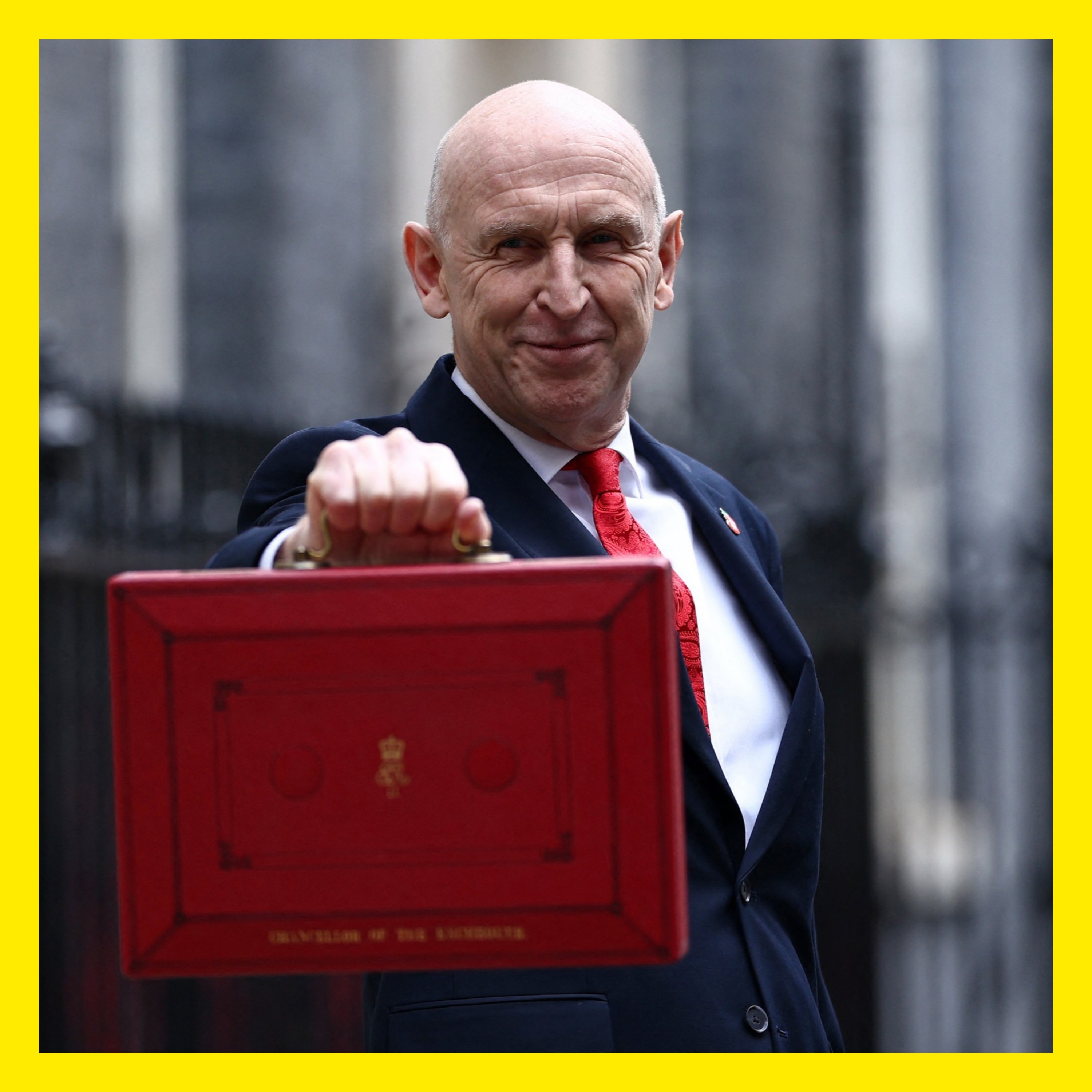
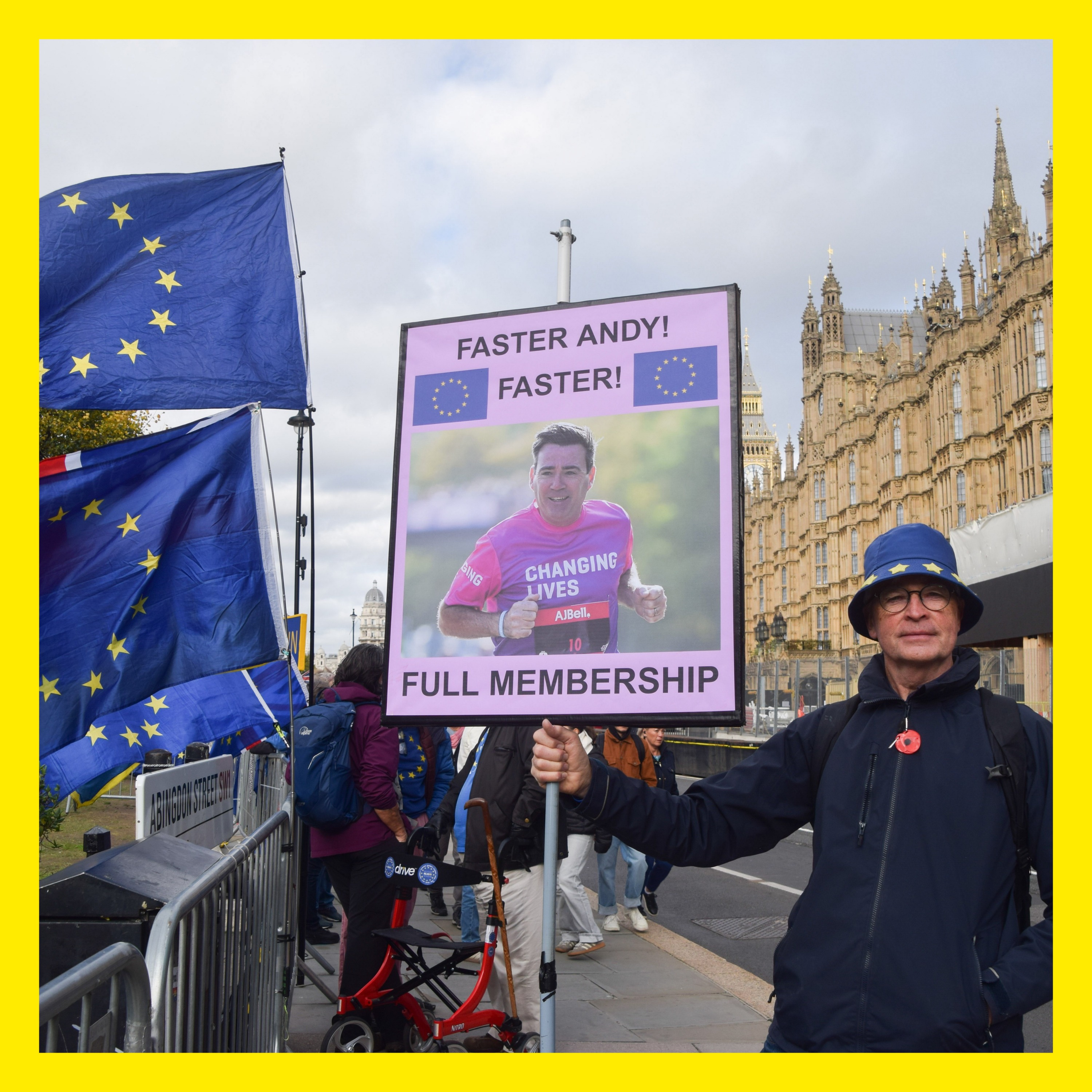
Does Labour have the will to implement serious welfare reform and bring down the benefits bill? Alan Milburn's report on Neets, young people not in education, employment or training, comes out next week. Andy Burnham's plan is to spend money first, to bring the welfare bill down in the long run. What will voters make of that?
Kemi Badenoch’s Conservative Party is promising £36bn in welfare cuts, while Nigel Farage’s Reform UK is pitching itself as the party of the working man and promising even deeper cuts.
Meanwhile, Russell Brand’s convictions for rape and sexual assault have dragged Ed Miliband’s infamous 2015 election interview with Brand back into the headlines. The education secretary, Lucy Powell, has mounted an awkward defence, which hasn't gone down that well. Hindsight is a wonderful thing, but then again, so is due diligence.
Steven Swinford, political editor, The Times
Ben Riley-Smith, political editor, The Sunday Times
Lara Spirit, deputy political editor, The Sunday Times
Patrick Maguire, chief political commentator, The Times
Producers: Euan Dawtrey, Harry Kitson
Executive producer: Molly Guinness
Picture: Getty Images
This podcast was brought to you thanks to subscribers of The Times and The Sunday Times. To enjoy unlimited digital access to all our journalism subscribe here.
Hosted on Acast. See acast.com/privacy for more information.