 Ask ChatGPT



The State of It discusses (1) what concessions Andy Burnham may make to secure a UK-EU Brexit deal by Nov 20, focusing on youth mobility, tuition fees (“home fees”), and potential UK alignment on tariffs for Chinese electric cars; and (2) whether Home Secretary Shabana Mahmood’s migration reforms have been weakened by a climb-down, and what that means politically inside Labour and for voters.
No external guests. Hosts are Stephen Swinford (Times political editor), Patrick McGuire (Times chief political commentator), and Laura Spirit (Sunday Times deputy political editor).
Burnham’s opening offer for youth mobility is 75,000–80,000 (EU still pushing for 100,000+). Tuition fees may be conceded via “equal treatment/home fees,” possibly with a six-month delay and government support for universities (reported cost ~£450m). The UK may move toward EU-style tariffs on Chinese EVs under “Made in Europe” pressure. Mahmood’s reforms are still hardline despite exemptions for care workers and fewer people facing the tougher settlement regime.
LSE cited as having ~13% EU students; Chinese EVs said to be about one in five new cars in the UK; “earned settlement” described as a major change to citizenship routes.
Written by AI. May contain mistakes.
Discussion on Andy Burnham's potential concessions to finalize the Brexit deal.
“Brexit and how Andy Burnham is poised to make some pretty big concessions to get his Brexit deal over the line on November the 20th.”
Details on the youth mobility scheme allowing temporary movement between the UK and Europe.
Exploration of the contentious issue of tuition fees for EU students in the UK.
“The youth mobility scheme will allow Europeans to come over to the UK and will allow UK to go over to Europe for up to three years they can't bring dependents they can't you know, access benefits, for example.”
Analysis of the political implications surrounding youth mobility and migration discussions.
“because we know that the EU has been pushing for a very long time to have what's known as home fees.”
Discussing the implications of the youth mobility scheme on NEATs and job opportunities for UK youth.
“Patrick, let's talk to the politics of this.”
Examination of the EU's Made in Europe scheme and its implications for the UK.
“So this is, again, another potential big concession.”
Discussion on the implications of EU student scholarships and trade policies post-Brexit.
“concentrated in universities, it is actually in those more elite and Russell group tier universities.”
Analysis of Shabana Mahmood's recent migration reforms and their implications.
“So let's talk about Shabana Mood, the Home Secretary.”
Explore the complexities of collective responsibility in Andy Burnham's cabinet and the challenges it faces.
“It's whether from both directions, but I think particularly from the right, it can survive that.”

Get the gist, explore an idea or ask about something said.
 Claude
On The State of It, what are the key points of this episode?
Searching your listeningAutomatic transcript. May contain errors.
0:28Are you getting rewarded for paying your rent and mortgage? Download the Built app and join the membership for where you live at joinbuilt.com slash acast. That's J-O-I-N-B-I-L-T dot com slash acast. This episode of The State of It is sponsored by Google. Google believes that if everyone has the skills to use AI to its full potential, the whole British economy will benefit. While other businesses are embracing AI to boost productivity, many tradespeople are yet to fully discover how AI can save them time and help them grow their business. As part of the AI Works for Britain programme, Google is helping tradespeople develop practical AI skills to simplify everyday tasks, deliver more for their customers and focus on what they do best.
1:15Visit grow.google.com to learn more about AI and find the right training resources for you. Is the lad for a master in Makerfield going to get a job in Costa now or will it be a Spanish student? Big question and I'm not entirely sure the government has walked through the domestic politics for that yet. Welcome to The State of It, the political podcast from The Times and The Sunday Times. I'm Stephen Swinford, the political editor of The Times. I'm Patrick McGuire, chief political commentator for The Times. I'm Laura Spirit, deputy political editor of The Sunday Times. And look, this week we're going to be talking broadly about two issues.
1:49The first is Brexit and how Andy Burnham is poised to make some pretty big concessions to get his Brexit deal over the line on November the 20th. It sounds to us like concessions on youth mobility. It sounds to us like concessions on tuition fees. And it also sounds to us like there's going to be some significant concessions on tariffs on Chinese electric cars down the line as well. So three big areas of concessions. And then we're going to be talking about Shabana Mahmood. Has she been left irrevocably weakened by this week's event and the kind of u-turn on care workers and legal migration or is she actually playing quite a smart game behind the scenes given the state of the plp but look let's start on brexit so november the 20th there is this big eu uk deal coming on brexit and as was always the way with these a lot of the draft agreement has now leaked out and is circulating around member states and crucially among journalists so we've got a good idea of the direction of travel and we wanted to talk about three areas broadly and the first concerns a scoop you did Lara at the weekend on youth mobility and if you just want to fill in listeners on what you wrote and what you've learned and also what we've now learned about where we could end up on youth mobility what is it?
3:02The youth mobility scheme will allow Europeans to come over to the UK and will allow UK to go over to Europe for up to three years they can't bring dependents they can't you know, access benefits, for example. But they will be allowed to live, work, study in those countries. And it is seen among, as we've spoken about on this show, particularly among European negotiators, as a very, very important part of this reset. They think it's a serious right that young Europeans lost as part of Brexit, and they're very keen to see that restored. But it has been one of the most controversial aspects of this reset.
3:34Now, under Keir Starmer's government, they're prepared, and they were pushing very hard for a cap of around 50 ,000 young Europeans coming here. Because, of course, and we know that there has been, and we'll speak about it later in this show, there's been a lot of pressure on those migration numbers. There's been some reluctance among certain parts of the government to see those go higher. And so that 50 ,000 cap was seen as quite an important negotiating position. Now, we know the Europeans were interested at first in having an uncapped scheme, then kind of 150 ,000, possibly 100 ,000. now what I reported at the weekend was that the UK under Andy Burnham had gone in with this offer of 75 to 80 ,000 so up to 80 ,000 young Europeans who could come over here and that that was seen as a way to try and get these negotiations over the line now people that I've been speaking to said you know be very very careful because the EU is still pushing for 100 ,000 and actually There's an assumption, I think, in government that they may need to go even further than 80 ,000 to get this over the line.
4:36Now, there's other controversial parts of this youth mobility scheme as well. There is work visas. So basically trying to get these EU countries to say how many people they'll let come and work in their countries because they have the right over that, the so-called competency. It's actually not an EU commission right. And then there's also, perhaps most interestingly, and Steve will talk to this as well, the tuition fees question, which has caused a lot of confusion. I think, and is something which is so controversial that I think we're not going to get the absolute final wording of it at this summit or final agreement of it at this summit, because we know that the EU has been pushing for a very long time to have what's known as home fees.
5:13So for European students to come and to pay the same amount as British students when they come to UK universities. Now, the reason why that is such a difficult thing for the UK to agree to is because, of course, we know that European students provide a very important financial benefit to these to these UK universities. a number of these UK universities. I mean, you have LSE, for example, with something like 13 % of their student body are EU students. Now, it's important to say that actually non-EU students still make up a much more important kind of financial lifeline for these UK universities.
5:42But even so, you know, you've heard from universities, UK and other bodies warning about the impact that home fees could have on the UK universities sector. And that's why there's been reports that perhaps, you know, the UK government is considering financially supporting these universities if indeed they do go along with this home fees question. but it's so controversial what they'll do with this. It's looking vanishingly unlikely they'll even be able to get it over the line in time for this summit. Patrick, let's talk to the politics of this. So they've gone in with an opening offer of 75 ,000, 80 ,000.
6:10Could it end up being more? I cannot imagine that of ever happening under Keir Starmer. Burnham is more relaxed about this and more relaxed about legal migration broadly, I think. No, exactly. And for a long time under Keir Starmer, it's important to recognise, by the way, that much of this deal, okay they're in the process of crossing t's and dotting i's but much of it had already been agreed the tram lines for what they were discussing were obviously set last year and a lot of the detail had already been fleshed out under the last government but youth mobility was one of the running sores of the last set of talks even getting it included in the sort of mandate for negotiations last time was very very difficult because as ever whenever a proposal to do anything with regards to migration goes around Whitehall.
7:02You have the Treasury saying, please pull every lever you possibly can. And the Home Office, under Yvette Cooper and then under Shabhan Mahmood, were always very hostile to this. They were very, very aggressively pushing for a hard cap, and we're getting a hard cap. That took a lot of negotiating. That was a fairly big concession from Europe, the mere concept of a hard cap. And there was lots of discussion as well about, can the UK have an emergency break? can both sides agree to adjust the cap? Could the UK agree to have it lower? Could the EU agree to have it higher? If they wanted to, I remember we wrote a tiny splash about that at some point in the early half of this year.
7:36So it's very, very difficult. And it cuts really awkwardly, I think, across everything else the government is doing about migration, which we'll get onto shortly. But the other political curiosity about these talks is, If you speak to the people who are leading them in the last government, the key people, I mean, Rachel Reeves, Keir Starmer and Nick Thomas-Simmons would all say now, publicly, actually, and this was always a staging post this summit. You know, it's a staging post to say, look, we've got as far as we can. And now is time for a broader conversation about how much further we can go.
8:15You know, the UK has actually incrementally moved to quite close alignment in a range of sectors. It's grasped the migration nettle, which Youth Mobility does in quite a significant way, sort of reintroduces a sort of diet form of free movement. But the problem now is that Andy Burnham has jumped ahead of that. We are still, you know, the process is still stuck in a pre-Andy Burnham thinking aloud to Ben Riley Smith and insert 100 podcasters here mode. And so it's no surprise, actually, the EU are pushing harder and are getting significant concessions out of the government, because actually now the machinery of government is tooled towards much closer alignment anyway.
8:54So it's almost like this is this sort of weird intermediate stage has already been outpaced by the government's rhetoric. So I'm not necessarily surprised that the EU are sort of cashing in some of the chips that might have been discussions for another day, another year on the Keir Starmer. Yeah, and I think just on tuition fees, it's really important to note that one of the things that Nick Thomas Simmons did do previously was ensure that that was not part of the Common Understanding document last May. I think that's a very significant thing. The EU have succeeded in recent weeks and months in making that actually part of this broader reset conversation because they were so determined to do so.
9:28And that has been one of the things that's been so controversial about this reset. And so what is, as Patrick says, what is included and not included in this reset has been one of the kind of really difficult things for, I think, Andy Burnham's government. I know. It's the political dividing lines that everyone is comfortable with. So you'll have Andy Burnham arguing, this is a temporary youth mobility scheme, let's talented young people come here, be baristas for time limited period. And our young people get the opportunities that have not been afforded to them since Brexit to go to Europe, to go to Germany, arguing a positive case.
9:55And then you'll have Nigel Farage saying, this is free movement by the back door. So everyone just sits within their kind of ideological comfort zones. But I think, though, there is a question worth asking, and a couple of Labour MPs, Labour people I was speaking to over the weekend raised this. What is the big moral cause we'll be hearing more and more about at the coming months? It's the plight of the NEATs, the young people who are not employment or training, and what the government wants to do to get them off welfare and into work. Say you're a NEAT on a council estate in the outer boroughs of Greater Manchester, and there is an argument that actually a lot of the things the government has done this week and I suspect we'll see some red wall Labour MPs make this argument that this cuts across or cuts off at the knees part of the government's needs agenda because you are creating opportunity for people who are not them to take jobs.
10:48You know, is the lad for a master in maker field going to get a job in Costa now or will it be a Spanish student? Big question, and I'm not entirely sure the government has walked through the domestic policies for that yet. I mean, the data on that, I spoke to Madeleine Sumption from the Oxford Migration Observatory on that, and it is extremely hard to actually get to the bottom of, OK, European students are coming here, therefore which UK students are not going to get places at these universities. It becomes really, really difficult to do. But I think in that vacuum, you will have people saying, actually, there are people that will be losing out on opportunities in these cases.
11:19So let's talk about the home fees aspect of it and what we're expecting on that. So this is, again, another potential big concession. And when we talk about home fees, what we mean is the UK government subsidising British universities so that they can offer the same fees to EU students as UK students, which is a significant discount on the international rate. Yeah, and it's important to note that UK universities make a loss on educating people on those home fee basis in large cases, right? So actually, if you're coming from Europe in some cases and you want to do a particular clinical degree or whatever, you could pay up to£70 ,000 to do that, right, which is many multiples smaller than if you're accessing home fees.
11:58And so that is why, you know, people from different countries coming here to study has been just such an important financial lifeline for these universities. So what we're told is that this agreement will enshrine the concept of equal treatment, that EU students and UK students, vice versa, will be treated the same across both. And that sounds very much to us like full home fees. But, and there is a but, they're going to kind of slightly park it as an issue for at least six months so they're going to agree in principle to the idea without signing along the dotted line and say we will reach a future agreement which will enable six months of quite deep rows i imagine within government to rage over this and whether we should be giving them because it's not cheap right i think the guardian had a figure of 450 million quid for the cost of subsidizing these students but that is the kind of price to pay or one of the prices to pay for this youth experience scheme that you were talking about yeah definitely and i think you will hear a huge amount of criticism from some in the university sector if indeed there is language even if there's only language uh at this summit around home fees and the promise of of reaching home fees in perhaps the next six months i think that will make uk universities very very nervous because of course they're they have made the point for a very very long time this would be extremely financially damaging and i think there will then be the question of okay what is the support the government is willing to offer uh in order to help these universities make up for the loss in income that they're suffering yeah and look that by the way that is another economic story that the and in some ways you know if we are a knowledge economy what is happening to universities up and down the country is a story of the industrialization right you have lots of places that were turned over in by the loss of heavy industry now have universities that are struggling financially often kept afloat by foreign students.
13:46And it's something we don't really talk about because it's less tangible and frankly, it's not really politically fashionable. So if this is going to push middle or lower tier universities over the edge, then that's a huge political problem for the government. It's worth noting that if you look at the table of where EU students are most concentrated in universities, it is actually in those more elite and Russell group tier universities. And actually, when I spoke to one of these professors at one of these universities, they were saying to me recently, you know, we're still subsidising some of these EU students to come here on a scholarship because we actually want them to come here.
14:17So it is actually in a lot of those kind of lower tier universities, it's more of the non-EU students that make up the financial lifeline, but it is still going to be a really significant impact. And I think you will hear a lot of people being very angry about it. The third area to talk about is the elephant in the room for these talks. And this is, in the meantime, while all these negotiations are taking place the EU announced and is starting to roll out a scheme called Made in Europe which is does what it says in the tin it is a massive protectionist scheme that we are cut out from and would have huge consequences for jobs for car industry in the UK and is a big big problem the government is trying to grapple with and the give we are told and have been told for some time is going to be matching Europe in imposing tariffs on Chinese electric cars so you're seeing these everywhere now.
15:01I think one in five new cars sold in the UK is one of these Chinese EVs, right? People like them. So what they're looking at is there'll be some kind of language or nod towards us being bound by the EU approach to tariffs on supply chains. It'll be quite nebulously worded. But our understanding is that there is a bit of a quid pro quo going on behind the scenes. As much as the government likes to deny it, as much as the government says these things are entirely independent and we are putting British industry first and this will be a British decision, Well, actually, it is inextricably linked to this reset.
15:32So we are expecting some movement around that, even if it doesn't say explicitly we're going to whack tariffs on Chinese vehicles. We think that is the broad direction of travel. That is, you know, not uncontroversial in its own right. It's kind of aligning us potentially with the EU's tariff policy and tariff regime. Well, and there have been times, by the way, that there have been serious tensions within this government about our relationship with the EU's trade regime. Obviously, I think the big economic prize of being involved in Made in Europe makes all of these debates sort of a sideshow.
16:03But for instance, there was a long-running row about EU steel tariffs between the UK and the EU. And there are lots of little issues on which, yes, OK, we're getting to a point where the whole supply chains are not severed, etc., etc. But I've spoken about this on previous podcasts, the question of do we want an independent trade policy? you know if we are re-industrializing do we want the full complement of sovereign powers to give industry state aid or whatever you know it is a massive step they've taken it's part of the reason johnny reynolds right up until the eve of the prime minister's conference speech the business secretary was saying i don't want to be in the customs union because it tethers us to eu trade policy and actually look at all the stuff we're doing and the stuff we might want to do we need that freedom so it's really politically tricky i think and then on top of this you've got this kind of weird dissonance.
16:53So these are all important things. This agreement is a big deal. There's been a lot of work, years of work has gone into this now. But it's kind of all nothing compared to the debate Andy Burnham wants to have on rejoining the EU, on free movement. I mean, he's still in this kind of weird position where he's saying, I never propose free movement. I just want an honest conversation about, well, isn't that the same thing as proposed? Either way, it means that everything at this summit will ultimately be dwarfed by a debate about potential Brexit options. And if you look at the torture of these negotiations just to get to these positions on Made in Europe, on youth experience, on all of these things, that will be as nothing to the negotiations to come on potential issues like rejoin the EU, the debate around that and potential free movement.
17:37I mean, God knows what the EU will do in exchange for that. Yeah, I think Labour MPs and Cabinet ministers who would like not to be having this argument and also make the case that it's actually part of the reason why it's so difficult is the opportunity cost that comes with this. And actually, regardless of the outcome, you're just taking so much time away from other issues when you're looking at potentially rejoining or having a much closer economic relationship with the European Union. And I think you're completely right that they will point to this summit as an example of years of work in the making to reach agreements on SPF, emissions trading, youth mobility, but not even possibly home fees with that having to come later.
18:14Actually, even on the emissions trading, that's now looking a bit more complicated. So actually, I think it's a very good example of how these things are not particularly easy to achieve. OK, look, we'll head to the interval. And when we come back, we're going to talk about Shabana Mahmood. Where is she and how is she feeling at the moment about this big climb down on the migration reforms? This episode of The State of It is sponsored by Google. Tradespeople are the backbone of the economy, yet many are faced with limited time and resources. But adopting AI has the potential to help these tradespeople grow their businesses and reach new customers.
18:48Google's AI Works for Britain programme is giving tradespeople skills to help them work more productively in new ways, from problem solving on site to visualising jobs before a project starts or creating effective marketing to win new customers. Visit grow.google.com to learn more about AI and find the right training resources for you.
19:13The quarter pounder with cheese is made with 100 % fresh beef. Cook when you order it. Add hot crispy fries and an ice cold Coke. And hopefully a lot of napkins. All for$8. Ba-da-ba-ba-ba. Verizon has a whole lineup of products and services designed to simplify your daily life. Smashed phone screen? Covered with our protection plan. Spending for the family? Rewarded with our credit card. Staying close to your kids even when you're apart? Solved with our kids' smartwatch. Choose total protection for your eligible tech, earn savings on everyday spending, and set smart family controls, all with Verizon.
19:54Pick what works for you today at verizon.com slash extras.
20:04Welcome back to The State of It, the political podcast from The Times and The Sunday Times. So let's talk about Shabana Mood, the Home Secretary. there has been a big climb down on migration reforms and Angela Rayner has won by the looks of things 300 ,000 fewer people will be subject to a more onerous regime for settlement lots of care workers have effectively been exempted from that with the with the tick of a pen now when you talk to people that know Shabana the point that they make is actually okay that's fine we did climb down on this that's there in black and white but actually this is still a pretty hardline package for most people we're going to have a kind of 10-year default for 100 ,000 odd people and there will be far fewer people getting settlement over the next four years and if we pull this off and get that through the PLP actually that's no bad thing that seems to be the broad strategy here that actually they think it's a bit of a Trojanals it's actually pretty hardcore still these measures yes exactly well and to be fair though I remember having very similar conversations with people who are close to Shabana Mahmood when the initial package was first presented to Parliament.
21:10And I heard a lot about, look, our management of the Parliamentary Labour Party has been very careful. You know, we've been trying to bring people with us behind the scenes and then, you know, six, eight months hence, actually almost a year hence, it was last November. I remember because I was on the train to go and visit Robert Kilroy Silk when this was happening. And as I was sat on the train to Plymouth, I was getting texts and on the phone and it was all parliamentary management has been really careful. And I remember writing this at the time, that was the view of people in the Home Office.
21:39But a year later, actually to head off a big rebellion, including from inside the Cabinet, or at least a lot of unease, if not a rebellion, they have had to give quite a lot of ground on all of that. So does that not undermine, potentially, the idea that actually you can do a sort of softly, softly, catchy monkey thing with the Parliamentary Labour Party? because once they have had time to digest the change, as they did last time, the fact that it's a hardline package, the fact that Shabal Mahmood has gone further than any Tory Home Secretary before her to reduce legal migration, will that same constituency of the Parliamentary Labour Party say, actually, no, it's still too much?
22:18I don't know. Or will they let discretion be the better part of Valor and say, well, look, we've got this water down. There is enough in there. It's worth saying it's very complicated. There are lots of different routes. It's quite fiddly. It's sort of appropriately Starmer-ish, actually, for this sort of continuity government. But, you know, there are lots of routes. So is there enough in there for each camp in the Labour Party to look at that and say, well, we haven't got it all, but we've got that. Interesting that Joe White, now the migration minister, one of the most outspoken critics of those who wanted to water it down, was sat on the front bench all of Monday, nodding along dutifully to the very things she said, to the very sort of things she said would absolutely destroy the government's credibility, etc, etc.
23:00so you know maybe there is enough in there and it's a complex enough package for everybody to claim some part of moral victory and shabana moot can actually get what she wants which is a significant not as big as you want to but a significant reduction in legal migration i think that's the key thing is that everybody can claim that they've won something and so nobody looks utterly humiliated by the entire fiasco and yet nobody wins entirely which is quite difficult in some respects for shabana mahoud the home secretary who is so uh who i think people respect because they see her as so uncompromising that is part of her political image that when she believes something she pushes it through and as patrick says listening to people like joe white and others around her months ago it sounded inconceivable at the time that you would see a big climb down of this kind and yeah that's that's what we've seen but that is we're in an entirely different government now so of course that it's entirely plausible that these kinds of things happen and i think it is like you say important to reflect on how major these reforms are even with the climb down.
23:56I mean, earned settlement is an entirely different model. It's literally changing the entire way that these citizenship routes work. And yes, it's extremely complicated, but it is totally upending the way that we do settlement in this country. And it's introducing an entirely new organising principle to it. So I think it's worth stepping back and looking at that because that is really, really significant. And she has managed to do that in a party that, you know, has traditionally had much more progressive views on immigration. So I think to that extent, we should give her credit for it. And it is obviously a shame for some of her allies that this will be seen as or be remembered among some in the party as a massive climb down in circumstances where she's done something that is very hard to see other possible Labour Home Secretaries ever being able to succeed in doing.
24:36Isn't that the problem that we're talking about this through the prism of the PLP and internal politics rightly because they could have killed it. 100 plus MPs were prepared to rebel. So that's fine. But how does this look externally? And there is a risk that if you are some of the, what was it, like seven in 10 people who responded to the consultation were not British citizens, right? So there is a risk that to progressive voters on the left, this package still looks pretty hardline and draconian and goes too far. And some Labour MPs are already voicing that today. So that is on the one side.
25:05And on the other side, you get everyone on the right who's quite happy to say it's a massive U-turn and it's soft and Shabar Mood is weak. So you end up looking weak on both fronts. or too tough on one front, sorry, and then too weak on the other front. I mean, I think by the time people listen to this, they will have had the opportunity to hear Andy Burnham speak about this at Chogham. And it'll be very interesting given how much credit people give him. We heard West Street and the Defence Secretary talking about how amazed he was at his ability, Andy Burnham's ability to distill political issues into something more simple and punchy.
25:37It'd be very interesting to hear how Andy Burnham tells this story because I think we've had Chobana's side of the story on this now and it is up to Andy Burnham, I think at this point really to sell this package as something that his government supports and that represents his government. We heard Shabana Mahmood in an interview with Sam Coates from Sky News talking about how now this is the government position, essentially saying from this point onwards, nobody around the top table has any licence really to stray from it. And that's collective responsibility. That's a very basic concept. But I think listening to how Andy Burnham manages to sell these reforms will be very important.
26:12Well, it's interesting because he did an interview with ITV at the end of last week with Dan Hewitt to mark his first 100 days. And he said it was difficult to say on Sunday, difficult to say whether immigration was too high or too low, which sounds, which may have been interpreted as a classic Andy Burnham, all things to all people thing. I think where the government is edging towards, and this is clear, this is the through line of everything Andy Burnham is saying about EU migration, but also the Shibana Mahmood package, is that the government is tentatively trying to have a conversation about the kind of migration Britain is getting, which is why what you say about this being such a profound, lasting paradigm shift to the way we run our migration system is so significant, because the government is clearly moving back towards a system where it was harder for non-EU migrants to get in and easier for EU migrants to get in.
27:06and Andy Burnham has spoken about that, not least in the Sunday Times. You know, actually the freedoms that we got from Brexit we used in a way that people haven't lied, that haven't necessarily been good for the economy. That's his argument. I know some academics disagree. But where do we get to, you know, can that position sustain itself? You know, which is where the domestic politics, the short-termism, the battle within cabinet, we come back to that. Because what was Shubhara Mood trying to do? She was trying to change the rules retrospectively. She's trying to include health and social care workers in all of this.
27:39As far as reform and the Tories are concerned, particularly reform, the focus now is on, OK, who as a result of that U-turn is getting their grants of citizenship, is getting indefinitely to remain. And that's the difficulty. That's where it gets politically bumpy, that argument in the middle. Because in the long term, I think it's clear what Andy Burnham's critique of migration is, or it will become clear what his critique of migration is, what he thinks the balance of cost and benefit is. It's clear that Shubhan Mahmood rightly, I think, believes she has really profoundly changed the system.
28:14It's whether from both directions, but I think particularly from the right, it can survive that. Can I just come back to this position of collective responsibility, which is now Andy Burnham has set out to his ministers, i.e. you do not have an individual human position on free movement and a return to it. It is a collective decision and a collective decision. I don't think this is at all sustainable at all. So Shabana Mahmood has done an interview with Sam Coates on their politics of Sam and Anne's, I've probably named it incorrectly, excellent podcast. But she's done an interview on that in which she's asked, what do you think about this return to free movement?
28:50And she's, well, I can't say my view, but I think if you look at what I've said in the past, you'll find she's very strongly signaled she's opposed. And if they want to go for this and if they want to have a debate about it, how can you not have that debate with the cabinet? feelings are going to run so strongly and they'll just get asked. It's not sustainable to say that cabinet ministers cannot express a view on what could be the defining issue of an anti-Burnham government. Yeah, and I think this cabinet's loyalty is yet to be fully tested. Like we don't yet know if it is a fair weather cabinet in circumstances where the polls are looking quite good, there's been a moderate, but still, you know, in existence, burn and bounce.
29:27And actually in circumstances where come next year, energy bills have gone up, the news on the economy is looking even more grim, they've been tested on a whole load of other issues and cabinet ministers are being relentlessly asked about this question I think it is plausible to see circumstances in which that unity starts to fray and they get quite frustrated about not having this debate especially because a lot of Andy Burnham's the case that Andy Burnham made about why he wanted to run his government in a different way to Keir Starmer was one of party discipline and one was one of feeling like you had to listen to Labour MPs and the party and that people shouldn't be punished for having different views and he wants to have these honest conversations and on the one hand he's flying his flags and saying we should have honest conversations while on the other saying actually the most senior people in my government are not able or do not have the right to speak about this openly.
30:11I think that is quite difficult. Well it's interesting and it's interesting the counterpoint to that were Andy Burnham here he would probably say something like look cabinet under me has become a forum for open and very spirited discussion that doesn't leak. The other week there was what was by all accounts quite a spirited open and at times fractious discussion about the government's AI policy. Did we read an account of that in a newspaper? I mean, it wasn't for want of trying on my part to take you inside that. And in the dog days of Keir Starmer, there would have been a couple, half a dozen ministers singing like canaries and casting themselves as the protagonists of that discussion.
30:50Alas, that's not happening now. So it's the case for government ministers wearing chassis belts around their mouths and not deviating from the Andy Burnham line, he'd say, well, I've created this internal culture where we can have spirited debates, but at the end of it, we shake hands in an agree of position and then we all go to Stubbshire Cross for a pint and we're best of friends. And that's the way the government works. But it's whether that position can sustain itself if the agreed position is something people think is mad or bad or dangerous. On that note, mad, bad or dangerous. Thank you for listening again.
31:23We would like to pay tribute to our amazing producers. Themselves mad, bad or dangerous. Yeah. Go on, who wants to do it? So I'll do it. Thank you to the mad in Harry Kitson, the bad in Ewan Daughtry, and the dangerous in Molly Guinness, our three excellent producers.
31:57AI skills to help them add new tools to their toolbox. From helping clients visualize a room design to creating email and social media marketing more easily, Google could help tradespeople work more efficiently and boost their business. Visit grow.google.com to learn more about AI and find the right training resources for you. The quarter pounder with cheese is made with 100 % fresh beef cooked when you order it. Add hot crispy fries and an ice cold Coke and hopefully a lot of napkins. All for$8.
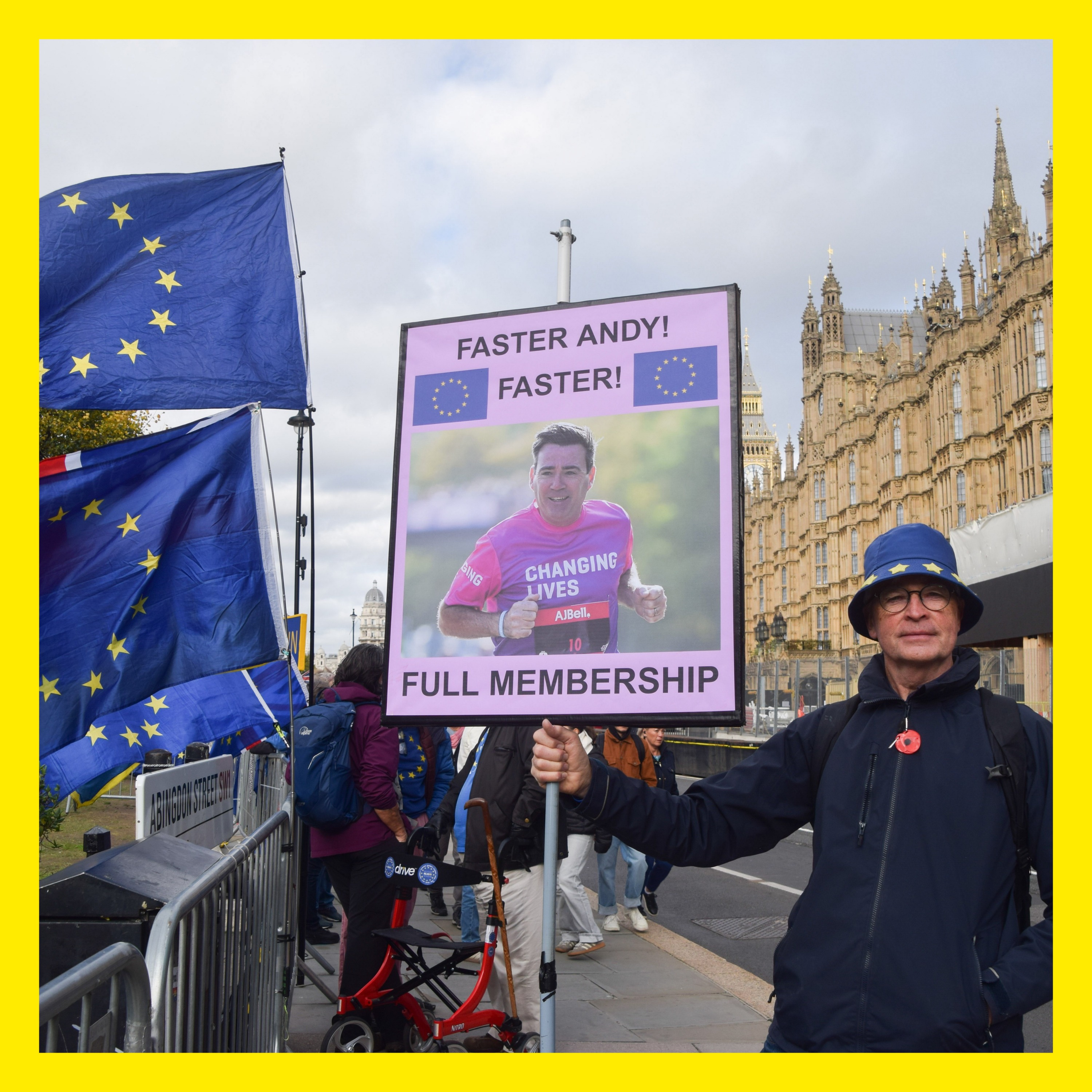
Brexit is back, but did it ever really go away? Andy Burnham is preparing to make some big concessions to the EU to get his latest deal over the line. On the table? Youth mobility, equal university fees for EU students and Britain aligning with EU tariffs on Chinese electric cars — all while the bloc pushes ahead with its ‘Made in Europe’ protectionist plan, which threatens to shut British industry out.
Meanwhile, Shabana Mahmood has been forced to water down her immigration reforms to head off a rebellion of more than 100 Labour MPs. Care workers who meet their visa conditions will keep a five-year route to settlement, rather than face the tougher new rules; around 300,000 fewer people will be caught by the changes. Has she suffered a humiliating climbdown, or has she still pushed through one of the biggest shake-ups of legal migration in decades?
Steven Swinford, political editor, The Times
Patrick Maguire, chief political commentator, The Times
Lara Spirit, deputy political editor, The Sunday Times
Producers: Euan Dawtrey, Harry Kitson
Pictures: Getty Images
This podcast was brought to you thanks to subscribers of The Times and The Sunday Times. To enjoy unlimited digital access to all our journalism subscribe here.
Hosted on Acast. See acast.com/privacy for more information.