 Ask ChatGPT


The episode debates two Labour/UK political flashpoints: (1) whether Andy Burnham’s planned “reset”/re-engagement with the EU will be coherent and publicly acceptable, given polling and cabinet constraints; and (2) whether Labour MPs will back Alan Milburn’s radical welfare reforms.
Stephen Swinford (Times political editor), Ben Riley-Smith (Sunday Times political editor), Laura Spirit (Sunday Times deputy political editor). Alan Milburn is discussed via an interview; John Healy is referenced as a ministerial interviewee.
Rejoining sentiment is softer once specifics are tested (e.g., freedom of movement). Burnham’s cabinet is bound by “collective responsibility” to say nothing, creating semantic ambiguity. Milburn proposes barring 18–24s from standard Universal Credit and major disability-related benefits, replacing it with Youth Allowance plus employment support.
EU “youth mobility” cap details; “Made in Europe” (car/Chinese tariff concerns); tuition-fee policy for EU students; Milburn’s job subsidies and 1-to-1 coaching; comparison to the 2023 Starmer welfare rebellion.
Written by AI. May contain mistakes.
Discussion on the resurgence of Brexit issues and Andy Burnham's involvement.
“At PwC, we optimize the systems that put your data to work, so you can scale your AI from proof of concept to competitive edge, and accelerate your tech evolution so you can redefine what's possible.”
Discussion on the resurgence of Brexit issues and Andy Burnham's involvement.
“And this week we are going to be talking about the two big items on the agenda next week.”
Analyzing public opinion on rejoining the EU and the complexities involved.
“Well, you just wonder whether the public sentiment that broadly and loosely seems to be pretty pro rejoining is as firm as Downing Street, I hope.”
Exploration of how the Cabinet is handling the Brexit conversation and internal politics.
“Varadkar, the former Irish leader, told us that.”
Overview of the imminent Brexit negotiations and the key issues at stake.
“Not least because Andy Burnham has himself made a merit of a form of party management, which is supposed to celebrate people being able to say what they think and not be censured.”
Explore the contentious topics surrounding the Made in Europe initiative and tuition fees for EU students.
“And the second issue is politically potentially very dangerous for them.”
Discuss the radical proposals from Alan Milburn regarding welfare reform and employment support.
“We should move on to welfare and we should talk about the Milburn report.”
Discussion on the implications of Andy Burnham's recommendations and potential political fallout.
“They can't push everything to the other side of the election.”

Get the gist, explore an idea or ask about something said.
 Claude
On The State of It, what are the key points of this episode?
Searching your listeningAutomatic transcript. May contain errors.
0:00At PwC, we optimize the systems that put your data to work, so you can scale your AI from proof of concept to competitive edge, and accelerate your tech evolution so you can redefine what's possible. From blueprint to breakthrough, we take you further with tech. So you can outthink, outpace and outperform. PwC. So you can. PwC refers to the PwC network and or one or more of its member firms, each of which is a separate legal entity. This episode of The State of It is sponsored by Google. Google believes that if everyone has the skills to use AI to its full potential, the whole British economy will benefit.
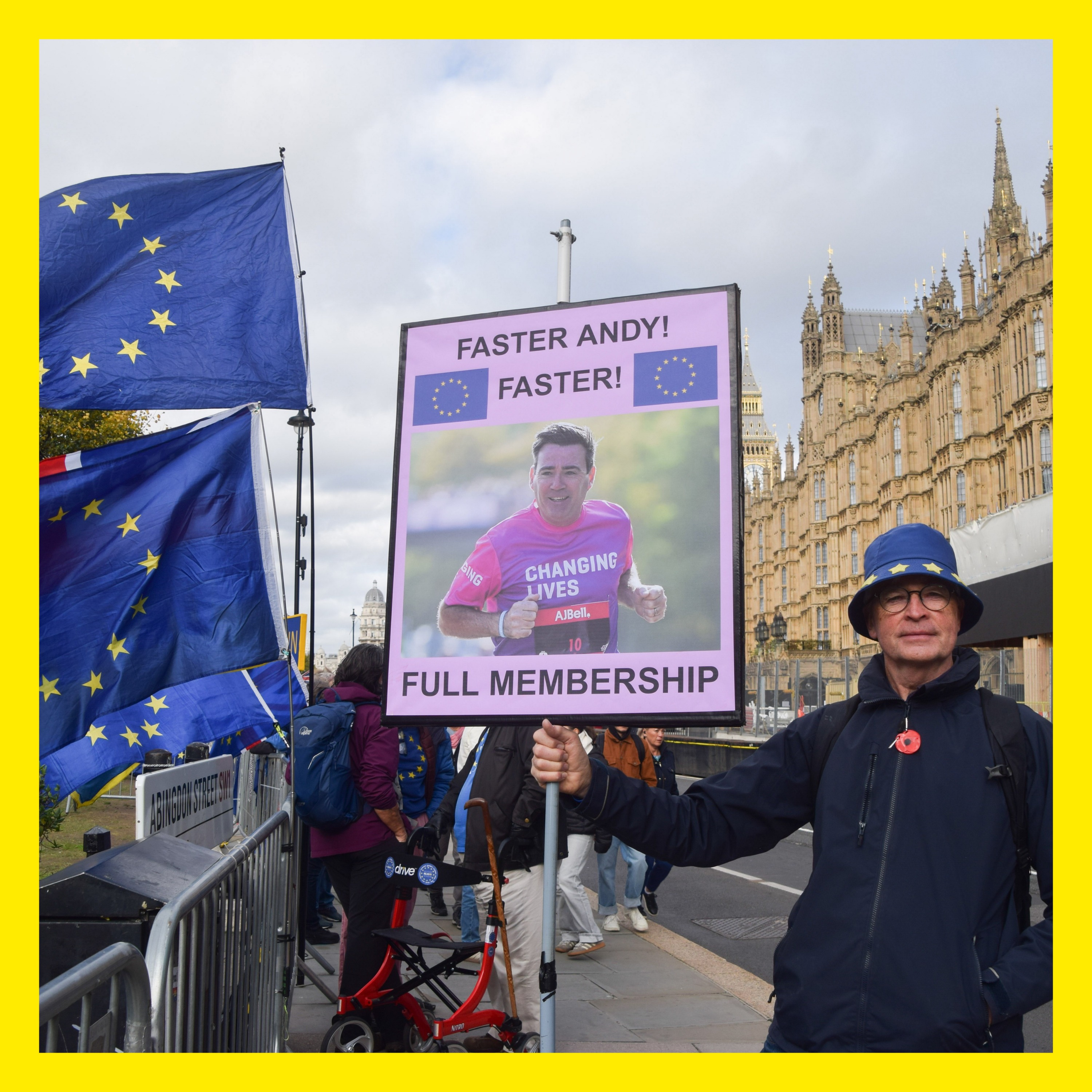
0:42While other businesses are embracing AI to boost productivity, many tradespeople are yet to fully discover how AI can save them time and help them grow their business. As part of the AI Works for Britain programme, Google is helping tradespeople develop practical AI skills to simplify everyday tasks, deliver more for their customers and focus on what they do best. Visit grow.google.com to learn more about AI and find the right training resources for you. Brexit is back in a big way and we're going to be asking the question, is Andy Burnham biting off more than he can chew here? It is the most bizarre use of collective responsibility I can remember in my time covering politics.
1:25You are collectively responsible for saying nothing in this open conversation about how close we should get to the EU or not. Welcome to The State of It, the political podcast from The Times and The Sunday Times. I'm Stephen Swinford, the political editor of The Times. I'm Ben Riley-Smith, the political editor of the Sunday Times. I'm Laura Spirit, the deputy political editor of the Sunday Times. And this week we are going to be talking about the two big items on the agenda next week. The first is Brexit is back in a big way. And we're going to be asking the question, is Andy Burnham biting off more than he can chew here?
1:59Is what they thought was going to be a positive, proactive debate on Brexit going to turn into something much naughtier, much divisive and potentially much nastier down the line? That's the first question. And the second question is, can Andy Burnham sell what are very radical welfare reforms to Labour MPs? Early evidence looks quite good for him, but we'll get into the kind of NEATS issue, into what Alan Milburn's going to say in his report and where Labour MPs are at the moment. But look, let's start on Brexit. And I think, Ben, we were just talking before we came on air, but you've got some concerns that actually this is possibly much more difficult than Andy Burnham thought it would be.
2:38Well, you just wonder whether the public sentiment that broadly and loosely seems to be pretty pro rejoining is as firm as Downing Street, I hope. When you look at polls consistently for months, broadly, they've been showing 55 % of people say, yeah, I would be up for rejoining the EU. Maybe 30, 35 % no, I wouldn't. So if you're supportive of going back to the EU, you look at that and think, wow, that's like a 15, 20 point lead for rejoining. That's brilliant. Let's get into that. But I think the reality, when you look at the specifics of what Brexit, reversing Brexit means, it gets much trickier.
3:12So there's a reason why the arch Remainer, David Cameron, has come out this week and said, actually, I don't really think we should be spending another decade talking about rejoining. There's interesting polling that shows when the public are asked on some of the specifics, they might bulk more in common. And the pollsters put out the two different polls with the same groups of people. One of them said, EU free movement, would you be up for doing that? And that phrase, freedom of movement, doesn't sound too bad a thing. People largely said, yeah, OK, let's go for that. And then when they asked, would you be up for any European Union citizen being able to move to the UK without no control?
3:51The same group of people say, no, no, no, no, no, no. That sounds very concerning. So it's an example of where a general loose conversation about getting close to the EU and the actual specifics of what it would mean in reality and whether people support it are two different things. And you just wonder, we did a report last weekend about how Britain wouldn't get the rebate back. Varadkar, the former Irish leader, told us that. That would mean we'd be paying in 5 billion more than we were the last time we were paying in, which was 2020. And then on top of that, anyway, in the last year we were paying in, there was£17 billion we paid in to£12 billion net.
4:27So at a time of cost of living, when you tell the country, do you think we should be paying£10,£11,£12,£13 billion more to an overseas body? So you're getting some of that back. Maybe that wouldn't be as palatable as this loose idea about Brexit. So I just think the assumption that the country will broadly cheer when you say you want to rejoin may not be true when you look at the specifics. Persuasion have done some very interesting research on this where they've been stress testing, as you say, when you dig down into actually how resilient is the quote. Persuasion is a polling and analysis company.
4:59And they did a bunch of research on this, which showed that actually it was a lot softer. It was actually much more like 52-48 in favour of Remain, of which basically the majority depends on demographic change. it's not people massively changing their minds about this even though Brexit so far is is viewed as you know decisive as negative like that is now I think something that you can say uncontroversially in the wider public I think there's two people that would say chief among them Brexiteers that the opportunities have been taken and it's been made a success of but I think it was interesting you know I was presenting Times Radio today and apart from whether or not dates are in sticky toffee pudding which was a very big debate the thing that Where are you on that?
5:40Yes, they are instinctively putting. But apart from that, Brexit was, I mean, I could not believe how many people were messaging in about it. With many of the same arguments that were made in years before. But, you know, having Brexiteers like Marc Francois on the show, for example, you just get so many texts from people. And it is just such a heightened emotive debate. And it's just interesting looking at that research from Persuasion and listening to you talk about more in common about how, even though the circumstances have moved on in terms of what we might be asking for and what the situation is, it does still feel like just such heavy deja vu to me.
6:12And actually, it's quite interesting, really, these polls suggesting that not that much has actually changed. It's also quite confusing about what Andy Burnham is going to do. So we had Cabinet this week and they had a broad discussion about Brexit there. And obviously, opinions vary around that table. I interviewed John Healy this week, who I can't tell because he's John Healy and he's ineffable in that sense. But I am pretty, I'm told he's a committed Atlanticist, that he has got a very Eurosceptic constituency, 69 % of people in that seat voted Leave. And I'm told that he's not actually that keen on reopening this debate.
6:45He didn't say that. I just say that's what I'm told. What he said was the formulation a lot of ministers that are worried about this are saying publicly, which is, well, we have a manifesto which is very clear that we are not rejoining the EU, we are not rejoining the Customers Union, we're not rejoining the single market, and there's no return to free movement. They're keen to emphasise what is in the manifesto, which is code for, I think, that's probably where our current views lie. Whether they are as keen on the debate to come is another question. Now, Andy Burnham, we were told, was going to do a big speech after a EU summit, which we'll talk about in a minute, which comes next week.
7:20That speech now seems to be off the agenda. And what we're going to end up with is not quite clear. It may be a speech, I'm told. It may be an options paper. But if you want to have an honest conversation and a big debate about Brexit, that needs to be a moment, right? They don't get much bigger than that. And at the moment, it feels to me like he's kicked off this debate with an inadvertent kind of conversation with Ben in the Sunday Times, fantastic splash, and it doesn't feel that coherent at the moment. I'm just not sure where they're going with it and how they're going to frame this debate.
7:53I think it's worth having a brief comment about the ludicrousness or the great irony sitting at the heart of this honest conversation. Andy Burnham wants a big public conversation about how to get close to the EU. He also sent a letter to his cabinet minister saying, you are bound by collective responsibility to offer up no opinion about where you think we should be in terms of closeness with the EU. Wait till I work out what we want to do and then you can come in behind me. But in this long period, possibly a year long period where everybody conflate their opinions, but only people who can't are sitting around the cabinet table, is the most bizarre use of collective responsibility I can remember in my time covering politics.
8:30you are collectively responsible for saying nothing in this open conversation about how close we should get to the EU or not. So it means people like John, the Chancellor, who may have a more cautious approach to whether we should rejoin or not, cannot express that publicly. They've just got to get behind this very bland, loose position of let's have a big talk about it and let's see where it ends up. And I just think with that, they will find a way these cabinet ministers are making their views known because it is just such a polarising issue on which they have such strongly held views. And we've seen comments from Jonathan Reynolds and Lisa Nandy, the Culture and Business Secretary, that indicate where they might perhaps maybe sit on some of these questions.
9:10I just think the idea that you'll be able to keep Cabinet under lock and key on an issue like this until Andy Burnhamer lights on his preferred view is slightly fanciful. It does feel like Cabinet has been not massively leaky and they have made progress on that. But even so, I just think there will be such strongly held views on this that it's very hard to see how they don't contribute to it. Not least because Andy Burnham has himself made a merit of a form of party management, which is supposed to celebrate people being able to say what they think and not be censured. And, you know, for that reason, I think it's quite difficult for him to tell them they can't have it.
9:42It's a bit of a nightmare for us journalists because you essentially endlessly have to read the significance of tiny stresses and emphases or words that they put in their response. So if somebody says, look, we should have a big conversation about Europe, but we should also be mindful that the public had their chance to say what they thought 10 years ago and not throw away that, maybe that means they're indicating that they don't want to aggressively lean in to rejoin. Or if they say, look, we need to have a big, honest conversation that everybody knows the easiest way to get growth would be to take a big step towards the EU, then that maybe indicates they want to go further.
10:14So this kind of saying something without saying something is going to be the circle that we're stuck in for quite a few months, I think. I'll tell you what's really interesting is they are actually enforcing this collective responsibility. So Lisa Nandy did this round the other week where she expressed a more sceptical view about reopening the debate. And it was certainly enough to write several stories of Lisa Nandy expresses concern about reopening Brexit debate, which everyone did. I was told that Number 10 was pretty displeased with that intervention and have made its feeling known. So they do seem to, at once, this is Andy Burnham opening an honest conversation and a debate.
10:47But exactly as you say, Ben, they don't want ministers to take part in that conversation. So we're going to be dancing on the heads of semantic pins for quite some time to come. And step back. And what does that mean? I think the truth is they do not know where they want to land on this. My instinct is I'm not sure Andy Burnham and James Parnell and Ed Miliband and other people directly involved in it could say now where they want to end up in a year's time. Do they want to end up saying, right, I think we want to renegotiate coming back in and that's going to be our position? Do they say we want to be back in the single market, but without freedom of movement somehow?
11:22Or do they say we want this souped up version of the Swiss cheese model where we make endless deals, but we do it in a much more ambitious approach, which is essentially where kind of Keir Starmer is edging towards at the end of his premiership? I'm not sure they know. And I think that's why they see this open conversation as useful, because you can test out where the public are and see where the landing zone is. But that is problematic if you're opening up this huge issue that everybody's talking about and you don't know in your heart parts where you want to end up. Lara, we should talk about next week's Brexit deal, which is what they're focused on at the moment.
11:55So Andy Burnham did a huddle with reporters in Dublin where he attended a meeting of European leaders. And in this huddle, he said there are long nights ahead. They're going to have long nights of discussions, debates and negotiations. It's almost like the old Brexit days of the Brexit greatest hits again. The tunnel. Yeah. Nothing's agreed till everything's agreed. Exactly. So what is agreed and what is not agreed, Lara, from what you're picking up? Well, yeah, that's a very important question. I think that obviously one of the big last minute things that they needed to get over the line was the final detail of the youth mobility scheme.
12:29So particularly the final shape of that cap, the limit on the number of young Europeans who could come and live, work and study here under that mobility scheme. And that would be one of the big things that they want to get tied up. But the music on that was very positive. obviously the two outstanding questions remained on tuition fees so for example we I mean we know that the UK is going to offer lower tuition fees but the big question is or was would they be able to unveil a proper deal on home fees or otherwise at the summit and obviously we know they're going to or we expect that they're going to park that for some time until later later at a later date so that they can get the rest of this deal on SPF on emissions trading on youth mobility over the line first.
13:13And then there was a separate question on Made in Europe, which for a long time, actually, British negotiators have tried to insist, tried to kind of make sure were part of these negotiations, but which, you know, Europe has sort of tried to keep ever so slightly separate from them. That's something that, you know, Burnham has been talking about quite a lot. He's very clear on his position that the UK should be admitted to that scheme. And they'll be pushing very hard on those negotiations as well and kind of speaking to your colleague Ben Clatworthy as well as other journalists at the EPC in Dublin one of the things that of course they're pressing him on as well as this is the broader question about those options what we'll hear what we won't hear next week on that because of course they'll be unveiling this let's be honest pretty limited reset deal you know Andy Burnham says it will add 0.4 percent to GDP under current treasury analysis but he would like to see a reset which adds multiple percentage points of GDP onto Britain and that is something that he told the Financial Times on the record over summer so people have been pressing him as indeed they will be next week on exactly what his preferred solution will be and as Ben says I think we're none the wiser in part perhaps because he's none the wiser either.
14:21Two things you mentioned there Lara are hugely contentious issues so if we just take them briefly in turn Made in Europe is essentially a protectionist measure that is being introduced by the EU and car manufacturers in Britain are like they are really worried about it they are saying this is going to do real economic damage to us we are outside of that club at the moment and so the price they are demanding is that we impose tariffs on all of those cheap Chinese cars that you see on the street out there the Jaikus all of those that we whack up the tariffs and make them more expensive for consumers now interestingly in that huddle Andy Burnham indicated that he is open to doing that from what I'm being told we are unlikely to reach a resolution on that this week in time for the summit, but we'll see.
15:04And the second issue is politically potentially very dangerous for them. It is that we would pay the tuition fees of EU students when they come to the UK. So they would pay the home rate of tuition fees rather than the higher international rate. Again, hugely politically contentious. Andy Burnham seemed to lean into that idea in the huddle. He was suggesting that it's good that we have EU students coming here but but i could just see the conservatives weaponizing that so this is not going to be without controversy this week although some of that controversy may be deferred to a later day yeah and i think uh you know i was just looking this up now because someone had said this to me the other day and i didn't believe it but it's worth remembering that made in europe is itself within within europe and among its members in the uh in the european union fairly controversial for various different reasons there have been 5 000 amendments placed on it we should remember it's literally going through the parliament at the moment this is not something which is kind of ready packaged and which we can negotiate uh it's a it's it's very much movable in its existence at the moment there are 5 000 amendments there's a vote on the 1st of december the european union will be thinking about that just as much as it's thinking about britain's place in or outside of it as well so i think that's just worth that's just important context for us to remember on made in europe and again on tuition fees extremely controversial and also because you know this idea that we might be giving direct financial support to some of these universities to help cushion the blow from home fees will itself be extremely controversial.
16:28I think we'll prompt a broader conversation about the extent to which we should or should not be helping these universities through this particular time. So I think you're right. It's both extremely controversial points of this reset. Can I throw in one more thing, which is on a big picture on the EU. When I was talking to Burnham for those chats for our Sunday Times 100 days profile, he said, and we didn't draw it out that much in the reporting actually, that he wants to wait and see what happens with the European Union in 2027 before he ultimately decides the path forward. And that is so significant because you've got this series of elections.
17:03The big one is obviously France. In April, they pick a new president to replace Emmanuel Macron. All the polls consistently show that Marine Le Pen, the far-right political leader, would win in any two-way runoff, depending on all the different candidates. So we could have a right, far-right president in the Elyse Palace. come the spring. Spanish elections are imminent. There's a possibility that the populist right is going to surge there, maybe even into power. That's another one to watch. The rising influence of the AFD and whether Mertz, the German leader, is still in post this time next year is an open question.
17:40And I was talking to one Eurosceptic Labour figure. In fact, they told me, I won't say who they are, but maybe somebody could work this out, that they once squared off against Andy Burnham when debating the referendum in 2016, they wondered whether something that could unlock the position is if Europe possibly changed their position on free movement. So if you had a Le Pen French president, and if you had a Mertz replacement who desperately wants to do something on migration to stem the support that's flowing to the AFD, if you had a populist right government in Spain, would there be any openness to doing, for example, something that David Cameron sought and never got in the 2016 renegotiation, which was an emergency break?
18:28If numbers hit that much in terms of immigration coming into your country from the EU in a given year, you can have a break and have a pause for a year or two. Would that change the debate about what rejoin might look like? So that's just one to watch how Europe may change and whether it takes a step to the right over the next year is going to be fascinating. Ben, I have to say, I find it deeply traumatic that you're using the term emergency break, which brings back shudders of all those Brexit memories from years past and the Brexit wars, emergency breaks, Brussels slums. Ah, it's back again.
18:59You've got to get used to it, Steve. We're going to have months and months of this. This episode of The State of It is sponsored by Google. Tradespeople are the backbone of the economy, yet many are faced with limited time and resources. But adopting AI has the potential to help these tradespeople grow their businesses and reach new customers. Google's AI Works for Britain programme is giving tradespeople skills to help them work more productively in new ways, from problem solving on-site to visualising jobs before a project starts, or creating effective marketing to win new customers. Visit grow.google.com to learn more about AI and find the right training resources for you.
19:43at pwc we optimize the systems that put your data to work so you can scale your ai from proof of concept to competitive edge and accelerate your tech evolution so you can redefine what's possible from blueprint to breakthrough we take you further with tech so you can out think out pace and outperform. PWC. So you can. PWC refers to the PWC network and or one or more of its member firms, each of which is a separate legal entity. This message is brought to you by today's sponsor, Walden University. Set a course for change. Now is the time to make a real change in your life, career, and community.
20:24At Walden University, we give you the support and flexibility to get the W. Walden's online programs are designed for working professionals like you. You'll gain hands-on skills to take on real-world challenges and succeed. Your future is waiting and Walden is here to help you achieve it. Take the first step to make your impact. Visit waldenu.edu. Walden University. Set a course for change. Certified to operate by Shev.
20:55We should move on to welfare and we should talk about the Milburn report. So we did an interview with Alan Milburn this week and he set out his proposals. And I'm going to be honest, they're pretty radical. What he is proposing is for 18 to 24 year olds, barring them from claiming the universal credit in its standard form, the health element of universal credit, which is for sickness and disability, and also personal independence payments, which are for disability. So the two biggest sickness and disability benefits, they'll be barred from claiming. There'll be a new system called the Youth Allowance and there'll be billions of pounds going into employment support to help get these young people into work.
21:33And what does that look like? They're talking about job subsidies, so paying companies to take on young people, which is a fascinating concept. They're talking about one-to-one tailored coaching, all of those things. So there is a carrot, lots which Labour MPs will love, loads of money, billions, potentially up to six billion, but I'm sure it'll be less than that. loads of money going into employment support but on the other side there's a pretty big stick in withdrawing entitlements and this is part of a broader philosophy from what we're told Andy Burnham is gonna get fully behind this next week this is a moment for him he wants to have the argument he wants to make the fight on welfare so it's politically a very big moment and the question is can he bring his MPs with him can he get them to get behind what will lead and Melbourne is explicit about this to open quotes pain to cuts for people they will get less money at the end of each week on their benefits than they currently do and that is a really big political challenge so so like we had a few a couple of days now since that we did that story what is the impression you guys are getting in terms of where Labour MPs are at the moment?
22:40Well I think the most interesting thing is the degree to which there hasn't been a huge over the top on sort of criticism from Labour benches because we've known it's been, well, a year and a half in the making, really. It was last summer when that Keir Starmer, Rachel Reeves, five billion packet of welfare cuts collapsed at the hands of Labour MPs, some of whom are now sitting around the cabinet tables we've talked about. And in the last 40 hours, since your very newsy interview with Alan Milburn, you haven't seen that many Labour MPs go public. In fact, I think I'm right in saying you could count them on one hand.
23:15And most of them are members of the socialist campaign group, which is the kind of ultra lefty group within Labour. We know they have such a big majority that to have a rebellion that really threatens a government programme, you need to get up to 80, 90 Labour MPs who are willing to vote against the government. So if you've got one, two, three, four, maybe as many as a dozen Labour MPs who are speaking out about it, that leaves you in a pretty good position. Remember, with the Starmer Rebellion, there was this secret letter going around that was well north of 100 Labour MPs had put their names to saying we're really concerned about this package.
23:50Now, it's early days. We're still trying to process what was in your interview, Steve, which is that current people getting benefits who are young may lose some of their benefits. It's not just all forward facing for new claimants that that will prove provocative because some of the benefits they're losing are disability benefits. So I'm sure there's more to go and we haven't even seen the legislation yet. So there are more battles to come. But instinctively, I think Downing Street will be pretty pleased over the last 48 hours with how that Milburn interview has landed. Do you agree? Yeah, I think you're completely right.
24:25I mean, I think they can't be complacent because they need to see how I think they need to see how the full scope of it lands. But certainly those pieces of the review would traditionally be extremely controversial for Labour and peace, particularly if you are comparing it to that rebellion under Starmer. And I think we spoke on the show on Tuesday about why that's not necessarily a massively accurate comparison, because so much of that welfare rebellion was tied up in wider disaffection among the Labour benches and Sir Sir Starmer's leadership, as opposed to necessarily the merits or otherwise of making welfare reform.
24:58And of course, so much has been made in this government of talking about welfare reform in a quote unquote labor way. In other words, don't say the word cuts explicitly, even though other people can infer from that that that is the overall direction that some of these policies are going in. But I think so far it seems like it's landed, as you say, relatively well and beyond the kind of usual faces and voices. We haven't heard any that will be really making people in number 10 sit up and say we should be extremely worried about this now. But these two planks are political danger for the government, as on the left, Labour MPs and the degree to which they get behind the reforms.
25:32And then on the right, the financial element of the package. And as you said, the fact that we've talked about this before, billions of pounds of spending needs to happen up front before you hopefully reduce the overall incapacity benefits bill in the longer term. So if they have to put a number on how much they're putting it into the system, that allows Kenny Baden-Ock and Nigel Farage to say, right, so your great welfare reforms are increasing the amount we're spending on incapacity benefits in the next couple of years. Is that really the kind of bold measures we need to reduce spending, bring down debt, control the public finances?
26:04So they've got these attacks on both sides they're trying to navigate their way through. Actually, that is fascinating, that bit, Ben. So the question is, you've got billions more going into employment support. where does that money come from right that's the question there is no money right unless they're going to raise taxes so what burnham has been explicit on in this ee during the trips to see you summit in dublin um he has said on the record there will be no more money there is not new money we're going to reprioritize existing money and in the language of westminster and whitehall what does the prime minister mean when he talks about reprioritizing existing money very simply he's talking to saying there's cabinet i'm coming for your budgets we're going to have to make cuts to your budget to pay for investment in employment support.
26:46And that is going to be one of the big political debates to come. So yes, Labour MPs will like that. Yes, it is a carrot. But actually, will those sitting around the cabinet table enjoy it when Andy Burnham yet again goes for, let's say, Miata's net zero budget or goes for the DFT budget, again, Heidi's DFT budget, it will get into pretty tricky political territory. But the other thing I'd just say on Melbourne, I mean, He is surely one of the most powerful government advisers we've ever seen. You know, what he writes in this report will be used as a kind of standard that we set against Burnham.
27:20If he delivers on it, then OK, but if he doesn't deliver on it, then people are going to weaponise that report and they're going to go for him. And that is the challenge here. It's a proper watershed moment of genuine radical welfare reform, the like of which I've not seen for a long time. I think 2013 you have to go back when A &E and Duncan Smith introduced universal credit and the personal independence payments. That's how long we're talking about. So it's really radical stuff. Does Burnham have the mettle and the will to actually push this through? Or if I'm being really cynical, because I suspect this is what will end up happening, does it all just get pushed to the other side of the election?
27:56These are big tectonic changes. They're over a decade. There is a world in which we manana it again, that word again, and everything gets delayed. Steve's favourite word. Everything's a manana budget. Some form or other. I think that can't be true. They can't push everything to the other side of the election. I think my understanding was they were going to do legislation next year that brings in some of these elements because you can't, the election might be two and a half years away. I don't think you can feasibly politically sustain this kind of doggy paddle treading water. Oh, yeah, we're looking at it, but we haven't decided what we're going to do position that can be bad not quite effectively weaponizing and attacking the government over.
28:35I think maybe there's a question about how many of Will Byrne's recommendations they pick up. So I know you reported, Steve, that the core reforms Andy Burnham's going to publicly back. But it sounds actually like it's quite a detailed, breadth, wide set of recommendations. And it'll be interesting to see how many of the ministers explicitly commit to in their response next week and how many of them they say, interesting idea, we'll come back to you on that, because that's when I think you begin to see the element of the package shorn off. But you're right, they've handed so much power to Melbourne, that in six months' time he could publicly give a speech and say, why on earth is the government not doing X bit of my review?
29:20This is such an important issue, because they've thrown all of their political capital on welfare behind him as the kind of great guru who will come up with a solution. It does mean if they don't do any of it, that they are very open to attack. OK, I think that brings us to a close this week. So again, thank you for listening, everyone. And look, we'll see where we end up on the other side of these big political arguments next week. Thank you so much to you and Daughtry, Harry Kitson and Molly Guinness.
30:01and electricians. As part of its AI Works for Britain programme, Google is giving tradespeople AI skills to help them add new tools to their toolbox. From helping clients visualise a room design to creating email and social media marketing more easily, Google could help tradespeople work more efficiently and boost their business. Visit grow.google.com to learn more about AI and find the right training resources for you. At PwC, we optimize the systems that put your data to work so you can scale your AI from proof of concept to competitive edge and accelerate your tech evolution so you can redefine what's possible.
30:44From blueprint to breakthrough, we take you further with tech so you can outthink, outpace, and outperform. PwC, so you can. PwC refers to the PwC network and or one or more of its member firms, each of which is a separate legal entity.
As Downing Street prepares for a high-stakes European summit, questions are mounting over whether an "honest conversation" about closer ties with Brussels, from youth mobility and tuition fees to tariffs on Chinese cars, will quickly turn into a headache for Andy Burnham. Do Labour MPs, let alone the British public, have the stomach for another round of the Brexit wars?
Meanwhile, attention turns to welfare as Alan Milburn outlines radical proposals to replace sickness and disability benefits for 18 to 24-year-olds with a new Youth Allowance and billions in employment support. With Burnham preparing to throw his weight behind the reforms, can he win over Labour MPs without triggering another backbench rebellion?
Steven Swinford, political editor, The Times
Ben Riley-Smith, political editor, The Sunday Times
Lara Spirit, deputy political editor, The Sunday Times
Producers: Euan Dawtrey, Harry Kitson
Executive producer: Molly Guinness
Picture: Getty Images
This podcast was brought to you thanks to subscribers of The Times and The Sunday Times. To enjoy unlimited digital access to all our journalism subscribe here.
Hosted on Acast. See acast.com/privacy for more information.