 Ask ChatGPT


Travel diaries with wildlife broadcaster Chris Packham, focusing on places that shaped him, his neurodiversity-informed way of seeing, and his climate/biodiversity activism. The episode also covers his views on protest rights in the UK and the impacts of tourism and environmental policy.
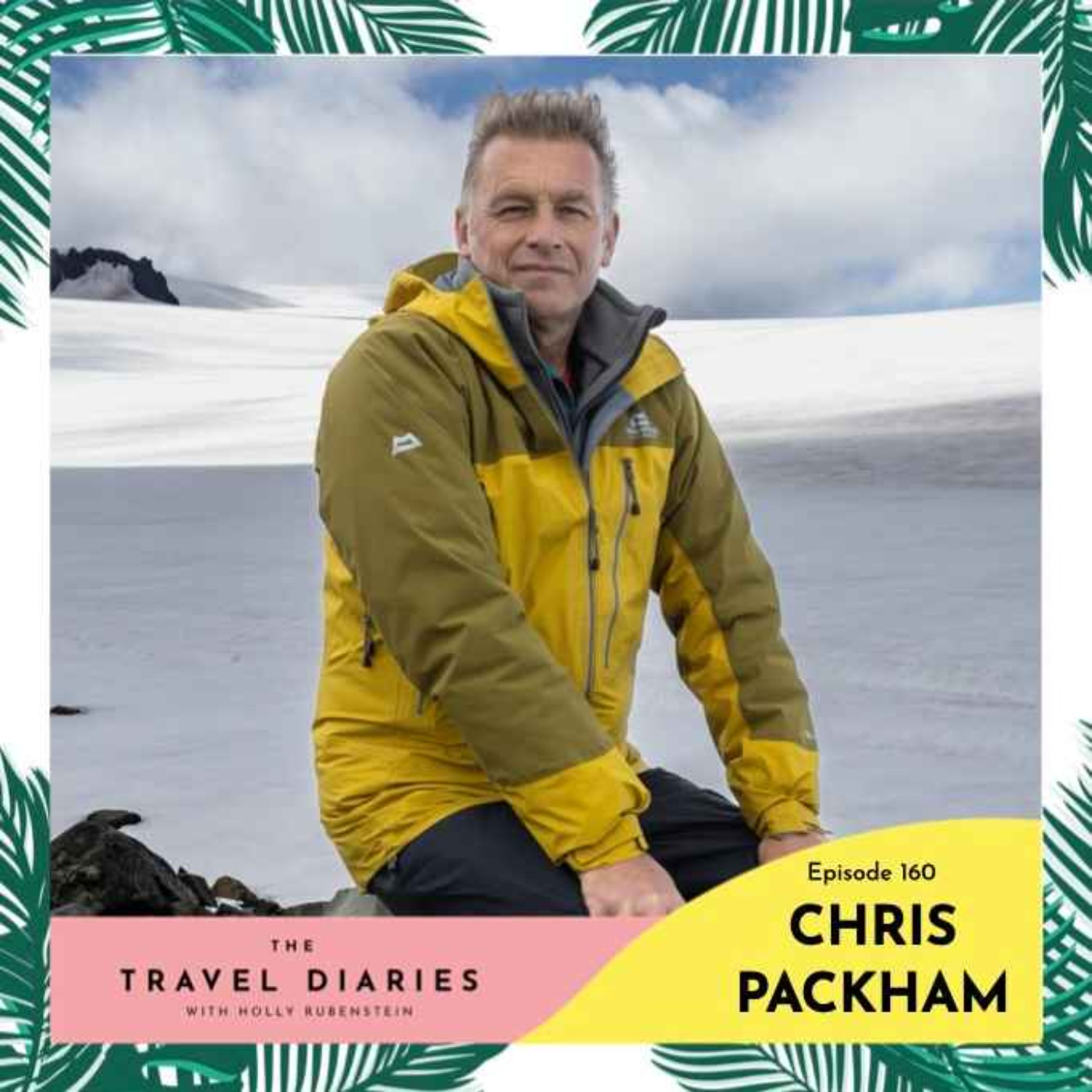
Chris Packham is a British wildlife and environmental broadcaster. He began in the 1980s as a presenter on The Really Wild Show, after studying zoology and working as a wildlife cameraman. He’s known for Spring Watch/Autumn Watch/Winter Watch, BBC documentaries (including The Walk That Made Me and Inside Our Autistic Minds), and activism against hunting, HS2, and biodiversity loss.
Climate breakdown is already causing extreme weather and needs faster action; UK laws restricting protest are worrying. Biodiversity protection matters for everyone who eats and breathes. He criticizes defunding of science and logging in protected areas. He opposes “trendy” mass tourism to Antarctica without tighter management.
First bats in the New Forest near Whitemore; wildcat sighting attempt in Sutherland; bats in Honduras (tent-making) and Borneo; protests cited include Greenham Common, Extinction Rebellion, and Just Stop Oil; visits to Zion, Yellowstone, White Sands, Big Bend, Kathmandu (temple pigeons and burning oil on a tortoise), Seville’s Semana Santa, Kashmir snow leopards, and Antarctica’s plastic-strewn beach; favorite destination: a rare snowy plover sandbar off Florida (St. Petersburg/Sanibel area).
Written by AI. May contain mistakes.
Chris discusses how travel influences his understanding of nature and biodiversity.
“Chris Packham, welcome to the travel diaries.”
Chris shares insights on citizen activism and political action regarding climate change.
“How are you feeling about the level of action that's being taken in the UK at the moment, both by us as citizens, but then I suppose politically as well?”
An urgent discussion on climate breakdown and biodiversity loss in the US.
“We've seen similar flooding across Europe and in China.”
Chris reflects on the beauty and management of American national parks.
“I mean, science is what we need in order to make best informed decisions.”
Learn about the unique features of American national parks compared to those in the UK.
“So that fantasy has always been one that I love to entertain.”
Discover Chris Packham's early experiences that ignited his passion for nature.
“Well, my interest grew at home in suburban Southampton because we had a very small garden and it was there that I found the things that I was fascinated by and admired so greatly.”
Hear about Chris's travels in Scotland and his quest to see wild animals.
“Well, when it came to the exotic, my parents didn't have, we didn't have the money to travel overseas.”
Explore Chris Packham's passion for collecting natural history specimens and how attention to detail enhances his understanding of nature.
“And at this point in the 1970s, there was a very good chance that that possibly would have been the best genetically intact wildcat that I ever saw.”
Chris shares his experiences in cities like Arles and Kathmandu, emphasizing cultural rituals and their impact on his travel experiences.
“Well, I mean, you know, I was in southern France the other day and I went to Arles and I hadn't been there since 1983.”
Chris discusses his travels to historical and archaeological sites, sharing impactful experiences.
“everyone would think, oh, Chris would go birding or Chris would go chasing after some safari, but I never did.”
Chris expresses his worries regarding the rising tourism in Antarctica and its environmental impact.
“And we know that those ships are the most polluting form of transport in the world.”
Chris shares his favorite travel spots, including a special sandbar in Florida and the emotional connection to nature.
Chris reflects on visiting battle sites with his father and the insights gained from their experiences.
“So I was out there doing some birding and I met these people and they told me about it.”
Learn about Chris's personal experience visiting historic battle sites with his father, focusing on the Little Bighorn battle.
“So I would go with my father to battle sites and we would stand there and we'd wander around and we'd figure out who stood where at a certain point in this ghastly conflict.”
Learn about Chris's personal experience visiting historic battle sites with his father, focusing on the Little Bighorn battle.
“knowing who actually has deep expertise matters more than ever.”
Chris shares his least favorite travel destinations and his dream travel spots, including the Philippines Eagle and the Stans.
“Hey guys, it's Drew from the comment section.”
Chris shares poignant reflections and anecdotes from his travels.
“Very, very startling and quite sort of, in a way, obviously, this sort of postmodernism and it was quite sort of futuristic at the time.”
The host wraps up the episode with thanks and recommendations for Chris's work.
“If you haven't watched his documentary, the one that I mentioned inside our autistic minds, I'd really recommend watching it.”

Get the gist, explore an idea or ask about something said.
 Claude
On The Travel Diaries, what are the key points of this episode?
Searching your listeningAutomatic transcript. May contain errors.
0:00This is Nick and Jack from The Best One Yet, and we are excited to tell you about Walmart Business. Staying ahead of business trends means moving fast and adapting quickly. Walmart Business helps you simplify operations so you can focus on building the next big thing. Find exactly what your organization needs with their ever-expanding business assortment and everyday low prices. Keep your momentum going fast with reliable shipping and fulfillment. Eligible organizations can take advantage of tax-free shopping, both in-store and online, saving you more while getting you everything you need. It's Walmart built for your business.
0:30Sign up for a free Walmart business account today at business.walmart.com. In a world where AI is changing every role in every industry, knowing who actually has deep expertise matters more than ever. Upwork connects you with the highly skilled freelance professionals with proven track records so you can hire with confidence. Upwork gives your business fast access to highly skilled specialists with deep expertise, so you can fill critical skill gaps, launch projects faster, and scale support up or down without committing to full-time headcount. With Business Plus, you can access the top 1 % of talent on Upwork.
1:05AI-powered shortlisting delivers a curated shortlist of top freelancers matched to your goals in under six hours. No endless searching required. Thousands of growing businesses already trust Upwork to hire highly skilled freelance professionals for everything from one-off projects to ongoing support. It's free to sign up and posting a job is easy. Visit Upwork.com right now and post your job for free. That is Upwork.com to connect with top talent ready to help your business grow. That's U-P-W-O-R-K.com. Upwork.com.
1:44hello and welcome to the travel diaries podcast i'm your host holly rubenstein and here each week i'll be speaking to a very special guest about the seven chapters in their life's travel diaries From their all-time favourite destination and their hidden gem to their worst travel experience and what's at the top of their travel bucket list, we'll be uncovering their adventures around the world and the travel experiences and destinations that have shaped their lives. Today's guest is one of Britain's best loved and most fearless voices in wildlife and environmental broadcasting, the brilliant Chris Packham.
2:26Chris first made his name back in the 1980s as a presenter on The Really Wild Show, a program that inspired a whole generation of children, myself included, to get out into nature. But before that, he was actually behind the camera working as a wildlife cameraman after studying zoology. And it's that deep understanding of animals, ecosystems and science that still underpins everything that he does. Since those early days, Chris has become a fixture on British TV. You'll know him from Spring Watch, Autumn Watch, Winter Watch, from his BBC documentaries like The Walk That Made Me and Inside Our Autistic Minds, and from his powerful activism, whether he's leading anti-hunting campaigns, protesting HS2 or calling out the destruction of biodiversity in the UK and beyond.
3:13He's never afraid to challenge the establishment. I think that's one of the reasons so many people connect with him. In today's episode, we explore the places that have shaped Chris. From Kathmandu to Kashmir, Mauritius to Marrakesh. He talks about the purpose he finds in travel, the power of experiencing landscapes that tell stories, and the importance of discomfort of being challenged by a place. We also talk about neurodiversity and how that shapes the way that he sees the world when he travels. And the places that he'll never return to. It's not a good day for them. spoiler he describes these places as incomprehensibly horrible trashy ugly devoid of any meaningful culture so I'll leave you to imagine where he might be picking for those I spoke to Chris last week he was at his home in the new forest and it's an episode I've been hoping to make for several years so it was a real honor and pleasure to have the opportunity to hear Chris's travel diaries.
4:17I really hope that you enjoy them and that you enjoy the conversation as much as I did. So buckle up, let's get started. Here's Chris.
4:33Chris Packham, welcome to the travel diaries. It is so lovely to meet you. I feel like I know you having seen you on the TV for so many years. It's just great to have the chance to chat. How are you? Yeah, I'm very well. Thank you very much. And thank you for that kind introduction. Yes, I'm suffering a little in the hot weather, but not as much as most of the wildflowers in my garden, which is a bit of a shame. So that's having an impact on the wildlife, which can be quite distressing. And of course, fear of wildfire increases so long as this drought continues. And we've seen that in other parts of the world, certainly some that I've visited recently with devastating consequences.
5:10So yes, climate breakdown has come home and we're all having to learn to live with it. How are you feeling about the level of action that's being taken in the UK at the moment, both by us as citizens, but then I suppose politically as well? Well, let's address the citizens thing first. We have enjoyed in the UK a long history of nonviolent direct action. And the cases which are frequently cited are obviously the suffragettes, which got women the vote after quite a protractive period of campaigning. and then more recently we've seen people at Greenham Common that was at the peace camp there which was very much part and parcel of my youth when the women occupied that area and then in more recent times we've had Extinction Rebellion 2019 occupying London and getting a climate emergency declared in London and in the UK and then we've had Just Stop Oil who whether you like them or loathe them.
6:13You know, we did see our political parties going into the last election, all but one of them had an agreement in their manifestos that there would be no more exploration or exploitation of fossil fuels in the North Sea. So you might argue that they achieved some success there. But now we see quite draconian laws put in place, which are restricting people's right, I think, fundamental human right to protest. And, you know, when you contrast our behaviour socially, culturally with, say, the French just across the channel, they are far more proactive when it comes to protest than the people in the UK.
6:48So I think that any attempt to restrict our rights even further is something that's quite worrying. At the moment, obviously, you might argue that those laws have been put in place to modify the behaviour of climate protesters, but there's a lot more than climate to protest about. And I think we all need to be aware that should we ever need to take to the streets, hold up placards or wear t-shirts with slogans, those laws will apply to us and whatever our concerns are too. So yeah, that worries me. I think a lot of people have been scared off the street. When it comes to political action, well, no.
7:22I mean, I think we've seen under the new government a few good things. Onshore wind is going to be happening again. We're seeing more solar being rolled out. Both of those things gives concern to people, obviously, the impact on the landscape, but in the right place and done in the right way, we have no choice but move to renewables. So that's good. But I don't think all of the action is happening rapidly enough. You know, we're still tied up with short term concerns when our overarching global, you know, immediate concern is climate breakdown, which is already having devastating impacts. We've had the terrible floods in Texas in the last week or so.
8:05We've seen similar flooding across Europe and in China. These extreme weather events, there's no ambiguity now. We know that they're tied to climate breakdown and they're going to get worse. So, you know, we've got to start putting in means of adapting to these types of events. And what scares me is that that isn't happening and that the significant investment and education is not happening either. If you could take politicians or decision makers on one trip to change their views on climate or biodiversity, where would you take them? What would you want them to see? I would take them into the home of a normal family, you know, in California where those wildfires had taken place and line them up in the smoldered, spent ruins of their home, their house, everything they've worked for, their place of security, where they were trying to raise a family.
9:05and I'd lead them away from that into the mud covered splattered and and and wretched ruined homes of those people who have been flooded and you know I I hate to say it but it's not going to be long where we wouldn't have to take any politicians from the UK overseas that's going to be happening here in the UK so you know the the idea that it's all happening overseas somewhere else and it's something for our grandchildren to worry about is a complete anathema that's not true There's an immediacy now. There is an immediacy, but we're not seeing that immediate action. We're seeing them arguing about relatively, you know, in relative terms, trivial, trivial things.
9:44And, you know, whilst we continue to fight one another and argue with one another, you know, we are one species on one planet with one big problem. And I think that we need to put our ideologies, our religion and our, you know, politics to one side and recognise that the only way we're going to get out of this is by all working constructively together, sharing ideas, sharing resources. I mean, a lot of countries are not in a position to be able to, you know, muster the funds to deal with these issues. So we have to give generously the more wealthy countries in the world to make sure that, you know, those people can expect a changed, but nevertheless, acceptable quality of life going forward.
10:25I mean, it's heartbreaking then to see what's happening in the US with the, you know, the approach towards the climate. I mean, just taking so many steps backwards. It's apocalyptic. And the whole anti-science thing is equally distressing the defunding of science, basically. I mean, science is what we need in order to make best informed decisions. you know we have to have the data at our fingertips and north america had invested significantly in climate monitoring uh weather monitoring all of the technologies that surround that training people to understand and implement those technologies it was a world leader on that and to see the rug being pulled so ferociously beneath all of that means that at some stage in the future we will not have the information at our disposal to make those best informed decisions it will be impossible for people even if they want to make those decisions and clearly at the moment they don't and that's why they're defunding it but but the effect will be long-term and devastating it's tragic but not only not only with regards to the scientific funding but the throwing throwing open of the national parks to logging north america's fortunate it's a large continent and there are still true or as close to true wilderness areas that you can get we don't have any of that in the UK's manscape.
11:44We can always look enviously overseas at that. But, you know, and the American people have done a brilliant job of protecting that part of their landscape. And now to see that being destroyed as well is heartbreaking. Absolutely. I didn't know that. I didn't know. So they've changed the policy about logging in the national parks. Yeah. And in other areas. So old growth forests will be coming down for short term profit. And again, with catastrophic impacts on biodiversity. And, you know, the key thing is biodiversity, that great richness of life that we have on the planet, it builds for us ecosystem services earth.
12:20I mean, every day we eat, we eat something which nature has grown and we have either farmed or harvested. You know, we are entirely a part of and dependent upon those ecosystems. And if they're non-functional because we've torn them apart and killed so many of the species, then frankly, again, we're in deep, deep trouble. So protecting that is not something which is there for people who are naturalists and zoologists like myself. It's for everyone who eats and drinks and requires clean air. Yeah. Oh, God. I mean, you've travelled. I know you've done a huge amount of traveling in the US and you reported from the national parks.
13:01You did, was it Yellowstone? Yellowstone Live? Yeah, Yellowstone. Yes, that's right. I mean, for British travelers, I was a huge advocate of the American national parks, because like you say, they are that kind of feeling of, you know, that wild frontier. there's a kind of romance to the wilderness there and the incredible wildlife from your experience you know if we were to be able to be going there to put our funds into protecting and supporting the national parks there which is is the one that you'd most recommend visiting which do you love goodness me I mean I you know it's long been a fantasy of mine in another lifetime that I would go to North America and get a sort of small camper van and I would literally visit every North American national park you know from from that's a great fantasy today I know I know there were so many and when you think about the diversity of latitude you can go from Alaska to the Mexican border basically and um you know and and the breadth of landscape the variety of habitats and ecosystems is astonishing and I've got to say the Americans do national parks so much better than we do I'm fortunate to be speaking to you from a national park the new forest right there oh yes of course but it's an overgrazed billiard table you know and and it's not putting money public money into public goods when it comes to biodiversity great place to cycle great place to ramble you know but the landscape is being devastated by mismanagement when it comes to grazing animals and as a consequence you know there isn't the biodiversity there it's crisscross with roads when you go to an american national park you you can't drive into the middle of it and and have a burger you know if you want to get to the middle you've got to hike along you know well-marked trails and there are huts with provisions should you encounter difficulties and and then at the edges of the park there are places where there are adequate facilities for visitors you can park up your motor home and it's got means of you know dispensing of the waste and powering it and so forth and and you know and the the parks are very well documented and and were up until the defunding, extremely well run by brilliant staff.
15:15So I love the American National Park. So that fantasy has always been one that I love to entertain. You're asking me to pick one. I mean, my goodness. It's hard. There's one called White Sands, which is in New Mexico, which is just an unusual environment because it's mainly white sand. So it's a desert park. and um yeah the landscape is quite i find it quite visually therapeutic is through its simplicity but then there's another great one called a big bend and that is the one that runs down uh to the texas border uh so the mexican border in texas um that's got jaguar it's got um some very rare bird species which are at the northern edges of their range in that part of the continent and it's vast and extremely quiet and you don't get that many visitors there certainly not in the winter um but there are so many aren't they I mean it's just Everglades so many Everglades amazing absolutely amazing so yeah the one that I most recently went to was Zion oh yes that was just it just blew my expectations out the water it was just so have you been no oh I mean with the ginormous jagged red rocks and deer just roaming freely incredible bird life and these streams that just you could kind of you can hike up the streams through these towering red cliffs it it was just so beautiful and it did feel not too um even though it's popular it didn't feel too overrun with tourism no well i mean the scale is the first thing that hits you when you go to an American National Park is the scale of it I mean you know they are the size of counties or countries basically you know they're massive and again I've always been very envious of that I live in as I say the New Forest and it is a very beautiful place to live certainly at a superficial level um but but we're not as good at managing them and and you know and and we don't really have the sort of authorities in place to do the right thing in the in the right way for all the white people but anyway there we are um yes american national parks such a shame to see them being you know dismembered and having those staff laid off it's just tragic absolutely tragic so so tragic going back to the to the new forest we're going to go on a journey today chris through the seven chapters of your life's travel diaries and we start always at chapter one taking you back to your childhood did you grow up in the new forest i grew up in southampton which is obviously the closest well that and paul and bournemouth are the largest cities uh well salisbury as well i suppose it's got the cathedral but so yeah i grew up very close to new forest and and i managed to coax my parents into bringing me here over many weekends because of my interest in the natural history so i've been coming here for at least well i can remember the last 60 years of visiting the new forest and I've seen incredible changes in that national park and indeed the area where I live I came and you know paddled in a stream and caught sticklebacks when I was about five or six and and that's now about 100 meters from my house so it's like living in living in the footsteps of my own past really sometimes when I go out walking around here oh how lovely was there a specific moment or place that set everything in motion for you in in this area that sparked your interest in the natural world?
18:44Well, my interest grew at home in suburban Southampton because we had a very small garden and it was there that I found the things that I was fascinated by and admired so greatly. But of course, you know, when I opened my Lady Bird book and Observer's Book of this, that and the other, I was always hanking after seeing new things and that meant leaving the garden. And I was fortunate that my parents would decant me into the Ford Anglia or Vauxhall Viva and drive out to the New Forest. And one of the creatures that I wanted to see because I had a fixation on when I was a kid were bats. And there were no bats where we were living in Southampton.
19:20And so my father was charged to find bats for me. And he struggled in Southampton. So then we decided that we would go camping in the New Forest. And in those days, this is early 60s, mid 60s, you could camp anywhere. You bought a permit and then you could drive off. You could drive off the road. I mean, there just wasn't the visitor pressure and the need to regulate people's behaviour. Anyway, so we went out one weekend and my dad had borrowed a very small tent. And we drove to a little stream near a place called Whitemore. And we set up the tent right on the banks of the stream so that when you open the door, you were looking over this little water.
20:02and in the faint glow of my father's ever ready torch I saw my first bats and I mean I didn't sleep a wink obviously and we watched we watched the bats until the batteries went flat and then my dad tried to get me to sleep but it was impossible I was so excited because of the you know these little what must have been D 'Or Benton's bats flitting over the water surface only a couple meters away from my nose I mean I nearly burst with excitement oh I love that what do you think it was about bats in particular that captured your imagination well I think it's their inaccessibility I mean you know that they come out at night they're difficult to get to grips with they're obviously now legally protected um and you know so they're not an animal which is very accessible they're always like on the brink of your you know being able to encounter certainly for a child in the 1960s you know so um yeah I think it was that and and they seemed to be I mean a flying mammal struck me as very odd as a kid and then when I learned about their ability to echolocate um you know finding their food using sound um etc I mean the whole lot just turned bats into a uh into like a bit of an enigma really yeah you're right they are very enigmatic creatures in your wildlife filming and you know your presenting work have you then gone to other places around the world and seen different bats in extraordinary environments that are kind of like it's like your childhood dream come true i have i have yeah i so even in the last year i've seen some bats i've seen the honduran white bats who are tent making species so they basically gather in small numbers maybe 10 to 15 20 bats and they hang on the underside of a leaf which they bite to form a tent above them and they're bright white with yellow noses and ears and I'd always seen photographs of them but I was fortunate enough to to see some of those and then we went to an enormous bat cave in Borneo which was filled full of obviously millions of bats and at night we had a rather wretched climb through the rainforest I say wretched because really tested our fitness to the max it was extraordinarily hot and humid and we had to carry all the gear at the top of this mountain to get to the the top exit of the cave during the daytime we'd gone in through the bottom which was easy anyway we climbed up there not once but twice and um and all the bats streamed out so it was very very exciting and you got you could smell them and hear them it was yeah brilliant brilliant oh how how exciting what was borneo like because I know that it's like a wildlife lover's kind of paradise in that respect.
22:47Yeah, it is. I mean, again, I've been fortunate to travel to Borneo over quite a few years now, decades. And there has been, again, significant changes. A lot of it has been taken over by oil palm for palm oil plantation. Of course, yeah. So it's quite distressing when you travel through it that you just drive for miles and miles and miles. And it's been deforested for oil palm. When you get to the reserves that remain, I mean, obviously, as you say, they are impressive, fabulous forests and an enormous variety of different animals. So, yeah, just incredible. I saw slow loris for the first time one night, which was really, really good.
23:32Tarsier, they were amazing. What's a Tarsier? A small prosimium sort of mammal. They're nocturnal, massive eyes. Basically, a skull is just two big eye sockets. And they come out at night and sit still. And then they leap very acrobatically to grab their insect prey. So that was extraordinary. I'd never seen those before. And then quite a few snakes and inverts as well. Some amazing things called lantern bugs, which are very, very beautiful, colourful insects. Again, nocturnal, but yeah, pretty special. Wow. Wow. It must be so exciting as a naturalist to see species for the first time that you've never seen in the wild.
24:10Yeah, it is. I mean, when I was a kid in the three up, three down, I was looking at, you know, the sort of hand me down national geographics. And I never dared dream that I'd be able to go to any of those places and see those creatures, you know, in real life. So I've never I mean, I still get there are still times I quite literally, you know, pinch myself because, you know, So I don't know, I always just sort of thought how incredibly fortunate I have been to be able to go to those places and see those things. I say it was beyond my expectation in the 1960s. Well, we move on to chapter two, Chris, and that is the first place that you fell in love with.
24:49Where captured your heart? Well, when it came to the exotic, my parents didn't have, we didn't have the money to travel overseas. And so it was always going to be somewhere in the UK. and therefore it was going to be where all the big sexy animals were and and that was golden eagles and that was you know uh wildcats that was otters and and red squirrels so that was scotland and in the summer holidays my father would embark on a tour of the coast of scotland his business was in marine engineering and he had business at that time with the fishing fleets so what we would do is we would get in the car and my father we'd drive to scotland and then we we would literally go around we start on the east side and we would circumnavigate the scottish coast and my father would go to the all the little ports and i'd enjoy looking at the fish that had been captured i had my observer's book of fish of course but key thing is that i wanted to i wanted to see wildcat and I wanted to see otter and I wanted to see golden eagle so I'd sit in the back of the boxhole vever moaning all day long that I'd seen enough place and halibut and turbot and mackerel herring I wanted to and then so we would deviate from the coast and and go and look for these uh these animals and Scotland was so much less populated and there was a real sense that you were going somewhere where there were less people and it was wilder than the new forest that you know and any of the urban areas where I lived you know the fact that we would drive at night for you know miles and miles not see any other headlights I remember that being very impressive and then you know we'd either sleep in the car or be camping and looking for these for these mythical mythical creatures so Scotland was about the first place that I fell in love with and where did you first see say that golden eagle do you remember where it was in Scotland did you catch a glimpse of it well I'd like to say that I did but it was probably a buzzard and my bird identification skills age seven and eight were not not quite as advanced as they are now but we certainly looked we looked for those and and rather tragically I've never ticked a wildcat in terms of having seen one in the UK because they are in many ways functionally extinct due to the hybridisation with domestic cats.
27:13But in 1971, we went to stay at a B &B, which was a remote bungalow in Sutherland. And there was nothing for miles. Anyway, we got there and there were a rather dour old Scottish couple. And my parents were making conversation and I kept saying to them, nudging my dad, ask him, ask him about the wildcats, ask him about the wildcats, ask him about the wildcats. And eventually my father, you know, said, oh, my son's obsessed with wildcats. And he said, well, one was run over a couple of nights ago at the bridge just outside the house. So needless to say, the torch came out of the glove compartment.
27:57My dad and I tramped along this road in the dark. And there on the side of the road was a dead cat that looked like a wildcat. And at this point in the 1970s, there was a very good chance that that possibly would have been the best genetically intact wildcat that I ever saw. And unfortunately, it was before I'd started collecting skulls and bits of animal. Otherwise, it would have been in the boot and I would have still had it now. you know so it's your house basically like a treasure trove of like different skulls and and i know that you collect um poop as well all different things yeah yeah i could walk two meters from where i'm talking to you from and pick up any number of skulls and and specimens that i've collected um so feathers i mean we naturalists are like that we like collecting things and ordering them and understanding them and looking at how the the form of them influences their function so you know the skull of an animal can tell you an enormous amount about its life and its lifestyle its evolution so on and so forth so yeah I got a huge skull collection probably about 200 and I'd never count them but about 250 different species lots of birds obviously quite all the British mammals not wildcat I have to say so yeah it's interesting because I re-watched your incredible documentary series inside our artistic minds over the last few days and you start off of course by talking about how when you go into uh like a forest how overwhelming it can be because you spot so much more detail like that you that's what you're explaining so to that end does that make you that attention to detail a better naturalist in a way because like talking about the skulls you're able you're you're attuned to the finer um idiosyncrasies of each different item that you've got there yeah i i think that neurodiversity in some ways is you know is very advantageous in that the devil is in the detail and i'm interested in hyper detail you know so i i need to know everything for me answering a question is only a means of generating the next question.
30:21So I'm not someone that's easily satisfied with superficial knowledge. You know, there's always going to be the next question and the question after that. And the joy of being able to ask and answer those questions yourself without, you know, turning to published material or experts is always a great thrill. So when you find something and you start doing your zoological detective work and you can come up with, you know, realistic theories as to how, why, or what has been going on. That's one of the great joys of having that interest, I think. So, yeah, and I remember from a young age, my mother sort of testing my observation skills.
31:00And I don't want to be big-headed. I'm sort of a modest person. And there were obviously significant difficulties with neurodiversity. But, you know, it was clear that I could see things and remember them in more detail than certainly my mother could when she was testing me. Yeah. And I wondered then how that informed your experience of travel, because you're often going to unfamiliar environments. And like you said, you know, there are pros and cons of this for you. The con that you were explaining was that it can sometimes feel overstimulating and overwhelming. So how do you manage unfamiliar environments on a regular basis?
31:45Well, it is a balance between, you know, managing the sensory inputs, but also being extraordinarily thrilled by them. So smell plays a really significant role in my life. And it's one of the things that, you know, can be really challenging, particularly if it's, you know, different types of odors are juxtaposed with each other. So I'm not offended by any odor, whether it's rotting fish, rotting meat, poo, whatever. You know, the things that we are inherently trained to not like to protect ourselves, essentially. So it's a good idea biologically. Don't offend me. It's not essentially what people might call bad smells.
32:25It's, you know, it's different smells that are put together out of context. And so a very simple way of explaining that would be if you go into a supermarket, it's not so bad now because everything's so heavily chilled. But when I was a kid, there wasn't that chilling. so then you would have fruit vegetable meat fish bread all together in one place now that doesn't really work very well you know there's nothing wrong with the smell of fish nothing wrong with the smell of meat the smell of meat and fish together isn't particularly great so I think that there's the smell side of things and then there's the visual side of things and that inrush of information can be uh yeah can be quite exhausting but at the same time you know if you go somewhere new and you're looking at things and the form the color the shape textures all of those aspects um are unique and that might be uh you know but it might be a botanical thing it might be a plant it could be a piece of architecture you know um then yeah it can be very very exciting it can be dizzying but exciting I mean I suppose it's why people I don't but I suppose it's why people go on roller coasters isn't it they they they want to feel that they're in danger and they're doing something their body and their senses are struggling to cope with you're going faster you're upside down you're you're moving very quickly close to other objects these are all things which are obviously therefore scary because we're not we're not we haven't evolved to do that That's not like we're a, you know, goshawk flying through a wood, which does it every day.
34:08But they can't resist the thrill of it. I think there's a parallel there, you know.
34:16Hi, this is Monica Reinagle of Nutrition Diva. Today's show is sponsored by Nature Raised Farms. Grocery shopping can be a little overwhelming, especially if you're reading labels. And in my opinion, chicken shouldn't be complicated. Which is why I appreciate Nature Raised Farms' It's Chicken That's Just Chicken. And their lightly breaded chicken nuggets are free from gluten, dairy, and soy. Look for Nature Raised Farms on your next grocery trip and feel more confident about your choices. Finding the right size rug can be hard. Enter Ernesta. Designer-quality, custom-sized rugs cut to the exact size of your room and delivered in as little as two weeks.
34:58Not sure of the size or the material? Start with five samples for just$10 today to see them in your own light and match to your decor. Plus, get$50 toward any rug of your choice. Visit Ernesta.com today. That's E-R-N-E-S-T-A dot com.
35:17How do you feel about cities? Well, I mean, you know, I was in southern France the other day and I went to Arles and I hadn't been there since 1983. Changed quite a bit. It's very beautiful, the colour and textures, the way that the light, you know, bounces off the walls and of one side of a very narrow ancient street and onto the other. So it's a really nice place to be, you know, and obviously it wasn't bombed. and so there's quite a lot of old buildings there it retains a real character I went to the cemetery I the ways I if I've got five minutes to get in touch with a culture then what I typically do is go to places of worship and cemeteries because I think you can learn a lot about the way people think and behave and what shaped the context that they're they're living in now you know from those basically ancient structures so I went to the cemetery in Arlen I wandered around very different obviously than our cemeteries and um and then I wandered around the street so yeah I don't I quite like cities and I I quite like that um you know that what people used to call sort of culture shock as it were um I do like breaking it down to find out why it's shocking I don't just like let it let it lie I want to know what is disconcerting about it and then to think about that so yeah I I mean, I'm not someone who likes comfort.
36:41You know, I think I know what a sun lounger is, but I've certainly spent no time on one. You know, so for me, it's always about, yeah, challenge, rejecting contentment and comfort. It's always about making things, you know, difficult, edgy. And that includes, you know, as you say, you know, sort of experiences. Absolutely. Well, actually, that takes us perfectly on to chapter three, which is the place where you learned the most about yourself. Was there a kind of place where you had a formative experience that comes to mind? Well, I think so. I mean, I think they've come in a number of ways. I remember once visiting Mauritius and sitting at a lookout over the Black River Gorges, which is where Mauritius Kestrels lived, which was a bird that I had a great interest in at one point.
37:30and um that that the sort of unspoilt nature of that was was quite you know formative there was no question um but I do think it's normally come in a human context so a couple of things that I did so in the late 1980s I went to Seville and I spent a week I just stayed in this really awful hotel but um and I went to a thing called the Samana Santa which is a religious festival and And basically, I went out every afternoon and night. I'm not a religious person at all. But the spectacle was at times, I mean, it was like being in Game of Thrones. They wear these extraordinary costumes. The faith and the devout nature of the participants is quite palpable and overwhelming.
38:16you know and and so being in that heady hot colorful noisy alien I'm not a Catholic you know alien environment in that beautiful city was just I mean unbelievable you know just so much to take in and then I had a similar experience in Kathmandu once I I'd went to Kathmandu we were working but I'd gone a week early to just have a wander about you know and I I wandered through this portal that's what it was a little door in a side street and I went in and there was this balconied uh sort of temple and and there were enormous numbers of pigeons in there because they scatter rice as as an offering in some of the places and I wandered in and there were pigeons everywhere and it was extraordinarily old and it was hot and um it was colorful there were lots of garlands and and and flowers anyway something spooked the pigeons and they all took off and they rose out of this three or four tiered courtyard in like a whirling noisy vortex i mean there was a sufficient draft that it almost lifted me off my feet and and that so that was That was astonishing.
39:35And then I looked down and there was a tortoise ambling towards me and attached to its carapace were three little pots with burning oil in. Oh, my gosh. It was Game of Thrones. It was just cinematic bonkers. You know, a tortoise with little bits of fire on its back and all of these whirling birds. And then the prayer wheels all, you know, clinking and jingling. And it was just, yeah, I mean, that sensory aspect of that experience was definitely, you know, overwhelming and formative. Exhilarating, but at the same time, instantaneously exhausting. Yeah. It's interesting that they're both associated with kind of cultural ritual.
40:24Yeah, I'm not a great fan of humanity. Humanity does some really pretty bad things. But I do like, as I said, that being able to understand a culture and a place that you're visiting through looking at its history. And I like the tangible aspect of that. I like, frankly, I like touching or being in old places, you know. So there's nothing more of a thrill than sort of, I went on a dig once where they were digging up a T-Rex and I touched it. So there was some part of the fabric of the world's most fantastic animal. And I was able to actually physically connect with it. And I think that to a greater degree, if you're in a volume where you can smell and taste the history of that volume, cathedrals are a case in part, they've always got a beautiful smell.
41:18and and you know and you go in there and you're breathing air you know particles or molecules of air that have been you know have been breathed by kings queens and saints basically so what a place i love all that were you ever interested in becoming an archaeologist and kind of i loved archaeology yeah when i was a kid i used to be i used to be a member of this thing called young rescue and basically we would we were dog's bodies for archaeologists that went out on a saturday when they were doing emergency digs due to, you know, infrastructure projects. And, yeah, and we would carry the buckets full of nothing whilst the adults looked after the specimens.
41:58But, no, so, again, when I used to travel for my own gratuitous pleasure, everyone would think, oh, Chris would go birding or Chris would go chasing after some safari, but I never did. I'm into battle sites and archaeology, so I've done Egypt. I've done Egypt. You know, I've been to Egypt and looked at the sites three times. I've been to Tikal and many of the Mexican sites, battle sites all over South Africa, North America, obviously Europe. So, yeah, that's what I like to do. Either that or art. It's either that or going to art galleries and musing over something magnificent. What was the biggest surprise to you of these, the historical sites somewhere that, you know, you didn't expect to be so impactful?
42:47Well, there's a couple in Mexico where you get onto the top of the pyramids and you can just see forest forever. Some of the biosphere reserves there are just absolutely astonishing and I've been fortunate to have been there effectively on my own and on the top of those pyramids with mccalls flying around and tarantulas climbing over the rocks and things like that. And I mean, I hate to say it, but you really get a sense of being a bit Indiana Jones. I never had the hat. Yeah. And your love of wildlife has obviously taken you all over the globe as we're in the chapter about self-discovery and learning about oneself.
43:26Is there a particular journey that has maybe left the greatest emotional impact on you? I think you know when you're when you're when you're pursuing something which is on the brink of that accessibility so I went to see snow leopards once and and that was remarkable the environment did you see them yeah yeah in in cash I mean they were a long way away I saw them through it I needed the Hubble space telescope to get a view yeah um but uh but I saw them and um and being in that space in in Kashmir at high altitude was incredible um yeah I think there's also you've got to think about the negative aspects of it i fortunately went to antarctica once and the first time that i landed on the continent rather than one of the islands um i got off the front of the of the uh of the rigid inflatable boat and the uh there was plastic all over the beach and you know and you just you just think i've come to the other end of the world one of the most least visited meant to be you know ecologically intact environments left on our planet and on the beach there was plastic just like heartbreaking so heartbreaking what do you think about antarctica being now almost the trendy holiday destination i mean it comes up on the podcast all the time either at the top of people's bucket lists or they've just been and they've had an incredible time and i know that a lot of the boats obviously i'm sure they've all got kind of procedures in place to try and make their journeys as least impactful as as possible but how do you feel about it being like the new holiday destination well I'm not very happy about it but then you know people will say it's all right for you you know you've been I think I've been there five times and and I first went there 25 years ago 25 years ago on average were about 30 ,000 people visiting it And now we're well into the 200 ,000 to 300 ,000 people a year visiting Antarctica.
45:26And they do so on much larger ships. And we know that those ships are the most polluting form of transport in the world. Essentially, ocean liners are like the big carbon emitters in terms of transport. And they do precious little to try and reduce that. They really don't do anything to try and reduce it. Well, they try and improve the fuel efficiency for obviously cost reasons. But no, I mean, look, those cruise ships are floating, you know, climate disasters, basically. But more to, you know, looking at the impact of footfall on Antarctica, there are places that do it, but they do it with rigid rules.
46:06Places like Galapagos, which, again, has a very high human footfall. So the restrictions are necessarily very, very tight. I think they probably need to be tighter. Antarctica you know they have the rule where you know each say a penguin colony penguin colony can only be visited by x number of people x times per week so very often if there's bad weather there's a great you know conflab going on between the uh you know the cruise directors of the various vessels to see who can land where given who last landed there for how long and with how many people but I mean again the risk of biosecurity we know we've had bird flu in in in Antarctica now which has had devastating consequences um yeah so I I do fear that that you know adding that burden of all of those people going there and and Antarctica got other problems I mean the planet's warming up we're overfishing the krill um you know which is another significant issue overfishing generally in antarctic waters now they're talking about deep sea mining i mean it's it's all it's slowly going to hell in a handcart not helped by hundreds of thousands of human visitors but then hold on i've been there so you've got to you've got to balance that you know balance that out I think it all comes down to to management education to make sure that the engagement it works cuts both ways you know if people are going to go down there and and it's going to have a meaningfully positive impact on outcomes for that environment through their enhanced awareness of its issues so on so forth then bring it on if it's exploitative then stop it yeah yeah completely yeah that makes sense well uh we move on then chris to chapter four and that is the the big chapter your all-time favorite destination i know it's almost an impossible question but where comes to mind for that today well in terms of like sensory places i would say marrakesh um you know i love the colors i love the feel the smell the sounds of marra marrakesh um the the local inhabitants are fiercely anti-photography which makes it a very aggravating place to go if you're a photographer so that is one downside but I'm not going to choose that I'm going to choose somewhere which I think is the most remarkable place that I've ever visited and I've been fortunate to have gone there twice so off of the west coast of Florida near a place called St.
48:53Petersburg and Sanibel Island, there is a tiny bar of sand about 10 miles off the coast, which only becomes, you know, devoid of water, tide goes down, and the sandbar appears at the surface for a few hours, if that, because it's basically the water is shallow, but the tidal range is not great and there is nothing on it it's just white sand and so you get on a boat and you go out like due west and and then you you stop the boat and then you wait for the tide tide goes down you get out onto this sandbar there's nothing there but white sand and and then you wander around for as long as you've got not very long and then you have to get back on the boat and go back and you can just about in the in in the flickering haze um see some of the lights of the mainland of florida but other than that it's like you're standing in the sea you know interstellar you know that film interstellar but they go to yes the water planet it's like that that's what it's like thankfully without the tsunami but the um so you're you're standing there initially the water's lapping over your feet and then it goes down and you're on this sandbar.
50:17And there is a species called snowy plover, which is a small wading bird that's endangered through habitat loss all over the United States. And they're a migrant. They breed in some parts and then they migrate to the Gulf Coast. And these birds appear from nowhere. There's just nothing there. You're in the middle of the sea. The sea meets the sky. again in terms of a physical environment to be in it's white sand sort of pale blue sea pale blue sky you don't really see where the sand starts and stops the sea starts and stops and the sky starts you know and then these birds appear from nowhere these tiny fragile little birds and they land on the sand right and they feed there for a short amount of time and then as the tide comes up they all fly away and it's just absolutely remarkable it's so tranquil and a sense of absolute serenity and both times I've been there it's obviously been very you can't go there when it's rough um you can only go there when it's calm and one night I went out there and it was absolutely flat calm the Gulf of Mexico was like a mirror and and I stood there as the sun set and and in that sort of pink peachy glow these little white birds turned up and ran across the sand I mean I can't tell you it was otherworldly otherworldly did you get some beautiful shots of them no I just soaked it up I just I just I just walked to what I was there with four three other people and the man who had the boat and and I just walked to the other end of the sand not far it's the tiny little place and and i just stood there and thought you know this is part of our planet you know and the second time i went it was even freakier because who would have thought you'd ever go back to that one tiny little sandbar on planet earth you know yeah that was bonkers and i was back there and it was equally as remarkable and beautiful beyond compare i think this is one of my my favorite all-time favorite destinations because it's so niche but sounds like you say kind of like a spiritual experience that way of connecting to it was ethereal of nature completely ethereal yeah i know it was one sort of thing you could wake up the following day and think did that actually happen does that place really exist you know and how did you discover it well i i was doing um some birding in um in florida florida's a great place for birdings Obviously, a lot of the migrants come down from Canada and North America and, you know, go through Florida and then across the Gulf to South America.
53:03So it's a great place for birds. So I was out there doing some birding and I met these people and they told me about it. And we said, yeah, OK, let's just try and go out there then. And fortunately, it was that flat calm and the man took us out on his little boat. It's a great lesson of just like chatting to locals often gives you the best like recommendations. Yeah, well, birders are very generous like that. The bird is always very keen to tell other bird is what they found and what they've seen and and to share that passion and enthusiasm. So particularly, I think American bird is a great. And I remember once being in Big Bend, actually, and I was really struggling to identify the sparrows.
53:42America has we've got like two species of sparrow, tree sparrow and house sparrow. We've got another one called a hedge sparrow, which is unrelated, but whatever. And in America, they've got loads. And in winter, they don't have their breeding plumage and they're not singing. so they they are extraordinarily difficult to tell apart so one morning I'd gone out to one of these car parks in Big Ben and was wandering around becoming incredibly frustrated and there was one other car in the car park and there was an elderly American lady there she must have been about 85 and um and she you know she had some binoculars so as ever we kind of go and um and anyway so in the space of an hour she taught me how to identify all of the american sparrows just amazing just the two of us wandering around this bit of grass and and her pointing out the little calls the little tick tick tick and the way that they moved and and and you know yeah absolutely amazing it's like paying it forward yes exactly well i mean that uh place of florida is the ultimate hidden gem but do you have another one to share for chapter five the place that you love which my listeners might not know so much about that that you would like to perhaps reveal well one of my father was massively into military history and um so he he would read about battles famous battles you know throughout history everything from romans through to second world war and um and we would discuss this and um and obviously as archaeological you know techniques improve more could be learned about the various battles, particularly those that were mysterious and no one really knew what had happened because it wasn't terribly well documented or the evidence had subsequently been destroyed.
55:28But the key thing I found about battles is that you can read everything you like about them, even if they are very well documented, Waterloo, for instance. But until you go to the site where the battle took place, that it's very difficult to build the architecture of that battle in your mind. It's hard to recreate it. And of course, my father was enormously distrusting of Hollywood representations of battles, as I am, because they're always wrong. They were just, oh my God, gladiator, terrible. But whatever. So I would go with my father to battle sites and we would stand there and we'd wander around and we'd figure out who stood where at a certain point in this ghastly conflict.
56:15and what happened. And the landscape, if you like, the topography really gives you a sense of scale and a place and often quite terrifying and revealing, you know, in terms of, I mean, battles are horrible things, you know, so it would really sort of, that connection, that tangible connection would really bring home the real horror. So because my father had been so generous taking me to all of these battles everywhere. I decided that I'd organize a little jaunt and we went to the battle site of Little Bighorn. So this is where Custer met his inglorious end on June the 25th, 1876, on the banks of the Greasy Grass River, which is what the Native Americans called it.
57:03And by that stage, obviously, my father and I had read all of the terrible things that had happened to the Native American peoples and so forth. And we weren't really fans of Custer, obviously. But we went out there because this was a battle that, you know, my father had had an interest in all of my life. And yeah, so we spent three days walking the battlefield at Little Bighorn. And it was amazing, absolutely amazing. We learned a lot more from, you know, more archaeological. We met people that were real experts on what they think had happened and so on and so forth and um yeah it was great and it was just a great place to be with my dad it was like like you know it was that and the alamo which i visited on my own sadly not with my dad but um but yeah to be there with my dad and sort of build build that that conflict yeah yeah yeah it was really really amazing one of the best best things that we we ever did where in America was that it's in the northwest in um now I can't I can't remember if it's Montana or Dakota but it's in one of those states so we we went to Montana and then drove west out to the battle site for for my listeners who aren't familiar with that battle in a nutshell might you be able to summarize it okay so um the American military were pressing into that part of America so that it could be opened principally for mining, and there had been rumours of gold in that area.
58:35By this stage, there had been negotiated pacts with the Native Americans, which gave them access to reservations. The whole thing was hideous and uncompromising, entirely unhealthy and oppressive. And so on this particular occasion, the 7th Cavalry, with Custer and Reno and Benteen had basically set off across this part of America, open prairie, rolling hills, grassland, and with small woodlots in the river valleys. And what happened was they came across a huge Sioux, mainly Lakota Sioux, but a mixture of other tribes too. And anyone with any sense would have thought this is not the place to pick a fight.
59:22But Custer was full of like bravado and so he set off to attack this camp and his column was split into three and his part of that column was entirely exterminated by the Native Americans. So it was known as Custer's last stand. There was only essentially one survivor that was dispatched before the battle took place to ask his colleagues to come and help him. But they didn't really like him very much. I don't think they were really terribly disposed to speed up. And they probably saw some sense in not attacking such a huge settlement of Native Americans that were well-armed at that point. So, yeah, that's it.
1:00:05And so the thing was, because there were no white survivors of the battle and the interviews with the native peoples were sporadic and quite well documented but but you know they were contrasting histories from that perspective it's down to archaeology to understand what how that really uh unfurled over the course of the afternoon so yeah wow that's not a great part of america's past to celebrate to be quite honest with you a hideous conflict that was hell bent on the extermination of those native people by a man who was a buffoon and had all of his soldiers killed beneath him. In a world where AI is changing every role in every industry, knowing who actually has deep expertise matters more than ever.
1:00:58Upwork connects you with the highly skilled freelance professionals with proven track records so you can hire with confidence. Upwork gives your business fast access to highly skilled specialists with deep expertise so you can fill critical skill gaps, launch projects faster, and scale support up or down without committing to full-time headcount. With Business Plus, you can access the top 1 % of talent on Upwork. AI-powered shortlisting delivers a curated shortlist of top freelancers matched to your goals in under six hours. No endless searching required. Thousands of growing businesses already trust Upwork to hire highly skilled freelance professionals for everything from one-off projects to ongoing support.
1:01:36It's free to sign up, and posting a job is easy. Visit Upwork.com right now and post your job for free. That is Upwork.com to connect with top talent ready to help your business grow. That's U-P-W-O-R-K dot com. Upwork.com. Hey guys, it's Drew from the comment section. Some days my skin just needs a little coverage and other days I want to go full glam. For those everyday moments like running errands or grabbing coffee, I've been loving the Merit Minimalist Stick because it's a foundation and concealer in one that gives me a really natural skin-like finish. But when I want more coverage, I'm reaching for the Hourglass Vanish Concealer every time.
1:02:14I know I'm not the only one who struggled to find the right foundation or concealer shade, which is why I always shop at Sephora. They have the best brands all in one place with so many shades, coverage options, and finishes, plus expert beauty advisors, free samples, and shade matching tools, both online and in-store. So whether you're looking for barely there coverage or full glam, Sephora can help you find your match. Well, before we get on to the final chapter of your travel diaries, Chris, we've got chapter six, which is your worst travel experience or the place that you would just never go back to.
1:02:48Oh, easy. So easy. It would either be Dubai or Las Vegas. I mean, frankly, the worst of humanity. Just hideous, absolutely hideous beyond compare. Incomprehensibly horrible is the only way I can describe those two places. Two very similar places in a way, aren't they? just kind of artificial constructs in deserts yeah yeah just enormous carbon carbon expensive trashy ugly devoid of any meaningful culture uh you know you go in jubar you try and find some old town there's a tiny fragment of it alongside a river um it's just nothing nothing remains and and just the sort of embarrassing decadent excess is repugnant to the highest order honestly I really can tell I'm not going to be working.
1:03:35Not your cup of tea? No, I won't be getting a job for the Las Vegas or Dubai Tourist Board at any time in the near future. Well, as we head then on to your final chapter, which is the destination that is at the top of your travel bucket list, I wondered if you wouldn't mind if we could make the question twofold because I would love to know if there's a dream destination that you've never had the chance to visit. But I'd also love to know if there's a species that you've never had the chance to document that you still hope to. Yeah. Okay. Should we do species first? Yeah, please. So when it comes to birds, I always have a saying that says all birds are equal, but some are more equal than others.
1:04:17So, you know, I do love all birds. They're all great. But there's some that are bigger and more special. And the eagles are, of course, a group of birds which are, you know, culturally they've always been important to us. We've respected their power and their magnificence and the predatory nature and Roman legions and all of that sort of stuff, Habsburgs and everyone loves the eagle on the standard. So, but the world's eagles, there are a couple of really big eagles that dwarf the golden eagles in the UK. One is called the harpy eagle, which lives in South America. And the other one is called the Philippines eagle, which lives in the Philippines.
1:04:53And it's a very startling and handsome looking bird. And they're very, very rare. And they're in a part of the world that it's quite difficult to access for security reasons and um and the environment's tough going it's rainforest basically and birding in rainforest is really hard because you can't really see much in front of your face other than yeah rainforest um so i've always fantasized about going to see the philippines eagle and i've got i know about three or four people who've been out there actually more than once and they've had amazing views of them and you know yeah just really second sickening tales of you know we should get my envy pulsing through my bloodstream so the bird i'd like to see the animal i'd really like to see is um is the philippines eagle yeah and then in terms of uh a destination i again a number of people well three people i've known have recently been fortunate to have been working in the stans as we call them so in Uzbekistan and Kazakhstan and Turkmenistan and they've been out there and I've looked at photos they've taken on their phone and it just looks amazing you know and obviously there are parts of the stands which are a little bit Dubai actually a bit bonkers um because of the oil money um but but the the landscape and the scale of that landscape uh much of it desert high altitude and desert look absolutely amazing and they are accessible you can go there so in some of them you have to have a someone with you from the government um in case you're spying um but uh but others now that there is access for for basically the tourists who are prepared to work hard travelers who are going to work work hard um wildlife well amazing very low density quite specialist because of the nature of the environment um but i think just as a place to go um it would be it would be really really good yeah oh absolutely uzbekistan's come up a lot on the podcast of late and i think it's such a you know diverse country in terms of you know and such kind of startling and colorful architecture in particular as someone who loves art i'm sure And then by contrast, like I think the kind of Turkmenistan's, like you say, slightly harder to get around.
1:07:16But there are some amazing archaeological sites as well. Yeah. Obviously, that really interesting fusion of cultures over the historical periods, everything from the east, obviously the Persian, Asian, all moving through that area and influencing those cultures. So I'd love to go there to find the time to get out there. But can I just say what I've got planned? I'll tell you what I've got planned, right? Oh, yeah. So I'm going to introduce your listeners to something they probably haven't heard of before, and it's Spominix. Spominix. Now, Spominix, I like brutalist architecture. I didn't ought to because environmentalists shouldn't be big on concrete, but I like brutalist architecture.
1:08:02And in the post-war period over the Eastern Europe, particularly in the Balkans, they started to build these very large concrete brutalist monuments to the partisans that had been fighting the Nazis in the Second World War. And there were quite a large number of them. And they were all made by prominent artists of the time. And some of them are impressive and others are beautiful. Because they are battle memorials, the majority of them, they were being fought by resistance fighters, are out in the countryside. They're still out in the countryside they're in mountain passes they're at the tops of mountains some of them are in cities or close to cities but a lot of them are actually in out in the landscape some of them are very they're they're big they're concrete they're oppressive they're um they're really impressive anyway i i because my interest in brutalism i discovered these a few years ago and there's a book called the spominic database where you get all the gen you need and um and then there's lots of photographs of them they're very photographic and and you know some of them been photographed in the winter and they look stunning and uh there's a instagram page for spominix most visited by chris and um yeah my friend jim wa he's into um he's into that sort of stuff as well he's really into sort of industrial music and uh anyway so i got him into the spominix and and now we're constantly planning our spominix trip what we want to do is we want to get on the train and go out to somewhere like Slovenia, which is relatively easy on the train, and then hire a car and drive around all of these Spominix sites.
1:09:43I'm quite keen to do it in the winter. I think they look very beautiful in snow. It'll be quite hard in the winter. But, yeah. Well, there's going to be hopefully a big surge of traffic to the Spominix Instagram page on Tuesday morning when this comes out. I'm certainly going to be logging straight on and having a look there. Amazing. Very, very startling and quite sort of, in a way, obviously, this sort of postmodernism and it was quite sort of futuristic at the time. So I think there's a sort of an element. I mean, Jim and I are about the same age. So we were massively into Thunderbirds and Gerry Anderson type stuff.
1:10:16And there's that sort of, you know, Dan Dare. The imagined future of the 50s was manifest in the concrete of those memorials, basically. so there's there's something sort of you know like our lifetime nostalgic about it as well oh totally oh well I look forward to following along your next trip if you share any of it on your Instagram Chris we'll be we'll be keeping an eye out thank you so much for sharing your travel diaries with us Chris it has been such a pleasure chatting to you thank you thank you very much
1:10:54oh well a huge thank you to chris for sharing his travel diaries with us in case you're wondering jim moi is the real name of the comedian and artist vic greaves by the way what a great road trip to end with i really enjoyed that one i mean goodness a lot of food for thought a lot to reflect on when it comes to the environment when it comes to travel and also some great destinations in there as well. I loved hearing his anecdotes. They are so evocative. If you haven't watched his documentary, the one that I mentioned inside our autistic minds, I'd really recommend watching it. It's still on iPlayer.
1:11:32I found it deeply moving, fascinating. So yeah, definitely add it to your list if you haven't watched it yet. Thanks so much for listening today. If you'd like a reminder of any of the destinations that we chat about on any of the episodes, just open up the episode show notes on your podcast app and there's a destination recap list in there or you can visit my website thetraveldiariespodcast.com if you'd like to find out who is joining me on next week's episode come and follow me on instagram i'm at holly rubenstein and i'm also on tiktok at holly rubenstein too if you can't wait till then remember there's the first 14 seasons to catch up on that's about 155 episodes to keep you busy if you enjoyed today's episode and you fancy leaving a little rating or review on your podcast app that would be fantastic it helps other people to discover the podcast in the meantime wishing you guys all safe travels a wonderful week and I'll be back on Tuesday
1:12:52Back to school is busy enough. The last thing you need is shopping that makes it harder. Whether you're moving into a dorm, your first apartment, or just getting organized for the semester, Wayfair makes it easy to get everything you need in one place. Furniture, bedding, storage, decor, study essentials, all at prices you'll love with fast shipping before move-in day. Get everything you need for back-to-school season. Shop Wayfair.com today. Wayfair, every style, every home.
Today’s guest is one of Britain’s best-loved and most fearless voices in wildlife and environmental broadcasting - it’s the brilliant Chris Packham.
Chris first made his name back in the 1980s as a presenter on The Really Wild Show, a programme that inspired a whole generation of children - myself included - to get out into nature. But before that, he was actually behind the camera, working as a wildlife cameraman after studying zoology. And it’s that deep understanding of animals, ecosystems and science that still underpins everything he does.
Since those early days, Chris has become a fixture on British television. You’ll know him from Springwatch, Autumnwatch, and Winterwatch, from his BBC documentaries like The Walk That Made Me and Inside Our Autistic Minds, and from his powerful activism, whether he’s leading anti-hunting campaigns, protesting HS2, or calling out the destruction of biodiversity in the UK and beyond.
He’s won multiple awards for his environmental work and was awarded a CBE for services to nature conservation. But he’s also never been afraid to challenge the establishment, and I think that’s one of the reasons so many people connect with him.
In today’s episode, we explore the places that have shaped him, from Kathmandhu to Kashmir, Mauritius to Marrakech. He talks about the awe and purpose he finds in travel, the power of experiencing landscapes that tell stories - whether it’s battle sites like Little Bighorn in Montana or the brutalist war memorials of the Balkans - and the importance of discomfort, of being challenged by a place.
We talk about being neurodivergent and how that shapes the way he sees the world when he travels - and also the places he’ll never return to. Spoiler: it’s not a great day for Dubai or Vegas.
Destination Recap:
With thanks to Airbnb for their support of today's episode.
Thanks so much for listening today. If you want to be the first to find out who is joining me on next week’s episode come and follow me on Instagram I’m @hollyrubenstein, and you’ll also find me on TikTok - I’d love to hear from you. And if you can't wait until then, remember there’s the first 14 seasons to catch up on, that's over 155 episodes to keep you busy.
Hosted on Acast. See acast.com/privacy for more information.