 Ask ChatGPT


Travel Diaries episode with Eva zu Beck about leaving a “polished” life for near-constant adventure, and what that journey taught her about freedom, resilience, and authenticity. She discusses Mongolia (horse trek mishaps), Pakistan (unexpected hospitality), the US (Alaska/Montana), and hidden gems like Romania and Socotra.
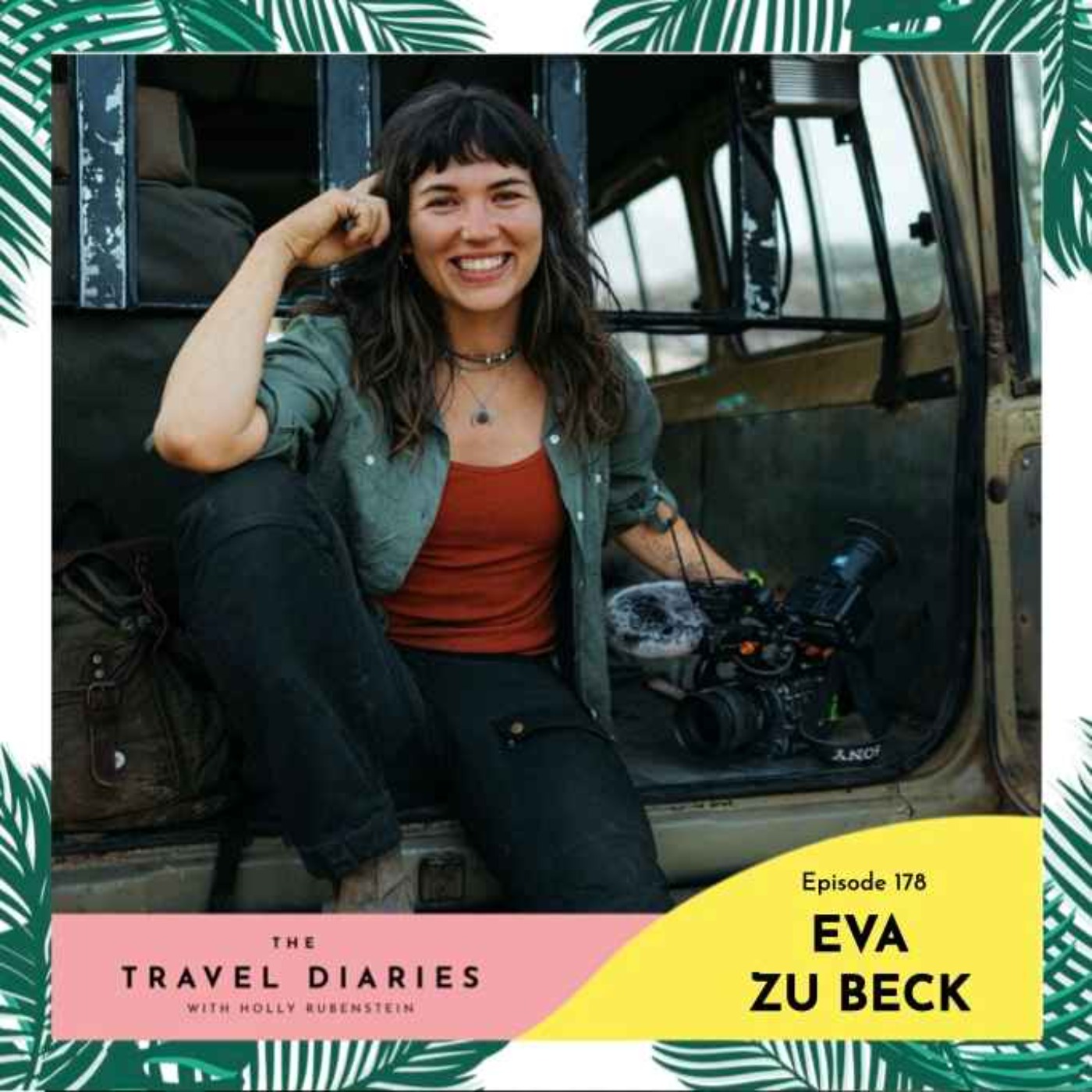
Eva zu Beck is an Oxford-educated adventurer, filmmaker, writer, and travel storyteller. After working in travel media and living a high-achieving life, she walked away from marriage/desk work and took a one-way trip to Nepal. For nine years she’s traveled almost full-time, including remote Mongolia, northern Pakistan, COVID lockdown on Socotra, and a Land Rover Defender drive from Mexico through Central America/US to Alaska.
Travel “shakes” people out of existential autopilot and reveals many ways to live. Adventure builds confidence through overcoming daily crises. She argues headlines can distort perceptions of countries, and sustainable tourism should prioritize local homestays.
Mongolia horse saddle break and luggage galloping; she fell and got a concussion, then walked ~25 km to help. Pakistan: locals invited her for chai and family introductions. Alaska: Dalton Highway is ~400 miles of mostly dirt with polar-bear risk in Dead Horse. Romania: Carpathians, Transylvania roads (Via Transalpina), and Maramureș homestays. Socotra: “parallel reality” dragon blood trees; she spent three COVID months there.
Written by AI. May contain mistakes.
Eva zu Beck shares her journey of self-discovery through travel.
“I felt like I was just kind of going through all of these milestones, checking them off, not because I genuinely wanted to do them, but because they were things that I was supposed to do.”
Eva recounts her life-changing experiences in Mongolia and beyond.
“In Dead Horse there is a culture of always keeping your car keys inside your car because there's polar bears.”
Eva discusses her quest for an authentic life and identity.
“Eva's life reads like something from a film.”
Eva reflects on her decision to return to her roots in Poland.
“Every now and then you arrive at a hotel and within about five minutes, you know it's gonna stay with you forever.”
Eva describes her experience of building a shepherd's hut in the mountains.
“These jagged, cinematic mountain peaks, the forest below, the changing light, the mist, the silence.”
Eva details the pivotal moment that led to her life changes.
“It's also one of the most peaceful hotels I've ever stayed in.”
Learn about a pivotal moment of decision for the speaker in Marrakesh.
“Marrakesh, life kind of going on like a river.”
Explore how travel can prompt emotional awakenings and self-discovery.
“So, you know, I feel like with travel, it really does that to you, right?”
Understand the unique geography and cultural heritage of Mongolia.
“So for people who haven't been to Mongolia which is most of us how would you paint a picture of the landscape?”
Gain insights into the best ways to experience the Mongolian wilderness.
“So the only reason that I know this is because I love Race Across the World and the final two episodes they have to cross Mongolia.”
Hear a gripping tale of overcoming challenges during a solo trek.
“In the book, you describe a scene where the saddle breaks and your satellite messengers stopped working and you're completely alone.”
Discover the unexpected twists and lessons learned from a challenging trek.
“The sense of resilience that you must have felt in those moments.”
Eva shares her memorable experience on a challenging horse trek, contemplating the fun and hardship of the journey.
Eva discusses her unexpected love for Pakistan, highlighting its diverse landscapes and warm hospitality.
“So that was actually my second kind of place that I traveled to when I kind of, you know, left my old life behind.”
She recounts the hospitality she experienced in Pakistan and the warm welcome from its people.
“What surprised you most from the local people would you say?”
Eva discusses the challenges and opportunities for sustainable tourism development in Pakistan.
“I think that's a gift that goes in both directions.”
Eva passionately describes her love for the diverse landscapes and experiences in the United States.
She reflects on her time in Montana, sharing anecdotes about life in the wilderness and its impact on her.
“It does transport you to a different time, a completely different time.”
Discover the transformative experience of living in the wild and its impact on perspective.
“And it's so wild that you really reevaluate, I think, your existence a little bit because you have to think about things in a very, very different way from, say, when you're living in a city.”
Learn about the unique culture of ranching and the skills involved in being a cowgirl.
“And of course, you did this epic, epic drive from Mexico up there.”
Follow the journey of driving from Mexico to the remote regions of Alaska.
Explore the rugged, remote Dalton Highway and the challenges it presents to travelers.
Uncover Romania's stunning landscapes and rich cultural heritage as a travel destination.
“But if you had to share with us a hidden gem, a place that my listeners might not know so much about that you love, where would you tell us about?”
Discover the enchanting region of Transylvania and its cultural significance.
“You've got, there's so much like so many cute villages high up in the mountains.”
Delve into the extraordinary experience of visiting the remote island of Socotra during COVID.
“So three months, basically, three months of just being out on this, you know, amazing, ethereal, otherworldly island while the world was collapsing around us.”
Discuss the impact of tourism on Socotra's fragile environment and local culture.
“And, you know, out there, there was no there was no COVID on the island and people were just kind of going about their everyday lives.”
Explore the unique challenges of tourism in Sokotra and the importance of sustainability.
“people want to see it and i get why because it is so special but i guess i just wish that there was more of a push for sustainability.”
Discover the remote areas around the world that remain largely unexplored.
“And there's, you know, there's so much of it that I would love to visit if I could one day, but let's see how that unfolds.”
Understand how travel influences the concept of freedom in one's life.
“That's what I used to think that freedom was when I first started this journey.”

Get the gist, explore an idea or ask about something said.
 Claude
On The Travel Diaries, what are the key points of this episode?
Searching your listeningAutomatic transcript. May contain errors.
0:00Hi, who here loves when their nails are perfectly done? Me, I'm Sarah Gibson Tuttle, and I started Olive in June because, let's be real, we all deserve to have gorgeous nails, but who wants to spend a fortune or half their day at the salon? And that's why I created the Manny System, so you can have that salon-perfect manicure right at home. And guess what? The best part? Each Manny only costs$2. Yep, you heard me,$2. No more$30,$40,$50 salon trips that eat up your day. Now you can paint your nails whenever you want, wherever you want. And trust me, you're going to be obsessed with your nails and everyone is going to ask you, where did you get your nails done?
0:39And here's a little something extra. Head over to oliveandjune.com and get 20 % off your first Manny system with code PERFECTMANNY20 at oliveandjune.com slash PERFECTMANNY20. That's code PERFECTMANNY20 for 20 % off at oliveandjune.com slash PERFECTMANNY20. You're all set for a nail glow up. Let's get those nails looking fabulous, shall we? I'm Jake Stouck, co-founder and CEO of Serval. We built Serval to automate the IT work that slows companies down. Onboarding, password resets, access to applications, my laptop stopped working. While employees wait for help, their real work is put on hold. IT desperately wants to automate this work, and that's why they need Serval.
1:20You just tell Serval what you want to automate in plain English, and it's built. No drag and drop workflows, no expensive consultants. Employees get unblocked and IT teams go from drowning in tickets to building what actually matters. With Serval, IT becomes the AI engine powering the entire company. This is a new way to run IT. We guarantee you'll automate 50 % of all tickets and we'll prove it to you in a free four-week pilot. Go to serval.com slash ACAST. That's S-E-R-V-A-L dot com slash ACAST.
2:20Howarth linen. They've been around since 1876 with over 150 years of British linen experience and they've long been the go-to for some of the UK's best hotels, restaurants and spas. What is so exciting is that they've now brought that same hotel quality experience into the home with their Richard Howarth at-home collection. They actually very kindly sent me a set to try, a set of beautiful linen for my bed and I have to say getting into bed now genuinely feels like such a treat it's that crisp fresh hotel bed feeling but at home it just elevates your experience and I didn't realize I'd appreciate it quite this much but honestly it's one of those daily luxuries now that has just made my evening so much better everything is designed to be timeless and unfussy really beautiful understated pieces for your bed your bath and your table and it's made to last wash after wash alongside their sumptuous hotel quality towels and their linen they also do beautiful table linen napkins tablecloths and they offer monogramming on everything too which i think would be such a lovely gift wouldn't that be a perfect thing to give at a wedding for example so if you're looking to upgrade your everyday whether that's your bedding towels or table linen it's definitely worth a look you can find out more at home.richard hawth.co.uk.
3:41Hawth is spelt h-a-w-o-r-t-h.co.uk.
3:50Hello and welcome to the Travel Diaries podcast. I'm your host Holly Rubenstein and here each week I uncover the seven chapters of my guests' travel diaries. From the first place they fell in love with to their all-time favourite and hidden gems, we uncover the travel experiences and destinations that have shaped their lives. Today's guest is an adventurer, filmmaker, writer, and one of the most extraordinary travel storytellers of her generation. I felt like I was just kind of going through all of these milestones, checking them off, not because I genuinely wanted to do them, but because they were things that I was supposed to do.
4:28If I left now, that would be okay. You know, life would go on. When I traveled to Mongolia and I bought two horses and took them into the wilderness on my own, the horse that was carrying all my luggage spooked and I fell on my forehead so yeah that was a pretty
4:44Eva zu Beck: bad fall and had a concussion. In Dead Horse there is a culture of always keeping your car keys inside your car because there's polar bears. So culture is very much a magical place. There is something about this island that makes you feel like you're almost like a parallel reality. Now I see it as being able to choose a life that fits you, a life that feels authentic to you, a life that makes you feel alive. That was Eva Zubek. Eva's life reads like something from a film. She was Oxford educated, working in travel media. She was married, successful, living the kind of polished, high achieving life so many people are told to want.
5:22But behind the scenes, she knew something wasn't right. So she walked away from it all and bought a one-way ticket to Nepal. Over the past nine years, Eva has travelled almost constantly, often to some of the wildest, most remote and misunderstood places on Earth. She's crossed the Mongolian wilderness on horseback, travelled through the remote mountains of northern Pakistan, living alongside local families, spent the COVID lockdown on the otherworldly island of Socotra, part of Yemen, and driven her old Land Rover Defender from Mexico through Central America and the US all the way to the northernmost point of Alaska.
6:00Before we kick off, I've got the next chapter in my travel diaries to share. and guys, it's a big one. I think this is one of the best hotels I have ever reviewed in my career. Every now and then you arrive at a hotel and within about five minutes, you know it's gonna stay with you forever. Forestus in the Italian Dolomites is one of those places. It sits high above Brixen in South Tyrol. You fly into Innsbruck in Austria and you cross the border and the setting is impossible to describe. You wake up, you open the curtains and there they are. These jagged, cinematic mountain peaks, the forest below, the changing light, the mist, the silence.
6:40It is just breathtaking. The site's history is interesting. It began as a sanatorium back in 1912, serving as a mountain retreat for the Austrian monarchy and the Vatican. Alongside its historic core, there are three striking larch-clad towers, which host these minimalist suites and the spa, all connected to the old chalet by an underground passage. Inside, it feels strikingly modern, but it never competes with the mountains. The whole point is to frame the view and it does that so beautifully. It's also one of the most peaceful hotels I've ever stayed in. Maybe that's because it's adults only.
7:14But it has this extraordinary quality where you feel your whole nervous system begin to settle. There's no noise, there's no clutter, no sense of rush, just mountain air, forest, space, silence and these enormous views. I think my guest this week, Everett, would really love it. It's right up her street. The spa's a huge part of the experience at Verestas. It's glass-fronted, so even when you're inside, you still feel completely connected to the mountains. And then there's the restaurant, which is one of the most unusual and memorable dining rooms ever. It's designed almost like a theatre, with every table facing outwards towards the Dolomites so that the mountains become the stage.
7:51And the food itself has that same sense of theatre. Every night, you have the option of a seven-course menu, and it never feels like you're just being served dinner. it feels like a performance. The dishes are rooted in their forest cuisine and inspired by the surrounding landscape into something that feels almost ceremonial. So thank you to Forestis for having us, having my mum for her 70th birthday. In fact, if you can, add it to your bucket list to visit once in your lifetime. I promise you, you won't regret it. Right, so let's get ready to hear from Eva, who came to me from her remote shepherd's hut just a few days ago.
8:27And you're going to love this episode guys so let's buckle up and get started.
8:35Ava welcome to the Travel Diaries it is so lovely to see to see you and your gorgeous dog how are you? We're doing great thank you so much yeah we're just here up in the Carpathian Mountains in my shepherd's hut
8:49Eva zu Beck: taking a little bit of a breather between two big book tours and yeah it's gorgeous here but very very basic it's you know super simple I don't have I don't have running water here or electricity so it's it's quite rough but lovely so for people who aren't watching can you take us on a little tour of your space I see you've got a lovely kind of wood burner behind you yeah so I'm just about to put that on it's still quite warm so yeah but this is what I do in the evening just put the the stove on this is my bed this is where Vioge sleeps on the side my little window here and yeah it's beautiful it's tiny but you know I spend most of my time here whenever I'm I'm home well all of my time here and uh yeah it's a genuine shepherd's hut that's like uh maybe 60 years old and I just renovated it last autumn so now I get to actually live here what made you choose this area of Poland because it is beautiful but you have been somebody who hasn't put down roots for a long time so why now and why there?
9:56Yeah I mean I've been traveling almost full time for nine years now which is pretty wild. You know I mean travel is amazing but I feel like after such a long time I just felt really called to build some kind of like a safe haven you know a little hideaway of my own. I've met so many people on my travels who have inspired me with their lifestyles. Some of the people that inspired me the most have been shepherds. And I've just become completely kind of obsessed with the idea of buying my own land and, you know, a little wooden hut, which has happened. And, you know, I am Polish, though I never thought I would ever return to my home.
10:37You know, I was kind of I left pretty early on when I was 12 years old.
10:42Eva zu Beck: And through all my travels, I just always assumed that I would end up somewhere, let's say, you know tropical perhaps a bit warmer a bit more like you know kind of like a digital nomad type of destination but something just pulled me back home and I'm so excited to be in a place that actually feels authentically mine like you know it's part of my identity so it's not always easy living here you know the winters are pretty tough and in general getting up here to my property is quite difficult. Is it very remote? It's not too far from a village, but it's high up on a mountain. And so it's very, very hard to actually get here for the first two, almost three years that I had this property.
11:25Eva zu Beck: I actually had to walk up to my land. Like there was no way to drive up here. There was no way to get here in any kind of vehicle. So yeah, I mean, you know, I remember the first year I carried a metal bathtub up to my property because I wanted to like have a little like a little tub that I could bathe in and yeah there was no way to get it up here except on my own back oh my god you are a super human are you are you a fan of that uh the program uh new lives in the wild the Ben Fogle one yeah I really like it yeah I mean you are why are you Have you been asked to be on it? I guess I shouldn't say anything just yet.
12:08Oh, watch this space. Exciting. I mean, the ultimate, the ultimate, that's so exciting. How cool. Well, I mean, I've given the introduction to your kind of life in the intro to the episode. But just as a little recap for listeners who are discovering you for the first time, your life has obviously taken this extraordinary turn. So can you take me back to that moment that you realized like this is not actually my dream life? Yeah, I think, you know, there wasn't like a single revelation where I just knew that I had to leave everything behind. I feel like it was for me kind of a slow unfolding of everything that I kind of knew to be true.
12:53You know, when I graduated from uni, got my first job and, you know, got into a relationship that eventually became a marriage. like I felt like I was just kind of going through all of these milestones checking them off as not because I genuinely wanted to do them but because they were things that I was supposed to do and I didn't really think much about what I wanted out of life so after you know several years like in my mid-20s I guess I just started asking myself questions including is this really what I want And there were some triggers, like, you know, my then fiance and husband wanting to have kids and me definitely not wanting to have kids.
13:35You know, me kind of getting a job in London behind a desk where I really knew deep down that I that was not the kind of job that I could do for the rest of my life, that I needed something very, very different, something of my own, you know, working towards building my own dream instead of someone else's. So I feel like it was just layers unpeeling gradually until things kind of imploded for me on, well, over the course of several months. But the big kind of culminating moment was when I was I took a solo trip to Marrakesh and I remember sitting up in the Medina in a little cafe and kind of looking over, you know, all the people who are just crisscrossing that really busy market in Marrakesh.
14:18Marrakesh, life kind of going on like a river. And I just realized that if I left now, that would be okay. You know, life would go on and I could build something new, something different.
14:33Eva zu Beck: So I feel like I owe that moment to Marrakesh, that moment of like sudden bravery and deciding, okay, I'm going to do it. So the next day, that happened to be New Year's Eve. um the next day I called my flatmates in London I told them that I was moving out of the apartment um called my family to tell them that I was um leaving for an indefinite period of time and also quit my job by then my relationship had already dissolved um so yeah I guess that at that moment I was just like okay if I don't do this now I'll never do it so let's go amazing and I guess then travel has been punctuated by more and more kind of emotional awakenings as you spent more time on the road?
15:16So, you know, I feel like with travel, it really does that to you, right? It kind of, it shakes you out of that, that existential kind of, that stupor, that kind of highway of life and shows you that there's so many different ways to do life. It just kind of opens your eyes as long as you're willing to let it open your eyes, right? So for me, I had so many moments like that throughout my travels. I was very, very blessed to have them because I think whenever I, you know, whenever I thought of a new trip or decided to go somewhere, I always wanted for the new destination that I was heading to, to kind of to be something very different, to be something that pushes my limits, that challenges me in some way.
16:00So I think the very first kind of experience that really did that for me when I traveled solo was when I traveled to Mongolia and I bought two horses and took them into the wilderness on my own, keep in mind I had never solo camped before in my life up to that point I have never done anything
16:17Eva zu Beck: like that you know no not even like any multi-day hiking on my own up until that point so it's a pretty wild decision I mean looking back probably quite reckless would not recommend would not recommend um but you know being out there just me and the horses and then you know the vastness of the Mongolian landscape, I felt for the first time in my life, I think, actually free. Like there was nobody there to judge me. I didn't have to answer to anyone. I didn't have to think of anyone. It was just me and this like beautiful, beautiful nature and these incredible animals. And that's all there was.
16:59And I guess I'd never up until then had felt that level of freedom and you know aliveness if I can call it that yeah like a vitality yes exactly like you feel that you're so so deeply alive and so connected and I guess if I had never really pushed myself to do an adventure of that caliber then perhaps I wouldn't have known that feeling and yeah what an amazing privilege it is to know that feeling. So for people who haven't been to Mongolia which is most of us how would you paint a picture of the landscape? Mongolia is you know it's a pretty special place because it's a very big country it's half the size of India so it's quite large most of it is mountains and grasslands and steppe though you know you've also got the desert in the south one of the biggest deserts in the world and it's a big country but there's very few people that live there only three million people um and five million horses or even six million horses now so it's it's very empty it's one of the least densely populated countries on earth and you really feel that going in because when you go in and when you maybe go just you know
18:14Eva zu Beck: little bit outside of one of the few cities, you suddenly find yourself very much alone and very much kind of, you know, out there in this huge landscape that has very little infrastructure, very few buildings, no fences. And there's just something there that makes you feel very free and quite feral, I would say. You know, you definitely like, I just, I remember like the The very first time that I traveled to Mongolia, many years back, I stepped foot in it and I just felt like, oh, my God, this is this is where the legends of like Chinggis Khan were made. Like you feel that you feel like the country hasn't really changed that much.
18:57Eva zu Beck: And the culture has really not changed that much since those times. You know, they still eat a lot of the same food traditionally. What kind of things would that be? A lot of meat. yeah meat is a very very big part of the mongolian diet with very minimal spices pretty much no spices except for just a little bit of salt and then you've got sort of different types of cheese very very hard cheese that you kind of chew on and there's really not no vegetables in the traditional mongolian diet because traditionally the nomads weren't able to grow really any vegetables or any plants you know because they were constantly traveling so they had their animals and they could either milk them and make cheese or kill them and have meat.
19:41Eva zu Beck: So, yeah, the, you know, the bulk of that traditional Mongolian diet is still very much something that people, you know, people kind of celebrate and cherish to this day. Although, of course, you know, in cities, you now have all kinds of restaurants and international cuisine, but the traditional lifestyle is still very similar to what it was 500, 600 years ago, which is kind of amazing. It's one of those cultures that feels that it's more perfectly preserved than most. So the only reason that I know this is because I love Race Across the World and the final two episodes they have to cross Mongolia.
20:17So I guess a lot of my listeners will be getting a first taste of Mongolia watching that and the majesty of the landscape. I mean, every city or town that they seem to go into is just framed by these mountain peaks. And it just I mean, it looks incredible. Yeah, it's it makes you feel like no other place in the world. Truly, it's it's like moving back in time. And yeah, I highly recommend Mongolia to anyone who kind of likes to be out in nature. But I guess it should always come with a word of warning. It is not the easiest destination. It is quite challenging. A lot of the time you'll probably go, you know, for days without taking a shower.
21:01Like, don't count on any luxuries. You're going to be roughing it. It's going to be a lot of dust. But for somebody who wanted to dip their toe in the water and, you know, experience it not on their own on horseback, which I want to dive a little bit deeper into but as just you know a traveler where would be like the the first port of call because the capital is very polluted isn't it and you know it's it it's not a reflection of the broader kind of more pure vast Mongolia so where would you say would be like a place to head to would you do you have a recommendation yeah I mean I think you know as a traveler you don't really have much of a choice you have to fly into Ulaanbaatar which is the capital that kind of dusty you know polluted capital sadly it's not the most scenic place
21:48Eva zu Beck: but in a way you know it's worth seeing it and then experiencing the absolute contrast that is the rest of Mongolia yeah but I would say you know there's so much it's such a huge country you could spend a year traveling all across it and still not see everything but I think getting in touch with a local guide or renting a car or you know renting like a four by four and then heading down to the gobi i think that's that's always a win because in the gobi you can hang out with the camel herders of the gobi um you know they have these twin humped camels that are just so like beautiful and amazing and huge such majestic animals so you can you know live with a camel herder um or you can head up into the mountains and go horse riding you know there's all these um horse trekking camps out there where you you know you of course you could if you really insisted you probably could buy your own horses but I would recommend signing up for a horse track you can go for a day or three or you can even go for two weeks up into the mountains so I think it's really the outdoor enthusiasts like paradise but you again you have to be willing to you know kind of get dirty and dusty a little bit and yeah and um become one with nature that's part of it But you had these kind of pretty hairy moments at times.
23:09In the book, you describe a scene where the saddle breaks and your satellite messengers stopped working and you're completely alone. Can you take us back to that moment and kind of tell me what it was like and how you got there and how you got out of it? Yeah, there were so many points during that adventure that I felt like giving up, that I felt were just too overwhelming and too much for me.
23:34Eva zu Beck: And, you know, on day one, for example, of my trek, well, the first full day, which I guess was technically day two. Just to zoom out a bit, what actually was the kind of trek? So where was the start and end? I had designed this route that was kind of a loop around one of the national parks in Mongolia. So it took me from a place where there was a road. So that's where I got dropped off with the horses. And then kind of I would go around for about, my plan was to go for two weeks and then kind of loop back around. But on my first full day out there in the saddle, one of my horses spooked. So I had two horses.
24:11I was riding one and the other one was carrying the luggage.
24:14Eva zu Beck: and the horse that was carrying all my luggage spooked I don't know why there was a tree there was a sheep I have no idea and he just kind of ran off with all of my stuff and started galloping and you know because he was galloping so fast and freaking out he managed to tear his saddlebags so all my stuff was suddenly just flying off everywhere you know onto the meadow and I just see this horse galloping away and I'm like oh my god I'll never be able to catch him this is over before it even began, you know, but as luck would have it, and I feel like luck plays a pretty big role in everything that I do travel-wise, as luck would have it, there was a nomadic family that was living nearby and, you know, in a yurt, well, as they're known in Mongolia, in a gyr, and they saw what had happened, and they, as soon as they saw, they came running towards me, They actually caught that horse and then they managed to bring him back to me and they helped me put everything back together.
25:15Eva zu Beck: So that was the first kind of, you know, big fiasco that I experienced out there. But every day there was something that happened, you know, the couple of days later, the saddle breaking again that I had to kind of fix with my own hands and the limited tools that I have. points where I felt you know quite scared as a solo female traveler because you know I saw people approaching um in the distance didn't know what their intentions were so every day brought a kind of new fresh crisis but in a way I feel like that's you know overcoming each each crisis one by one really made me feel like you know okay I can do this right and gave me so much confidence in my own skills, capabilities, in the fact that I can do hard things.
26:04And that's quite an empowering feeling. Absolutely. The sense of resilience that you must have felt in those moments. And then how did it feel to get kind of to your end point? Well, this adventure didn't actually have a happy ending. So instead of the two weeks that I had planned, And after about one week, I was just kind of riding along as I did every day. Nothing crazy happened except when I turned a corner and my horse got spooked by, again, sheep, goats. No idea why, but I fell off. So he threw me off and I fell off and I fell onto the ground. I was not wearing a helmet, which is very bad, I know.
26:51But, you know, it is what it is. And I fell on my forehead. So, yeah, that was a pretty bad fall and had a concussion, felt like felt very dizzy, felt like I wasn't, you know, like I felt a little bit scared, honestly, because I knew that a concussion. I felt surprised. Yeah, it could turn into something quite serious.
27:10Eva zu Beck: So, you know, for a while, I kind of I guess I couldn't decide whether I should go and seek help, something that any reasonable and responsible person probably would do. Or whether I should just kind of get over it and keep going and hope for the best. I mean, luckily, I decided that I should go and seek help because I just wasn't sure how serious it was. But I didn't want to risk my life just for pride, you know, just for being able to say, oh, I completed my two week trek. So, yeah. So for the rest of that day, I just walked with the horses. I walked about 25 kilometers to the nearest settlement that I knew was there because of a map that I had.
27:55And yeah, that was it. That's kind of how it ended. When I got to the settlement, I was taken care of by some locals. And they called the horse truck driver who came the next day and picked me up. That was it. Wow. What a story.
28:11Eva zu Beck: Yeah. and I remember saying to myself at the end of that at the end of that trek like I'll never ever do this again ever like no way I'll never go horse riding ever again but obviously time passes yeah and then you're like oh actually that was that was a lot of that was a lot of fun that was you know type two fun um so yeah definitely have plans for more horse treks in the future really where would be your dream place to do that oh my gosh there's so many amazing places but I guess like Patagonia like isn't that doesn't that sound quite dreamy you know what I mean in that like epic landscape again yes with the gauchos oh yeah that sounds like fun very sexy I would say love it so you know I normally do the traditional travel diaries format is going through the seven chapters of your life's travel diaries but I feel like we just need to throw that format out the window and just carry on chatting because the way that you approach travel is unconventional and not linear so let's just carry on that way I'll try we've I'll try and weave these in as we chat but traditionally the next chapter that we talk about really I mean I feel like we've talked about the place where you learned a lot about yourself but where would you say in this phase of your life was the first that you fell in love with I think one place that I really really fell in love with and that was a kind of unexpected destination um and this might it sounds surprising, was Pakistan.
29:55So that was actually my second kind of place that I traveled to when I kind of, you know, left my old life behind. From Nepal, I went to Pakistan because a friend who was living there at the time, working for an NGO, invited me over and she was like, hey, Pakistan is great. And I was like, Pakistan, really? That sounds dangerous and I'm not sure about this. But she was like, she really insisted. And she said, you're going to fall in love with it. you'll see just come so I did I went to Pakistan to visit my friends and ended up doing a little solo trip up to the mountains of Pakistan and one thing that I think everybody should know about this amazing country is that you know I think a lot of the images that we see are that it's you know quite like we imagine it to be quite dusty and you know you know quite just dangerous and
30:42Eva zu Beck: dusty I think those are the two words that a lot of people would imagine yeah but it's it's so incredibly diverse. You know, in the north, you've got the Himalayas, the Karakoram mountains, like some of the tallest peaks in the world are in Pakistan. And then you travel south, and there you've got the deserts and the Arabian Sea. It's just such a rich place. There's so much diversity in terms of landscape and culture. And I guess I went there, and I was just so shocked that a place that I had known very little about, and that I had always imagined in this one limited way actually just expanded like blew my mind really and yeah I completely fell in love with it and I fell in love with the people and the hospitality just truly an amazing destination so yeah Pakistan Pakistan and so did you and you started was it in northern Pakistan yes yeah so I spent some time there but I traveled all around the country to a lot of areas that I think you know are out of bounds for travelers because I got to do some really amazing projects up there that kind of gave us access to to spots that are just not on the tourist map and completely inaccessible you know I saw you know traditions and cultures that I had never heard of up until then really amazing places.
32:05What surprised you most from the local people would you say? I think there is a sense that again there's this idea that you know oh it's dangerous out there that you know you won't be welcome especially as a solo female traveler as a as a woman you know foreign woman but what I found was actually the exact opposite when I was traveling through Pakistan whether I was alone or with locals or with friends in any constellation I always felt
32:33Eva zu Beck: extremely welcome you know people would always kind of when they saw me out on the street they would say oh my god like can you come over to my house i want to make you some chai some tea you'll meet my mom you'll meet my parents you'll meet my family people were so incredibly welcoming and i think you know the way that i kind of understood it just through conversations was that a lot of people told me that look we we love guests hospitality is part of our culture um we revere guests that you know they are a blessing and we also want to make sure that everybody who comes to Pakistan leaves with a positive image of Pakistan in their minds.
33:11You know, we want people to know that we are good people. And I just remember someone saying these very words to me, like, please tell the world that we are good people. Well, that breaks my heart in a way. I mean, it's wonderful that you are documenting your time there and sharing about how wonderful your experience was it it breaks my heart a little bit that like you say the headlines shape our perception of a country and and that the local people feel that yeah they definitely do and they know what they're very well aware of of how most of the world think of things of their country so I think it's it's amazing when you know when travelers can go there with an open mind and really open themselves up to the culture.
33:58I think that's a gift that goes in both directions. So yeah, I highly recommend Pakistan.
34:04Eva zu Beck: Maybe not as like your first travel destination, but I think, you know, for the traveler who seeks something a little bit different, you know, it's such an interesting place. My gosh. Do you think it will become more popular as a kind of tourist destination? I think it will. I think it should. But I also worry that it doesn't have all the necessary kind of stops in place to make that growth sustainable you know there is definitely the issue of of kind of governance around tourism that's a little bit tricky a little bit difficult there's you know there's a lot of corruption in Pakistan there's a lot of unsustainable developments there's a lot of kind of get rich quick kind of schemes in terms of you know building crappy hotels and yeah it's just I feel like the people of Pakistan are truly amazing so hospitable but I feel like the people who are at the top are not necessarily helping those people really kind of benefit from a sustainable kind of tourism so I think you know kind of my my wish whenever someone goes to Pakistan is like go stay with a local family do a homestay you know don't don't stay in these crappy hotels that you don't know who who built them who they who they belong to that are not in line with like local architecture go stay with the local family you know seek out those kinds of experiences and opportunities yeah that's very good advice and i you know applicable to many countries really absolutely so many so true today's episode is brought to you by Airbnb.
35:42You know that lovely feeling when you arrive somewhere new and it just feels easy, like you've landed somewhere that gives you a genuine window into local life? That's something I hear about again and again from friends that stay in Airbnbs. People love being in real homes, in real communities, experiencing a destination in a more personal way. It's those small, authentic touches that often end up being the most memorable part of a trip. And those homes most likely belong to people who are just away themselves, traveling for work, visiting family, heading off on a holiday, and during that time they make the most out of their home by hosting on Airbnb.
36:21It's a great way to make use of otherwise empty space, plus it's flexible, it fits around your calendar, and it can help unlock some extra value from your home while you're not using it. There's something quite nice about knowing your space has played a small part in someone else's travel diary. Your home might be worth more than you think. Find out how much at airbnb.co.uk forward slash host. Thank you to Airbnb.
36:49Hi, it's Sarah Gibson Tuttle, founder of Olive and June. If you love having your nails done, but you don't have the time or the money to go to a salon every week, I have something just for you. It's called the DIY Manny Challenge, and it starts with one simple idea. Today is the day that you learn to do your own nails. So whether you're brand new to doing your nails or already obsessed with your at-home Manny routine, This is your invitation to level up your nail game with expert guidance every single step of the way. So no matter where you are in your nail journey, we've got you covered at Olive and June.
37:19Are you ready to take the DIY Manny Challenge? We've taught millions to Manny, and now it's your turn. So go to OliveandJune.com slash DIYLove20 for 20 % off your first system using code DIYLove20. That's OliveandJune.com slash DIY L-O-V-E 2-0. Hi, it's Paige from Giggly Squad, and this episode is sponsored by Experian Boost. Summer glow up? Check. Credit glow up? Even better. Boost your credit scores instantly by getting credit for bills you're already paying. Your phone, utilities, rent, and insurance. I wish dating kind of worked like that. Connect your bank account, add those on-time payments to your Experian credit file, and your FICO score updates right away.
38:03You could instantly raise your FICO score by an average of 14 points with Experian Boost. Download the Experian app for free today. Results will vary. Users who received a boost improved their FICO score 8 from Experian by an average of 14 points. See App Store or Experian.com for details. Results will vary. Not all payments are boost eligible. Users who received a boost improved their FICO score 8 from Experian by an average of 14 points. Some may not see improved scores or approval odds. Not all lenders use Experian credit files, and not all lenders use scores impacted by Experian Boost. See Experian.com for details.
38:39it sounds like it means a lot to you perhaps one of your all-time favorite destinations um but if you had to pick one aside from mongolia and pakistan where would you pick as your all-time favorite today it changes i know for my guests from day to day you've just you've just stripped two of my favorites out of my i know i'm so sorry yeah gosh where do i go from here
39:08Eva zu Beck: um actually you know and this this is gonna sound perhaps a little maybe a little basic maybe a little controversial but i actually really really love the united states um for like as a traveler now yeah obviously let's just ignore the politics and and all that madness yeah yeah i love the u.s because it is just so incredibly diverse you know you've got this is a country that is basically the size of a continent you know it stretches across from one ocean to another you know you've got places like alaska which are just so out there so incredibly remote like what an amazing adventure destination then you've got places like you know Arizona and New Mexico like desert and mountains and canyons there's just so much you know there was a time in my life where I really wanted to live in the United States because I was just so enamored with with the incredible diversity of the landscape and and there is that sense that you can you know of course you can't kind of wild camp everywhere but there's a lot of places where you can go camping and beautiful wild good infrastructure in the national parks isn't there in general there's an encouragement to get out into nature and that kind of hiking culture as well that isn't necessarily like the same yes Europe and well certainly in England at least so true you know there's so many opportunities to go hiking and trekking there's amazing trails and yeah it's just it's just a great place like you know again setting aside whatever our differences may be um it's not the cheapest of destinations and yes there is traffic and there's highways but but if i think as soon as you get away from all that noise and all that traffic into some of the more remote spots you know there's places where you feel like you're the only person in the entire world and that's in the united states like you know the same place that has given birth to new york city and hollywood like you can go out into the mountains and just be completely alone with the wolves and the grizzlies so yeah I love the US and I can't wait to go back quite soon me too me too well zooming in is there a particular spot in particular in a particular state that would be your favorite I think Montana did it for me gosh you know it is just mountains and forests and grizzly bears and and wild nature and wildlife and you know So I think Montana just really kind of like a little bit like Mongolia.
41:39It does transport you to a different time, a completely different time. Like when I was when I was there and I spent a couple of months in Montana, I actually got my dog in Montana as well. Yeah, he's an American.
41:53Eva zu Beck: He is American. Yeah, indeed he is. He's an American German shepherd. but I got in there and I spent the first few weeks of our life together in this little cabin in the woods with no power no running water and I just remember waking up one day and being like oh my god I think I left his kibble outside and I went to check went outside to check and it was scattered all over the place and I was like oh my god did like a bear come and tear the bag apart And, you know, but you just kind of you're in that place. And it's so wild that you really reevaluate, I think, your existence a little bit because you have to think about things in a very, very different way from, say, when you're living in a city.
42:37You know, you're actually out there in the wild nature, like living alongside it. So it's it's just it's incredible. So, so wild. Did you hang out with the cowboys? I did, actually. Yes, I did hang out with the cowboys in Montana. um I went to see cowgirls is it cowgirls is the equivalent yeah I went to see this ranching family
43:00Eva zu Beck: um and I made a film with them learning how to be a cowgirl so you know learning about like kind of rodeo style riding learning about the work you know that they do and everything that it takes to actually be a good cowboy you know rounding up cows and kind of patrolling your big ranch and you know being out there in montana on this 2 000 acre massive massive ranch with these beautiful quarter horses you know you're kind of sitting in a western saddle and there's all these guys kind of running around you you know doing their cowboy thing and having whiskey like that is just i have i mean i have not watched yellowstone because i'm kind of worried that it's going to ruin montana for me but it like i can imagine that that's kind of what it felt like And then you also mentioned Alaska.
43:52And of course, you did this epic, epic drive from Mexico up there. Was it that way around starting in Mexico up to Alaska?
44:02Eva zu Beck: so I actually yes I picked up basically I shipped my truck my 20 year old landowner defender named Odyssey I shipped her from Europe to Mexico in the first place so I kind of flew over waited for the truck to arrive in Mexico and then picked her up she'd been obviously on a cargo ship and then drove her across well Central America a little bit and then up across the United States got my dog in montana and then kept driving up north to alaska and to the north of alaska no less which alaska is a very very big place and so when you say you're driving to alaska that really doesn't mean that much because you can reach the southernmost tip of alaska but still be very very a very long way away from the the northernmost um edge and yeah um i mean kind of my goal was to make it to the very top which is kind of the end of the of the road it's called the world and yeah actually it really feels like it it does feel like it um it's one of the northernmost roads in the world and um yeah it's called dalton highway and i think you know it's become famous because of the show about these um ice truckers you know the guys kind of drive up in the north of Alaska and it truly is a very very wild road because it's called the Dalton Highway but it's not really a highway it's 400 miles of a dirt road that leads really it's not a proper paved road no no no I mean there's little bits of it that are paved but most of it is unpaved because the conditions up there are so difficult so tough that you know it will just take too much work to repair the pavement all the time the asphalt so they just leave it like as a dirt track and that's what they use to get up there and it's really some of the most remote areas in the world you know imagine the north of Alaska you've got this is like tundra this is there's no trees growing there anymore it's so far up north it's just massive mountains you know sprawling across the landscape there's snow there most of the year there's polar bears prowling these areas like this is just I mean I'm just getting shivers thinking about it it's such a it's one of the wildest places on our planet and then there's this tiny road that cuts across it where you know you've got these big trucks that drive it they basically service and kind of transport oil from the very north of Alaska there's a little town there at the very top or town town I think is a very generous word a settlement an industrial park I should say so you know you've got these truckers who travel up and down this road and then you've got the occasional traveler like myself and my friends who traveled there together in our two Land Rover Defenders and yeah it's a it's a very extreme place truly one of the wildest I had ever been to but yeah I mean you got to be prepared that for 400 miles there's only one gas station and there's no mechanics no towns along the way so you really have to be very self-sufficient and you're sleeping in your car on in the tent on your car no hotels along the way um there's there is a hotel uh way up north in in in the kind of that settlement at the at the far edge um by the way the town is called dead horse which is what a name itself like let's go to dead halls yeah why not sounds great um reassuring yeah but we were camping in our trucks uh along the way you know just sleeping in rooftop tents and yeah so magical in dead halls there is a culture of always keeping your car keys inside your car even when you leave your car out on the street because there's polar bears there and sometimes they'll get into town so if you're trying to get away from a polar bear you should like the culture is that you that anyone should be able to run into any truck that's anywhere parked on the side of the road be able to get inside it and drive off so yeah it's a very special place oh wow that is that feels almost as wild as mongolia truly it probably is yes yeah that's alaska yeah incredible well i I mean, all of your destinations are hidden gems in their own right.
48:32But if you had to share with us a hidden gem, a place that my listeners might not know so much about that you love, where would you tell us about? I'll give you a place that's a little bit closer to home for me and I think maybe some of our listeners today because it's in Europe. And it's a place that I think a lot of people don't really associate with adventure and beauty. but I reckon it's one of the most beautiful places in Europe and probably my favorite country in Europe and that is Romania. Romania is home to the Carpathian Mountains which I actually live
49:11Eva zu Beck: in the Carpathian Mountains too just on the Polish side of them and Romania is just really again that you know that kind of if we're speaking of wild destinations it's one of the last remaining wild destinations in Europe. You've got, there's so much like so many cute villages high up in the mountains. There's a lot of that shepherding culture that still survives. There's a lot of incredible opportunities for hiking and trekking, just nature, nature, nature. And it's not so far away and it's very, you know, drivable by car. A lot of people speak English. It's truly extremely underrated in my opinion and I really do believe that it deserves you know a little bit more attention.
49:57Are there any places in particular in Romania that you'd say would be a good starting point? Transylvania?
50:03Eva zu Beck: I think Transylvania is a pretty good bet. It has some really amazing roads so let's say if you rent a car you can drive up and down these incredible mountain roads you plenty of switchbacks and just amazing views. I think the Via Transalpina is one of them I think that was featured in Top Gear at one point as well. Very well deserved. There is, you know, in Transylvania, you've got castles, you've got, there's a lot of culture, beautiful towns and villages. So that's definitely a safe bet. I would also recommend the region of Maramoresh. It's a little bit less known. High up in the north, I think it may be quite close to Transylvania.
50:44Eva zu Beck: It's like Transylvania's less known cousin. um but just idyllic landscapes again beautiful villages with wooden houses and you know you can stay in in these beautiful like family homestays so it's truly truly just a gorgeous place and quite easily accessible so fabulous I think that would be my recommendation wonderful hidden gem has anyone recommended Romania before I'm trying to think I think a long time ago Transylvania came up for slow travel as being a lovely place to cycle through but not recently and I think that it is a wonderful hidden gem to have and as you say like how wonderful that it's really on our doorstep here in Europe so we need to direct light yeah direct to our bucket list European countries some are slightly less accessible that I did want to ask you about is Socotra quite the polar opposite of accessibility uh but I really wanted to chat to you about it because um my most intrepid guests I would say lowly planet founder Tony Wheeler uh Simon Calder the travel editor this is a destination that these guys had had on their bucket list when they came on you know the place that they wanted to get to you got there you ended up being stuck there during covid um so tell me what is Socotra like is it as otherworldly and kind of mystical as as travelers have in their minds yeah I definitely had a very special experience of Socotra let me just put it that way so just to give a little bit of context I spent the COVID lockdown there.
52:33Eva zu Beck: So three months, basically, three months of just being out on this, you know, amazing, ethereal, otherworldly island while the world was collapsing around us. So very special, very special and kind of surreal experience. And, you know, out there, there was no there was no COVID on the island and people were just kind of going about their everyday lives. So that was, it was very different. And I feel like Socotra is, it is very much a magical place. There is something about this island that makes you feel like you're almost like a parallel reality, like a parallel world. You know, all the fauna and flora of the place is just incredible.
53:23They've got, you know, there's so many plants and trees that don't exist anywhere else. only you can only find them on the dragon blood trees the dragon blood trees being one of them yes just absolutely amazing and I actually have a tattoo of a dragon blood tree um that I got after
53:41Eva zu Beck: coming back from Sakotra I don't know if you can see it but it's a very meaningful very meaningful it's beautiful um yeah just such a beautiful beautiful creation in this world that we have and I would say Sokotra is I think for me a very complicated place because a little bit like with Pakistan it's a place that you know is experiencing a boom a lot of attention a lot of people want to come visit it but there is no infrastructure to support the tourism and there's you know I mean I don't know exactly how much it's changed in the last three or four years since I've been there last but I almost don't want to go back.
54:24Eva zu Beck: I'm quite worried about going back and I know that you know I do blame myself a little bit because you know my series being out there on Socotra I'm sure has influenced the influx of tourists in some way. Of course I can't blame myself entirely and neither do I want to give myself that level of influence but I'm sure that there's something about my time there that pulled a lot of people to the island and I I do worry about it you know there's not much that I can do um I'm not so country I'm not Yemeni but I do feel like there is there's a lot of people out there who just want to make money very quickly you know tourists are a pretty easy way to do that and so I worry about it do you worry more about the the locals or the tourists that are going there who might be in a tricky situation yeah I mean from what I hear there's a lot of people going there who maybe don't have that same level of respect for nature in the natural world as many of us do um from what I hear there's a lot of you know noise pollution there's there's a lot of disrespect for the culture and there's a lot of trashing of the place oh that's awful to hear yeah so culture doesn't really have any like facilities to deal with like with trash and rubbish for example you know at that very basic level like you know tourists you know coming in um and bringing in well generating rubbish you know on a much larger scale whereas you know the the kind of the more traditional socotry way is is much more sustainable using sustainable materials and um you know i just feel like it's yeah i know i understand that people want to see it and i get why because it is so special but i guess i just wish that there was more of a push for sustainability.
56:12Now, that's difficult to expect from the Yemeni government. You know, I mean, this is a country at war. And Sokotra being kind of like a safe zone, you know, it's still very much affected by this, you know, government in flux and conflict and complete disruption. So, yeah, I guess if someone does go to Sokotra, I would just be really, really careful and, you know try and be very very understanding of the fact that this is a very conservative place you know where you can't take pictures of women for example where you should not be wearing a bikini on the beach despite what many social media posts will have you believe this is a place where you know anything you carry and you should carry out um it's a very fragile ecosystem so yeah i
56:59Eva zu Beck: think yeah that's that's my only that's my kind of gripe with socotra and socotra tourism i i want to go back but I think I just need to get ready mentally for a bit of a shock yeah I guess when you are traveling to such almost undiscovered places then that's the risk that you'll probably have for each of them if you were to return um and in that kind of what are the last frontiers has left I mean where would you say hasn't been touched by by YouTube or Instagram what do you what do you think where are the last kind of corners of the earth I don't know if I should put it out there because that means that people will start going there um I feel like there's still a lot of places that um you know that haven't been turned into content and um i think a lot of them are you know across central asia and i'm not talking about countries but i'm really talking about regions about areas of wilderness that you know people haven't really reached easily or haven't been able to reach easily there's whole you know there's swathes of russia and again whatever you think about russian politics i mean you know i as a polish person have very strong opinions but i also appreciate that russia is an extremely culturally really diverse and rich country.
58:28Eva zu Beck: And there's, you know, there's so much of it that I would love to visit if I could one day, but let's see how that unfolds. There's, you know, there's huge areas, of course, of Africa, especially around Central Africa, also around the Sahara, much less accessible, some of them very difficult to access for tourists, some of them even impossible to access for tourists. You know, there's Canada, look at the north of Canada, like it's so much and so few people have been there. You know, there's Arctic regions in the winter that are, again, only for people who have really, you know, just really for the toughest individuals out there.
59:06Eva zu Beck: So I feel like there's a lot, there's a lot, but I think that some of the most unexplored remote places require grit and skill and experience. And I think that's kind of difficult to come by in this kind of YouTube creator economy.
59:25I'm Jake Stouck, co-founder and CEO of Serval. We built Serval to automate the IT work that slows companies down. Onboarding, password resets, access to applications, my laptop stopped working. While employees wait for help, their real work is put on hold. IT desperately wants to automate this work, and that's why they need Serval. You just tell Serval what you want to automate in plain English, and it's built. No drag-and-drop workflows, no expensive consultants. Employees get unblocked and IT teams go from drowning in tickets to building what actually matters. With Serval, IT becomes the AI engine powering the entire company.
1:00:04This is a new way to run IT. We guarantee you'll automate 50 % of all tickets and we'll prove it to you in a free four-week pilot. Go to serval.com slash ACAST. That's S-E-R-V-A-L dot com slash ACAST.
1:00:24Hi, it's Paige from Giggly Squad, and this episode is sponsored by Experian Boost. Summer glow up? Check. Credit glow up? Even better. Boost your credit scores instantly by getting credit for bills you're already paying. Your phone, utilities, rent, and insurance. I wish dating kind of worked like that. Connect your bank account, add those on-time payments to your Experian credit file, and your FICO score updates right away. You could instantly raise your FICO score by an average of 14 points with Experian Boost. Download the Experian app for free today. Results will vary. Users who received a boost improved their FICO score 8 from Experian by an average of 14 points.
1:01:04See App Store or Experian.com for details. Results will vary. Not all payments are boost eligible. Users who received a boost improved their FICO score 8 from Experian by an average of 14 points. Some may not see improved scores or approval odds. Not all lenders use Experian credit files, and not all lenders use scores impacted by Experian boost see experian.com for details and you said in in your fabulous book that it became less about travel and more about freedom so what does freedom as we kind of wrap up today's episode what does freedom mean to you now i used to think that freedom was all about you know picking up your backpack and setting off into the world and going traveling.
1:01:51That's what I used to think that freedom was when I first started this journey. But I think now I see kind of having really traveled the world far and wide, having done some really crazy adventures and then having come home, I think freedom has really changed for me. And now I see it as being able to choose, being able to choose a life that fits you a life that feels authentic to you a life that fulfills you a life that makes you feel alive and having the freedom to live that life is it's just one of the most extraordinary gifts and I don't think you have to go far to feel free at all I would even argue that you know a lot of people that I've met along the way who you know have never left their country somewhere on the edge of the world are some of the most free people in the world so yeah freedom it's all in the mind what a beautiful way to wrap up the episode Ava thank you so much for sharing your travel diaries with us it has been such a pleasure to chat thank you thank you it's been so much fun so yeah here's to travel is to travel
1:03:06wow what an extraordinary woman a huge thank you to ever for joining me on the podcast i honestly found her so inspiring her courage the way that she's built a life that feels completely true to her i really hope you enjoyed it ever's new book the wilder way is out now and if you love this conversation i think you'll absolutely love the book too i'll of course be back next week with a brand new guest. So don't forget to hit follow or subscribe on your podcast app so that you don't miss an episode. To find out who's joining me next week, come and follow me on Instagram. I'm at Holly Rubenstein.
1:03:40You'll also find me on TikTok at Holly Rubenstein as well. In the meantime, have a fabulous week and safe travels.
1:04:04Today's episode is brought to you by Airbnb. One thing I have learned from years of traveling is that the trips you remember most aren't always about the big headline sites. It's that feeling of getting under the skin of a place. Some of my most memorable stays have been in real homes, in real neighbourhoods where you start to experience that quieter rhythm of somewhere. The morning coffee spots, the local park around the corner, the little details that make a place feel lived in. And of course, many of those homes belong to people who are simply away for a few days or heading off on their own travels.
1:04:43Instead of leaving their home empty, they choose to host on Airbnb during that time. It's a practical way to unlock a bit of extra value from your home, whether you're away for a long weekend or a longer stretch of time. And at the same time, it allows someone else to experience your area in a more personal, local way. If you've ever been curious about hosting, getting started is even easier than you expect. Your home might be worth more than you think. Find out how much at airbnb.co.uk forward slash host. Thank you to Airbnb.
1:05:19Hi, it's Paige from Giggly Squad, and this episode is sponsored by Experian Boost. Summer glow up? Check. Credit glow up? Even better. Boost your credit scores instantly by getting credit for bills you're already paying. Your phone, utilities, rent, and insurance. I wish dating kind of worked like that. Connect your bank account, add those on-time payments to your Experian credit file, and your FICO score updates right away. You could instantly raise your FICO score by an average of 14 points with Experian Boost. Download the Experian app for free today. Results will vary. Users who received a boost improved their FICO score 8 from Experian by an average of 14 points.
1:05:59See App Store or Experian.com for details. Results will vary. Not all payments are boost eligible. Users who received a boost improved their FICO score 8 from Experian by an average of 14 points. Some may not see improved scores or approval odds. Not all lenders use Experian credit files, and not all lenders use scores impacted by Experian and boost. See experian.com for details.
Today’s guest is an adventurer, filmmaker, writer and one of the most extraordinary travel storytellers of her generation.
Eva zu Beck's life reads like something from a film. She was Oxford-educated, working in travel media, married, successful, and living the kind of polished, high-achieving life so many people are told to want. But behind the scenes, she knew something wasn’t right. So she walked away from it all. The marriage, the career, the security, the neatly mapped-out future, and bought a one-way ticket to Nepal.
Over the past nine years, Eva has travelled almost constantly, often to some of the wildest, most remote and most misunderstood places on earth. She has crossed the Mongolian wilderness on horseback, travelled through the mountains of Pakistan living alongside local families, spent months on the otherworldly island of Socotra in Yemen during lockdown, and driven her old Land Rover Defender, Odyssey, from Mexico through Central America and the United States, all the way to the northernmost point of Alaska.
You’re going to love this one guys.
Destination recap:
Eva’s new book, The Wilder Way, is out now, and if you loved this conversation, I think you’ll absolutely love the book too.
With thanks to...
Richard Haworth - Discover their luxury hotel-quality bedding, towels and table linen at Richard Haworth At Home
Airbnb - Your home might be worth more than you think. Find out how much at airbnb.co.uk/host
If you enjoyed this episode, please hit follow or subscribe wherever you’re listening. It really helps the podcast grow, allows me to keep bringing you these incredible guests - and it means you’re delivered a fresh dose of wanderlust each week.
And if you’d like a little more Travel Diaries in your life, you can find me on Instagram and TikTok @hollyrubenstein.
Thanks so much for listening, and I’ll see you next week.
Hosted on Acast. See acast.com/privacy for more information.