Ask ChatGPT

 The Travel Diaries
6 Oct 2026 · 49m · 18 chapters
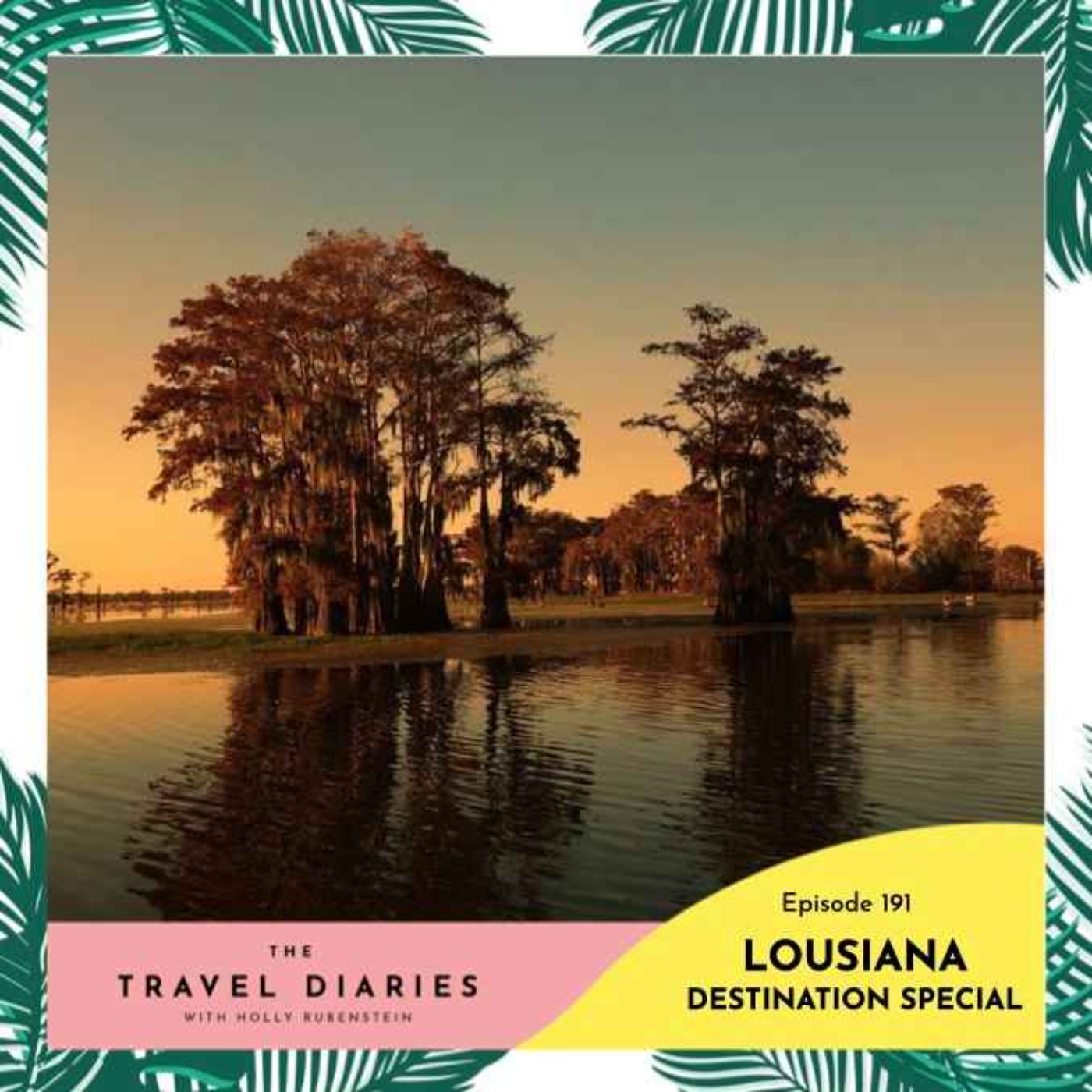
Destination special on Louisiana beyond New Orleans, focusing on Acadiana (Cajun/Creole country), its swamps, music, language, and food.
Louisiana can feel like “a country within a country”; Cajun/zydeco’s “ground zero” is about two hours west of New Orleans in places like Lafayette, Eunice, Breaux Bridge, Opelousas, and Lake Charles; Louisiana French was stigmatized after a 1920s law made English official, but is being reclaimed via immersion schools and “French tables.”
Jazz Fest (started 1970; ~400,000 attendees; major acts like Eagles, Rod Stewart, Rolling Stones); Mardi Gras (Catholic Lent lead-up; Eunice Cajun Mardi Gras Festival is five days); Chafalaya Basin swamp tours and alligator feeding; La Poussière Cajun Dance Hall; Opelousas Zydico festival (Labor Day weekend, 44 years); Steamboat Warehouse in Washington; “stuffed boudin wings” at Desmo’s.
Herman Fusilier (Louisiana travel/culture writer); Jordan Thibodeau (Cajun French musician/singer; Cypress Island, St. Martin Parish); Laurie Johnson Walls (Lafayette restaurant owner, Johnson’s Boucherie/Bouchenier).
Written by AI. May contain mistakes.
Learn about Louisiana's geography, culture, and what makes it unique.
“for three centuries, and we're going to talk about it today.”
Discover the significance of Jazz Fest and Mardi Gras in Louisiana's culture.
“Nice to see you and thanks for having me.”
Understand the musical heritage of Louisiana and its cultural importance.
“And one of his songs, People Here Know How to Party.”
Explore the efforts to reclaim the French language and its cultural significance.
“Are there particular places that you recommend that people can experience that?”
Get insights on exploring towns in Acadiana on a road trip from New Orleans.
“It's a table where people can go sit and speak French.”
Discover the scenic and cultural highlights of Louisiana's small towns and swamps.
“For people who haven't really heard of these destinations, to paint a little picture of what these places kind of feel like.”
Hear about favorite restaurants and hidden gems in Louisiana, including unique local dishes.
“well, Louisiana, the Northern Caribbean.”
Discuss the importance of Cajun French language and identity in Louisiana culture.
“I caught him on the porch of his home right on the edge of the largest swamp in North America.”
Explore how language reflects the diverse history of Louisiana and Cajun culture.
“people here all of the birds and fish and things that a lot of the animals a lot of the nature that I thought was French words.”
Learn about the unique Cajun cuisine and the significance of rice and gravy.
“You know, that's what he would tell American tourists that would come here.”
Discover the infectious rhythms and cultural influences of Cajun music.
“For someone who's never heard Cajun music before, how would you describe the feeling of it?”
Find out about the natural beauty and key attractions in Louisiana for visitors.
“if i came to where you live for for the day uh or for a weekend what would be the perfect day would you say for travelers, for visitors?”
Understand the warm hospitality and unique cultural identity of Louisiana residents.
“Obviously, we're a very hospitable people.”
Discover the diverse species and natural beauty of Louisiana.
“I think that's an incredibly important part of what Louisiana has to offer is the diversity there.”
Learn how food ties into family and memory in Louisiana.
“Laurie Johnson Walls runs an iconic restaurant in Lafayette that's been in her family for generations, Johnson's Bouchenier.”
Get recommendations for must-try Louisiana dishes like beignets and boudin.
“You have to you definitely need to try the beignets.”
Explore local restaurants and food recommendations in Lafayette.
“You just hold it in your hand and the stuffing.”
Find out about nostalgic dessert spots like Borden's Ice Cream.
“Po-poys are basically a sandwich made with, you can put ham, roast beef, fried shrimp, fried catfish, any kind of protein you'd like.”

Get the gist, explore an idea or ask about something said.
 Claude
On The Travel Diaries, what are the key points of this episode?
Searching your listeningAutomatic transcript. May contain errors.
0:05Hello and welcome to the Travel Diaries podcast. I'm your host Holly Rubenstein and today on this destination special we're heading to the USA and the state of Louisiana. Louisiana sits right down in the deep south on the Gulf of Mexico at the mouth of the Mississippi River. It's bordered by Texas to the west, Arkansas to the north, Mississippi to the east, and below it, just Gulf water. For a lot of us here in the UK, Louisiana means one thing, New Orleans. Jazz, beignets, Mardi Gras beads, the French Quarter, and New Orleans absolutely earns its dazzling reputation. It's been a melting pot of French, Spanish, African, Caribbean, and Creole culture for three centuries, and we're going to talk about it today.
0:49But this episode isn't just about New Orleans because about an hour west of the city you cross into a part of the state most visitors really never see, a region called Acadiana. This is Cajun and Creole country, small towns like Lafayette, Eunice, Browbridge and Opelousas threaded together by swampland and some of the best food you'll eat anywhere in America. It's rural, it's humid, it's super green and it runs on its own rhythm, its own music, and in some homes, even its own language. You can fly easily into New Orleans from the UK. Currently, I think BA fly directly, and you can connect through other airlines in Atlanta and Charlotte.
1:31And from there, it's a straightforward drive along Interstate 10, out into the heart of Acadiana. So give yourself at least a few days beyond the city if you'd like to try it out. And that's where we're headed to today. I've got three brilliant guests to take us through the whole state of Louisiana. These are Louisiana natives born and bred. And I wanted to start off with someone who could give us the lay of the land, New Orleans and everything beyond it. So let's welcome my first guest, Louisiana-based travel and culture writer, Herman Fusilier.
2:06Herman Fuselier: Herman, welcome to The Travel Diaries. It is so great to see you. How's it going? Going well, Harley. Nice to see you and thanks for having me. Appreciate it. Here in the great state of Louisiana and everyone knows New Orleans. New Orleans is at the mouth of the Mississippi River, but just as over the generations has established itself as a fun city. It's hard to go to New Orleans and not have a good time from the food and the music. The music is something I enjoy in particular. The Jazz Fest is one of the big events that go on every year. Started back in 1970, but really started off as a little almost neighborhood celebration in downtown New Orleans, right around the municipal auditorium.
2:48But it's since grown into one of the largest music festivals in the world. 400 ,000 people attend the Jazz Fest and an all-star lineup. Recently, the Eagles were there, Rod Stewart, the Rolling Stones have been there besides all the great local jazz, R &B, Cajun, Saedico musicians. So it's one of the great ways to have a good time in New Orleans and in Louisiana.
3:12Herman Fuselier: What an amazing lineup. And then, of course, I guess there's Mardi Gras as well. Oh, yeah, absolutely. Mardi Gras is a long tradition in New Orleans and really across Louisiana. But every year, estimates I've seen over a million people visit New Orleans just during Mardi Gras time. Everyone can see the floats and the parades. And it's a really good time. For people who actually aren't even familiar with what Mardi Gras is and what it involves, could you help kind of bring that to life a little bit for us? Mardi Gras is a celebration. This is a primary Catholic region. And at the beginning of Lent, Lent is the time of fasting and when leading up to Easter and Mardi Gras is always the Tuesday before Ash Wednesday.
3:59So the last chance to have some fun, so to speak, before the holy season of Lent. So it's really a time to let your hair down and have a lot of fun. And New Orleans has parades and lots of pageantry and balls involved in New Orleans. I live outside of New Orleans in southwest Louisiana. We have some of that same pageantry, but there's also a festival atmosphere, I guess you could call it. And there's an old ancient tradition here, Courier de Mardi Gras, the Mardi Gras run, which people get on horseback and go from house to house to ask for ingredients to gumbo. And then that turns into a big party at the end of the day where everyone can celebrate Mardi Gras.
4:42Herman Fuselier: Oh, wow. That sounds so fun. I mean, how did that all evolve? Because that is quite specific to Louisiana, isn't it? The Mardi Gras Festival. Pretty much. Mobile, Alabama claims to have the first Mardi Gras, which I think they had in the 1700s, 1800s, but slowly moved to New Orleans. And New Orleans is a major tourist attraction now, really for the entire state of Louisiana. So in our area, it's been a long-time tradition too. So it's really been something that's been all of our families for a long time, seems like. So, you know, one of those things seems like it's always been there. Do you look forward to it like you would do Thanksgiving or Christmas?
5:26I do, because it's always a fun time. Where I live in southwest Louisiana in St. Landry, Paris, is a town of Eunice that has turned that countryside celebration into a five-day festival of music, Cajun music, exotical music, great food, any type of food you can imagine, a couple of stages of music. So for five days leading up to Mardi Gras, Mardi Gras, Fat Tuesday, always on a Tuesday. So from the Friday to the Tuesday, parties are going on all over the place. And this main festival, the Eunice Cajun Mardi Gras Festival, has really taken advantage of it and turned it into a five-day festival.
6:04Herman Fuselier: I feel like Louisiana natives really know how to party. Yeah, it's part of the tradition here. I'm thinking of a song from Horace Trajón, who's one of our Zodico musicians, plays an accordion real well, been playing it since he was a kid. And one of his songs, People Here Know How to Party. And indeed they do. It's just food is always part of a family gathering, family atmosphere. There's festivals all over the place. I mentioned the music. Music's always present in the dance halls and festivals so always fun times in louisiana and of course like most people i guess when they think of louisiana music will think of that new orleans jazz but what else should they be listening out for what are some of the state's um musical genres that you feel are most important in its heritage and what what somebody should be trying to experience when there?
7:04Well, jazz and blues and R &B is definitely part of New Orleans, but Cajun music and Zodico is part of Southwest Louisiana. Some of the tourism trips I take, there's Louisiana music festivals all over the world now, especially in the United States. People love the music and food that we have here, but so many people, there's a confusion there. People say, oh, I can't wait to come to New Orleans. I love Cajun music. I love Zodico. I love to dance, but really New Orleans isn't a Cajun town. The heart of Cajun and Creole country is two hours to the west in cities around Lafayette, Opelousas, Burrow Bridge, New Iberia, Eunice, on into Lake Charles.
7:50That's ground zero for Cajun music in Zodico. And if you hadn't heard Cajun music before, it's accordion music, The Cajun music in Zodico centered around dancing. But imagine if the accordion player was Hank Williams or Garth Brooks playing an accordion, singing in French, surrounded by fiddles and steel guitars. That sort of gives you an idea of Cajun music. In Zodico music, it's more funky. The Black Creole people of southwest Louisiana developed that style of music. Imagine if James Brown or Bruno Mars was playing the accordion. And these days, there's a lot of rap and hip-hop part of Zodico music.
8:31So that's a big, not only exported sound, but it's something we live by every weekend in the southwest part of the state, a couple hours to the west of New Orleans.
8:42Herman Fuselier: Are there particular places that you recommend that people can experience that? Places for a great night out? There's several. There's so many, it's hard to choose from sometimes. One of the oldest of the authentic Cajun dance halls is a place called La Poussière and Bro Bridge. La Poussière is French for the dust, sort of meaning that people are dancing so much, having such a good time, they can make the dust fly. But every weekend, there's a band playing at La Poussiere. El Ciro Zodico and Blues Club in Lafayette has the Zodico music, not every weekend like it used to be, but still pretty much at least once a month where you can check out the latest Zodico sounds.
9:26festivals are all over Louisiana, but there's some big ones in the Lafayette area that celebrate the music. Festival Acadien Creole is held every October, and it's three stages of music, and a free festival, lots of free festivals too, especially in the Lafayette area, where the latest and greatest in Cajun music, Zodico and Swamp Pop, you can check out those artists. And a little north of there, where I am in Opelousas, Louisiana, in St. Landry Parish, It's considered the cradle of Zodico music. This is where the music started with pioneers like Cliff Engineer, Rock in Sydney, Terrence Simeon, who still plays worldwide.
10:02But every Labor Day weekend here for the past 44 years now has been the original Southwest Louisiana Zodico Music Festival just to celebrate the origins of the music. And it's really a good time that people come from all over the world to check out.
10:28Herman Fuselier: Louisiana has such a layered history as a state. What do you think that travelers should come curious to learn about? Something I hesitate to call it a renaissance, but so much of our culture is based on the French language. um cajun creole and you know immigrants from uh canada from france uh and that was lost for a time so i hate to say renaissance but lots of people now trying to reclaim the french language back in the early 1920s the state of louisiana actually passed a law that made english the official language of the state where you had all these native french speakers and people that spoke other languages in the state.
11:17And unfortunately, what that turned into French carried a stigma. It was no longer considered a good thing to speak French. Parents didn't teach the language to their kids. Kids that grew up with French as their first language, they couldn't speak it anymore. Some were even punished in school for speaking or made to write lines on the chalkboard. So it was just ingrained in them to not be proud of this language that's your language. So they never taught it to, it's been like a generation or two where the language skipped. But now there's a movement to bring back the French language. There's French immersion classes in school.
12:01You hear a lot through the Cajun music and some of the Zodico and Creole music too, which sparked a lot of re-interest in the music. And here in St. Landry Parish, there's a school called Ecole St. Landry, St. Landry School in French, where the whole day is from start to finish. The students speak in French, they do math in French, whatever the classes are, they reclaim, they're reclaiming the language. And it's symbolic of something that just recently happened. They've moved into a new school where It's an old school that's been renovated, Sunset High School in Sunset, Louisiana, where the school was built in the early 1920s when French was being banned.
12:43And now here in 2026, there's a whole new generation learning French all day long in the same school. So it kind of gives you an idea of where we've come as far as the French language. And then on top of that, too, not only students, but there's what's called French tables all over the place here in Opelousas and Eunice, Orneville, different areas where it's what it sounds like. It's a table where people can go sit and speak French. Some are beginners, some are native speakers, but just another avenue to reclaim that French heritage and that French language that a lot of us work on.
13:20Herman Fuselier: what a great idea because the only way that you can really learn it is by speaking it conversational is the easiest way isn't it yes oh yeah there's apps available and i can recommend that and i always do it to people because you know people uh that didn't learn french is oh i wish i knew because um my parents or grandparents spoke it but uh they never taught it to us or when they wanted to keep secrets secrets from us they were speaking in french and i said well that's That is true, but there's no longer an excuse for not learning it. You mentioned various cities outside of New Orleans, like Eunice, Lafayette, and so on, Opelousas.
13:59Herman Fuselier: Can you help me kind of get a gauge of, like you situated them, I think you said they're a couple of hours from New Orleans, right? Correct, yes. For people who haven't really heard of these destinations, to paint a little picture of what these places kind of feel like. Are they places that you'd go for a long weekend independently? Are they places that you do on a kind of road trip and spend half a day? Well, I'd say a good road trip could start in New Orleans and then you can spend a couple of days there. But just after that, get on I-10, Interstate 10, the major east-west highway outside of New Orleans and head to the west.
14:40That's going to bring you through the state capital of Baton Rouge, about an hour away from New Orleans. And then you go another hour in the heart of what's called Acadiana because the Acadians settled this area. Well, they came to this area in the 1700s, and that's where the Cajun people trace their heritage, the exiles from Nova Scotia that live in the region now. And Creole people were here before the Cajuns arrived. So you have that mix of ethnicities and mentioned communities like Broadbridge, Lafayette and surrounding area. But once you own I-10 and you're entering Acadiana, you're going to cross the Chafalaya Basin.
15:22It's the largest river swamp in Louisiana, in America, actually. And it's just such a scenic place. The interstate goes right through it. Have your camera ready. But you don't necessarily have to just take pictures. You can stop in Bro Bridge. There's swamp tours available. When people come to Louisiana, they always want to see an alligator. So there's places set up where you can actually take a swamp tour and feed an alligator. And then you can experience the music in Brobridge also. And Brobridge has a big crawfish festival every May that's been going on 60, 70 years or so. I mentioned earlier the dance hall there, La Poussière Cajun Dance Hall has Cajun music every weekend.
16:06And Brobridge and Opelousas are smaller cities, about 50 ,000 folks or so. And it's more of a rural experience than you'd say New Orleans. Lafayette's the largest city. Not as big as New Orleans, but it has a lot of culture and festivals that happens there. So when you get in the outside region, especially, you know, it's more of a rural experience where you meet the real people, friendly folks. And the food is everywhere. Fantastic restaurants. Ironically, some of the gas stations have the best food around here. You can stop at pretty much any gas station or convenience store. So many of them sell what's called boudin, which is sort of like a sausage stuffed with rice that's really tasty.
16:52Cracklins are good. It's like pork skins with a little meat on it. And just boudin, cracklins has become industry by itself here in Louisiana, especially in the southwest part of the state. crawfish you in this end season you can find that at any place so no shortage of food and music but more of that rural rustic experience when you leave new orleans and head to the to the west and
17:16Herman Fuselier: the acadiana region you know talking to you what really strikes me about louisiana in comparison to a lot of the other US states is that there's an identity and a cultural history that is so unique. It almost feels like its own country within another country. Is that a fair statement to make? Oh, yeah, absolutely. In fact, several years ago, the Louisiana Office of Tourism had a slogan, something along the lines of New Orleans, well, Louisiana, the Northern Caribbean. You know, there's the Gulf of Mexico and then the Caribbean right before that, right after that in that region. But when you come north to Louisiana up through the mouth of the Mississippi River for hundreds of years, you know, just the port city of New Orleans and people expanded beyond there.
18:13But so many other ethnicities came through New Orleans and other areas of Spanish, French, African, Creole, Canadian, and that's all part of our identity here.
18:35Herman Fuselier: Where is your all-time favorite destination in Louisiana? Wow, that's a great question. I would have to say a restaurant, Steamboat Warehouse, in the town of Washington here in St. Landry Parish. And it's called the Steamboat Warehouse because it was actually a steamboat warehouse in the 1800s. Washington is a historic town. Back in the 1800s, it was really the largest port between St. Louis and New Orleans where steamboats would actually travel up and down the bayou and stop in Washington to deliver the goods. And Washington has preserved a lot of that architecture where it's like stepping back in time when you go there.
19:23Recently, a boutique hotel has opened. There was an old warehouse, a general store in the 1800s, has now become Hotel Claus, a boutique hotel that still has that same architecture. Steamboat Warehouse. It's been open as a restaurant for, I guess, since the 1970s, but much of that same architecture is in place. Award-winning food. I'd like to have something that's called a gangplank if you could imagine a steak with french bread with crawfish etouffee which is kind of like smothered crawfish tails all that together it's just so delicious and so much to choose from just at that restaurant but that's pretty much my favorite Steamboat Warehouse Washington Louisiana.
20:07Herman Fuselier: Sounds great and I always ask my guests whether they have a hidden gem I mean that sounds like a real hidden gem as well. Place I always recommend and some travel writers have come to experience it. Desmo's boudin, we talked about boudin, you know, the stuffed sausage. What they do is fry chicken wings and stuff it with boudin, which sounds unusual. And, you know, when I describe it to people, it's kind of like, you sure about that? You know, they may have experienced boudin, but not had it stuffed in a chicken wing and fried. But it's absolutely life-changing. We'll entertain some travel writers with that, and they want more.
20:45There's never any leftovers when they experience the stuffed boudin wings from Desmos and Opelousas. It's only been open a few years, but they have a really great business and people just can't get enough of those stuffed boudin wings.
20:59Herman Fuselier: That sounds amazing. Thank you so much, Evan, for joining me on the podcast. I really enjoyed chatting. Thank you. Thank you, Holly. I appreciate it. Today's episode is brought to you in partnership with Airbnb. and be. There's always so much to organise before a trip. The flights, the packing, the itinerary, and in my case, usually a fairly ambitious list of restaurants I'm hoping to visit. We have a trip coming up to Marrakesh and the number of recommendations I'm currently wading through, at this point I think we'd need to be there for at least two weeks just to eat our way through the list.
21:30But one thing many of us don't give much thought to is the home that we leave behind. Whether you're heading away for a weekend, travelling for work, or taking a longer family holiday, your home may simply be sitting empty throughout that time. Listing your space on Airbnb while you're away could be a practical way to make more of it without hosting becoming a full-time commitment. And I already know what I could put the extra money towards if we listed our home during that trip, a hot air balloon ride over the desert. It's been on my bucket list for years and then when I heard my guests on my Morocco destination special talk about that, I knew we have to make that happen.
22:03So if you already have a trip in the diary, it may be worth finding out what hosting during that time could make possible. Your home might be worth more than you think. Find out how much at airbnb.co.uk forward slash host. Thank you to Airbnb.
22:21Therapy's biggest impact doesn't show up in some dramatic breakthrough. It shows up in the smallest moments. You bite your tongue instead of escalating. You put your phone down instead of firing off that text. You say what you actually mean instead of what would hurt someone else the most. Nobody applauds those moments, but they quietly change your life. That's what growing feels like, and that's exactly what Grow Therapy is here for. Grow is therapy that works, covered by insurance. Sessions average$21 with insurance, and some pay as little as$0, depending on their plan. There are no subscriptions, no long-term commitments.
22:58You just pay per session. Grow connects you with thousands of high-quality, licensed therapists across the U.S., offering both virtual and in-person sessions, nights and weekends. You can search by what matters, like insurance, specialty, identity, or availability. And you can book a therapy session in minutes and begin in as little as two days, not the national 48-day average. See if you could pay as little as$0 for therapy in seconds at growtherapy.com. That's growtherapy.com. slash start now growtherapy.com slash start now availability and coverage vary by state and insurance plan so herman mentioned something there that really stuck with me that louisiana or at least this part of it can really feel like a country within a country and my next guest puts that even more strongly jordan thibodeau is occasion french musician and singer and one of a small number of young people still speaking Cate and French today.
24:03I caught him on the porch of his home right on the edge of the largest swamp in North America. We talk about language, identity, the swamp as a way of life and a side of Louisiana's history that doesn't often make it into the guidebooks. So let's get started. Here's Jordan.
24:19Herman Fuselier: Jordan, welcome to the Travel Diaries. Coming to me from a very Louisiana setting I could sitting on your porch in a rocking chair. I couldn't see anything more quintessentially, Louisiana. I'm on my porch at home. I'm in Cypress Island, Louisiana, in St. Martin Parish, on the west bank of the Chaffalaya Basin. It's the largest swamp in North America. Just enjoying my day. For people who haven't, you know, experienced this part of Louisiana, what does it look like? It looks very green around you. Is it very humid? Extremely humid. It's very green. It's flush with life. I've got so many animals.
24:58I was watching just a little while ago. I had like six rabbits that were tumbling all over each other in the yard. Everything, a lot of flowers, a lot of trees, a lot of moss hanging on the cypress and flooded cypress swamps. Very pretty. It's very humid. I always tell people, I say the feeling, you know, if you get out of the shower and you don't dry off, you just put your clothes on. That's how it feels when you walk outside.
25:23Herman Fuselier: does that take some adjusting to i could imagine or do you just get used to it i think you just get used to it i don't know that the body ever truly changes you just get used to being a little moist it's great for the skin though i'm actually 413 years old you know so i think i'm doing well and i just heard you were you talking to one of your kids inside yeah before we got started so So you both sing and write in Cajun French. And were you speaking to your kids in Cajun French as well? Yes, definitely. Every day. Every day. That's our language at home. So what does it mean to you? Why is it important for you to keep that alive for your kids?
26:05Your language is the base of your identity. That's how I see it, you know? Anybody? Could you imagine if you met somebody from England and they said, oh, yeah, I'm English. but they didn't speak English, would you believe them? Would you think, oh yeah, this person's from England. They don't speak English. That makes no sense. So to me, if you're proud of your identity, your ethnicity, because we have a very distinct ethnicity in this region, to me, you should speak the language. It just, that's the root base of every identity. And I don't know, it's the way I was raised, the language I was raised around.
26:47and to let that go to just be homogenized by the rest of society just seems kind of crazy to me you know yeah it seems kind of disrespectful to your ancestors you know how does cajun french differ from the french that you'd hear in france well first and foremost the accent is wildly different i know french people look at me like a cartoon character um so our accent is substantially different but grammatically it's it's a very old version of french so our families left uh at the beginning of the 1600s from france and that was before the language was standardized so there were all these regional dialects so they took this regional dialect with them before the government in france standardized the language so one it's a very old version of french uh almost as if you'd be speaking i don't know old english shakespearean english or you know but then beyond that once making its way to louisiana it ended up in a mingling and we picked up a lot of spanish words and some west african words a lot of native words a lot of words i was raised with that i thought were french words i learned as an adult well chatto it's just a native people here all of the birds and fish and things that a lot of the animals a lot of the nature that I thought was French words.
28:13It wasn't French words. It was just they learned the words of the indigenous people for the animals here, you know. So it's a little mixed in a few different ways. It's pretty special, I think. I like it.
28:25Herman Fuselier: Yeah. And I guess in studying it, you are able to uncover, therefore, a lot of the history of Louisiana and of Cajun culture. Oh, yeah. Well, that's what I like about it, you know, whether it be our language, our music, our food, you can see the history written in the language. I think one of the wildest things, if you start getting into linguistics and etymologies, you can look at when we say wait, like if I'd ask you to wait for a second, I would say espar, which in France, they don't say that. They say aton. And Spanish people hear that and they say, oh yeah, like Spanish, espar, which truly that's how it would have got its...
29:11influence here i would assume but what's crazier than that is the spanish say that because it comes from arabic because you're talking about the omurish conquest so you're talking about a thousand years of history being summed up in one random little word because there were no arabic settlers here at all yeah but you have this one word that technically has this arabic root just because of one person to the next, you know, different populations integrating, you know.
29:42Herman Fuselier: Because it might surprise people visiting the U.S. who are new to it as a country that there is a state where other languages are spoken because we know about, you know, in Canada that that is the case, but maybe less so with the U.S. Oh, substantially less so, I would think. But you have to remember, Louisiana is the U.S., but it's also very much not the U.S., you know? It's a country within a country. South Louisiana, anyway. It's very much a country within a country. That's what I'm learning. That's what I'm learning. Mr. Mark Savoy used to always say, it's the only country you can visit without a passport.
30:27You know, that's what he would tell American tourists that would come here. When I was growing up, all the old people, if you were an English speaker, they'd call that Americans. cannes they call all those people americans that was all americans you know and our people were here since before america existed you know the united states wasn't a country back then but gradually americans immigrated here you know so it's just a whole different perception a whole entirely different history and sadly it's not taught and it's not really shared very much and it's unfortunate because a lot of that history is a lot better in terms of how things were handled socially, how it could have been a fine example of what America was supposed to be, the great melting pot, because we're pretty much the only communities that are an example of, in the U.S., of people actually mixing and creating a culture together versus having all these random cultures that live in neighborhoods separate from each other.
31:25You know, we're a fine example of admixture and the benefits that different groups can bring to the table.
31:36Herman Fuselier: What would you say was like the quintessential taste of your childhood? Ooh, a rice and gravy. And sauce rouillet, we call that. And that's really hard to explain to people, especially people from England, because I promise whatever gravy you're picturing is not what I'm talking about. Because, you know, you tell that to people, they kind of look at you like you're crazy. Yeah, so what is gravy as far as you guys are concerned? You're going to take what we call the Trinity. That's onion, celery, bell peppers. We brown that down real good. You're going to take and move that. You take your meat.
32:08You brown your meat. And then gradually you get the gradu, we call it, at the bottom of the pot. That's your stuff that sticks, you know. And you take a little water and you kind of build that. So you're kind of rendering the fat, but you just brown the meat. And it's all that brown, the gradu, and all the little grimmies. You take that and you use a little water and you gradually build almost like a little stock. You build it up, you cook it down. Build it up, cook it down. But you're cooking it down to just about burnt. And then you build it up. Just about burnt. You know, not all the way burnt.
32:39You can't make it burnt. And you do that and you gradually thicken that. You know, maybe add a little sausage, something like that. And then you build it up. You let that sit and simmer. And then you come back and you put that over some rice. It's very good. That's always been my favorite thing to eat. Rice and gravy.
32:55Herman Fuselier: That's very different to our gravy. Definitely. Oh, yeah, yeah, yeah.
33:04Herman Fuselier: How about Cajun music? For someone who's never heard Cajun music before, how would you describe the feeling of it? It's a happy music. It's a dance music. You can't help but move. It's very weird as a traveling musician. Oh, yeah. As a traveling musician, it's the weirdest thing to me when we play somewhere, to play like these concert halls and things like this where people sit and watch you. Because over here, people don't sit. You don't keep still. You dance. Yeah. Everybody dances the whole time. You know, we laugh all the time. Because if I were hiring a band to play here and 80 % of the crowd sat and watched them, I'd never hire a band again.
33:40Obviously, you're not good at your job, you know. But yeah, so it's definitely an infectious dance music. The rhythms are wonderful. It's, again, a beautiful blend. You'll hear a lot of very old French and Celtic fiddle traditions mixed in with certain Spanish guitar rhythms. and you got you got west african beats and a lot of west african singing styles some native singing styles uh call and response that all gets mixed together in this really cool vibrant it's an awesome song i always feel i know obviously i'm biased but you know i've been fortunate enough to play this kind of music all over the place and have good friends and we've played many many countries all over the world and haven't been anywhere that people don't say man i really like this kind of music they might not know what you're saying but they enjoy the music you know and it's hilarious because all of the old songs have the saddest lyrics you've ever heard in your life but the song sounds really happy and really fun so what kind of lyrics are they what are their kind of oh it's always you know people sing about what they know all of the old music is always just singing about your life your day-to-day uh and people here had it really hard.
34:56If you were of Acadian descent, you were exiled from your home. Half your family died on the way getting here. Then a bunch of other ones were dying of all kinds of sicknesses. If you were West African, you got here on a slave ship and you were out working in the fields. If you were native, you were losing. So if you're singing about the life you know, chances are it's going to be times are tough. Maybe the last milk cow died. Your kids are probably starving. Maybe you buried one of them today. They're normally fussing about how hateful the women are and if they're not doing that it's probably because he's crying because
35:25Herman Fuselier: his woman died yeah it's pretty just very direct very honest uh lyrics
35:38Herman Fuselier: if i came to where you live for for the day uh or for a weekend what would be the perfect day would you say for travelers, for visitors? What would we do? How would we spend our time? What would we eat? In one day? In a weekend, maybe. A weekend? Well, it depends on what you're into. I'm very much into nature, no matter where I go. I like to just kind of be in the wild. I'm just more comfortable there than I am in a big city. But, so for me, I spend a lot of my time in the basin. uh we've got a little place cypress cove landing so i'd give me a little houseboat i'd go stay like that we'd get up maybe go to fred's in mamu there's a place this old uh old place has been doing every saturday morning for the last oh i don't know 60 70 years and uh could start like that get lunch at any one of the number of amazing plate lunch places around Acadiana.
36:43Come back. I'd probably want to do either a little fishing or a little hunting. That's just me. Go to a dance in the afternoon. We have real big dances every Sunday afternoon. We had a wonderful, wonderful dance yesterday. That way you hear the music, you get the food, you see the area. Definitely make a swamp tour through the basin. I mean, it's an ecological wonder. I mean, it's really, really beautiful. We've got 1.4 million acres of swamp. I mean, it's just unbelievable. Yeah, it's very, very pretty. And it's not really like anywhere else. The closest I've seen was in the Amazon. You know, really?
37:20Herman Fuselier: Tell me about the houseboats, because they look like a really fun way for a visitor to spend a few days. What are they like? And what would and how do they work? so we have a place cypress cove landing it's in henderson and what it is is you come and we have i mean we've got a big venue we got you know music and all of that but we have houseboats and houseboats are just an old way of living here people have done that i don't know i couldn't tell you how long but i know a lot of people that were born on houseboats they were raised on house their entire lives you know never lived on land um but it's just it's what it sounds like it's a house but it's built on some form of floating device you know normally some big pontoons or something so it doesn't move it's static oh no they can move they can move yeah so it's a boat so some people build them to where they have engines and and they can drive the boat itself ours are independent it's just a floating house but we have a push boat so we'll get customers that come in they rent a boat to stay the weekend they can choose to be pushed out we'll push it out find a nice little cove that's real pretty and secluded tie the boat up and then to where it's moored into the cypress trees out in the swamp and provide them with a little boat that they can use to get to and from land are they are they mainly coming out to disconnect oh some people some people come to disconnect they might get on that boat and not come off of it for three days they might never come back to land they just want to relax just be in nature they'll go swim they'll go fish hang out with the family whatever yeah and then i have other people that are touring all around and they're coming to see the area and they're coming to do this and they just use that in in place of a hotel they might only get there at 9 p.m and come back at you know and leave in the morning at 9 a.m you know and spend the whole day on the roads but uh yeah what kind of places are they visiting when that when that the people that come visit yeah a lot of food a lot of food people like to eat people definitely gain weight when they come here but uh no we've got a lot of really good food and a lot of music you know people go and see a lot of those things um they'll almost always make make a swamp tour some people go out to tabasco you know to avery island to see where tabasco was made because they're all familiar with that brand you know so they like to see where it comes from.
39:47There's a lot of old plantations in the area. Laura's a really cool plantation because it gives a very historical perspective and a very accurate description of the reality of plantation life versus romanticizing.
40:07Herman Fuselier: If you were speaking to somebody who was making their first trip to Louisiana, how would you want them to come away from from their visit feeling i hope that they would just experience it authentically over the years obviously a lot of big companies or outsiders have tried to capitalize on who we are as a people and i would just hope that they come and experience things authentically and see who we really are and just know that we exist know that the word cajun is not a seasoning. It's an ethnicity. I want them to feel happy. Obviously, we're a very hospitable people. People always laugh at that, you know, because you'll meet a stranger that's never, never been here.
40:49And it's like, Oh, well, you got to come to the house. I got to cook you supper, you know, like, I want you to taste the, because that's just how people are over here. You know, everybody wants to, to kind of give to you and make you feel at home. Yeah, to, you know, to share. That's a that's a big cultural thing that I didn't realize wasn't normal everywhere until I got older and I started traveling. Not the same here in England. Yeah, I know. People look at you like, when I travel and I wave at people or something, they look at me like I'm crazy. And over here it's like, I don't know, just be nice.
41:22But I think one of the things I tell people all the time I see, I heard it many years ago, but when you think of South Louisiana, don't think of the southernmost part of the U.S. Think of the northernmost part of the Caribbean. And if you think about it that way, you'll understand us, our people, our everything a lot better. Culturally, linguistically, culinarily, religiously, everything. I have more in common with somebody from Martinique, Guadalupe, Haiti than I do with somebody from Arkansas. You know, I'm much more similar to them people. But for the same reason, you know, we have a mix of French, Spanish, West African, native people that just all made something.
42:00Herman Fuselier: I think that's an incredibly important part of what Louisiana has to offer is the diversity there. Oh, definitely. We have so many species of everything. You know, people come here to eat crawfish and they don't realize we have, I can't even think of how many it is, 50, something like that, species just of crawfish. You know, you see a snake and they're like, what snake is that? And most of the people from here don't even know that the species of snake, they'll know a handful. but I mean we have like 46 species of snake or something like that you know I mean we have so many animals birds people that like birds we have some of the best aviaras like we've got ospreys that nest and bald eagles and everything just all around the cove and herons and ibises and big spoonbills and all these beautiful birds it's really nice we have a lot of animals a lot in nature gorgeous thank you so much Jordan for your your time I really really enjoyed being transported to Louisiana with you really appreciate it well thank you for that well if there's one thread that is running through everything that we've heard so far it's food it keeps coming up as the way people here hold on to memory and family so it felt right to end with someone who's built her whole life around exactly that.
43:21Laurie Johnson Walls runs an iconic restaurant in Lafayette that's been in her family for generations, Johnson's Bouchenier. And she taught me through the dishes every first-time visitor needs to try, and exactly what a proper Louisiana boudin is.
43:41Herman Fuselier: Laurie, welcome to The Travel Diaries. It's so lovely to see you. How's it going? Hi, Holly. Thank you so much for having me. This is an honor. It really is. Going really well. Oh, great. It's my pleasure entirely. And today we're going to talk through the stunning cuisine of Louisiana because that is something that the state is known so much for. Why do you think that food is such a powerful way into understanding what Louisiana is about? We have so many memories associated with our food and family memories and family dishes that were favorites. And so I think it's a great way for us to sort of relive old memories as well as convey those through our food.
44:31When you can smell the smothering or like braising of onions and bell pepper and celery and garlic and just the perfect combination of spices with heat, but also a nice saltiness to the food. It's Louisiana. You know, it's just that smell of home.
44:53Herman Fuselier: Just going back to New Orleans, are there some specific spots that you love to recommend to people when they're first visiting? Well, Café de Monde, for sure. Café de Monde with their beignets. They are just wonderful. And so many memories are, you know, attached to going to New Orleans and having beignets. It was one of my dad's favorite things. So that's a definite must. You have to you definitely need to try the beignets. For people who haven't heard of beignets, what are they? How would you describe them? They're basically like a donut, a French donut, fried bread, fluffs up beautifully. And then loads of powdered sugar are sprinkled on top.
45:34I mean, it's like an inch thick. And when you're eating it, it's almost impossible to not have a white dust all over your outfit, you know, or your nose and your face. So it's a treat. It's like a little baptism into Louisiana.
45:50Herman Fuselier: Are there any other Louisiana dishes that you would say every first time visitor should try? Just going from my own experience, I love crawfish etouffee. And then boudin is a super traditional regional dish that we make regularly here at our restaurant. So it's definitely has Louisiana roots in that it was originally made as part of a boucherie, which was like a communal hog butchering where families would get together and share the meat. You know, it was before refrigeration, so families would share all of the meat. And then at the end, all the leftover pieces would be used to make boudin. Eventually, it sort of just became a really big hit throughout Louisiana.
46:49It's pork meat and liver, as well as rice. Rice is very prevalent here in the Cajun prairie and Cajun country. So right cooked rice is added to all the cooked meat as well as onions and bell pepper and celery and spices. And then it's it's all mixed together and stuffed in a casing. So you the final step is to finish cooking the casing. And then you have this portable lunch, portable breakfast. You know, it's very easy to eat. Very. You just hold it in your hand and the stuffing.
47:28Herman Fuselier: So in your area, the Lafayette area in Cajun country, beyond obviously your restaurant, which of course I'll be linking to. Are there other places that you recommend for people who are coming out to visit you? Oh, for sure. There's oh, man, there's so many, so many awesome family owned and, you know, otherwise restaurants in the Lafayette area. so definitely we appreciate every person that walks into our establishment because they had a lot of great choices I would say Dwyer's restaurant has really great plate lunches and breakfast items and they've been around since like the 1920s so they're well established and another place that really makes you feel like you're at home what would you always order when you go there we go for breakfast and so their uh sweet potato pancakes their sweet potato pancakes are wonderful very light and fluffy and it's just the right amount of uh sweet potato just to give it that different kind of flavor yeah I've never had a sweet potato pancake before oh they're really good their biscuits are really awesome as well um and then I would say poor boys riverside Inn has really wonderful, they're a family owned spot as well.
48:50And they have really wonderful fried seafood dishes, fried shrimp and crawfish as well as crawfish etouffee. There's another little po 'boy place that we used to go to when I was in college. And it's just down the street from where we are now. But Old Time Grocery has wonderful fried shrimp po 'boys. They They use long lanet bread, which is locally baked here just a few blocks away. And so it's wonderful that you can smell the bread baking some mornings as you're out and about. So it's all local and just very fresh.
49:29Herman Fuselier: So what are po 'boys? Po-poys are basically a sandwich made with, you can put ham, roast beef, fried shrimp, fried catfish, any kind of protein you'd like. But it's typically made with French bread and you add on, you know, lettuce, tomatoes, mayo. So it's a sandwich. And then for, I can't not mention And Borden's Ice Cream is just a great place to go for dessert. Borden's here in Lafayette, the location of it is the last retail shop, Borden's retail ice cream shop in the world. They don't have any more. Back in the 40s, I think they had built several, you know, in the area and it's an excellent ice cream.
50:20So we love going there. It's very nostalgic. Brings back memories of going with, you know, to celebrate birthdays with my family. We drive from Eunice to Lafayette and go eat out and then have a little treat at Borden's. So you can't miss that.
50:38Herman Fuselier: Wonderful.
50:42Well, that's Louisiana, or at least a Louisiana a lot of us haven't got to know yet. and this is a place fiercely protective of its own identity, its own language, its own food, and generous enough to want to share all of it with you the moment you turn up. If this episode's done its job, hopefully you're now thinking about Louisiana as somewhere far bigger than New Orleans. The swamps, the dance halls, the small towns. And you're hoping to get on a flight just like I am. A big thanks to Herman, Jordan and Laurie for their time. And don't forget that all the destinations mentioned on this episode are included in the episode show notes here on your podcast app.
51:17and on my website, thetraveldiariespodcast.com. Thank you so much for listening. I'll be back with you on Sunday with Unpacked.
51:48Therapy's biggest impact doesn't show up in some dramatic breakthrough. It shows up in the smallest moments. You bite your tongue instead of escalating. You put your phone down instead of firing off that text. You say what you actually mean instead of what would hurt someone else the most. Nobody applauds those moments, but they quietly change your life. That's what growing feels like. And that's exactly what Grow Therapy is here for. Grow is therapy that works, covered by insurance. Sessions average$21 with insurance, and some pay as little as$0, depending on their plan. There are no subscriptions, no long-term commitments.
52:25You just pay per session. Grow connects you with thousands of high-quality, licensed therapists across the U.S., offering both virtual and in-person sessions, nights and weekends. You can search by what matters, like insurance, specialty, identity, or availability. And you can book a therapy session in minutes and begin in as little as two days, not the national 48-day average. See if you could pay as little as$0 for therapy in seconds at growtherapy.com slash start now. That's growtherapy.com slash start now. growtherapy.com slash start now. Availability and coverage vary by state and insurance plan.
53:0698 of the top 100 U.S. accounting firms trust Bill to simplify and secure BillPay. That's proven financial infrastructure built on over a trillion dollars of secure payments. Visit Bill.com slash proven for a special offer. Today's episode is brought to you in partnership with Airbnb. As you guys all know, I spend a lot of time traveling and we've listed our home on Airbnb in the past while we've been away. One particularly memorable time was when we set off on a seven-week road trip across the US. We lived in central London at the time and our flat would otherwise have been sitting empty for all that time.
53:44So we listed it on Airbnb during the trip. That journey became even more special because it was also when my husband and I decided to get married on a beach in Santa Barbara. And we used some of the extra money from hosting on Airbnb to help pay for some really personal touches for the wedding. like the flowers from the market that morning and a local photographer who we booked last minute. So in a small but very real way, hosting became part of one of the most memorable trips of our lives. It wasn't about becoming a full-time host. It was simply a practical way to make use of our home while we weren't there.
54:16If you have a trip coming up, it might be worth exploring whether listing your space on Airbnb could work for you too. Your home might be worth more than you think. Find out how much at airbnb.co.uk forward slash host. Thank you to Airbnb.
From the jazz clubs and Mardi Gras parades of New Orleans to the swamps, dance halls and small towns of Acadiana, this Destination Special explores a side of Louisiana, USA that many visitors never get to see.
We travel west along Interstate 10 into the heart of Cajun and Creole country, a region shaped by its French language, distinctive music, extraordinary food and deep connection to the surrounding bayous.
Louisiana travel and culture writer Herman Fuselier shares the traditions behind Jazz Fest and Mardi Gras, introduces the sounds of Cajun and Zydeco music, and explains why the true heart of Cajun country lies beyond New Orleans.
Cajun French musician Jourdan Thibodeaux joins me from his home on Cypress Island, overlooking the Atchafalaya Basin. We discuss language, identity, life in the swamp and the importance of experiencing South Louisiana authentically.
Finally, Lori Johnson Walls of Johnson’s Boucanière in Lafayette introduces the dishes every first-time visitor should try, from crawfish étouffée and po’boys to beignets and a proper Louisiana boudin.
To find out more about visiting Louisiana, go to ExploreLouisiana.com.
If you’d like to find out who’s joining me next Tuesday, come and follow me on Instagram and TikTok. I’m @hollyrubenstein and I’d love to hear from you.
I’ll be back on Sunday with another episode of Unpacked, this time with Suzannah Ramsdale, Lifestyle Director for The Standard.
With thanks to...
Airbnb - Your home might be worth more than you think. Find out how much at airbnb.co.uk/host.
Hosted on Acast. See acast.com/privacy for more information.