 Ask ChatGPT


Nisha Katona’s travel diaries explore how food and faith shaped her identity—moving from childhood holidays in Mallorca, to first love with Beijing, to ancestral Varanasi, and then to Cambodia’s Angkor temples and welcoming markets. She also discusses grief, racism, and how she turned her curry knowledge into a restaurant empire and her cookbook The Curry Bible.
Host Holly Rubenstein. Guest Nisha Katona: former child protection barrister; founder of Mowgli Street Food (26 restaurants); food writer and TV judge on BBC’s The Great British Menu; author of The Curry Bible.
Travel is “culinary anthropology”; early experiences of racism and family life drove her to belong through food. Faith helps her process grief and gives hope about life after death. Indian cooking is accessible: curry relies on a few key spices and modern ingredients make it easier than in her childhood.
Mallorca seafood (calamari, watermelon), learning to swim via her Hungarian husband, Beijing’s smog and child-friendly Chinese hospitality, Varanasi temple culture and cremation along the Ganges, Cambodia’s Angkor Wat and durian ice cream, and her “20 minutes of fuel” cooking philosophy.
Written by AI. May contain mistakes.
Nisha Katona shares her passion for travel and food as she starts her story.
“In a world where AI is changing every role in every industry, knowing who actually has deep expertise matters more than ever.”
Nisha Katona shares her passion for travel and food as she starts her story.
“I'm so thrilled to be here because you have a passion for the thing that makes me want to live and it is travel above all things.”
Nisha recounts her childhood travel memories, focusing on her trips to Mallorca.
“Well, can I tell you, I spent a lot of my life in India.”
Discussion on the contrasts of cultural norms around food and travel experiences.
“We're completely nocturnal as Indians because in India, in the heat of the day, you go and do your shopping at five in the morning before the sun comes up.”
Nisha talks about her changing perception of swimming and relaxation over time.
“It wasn't spiced, which was great because I hate spice.”
Discover the unique sauna culture in Europe and its benefits.
“you know, after the third person, it's boring.”
Learn how hosting on Airbnb can enhance travel experiences.
“listed our home on airbnb in the past while we've been away one particularly memorable time was when we set off on a seven-week road trip across the US.”
Experience the love for food and culture in Beijing, China.
“Well, Chapter 2 is the first place that you fell in love with.”
Explore the significance of Varanasi and its deep personal connections.
Explore the differences in breakfast cultures between regions.
“Suitcase full of clothes for children that were prettier and cuter than anything you could imagine that then went down through, you know, generations of our children, our brothers and our children.”
Dive into personal childhood memories in Varanasi and its cultural significance.
“I went to Thailand where they had, you know, every permutation of gammon you could find on the breakfast menu.”
Reflect on how early interactions with food shape attitudes towards it.
“And they then grow up not to have this disdain for food and this, ew, I'm not having that kind of nonsense.”
Discuss the complex relationship between life and death as experienced in Varanasi.
“So that really tells me everything that I am is that, you know, my father was a Hindu priest and it being the holiest city in India, you know, you're imbued with the Hinduism around there.”
Examine how witnessing death rituals in Varanasi influences personal growth.
“And the first time, and you go down to the burning guards and you can see the bodies burning.”
Explore the relationship between faith and the processing of grief.
“So alongside that happening, people are bathing and children are splashing and it's all going on at once.”
Discuss transformative experiences related to connecting with lost loved ones.
“I have no doubt in my head that there is life after death.”
Learn about the transition from a legal career to running a food empire.
“You're raised, as an Indian immigrant, you're raised to be a doctor or a lawyer, ideally a doctor.”
Understand the philosophy and vision behind the Mowgli restaurant brand and its recipes.
Learn about the philosophy that shapes Nisha's cooking style and her approach in her books.
“it's out now And is that an extension of the philosophy that you've imbued into your restaurants?”
Discover the roots of Indian cooking and how it has evolved to become more accessible and quick.
“You are very sweet, but that is the truth.”
Explore Nisha's favorite travel destination, Cambodia, and what makes it so special to her.
“Well, chapter four is your all-time favorite destination.”
Nisha shares her love for the Amalfi Coast and what makes it a dream destination for her.
“Well, chapter five is your hidden gem, Leisha.”
Nisha shares her early experiences with family vacations and the challenges they faced.
“So everyone was hammered and it was clubs.”
Nisha expresses her desire to explore China through its food culture and her connection to it.
“And that is the destination at the top of your bucket list.”
Nisha reflects on the deeper meanings of travel and experiences shared during the conversation.
“Thank you so much for sharing such beautiful travel diaries with us.”

Get the gist, explore an idea or ask about something said.
 Claude
On The Travel Diaries, what are the key points of this episode?
Searching your listeningAutomatic transcript. May contain errors.
0:00Hi, I'm Nick, co-host of The Best One Yet. You optimize your workouts, your portfolios, and that rando startup idea that hit you in the middle of the shower. But if you're not hydrated, you're already playing catch-up. So we keep a stash of Liquid IV in our studio. One stick mixed into 16 ounces of water is clinically demonstrated to hydrate faster than water alone with three times the electrolytes of the leading sports drink, plus eight vitamins and nutrients. Whether you're traveling, exercising, or podcasting, the best business news ever. Liquid IV makes it easy to stay hydrated wherever life takes you.
0:28So shop now at liquidiv.com. Liquid IV hydration. That goes wherever life takes you. In a world where AI is changing every role in every industry, knowing who actually has deep expertise matters more than ever. Upwork connects you with the highly skilled freelance professionals with proven track records so you can hire with confidence. Upwork gives your business fast access to highly skilled specialists with deep expertise so you can fill critical skill gaps, launch projects faster, and scale support up or down without committing to full-time headcount. With Business Plus, you can access the top 1 % of talent on Upwork.
1:03AI-powered shortlisting delivers a curated shortlist of top freelancers matched to your goals in under six hours. No endless searching required. Thousands of growing businesses already trust Upwork to hire highly skilled freelance professionals for everything from one-off projects to ongoing support. It's free to sign up, and posting a job is easy. Visit Upwork.com right now and post your job for free. That is Upwork.com to connect with top talent ready to help your business grow. That's U-P-W-O-R-K dot com. Upwork.com.
1:42Hello, everyone, and welcome to a brand new season of the Travel Diaries podcast. I'm your host Holly Rubenstein and here each week my guests reveal the seven chapters of their life's travel diaries from their all-time favourite destination and hidden gem to the place they'd never go back to and what's at the top of their travel bucket list we'll be uncovering the travel experiences and destinations that have shaped their lives well I hope that you have all had a fabulous summer it has flown past and I can't believe that it's coming to an end but I'm very happy to be back with you all. There are lots of exciting developments this season.
2:23Maybe the first that is the biggest is that we've got two episodes a week this season to inspire your wanderlust as well as these Tuesday episodes. On Sunday mornings, we'll now have The Travel Diaries Unpacked where I'll be chatting to a fabulous name from the world of travel to unpack one of the chapters of my guest's travel diaries that week. And we'll also answer a listener question or two and take a deep dive into our recent travels, my hotel of the week. I've absolutely loved recording these conversations. I really hope that you're going to enjoy them. If you have a question that you'd like to ask me on the podcast, please email the traveldiariespodcast at gmail.com or message me on Instagram or TikTok.
3:04I'm at Holly Rubenstein. You could even send in a voice note and I could play it. That would be lovely. I'd love to actually hear from you guys. And of course you can now watch the travel diaries as well as a listen on apple podcast spotify and youtube if you enjoy the podcast please remember to follow so that you get an episode in your podcast library each week so today's conversation was filmed earlier this summer at the beautiful london marriott county hall in the most spectacular room the big ben balcony suite overlooking the thames and the houses of parliament and i couldn't think of a more joyful guest to kick off the season.
3:37It was a no-brainer. It had to be Nisha. She had this whole former life as a child protection barrister and then she completely switched gears, becoming the founder of the hugely successful Mowgli Street Food restaurants. She became a food writer with several best-selling cookbooks, her newest release being The Curry Bible, which we talk about today, and then she became a TV presenter as a judge on The Great British Menu on the BBC, which I got to know her on. Food is really the thread running through her extraordinary travel diaries today. We journey from childhood holidays in Mallorca and her ancestral home of Varanasi to Beijing and temples and night markets of Cambodia and her love of the Amalfi Coast.
4:20I really love this conversation and it goes far beyond holidays. It takes us into family, identity, faith, grief. I really hope you're going to enjoy this one. Let's buckle up and get started. Let's kick off season 17 with the wonderful Nisha Katona.
4:40Nisha, welcome to The Travel Diaries. It's so lovely to meet you. How are you? I'm so thrilled to be here because you have a passion for the thing that makes me want to live and it is travel above all things. I live to travel. Oh my gosh. To eat. You're the dream guest. So food is the motivation generally. I mean, gosh, do you know what? Just working out why and the way in which the world lives just makes us as humans, I think, a lot more fulfilled and circumspect and all of that. But the way the world eats is what makes me completely tick. Absolutely. Absolutely. So, yes, it's the food, but it's also the fact that the sun is on your skin and the flora and for everything about travel.
5:19Honestly, I work my socks off so that I can travel. You get that, Holly, about all people. I do. Thank you for this podcast. You're like a culinary anthropologist, essentially. Completely is exactly what I am. Honestly, but being that kind of anthropologist, it just tells you about the way, you know, humans tick, what makes them tick, how much we can learn from that. And when you have to pair your own life back to actually what is important, you know, the resourcefulness of, you know, conducting your own kitchen or whatever it might be is sometimes the only thing you're left with. So, gosh, yes, absolutely.
5:53I'm culinary evangelist and anthropologist. All theists, scientist. Brilliant. Brilliant. Well, we're going to learn about you today because we're going to go on a journey through the seven chapters of your life's travel diaries. And we start right at the very beginning with your earliest childhood travel memory, chapter one. What comes to mind for that? Well, can I tell you, I spent a lot of my life in India. I'm not going to go there yet because India to me was sort of home. It wasn't travel. It was very much part of my, you know, fabric and my existence. But the concept of a holiday for the sake of a holiday or travel for the sake of travel, believe it or not, was Mallorca.
6:33It was Mallorca with the Rainfords. I was born and brought up in a very working class town in the north of England called Skelmersdale. And just historically what happened is my parents came over. I'm Indian. And my parents came over as doctors in the 1960s. And the only towns in Britain that would have Indian doctors then were the towns that no white doctor would go and work in. So very often you were put into, you know, you were, you'd, you're raised in these towns where there was no other Indian. And so my earliest memories were honestly of being sort of firebombed and spat at in the street.
7:05You're forged in this crucible of affliction and you just want people to like you. You know, that's, that's sort of my background. I had no idea that that was the case regarding well I had read that you'd experienced that horrendous racism from a young age and I am so sorry that you had to go through but you know what's great is it makes you what you are and and it does it can I tell you what keeps you humble forever so it's quite handy it's um and it wasn't you so it's fine people are just afraid of what they don't know and you know we were in brown corduroy and had more facial hair than most people and probably smelt of onions.
7:41So why would they like us? And so you spend your whole life trying to get away from that. But the first, you know, so my parents would make friends with the English people around us and they were sweet enough to take us on holiday with them to Mallorca. Now, here's the thing. In India, you grow up and the sun is cracking the flags outside. You're raised not to go outside in the sun. You don't go and pursue the sun because the darker you are, the more ignominious it is seen to be. It's very interesting in the way that in the West now, the darker you are, the more economically it tells people that you could afford to go and seek the sun.
8:15In India, it's the opposite. The middle classes stay inside and are shielded from them. So we went with them to Mallorca. But I'm kind of just a brown English person. I was born in Skelmersdale, born in England. And so I loved the idea of going and sitting perhaps in the sun and going in that big blue wobbly thing that was called a swimming pool that my parents had no concept of. Indians aren't the best swimmers either because there's not that culture. So while the Rainfords were slathering themselves in sun cream and putting on their little bikinis and going in the pool, what would happen is we as Indians would have the curtains, during the daytime we'd have the curtains drawn, we'd be in the hotel room reading, myself and my brother who's five years older, reading everything that Agatha Christie had ever written, Enid Blyton Arthur Conan Doe wherever we could get our hands on voracious readers because it was sunny outside and we weren't going out you know so how did you reckon like did you feel annoyed that you weren't getting to go outside not at all because you're raised honestly you are raised by your parents who are looking out the window going look at them in their knickers and bras walking around a big you know cold water pool why would people do that had no my parents had no concept of why you would strip down to a bikini yeah and go in water.
9:33Why would you do that? Did they regret the trip? Because did they think, well, what? So this is what you do. Yeah. What would happen is we come alive. We're completely nocturnal as Indians because in India, in the heat of the day, you go and do your shopping at five in the morning before the sun comes up. Right. I'm sorry, this is not India. This is the east where it's hot. Right. And then you are escaping the sun for the rest of the day. And then once the sun goes down, that is when you start to cook. It's when you go out. It's when you party. It's when you shop. It's when you live. So the sun would go down in Majorka and then we would get dressed up and we would go and find the local markets and we would go and, you know, eat.
10:13And we would go. We were that kind of people. So there was no chagrin on the part of us as children because we knew nothing else. We knew how to look from a balcony and think, look at all those people slathering themselves in cream, which we didn't understand. Why would you do that? Yeah. And wear your knickers and your bra. You know what I mean? That's the thing. So I didn't regret it at all. But those are my earliest memories. But what I remember food-wise, and just because I'm a foodie, I'm telling you, this is neurologically where I start to spark. It's things like calamari. Oh, my word. And now, even in England in 1974 or whatever this was, calamari wasn't happening, you know.
10:50Yeah. But to get those rubbery, exciting, bouncy, tantalizing rings of squid and things like watermelon with the black seeds in, they were all properly seeded then that tasted like bubble gum, you know, or like gobstoppers. But as an actual food, I can't tell you how magical that was to have these things in your mouth. So sense in terms of all your senses, that was the most exciting thing for me. The taste of calamari, of the watermelon. These were the things that stuck out beyond all things. But can you see it makes you quite adventurous, actually, food wise, if at the age of five, six, seven or whatever.
11:30Yeah, you're trying something and flavors that were totally different to ones you were having in your home. Exactly. So it wasn't Indian. It wasn't spiced, which was great because I hate spice. I hated it for my childhood because you want to be like everyone else. I just wanted grilled lamb chops and mashed potato. And not only that, it was beyond anything I'd ever tasted in England. You know, it was calamari. Can you imagine? It was so exotic. exotic yeah and watermelon so those were my memories and then we go around the markets in the evening and you know that the perfume and the smell of being just somewhere that's sun-kissed soil and the you know the flowers are different aren't you so you're getting the perfume of the flowers and the sound of the sea and the smell of chlorine as you walk near the swimming pool honestly this is all something that was an anathema to me isn't it crazy these tiny things that you take for granted.
12:21Yeah. And then what happened is, I mean, this is how I changed so dramatically. So I had no concept. I couldn't swim. Never wanted to swim. Never wanted to go in a big thing of water that you think everyone has been weeing and spitting. And why would I do that? In India, we don't. It's mad. We don't have a concept. You know, in the way that the aristocracy love their baths in this country, a bath to an Indian is one of the most unhygienic things that you can do. You know what I mean? Why would you get in a bath where you were sloshing around in your own days? Seeing clusters floating around from other people.
12:55Exactly. Sometimes you have to kind of like suspend your disbelief on it all. And that's what you have to do. Exactly. And then I met my husband when I was probably about 24. This is how late into life I got into swimming pools. And we went to Crete on holiday when we were boyfriend and girlfriend. And he taught me to swim. And he taught me to go in the sea. and now I'm the biggest beach bum there ever was. I just want to go, what? I want to lie in the sand. I want to feel discomfort. All of that. I love it. Well, isn't your husband Hungarian? He is Hungarian. And that, I mean, Budapest has a huge, obviously a huge bath culture there.
13:33You are so right. And that's something I needed to learn. And his mother lives in Frankfurt. So there I used to go to the saunas and the saunas where you wear no clothes and you get beaten with a birch twig before you. All of that where you become completely disinhibited, completely immersed in water culture. He taught me that because it was absolutely natural to him. Of course you don't wear clothes in a sauna. Of course it's all about hygiene. And you stop looking at people's meat and two veg after, you know, after the third person, it's boring. It really is. Nobody's looking at anyone's bits.
14:07It's fascinating. But this is a German thing, you know. Did you ever bring your parents along to these kind of places? No, my parents would have. They're dead now, but that would have killed them then. But I did take my daughters at the age quite early on, actually. And, you know, old enough for them to understand that they've never seen those bits before. And that was hilarious. But then it's amazing as humans, how quickly you get kind of used to it. You know, I'm not a nudist or anything. I'm just telling you that when we went to these saunas and, you know, these amazing complexes where there'd be saunas, you know, different temperatures with different scented oils, with different beautiful there's one in frankfurt called the taunus taunus therma the most fantastic pools that go out into you know into where the where the steam rises and you're going out into the icy winter um just really phenomenal places that we could learn a lot from but they you're not allowed to wear clothes it's such a part of european culture isn't it i just got back from the dolomites and similarly you know just the sauna culture there is is huge and there were family saunas even as well at a lower temperature for like my little three-year-old to go in which is quite nice it's quite a kind of bonding well-being experience isn't it completely unimportant you know what it does for you in terms of what cardiovascularly and just you know in in every kind of endorphin stimulating in a wonderful way.
15:35It's a great thing. I think it's something that, you know, we in Britain might catch up with a bit. You know, we understand the concept of sparse. So it's just a step beyond that. And I think people are beginning to get that. I think in Liverpool, so I live in Liverpool most of the time. And in Liverpool, on the River Mersey now, there's these saunas starting to appear in steam rooms. And I'm right, so they should. It's a great thing to do to get your heart right. This is all, rather than sitting and watching Corrie, at seven o 'clock in the evening. It's more competitive in its way, isn't it?
16:03Exactly. It's brilliant. So, yes, that was a very circumventing way of getting to the fact that my earliest memories were of these holidays in Mallorca. And how did you feel when you came back? Do you know what? When I came back, did I lament? I remember going out on the plane. This is so unlike probably any of your guests. On the plane on the way out, we would be singing, We are off to sunny Spain, no viva. It was so exciting at all. I can't tell you. But for me as an Indian, so exotic, my word. And then coming back, it was funny because, you know, you don't miss the sun and the sea in the way that now when I come back from my holidays, wherever they might be, you're really lamenting the fact that you're going back.
16:51I was coming back to another room with the curtains drawn where I was reading Agatha Christie. And this is the other thing. My mother would make enough Indian food for a week and pack it into, you know, airtight pots and goodness knows whatever. And in the evening, so we would always go self-catering so she could cook Indian food in the evenings. You know what I mean? So I was so not immersed in those ways. It was, you know, so I wasn't sad coming back. And now as a traveller it sounds like you're obviously a complete reverse, like you're immersing yourself in the local food cultures as like the top priority of what you want to do.
17:28Absolutely. Yeah. Do you know, this is, and this is what's so wonderful I think about the British, I think, that it's one of the most open-minded cultures when it comes to other people's food. And it might be because of whatever, the darkness of the empire, there was a proprietorial attitude towards the rest of the globe. No chips on the shoulders. so you will try anything and that's what makes london the best city in the world for food because if it's if it's happening in a village in peru it's happening somewhere in shoreditch do you know what i mean you can taste the world here whereas we as indians are a lot more i'm talking about first generation is we're a lot more um guarded about trying other nations foods you know my parents to the dying day could never get their head around eating the slippery tangle that is pasta they just have no concept of that wine because in india everything's cooked crisp or cooked till you know so the texture like gave them the ick that's right same with calamari the texture why would you want something is bouncy and tastes slightly you know elastic elasticity is not um something that we recognize so yeah so interesting today's episode is brought to you in partnership with airbnb as you guys all know i spend a lot of time traveling and we've listed our home on airbnb in the past while we've been away one particularly memorable time was when we set off on a seven-week road trip across the US.
18:43We lived in central London at the time and our flat would otherwise have been sitting empty for all that time so we listed it on Airbnb during the trip. That journey became even more special because it was also when my husband and I decided to get married on a beach in Santa Barbara and we used some of the extra money from hosting on Airbnb to help pay for some really personal touches for the wedding like the flowers from the market that morning and a local photographer who we booked last minute. So in a small but very real way, hosting became part of one of the most memorable trips of our lives.
19:14It wasn't about becoming a full-time host, it was simply a practical way to make use of our home while we weren't there. If you have a trip coming up, it might be worth exploring whether listing your space on Airbnb could work for you too. Your home might be worth more than you think. Find out how much at airbnb.co.uk forward slash host. Thank you to Airbnb. and B.
20:03easy to stay hydrated wherever life takes you. So shop now at liquidiv.com. Liquid IV hydration, that goes wherever life takes you. In a world where AI is changing every role in every industry, knowing who actually has deep expertise matters more than ever. Upwork connects you with the highly skilled freelance professionals with proven track records, so you can hire with confidence. Upwork gives your business fast access to highly skilled specialists with deep expertise, so you can fill critical skill gaps, launch projects faster, and scale support up or down without committing to full-time headcount.
20:37With Business Plus, you can access the top 1 % of talent on Upwork. AI-powered shortlisting delivers a curated shortlist of top freelancers matched to your goals in under six hours. No endless searching required. Thousands of growing businesses already trust Upwork to hire highly skilled freelance professionals for everything from one-off projects to ongoing support. It's free to sign up, and posting a job is easy. Visit Upwork.com right now and post your job for free. That is Upwork.com to connect with top talent ready to help your business grow. That's U-P-W-O-R-K dot com. Upwork.com. Well, Chapter 2 is the first place that you fell in love with.
21:18Where captured your heart? I was surprised by this. I was surprised by my love for China, for Beijing. And what happened is my husband's a classical guitarist. and really incredibly he had a concert in the Forbidden City so they were playing in the Forbidden City and I had a one year old she was one so she was just toddling at the time and I used to go with him wherever he'd go across the world and it got harder as you know you have children and then they go into school but at that age you can take them anywhere so at one we went to Beijing That's intrepid with a one year old Yeah but remember you know the thing is from birth we were going to India I think once you can do India you can do anywhere in the world Right.
21:59Baptism of fire. I tell you what, Beijing was tame compared to India. So he practices eight hours a day and he had constant work to do. Wow. So what would happen when we go anywhere in the world, me and my little one in a pram would go and discover the country on our own. Very interestingly, you know, very, very brave I was. But again, I'm used to India, so anything's easy. And being a foodie, my gosh, I can't tell you. So Beijing is a built up city and you go and you could almost see, because it was winter. It was snowing. there was snow on the ground but you can see the heaviness of the air so you can see the smog and you're almost physically ducking beneath the smog in the way that that's visible yeah it was then so this was 22 years ago 23 years ago i'm sure things have changed in the same way that it's changing in india but in delhi in the winter what happens is people start setting fire to things like plastic buckets to keep warm do you know what i mean people are using anything as fuel and that's where you get the smog.
22:57They're burning things to keep warm. That's where you get the smog and it was the same in Beijing. So you have this concrete jungle with this smog and I thought, how am I going to love this? But I always have loved Chinese food above all foods. So we stayed in a nice five-star hotel, which we weren't doing very often then, you know what I mean, at all. And so this was a treat. So going down and having the buffet breakfast, which was Chinese food, Japanese food, you know, Vietnamese, every nation's food on a buffet breakfast that you could imagine. So you could have dim sum for breakfast. Oh, for me, that was heaven.
23:30So my child will eat anything. So she was eating congee for breakfast. And just in terms of the way that it expands my children, I appreciated that. But the other thing is, the Chinese could not be more loving towards children. Honestly, it was extraordinary. So I would go into these shopping malls or these markets and as though I didn't exist, they would rush to Mini, which is the pet name I have for my daughter, they'd rush to Mini. They'd just unstrap her from the pram and they'd take her and they would show her around all the other stallholders. I don't have an anxiety about that because you can see that it's abounding in love.
24:08The source of this is love. It's not some weird thing that they do. It's often what happens in an Indian restaurant. Indians love children. They're precious. And you come from a culture where there was one child, you know. So children. And so to have a nation that was so child-friendly, you'd go into a restaurant and they would take her into the kitchen as though she was some trophy. Is this not amazing? So lovely. So heartwarming. Exactly. And so you as a new mother were not anxious about, is she going to be throwing rice around? Are they going to hate the fact that I've got a child in a restaurant?
24:38Because, you know, it's not always the case like that in this country, is it? No, no. I don't have a totally child-friendly eating culture yet, maybe in London, but, you know. No, not really. Not like on the continent as well. No, that's right. Exactly. They're precious and they are welcomed and celebrated. And it's not even about having kids' menus. It's about them just eating the adult food and getting it all over them. And that's great. So there was that. There was the love for the child. So as what was like a single mother, really, on my own with one toddler. Can you imagine that was just incredible?
25:14It was so different at that point as well, China as a place. And I imagine there'd have been a lot less tourists as well. And that's right. So first of all, I'm Indian, so I looked different. I didn't look like a white person. It's very interesting. So I must have sat in a different place in their minds. I don't know where I sat, but what I know is that they didn't particularly interact with me but they loved my daughter and that would do that did but you go into those restaurants and because we were with concert organizers very often you're getting into the underbelly of a nation you're meeting the actual locals and they're the ones that take you out to eat so you've got that automatic route into actually how do the Chinese eat yeah my word every and I remember thinking this was a phrase that came to my head every restaurant was like a treasure box that you opened you'd walk into the door and it was like lifting the lid on a box of culinary treasure and you just waddle around in heavenly I will eat anything though but I don't really eat insects and things like that but I have no problem eating things like pig's ears and whatever chicken feet or those things love it all really love it really and so when you have no anxieties about that and you're happy just to let them order for you every dish was a flavor that I'd never tasted a texture that I'd never had.
26:38So exciting. Yes, it was. So exciting. And coming on back on the plane from there, I remember feeling really very sad. And that's why I mean, I fell in love with it. I felt so sad because I thought, you know, that's where I'm meant to be. That is almost my spiritual home more than India. Isn't that weird? But there you go. That is amazing. And have you been back since? No, I haven't been back since because it's changed. Because then, you know, I had a second daughter and I generally was was going wherever Zolly had his concerts then so he didn't go back to play concerts there so no but that is um my dream yeah we'll discover later in the podcast yeah well that is an incredible first love and and something that is very heartwarming to hear because it sounds like when you've got your first baby and you're doing something like that it's it's not like you say it's not just about the food it's not just about the place it's about the feeling of this new chapter in your life yeah yeah and the shopping was incredible honestly for children um they just have the cutest things to say like hair clips and cardigans with strawberries crocheted on them and hair clips in the shape of cockapoos or whatever they were ahead Head of the game on cute.
27:58So I came back. Your suitcase was full. Suitcase full of clothes for children that were prettier and cuter than anything you could imagine that then went down through, you know, generations of our children, our brothers and our children. So, yes, it's great. Oh, that's so lovely. Everything you would want. Food, shopping, friendly people and a brilliant buffet breakfast. Fab. I love how the buffet breakfasts there are like so savoury and so in contrast to a typical European breakfast. Oh, my gosh. Where did we go recently? I went to Thailand where they had, you know, every permutation of gammon you could find on the breakfast menu.
28:33I mean, it was heaven. Yeah, we've got to open our minds when it comes to breakfast. Totally, exactly. It's just a cultural thing at the end of the day, isn't it? So chapter three, Nita, is a place where you learn the most about yourself. Where comes to mind? It's very easy for me. It's Varanasi in India. So Varanasi is the most ancient and the holiest city of India and it's my ancestral home. So that's where I have my, you know, my mother's family. And we have an old broken down house there that we live in, a bit like the Weasleys, really. And behind it, you know, is a temple with monkeys hanging on it and, you know, vines.
29:11And my grandmother's kitchen was on the veranda and it was a little stove that was fuelled by cow manure. You know, it is rudimentary. There was no electricity. Very rarely did you have running water. So in the evenings, you know, the paraffin lamps would light and there would be the flickering embers of the cooking on the stove outside. You know, you'd go up onto the roof. The roofs are all flat. And, you know, you'd have people with goats living on the roof. So you've then got roof life that happens once the sun goes down. You go up to the roof and you can eat on the roof and you see other people living on their roofs.
29:44and you know things like my memories there not just I mean my food memories are quite easy because you didn't really have you know toys or whatever as children there what you'd have is a big bowl of flour and water and you're allowed to make as much mess as you like to make the dough for the evening's breads you would go to the market at five o 'clock with your grandmother and you would see the silvery sweet smelling exotic fish on the markets and you'd pick fish and you'd come back and help your grandmother believe it or not scale them and you as a child with none of those preconceptions of ew yeah or even the knife even the knife and do you know what's interesting you don't really have knives what you'd have is you have a foot plate with a blade on it believe it or not so you're not using your hands you would sit on the floor with your foot on this wooden board and out of it comes a curved blade and you would cut against that oh how interesting so even that is is and you know as children you are handling food from the minute and I did the same with my children so instead of play-doh you know they've got if you're making bread or whatever you just get their hands in dough and water and that is you know so they're handling food but why are we not doing things like you know with with we'd make kebabs with say minced lamb or whatever so children getting their hands into the minced lamb and squashing yellow turmeric and red chili powder or whatever into that.
31:07It's so tactile and it's so important. And they then grow up not to have this disdain for food and this, ew, I'm not having that kind of nonsense. I'm sorry. Because you're part of it. You're part of it. It's the sensory involvement of it all. And these, you know, why are we so used to hermetically sealed blocks of white flesh in a supermarket that is fish? You know, it's important that we see actually this is what the fish was like. This is, you know, this is what the constituents of it or whatever. So that really tells me everything that I am is that, you know, my father was a Hindu priest and it being the holiest city in India, you know, you're imbued with the Hinduism around there.
31:45So every evening you'd go to a temple or whatever. And going to a temple honestly just means fighting through the crowds to go to this beautiful, ancient, ancient old building and eating a little bit of sweet that was seen as a offering to the gods. having a red sort of tip, ticker, you might call it a tick, you whatever, put on your forehead, and then going and finding somewhere to eat in the street markets with your family. You know, that was temple culture. So you can see that all of the sounds and the night lights and the mooing of the cows, the streets, you know, they've got cows and goats running amongst you in the streets.
32:21You know, you walk past these cows and you put garlands around the cow's neck. This is extraordinary, isn't it, for a child? Amazing. Animals become such a big part of your life and food and noise and happy chaos and the flickering of the nightlights and the horrible buzz of the mosquitoes or whatever and the fireflies and the lapping of the Ganges. It's the most magical place. I think it's still the most magical place on earth. Oh, wow. What a picture. and how did you how did your parents reconcile how did you reconcile what a lot of people come to Varanasi to do to let their you know set their family members free and seeing yeah bodies and so do you know how was that you make a really good point I was there we're building at the moment through we do um I've got the Mowgli Trust and we're building four or five schools out there I go every year to Varanasi but we're at the stage now where the girls can see these bodies just being carried through the streets.
33:20And the first time, and you go down to the burning guards and you can see the bodies burning. The first time you see that, it's a little bit unfathomable, isn't it? You know, it's every emotion, almost in an animal way. You're pulled up and you're thinking, hang on, how am I supposed to feel about this? This is otherworldly. And it is otherworldly, actually. You know, you never get used to the fact that there's a dead body being driven next to you just for you to see as you're going in a rickshaw, you know, and some families are carrying their dead bodies through the streets. But there comes a point where there's nothing negative about it at all.
34:01It's very hard to get your head around you. I'm trying to enunciate or articulate what it is that you feel. But, you know, I see it through the eyes of the children who are fascinated. When I say children, mine are menopausal now, 22 and 24 or whatever. But they take their friends and we take their friends to India. And the first time that they see that, it's seen, first of all, as a little bit macabre for about six minutes. You think it's macabre. And then you become a more profound human. You become a more, in that moment, you mature to a level that many will never mature who've never seen that many dead bodies.
34:34You mature to the point where you see that this is as much part of life as anything. And life goes on in the river, doesn't it? So alongside that happening, people are bathing and children are splashing and it's all going on at once. Yeah, it is. And again, that is hard to comprehend. So what tends to happen is the bodies are burnt on the pyres. And there are now, you know, I think they're clean. And I'm saying the word they're cleaning up their act a lot in the burning guts where things aren't just tossed into the. But can I tell you this, do you know what happened is when babies died in India, they were taken directly into the, they weren't burnt, they were taken directly into the Ganges and they were, you know, put into the river.
35:21And that was not long ago that that stopped. My parents, in fact, lost a baby when they were living in India before me and my brother were born. And they had to go and do that with that infant. And it is very, that was not long ago. That was the 19, you know, mid 60s. Yeah. So, Kate, it's hard to get your head around any of that. First of all, how do you pick yourself up after that? You know what I mean, as a parent? Yeah. God, it's unfathomable. Yeah, but it is. But when you are immersed in it, in a city like Varanasi or in a country like India, where life and death are there in front of you, it makes both very precious.
35:56The corollary of all of this is that your loved ones are going to die. Having a faith really helps there then, doesn't it? You know, they're going to die. Your elders are going to die. So look after them while they're here. Every time that phone rings and it's got the word mum on it, think 10 times about just, you know. Making sure you answer. I'm hoping my daughter's listened to this podcast. But honestly, think 10 times. And when death and life are in front of you every day, honestly, your elders become very, very precious because who knows what's around the corner. So it's all actually, all shakes down as good.
36:31Remember, this was the way that the world have been living for thousands of years just we have said you know we are protected from that call it protected or sanitized in the west we don't see that anymore but i wonder whether i mean you said that you've lost both of your parents i'm so sorry to hear that but did do you think that you dealt with your grief therefore in a in an easier way than you know my big sphere is something happened to my parents but that's also because i have the way that we deal with grief here is just so different yeah do you know i think this comes entirely down to faith so i've got a very, I'm actually a Christian.
37:04I've got a really strong faith. I have no doubt in my head that there is life after death. And I might be the most beguiled, you know, misled, misinformed person on earth, but it's really handy. I tell you, it's really handy. It might be that there is no God. Yeah. And that might well be the case. I don't know. What I know is it's really handy for me because grief, I mean, when you are convinced that there is something the other side of this, it really helps absolutely ameliorate any kind of growth that I'm never going to see them again in my mind that's not the case do you know what I mean totally I do I mean I I had what I think was one of the most profound experiences of my life a few months ago I booked to see a medium yeah um it was a birthday present to myself my whole family thought that I was completely bonkers and that it was a complete waste of money.
37:59Long story short, without question, I know, other people can say it's a whole load of rubbish, but from what she said to me, the details that she gave that were so profoundly detailed and specific to the people that I've lost in my life, I now know without question that they are around me. And once you have that, I said to Alex, my husband, I was like, alongside the two days that I found out that I was pregnant, I think this is like the most life altering day of my life because my whole understanding of existence has now shifted. Thank God. Honestly, that's amazing. Because I'm not religious. Yes.
38:40You will never be the same again, but in a great way. It's comforting. It's absolutely. It's comforting and it's important. It's for you. And, you know, this is, it's the same. So, you know, I have a really strong point. As I say, it's the same as you now. You know, something has happened where you see that there are more to things in heaven and earth that are dreamt off in our philosophies. There are more things than we can see and touch. Is that not amazing? And from that flows every kind of hope that there is. And people will say we are the most deranged humans on earth. And that might be right.
39:13But isn't it handy because it means when grief comes or, you know, situations, it might be with your business or whatever, where you feel utterly powerless. And why did that happen? Knowing that things happen for a reason, that there are right doors that open for you, the wrong doors stay shut, thinking that there is something that is guiding you, that there is a path. My God, so much anxiety falls away with that. It's really important. Yeah. And seeing the signs. Yeah. Anyway, we digress. But I mean, yeah. It's about love and being loved. Being loved and to love, honestly. I was a child protection barrister.
39:50You're raised, as an Indian immigrant, you're raised to be a doctor or a lawyer, ideally a doctor. You're not raised to go into the kitchen and learn how to cook because that, again, that's not the aim. It was seen as a sort of a bit of a humble job that nobody would want your child to do that. I love food for all the reasons I tell you. My family and I, we love food. My parents loved food. They loved cooking. So that mattered to me. While I was a barrister, I realized here's the thing. I started to transcribe my mum's recipes and I realized every recipe, every Indian curry is predicated only on three spices, two of which never changes.
40:24The simplest food in the world. And I had to write this down and I had to teach it. I felt like, you know, me as a second generation Indian, my first generation have gone and died. Now they've taken the recipes with them. I will die in about 20 years. It's so important that the British around me know how to cook this food. So I taught Indian food while I was a barrister for 10 years. Then this entrepreneurial psoriasis starts to itch where you get an idea. Entrepreneurial psoriasis. What an allergy. It's reluctant. You don't want it. Honestly, you don't want to jack a cracking career into to go into a kitchen.
40:57That was a big leap. My gosh. And that's when I started to build my restaurant. So I, you know, I built my first restaurants with my own hands. They're all my dishes. is I trained my chefs and so that that is how I started um yeah and I thought okay I'll stay I'll keep being a barrister because I needed to fund it so it was literally with the money that I could find down the back of the sofa I had to work to just to build that first restaurant and then there came a point where there were queues around the blocks and I thought well this is a sign to give up so I did and now I'm all food that's amazing 11 years ago and now it's a food empire and now it's a food empire so Mowgli is now 26 restaurants unbelievable and they're still all my dishes and I still design every restaurant and it's like an adopted child for me it really is and it's not everyone's cup of tea but it's truly if you want to know what it's like to go to a you know a Bengali house in Scalmersdale and eat what the mothers are cooking that is what it's like and you've got a new book I've got a new book The Curry Bible that is coming out now well it's now yeah is it now yeah it is now it's out now it's out now And is that an extension of the philosophy that you've imbued into your restaurants?
42:09It is. Every single book of mine, I write every word of them. So it's absolutely my entire philosophy. It's about, it's, you know, for me, it's the only kind of curry book that you would need, the only curry, you know, recipe book that you would need. I love how you've broken it down into the different kind of like different meats and sections and things so that you can be like, right, I feel like this kind of curry, so I'm going to do this and I also like that you've made it so that so many of them are actually tangible like feasible to do because we've had some amazing chefs on the podcast and they've produced some beautiful books but you then open them up and you really would need to dedicate your day to executing those recipes and sourcing what is needed for them so I like that you also include some shortcuts to make it easier.
43:01This is a really brilliant book. You are very sweet, but that is the truth. Do you know, let's go back to that little scene in Varanasi with my grandmother's stove. You have 20 minutes of fuel. You have 20 minutes of fuel, one pan and two spoons to cook for 10 people. So the crucible of Indian food is about 30, 40 minutes. This is fast cooking. And so that's absolutely, that business about having to grind and roast and all of that for a full day, the days have gone. It's not some DNA born dark art, honestly. You go and you buy a massive bag of garam masala from the guy on the stall down there.
43:31You don't grind it yourself and you lob it into this pan while you've got the fuel to do it. Yeah. So it is, it's easy, it's quick, it's healthy, it's accessible. Those are the things. That's why I became a curry evangelist, honestly, because those are not things that you associate with Indian food. But that's the truth. Take yourself back to that veranda. You know, the sun's just going down and she's got 20 minutes of fuel to get, you know, a dal, a meat curry, a potato curry, flatbreads and a rice out. Yeah. Amazing. But am I right in thinking that when you were growing up, these things weren't readily available to you and you'd have to make these pilgrimages down to London or to Manchester just to get the spices that your family were used to?
44:12Exactly right. The only way you could get onions. So for one curry, you need about two or three onions. The only way you could buy onions in Ormsgate, in Lancashire in those days was half an onion in a bag with two carrots and a cup of barley for soup. so we'd have to buy 15 bags worth of them. Well, even onions were hard to get on. Onions were not. If you actually think back, you weren't born then, but if you think back to the 1970s, there were not many dishes. It's only the French dishes that were using onions. Onions were not widely used. They were used in soups, but not in the prolific quantities that you need for curries.
44:46So yes, we'd have to go to Boots to buy turmeric in a vial that was tiny. It was like, you know, tiny little vial of turmeric. It's so funny, isn't it? Yeah. Boots. Boots to bite a tabra. Exactly. Because it was seen as a medicine, not as a spice. And garlic, you'd have to go to Manchester. Ginger, sometimes we'd have to come to London, you imagine. So the times have changed completely. Yeah. And thank goodness, because now we can already enjoy, everybody can enjoy cooking. Exactly. Wherever they are in the country. Delicious, easy food is what it's about. Well, chapter four is your all-time favorite destination.
45:21the big chapter where comes to mind for that well do you know that the that that's this business about you know you think about booking a holiday and there's always some sun-kissed radiant memory that you're that's the dragon you're trying to chase isn't it when you're looking at where should we go this time and the dragon that I'm often trying to chase is the one that I experienced in Cambodia. That's my holiday. So Siam Reap, Cambodia was just the most extraordinary destination. So what I love about it, okay, let's not go on about food, but the food was fantastic. It was generally grilled, sweetened meats.
45:58That was it. Barbecue. They do barbecued meat really, really well. They do things like durian ice cream really well. First of all, Angkor Watan, those temples are otherworldly. You see photos of them. They are 10 times more magical than that it is going into what's that who's that Laura Laura what's her name Tomb Raider you know Laura that's it it's it's you know you're going into every dream film set you could ever imagine they are stunning stunning these ancient roots every you know it's the ancient nature of the stone but the trees around them as well you know that that sort of magic faraway tree field the people I think I talked about the Chinese with with children that's the Cambodians with humans they are the friendliest warmest kindest humans I have ever met they could not do enough for you and I don't mean that in an obsequious way but they were truly people whose hearts were just film filled with love for every human that they came across and doesn't make such a difference as a traveler to feel welcomed and to feel embraced it absolutely does it really does because you know there's a real authenticity to that so they're not treating you like a tourist so it's not even about a tipping culture out there it's not what can they get from you because they would very often turn down tips honestly how extraordinary is that yeah really extraordinary but but also it's the the safest place I've ever felt so I would not yeah so you know I wandering around these street markets.
47:33I told you that I used to go with my husband around the world. So he's played in Jeju and Korea and in Vietnam or whatever. And I would always feel very safe just going with a pram, even that I had two children then. So just me and a double pram. Can you imagine going around the markets of Vietnam? In Cambodia, there was absolutely no edge to any part of it. There were no seedy bits. There was no edge anywhere. It was idyllic, sun-kissed, sandy soil chicken happy chickens running around you know puppies the markets were open and sunny and they weren't trying to rip you off or hard nobody tried to sell you and there was no hard sell of anything you could it was a really bucolic idyllic stepping back into time way of meandering around a country you could you just felt safe wherever you went but it was still completely unspoilt by tourists it was really rural and authentic and so the food was great the night markets were great these things mattered to me so therefore the shopping is great you know and by shopping I mean I want to see how they're peeling garlic and I want to buy that tool to do it you know that yeah yeah I want ice creams in the evening um but the culture as well you know that that historic culture and the culture of massages and they're really uh holistic in everything that they do you know so the teas that you get in your rooms and stuff they are things that leave us in the west standing you know if we if we were to do you know cambodian tea shops they would take off like you wouldn't believe you know really the way that they eat is really avant-garde it's great they are conscious of the climate you know climate change and all of that so when you go to the hotels you get a metal bottle there's no plastic all of that they're ahead of us in that way and they do it with a smile oh wonderful I've not been would love to go yes you'd love it you would you would really love it and the food's great and again the best breakfast you can imagine but just Cambodian breakfast but my goodness me you know it's those flavors it's the lemongrass it's the ginger it's all of those fresh herby wonderful you know lots of papaya and things like that just stuff that is so good for your gut so good for you so you stuff your face and you are no heavier at the end of the holiday.
49:46The dream. Oh my word. Great roughage. Well, chapter five is your hidden gem, Leisha. That's a place that you love that maybe my listeners might not know so much about. Yeah, maybe not so much about, but I think they probably do because I'm not classy enough to have somewhere really hidden in that way. But you know what I absolutely love? I love the Amalfi Coast so much. There is something absolutely hauntingly mythical about Vesuvius I'm a bit obsessed with it to be honest Pompeii Herculaneum so for a really amazing place I need history I need food I need culture I need history above all things yeah you know and food and that is what Italy does in spades I also think the Italians and it matters to me you know are extremely friendly and I'm telling you this because you won't honestly as an Indian you you are conscious when you go to any other nation especially with the the rise of you know certain political factions at the moment.
50:44You're really conscious about being a brown person walking around any country. I love the Italians. I love them. And they're nice to me. Oh, just that nice. So they are warm, big-hearted, friendly people who've got some of the best food on the planet, just the best tomatoes, the best lemons. Their simplicity of cooking is extraordinary. So I love a little hotel. Well, it's not a little hotel, but it's a hotel called Parco di Principe in Sorrento. Parco di Principe. Parco di Principe. Parco de Principe. And it's, what's great about it is it's got a little beach. When I say a beach, I'm talking about black sand.
51:22And they have a little restaurant on their beach that does the best frito misto. And it's things like that that matter to me. They do a brilliant spaghetti con vangoli, which is with clams. But this beach is beautiful. It's just a tiny little black sand beach. And you get a bed on the beach and you go in the sea. and the sea is the temperature of, you know, of bath water. And so it's not the classiest thing that I'm describing to you, but then you've got all the history and you've got the food around you. From there, you can go to Positano, to Ravello, you can go to, you know. Capri. Capri, exactly, all of that.
51:58Yeah, you know it well. So I very much love the Amalfi Coast. Oh, wonderful. Not so hidden, but it is my gem. Well, the hotel is. The hotel. And if I were to have, I know we haven't got a house abroad at all, but if I were to ever have a house somewhere, that would be it. That would be the dream. Yeah, and that says something, doesn't it? If that's the one place that I would want to have a second home. That's the one place that I would never tire of waking up and having coffee. That would be those fast-stretching sea views. Exactly. I will never tire of that. If I tire of that, there's something wrong with me.
52:30Remind me. What would be your perfect day to spend there? Can I tell you, again, honestly, See, for me, the sea and being in the sea, because I spent the whole of my life without being in the sea and being in water and sand. You avoided sand, you know, as an Indian for my holidays. So I get up and I love a breakfast. I want that saltiness of those white crumbly cheese and I want those sun-kissed tomatoes and I want their balsamic vinegar and their basil and, you know, the watermelon. I want those things for breakfast. That's an incredible thing to do. And then I want to get into some kind of a swimming item or bikini and I want to spend the day in the sea and in the shade reading.
53:12That is what I want to do. I punctuate that only with eating lots of angolet and frito mista by the beach. This is what I want to do. And come about six, the sun's going down. The sun's now no longer on my bed. And I'm going to get up, going to get dressed and we're going to go into town and we're going to look around the shops and we're going to eat. but I want a good long walk into town and this is so good about this hotel is it is about a 20 minute walk so you feel virtuous walking in there but it's a lovely walk into Sorrento into Sorrento and Sorrento is a tourist capital you know it's packed I don't care I don't care you know because you can still dig out these family run restaurants that are great yeah and you know get your vongoli or whatever it is and then walk back and then the next day I want to go and do Pompeii and I want to do Herculaneum and I want to do I'll do that every year.
54:01I never tire of those places. And I want to be hot and sweaty. And then I want to get back and get straight into the sea. Oh, it's just, it's brilliant. You're making me want to be there right now. And I bet I love the listeners as well. In a world where AI is changing every role in every industry, knowing who actually has deep expertise matters more than ever. Upwork connects you with the highly skilled freelance professionals with proven track records. So you can hire with confidence. Upwork gives your business fast access to highly skilled specialists with deep expertise, so you can fill critical skill gaps, launch projects faster, and scale support up or down without committing to full-time headcount.
54:42With Business Plus, you can access the top 1 % of talent on Upwork. AI-powered shortlisting delivers a curated shortlist of top freelancers matched to your goals in under six hours. No endless searching required. Thousands of growing businesses already trust Upwork to hire highly skilled freelance professionals for everything from one-off projects to ongoing support. It's free to sign up and posting a job is easy. Visit Upwork.com right now and post your job for free. That is Upwork.com to connect with top talent ready to help your business grow. That's U-P-W-O-R-K.com, Upwork.com. Hi, I'm Nick, co-host of The Best One Yet.
55:18You optimize your workouts, your portfolios, and that rando startup idea that hit you in the middle of the shower. But if you're not hydrated, you're already playing catch-up. So we keep a stash of Liquid IV in our studio. One stick mixed into 16 ounces of water is clinically demonstrated to hydrate faster than water alone with three times the electrolytes of the leading sports drink, plus eight vitamins and nutrients. Whether you're traveling, exercising, or podcasting, the best business news ever, Liquid IV makes it easy to stay hydrated wherever life takes you. So shop now at liquidiv.com. Liquid IV hydration that goes wherever life takes you.
55:53well very much in contrast our penultimate chapter is your worst travel experience or the place that you would just never go back to harsh and this is so sad you know i because we didn't know about travel you know i was as i you know told you about my sort of history is that we were indian immigrants we don't you didn't know what benedorm was you didn't know what any of these words were um loray damar was the place so what happened is my father very sweetly used to let me um choose where we've got at the age of 10 where should we go on holiday and the budget is something like 350 quid for the whole family for a week i'm not joking you um impecunious they just had no idea of that travel in that way so i booked i was this place called lorre de mar which is it's it's kind of the roughest place it's in spain yeah near a place called blanes and it's the worst, and I don't mean this in any disparaging or indictment way, it's the worst of the Brits abroad really.
56:49So everyone was hammered and it was clubs. We were on a strip where it was just all nightclubs. English breakfast. It was the only thing that you could get. I remember trying to find a paella because I was still a foodie at the age of 10 trying to find a paella and walking through town with this paella and everyone just appalled that we were bringing a paella back to the hotel because it was all steak and chips or it was full English breakfasts. And it was just leery, red drunks shouting abuse, sadly, at us in the streets because we were still Indians abroad. And it was really terrifying and soul-destroying.
57:27So you saw the worst of everything there. You saw a country that is an amazing country in an area of Spain that I'm sure is absolutely beautiful, utterly traduced by people wiping their feet on it in every way people were wiping their feet I'm sure it still happens in pockets I'm sure it's changed now but that was our experience I feel bad for you because that must have been such a treat to have that responsibility of picking out the holidays and it must have been really good fun and I bet you must have felt sad that it hadn't worked out you know so interesting about that it it was so sad for me and we felt so sort of assaulted by it that I was only about 10 or 11 years old and I remember writing to the travel company trying to get some money back because we you know they hadn't told us that in fact our self-catering accommodation was above a nightclub or whatever so you couldn't sleep till you know the music was blaring all night whatever and maybe that's why I became a lawyer I don't know but you know I started crafting this letter trying to explain the effect that it had on us.
58:30I probably didn't have a leg to say, who was I to do that? Yeah. Yeah. You know, why? They didn't owe me a decent holiday. And if I was going to Lourdes I should have known that it was going to be Club Central or whatever. Anyway, whatever. So I felt, but I remember feeling so bad for my parents. You know, my parents worked their socks off and I'd chosen this holiday that was just monstrous. But it really is so sad because it made me always think 10 times about then booking Spain again. And Indians love Spain. We love Spain because we like the food and remember the you know memories of Mallorca and things like that yeah and Spain is the most for not and the Spanish people are the most amazing people but that Laurie I'm I'm sure the Spanish were appalled at what was happening there I think it's all changed well I don't know I feel like a lot of my worst travel experiences on the podcast are very much similar like really well not necessarily in Spain but it's the the Brits abroad yeah the fact that there is a phrase for that yeah and i'm a brit and we're not like that but why are we like that why are there pockets of people that go just to trample on everything that is beautiful about a place yeah but yeah you know the irony is you know my girls are of the age now when they get to their 20s and they start doing these holidays uh with their friends for the first time and the only place that they can afford where you can get eight beds in one room or whatever will be places like that and it's as a parent it's terrifying they'll seek out the places that have the the culture and the and the nicer pockets like we're about to go on holiday to zakynthos or santi which is obviously a place that's kind of place that your daughters would be going right but and i thought oh i'd never go there because it's you know very much if when you arrive and you drive down that first pocket you are seeing the full English signs on the restaurants and stuff and it's like when we landed there the first time I went there I said oh my god what are we doing here but there are always pockets of that of beauty in these islands you know it's the same with Ibiza isn't it like one of the most all-time favorite destinations on the podcast chosen over and over again but it's not the party part it's the beautiful wild north you know and I guess it's the bits that retain their integrity and their culture and their authenticity that are thank goodness and that's honestly why the podcast is so important because we need to hear that actually because for me after my Laurie DeMar experience after Benidorm experience you hear words like Ibiza and your toes curl and you are so right many people whose judgment I respect the best place on earth for them to go is I've been to the, I think I'm still, it's so crazy.
1:01:10I'm still a bit scarred. You know, it's a precious thing. It's not really crazy given what you said you experienced. Yeah. You know, we're busy, aren't we? We work, so holidays are precious. You need to not have a half-cocked holiday. Totally. Do you know what I mean? Yeah, you don't want it to be messed up. And research to the nth degree and you dare not take a liberty. What if I see a full English on, you know? Yeah. It's crazy, but I'm glad to hear that, you know, and that's why it's so good that you, you know, you do this and you get people on to say, look, go to this hotel. But yeah, exactly.
1:01:41So they can put it on their bucket list, which then takes us on, Nisha, to our very final chapter, chapter seven. And that is the destination at the top of your bucket list. So where have you got that you're dying to visit? Well, this is kind of full circle. And I do mean this. if I die before I do this, there are two places actually, but if I die before I do either one of these, I'll be really sad. One of them is I want to do a food tour of China. I really, I told you about the place that had such an impression on me and that was China in terms of food and in terms of culture and all of that.
1:02:19And that is something I feel, I really mean this. You know, when I came back on that plane and I felt there is, maybe I was a child, I was Chinese in a past life because I felt such a connection to it. I go to Chinese restaurants and I look at Chinese families eating together and I look at them so wistfully like an outsider that wants to be on the inside. It's crazy, isn't it? It's so interesting. It's crazy. I've got a great family and a great food culture and I look at them and I think I want... I was on the tube yesterday and there was a Chinese guy sitting on the seat and he had next to him a bag full of kind of greens, pat choys.
1:02:51He had another bag full of food and he was obviously a chef. He was covered in food and he looked knackered. I can't tell you how strong the urge was for me to go and sit next to him and say, what's in your bags? What do you, what's your... So I gave him a big smile, which you don't do on the tube, and he really smiled back. I felt like I'd won the lottery. Isn't that crazy? But Paul, I am telling you towards China, it's weird for me. It's weird. I love it. And them so much. I once went into Royal China and Baker Street, and I was eating my whatever, dim sum and rice in a bowl. Yeah. And I remember the Chinese waiter came up and he tapped me on the shoulder and he said, the way you eat, you could be Chinese.
1:03:30I have never forgotten that is a better accolade than anyone has ever given me. I literally said to my husband, did you hear what he said? Did you hear what he said? I could cry talking about it anyway. A food tour of China is what I want to do above absolutely all things. How exciting. And the other one, honestly, and I think it's because of my faith, I would love to go and see Jerusalem. I would love to go and see the Holy Land, but I just don't know how or when that's ever going to happen. But let's go back to China. I would absolute that. Please, God, let that happen. Wonderful. It has been so wonderful chatting to you, Nisha.
1:04:07Thank you so much for sharing such beautiful travel diaries with us. It's a pleasure. And we touched not just on travel, did we? We've gone to life and death. And that is a credit to you, Holly, that you draw out of people that, you know, the best out of their debt. So it's been an absolute pleasure. Oh, you're so lovely. Thank you.
1:04:27Oh, I love that. Well, a big thank you to Nisha for kicking off season 17. Her fabulous new book, The Curry Bible, is out now. I will be back on Sunday with our first episode of The Travel Diaries Unpacked with travel editor John O 'Kelly. We're going to be deep diving into China, Uzbekistan, a hot new London opening and answering your listener Q &As. If you'd like to find out who's joining me on next Tuesday's episode, come and follow me on Instagram and TikTok. I'm at tollyreubenstein. I'd love to hear from you. In the meantime, wishing you all safe travels and I'll see you on Sunday.
1:05:22about small decisions that can have an outsized impact. One of the simplest is staying hydrated. Whether I'm traveling, getting a workout in, or heading into a busy day, I keep Liquid IV on hand. It's clinically demonstrated to hydrate faster than water alone and contains three times the electrolytes of the leading sports drink, plus eight vitamins and nutrients. It's an easy addition to your daily routine and helps support hydration when you need it most. Shop now at liquidiv.com. Liquid IV hydration that goes wherever life takes you.
Hello and welcome to a brand new season of The Travel Diaries. It’s great to be back!
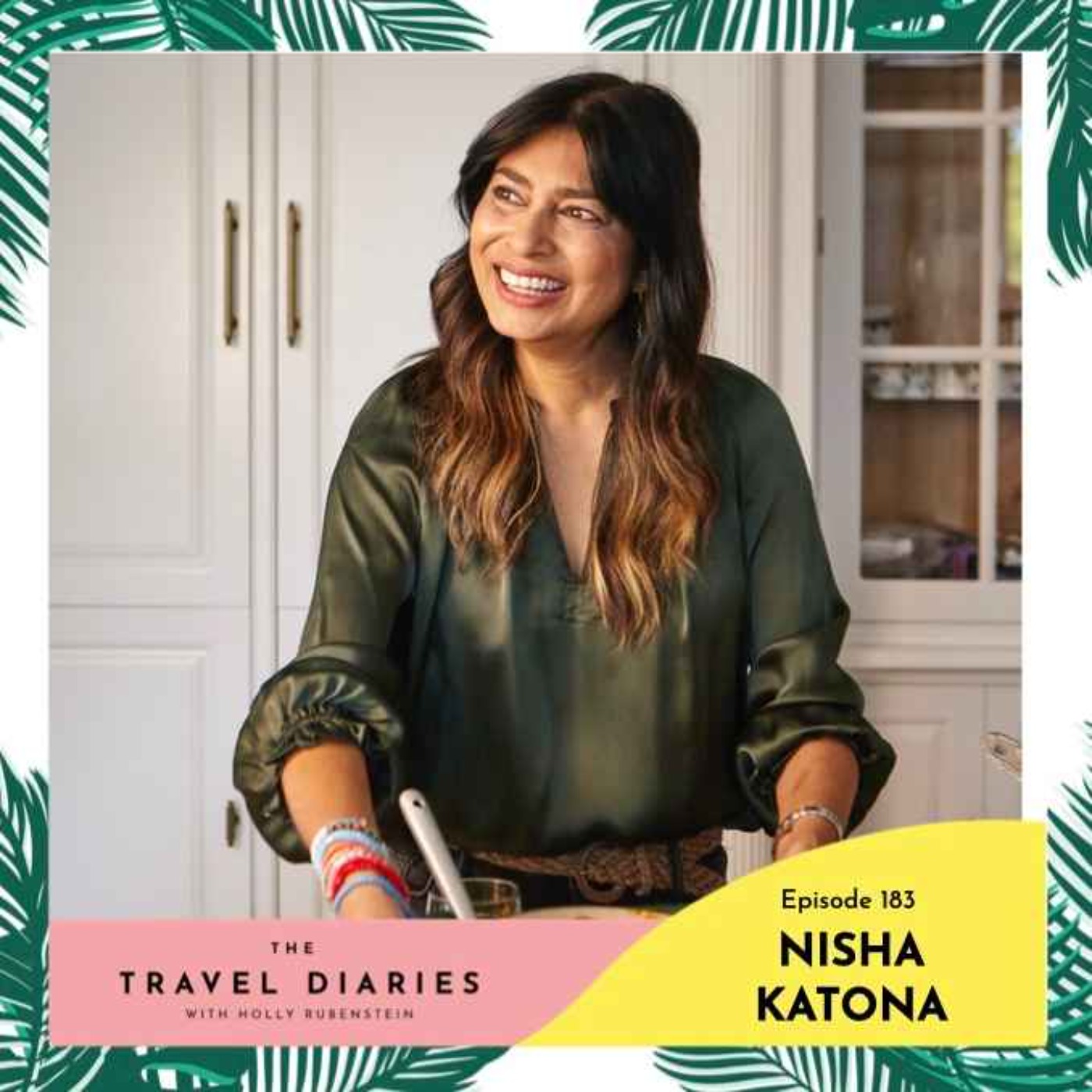
I couldn’t think of a more joyful guest to kick off the season than Nisha Katona. A former child protection barrister turned restaurateur, food writer and TV presenter, Nisha is the founder of the hugely successful Mowgli Street Food restaurants, the author of several cookbooks, including her newest release, The Curry Bible, and was a judge on the BBC’s Great British Menu.
In this episode, Nisha describes herself as a “culinary evangelist and anthropologist”, and food is the thread running through her extraordinary Travel Diaries. We journey from childhood holidays in Mallorca and the tastes that first awakened her curiosity, to Beijing, her ancestral home of Varanasi, the temples and night markets of Cambodia, and her love for the Amalfi Coast.
Our conversation travelled far beyond holidays, taking in family, identity, faith, grief and the ways in which travel helps us understand both the world and ourselves.
Destination Recap:
Nisha's fabulous new book, The Curry Bible, is out now.
Today’s conversation was filmed earlier this summer at the beautiful London Marriott Hotel County Hall, in the most spectacular room - The Big Ben Balcony Suite - overlooking the Thames and the Houses of Parliament.
I’ll be back on Sunday with our first episode of The Travel Diaries: Unpacked with travel editor John O'Ceallaigh.
If you’d like to find out who’s joining me next Tuesday, come and follow me on Instagram and TikTok, I’m @hollyrubenstein and I’d love to hear from you.
With thanks to...
Airbnb - Your home might be worth more than you think. Find out how much at airbnb.co.uk/host
Hosted on Acast. See acast.com/privacy for more information.