 Ask ChatGPT


Travel Diaries season finale featuring Sir Michael Palin discussing why travel matters, his post-COVID journeys, and the themes behind his new book In Nigeria, plus his favorite places and “overlooked” destinations. The episode also includes host Holly Rubenstein’s travel-chapter prompts and a separate sponsored segment about luxury wellness travel in Italy (Palazzo Fuji) and family luxury in Greece (Sunny/Sani Resort).
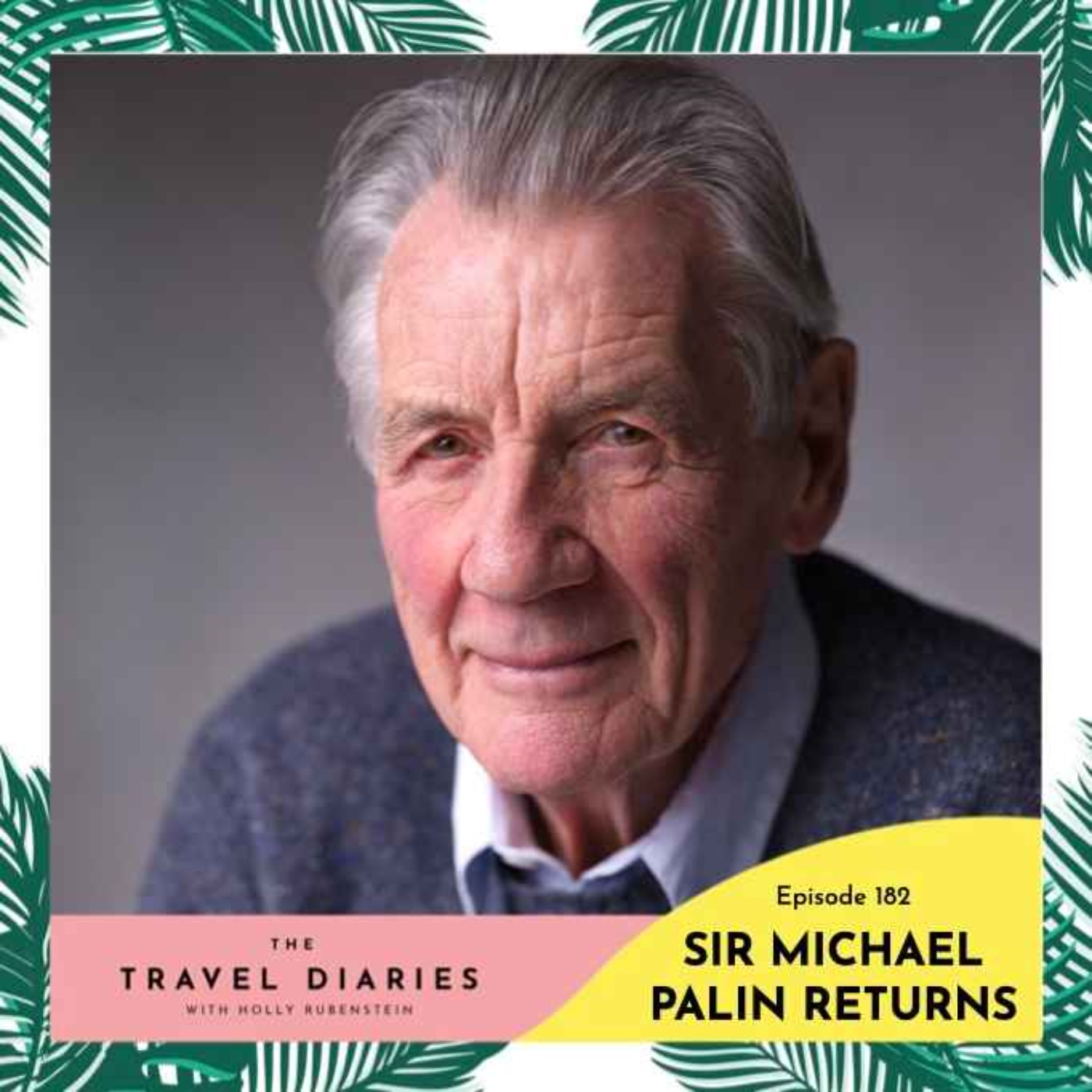
Sir Michael Palin, known for Monty Python and as a major BBC travel broadcaster/writer (Around the World in 80 Days, Pole to Pole, Full Circle, Himalaya). Episode filmed at his London home.
Travel is “therapeutic” and essential for survival in later life. Nigeria’s energy comes from individual inventiveness; Iraq is misunderstood but welcoming; oil often has a malign influence in countries like Iraq/Nigeria/Venezuela. He argues young people are crucial to change.
Nigeria plane landing with passengers immediately working; Port Harcourt oil-slicked rivers and a dignified burned painter; Philippines geopolitical tension in the Pacific; Venezuela’s Angel Falls and political repression; Iraq’s ziggurats and restored Babylon; Machu Picchu’s misty morning arrival; Kamchatka’s volcanoes; Bhutan’s preserved culture and “national happiness index.”
Written by AI. May contain mistakes.
Michael Palin discusses how travel contributes to survival and well-being.
“I reviewed it on the podcast a couple of weeks ago and honestly it is one of the best examples I've come across of luxury family travel done properly.”
Michael Palin discusses how travel contributes to survival and well-being.
“COVID continued and the world changed and very sadly he lost his beloved wife Helen.”
Palin reflects on his travels, surpassing 100 countries, and the significance of travel.
“I managed to go pretty much all over the world, which I still can't quite take in the places I've been to.”
Palin shares his experiences and observations from his travels in Nigeria.
“is and since then I've been to the Philippines for a new series which comes out in September But that's 101.”
Discussion on the differences in energy and atmosphere between regions in Nigeria.
“And in the book, the second, almost on the plane actually, the experience that you're then going to have in Nigeria, it kind of sets the scene.”
Discover the beauty and environmental challenges faced in Nigeria, particularly around oil pollution.
“You know, it doesn't have the sort of, that sort of thrusting, we can do this, we can build bigger and better.”
Learn about the luxurious wellness offerings at Palazzo Fuji and its unique health-focus.
“But now I want to share the final chapter in my travel diaries for this season.”
Explore Sir Michael Palin's curiosity and experiences in Venezuela's diverse landscapes.
“I don't think, it's a long way to the Philippines.”
Discover the stunning beauty and diverse landscapes of Venezuela, including breathtaking waterfalls.
“But these great buttresses rise out of the jungle and all that.”
Learn about the challenges of freedom of speech in Venezuela and the brave voices advocating for change.
“But, of course, I mean, we knew when we were there that there were problems.”
Understand how oil has influenced Venezuela's political and economic landscape throughout history.
“There's so many of the places that you visited, oil has been such a kind of core component of the operation of that country, isn't it?”
Explore Michael Palin's travel experiences in Iraq and his recommendations for must-visit destinations.
“because obviously we heard your fantastic seven chapters back in 2020, I think it was.”
Discover the awe-inspiring beauty of Machu Picchu and the mysteries surrounding its history.
“Well, James has asked, what is your number one travel destination that everyone should go to once in a lifetime?”
Discover the enigmatic history and breathtaking beauty of Machu Picchu.
“I mean, absolutely stunning combination.”
Delve into the mysteries surrounding ancient civilizations and their disappearance.
“But I quite like those sort of riddles, why people, ancient civilizations were there and suddenly they disappear.”
Examine the intricate historical context and contradictions of Russia.
“And you're continually surprised by how sophisticated they were.”
Hear about memorable family skiing holidays and cherished experiences in Switzerland.
“And we went to a place called Murren, M-U-R-R-E-N.”
Learn about the dramatic landscapes and wildlife of Kamchatka, Russia's hidden gem.
“in sort of wooden cabins where you have, you know, lovely strong glue vine and all that.”
Explore Bhutan's serene atmosphere and its focus on national happiness.
“Petropavlov's quite a big city, and it's quite near Vladivostok, which is a rather dramatic city.”
Discuss the rich history and culture of the Caucasus region as a travel destination.
“are genuinely happy and content Yes, they have this national happiness index.”
Discover Sir Michael Palin's insights on travel and the curiosity it inspires.
“Thank you so much for giving us your time again.”
Join the host as they reflect on the season and tease upcoming episodes.
“A great insight into a country I knew very little about, so I highly recommend it.”

Get the gist, explore an idea or ask about something said.
 Claude
On The Travel Diaries, what are the key points of this episode?
Searching your listeningAutomatic transcript. May contain errors.
0:00Today's episode is brought to you by Sunny, a luxury destination in Halkidiki, Greece. Sunny is a place that I've been lucky enough to experience myself. I reviewed it on the podcast a couple of weeks ago and honestly it is one of the best examples I've come across of luxury family travel done properly. What struck me most about Sunny was that it didn't feel like you had to compromise as a family. You could have that proper five-star grown-up hotel experience, beautiful design, incredible food, a gorgeous beach, that feeling of being somewhere really special. But at the same time, you can have those lovely shared moments with your children, but also carve out a bit of space for yourself, which as any parent knows, is basically paradise.
0:44And that's really what Sunny does so well. It brings together lots of different versions of paradise in one place. For some people like me, that's long, lazy days by the sea and the pool. For others, it's incredible restaurants, wellness, water sports, music, culture, or just the joy of watching your children have the time of their lives while you actually get a moment to relax. For families wanting more space and privacy, the Sani Suite Collection offers spacious luxury residences designed for that elevated home-from-home feeling. And for something especially exclusive, check out Sani Asterias, which has been newly renovated.
1:21It is incredible. It's where we stayed. It has beautiful beachfront suites and residences. Plus there's the new water restaurant with a menu curated by Michelin star chef Bruno Auger. There's also so much happening across the summer with a full-on celeb lineup from Sani Festival to Sani Gourmet, bringing world-class music, culture and food to the destination. So go on, discover your paradise at Sani. For more information, visit sani-resort.com. Thank you so much to Sani.
1:59hello and welcome to the travel diaries podcast i'm your host holly rubenstein and here each week i uncover the seven chapters of my guests travel diaries from the first place that they fell in love with to their hidden gem their all-time favorite destination and what's at the top of their travel bucket list. Today's guest is quite simply one of the great travellers of our time. Sir Michael Palin first joined me on the Travel Diaries back in 2020 and that episode went on to become one of our most loved and most listened to conversations. So when the opportunity came up for him to return to the podcast to mark the publication of his new book in Nigeria, I of course absolutely leapt at the chance.
2:44For anyone listening who might not be fully familiar with Sir Michael Palin's extraordinary career he first became known as one of the members of Monty Python before going on to become one of the world's most beloved travel broadcasters and writers his landmark BBC travel series from Around the World in 80 Days to Pole to Pole Full Circle Himalaya and so many more completely changed the way travel was brought to our screens and it was lovely to see him again this episode was filmed at his house in London you can watch the full conversation on YouTube and Spotify in a few days time A lot's happened since I last saw him.
3:20COVID continued and the world changed and very sadly he lost his beloved wife Helen. But one of the things he reminds us is that travel can really keep you going. It's a mental and physical and emotional way to look forwards and outwards. And I think we all have something to learn from that. In today's episode we talk about some of the extraordinary journeys he's been on since he was last on the pod. Nigeria, Iraq, Venezuela, at the Philippines and because Michael's already shared his seven travel chapters this time I asked you the listeners to send in some brand new travel chapters ideas on Instagram and listen out because one of your questions might just be in there and it is just you know it's such a privilege to sit down with Michael Payden I really hope you enjoy this season finale
4:11okay do you have any questions before we get started you're the one with the questions this is right yeah yeah and i'm really have i any answers is the question you should ask and i'll do my best so michael palin welcome back to the travel diaries it is so lovely to see you how are you oh i'm pretty well really you know i i think traveling is a very important part of survival when you get to my age if you can still travel uh physically and mentally it's so there's no better way of sort of keeping going really and that's what I've been doing yeah is it almost a therapeutic in a way for you yeah I think it's very necessary I mean I was very lucky because I always wanted to travel and knowing about the world when I was young was very important I didn't think I'd ever have the chance to go anywhere and you know by a series of extraordinary connections.
5:12I managed to go pretty much all over the world, which I still can't quite take in the places I've been to. But it remains something which gives me great pleasure. I like to get out of this country and see somewhere else for myself, because I think that's the way to really learn about other countries, is you've got to go there. And so yes, on lots of levels it's really important to me. And since I last saw you you've surpassed your 100th country is that right? Yes yes I think Venezuela was my 100th country new country that is and since then I've been to the Philippines for a new series which comes out in September But that's 101.
6:00So, yeah, slightly older than me. When we last chatted here, I always tell my friends this, that you were the first person, basically, that I saw after the COVID lockdown. It's one of my good anecdotes, that I broke the COVID lockdown by seeing Michael Palin. Good. Well, how nice. Yeah, it was a terrible time, that, really. Yeah. one forgets how long it's how long it sort of was was was the period when you just didn't talk to anybody or meet anybody yeah yeah and then since then you've been to Iraq Nigeria Venezuela and the Philippines on on your kind of big yeah for your big shows and I'd love to start with Nigeria because, of course, that is now a book as well that you can read all about.
6:53And, wow, what a transportative start that book has. I mean, I watched the TV show, which was out a little while back, wasn't it? Yes, yes. Why Nigeria? Why did you choose that? Well, we'd fallen, I say we, which is a small team, led by my director, Neil Ferguson, and the same cameraman, Jamie Gramston. And we've kept a little team together because we went to North Korea. And that was quite an experience. Not many people spend three weeks filming in North Korea. That's quite tough. And at the end of it, we sort of bonded quite well and thought, where should we go next? And because North Korea was a kind of difficult place to film, you get some rewards from going there, which is mainly that other people don't go there.
7:38So we thought, you know, where are other places where people don't go? I mean, there are plenty of examples, but we chose Iraq as our second one. And the reason I chose that, we chose that, was because I was very interested in how a country that has been, has suffered so much and been virtually sort of devastated by war for 20 years or so, is suddenly ignored. People move on. There are other parts of the world where there are stories of terrible things going on. But I just was fascinated by what the life was like for the people who now live in Iraq. They have to live there. They have to educate their children.
8:28They have to build their houses. They have to buy their food. They have to farm the land. So we put together the Iraq trip and I learnt a lot there. And Nigeria was the third one. And again, it was a country which had enormous potential, but something was wrong. And in Nigeria, it's 220 million people. It's the biggest country in Africa. Yeah. It's unfathomably huge, isn't it? Well, yeah. I mean, it's actually not, geographically, it's not an enormous country. I mean, it's smaller than Niger to the north, something like that. But it's full of people and full of great energy. And yet, it's very, very difficult for the government to sort of set a course for the country.
9:21They always need to be left behind or whatever. And it's a place where individual inventiveness and energy is really, really important. So how does it work? How does it function? That was the reason why we went to Nigeria. Yeah, it was such a colourful, vibrant start. And in the book, the second, almost on the plane actually, the experience that you're then going to have in Nigeria, it kind of sets the scene. Can you take us back to that moment as you're on the plane landing your first impressions there? Yeah, we'd flown in over the Sahara into Nigeria and you get to the point where, I think there's a point where they say, we've landed, the wheels hit the ground and please everybody stay in your seats until we've reached the terminal.
10:18And they're up straight away. All the Nigerians are up straight away. Seatbelts off, reaching for their mobiles, reaching for their laptops and all that because you don't stop people doing business in Nigeria just because you're going to the terminal. And it was wonderful. Nobody couldn't do anything about it. There was no question of saying, sit down again. They were off and ready. And that just gave me a very early flavor of what Nigeria was like. And it's like there are a lot of chances there, a lot of people seizing the opportunity. But you've got to do it yourself, you know. Yeah. No one else is going to help you.
10:54That's the feeling you get. Yeah. and that was the feeling sort of throughout the journey. I mean, we drove in from the airport and they have people hawking goods, you know, sort of traffic lights, things like that, which you find in lots of countries. Usually it's bits of soap or some, you know, some rather, a bar or something like that. But in Nigeria, again, they're a bit opportunist about it. They're near our hotel, which I suppose was one of the more expensive hotels, they were hawking Scrabble and Monopoly sets and all that sort of thing. Were you at the Travelites? Yes, yeah, yeah. Just quickly buy a spontaneous board game.
11:38Yeah, actually Scrabble would have been quite useful had we had the time to play. Yeah, that's so funny. And did you get that then energy throughout your journey from the people? Like they all had that kind of go-getter energy that was palpable. Yes, yeah, I mean, certainly in the south, in the north, which is the Hausa, where the Hausa people are, and that's Muslim and that's much quieter. And we could tell the contrast was clear from the moment you landed in Kano. Everything was much quieter and people were sort of outside drinking cups of tea and generally being a bit more reflective. And so, yes, I would say there was a big difference in the sort of feeling between the south and the north.
12:29And the north is just quieter. But still, you know, Kana is a big city, three or four million people, a lot of businesses there. But it's not quite the same sort of level of energy you get in the south. Which place would you say kind of confounded your expectations of Nigeria or your kind of preconceptions that you had before going in?
12:56That's a good question. I suppose the north and Kano most of all, because I kind of knew what Lagos was like and there have been documentaries about Lagos. And it's a sort of more of a Western vibe in Lagos. But the north, yes, it was just the completely different atmosphere up there. And what is it like kind of topographically? How does it look and feel? Well, it's desert mainly up the north. So you go from a very, very sort of green and fertile south and gradually the savannah turns to scrub and the scrub turns to desert. So north of Cana and all that is quite brown, quite barren.
13:50the city itself just feels much older than Lagos, much older. It has kind of, I don't want to say, a sort of low-rise calm to it. A low-rise calm. Yeah, yeah. You know, it doesn't have the sort of, that sort of thrusting, we can do this, we can build bigger and better. I'm sure it's there somewhere in the people's minds, but it was rather a rest after Lagos. Yeah. Can you see, I mean, I know that Lagos has quite a thriving art scene. People who are into art head to Lagos to see the galleries there. But beyond that, you know, was there somewhere in Nigeria on your trip that you thought this should be a place that is on the, you know, for travel lovers that they should really get to see that isn't really on the map just yet?
14:46It's quite difficult because there's no dramatic scenery in Nigeria, to be honest. You can't say there's a wonderful gorge or there's a fantastic valley. I mean, we staged a place where there was a river called, I can't remember what it's called now, but I'll get the name in a minute. Anyway, Etiope. Etiope. Etiope. And it was a lovely river, so going through rather beautiful sort of very wooded, almost jungle country. And apparently it's the deepest river in Africa or something like that. But anyway, that's very beautiful. But then, you know, a few miles on you get to Port Harcourt. And there are rivers there which are equally beautiful in their location.
15:36but they've been absolutely fouled up by the oil, which, you know, it's provided Nigeria with a lot of money and a lot of its prosperity, but it's provided also a real danger because people who are very poor, a country with 220 million, you're going to have a lot of poverty, tap the oil illegally out of pipelines, which aren't really protected, they just weave across the land. they tap the oil out and there are terrible accidents explosions and all that we saw the result of that and it means a lot of oil just leaks out into these these beautiful rivers so you know that's the that's the trouble with a place like nigeria there's kind of there's the good and the bad side side by side as a travel documentarian when you see that kind of thing which is a bit like you know oh that's such a shame that that's taking place or yeah and you've seen those kind of things all over the world in all kinds of different capacities whether that's environmental behavioral political yeah is it then you know quite hard to be like right well that's the end of that day of filming on to the next place and like leaving that issue behind does it or does it kind of linger in the back of your mind when you're in the next day yeah and very much because when I come back I write the book of the journey.
17:02And the Nigeria book, which is just coming out, had to be delayed because I think a volume of my diaries was going out at the same time. They didn't want to have two books at the same time. So it was a very nice book, I must say, a very well-produced book on Nigeria. And I think when you do these journeys, is you're looking at lots of stories very, very quickly. But some do linger in the mind. And the, well, the two things about the Port Harcourt experience, one was just seeing a beautiful stretch of river totally fouled up by oil slick. And the other was meeting a man who had been badly burned in one of the explosions.
17:51A man of great dignity. who was a painter, can't work anymore. He was badly burned. Because he was so poor and the village was so poor, he couldn't get treatment. So his body has just sort of healed itself. But the wounds are something that normally would have been treated, but you can just see bits of his flesh sort of sponged up. So I don't mean to go on about it. but that's the sort of thing that does stick in your mind. Yeah, yeah. But, I mean, that happens with a lot of stories that you do recently in the Philippines talking to somebody whose son had been killed by the police in a raid. He's only 16.
18:42He's been out on his bike and all that. And talking to the mother there. That's painful. It happened a while ago, but she was still very, very tearful when she talked about it. So that sort of thing, yeah. Yeah, the human stories. That does stick in your mind, yeah. And so the Philippines is coming up next. Yeah. So what drew you there? Well, I suppose the Philippines was, again, a country on the edge, although less dramatically so than Iraq or Nigeria. but it's a big country, a populous country, 14th biggest population in the world and it's also on that sort of fault line, geopolitical fault line down the Pacific which runs from Japan and Korea down through Taiwan, past the Philippines and there's a great deal of sort of rivalry going on between the Chinese and the rest of the people who live there, whether they're Vietnamese or Malaysians or whatever.
19:51The Chinese really want to control this very, very important trade route which goes up from Singapore up into China and Japan. Very important for all their imports. So they want to make sure that they run the seas. And the smaller nations are sort of responding by saying, no, we've got our own sphere of influence. We want to kick back against the Chinese aggression. So we saw a bit of that. That is interesting, isn't it? And it just feels so timely and topical. And it's just going to be evolving, I guess, month by month by month. um what also is interesting i guess about the philippines in contrast to say in iraq or nigeria but iraq in particular maybe is that the philippines is also a place that is on the backpacker tourist trail you know like it's a place that a lot of my friends you know that i aspire to visit to go to a beautiful you know a beautiful deserted beach did you so did you also get to experience that side of things oh yeah i mean you can't really um go to the philippines because there's so many islands you have to if you want to go around the country you're gonna have to go on little plane flights and you fly over beautiful bays wonderful beaches some of them completely deserted um there's a lot of being so many islands a lot of places where people go and do scuba diving and all that and some of the coral is still sort of protected.
21:30So yes, it's definitely a destination for travellers because you can usually find somewhere which is fairly quiet and the water is clear and the beaches are empty. Did you have any lovely days off there? No, we had a day off but it was in a hotel somewhere but it was okay, it was fine. But we did spend the night in a little camp which was entirely sort of au nature, just no electricity or running water, all that sort of thing, to experience what it was like to be in a beautiful place. I find that quite tricky. Because whether you, well, you know, whatever you may say, we all say, oh, I'd love to be on a desert island on a beach where there's no noise or anything like that.
22:21We want noise. You want the noise to run the electricity. You want the noise of water running and all that sort of thing. If you don't have that, you can't suddenly say, oh, I'm so happy. Well, I can't. I'm getting old. I need my comforts. We'll be back with Michael in a moment. But now I want to share the final chapter in my travel diaries for this season. And this was a trip to Palazzo Fuji, which is one of those hotels that have been on my radar for a long time, largely because I'd read that Oprah had described it as one of the best wellness retreats of her life. And honestly, if Oprah is raving about a palatial Italian wellness hotel in the hills outside Rome, then I am going to pay attention.
23:11So Palazzo Fuji isn't really a spa hotel in the traditional sense. It's much more ambitious than that. It's a grand historic palazzo in the town of Fugii, around an hour or so from Rome. And the whole place has this incredible sense of old world glamour, meeting very modern medical wellness. The building is extraordinary. It was originally built in the early 20th century, and it has this stunning Art Nouveau Belle Epoque feel to it. You arrive and there are sweeping views, enormous ceilings, marble everywhere, chandeliers, beautiful gardens. It really feels like stepping into another era. But then within all of that, you have this incredibly high-tech wellness and medical setup.
23:49So it's not just somewhere you go for a massage and a swim. It's somewhere that people go to properly address and look into their health. The reason Fuji became famous as a destination in the first place is because of its water. The town has been known for centuries for its mineral springs, which were historically believed to have healing properties. So there's a real heritage of wellness there long before wellness became the word we all use now. A stay there is very personalized. I spoke to the team before I went there and they created a bespoke program for my wants and needs. Some people go for quite intensive programs, but I went for something much gentler and restorative, which involved lymphatic drainage, gentle massage, osteopathy, naturopathy, treatments that felt really supportive rather than punishing.
24:38and what I was really interested also was the diagnostic side of things I had a series of physiological tests that analyzed my gait the way that I walked looking at whether there might be root causes for muscular skeletal pain there were body composition measurements many insights into what was going on in my body more broadly and it's very much the kind of place where if you want to go deep into prevention and longevity all of that you can there's also an aesthetic side there which I didn't really dip into aside from one fantastic facial but there are all kinds of cosmetic treatments available and the food there is a huge part of it too because the menus are curated by Heinz Beck he is a three Michelin star chef if you aren't familiar with him so he's done this healthy food menu that is calorie controlled but not in a depressing way it feels elegant and Italian and very yummy and you take your meals in this palatial dining room with extraordinarily high ceilings and it still feels like an occasion there are multiple courses despite the courses being relatively small and you come away feeling satisfied which was a concern of mine I thought I'd be hungry the whole time but I wasn't just like the water of Fuji was prescribed back in the day for people to take if they weren't feeling well I almost feel like now if time permits and if budget permits carving out a bit of time to look after one's health is such an investment Palazzo is not a normal holiday hotel it's not summer that you go for cocktails by the pool and a late checkout it's summer that you go when you want to feel looked after in an intelligent comprehensive way there's a lovely little town fuj nearby which you can pop out into if you need to but most people pretty much stay there and focus on looking inwards and if it's good enough oprah then you know i was happy to investigate so thank you to the team at palazzo fuj for having us is there a place that you'd like to go back on holiday there?
26:31In the Philippines? I don't think, it's a long way to the Philippines. I'm just saying this as an older traveller. It's, I mean, 16 and a half hours to get there, which is a long trip. But once you were there, yes, there were lots of places where you could have a really, really nice time and be well looked after. there's a lot of hotel building going on and the Filipinos are just lovely people they're so helpful and friendly and I know this is a bit of a cliche you say oh the people are lovely but they are so warm and friendly and helpful and even the police there smile all the time which is quite rare so you will be well looked after and you'll have a nice time and they'll be warm and friendly and extremely helpful.
27:27So it is a very relaxing place, I think, to have a holiday. Yeah. Oh, I really look forward to watching that. Yeah. And then Venezuela. You said part of the appeal of Venezuela was that you knew really very little about it before going. Yeah. Sorry, are you worried about this? I'm not really. I think it's quite lovely. Time moving on. Sorry, yes. Go on. So the appeal of Venezuela was really that you didn't know much about it before you went and that was part of the reason you wanted to do the show there yeah yeah absolutely um i it's one of those places that sounds like a mythical country venezuela yeah that's a sort of allure um and i i've been to south america i've been to columbia i've been to peru i've been to brazil all the countries around it but something about venezuela yeah i was very curious what it looked like what it felt like um so that was a real voyage of exploration for me and what did it look like and feel like if you were to paint a picture of it well it's a stunningly beautiful country for a start with all sorts of different environments including the um you know the beautiful beaches on the caribbean and they're really very very fine then you go further south and you've got this wonderful plateau in a place called kanaima um with these um you know i think they're sort of several million years old there's this plateau which has sort of gradually been eroded.
28:54But these great buttresses rise out of the jungle and all that. And on top of one of them is the tallest waterfall in the world, the Angel Falls. So we were able to get to that rather trickily, but we were able to get there thanks to a very skillful helicopter pilot who landed at the base of the tallest falls in the world. And that's quite something you've got. We had half an hour just to, well, get wet, really, but look up and think, hey, this is amazing. But I love, I'm rather waterfall-free. Oh, yeah. Oh, yeah, yeah. Where are your other favourite waterfalls? Well, Victoria Falls, I think, is almost one.
29:31Because that's such a sheer, wide, precipitous sheet of water just comes down. But then, you know, the falls, well, the falls between Brazil and Argentina. Is it Iguazu? Iguazu Falls. Thank you very much. They are stunning, too. just on the scale, the amount of water coming over. And I'm always fascinated by waterfalls because, you know, the rivers that turn into the falls are usually quite quiet and tranquil and suddenly, wham! They turn to this boiling sort of fiery mess of water plunging down. But I do find them very dramatic. Yeah, it's quite magical. Venezuela has the waterfalls And then, of course, you've got a sort of pampas area where there's a lot of wildlife.
30:27And then on the other side of the country, the Andes, the old roads wind up the Andes and all that. Stunning views, some nice little bozadas to stay in and all that. Yeah, so, I mean, in terms of the beauty and the sort of impact of the landscape, Venezuela is absolutely terrific. But, of course, I mean, we knew when we were there that there were problems. And only a few people would talk to us about what was happening in the country. Yeah, politically. A few brave people because it's very highly controlled. And people can be put in jail without trial just for expressing some criticism of the leader.
31:19Really? I didn't realize it was quite that extreme. Yeah, yeah. It really was. We were told this by some very brave women who were in the University of Merida, the University of the Andes. and Merida has a sort of anti-central government feeling anyway. Right. It's the Andes, they're independent people, they're free thinking, they run their affairs rather differently. And they were allowed to operate like that? Yeah, well, I don't know whether they were allowed or whether just the long arm of the police didn't stretch to the Andes quite as much. Right, yeah, that makes sense. But I think it obviously did prevent some of these women from expressing what they wanted to say.
32:09But they were very brave. Two or three of them were very brave and said, you know, we are the young of this country and we've got to change it. If we don't like what's happening, we're the ones who've got to change it. And I find that very, that's very interesting when you're traveling at all. I mean, I'm into my 80s now, But you've got to be able to listen to the young people in the country because they are the future. Yeah, I felt that in the Nigeria program too. Yes, yeah, yeah. So how do you think that the people that you spoke to in Venezuela would feel about how things have panned out now?
32:47I think they'd be very pleased, really, to be honest. I mean, I think it was the one thing that Trump's done that's been really unequivocally successful. and I still can't quite work out how it's happened that Maduro, all right, they're very skillful at extracting people. They've got rid of Maduro but Trump has then done some deal with Maduro's people and they were their kind of good left-wing tradition,
33:19chauvinistas and all that, with a very strong sort of left-wing agenda have sort of just rolled over and said, all right, well, we'll do an oil deal with America. We'll give you cheap oil. We'll let you come in and run our oil business just because they got rid of one man. I mean, it seems to me extraordinary because this is what the kind of opposition in Venezuela have been on about for years, you know, giving up control to America and all that. Why can't we run our own businesses We are a strong enough country. We've got more oil than any other country in the world. And yet, you know, suddenly they've said, all right, leave us alone.
34:05America can look after us and we'll build up our country again, which I think people want. Freedom of speech, I don't know how that extends. But I think it's loosened up much more. And it is extraordinary to me that just the removal of one man can have had that effect. Yeah. There's so many of the places that you visited, oil has been such a kind of core component of the operation of that country, isn't it? Yeah, absolutely. And how things have panned out. In almost every case, it's been a malign influence in the end. because the discovery of oil in the Middle East and Iraq and places like that was sort of 1920, around about that time.
34:54Yeah. And the countries were sort of created by Britain and France. I mean, they were sort of our colonies anyway. Once the oil was there, we became much more interested and sent people out there to look after the place. So almost straight away the oil was sort of taken away by Western companies. Yeah. Because the countries out there didn't have the wherewithal to run an oil business. And the same in Venezuela really. They left the Americans to do all the work. So straight away you've got sort of colonial kind of influence. Which means that the oil money doesn't trickle down as much as it ought to.
35:41It's not like Norway where there's an oil fund for all the people. No, of course. There's none of that in Venezuela or Iraq or Nigeria. The oil companies just sort of extract as much money as they can. They do some deals with the government, which are not always in people's best interest. And it pollutes and it's dirty and all that. But, you know, it's… Makes the world go round. It makes the world go round. And it gives these countries a false sense of security. And what they've got to do, really, I think, is use the oil money to boost their own economies, to create wealth of their own in the country.
36:27Absolutely. Hey, it's Paige from Giggly Squad. And I want to let you know that if you want the newest and hottest beauty products, you have to go to Sephora. I'm obsessed with the one-size liquid blotting paper spray. It's the first of its kind blotting spray that mattifies for up to eight hours. It's unreal. There's also the Summer Friday Shade Drops SPF 50, which basically lives in my bag at this point. Oh, and the Kayali Eden Plush Pear smells so good. It's sweet, warm, and addictive. Like people literally stop me and ask what perfume I'm wearing, which you know I love. So if you want the makeup, skincare, hair, and fragrance products everyone's about to be obsessed with, shop only at Sephora.
37:08Is your kid's birthday coming up? Don't stress the prep. The Party Shop at Michael's is your one-stop shop for everything from bluey to rodeo. Transform your space into a birthday wonderland with dream-worthy tablescapes and decor starting at 99 cents. Plus, get free helium inflation on select balloon styles. Whether you're crafting a one-of-a-kind bash or grabbing the essentials, Michael's has everything to make their big day legendary. Shop now and order ahead for delivery or in-store pickup. Michael's, everything to celebrate anything.
37:45Well, I have asked my listeners to come up with some new travel chapters for you, Michael, because obviously we heard your fantastic seven chapters back in 2020, I think it was. So our first one is this. The place that was nothing like its reputation. you've spent much of your travel career going to places that people think that they understand through the headlines but which country was most unlike its reputation would you say well i'd have to say iraq really well yeah i mean iraq is possibly of all the countries in the world because of the war and saddam hussein and and and weapons of mass destruction that was just associated with disorder, chaos, killing, and general warfare.
38:39And yet, going there, I found, to my surprise and relief, that there are people there who want to see visitors, welcome visitors. They'll, like anywhere else, make meals for you. they're very, very pleased that you've come to their country. But, I mean, it's hanging on a thread, Iraq. It's about, you've got the Kurds in the north and you've got Shia Muslims more in the south. So there are differences. But there are things to see. You know, you forget it's where civilization began. The oldest civilization in the world was in Mesopotamia, the rivers of the Tigris and Euphrates, which we followed down through Iraq.
39:26and so you can still see in some of the cities the impact that this age centuries, thousands of centuries old tradition works. And could you see that visually as if you're a historical traveller, would this be a wonderful place to get to if you could? The only place in the world where I've known the ziggurats and ziggurats are like pyramids. They're huge constructions and they're quite well looked after in Iraq so you can go and visit them and walk around them and indeed walk up them and just marvel at the skill of masons and builders at a time when the rest of the world, we were just putting stones together in a stone henge.
40:20Stone hedge versus the pyramids. Yeah, yes. It's like, what? Quite the contrast. Quite the contrast. I mean, yeah, Stonehenge is terrific, but it's so spectacular, the ziggurat, in the middle of this plain. You just work out how they built it. How did they build it? How did they do it? Yeah, they must have just used, must have taken a while. I suppose they had everybody, probably slave labour, but everybody sort of worked on it. But just the idea of contemplating building something this big, And no one's quite sure whether it's a sort of religious building or what, or just showing the local power.
40:58But also, I mean, you can go to Babylon. Babylon, we all know Babylon somewhere or another, usually some terrible nightclub in Elphrakow. Cocktail bar. Yeah. But there you can actually go and see the palace at Babylon. And it's built by Nebuchadnezzar or something like that, but it's still stunning. and they've done a lot of restoration work. And as far as I know, very little advertised and very few people go there. Yeah. So that was amazing. One of the kind of final frontiers for the intrepid traveller. Yeah. And I think they hopefully now, the worst of the wars are over there, that they'll be able to sort of begin to attract people.
41:44Brilliant. Well, James has asked, what is your number one travel destination that everyone should go to once in a lifetime? Well, they're very difficult. I know. You say one and then me think of another. But I would say Cusco and Machu Picchu. I mean, absolutely stunning combination. The Inca walls in Cusco and the sheer stunning beauty of Machu Picchu and the puzzle as to why they built at the top of this mountain and why they left it all. So you can wander through it and all that. So I think that I can't imagine anyone going to that sort of area and that combination of places and not being absolutely stunned with amazement.
42:35Yeah. When you saw it for the first time, how did you feel? Well, we got there late at night. He stayed, actually. He can stay up in Machu Picchu. There's not many rooms. But it was the morning, waking up in the morning with the mist just clearing off the top of the hills and clouds sort of draped around these buildings. There's still a lot of walls still there of the old village. And then you look beyond that and there's this huge bend in the river, thousands of feet below. You think, well, it's just a beautiful place to be. For my listeners that maybe don't know the history behind Machu Picchu, in a nutshell, would you be able to kind of tell us what it is?
43:24Well, no one knows exactly when Machu Picchu was constructed, but it was completely hidden for a long, long time until about a very early part of the 20th century. I think it was about 1910 when an American archaeologist discovered a few of these ruins and then began digging down and then found a whole world there of houses and streets. So working out when it was built and particularly why the people left it is one of those great riddles. But I quite like those sort of riddles, why people, ancient civilizations were there and suddenly they disappear. There was this civilization in the middle of the Sahara called the Garamantes.
44:11And it was a thing on the radio recently about it. It was full of trade and creating fabrics and mining for minerals and all that. I mean, it's the middle of the Sahara. Well, there is evidence of it now, but it's completely under the sand. Would that have been, do you think, an environment, like a shift of the sands that would have eradicated the civilization, do you think? Yeah. Something environmental like that. It did. I mean, the aridification, which is a terrible word, but of the Sahara areas got drier and drier. I suppose the waters dried up and they didn't have the ability to or the ingredients to make, you know, things that they could sell and trade.
44:58There's something so enigmatic about so many of those structures in South America. and spiritual and kind of mysticism around them. Yeah, yeah. And you're continually surprised by how sophisticated they were. You'll just find beautiful sort of goblets and cups and bracelets made of sort of gold and all that sort of stuff in places where you think they're completely barren. So keep digging, guys. Keep digging. Absolutely. Okay. Jane says, what is the country you still quite can't explain? Is there a country that still resists explanation even to you?
45:41Well, they all have sort of riddles. I mean, I think that you take somewhere like Russia, a vast country, and yet there's so much history there, and yet it's very, very difficult sometimes to sort of work out what that history is, how it all connects in a country so vast. Was it all based in Moscow and Leningrad at that time and all that? Why did they have the communist revolution there and not somewhere else? And I've been to Russia a few times. You can't really go now, which is a pity because it's a place of wonderful sort of cities and towns and environments. But I've never kind of quite worked out, you know, how Russia works, why it has for so long been sort of in opposition to the West, if you like.
46:40I mean, it hasn't always because Catherine the Great and all that. She wanted to build dockyards that was the same as dockyards in Southampton or in Le Havre and all that. But basically, Russia, this huge country, is held back and views the West with suspicion. Now, I just can't, you know, look at it, it's a huge, huge country, enormous resources. Why should they feel in some way that they're, you know, they're paranoid about what the rest of the world thinks of them? Yeah, yeah. So a bit of a muddle. That's the one you can't work out. how about the place that you traveled to throughout your career that when you came back you most wanted your children to see in their lifetime that you were like guys you've got to see this uh well some of them i've mentioned the waterfalls uh the guasu falls something like that love them to see that but i mean when when we were younger children were growing up we went to switzerland and had skiing holidays.
47:45And we went to a place called Murren, M-U-R-R-E-N. And that was just absolutely sensational. I mean, Switzerland is very beautiful in the mountains there. But Murren itself, there are no cars allowed in the village and all that. And it's really on the edge of a steep mountain slope. Great skiing and all that. And I remember taking the children there for the early holidays. and I don't think I've ever enjoyed anywhere as much. Not only was it very beautiful and very clean air and healthy and all that, but they're good skiers. They enjoyed all that. They pick me up constantly. What part of Switzerland is that in?
48:31Good question. The German part or the French part? No, it's the German part. The German part. Yeah, yes, I suppose so, yeah. Yeah. And how would you have spent your perfect day with them there? well perfect day would be just we get up early you know because it's as soon as the sun's up you get up and you want to have a look and you have you have your great breakfast they do lots of bursher muesli and all that sort of stuff so you have a big breakfast and then you want to get early up onto the slopes to get get into the cable car as quickly as you can yeah and and then ski for a long morning and have this wonderful, these wonderful sort of Swiss lunches in sort of wooden cabins where you have, you know, lovely strong glue vine and all that.
49:21Did you enjoy the breaks from the skiing as much as the skiing? Yes, I enjoyed the breaks probably more than the skiing. Me too. Yeah. No, but it was very nice and we could, you know, there's plenty of room for the children to sort of sit at tables out on the terrace. there's usually a terrace yeah with a lovely view yeah with a lovely view and lots of sunshine and and he'd had a good morning wearing yourself out yeah and that was good so you felt well doesn't be a living now absolutely one uh one or two final chapters are the most beautiful place that no one asks you about and why do you think it gets overlooked hmm yeah that's a good one That's a nice one.
50:07I think there's a place called Kamchatka, and I know why it gets overlooked because it's in Russia, but it's on the Russian Far East, and it's a peninsula, and it has about 20 active volcanoes there. Wow. And it has huge herds of deer and all that sort of thing. And we filmed there, and I thought this is extraordinarily beautiful and dramatic scenery.
50:42And, you know, it has a lot of thermal activity. So you go there, and not just the volcanoes, but the fountains sprouting out of the earth, and there's hot air, and all these wonderful things. Almost like Icelandic-type vibes? Yeah, it is, yes. Yeah. Yes, I've not been to Iceland, so I don't know. Have you not? No. My God, but you've been everywhere. We need to add that onto your bucket list, Chuck. Yeah, you have to, I'm afraid. I've been found out. But Kamchatka was a terrific place to work in. Is it a place that's inhabited? Oh, yes, yes, there are cities there. Petropavlov's quite a big city, and it's quite near Vladivostok, which is a rather dramatic city.
51:22but in itself it's a real natural paradise. It hasn't really been built on that much because of the volcanic activity. But it's a great place for nature, animals, creatures, bears, whatever, all that sort of thing. And there are people there who are very good guides who showed us round. but you know it's just people don't know about it not going to be getting there anytime soon not going to be told about it which is a great pity what was the kind of wildlife that you saw there beyond the bears bears and sort of amazing sort of bird life and all that sort of stuff and bison and you know big creatures herds of yeah reindeer too imagine that among that kind of geothermal activity must have been so dramatic.
52:19Yeah, there's always a wonderful thing going on in the background and all that. Yeah, wonderful, wonderful. Last one is the place that you'd go back to without the cameras, somewhere that you were filming with work and you thought, gosh, I'd love to come back here and spend a bit more time. I wouldn't mind going back to Bhutan and they've got quite nice hotels there, But I found it a very, very sort of relaxing, contemplative atmosphere there. Largely because the country has not got a great population. And they have this policy of preserving their history. So, I mean, they wear their national dress, long gowns for the men.
53:12and they only allow buildings to be built in their kind of wood and plaster style. So they're very conscious of their history. And it's on the edge of the Himalaya, so you can go up to 23 ,000 feet, but you can come right down in a fairly short time to sea level. so if you want to wander around you want to find the Himalaya sort of just a little glimpse of them, a sort of microcosm of what Himalayan life is like I can't think of anywhere better than Bhutan and the happiest people as well, right? Is it gross national happiness? There's a real focus on making sure that the population are genuinely happy and content Yes, they have this national happiness index.
54:03Yeah, which is lovely. And maybe that's because their history is being, and their heritage and their identity is being preserved. Maybe that is what leads to people feeling happy. Yeah, why they should be particularly preserved there or not, I don't know. And we've got Nepal nearby, which is a great and beautiful place to go. But they've always had upheavals there, which Bhutan seems to have had a sort of steady, consistent sort of calm to it. Well, we always wrap up with your destination on the bucket list. So last time we spoke, Michael, it was Central Asia. That was what was calling you. And if not, the Dolomites.
54:50Is there a new destination that you'd like to get to? I wouldn't mind going to the Caucasus, to Armenia and Georgia, because I think there's a lot of history there. And they're small countries that sort of overlook because they're squeezed between Russia and Turkey and Azerbaijan, the bigger countries now. I think in those mountain countries they have a sort of culture which is different in each one and informed by a history which has sometimes been quite violent in Armenia they had sort of genocide at one time in 1914 or something like that but yeah I'd love to wander through the Caucasus and Lake Mount Ararat That's where Noah's Ark was sort of stranded.
55:43Was that in Armenia? I think it is, yes. It's on the borders of Armenia and Turkey. So I'm not sure about that. That's so interesting. I have seen a fair amount about Georgia because there are now direct flights there and it's becoming more popular. But I know very little about Armenia. So that is one too. I know very little about Armenia. That's what makes it curious. I'm sort of tempted to go. Yeah. Brilliant. Oh, Sir Michael Palin, what a pleasure. Thank you so much for giving us your time again. You know, you're one of the all-time great travellers and we're so lucky to have you on the podcast.
56:24Thank you. Oh, that's very nice. But go and look for yourself. That's my message always. Look for yourself. Everyone will have a different reaction to the places they go to. But just go with eyes and ears open and you'll be okay.
56:41Oh, well, thank you to the wonderful Michael Palin. What a joy and a privilege to have him back on the Travel Diaries. I enjoyed that so much. His new book, In Nigeria, is out now. A great insight into a country I knew very little about, so I highly recommend it. If you would like to watch our full interview, you can do that this weekend on YouTube and Spotify. well that is a wrap on season 16 thank you so much to all of you for listening this season i really hope that you've enjoyed traveling around the world with me through all of these conversations and the good news is it won't be too long before i'm back again we've got another summer season coming your way in mid-august so there are lots more travel stories to come very soon in the meantime i hope you all have some lovely sunny summer travels somewhere and please do stay in touch with any of your tips and recommendations you can find me on instagram and tiktok at holly rubenstein and of course now you can watch the podcast on youtube as well if you have enjoyed listening to this season please recommend the podcast to your friends leave a review on your podcast app it really makes a difference and of course follow or subscribe it's free and it means that you get a lovely dose of wandlust in your podcast library each week have a wonderful summer guys beat you soon
58:13Is your kid's birthday coming up? Don't stress the prep. The Party Shop at Michael's is your one-stop shop for everything from bluey to rodeo. Transform your space into a birthday wonderland with dream-worthy tablescapes and decor starting at 99 cents. Plus, get free helium inflation on select balloon styles. Whether you're crafting a one-of-a-kind bash or grabbing the essentials, Michaels has everything to make their big day legendary. Shop now and order ahead for delivery or in-store pickup. Michaels, everything to celebrate anything. Hannah, I just Venmo'd you for dinner. Obsessed. I'm literally spending it right now on the lip gloss that's been sitting in my cart.
58:52What do you mean spending it right now? You instantly spend your balance with the Venmo debit card. Stop. Say more. More exactly. The more you do with Venmo, the more you get, like earning up to 5 % cash back with Venmo Stash. Get the Venmo debit card or checkout online. Venmo Stash bundle terms and exclusions apply. Max$100 per month. See terms at venmo.me slash stash terms. Venmo checkout not available at all merchants. The Venmo MasterCard is issued by the Bancorp Bank N.A.
59:26Is your kid's birthday coming up? Don't stress the prep. The Party Shop at Michaels is your one-stop shop for everything from bluey to rodeo. Transform your space into a birthday wonderland with dream-worthy tablescapes and decor starting at$0.99. Plus, get free helium inflation on select balloon styles. Whether you're crafting a one-of-a-kind bash or grabbing the essentials, Michaels has everything to make their big day legendary. Shop now and order ahead for delivery or in-store pickup. Michaels, everything to celebrate anything.
Today’s guest is, quite simply, one of the great travellers of our time. Sir Michael Palin first joined me on The Travel Diaries back in 2020, and that episode went on to become one of our most loved and most listened-to conversations ever. So when the opportunity came up for him to return to the podcast, this time to mark the publication of his new book, In Nigeria, I absolutely leapt at the chance.
For anyone listening who might not be fully familiar with Sir Michael Palin’s extraordinary career, he first became known as one of the members of Monty Python, before going on to become one of the world’s most beloved travel broadcasters and writers. His landmark BBC travel series, from Around the World in 80 Days to Pole to Pole, Full Circle, Himalaya and so many more, completely changed the way travel was brought to our screens.
I went to Michael’s house in London to film the interview and you’ll be able to watch the full conversation on YouTube and Spotify this weekend.
On today’s episode, we talk about some of the extraordinary journeys he’s been on since we last spoke, from Nigeria to Iraq, Venezuela and the Philippines. We talk about the places that surprised him, the countries that defied their reputation, the journeys that have stayed with him, and the places he still dreams of visiting. And, because Michael has already shared his original seven travel chapters with us, this time I asked you to send in some brand new travel chapters for him. So listen out, because one of your questions might just be in there.
Holly’s stay:
Palazzo Fiuggi, Italy
Destination Recap:
Michael's new book, In Nigeria, is out now.
With thanks to Sani for their support of today's episode. Discover your paradise at Sani. For more information, visit sani-resort.com
Thank you so much to all of you for listening this season. I really hope you’ve enjoyed travelling the world with me through all of these conversations. The good news is, it won’t be too long before I’m back. We’ve got another summer season coming your way in mid-August, so there are lots more travel stories to come very soon.
You can find me on Instagram and TikTok at @hollyrubenstein, you can watch us on YouTube here.
And have you checked out my brand new Travel Diaries map, which will save every single destination ever mentioned on the podcast? A very dangerous tool for anyone with a serious case of wanderlust? You can look at it here.
Thank you again for listening, have a wonderful summer, and I’ll see you very soon.
Hosted on Acast. See acast.com/privacy for more information.