 Ask ChatGPT


Steve Backshall returns to Travel Diaries to discuss how fatherhood has reshaped his travel, plus wildlife encounters and expedition planning. He also shares his “nature put on the greatest show” moment (Alaska humpback bubble-net feeding), his most memorable animal connections (sperm whales), discoveries from expeditions (new species named after him), and the hardest-to-reach place he’s explored (cave diving in Mexico’s Yucatán). He recommends Jerusalem as a once-in-a-lifetime visit and describes his family’s ongoing love for the Isles of Scilly.
Steve Backshall is a TV presenter, adventurer, and explorer; he’s traveled to 116 countries. He works in wildlife/exploration and has done expeditions including deep-sea and rainforest research. He and his wife Helen moved to West Cornwall; they have twins (6) and a son (8).
kids changed his priorities toward “extraordinary experiences” rather than hardcore travel; Alaska whale encounters can be done via tours/kayaking; new species discovery is still frequent in deep seas and rainforests; mega-resorts can damage Caribbean mangroves/seagrass nurseries (Bimini).
filming rhino treatment with an internationally renowned wildlife vet in South Africa; Suriname jungle trip planned for February; Alaska humpback bubble-net feeding from a kayak; sperm whales “dancing” and copying his underwater movements in the Azores/Dominica; species named after him: Backshall snapping shrimp and Backshall’s plump toad; cave-diving exploration near Tulum/Tulum-area dry forest.
Written by AI. May contain mistakes.
Steve shares how fatherhood has changed his travel experiences.
“Steve Backshall, welcome back to The Travel Diaries.”
Steve discusses integrating his children into wildlife adventures.
“So what would one of those vicarious experiences have been?”
Steve talks about his upcoming expedition to Suriname with his kids.
“So they're already kind of being inspired about wildlife through you and your experiences.”
Steve describes the enchanting experiences he hopes to share in the rainforest.
“We'll probably only be remote for five days of that.”
Steve recounts an unforgettable wildlife experience in Alaska.
“I don't think it's going to be a holiday.”
Discover the thrilling experience of kayaking among whales in Alaska's wilderness.
“So, I mean, I've spoken to people recently who did it this summer.”
Explore the profound connections humans can have with marine mammals like sperm whales.
“And it's it's almost always been marine mammals.”
Hear about exciting new species discovered and the challenges of exploration.
“So I have back shawl snapping shrimp that we discovered on a deep sea dive in a submersible in the North Atlantic.”
Learn about the demands and rewards of cave diving expeditions.
Explore the contrast between tourism and wilderness in Mexico.
“It had really taken phenomenal amounts of sweat and tears to get there.”
Discover the remoteness of New Britain and its unique inhabitants.
“What would you say is the most remote place that you felt that you've been on your travels?”
Understand the psychological challenges faced during cave diving.
“And you are every single second checking those things.”
Learn about the techniques and mindfulness involved in free diving.
“Do you think that mindfulness techniques have made you a better explorer?”
Examine the risks associated with competitive free diving.
“It takes a lot of work and the work mostly revolves around meditation, around yoga, around expanding the flexibility in your rib cage and your diaphragm.”
Explore the environmental impacts of tourism development in Bimini.
“and if there's not someone waiting at the surface to grab you and haul you in, you're completely unconscious and you will drown.”
Hear about the Isles of Silly and its unique charm as a holiday destination.
“We can see them from the coast in Land's End.”
Learn about Steve's upcoming tour blending education and entertainment.
“I mean, I don't know that you would go to the Isle of Silly particularly for the cuisine.”
Steve shares insights on the significance of Jerusalem and its diverse beliefs.
“What's your favorite deadly live creature or animal to to teach the crowd about?”
Exploration of spirituality through personal connections to nature.
“because I'm not a religious person and I had a period in my life where I was very anti-religion.”
Steve shares his deep connection to spirituality through nature and travel.
“I'm someone who gets moved really easily by metaphysical things.”
Steve talks about his travel bucket list, focusing on the snow leopard and narwhal.
“It has been an absolute thrill to meet you in person.”
Steve talks about his travel bucket list, focusing on the snow leopard and narwhal.
“There are two types of business owners, Those who are busy and those who want to be busy.”

Get the gist, explore an idea or ask about something said.
 Claude
On The Travel Diaries, what are the key points of this episode?
Searching your listeningAutomatic transcript. May contain errors.
0:00Today's episode is supported by Kimpton Los Monteros Marbella. Marbella is one of my favourite places in Europe, especially at this time of year. It has that lovely mix of sunshine, sea, a little bit of glamour, and Kimpton Los Monteros has been part of its story for more than 60 years. Following its renovation, Los Monteros reopened last year with a more contemporary, luxury lifestyle Mediterranean feel while retaining the glamour that made it a Marbella institution. If I was planning my perfect day at Kimpton Los Monteros, I think I'd spend the morning exploring Marbella's Old Town. I'd come back for a long afternoon by the pool, then head up to Escondido rooftop for a cocktail, some Mexican food and views across the sea.
0:45Or maybe I'd make a day at the hotel itself, play tennis or paddle at the racquet club, book a treatment at the spa and finish with dinner at Jara where the menu draws on local ingredients and Spanish favourites. If you're an early riser, there's rooftop yoga. If you're not, then you can start the day with a slow breakfast instead. And there's La Cabana by Dolce & Gabbana for a proper Marbella Beach Club day. You know, that's really the appeal, isn't it? You can fill your days with food, exploring, and a bit of activity, or simply find a sunny spot and switch off. Discover Kimpton Los Monteros Marbella and start planning your next Mediterranean escape at kimtonlosmonterosmarbella.com.
1:28Hello and welcome to the Travel Diaries podcast. I'm your host Holly Rubenstein and here each week I interview a very special guest about the seven chapters of their life's travel diaries. From their all-time favourite destination and their hidden gem to their worst travel experience and what's at the top of their travel bucket list. And today's guest is a very special one as he's returning to the podcast after five years. TV presenter, adventurer and explorer Steve Backshaw is one of the most travelled people in the world and he is one of the best storytellers so he really is the ultimate Travel Diaries guest Just listening back to his first episode in preparation for today was a reminder of what an amazing episode that was where he shares his original seven chapters of his travel diary so guys, if you haven't listened to that one, might I suggest you scroll back and listen to that first because his life is so interesting.
2:25And then come back and listen to this one as well. A double helping of Steve. You won't regret it. And it was so lovely to meet him in person. Just this time last week, actually, we filmed here in London. And it was really good fun putting some of your new Travel Diaries chapters ideas to him. And his answers were sensational. When somebody has been to that many places, actually, it can be quite hard to know where to start. but I think that you're going to be absolutely captivated by Steve's stories as I was. And if you want to hear more from Steve, he is heading out on a massive tour, which starts in October, the Deadly Live Tour.
3:04It sounds incredible. The ultimate day out with kids or without, I'd love to go too. So from Suriname to the Silly Isles, Jerusalem to Alaska and so much more. Here's Steve.
3:22Steve Backshall, welcome back to The Travel Diaries. It is amazing to see you this time in person. It's a joy to be here. Oh, that's so, so nice. I was just listening back to your episode back from November 2021. It was one of my all-time favourites. Well, thank you very much. So when you came on, you were up to 113 countries. Any new additions since then? I have actually, yeah. I think I'm 116 now. And it's been, I mean, the most radical change really has been that my kids are now twins at six and Logan at eight. So I'm fully immersed in fatherhood and trying to find how I continue doing the things I've always been passionate about while maintaining a presence with them.
4:12Yeah, because I know that when we when we talked on that last episode and you had that awful kayaking accident that you said that you thought about your children in that moment and everything kind of shifted. And I guess children do bring about what they do bring about such a perspective shift, don't they? So is it that you're trying to integrate them more into your travels? so i think the biggest single change has been that helen and i have moved and we've moved to west cornwall so we are all the way down at land's end and the main driver of that really was to try and give our kids an old-fashioned childhood a lot of the things that i think we as parents are panicking about now um elements of the modern world that we find too frightening or you know just don't understand how to handle I have somewhat circumvented by whisking my children back in time effectively yeah so now their childhood consists of swimming with seals surfing and you know coming down after school and making sandcastles in the way that I would have done when I was a kid and very much hoping that that becomes their their norm um so that's been the biggest thing when it comes to travel um I always hoped that I would do what my parents did which would be to do exactly what they wanted and for us as kids to fit in and I really hoped that I would be able to do that and I've totally failed so now my travel really revolves around making sure that they're going to get an extraordinary experience that they're going to see something incredible and I live vicariously through them I see the world again afresh through their eyes but I don't take them to do the hardcore things I want to do and just hope that they'll fit in because they just don't.
6:04So what would one of those vicarious experiences have been? So I just got back from Africa, from South Africa, and we went out with the kids. We also took cameras and we recorded a lot of what we did there. And some of the most spectacular things were, well, the number one was we were working with an internationally renowned wildlife vet. and one of the jobs that he had to do was to capture a rhino who had been gored by an elephant to take it down tranquilize it treat it and return it to full health and i think to be a part of that procedure as an adult would be a life-changing experience imagine having that as a six-year-old my my two six-year-olds an eight-year-old got to do the jurassic park moment of lying with their ear against the chest of a rhino, seeing it rise and fall and hearing its heartbeat and seeing it treated.
7:02I mean, it was pretty full on. I have to say we were concerned about whether it would, you know, scar them for life because this animal had a horrific gouge in its flank that had been impaled by the tusk of a bull elephant and thinking, is this just going to be too much for them? Is this going to leave them not sleeping at night? It didn't. It just, you could see this incredible fire in their eyes wonder absolute wonder yeah and um to be able to give them that you know i know i know that i have a very very privileged existence and there is some of that privilege that i can pass on and it's it's contacts and experiences and locations that i've stored up over 30 odd years of doing this job it was a very very special moment indeed Yeah.
7:48Oh, how wonderful. So they're already kind of being inspired about wildlife through you and your experiences. Do you think they're going to follow in your footsteps? I don't know about that. I mean, they're still obviously quite young to be able to tell that. I think my oldest, well, I know that my oldest is very, like I was when I was a kid, he finds his centre, he finds his purpose in nature and in animals. And that's the thing that does it for him. And I would be quite confident that he'll end up in something like what I do. The twins at six have just never had that impetus and they really enjoy climbing and, you know, wild swimming and surfing and freediving.
8:32But they don't have that kind of that absolute natural connection to animals that I see from Logan and that I had when I was a kid. that that need that that need to have nature around you and up close to you that that I share with my with my oldest so so when you were on last the destination that was at the top of your bucket list was Suriname um you said that you would love to take your kids to go spotlighting for crocodiles at night and swimming with piranhas did it happen yet February we're going in February I can't believe that we talked about that. Yeah. So I've done three expeditions in Suriname myself since then.
9:17They've all been phenomenal. Since then? Since then. Wow. And acquired some really good contacts there. And yes, February, I'm taking the kids to the jungle. I mean, obviously it's their first time, but for a proper expedition. And we are all hands to the pump to make it happen, to try and record it as best we can. and I think it's going to be, it's a really tricky one. You know, the trip that we've just done in Africa, you know, we were staying in reasonable places. You have an extraordinary experience through the day, but then at the end of the day, you can have a nice meal and you're going to a proper bed.
9:50This time around, they won't be. They're going to be in tents, sleeping on the rainforest floor. And, you know, it won't be for very long. It's a two-week trip in total. We'll probably only be remote for five days of that. Tremendously exciting and at the same time, quite nerve wracking too because so many of the things that I take for granted will be terrifying to a child and so many of the discomforts that I am very very used to first time around for a youngster are gonna seem like hell so um I'm I'm nervous but as parents we make everything up as we go you know there's no guidebook to things and this is my area of of comfort it's my my happy place.
10:34And I'm just really hoping that I've got this right. We'll find out in February. Yeah, absolutely. What are you most looking forward to them experiencing about that? It's the simple things, really. I think that for me, the magic of the rainforest is as the sun starts to set and the heat goes out of the day and you have this cacophony of sound, this orchestra of cicadas and bush crickets and frogs all in full voice. It's a wonderful sound which echoes around the the cavern of the rainforest um if you're lucky on the riverbank the stars come out above you and you've got a crystal clear sky and you can see every single sky in the milky way above you um and then as it seems i said to you in our last interview to be able to take your torch and shine it off amongst the uh the the plants at the water's edge and see the burning red eye shine from a crocodile to see um the reflection in the eyes of night jars and sometimes even of tree boas.
11:34That's the bit that I cannot wait to share with them. And particularly for my oldest, who I know is obsessed with this stuff. It's going to be really quite something. Is Helen going as well? Oh yeah, of course. Wow, what an amazing family holiday. Well, I hope so. I don't think it's going to be a holiday. Wow, how exciting. Oh, I'm so pleased that I brought that up. Well, we covered your seven chapters in our last episode. So my listeners have been very excited to send to you some new travel chapters for your travel diaries. And this one, I think, is a great one. The place in your life where nature put on the greatest show.
12:15Oh, so there's there's lots of potentials for that one. But I think the one I'm going to go for is one I'm sure that some of your listeners will know. it's the alaskan the alaskan coast in the summer and it is the glut of life that follows the the bait fish the herring that that come into the seas and that will be stellar sea lions it will be bald eagles um it will be a whole array of dolphins and whales but particularly the humpbacks so the humpbacks come in in extraordinary numbers and practice bubble net feeding in the uh in the the open areas of water where they will concentrate the herring together using sound and bubbles and then erupt to the surface with their mouths open, their gullets billowing, swallowing tons and tons of water and herring at every single turn.
13:10And I'm lucky enough to have been in a kayak with stellar camera operator Justine Evans, the two of us together in a double kayak, filming this way way too close for comfort where you would sit in the kayak and the water would be absolutely tranquil flat calm and then 16 whales each of which is 40 tons in weight erupt to the surface and we had one particular experience which I will never forget I think it remains the most extraordinary single moment with wildlife I've ever had where we were sat in our kayak and all of a sudden we saw the bubble ring with us dead in the center of it and the bubble ring started around us and then all those whales i've just talked about erupted up to the surface so close that you could have reached out and run your hand down their flanks um the shots of it are ridiculous i think that if people were to see them now they would assume that it was it was ai really um and it was i mean how we didn't get swallowed is absolutely beyond me could they sense your kayak do you think i don't think so no i think we were just it was just pure dumb luck that they came rocketing up to the surface and they were just to the side of us um because there was um a really interesting case actually last year of there's been a couple one of it one of a diver who got basically you know sucked in and spat out and another of a kayak that got flipped over exactly the same scenario so no I don't think they could perceive us at all they were too busy filling their mouths and we were just very very lucky that we were ever so slightly off center so they didn't get us bubble neck feeding bubble net feeding bubble net feeding right wow how extraordinary and if you go to Alaska is that an experience that you could in theory have as a tourist or do you need special access?
15:06Yeah, no, no, no. So, I mean, I've spoken to people recently who did it this summer. So you can go from a whale watching boat, you can go from a cruise boat to go kayaking. You would kayak out. We kayaked out of Juneau, which is a wonderful, wonderful place. And you can take kayaking tours and head off into the surrounding landscape. We were very targeted on where we were going to go to try and film the whales. And it's quite a long way away there's a lot of paddling to to get there so for a tourist to to get yourself into the right location it's going to take a lot of a lot of arm work it's going to take a lot of shoulder work but it's possible yeah and you know even if you don't get up close to the whales there are there are orca there are grizzly bears wandering down the shoreline I mean it is extraordinary and is it untouristed enough that the nature also aren't aren't so afraid of human so that you kind of get a more up-close experience?
16:07The thing that overwhelms anyone who goes to Alaska for the first time is the scale of the wilderness. You can fly over Alaska for hours and see nothing but forests and mountains and lakes and no sign of people whatsoever. It's absolutely vast. If I remember, if you shift Alaska south, it pretty much covers the entire low of 48 states. it's that big it's so weird to think that it's just up there at the top isn't it i mean it is amazing and and and as you say relatively inaccessible in so many areas of it so it's one of the like big last frontiers for an intrepid traveler to get into it really is and it goes all the way from extraordinary temperate rainforest in the south up to arctic tundra in the north has a vast array of different landscapes, all of which are almost devoid of people.
17:05There's a thin strip along the coast where you get cities and cruise ships go into those cities and they get swelled with people for a small amount of time. But if you head into the interior of Alaska, if you go to one of those cities and you paddle out for even a couple of hours, you are hell and gone from anywhere and in a place that feels like it hasn't changed in millennia. Oh God, if that hasn't made you want to go to Alaska, I'd be very surprised. My goodness, what a bucket list destination. It actually got me thinking, you know, there's an allure about whales and dolphins that I think as humans that we just, it's quite a universal feeling that they are such intelligent creatures.
17:44And, you know, I always have had some kind of dream of swimming out in the sea and connecting with a dolphin and having some. Has there been an experience that you've had like that through wildlife where, you know, they were it wasn't an artificial environment where you've had a connection with an animal that stuck with you? I have. And it's it's almost always been marine mammals. So it's it's been seals, fur seals, sea lions, whales and dolphins. and I think the one that stands out would be sperm whales so both in the Azores and in Dominica in the Caribbean sperm whales are these vast animals are true animal record breakers you know the deepest diving of any mammal up there with the the Cuvier's beak whale the large the loudest of all mammals the thickest skin of any animal the biggest tooth predator they are absolute leviathans and when you're in the water alongside them you can feel their acoustic sonar buzzing through the water buzzing through your whole body um and i have on a couple of occasions have huge sperm whale just dancing with me pirouetting alongside me and even on occasion copying my movements underwater which is something that's difficult to put into words you know i'll twist and turn and they'll twist and turn alongside me and this is an animal that could weigh 60 tons and that yeah that communication that communication and that sense that it's completely on the animals terms that it's it's up to them whether they interact with you or whether they swim away and they choose to be with you for that moment and sometimes that can be no more than a matter of seconds and that's great that's exciting but you know I have had occasions where it's lasted an hour and a half where the whale just won't go where they're so intrigued by you that they just want to keep on swimming with you.
19:28And that is, you can't really put that into words. No. Wow. What an incredible experience. I mean, I feel like you're dressed for this anecdote. Yes, I know. I'm very much on brand. Our next question from... Today's episode is brought to you in partnership with Airbnb. There's always so much to organise before a trip. The flights, the packing, the itinerary, and in my case, usually a fairly ambitious list of restaurants I'm hoping to visit. We have a trip coming up to Marrakesh and the number of recommendations I'm currently wading through. At this point, I think we'd need to be there for at least two weeks just to eat our way through the list.
20:04But one thing many of us don't give much thought to is the home that we leave behind. Whether you're heading away for a weekend, traveling for work, or taking a longer family holiday, your home may simply be sitting empty throughout that time. Listing your space on Airbnb while you're away could be a practical way to make more of it without hosting becoming a full-time commitment. And I already know what I could put the extra money towards if we listed our home during that trip, a hot air balloon ride over the desert. It's been on my bucket list for years and then when I heard my guests on my Morocco destination special talk about that, I knew we have to make that happen.
20:37So if you already have a trip in the diary, it may be worth finding out what hosting during that time could make possible. Your home might be worth more than you think. Find out how much at airbnb.co.uk forward slash host. Thank you to Airbnb. be.
20:54Therapy's biggest impact doesn't show up in some dramatic breakthrough. It shows up in the smallest moments. You bite your tongue instead of escalating. You put your phone down instead of firing off that text. You say what you actually mean instead of what would hurt someone else the most. Nobody applauds those moments, but they quietly change your life. That's what growing feels like. And that's exactly what Grow Therapy is here for. Grow is therapy that works, covered by insurance. Sessions average$21 with insurance and some pay as little as$0 depending on their plan. There are no subscriptions, no long-term commitments.
21:31You just pay per session. Grow connects you with thousands of high-quality licensed therapists across the U.S. offering both virtual and in-person sessions nights and weekends. You can search by what matters, like insurance, specialty, identity, or availability. and you can book a therapy session in minutes and begin in as little as two days, not the national 48-day average. See if you could pay as little as$0 for therapy in seconds at growtherapy.com slash start now. That's growtherapy.com slash start now. growtherapy.com slash start now. Availability and coverage vary by state and insurance plan.
22:15James in Suffolk is the destination that gave you the greatest discovery that's really intriguing you know I've been lucky enough to be on expeditions where we have discovered completely new species where we've had animals in our hand and known that they are new to science and that's obviously something to treasure something to be incredibly proud of I They even have two species named after me. No way. What are they? Which is the coolest. So I have back shawl snapping shrimp that we discovered on a deep sea dive in a submersible in the North Atlantic. Let's go into detail on this. A back shawl snapping shrimp.
22:56What does it look like? Why is it snapping? It's bright orange and white. It has a single claw that it uses for snapping, for making a pistol-like sound, which travels all through the water. It's incredibly loud and reverberates through the water. It's not very big. Yes, about the size of my little finger. And we found it in a cone shell at about 300 metres down in depth. And they named it after me there and then, which was just wicked. And then the other one is Backshaws Plump Toad, which comes from Colombia. And is, yeah, this little round roly-poly toad, which was discovered by my wonderful friends at the World Land Trust.
23:39and I'd done a lot of fundraising for them. We'd bought some huge sections of rainforest together and so they named it after me, which is pretty special. That is very special. But I wasn't present when that was discovered and I was present when we discovered the Besavi giant woolly rat on the lost land of the volcano, which was back in like 2010, I think now. And we were working with Australian biologist Chris Helgin who is a legend in the field. And his local team discovered this gigantic rat. And when I say gigantic, I'm talking the size of a border collie. And it clearly never seen a human being before.
24:26It was incredibly docile. It just sat in front of us grooming and feeding like it was tame because I'd never seen a person before and was, I think, I don't know if it still is, at the time it was the largest rat species in the world. And we were the first ever to see it. The Bessavi giant woolly rat was just the most incredible thing. It was in New Guinea. In New Guinea. Wow. The size of a border collie. Yeah. It was huge. Was it frightening or was it amazing? No, not at all. um there's so there are a lot of supersized rodents and they don't you always see it in like a zoo for example like capybara or you know yeah i mean they don't look like a rat they don't they don't seem to be yeah you know the kind of things that are going to give you the creeps far from it um and neither did this it it had a real charm about it and you know like i say for for an animal to be in front of you a wild animal to be in front of you and be casually grooming and feeding those those are elements that show that it's quite at its ease it's not stressed um and it just didn't seem to care it wasn't bothered at all and it's woolly yes yeah yeah super super furry and you know insulated and yeah knowing that our team was the first to see it that was that was amazing how much of wildlife do you think we know about like how much do you think there is yet to discover?
25:58So from our deep seas there are new species being discovered pretty much every day some of which are you know quite a decent size quite exciting we still have some massive discoveries to come and lots and lots of numbers of smaller stuff from our deep seas. If you study any one big rainforest tree in detail then you will discover new invertebrates from one tree, you'll definitely find new spider species, new beetle species, new flies and parasitic wasps, those kinds of things. And those, we haven't even scratched the surface. The amount of those that are still remaining to be found is unfathomable.
26:39New things like mammals and birds, there are new ones being discovered, but they're almost always nowadays splitting apart populations of what were believed to be one species into separate species. I see. It's very unusual nowadays to find completely new, it still happens, but finding completely new mammal species and new bird species, that is really unusual now. So that thrill of the rat must have been next level. So thrilling. Yeah, absolutely fantastic. Katie in the Cotswolds says she'd love to know the place that you had to fight the hardest to reach? Fight the hardest to reach. There is a phenomenal amount of work goes into cave diving.
27:31Cave diving as a, whatever you would like to call it, as a pursuit is one of those things where the small amount of time you spend actually diving is preceded by a disproportionate amount of time preparing planning making sure everything is right and is is one of the few areas of exploration where strength and stamina are of very little use it's mostly about composure and experience and preparedness right and so to get to a point where so we've done a bit of cave diving exploration um i i should say that you know i'm i could only do that by being a part of a team full of people who are much more experienced than I am but I have been lucky enough to be on expeditions where we have explored new cave systems and to get there the amount of training that I had to do the amount of qualifications and hours that I needed to get under my belt to even be able to put on the gear let alone go into a brand new cave system took years and then to get to the cave itself carrying all of your your equipment and your dive cylinders through the through the forest was absolutely brutal um and then you know we had several systems that we went into and just were a complete dead end and we didn't get anywhere with so by the time we actually found ourselves swimming into new passage that was we knew was um was fresh that hadn't been seen before.
29:03We were talking about years of work. It had really taken phenomenal amounts of sweat and tears to get there. And in what country was this? We've gone in several different places, but the most ripe for exploration is the Yucatan. And the most incredible thing about that is that you might only be a couple of days away from Cancun, where people are there on spring break. And, you know, it's like the ultimate tourist party destination. And yet you can go into this dry forest that is a stone's throw away from Tulum and from places where people are out there in their bikinis and their board shorts having a massive party, having the most hardcore expedition it's possible to have.
29:45And it's just a stone's throw away. Mexico is an amazing country in that way, isn't it? I think there's about 90 million people in Mexico. It's a very densely inhabited place. But there are still locations that you can get to where humanity feels a very, very long way away. And I like that. Yeah. What would you say is the most remote place that you felt that you've been on your travels? Because you have been to so many remote. I mean, so many. Yeah. Well, it's difficult, isn't it? Because if you look at pure geography, then it's probably going to be somewhere like New Britain off the coast of New Guinea.
30:26And in terms of how long it takes to get there from here, it's unparalleled. I can't think of anywhere else that takes quite so long to journey to. So when you say New Guinea, do you mean Papua New Guinea? Yes. Right. And then New England is where off of that? So there is. Now I'm going to be tested. but you've got off off of the coast of New Guinea you have New Britain which is where I was talking about New Ireland New Caledonia so effectively it's you know you know it's all of the kind of the old colonial names um and they are I mean I haven't been for quite a while now it's a good good decade since I've been to those places but they they were they were the locations where I felt the most out there are they most removed they are yeah yeah but um you know when I was there last over a decade ago inhabited by by peoples that are living lives that are unrecognizable from from our own and with whom you have very little shared experience and to go into the rainforests of those those countries and and actually you know thinking about it the the new britain expedition once we got to new guinea and then which itself is you know two days travel away from here and then get to New Britain we'd hiked into the rainforest and then dropped down into a cave system and then gone two days travel into the cave system so once you're in there you are as far away from civilization as it is possible to get in the modern world I mean that gives me anxiety me too talking about it now I get the same there's something about caves that I you know I do think could give people the heebie-jeebies a little bit do you have moments when you're when you are that far far in where you feel so far away from helen and the kids as well i guess like where you have to kind of put it in a your current reality in a different spot do you know what i i was i was just thinking about this the other day actually i was thinking that in all of those situations i very very rarely felt scared or homesick it's but it's because you are constantly taking yourself away through repetition and through simplicity so taking um cave diving as an example when you're cave diving you are constantly checking your systems you're running by the rule of thirds which is that you have a third of air to get in a third of air to get out a third of air would continue to see.
32:52And you are every single second checking those things. You are swapping over your regulators, moving between your cylinders, checking your contents, processing all the time that you've got your rule of thirds sorted. And even though you are a mile underground surrounded by hundreds of meters of rock, you don't think about that. Except there was one situation where we were doing cave diving exploration. We got to a location and my kind of dive lead said wait here I'm heading in to to explore you just hang here I'm going to see if it's too small or we can get through and he left me and went in further and he left me for 20 minutes just lying there and the bit of cavern I was in wasn't particularly small I mean it was probably I would guess a meter and a bit high so you know I was lying in the underwater on the rocky bottom with the roof just above my head.
33:50And after about six or seven minutes, I'd done all my checks a hundred times and there was no point doing them anymore. And I just stopped. And then you start thinking. And when you start thinking and processing where you are and all the things that could go wrong, that's when I started to feel proper panic set in. It's the only time that it's really happened to me, but where you can feel your heart rate start going up and start racing when there's no reason for it to be racing and your air consumption goes up because you're breathing harder and you go, oh, I'm starting to panic. And if I panic now, then I'm going to die.
34:32And you have to, you have to have to have to get a hold of yourself and do that whole mental trick of, okay, let's slow our breathing down. Let's try and focus on something else, anything else. Otherwise, you are not going home. And it sounds so dramatic when you when you say it like that. But that is, yeah, that's high stakes. Very, very high stakes. Yeah. Do you think that mindfulness techniques have made you a better explorer? it? I wish I was better at that stuff because it does. It's massive. And I tend to, I used to be really, really good at, you know, doing all of my meditation and things like that.
35:13I haven't been so good since I had kids. I just don't have the time, right? But I have found when I'm coming up to doing something that involves free diving, so I'm doing my free diving training, which essentially is mindfulness. It's all about breath. It's all about, you know, relaxation and breathing. doing that gets me in in a state of mind that i don't really find from anything else and i know don't know what free diving is can you describe it yeah so free free hold free diving is breath hold diving so it's without any scuba cylinders just purely on the the oxygen that you can maintain in your blood and your muscles and the the way that you are more efficient at that is by learning how to um first of all get as much oxygen into your system as you can which you do through through through breathing and then to be as good as you can possibly be at withstanding the buildup of carbon dioxide and you can train that you can train it relatively quickly you can double the amount of time that you can hold your breath through a few simple tricks and then over a longer time if you do a lot of training you can triple quadruple the amount of time you can hold your breath until you can get to a really really high level which can allow you to have the most extraordinary freedom underwater.
36:30It takes a lot of work and the work mostly revolves around meditation, around yoga, around expanding the flexibility in your rib cage and your diaphragm. And it is phenomenal for your well-being. It's very, very difficult not to turn into a bit of a freediving bore once you get stuck into it really yeah it really is it really is because because it's because it works it works and it's amazing but it is quite hard work you know the the training kind of takes about 45 minutes to an hour every day and you have to do it every day for it to for it to function and it can be dangerous i watched it netflix well i don't want to give away what happens in that but something bad happens the training shouldn't be dangerous really but But the actual freediving itself, oh, my God, the people who are pushing it, it's one of the most dangerous.
37:27And it's completely binary. People, you live or you die. And those are pretty high stakes. Is that simply because they're holding their breath for too long? Yeah, pretty much. Right. Pretty much. So you get – You go too deep and can't come up in time. It doesn't necessarily have to be deep. I mean, you could be a couple of meters underwater if you're kind of like doing a very, very long breath hold. The main thing that gets people is when they come back up to the surface and the partial pressure of oxygen changes radically and they pass out. They have what's called a shallow water blackout. And so if you go down for a long time and you push it too far, when you come back up again, as your body is completely running on empty, that's when your systems collapse.
38:19and if there's not someone waiting at the surface to grab you and haul you in, you're completely unconscious and you will drown. In competitive freediving where people are going very, very deep, then you do start to get accidents at depth. And, you know, there's no coming back from them. They are just awful. That's not kind of what you're looking for. It's not. So the training that I do enables me to have longer underwater with a whale, with a dolphin. And when I start to feel like I'm running close to the edge, I come up. It's that simple. I've only had one, all the years I've been doing this, I've only had one shallow water blackout, which was pretty scary.
39:03And otherwise, I've touched wood always been fine. Yeah. Well, do you by any chance remember what your all time favourite destination was when you came on the podcast last? I don't. I'm going to take a stab at Guyana. It was one that I didn't expect, actually. It was Bimini. Did I really say Bimini? Yeah. Interesting. There's lots of reasons why. So that's a really, really interesting one. Bimini has really changed in the last few years and in ways that for people like me is quite hard to see. To anyone who doesn't know, Bimini, it's Caribbean islands that are remarkably close to Florida. They are so, so close to the Florida coast, but have until relatively recently properly felt like the Caribbean.
39:52And even now today, Bimini is the best shark diving location in the world. You can encounter anything from black tips, Caribbean reef sharks, nurse sharks, bull sharks, tiger sharks to great ham heads. Best place in the world for great ham heads. And it is, I mean, off the top of my head, I would say probably no more than 20 miles off the Florida coast. It's something that you can do as a day trip when you're visiting Florida, isn't it? It's something you can absolutely do as a day trip. Ernest Hemingway, it was one of his favorite places in the world. He used to machine gun bull sharks off the docks in Bimini.
40:30And as I said, it has had a proper Caribbean flavor and has had some of the most extraordinary seagrass beds and mangroves that you will find anywhere in the world. and in just the last couple of years some mega resorts have have set foot on Bimini and have ripped up the mangroves and the seagrass beds in ways that you know I've I've actually been there filming while it's been happening how are they allowed to do that money just money just you know money wins money always wins and particularly in places like the Caribbean where you know the economics is is always teetering with with tourism being the most important thing for for dollars if you are a big mega hotel company and you're bringing in billions that you know the the caribbean the politicians just do not have the will to say no and you know i kind of understand it but at the same time oh well it's damaging ecosystems like that it's And damaging ecosystems that I've been working in now since the late 90s and where I've seen some of the world's finest scientists discover that these mangroves and seagrass beds are natal home grounds for a whole array of different species, many of which will come back to the exact same spot where they were born to give birth to their young.
41:57and seeing you know nurseries for for baby sharks that are just ripped up to provide second homes for multi multi-millionaires who will never ever go there and these giant monstrosity hotel complexes is it's one of those things that you you don't want to linger on it too long because it starts to erode your hope yeah oh that's so sad um I was going to ask because all-time favorite destinations you know they they change on a on a dime don't they often what what if you were being asked that now which you are what's your all-time favorite destination today Isles of Silly I think that's going to stay now um it probably when I spoke to you last would have been close but since then we have as a family continue to go back every year yeah um we have some wonderful friends there now now that we live in west cornwall it's also just a hop skip and a jump we've even paddled there helen and i have kayaked across the uh across the sea to the how long did that take five and a half hours okay um and there's so much about it that i that i love you know i mean there is there's absolutely an element of it being a you know some in some place is a bit of a toffs playground but at the same time there are also places where you can go and find beaches where there's no one you can be there in august in the middle of august and you paddle up in your kayak and there could be no one there and that's pretty special do you have a favorite aisle i havest martin's by saying that i'm now alienating everybody else in the other but um we we started we started going there to tost martin's about well i've been on a couple of kayaking trips way before but helen and i started going when we first met and um have gone back every year since um onst martin's we have some some wonderful wonderful friends um and every time we go back it feels like going home what does it look like so the the aisles are They're only 28 miles, I think, off the coast of Cornwall, the west coast of West Cornwall.
44:13You can see them. We can see them from the coast in Land's End. They are rocky but low lying. They have white sand beaches with aquamarine seas, wonderful seagrass beds. And, you know, in some places the royals will holiday there and there is some very sort of luxury yachting crowd kind of places. Are there hotels there? There are very few hotels. Each of the big islands has one hotel and only one. Getting a room is difficult unless you're camping and even camping you have to book quite a way in advance. But because the carrying capacity of the island is small, there's always somewhere where there's no one.
44:57And that's pretty wild. And it just, it always feels like a delicious secret. And we can kind of keep expecting to go back one year and to find that it's been overrun and it's been, you know, taken over and that touch wood hasn't happened. we went back this year normally we would go um in kind of june july september we went slap bang in the middle of august so the busiest possible time yeah and we were on kayaks with the kids poodling around to little rocky bays where seals will pop up and follow you for hundreds of meters and we rarely saw anyone else apart from in the pub in the evenings so yeah it's it's paradise and it's very much our happy place.
45:41And I guess good seafood as well. Yeah, yeah. Very, very good. I mean, I don't know that you would go to the Isle of Silly particularly for the cuisine. Is it more for the wildlife? For me it is, yeah. For me it's, I mean, the seal snorkel there is the best wildlife experience in our nation by far. we hadn't experienced this um this summer where there was one particular gray seal who took a real shine to my little boy and just would not leave him alone and was just kind of chewing on his fins and you know in his face exactly like you would expect from a big puppy dog and there's this one incredible moment where this this seal it comes up to him it's almost nose to nose with him and it rolls over onto its back this big whiskers floppy it under the water and pretty much gives him the spider-man kiss upside down underwater it's the most incredible thing and it's it's as it did as it did me as well oh how absolutely magical and you are heading out on tour yes which is so exciting i mean a whole well multiple generations but this whole generation of young children are going to be so excited to come and see you the deadly live tour what can we expect?
47:03So it's kind of, I describe it as being some way between a Christmas panto and a TED talk. So it's got loads and loads of information. We follow everything from the inception of life back a billion years ago, through the arrival of the invertebrates, the sharks, which happened before we had trees and flowering plants, the ants, wasps and bees, the reptiles, the turtles, then the dinosaurs and we follow it through all the way to modern times each one of the animals we break down using stage science and stunts and tricks and slapstick and circus skills um it is so much fun we've had an absolute blast last year we sold out the o2 which is the i would say probably the highlight of my career i was i was it was literally my next question i was like did did you ever expect that you'd be playing arenas across the country?
48:00No. And how wonderful to be inspiring, well, all ages, about something that's so important, so special. I think that's, I mean, you hit the nail on the head, really. The thing that stands out about doing a tour like this is sitting in an arena, in a giant cavernous hall with thousands of youngsters and every single question you ask even if it's something that appears to be quite out there biology thousands of voices will respond with the right answer and you can see all of the adults looking around again how do they know that that's my that's my three-year-old on dinosaurs well yeah exactly there you go it's it's always said that you know the most about dinosaurs when you are a phd paleontologist and when you are three and it's it's just wonderful to see and you know we we as parents are so dreading all of the the the evils besetting our young people but I get to see the flip side I get to see youngsters who are enthused and excited and have a passion and they're amazing they they have so much knowledge they they know what they want to do they know what they're into and thinking that um you know I kind of finish every, I've tried lots of different ways of finishing the show, but it always kind of ends up with me saying, you know, I just know that in this room are the marine biologists, the conservationists, the inventurers, the explorers of the future.
49:32That is going to be you lot. And how awesome is it to be able to do that? Therapy's biggest impact doesn't show up in some dramatic breakthrough. It shows up in the smallest moments. You bite your tongue instead of escalating. You put your phone down instead of firing off that text. You say what you actually mean instead of what would hurt someone else the most. Nobody applauds those moments, but they quietly change your life. That's what growing feels like, and that's exactly what Grow Therapy is here for. Grow is therapy that works, covered by insurance. Sessions average$21 with insurance, and some pay as little as$0 depending on their plan.
50:12There are no subscriptions, no long-term commitments. You just pay per session. Grow connects you with thousands of high-quality licensed therapists across the U.S., offering both virtual and in-person sessions, nights and weekends. You can search by what matters, like insurance, specialty, identity, or availability. And you can book a therapy session in minutes and begin in as little as two days, not the national 48-day average. See if you could pay as little as$0 for therapy in seconds at growtherapy.com slash start now. That's growtherapy.com slash start now. growtherapy.com slash start now.
50:53Availability and coverage vary by state and insurance plan. Hi, this is Mark Bittman from the podcast Food with Mark Bittman. I've been writing about food and restaurants for almost 50 years, my whole career really. And what I know is that the good restaurants all have something in common. They're busy. Genuinely, chaotically busy. And somehow, in the last few years, the best of them have begun to make it look easy. And do you know why? Because they're running on Toast's technology. Toast is built for restaurant owners who understand that Toast's tools keep the line moving and keep their customers happy, with fewer mistakes and hiccups in ordering and paying.
51:35For owners, that turns busy into business. To learn more, head to toasttab.com. That's T-O-A-S-T-T-A-B, toasttab.com. Toast, built for busy. It's all to you all. So wonderful. What's your favorite deadly live creature or animal to to teach the crowd about? I think this time round, although we cover everything from the birds of prey to the sharks and the snakes, the dinosaurs are the ones that have the biggest hit. And probably the reason for that, apart from the fact that there is, you know, there's a timeless quality to the fascination with dinosaurs, is that we have these incredible part animatronic, part puppetry, scale, life-sized, scientifically represented dinosaurs on stage.
52:29and they fight with each other and they fight with me and it's wicked. It's so, so fun. That is so cool. And the youngsters love it and they're all cheering for their favourite. One over here is cheering for Carnotaurus and this one over here is cheering for Allosaurus. And it's brilliant. Oh my gosh, I want to be part of your show. So do I. Well, our penultimate question is the place that you think that everyone should visit once in their lifetime? Jerusalem. I think Jerusalem, I answered that without thinking, and I probably should have thought more before I answered it, particularly now more than ever.
53:06But Jerusalem is is a place that we all should go to and that should humble every single one of us and should make us all realize that however educated we are and however much we think we know how the world works, we don't know anything. it's a place where you can see the the most intense deeply held beliefs from a number of different faiths not just judaism and christianity all thrown together in the most intense melting pot and invisible walls that that delineate each of those different subsections it's a place that has a depth of history that you know even us here in the uk with our fabulous heritage cannot even begin to understand where the very very holiest places for several billion people are all together in one city um it is a place that i spent quite a lot of time and every time i left jerusalem i realized that I knew less about the world and less about the Middle East than I had thought before I went.
54:20So what was it that brought you there? Lots of reasons. So the main reason was when I did my stint working for National Geographic, at the time, I don't know if this is still true, National Geographic was a core channel in Israel. So much like ITV or Channel for is here in the uk national geographic was there and to enable them to do that they had to have a certain amount of hours of programming that were made out of israel and so i would go and live in um mostly in tel aviv yeah um and make the programs so i would do my edits out of out of tel aviv um and i did a few programs in israel as well traveling all over the country I walked across the Negev Desert and I got to know, well, I was going to say I got to know the country well.
55:09But as I said, every time I went there, the longer I was there, the more I realized how little I knew. And it's it's an education in humility. And I think that, you know, that is something that that's why I answered so quickly, because I think that it was the place that had that that feeling for me that everyone should go to Jerusalem. and not just do tourist Jerusalem, but probably spend some time in Jerusalem and just see how big everything there is. Are you a spiritual person? That's a really interesting question because I'm not a religious person and I had a period in my life where I was very anti-religion.
55:50I'm less anti-religion now, but I was fiercely, ferociously anti-religion for a while. And actually, when I come to contemplate it, I am quite a spiritual person. I'm someone who gets moved really easily by metaphysical things. I'm someone who can be completely overwhelmed to tears by, by music and dance and particularly by nature. Um, and I don't know. I mean, some of them says, I guess it's semantics, but, but yes, I think I am quite a spiritual person. I think it's hard to hear a story like your son, you know, nuzzling with a seal and not feel spiritual about it. I couldn't agree more. Yeah.
56:36And anyone whose life I think is connected to nature, I'm the same as you. I'm not religious. But I feel spiritual. And that is when I even do something like go up in a plane and I look out at the clouds. It's things like the wonders of our beautiful planet that I think give me that spirituality. That's a really nice way of putting it. saying Jerusalem now is obviously it's you know I went when I was younger to Jerusalem and it it's a place that is very accessible and then has become very inaccessible and it kind of goes in and out doesn't it obviously um it's come up on the podcast this season and as a bucket list destination actually and got a few comments of people being like how could you possibly want to put that on your bucket list given the current circumstances what would you say in response to that i should say anyone who's saying that needs to go to jerusalem they really need to go to jerusalem and it doesn't it does not matter what side of the fence you are on if you think that going to jerusalem means you you side with judaism then you have not been to jerusalem you know it's it is just as important for um for islamic people and for christianity as it is for judaism And that's why it's important when you see these fierce, fierce centers of religiosity all alongside each other, all in one place.
58:09It gives you a sense of the issues and how long they've been going on and how difficult it is to unravel them. and I think that you know no matter what side of the fence you find yourself on and I personally don't think that you need to be on one side of the fence or should be on one side of the fence there there are there are things you have to contemplate from both sides and the only real way that you can do that is is to see it yourself yeah yeah very well very well said well Steve it It has been an absolute thrill to meet you in person. I really enjoyed this. This was great. We have to do it again.
58:54Oh, please. In a few more years. Frankly, the amount of travel you do, three times as Suriname since I even last spoke to you. I mean, we could do one every year. But we always end with the destination that's at the top of your travel bucket list. So what would it be this time around? Aside from Suriname, of course. so I I have two animals that I still haven't properly ticked off one of those is the snow leopard I had um I had about three weeks in Kyrgyzstan where we got incredible camera trap footage and saw a snow leopard for one second literally one second and I still feel like that's an unscratched itch um and there are a few places where um it is I mean it's still not easy but it's it's possible um so i'd love to go back to kyrgyzstan and have another crack and the other is the narwhal and the narwhal is an animal that's incredibly difficult to find i've put quite a bit of time into it and failed and i think that i would like to go back to um to northeast greenland and to spend a proper amount of time as the ice starts to fracture and break up um coming into the summer because the narwhal head into the leads to feed um you need to be there for a decent amount of time but that i think is what i'd go for amazing what extraordinary creatures are narwhals i mean unbelievable fabulous thank you so much steve those are your travel diaries part two it's been a joy thank you
1:00:32oh well i hope you enjoyed that as much as i did honestly i could have sat there talking to Steve for hours. Every answer just seemed to lead to another completely extraordinary story. What a life. A huge thank you to Steve for coming back on the podcast. And Steve's deadly live tour begins in October. Tickets are available now. As always, you can find a full recap of the destinations mentioned today in the episode show notes. And you can follow me on Instagram and TikTok at Holly Rubenstein. If you enjoyed today's episode, please don't forget to hit follow or subscribe on your podcast app. and I'll be back on Sunday with another episode of The Travel Diaries Unpacked, this time with Condé Nast Travellers Digital Director, Sarah Allard.
1:01:16This is a really great one. Thanks so much for listening, everybody. I'll be back on Sunday. Take care.
1:01:32There are two types of business owners, Those who are busy and those who want to be busy. Toast is designed for both, with tools to keep you humming and help turn grind into growth. That's how you turn busy into business. Toast, built for busy. Blood donation is now more inclusive. More LGBTQ plus individuals are able to donate blood with the American Red Cross due to FDA guidelines that eliminate eligibility questions based on sexual orientation. The Red Cross celebrates this historic change and welcomes those who may be newly eligible to donate blood. There's a place for everyone in the mission of the Red Cross, including you.
1:02:09The Red Cross is committed to achieving a blood donation process that treats all potential donors with equality and respect while maintaining the safety of the blood supply. Join us and help save lives. To learn more and make your appointment to donate blood, visit redcrossblood.org. slash LGBTQ. That's redcrossblood.org slash LGBTQ.
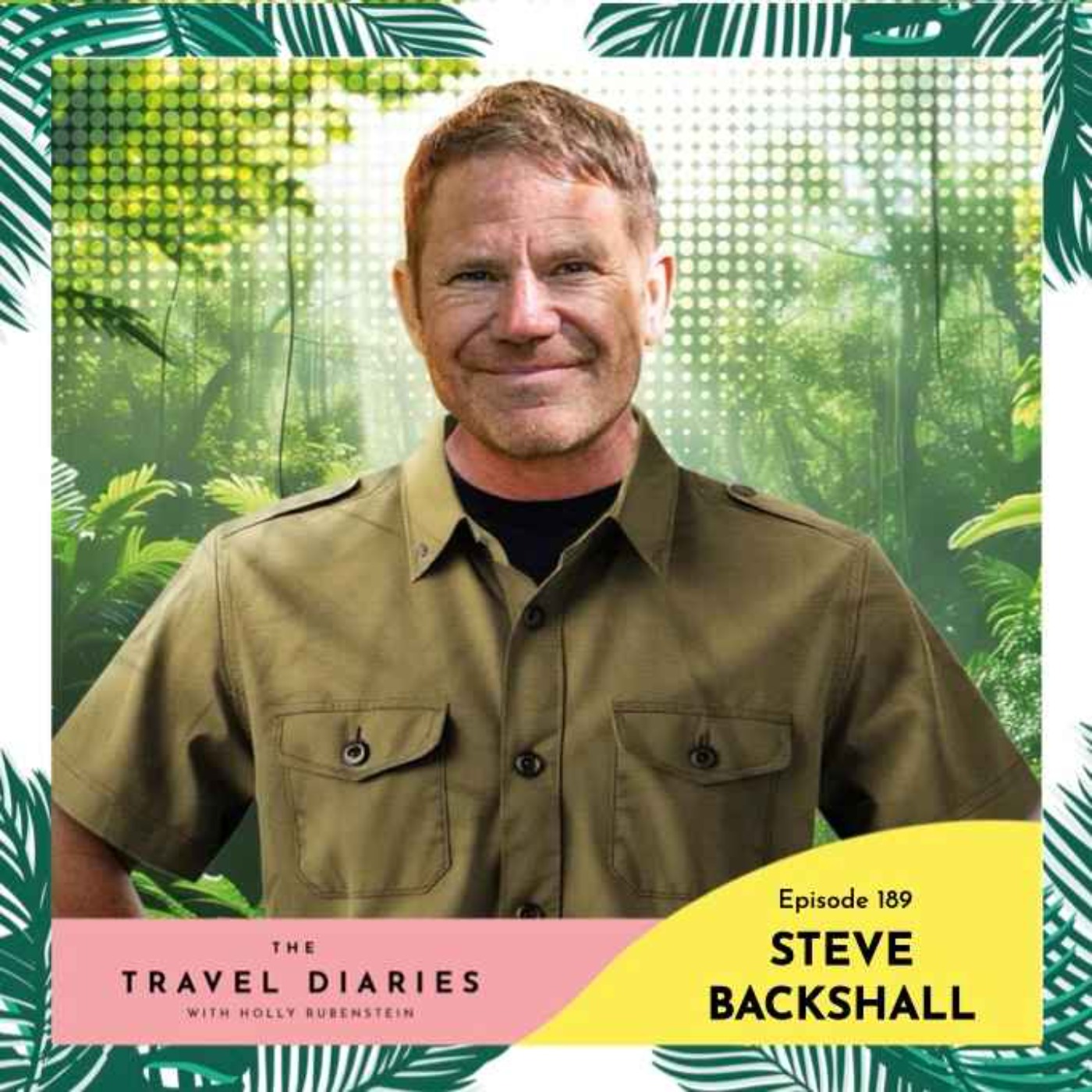
Today’s guest is returning to the podcast after 5 years! TV presenter, adventurer and explorer Steve Backshall is one of the most travelled people in the world, and one of the best story tellers - so he is the ultimate Travel Diaries guest.
Just listening back to his first episode in preparation for today was a reminder of what an amazing episode that was - if you haven’t listened to that scroll back and listen to that first, because his life is so interesting, and then come back and listen to this one!
It was so lovely to meet him in person this time, just last week. We filmed this in London, and it was really good fun putting some of your new travel diaries chapters to him - his answers were sensational. When somebody has been to this many places it's hard to know where to start, but I think that you're going to be absolutely captivated by Steve's stories, as I was.
So from Suriname to the Scilly Isles, Jerusalem to Alaska, and so much more, here’s Steve.
**Listeners - there's a strange video with the loading of Apple Podcasts' video today, so I'm reuploading this as an audio only file until it resolves.**
Destination recap
Steve’s Deadly Live tour begins in October. Find out more here.
If you’d like to find out who’s joining me next Tuesday, come and follow me on Instagram and TikTok, I’m @hollyrubenstein and I’d love to hear from you.
I’ll be back on Sunday with another episode of Unpacked, this time with Conde Nast Traveller’s Digital Director, Sarah Allard.
With thanks to...
Kimpton Los Monteros - a five-star hotel for discovering the best of Marbella.
Airbnb - Your home might be worth more than you think. Find out how much at airbnb.co.uk/host
Hosted on Acast. See acast.com/privacy for more information.