 Ask ChatGPT


The episode discusses (1) Andy Burnham’s performance at the UN and an interview about resilience, arguing he linked domestic hardship to geopolitical vulnerability to Russian disinformation; (2) Trump’s rhetoric and the implications of upcoming US midterms; and (3) the hosts’ essay on “The Age of Hitler and How He Will Survive It,” claiming Hitler’s moral centrality shaped post-1945 liberal order but is fading as WWII testimony dwindles and entertainment replaces moral instruction.
No named guests appear; it’s a two-host discussion between Matt (the host/author) and Matt (co-host). Backgrounds mentioned: one host writes for New World and authored the Hitler essay; the other comments on UK politics and Burnham/Starmer/Europe/AI.
Burnham’s UN lines include “no national security without strong, cohesive society,” plus claims the UK helped Moldova resist Russian election interference and launched a Centre for National Information Defence. The Hitler segment cites only 1.5% of the global population alive at war’s end and ~200,000 Holocaust survivors left; it contrasts WWII “blockbuster heritage” with eroding moral “GPS.”
Written by AI. May contain mistakes.
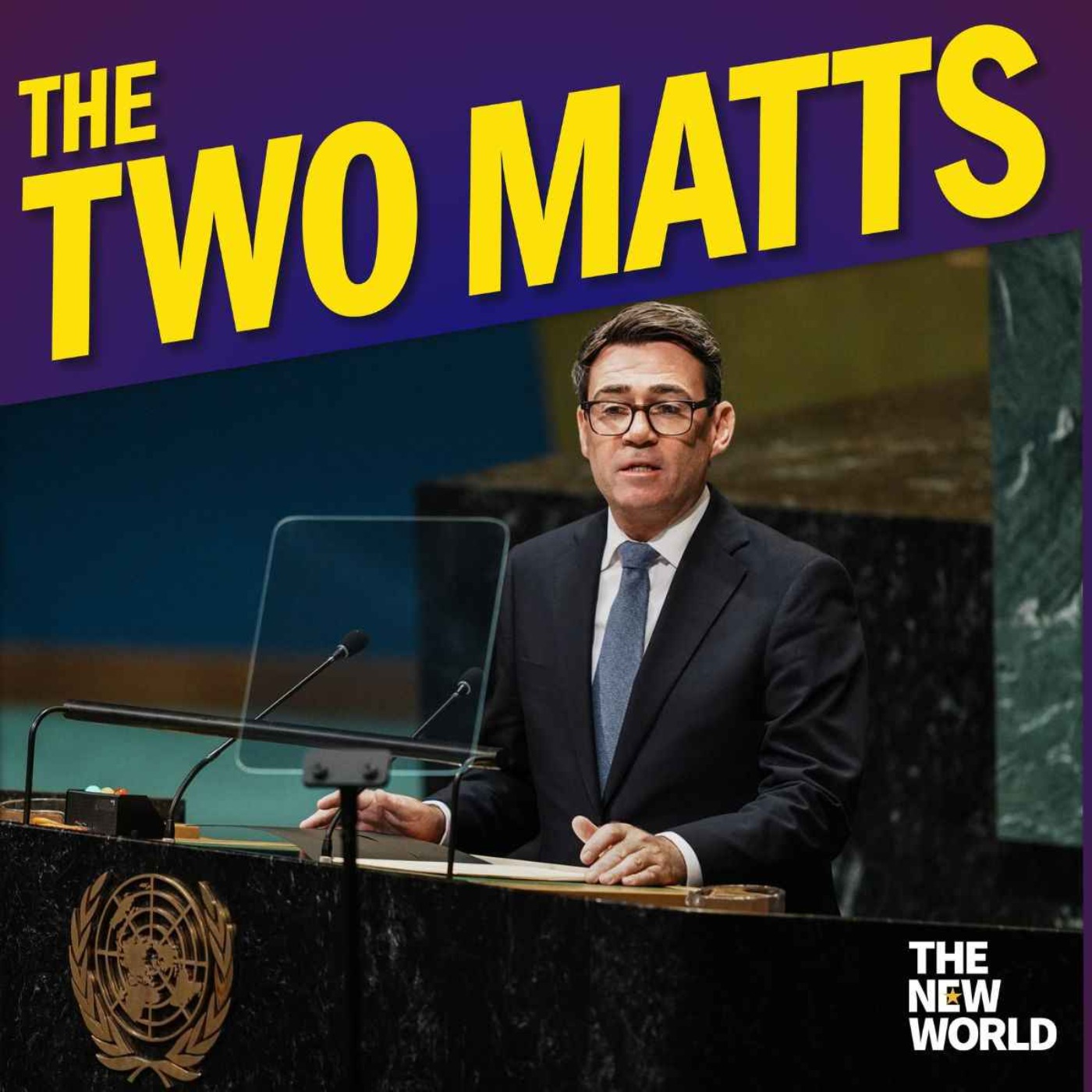
A discussion on Andy Burnham's recent performance at the UN and its implications.
“And he's also done an interview where a couple of quite interesting things popped up.”
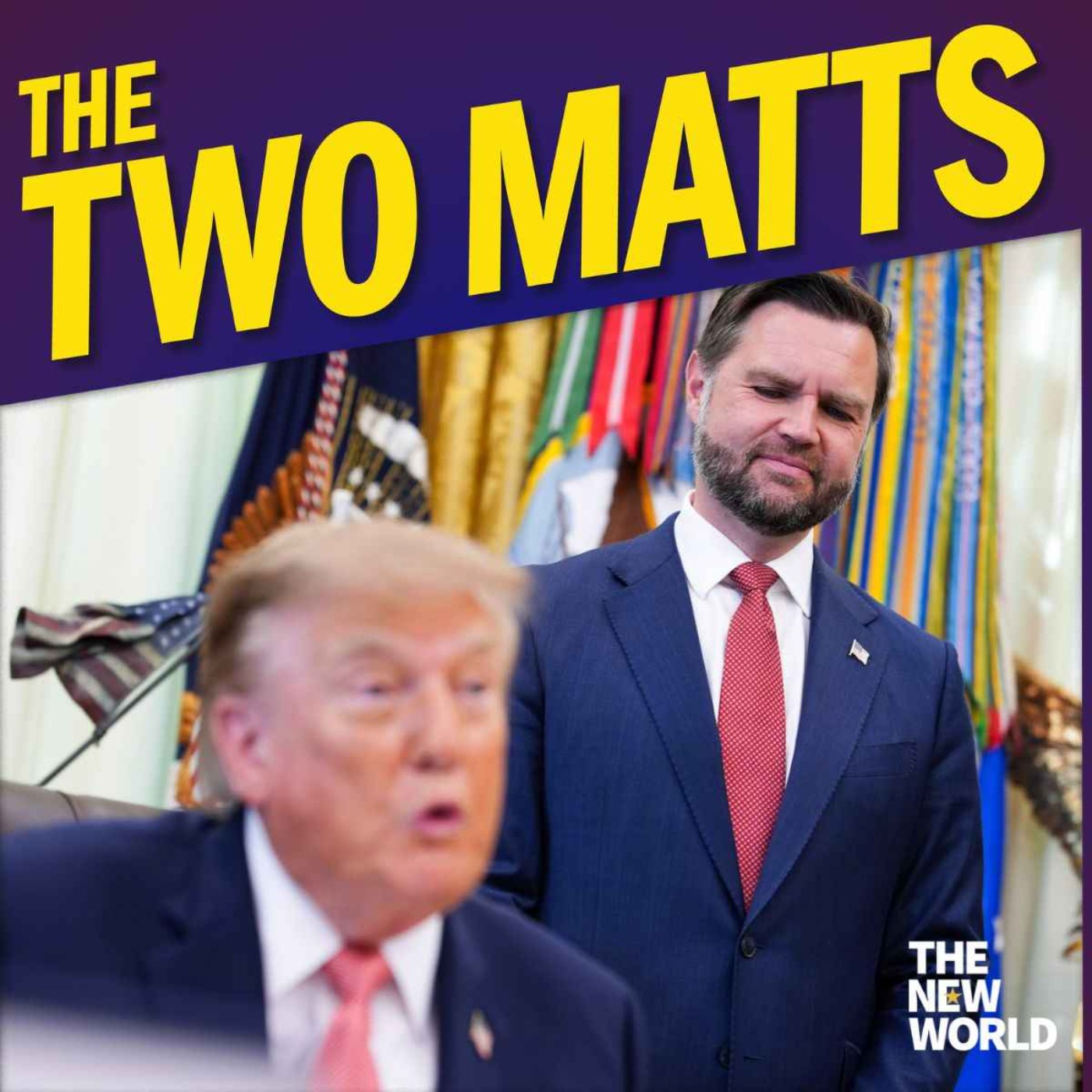
Analysis of Trump's impact on international relations and Burnham's handling of it.
“What did you make of his performance at the UN?”
Discussion on Burnham's foreign policy challenges and his approach to international diplomacy.
“And fair play again to him, because the big gap in his sort of skill set is he's never really done a foreign policy.”
Exploring the connection between domestic issues and international politics as highlighted by Burnham.
“which is where he said that we, the UK, have already actively helped Moldova push against Russian interference in their elections.”
Discussion on Burnham's theme of resilience and its importance for governance.
“You know, the Suez Crisis in the 50s, actually it bore no real relation to domestic politics until it blew up in the government's face.”
The discussion dives into the contents and implications of Andy Burnham's recent speech, particularly its focus on domestic and international policy.
“He puts the UK as the Maypole around which he rhetorically dances, which may sound obvious, but actually isn't always when prime ministers are overseas.”
The hosts explore the complexities surrounding Brexit and how it influences current political narratives and voter sentiments.
“Well, you know, it may be apparently obvious, but the politics of it are fiendishly difficult and they are much more difficult than the binary polls suggest, I think.”
Discussion on the historical anecdotes used by Burnham and their implications for understanding Britain's political identity and role.
“you know, we'll forever remember this act of great solidarity.”
The conversation considers Britain's current status on the global stage, its ambitions in AI, and the need for a realistic self-assessment.
“at britain at all right exactly right i mean that's part of the problem i mean i think one It's very interesting, his ambitions on AI, right?”
Explore how Brexit and political shifts have altered Britain's influence globally.
“It may well yet recover its former role as top table.”
Discuss the implications of the upcoming midterm elections on Trump's presidency.
“I think these midterms will dominate media coverage in the UK more so than any other midterms.”
Examine how Adolf Hitler's legacy shapes modern cultural narratives and moral frameworks.
“It's based on a book from last year, isn't it?”
Exploration of the diminishing awareness of World War II and its impact on democracy.
“we're now reaching the railway buffers on this.”
Discussion on the lessons from past conflicts and their relevance today.
“So you've got this you've got this situation where you've got the entertainment value of World War Two.”
Analyzing the complexities of contemporary political narratives and their historical roots.
“because they had seen what the alternative was.”
The impact of disaggregated information on public trust and political stability.
“and the point where, again, we come into a situation where great outrage and catastrophe seems almost to be, well, inevitable in some regards.”
Reflection on current events and their implications for political dialogue.

Get the gist, explore an idea or ask about something said.
 Claude
On The Two Matts, what are the key points of this episode?
Searching your listeningAutomatic transcript. May contain errors.
0:00When you're running a growing business, the right systems can unlock your full sales potential and make fulfilling every order effortless. Switch to ShipStation before peak season so you're prepped and ready before the rush hits. ShipStation connects Shopify, Amazon, TikTok Shop, and over 200 more marketplaces with one platform that does it all. You can manage orders, sync inventory, track returns, all automatically. Everything your operation needs, all in one place. Upgrade your shipping operations to stress-proof your biggest sales days and capture every bit of potential revenue. Go to ShipStation.com and use code AUDIO and get 30 days free.
0:30This is the story of the one. As a shipping manager, he's running the dock, stocking supplies, and making sure every order goes out on time. And Grainger helps him stay prepared. From shipping supplies to PPE to hand tools, he counts on Grainger to keep products moving and trucks rolling. So his operation runs smoothly no matter the shift. Call 1-800-GRAINGER, click grainger.com, or just stop by Grainger for the ones who get it done.
1:07Happy Thursday, everybody. Happy Thursday, one and all. Hope you're all having a great week so far. Matt, we've got a few things to talk about. One is Mr Burnham in the United Nations. Yes, for sure. And he's also done an interview where a couple of quite interesting things popped up. We can talk about that. The other is the incredible rational presidents of the United States of the United Nations as well. I don't know, maybe. I don't know. I like, I call it supreme intelligence, superior intelligence. So there's a bit of the Donald. Donald having a normal one. And also President Xi. But I also do want to make sure we have time to talk about a piece you've written about the age of Hitler as a thing.
1:53So we'll probably come to that in the second half. But let's start with Andy Burnham. What did you make of his performance at the UN? Well, I mean, I think, as I said to you in a message, one thing I think is worth sort of just noting for Paul Monroir, as they used to say, is that, you know, less than a year ago, Burnham was being written off. You know, we're just on the eve now of his first Labour conference Liverpool as leader and prime minister. Last year, he had quite a sticky conference. A couple of things went a bit wrong, media scrums at fringe meetings, and he did an interview which he famously said Britain shouldn't be in hop to the bond markets and so on.
2:39And I remember the mood then was, oh, Andy's gone too far, too fast. He's out the game. And people were writing him off. And And is it the UN giving what actually I think was quite a good speech and more consequential than, you know, one of those agonising little press splashes that heads of government have to do with Trump, who is increasingly becoming like, I mean, he always was, but like, you know, your crazy aunt at Christmas. It's just something to get through, isn't it? And just while we're on the topic of Trump and Burnham together, I thought he handled that meeting as well as you could do.
3:19He didn't debase himself and he was nice enough, you know. I mean, look, it should be clear now after 11 years after Trump came down the golden escalator and into our lives properly that he's not as other men. And so you can't really hold any more than one could hold Starmer responsible for the way they acted in his company because he's not normal. And I thought Burnham did fine. I mean, I don't think you can do more than fine. Well, on the Starmer point, Matt, I think, I mean, I would hold Starmer a little bit culpable for the way he's set about it, because I think he did face himself far too sycophantic.
4:00And kind of, you know, we've seen Mertz and we've seen Carney play a much stronger hand effectively, and Starmer could have done that. In fact, it's in his nature to be like that. I think he let himself down in the way he conducted himself in that first meeting, waving the bloody letter. I have never had you before, Mr. Peele. You'll get no pushback from me on Starmer having me know. No, I know. But I think it's worth saying that, you know, Burnham, maybe there was a source of learning in the way he carried on. I mean, he was supplicant enough, but not too much. I think he understood what Burnham understood.
4:38And fair play again to him, because the big gap in his sort of skill set is he's never really done a foreign policy. Well, he hasn't done a foreign policy brief. You know, he's good across domestic policy. Obviously, he's been a mayor, but he's never done the international diplomacy stuff. And it's a very steep leaning learning curve. He's been to Kiev and so on. And he did great. You know, I mean, I really don't. I think it's possible to over interpret these one on ones with Trump. I think you just want to get from one side to the other. without him shouting at you like he did to Zelensky in that terrible Oval Office meeting.
5:13And he did. But I actually thought that the speech he gave was substantial. And there were lots of things in it that, you know, kind of made you think, oh, actually, there is a story in a map here. So he said there were some lines that stuck out, like there is no national security without strong, cohesive society, which is something we've talked about, about Burnhamism. And I think in his attack on Russian disinformation was actually and I don't think it's been picked up enough enough, a coded sort of take not takedown, but attack on people like Trump and J.D. Vance and Tucker Carlson, who've presented the UK on the basis of disinformation, partly generated by Russian bot farms of the UK's somehow already, you know, an Islamist theocracy.
6:10Crazy. Right. And so he said over the last decade, we have given too much ground to those who want to run a negative, corrosive narrative about life in Britain, which bears no resemblance to reality. Now, I didn't talk about Islam, didn't get into the weeds about that. But I thought, good on you, mate, because what you're actually doing there is saying, we're not going to let you, meaning, you know, the country in which the UN happens to have its headquarters, you know, dominate how Britain is explained to the world. And I thought it was about time someone said that. Totally. Apart from the fact that Russia is involved, has been involved and will continue to be involved in radical disinformation strategies.
6:51And, you know, one of the themes of the week, which obviously dominated by Ukraine, Middle East, AI and so on, but was the fact that there is undoubted fear, real fear in the chanceries of Europe. I mean, Donald Tusk in Poland, Emmanuel Macron in France have held briefings indicating that they are seriously worried about at least the conceivability of Putin as he approaches the fifth anniversary of the Ukraine invasion, escalating to not necessarily not invasion necessarily, but some sort of measures on European soil. I mean, EU soil, UK soil. So I think it was good that Burnham took a strong line on Russia, amongst other things.
7:40There was one element which, again, didn't get picked up as much as I thought it might do, which is where he said that we, the UK, have already actively helped Moldova push against Russian interference in their elections. And then he went on to talk about the UK being an honest broker in a broader context. And some of that, I felt, deserves more scrutiny. But perhaps we'll talk about that a little bit more. But I thought in the sense, if you tie together us helping defend Moldova, us instigating this new Centre for National Information Defence, the first very explicit calling out of Russia's, you know, specific mendacity in information, disinformation.
8:29Absolutely. and bringing in also the AI dominance of the conversation around the G20. Now, how effective that will be, we can talk. But I did see, if you put all of that under the theme of us being an honest broker and, you know, the word honest doing a lot of work there. Sure. That, I thought, was a good positive hallmarking of what Britain can be in the future. also and i think um he's you mentioned uh the interview he did i think with the new statesman um and and and in that he it's clear that the theme in liverpool uh is going to be resilience and we'll wait to see how that's fleshed out of course but i i like the sound of that because we've talked a lot on the podcast since we started really about how i don't know if we use the word resilience specifically but certainly equivalent words that one of the tasks for government now one of the reasons that we needed more government rather than less was because and indeed international cooperation was because the main tasks of government from you know looking after needs to you know action on climate change action on pandemic resilience action on ai you know international regulation they're all about resilience and learning the lessons of covid learning the lessons of inaction over climate change and i think we've always talked about stories and i think that he said something about back to russian disinformation he's where he's very good burnham at linking the personal to the geopolitical so he said if you're struggling with the cost of living and your life is not improving or if you're a young person not in employment education or training need then you're going to be much more vulnerable to this kind of influence and i thought that was a an excellent statement of how yeah you know starmer would have just said russian disinformation if he said it would russian disinformation is bad and i'm going to tell putin this but burnham was saying the reason i'm saying this is because you the voter if you're listening to this back in the uk and you may not be but i want to start the the narrative and get the media to report it and get it into clips on social is that i'm not just doing this to swagger i'm doing this because if russia injects lies into the information ecosystem of the uk that affects the ability of everyone yeah to make informed decisions about democracy and to have agency over their lives and i thought yeah that's great that this is a real start it's it's only a start but he's you know he's just passed two months in the job it's not bad well what i think it demonstrated is his innate understanding of the two the separation that exists in people's head between international politics and domestic politics and he linked them together he made them the same thing and that and that's absolutely true they are the same thing and they are the same and that's that that's a new thing that's a thing of that is a thing of this generation where yes You could always separate them out.
11:41You know, the Suez Crisis in the 50s, actually it bore no real relation to domestic politics until it blew up in the government's face. Yes, exactly. But that wasn't the motivation of it. But now, you know, if you look forward to a coming crisis, he is saying that Russia's actions are only able, they're only able to gain sway within the UK if if we leave the domestic situation as as poverty stricken as it is that this is the fundamental cause of the unrest in the world globally is the domestic failures and i i do think that that is a a clever representation of reality and actually what one of the sort of um prophets of this was was bill clinton who i remember in his second term said foreign policy is domestic policy now he didn't have time to you know enact that principle but but i think now it has become the truth of all good statesmanship and i think one of the errors starmer made was that he probably did get too involved in in foreign policy because he found it more congenial to talk to other heads of government as an actual lawyer than he did to kind of run a nation but also he never really connected the dots and I think that you know it's look Burnham is going to have to spend quite a lot of time as all prime ministers have to on the global stage but the key is always to be speaking to your home audience as well as to your overseas audience and I thought well this is a really good start for someone who's only been in the job two months because yeah actually you know the the whole issue of um all the things that are facing burnham are domestic issues and they're granular and they involve a lot of domestic anger but all i think to a you know tick box tick box tick box they all actually have an international frame and if he can use he has that very he is i keep saying but he is at ease in his skin which is really half the battle and if he can if he can do that and and connect the two it's a very big step that in in in tradecraft i i think it is and i think it's much more sophisticated than people maybe giving credit for because the delivery is so kind of simple in in in a good way you know he's making he's joining dots in a very simple understandable way but i think prior administrations starmer johnson would have spent a third of that speech talking about ukraine and standing shoulder to shoulder and going to kiev and telling people what they've seen and obviously ukraine was mentioned but that wasn't the main thrust of the speech no speech was because because the truth is that talking about standing shoulder to shoulder with ukraine is an easy win for anybody standing at the un you know but it's much harder to say here let me try and join the dots and make a big holistic view of domestic and international policy and how it affects everybody.
14:49He puts the UK as the Maypole around which he rhetorically dances, which may sound obvious, but actually isn't always when prime ministers are overseas. So he says, first of all, this is what the UK is going to do on these fronts. And this is why these fronts matter to you back in the UK now I agree with you I think there's there's considerable sophistication in that but I think also what's encouraging is I think it comes naturally to him you know I don't think it read very naturally that speech it didn't I mean I'm sure it had been through multiple drafts goodness only knows but it didn't feel like it didn't it didn't have that kind of overwrought effort that Starmer speeches often have the verbless sentences and so on let me pick up a couple of uh points where i thought it failed um he starts and and there are mitigations for why these points failed which we can discuss he starts talking about brexit you know it's literally the intro you know in the 10 years since brexit and then there's a procession of we've learned this about ourselves we've understood this about and it kind of read i felt that that did read like um you know the inevitable conclusion to be drawn was that brexit was was not a great event in our history you know we spent 10 years in a pickle you know and now britain is back he said okay so where we've been for the last 10 years head up our own arses arguing about ourselves about this intractable situation we've we've created through this vote but then he didn't really address our closeness to europe at all he didn't you know he there was a passing mention to you know uh in this honest broker thing with the us's closest allies we're great friends with europe and there's closer you we're going to get closer to them.
16:33But there is this sense, and it came through loud and clear, if anything came through loud and clear in that interminably long interview or profile in the New Statesman, that the conversation around Europe is for another day, that he's not going to start waving that flag around as the singular cause of all our travails, even though in so many ways, so many of the answers inevitably lead to not just a closer relationship with Europe, but a re-embedding of the UK into Europe. I think that's right. And I think it will be one of the hardest tasks of his premiership, wherever it leads and however long it lasts, to craft that narrative.
17:22It's notable he hasn't yet really said anything substantial on Europe, and he hasn't really said anything substantial on immigration and integration and the two are deeply connected yeah and he can't leave either indefinitely you know because they are as you say that's so salient but the europe one is is more complicated i think than those who still call themselves rejoiners say which is that what burnham is doing is saying fresh start yes he has to find and and i i agree with you as we've said before i think he does want to i mean he said he wants to he would like to end his life with europe fully in the eu whatever it is by then so i don't think there's any doubt where his heart lies but i think he also understands that what he can't do is relitigate 2016 and finding a way of expressing that public in public diplomacy and also then more complexly in a series of policy steps is more difficult, I think, than those who just say it's a question of flicking the switch, reading the polls, you know, rejoin.
18:32What's the problem? Well, you know, it may be apparently obvious, but the politics of it are fiendishly difficult and they are much more difficult than the binary polls suggest, I think. Yeah, no, I think that's absolutely true. And they are trigger points. They're trigger points that will, A, give his opposition here huge ammo to go to specific what media and political will go to town if he missteps there. but also with genuine voters, you know, who either feel, you know, for F's sake, this is 10 years old, this, why can't we move on? Or they still feel the burning resentment of the Brexit vote and do not want to hear from a guy saying we're going to backpedal and it'll be seen as a betrayal, you know.
19:27100%. And I think that, I mean, there are two points really. One is that the big argument being made this week in favour of a fresh surge on Europe is that it would unite the progressive vote. And it might. But I'd also say it might well unite the right because you can't be sure. One of the reasons I'm always sceptical about polls saying 99 percent of Britons want to overturn the Brexit referendum is that may well be true. But it depends how the question in the referendum is posed. if you people say break brexit is losing us x billion pounds a month or whatever it might be would you want back in europe people say yeah obviously but then if you say to them you know that referendum where you clearly stated your wishes would you like the liberal elite to overturn it they might go hang on a minute it's quite possible people can think two things at once which is the problem with life is that they can think that brexit has been a disaster but also So they don't want to be told that it has to go.
20:31Now, how you get how you get out. In other words, getting out of where we are, it's not just a question of pressing the rewind button and demanding that 52 percent of the public or whatever is now apologize. And I do understand why Burnham is treading carefully, though he cannot for long, because, as you say, you know, this is substantive. It's not just a doctrinal issue. this is actually causing material damage to the uk economy and among other things yeah and he's he's gonna have to do it before the next general election and increasingly i think that the reality of that is that it will be you know august 2029 um or maybe a little bit sooner but it won't be it won't be you know it won't be the kelly plan so anyway there we go listen the other thing i wanted to pick him up on and it's more of a well it's it's a it's a it's a slightly more abstract amorphous point I wanted to make.
21:27He told this great fairy tale about Manchester mill workers refusing to touch the cotton that had been produced by Confederacy states and had been picked by the slaves. And that, it's a great story. And Abraham Lincoln did indeed send a letter saying, you know, we'll forever remember this act of great solidarity. But as ever with these things, and this is where this is where it made my eyebrow raise a little bit because in the new statesman article andy burnham goes on repeatedly about his how much he hates the oversimplification of political discourse and narratives you know and i thought well if anyone's oversimplified something mate honestly that little fairy tale about the manchester mill workers is is is one of the great oversimplification of our time because for one there was a union blockade so there was no cotton coming into the northwest of england anyway by that time there'd been a glut of cotton the year before so the manchester mills themselves were quite happy to pause for many more imports but but it's fair to say that there was a moment where the manchester mill workers said we're not going We're anti-Confederacy.
22:44But he will not be repeating that story 30 miles away in Liverpool during the conference, which Liverpool was a very Confederacy-inclined city during the Civil War in America. And, in fact, some of the ships that the Confederacy relied on for bombarding Union ports were built in Birkenhead. Is that right? Yeah, yeah, yeah. yeah oh yeah it's a great fact oh yeah no i mean liverpool was very steep very much uh invested in confederacy success oh yeah totally was an absolute disaster the mercy beat was born in dixie i didn't know this amazing it really was so anyway this this i did think it was slightly ironic and maybe it's unfair of me to hold him to this level of historical accuracy what was a nice anecdote but But I think, you know, there's something about what it really made me feel was that Britain, the risk for Britain, and maybe I'm overreaching here, but the risk for Britain is that when we talk about ourselves as honest brokers in the world, and we've, this is very much an internal view of Britain in the world.
24:00and you know that we are the home of decency and civilization and democracy and all of this the rest of the world doesn't necessarily look at britain in that way and has a much nuanced more nuanced view of us indeed if he's pushing for us to be this paragon of virtue in the world that might be more of an uphill battle than he imagined and also a lot of the world isn't looking at britain at all right exactly right i mean that's part of the problem i mean i think one It's very interesting, his ambitions on AI, right? Well, fine. You know, and he wants the G20 is going to be in Manchester, of course, next year, next November.
24:37So it's a while away. And he wants it to be all about AI. And that's good, too. But I think, again, one should slightly hold his feet to the fire, because we've said on the podcast that we wanted, just before he took office, that we really wanted him to appoint a senior cabinet minister with a department that had cross-government authorization on AI issues. And he hasn't done that. What he's done is he's appointed an absolutely fair play, incredibly talented rising star called Kanishka Narayan as Minister of State. Fun fact, the only old Etonian elected a Labour MP since 2005. There you go. No, is that right?
25:22Yes, yeah, yeah. It's amazing. bit of political triv there um went to stanford been a civil servant lazard star of the future but you know until last september he was only he's in his 30s he was only a pps to steve reed right so you know he's he's a super talented guy i'm not you know no shade on him but this is not like making west streeting um in charge of it or something like that you know um and i think also So, you know, the AI Security Institute, which he was bigging up, which was launched at the Bletchley Summit in 2023 before Labour came in. OK, you know, it's it's it's not bad. And it has an office in London and in San Francisco headed by a guy called Henry Zut who knows his onions.
26:10But the idea that it is sort of a world leader in this is a bit of a push. I mean, the EU AI office, you know, surprise, surprise in Brussels is a much more powerful and and referred to body. So, you know, going back to what you said, you know, it suits us to mention all these things and say, you know, everyone looks to us. They really don't. I mean, you know, we are not we have good we have good research in this country on AI, less so in in startups. But it's fantasy to say that the world looks to Britain as the centre of AI just doesn't. and so you know i think until there's a sort of degree of of of sort of self-awareness i was going to say honestly i don't think anyone's being dishonest but a sort of fact-based self-awareness about britain's role in life it's going to be it is going to be very hard for us to fill our potential you know for us to to really make those big strides that we need to as a as an economy if we still think we are some sort of you know globes bestriding huge powerhouse we're not we we do have areas of absolute excellence you know i think tech startups i know some of our investors will endlessly tell me with great uh reason that that the uk is you know you can make a great case for it being the new palo alto you know and all of this and that's that's fantastic but we have to bear in mind our relative position in the world exactly it's not what we thought it was when we were growing up no and and i i think that if you oversell people stop listening and and and what i think is hard for britain generally and part part of the malaise of which brexit was a symptom and brexit has now turbocharged of course is that it's baffling to a lot of brits that people aren't listening anymore because the truth is that really quite recently they were i mean during the blair and brown era they were listening you know britain did have real heft and some of the things it did led to great difficulties such as the involvement in the iraq war for example but you know britain was at the center of the stage it isn't now and partly that's by choice but i I think that there's a lot to be learnt from Carney about the fact that in the end, at the moment, the UK is a middle ranking nation.
28:45It may well yet recover its former role as top table. It sits at many top tables ex officio. But, you know, the fact is that I did feel in that speech that there's an oscillation there, which is part of Burnham, I think, knows all of the above. Right. But part of him also feels obliged as a new prime minister to talk as if he's Harold Macmillan. And you have to be a little bit careful, because, as you say, if if you lose, if the Velcro of truth gets pulled apart, you lose your audience. You know, very good. Very good. Listen, talking about the Velcro of truth being ripped asunder. Donald Trump has been has been pulling at every thread of logic and rationale that he can find.
29:33I mean, it was extraordinary, wasn't it? I mean, it always is. But I was this stuff about it was on Tuesday, wasn't it? Whether to strike a deal with Tehran's leaders or, quote, annihilate the Islamic Republic, which brought back that terrible. and actually this was the moment where i thought um bloody hell are they going to have to invoke the 25th amendment which of course they wouldn't um just to explain that's the that's the way where the clause where it's the where the cabinet i mean this is why it never happened the cabinet led by the vice president basically relieves the commander in chief of command um it was tuesday april the 7th was the night where he said unless the iranian leadership acceded to his demands quotes a whole civilization will die tonight and some people said well you know it's just trump being trump and yes probably it was but it was still the president of the united states saying that yeah and i do wish the president of the united states whoever he or she is wouldn't say things like that and he well so there's a weird thing going on um where he's you know obviously the big thing looming on his horizon right now is the midterms.
30:49Yeah. And, you know, that is of enormous consequence to his ability to govern everybody. And yet the things that he seems keen to really push are both really antagonistic to American voters, especially American Republican voters. So you've got this debacle in Iran, which is rumbling on and driven largely by his own mad rhetoric and dogmatic insistence that he's not going to compromise in any regard and then you've got the huge lavish welcome to president Xi which most yes the vast vast majority of American voters believe America should be keeping not at arm's length but barge pole's length yes and be and treat as an absolute antagonist and and then Trump said something in response to a question about the midterms and he said they don't even enter my mind I haven't even thought about him don't care he said I'm not on the ticket and I thought oh yes you are mate because midterms yes of course they are local and the quality of local candidates matters a lot but they are especially in the second term they are a referendum on whoever's in the White House pure and simple and if I mean I think it's who knows but it's all but certain that the Democrats will take the House the congress and and they might even take the senate who knows but it'll be a bad night for trump and it will be a bad night for trump you know he will he will substantially lose his capacity to get legislation through and get people confirmed and he'll be impeached again and probably well almost certainly acquitted because it's almost impossible to get someone guilty verdict in impeachment given the constitution but nonetheless that'll drag him down and it will color the remaining his remaining two years in office so yeah i mean absolutely but i agree with you i mean i think there's a there's a curiosity to his behavior which is that this pretense of not caring is is ridiculous um it's alarming that's my key question matt is do is it a pretense well has he just sort of taken disenfranchised himself no i mean The bit that alarms me is that I think one of the false narratives about Trump is that he's just given up.
33:15OK, Trump is and he is getting old and all of the above. But he's also capable, as we saw on January 6th, as we saw with ICE, as we saw with the deportations, as we've seen with the lawfare, he is capable of taking brutal personal reactions. elections and you know he it has been talked about by a lot of MAGA adjacent people that there should be FBI officers or ICE agents at polling booths to dissuade democrat inclined voters from going there and worse so what worries me about this is I don't know because he doesn't know but he is the most capricious president in history and if he has a terrible night in November all the things that we've talked about in the past about his autocratic inclinations what steps might he take not a third term in terms of running for a third term but simply refusing to act by the constitution all these things come back in play again and he is surrounded this is the crucial difference with trump one he is surrounded by design by sycophants toadies and bad men and they you know very few of them will dissuade him from any of these courses and some of them like steve miller will say yes go for it so i my the worry i have is that it's one of the reasons he might be saying he's not worried about the midterms is because he is stopped worried about elections full stop not because it's not a reflection on him because of course it is yeah right listen fascinating times and um we'll we'll come back to the midterms um oh yeah in the coming weeks that is going to I think these midterms will dominate media coverage in the UK more so than any other midterms.
35:01I agree because, well, yes, because. The truth is that it's not until I mean, the Democratic Party is a fascinating subject at the moment, and we can come back to that on another pod. But the truth is that until the midterms are out the way in any second term, the presidential campaigns don't get going. and after November um you'll really see what both parties because the Republicans have a big choice to make you know that how much are they going to stay stuck with Trump do they just stick with Vance or do they go with Ruby or someone else I mean all of these are live issues and watch so watching the Democratic Party try and develop a presidential winning campaign will of course have lessons for here continental europe and elsewhere and so i think and of course the world so i agree they are massively consequential right listen we're gonna thank you for that matt we're to come back um in part two and talk about your piece um about um the age of hitler um and whether that has passed until until to what consequence um but i did want to remind uh dear listeners that we've got an event coming up at Cadogan Hall in London on October the 22nd, a Thursday night, where Alastair Campbell will be talking about his marvellous new book, which I have read.
36:28And it really is marvellous. I can't wait to read it. Well, I'll send you the PDF so you can get ahead of it. Please, thank you. But it's really, really great. It's called Percivilliance. And he'll be talking about Percivilliance, both what it means politically, but the bits I found were really great was what it means personally, not just to Alistair, but to all of us in trying to make the world better. So there's a kind of how to get along better in this modern world. And Alistair will be talking to the amazing Michelle Hussain at Cadogan Hall on October the 22nd. And we've still got some tickets, so you can go to cadoganhall.com and book those tickets.
37:13And you can get, dear listeners, you, only you can get a£10 discount when you put in the code ALASTARLIVE. That's Alastar with an A, as you know, A-L-A-S-T-A-I-R-L-I-V-E. So we'll both be there and look forward to seeing you. We certainly will. And we'll see you in a couple of minutes, dear listeners. 500 orders a month was manageable. 5 ,000 is madness. Embrace intelligent order fulfillment with ShipStation. The only platform combining order management, warehouse workflows, inventory, returns, and analytics in one place. What used to take five separate tools, ShipStation does in one. Automate fulfillment and rate shopping to ship up to 15 times more with up to 90 % savings.
37:59Go to ShipStation.com and use code AUDIO to try ShipStation free for 60 days. Grainger knows if you're a procurement manager at an industrial manufacturing facility, You're balancing inventory and budget while sourcing critical supplies across the operation. Too much inventory? Costs climb. Too little? Production slows. Grainger's$2 billion in on-hand inventory helps you get what you need when you need it. So you can help keep budgets balanced and lines moving. Call 1-800-GRAINGER, click grainger.com, or just stop by. Grainger, for the ones who get it done.
38:40Welcome back, dear listeners. This is the Two Mattes podcast brought to you by the wonderful subscribers of the New World magazine. Now, Matt, in this week's New World, your essay is about Adolf Hitler and the age of Hitler. It's based on a book from last year, isn't it? Which is just, I think, am I right in saying it's just coming into paper? It is. It was something that... That's exactly right. I mean, it was a thought I'd been kind of brewing in my head. and also in our conversations, really, on the podcast. And then I read this brilliant book by, he's a scholar from Durham University, Professor Alec Ryrie.
39:20And he mostly writes about Protestantism and the Reformation, but he sort of diverted himself and wrote this wonderful book last year, which is, as you say, just about to come out in paperback. So it seemed a good moment to write about it, called The Age of Hitler and How He Will Survive It. and I'll tell you where I got to and why Alex's book is so interesting so one thing that fascinated me for a bit was everywhere you look and partly this comes from doing the culture newsletter you know there is World War II stuff all the time so in the multiplexes at the moment very good movie with Andrew Scott called Pressure about the D-Day landings in which he plays group captain James stag who's the meteorologist who advised eisenhower on whether or not to go and on the day and it's it's a really good movie you got a new movie about potsdam coming out you got a new max hastings book coming out you got a new anthony beaver book coming out on the battle of britain etc etc etc so the the cultural production line continues it as more than ever yeah but it's becoming more and more i think and this is the point a heritage industry rather than a sort of moral map and this It's gone from being a shared moral narrative to being, you know, the basis of blockbuster heritage.
40:42And Alec Ryrie's book, The Age of Hitler and How We Will Survive It, is sort of offers a key to understanding this. And what he starts by saying is a century ago, this is quoting the most potent moral figure in Western society was Jesus Christ. Now it is Adolf Hitler. And his point is that the age of Hitler didn't begin in 1933 when he became chancellor. It began really in 1945 when he died, because it was after that, as we rebuilt this post-war world, that Hitler, Hitlerism, Nazism, the Holocaust became the terrible backdrop against which the world in which we still live was built. and therefore Hitler became a bad person rather than you know a good person Jesus Christ became the basis of all moral determination and that was frankly a very successful project because you know even in the cold war in the depths the frostiest moments of the cold war you know the Soviet bloc and the west agreed that on one thing which was Hitler was a bad thing and you know the UN NATO the Treaty of Rome, codification of human rights, the foundation of Israel, and very important, exclusion of ethno-nationalism and racism from respectable politics.
41:56These were all the product of that. But Alex's point is that this is now, we're now reaching the railway buffers on this. That memory is fading, partly because, and I look this up, the number of people who are alive today, who were alive on the day the war ended is only 1.5 % of the global population. And there are only 200 ,000 Holocaust survivors left and their median age is 88. So we're about to enter the post-human testimony era. And also things change. You know, lots of things have changed. The pressures upon the international system have changed fundamentally, particularly this century. um there's the politics the middle east is very fluid and so on and so on and and so this begs the question you know if if the the if hitlerism is no longer as it were the narrative against which we form our kind of idea of liberal democracy liberal internationalism what is and what i was trying to do in the piece was was was reference to some books that have come out all of them well meaning but none of them I think quite landing the plane you know that this is work in progress and we shouldn't give up and Alec Ryer in his book is very clear that it's doable in a sense because it has to be doable yeah um but but it isn't straightforward yeah well I mean one of the things that I found chilling in in I put together in my own head I put together your piece and in fact you reference Annette Dittert's piece yes within your piece and which thought which was the previous week and there was a cover piece and an excellent piece the terrifying rise of the afd and why well i mean why it is terrifying and why we shouldn't be complacent and of course you make the point not only has everybody died or they you know or or dying who who have direct experience of world war ii and so in that sense the you know the the imperative the loss and the diminishment of that imperative of Hitler it's natural but people um uh younger generations just aren't really cognizant of the basic facts of world war two what happened only a third could tell you that the battle of Britain happened during world war two right this kind of thing and that is by the way despite all the blockbusterism of well you know education that goes It's fascinating, isn't it?
44:32So you've got this you've got this situation where you've got the entertainment value of World War Two. But but the moral learnings of it, that as you say it. And by the way, it is. I hadn't thought about framing everything that happened based on Hitler's demise. You know, it is absolutely true, isn't it? That that was the launchpad. Yes. And also, I think that what what happens in these situations is that and it happened after the first world. war as well i mean i we all criticize the appeasers and and rightly so as it turned out but to be fair to the appease is not something i ever thought i'd say but you know the reason they were doing this was because they had seen a generation slaughtered you know in the first world war and didn't want another war unfortunately it was necessary to fight another war now the people that came out of the second world war having many of them lived through two global conflicts you know a historic uh precedent really were driven and these were amazing people you know they really were um the dean ashesons the atleys the churchills the nye bevans the ernest bevans you know all of them um i'm so many uh the monnet and schumann in europe and so on their single cause was we can't let this happen again yeah um and we have to build a series of structures domestically and crucially internationally that are robust in the face of it.
46:04But the point is, they weren't just rules makers or procedure makers. They were actually they had a kind of there was sinew and weight to what they were saying, because they had seen what the alternative was. Now, the problem is that the world we see is much more disaggregated. You know, we look at what's happening in the Middle East, in Iran and Gaza. We look at what's happening in Ukraine. We look at the horrors that are perpetrated online. We look at the threat of climate change. They're all different. The quest for a bogeyman, as it were, is much harder now. it's and young people i understand that that for you know it is odd you're right because a lot of young people i know are absolutely fascinated by this world war ii content but what it doesn't form for them is as it were a moral gps it just doesn't yeah yeah and there's no point and there's no point in being nostalgic for that because those things don't come back the bigger question is how do you and i think this is really really important for those of us who believe passionately that liberal democracy is still you know the best way of doing things what is the sort of narrative around liberal democracy in the second quarter of the 21st century that gives it more that makes it more than just rules and institutions and that is not that is not easy right the thing that worries me deeply and you know existentially is that all of the the reaction to these horrific events where we do put in place these structures like the united nations and that what we're now seeing is the forgetting of the the potency of the events in the first place but also the erosion of the potency of the institutions we put into place to combat that thing happening again so we've got this horrible situation where you know that generation that put in place the never again generation we're seeing the things that they erected actually not necessarily standing up to the moment right and and right that that is where it's terrifying because i don't know i know you're not a believer in the pendulum theory of history but after maybe i am a little bit more because i I think what we're seeing certainly is a cycle of great outrage, great catastrophe, reaction to the outrage and catastrophe, and then over a period of time, an erosion of that response and the point where, again, we come into a situation where great outrage and catastrophe seems almost to be, well, inevitable in some regards.
48:53Yeah, my aversion to the pendulum theory of history is only really when people cite it as a reason to be complacent i think it'll be okay right right yeah yeah well the opposite is true i think yeah no i mean i think you're you're 100 right which is that there's something alarmingly cyclical going on which is a sort of form of amnesia where okay there hasn't been a global conflict like the first world war and the crash was not quite as catastrophic as the depression and the and covid was not did not claim as many lives as the spanish flu and the populist parties of today are not absolutely the same as the fascists of the late 20s and 30s yeah but you can see a pattern can't you you can definitely see and it's only it's a question of degrees not a question of actuality you know and and the the the terrifying I mean, the big and terrifying difference, well, there are many, but the thing that really I think is deeply alarming is that the information supply was obviously over controlled and over centralized in the 1920s and 1930s, you know, and the horrific Daily Mail standing up for the black shirts being a good example.
50:12But but but nonetheless, it was possible for people to sort of trust up to a point, legacy, what we now call legacy media and understand where the source of information were coming from. Now, information is totally disaggregated. And, you know, the number of trusted sources is approaching near zero as far as a lot of people are concerned. Not everyone, but a lot of people. And so in this kind of attempt to construct binding narratives, a sense of propulsion, a sense of momentum behind the reconstruction of a liberal order, there is this huge sense of disaggregation and distrust. and I think that that and that of course is the terrain on which populists thrive which is they're all the same everyone lies let's just have some fun and you know that that is you look at the AFD there are definitely neo-Nazis in their ranks but what they're doing above all is saying look you know these centrists who've been telling you since since um the reunification that they knew what they were doing they let in a million syrians or however many it was and look at the consequences do you really want more of that yeah now no you and i can explain why having an fd government is a very bad idea or indeed an extreme left government but you can see why to a new generation it's sort of like well yeah i understand no totally 100 100 and until we build that into that reality into our thinking and the way we respond to it will we'll we're we will continue to lose you know we will lose that that's you know all i don't want to align the brexit vote with what's happening in afd but you've still got a a kind of simplistic populist narrative that people really feel not because they're fools but they feel it because there is a point at the heart of it which needs to needs to be openly addressed by people like us and if we just dismiss it as no you're wrong to feel that and all these things like you know facts don't care about your feelings and you're all bigots and all of this but you know it's so counterproductive to our own kind of cause yeah until we realize that then we are you know well we'll continue you know also feelings don't care about your facts is the other problem yeah that's right you know i mean and i mean a good example of that was and i i have to check myself a lot on this as i'm sure you do which is i thought there was no spectacle more disgusting this week than um daniel thomas so-called danny tomo putting a a knife into into a a dinghy right and i thought as i often do they've gone too far this time right this is it and then i thought hold on a sec deep breath think it through and i thought yeah you know everyone we talk to in our social lives and professional lives would have been disgusted by that right yeah yeah but there will have been a lot of people who will have maybe not publicly or maybe only in their friendship groups and whatsapp groups or whatever said you know what it's about bloody time someone stuck a knife into those dinghies and that's the problem is how do we with that yeah absolutely right well again this is something we will return to time and time again yeah matt thank you so much um thank you as ever to the third matt matt with us for producing the show um get your tickets at cadogan hall.com for the alistair campbell michelle hussein spectacular on october the 22nd subscribe to the new world um we we have our 500th edition coming out next week very exciting which i know the whole team is enormously proud of as they should be it's such a great team at the new world uh and before that at the new european um that it it is a mo it is a moment of great pride that we have published um 500 editions now can i just do a bit of crawling because you know it's what i like to do congratulations mate well no no seriously Thank you.
54:21I'll take it. I'll take it. But we need to do another 500 and another 500 after that. Oh, God. More now more than ever. So, listen, if you haven't subscribed, do so now, please. Go to thenewworld.co.uk forward slash two mats, number two, M-A-T-T-S, and join the community. It's what pays all the bills, produces all the shows, produces all the journalism, and it's making a real difference in the world. so if you care about that then you know what to do send in your questions and your observations to twomats at tnepublishing.com that's the number two m-a-t-t-s at tnepublishing.com we'll be back with your questions on Sunday for our regular Sunday morning Q &A session but until then it's goodbye from me it's goodbye from him goodbye
55:45We'll see you next time. ShipStation.com and use code AUDIO to try ShipStation free for 60 days. This is the story of the one. As a shipping manager, he's running the dock, stocking supplies, and making sure every order goes out on time. And Grainger helps him stay prepared. From shipping supplies to PPE to hand tools, he counts on Grainger to keep products moving and trucks rolling. So his operation runs smoothly no matter the shift. Call 1-800-GRAINGER, click grainger.com, or just stop by Grainger for the ones who get it done.
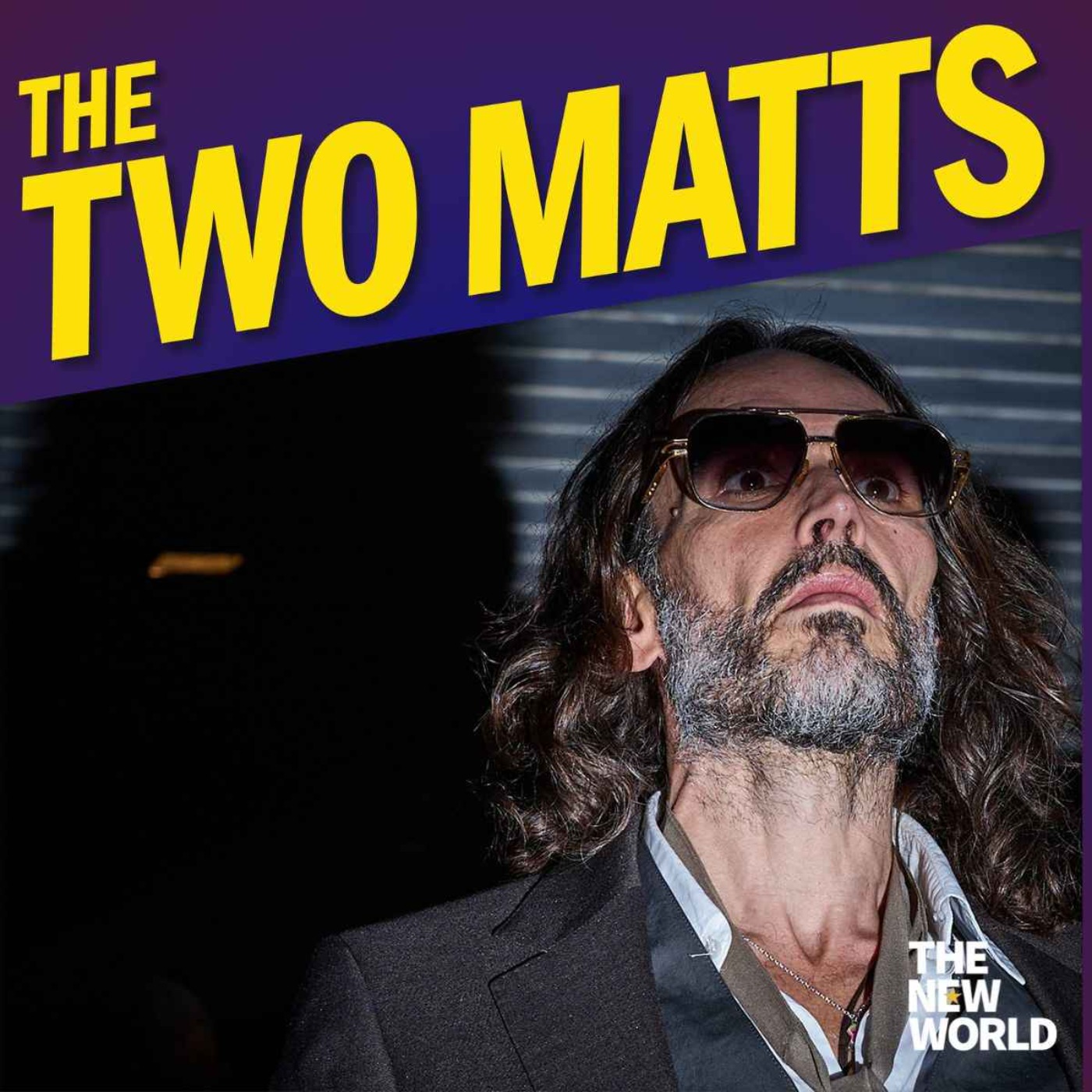
The Matts discuss Andy Burnham's speech to the United Nations - and what it tells us about both the opportunities and challenges facing the new PM and Britain as we seek to rediscover our place in the world 10 years after Brexit.
In part two the Matts discuss the waning effect of Adolf Hitler on the global conscience and what it means in concrete terms for all our futures. Enjoy!
PS: Use code AlastairLIVE to get £10 off tickets to The New World event on October 22 at London's Cadogan Hall with Alastair Campbell and Mishal Husain. Tickets on sale now at cadoganhall.com.
Produced by Matt Withers
OFFER: Subscribe to The New World and get a free copy of Paul Mason's new book Reds. Head to https://www.thenewworld.co.uk/2matts/
Hosted on Acast. See acast.com/privacy for more information.