Ask ChatGPT

 The Two Matts
10 Sep 2026 · 58m · 18 chapters
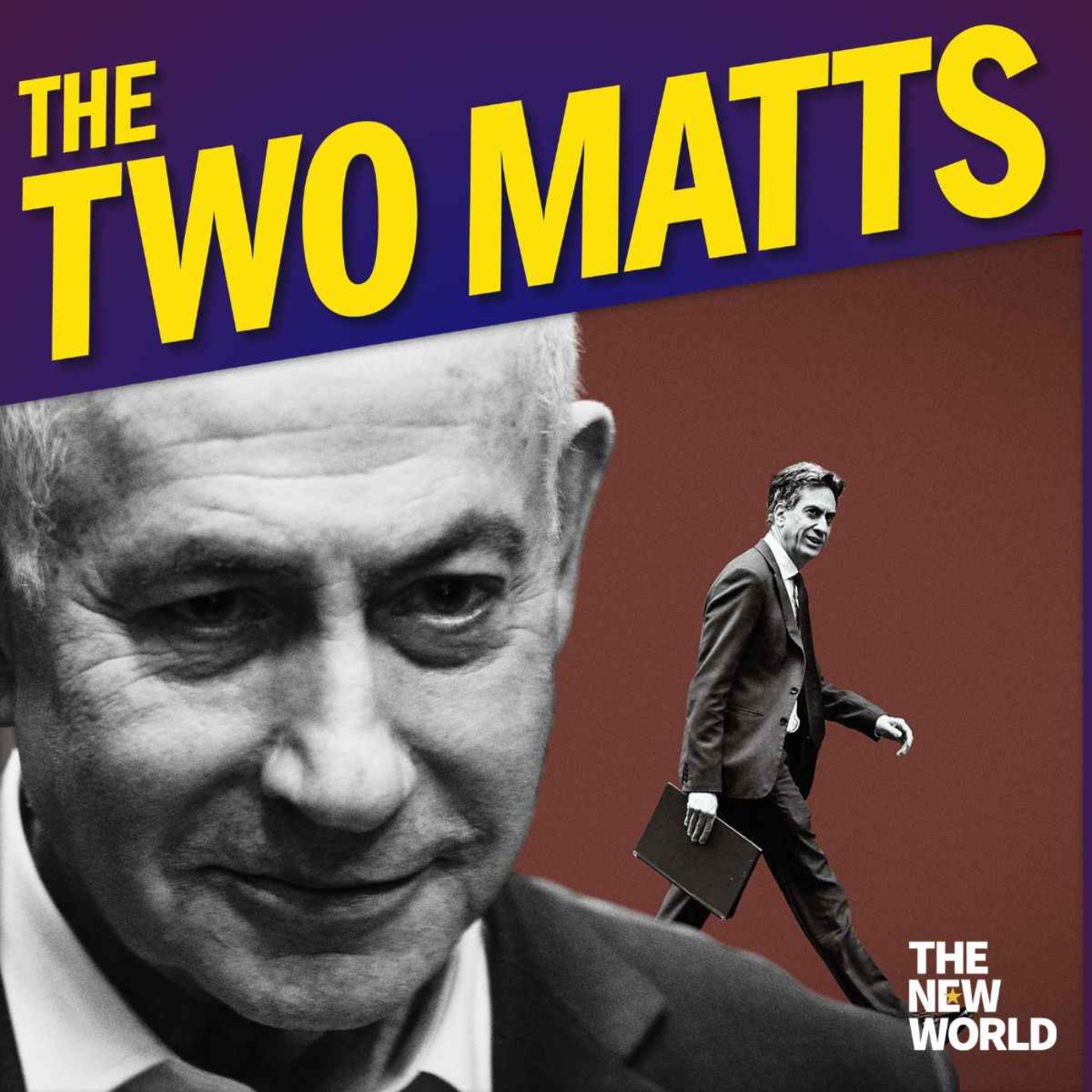
The episode discusses a “historic shift” in UK foreign policy under Labour, with Andy Burnham and Ed Miliband announcing a boycott of Israeli-occupied territories, and debates whether it’s meaningful or merely political. It also previews a long New World cover piece on the 25th anniversary of 9/11 and argues that 9/11’s consequences shaped today’s “poly crisis,” Islamist strategy, and Western political polarization.
No external guests appear in the transcript. The hosts are “Matt” (Dancona) and “Matt” (Withers). Emily Maitlis is mentioned as a new diarist/journalist contributor, not as an in-episode guest.
The boycott is significant and not just “performative,” but the speaker doubts it will advance a two-state solution because neither side wants it. The “election interference” critique is dismissed as “silliness.” Miliband’s approach is criticized as risk-ignoring (“cakeist”) and potentially harmful to UK-Israel intelligence ties.
E1 corridor; settler violence; Hamas/Hezbollah designations; elections in West Bank/East Jerusalem/Gaza; Yair Sinwar; Guantánamo/Abu Ghraib; Tom Holland/“argumentative pluralism”; Louise Casey and Rowan Williams.
Written by AI. May contain mistakes.
The hosts transition to discussing the main topic of the episode.
The hosts discuss the recent shift in UK foreign policy regarding Israel.
“And I mean, you know, that's October the 27th.”
The hosts analyze the potential implications of the new policy on Israeli-Palestinian relations.
“But on November the 26th, there are supposed to be elections in the West Bank, East Jerusalem and Gaza.”
The conversation shifts to the feasibility of a one-state solution versus a two-state solution.
Discussing the complexities and implications of a one-state solution in the Israel-Palestine conflict.
“You got Hamas, you got the tunnels, you got Yair Sinwar and ultimately you got October the 7th.”
Exploring the historical grievances that shape current Israeli and Palestinian perspectives.
“And actually what we've got in the Middle East are two opposing forces who think in terms of a much longer time scale than we think.”
Examining the potential risks to Jewish communities in the UK following policy changes.
“kind of has has unfolded since the announcement was made because there are a couple of factors One is the question around does this increase the risk to Jews in the UK?”
Analyzing Ed Miliband's role and the complexities of Jewish identity in political discourse.
“that this will wash through to those people who do not make that distinction between the Israeli government and Jews in general.”
Explore the implications of the UK government's foreign policy shift towards Israel and its political ramifications.
Delve into the historical significance of September 11th and its enduring impact on global politics.
“I mean, honestly, sometimes I ask myself, we're giving them too much.”
Discussion on the implications of the unitary executive theory under Trump.
Exploring the intertwining of religious ideology and political movements.
“Sort of jumped on this and turned it into a recruiting sergeant very, very effectively and with apocalyptic doctrine.”
Examining the rise of cultural Christianity and its association with militant groups.
“and cultural Christianity is kind of what we live in.”
Analyzing how grievances attract different people to religious movements.
“Every social media clip they do has that element in it.”
A discussion on Louise Casey's work regarding social integration and its challenges.
“And you talk about Louise Casey and her report into Rotherham Council and social integration and the rape gangs.”
Discussion on how younger generations perceive the events of 9/11.
Explore the influence of Rowan Williams and his literary contributions.
“You know what's funny about him is that since he was part of Bishop of Canterbury, he's become a rock star.”
The hosts wrap up the episode and encourage listener feedback.

Get the gist, explore an idea or ask about something said.
 Claude
On The Two Matts, what are the key points of this episode?
Searching your listeningAutomatic transcript. May contain errors.
0:00500 orders a month was manageable. 5 ,000 is madness. Embrace intelligent order fulfillment with ShipStation, the only platform combining order management, warehouse workflows, inventory, returns, and analytics in one place. What used to take five separate tools, ShipStation does in one. Automate fulfillment and rate shopping to ship up to 15 times more with up to 90 % savings. Go to ShipStation.com and use code AUDIO to try ShipStation free for 60 days.
0:37hello and happy thursday everybody happy thursday one and all hope you're all having a great week we're having a great week what a week well do you know why in particular i know you well i do but i want you to kind of i want to be the mere drum roll to your moment of sensational disclosure so go for it well i hope most of the listeners know but we've signed emily matliss amazing as a diarist in the new world and i have to say um well look she she she's a great addition obviously i mean just a brilliant journalist a brilliant intellect uh a great breaker of stories and a great analyst of events so she she's going to be terrific but of course writing a diary is a particular skill and it is I have to be honest I you know I was delighted to get her but then there was a moment of anticipation slash anxiety as I waited for the first diary to drop because you know Matt you've edited a magazine and on paper things often sound brilliant sure yeah but then they're delivered and your sort of heart sinks a little bit and I have to say well when When you well, when you told me that you had pulled off this, you know, great.
1:55It really is a great sort of leap for the new world. It's fantastic. Very, very exciting. Because she is, you know, Emily is really one of the you know, she's a world world. You know, she's a world famous journalist. I mean, there's no two ways about it. But on the diary format, when you told me that was the plan, I thought, oh, brilliant, because by coincidence, only a few but back in the day I got her to do a few spectator diaries and they were always extremely good and funny and witty and you know erudite and self-deprecating so I thought well this is going to be fantastic because even more than then you know she's all the things she does for the news agents outside the news agents you know she gets she gets all sorts of places And the first one, which you'll go on to describe, I hope, you know, is just an example of the life she leads.
2:52You know, absolutely. And so when the when her first diary did drop on, I think it was Sunday, I read it and then I read it again and I read it a third time. And I thought, oh, this is she this is great. And she's going to be absolutely brilliant. because she absolutely is all of the things you've just said. In the first diary, she did say, listen, it's all downhill from here, but the first one is George Clooney, Maggie Gyllenhaal, and a Catholic cardinal discussing AI and big tech in Venice. Pretty good. It was a good feeling. Pretty good. But, I mean, the other thing, you know, given that we are now sort of on the piece down towards the midterms where the president of the United States has offered voters$5 ,000 a go.
3:43You know, amazing. But I mean, apropos of Emily, I mean, actually, one of the things that when I was writing bits and bobs for you in the up, you know, in the run up to the 2024 presidentials and knowing Emily for years, I knew this already, but, you know, sort of texting her a bit. her knowledge of American politics is it is world class I mean she you know she she has read all the books you know you kind of yeah and I don't know if she sleeps because she's just like always up reading some new book about MAGA it's really really knowledgeable on that and a whole bunch of other stuff so listen enough great asset great signing enough smoke blowing but except to say we've now got Alistair Campbell and we've got Emily Maitlis writing diaries for us and we've got the king and queen of uk podcasting obviously we are we are mere jokers in the pack of the core well i like to think of us as el presidente and your loyal head of security right it's a different kind of regime right yeah yeah yeah more yeah yeah more militaristic really exactly kingdom but but um yeah we've got the king and queen of uk podcasting writing for us so subscribe folks anyway that's what this all boils down to yeah i mean that's that's really what we're saying we are we are we are i think and i would say this wouldn't i but i think we are the most interesting current affairs magazine in the market and we are growing at a rapid rate of knots join us please go to thenewworld.co.uk forward slash to matt that's the number two m-a-t-t-s and sign up just just become part of the community please now's the time right listen matt moving on to um the main meat and drink of uh of today's in part two you've written i'm going to get this flagged up because i think i want people to really stick around for this because you've written a monumental piece about 9-11 uh on the 25th anniversary which we will discuss in part two one of the uh one of the long-term consequences obviously of 9-11 is global instability nowhere more so than in the middle east and this week this week we saw uh well a historic shift in foreign policy by um um andy burnham and ed middleband um announcing a boycott of um occupied territories as described um and clear reference to um you know unacceptable behavior as this Labour government sees it of the Israeli government um it it's hard to state isn't it how much of a shift in foreign policy this is for a UK government yes it is and um so obviously I've been thinking about how to speak about this without just sounding like my usual character from The Simpsons you know the Zionist Grinch that turns up at the Ewok Miliband dancing party and tells everyone to stop being happy um and and and i think there are there are things you can say which are uh you know i think you can acknowledge it is very significant i don't agree with the argument that it's just performative i think there is there is heft to it whether it makes a difference or not who knows um and uh another thing i'd like to say from the off is one of the silliest things that's being claimed which has sort of become a kind of meme since um the 2020 election in uh america that this is election interference it really isn't right i mean look otherwise you get to a point where everything's election interference you mean israeli it's election yeah i mean the argument that's being made though you know you shouldn't do this now because um it will strengthen netanyahu which i very much doubt but i mean But frankly, you know, you can't run diplomacy and the management of international affairs just around election dates.
7:56And I mean, you know, that's October the 27th. And then who knows whether it'll actually happen. But on November the 26th, there are supposed to be elections in the West Bank, East Jerusalem and Gaza. So that wouldn't have been right either. So in other words, I think this argument that this is sort of unacceptable because it's a foreign intervention in a I think I think that's silliness because you know you can't there are so many electoral processes around the world you can't sort of have kind of purdah around global purdah around it that's not the way things work particularly in a situation like this where as we've known and as we've talked a lot about on the pod you know things are moving very fast and I think one of the upsides which I hope we can talk about a bit is that I hope this will focus attention again on the abject failure to get on with the reconstruction of Gaza, which I remember we talked about when Trump made his visit to the Knesset, which was, well, great, but will they actually put the bulldozers in and start bringing it up from the rubble?
9:04And the answer is not yet by any means, if at all. So I think there's some very basic common ground, really, which is I don't know anyone even mildly sane who thinks that the settler violence is anything but abhorrent. I think that's just a sensible and clearly, you know, I think the Israelis should have done a lot more to stop it. Full stop. I think that the E1 corridor, which is is set to connect Jerusalem to Mali, I mean, is is a problem, you know. and I'd like to see if there is another, if there is a new government after the elections, you know, I'd like to see a pause on that, if not a total say.
9:49I think that the broader question about it, and I'm trying, you know, to sort of drain it of, you know, I'm sceptical about many aspects of it, but I want to sort of look at it in, take a step back, which is, you know, I don't doubt Ed Miliband's sincerity in this nor Andy Burnham's right just to put that on record and I I think that again there's it's overwritten that this is just to satisfy the PLP and before the conference and you know the the by-election well politics always has a bit of that in it but the fact is that there are lots of other countries involved in this as well uh I think France and Canada but other nine others saying they'll come on board so you can't I mean they can't all be doing it just for domestic reasons so i think again we can put that to one side i think the the area where it comes potentially unstuck is that um miliband frames in his speech to have read a couple of times um he frames what he calls a set of facts on the ground referring to the violence by these settlers very important words a set of facts on the ground as a primary if not the primary obstacle to the two-state solution and this is where I part company from him because I think that of course you know if we were to sit down you and I and we could do it actually quite easily I mean the end point is not the problem you know clearly the settlements are a huge issue in the achievement of a two-state solution.
11:30But the idea that the settlements alone are the key to unlocking the door is actually politically laughable and historically illiterate. I mean, the bigger problem is that, you know, neither side wants a two-state solution at all. And, you know, I mean, Israeli opinion has hardened very strongly on that since October the 7th, inevitably. And the truth is that the Palestinians pretty much since 2000 in the Camp David offer, which is turned down by Yasser Arafat, haven't really been even pretending to be interested in a two state solution. So my question to Miliband is, OK, you want to do this and you think that the sanctions will have an effect.
12:22And, you know, the Israel has responded furiously. So clearly, at minimum, it's had a you know, it's prodded the bear, so to speak. But but what about the other stuff? Now, the response coming out of foreign office sources is, well, look at the measures we've taken against Hamas and Hezbollah. And again, there, you know, I'm afraid you get unstuck again because there's really there is literally nothing new on Hamas. And on Hezbollah, all they've done is designate al-Qaeda Hassan, which is the sort of quasi bank that Hezbollah has. That's been designated by the US since 2007. And the number, the quantity of British based assets in it will be vanishingly small.
13:09yeah so that those are cosmetic measures um you know it is not yeah he hasn't done to those two organizations what he has done to uh the israeli settlers so i you know that just to get that one out the way and i think that the the bigger question i mean my feeling is to be honest with you and this is i say with a certain amount of despair because i do want there to be a two-state solution is that i don't i don't think this will make a jot of difference in this respect to be honest yeah i i i have to say that you know matt why do you think so i remember a conversation with um a friend of mine who is vehemently pro-palestine right right and and uh this is about a year and a half ago and i said well of course you know we all want the two-state solution and he said no we bloody don't he said no no he said we want a one-state solution yes and that's that and my questioning and it did stop me in my tracks a little bit you know that there is an assumption i think amongst a lot of people that the two-state solution is the obvious and and desirable end point to all of this but if neither israel nor palestine want it then what hope is there of a two-state solution should the conversation move on to a one-state solution of some sort yeah i mean you know the difficulty is there there there are two kinds of one state solution which is precisely why um you know those of us i mean i think again we keep talking on the pod and i think it's it's it's good to you know about the generational thing because i think both of us came up you know in the 90s when there was oslo accords and everything i felt quite optimistic and and then you know it it started to go downhill after Camp David and then there was the withdrawal from Gaza in 2005 which was a you know a sort of a kind of what you do when you draw settlers out and you know they they exhume settler dead bodies you know not only did they dismantle settlements But I mean, it was the kind of locus classicus of this, you know, which was, OK, we're going to do it.
15:29And what happened? You got Hamas, you got the tunnels, you got Yair Sinwar and ultimately you got October the 7th. So if you're an Israeli and the crucial thing in this, this is where I think a lot of Western discussion goes awry, is that at this point in the conversation, for understandable reasons, people instantly refer to Smot Ridge and Ben-Gabir. And I get that because they are loathsome individuals. Well, not only are they hardline, they're loathsome. I mean, what I do hope is that if there is a new government in post this election and it's not led by Netanyahu, that they're not in it. Do you think Netanyahu's a loathsome individual?
16:13Well, I mean, yeah. Yes, but the problem with that is that, you know, of course, I think that horrible, horrible, horrible things happen in Gaza and continue to happen in Gaza, many of them attributable to him. But what bothers me a bit is that everyone knows Netanyahu's name and everyone knows Smotrich and Ben-Gavir and no one knows who's the leader of Hamas and Hezbollah and the PIJ. You know, so the lens in the West has become very, very focused on a small group of, at minimum, unlovely Israeli leaders. Right. And again, that's understandable because the personalization of politics is inevitable.
17:07but i would urge any listener who wants to get a sort of a step back on all this to take a look at simon seabag montefiore's book the cauldron which has just come out it's a big book on the modern state of the modern middle east and it really puts all of this in context um it's uh you know it's actually a very dispassionate book um you know it right he writes very impressively about what a brilliant strategist Yaya Sinwar was which he was by the way yeah he was yeah um but also you know trying to explain how this this crisis which exercises an incredible imaginative grip upon the western imagination and indeed I think has become to this era what Iraq was to the early part of the 21st century in Vietnam was to the 70s and 80s it is the sort of divider and it has become we've domesticated it yeah you know um you want to know what woke two is woke two is shaped at least by this conflict yeah it's right there's all that's a given there's also an element of of of time scale that we we have totally different perspectives and this is something that in the second half when we talk about 9-11, you make very clear that, well, you talk about the Islamists thinking in terms not of years or campaigns, but in generations and centuries.
18:42And actually what we've got in the Middle East are two opposing forces who think in terms of a much longer time scale than we think. In fact, in terms of millennia, you know, epochs. I mean, I think part of the problem in all of this is that because Israel is, at least as far as itself is concerned, as it were, you know, a democracy has the rule of law. You know, you go to Tel Aviv, it's like Paris with a beach a bit, you know, or it's very, very Hoxton, you know, Hoxton with a beach. But actually, both the Palestinian ethos and moving spirit has very deep ancestral roots and grievances that go back way before the formation of Israel.
19:36I mean, you know, and Israel, you know, they yeah, the state was founded in 1948. But you hear people in Israel talking about what they call Judea and Samaria, the West Bank. And they talk about, look, you know, we've been there for 4000 years. We had a 19 year blip when we were kicked out by Jordan. Then there was the 1967 war and we got it back. That's a you know, we think 1967 is a long time ago. Yeah. And it is. Right. But as you say, Matt, for these two warring sides, 67 is yesterday. That's right. Well, the bio tapestry is new on the block. So bio tapestry is a modern art exhibition. Exactly.
20:21And I think so. I think that, you know, I don't want to sort of over egg the because there's always the problem with all of this is there's always an overreaction. And a lot of the coverage has been evil Miliband, you know, terrible Burnham. Look, I mean, this is a it's a course correction. It's one I'm not surprised by, to be honest, because. I mean, to speak plainly, I ever since October the 8th, when I saw the demonstrations and I saw the way things were heading, I knew that nothing was ever going to be the same again. And that I also knew because it was inevitable, like it or not, that the wrath of God would fall upon Gaza.
21:11You know, it just was going to. Yeah. That this and of course, this was Sinwar's plan. And again, you know, just on a dispassionate level. Yeah. Yair Sinwar, arguably the greatest strategist of the 21st century. Right. You know, I mean, he spent all those years in prison in Israel, reading Hebrew texts, imbibing how the Israeli mind worked, using their medicine to cure him of a brain tumour. But going back, knowing all that and thinking, right, what are the you know, what are the pressure points? If I do this, especially to Netanyahu, what will happen and how will the West respond? and it it went beautifully because you know as seabag montefiore says in his book you know whatever happened on the ground israel lost the narrative war big time and that's just a fact yeah yeah listen can we can we talk a little bit about some of the other aspects to what kind of has has unfolded since the announcement was made because there are a couple of factors One is the question around does this increase the risk to Jews in the UK?
22:26Because there is a perception of, well, not a perception, there's a reality of anti-Semitism that this is as kind of labelling the Israeli government as definitive bad actors. that this will wash through to those people who do not make that distinction between the Israeli government and Jews in general. And then there's also Ed Miliband's role in it himself, which I'm fascinated by. And this idea that his Jewishness is somehow questionable because he's done this. Let me just read you a paragraph from the Jewish News. um one of their columnists nicole lampert um wrote um in the middle of a a piece of in reaction to the announcement she she wrote cynically oh so cynically they put a jew front and center of this ed milliband for the first time perhaps in his life decides to call himself a proud jew as he digs the knife into actual proud Jews.
23:33And I thought, you know, I read that and then Justin Webb interviewed Ed Miliband. And I thought that was a bizarre conversation where Justin Webb was basically saying to Ed Miliband, well, you know, how Jewish are you? Because, you know, real Jews who go to synagogue wouldn't say. And the question that struck me was you can't have it both ways. You can't say that Jews are distinct from the actions of the Israeli government. And yet this man is not Jewish enough to speak for the British government. Just totally wrong, you know. Especially the first thing you quoted is extremely unfortunate. I think that the Justin Webb exchange, however, you know, unfortunately phrased, did raise an important question, though, which is Ephraim Mervis, chief rabbi, speaking on behalf and on the eve of Rosh Hashanah, right, which is the Jewish New Year, which falls on the 25th anniversary of 9-11.
24:38So, you know, and I know talking to people, I spoke to someone yesterday who had gone out to buy a new stab vest. Right. Yeah. So so it is real. And I think the problem with that exchange was that one of Miliband's personal failings as a politician is a tendency to assert. Right. So Ephraim Mervis has a point of view, right, which is based on his experience of what goes on at the synagogues in the country. And I suspect that's pretty well informed. Miliband says he's wrong, but then says, but I don't go to synagogue. Now, I don't think the point is if you don't go to synagogue, you're not a proper Jew.
25:21But I think the problem is just saying there isn't a security consequence for this, because I don't think there is one, is not good enough. However, however, it's complicated because, you know, you can't have international policy hostage to those in this country who would take anti-Semitic actions. Right. That's also wrong. Yes, exactly. Right. So I think that there is a problem, which is we tend to make because it's important morally a clear distinction between three things. Israel, the Israeli government and Jews living outside of Israel. and it's important that we make those distinctions because otherwise you can end up with all sorts of very unpleasant uh discussion of dual allegiance and all that sort of thing and i you know we have to stick with that matrix but the truth is that it is actually there are many gray zones which is that yeah you know you and i on the podcast have always stuck to that and i'm glad we have and proud that we have but the people that attack synagogues don't yes and so we have to deal with the reality that this will undoubtedly because it will be seen as you know significant change in UK government policy towards Israel it will be seen by those in this country who hate Jews want to see jews exterminated as a permissive environment now just to be clear i do not mean it is ed miliband's fault if anything happens double underscored right really important but i think it is you know it's really and you know jonathan hall casey who's the independent review of terrorism said that you know he was and he's not he doesn't have a dog in the fight you know he's a he is an impartial observer he said he was worried that this would paint a target on the back of jewish people okay the answer to that is how do we cope with that how do we deal with that what's our community response what measures do we need to do i don't mean at all we can't do anything in our dealings with israel because that will imperil british jews that that's that's uh that's appeasing the bad guys here you know that that silliness um so but it is complicated yeah and and there is also um it's it's nor is it black and white is it i mean there is there's plenty of support from within uh oh yeah from rabbis in the country who are saying yes this is absolutely right with a sort of acceptance that well yeah maybe there is this downside to it but it's the British government has to say something you know so I don't I don't I don't mean to suggest at all you know under that sort of subheading of of the security issue yeah that this that is a sort of veto right quite the opposite what I but what I as you know I'm not maybe the natural chairman of the Ed Miliband fan club right and I think that one of his one of his inclinations is just to say sort of because i say so right so i mean what one is another example this week which i thought was a bit dismaying was he was asked about the impact of this upon intelligence sharing with massad right now i know for a fact that they are not happy bunnies right they'll probably come around but they're right now they are pissed off okay and he said no no no i've been in i've been reassured that there will be no intelligence implications now that that's that just shows he either he's a fool or a knave because you know clearly the israelis are richly pissed off and one of the the taps they know they can turn off is intelligence and maybe again the british state thinks it's worth risking that in order to make you know a serious on the global stage statement but miliband what miliband miliband is a cakeist right he said he wants his cake and to eat it he wants to be able to say i'm doing this big brave thing and aren't i brave and it's a reset and i'm brave but the good news is that it's also consequence free there's no risks right and i that is not grown-up politics is that i don't know whether that's entirely fair i think i mean i don't think he's well go on well all i was going to say was i think that and let's put milliband to one side for a moment because burnham has clearly opened this door to the and you know and spoke burnham said something very interesting i thought and just finally the quote he said for too long we've been hesitant to act fearful of being accused of being anti-israel right and the thing that that made me interested in that sentence was the word for too long and i wondered what time scale he was referring to I think he was, well, I mean, it's clear.
30:26I mean, I don't think it's, I think it's interesting. Well, I wondered whether it was actually longer. Well, yes, maybe, maybe. But they say certainly a critique of Keir, right? Yes, yes, definitely. Yeah, right. But I think, you know, there is something. I don't think either of them are pretending that there's no consequence. but I no I'm just I would distinguish Burnham Burnham is not guilty of what I'm describing okay okay fine all right it's personal to Miliband do you think yes no I think that Miliband has a sort of personal tick right but whenever anyone says there's a potential risk to what you're doing he says no there isn't right understood that's all I'm saying okay whereas I I think Burnham is very alive to all of this, which is why, by the way, he very intelligently phoned Trump in advance.
31:27Yeah. And clearly, clearly told Trump news he didn't want to hear. Yeah. But I think Trump, you know, I think I don't think this again. I think it's possible to exaggerate. A lot of people are saying this is a big this is, you know, exercising the ghost of Suez. um we you know new relationship with america no but what what he did i think was by giving trump advance notice of something he probably didn't want to get involved in yeah right because i mean this is this is tech this is quite detailed techie he does not want to you know does trump want to get involved in the details of sanctions on a settle up come on yeah but by just doing that he prevented a truth social post on the night of middle the night before Miliband's announcement that would have sent the whole thing turning it into a an Atlanticist row which was would have been stupid yeah so no I think I think look Andy Burnham has always had a different position on this to Starmer and he is prime minister right so you know that this that's this is what you know we opted for yeah um and I don't doubt his good faith for a minute but I I I have concerns about Miliband as foreign secretary because I think that he is I don't think as they say in the marines he's got the sand but we'll see what does I haven't heard that phrase before what does that mean um i think he's a made of balsa i think i think that he is um he talks the talk and he can be he has moments of charisma but he is seriously and utterly can i mean the miliband boys are not known for their lack of intellectual arrogance right it's okay And I think that Ed has truly come to see himself in his new and exciting second act as or third act as the sort of Gandalf of this administration.
33:35And when people say, now you're sure you want to do this, right? He goes, oh, yeah, you know, I've thought it all through and it's all going to be fine. We'll see. We'll see. All right. We'll see. Listen, folks, I hope you found that interesting, at least. We'll be back in a moment with a discussion about 25 years, 25 years since that extraordinary day tomorrow, September the 11th, when, well, when everything changed everywhere. Join us in a moment.
34:20and ready before the rush hits. ShipStation connects Shopify, Amazon, TikTok Shop, and over 200 more marketplaces with one platform that does it all. You can manage orders, sync inventory, track returns, all automatically. Everything your operation needs, all in one place. Upgrade your shipping operations to stress-proof your biggest sales days and capture every bit of potential revenue. Go to ShipStation.com and use code AUDIO and get 30 days free.
34:46Welcome back, dear listeners. this is the Two Matts podcast brought to you by the wonderful subscribers of the New World magazine who have caused this week to be even happier with their magazine because the great Emily Makeless is part of it. What more could you want, really? I mean, honestly, sometimes I ask myself, we're giving them too much. But anyway, you know. Arguably we are, yeah. But please take advantage and sign up if you haven't already done so to the New World magazine. You can get your special offer at thenewworld.co.uk forward slash Two Matts. Now, Matt, the cover story of the New World magazine this week.
35:22I asked you a couple of weeks ago, knowing obviously that this anniversary was in the air. You said, look, I want to do something big. And I said, well, make it as big as you like. Thank you for that. You've written nearly 5 ,000 words. It is about 5 ,000 words. Sorry, folks. No, no, no, no. Do not apologize. 5 ,000 words that read like 500 words. You race through it because it's, and I know, and I can already hear the keyboards of dear two Matt's listeners saying, will you please stop blowing smoke up Matt Dancona's arse? Because I always say how great your pieces are. I think this is the best piece you've ever written for us.
36:02And it's, well, thank you. That is a bloody high bar. It's fantastic. And I should say that my view has been reflected in the view of lots of people who've already read it. it's a magnus opus and um basically matt i don't want to steal your thunder but the prep the premise is that you know that long-term view we were talking about yeah the first half the the strategic uh brilliance uh of hamas um as you described in the first half and bin laden is equally true of Osama bin Laden and in many ways and I don't want to spoil the end of your piece but you do reach the conclusion that there was a victory in 9-11 for yes well I mean Osama bin Laden yes kind of because um I mean the starting point was first of all you know god time has flied you know it's like we all remember those of us who are alive and by the way I mean an important detail which i i researched and i was slightly surprised to find but 40 of the world's population was not alive on that was that's one of the amazing facts in that so you know and that kind of you know given that we doubt whether we like it or not we live in a very short attention span society um that's important uh and so the more important to try and extrude from what happened how it might connect to today now so I and also because at that time you know journalistically I was really I was writing about it a lot and going to America a fair amount and also talking to people involved in counter-terror on this side of the Atlantic and it so it brought back a lot of I actually went and literally dug out an old box of notes you know from back in the day and And, you know, so there was that sort of the immediate aftermath and the sheer blunt force trauma of what happened and just reminding people of that because it was extraordinary.
38:08And I think and I think also it was the birth of the poly crisis era, you know, where there was there just seemed to be. And this has been the backdrop to the older, the younger millennials and Gen Z's upbringing, which has been, you know, the finance Iraq, the financial crash, COVID, Ukraine, Gaza. So, you know, it's just been one damn thing after another. Yeah. And then I started, well, what actually has happened? So it seemed to me depressingly, but one had to be sort of honest and unmerciful to ourselves in the West. The right made huge errors. Clearly, it thought that military might, security repression and, you know, the biggest sort of error of all the air lifting of democracy into countries without nation building around it would do the trick, which at this distance looks as absurd as it clearly always was.
39:04And then on the other side of the house, the areas of the left predominantly was a sort of total blindness to the power and theocratic force of Islamism and its nimbleness as a belief system. and there was a after it became clear that Afghanistan and Iraq were not going well to put it mildly there was a retreat into the insistence that it was this was really all about western foreign policy and economic deprivation and then of course those were elements in all of the you know Islamist movements I mean it'd be idle to deny otherwise but it was also about you know very, very profound Islamist ideas, apocalyptic ideas about the restoration of the caliphate, about particularly dominant for bin Laden, the outrage of having U.S.
39:57troops on Saudi soil where both Mecca and Medina are. You know, going back, it's amazing some of the texts that, you know, the expulsion of the Muslims from Andalusia in 1492 really mattered to these dudes. Yeah, yeah, yeah. Right? I mean, that was a big deal for them. Yeah. You know, and when they talked about crusaders, they were not talking about metaphorically. They saw this as just the latest crusade and what happened in the Middle Ages. So there was a complete mismatch, I think, between the right in its kind of praxis and what it was doing, sort of neocons aided by some liberal interventionists like Blair up to a point and then the left saying no no this is just bad news and all we have to do is throw money at the problem and uh you know uh be nice in our foreign policy and it all go away and neither were right yeah meanwhile and this was the bit that when I sort of started thinking about it was I thought well there's a funny symmetry here which is that bin Laden is the initially quite secular son of a commercial dynasty and he understands the modern world very very well and who is another son of a commercial dynasty Donald Trump and Trump's success I mean I'd never really thought about it in quite this way but Trump's rise to the presidency was a massively successful exploitation of various things and pathologies that had come out of the war conspiracy theories you know that the bertha thing over um obama he took advantage you know the christian nationalism that grew in response to jihadism he was banged down with that he took very very very clear advantage of dick cheney had built this whole structure of presidential mega authority called the the university the unit unitary executive theory of authority which is basically the president should be able to do what he wants which is bad enough in wartime but when trump is just using it at home it's a even worse yeah and and the one that really kind of shocked me most was i looked again at those pictures of guantanamo and abu grave that you know we all remember looking at and being repelled by and how has this happened and that Trump clearly saw this not as a warning but as a model yeah you know and then when you look at the deportations I remember we did a podcast on it you know those gruesome videos of refugees being deported to El Salvador and Bukele's sort of horrific hell-honed prisons that was this continuity between Guantanamo and that except that Trump is presenting that as a good thing yeah and finally that you know ICE which was a explicitly a product of the Department of Homeland Security which was one of the first things that was created after 9-11 it has become basically his private militia as a proto-autocrat yeah yeah so all those fronts you know Trump is picking and choosing from the post 9-11 cafeteria and it's an interesting way of seeing how that happened one of the one of the um the most interesting aspects i thought within the piece was the yeah i think you say you know it didn't start as a 9-11 didn't start as a war of religion but it certainly yielded one yeah and you know we're seeing that and this whole piece is about the consequences today of yes that's the objective it captures the historical sweep of it brilliantly and very entertainingly is the wrong word but but but some of the the way you tell the story of what's unfolded since it is uh it's like a brilliantly written history but this this idea that obviously there's a sense of religion embedded at the core of the islamist cause but but what we're now seeing in response to that developing a sort of proto-christian kind of crusade we're seeing it unfold with tommy bloody robinson well that that that is i mean we so i i I think it was less surprising that the very well established evangelical base in America.
44:29Yeah. Sort of jumped on this and turned it into a recruiting sergeant very, very effectively and with apocalyptic doctrine. And, you know, that remains a clear and present danger in American politics. It's very real. And whatever happens in the coming elections, it will remain a significant electoral force. You know, there is a surprisingly large base of American voters who really believe in all this. And Trump, who doesn't believe in anything, has attached himself to it. And it'll be interesting to see if a subsequent Republican presidential nominee does so quite so gratuitously. But anyway, but you're right.
45:15I mean, the thing that has really struck me is how it is slowly coming here. So in a very ginger way, reform have kind of played with what I would call what Tom Holland, the great podcaster, the rest of history and also author of a sort of must read book called Dominion about all this, calls cultural Christianity, which is, look, guys, you know, you don't have to believe in God, but you have to accept that the heritage of the society in which we live was shaped by, broadly speaking, a Christian culture. and cultural Christianity is kind of what we live in. So there's that. So reformers saying things like we're going to reform planning law so that churches can't be turned into, and you know what they mean, is mosques, right?
46:07But it's a dog whistle or a God whistle, if you like. So there's that. But much more explicitly, and this is to your point, Mark, which is that I was really, really struck at the weekend with these, you know, militiamen. I mean, there's no other way of describing them being dragooned by, you know, fascists, being dragooned by this character, Danny Tomo, a jailbird and a thug and a lieutenant of Tommy Robinson around the ports of southern England. And then amazingly, not on anybody's bingo card, this one. Turning up at the Daily Mail. I mean, honestly, if ever there was like a bloody, the last newspaper you'd expect them to be, but there we go.
46:52But, you know, not to, I mean, I think Matt Muir has written some very good, you know, very good piece for something. I think he did a live with Lucy Reed. Yes, very good, yeah. Really good, you know, and Matt is right, you know, there's an operational discipline to this, which means we can't, yeah, they're thugs, but they're organised thugs. Anyway, the point I was going to make to your point is that And I'm sure it's cosmetic, but nonetheless, they are badging themselves now very, very clearly as Christian patriots. Every social media clip they do has that element in it. I couldn't believe it.
47:29I'm listening to them outside in Derry Street, the Daily Mail. And at the end of it, Danny Tomo goes, oh, man. And they all chant back, oh, man. Right. Astonishing. Well, I think there are two bits to this. I mean, one of which is that all religious systems have an appeal to people who are full of grievance. So there's that, you know, and even if they don't know the first thing about the resurrection doctrine or, you know, let alone how many gospels there are or any of that. There is a kind of idea of being part of a religious discipline, which is appealing to people who feel lost and angry and aggressive and all the things we've talked about a million times.
48:18But the other thing, which is more cynical, but no less important, is that, of course, it's a lot easier if you're on, if you know you're looking for a clip that can appear on the six o 'clock news and all over YouTube to say we're Christians rather than we're white. Yeah, yeah, yeah. It's a shorthand. Now, of course, the irony is that by far, by far the most vibrant and expanding forms of Christianity in this country are churches. Right. You know, I mean, I've got one at the end of my road. It's a Sunday morning. The street is alive with the parishioners. but in in the way that these guys use it christian is just a proxy word for white that's it and matt in terms of the cultural let's call it cultural but it's social cultural effects that have spun out of 9-11 this you cite um rowan williams and his yeah his plea for what he calls argumentative pluralism yeah and that that uh being a very difficult and sometimes inconvenient and painful place for society to exist but it much preferable to this polarization and this oh yeah weird dichotomy of of pseudo-religious combat and uh absolutely what i thought was really nice of you to pick out louise casey yes yeah somebody who's fought against that he's a great great great I just wanted to quote one sentence because I thought it was at the heart of, well, at the heart of our problems as a society dealing with these issues.
50:04And you talk about Louise Casey and her report into Rotherham Council and social integration and the rape gangs. And you say she's been utterly scrupulous in emphasising both the problem of anti-Muslim prejudice and the abject failure of the authorities to address the real issues raised by conservative Islam and its resistance to integration. And that seems you describe that as perhaps the greatest failure of the past 25 years in this country. And it's hard to disagree when you map out that narrative. But, you know, what's fantastic about cases, I mean, someone should collect them in a book. you know, those reports she's done.
50:43And by the way, you know, one, I didn't put it because it's not quite relevant to the piece, but, you know, she did the piece that she did the report that uncovered structural racism and sexism in the Met, you know. So Louise Casey is not a Christian nationalist or a white, you know, very much not. She genuinely is. She is a passionate believer, as is Rowan Williams, in the possibility of a working pluralist society and i wish there were more people like them because i read as you do a lot of books about the new liberalism how are we going to get liberalism to work again and some of them are good some of them are bad but the my overall impression is of metal grinding against metal and just occasionally people like casey and williams come through the and say no actually there's still you know there's still energy in this if we're prepared to but you have to but you have to be where this is where it it it comes up against the spirit of the age you have to be willing to to step off the cliff occasionally yeah you know we we have become you know politeness is a virtue but it isn't the only virtue yeah and it's not by the way the main guarantor of social cohesion this is a mistake that that that being just nice and saying whatever you like it actually doesn't get you anyway it may make life easier for you but it doesn't actually solve these problems and they they are real yeah um but the reason i admire casey i'm glad you picked out that sentence is that in all of these reports she's done she is meticulous in saying just for the avoidance of doubt because she's no fool she knows that people with whom she doesn't agree on the rights are going to cherry pick what she writes you know in the press and elsewhere she you know just to be in case you were thinking i've shuffled over to your side guys i haven't you know i am totally against anti-muslim bigotry point par and that i think earns her a lot of uh you know i mean she carries a lot of water in this debate for me but we need dozens of louise casey's and dozens of rowan williams's and they're not out there at the moment they really aren't no no right well listen um folks if the piece is there it is it is truly well worth well worth your time reading and even if you're not a subscriber you can read it just by registering which costs you nothing so um we will i have to say then bombard you for the rest of your existence until you subscribe by email but anyway but you can read the trade-off is you get to read matthew's you've heard about the forever wars this is the forever campaign right exactly at least with nothing if not honest and transparent about our end goal um but yeah it's terrific piece thank you again matt for writing that um and um go read it folks um and then when you've read it you'll want to subscribe and if you haven't already go to the new world.co.uk forward slash to matt's number two and do by the way do send in because one of the things that um has become clear in the last few days is you know we tend to think um a few weeks ahead but obviously you know normal people don't and so i've had a lot of people saying hey you know the 25th anniversary that reminds me of yeah and I'd love to know what people who were around then or people who weren't um you know what do you think yeah where are we you know yeah it is it is amazing to think that nearly half the world wasn't wasn't around that yeah and I think that that is a very important element in all this and and indeed it's it's sort of one of the most important elements in everything now which is that you know you have to remember uh and i i thought that our colleagues at touching grass did a lucy reed and james ball did a particularly good episode this week on the louise the clancy case and then on the meaning of glp1 yeah and it was fascinating because they just got into it in ways that you know that the culture that they're part of is just different you know as you know be weird if it wasn't but it it you realize that people who have grown up since 9-11 I think James was at school Lucy wasn't born you know they are going to look at it in a very different way and I'd love to know more about what people are thinking and how they react to it and whether it means anything to them at all whether it is just a page in the history book yeah someone someone wrote a wonderfully detailed email uh to us matt uh last week full of feedback about the podcast and one of the points was um that he thought the name wasn't didn't wasn't great yes we should change the name but and i but i did think and i think it's probably too late to change the name i did i did think argumentative pluralism would be a great name for a podcast well i mean it is kind of what we believe in i think it is um and uh i think it's what i believe in and it wasn't until i read rowan's book that i kind of realized oh yeah that's what i've thought all my life you know yeah we've mentioned this before but rowan williams is is an astonishing character we must get him on actually because if he i would love to if anyone knows him or if i've got a i've got a slight connection with him which i'll yeah no i Let's try and get him on and talk about it.
56:27You know what's funny about him is that since he was part of Bishop of Canterbury, he's become a rock star. He's having this third act where, you know, I was at an event the other day and it was really amazing because afterwards there were a bunch of people there. And he was mobbed at the end by and not just by, you know, people of our generation, but by kids. And he has a because he is such a generous and Gandalfian figure, you know, he he kind of he brings people towards him. He is. This is our, I think. Yeah. By the way, that gives me yet another opportunity to plug something coming up in the magazine, because the I got turned on to Rowan Williams's amazing book, Solidarity.
57:18Yes, that's the one. with an interview i'd read with slavoj zizek oh yeah yeah yeah and slavoj zizek has just been interviewed by our great john bleesday which i would love to have been a fly on the wall there well i've read the first draft of joe's really piece it's absolutely mind-blowing oh fantastic i mean notwithstanding famine or or disaster or some horrendous world cataclysm that's probably going to be next week's cover story i do hope it's one of the most thought-provoking interviews i've ever read in my life so fantastic so um yeah so subscribe today anyway folks and that'll be the first edition you'll get will be it just keeps coming doesn't it it's endless it's endless right so um thank you to uh everybody for for listening it's been a little bit longer than usual this one but i've enjoyed it very much um very much um matt you've done most of the thinking and most of the talking so thank you thank you for all of that thank you to matt withers thanks matt for producing the show do send in what you think folks to uh to matt's at tne publishing.com that's the number two m-a-t-t-s t-n-e publishing.com even if it's one word hello or three hello thank you that we love to hear from you but uh tell us what you think about all sorts of issues and anything we've talked about we'd love to hear from you and we'll be back on Sunday with our regular Q &A.
58:43So tune in for that. And until then, goodbye from me. Goodbye from him. Goodbye.
59:10Before the rush hits. ShipStation connects Shopify, Amazon, TikTok shop, and over 200 more marketplaces with one platform that does it all. You can manage orders, sync inventory, track returns, all automatically. Everything your operation needs, all in one place. Upgrade your shipping operations to stress-proof your biggest sales days and capture every bit of potential revenue. Go to ShipStation.com and use code AUDIO and get 30 days free.
As Ed Miliband announces sanctions against illegal settlements in the West Bank, the Matts take a holistic look at what the government hopes to achieve and at what cost. Does this make British Jews less safe? Are challenges to Miliband’s level of Jewishness fair? And will this action make any difference to the chances of a two-state solution?
Also - 25 years after 9/11, the Matts discuss Matt d’Ancona’s epic piece commemorating the attack and its ever-unfolding consequences. And they welcome the great Emily Maitlis to The New World family. Enjoy!
Produced by Matt Withers
OFFER: Subscribe to The New World and get a free copy of Paul Mason's new book Reds. Head to https://www.thenewworld.co.uk/2matts/
Hosted on Acast. See acast.com/privacy for more information.