Ask ChatGPT

 The Ultimate Human with Gary Brecka
10 Nov 2026 · 1h 19m · 23 chapters
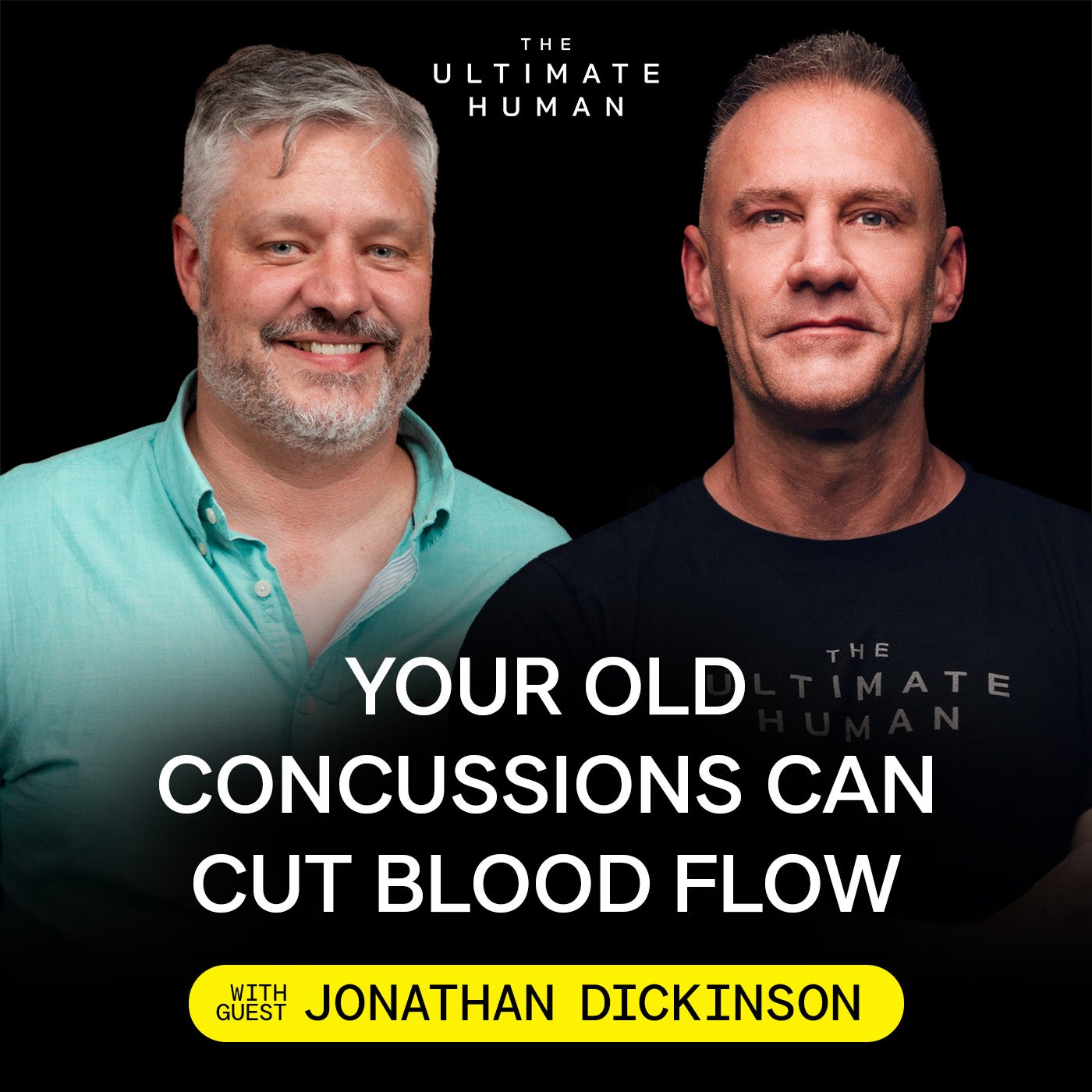
Jonathan Dickinson, a licensed psychologist, discusses ibogaine as “dependency medicine” for addiction, PTSD, traumatic brain injury, neuropathic pain, and multiple sclerosis, emphasizing psychological preparation, consciousness/agency, and reported physiological changes shown in studies.
Jonathan Dickinson is a licensed psychologist. He says he began working with ibogaine before formal graduate training, after personal experience with psychedelic-assisted recovery from difficult SSRI withdrawal. He learned protocols by working at clinics in Mexico that initially focused on people coming off heroin and other drugs.
Addiction is framed as “loss of choice,” and ibogaine restores agency so people can change course. Healing involves participating in the process—going in curious, asking questions, and engaging with the experience. He argues ibogaine can target triggers/trauma processing even when patients can’t recall the original event. He highlights cardiac risk mitigation (QT prolongation, bradycardia/torsades risk) and claims fatalities have mainly involved fentanyl use.
Veterans with TBI/PTSD reportedly showed immediate drops in disability/PTSD/depression/anxiety and sustained improvements at one month; EEG/fMRI reportedly showed increased blood flow/electrical activity. A case study of severe brachial plexus neuropathic pain reported first-ever pain-free day after treatment, later a ~40% lasting reduction after an extended dosing approach. Two MS case reports in Frontiers in Immunology described a ~70% reduction in lesion size (after repeat dosing) and functional improvements; another patient with secondary progressive MS reportedly improved in pain/fatigue and physiotherapy capacity.
Written by AI. May contain mistakes.
A deep dive into Ibogaine's effects on addiction, trauma, and mental health.
“Several of them I would consider mentors of mine that have had such a life-changing positive experience with plant-based medicine that I can no longer deny the impact that it has had on human life.”
Discussion on how Ibogaine facilitates healing and the concept of personal agency in recovery.
“And I think we still have a lot to learn about it.”
Learn how Ibogaine therapy can reshape perspectives and relationships.
“you are worthy, you know, you're not, maybe you were abandoned, but you're not gonna be abandoned for the rest of your life.”
Understand the concept of 'source' and its implications for personal insight.
“to what people would say connecting to source.”
Examine recent studies and findings on the effects of Ibogaine therapy.
“Yeah, I mean, it's almost the way that all therapy is kind of structured.”
Explore how trauma affects the body and the potential of Ibogaine in treatment.
“So you can be in a foxhole exhausted, but if threats are constantly passing over your head, you don't feel safe to shut off.”
Discuss a specific case study highlighting the effects of Ibogaine on severe neuropathic pain.
“They have a psychiatrist or a psychologist or a therapist.”
Learn about innovative treatment methods using Ibogaine for pain management.
“And so that nerve root connects to the hand and the hands are one of the more sensitive areas of the body.”
Gain insight into the structured process and preparation involved in an Ibogaine treatment.
“So now, can we talk about the five days?”
Discuss the cardiac risks associated with Ibogaine and how to manage them during treatment.
“and so that leads to bradycardia and can develop into torsades and sort of medical emergencies.”
Understand the psychological and physical preparation needed before undergoing Ibogaine treatment.
“So it looks like blood work, we're checking for electrolytes, liver function, kidney function, and then we're doing an electrocardiogram just to look at heart function generally.”
Explore the stages of the Ibogaine treatment experience and its effects.
“Yeah, so like in over 4 ,000 treatments, I think we've had to deliver atropine 15 times for like asymptomatic bradycardia way before you would see something develop into a problem.”
Learn about recent studies showing Ibogaine's effects on MS and its potential benefits.
“and we have a bunch of follow-up support with our coaches and groups and things like that.”
Hear about individual patient outcomes and their journeys with Ibogaine.
“Well, the scan would have been a little bit later.”
Discuss the concept of memory access and how Ibogaine may help restore it.
“and in a lot of uh neuroinflammatory neurocognitive decline alzheimer's dementia is that people are they're not actually losing their memory, they're losing access to their memory.”
Examine the relationship between belief, healing, and the body's self-repair abilities.
“So the first gentleman that I mentioned who had the relapsing remitting MS and the 70 % reduction in his lesions.”
Explore how Ibogaine helps the body heal itself through belief and mindset.
“to a stress input, and then the body adapts and improves.”
Learn about the history of Ibogaine's clinical trials and regulatory hurdles in the U.S.
“This quote unquote miracle happens, but it's not a miracle at all.”
Discuss the current research landscape and potential future for Ibogaine in treating addiction.
“of clinical trials in the United States.”
Examine the complexities of conducting clinical trials involving Ibogaine and placebo effects.
“I don't think it's inevitable that it gets approved.”
Explore the impact of mindset and placebo on treatment outcomes with Ibogaine.
“So if that is a big component of the treatment, how do you compare it against placebo?”
Discuss the importance of agency in personal healing and mental health.
“Because we don't ceremonially celebrate modern medicine with some kind of expectation.”
Learn about Jonathan's new book and its exploration of Ibogaine's cultural history.
“Yeah, so I've got a book that's coming out today.”

Get the gist, explore an idea or ask about something said.
 Claude
On The Ultimate Human with Gary Brecka, what are the key points of this episode?
Searching your listeningAutomatic transcript. May contain errors.
0:00Taking Ibogaine is challenging. It sort of puts you deeply internal into this very challenging state. You have this opportunity to sort of navigate through it, and I think it helps people to work through that.
0:10Gary Brecka: The people I know that have struggled with addiction, PTSD, very often they don't recall the trigger, but Ibogaine seems to zero in directly on it. The healing needs to be that we're excavating these events from our past and doing something rather fundamental that increases the body's ability then to be able to heal itself. We're only now tapping into the capacity of the human mind, like the body's ability to heal itself. And once you believe you have agency over something, quote unquote, miracle happens. But it's not a miracle at all. It's just the power of the body to heal itself. This isn't just a drug that's going to heal your body.
0:46You have to participate in this. It's about consciousness. So meeting the medicine, being curious, engaging with it, it drives it deeper and more can be revealed.
0:56Gary Brecka: For people that might be considering this as a course of therapy, let's just walk somebody through the experience. We have to psychologically prepare. So one of the ways we do that is...
1:17Gary Brecka: hey guys welcome back to the ultimate human podcast i'm your host human biologist gary brecca where we go down the road of everything anti-aging biohacking longevity and everything in between and today's guest is someone i have really been waiting about two years to get onto to the podcast because this is a subject matter that only recently gained national attention when President Trump signed an executive order to allow psychedelic medicine to move to the forefront of research, of popularity, of investigation. And he entrusted our governmental agencies with the responsibility to look into plant-based medicine as an alternative therapy to the hamster wheel that so many millions of Americans and so many millions of people around the world are on.
2:03Gary Brecka: It's something I find fascinating. I haven't experienced it myself, but I will say from a personal perspective, as I was saying to my guests before the podcast, I know so many people, literally dozens and dozens of people in my inner circle that I hold in very high regard. Several of them I would consider mentors of mine that have had such a life-changing positive experience with plant-based medicine that I can no longer deny the impact that it has had on human life. And it deserves to be at the forefront of our modern medical system. It deserves a very bright light. Of course, it needs investigation like every other compound that comes to light to treat the masses.
2:43Gary Brecka: But I am so excited to sit down with our guest today, licensed psychologist, Jonathan Dickinson. Thank you so much for coming on the podcast. Thanks, Gary. It's great to be here. And I mean every word of that. We were talking before the podcast and my journey into like I Will Gain and plant-based medicine really kind of started when I went down to see Sean Ryan. I was on Sean Ryan's podcast in Nashville, maybe two years ago. And after that, um, I started to meet folks like DJ Shipley and, um, I would say countless others, uh, Mark Hyman, Dr. Mark Hyman has been very public about his Ibogaine journey.
3:21Gary Brecka: So people, and I would consider Mark one of my, my, my mentors. I read, gosh, he's got 15 New York times bestsellers now. I don't know how many times, time to do anything else but write books. But I am. And then, of course, there's President Trump's executive order, Joe Rogan's massive support for this. And to say that I have seen firsthand lives dramatically changed by this experience is is the understatement of the century. And so super excited to dig into the details about this because you are definitely the authority. You know, what fascinated me most about your approach to this is you seem to take a very rational, fact-based, evidence-supported clinical approach to plant-based medicine.
4:14Gary Brecka: And I wonder if you might talk about your journey as a psychologist, because I'm sure that your profession is sort of hot and hold on this, right? Either you're the greatest, you know, savior to ever come into the profession or the biggest charlatan, uh, you know, that's ever had the light shed on them. Well, um, so I went to work with Ibogaine before studying or anything. Like I, I had a personal experience with psychedelics when I was younger. I came off of SSRI medication, had a very difficult withdrawal and psychedelics really just helped me come alive again. Like I was struggling very hard for years afterwards.
4:59So it was really that personal experience that drove me to it. And also kind of made me feel like I'm not going to wait to, you know, go and, you know, try to finish a PhD and go to work in someone's lab to maybe one day be able to do a little project on it or something like that there was clinics in mexico that were operating at the time it was focused on people who were coming off of heroin and other drugs and so i just went straight there and started working so my my whole adult life basically i kind of grew up around these places learning from the people who were developing the protocols and and uh the early version of the care that we're
5:41Gary Brecka: now modeling on a larger scale yeah you know it seems to me that very much to your point that it It began as a withdrawal management kind of intervention for opiate withdrawal and other kinds of, you know, really critical physical addictions. Because I think most people that haven't been an addict or known a true addict think that addiction is about the desire to get high or to get banged up. And very little of addiction is about really wanting a high or wanting to get banged up. Most of addiction is the search for normalcy. People have, they want to just feel normal. And whether that's suffering from anxiety or withdrawing from narcotics or some other type of addictive condition.
6:32Gary Brecka: I've seen this in my own life. You know, my wife had spinal surgery. She had L5-S1 surgery and she'd put on heavy doses of narcotic pain medication. And two weeks later, when we tried to titrate her off, we couldn't. And it was a very difficult process. and she had no desire. She actually hated them. She had no willpower to take these pain medications, but she had an absolute physical dependence on them, like blood pressure dropping, fainting, nausea, lightheadedness, vertigo. And so that was a foundational point that really shook my life. And eventually we got with a physician, titrated off everything's fine and and i know there's so many millions of people that that end up on this journey of addiction and the intention did not start with them wanting to get high um you know started with them wanting to get out of pain uh wanting them to feel normal something happens with ibogaine that gives people agency over their body again and as a human biologist i'm fascinated by it because there can't be a quick physiologic fix like you can't fix physiology that fast so something else has to be getting fixed that allows for this immediate transition yeah can you talk about that a little bit yeah i mean it's like you said addiction is usually not the the first thing like when we talk about an addiction to me is the loss of choice right it's it's at the point where you're no longer able to take the negative feedback and change course right like it's the point where you're getting the negative feedback but you don't have the choice anymore the train's already left the station you're you're doing this behavior no matter what and so that's what i think is the most amazing Like Ibogaine is giving people that back somehow.
8:40And I think we still have a lot to learn about it. What's the focus on how Ibogaine works for the last several decades has mostly been about how does it reduce opiate withdrawal? Because it's incredible. Like nothing else overnight mitigates the withdrawal to that extent. And it's like if it's putting you nine months into the road of recovery where you just feel more normal, like you're able to make those choices and stuff. But what we've seen since the veterans and the athletes started to come down is a much better understanding of what's going on underneath. Because there was years where we would see these really interesting treatment signals that we would usually attribute to the fact that people weren't using heroin anymore or they weren't using crystal meth anymore.
9:32So it sort of makes sense. Maybe their vision's getting better because of that. Or maybe the Tourette's tics stopped because of that. But there were these little breakthrough signals that maybe there was something more going on. And now that we've been working with people who, their primary issue is not the opiates that they're taking. It's not the other drugs that they need to detox from. It's become a lot more clear that there is a physiological restructuring going on underneath that. And so that's gotta be supporting Even when opioids are a part of the problem, that has to be a big part of the relief that people are feeling.
10:10Gary Brecka: Yeah, I mean, and so to me, it's more of a testament to the power of the human mind than it is like the scientific discovery of unlocking some kind of molecule or some kind of secret pathway. Because, you know, the people I know that have struggled with addiction, PTSD, crippling anxiety, what we would categorize as mood and mental disorders. i've also have direct experience with people who have unlocked trauma and and the fascinating thing i find about trauma and this this could be any form of abuse or abandonment syndrome is that very often they they don't recall the trigger they don't there's a lot of people that have a specific event in their life and they go okay this is when my anxiety started this is when my PTSD started, right?
11:03Gary Brecka: If you're a service member, okay, you remember the combat and the loss of lives and proximity to you. And you can say, okay, that was the trigger. But a lot of people have these issues and they don't know even through talk therapy, how to go back, find it, unlock it, let's say generational trauma, things like that. But Ibogaine seems to zero in directly on it, expose it, allow them to view it, grapple with it, and permanently put it to bed. And sometimes it's not what people are expecting either. Yeah. Because there's so much of a conversation about trauma as the source of addiction, or even trauma as an inevitable result of combat exposure.
11:53Sometimes people are coming in sort of expecting hey i've had this addiction i need to uncover what was the trauma because i don't i grew up in a nice home like right what was the thing like i must be America everything was good right yeah and so i don't know that necessarily the healing needs to be that we're excavating these events from our past and putting them in the proper order of things you know and that's not necessarily what's happening for people either like some guys that are coming after their service in Afghanistan and Iraq, they're coming back thinking that they're going to have all of this wartime stuff to deal with and almost nobody's seeing that stuff coming up.
12:36Wow. Sometimes they're seeing stuff from earlier in their life, from childhood and things like that. But sometimes the divisions and the way that Ibogaine brings things to the surface is a lot stranger. And I think it sort of reveals something a little bit more fundamental about how we make decisions and like the small decisions that sort of guide us through our life. And so sometimes it's not necessarily revealing this traumatic content, but it's revealing how we process challenging things. Taking Ibogaine is challenging. It sort of puts you deeply internal into this very challenging state. So you have this opportunity to sort of navigate through it.
13:18And what are those strategies, the intuitive guidance system that brings you through something like that? And I think it helps people to work through that. Yeah. And I think that we're only starting to now even begin to touch the capacity of the human mind.
13:38Gary Brecka: And when someone takes true agency over their body, I've seen this with hypnotic therapy too, for example, have similar kinds of results. and it's almost like you're finally convinced at some kind of deeper level that you are either not an injured person, you're not a victim, you are worthy, you know, you're not, maybe you were abandoned, but you're not gonna be abandoned for the rest of your life. And it just releases the air out of that balloon that's really framed their personality and their whole way that they look can perceive the world. And it happens so quickly. And again, I've talked to people that have gone down for Ibogaine therapy for pain management and it's helped with the pain management, but they say that was the sort of the least of what it did for me.
14:35Gary Brecka: Even though my intention was to get out of pain, what I found was a deeper understanding of how I view the world. And they say my relationship with my children deepened, with my spouse deepened, with even the way that I run my company and interact with my family, all changed in such a short period of time. And I'm just always fascinated by where does that perspective come from? Yeah, so I found it really helpful, the theories of Julian Jaynes, who's like a scholar from Princeton and Yale. And he was a evolutionary psychologist. So, he had this notion that our ancient ancestors were actually not conscious in the same way that we were.
15:25And he described this kind of bicameral mind as something where there were sort of two sort of chambers of general awareness. One where people were associated with sort of day in and day out. they would have habits and tradition to kind of guide problem solving and then sometimes when they were in a very novel situation or very challenging situation remember this other sort of aspect of the mind that would kick into gear and come up with this creative solution but in the process of transmitting it to the other part of the mind it would be condensed into language and people would sort of hear it as a voice.
16:06And so that was attributed to, you know, maybe the dead or to gods or to these things. And the reason why I found this notion so interesting is because how common it was for people to describe on Ibogaine, this feeling like they're in conversation with something. And we actually coach people when they're going in, like go in with questions. It's not necessarily, don't just like set your intention, go in with questions and try to engage with this thing and even when it's not the questions that you're preparing going in if it's going too fast you can try to ask it to slow down ask it to focus on what that was or why it's repeating that thing over and over like try to engage with this thing back and forth but it can feel like you're interacting with something that's like an intelligent teacher or like a source of intelligence somewhere that you normally don't have access to we don't identify with and that's different from how we normally experience consciousness.
17:04The way that we normally experience consciousness is sort of like we have this map of the world, a virtual map, and then we're able to sort of project scenarios out into this virtual map and see how they run. So it's really good at helping us to engineer solutions to problems or to build technologies and things like that, but it's not necessarily very good at solving other kinds of problems that we face in our life. And so being able to shift modes or have this sort of maybe, I guess, ancestral or like just a different sort of mode of consciousness come to the surface for a moment helps us to be able to like reset that map.
17:45You know? Yeah.
17:46Gary Brecka: One of my favorite biohacks outside of breath work by far is mineral salts, Baja Gold Sea Salt. It's got all of the trace minerals that the body needs. You know, most of us are not just protein deficient, meaning amino acid deficient or fatty acid deficient. We are mineral deficient. So a quarter teaspoon of this in water first thing in the morning, we'll make sure that you get all of the essential minerals that you need. It tastes amazing. In fact, I made a steak today. I actually made a grass-fed steak with grass-fed butter, and I put just mushrooms and a little bit of rosemary, and I sprinkled Baja Gold sea salt all over the top.
18:17Gary Brecka: Try it. It'll be your new favorite for cooking too. It's the cheapest and one of my favorite biohacks. I don't know, a 15 or$20 bag of this will probably last you five years. And it's literally the world's best biohacking secret. Now let's get back to the Ultimate Human Podcast. And almost, you know, I liken this to what people would say connecting to source. And source is not your religious source. You know, it's not like, oh, I'm tapped into Allah or God or Jesus or this sort of spiritual being. Source is this kind of all-encompassing knowledge that where, you know, if you've ever studied or believe in the quantum entanglement theory that everything is connected somehow.
19:04Gary Brecka: And there've been a lot of fascinating physics experiments that have proven this, that you can tap into this source, which does not have to be a belief system. It doesn't have to be like a religious icon. It's this sort of source of knowledge, just like you were saying, and you can interact with it. And to the conscious lay person listening to this podcast, it sounds like a whole bunch of weird shit that you did when you were smoking weed in college. But the amount, like I said, of very cerebral folks that I know that have had these journeys all report this similar kind of experience. They have vastly different experiences coming out of it, but a similar kind of experience with this source that you're describing.
19:55Gary Brecka: And I like the framework of going in with questions and interacting with it. And almost like you have this ball of wisdom, sitting in front of you and you could ask it anything that you want in a very private intimate setting and it gives you back a very rational answer and finally things make sense can do i mean i would say maybe 25 to 40 percent of people don't have a lot to report or the experience doesn't make a lot of sense i got really interested in the subjective experience that people had because I had the time when I took the largest amount of Iboga that I've ever taken, I didn't see anything.
20:43Like I just kind of went into like a waking coma for two days. Yeah. But coming out of it, um, you know, I, I still felt this sense of clarity and this kind of inner guidance, like you're talking about that sort of sense that there's just a bit of a knowing about how to do things and a little bit more of the agency to actually do them that way. Right. Like I know what's the right way usually. Now it just seems obvious. Now it's easier to choose. And so I don't know that it's necessarily that people hear the right answer, but I have noticed for sure that people going in and questioning and trying to interact with it definitely positions you like, this isn't just a drug that's going to heal your body.
21:31You have to participate in this. This is something that it's about consciousness. It's about how you operate in your life, how you move through things. So kind of sitting up, meeting it, meeting the medicine, you know, being curious, engaging with it, it drives it deeper and more can be revealed.
21:49Gary Brecka: Yeah, I mean, it's almost the way that all therapy is kind of structured. You can't sit in front of a therapist and just stare at them and have them begin to just give you wisdom and knowledge. You've got to give stories, ask questions, and create this dialogue that allows them to peer into what you're suffering from and help you pull out a solution. But I want to go into some of the science because there's a few peer-reviewed anchors that I think are really critical for people that might be considering this as a course of therapy and really want to understand, well, what does the data say, if there is any data?
22:28Gary Brecka: There was a Nature Medicine, 2024, publication, magnesium ibogaine therapy in veterans with traumatic brain injuries. And so can you talk a little bit about that? And there's three others, if you're comfortable. I want to talk about these. Because I want people to know that there is actually real evidence to this. Yeah, it's beyond anecdotal now. It's beyond anecdotal. And the stories I've given so far on the podcast have all been anecdotal. And since I don't have a personal experience, I have to use those to draw my own conclusions. But this Nature Medicine Magnesium Ibogaine Therapy in Veterans with TBI, and this was January, 2024.
23:06Gary Brecka: And I'll put a link to this in the podcast notes. Tell me a little bit about the study findings. Sure. So that was my clinic, Ambio Life Sciences. We'd been working with Vets, Inc. You've had Marcus and Amber Capone on the show, and they've talked about their incredible personal story and how they started sending people down. So we were treating a lot of guys who were coming out of the global war on terror, and that's the signature wound of that era of military service is minor traumatic brain injury. So it's very, very common that guys are getting prescribed this. And, you know, as much as they get diagnosed with PTSD, it's like PTSD plus these neurological symptoms, like the headaches and the light sensitivity and cognitive impairments and things like that that accumulate over time, right?
23:59So, you know, people start talking about operator syndrome as a bigger framework that has like physical and emotional and spiritual dimensions to it. So this was the first study that really tried to unpack what was happening now that like hundreds of guys had been down and seen these really incredible results. So it was Stanford University. Guys were going and doing brain scans, EGs, fMRIs, and a battery of cognitive tests coming down for treatment.
24:31Gary Brecka: So they would do this at Stanford in a controlled setting. Yeah. And then they would come down to Mexico for the treatment. Yeah. So they would bookend the treatment with that same battery of tests, and then they would go back a month later for follow-up. And what were some of the findings in this study? So the first paper that you mentioned showed the results of the psychometric questionnaire. So they were measuring, like, the primary endpoint was disability in general. And then they looked at PTSD measures, depression, and anxiety. and they showed this massive drop off immediately after treatment of all those symptoms.
25:08And so they were basically coming out not being able to be diagnosed with PTSD anymore.
25:14Gary Brecka: Wow. And so this battery of tests was around mood, emotion, but was it also around the sensory and sensory motor issues that they were facing? Like you said, light sensitivity. Yeah, the disability. Okay. General disability, like the overall impact on their life and their ability to perform in their life. And how are these things measured? Are they all subjective? Yeah. Yeah. So those were. Okay. And there's very recently a paper looking now at a year out and showing that those changes were very well sustained over the course of an entire year. Okay. So that was the first paper that came out. Sorry, there was another one that preceded it showing that.
26:022023, the Frontiers in Pain Research. No, that would be a different one that we put out.
26:06Gary Brecka: Then there's a Frontiers in Immunology. Yeah. We'll talk about those ones. But the Stanford study first, they showed first off, the first paper was improvements in sleep across the board, then the big nature paper. And then since then, they've put out some EEG and fMRI paper. So they are showing that there's actually physiological repair happening. Wow. Over the course of that week that they were down with us. Wow. So like on an fMRI treatment, minor traumatic brain injury can look like areas of the brain aren't getting enough blood flow or electrical activity. And immediately after treatment, there's more blood flow and electrical activity happening in those regions.
26:44So they were basically showing that it was very adaptogenic. Like everything that should be going up was going up. It was ridiculously regenerative for them. and that those were sustained also and even improved a month later. Wow. Like as if there was some improvement visible immediately, but that continued and continued. So after another month, it was even better. Wow. So there was an underlying physiological basis to what they were experiencing and what we just described that they were seeing subjectively. Because, you know, I have quite a bit of experience
27:18Gary Brecka: with ADD, ADHD, anxiety. and from my perspective, and I deal a lot with methylation and when people are poorly methylating, these neurotransmitters rise, which are called catecholamines, these fight or flight neurotransmitters and they have a plethora of these neurotransmitters in the brain and it leads to anxiousness, anxiety, poor sleep. They don't feel safe in their own bodies, which is kind of the best way that I can describe it. And when you talk about sleep improvement, you know, I often talk about how sleep is not about being tired. Sleep is about your body feeling safe to shut down. So you can be in a foxhole exhausted, but if threats are constantly passing over your head, you don't feel safe to shut off.
28:13Gary Brecka: So it's not about the exhaustion that you feel. It is about the body's inability to transition from a sympathetic state to a parasympathetic state. And I think very often trauma, PTSD, and then all of the other additional surrounding implications of that light sensitivity, sound sensitivity, things like that, difficulty in crowds, fear of communication, even agoraphobia, fear of leaving the house. Those ancillary problems start to creep up on the back of one condition. And methylation, in my opinion, has only been able to take certain people so far. For some people, it's a panacea, right? They just had a nutrient deficiency, fixed nutrient deficiency, and they're fine.
29:03Gary Brecka: But Ibogaine seems to be able to get to the most deep-seated and I'll call them treatment-resistant cases. Because I'm sure that by the time most people come down to your clinic, you're not the first thing that they've tried. That's right. They've gone through some kind of military program. They've gone to counseling. They've gone to talk therapy. They have a psychiatrist or a psychologist or a therapist. You know, they're throwing, you know, the book at this thing. So can we move to the, I wanna precede the study we just talked about, the frontiers in pain research. Yeah. Ibogaine for severe neuropathic pain, because this is another consequence that I see a lot of my private clients and people in my ecosystem dealing with, chronic low back pain.
29:53Gary Brecka: My wife is one of those people. I hate to keep throwing Sage under the bus, but poor Sage, all her dirty laundry is out there for millions of people. Just keep this between you and me and whoever you guys want to tell. But, you know, and I know so many people that have chronic low back pain. It seems like everybody that has back surgery, one thing gets better, And they just bought themselves another problem. Like they don't have sciatica anymore, but now the pain just travels up their spine. They can't sleep. And so I'm really fascinated by the implications for severe neuropathic pain. Yeah. I think that's something that a lot of the guys that we were treating probably struggled with, but it was like one of many complaints.
30:35So the paper that you're talking about was a case study that we did with a gentleman who came in had unusually severe neuropathic pain. He had a brachial plexus nerve root avulsion from a motorcycle accident like 20 years prior. And so that nerve root connects to the hand and the hands are one of the more sensitive areas of the body. They're like your lips and there's certain areas of the body where there's a lot of sensation. Yeah, and when you look at brain mapping.
31:09Gary Brecka: so much of a circumference of the brain is involved in all of our tactile and movements. I mean, think how complicated this is to begin with. So he had a bunch of reconstructive surgeries done trying to keep his arm. He had some mobility that he'd regained, but he went around basically feeling like his hand was constantly on fire, electrical shocks running through, like it was getting dipped in acid every half hour or something like that, really severe. neuropathic pain constantly. He'd made his whole life about trying to treat this thing. Like he was running an organization dedicated to brachial plexus nerve root injuries.
31:51Wow. Like he was a researcher. He'd collaborated on case studies with other, you know, he'd been in clinical trials. He'd done all these things. So he came down to Ibogaine treatment thinking maybe this would at least help him sort of cope with having to live with the pain and we did a treatment with him. He came through like our normal program, five days with us.
32:14Gary Brecka: I wanna go through the steps when we're done. I wanna go through the five days, but. But like the day after his treatment, he had his first pain-free day that he'd ever had. Since his injury, wow. Yeah, and unfortunately it came back rather quickly. So the case that he describes what we did next was there's a philosophy, I guess, around ketamine therapy for similar kinds of intense pain where they don't just do like 40-minute exposures. They do for days sometimes. Like I've heard of somebody doing for like an entire week being under a ketamine drip. Basically, the thinking is that they're going to cut the sensation, like the conscious sensation, and try to let the brain just rest and chill and maybe make some new connections and not have that as the baseline state.
33:06I don't know anybody that it's worked for, but I've seen papers. We looked at it. We understood the rationale and that there was some evidence for it. So what we did was we tried to mimic that using Ibogaine because that's what he'd found the benefit from. So we had him down for a special program where we gave him a lot more Ibogaine than we would normally give to people. And we spaced it out over time to give him this extended exposure. and after that he had again a massive reduction in pain he was better able to manage his pain and keep it livable and even years later even after he stopped taking like the follow-up care he still felt like he had this lasting 40 % reduction in pain.
33:48Wow. So that's just sort of like a signal in a very severe case we've definitely seen people who have lesser kinds of neuropathic pain also experience some relief.
33:57Gary Brecka: You know I'm all about optimizing performance and And lately, I've been using the Ion Weighted Vest during my workouts, and it's been a game changer. It isn't your average weighted vest. It's designed to fit like a second skin, activating your core, improving blood flow, and even helping you with recovery while you train. What I love most is that the weight is perfectly distributed. It doesn't pull on your shoulders or throw off your alignment. Whether I'm doing strength training or cardio or just taking a walk, I'm burning more calories, building muscle, and pushing my endurance even further.
34:29Gary Brecka: If you're serious about leveling up your training and unlocking your full potential, check out the Ion Weighted Vest at Iongear.com. That's A-I-O-N-G-E-A-R.com. And you can use code ULTIMATE for 10 % off and start training smarter today. Now let's get back to the Ultimate Human Podcast. So now, can we talk about the five days? Yeah. because I think the way that most people view Ibogaine is you go down and you get this IV, all this crazy shit happens. You get back on the plane, you go home, everything's fine. More or less. Right, more or less. Thank you for watching the Open Human Podcast. That's it.
35:13Gary Brecka: But let's just walk somebody through the experience because I have yet to do this on the podcast because I think there's also a lot of, you know, people fall into kind of two buckets. Like maybe they experimented with some drugs in college and took some LSD or whatever, and it didn't go so well, or they took some mushrooms with some friends and somebody needed to call 911 because they were so paranoid. And I wanna pull it out of, in fact, I wish that we didn't call it psychiatric medicine. I almost wish we called it like dependency medicine or something. So it, I mean, not psychiatric, but psychedelic.
35:47Gary Brecka: just because this the word psychedelic connotates this like acid trip or shroom trip and it's so much different from that this is not like a recreational get together with your buddies around a campfire and and like you know try to see if the mud puddle has a picture of jesus you know like if it's not one of those like experiential fun like college trips out and by using that word psychedelic i think a lot of times people just think of it like every other kind of quote unquote drug trip, but it's very different from that. This is a very medicinal experience. So can you walk us through those five days somebody gets down to the clinic?
36:24Gary Brecka: I'm sure a lot of people are really apprehensive when they get there. Yeah, I mean, the biggest issue that we have that sort of defines the structure is that there's risks when you take Ibogaine. So, I mean, there's no biological free lunch. Like it's having this massive systemic effect and anything that has that kind of big systemic effect has risks that are part of it as well. And so in the case of Ibogaine, it has cardiac risks. So it's sort of reducing the uptake of potassium into cardiac cells and so it's extending the QT interval and so that leads to bradycardia and can develop into torsades and sort of medical emergencies.
37:08It's resulted in a number of fatalities. It has. Historically. Yeah, there's a bunch of forensic research about how that occurred and the cases that have been published about. And so that's led to, you know, 10 years ago we published clinical guidelines on how to mitigate those risks. And have you had those in your clinic? We've had two. And unfortunately, they were both people that wasn't related to the cardiac risk that I'm describing, but there's still risks when people are taking opiates. And in this case, and since we published the clinical guidelines, there was a paper that came out recently that showed not only at Ambio, but amongst all the clinics that they interviewed, there was no fatalities amongst people who weren't taking fentanyl.
37:55Ah, who were not taking fentanyl. Yeah, it was, it had only occurred in patients who were taking fentanyl. Wow. And there's just so much, that's a whole other conversation to have about what even are people taking when they're taking fentanyl. It's not a control group. Like it's very -
38:12Gary Brecka: Most of it is not, this isn't like the hospital grade fentanyl either. This is street fentanyl probably in most cases. We don't even know. And I think the sad thing too, I've seen this in just the papers here in Miami. The entire drug trade now is just all, it's fentanyl. It's in fake Adderall. It's in, you know, people think that they're buying cocaine. They're not really getting cocaine. They're getting fentanyl. It's in heroin. It's in all, it's just permeated everything. I mean, the amount of fentanyl, I think it's what the number one killer of men between 18 and 36. It's very difficult to treat around.
38:53And we don't know if it's fentanyl or carfentanil or any other of the plethora of different synthetic opioids, or now if it's nitazines or xylozine or metatomidine or whatever else is getting quickly rolled out. uh industrial scales in regions of the united states it's difficult to keep up with tests yeah
39:14Gary Brecka: this isn't made in an fda approved pharma lab right it's just made it's a drug war some yeah some some drug den so um again let's so let's go back to the uh the journey what this five-day journey looks like so in order to mitigate the cardiac risk we have to do a bunch of of pre-screening. So it looks like blood work, we're checking for electrolytes, liver function, kidney function, and then we're doing an electrocardiogram just to look at heart function generally. We do that before people come and then when they arrive. So there's a bunch of prep that happens. People are talking to a coach and handing us those tests before they come.
39:55When they arrive at the clinic, we're redoing a lot of those tests. And we have an observational period where we have to make sure that people are not withdrawing from something. We have to drug test when people are coming because there's medication interactions that can happen. But we sort of use that time to help prepare people because Ibogaine is a challenging experience by all accounts. So we have to psychologically prepare. So one of the ways we do that is either like we have a place in Malta as well and there they do this hot cold therapy. in Mexico we do a traditional sweat lodge and it's to try to put you into a challenging experience that's very sort of vital makes you focus right here in the moment you're doing something you know it's no longer theoretical here we are we're together doing this and then the next day we're teaching people how to breathe in ways that are useful when they go into the treatment we're helping to sort of coach them again on that how to go in with questions and sort of how to navigate in the experience and and by that second evening people are taking ibogaine comes in little capsules we're giving ivs of magnesium to help protect the heart and repair the body a lot of fluids before that and then once they start taking the ibogaine they actually are around a campfire He said, you know,
41:23Gary Brecka: just at the beginning, right? I'm picturing an ICU and you're like, we're back to the campfire. So at the campfire, we have a nice ceremony because it is, you know, there's some gravity to the journey that you're about to undertake. And so, you know, we have some ceremony around it. But then people go into a treatment room where we have all the functionality of a cardiac ICU. You get hooked up to heart monitors. There's a medical team there for the, you know, they're there for at least 12 hours under constant care. So if you see these lengthening cure intervals, you can address that? Yeah, so like in over 4 ,000 treatments, I think we've had to deliver atropine 15 times for like asymptomatic bradycardia way before you would see something develop into a problem.
42:15Gary Brecka: Okay, so that's the part that I wanted to highlight. So you're really not going into the experience until what, day three? So yeah, it's like that second night you're starting the experience and then it goes all through the night. And then the day after that, we call it the gray day. It's really a time where, you know, maybe the acute effects have sort of wound down, but you're still processing. You still don't really wanna do anything. The mind can be either still sort of processing what happened or just very quiet. Like there's not a effort to do anything external. You know, you're really still focused internally.
42:58So it's after that third night when you get some rest and you get a couple of calories in you and now they start to sort of be able to look back at what happened and plan for the next step. So there's still another day. During that day, we offer people, it's an optional part of the treatment to do 5-MeO-DMT. which is a completely different kind of psychedelic. It's very fast acting. It's not as physically heavy as Ibogaine in the sense of like it has these long after effects. What we see is people go through it and it often helps to recover their energy from the Ibogaine if they're still sort of dragging and still moving very slowly after.
43:50That hangover effect, yeah. So it sort of helps to complete the experience physically and psychologically in a way that's really beneficial. And then people are going home the next day and we have a bunch of follow-up support with our coaches and groups and things like that. So it takes the five days just to process the experience physically to digest what you're taking in.
44:13Gary Brecka: Yeah. Yeah, there's another very interesting study published in the Frontiers of Immunology. This was 2025, so we're getting to more current day, Ibogaine from Multiple Sclerosis. And this was a particularly fascinating one for me because my theory on all forms of autoimmune disorders is that these are not just random and they don't happen for no reason. they're not quote-unquote idiopathic we may not know the origin but it's not an unknown meaning it doesn't you just don't wake up one day you lost the luck of the draw you have hoshibotos or sorry your your immune system is attacking your thyroid or it's attacking your colon for no reason you have Crohn's or it's it's burrowing holes in your myelin sheath and creating these sclerices so you have multiple sclerosis uh and i have read uh extensively on this um even some research about, there's one called the clean hands theory, which is essentially that we have lost a lot of the inoculation with helpful parasites, not pathogenic parasites, but actually beneficial parasites.
45:25Gary Brecka: And because of that, sometimes parasitic infections that are pathogenic take over, and there seems to be a high correlation between the sanitized theory and multiple sclerosis, although there's not a causal correlation. But I'd love to talk about this ibogaine for multiple sclerosis study that was published in the Frontiers of Immunology, which by the way, is not a fly-by-night journal. It's a pretty significant peer-reviewed journal to be published in. What were the findings of that study? So it was another case series. It was looking at two patients. And so in the lead up to that, we had heard of people who had benefited from taking Ibogaine for Parkinson's.
46:15There was anecdotal evidence that people had been microdosing and seen reductions in their Parkinson's symptoms. We'd seen it a little bit. We'd seen hit or miss results. In the case of MS in particular, it was one of those situations where we had somebody come down thinking that they were treating their PTSD, their TBI. In his case in particular, he was drinking quite a bit. And so he thought that was the source of this intense vertigo that he was experiencing. And so after he finished his treatment, all these things resolved. Wow. His marriage improved. You know, he was living a much better life.
46:59A couple months later, the vertigo came back. The drinking hadn't picked up again. Everything else was fine, but the vertigo came back. So he went to his neurologist and got diagnosed with MS. Wow. So we were able to, you know, he and we both were able to put together that maybe it would be beneficial to take the Ibogaine again. If it had helped to resolve the vertigo in the first place, maybe it's worth doing a repeat treatment. And at that time, so we had his brain scans that he used for the diagnostics. And so we were able to see what happened after his second treatment. And in his case, obviously, when you're looking at brain scans for MS, you're seeing these lesions in the white matter of the brain.
47:39Right. It's a demyelination that occurs. So after his treatment, there was a 70 % reduction in the size of the lesions, which is what we published about in the paper.
47:52Gary Brecka: 70 % reduction in the size of the lesions. That is insane. Over how long? Five days? Yeah. Well, the scan would have been a little bit later. And so, you know, skeptically, you can say, hey, he had relapsing remitting MS. Sometimes lesions reduce spontaneously. when you're at that stage of the condition right so we don't know but what we saw was that overnight he went from not being able to keep a steady pace jogging because he would trip over his pete feet to being able to run an ultra marathon he wasn't able to use a pen to like sign his name on a check or something like that to being able to do that like it was like motor conditions improved immediately afterwards, overnight.
48:43So then, you know, we have to at least report on what we saw. In the same paper, we did look at another woman who came down. She had secondary progressive MS. So at that stage of the condition, what you're expecting is that sometimes it would sort of plateau, but it would never improve spontaneously. The prognosis is maybe it's going to plateau, but there's going to be periods where it worsens and worsens and worsens gradually. And what we saw was defeating her prognosis, she had this gradual improvement and she had a very quick reduction in pain and fatigue. And then she had a gradual reduction in a bunch of her motor capacity.
49:26Like prior to treatment, she was only able to do five to 10 minutes of physiotherapy every day. And she went up to be able to do like the full hour that she was hoping and expecting to be able to do. So that sort of snowballed into benefits over time. Right. But that's a condition that you're not expecting to improve at all. So any signal, even if it's gradual improvement, is remarkable and worth investigating more.
49:51Gary Brecka: So I'm pretty excited about this. I've been a coffee drinker all my life. My wife's been a coffee drinker all her life. But a problem I have is that I found mold and mycotoxins in my urine and traced it back to my coffee. That's why I actually created the Ultimate Brew. Mold-free, tested for heavy metals, pesticides, even the qr code on the bag tells you exactly how you can find the lab results for that coffee bag i'm really proud of this i think it's the cleanest coffee in the world it's available now now let's get back to the ultimate human podcast and what do you like in that too because i have a theory too and in a lot of uh neuroinflammatory neurocognitive decline alzheimer's dementia is that people are they're not actually losing their memory, they're losing access to their memory.
50:36And because if the memory was truly lost,
50:40Gary Brecka: there wouldn't be cases where it was regained. Right? Same thing happens in TBI, right? You have a traumatic brain injury or concussive injury or severe head trauma, and for a period of time, you sometimes don't remember the event, certain period of time surrounding the event, you could even have trouble and struggle with a lot of short-term recall issues, recognizing family members, things like that. And then this resolves over time. And so that proves that the memory never left, right? Saying that we are losing our memory, I think is a little bit of misleading because if you were losing the memory, you would, once it was lost, it's gone.
51:22Gary Brecka: It's not regainable. And even in Alzheimer's, you see, they call it sputtering, when a patient sputters and you've always, walked in you've walked in to see your mom every day for the last two months and she didn't recognize you or she thought that you were her brother or or the other child or something and that's very common but then you walk in one day and mom's like oh hi jonathan and not only recognizes you but recalls like an event that the two of you shared with such excruciating accuracy that the the memory couldn't have left, right? So Ibogaine seems to have a way of breaking through those channels or restoring those channels.
52:05Gary Brecka: And it just leads me to believe that we're only now tapping into the capacity of the human mind, like the body's ability to heal itself. Like even the Bible says, so a man thinketh he shall become, right? I think how much control we have, but whether or not we believe we have that control. And I think it is very often our belief system that is the biggest roadblock to healing. That's interesting you bring it up. So the first gentleman that I mentioned who had the relapsing remitting MS and the 70 % reduction in his lesions. In his experience, he had these two African women come up to him holding a tray.
52:51And he said, can you help me with my MS? They sprinkled this powder onto him. Smoke rose up out of his body. They sucked it out of him, and they walked away with it. So, I mean, who knows? But like you said, it sort of only supports, I guess, for people, the sense of hope or at least curiosity about exploring, hey, was there some improvement there? What can I do with that? What can I build on?
53:17Gary Brecka: Yeah. And it's the case of the woman that I was mentioning. she kept describing to me that MS was like an angry person's disease. That's how she'd contextualized it for herself. And she had so much material that we talked through and worked through about relationships in her life and was able to sort of connect the dots between certain things that had led to her behaviors later. There was so much of that going on on top of the physiological stuff that she was experiencing. So I think since we've done that study and since more has been talked about publicly about the Parkinson's, we've developed actually a neuroregenerative program.
54:03So we have a whole house dedicated and sort of set up for people who have mobility issues or they're older. And so it's set up to facilitate them to have Ibogaine experience, usually at lower doses, usually followed by microdosing. But we've only seen that continuously where it's really difficult to tell how much is what you would call psychosomatic and how much of it is underlying physical healing. Yeah, if you have a nerve impingement,
54:31Gary Brecka: you're not gonna unpinge the nerve, correct? Yeah, I mean, I think if I were to characterize this and tell me if I'm wrong, chronic pain simplexes are probably more responsive than someone who has a true traumatic or physiologic impairment, right? If you have compression on a nerve, ibogaine's not gonna alleviate the compression, but. Yeah, so I think you're right. Like we don't understand enough about what's happening. We've been able to sort of do some of this reverse translational research. We're trying to go like from the clinic bedside to the laboratory bench and try to unpack. Maybe there's some mechanisms here that we can understand better.
55:19And there is, there's really interesting effects on cellular metabolism. Wow. And there's sort of, I guess, very like a very root level of how cells produce energy and how they structure themselves, right? So Ibogaine seems to burn up a lot of ATP in the acute phase. and then afterwards it seems like the bodies and the cells are able to better produce ATP afterwards.
55:49Gary Brecka: And so - Well, that makes a lot of sense. I mean, hormetic stress. Yeah. You know, hormetically stressing the body and having it improve, and that's a whole theory of hormesis, right? Yep. Water, sauna, exercise is these adaptive responses to a stress input, and then the body adapts and improves. and I think, you know, ibogaine fits into that realm of some form of adaptive response. So just to follow up though, so one of the real cool studies showed that that happened even in yeast cells. So sort of very - It's most ibogaine? Yeah, very like fundamental kind of function of these cells. And so I think, I don't know, I think if we're seeing these signals in like so many different conditions, it's certainly not targeting like one thing about MS or one thing about Parkinson's.
56:44It's doing something rather fundamental that increases the body's ability then to be able to heal itself.
56:51Gary Brecka: And I think it first starts with, do you think you can be healed? Sure. Do you see yourself as an injured person? Do you see yourself as a sick person, as a person who's in chronic pain? And a lot of times these psychosomatic feedback loops uh are our worst enemy yeah right i mean um i remember the story about oprah winfrey losing weight substantial amount of weight for the first time she credited a philosopher named gary zukoff uh and when he was asked how did you get her to lose weight he said well i had her stop seeing herself as a fat person and it just made so much sense to me that you know very often and how we frame who we are.
57:35Gary Brecka: And I'm injured, I'm sick, I have anxiety, I have PTSD, I'm depressed. Those are very convincing monologues, right? And if you feel that about yourself, then your body may behave in a way that matches your own image of your condition. It only makes very much sense to me. And I think a lot of healing, true healing, recovery, performance is all related to the dialogue that we have in our own mind, the imagery that we set for ourself. I mean, you'll never accomplish something that you inherently don't believe you can accomplish. And I think that's a metaphor in business and life and in healing and all kinds of things.
58:25Gary Brecka: And, you know, something about Ibogaine seems to reframe what you believe you have agency over. And once you believe you have agency over something, then you take agency. Wow. This quote unquote miracle happens, but it's not a miracle at all. It's just the power of the body to heal itself. And I love that, you know, there's now more than anecdotal evidence behind it. What is stopping Ibogaine from coming to the United States? And where do we stand in the regulatory framework right now? If you can talk about that. Sure. So, I mean, Ibogaine was actually in clinical trials in the United States in the early 1990s.
59:08The FDA had approved a phase one study. NIDA was funding it. There was a bunch of reasons why that sort of fell apart. Some of it was litigation that was happening between the researchers. Some of it was because of reports of adverse events that happened outside the United States, freaked out the regulators. And I think part of it was because they were looking at it for treating opioid use disorder. And then here was coming buprenorphine and suboxone. And it provided a solution that sort of resolved the long-term overdose risk because if you're taking high amounts of suboxone, you're less likely to have a fatal response to an overdose because your tolerance is high because you keep taking opiates.
59:56And so that was...
59:57Gary Brecka: It's such a... I'm sorry, man. It's such a shit view on my... I hate to say it, on treatment. We have gotten so comfortable with disease management and symptom maintenance that anything that bucks the trend of maintain, don't get any worse, or bucks the trend of symptom maintenance and disease management is just heresy. Yeah. Right. And I really take issue with that. And the fact that someone could potentially have a short-term solution to a very long-term problem, I think in certain allopathic circles, they just don't believe that that exists because the whole framework around disease and pathology is symptom maintenance and disease management.
1:00:49Gary Brecka: We manage these things. We maintain a certain level of symptoms. If the symptoms don't get worse, we're successful. If the disease doesn't progress, we've won. But I think that dogma is being really challenged right now. And people are like, I don't want to give up all of the tears of emotion so that I'm not depressed. And that seems to be like the SSRI promise. It's like, okay, well, you won't kill yourself. You won't go off a cliff. But you're just going to be in this sort of lukewarm malbatost. But actually, there's a bunch of cases of increased suicidality after people are taking it probably for some of the same reasons.
1:01:33Gary Brecka: Suicidal ideation. Yeah. Yeah. because I just think we know so little about the neuroplasticity of the brain that when we start to try to alter it with, chemically alter it, and think that there are not other consequences, and we look at a very narrow band of symptoms, and we, okay, in this very specific case, in this narrow band of mood or mental disorders or depressive disorders of anxiety, it stops this event from happening. But then all of this other myriad of consequences surrounds it and we just want to ignore all that um and you know i really i really take issue with that i'm not saying that modern modern medicine is not helping tremendously with people with those conditions but what i'm saying is when we when someone brings up the possibility that hey what if we permanently put this in people's rearview mirror didn't maintain it didn't manage it got rid of it that's like no no no no we don't we don't want to talk about that that's that's with witchcraft and that's it.
1:02:34Yeah, I mean, you know, actually it's a lot harder for us when somebody wants to stop taking Suboxone now to help them come off of it, because it's so long acting and you can't give Ibogaine while there's still Suboxone in the system. So you have to sort of wait for this washout period and it's lipid soluble. So it takes weeks and weeks for it to be able to effectively come out of the system, especially if people have been on it for years. So yeah, it's certainly helped a lot of people. We should have many different options available and different approaches to care. But for us, it's an even bigger problem than if people were on heroin, for example.
1:03:18Suboxone makes it, they call it liquid handcuffs. That and methadone for a reason, because it's very difficult and painstaking to come off of them. Right, and it's a long, long titration period. long period of withdrawal compared to what you would get even from heroin or oxycontin which is
1:03:32Gary Brecka: more compact and shorter right um so and and i found that to be true and in my wife's journey too um her knowledge her i'll just put her on a titration schedule at the end of that she's fine yeah um yeah if it's managed properly and if it's used like short-term suboxone can actually be an effective way to detox off of other substances you know if you take it for a short time and you paper down, but anyways, that's not really the interest of physicians, it's not the standard of care now. They help people come off completely off of opiates. Right. So anyways, so that's the history of the regulatory framework.
1:04:09of clinical trials in the United States. And so from what I understand, the Nature paper that came out and the research showing this treatment signal in the traumatic brain injury for veterans is really what has tipped the scale and made the FDA more open to take another look at Ibogaine. Part of it was sort of packaging it with this idea that people are taking magnesium around the same time. And so that sort of opens up the conversation about, hey, yes, there's QT prolongation, there's cardiac risk, but there's ways, there's strategies to be able to manage it.
1:04:45Gary Brecka: Right. And that I can confirm, like we have evidence, like real world evidence to be able to show, So yeah, you can manage the cardiac risk. Right. So I think people are warming up to that. And then it's just like the power of the veteran lobby and the story there. Like, you know, when people are talking about a bunch of conditions where there's no effective regenerative treatments, you know, and just the opioid, you know, opioid epidemic has played out. Right. Suboxone was there the entire time. You know, the standard of care did not help to mitigate the intense devastation of that, you know, whole period.
1:05:28Right. So there's a whole bunch of reasons that have sort of culminated in this openness and this willingness to explore that. And so the executive order really helps to accelerate that by making it a federal research priority. So immediately we saw ARPA jump into gear. and so we're in Washington next week. There's a date for proposers for a$50 million grant. They're trying to look at. Single$50 million grant. Single$50 million grant for Ibogaine to treat opiate addiction. There's other grant money available for other studies as well. PTSD or TBD.
1:06:10Gary Brecka: So are you bullish on this research coming back to the United States being able to be done in the confines of the United States? And are you bullish on eventually people being able to access these treatments in the U.S.? Because I see the same thing with a lot of biologic stem cells, exosomes, certain blood filtration. You see 29 countries around the world that sophisticated countries, first world countries with real medical care that allow these treatments and yet the vast majority of our population has to travel to Tijuana, Cancun, Cabo, Switzerland. I just went to Switzerland for blood filtration with my wife.
1:06:57Gary Brecka: It was a very positive experience and I have the pre and post results from my blood to show the glyphosate and the paraquat and the microplastics and all that came out of my blood. I have all the testing from a third-party lab. I have the pre and post toxicity urine testing, blood testing. and I sometimes hesitate to popularize it because there's not a solution here yet. And it's very expensive to go out of the country. So I try to steer people in the way of detoxing through the normal route, stool, urine, sweat, things like that, phase one, phase two, liver detox. But with Ibogaine, what does the regulatory runway look like now?
1:07:40Do you see a pathway for it to become available treatment in the US?
1:07:46Gary Brecka: I think I do. I mean, there's certainly a willingness. And there needs to be that much willingness to be able to overcome the hurdles. Because at least to be able to use Ibogaine to treat opiate addiction, you're going to have to change a rule somewhere. Right. Something. Like either the FDA has to relax its guidelines around QT prolongation because Ibogaine is going to extend the QT beyond what the FDA recommends. Right. But you're doing it in a controlled setting. Can you account for that? Or you can use lower doses, but then you have to be able to prescribe short-acting opiates and sort of go back and forth between the short-acting opiates and the Ibogaine.
1:08:24But you're not allowed to prescribe short-acting opiates to treat opiate withdrawal right now for very good reasons because that's what, you know, would have been a contributor to the opioid epidemic.
1:08:34Gary Brecka: Right. You're also not allowed to take people off of Suboxone or Methadone. Wow. Right? So you can't do a study where you look at the effect of Ibogaine and helping to effectively taper people off of those medications because you're potentially exposing them to fatal overdose risk if they're not on those medications anymore. Right? So somewhere along the line, you have to change a rule in order to be able to develop a protocol that you could effectively use in the United States. And what would change the rule? Does the research come first? And then the rule changes based on that research? Is this$50 million grant for research?
1:09:12Gary Brecka: I think that's what's happening. Like, effectively, the situation is we're now presenting this real-world data from Mexico. And that, you know, regulators are having to grapple with how do we digest that? Like, you know, they have, it's not only, it's like beyond a phase one safety study. There's thousands of treatments that have been done. And so they're even considering taking that into consideration, potentially even bypass phase one if the data can be structured properly. But it's complicated. The amount of willingness that's there right now is what's required to be able to overcome those hurdles.
1:09:50So hopeful. I don't think it's inevitable that it gets approved. But I think there's going to be other complications as well. Like what you were describing about the effect of the mind and the willingness or the hope or the awareness that we can heal, even when, you know, typically there's a conventionally a poor prognosis, is essentially in the realm of placebo, right? So if that is a big component of the treatment, how do you compare it against placebo? Like maybe it would be better to just do functional trials or sort of open label trials because you have this ridiculous blinding issue with psychedelics where you can't do placebo controlled blinded trials because the second the ibogaine effect kicks in, you know you took it.
1:10:50Gary Brecka: Right. And five hours in, when you're laying there in bed and you're in opiate withdrawal and you know that it's not being mitigated, you know you didn't take the Ibogaine. So there's no way to, you have to find a different way to generate the evidence to overcome that problem. Wow, that's actually really - So there's these kinds of problems, but I do think if the willingness is there, I'm very hopeful that it can be available.
1:11:15Gary Brecka: So let's talk about some specific conditions. I think, you know, that people believe that they just have to live with. One is crippling anxiety and depression. You know, these are mental or mood disorders that people believe that they're just destined to deal with for the rest of their life, especially if they can't look around in their external environment and find the trigger, right? I'm not going through a divorce. I'm not in financial ruin. I haven't lost a level and I don't have this event that I can sort of cling to to say, when I get some distance from that event, I'm going to be fine. How would you rank Ibogaine in terms of where you have seen in 4 ,000 patients the best clinical outcomes?
1:12:06Gary Brecka: Would it go PTSD, anxiety, chronic pain? What would that ranking system kind of look like? opiate withdrawal, traumatic brain injuries, neurodegenerative conditions, and then I think you would go down from there. Because I think when you go into something like PTSD, for example, when we're working with veterans, yeah, a lot of guys have been diagnosed with PTSD. But the fact is so much of the symptoms of minor traumatic brain injury overlap with PTSD. So if you look in the DSM, you're actually not supposed to give a PTSD diagnosis if there might be an organic cause or a drug condition underlying.
1:12:47So should they even be getting that? Because there's at least a standard of care to triage them into if there's PTSD. They'll go on antidepressants. They'll go on all these other psychiatric medications. There's not a good standard of care regenerative for minor traumatic brain injury. Right. So, you know, that's why I guess they're giving diagnoses as both. But we see a greater commonality, though, between the veterans who have potentially this MTBI and like athletes who have had exposure to a whole bunch of concussive or subconcussive trauma over years and years. And so there's more around that sort of neurological repair.
1:13:34are and i think it doesn't necessarily completely remove so like when you get into talking about anxiety and depression there's still issues of agency that are central to that depression to me is this feeling of like you're kind of backed into a corner and like you don't have the choice you kind of need to pull back and look at like a larger frame to understand maybe where to start moving forward. And it almost serves that function of helping us to pull back. Yeah. Anxiety is, you know, this feeling like we're, like the control is like slipping out of the, of our hands, right? So there's how we understand our place in the world and our ability to be able to affect the outcome in our lives is really central to how we experience these kinds of conditions.
1:14:23So I think there's something core, but when there's a physiological condition underneath ibogaine has um greater more substantive effect to demonstrate for sure so so neuropathic
1:14:35Gary Brecka: pain and and tbis um because i know people that have suffered from classic abandonment syndrome and have a hard time holding down relationships and keeping relationships that have gone through an Ibogaine treatment and said, it unlocked everything for me. And then they got home and their relationships deepened. DJ Shipley talks about how he sort of walked through these different doors and got answers to traumatic issues and then came back in all of his relationships, it was his kids, his wife, everything started to improve. So in that order, you're saying, traumatic brain injuries, concussive injuries, and then things like neuropathic pain, and then PTSD, anxiety, depression, mood, mental issues on there as well.
1:15:37Yeah, it's just like, when you have something like an opioid issue, or you have like motor challenges that you're struggling with, when you feel the needle move, it's so dramatic. Yeah. You know what I mean? So I think that's why I would order them that way.
1:15:55Gary Brecka: With the folks that I met with report. Well, Jonathan, this has been amazing for my audience that this is something that I'm gonna continue to platform because I think folks like yourself that are licensed psychologists that are conducting these treatments in a medical setting, even if it does involve some ceremonial surroundings, which I think is probably a very important part of the medicine. Because we don't ceremonially celebrate modern medicine with some kind of expectation. We don't engage with our treatments. They're just something that happens to us. And I think that engagement is a big part of it too.
1:16:40Gary Brecka: if I were to guess, that community, that connection to the medicine, the belief in it, the anticipation of it, the excitement around it, and the capacity to think, I have some control over this journey. I'm just not helpless. But for my audience that's interested in knowing more about you or your work, how do they find you? Yeah, so I've got a book that's coming out today. Today? And the bicameral mind. Is that why we had them on today? Oh, the timing was great. Why didn't we have it here? Did you bring a copy of it? I've sold out of everything that I had on hand. But you can find it anywhere you buy books.
1:17:18You can do my podcast without a book. All right, I'm going to put a link to it in the show notes. Congratulations. Thank you. And I think it's pretty comprehensive. There's a huge cultural history of where Ibogaine comes from. We talked about in the United States, but going back to Africa and how it's used there and everything. It covers quite a bit. And if you're interested just in how it's being used clinically, then you can look up Ambio Life Sciences. Ambio Life Sciences. And my website's ambio.life.
1:17:46Gary Brecka: Yeah. This could be something that saves the life of a listener or a loved one of a listener. And I can't speak highly enough of it from the perspective of people I know that have gone through this journey. So deeply appreciative of you coming on the Ultimate Human Podcast. I wind down all of my podcasts by asking my guests the same question. And there's no right or wrong answer to this question. but what does it mean to you to be an ultimate human? I mean, I feel like that what we were talking about agency, to me that's like so central to how I understand healing and how it's been reflected in my own life.
1:18:24And there's sort of like no end, right? Like you can come out of a dark place and see this increase of agency, but then we can also develop it in the world around us. So it's sort of this endless spectrum that we can improve upon. And so for me, that's how I reflect on that is the degree to which I can sort of cultivate agency and also see that ripple into the agency of like others that are close to me and around May. Yeah, amazing.
1:18:52Gary Brecka: Well, guys, I will put links to all the studies that we referred to in the podcast, as well as his contact information and information on the clinic and his new books. And congratulations on the new book. And until next time, that's just science. you
Ibogaine is back in the national spotlight, but what does it actually do inside the body? Licensed psychologist Jonathan Dickinson, co-founder of Ambio Life Sciences, joins Gary Brecka to break down the Stanford research on veterans with traumatic brain injury, what brain scans showed after treatment, how ibogaine affects opioid withdrawal, and why the heart is the real risk. Plus what 4,000+ treatments have taught his team about screening, magnesium, and safety. Don’t guess, test.
Click here to join Gary’s VIP Community: https://bit.ly/4ai0Xwg
Get Jonathan Dickinson’s book, “Ibogaine and the Bicameral Mind”: https://bit.ly/4AnHCWt
To learn more about ibogaine treatment, visit Ambio Life Sciences: https://bit.ly/4k7B1e2
Connect with Jonathan Dickinson
Website: https://bit.ly/4zAf2B0
Instagram: https://bit.ly/4iHzzwf
Facebook: https://bit.ly/4iye9TL
TikTok: https://bit.ly/4iKVUZW
LinkedIn: https://bit.ly/48a39Wx
Thank you to our partners
AION: “ULTIMATE10” FOR 10% OFF: https://bit.ly/4h6KHAD
AIRES: “ULTIMATE20” FOR 20% OFF: https://bit.ly/4a3Duze
BAJA GOLD: “ULTIMATE10” FOR 10% OFF: https://bit.ly/3WSBqUa
BODYHEALTH: “ULTIMATE20” FOR 20% OFF: http://bit.ly/4e5IjsV
BREW: THE ULTIMATE COFFEE: https://bit.ly/4elHM82
COLD LIFE: THE ULTIMATE HUMAN PLUNGE: https://bit.ly/4eULUKp
CYMBIOTIKA: “BRECKACYM30” FOR 30% OFF: https://bit.ly/4tjyluP
GENETIC METHYLATION TEST (UK ONLY): https://bit.ly/48QJJrk
GENETIC TEST (USA ONLY): https://bit.ly/3Yg1Uk9
GOPUFF: GET YOUR FAVORITE SNACK!: https://bit.ly/4obIFDC
H2TABS: “ULTIMATE10” FOR 10% OFF: https://bit.ly/4hMNdgg
HEALF: 10% OFF YOUR ORDER: https://bit.ly/41HJg6S
PEPTUAL: “TUH10” FOR 10% OFF: https://bit.ly/4mKxgcn
SNOOZE: LET’S GET TO SLEEP!: https://bit.ly/4pt1T6V
WHOOP: JOIN & GET 1 FREE MONTH!: https://bit.ly/3VQ0nzW
Watch the “Ultimate Human Podcast” every Tuesday & Thursday at 9AM EST:
YouTube: https://bit.ly/3RPQYX8
Podcasts: https://bit.ly/3RQftU0
Connect with Gary Brecka
Instagram: https://bit.ly/3RPpnFs
TikTok: https://bit.ly/4coJ8fo
X: https://bit.ly/3Opc8tf
Facebook: https://bit.ly/464VA1H
LinkedIn: https://bit.ly/4hH7Ri2
Website: https://bit.ly/4eLDbdU
Merch: https://bit.ly/4aBpOM1
Newsletter: https://bit.ly/47ejrws
Ask Gary: https://bit.ly/3PEAJuG
Timestamps
00:00 - Introduction: Ibogaine and plant-based medicine
03:23 - From SSRI withdrawal to ibogaine clinics
06:51 - How ibogaine eases opioid withdrawal
10:24 - Why veterans rarely relive combat
13:47 - The bicameral mind and ibogaine visions
21:14 - Stanford study on veterans with TBI
24:10 - What brain scans showed after treatment
28:22 - Ibogaine for severe neuropathic pain
33:40 - Cardiac risk and QT prolongation
36:42 - Inside the five-day ibogaine treatment
41:26 - Ibogaine and multiple sclerosis lesions
52:14 - Ibogaine, ATP and cellular energy
56:00 - Why ibogaine still isn't legal in the US
59:48 - Why Suboxone blocks ibogaine treatment
01:02:32 - The executive order and $50M grant
01:06:26 - The placebo problem in psychedelic trials
01:08:26 - Which conditions respond best
01:14:16 - Jonathan's new book and Ambio
Disclaimer: This podcast is for informational purposes only and does not provide medical advice. It is not intended for diagnosing or treating any health condition. Always consult a licensed healthcare professional before making health or wellness decisions. The views and statements of guests are their own and do not necessarily reflect those of The Ultimate Human or Gary Brecka.
Gary Brecka is the owner of Ultimate Human, LLC which operates The Ultimate Human podcast and promotes certain third-party products used by Gary Brecka in his personal health and wellness protocols and daily life and for which Ultimate Human LLC and / or Gary Brecka directly or indirectly holds an economic interest or receives compensation. Accordingly, statements made by Gary Brecka and others (including on The Ultimate Human podcast) may be considered promotional in nature.
Learn more about your ad choices. Visit megaphone.fm/adchoices