Ask ChatGPT
 The Ultimate Human with Gary Brecka
3 Nov 2026 · 55m · 24 chapters
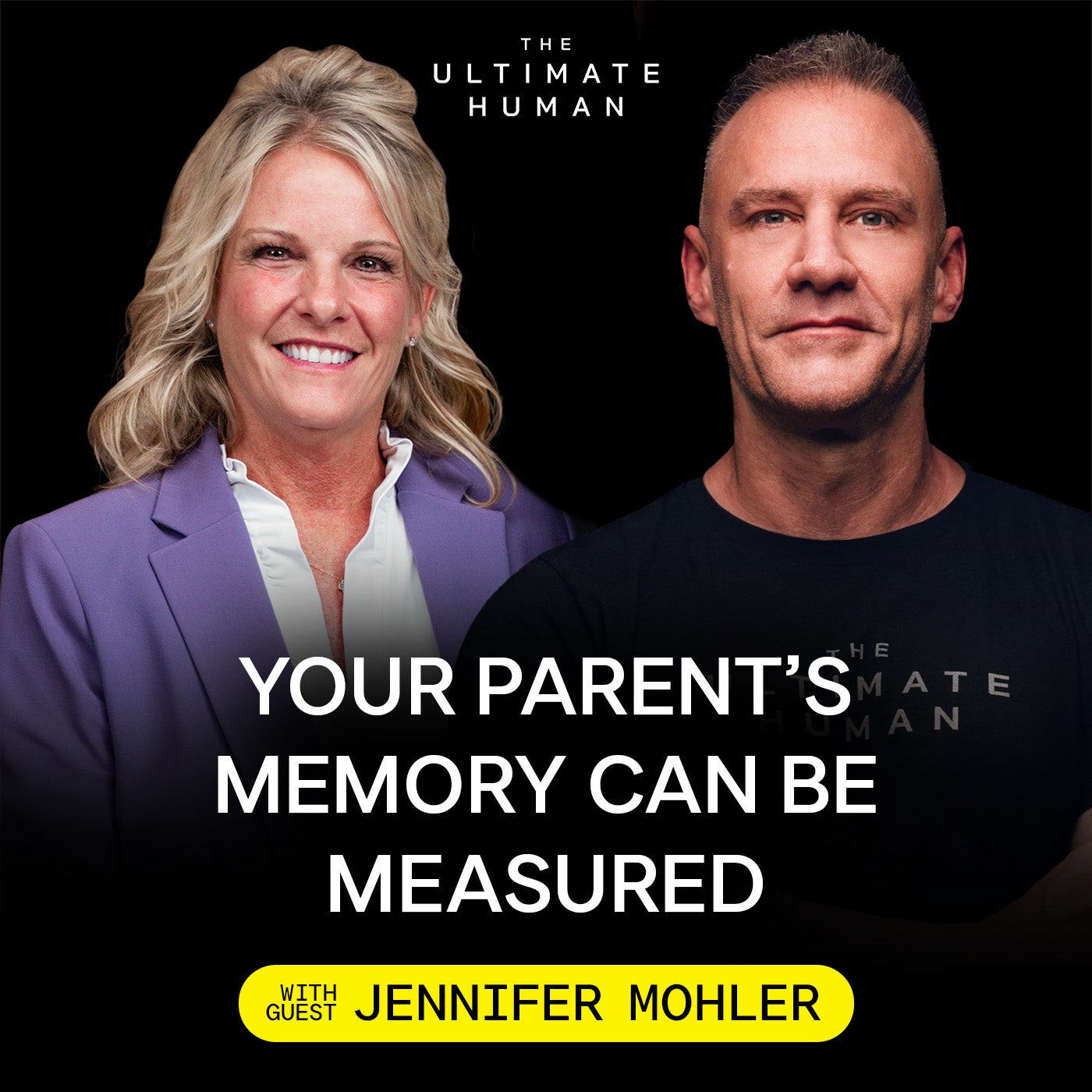
Reframing aging and memory loss as “lost access” rather than inevitable decline, and using wellness/longevity therapies in senior living to reduce isolation and improve quality of life.
Jennifer Mohler of RegentraCare and Senior Living. She entered senior living from a long-standing respect for older adults shaped by her grandparents; she later built a career around older-adult care. She also describes her own family experience evaluating senior living for parents with physical vs cognitive decline.
U.S. healthcare spending doesn’t equal outcomes; aging should be treated as opportunity (“sunrise years”). Isolation accelerates decline. Memory loss is often access loss that can improve with therapies and engagement. Senior living should be “home-like with a safety net,” and earlier placement can prevent crises.
Janet, a resident who became nonverbal; after ~3 weeks of Regentra therapies she began speaking and had moments of clarity. Another resident after ~3 weeks said he no longer needed his cane and wanted to be more active. Clinical study planned with Progressive Medical Research: ~30 participants with mini mental EEGs, labs, ADL tests, and reassessments at 45/90 days.
Written by AI. May contain mistakes.
Explore the need for a new perspective on aging and wellness.
“We've been treating aging as an inevitable decline.”
Discuss the challenges and decisions in finding proper care for aging parents.
“And I remember when I started on this journey, first of all, I moved my parents down from Tennessee and I moved them in with me because I thought, who better to care for them than myself?”
Jennifer shares her background and how she became involved in senior living.
“of life, um, experienced decades that I haven't yet.”
Explore how different cultures view and honor their elderly populations.
“You don't remember anything until you're maybe five.”
Discuss the integration of wellness and biohacking in senior living facilities.
“These are the final chapters and we have the privilege to help them and to provide the resources that really will allow them to be well and to have quality of life and to have purpose.”
Overview of the wellness platform and experiences in communities using Regentra.
“So what's life like in one of these centers?”
Explore how Regentra incorporates nutrition and wellness for residents.
“And it also includes nutrition and consultation to where we are consulting with on on site culinary teams to help them.”
Discover the benefits of Regentra's therapies for residents and families.
“Um, so when a resident, um, moves into a community that has read, um, Regentra in it, we have a dedicated space.”
Listen to a heartwarming story about a resident's remarkable improvement.
“It seems like their short-term recall is improving, or it seems like their sleep is improving, but we have real objective data.”
Learn about transformative experiences and success stories from Regentra.
“One of my favorite stories is about a young woman in the Your Life community.”
Discuss the concept of memory access versus memory loss in seniors.
“And it's, it's our goal that we want every senior in every community to have, to have access to this as well.”
Get insights on evaluating and selecting the right senior living facility.
“I'd love to go back to, you know, someone who's watching this podcast, uh, who's, you know, around my age that is facing this decision with their parent.”
Understand the importance of a home-like environment in senior care.
“must be wrong with me if I'm here, you know, I'm here for medical care.”
Learn why community engagement and quality care are essential for well-being.
“And so I think for me that that would be a very big priority, you know, going into community.”
Explore the emotional challenges and guilt in caring for aging parents.
“that sometime, but you know, they're free to go as, as their loved ones choose.”
Gain insights into different types of senior living environments and what they offer.
“Part of it was I should take the responsibility myself, but I realized I don't have the resources to do that.”
Learn how early support can lead to better outcomes for seniors.
“And when you're evaluating this process, you know, one of the things that stood out to me is earlier is sometimes better.”
Understand the importance of viewing aging through a wellness lens.
“of, you know, going into a support center like, you know, Your Life or Regendra.”
Explore the clinical study validating the benefits of Regentra in senior care.
“these policies that people buy that sort of pay for care later in life.”
Discover how Regentra aims to enhance quality of life for seniors.
“So we have partnered with a company called Progressive Medical Research.”
Learn about the ongoing study and its potential to enhance memory and quality of life.
“So there's a substantial amount of onboarding and assessments that will be done as these participants start the study.”
Explore the emotional and practical aspects of moving loved ones into assisted living.
“You know, when I look at what we did from a service offering standpoint in Regentra, and I promised I wouldn't turn this into a commercial for Regentra.”
Hear a personal account of the decision-making process for moving aging parents.
“a little bit late on the decision-making curve because, you know, as I said, I moved my parents in.”
Discover thoughts on living without limits and embracing vitality at any age.
“So they can find Regentra and Regentra locations that exist in within the communities at RegentraCare.com.”

Get the gist, explore an idea or ask about something said.
 Claude
On The Ultimate Human with Gary Brecka, what are the key points of this episode?
Searching your listeningAutomatic transcript. May contain errors.
0:00We've been treating aging as an inevitable decline. We've been allowing older adults to remain at home longer than they should at times when they start isolating and withdrawing and everything else starts to decline. We want those people to come into senior living earlier.
0:16Gary Brecka: Here in the U.S. after spending$5 trillion a year on health care, we realize that spending doesn't equate to outcomes. And when we zoom out, it's actually the return to the basics that really provides this buoyancy in life. We have to think differently about aging. It's not an inevitable decline. These are the final chapters and we have the privilege to help them to provide the resources that really will allow them to have quality of life. I think that we've resolved ourselves to think that at a certain age or a certain point in life, the best we could hope for is to maintain and not go backwards.
0:49Gary Brecka: And what we realize is we can take great strides forward in overall quality of life. We should be thinking about wellness and longevity and purpose. And that's where Regentra is really the only wellness and longevity platform out there that really is currently doing this. When a resident moves in to your community and they experience this Regentra, why has the industry done this earlier? The biggest surprise in why this isn't occurring in the industry, why it's just now, it's that.
1:30Gary Brecka: hey guys welcome back to the ultimate human podcast i'm your host human biologist gary brecca where we go down the road of everything anti-aging biohacking longevity and everything in between and today's guest is a very very special guest to me um i've been on a personal journey that I've been very public about facing the end of lifespan for a parent. And by end of lifespan, I just mean that stage of life where our mother or our father needs some assistance with what we call activities of daily living. You know, there's all kinds of ways to evaluate how independent a mother or father is bathing, toileting, ambulating, dressing, eating.
2:14Gary Brecka: But the decision that you face at my age, I'm 56 years old. My parents have done so much for me. My father is my mentor. He's my best friend. I'm an only child. So my mother raised me. I'm very, very close to my mother. We grew up on a 300 acre farm in Southern Maryland and we had amazing life. My father was a Navy captain. My mom was a flight attendant, a very solid middle-class lifestyle. and you know time just went by and one day we realized that my mother my father were no longer capable of living independently on their own and so i started facing that decision that a lot of you on the other side of this camera are going to face and what do i do with my loved one where do i put them who do i entrust to make the choices for their daily living and it was one of the hardest choices that i ever made in my life and i decided to actually do a podcast on it and be very transparent and very authentic about it because this has been a journey that's very near and dear to my heart.
3:15Gary Brecka: I'm going to get emotional during this podcast for sure, just because of the love and admiration that I have for my parents. And so I made that choice and it took me a long time to understand how to evaluate senior living, how to evaluate cystic care, memory care facilities. There's just so many components that go into it. Who's feeding them? Who's watching after your loved one? And so I thought today we'd just have a real, authentic, intentional conversation about what are the decisions that you have to go through? How do you make them? And who do you entrust the balance of the lifetime of your loved one to?
3:51Gary Brecka: So welcome to the podcast. I am so excited to have you on. This is Jen Moeller from Regentra and Senior Living. So welcome to the podcast. Thank you so much. Thank you. I'm happy to be here. Yeah, I'm happy that you're here. And we've gotten to know each other. And I remember when I started on this journey, first of all, I moved my parents down from Tennessee and I moved them in with me because I thought, who better to care for them than myself? And I realized very quickly that it was really outside of my capacity. and like so many people listening to this, I have parents that are in two opposite places.
4:28Gary Brecka: My father's body is beginning to fail him physically. His mind is very strong. My mother's body is very strong and her mind had begun to fail her. And I think when they first moved in with me, I was like sort of overwhelmed with this guilt of like, how did I let them get here? Why would I go and enjoy all the successes of life and sort of just leave my parents away from me in Tennessee. I want to make sure that they're cared for. So I started that process of evaluating senior living. And I'd love to start the podcast because you have such a strong background in this. First of all, I'd love to know how your journey led you into senior living, right?
5:11Gary Brecka: Was there a problem you solved in your life? Was there a loved one it was related to? How did you get there? Yes. Um, so I love this question of how I landed in senior living. It's, it's not something that I sought out. Um, however, I always had a very strong respect and regard for older adults. And that certainly stemmed back to the relationship that I had with my grandparents. Some of my, um, most precious memories growing up were hearing about Pearl Harbor and the living room of, you know, my grandparents' house and playing hide the thimble with my grandmother for hours on end. You're dating yourself there.
5:50I know, I know. And I do have that thimble, by the way, I do in my possession.
5:54Gary Brecka: I don't think a lot of people even know what a thimble is. Yes, probably not. And so, you know, there was just such a specialness there. It was so safe. It was stable. It was wise beyond what I really even understood at that time. And it's just, it's invaluable to be able to sit in the presence of somebody that's experienced 60, 70, 80 years of life, um, experienced decades that I haven't yet. Um, not to mention older adults are really, really fun. They're, they're, um, they're hilarious. There's a lot of comic relief. My dad is pretty unfiltered. Your, your parents are very funny. I love, I love being with them.
6:34Um, and you know, there's, there's so much wisdom in the life experiences that they've had, the loss, the resilience, um, the, the, the journey that they've been on. There's just so much wisdom in that. Um, and so really it was, it was very natural for me to gravitate toward older, um, older adults.
6:55Gary Brecka: Yeah. Um, and you know, really built a career around it that I feel very passionate about. You know, some cultures, like the Asian cultures, especially, you know, Japanese, Asian cultures have a tendency to really exalt their elderly. Like they're really the wisdom, the guidance, the knowledge, the stories that they pass down. This is like not the sunset years in a lot of cultures. It's the sunrise years. And I think in our culture here in the U.S., I feel, and this is not stereotypicalizing everyone because it's not true for everyone, but I just feel as a society, we kind of say, okay, there's not a lot more use, functional use.
7:41Gary Brecka: So let's just tuck them somewhere where they can be comfortable. And I think we could draw a lot from a lot of these Eastern cultures that really, they, they put the elderly on a pedestal and they really admire them. And they really almost to a certain extent worship them. And, and that's the, that's the proper position, I think, because they've given so much to you and you forget, you know, a lot of those years cause you don't remember them. Right. I mean, you came out of the womb. You don't remember anything until you're maybe five. But those are the ones that were doing all of your basic activities of daily living for so long.
8:19Gary Brecka: So why wouldn't we shift our mindset and say, what is the best kind of care? And what is the maybe the greatest years for them are ahead of them and not behind them? And so you got into daily living. And, you know, what I'd love to drill into is for someone watching this podcast. that's my age that's facing this decision for a parent. What's kind of the decision tree that you go through to first of all, decide when they need to be in assisted care or independent care? And what are some of the things that they should look out for? How would they evaluate one option versus another? That's a great question.
9:04And if you had asked me this 10 years ago when I are 15 years ago now, I guess, when I first, you know, entered the industry, my answer would have been very different than it is today. And the reason is because, you know, the industry in general is has really been built around a sick model. It's been built with without thinking of aging the way we really should be thinking about aging instead of it being an inevitable decline. We need to be thinking about aging as an opportunity, a journey into these final chapters, as you mentioned, where vitality and opportunity and purpose and joy are still very much within reach and really make decisions around those priorities.
9:51So many people enter senior living with a need that there are a solution that they're trying to, you know, a solution that they're trying to find to a problem that they have. But I think we've been thinking about that all wrong. We should be thinking about wellness and longevity and purpose and joy. I love that. And that's where, you know, Regentra is really the only wellness and longevity platform out there that really is currently doing this. So I think, you know, safety is such a big priority for residents. Obviously, making sure that their basic needs are met is very important, but it has to go beyond that.
10:36We have to think differently about aging. It's not an inevitable decline.
10:41Gary Brecka: Yeah. These are the final chapters and we have the privilege to help them and to provide the resources that really will allow them to be well and to have quality of life and to have purpose. I love that. You know, I was introduced to your boss and the owner of your life several years ago and we got to be really fast friends. And what I loved about his name is Rick Olson. And what I loved about Rick was he was all about the next best thing. So he owned a chain of these assisted care, memory care facilities and independent care facilities called Your Life. And as I was going through this evaluation process, I really got to know Rick and I was like, why wouldn't we apply the same kind of biohacking and longevity and anti-aging modalities that we do to my audience that I'm doing in my ultimate longevity centers that people are starting to see at gyms and wellness clinics and social wellness memberships?
11:40Gary Brecka: Why wouldn't we offer that to seniors? Things like red light and sound healing and vibration therapy and hydrogen inhalation and PEMF. And he goes, you know, you're that's a great question. He said, I would love to explore a project, a partnership with you where we brought the best that biohacking and longevity has to offer into these facilities. because there's no reason to deprive someone of that just because of their chronological age. And that really endeared me to Rick, to your life. You guys have my parents, you have my mother and my father. So it wasn't an easy decision for me. And I'd love for you again, I'd love to talk about what are some of this service offerings that are there that are unique?
12:31Gary Brecka: And, you know, let's talk about everything. food, sunlight, being outdoors, community, connection, because isolation is so damaging and further isolating a loved one in the later stages of life can accelerate their decline. Absolutely. So I've been working out with my son lately, trying to keep up with him and his High Rocks competitive athletes. And I've been starting to use this Perfect Amino pre-workout. I really like It's got BH4, it improves nitric oxide output, but it actually seems to stay after the workout and not crash. There's no stimulants, so no caffeine, no Mao Wong, nothing that gives you that kind of amped feeling.
13:11Gary Brecka: You just feel like you're maybe better able to move during the workout, like you have better blood flow. So if you're in the market for a pre-workout, check out the Perfect Amino pre-workout. It's my favorite now. Now let's get back to the Ultimate Human Podcast. So what's life like in one of these centers? So the communities that have Regentra, we we the outcomes that we're seeing, what we're seeing firsthand is is very real. So Regentra is a wellness platform that that you have partnered with. Yeah. Full disclosure, we are partners. Yeah, the the platform, the the protocols that we have developed were, you know, from the ultimate human platform and they have been designed and tailored toward a senior living population.
13:58And they do they do include things like red light therapy, PEMF or grounding, hydrogen inhalation and submersion in sound and vibration therapy. And it also includes nutrition and consultation to where we are consulting with on on site culinary teams to help them.
14:19Gary Brecka: By the way, the food is incredible. I'm a big farm to table meal guy and I've had some of the best meals in your center. Yes, it's such a it's such a priority because we can't be doing all these great things for them and not and not allow them to be partaking in the healthiest, cleanest foods that we can possibly help them source. Um, so when a resident, um, moves into a community that has read, um, Regentra in it, we have a dedicated space. And in that space, we have set up, um, these wellness, um, science backed, uh, technologies that they get to benefit from. It's not a two hour exhausting.
15:01Do my parents love it? Yes. Um, it's the residents ask for it. Like they, you know, specifically they love the red light. It's warm. It feels good. It's very comfortable. It helps with their mood. It helps with their sleep. You know, these are these are the things that we're seeing and hearing firsthand, not just from the residents, but from their family members and the caregivers.
15:24Gary Brecka: Yeah, you got family members now that are like, hey, can I come in and use that? Yes, and they do. They do. They do. We love that. We love that because like you said, you know, this is helping decrease isolation, this intergenerational component that is non-existent in many communities. We can pull that in as well. But they love the red light. The hydrogen has an antioxidant effect on it. It helps with circulation. It helps decrease inflammation. Of course, the grounding, the PMF creates a magnetic field that they would otherwise be getting if they grounded, like you suggest every morning, if we could put them in their bare feet in the grass or in the sand every day.
16:05But we're able to create that with the grounding that we have in Regentra through the PMF. And that really helps just to wake up the cells. And so we're waking up the cells. And then by doing some of these therapies simultaneously, we're able to really see an exponential effect because waking up the cells, they're starting to work properly. And then you have, you have circulation and oxygen going to areas of their body that have been otherwise compromised.
16:34Gary Brecka: Yeah. You know, I, what's really fascinating to me are some of the stories coming out of Regentra. So Regentra is an add-on to an assisted care living facility. So the living facilities are called Your Life and they have been around for a long time, but we added these components. I'd love for you to talk about some of the anecdotal stories. I'm actually documenting my mother's progress with QEEGs. So I'm doing imaging of her brain, mini mental exams, so that we don't just have subjective data that, oh, I feel better. I'm more conversive. It seems like their short-term recall is improving, or it seems like their sleep is improving, but we have real objective data.
17:16Gary Brecka: We're doing actually real brain mapping and real imaging. And from someone who's a science nerd like myself, I like that kind of objective data where you can look at biomarkers and you can look at progress. But the stories that have been coming out over the last year from family members that have their loved ones in these facilities, what kinds of things are they seeing? And what, if anything, has shocked you or really surprised you about these otherwise standard biohacking modalities now being applied to senior living? Um, that is such a great question. And I, there are so many stories that I could pick from, and these are stories that I'm not hearing, you know, secondhand.
17:59These are stories that we are, we have a front row seat too, which is so special. It's such a privilege, um, to see the evolution of, of, you know, the, the, in the results of, of, you know, the, the experiences that the residents are having with Regentra therapy. One of my favorite stories is about a young woman in the Your Life community. It's actually the same community that your parents are in. A very special woman named Janet. Janet moved into Your Life and had been there for, I think, about eight or nine months before we launched Regentra into that community. And three weeks after Janet had started to participate in the in the therapies, her husband sent me a message and told me a story about his visit from the previous night, he had gone up to visit Janet, like he always does.
18:57But this night was very different, because they they held hands, they walked the halls like they like they like to do. But this time, when she looked out into the courtyard, she said, that is beautiful. Before Regentra, Janet was not speaking.
19:16Gary Brecka: She was nonverbal. She was. And so to even hear that, not what it'll never not give me chills. I got chills right now. But to hear what it's doing for the resident is such a special thing. But to hear the hope in his voice was equally as important. It's such a difficult decision. It's such a difficult act to hand over your loved one into the hands and care of somebody else. So this was such a special moment. And he went on to say that when he went to leave her that evening, that he leaned in to give her a kiss on the cheek and she shook her finger at him and said, your mother wouldn't like that.
19:57And again, she said that she did. And so again, prior to that, you know, these conversations weren't taking place, you know, so these are the these are the very real things that we're seeing people that haven't been communicating are starting to verbalize and talk and and have moments of clarity. There's another great story of a gentleman that recently started Regentra. He's been doing it for about three weeks now. And I heard this story just yesterday. And when he went in, he he held up his cane as he was walking out and he said, I feel so great. I don't even need this anymore. And so, you know, when I kind of drilled into, you know, what, what was it?
20:39What, what is, what feels so great? And it's physical. It's, it's the energy. It's, it's, it's him wanting to engage more. He wants to be out. He wants to be active. You know, that gives them the, the energy and the capacity to be purposeful again. So, you know, I could go on for hours. We definitely don't have enough time to cover all the stories, but there's so many special stories. And as I mentioned, it's, it's such a gift to see this level of vitality and wellness being poured into the older adults where, where Regentra, you know, is present in these communities. And it's, it's our goal that we want every senior in every community to have, to have access to this as well.
21:26Gary Brecka: Yeah. I mean, that's our intention is to, you know, put this out through all of the existing senior living communities around the country and really give them access to these things that have low contraindications or virtually no contraindications, but give them some life and some resource back. You know, I knew from the mortality space that isolation is the most damaging thing for any human being. And in your line of work, you understand broken heart syndrome, right? Where a couple's married 40, 50, 60 years, one passes, usually the other one doesn't, doesn't stay around for very long and nothing's really happened to them other than the fact that they've just been put in isolation, maybe for the first time in 50 or 60 years, because that, that entity, that human that was with them for so long is now gone and they just feel completely isolated.
22:21Gary Brecka: And I will say that I've been very, very impressed with the staff there, the farm to table food, the activities, the way that you treat the residents like human beings, you meet them where they are and they get some dignity back. And, you know, it's fascinating. I've talked a lot about the misnomer around a lot of these memory decline disorders, Alzheimer's, dementia, early onset cognitive decline, and the notion that the memory is leaving, right? They've lost their memory, quote unquote. We know now that they haven't lost their memory, right? They've lost access to their memory. And what you're proving and what I've been saying for years is access can be restored.
23:07Gary Brecka: So very often someone that you think has, you know, gone is not really gone. And their memory is still there. And if there are ways for us to give them access to it, like allows them to be a human again and reconnect and removes them from that isolation. I'd love to go back to, you know, someone who's watching this podcast, uh, who's, you know, around my age that is facing this decision with their parent. What, what are some of the things that they should evaluate? I mean, outside, let's take a gentr off the table for a minute, but I'm going out and I'm going to evaluate, uh, independent living, assisted care, memory care, fully skilled nursing.
23:47Gary Brecka: How do I even, I'm not, I'm a non-medical person. How do I know this is a good center? It's not a good center? How do I get the information and the data to just make a decision on where I should put my loved one? Yeah. I think so much of it, you know, you have to, when you walk into a community, I think you need to trust the feeling that you get when you, when you first walk in the door, you're either going to get a very warm, welcoming feeling, or it'll feel more institutional or clinical. And we don't want our older adults living in institutional clinical type settings. We want it to feel very home-like to them.
24:26The care is really obviously the very most important thing. You know, sticks and bricks are one thing, and that's beautiful. We love the amenities. But if they're not cared for, if their basic needs of being loved and not feeling isolated aren't met, they're not going to want to come out of their room. Obviously, the meals are very important. There's so much fellowship that goes on around the...
24:52Gary Brecka: I love going up there and eating with my parents and I'm tough on meals, man. I'm very cautious about what I put in my body. Yeah. So, you know, it's certainly is it is the care it's, you know, everything rises and falls on leadership. So, you know, you really do have to make sure that the head heart alignment with the leader of the community is is is in line with your priorities and your values, I think is very, very important. because all of that will trickle down, you know, through the care that the team delivers to the resident. Yeah, I did feel exactly what you're talking about when I looked at certain facilities.
25:32Gary Brecka: They did feel very sterile and very institutional, almost like they were checking into a hospital. And I think that has its own connotations, you know, the white coat syndrome and that something must be wrong with me if I'm here, you know, I'm here for medical care. I'm not here to live. And what I really fell in love with and I'm a big fan of is, you know, natural light, sunlight, these courtyards that have that are bathed in natural light gardens that they can, you know, tend to themselves. One of my mom's favorite pastimes is gardening my whole life growing up. She I hated it, but I now have fallen in love with it.
26:11Gary Brecka: But I mean, I sort of rejected it as a child because my mom was always planting stuff. And we had to line the whole woods with azaleas. and she always had that green thumb. Of course, we lived on the farm. So there's always something to do. But she was, she just loved to have her hands and feet in the soil. And we were always outside. I spent very little time inside as a child. And my parents spent very little time in the house as adults. They were always out doing something around our property. And so that connection to nature to me is huge. The connection to sunlight, and plants and the environment and a garden.
26:52Gary Brecka: Like those things have real meaning for them. They create this sort of connection that sometimes we often forget about. And so it goes beyond evaluating a center based on cleanliness, right? Hospitals are clean. I wouldn't want to live in a hospital. Right. And so how do you foster that environment? What do really good caregiving centers, what are the things that they do differently than most? So, you know, I, for me, it goes back to head heart alignment. And I love that phrase because what it means is that it, it means that my head intellectually knows the job that I have to do here. I understand the assignment.
27:38I am to run this community. I am to care for the residents. But when you have head heart alignment, your heart authentically and very purposefully follows right behind the intellectual understanding of what needs to happen there. So I think in there, again, you know, when you go in and you meet a leader in the community, that the way that leader interacts with her team is the way those caregivers are going to interact with the residents. And so I think for me that that would be a very big priority, you know, going into community. It is important that it's clean and that they're, you know, getting great meals and they have access to wonderful and purposeful activities and opportunities to engage outside and in the community.
28:29Um, but again, if you don't have, um, that, that care dialed in, what else matters? They're not really going to feel like going out of the community. They're not going to feel like, you know, hanging out in the dining room and in having fellowship with other people. So the care, it, it, that has to be dialed in first.
28:50Gary Brecka: Yeah. You know, we leave, uh, on Sunday for my son's wedding. And so by the time this podcast airs, my, my son Cole will be married and it's in Lake Como. So we're obviously taking my parents and, and by the way, they're not stuck in these facilities, right? It's not like the Roach Motel. You check in, you can't check out. There was an ad about that sometime, but you know, they're free to go as, as their loved ones choose. You guys do a lot of stuff out in the community outreach stuff. I mean, my dad's favorite steak restaurant is actually outside of the, uh, the, your life center and, and your staff is so kind to take him there and bring him back.
29:28Gary Brecka: But so we're going on this trip and my parents insisted on, on taking your nurse with them. I know it's so, so I had to call Rick and I'm like, Hey, can I borrow her for a week and take her to Italy? He's like, yeah, of course you can. You know, it's so in that, that's head heart alignment. They know what they're there to do, but they're their heart is just so bought in and it's so natural. It's so authentic. It's so special. And yes, we've all heard about this, this special wedding coming up and I'm so glad that they're sure it's all my parents talk about. And I think that's important too, because, you know, their new family is this surrounding and, you know, sometimes I think it must be hard actually on the caregivers to like get attached to so many people that are moving on through this phase of life and, you know, to be able to recreate those bonds over and over and over again and, and give that sense that, you know, you're now part of our family and we're part of your family.
30:30Gary Brecka: I mean, it's really been an interesting transition to me. It was you, because when you go to make this decision, you are fraught with guilt. Um, part of me was like, wow, how did I let my, my, my mother and father get to this place. Part of it was I should take the responsibility myself, but I realized I don't have the resources to do that. I mean, I don't mean financial resources. I just mean, you know, the type of constant surrounding that they need. And so I want to go back to this decision matrix because most people don't understand the difference between independent living, assisted care, memory care, and what we would call fully skilled nursing.
31:15Gary Brecka: Can you kind of just kind of walk us through that? Yeah. So independent living, I, you know, I think of 55 and older, they're really - Watch yourself with that because I'm 56. And I'm 54. So I'm right there with you. I'm a year away from being able to - I started getting the ads from the AARP and I was like, I wanted to call those guys and be like, send this shit to somebody else. Yes, that's right. Yeah. So you and I are both right there. And OK, so independent living, I think, of 55 and older that that are still functioning at a very high level. Oftentimes they move in because of safety. That's, you know, a really, really big thing.
31:52Fall risk. Yes. Not not just fall risk, but, you know, just the senior scams and all the things that you hear about that where they're vulnerable. But, you know, they're really moving in for a lifestyle. And so that's where you see, you know, these beautiful, you know, brick and mortar communities that have the pools and, you know, all of the common space and the bars. And those are wonderful. They're really, really moving in for a lifestyle. Assisted living is when you want to move into a community and you want it to feel just like home, but you have a safety net. And the safety net is it comes in the form of your meals are prepared and delivered or, you know, provided for you.
32:33You can have your medication managed for you. You can receive activity assistance with your activities, a daily living, showering, dressing, whatever it is. So think of it as home, but with a safety net. And then for memory care, you know, that that is a more specialized environment because oftentimes it it it really revolves around the the the security of, you know, a resident not being able to just walk out and, you know, go into the streets or whatever. So memory care is obviously it's it's a different skill set. I mean, and I think, you know, the your life community is a great example of that because you can't you can't care for an assisted living resident the same way that you would care for a resident that has memory care needs.
33:25The approach is different and, you know, the structure needs to be different for them as well. But the safety and the security aspect of the memory care is very important. And then a nursing home is a totally different category of its own. That really is more of a clinical setting where they need 24 hours nursing access or supervision. Memory care, assisted living, independent living, none of those are like a nursing home. It really should be thought of as home with a safety net.
33:59Gary Brecka: I love that. Even independent living, even though they are independent, you know, their safety net at that point is the safety and being in a community that is secure at night. Yeah, I love that. If you know me, you know I don't recommend anything I haven't personally tested. That's not a marketing line. That's just how I operate. I've been on the road my entire career. Different time zones, brutal schedules, no margin for days off. And so I'm constantly testing what actually works in my own body. NED was something I keep coming back to. It's the molecule your cells use to produce energy and repair, and it declines faster than most people realize.
34:34Gary Brecka: When I found Symbiotica's liposomal NAD, the absorption technology is what got my attention. I tested it. I felt it. And it's been in my bag ever since. I'm always evolving what I put in my body, and this one has stayed on the list. I'm genuinely excited for you to experience it. This is the standard we hold every product to before it even reaches you. Now let's get back to the Ultimate Human podcast. And when you're evaluating this process, you know, one of the things that stood out to me is earlier is sometimes better. Right. You know, I think we think of the time where we're going to move a parent or make the decision to put a parent into some kind of supportive structure and that they have to be so dependent on just getting through their day that you have no other choice.
35:25Gary Brecka: And I've reframed the way that I look at that now. I've reframed it to, you know, the earlier is the better. It's okay to be independent and think about one of these facilities. It's okay to be marginally dependent. You know, we talk about the five activities of daily living, bathing, toileting, ambulating, you know, how well they move, dressing and eating. you don't need to wait until all of those skills need support before you start to make the choice of, you know, going into a support center like, you know, Your Life or Regendra. And first of all, I'm seeing the stories coming out of Regendra too, and they're very heartwarming.
36:09Gary Brecka: I have a lot of those on my platform. They're generally with a lot younger people where they have some kind of condition, it's Lyme disease or autoimmune or they're struggling with hormone balance. And I see what happens to their life when I help them figure out, it gives them their life back. And I want to reframe the way people think about senior living, because you have the same opportunity for these great breakthroughs that we're having in younger ages. And my age and all the way down to Gen Z. I've got four kids that are Gen Z. I'm seeing breakthroughs with them too. When they dial in their sleep and they dial in their exercise and their food and they're just so much calmer and more productive, they have better relationships.
36:53Gary Brecka: They have, you know, the friendship circle changes. So I love that we're reframing the way that we think about the, you know, these sunset years is like sunrise years. And so when a resident moves in to your community and they experience this regenture. We talked about a couple of case studies. What's been the most surprising thing for you? Because you've been in this industry for a long time. Why hasn't the industry done this earlier? Is it just a lack of funding? Does most of this come from Medicaid or Medicare or private pay coverage or these policies that people buy that sort of pay for care later in life.
37:40Gary Brecka: What's been the biggest surprise for you? The biggest surprise as it relates to Regentra and why this isn't occurring in the industry, why it's just now, you know, entering the industry. It's that we've been looking at it as a sick model. We've been treating aging as an inevitable decline. To your point about isolation, we've been allowing older adults to remain at home probably longer than they should at times when they start isolating and withdrawing and everything else starts to decline. We want those people to come into senior living earlier because that's where we can really pour into them to keep them from isolating themselves, to keep them well, to keep them, you know, desiring vitality and purpose in their lives still.
38:33You know, that's what's so special about Regentra is that we're not looking at the older adult from a sick model standpoint. We're looking at it from wellness and longevity. We're looking at it from quality of life. So you move into our community. We have Regentra in our community. and your loved one is now having access to red light therapy and hydrogen and grounding and all of the things that that you and I do to stay vital and to stay, you know, functioning at our highest capacity. You know, I guess the most surprising thing is like, it's almost maddening. Like, why haven't we thought about this earlier?
39:12It's it's a little bit angering. Like, why aren't we automatically defaulting to like, this would be so good for an older adult? And again, I think, you know, to your point, we have to start thinking about aging differently. This is not an inevitable decline. Yeah, I think so, too.
39:30Gary Brecka: And, you know, we we now realize, you know, after spending five trillion dollars a year on health care that we built the sickest, fattest, most disease ridden nation in the world. And we realize that spending doesn't equate to outcomes. And when we zoom out and we look at areas of the world like blue zones and we look at big data studies and meta-analysis studies, we realize that it's actually the return to the basics that really provides this buoyancy in life. You know, it's the whole foods. Like the foods here are incredible. It's the whole food. It's some sense of community and connection. You know, I noticed that my parents are developing a lot of friends.
40:12Gary Brecka: And it's like, my dad's like, he's like the mayor in there right now. He's very social, yes. He's so good. He's very social. And maybe it's because he can get away from my mom, you know, driving him up a wall. And, you know, I ignored for so many years the subtle signs, you know, the calls from my father, you know, getting off the phone with my mom and going, hmm, something's a little, something's different, something's a little off. And all that's changed now that they've been in Regentra. I'd love for you to talk a little bit about the clinical study that you're embarking on now, because, again, at the end of the day, I'm a science nerd and I like the data and I like ways that we can validate things instead of just talking about the proofy, feel good things.
40:58Gary Brecka: What does that clinical study entail? So we have partnered with a company called Progressive Medical Research. They're out of Port Orange, Florida. And they were so excited about Regentra and the presence of Regentra into the senior living industry that they wanted to partner with us to help us with some really specific validating studies. And so what we've done is we recreated and basically set up exactly what we have in our centers, in our communities, a Regentra space. And they have they're bringing on 30 participants and they will be putting them through a clinical trial to where they're going to have very measurable, very objective data coming out on the other side of this.
41:53So, you know, it includes, you know, a full assessment, a mini mental EEGs, the things that you mentioned that you're, you know, overseeing with your mom, lab work, you know, ADL tests, activities of daily living. So there's a substantial amount of onboarding and assessments that will be done as these participants start the study. And then they'll be repeated 45 and 90 days out as well. So on the other side of this, we're going to have some substantial and objective data about the significance and really what we're, you know, what we're seeing subjectively. We'll have evidence of that.
42:37Gary Brecka: And I love that because I think that we've resolved ourselves to think that at a certain age or a certain point in life, the best we could hope for is to maintain and not go backwards. And what we realize is we can take great strides forward in memory and in their ability to connect in short term recall and concentration in sleep and engagement and just overall quality of life, which just raises their mood and and gives them some some life back. And I feel the same way you do. It's like we we ignored so many signals in our modern medical system for so long until it got to the point where the expense of maintaining chronic illness forced the conversation.
43:25Gary Brecka: And I think it would probably been another 10, 15 years before the conversation got forced in senior living. But, you know, what you guys are doing is is having it long before this industry hits the wall. And we just accept that there's not much we can do other than sort of comfort of life, maintain. But we we can't really get them reengaged with their loved ones. We can't like give them back that spirit of youth. And that's what's so exciting to me because, you know, we're all human beings at the end of the day and our chronological age shouldn't label what we have access to. So, you know, after this study is published, you know, what's the what is the, I guess, you know, plan for Regentra?
44:13Gary Brecka: What is that? What is the future of this look like? We want to partner with other operators and communities that have the same head heart alignment that we do and that they want and that they care as much as we do. You know, those are the partnerships that we're looking for. They see the opportunity. Their heart naturally follows behind. That's what we see in these clinical trials are going to are going to really help with that. Yeah. And it's going to help tell the story as prospective residents are looking for places to move into. And adult children like us are looking for places for our loved ones.
44:52We'll be able to prioritize this as part of their wellness and longevity journey at their age and for those special chapters of life.
45:01Gary Brecka: People ask me health questions every single day about their labs, their sleep, their supplements, their genetics. I want to help every single one of them. and that's why I built Just Ask Gary. It's an AI trained on everything I know, including my protocols, my research, and my methodology. You ask the question, you get my answer. Any time of the day. Go to theultimatehuman.com forward slash AI and check it out. Now let's get back to the Ultimate Human podcast. You know, when I look at what we did from a service offering standpoint in Regentra, and I promised I wouldn't turn this into a commercial for Regentra.
45:36Gary Brecka: I really wanted people to take away some things that they could, practical tools they could use to just evaluate, you know, when should I make this decision? How should I make this decision? And a lot of that is finance driven. But so from a financial perspective, are any of these centers or some or all or partial amount of it, is it able to be covered by Medicaid, Medicare? Is it able to be covered by insurance or is this all private pay right now? Almost all is private pay. You know, there wellness is too, sadly. Yes. Medicare and, you know, insurance, they do not pay for, for housing, for the senior living housing that the residents benefit from in senior living communities.
46:21There are some exceptions to that, to that. There are some communities in different states that, that may allow for a Medicare waiver to, to pay for some of, that. They're few and far between and those tend to stay very full, obviously. But the majority of it is private pay. Many people do have long-term care policies that are very beneficial. And then there are some VA benefits that could help contribute to that as well. So if there is a veteran in the family, they should always explore what resources are there for that too.
47:01Gary Brecka: Where could people go to find out information on that? I mean, if you go to the VA.org website or find a broker that will help you research that or apply for the benefit, that would be the best route to take. There are certain documentation that you have to provide to make sure that there is eligibility there. So what does the onboarding process look like once somebody's made the decision to come in to a Regentra Your Life facility or any assisted care or memory care facility? What does that onboarding process look like? So, you know, it's different for everybody based on, you know, the reason why they're moving in.
47:43And to your point earlier, I think it's so significant that, you know, it's it's natural to start looking at making decisions like that as an adult child when you're starting to see physical or cognitive decline. But the emotional part is so significant, too. Like if you're you're seeing your your parent or your loved one starting to withdraw or or they're lonely or maybe they are have become very vulnerable to, you know, the phone calls where they're trying to steal their money. And sadly, this happens all the time.
48:14Gary Brecka: And a lot of them fall victim to this too. Yes, yes. You know, pay attention to all of that, not just the physical and the cognitive. And again, if somebody is on the younger end of that and they just crave the lifestyle of that, that's a great time to start exploring it too. But the actual, you know, move in process, that's very difficult. Our biggest competitor in senior living is not the senior living community down the street. It's home. It's them leaving their home. So, you know, as part of that onboarding process, whatever the family in the community can do to really make their space feel like home.
48:52Again, we want them to feel home with a safety net.
48:56Gary Brecka: Yeah. So I think, you know, making that special, intentional. Oh, yeah. All our pictures. Mom's favorite paintings. They're all around up there. Your parents' apartment is a perfect example of that. It feels like home. There's, you know, all the special touches of home there. So, you know, that's a big part of the process. But, you know, you want them to feel like the red carpet has been rolled out for them. Every resident that moves in is VIP. They've left their home. And I think it's really important as an industry that we not forget that by the time they come to our door to start exploring the idea of senior living, they they come with a lot of grief.
49:44Many of them have, they're no longer working, so they don't have that purpose. Many of them have had or been forced to no longer drive. Some of them have lost friends or children of their own into we need to be very sensitive to that. There's a lot of grief that they've walked to by the time they enter our doors. And so having a high level of compassion is so important.
50:10Gary Brecka: Yeah, I would agree. You know, for me, I feel like I was a little bit late on the decision-making curve because, you know, as I said, I moved my parents in. They were here for months. And when I realized, you know, my father getting into the tub one night, put his hand down on the tub and then slipped. And he ended up breaking his humorous, his arm right up near the shoulder. Thankfully, it was a very clean break and they didn't have to do any reconstructive surgery or anything and it healed. And so that was like warning sign number one. So of course I threw him in the hyperbaric chamber. I threw him in red light.
50:47Gary Brecka: I put him on peptides. I did everything. I was doing electrostim. I started getting a physical therapist to the house five days a week, a trained PT. And then two months later, he fell in the kitchen and he broke his hip. And I was like, okay, this is, this is something I really need to pay attention to. And that's when I really started to lean into the decision. And I would really implore people, if you're listening to this, don't wait till your loved ones get into that position where injuries and risk, you know, are really forcing you to do because you have quote unquote, no other choice. You know, you have a lot of choice before that.
51:30Gary Brecka: You can always stop too. You can always say, Hey, this didn't work out and pull your, your parents out of them. They're not, they're, they're not in an institution. But I think what was really revolutionary for me was finally making the decision and then my parents being in there and now they don't want to leave. Like they just love it. And they genuinely, every time, I go see my parents every week and I talk to them every day and they're just ecstatic. And now I realize it was the best choice that I ever made. But it's almost like if you're a parent, you've sent your kid off to college. You know, it's like the first time you're going to be an empty nester.
52:11Gary Brecka: It feels the same way when you're doing that with the people that have cared for you for so long. So for folks that are watching this and want to know how to find you guys, my audience, where do they find you? So they can find Regentra and Regentra locations that exist in within the communities at RegentraCare.com. RegentraCare.com. And, you know, that site is available for family members that want to, you know, to locate a community that has Regentra. It's also a site that operators and investors and owners can go to if they're interested in bringing Regentra into their community as well. Well, guys, this was a topic that I was so prayerful about bringing to light because, again, this was a decision that I wasn't expecting to make.
53:05Gary Brecka: It was one of the hardest that I've made in my adult lifetime. And I know so many of you watching this are going through potentially that decision making process right now. So I hope that by sharing this in an open and really authentic way, maybe it helps you with the decision that you that you have to make. But Jen, for for all of my podcasts, I wind down my podcast by asking all my guests the same question. I don't know if you know if this is coming or not. You do? Of course I do. Of course I know it's coming. You've watched it before. Yes. Okay. So you know there's no right or wrong answer to this question.
53:38Gary Brecka: But what does it mean to you to be an ultimate human? What it means to me to be the ultimate human is to not put a ceiling on my life. I don't want to put a ceiling on myself physically, spiritually, financially, emotionally. Like I want the ability for me to live with vitality into my highest capacity. And, you know, as it relates to older adults, I also want that to not be attached to an age. It shouldn't be attached to an age. Older adults shouldn't have that ceiling either. So I think just keeping my ceiling really high and endless, knowing that, you know, I can always do things to better myself physically and emotionally, spiritually, personally and professionally is really important.
54:34Gary Brecka: That's amazing. Well, guys, I will put links to everything that we talked about in the show notes for those science nerds that have been following this journey with me on Instagram or even a part of my VIP community or our lives. I'm going to continue to update you on the progress of both of my parents, just using them as a case study as an end of two. And when this peer-reviewed study that they are conducting right now is published, I'll make sure that I put that publication out in the public domain so you can evaluate that for yourself as well. And until next time, that's just science.
Gary Brecka sits down with Jennifer Mohler to talk through the decision he faced with his own parents, and his view that memory loss is really lost access to memory. They cover how to evaluate independent living, assisted living, and memory care, why isolation matters, the daily living skills that signal it’s time, and the brain mapping Gary is using to track his mother. Gary also shares the fall that changed his timeline. Don’t guess, test.
Click here to join Gary’s VIP Community: https://bit.ly/4ai0Xwg
Connect with Regentra Care
Website: https://bit.ly/4ivQMZs
Instagram: https://bit.ly/4zkJCyv
Facebook: https://bit.ly/4Ac5Jr9
LinkedIn: https://bit.ly/3UxsKFK
Thank you to our partners
AION: “ULTIMATE10” FOR 10% OFF: https://bit.ly/4h6KHAD
AIRES: “ULTIMATE20” FOR 20% OFF: https://bit.ly/4a3Duze
BAJA GOLD: “ULTIMATE10” FOR 10% OFF: https://bit.ly/3WSBqUa
BODYHEALTH: “ULTIMATE20” FOR 20% OFF: http://bit.ly/4e5IjsV
BREW: THE ULTIMATE COFFEE: https://bit.ly/4elHM82
COLD LIFE: THE ULTIMATE HUMAN PLUNGE: https://bit.ly/4eULUKp
CYMBIOTIKA: “BRECKACYM30” FOR 30% OFF: https://bit.ly/4tjyluP
GENETIC METHYLATION TEST (UK ONLY): https://bit.ly/48QJJrk
GENETIC TEST (USA ONLY): https://bit.ly/3Yg1Uk9
GOPUFF: GET YOUR FAVORITE SNACK!: https://bit.ly/4obIFDC
H2TABS: “ULTIMATE10” FOR 10% OFF: https://bit.ly/4hMNdgg
HEALF: 10% OFF YOUR ORDER: https://bit.ly/41HJg6S
PEPTUAL: “TUH10” FOR 10% OFF: https://bit.ly/4mKxgcn
SNOOZE: LET’S GET TO SLEEP!: https://bit.ly/4pt1T6V
WHOOP: JOIN & GET 1 FREE MONTH!: https://bit.ly/3VQ0nzW
Watch the “Ultimate Human Podcast” every Tuesday & Thursday at 9AM EST:
YouTube: https://bit.ly/3RPQYX8
Podcasts: https://bit.ly/3RQftU0
Connect with Gary Brecka
Instagram: https://bit.ly/3RPpnFs
TikTok: https://bit.ly/4coJ8fo
X: https://bit.ly/3Opc8tf
Facebook: https://bit.ly/464VA1H
LinkedIn: https://bit.ly/4hH7Ri2
Website: https://bit.ly/4eLDbdU
Merch: https://bit.ly/4aBpOM1
Newsletter: https://bit.ly/47ejrws
Ask Gary: https://bit.ly/3PEAJuG
Timestamps
00:00 - Introduction: senior living for parents
03:46 - How Jennifer entered senior living
07:16 - When a parent needs assisted care
09:38 - Biohacking inside senior living
11:32 - Red light, PEMF and hydrogen therapy
15:04 - Brain mapping Gary's mother
16:24 - Janet, the nonverbal resident
19:55 - Isolation and broken heart syndrome
20:59 - Memory loss as lost access
21:34 - How to evaluate a community
29:08 - Assisted living versus memory care
32:42 - Five daily living skills
37:53 - Clinical study with 30 participants
42:59 - Medicare, Medicaid and VA coverage
47:34 - Gary's father: humerus and hip
50:45 - What it means to be an Ultimate Human
Disclaimer: This podcast is for informational purposes only and does not provide medical advice. It is not intended for diagnosing or treating any health condition. Always consult a licensed healthcare professional before making health or wellness decisions.
Gary Brecka is the owner of Ultimate Human, LLC which operates The Ultimate Human podcast and promotes certain third-party products used by Gary Brecka in his personal health and wellness protocols and daily life and for which Ultimate Human LLC and / or Gary Brecka directly or indirectly holds an economic interest or receives compensation. Accordingly, statements made by Gary Brecka and others (including on The Ultimate Human podcast) may be considered promotional in nature.
Learn more about your ad choices. Visit megaphone.fm/adchoices