Ask ChatGPT
 The Ultimate Human with Gary Brecka
24 Nov 2026 · 1h 13m · 30 chapters
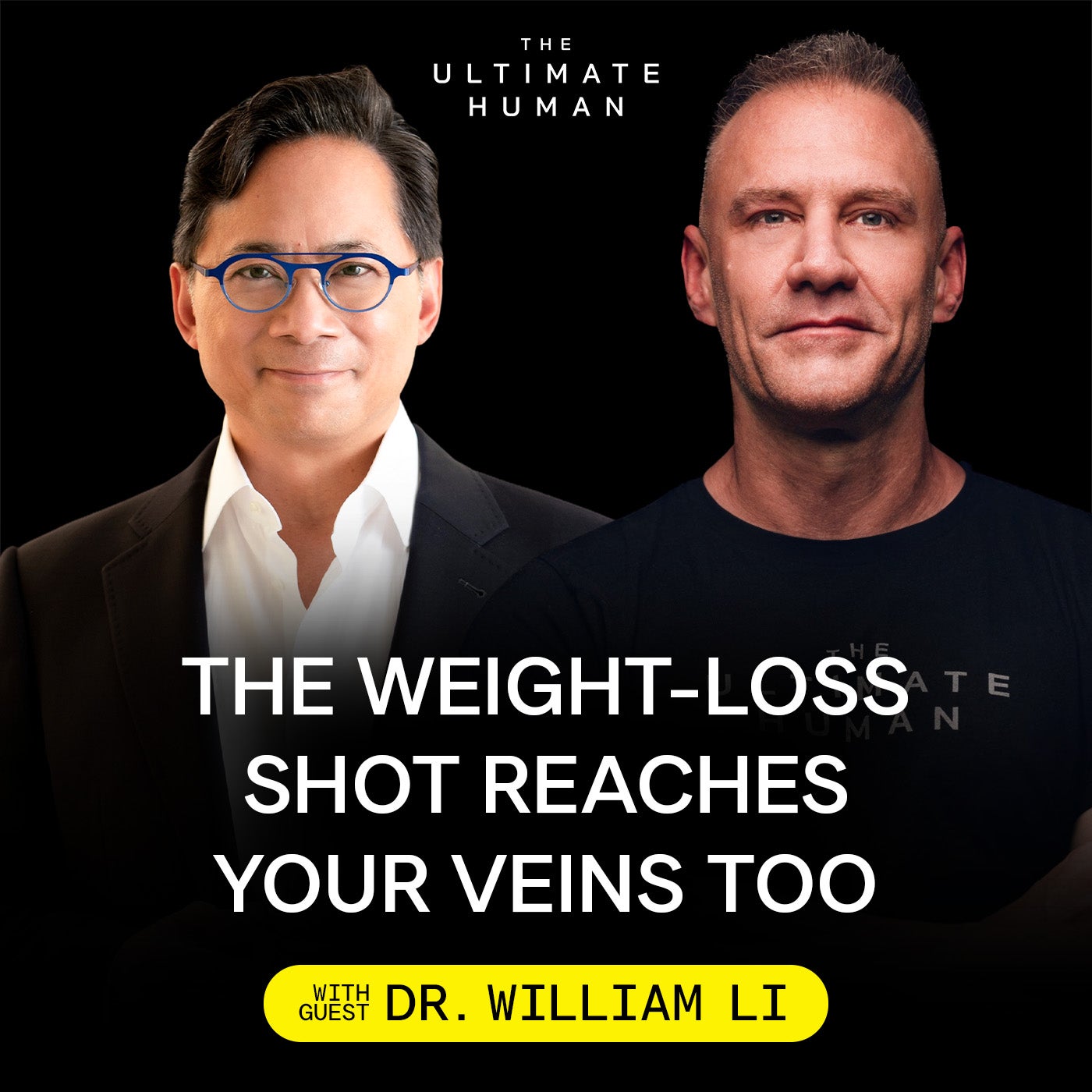
Dr. William Li explains how the body continuously forms microscopic cancers and how “health defense systems” (angiogenesis/circulation, stem cells, gut microbiome, DNA repair, immune system) keep them from becoming dangerous. He argues longevity and cancer prevention are largely about supporting these defenses via food and reducing harmful exposures (“subtractive medicine”). He also discusses GLP-1 drugs as evidence of a vascular health pathway, and links gut bacteria to response to cancer immunotherapy.
Dr. William Li, Harvard and Massachusetts General Hospital trained physician-scientist; co-founded a foundation that helped bring the first drug targeting angiogenesis to cancer patients; author of Eat to Beat Disease; researcher in vascular biology, immune system, and gut microbiome.
Microscopic cancers are normal; they stay around “sesame seed” size without blood supply until angiogenesis and immune suppression allow growth. Immune “policing” prevents disease; immunofatigue/immunosenescence drives aging. Gut microbiome composition predicts immunotherapy response; GLP-1 receptors exist on blood vessel endothelial cells, and GLP-1 may improve blood vessel resilience.
Conference “Rethinking Cancer” (no chemo/radiation/surgery talks); matcha catechins killing breast cancer stem cells; dark chocolate and black tea purported to mobilize stem cells; Acromantia muciniphila associated with immunotherapy responders; GLP-1 linked (in his summary) to reduced heart attack/stroke and cancer risk, and improved cancer treatment outcomes.
Written by AI. May contain mistakes.
Learn about GLP-1's role in cancer risk reduction and health defense systems.
“I think that GLP-1s are perhaps another health defense system that we never knew about.”
Discussion on the transition from traditional cancer research to food's role in treatment.
“that you get to sit down with your mentors and the icons and the game changers and the people that have really shaped the way that you feel about your career and the trajectory that you're on.”
Exploration of dietary recommendations and their implications in cancer treatment.
“We talked about how over just the last few years with my own family, my own friends, I have discharge papers from hospitals that for stage four metastatic colon cancer patients say dietary restrictions, none.”
Insights into how microscopic cancers form in our bodies and the immune response.
“You know, there's 7 million moms across America in our Maha movement.”
A deep dive into how blood vessel growth supports cancer development.
“Not why did we get sick, but why don't we get sick more often?”
Discussion on subtractive medicine and its potential impact on health.
“All that stuff suppresses our immune system, increases inflammation, makes it, gives those microscopic cancers an edge to be able to actually recruit, hijack the blood supply.”
Explore the concept of subtractive medicine and five health defense systems.
“But that the future of longevity medicine will be, there will be a component of what we call subtractive medicine, where we don't add anything to the body, we take it out.”
Learn about the concept of immunofatigue and its impact on aging.
“Our immune system is why we don't get cancer more often.”
Discussion on how William Shatner maintains his health and vitality.
“You know, I got asked a really interesting question on a stage talk the other day, and it threw me for a loop momentarily.”
Discover everyday foods that boost health defense systems and combat aging.
“And that just goes to show this idea of maintenance and how we actually have the power to be able to make choices with our diet and lifestyle in order to be able to keep our shields up.”
Learn how specific foods can support blood vessel health and combat cancer stem cells.
“Well, it turns out that returning cancer is caused by cancer stem cells.”
Discover the connection between gut microbiome and the effectiveness of immunotherapy in cancer treatment.
“2017, I helped to convene a conference, a cancer research conference in Paris.”
Understand the significance of Acromantia in gut health and its potential benefits.
“And other than foods, are there good probiotic cultures, probiotic products that have the acromantia isolated that you could inoculate with?”
Learn how fat functions as an organ and its implications for health and metabolism.
“Why does it change how we should think about our weight?”
Learn how fat affects metabolism and health, especially in extreme weight loss.
“The biology of human metabolism is to be stable.”
Explore the implications of GLP-1 drugs in weight loss and health management.
“And I love this idea of longevity as subtractive medicine.”
Discover the fascinating origins of GLP-1 drugs and their impact on metabolism.
“You know, they're so easy, and I believe they're a double-edged sword.”
Understand the benefits and potential side effects of GLP-1 medications.
“So one of the things that's really amazing is thinking about the fact that the discovery of GLP-1, this is a very classic pharmaceutical modeling.”
Learn about the AI tool Just Ask Gary and how it assists in health inquiries.
“The reduction of risk of cancer, five cancers, colon, lung, breast, you know, and others also declining by up to 30%.”
Examine the role of stress in health and ways to build resilience.
“It turns out that we used to think that, GLP-1 is a gut in the brain.”
Understand how illnesses may relate to underlying issues in health.
“I got really stressed out on the way up here because I was on I-95, and there was a giant billboard, and it said, broke?”
Learn about the concept of stress resilience and its impact on confidence.
“You pay for it and it still doesn't work.”
Discover the five by five by five plan for enhancing health defenses.
“Before we get to questions, I want to talk about what you call the five by five by five plan.”
Prepare for an interactive session with audience questions.
“I'm not on a diet, but I do eat a pattern and I call it Mediterranean style eating.”
Explore the production of GLP-1 and its implications for health.
“I'm very shy, so I'm going to read this.”
Examine how thoughts and beliefs influence health and well-being.
“migraines, Tourette's that was uncurable.”
Discuss the relationship between GLP-1 and heart health or immunotherapy.
“Well, first of all, I'd just like to tell you guys that, well, thank you for both of your podcasts because I've learned so much for all of you guys and from all your guests.”
Discussion on the balance of VEGF in the body and misconceptions about peptides causing cancer.
“And there's even versions of VEGF that are anti-angiogenic.”
A cancer survivor asks about amino acids, leading to a discussion on nutrition and immune system support.
“I went through a lot of kinds of different therapy, but every time it comes back.”
Clarification on essential amino acids, fatty acids, and their importance in health.
“Yeah, I would actually agree with that too.”

Get the gist, explore an idea or ask about something said.
 Claude
On The Ultimate Human with Gary Brecka, what are the key points of this episode?
Searching your listeningAutomatic transcript. May contain errors.
0:00Dr. William Li: I think that GLP-1s are perhaps another health defense system that we never knew about. And that is the reduction of risk of cancer by up to 30%, 40%. And cancer treatment's working better if patients aren't a GLP-1.
0:13Gary Brecka: If you want to produce more GLP-1, eat more nutrient-dense foods. Game changers like Dr. William Li that are coming along and reframing the way that we think about food as medicine.
0:23Dr. William Li: How does somebody dodge all those things that can take us out? Cancer, heart disease, diabetes. It turns out there are foods that kill cancer stem cells, and you use your own immune system, those that shield, in order to be able to knock out the cancer.
0:37Gary Brecka: Going back to the basic premise that all cancer, regardless of its form or its origin, was at one time a healthy cell. And we don't think about our environment as the feeding ground for that origin.
0:48Dr. William Li: We are all forming cancers in our body all the time. Our body is perfectly capable of wiping them out. It's up to us, choices we make, the food we eat, the lifestyle we live, so that our immune system can wipe it out.
1:00Gary Brecka: Which of those health defense systems do you think that people neglect the most?
1:04Dr. William Li: Our body is hardwired with five health defense systems, and they are number one.
1:17ultimate human
1:21Gary Brecka: today's episode was recorded live in front of an audience at the eudaimonia summit in west palm beach with a man i consider one of my mentors in this space dr william lee is a harvard and mass general trained physician scientist the foundation he co-founded helped bring the first drug targeting that process to cancer patients. Then he asked a question almost nobody in that world was asking. What if food could do some of that work? In today's episode, we get into why all of us are forming microscopic cancers every single day and what keeps them the size of a sesame seed. He walks through the five health defense systems your body is born with and the everyday foods that support each one.
2:00Gary Brecka: We talk about the gut bacterium researchers linked to whether a patient responds to cancer immunotherapy and what GLP-1s may be showing us about our blood vessels and why a little stress is actually good for you. Most of all, he believes you can love your food and love your health at the same time. Let's get into it. Being a podcaster or being in this space is that you get to sit down with your mentors and the icons and the game changers and the people that have really shaped the way that you feel about your career and the trajectory that you're on. And you are certainly one of those people. I mean that from the bottom of my heart.
2:37Gary Brecka: Your transition from cancer research to research on food as medicine for cancer, to me, is fascinating. And I believe it's long overdue. When we started talking about this 10 years ago, people thought we were complete charlatans. And right before the podcast started, and we'll start the podcast here in a second. We talked about how over just the last few years with my own family, my own friends, I have discharge papers from hospitals that for stage four metastatic colon cancer patients say dietary restrictions, none. I have intake papers from hospitals, and I'm talking major hospitals, particularly Mayo Clinic in Scottsdale, Arizona, arguably one of the top institutions in the world for cancer treatment.
3:28Gary Brecka: And when my friend was in there, when they discharged him before his cancer treatment, not only no restrictions on diet, but specifically encouraging him to eat very high glycemic, very high fat foods, Ben and Jerry's, on an empty stomach before bed, anything he could do to put weight on before cancer treatment. And I just couldn't help thinking in the back of my mind, this is probably what put him here. And we've all been to the hospital for a loved one, and we look at that food tray and we just go, really? Applesauce? High fructose corn syrup? Sugar-free Jell-O? Red dye number four? Red dye number nine?
4:09Gary Brecka: In the ICU of an oncology ward? Like, what are we thinking? And then you find game changers like Dr. William Lee that are coming along and reframing the way that we think about food as medicine. And I just want to tell you about an observation I've had on my podcast. After interviewing some of the leading authorities in the world that are very credentialed, MDs, PhDs, researchers, people that are really moving the needle, I have made an observation that the most powerful, impactful, purpose-driven people that are really shifting the narrative sometimes are not the most credentialed. They are the ones that solved the biggest problem in their life.
4:51Gary Brecka: You give me a mother that had a child with autism that couldn't get answers or someone who suffered from Lyme disease for 10 years and was not getting the answers that he or she was after from modern medicine, became a citizen scientist and solved the problem, those are the people that are running through brick walls, making changes. You know, there's 7 million moms across America in our Maha movement. And I will tell you, don't get between a mother and a sick child, right? They are some of the most influential and impactful people. And I feel like you really fall into that category. So was there a problem that you solved in your life that helped you make this transition?
5:32Dr. William Li: Yeah, well, you know, my background is as a physician trained in internal medicine, and I got into research studying vascular biology, which is really how we understand our circulation. 60 ,000 miles worth of blood vessels packed inside our body. These are the highways and byways of health, whether it's food that we eat, oxygen we breathe, medicines we take, supplements we take, they all need to go through this channel to be delivered to every organ and every cell. So what drew me into that area of research was what kind of drew me into food as medicine ultimately. And that is I've always been interested in common denominators.
6:10Dr. William Li: How do we get to the commonality of a problem? And the problem I was actually solving, by the way, for me was as both a physician as well as a researcher, everything was so narrow, an inch wide, a mile deep and people didn't talk to one another or didn't even understand what other people were actually doing. And I felt that the reason that we couldn't break through the glass ceiling or maybe the brick ceiling, I would say, up until recently was because everyone was only into their own thing. And the insight, the critical insight, and you know this better than anyone else because I've heard you talk about this over and over again on your podcast, is that biology transcends these vertical silos.
6:54Dr. William Li: The same biology that affects our heart affects our liver, our big toe, and our brain. And so instead of trying to get pigeonholed, what I was interested in doing is kind of breaking through to figure out, is there something we can understand? And it happened to be blood vessels, which is still extremely powerful, but it then led me to the immune system, the gut microbiome. And rather than solve any one disease problem, what I chose to do is to take a look at the health solution. Not why did we get sick, but why don't we get sick more often? And that unpack, that kind of like flipping the script on things led me to go from drug development, biotech, really into food as medicine.
7:36Dr. William Li: Wow.
7:37Gary Brecka: You know, I couldn't be more aligned with you because when you go back to the basic premise that the heart only circulates 30 % of the blood in the body, right? So 70 % of our circulation is not even done by our heart. It's done by an activity called vasomotor. And so think of a snake swallowing a mouse. And I'm saying that not for your benefit, but for the audience's benefit. But we never image this part of the vascular system. We don't treat this part of the vascular system. We never do anything to cater to this part of the vascular system. And you studied under Judah Folkman, who may be the father of angiogenesis, which is this new blood vessel growth.
8:14Gary Brecka: And it's this mechanistic action in cancer where I'm old enough to remember Perry Mason movies. Boy, I'm really dating myself here. But Perry Mason movies always had this ta-da moment, you know, where the whole audience was going one way and then ta-da. It was like, what?
8:33Dr. William Li: The wife did it? I can't believe it.
8:35Gary Brecka: And this is, you know, in cancer morphology and metabolism, this is angiogenesis, right? Creating these focal areas of the body, where then the body then responds by providing vasculature, and then it uses that vasculature to take advantage of us. And so I wonder if you might talk a little bit about cancer morphology, because going back to the basic premise that all cancer, regardless of its form or its origin, was at one time a healthy cell. And so something caused it to change its metabolism.
9:10Dr. William Li: Yeah, so it's a really interesting biology. And I'm going to preface it by saying, please don't get alarmed at what I'm about to say, because it might sound alarming, but then I'm going to actually tell you immediately after why we can actually be reassured. And the alarming thing I'm going to say is that we are all forming cancers in our body all the time. You, me, everyone seated here, we have microscopic cancers. It's completely normal. Forming cancers in our body isn't the threat that we are associating with having a CT scan or an MRI and showing a big mass. It's actually a natural process.
9:49Dr. William Li: And I'll tell you why. And I'll tell you why we don't actually get sick more often and why most of us don't have cancer to deal with. It turns out that 40 trillion cells in our body that we're made out of have to reproduce themselves time and time and again. That's why we're still here today compared to yesterday and why we're still going to be around tomorrow compared to today. All right. And in copying and pasting our cells, which does happen at different rates and different organs, but let's just say it's a gigantic copy paste every single day, 40 trillion cells. Every time it has to copy perfectly, ideally.
10:24Dr. William Li: All right. And what I say is it's impossible to copy 40 trillion times perfectly. All right. Imagine if I said, Mary had a little lamb, Gary, and you had to put on a word processor, type that sentence. And I asked you to do it.
10:36Gary Brecka: Peace is white as snow.
10:37Dr. William Li: And I asked you to do it 10 times. You're going to be perfect. I asked you to do it 100 times. You might make one or two mistakes. Good thing there's a spell checker. All right. So that'll fix it. But if I asked you to copy it 40 trillion times, like the body does, I guarantee you, you'll make a mistake. Now, the body actually has its own mistake spell checkers. It's really our DNA can fix itself, which is quite amazing. You damage your DNA from ultraviolet radiation or toxin exposure. Most of the time, it'll fix itself. It'll repair. It's kind of like darning the sock. It'll fix it, and you'll be okay.
11:08Dr. William Li: But every 24 hours, there are 40 trillion cells that are in the process of duplicating themselves. On average, the spell checker misses 10 ,000 mistakes that are made and not copy-paste. Those 10 ,000 mistakes all become little mini microscopic cancers. mutations in the DNA that wind up forming. And so this idea of the morphology of the cancer, it starts at the genetic level. A little bit mistake, all right? Now, good news, that cancer can't go anywhere. It can only grow up to about two millimeters in diameter. It's about the size of a sesame seed. Can't get any bigger because it's stuck in place in the matrix in whatever tissue it is.
11:49Dr. William Li: And then it doesn't have a blood supply, so it can't grow. No oxygen, no nutrients. It's stuck there. Okay. Now this angiogenesis process is how it hijacks blood vessels in order to reach escape velocity. Now it can actually expand. A tumor that doesn't have blood vessels will stay in that sesame seed size until your immune defenses conduct surveillance, spot the damn thing, and take it out like cops on a beat seeing a drug dealer in a corner of a suburban neighborhood. Throw them in a paddy wagon, take them away. All right. Okay. So that's actually why we, even though we form these little guys, little pimples, okay, our immune system takes care of them.
12:29Dr. William Li: However, over time, accumulated with additional exposures to toxins, synthetic chemicals, whether it's from preservatives, from coloring, artificial flavorings, all those kinds of things, not to mention the off-gassing from your new car, the carpet, the dry cleaning, the microplastics we're inhaling from the air, they're spinning off car tires, all that stuff. All that stuff suppresses our immune system, increases inflammation, makes it, gives those microscopic cancers an edge to be able to actually recruit, hijack the blood supply. That's like kicking in the cockpit door and saying, let's get some blood supply.
13:11Dr. William Li: And in the lab, it's been shown that a tumor that actually is able to get a blood supply will grow 16 ,000 times in size in two weeks. Explosive growth. So back to this morphology, cancer cells are forming all the time. Our body is perfectly capable of wiping them out. And over time, it's up to us, it's our agency to be able to stack the odds in that microenvironment in our health defense systems and in the choices we make, the food we eat, the lifestyle we live, but the exposures we have to be able to actually bias things towards our own defense so that our immune system can wipe it out.
13:52Gary Brecka: I want to talk about that because, you know, I have a philosophy. This is completely observational, so it's correlated and not causal. But that the future of longevity medicine will be, there will be a component of what we call subtractive medicine, where we don't add anything to the body, we take it out. You know, it's back to the old adage that the first thing we do when a fish gets sick is we clean the tank. And I find it very hard to hurt a human being by taking toxicity out of the body. One of the observations that we made in our clinical practice, and have plenty of data to support this, was that if you looked at five major areas of pathogenic invasion, mold, mycotoxin, parasite, virus, and heavy metal, just those five, and I'm not saying there are not more because there are, but those five, you would get to the vast majority of the genesis of what we call idiopathic disease, right?
14:48Gary Brecka: because idiopathic is of unknown origin, and we don't think about our environment as the feeding ground for that origin. You've identified five health defense systems. Which of those health defense systems do you think that people neglect the most?
15:08Dr. William Li: Let me first identify them, and then I'll tell you which ones we tend to overlook. So our body is hardwired with five health defense systems. They formed when we were still in our mom's womb. The moment we're born, they are firing on all cylinders as hard and as fast as they can until our very last breath. And they are, number one, angiogenesis, your circulation, that 60 ,000 mile channel is defending our health, bringing blood flow, bringing oxygen nutrients. Number two, our stem cells. A lot of people are reaching out to the strip mall or to the gray market to look for stem cells, it turns out we are pre-packed at birth with 70 million stem cells that when the umbilical cord is cut, all those stem cells go and try to pack themselves up like in shirt boxes, and they pack themselves into our bone marrow, ready to go into action.
15:58Dr. William Li: So we're regenerating ourselves from the inside out every single day. We just don't feel it. So that's a defense system to repair ourselves. Third, our gut microbiome. Now, I started with gut microbiome, but in fact, These 40 trillion bacteria, 39 trillion bacteria, not only are they regulating virtually every other system, biological system in the body, gut brain. This morning I was having a conversation with a pulmonologist, a lung doctor, about gut-lung access. Did you know that the lung, this is something interesting. I learned this morning from a pulmonologist, a lung expert here at Eudaimonia, that neonates, fresh-born babies, are aspirating all the time.
16:42Dr. William Li: They're inhaling their oral microbiome, just like a little bit sinks down all the time. And adults do it all the time a little bit as well. So our lung microbiome, I did not know that the lung has its own microbiome, actually is very similar to our gut microbiome. And in fact, because it's coming from the same source in our mouth, and it turns out the lung can actually reduce inflammation through its microbiome. So here you have lung-gut connection, such as a brain. So microbiome, big defense system. And I'll come back to this neglect in a second. Number four is our DNA. I told you the spell check, the copy paste.
17:20Dr. William Li: Thank goodness we can actually fix our DNA from all the harms of radon coming through our shoes and ultraviolet radiation. Why do you think when you actually are stuck in traffic on the way to work every day with the window rolled down on a sunny day, how come you don't always get skin cancer on one side of your face on the driver's side, right? Because your DNA is fixing itself. That's a health defense. And then finally, our immune system is our fifth health defense. It's very complicated. I wrote about this in my book, Eat to Beat Disease. I liken it, the immune system, to an army of super soldiers.
17:55Dr. William Li: You have SEALs, Rangers, Marines. You've got Delta Force. They're all there with their own weapons, their own training, but they all work together. And when they have to conduct a mission, they figure out who to deploy and when to deploy them. And they can actually achieve that goal, including not just defending us from invaders on the outside of the body, bacteria and viruses and fungi, but actually invaders inside our body back to that microscopic cancer thing. Our immune system is why we don't get cancer more often.
18:27Gary Brecka: So I've been working out with my son lately, trying to keep up with him and his High Rocks competitive athletes. And I've been starting to use this Perfect Amino pre-workout. I really like it. It's got BH4 and improves nitric oxide output, but it actually seems to stay after the workout and not crash. There's no stimulants. So no caffeine, no Mao Wong, nothing that gives you that kind of amped feeling. You just feel like you're maybe better able to move during the workout. Like you have better blood flow. So if you're in the market for a pre-workout, check out the Perfect Amino pre-workout. It's my favorite now.
18:55Gary Brecka: Now, let's get back to the Ultimate Human podcast. You know, I got asked a really interesting question on a stage talk the other day, and it threw me for a loop momentarily. But someone asked me, they said, Gary, if you were to put the top 50 experts in the world in a room and ask them to agree on one theory of aging, just one theory of aging, what would that be? and I thought for a long time and I said, I think we would all agree on the theory of immunofatigue, a slow, progressive, overwhelming of the immune system. When the immune system is no longer able to perform its function, this is when disease and pathology slips by because we think of the immune system only as protecting us, right, from pathogens and invaders, which it does, but it also has a major role in policing us, cellular autophagy, cellular senescence.
19:44Gary Brecka: So I wonder if you might talk about the immune system's role in policing us. And then I want to go into some specific foods that we can do for each of these.
19:52Dr. William Li: Yeah, no, listen, I love the concept of policing our body. So what do what do cops do? Right. I mean, they're they're part of our town. They are an omnipresent member of the community. They we give them the responsibility of watching out for us. And we don't have to think about like we have to call the cops. You got a problem. Right. But their job is to actually clean up stuff, make sure everything is staged. Think about a Fourth of July celebration. Right. You've got the cops already there. You don't need to think about it. Go have a good time. Have a picnic. Enjoy the fireworks. But the police are there.
20:31Dr. William Li: They are on duty. And I think that our immune system is always on duty. They're cleaning up old cells or getting rid of them. Part of this whole system. It's kind of like the sanitation department as well. It's connected to the immune system. They take away old waste. When you've got old cells that don't have the capability of being all they can be, they're aging, they're piling up, they're backing up, you've got a problem. And it's this cellular backup. And by the way, not to mention the batteries that are running out, the mitochondria that are burning out. And so all these things that you're hearing about, talking about, when you're hearing folks talking on social media or podcasts about mitochondria and cellular senescence, they're all part of our body's maintenance system.
21:17Dr. William Li: And I would agree with you. I would say that one of the common denominators of aging is immunosenescence, immunofatigue. When your immune system goes down, your shields go down. And it's interesting. I did a podcast a couple of months ago with William Shatner's new podcast, Captain Kirk.
21:36Gary Brecka: He's got a podcast?
21:37Dr. William Li: He's got a podcast with his daughter, Melanie. Isn't he like 90? 95. 95. All right. Okay. I got to get on that podcast quick. I will connect you. He is the most vibrant, intellectually engaged, full of energy individual I've ever met. And one of the things that we were talking about is the immune system. And how does somebody dodge all those things that can take us out? Cancer, heart disease, diabetes, dementia, all of those things, all those sniper shots. If you want to get to longevity, you've got to dodge all those sniper shots. How do you walk through sort of this gauntlet that takes so many people down?
22:17Dr. William Li: And one of the things that we were talking about is he must have a really strong immune system. And so one of the things, maybe as a setup to some of the foods, he was saying, I eat blueberries every single day. And he was attributing that to his fortitude. And that just goes to show this idea of maintenance and how we actually have the power to be able to make choices with our diet and lifestyle in order to be able to keep our shields up. Yeah.
22:46Gary Brecka: Well, William Shatner also had the Motorola flip phone in 1971. Yeah. Because I used to watch it. And if you're as old as I'm, I'm dating myself. I remember watching that show as a kid, Star Trek, and just thinking the coolest thing was that he would walk up to a door and the door would open and then close behind him. I know like every public supermarket is caught one, so not quite that big of a deal. Can you give us, you know, some food choices, everyday foods that have the strongest evidence to support these five systems that you call our health defense system? Yeah. Yeah.
23:19Dr. William Li: So when I was setting out to write my book, Eat to Beat Disease, which is my first book, can be a New York Times bestseller, I sort of did a lot of heavy lifting. The heavy lifting was to say food section by food section in the grocery store, average grocery store, what are the foods that can support, enhance, and boost each of the body's health defenses? Which foods boost circulation? which boosts stem cells, gut microbiome, DNA repair, and immunity while lowering inflammation, right? So it's remarkable. I found more than 200 foods, which I put all in tables and charts. So if you're not interested in reading the fine text, just take a cell phone and photograph those charts and go shopping with it.
24:03Dr. William Li: But some of the foods, I would say all the foods that I I'm going to talk about are supported by human evidence. That's a key thing. I'm a cancer researcher. I've, you know, we've, we've knocked out cancer time and time and again in the laboratory and mice and in test tubes. Once you get to people, that's where the rubber meets the road. So for me, you know, thinking about food as medicine and which support the body's health defenses, you really want to know where the human evidence is. And by the way, I'm also going to disclose this. I actually really enjoy cooking. I'm always curious about tasty foods and trying new things.
24:40Dr. William Li: So for me, I sort of walk the walk in addition to talk the talk. So when I go to the grocery store, what kinds of healthy foods am I looking for that will boost my circulation? Androgenesis. Well, it turns out that dark chocolate, which is the food that doesn't suck. Nobody hates dark chocolate.
24:59Gary Brecka: My wife's like, yes.
25:01Dr. William Li: Actually, You're going to say coffee. The coco flavonoids in dark chocolate stimulate stem cells to come flying out of your bone marrow like bees coming out of a hive in order to circulate around. And what they do is they home in. So there's these special Velcro-like signals. One's called SDF1. One's called CXCR4. Don't worry about the alphabet soup. But I know Gary's going to do this kind of stuff. But basically, when the stem cells are circulating around, they are looking for where's the other part of the Velcro they need to stick to. And it's any place that needs to be regenerated and repaired.
25:41Dr. William Li: It will stick to it like Velcro. The rest of them will go back to the hive until the thing's fixed. So dark chocolate is one of them. Another thing that I found really surprising, and so as a scientist, we might start off by believing certain things. Like green tea is good. Black tea is oxidized. It's not going to be as potent. Guess what? But black tea has been shown in human studies to mobilize stem cells for cardiovascular repair. Right. So you want to get to the longevity. Now we have some foods, dark chocolate and black tea, you know, bust out your Earl Grey that actually has some biological effects.
26:16Dr. William Li: It's really, really fascinating. So that's, you know, angiogenesis, that stem cells. And by the way, angiogenesis is also, you know, all the things that you might think. berries, elagric acid, the acid that makes berries tart, strawberry tart, actually will stimulate your blood vessels to make a better lining of blood vessels. And some of them will actually cut off the blood supply that cancers try to get. Now, how does that work? You want to maintain the good blood vessels, but the ones that are not properly constructed. Cancers, even though they recruit blood vessels to feed themselves selfishly, they're really poor contractors.
26:53Dr. William Li: All right. They're like the people that build shanties during hurricane season in Florida. Yeah. When the winds come, those shanties blow down. That's why it's easy to eat foods that will cut off the blood supply to cancers.
27:07Gary Brecka: Wow. So what does an anti-cancer diet look like? You know, you hear people eating, you know, high alkaline diets, drinking tons of alkaline water. I've actually seen some evidence to the contrary, you know, for heavily alkaline diets, making the, you know, trying to change that narrow pH of the blood by too much because we exist in a very narrow range physiologically. But so what does an anti-cancer diet look like?
27:39Dr. William Li: Well, listen, there's multiple roads that all lead to helping your body amplify its own anti-cancer defenses. So rather than think about a dietary philosophy or dietary protocol, where I say, if you can actually eat foods like leafy greens, colorful berries, peaches and pears, those kinds of foods that naturally have polyphenols that are anti-angiogenic, they blow the shanty down when the winds are blowing, when the tumor is trying to grow blood vessels, that can actually help to support your blood vessel health for the heart, but oppose blood vessels from feeding the cancer. Cancer stem cells, all right?
28:24Dr. William Li: Now, we all probably have known somebody with breast cancer, well, circling tumor cells are out there, but basically, we all know somebody who's had cancer, they had surgery, chemo, they've licked it, it's five years out. Uh-oh, it comes back after five years. What the heck happened? Well, it turns out that returning cancer is caused by cancer stem cells. Baby little cancer stem cells that were resilient, they figured out how to escape, hide in the bushes from the immune system, and they pop right back out and they start to grow again. Now, it turns out there are foods that kill cancer stem cells.
29:00Dr. William Li: Amazing to me that, like, listen, I'm a scientist, so I get excited. First of all, as a scientist, I'm the first to say we don't know everything. So I'm only telling you the tip of the iceberg of what I happen to know, but there's a lot more for us to discover. Did you know that matcha tea has been shown to kill breast cancer stem cells?
29:18Gary Brecka: Wow. We don't have a drug that can... How many of you guys are drinking matcha right now? How many of you guys are going to start drinking matcha tomorrow? Yeah. 100%.
29:25Dr. William Li: You know, listen, I got to tell you why. There's polyphenols, catechins in green tea, in regular cup of green tea, but matcha is the entire leaf of the green tea minus the stem ground up. So you're getting the dietary fiber. Oh, good for the gut microbiome, lowers inflammation, it raises immunity, and you are getting all 100 % of the polyphenols from the tea. So that's an anti-cancer stem cell thing. Gut healthy, you know, dietary fiber is really good. Prebiotics, probiotics, all really good for our gut health. And, you know, one of the things that I think is a real call out, I got to tell you a story.
30:03Dr. William Li: 2017, I helped to convene a conference, a cancer research conference in Paris. at the Institute Gustav Roussaint, the biggest cancer center in Europe. And we decided to call the cancer meeting Rethinking Cancer. And the rule, the only rule we had is you cannot have anybody speak about chemotherapy or radiation or surgery. Wow. What are you going to have? What's going to be talked about in a cancer? Or a room. Yeah, exactly. No, but I'll tell you, Gary, it's amazing. When you make those ground rules, the people who are the superstars presenting research data are the people who are talking about food, sleep, social connection, all these other emotional important things that it gets ignored by the drug developers.
30:54Dr. William Li: Now, listen, I've been involved with cancer drug development, so I'm not downplaying that. I'm just saying there's so many things that don't get the light of day. So how does this connect back to the gut microbiome? I got to tell you, you could hear my jaw hit the ground in this cancer research conference when a researcher named Laurent Zipvogel, who is basically the badass of cancer immunotherapy. Immunotherapy is not chemo. It's actually the most natural thing. You actually boost the immune system and you use your own immune system, that shield, raise the shield up with whatever you got in order to be able to knock out the cancer.
31:31Dr. William Li: And what we are seeing is you can go from stage four cancer, game over cancer, you can wind the clock back and make it completely go away to stage zero. My mother is one of the beneficiaries of this, but I've seen well over a dozen people who have actually benefited from this as well. Now, only 20 % of people respond that kind of way to immunotherapy. Man, does that suck. Imagine if you're a cancer patient, you get the state-of-the-art immunotherapy, the most natural therapy, and it's a crapshoot. 80 % of you, 8 out of 10 people are not going to survive. Only 20 % of people are going to get the card.
32:08Dr. William Li: All right?
32:08Gary Brecka: Is that the DNA mismatch?
32:10Dr. William Li: No. Okay, so that's how you choose it. Okay. But I will tell you there's something more. So all these people had DNA mismatch. That's the marker that would actually qualify you to get this kind of immunotherapy called a checkpoint inhibitor. But I will tell you that looking at 200 consecutive cancer patients who are getting immunotherapy, of which 80 % did not respond, 20 % responded, just like the stats, the researchers were looking for what's the difference between a responder and a non-responder? Who benefited? Who got the short end of the stick? They looked at gender. They looked at comorbidity.
32:46Dr. William Li: Look at medication. They looked at genetics. None of it made a difference. Age, none of it made a difference. The only thing that made a difference was looking at the gut microbiome. And the only one bacteria that made the difference between living or dying, responding or non-responding to immunotherapy, was a bacteria called Acromantia mucinophila. Now, many of you probably have heard of Acromantia by now. I'm one of the people that got it out there because I was at, this is my govards, all right? And I'm telling you, my jaw hit the ground. You could hear my jaw hit the ground like, OMG, one bacteria in the gut that's connected to the immune system that you can actually have as a probiotic now.
33:26Dr. William Li: But back then you couldn't in 2017. You could eat pomegranates or dried cranberries or hot chili peppers or peach juice. Those are the things that would actually support the secretion of mucus that the acromaceae love to grow in. And so now I'm telling you, any cancer patient who wants to get on it should be asking for immunotherapy. Okay, that's a state of the art. If your oncologist is not offering this to you, you need to demand it. Advocate for yourself because that's the most natural way to raise your own shields. And I'm telling you, you can dry erase, scrub out that cancer. We've seen it many, many times.
34:04Dr. William Li: Can't do it for everyone yet. And that then leads to get your gut microbiome checked. We don't know everything about the gut microbiome, but we do know that there are certain bacteria that can make the difference between whether you make it or don't make it. And you can't afford to do that, and your oncologist might not know about it yet. This is how slow medical research gets into practice. But that's where I think, you know, Gary, like your podcast, the work that I do on my YouTube channel, listen, this is where we empower people with knowledge. This is where you can spring out of bed yourself to get something that you can find at the consumer level in order to be able to answer the question at the lab.
34:43Dr. William Li: The hospital might not, the insurance company might not do for you. You can't wait for that. Just do it yourself.
34:49Gary Brecka: We all spend one third of our lives sleeping. One third. That's 25 years of your life on a mattress, breathing it in, absorbing it through your skin. The U.S. mattress industry is the most chemical heavy in the entire world. 96 % of mattresses contain petroleum foams. 92 % use chemical flame retardants. You wouldn't eat that, so why would you sleep on it? The Ultimate Snooze is different. No petroleum, no fiberglass, no boric acid, just GOTS certified organic cotton and wool. 100 % natural Talalay latex and made in America. It's the only mattress that I back, Gary Brecca, because it meets my standards for human optimization.
35:28Gary Brecka: Sleep chemical free. Visit theultimatesnooze.com and use code ULTIMATE for 10 % off. Now let's get to sleep. Now let's get back to the Ultimate Human Podcast. And other than foods, are there good probiotic cultures, probiotic products that have the acromantia isolated that you could inoculate with? Is it stable and probiotic?
35:49Dr. William Li: Yeah. Well, so acromantia is a kind of bacteria that's called anaerobic. So it doesn't like oxygen. So it's actually really, really hard to grow. You have to grow them in these big fermentation vats that have no oxygen. So the reason that it, and by the way, it was only discovered in the 1990s. So it's actually a bacteria. Like we're discovering new stuff in the human body all the time. New organs, by the way. We'll talk about circulation. Fat's an organ. The mesentery's an organ. The interstitium's an organ. I mean, like there's all these new organs. Listen, I went to medical school. I thought after anatomy class, we pretty much got it all down.
36:22Dr. William Li: No way. It's so amazing, our body, that we're discovering new things. And so the idea of using food to nurture natural, healthy bacteria that can boost our immune system, enhance our immune system, is a logical way to start. If you want to try to supplement that, and I think that the word leaked out in the street that this is an important bacteria, now there are groups like Pendulum and other people that have actually figured out how to grow the anaerobic bacteria. And guess what? Now you can actually take it. In fact, acromantia actually has also been shown, not so much a supplement, but that presence in your body, been shown to help to improve GLP, natural GLP-1 secretion, help to lower the risk of dementia potentially.
37:13Dr. William Li: And so again, these mother nature is very clever. Single cells, single organs, single bacteria, They have multiple job descriptions. They wear multiple hats. And I think that if acromance is just one, think about the other 39 trillion bacteria. Like we've got a whole star field of discovery ahead of us.
37:34Gary Brecka: It's so fascinating. You do talk about fat as an organ. And what does that mean? Why does it change how we should think about our weight?
37:44Dr. William Li: All right. So fat is one of our organs. I'm going to repeat that. Fat is a human organ. And fat is not bad. Fat is actually good. And how do we know fat is good? Well, if you saw a baby, what do we look for? What makes us smile? Chubby cheeks, big fat arms. Imagine if you saw an infant, a one-year-old that had supermodel chiseled face, thin arms, and really thin legs. You would be freaked out. You'd say there's something wrong with that kid, right? And you'd be right. And so fat is something that develops. And by the way, here's another interesting piece of biology. Did you know that when your dad's sperm met your mom's egg and you were just a ball of stem cells and you hadn't formed anything yet, the first system that forms, the first organ system that forms is your circulation because everything needs to be blood flow eventually.
38:37Dr. William Li: So from immunologically, you form your own circulation first, and then nerves form because nerves are like the cables, the electrical system, right? You're building a house. You got to get the plumbing in there. You got to get the electrical system in there. That's circulation and nerves. Third tissue type that is profound, that forms, is body fat. And body fat forming at early stages, before you had a face, before you had a belly, before you had thighs that could build fat on, the fat formed like a cushion around your blood vessels. And the reason that a ring of fat formed around, think about bubble wrap.
39:13Dr. William Li: Wrap it around your plumbing. That's actually how we form it as babies. The reason is because fat cells are storage cells for our fuel. They're our gas tank. And they form around our blood vessels because when we eat food, nutrition, where are we going to store them? Well, the first place you've got to store them is nearby in body fat. So I'm just telling you, fat is an organ. And then later on in our life, we develop fat subcutaneously, white fat under the skin. That's the stuff we don't like to see under the chin, you know, the muffin top. You know, we don't like to see that kind of stuff in the mirror.
39:50Dr. William Li: All right. You know, you guys know exactly what I'm talking about, right? So, like, not here. No one here has that. But, you know, the thing that people fear. But actually, that's not the worst fat. The worst fat is when you have too much visceral fat. That's the fat that wraps around your organs deep in your belly like a baseball glove. And you can be a big body person or you could be thin as a supermodel and you could still have too much visceral fat. And that's when you have an overage of fat, inflammation starts seeping out. That's kind of like a smoldering fire of too much visceral fat. And that disrupts the hormonal function of your normal fat as an organ.
40:36Dr. William Li: And then your organs, your hormones get knocked off whack. Now your behavior gets knocked off a whack. Now you're getting addicted to foods. Now you're overeating. Now your metabolism gets out of whack. And so that's what I wrote about in Eat to Beat. Your diet is sort of like, what do we know about human metabolism? And the great surprise about human metabolism is that our body wants to keep its own homeostasis, its own balance. It wants to be just right. Goldilocks, not too hot, not too cold, but just right. And it turns out there's only four phases of human metabolism where fat is regulated.
41:09Dr. William Li: Phase one is from birth to one-year-old, your metabolism skyrockets like a spaceship, about 20 % higher than an adult at one-year-old. Second phase of metabolism is from one-year-old down to 20 years old, right through adolescence, eating two dinners, bouncing off the wall, still much energy, but your metabolism is going down, down, down, down, down. Your body's getting bigger, but your metabolism is going down to cruising altitude. And this is the mic drop discovery by Herman Ponser at Duke a few years ago, looking at human metabolism. 6 ,000 people studied around the world, different ages from two years old to 90 years old.
41:45Dr. William Li: Human metabolism is hardwired. I'm talking about operating system, okay? From age 20 to 60, that's through age 40, 50, and 60, right through menopause, right through middle age, right? When people's shape changes, they buy new clothes. it is hardwired to be rock stable. The biology of human metabolism is to be stable. However, you add too much fat to that, you disrupt the hormones. Now the whole system starts to fall out of whack. It's kind of like riding a unicycle. You're riding a unicycle through four different phases, and you're carrying different weights. Now you start to stack on some dumbbells or maybe a super heavy version of your chest, a weighted vest.
42:29Dr. William Li: Okay. This one's 12 pounds. Now you're a little bit unstable. Now throw a rock at you. All right. Now you're going to be really honest. That's what actually happens. That's why our metabolism goes out of whack. And so fat is our friend. It does a lot of things for us. And by the way, you know the consequence of not having enough fat? Like women who are training for a marathon who got onto zero body fat, what happens? They stop menstruating. They're homeless. Stop. All right. And you become unhealthy. You get sick. It affects your immune system. And this is why I think we have to pay homage, pay proper respect to the fact that the body is hardwired to do what we all want.
43:10Dr. William Li: Stay healthy for as long as possible. Extending our health span lives actually already within us. And I love this idea of longevity as subtractive medicine. what can we actually peel away to get back to our elemental self?
43:25Gary Brecka: Yeah, you know, we've been a part of some pretty dramatic weight loss journeys. Probably the most popular one was jelly roll going from 510 pounds to 240 pounds. And one of the cautions that we had was when you drop that much weight, you release a lot of toxicity back into the body. And somebody that's on the road 290 days a year doing shows can't be crippled with migraines and crushing fatigue and joint pain. And we found that in a lot of our dramatic weight loss patients that if we didn't first work on things like phase one and phase two detox and detoxification and regular bowel movements and hydration and sweat and other ways to support healthy detox, they would get very sick from dramatic weight loss.
44:09Gary Brecka: And now with the invent, you know, advent of GLP-1s. You know, they're so easy, and I believe they're a double-edged sword. I think they can be life-saving in some cases. Where do you see them playing a role, if at all, in disease risk? Because one of the things in my mother's journey, and I've been very public about my mother's journey with Alzheimer's, is, you know, when I look back, and I can't believe that I didn't spot this earlier. She had almost two decades of being in the pre-diabetic range. And her doctor always told her, it was fine, you're not diabetic yet. But she's just hung out in that pre-diabetic range, sort of up and down in the hemoglobin A1C range, which qualified her is pre-diabetic, never fully becoming insulin dependent, but also never having normopathic blood sugar.
45:00Gary Brecka: And so for people like that or other folks that are trying to lower their glycemic profile, do you see the GLP-1s having a role in disease risk, mitigation of disease risk? Yeah.
45:12Dr. William Li: So this is a big topic, and I want to talk about GLP-1s first as a scientist. All right. I think that GLP-1s are revealing something about our bodies working, perhaps another health defense system that we never knew about because GLP-1 is we, our bodies naturally make GLP-1. You know, we're sitting in this room where it's actually making it. And when you have dinner after dinner tonight, it's going to make some more GLP-1. This is not something alien or foreign, but the pharmaceutical version of GLP-1 is a sledgehammer compared to our body's surgical scalpel. All right. And that makes all the difference in the world, right?
45:49Dr. William Li: So one of the things that's really amazing is thinking about the fact that the discovery of GLP-1, this is a very classic pharmaceutical modeling. Oh, here's a way of actually controlling blood sugar. It's part of the mechanism for maintaining metabolism with blood sugar. So they created a drug of it. Do you know where they discovered the GLP-1 drug, how they got the GLP-1 drug? No. The origin? No. Okay. For a long time, they sequenced a gene. They tried to figure out how to make a drug, not very easily druggable. Then researchers in the American Southwest discovered that the venom of the Gila monster, you know what a Gila monster looks like?
46:31Dr. William Li: Yeah. It's like this beautiful lizard. It looks like beads, red and black beads. That the venom of the Gila monster had a version of GLP-1 that could be drugged. And so basically all this stuff came actually from a reptile. It was intended for diabetes, not for all diabetics. There's lots of ways of managing diabetes, including non-pharmaceutical ways of doing it. But it was one of the tools in a toolbox. And when the drug companies were observing what happened to these patients, they noticed a side effect. And sometimes you see bad side effects, sometimes you see good ones. In this case, it was one of those good ones in which weight loss was clearly apparent.
47:10Dr. William Li: And so then the question is, well, is it just better metabolism, better blood sugar control that led to the weight loss. No, there's something else going on. The blood sugar control metabolism definitely counted, but there's something else going on. All right. Now, the holy grail of pharmaceuticals has been to look for a magic weight loss pill or injection. Bingo. They found it. Now you've got 100 million people coming, bursting out from every corner of America anyway, looking for these things, being able to get access to them, sometimes without proper medical supervision, which is, I think, you really need your healthcare provider to help guide you on this journey because, and I'm going to tell you why in a second, the GOP-1.
47:57Dr. William Li: So now a lot of people are thinking for weight loss. And we'll come back to kind of this disease prevention thing because better, you know, people who are morbidly obese, you know, they got the odds stacked against them. They're going to get taken out by one of those sniper bullets, right? So that can be life-saving. However, 100 million people taking any medicine, you're going to notice side effects. Some of them are bad. And, you know, we can rattle off the Olympic side effects that are out there. You give a billion people like the COVID vaccine to people, you're going to start seeing weird side effects that are really, really bad.
48:30Dr. William Li: Okay. It really is a matter of scale. Once you treat enough people with things, you're going to see some weird stuff going on. However, in this case with GLP-1, with weight loss, this crazy sort of tsunami of weight loss drug delivery, you start seeing another good effect. And that is the reduction of fatal heart attack and stroke by 20%. The reduction of risk of cancer, five cancers, colon, lung, breast, you know, and others also declining by up to 30%. 40 % and cancer treatments working better, including immunotherapy, if patients are on a GLP-1. What's going on? This is why I'm saying as a scientist, the cloak is being pulled off on some biological system that we need to know more about.
49:23Dr. William Li: And there's some early evidence that it might actually even reduce the risk of dementia.
49:28Gary Brecka: People ask me health questions every single day about their labs, their sleep, their supplements, their genetics. I want to help every single one of them. And that's why I built Just Ask Gary. It's an AI trained on everything I know, including my protocols, my research, and my methodology. You ask the question, you get my answer. Any time of the day. Go to theultimatehuman.com forward slash AI and check it out. Now let's get back to the Ultimate Human podcast. Yeah, there's some positive inflammatory evidence out there. It must be related to the glycemic.
50:01Dr. William Li: Well, I'll tell you. So I'm a blood vessel guy, right? It turns out that we used to think that, GLP-1 is a gut in the brain. It turns out that every single vascular blood vessel endothelial cell has a GLP-1 receptor. So when you actually inject GLP-1, you are actually treating every single blood vessel in your body. And the vascular biologists, the people who study blood vessels like me have long known that GLP-1 actually heals your blood vessels. So you get actually some vascular resilience by actually with GLP-1 stimulation. That's a normal GLP-1, not the sledgehammer, the scalpel. Right.
50:35Gary Brecka: You know, you talk too about how a little stress is good for you. I imagine you're talking about hormetic stress. I have another observational position that, you know, stress is playing so much more of a demonstrative role in our health journey than we give it credit for. You know, if you look at autoimmune disease, for example, 82 % of all autoimmune disease is found in females. But autoimmune disease is not selective by sex. it's selected by weakness. And I hypothesize that there are a lot of women that do not feel safe in their own bodies. That's the reason why a lot of people have difficulty sleeping.
51:13Gary Brecka: Sleeping is not about being tired. It's about your body feeling safe to shut off. And if women, and men for that matter too, don't feel safe to shut off, the body stays in this sympathetic state. The autonomic nervous system gets trapped in a state where it's in a fight or flight mode. And, you know, So ancestrally, that was beneficial for us if we had a cyber-toothed tiger in our face. You know, our digestion didn't matter at that moment, right? We needed to fight or flight. But in modern day, we are increasingly more trapped in these sympathetic states. And we know that this is a dysregulatory state for the immune system.
51:52Gary Brecka: And by running the immune system down, we have this whole series of domino consequences that fall thereafter. But you say that a little stress is good for you. So how does that apply to food and life?
52:04Dr. William Li: Yeah. Well, look, if you were chilled out all the time, you would actually not be the person that you are. A little bit of stress gives you edge. I don't care if it's picking out what you're going to wear tonight for dinner or, you know, how you want to get your hair cut. A little bit, you know, like this is, we challenge ourselves all the time. That's life. That actually makes life worth living, right? So we're at eudaimonia, a life well lived. We want to actually challenge ourselves to be a little bit better. We're not complacent. We're not sleeping. And I always say, if you've ever overslept, you're sitting in a bed and you're just sitting there, you're not doing anything.
52:43Dr. William Li: You can't stand it after a while. I got to get up. And that's giving yourself that a little bit of stress to get up and go. Now, look, all of us have probably done something remarkable in our lives. And if you have children, you've done a remarkable thing. Having children is a stressful thing. You know, maybe getting pregnant is stressful, but actually, you know, delivering is very stressful. Raising the child is very stressful. That's also part of the cycle of life that we actually find good for us. What, you know, so a little bit of stress is good. Studying for your test is good. You're going to actually, if you weren't, if you didn't give a crap about your test, you know, then you'd fail the test.
53:24Dr. William Li: So stress is, it keeps our health defenses on its toes, keeps us sharp, right? You want to be sharp. Now, the problem I think we have today, to your point exactly, is that it's almost impossible to escape stress. Part of the problem is social media, the continuous feed, the algorithm, you know, like it's really a stress algorithm that's out there. You know, very rarely does it feed you something that makes you happier. It feeds you something that makes you more wound up, right? And so one of the things that we, you know, any of us who do digital media, we need to be able to ask is what kind of message are we sending that can actually attract and get the message out to more people, but don't wind people up so that they get more scared, more fearful, more anxious.
54:13Dr. William Li: And I think, you know, this conversation we're trying to have now, even though we're talking about scary things like cancer, obesity, diabetes, dementia, the idea is that we're all hardwired. We can do something about this. We're here at this event because we're trying to learn from everybody what it is that we can actually do to be a little calmer, to de-stress, de-couple ourselves from that fight or flight.
54:37Gary Brecka: I'm a big believer that we can actually build our resilience to stress. I got really stressed out on the way up here because I was on I-95, and there was a giant billboard, and it said, broke? Just ask Gary. And I was like, I hope people that are broke don't start calling me and mass and i thought for a second it's really on i-95 if you're on your way home um so it was like bro i was like i'd rather have people ask me about their health and wellness journey but not their financial journey and i got stressed out but i cold punched this morning so i rode right through it and uh but do you believe that we can um you know build our resilience to stress and and the reason why i ask that is because just like you said we can't run from stress.
55:17Gary Brecka: I also believe that human beings, we do not get sick like the spokes of a wheel, meaning I'll never be convinced that somebody has multiple autoimmune diseases. What I will be convinced of is that you had one thing go wrong that caused everything. I believe that we get sick like dominoes, not like an explosion. And if we can keep peeling back the layers of the onion or standing back up those dominoes, we can get to where that first domino I totally agree.
55:45Dr. William Li: You know, it's like you bring your car, which is not running well, to the mechanic. The good mechanics really try to think through what was that first thing that didn't go well that led to everything else to start falling apart. The bad mechanics start replacing everything. You know, they replace the first thing that comes to their mind. You pay for it and it still doesn't work. And I think that's really where -
56:05Gary Brecka: That's also the guy with the nice house that does that. It's like, yeah, they're really good mechanics. Exactly. They're really bad mechanics.
56:10Dr. William Li: That's the Gary there you want to ask if you're broke. No, but about this idea of stress resilience, you know, the idea that if it doesn't kill you, it makes you stronger is kind of true. If you think about athletes training or, you know, the more you run around the block, the more you train for that marathon, the better you're going to be. The less stressed you're going to be. It's going to start to feel a little bit more natural. Muscles are like every aspect of your body. Your lungs capacity is going to actually improve a little bit. And let's take away from athletics. Let's talk about something like music, learning how to play a guitar.
56:44Dr. William Li: Like I play the piano. I don't play the guitar. But if I'm a little, it's a little apprehensive to me to pick up the guitar and move my fingers in that way. But I know high school students do it. And I know that if I did it the first time, it would probably suck. I would be really disappointed in myself. And if I didn't quit, it would cause me stress. But if I went back at it and I did it over and over and over again, listen, I play with the Pittsburgh Symphony Orchestra as a soloist, so I know I can play music. But I will tell you that I'm a little fearful of the guitar, like learning the guitar.
57:16Dr. William Li: But again, if I push myself through stress, I will develop my own resilience. And I think this is true for almost everything in life is the more you do, the better you get. The better you get, the more confident you feel. The more confident you feel, the lower your fight or flight. Yeah. Love that.
57:37Gary Brecka: Before we get to questions, I want to talk about what you call the five by five by five plan. I'm always a big believer in giving the audience a value that they could take away and implement today from any one of our talks. So what are the things that everyone in this room should start if they haven't already? I mean, most of the people in here are already on their wellness journey. What is this five by five by five? All right. What's something that we could also draw?
58:03Dr. William Li: We have five health defense systems, androgenesis, stem cells, gut microbiome, DNA, and immunity. We encounter food about five times a day, breakfast, lunch, dinner, maybe a couple of snacks. All right. So every time that's the first five is the five defenses. Second five is a number of times you're encountering food. So the third five is that every time you encounter of food, make a food decision, you have a shot on goal of stimulating or upping your defenses. You can up your shield. You don't need to do all five at the same time, but you can do just pick one. And if you're encountering it five times a day, you have a chance of rotating through, pick and choose whatever defense you want to have.
58:42Dr. William Li: And, you know, listen, even traveling in an airport, I've done a couple of Instagram posts on this. I could go into one of those newsstands with all kinds of crazy crap that I will tell you to avoid because I know how to make the beeline for that one pack of whatever it is. It could be, you know, roasted, unsalted tree nuts, unflavored tree nuts that, you know, I could eat and have as a satisfying snack that's going to support my gut microbiome, that's going to actually improve my immunity, right? And then you board the plane, you know, and so then you kind of move on with your life. These are not hard decisions to make.
59:18Dr. William Li: These are, for me, I navigate by thinking about how do I keep my shields up? Is this an opportunity to do it? And everyone can actually do it. It's very, very intuitive. And the good news when it comes to food is that the foods that can elevate your five health defenses are all foods that we already like. They're Mediterranean, they're Asian. People say, Dr. Lee, what diet are you on? I'm not on a diet, but I do eat a pattern and I call it Mediterranean style eating. It's either Mediterranean or Asian, you can't go wrong with that. You go to any restaurant of those genres, I dare you find somebody that can't find something on the menu that they would like to eat made with some ingredients that are healthy for them.
59:58Gary Brecka: Great. Guys, I'd really love to open the floor to questions now. I mean, in all my stage talks, this is where the rubber really meets the road. You can come up to the microphone if you want. If you're too shy, just yell it out. I'll repeat your question. There we go. It can be for either one of us?
1:00:14Dr. William Li: I'm very shy, so I'm going to read this. Okay. You said we all produce GLP-1s. Is it true that it is produced in the distal ileum? I ask because over 30 years ago, or for 30 years, I've been missing my large intestine, but I also am missing my distal ileum as it was used to create something else. Does that automatically mean I should be on a GLP-1?
1:00:36Gary Brecka: Go ahead. No, I'll take it too. Why don't you start? But you also produce GLP-1s in other areas, the elium, the proximal elium as well. And the main thing that we produce GLP-1 in response to is nutrient density. And so if you want to produce more GLP-1, eat more nutrient-dense foods. The reason why you could eat four boxes of Oreo cookies, but you couldn't eat your way through four avocados is because they're too nutrient-dense, right? They would cause you to gag. Hordes of evidence that look at equating for caloric density and macros in highly processed diets and whole food diets. And the highly processed diets have a tendency to overeat by an average of about 500 calories a day.
1:01:18Gary Brecka: And so I would really focus, especially for my distal healing were removed on single ingredient foods. I would get that specific single ingredient foods. And I think that you would be fine with your GLP-1 cycle.
1:01:31Dr. William Li: Yeah. And I would just add to that, you know, having food with dietary fiber can stimulate different parts of your gut and they can actually produce GLP-1 as well. Great.
1:01:40Gary Brecka: Thank you very much. Bye. Bye.
1:01:43Dr. William Li: All right. So right out of the gates, your conversation on the transitory properties of cancer cells and that they're always sort of there and propagating. So I'm a neuroscientist and I research mind-body connection. So my question for you is, actually both of you, but how significant are our thoughts and beliefs
1:02:02Gary Brecka: on influencing immune system, gut-brain connection, and maybe even epigenetics.
1:02:08Dr. William Li: How, say if it are? Say again?
1:02:10Gary Brecka: Our thoughts. Yes. Our thoughts, our beliefs.
1:02:13Dr. William Li: Like how does that play into our epigenetics, especially related to, you know, cancer cells that are mine?
1:02:18Gary Brecka: I would tell you that it's everything. There's an interesting study that was published on the 4th of March, 2020, in Frontiers of Psychiatry. If you want to look at it, it's called the Super Placebo Study. And it's not just placebo, but super placebo. And what they did in this study was they took children that had rather debilitating conditions, ADD, ADHD, excessive skin picking, migraines, Tourette's that was uncurable. And they created a contextual placebo environment. Contextual placebo means they didn't just give them a sugar pill. They brought them in to a clinic with a doctor, with a white coat, with a stethoscope around.
1:02:53Gary Brecka: And they actually put these children into an MRI machine. And they didn't turn the MRI machine on. They used actual Bluetooth speakers to mimic the sound of the MRI. And what they did was they spent time reframing what they thought about the therapy that they were receiving and reframing their image of themselves. And this was entirely placebo. And again, this was published in Frontiers of Psychiatry, so a very major well-peer-reviewed journal. 90 % of the children in this study saw a reduction in their severity of their symptoms. More than 20 % saw a complete cessation of their symptoms. And what was fascinating was the symptoms subsided in the subconscious areas of the brain.
1:03:39Gary Brecka: Excessive skin picking victims and Tourette's victims were having Tourette's muscle spasms and skin picking at night while they were asleep. So this was not a conscious behavioral activity. This was an activity that was actually ingrained in the autonomic nervous system. They were able to reframe it through thought. Secondly, I would say that if you look at the Harvard Human Health Study, I just talked about this on the stage with Dr. Perlmutter, which is the largest longitudinal study on longevity, health, and happiness ever conducted, started in 1938, 750 participants. They are still following the families and the spouses of those people in that study today.
1:04:11Gary Brecka: Two things stand out from that study. One, they surmised that the depth and quality of your relationships is the single most determinant factor for not only health, happiness, but also longevity. And further, and this is specifically from the study, that at age 50, your perception of satisfaction with your relationships is a greater determinant factor of health at age 80 than cholesterol. So for the first time now, we have data, large data that supports community connection, faith, and relationships above biomarkers. So I would agree with you.
1:04:55Dr. William Li: Which is what we know from Blue Zone research as well. But I want to say just for everyone to hear this as well, there's an entire legitimate field that was once considered fringe that's called psychoneuroimmunology that connects the brain, thoughts, emotions with nerves, signaling, the real things that, you know, like the neurologists measure, and your immune system. So to the extent that we've talked about how immunity is one of the core factors for longevity or aging or cancer or susceptibility to infection, all the stuff we talked about, So the thoughts are absolutely central. Okay. Thank you.
1:05:38Dr. William Li: I appreciate you both. Hi.
1:05:42Gary Brecka: Well, first of all, I'd just like to tell you guys that, well, thank you for both of your podcasts because I've learned so much for all of you guys and from all your guests. And my question is, going back from what you mentioned about the GLP, other benefits that we're seeing, the reduction of heart attacks, improvement of immunotherapy, do we know if that's caused directly by the GLP once into like some other things that we still don't know? Or is it caused by the improvement of health that it causes by a reduction of weights?
1:06:12Dr. William Li: We don't know that. And again, this is an honest scientist's answer. It's an observation. It's a little stunning, a little unbelievable, honestly. But this is actually how science advances. We see something we don't quite understand. It doesn't make sense. Well, let's go figure out how it works. And time will tell what the mechanism. But I just tell you that the GLP-1 receptors are found in every single blood vessel in your body. So now there's a reframe to thinking about other organs that could be affected besides your gut and your brain. Yeah.
1:06:44Gary Brecka: You know, I have seen some scant evidence, and I'm sitting next to an angiogenic expert, so I'm going to tread lightly here, but something called endothelial laxity, which is essentially the pliability of the vascular system. Remember, 70 % of our circulation is not done by our heart. It's done by an activity called vasomotor or vasomotion. And this is sort of like a snake swallowing a mouse. The vast majority of our circulation is microvascular. It's venules and capillaries. This is a part of the circulatory system that we, again, we don't image, we don't treat, we don't really ever assess it.
1:07:25Gary Brecka: And at a microvascular level, you have all kinds of pathologies that we relabel as things like peripheral neuropathy, for example. Or if I wanted to give anybody in this room peripheral neuropathy, I would just put a tourniquet on your forearm. In about eight minutes, you'd have peripheral neuropathy in those fingers. You'd have tingling, burning, numbness. In an hour, I could pinch the top of your hand so hard you couldn't even feel it. Nothing wrong with the nerves in that hand. What I've done is I deprived them of that circulation. So I think that the microvascular system, venules and capillaries right now, is one of the new great frontiers of medicine.
1:08:03Gary Brecka: I mean, it's part of the, not the genesis of, but the promulgation of cancer. It's also quite necessary for tissue wound healing, which is why I don't appreciate a lot of the narrative out there that things that cause positive events in tissue wound and remodeling are pro-cancer, right? Like BBC 157 is pro-cancer because it increases angiogenesis. I think that's patently false. Do you want to smash that myth right now?
1:08:33Dr. William Li: You want me to smash that myth right now? Because I'm about to smash it too. But yeah, you smash it. Okay. Listen, we'll dual smash it. Right hand, left hand. We'll take out the sledgehammer. So listen, there is a conversation out there that is based on good intentions but not facts, that some of these peptides that are angiogenic, that can actually promote healing, muscle growth, stimulate new blood vessels, could provoke cancer. And it's really based on incomplete knowledge. I will tell you, as somebody who's been involved with developing therapies, infusing angiogenic peptides for heart disease, for stroke, for spinal cord injury, and running clinical trials, you know, in thousands of people that you cannot actually spark cancer in these people because the bodies are already hardwired to defend against those cancers.
1:09:28Dr. William Li: And again, it's that shantytown versus the good blood vessels that are actually grown. And on top of that, and I'm sure, Gary, you're aware of this, one of the other areas of how the body Goldilocks is circulation, especially the microcirculation. I love how you brought that up, is that we've got pro-angiogenic molecules, peptides, naturally in our body. Okay, they've discovered more than 30 of them so far. All right. They're just in our tissues. Our body has about 50 anti-angiogenic molecules that suppress tumor growth. So this balance. versus something called VEGF. Exactly. And there's even versions of VEGF that are anti-angiogenic.
1:10:09Dr. William Li: VEGF-B is actually one of them. And so the idea is that you can actually, your body naturally balances this stuff. So people who are interested in peptides, but messaging that they could cause cancer, that's fear-mongering. It's fear-mongering based on faulty biology.
1:10:24Gary Brecka: If BPC-157 caused cancer, so would twisting your ankle. Sure. Same mechanistic. Or running. Yeah. So don't twist your ankle.
1:10:33Dr. William Li: Thank you. We have time for one more question. Good afternoon. I'm a cancer survivor, blood cancer. I went through a lot of kinds of different therapy, but every time it comes back. Last time I got that in June, but right now I'm fine. I wanted to ask, may I take amino acids from supplements or my proteins? Amino acids, proteins should be only from food. and what amount is okay for me because I'm torn in different kinds of mechanism. Please. Well, first of all, I can't give you medical advice because I'm not your doctor, but I would say that, you know, the intakes that you're talking about are not going to directly influence your recurrence of cancer.
1:11:19Dr. William Li: Somebody who has had cancer come back repeatedly, the best thing that they could do is to really, again, raise your shields, up your health defenses, improve your immunity. When it comes to the bladder, you know, there are delta gamma T cells that are actually really, they are the sentries and the lining of the bladder that are looking for problems. So it's the exact same people, the immune cells conducting surveillance. And amazingly, those same cells are the ones that when you drink cranberry juice actually improves your local immune response that can lower the risk of bladder cancer as well.
1:11:53Dr. William Li: So anything that can actually help to boost your immune system is really the way to go.
1:11:58Gary Brecka: Yeah, I would actually agree with that too. And I would say that nine essential amino acids, the word essential means necessary for life, right? There are two essential fatty acids. For the record, there is no such thing as an essential carbohydrate. So let that sit for a second. We have essential fatty acids, essential amino acids. So amino acids are not proteins. They are the building blocks of proteins. And very often in oncology patients, they become malabsorbed. They're not malnourished, they're malabsorbed. So the nutrition that they're taking in is not making it, you know, into the bloodstream, into the target tissue.
1:12:33Gary Brecka: So I would say the amino acids would be a positive thing to do. Guys, thank you so much for your time. Thank you. I hope you got value today. I appreciate it so much. Thank you.
Your body already makes GLP-1, and every blood vessel you have is built to respond to it. Dr. William Li, physician, cancer researcher, and author of Eat to Beat Disease, joins Gary live at Eudemonia to explain why the weight-loss drug is a sledgehammer next to your body's own scalpel, how fiber and gut bacteria like Akkermansia support the GLP-1 you make, and how everyday foods can help support your five health defense systems.
Click here to join Gary’s VIP Community: https://bit.ly/4ai0Xwg
Get Dr. William Li’s books
Eat to Beat Your Diet: https://bit.ly/4zBo7sI
Eat to Beat Your Disease: https://bit.ly/4j7w82q
Listen to Dr. William Li on all your favorite platforms!
YouTube: https://bit.ly/4CyRYEW
Spotify: https://bit.ly/4kqLqBz
Apple Podcasts: https://bit.ly/4Ci3iVF
Connect with William Li
Website: https://bit.ly/3X2PYnZ
YouTube: https://bit.ly/4CyRYEW
Instagram: https://bit.ly/3WYphkr
Facebook: https://bit.ly/4APD0bP
TikTok: https://bit.ly/4tihRoe
X: https://bit.ly/4faicUf
Thank you to our partners
AION: “ULTIMATE10” FOR 10% OFF: https://bit.ly/4h6KHAD
BAJA GOLD: “ULTIMATE10” FOR 10% OFF: https://bit.ly/3WSBqUa
BODYHEALTH: “ULTIMATE20” FOR 20% OFF: http://bit.ly/4e5IjsV
BREW: THE ULTIMATE COFFEE: https://bit.ly/4elHM82
COLD LIFE: THE ULTIMATE HUMAN PLUNGE: https://bit.ly/4eULUKp
CYMBIOTIKA: “BRECKACYM30” FOR 30% OFF: https://bit.ly/4tjyluP
EUCLASE: A NEW SIGNAL IN SKINCARE: https://bit.ly/3UYqM1m
GENETIC METHYLATION TEST (UK ONLY): https://bit.ly/48QJJrk
GENETIC TEST (USA ONLY): https://bit.ly/3Yg1Uk9
GOPUFF: GET YOUR FAVORITE SNACK!: https://bit.ly/4obIFDC
H2TABS: “ULTIMATE10” FOR 10% OFF: https://bit.ly/4hMNdgg
HEALF: MY PRODUCTS IN THE UK https://bit.ly/41HJg6S
PEPTUAL: “TUH10” FOR 10% OFF: https://bit.ly/4mKxgcn
SNOOZE: LET’S GET TO SLEEP!: https://bit.ly/4pt1T6V
WHOOP: JOIN & GET 1 FREE MONTH!: https://bit.ly/3VQ0nzW
Watch the “Ultimate Human Podcast” every Tuesday & Thursday at 9AM EST:
YouTube: https://bit.ly/3RPQYX8
Podcasts: https://bit.ly/3RQftU0
Connect with Gary Brecka
Instagram: https://bit.ly/3RPpnFs
TikTok: https://bit.ly/4coJ8fo
X: https://bit.ly/3Opc8tf
Facebook: https://bit.ly/464VA1H
LinkedIn: https://bit.ly/4hH7Ri2
Website: https://bit.ly/4eLDbdU
Merch: https://bit.ly/4aBpOM1
Newsletter: https://bit.ly/47ejrws
Ask Gary: https://bit.ly/3PEAJuG
Timestamps
00:00 - Foods that kill cancer stem cells
03:03 - Hospital food on cancer wards
08:13 - Angiogenesis: how blood vessels feed tumors
09:21 - Your daily microscopic cancers
14:46 - The five health defense systems
24:53 - Dark chocolate, black tea, stem cells
29:25 - Matcha vs regular green tea
33:01 - Akkermansia and immunotherapy
37:40 - Why body fat is an organ
45:20 - Natural GLP-1 vs the drug
46:05 - The Gila monster behind GLP-1
50:08 - GLP-1 receptors in blood vessels
57:34 - The 5x5x5 plan
1:08:31 - The BPC-157 cancer myth
1:12:33 - What it means to be an Ultimate Human?
Disclaimer: This podcast is for informational purposes only and does not provide medical advice. It is not intended for diagnosing or treating any health condition. Always consult a licensed healthcare professional before making health or wellness decisions. The views and statements of guests are their own and do not necessarily reflect those of The Ultimate Human or Gary Brecka.
Gary Brecka is the owner of Ultimate Human, LLC which operates The Ultimate Human podcast and promotes certain third-party products used by Gary Brecka in his personal health and wellness protocols and daily life and for which Ultimate Human LLC and / or Gary Brecka directly or indirectly holds an economic interest or receives compensation. Accordingly, statements made by Gary Brecka and others (including on The Ultimate Human podcast) may be considered promotional in nature.
Learn more about your ad choices. Visit megaphone.fm/adchoices