
In short
UpFlip Podcast Episode 103: Product Development 101 - Secrets to a Successful Launch
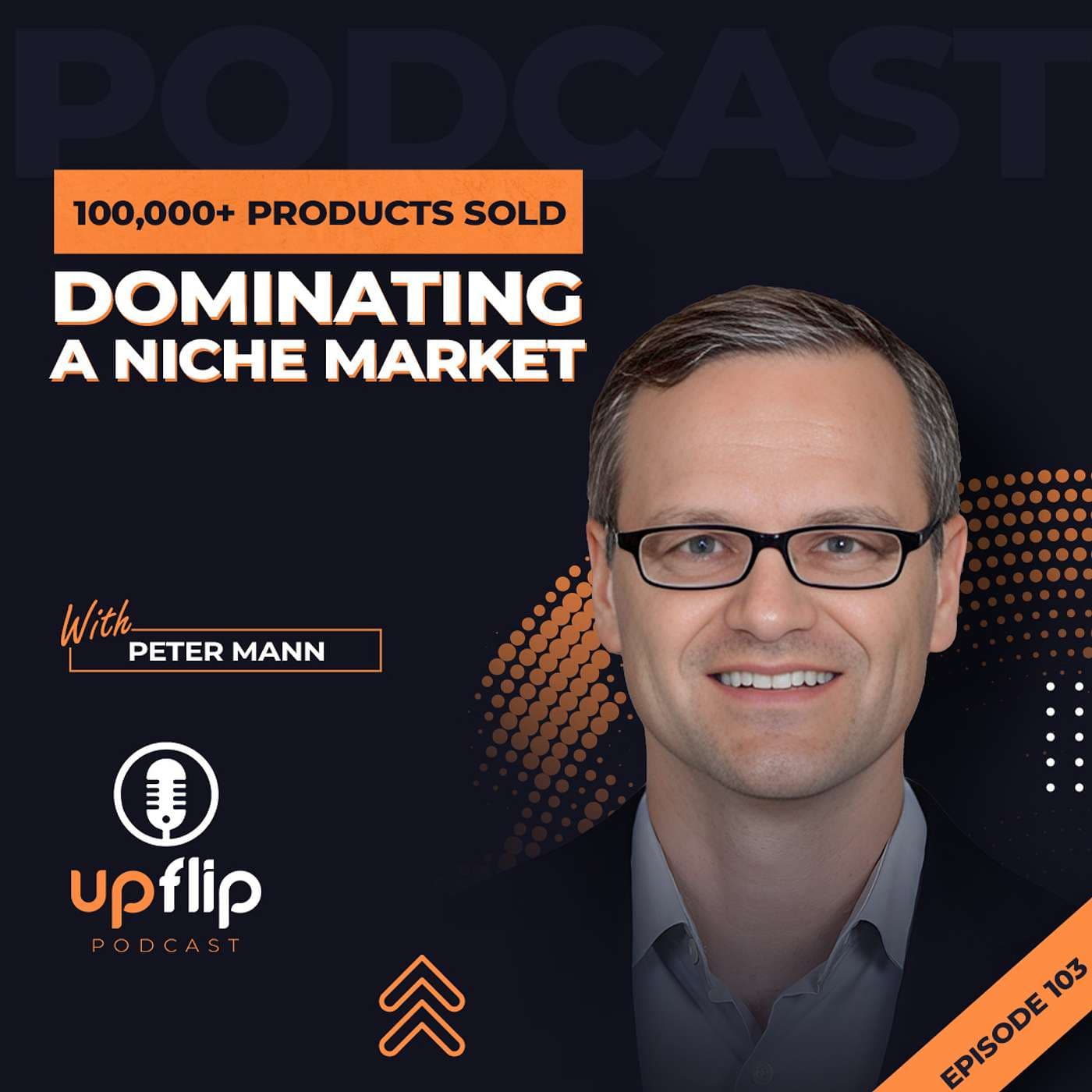
Episode Overview In this episode of the UpFlip Podcast, host Alex Freeman interviews Peter Mann, the founder of Oransi, an air purification company. Mann shares his journey of developing and launching Oransi's products, driven by a personal mission to help his son breathe better due to asthma. The conversation covers essential aspects of product development, manufacturing, marketing, and building a successful business.
Key Points
Background of Oransi
- Founding Motivation: Peter Mann started Oransi in 2009 after observing his infant son struggle with asthma. His goal was to create air purifiers that improve air quality without harmful byproducts like ozone.
- Previous Experience: Mann previously founded Alen Corp, another air purification company, which gave him valuable insights into product development and market strategies.
Product Development Insights
- Identifying Market Needs: Mann emphasizes the importance of understanding customer problems through market research, particularly using platforms like Amazon to analyze customer reviews and identify gaps in current products.
- Design Focus: A significant shift in Mann's approach with Oransi was prioritizing product design and emotional connection with consumers, moving away from a purely rational focus.
- Manufacturing Decisions: Mann discusses the strategy of reshoring manufacturing to the U.S. from overseas to ensure quality control and reliability, while maintaining competitive pricing.
Launching the Product
- Budget and Financing: Mann used proceeds from his previous venture to fund Oransi, with initial costs focused on product design and inventory.
- Challenges in Launching: Building brand awareness was crucial as Oransi was a new player in a crowded market. Mann leveraged his tech background and experience in product launches to navigate early challenges.
Marketing Strategies
- Initial Marketing Approach: Mann utilized the lower cost of digital advertising in the early 2000s to gain traction. He highlights the importance of emotional connections in marketing.
- Current Marketing Strategies: Mann now allocates 15-20% of sales to advertising, focusing on shopping ads for higher ROI, while also investing in brand awareness campaigns.
Customer Relations and Business Growth
- Word-of-Mouth Marketing: Mann underscores the power of satisfied customers as brand advocates, emphasizing the need for products to inherently encourage word-of-mouth referrals.
- High-Profile Clients: Mann shares how Oransi's air purifiers were adopted by institutions like the National Institute of Health, which enhanced brand credibility.
Personal Reflections and Advice
- Adaptability in Business: Mann discusses the challenges of managing change within a growing company and emphasizes the importance of open communication.
- Advice for Entrepreneurs: Mann encourages aspiring entrepreneurs to focus on understanding and solving customer problems rather than solely chasing financial success. He believes that passion for the product is essential for enduring tough times.
Key Takeaways
- Understanding Your Market: Conduct thorough research to identify customer needs and gaps in the market.
- Prioritize Design: Emotional connections and intuitive design can differentiate your product in a crowded marketplace.
- Build Strong Relationships: Nurturing supplier and customer relationships is key to long-term success.
- Leverage Word-of-Mouth: Create products that encourage recommendations, turning satisfied customers into brand advocates.
- Maintain Passion and Flexibility: Being adaptable to change and maintaining a passion for your work will help navigate the challenges of entrepreneurship.
Resources Mentioned
- [Oransi Official Website](https://oransi.com/)
- [Join UpFlip Academy](https://bit.ly/3YAr3GJ)
- [Franchise Guide](https://bit.ly/4aWuGvc)
Connect with UpFlip
- [YouTube](https://www.youtube.com/@TheUpFlipPodcast/)
- [Instagram](https://www.instagram.com/upflip/)
- [Facebook](https://www.facebook.com/upflipofficial)
- [Twitter](https://twitter.com/upflipofficial)
---
This episode provides valuable insights into the product development process, the importance of understanding customer needs, and the strategies for building a successful brand. Peter Mann's journey serves as an inspiring example for aspiring entrepreneurs.
Written by AI. May contain mistakes. Listen to the episode to check what was said.
Transcript
Automatic transcript. May contain errors.0:00Aranzi air purifiers are so effective that they're trusted by the National Institute of Health And they're still intuitive and affordable enough for everyday people to buy. That winning combination is why they've sold more than 100 ,000 units since their launch. I'm your host, Alex Freeman, and this is the Upflip Podcast, where we unravel how great businesses are built, how they're run behind the scenes, and how you can replicate their success. Today, we're joined by Peter Mann, founder of Aranzi. His personal quest to combat his son's asthma led him to start this thriving business. In today's episode, we'll uncover how he developed and launched his product from scratch, how he was able to bring the manufacturing to the U.S.
0:40from China, and the secrets behind launching a successful product. Let's dive into it. Peter, thanks so much for joining us. Yeah, thanks, Alex. Excited to be here. I'd love to get started with the story of the founding. So when and why did you start Aranzi? So I started the company in 2009, and it was really driven by an interest in improving your quality because my son, when he was an infant, really struggled with asthma and it left a pretty strong mark on me to try and help him and help people like him. I love that. So can you kind of give us what Aranzi brought into the world that wasn't there before and why that is important for people like your son?
1:19Yeah. So I started looking into it and what I noticed was there were certain triggers that would really set off his asthma, especially like allergens and things in the air. So I was looking to really provide solutions to clean the air, but do it in a safe way, such as not introducing ozone, which is terrible for your lungs, especially if you're an infant with asthma. And so I was looking to, you know, bring to market products that do good and, you know, actually help people and don't introduce any bad things that could adversely, you know, affect someone's health. And obviously you had with your son there, a very clear example of the need for your product in the market.
1:57But how did you verify it beyond maybe your own personal needs there that there was not just a need in your life, but also a need in the broader market? How did you kind of verify the potential success of the product? Yeah. So, I mean, in terms of maybe market research or really understanding market size, I think Amazon's a really good place for research. You can look at what's popular. You can read reviews from customers and see what they like and don't like. It's just a treasure trove of information to really understand what are the problems that need to be solved and how often are you seeing these problems stated.
2:32And so for me, that was really good insight to kind of highlight these are the things that we want to address. This also wasn't your first go around as the founder of a company. What did you do differently with Aranzi that you didn't do with your first company? Yeah, I think a much higher focus on design. I think when you purchase something, it's an emotional purchase. It's not a rational purchase. And design is really important in making that human connection with the customer. And also what we're doing differently now is we're focusing on reshoring and responsible manufacturing. And I think the trickiest part is doing so at a competitive price point really separates us from everybody.
3:10I want to ask about that design process for you. Like what was the process for the initial design and how long did it kind of take you to develop the product from start to finish? We worked with an industrial design company, so that definitely helps. So we went through a process over two or three months in working with them in terms of really what we were looking for. And, you know, when you design products, there's, you know, kind of the look and feel, the user experience and how you want someone to kind of feel when they see it. So we were looking more for like Scandinavian, cool, soothing, relaxing, Apple-like kind of a feel.
3:45I love that. And obviously the, you know, one thing that makes product-based businesses, especially like tech product-based businesses and then things where there's, there's a piece of technology involved, like the air purifier is that the kind of initial cost can be prohibited for a lot of people. So I'm curious what kind of that initial budget was to get off the ground and how did you go about financing that investment? Yeah. So I, you know, for, I guess if I just back up a bit, so my career, I spent 10 years working for a couple of fortune 100 tech companies. And then I started or co-founded an e-commerce business and did that for seven years.
4:18And I sold my half of the business and I used those funds to start the Uransi business. And really, I used about a couple hundred thousand of that to get started. And that went into really just design of the product and inventory is primarily what the funds were used for. What would you describe as the most challenging part of launching a product and how did you overcome that challenge? I mean, when you launch a product, nobody knows you. Like if you have a famous brand, everyone knows that brand. There's trust built into the brand. If you're just brand new to this, nobody knows you. And so it's kind of overcoming that challenge is really what's needed.
4:56And so, you know, at first I was just kind of doing almost everything myself with the exception of, you know, outsourcing or partnering with a design company for the design and hiring a couple of customer service reps. And then beyond that, it's really just planning out the process. But for me, you know, since I had the 10 years at the tech companies and in that experience, I learned how to launch products into the marketplace. And so that was really helpful going in with with that understanding. It was more of like on the job MBA for me. Here at Upflip, we are working tirelessly to build Upflip's first ever free course on how to start, run and grow a business.
5:31If you want to join the wait list to be notified of the launch, click on the link in the show notes. The course is coming soon. Peter, I want to go into this manufacturing process because these are high quality air purifiers at an affordable price. How did you go about striking that balance and keeping customer costs low without sacrificing quality? I think the key is focusing on one core function and not adding a bunch of features and bells and whistles, which drive up costs. And if you've been selling a product for a while, you realize the more features you have, the more things that can go wrong with it.
6:05And then there's post-sale support. And so keeping costs low, it is really just, you know, make the product focus and just do one thing. Like the Google search bar is just a simple, like a search, like there's nothing on the page. Whereas, you know, YouTube back in the day or who they competed with was just, you know, all kinds of stuff in a search bar. And Google just pretty much destroyed them because if you do one thing, there's a perception that the results are better. And, you know, that's kind of been our focus and it helps to keep costs down. The other thing is to really design cost out of the manufacturing and assembly process is really key.
6:44One thing that as an extension of that, you know, being focused on one key thing on the product is that the product itself, the air purifiers are very user friendly. How did you make sure that you kept the customer experience at the forefront of the design process? Yeah. So for these products, I mean, we're users of the products. And so we just simply built products that we wanted to use since, you know, we wanted to build it for people like us. You know, when you're building it that way, you're not pulled in different directions. It's, you know, it's like, no, this is how we're going to build it because this is what we would want to solve our problem.
7:15Looking at the manufacturing process, as you were going through selecting suppliers and partners to work with, how did you go about that process to make sure that you were getting that cross-section of high quality at the lowest kind of possible cost. Yeah, I think a lot of it in working with factories is just developing really good relationships. And so I spent a fair amount of time in China where we were making a lot of it, just visiting factories and seeing on the ground, like how things went. And it's pretty interesting when you're over there, you could see your production line and they're like, oh, we're making these for Home Depot or we're making these for You can just see this stuff and you know what factories are making, what for whom.
7:56And we also worked with a contract manufacturer in Connecticut and developed a really strong relationship with those folks as well in terms of making some product in the U.S. But I think that's really the key because you can work through a lot of things if you have a strong relationship. You can get better payment terms. It's really about building trust. And I think that's the key. It's difficult to do if they don't trust you and you don't trust them. You're also, I understand, in the process of opening a new factory in Virginia. Before we kind of dive into the process of opening a factory, can you talk through the decision to open that factory in Virginia as opposed to continuing with offshore suppliers and manufacturers?
8:32Yeah. So during COVID, since that's an airborne illness, the air purifier market just kind of exploded and our sales and pretty much everyone else's sales increased. And in that process, we merged with an electric motor company in Virginia. As part of that process, decided that we were going to purchase a manufacturing facility and just leverage that motor technology to reshore manufacturing. So that was really what kicked all of that off. And what's great about it is it gives us control of the total supply chain since we're making the motors and the machines and selling and shipping directly to the end user.
9:07We're really vertically integrated, which is great from a cost and a control standpoint. Now, how do you go about planning that out as a business owner, as a company to kind of bring the manufacturing process, not just, you know, back reshored, but in-house? Yeah. I mean, so we already have the marketing and sales and distribution functions working. And so it's kind of making the product versus purchasing it from a contract manufacturer. And so the biggest challenge in all of this is really just the lack of supply chain in the U.S. like you have in China, it's somewhat simpler to manufacture a product in China.
9:43And so we've, you know, we spent a couple of years figuring it out because there's no playbook for that and just takes effort. But it's kind of a operation that we ran in parallel to the existing products that we were selling from the contract manufacturers. It just makes it so much easier when you have an already existing business to reshore manufacturing versus just starting with reshore manufacturing. And you mentioned earlier when you launch a product that one of the first challenges is that nobody knows you. So I guess I want to kind of shift us towards the marketing conversation. How did you go about initially connecting with customers and building that brand awareness when you were first launching the product?
10:20Yeah. So in 2009, it was very different. Facebook had only been out for two, three years and Google ad costs were quite low and the competition wasn't there. So it was a much easier time to get into e-commerce, online selling, or manufacturing and selling products. And so today it's definitely a higher curve, but back then really just benefited from super low PPCs. I remember in the early 2000s, it was five cents a click for pretty much anything on Google. It was so cheap. And obviously that's not the case anymore, but we just kind of leveraged the, you know, the lower ad costs because the big brands really weren't focusing on online marketing at that time.
11:01So we, you know, took advantage of the new technologies. What advice might you be able to offer our listeners who are listening now and maybe looking to launch their first product now that is different from the environment in which Aronzi launched in? It's about making a connection with the customer. You know, I think you want to decide, you know, what problem are you solving for the customer? Because if you're really solving a problem that no one else has or is, then you really just market that to them. But understand that they're not buying in a logical, rational way. You have to connect with them in some way emotionally, you know, to want to purchase your product.
11:34I just saw the Juul documentary. You've seen that, but they talked about how they started. It had some struggles. And then at one point it just kind of took off and, you know, word of mouth is the best way. And the best way to do word of mouth is to build marketing into your product. And that stems from really understanding the customer and what their problems are. Now that you are a well-established company, what is the typical advertising spend look like for you in a typical month and where are you kind of finding the best ROI? Yeah, it's really competitive. I mean, for us, we're probably similar to other brands or top brands in our market in the 15 to 20 % of sales on ad spend.
12:13The shopping ads tend to be the best because the customer can see the product, they can see the price point. They have higher intent to purchase the product. And so, you know, those work pretty well. But what we're starting to spend more time in is really more awareness type campaigns to reach a broader audience because those are lower costs. But again, it comes down to having a strong story that connects with the customer for that to work because it's even though it's lower cost, it's lower conversion rate. And so you have to kind of balance those two things. You also have some very high profile customers and locations, including like the NIH, using Aranzi air purifiers.
12:49Can you talk about how that kind of came about and what advice you have for connecting to some of those high profile customers for a business? Yeah. I mean, for that one, I didn't realize you were even purchasing from us. We had a customer that was on, I think, Facebook and said, Hey, I saw the Dr. Fauci documentary and I saw the Aranzi product in his conference room where he was doing the TV interview. And then I went online and looked at our orders and it's like, wow, these guys have been buying every year since 2017, they'd just been playing with a credit card. So we didn't know that they were purchasing from us.
13:21So that was kind of a pleasant surprise. But I think it's, again, you're selling to people. And so you have to present a human story. Don't focus on tech specs or speeds and feeds and technical engineering type things. Focus on what's going to connect with the shopper and make them want to buy it. So this is going to bring us to a section of our show that we call our Fan Blitz questions. These questions come from our YouTube community. Listeners, you can head over to youtube.com slash upflip and join the community and post questions to future podcast guests. So Peter, I've got six questions here.
13:55We're going to try and get through in about 60 to 90 seconds. Are you ready? Sure. Let's do it. All right. First one here. Delbamore wants to know, how did you find reliable people to work with both in your team and your vendors? You know, most people that find reliable people just leverage their network and leverage who they know and go off of recommendations. Mark Regan asking, what makes you stand out from your competitors? I would say challenging the status quo in reshoring manufacturing and doing it in a responsible way at a competitive price. What are the unwritten rules of your workplace?
14:29The unwritten rule is actually write everything down. And so it avoids a lot of confusion. And if it's not written down, then, you know, in some cases it doesn't exist. And so, yeah, write everything down. Any nicknames for customers or co-workers that you can share on the podcast? I mean, this isn't really, I mean, I guess this could be for customers, but it's really more of a PR term, which is Henry, which is a certain demographic, which is high earner, not rich yet. And of a, you know, a key group for us. Tell me about a time when you had to give someone a difficult task. How did they end up handling it?
15:07I mean, for me, it's hard to give a specific example, but it tends to be around communication issues. And when there's uncertainty or ambiguity, that creates a lot of stress. And to handle it, I just say there's no stupid questions. Just make sure you understand what we're looking for and when and just ask questions if anything is uncertain. If you could change one thing about your business, what would it be? I'd like a way back machine to go back in time to when Google was five cents a click. I mean, really nothing I would at this point change, you know, in our business. I'm really excited where we are, but you know, a kind of hindsight is 2020 and it would be kind of nice to go back and play this game again.
15:45That's going to do it for our fan blitz questions. If you're a returning listener, let us know what you think of the show by leaving a rating and a review on Apple podcasts or on Spotify. It means the world to us because it helps other entrepreneurs like you find this show and unravel how great businesses are built. Peter, what's the most stressful part of running this kind of business and how do you manage that stress? Yeah, I mean, I think the hard part is really just managing change because you have to be flexible and you have to be willing to change. And sometimes when there's change happening and if communication's not really good, some folks could get offended or get upset.
16:20And so it's really trying to be attuned to that and, you know, navigating that because change affects, you know, almost everyone in an organization. And, you know, kind of what I do is really just to try and stay centered is just kind of the healthy habits of just exercise, getting proper sleep, eating well. You know, I have a great relationship with my wife, which also really helps. What are the core values that Aronsi stands for and how have those impacted the way you run and grow the business? Yeah, I would say responsible manufacturing, monitoring, reliable, safe and long lasting and accessible in terms of accessible products.
16:57You mentioned the merger with Avamor Technologies. Why did you decide that that was the right move for the company? During COVID, while the industry kind of blew up, gosh, there were people coming out of the woodwork to enter the markets or anyone with any kind of brand and any kind of appliance was putting their name on Chinese imports and entering the air purifier market. So it really became oversaturated. And merging allowed us to do two things. It allows us to really have a competitive advantage from a product standpoint, but also to reshore manufacturing, which is something that I've always wanted to do.
17:30I've always had an interest in bringing manufacturing back. I remember when in the 70s and 80s, a lot of jobs were lost overseas. And so it's pretty rewarding to be able to kind of flip it back the other way. What are the big drawbacks or challenges that come from a merger like the one you just went through? Yeah, I mean, it's merging cultures is the biggest thing. You know, you kind of, when you go into it, at least I've never done this before. It was like, oh, this should be easy. We just kind of merge together and everything's going to be great. And then as you get into it, you find out your way of doing things is different than their way of doing things.
18:05And, you know, how do you get it to our way of doing things? And it's just, this is kind of a process. Talk me through kind of the benefits of merging with another company, Maybe things that go beyond the obvious that you already talked about, being able to reshore the technology. For us, it was addressing some of the issues that kind of sprung up during COVID. There was supply chain issues. There was shipping issues from overseas. Just not having full control over the supply chain. That was a big one. And being able to manufacture the product, you can really fine-tune it. It's not just you go through a development process and then a contract manufacturer is making your product.
18:42you can continue to improve it and make it better and figure things out in the process or come across some innovations you never thought of. And so to me, it's just opens up so many more opportunities. Are there any core skills that you wish you developed earlier that might have had an impact on your business if you had developed them earlier? I can't think of anything that necessarily would have a big impact on the business. But one thing I just, when I reflect back on like my younger self was I used to, when I would get an email, I would immediately respond to it. And now I've kind of learned to take some time and kind of think it through.
19:17And, you know, some things can wait a day. Sometimes it's better to think something through and let your subconscious work at it for a bit and then come back with a, you know, a succinct answer that, you know, is the best response. Okay, well, then I guess I have to ask this follow-up question. Maybe this is more personal advice that I'm looking for, but then how do you deal with the email response anxiety knowing that you have an email to respond to while you're taking the time to thoughtfully think about the answer? Yeah, you have to be okay with letting it sit. I don't know. I used to get it and I just want to answer it too, so I don't have to burn any brain cells thinking about it.
19:51But I think you get to a point where you kind of realize or you're kind of okay. Like, this can wait. This isn't like the house is on fire kind of a thing. And I think if you can give a better response, it's, you know, it's worth spending a little time just to do that. As long as the other person doesn't have an expectation that you're going to get back immediately. What's your favorite failure or setback as you look back and reflect that because you went through that, it ended up setting you up for greater success? We had a pretty large bid last year that, you know, I felt pretty good that we were going to win and we didn't win it.
20:25But in the process, it made us look at our product a little bit differently. And we made some product changes, which now is starting to bear fruit, which is pretty fantastic. And I think if we hadn't have gone through that painful process, we probably wouldn't have made the changes to the product. And so now going forward, we're really set up a lot better. You needed to hire more than 100 workers for the new factory. how did you approach that kind of large scale hiring and what advice can you offer to somebody who might be about to face that challenge? Yeah. I mean, so I mentioned earlier, I worked for two large Fortune 100 companies in the 90s and early 2000s.
21:06One of those, we were hiring at some points to 300 people a week. And so I kind of come from that background. And so for me, it's not overwhelming. And there's also some tools in place that you can use to really identify an individual's strengths and weaknesses and alignment to a job that kind of help the interview process to really ensure that you're putting the people in the right seat. And so it's really just about having a process to do that. And we're really just in the midst of that process as we start to manufacture. Hiring has been a challenge for a lot of companies over the last couple of years.
21:43So I'm curious what your strategy has been to attract employees to your team and then ultimately keep them on the team. Yeah. I mean, I think you just need to be a good person and treat people like you'd want to be treated and just, you know, have a place where people want to work. And then people naturally will gravitate to that, especially if you're growing, you know, that just attracts people because, you know, they want to grow with what they're doing. And so if you can, you know, kind of align all of those things, it's somewhat simpler to find and hire employees. What is the biggest challenge to leading a company with a large workforce?
22:17What kind of strategies are you employing to both communicate effectively and also, you know, make sure that the company culture is where you want it to be? Yeah, I think our biggest challenge is we've got, you know, a number of folks at our factory, but then we also have some folks that are remote and it's trying to make everyone feel like they're part of one team. The communication is the biggest challenge. And especially when, you know, you've got people that can talk to one another in the hallway and you've got other folks that are, you know, working from home, it's a bit of a different environment.
22:45And so just doing a lot of video meetings. We use Slack to kind of coordinate, you know, communications and really just, you know, kind of have an open communication with no hidden agendas is really important. We don't want anything to fester people to get upset about anything. And so it's really just comes down to just open communication. Kind of taking us back to the revenue and financials, both of the startup phase, and then I guess ultimately we'll start talking about where you're at today as well. But looking back at the beginning, how many air purifiers did you need to sell to recoup the initial investment and how long did it take you to reach that point?
23:19Yeah. So, you know, back then the advertising costs were quite a bit lower. So good part of the investment was in inventory. So I would say, you know, the first thousand units we brought in, we really just needed to sell the first 500 to break even, which took about two months. And so it was a pretty quick upramp to get started. You know, obviously one of the factors there being that the advertising costs were so low, but can you talk about kind of the best strategies you could offer to increase sales in the early stages of a new product? Yeah. I mean, I think it goes back to what your product is and how you developed a product.
Read the full transcript
23:54I think there's two ways to go about it. It's, you can start with the customer and understand what their problems are and work backwards to try and come up with a solution for that. Or you could take, this is the best thing we can make. And then how do you make people want it. It's two different perspectives, but it's really around the, you know, product development and the marketing that come into play there. Because ultimately, you need to sell your product or service to someone and you really need to understand what they're going through, you know, in order, you know, for them to want it. What are revenues looking like kind of in an average month today?
24:30What profit margins are you operating on? Yeah, I mean, so I guess in the past, we were more in the 15 to$20 million a year range, but we're kind of in a strong growth kind of now and going forward. And in terms of margins, we're pretty similar to our competitors, which are more in the 40 to 50 % gross margin range. And, you know, what's exciting for me is that we're going to be able to do that with making the product in the U.S. and being similar margins to the guys making in China. What would you say have been kind of the main factors in your growth? And what advice can you offer to a business owner who's listening to what you've done and wants to start scaling their revenue like you?
25:08Yeah, I mean, you need customers. And the best case scenario is you get word of mouth, which is, you know, you can think about it as turning your customers into your sales force is kind of a multiplying effect. But maybe a more like tactical thing that you can do is to really just get reviews from some key influencers. You know, who are the folks that if this person recommended your product, this could really move the needle in how could you get them to want to talk about it or review it and do a video review or an online, you know, kind of a written review. Those kinds of things can be really influential, especially if it's someone with some level of authority.
25:44How has your definition of success changed throughout your career? For me, I don't think it really has, you know, in terms of like business success, I, you know, business is an infinite game and the goal of an infinite game is to keep playing. And so it's, you know, it's just kind of staying in the game. And I think, you know, for me, it's ultimately trying to make a difference and improve the lives of other people. What's been your proudest moment as a business owner? I don't know. This may sound silly. I like reading the reviews that customers have. And when you see where it's really improved their lives, that feels good.
26:19And it kind of indicates that, you know, we're kind of doing the right things because that's really, I think what matters. What advice can you offer for someone who is listening to this podcast right now, they are about to get started on their journey as an entrepreneur, and all that they know is that they want to make a million dollars? Well, I would focus on the customer problem and not making a million dollars. I mean, I grew up with, you know, really not much money, and money has never been the driving factor for me. To me, it's just kind of more the experience and having fun and playing the game.
26:50And, you know, I've kind of learned over time, it's really the customer that controls your destiny. And so, you know, the better you can take care of the customer, the better off you'll do. If you could pick the one thing that people take away from this interview, what would it be? I would say find something that you like to do because inevitably you're going to hit tough times and you need to be able to stick with it. And if you really don't like doing what you're doing and you're not fully all in on it, it's going to be tough to keep going when you hit tough times and everybody hits tough times.
27:21It's just kind of, it's kind of the way it is. And so, So if it's something you're truly passionate about, those are the kind of folks that tend to be able to power through. What's your favorite business book and why? I would say this is Marketing by Seth Godin. He talks a lot about building marketing into your product because advertising costs are just so expensive and you really want people to talk about your product. That's how you get it to spread and that's how you get it to sell. Peter, where can people either connect with you and or learn more about Aransi? Sure. Our company website, Aronsi, is O-R-A-N-S-I dot com.
27:55And I'm on LinkedIn, Peter Mann, M-A-N-N. That is going to do it for this episode of the Upflip Podcast. Listeners, if you like this episode, make sure you check out episode 87, linked in the show notes, which has the story of Rising Tide Car Wash, another business story inspired by a father's love and concern for his son. And don't forget to rate our show on Apple Podcasts or Spotify. We'll see you next week, Peter Mann of Aronsi. Thank you so much for joining us. Yeah, thanks, Alex. So
From the publisher
Peter Mann started Oransi to help his son breathe better. Now, their air purifiers are sold around the world and bring in a six-figure monthly revenue. He’ll explain how to develop and launch a product the right way in this episode.
Oransi isn’t Peter’s first business. He was also the founder of Alen Corp, an air purification company he built to a successful exit. He drew on that experience when he was developing his first product launch for Oransi. Today, Oransi’s air purification technology is renowned for its intuitive performance, used in high-profile locations like the National Institute of Health.
In this interview, Peter will share how to launch a product that dominates niche markets. You’ll hear how Peter developed a product that solves customers’ problems, how he used word-of-mouth advertising to grow his brand, and his advice for other entrepreneurs who want to develop and launch a product from scratch.
Resources
- https://bit.ly/3YAr3GJ - Join UpFlip Academy and launch your business today
- Oransi.com - Learn more about the company at their website
Ready to be your own boss without starting from scratch? Grab our FREE Franchise Guide and unlock the secrets of proven business models that have already created thousands of success stories.
Connect with UpFlip:
- On Youtube
- On Instagram
- On Facebook
- @UpFlipOfficial on Twitter
For more insights to start, build, or grow a business, check out the resources on UpFlip.com or head to the UpFlip YouTube channel to see more interviews with business owners and experts.
Thanks for listening!


