
In short
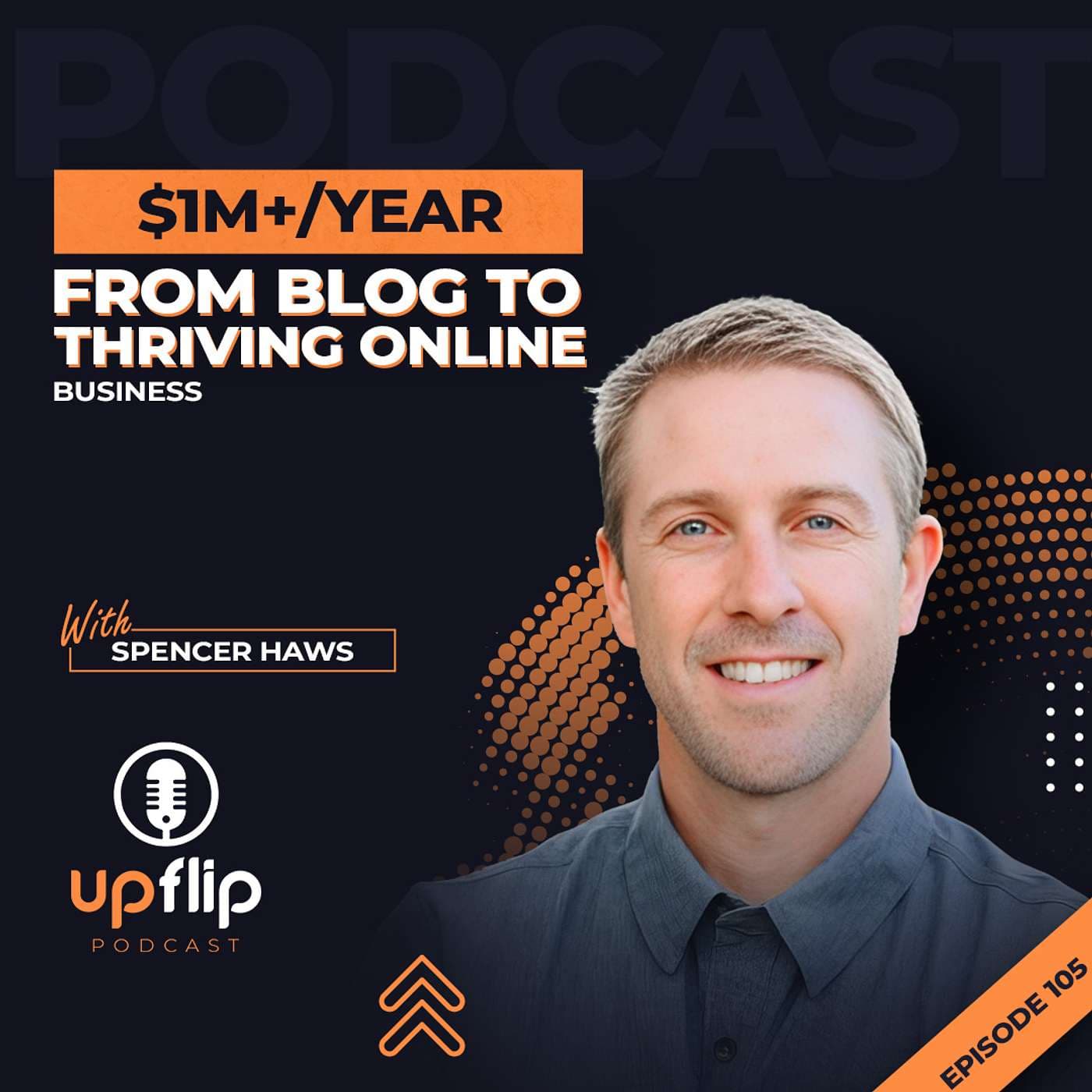
UpFlip Podcast Episode 105: How to Start a $100K/Month Online Business
Overview In this episode of the UpFlip Podcast, host Alex Freeman interviews Spencer Haws, the founder of Niche Pursuits. Spencer shares his journey from a business banker to a successful entrepreneur, detailing how he built his online business to generate over $100,000 per month. The conversation focuses on practical strategies for starting and scaling an online business, identifying profitable niches, and the importance of understanding customer needs.
Key Takeaways
Spencer Haws' Background
- Initial Career: Spencer started as a business banker and had a longstanding desire to start his own business.
- Transition to Entrepreneurship: In 2011, after successfully building several niche websites, he launched NichePursuits.com to document his journey and share insights.
Business Model and Revenue Streams
- Diverse Revenue: Spencer's business includes multiple revenue streams such as:
- Affiliate marketing
- Display ads
- Software sales (Longtail Pro, Link Whisper, RankLogic)
- Sponsorships and community engagement
- Growth: Spencer shares that his display ad revenue alone reached $30,000 in a single month, with software tools being the most profitable.
Starting an Online Business
- Initial Cost: Starting a blog can be inexpensive; a domain name costs around $10/year, and hosting can be as low as $10/month.
- Key Strategies:
- Start with content creation and build an audience.
- Focus on areas where you have knowledge or passion, as this can lead to greater success.
- Conduct thorough competitor analysis to identify opportunities.
Overcoming Challenges
- Fear of Leaving a Steady Job: Spencer discusses the fear he faced when quitting his banking job, emphasizing the importance of having a financial buffer and supportive family.
- Mistakes: He reflects on the mistake of not delegating tasks sooner in his business, which led to bottlenecks. Hiring writers and a podcast host allowed him to scale effectively.
Identifying Profitable Niches
- Market Research: Spencer stresses the importance of researching competitors and understanding the market before diving into a niche.
- Effective Content Creation: He recommends producing clear, concise content without fluff to engage the audience effectively.
Advice for Aspiring Entrepreneurs
- Find Your Passion: Pursue niches that align with personal interests and skills, as this leads to sustained motivation.
- Genuine Connection: Build trust with your audience by being authentic and transparent about successes and failures.
- Iterate and Adapt: Constantly seek feedback from your audience to improve products and services.
Tools and Resources
- Recommended software and tools for affiliate marketing and content management:
- Ahrefs
- SEMrush
- SimilarWeb
Final Thoughts
- Action Over Analysis: Spencer encourages listeners to take action and start their businesses rather than overanalyzing.
- Flexibility: Spencer emphasizes the importance of building a business that enhances personal life rather than detracting from it.
Conclusion Spencer Haws' story serves as a motivational guide for those looking to embark on their entrepreneurial journey. His insights on niche identification, market research, and operational efficiency provide valuable lessons for aspiring online business owners.
Connect with Spencer Haws
- [Niche Pursuits Podcast](https://nichepursuits.com/podcast)
- [Niche Pursuits Newsletter](https://nichepursuits.com/newsletter)
For more insights, visit [UpFlip](https://www.upflip.com) for additional resources and episodes.
Written by AI. May contain mistakes. Listen to the episode to check what was said.
Transcript
Automatic transcript. May contain errors.0:00Spencer Hawes has launched dozens of online businesses since he created his first website in 2006. from mobile apps to WordPress themes to selling pillows on Amazon FBA. He's just about done it all, and we want to learn from his experience. This is Alex Freeman, and you're listening to the Upflip Podcast, where we uncover how great businesses are built, how they're run behind the scenes, and how you can replicate their success. Today, I'm talking to Spencer Hawes about how he started Niche Pursuits and grew it from a blog into a seven-figure online business. Tune in to hear what the best niches are for building an online following in 2024, and what Spencer would do if he was to start from scratch today.
0:40Spencer, welcome to the show. Thank you so much for joining us. Yeah, Alex, it is great to be here. I'm excited to share with the UpFlip audience things that I've learned in my business. So I guess to get us started, can you give us a little bit about your background and the business itself? Yeah, absolutely. So first of all, I'm a father. I've been married for almost 20 years now. I have four children. But business-wise, I started out as a business banker. I tried a lot of different things on the side, but eventually I started NichePursuits.com, which is my current business. It is a blog, it's a podcast, a YouTube channel, kind of a media brand there.
1:12In addition, I also have two WordPress plugins that I generally sell to that Niche Pursuits audience. I have LinkWhisper, which is an internal linking plugin, and then RankLogic, which is a newer plugin that is an analytics tool that helps you find sort of keyword opportunities and dive into your traffic stats. as well. And then I always like to say I leave 20 % of my time to kind of do other side hustle. So I'm always experimenting with fun things. Currently, I'm looking at the Amazon Influencer Program, trying a faceless YouTube channel and doing other things. But that is me in a very quick nutshell.
1:45I love it. I want to go back to that time in 2011, where you got started with Niche Pursuits. Talk to me about what you were doing in that moment before Niche Pursuits got started and why you decided to kind of move into that direction. My business story really spans, a number of years. I was in business banking, you know, in a traditional career, but I always had the itch to start something. And so I tried a lot of different online businesses. I tried building websites that didn't quite work out. And we can jump into that here later on. But eventually, I stumbled onto creating niche websites, small websites that would rank quickly in Google.
2:21And so really between 2009 and 2011, that's what I was doing was building a bunch of niche websites. And those combined started making more than my day job as a business banker. And so I quit my job. And when I quit my job, that's when I started Niche Pursuits, a blog to document my journey of building niche websites, what I was doing online and just share with the world. That's really kind of what I was doing right before I started Niche Pursuits. From that kind of former life of a more traditional job, what skills or experiences have you found the most useful for you as you've grown Niche Pursuits?
2:55Yeah, you know, the ability to do competitor analysis, to look at who else is out there, what they're doing, and figuring out how you can be a little bit different is just a very critical skill. Whether that's deciding what website to start or what niche to go into, you need to be looking at who's out there, what are they already doing, and try to figure out, hey, are they making any money? And can you make more money? And so a lot of research skills have just come in really, really handy for me. And I would just say anybody out there, that's one of the most vital skills that you can develop is to figure out, do I have an opportunity here before you actually start the business?
3:31What niche was your first online business in? My very first website was in the personal finance space. It was kind of a budgeting blog, something that I was well-versed in. I graduated in finance. And so I was sharing a lot of personal finance tips. And I can't say that it was resounding success because I didn't make very much money. But it's what led me on to my journey because I was writing a lot of content, putting it out there in the world, and nobody was reading it. And so that's what made me realize, okay, I need to figure out how to get traffic to my site. Went down that research rabbit hole of figuring out how does Google rank websites?
4:11What is SEO? And that's what led me to my next project to try to actually rank in Google. And it kind of went from there. But yeah, personal finance, budgeting, that was where it all started. With your experience from that first one that wasn't doing as well as you would have hoped to then building more and more sites that were doing better and better and now to niche pursuits as kind of that ultimate culmination of the blog experience. What does it cost to start a company in this kind of space? And what are some of those main expenses that someone that is starting this kind of business should be planning for?
4:42Ah, boy. So let's say starting a blog, and I do want to sort of give two different business avenues here. But if you're just starting a blog, a traditional content business, the costs are very low, right? You need a domain name that's maybe$10 a year. You need hosting that's maybe$10 a month. And then beyond that, it really can be just you, right? Putting in all your time, writing all the content, maybe starting a YouTube channel. A lot of it can be done very inexpensively. I've gotten to the point now where I'm outsourcing or I've hired a lot of that because I'm producing a lot of content. So it's much more expensive, I guess you could say.
5:17There's a lot more cost, But it doesn't have to be a lot. I mean, really, for less than$20 a month, if you are doing all the work yourself, you can start a content business. When you made that jump from having a day job with some side hustles to going all in on the businesses of those side hustles, what was the biggest fear that you had making that leap and how did you overcome it? Yeah, the biggest fear that I had really was saying goodbye to my day job, right? Saying goodbye to that regular paycheck. I had been working in the banking industry for about eight years. And of course, I am married with children.
5:53It was a huge fear that, hey, my business is not going to be able to pay the bills. It's doing well now. But in six months from now, is it still going to be doing well? So a couple of ways that I overcame that is one, well, I waited until my income from my business was making more than my day job. And then I also saved up six months of savings so that when I quit, I knew I had at least that buffer. And then I got a lot of support from my wife that she was very supportive and very willing to let me sort of go this entrepreneurial route. So she helped me kind of overcome that fear in a way, at least by being supportive and just saying that, hey, we should do this.
6:29We should take this shot. When you first started Niche Pursuits, what were the initial goals for the site and kind of how long did it take for monetization to come? from Niche Pursuits? Yeah, so the main goal of Niche Pursuits was really just to share my journey. I didn't honestly think that NichePursuits.com itself would become a large business because remember, I had this portfolio of niche sites and that really was my business. I had all these dozens of other sites that were making great money. And then I started Niche Pursuits kind of as a way to connect with the online world, to share what I was doing and to kind of build an audience because I did at that point when I quit my job, I did in the back of my head have an idea for a software tool, which later became Longtail Pro, a keyword research tool.
7:13So I kind of knew even before I created that software tool that, hey, it would be a good idea to build up an audience. And so that was really my first way to monetize niche pursuits, which came about, I want to say, seven or eight months after I started it. I was blogging, building an email list. I was building a community behind the scenes. I was also building this software tool that wasn't available for launch for another seven, eight months down the road. And so that I think is probably the first way that I made money. There may have been a few affiliate commissions in there from content that I was writing, but mostly it came when I launched Longtail Pro.
7:50And then talk me through kind of what that revenue growth has been for niche pursuits, like seven or eight months down the line, the first kind of real monetization. And then like, where does it go in the second year? and like how has it grown since? The first year to speak of, like I said, there wasn't a lot of money at first. When I launched Longtail Pro, I think my first month it did like$2 ,500 a month and then it slowly grew from there. Within a year of launching Longtail Pro, it might've been like, you know,$50 ,000 for the year. And then within the second year, I think it hit six figures just barely.
8:24And then it grew from there and right. And so that's of course talking, you know, long time ago. And now today, I've actually grown the blog itself outside of just software tools, right? I've got revenue streams, I've got display ads, affiliate income, sponsorships, and then I have a couple of other software tools. I will just say that from display ads alone, last month, Niche Pursuits did$30 ,000 in display ad revenue just from the content. And then on top of that, there's sponsorship revenue, there's affiliate income, and then And my biggest source of revenue is software tools, Link Whisperer and RankLogic on top of that as well.
8:59So you've kind of made some mention of some of the various services and things that Niche Pursuits offers. So I want to ask kind of more specifically, what are those kind of core services that Niche Pursuits is offering? And why did you add those services? And why is that kind of where you focus? Yeah, for whatever reason, I've been an idea guy. I come up with these software tool ideas. I like to think that that's just the creative side of my brain. I'm finding solutions to my own problems and they're problems that I know my audience is going to have. And so my main things that really has brought in the revenue for the business has been software tools.
9:33And so I built and sold Longtail Pro. I sold that business in 2016. I tried a couple of other software tools in between there. But then in 2019, I launched Link Whisper and that has grown tremendously and has done very, very well. And then recently I launched RankLogic as well. And so I have two WordPress plugins, both of them. And again, I focus there because one, I just tend to fall on these ideas that work really well for my business and that I know will be solutions to problems that my audience also has. And then their high profit margin, right? It's something that you can invest. And sometimes it's a lot of money in developers, but you can kind of invest once and then sell an unlimited number of copies, right, of the software tool.
10:14And so that's where I've landed as sort of the core of my business. But as my content side of the business has grown as well, right, that's also a lot of additional revenue. But really, the software tools are sort of the only core offering that I have for my audience. I don't sell any courses. I don't have any other information products or anything like that. It's all either content or software that I sell. What's the biggest mistake that you made when you started Niche Pursuits? And what did you learn from that? You know, I think the biggest mistake that I made was not trying to replace myself from the day-to-day operations of the business sooner.
10:49There's a lot of things that I just hung on to. I was the name and face of the blog and the podcast and the YouTube channel for about 10 years. And it wasn't until the last couple of years that I finally hired more writers to scale the content of the blog. And I gave some numbers so people know sort of just display ad revenue, what's that's doing now. But I've gone from being able to write maybe four articles a month myself to now over 100 articles in some months with my team of writers. And so by removing myself, I actually, you know, I write less, I no longer host the podcast, I've hired a podcast host, and some other areas that I've replaced myself that I do less work now, but we've been able to scale the business much bigger because really I've removed myself as the bottleneck.
11:36And so that was kind of the biggest mistake that I made was not doing that sooner. Listeners, if you wanna access money-making ideas is usually only whispered around in VIP circles, join over 10 ,000 readers of the UpFlip newsletter and start receiving our guide to avoiding the most common entrepreneurial traps. Sign up at upflip.com slash newsletter or click the link in the show notes. Now, Spencer, a lot of our listeners are, you know, people in the beginning stages of their entrepreneurial journey, probably looking for where they should go with their online business. And so listeners, make sure you stay tuned here to hear Spencer's advice on the best niches to build a following today and a lot of advice that's about to be forthcoming.
12:13But I want to start with profitable niches. Like what are the most profitable niches for an online business in your experience and or how does somebody kind of go about evaluating what's going to be the most profitable use of their time and energy? Right, and I think that's the key is finding something that's going to be the most use of your own time and energy. There's not one blanket answer, right? There are very profitable things like finance and other product-based businesses, But I wouldn't necessarily recommend people go into that. I think people need to find something that they are interested in or very skilled at.
12:46And that's probably going to be the most profitable for you, right? And so if somebody has, for example, gosh, some hobby that they are really good at, maybe it's playing piano, for example, that's going to probably be the most profitable for them, that particular niche, because they can go in and create products and do other things and stick with it longer than if they just pick something based on the money. How important is that knowledge and or passion about the niche that they're looking at? If somebody has, you know, two different things, it's like, oh yeah, I kind of like these things. Like how important is it to do market testing versus, oh, I'm actually most passionate about X?
13:27Yeah, I definitely think you want to go with where you have your knowledge or your passion. You do want to still do some research to make sure some money is being made there. right? If you are just passionate about underwater basket weaving, you know, maybe there's not a lot of money to be made there. And you just might have to go into your second favorite passion, right? So I do think passion or interest or knowledge is important. But you need to do some competitor research. A lot of businesses online share how much money they're making, or you can see search volume, do research on what competitors how much traffic their website is getting how many followers they have.
14:03And you can kind of deduct, okay, there's some money to be made here. and I'm passionate about it, that's probably where I should go. I want to kind of tap into your research and experience with market research because, you know, I think a lot of people can look at the various checklists or like, look at this thing, but then looking at a bunch of numbers that they don't necessarily have context for. So I'm just curious what advice you'd have for somebody who's brand new to market research about how to go do that market research and also benchmark some of those numbers and what they mean. Yeah.
14:32So if you're considering a niche to go into, I would try and find three to five direct competitors, people that are already doing what you're planning on doing. And that's a good thing, by the way, is that if there are other websites or businesses out there doing what you're considering, that means there might be opportunity. And so you take those three other websites and then you dive deep using whatever tools or sleuthing online you can do, right? So that might be looking at how many followers they have on social media, how active is their YouTube channel, all these things to gauge, is there an active audience there.
15:04And then you can use tools like either Ahrefs or SEMrush to dive in or similar web, which is a free tool to look at website traffic, you can see how much traffic is their website getting how much search volume do certain keywords, certain topics within their website, how much is that getting to start to engage either, yeah, is there an audience here? Is there an opportunity here? Or back into some numbers of can I make some money here, right? If you see, all right, I think they're getting 100 ,000 visitors a month. And if 1 % of those visitors buy my information product that sells at$100, right, that means I can make X dollars per month, do some back of the napkin math based on those competitors.
15:44So let's say now somebody has found the niche, they know what they're going to go do. what are some of those things that they should be doing from day one to make sure they're setting themselves up for success and growth? Yeah, you want to certainly set up your web presence, right? So it's professional looking. So when people visit you, they trust your website. But the other thing that you want to be doing is just making sure that you're doing something a little bit better or different than your competitors, right? What unique selling proposition do you have? What unique angle to either your content or just business in general do you have?
16:19So yes, you want competitors that are doing something similar to you, but how can you be slightly better or different and come in with that angle, right? And there's all kinds of examples that exist out there to kind of within your niche, how are you a little bit different? Maybe you're targeting an older generation. Maybe you're targeting a younger generation. Maybe you're targeting just moms, or maybe you're targeting just families with children, right? You might be able to have a particular niche and then almost a sub niche or a unique selling proposition doesn't necessarily have to be a sub niche, but a unique way you're approaching a solution for whatever problem you're trying to solve.
16:54I want to kind of stick with that problem solving perspective and kind of also shift the conversation towards building an audience here. We often hear creators talk about making sure that they're solving problems for their audience and you just mentioned it. So how do you go about identifying what those problems are for your audience? You know, that's a good one. And I've used this a lot to develop software, right? One thing that I've done for me is that I have really been in the weeds of what my audience is experiencing. What I mean by that is I'm out building lots of websites on my own already.
17:26I'm in the weeds doing the same thing that my audience is doing. And so when I experience a little problem with building a website, I know that my audience probably is also having that problem. But I don't just go on that hunch. I then go to my audience and ask them directly. That might just be through social media. Hey, is anybody having this problem? Or on top of that, I've reached out individually via email at first and asked, and then actually hopped on calls with dozens of people in my audience to sort of flesh out the pain that they're experiencing. So like with Link Whisperer, I'm trying to solve the pain of building internal links.
18:02And so before I built that tool, of course, I had experienced that pain. But then I got on calls with about a dozen people and I walked through, hey, what are the problems you see with building internal links? What is your process like? And that really helped me hone in on the real problems that they were having. So you do need to talk with your audience directly. And one thing that can be so important is making sure that that connection feels genuine to the audience. So how do you go about creating that genuine connection with your audience to get them to give you honest feedback as well? Yeah, the best way to generate a real connection is to be real yourself, right?
18:39Don't put on a facade or be fake in any way. At least for me, just being very open and honest, very genuine. You know, I share who I am. I'm a dad. I have four kids, right? I have had lots of failures and I share that with my audience, right? So sharing both the success, the failures, just being genuine the best that you can and honest. And when you do something wrong, owning it, people love authenticity. And if you are trying to paint the picture of, oh, I'm just this successful guy that drives Lamborghinis all the time, you're probably not gonna build a genuine connection with your audience.
19:13Most people want to connect with real people that have experienced real problems, that have real struggles. And if you're not real and sharing those, your audience isn't gonna develop that same relationship with you. How do those values of authenticity and transparency affect how you run niche pursuits? It's core to the business. I have shared a lot on my blog or YouTube channel or podcast for, you know, failures, things that haven't worked. You know, I've done a number of public projects and a couple of those had hiccups along the way or didn't go as planned or expected. And when I'm just honest about that and say, hey, you know, this path didn't work and here's what went wrong.
19:55It actually has turned into a great learning experience for my audience as well, because they're like, oh, boy, Spencer had a problem doing that particular thing. You know, I'm certainly not going to do that, but here's what he learned. And it gives me an opportunity to educate and build a better connection. Yeah, just through being transparent, honest and authentic. So this is going to bring us to a portion of our show that we call our Fan Blitz questions. These questions come from our YouTube community. listeners, you can go to youtube.com slash upflip, join the community and post questions to future podcast guests.
20:28Spencer, I've got five questions. We're going to try and get through in about a minute. Are you ready? I'm ready. Let's do it. All right. First one from Finn. If you were to start from zero, what business would you start this time and why? Okay. If I didn't have any money from zero, I would probably start with an information product. I would start with something that I could sell. And for me right now, I've run a lot of marathons. So I'd probably go to that, I'd tap into some sort of information product related to running marathons. The Real Miss Blue wants to know, were all your businesses successful and how many failures before the first success?
21:02I've had lots of failures. I don't know how many websites failed, probably five or six websites failed before I really hit on my first one that made some money. Cupid Cynical is asking, how can one replicate the same success in a developing country like Kenya without the same access to the online opportunities from things like Etsy or Amazon KDP? You know, I think that there's a lot of opportunity outside of things that might be blocked, right? You still can have access to the internet. And if for whatever reason, there's something that is blocked, you can partner with somebody else. What are the unwritten rules of your workplace?
21:39For me, it's flexibility is key and family first. Last one here, given the power, what's one thing you would like to make illegal immediately? I would say analysis paralysis. Ooh, great answer. Great answer. Listeners, the support of our fans and followers is a big reason why UpFlip is able to keep producing this kind of valuable learning content. If you like episodes like this one, you can help us keep the knowledge flowing by rating the show and leaving a review in Apple Podcasts and Spotify. Reviews help us grow our audience and help more entrepreneurs find our channel so they can learn from it too.
22:12So you'll be helping out a lot of people if you can take just a minute to share your thoughts about the show. Spencer, what does the advertising spend for you in a typical month and where's that budget going? Yeah, so we spend about five or$6 ,000 a month, typically Facebook ads or maybe some YouTube ads. And that is for Link Whisper. That's where I'm advertising for my WordPress plugin. And when it comes to the online content, what type of content do you find gets the most engagement from your audience? You know, it's more my opinions or sort of updates on newsworthy content, right? Current events, I guess, certainly gets the most engagement when I'm sharing my thoughts on, hey, here's the latest Google updates or here's the latest trend that's happening in search.
22:56Those are the types of content they want to know what's happening now and how that impacts their business. And then now I feel like I have to ask about the social media of it all. What social platforms do you feel are best for building an audience as an online business? For me right now, where I'm putting most of my attention is Twitter, YouTube, and believe it or not, still on my Facebook group. And it kind of depends on the business, but I would advise people to pick one or two platforms and really own that. YouTube is a great platform for people starting out. I think that's where you can build a great connection.
23:29So if I had to pick just one, that's probably what I would do. And then once somebody does pick those platforms or that one platform, what advice do you have for how they make sure they're getting the most out of the platform? Engage with your audience there. Respond to all the comments. Interact with them. Ask their thoughts and make sure you're producing the type of content that they want to hear. So test out lots of different things and then see what gets the most engagement and kind of double down on that, right? If you find a particular app that's working well, do more of that. Shifting over to kind of some operations type questions, but starting with the multiple revenue streams that kind of exist for niche pursuits, I guess, starting off, can you just remind us what those multiple revenue streams are and then give us the overview of the pros and cons of having multiple revenue streams for a business?
Read the full transcript
24:16Yeah. So for nichepursuits.com, I've got several revenue streams. So I have display ads. So Mediavine ads are on my site. I make money through affiliate products, right? I recommend products through my links and I get commissions for that. I do have sponsorships that come either on my email list, podcast, or YouTube. And then I sell my own software tools. And so the software tools are definitely the most profitable, right? Because it's my own product. Yeah, the profit margins are pretty good. I do have a couple other small revenue streams, like I said earlier, trying out Amazon Influencer, faceless YouTube channels, but those are really unrelated to niche pursuits and things that I just do for fun.
24:55What are the ongoing expenses for a business like niche pursuits? So the biggest one is content, right? So I have content writers and editors that are producing up to like 100 articles per month. And so that's the biggest expense currently in the business for the content side, for the blog side of it. And then the other side of it is the software side. And I have a full-time developer there. I have customer support staff there, three part-time customer support guys, and then somebody helping me with marketing on the software as well. And if somebody is like, okay, great, I can't quite scale instantly to the size of niche pursuits, what are the kind of the most critical areas for spending that somebody should budget for first?
25:38Where might somebody be able to control costs? Yeah, I would say probably helping produce content because that is very time consuming. And so you can start with whatever budget you have, right? Even if it's$100 a month, you can probably get a piece of content written. But as you have a larger budget, you can have more articles or videos or whatever that content is to free up your time to maybe focus on larger strategy coming up with that next product idea, whatever that may be. So that's where I would start is content. How big is the Niche Pursuits team? And are they employees, freelancers, contractors?
26:12What's the kind of structure there? I have about a dozen writers and editors for Niche Pursuits, and they are all contractors or freelancers. And one of them works. He's a full-time contractor, but still a contractor. And then on the other side of it, with the software side, I've got about five people working on that. One is a full-time employee. One's a full-time contract developer. and then like three part-time customer support staff. Now, especially thinking about roles like software development, those are particularly in-demand types of talented people. So how do you go about finding and hiring that in-demand talent?
26:51Yeah, so I have tried out all sorts of platforms like Upwork, other freelance platforms, and that can be hit and miss. I actually have found good people there before. My most recent hire was on Indeed.com. I posted a job there and found somebody with great experience and it worked out well. How are you managing your workload? What strategies are you employing to make sure that you're staying efficient with your time? So beyond everything we've talked about, hiring people, but I do the age-old practice of creating a daily to-do list and it works really well for me. Just writing everything that I want to accomplish for the day and then I write which order I want to accomplish that, doing the most important things first.
27:32Then I'll also put a like amount of time I want to spend on that particular task. So I'll put, you know, maybe it's answering emails. I'll put, you know, 30 minutes and I'll set a timer and make sure I only focus that amount of time on that particular task. And that's just worked really, really well for me to kind of manage my own workload and make sure I'm hitting all the things that are important. Now, in addition to workload management, how are you handling stress management? What are you doing to make sure that you don't burn yourself out or overstress yourself? So I think actually being a dad has helped a lot.
28:03I force myself to quit work when all my kids get home from school. And so that's my cutoff. And as hard as it is, because I want to keep working a lot of days, I force myself to stop. And I find that as I just push away and interact with my family or go exercise, I do that quite frequently. And that's a big stress reliever as well. That as I push away, either exercising, spending time with family, that reduces the amount of stress. I don't want to keep circling back to failure here, but I'm curious what has been the biggest failure that you've experienced as an online entrepreneur and how did you end up recovering from it?
28:36Yeah, biggest failure was a software tool that I tried to develop after I sold Longtail Pro called TableLapse. And I put a ton of time and effort into it. I spent a year and a half developing it. I spent over$100 ,000 somewhere, you know, spent six figures on it and I launched the business and it just never took off. I had some customers, but it just never did very well. And I had it for two or three years. And then I sold the business at a loss and I had to lick my wounds and kind of try again. So the recovery was not giving up, but then trying another idea, learning a lot of lessons from that of why it didn't work, why my audience didn't like it, which goes back to my answer about interviewing my audience a little bit better.
29:19And I did that with LinkWhisper and launched that, after I had sold TableLabs, I launched LinkWhisper. And I would say the recovery went well with this additional idea. What's one must-have skill that every online business owner should develop, and why is that skill so important? I'm going to go back to competitor analysis. The ability to look at what your competitors are doing in the niche and figuring out what they're missing and what you can do better, that is really what can help you stand out from the crowd and potentially be on a winning business idea. What's one unconventional tip that you might give to an online entrepreneur that can level up their marketing efforts?
29:58So what I like to say is don't necessarily follow the example of others, even successful people. There's a lot of people out there telling you, hey, do this, do that. This is what worked well for me, right? Here's a blueprint. I actually say a lot of times don't follow that advice. Of course, you need to figure out what works best for you. And that's the bottom line is do what works best for you. You know your circumstances. You know your potential business. Yeah, you can listen to what people have said and maybe pick and choose what you want to listen to. But don't feel like you have to do everything from A to Z what this other person did because your situation is different.
30:35The time is different. Do what works best for you. Now we're at the crystal ball portion of the show. So what's going to be the easiest or best niches for building an online following in 2024? Now, there's a lot of reasons for this answer that I won't dive deep into, but a lot of it has to do with, you know, avoiding certain niches that are super competitive. So what I would say to do is to dive into either a hobby or an interest that you have. Now, there are so many hobbies out there. It might be juggling, it might be magic, it might be running, it might be, you know, crochet, knitting, weaving, video production, right?
31:10The list goes on and on and on. There's hundreds, maybe thousands of different interests and hobbies that people have. That's going to be potentially the easiest because you're not usually going to have some big player that is just, you're not going to have a publicly traded company producing a business for knitting, probably. You can come in with a hobby and interest. It's less competitive from large corporations. And there's also usually a hungry audience, people that want to spend money because they're also passionate about that. So that's what I say. Find your hobby, find your interest and go into that niche.
31:44And now a similar question about content. What are the key traits that are going to define effective content in 2024? Boy, this is a big one, a hot topic right now with all the Google updates and everything else that's going on. But I think this is sound advice for no matter what is I would say no fluff. Get to the point in your content. Nobody wants to read an article or watch a video or listen to a podcast. and this podcast does a great job, by the way, of getting rid of the fluff, get right to the answer. You know, don't be verbose. Get right to the point, give the advice that you wanna get and that would be what I would consider effective content is just getting to the point, giving the golden nugget without giving all the additional advice that maybe goes along with that.
32:25What would you describe as your main priorities, not just in business, but life in general and how do you make sure that you are prioritizing those priorities on a day-to-day basis? So time flexibility is a huge priority for me. The ability to take time off when I want to or work the schedule that I want to. I've kind of built my whole business and life around that, as I mentioned earlier, right? To stop working when my kids are home from school, be able to spend the evenings with my family. So time flexibility is a huge one. And then low stress. I try not to stress too much of my business. I try not to put too much stress on my employees either, because that's what it's all about, is that I want a business that gives me that flexibility, that low stress, not the other way around where I'm stressing about my business, working all the time, just so what?
33:10I can make a few extra dollars. That's not what it's all about. What's the most difficult decision that you've had to make to get to where you are today? Quitting my day job was definitely the hardest thing, right? I'd gone to college. I have a graduate degree. I've worked in the industry for eight years. So kind of leaving all of that behind was very difficult, but a very, very good decision. And I'm glad that I did it. What's been your proudest or happiest moment as a business owner thus far? The biggest moment so far was selling Longtail Pro, my software tool. It was a big day, right? It was a significant exit for me.
33:44And so being able to have that celebration of, okay, I sold it. The money is wired into my account. It definitely was like a celebration day when I could look back on the biggest moment in my business to date for sure. If you could pick the one thing that listeners take away from this interview, what would it be? You can actually build a business in less time than you think. You can go out and if you take action and start building whatever idea that you have, right? Avoid the analysis paralysis for months and months and months. If you just start taking action, you can see that traction a lot faster than you might think.
34:19What's your favorite business book and why? Okay. So this toes the line of whether or not it's a business book, but I think it is. It applies a lot to businesses. It's called Quiet, The Power of Introverts in a World That Just Can't Stop Talking by Susan Cain. And it gives a lot of business examples, although that's not what it focuses on, of introverts that have done really well, like Bill Gates, Warren Buffett, other people that have succeeded despite the fact that they're not the largest presence or the biggest voice in the room. And I've taken that to heart. It's done very well for me and my business, the ability to look introspectively and find quiet space and then go out and be able to take that analysis of competitors or ideas and implement those.
35:01So that's a great book, Quiet, The Power of Introverts. Spencer, where can our listeners connect with you and keep up with all things Niche Pursuits? Well, since this is a podcast, listeners can find my podcast, the Niche Pursuits podcast, anywhere they listen. So that's probably the best place, the Niche Pursuits podcast, but then also go to nichepursuits.com. And if they want to join my newsletter, they can go to nichepursuits.com slash newsletter, where I email out weekly all of my business tips or what's happening in my business and strategies that people can implement in their own business as well.
35:31That's going to do it for this episode of the Upflip Podcast. Listeners, if you want to hear more advice from a blogger turned online entrepreneur, listen to podcast episode 88 to learn how Bar Bend became a leading name in strength training media and grew to more than 31 million users in seven years. You'll also find all the links and resources mentioned in this episode in the show notes. We'll see you next Monday. Spencer Hawes of Niche Pursuits. Thanks for joining us. Thank you so much, Alex. It's been great.
From the publisher
Spencer Haws started Niche Pursuits in 2011 as a blog to share his strategies for building niche websites. He’s built it into a thriving online business with multiple revenue streams that bring in over 6 figures every month. You’ll get his advice on how to start an online business with big growth potential in this interview.
A big key to Spencer’s success has been his ability to create software, plugins, and other tech ventures that solve his audience’s problems. He’ll explain his strategies for identifying and satisfying his customers’ needs, and how other entrepreneurs can turn that knowledge into a lucrative business venture.
Spencer used a variety of strategies to monetize his blog and turn Niche Pursuits into a profitable business. From affiliate marketing to creating and selling products, there are a variety of ways to make money with an online venture. In this episode, you’ll hear the ones that worked for him, the challenges he had to overcome to build Niche Pursuits, and his advice for aspiring online entrepreneurs who want to follow in his footsteps.
Resources
- https://bit.ly/3YGddmo - Join UpFlip Academy today and launch your business
- UpFlip Newsletter - Get business advice and insights delivered straight to your inbox
Ready to be your own boss without starting from scratch? Grab our FREE Franchise Guide and unlock the secrets of proven business models that have already created thousands of success stories.
Connect with UpFlip:
- On Youtube
- On Instagram
- On Facebook
- @UpFlipOfficial on Twitter
For more insights to start, build, or grow a business, check out the resources on UpFlip.com or head to the UpFlip YouTube channel to see more interviews with business owners and experts.
Thanks for listening!


