
In short
UpFlip Podcast Episode 108 Notes
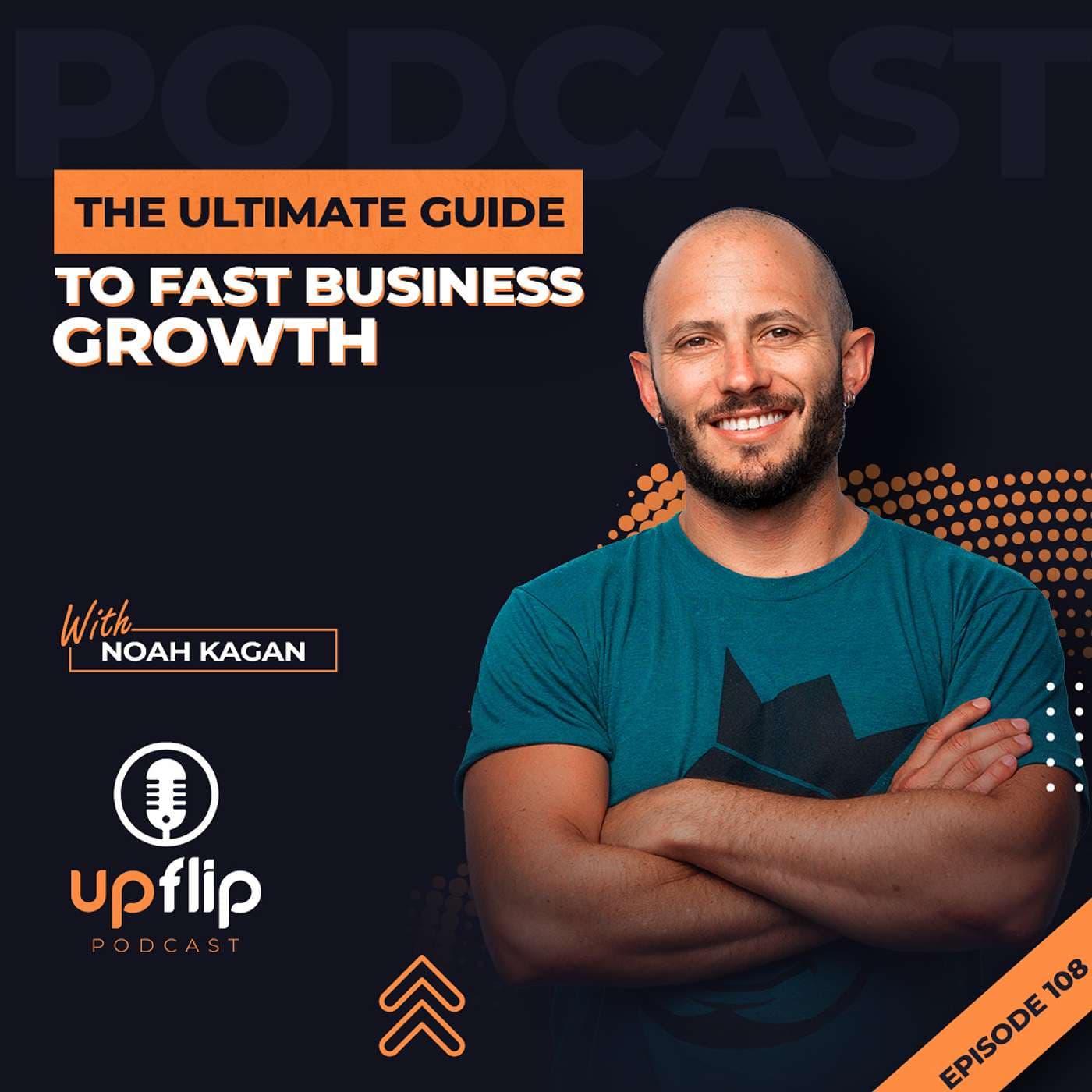
Episode Overview Title: How to Start a Million Dollar Business in a Weekend (with Noah Kagan) Host: Alex Freeman Guest: Noah Kagan, Founder of AppSumo Description: Noah Kagan shares his strategies for fast business growth, lessons from his entrepreneurial journey, and insights from his new book, *Million Dollar Weekend*. He provides actionable advice for aspiring entrepreneurs looking to build successful businesses quickly.
---
Key Concepts and Takeaways
- The Essence of AppSumo
- Background: Founded by Noah Kagan, AppSumo connects entrepreneurs with discounted software tools and has generated over $80 million in revenue in 2023.
- Startup Journey: Kagan started AppSumo in a weekend with a minimal budget of $60, emphasizing the importance of testing ideas quickly and cheaply.
- The Importance of Starting
- First Sale: Kagan highlights that the journey to success begins with making that first sale, no matter how small (e.g., $12).
- Entrepreneurial Spirit: Kagan stresses that everyone should embrace entrepreneurship, regardless of circumstances.
- Learning from Failure
- Failures: Kagan recounts having over two dozen failed ventures before achieving success with AppSumo, indicating that failure is part of the entrepreneurial process.
- Reflection on Learning: Valuable lessons are drawn from both successes and failures, shaping his strategies and approaches.
- Goal Setting and Vision
- Setting Clear Goals: Kagan learned the significance of having a singular, clear goal from his time at Facebook, which he applied to AppSumo.
- Achievable Targets: He advocates for setting realistic, less ambitious goals to avoid burnout and maintain motivation, contrasting the traditional “10X” approach.
- Market Validation
- Testing Ideas: Kagan discusses the importance of validating business ideas before fully committing:
- Use platforms like Google Trends to gauge market interest.
- Assess potential profitability through a simple business model framework.
- Customer Engagement
- Feedback Loop: Engaging with potential customers for feedback before launching products is crucial. Kagan suggests asking for pre-sales as a validation method.
- Building a Dream List: Creating a list of ideal customers to solicit feedback increases the chances of success.
- Financial Insights
- Income Structure: Kagan explains the importance of developing a flexible financial model for business employees, balancing base pay and performance incentives.
- The Power of Email Lists
- Ownership of Audience: Kagan argues that owning an email list is essential for entrepreneurs, as it allows direct communication with customers without platform constraints.
- Practical Tips for Aspiring Entrepreneurs
- Actionable Steps: Kagan encourages immediate action, such as reaching out to potential customers or asking for feedback.
- Consistent Effort: Emphasizes the "Law of 100" — sticking with a venture for at least 100 days to ensure persistence and growth.
- Key Resources
- Book Recommendation: *Million Dollar Weekend* - a guide filled with actionable advice for aspiring entrepreneurs.
- Online Resources: UpFlip Academy offers courses and content for launching and growing businesses.
---
Conclusion Noah Kagan's insights reflect the entrepreneurial spirit of taking risks, learning from mistakes, and pursuing opportunities with persistence. His practical advice aims to motivate aspiring entrepreneurs to take the leap and start their own ventures without waiting for the perfect moment.
Call to Action Listeners are encouraged to engage with resources provided by UpFlip, start their own entrepreneurial journeys, and apply the principles shared by Kagan to achieve success in their business endeavors.
---
Further Engagement
For more insights and resources
- Visit [UpFlip Academy](https://www.upflip.com)
- Connect with UpFlip on social media platforms like YouTube, Instagram, and Twitter.
Written by AI. May contain mistakes. Listen to the episode to check what was said.
Transcript
Automatic transcript. May contain errors.0:00AppSumo brings in about$80 million a year in revenue, connecting entrepreneurs with great deals on tools and software. But founder Noah Kagan didn't hit that jackpot on his first try. In fact, he failed more than two dozen times and started seven other multi-million dollar companies along the way. I'm Alex Freeman, and you're listening to the Upflip Podcast, where we uncover how great businesses are built, how they run behind the scenes, and how you can replicate their success. Today, we'll get insights from Noah's successes and his failures, along with a sneak peek of the advice he shares in his new book, Million Dollar Weekend, that you can apply to start your own business and grow it to its full potential.
0:35Noah, welcome to the show. Thanks, man. Thanks for having me. Let's start at AppSumo and we'll kind of work our way through your career from there. Tell us about AppSumo and how you and why you started it. Yeah, it's been a little bit of a whirlwind from working at Facebook early on, getting fired, trying to help start Mint.com, which did really well, and then tried so many things over so many years, which culminated in starting AppSumo in a weekend for 60 bucks. And so for me, what I recognized was over 10 years from 20 to 30, I was like, man, I love marketing. I love promoting. And everyone should reflect on that.
1:10Like, what would you do if you didn't have to make money or you do it for free? And I was just promoting things on NoahKagan.com or making tweets or YouTube. And I just loved it. And I was like, man, I love marketing and promoting. I know that a problem that everybody has is customers. And I really like good prices on software. And I think software is going to be a bigger industry. And that's something that I talk about in the book. And just in general, is the industry dying, flat or growing? And so I was like, man, the software thing is cool. Like Dropbox was coming out and FreshBooks was coming out and MailChimp was coming out.
1:38I was like, maybe let me test. And this is what I encourage is like, how do you test something very quickly and cheaply to see if people are excited to pay you for it and then do a lot of the work after that. And so in a weekend, I cold emailed someone, Imgur is the product. His name is Alan. He was a college student. I just cold messaged him. And then I knew that on Reddit.com, which I'm still a huge Redditor, there's a lot of people who like this product. So in business, there's really just three W's, right? It's what's the problem you're solving that people care about? Who is that person that cares and where the heck are they?
2:05And for myself, I was like, all right, well, they're on Reddit. The problem is discounted software and for those software creators getting customers as well. And they're on Reddit and Imgur is that product. So put together a website, which is basically a PayPal button. That was the whole website in four hours, which I don't know why it took so long. And then Alan gave me discount codes. I told him I'd pay him$7 for everyone I sold, posted on Reddit. And then within a few days, we had 200 sales at around$12 each. And so one of the things I got to tell everyone is that the most important part of business is starting today.
2:36And my first sale was$12. And 13, 14 years later now with AppSumo, yesterday's sales was$212 ,000 in a day, which I can't believe. But you have to get started to get to that future point. And that's so important for everyone out there. It doesn't start at a million. It starts at just getting your first dollar today. Where did this entrepreneurial streak come from in you? because obviously you made mention that you worked at Facebook, you were early on at Mint. What kind of made you want to become an entrepreneur? I got fired by Facebook and then I got fired by Mint.com. I realized that everyone needs to be an entrepreneur, whether you want it to be a full-time thing or a side thing is that when these companies, specifically Facebook, took away my identity, took away my self-worth, took away my livelihood, it made me recognize that I didn't have as much control over that outcome as I wanted.
3:21And I vowed to never again let another person do that to me. And so that really inspired me to say, man, how do I figure out how to get a business going? And it took a long time to finally get that. But that was definitely the core moment that changed my trajectory. What did you learn from your time at those companies that you've taken with you into the other business ventures that you've had since? I mean, I learned so much. I mean, that's everything I've learned that I've brought into AppSumo and that I teach in the book. Exactly, you know, the blueprint that I've learned across, you know, so many different experts.
3:50I see a lot of business fiction gurus out there and I'm like, what's your business? They never tell you. And you say, hey, well, you have this number you're putting in your YouTube video on your book cover. What company was it? How come I can't see anything? And I think what I'm proud of is, you know, I work directly for Zuckerberg, whether you like him or not. And then I helped start Mint.com, which most people know and sold for hundreds of millions of dollars. And, you know, I helped run AppSumo.com today, which you can go smell and taste and use, you know, great deals on software. So things I've learned, you know, Zuckerberg, a few things.
4:16One, having a very singular goal with a clear timeline. So his goal was to get to a billion users within two to three years. I don't recall it was 15 years ago, but it was very clear at the time, you know, like I want a billion users in the next three years. And so that's something at AppSumo.com where it's like the first year is like, how do we get 100 ,000 subscribers? And then it was how do we get 250 ,000 subscribers? Or last year, our singular goal has evolved to net revenue. So last year, our goal is$45 million net revenue. This year, our goal is$56.6 million in net revenue, not gross. And so that is something I've used on Million Dollar Weekend, a thousand reviews within 30 days of the book launching or my YouTube channel.
4:50How do we get a million to 1.25 million subscribers this year? And so Zuckerberg was the one that definitely influenced that. I would say at Mint.com, I really learned how to do marketing. So if you have a goal in your business, how do you work backwards? So how do you think about who's the customer? How do you explore different marketing opportunities? And then how do you double down? So how do you test and invest? That's what we like to call it. All these different opportunities and then double down on the marketing opportunity that's really working. So I learned a lot of that at Mint.com. I would say the last thing, and there's so much, right?
5:16And that's a lot of the stuff that I've brought into AppSumo. I'm still learning to this day and I can share how I'm doing that. Zuck was excited about the future. And I've noticed with a lot of entrepreneurs, they're very vague or they don't have a future they're looking forward to. And one of the simple phrases that one of the customers of Million Dollar Weekend, his name is Jake, he said, I didn't want to live a what if life. You know, Jake's got three kids. He actually is in Dallas, Texas. And he's like, I didn't want to live what if knowing that I didn't take a chance to try something. And Jake said this phrase, he said, put it on the calendar.
5:43And that's kind of a small example of what Zuck was doing, which is what are you looking forward to? And it could be simple as getting ice cream with your husband, or it could be saying, hey, in the next three years for AppSumine.com, we want to be the number one destination for software creators to promote their products. And I am so excited to do that. I've been in this 14 years and I'm more excited now than ever. And so for everyone out there, it's what are you excited about? If you're not, put it on the calendar, start getting something excited about. And Zuck, you know, at 24 years old, I give him credit, was like, we're going to connect the entire planet.
6:09Yeah. Can you imagine that? Someone tells you, hey, we're going to mow the lawns of everyone in our whole state. You're like, wow. You know, and it could be anything. It doesn't have to just be a tech company. And that's something, especially from my YouTube channel, I've seen so many ways of getting rich, but find some way to be excited of looking forward and convincing others about this future that you're going to be going to and how they can be a part of that as well. Definitely just a few of the things that I was fortunate enough to be around and learn from these companies. Hey, listeners, as the show continues to grow, we'd love to get your feedback.
6:36Would you mind taking a minute and clicking the link in the show notes and let us know what you think of the show? We want to make sure that we continue to bring you the very best interviews. and the best way for us to do that is to get your opinions via that survey. So take a second, click the link, fill out the survey real quick. We really appreciate it and thanks for listening to the Uplip podcast. I'm curious how you go about setting some of those goals because obviously like starting out with that future vision, the Zuck example being a great one, we're going to connect the entire world. Okay, obviously we're not going to probably do that in a week.
7:06That's going to be a longer term project. So like how do we set up the attainable to use the SMART goals acronym? How do we set up the attainable number to make that goal? Yeah, so there's a few different phases of goal setting. And I put out videos and on noakagan.com, I share my exact goals for the year. The way I recommend approaching, and it's actually changed as I've now in my 40s. And specifically is if you're just getting started with something, don't really have a goal. Just have an understanding. So what I mean by that is, let's say, Alex, you are trying to start a business. You're like, I'm going to make$10 ,000.
7:37And then you've never started. You don't even know anything. So just try to get an understanding. just try to get$100. And really, that's an understanding of you're creating a business people want. What can happen is if you set too ambitious a goal or too big of a goal, it's just never achievable. You might actually be doing great, but because you didn't hit this big-ass goal, you actually think you're failing and give up too soon. Now, you've gotten a little bit of momentum. Maybe you've made$100 in your business. Maybe you've gotten 20 subscribers on your YouTube. Maybe you've got one customer.
8:00What I like to do is twofold. What's the core goal that drives all the other goals? And ideally, that goal is aligned to your customers' incentives. So specifically with YouTube channel, I think if we put out great content, more people want to watch it and they'll subscribe to the channel. Now, the way I like to do goal setting that's shifted dramatically is having very unambitious goals. And I come from Silicon Valley. You know, I worked for, you know, worked around Peter Thiel, worked around Sean Parker, Dustin Moskovitz, a lot of, you know, I'd say celebrities, but really geniuses and thought leaders in entrepreneurship and business.
8:29And they're like, if you're not 10X, you're failing. You know, our board, we have a guy, Andrew Chen, he's like, if you're not 10Xing, if it's not a billion dollar company, like, I don't know what you're doing. and I've shifted my thinking there where I believe if that's what your motivation, I'm not motivated to that. I don't ever wake up thinking I got to be a billionaire. I'm like, I'm way more than rich enough, more than enough for me right now. But what I do think is how do I have unambitious progress over a very long period of time? Like, you know, all these investors talk about compounded interest.
8:53Think about compounded business. And what that means is my YouTube goal is a million. I had a million subscribers at the start of this year. I'm trying to get to 1.2. 20 % is not that aggressive. I would say, I would even say maybe try to do 1.15. And same with AppSumo, we ended the year at 53 million net revenue. I believe our actual goal for 2024 is 7 % growth. And what I've realized by that is when you set a less ambitious goal, one, it's probably more achievable to hit. You can do it for a longer period of time because you're not going to burn out because you're not rushing. And it actually gives you space to experiment on 10x opportunities and other creative things where you're not in a stressed environment.
9:26And so that's something that we've evolved within AppSumo over the years. Definitely in the past, like, let's 10X it. And for not 10X, we're failing. I don't actually find that to be as effective. That's a really interesting thought evolution that I'm curious how you kind of wrestled with. One of the innate qualities of a lot of entrepreneurs is that kind of aggressive growth, aggressive desire for growth, high competitive nature, and putting that next to your described not that ambitious long-term over the goals, very achievable. How does that marry for you? So one thing that I would recommend for other business owners or people starting businesses out there is maybe instead of thinking about revenue as that main driver, think about what's the driver of the overall business that's just as powerful as doing revenue as a goal.
10:09And I'm sharing this because I think it's as interesting and helpful for entrepreneurs starting or growing a business. What's the thing if you grow, it grows the business and your customers are probably going to be happy with you. And so specifically, let's take AppSumo.com. Our business fundamentally grows when we get more deals. So each month we do around 32 deals. So that's actually the best driver of the business. That is a core goal. So you could say, is there a way to go from 32 to 35? Is there a way to go from 35 to 38? And in that alone will ultimately drive a lot of these other pieces of the business.
10:38You know, it's exciting winning. That's exciting. That's true. And I will tell you, you know, me and Chad is my business partner at AppSumo. We're like, let's 10 X. And this is probably more in my twenties because I was chasing success and I needed to show other people some growth or show people we've hired employees. I like to call them teammates, or show people stuff. And we were 10Xing and we were trying to 10X. And when we didn't 10X, we were also okay with it. But what I noticed within the culture of our business, and Jeff specifically, he runs sales at AppSumo and the sales team. Jeff's like, I love the color green, Noah.
11:08I just want to see green a lot. And within our culture, I've noticed that when we, for two years, I came back as CEO and I was like, we're going to 10X. And we 10X stuff. So we went from 600 deals on a site to 13 ,000, more than 10X'd it. The team was against it. But really, every day we were kind of red with our overall business metrics. And it's really, over time, pretty demotivating. I've noticed the team and then ultimately to myself and these less ambitious goals. I'm not saying go zero to zero or zero negative, even though I've done that too. But these zero to 5 % doesn't mean you're not going to do other things.
11:39Like ambitious people are ambitious. That doesn't stop. But because they can do 5%, they're like, well, let me try this other thing. Let me try this other experiment. And you have a space to have 10x bets that you're testing out that potentially could be 10x growth of the future, but you're not having to make them work. And I think the other approach people try is, what's 10x? If we end at 5x, it's pretty good. But what's really happening is you're saying you're failing every single year for most of the year, which if you're a funded company, I guess fine, because your investor doesn't care if you fail.
12:05But if you're a bootstrapper, like our businesses, like I am, you can't be failing because you go out of business, you don't have unlimited money. And so I like this idea of slow, consistent wins, compounded year over year over year. And I would say with AppSumo, one of the craziest parts for me personally was that I didn't become a millionaire in AppSumo for my salary and profit share until year six or seven. Because it was slow, consistent performance that eventually the business was doing well that I could take money off the table for myself. And that's the same thing for your own business.
12:33If you can have this performance, most people don't get started and then most people don't stick with it. That's why I recommend Law of 100, which is do 100 days or do 100 posts or do 100 podcasts. So at least you know that you're not going to quit too soon. If you get started and you stick with it, the dividends are there over a period of time. Now, AppSumo is not the only business that you have built. Can you tell us about some of the other businesses that you have successfully founded? There's more that I have started that did not have success. And I think that's just as interesting for people out there to understand, like FreeCalls2.com, SoftwareTaco.com, RewardLevel.com, you know, HallDrop.com, MeetFam.com, SumoMarket.com.
13:06Like, don't go to any of these sites. They're all cemeteries. Now, what's crazy about business, unlike anything else in the world, is that you don't have to have a physical ability, right? You don't have to be short or tall or any gender, any age, and it's available worldwide, which is amazing and beautiful. The other part of it is that you only need one hit to be successful. Think about that. You don't need, like literally if you go to bat and you get one out of a thousand times, there's really not much other stuff like that. And Mark Zuckerberg hasn't had a hit in 20 years. He did Facebook and that's it.
13:33Everything else he's bought. And for myself, I've tried, I told you, those are all the businesses I've tried. You know, AppSumo, I was excited about the problem. Think about problems that you're excited to work on for some long period of time. And I was excited about how do I get deals on software and promote them. I frankly want that kind of thing myself. Other products that we've had that have been million dollar businesses are products that we selfishly want at the company and our customers want. So David, who's leading the team, we've built tidycal.com, which is a Calendly alternative. That's a million dollar business.
14:01That's insanely growing fast. It's unbelievable. A lot of our products have virality and word of mouth built into them. And they're very targeted at solopreneurs and having a high cost subscription product and we're the alternative to it. We've also built SendFox.com, which is a MailChimp alternative. Something, again, I use it personally on NoahKagan.com. It's what I use, which is SendFox. And that's a million dollar business. We built Kingsumo.com. We ran giveaways. That was one of the biggest growth drivers for AppSumo. And we did it internally. And then Damien on the team was like, hey, mate, he's in Australia.
14:28He's like, hey, mate, I can make this product. We sell it. Give me some money. So Damien got a cut of the product and we built it. And that's a million dollar business. And, you know, the thing to think about as well as we've made these own million dollar businesses, they're all free or low cost products into our main business. You know, I think too many times a lot of newer entrepreneurs or entrepreneurs are not at the seven figures or eight figures or nine figures. They're doing too many new things that isn't serving the core. And our core is deals. That is the absolute bread and butter. So figuring out what is the way low cost or free or whatever to get people in to eventually get to the core of our business, which is awesome deals on software for solopreneurs.
15:03So that has been some of the different ones. I've started Facebook games business. That became a million dollar business. I did payments for social games. That was a million dollar business. We created a course, which is some of the foundation of Million Dollar Weekend called Monthly 1K. You get it free with a book at milliondollarweekend.com. That's a million dollar business. So I've had a decent amount of ones that have worked and a lot that did not. And this weekend, I started another million dollar business as an example to show people the videos coming out. And I tried doing lawn care. I let the audience suggest the ideas and I didn't use any of my social media or email list.
15:33And everyone should start an email list. And so I went out and tried to knock on doors and ask my neighbors if they would purchase my lawn care. And all my neighbors said no to me, which is pretty funny, but also hard. And that's part of the success of entrepreneurship, which is asking and getting good at asking, which I teach as well. You know, as you get rejected, which is going to happen no matter where you are and who you are, you know, how do you keep going after you're rejected? And that didn't work. But then I said, you know, I looked at my credit card bill and this product that I hate and I think fits into Absolute ecosystem is DocuSign Alternative.
16:01Then I went back out to people that emailed me over the years that emailed me a docusign and I put them on a list. There's a framework to this and a system of how to check this stuff. And I messaged these people or I called or texted or WhatsApp and I sold$3 ,000 pre-sales within 24 hours. And I promise you in 12 months, so January of 2025, that will be a million dollar business. Listeners, if you want more step-by-step guidance on how to start a million dollar business, you can head over to upflip.com slash courses to check out the business startup and growth blueprint, a free course that will guide you through the process of building a seven-figure business from scratch.
16:33Noah, I want to talk about the book. What can our listeners expect when they go pick up a copy of the book? What's in it? I think what's cool about Upflip, by the way, I see your guys' YouTube videos, is that there's so many ways of getting rich. Oh, that's so true. There's all these boring businesses, but looking for businesses where there's less competition, I actually think is really sexy. Meaning when you're competing in a tech company, you're competing against a lot of really, really exceptionally smart people. But in some of these businesses that are offline, let's say, you know, there's a guy, Larry Gineski, who does basements and he does$600 million a year.
17:03He's like, our success is that we show up on time and sober. Do you know how easy that would be to win? I mean, ours is like, did you go to MIT or how fast can you use this new AI tool to build out software? And, you know, the salaries are much higher. And so there's all trade-offs in businesses. But the bigger point is that there's so many ways of getting rich. So find the way that you're excited to spend your time and get rich. Now with Million Dollar Weekend, for me, it's everything I wish I would have known because I was always wanting to be rich and I always wanted to be an entrepreneur, but I didn't ever have a book or a clear path to getting there.
17:33But there's so much material out there on starting a business, but why haven't they? And so what I believe cracked the code and what we've solved through beta testing, through myself, through 10 ,000 people that have gone through a course in the past is that there's two problems that most people hold themselves back from even getting to starting a business. Not about ideas even, not about funding even, none of that stuff. That stuff's easy. It's the fear of starting, right? It's the fear of not being ready, which the best time is now to start. You're never ready enough. And then the fear of asking.
17:58And so how do you, in a fun way, can we support and excite people to go do those things where they're not even realizing they're doing it. So when you're doing the coffee challenge where you ask for a discount off coffee and you get rejected, that when I go to my neighbor and pitch him lawn care and he rejects me, I can say, okay, that's cool. Let me go to another person. And then when they reject me again, I can say, okay, this isn't working. Let me use a script, which I provide, to find something else that they're excited to have and excited to spend money on. And then there is the exact formulas, things that I've used time and time again in terms of starting the businesses as well as growing the businesses.
18:27That's in a book that I really wish I would have had 20 years ago. How does somebody go about validating an idea when they have it? How do you know that your DocuSign alt business is going to be a million dollar business in a year? How did you go about validating that process? Yeah. So let's take another example because maybe people think, oh, well, he's now a, I don't know. I did it without any of my social media, without my email list. I let the audience choose the ideas and I was still able to do it. So it's repeatable and it's available. Now, the thing you're looking for is really two key parts within whatever idea you have.
18:58You're going to work hard either way. So find the idea with a bigger opportunity. Now, the two key parts that you have to understand is how is the market trending? So AppSoon was doing$80 million a year. It is, I would say a significant portion is because early on, I chose a market that if you go search AI or you search software, it has exploded in 14 years. We went from now there's, there was literally probably 10 products on the market then. And now within software. I don't know, Alex, there's maybe 100 ,000 software products. So go on Google Trends, which everyone can do, and look up your product and choose over a five-year horizon.
19:28And then look at it compared to other things. So there's a guy, Jake, who read Million Dollar Weekend, and he was excited about golf. And you go and do that analysis on golf, you're like, golf is huge, right? You look at golf and also look at it relative to things. So someone suggested I start a hamster daycare business. And if you look at hamster daycare, but then you have no comparison, and it's all relative. But then if you look at dog daycare, you're like, crap, there's a lot. Then you look at cat daycare, there's even more, I believe. And all that does is showing you is this flat, declining or increasing.
Read the full transcript
19:55So if I work on it and the market is a tidal wave and gets even bigger, I'm just going to get a great slice of it. Now, the second component of that, once you understand there's some market dynamics, is how much are people spending in the market and how hard is it for me to make a million bucks profit? So what I look at is that, is there at least a million dollars of spending in profit that I can take for myself or for the business I'm starting to make sure that if I'm going to work on it, there's at least a million dollars. So with Jake, he was curious about golf trips specifically. He thought that was an interesting business.
20:21So what you're looking for is how many people are in that area of market. So you use Facebook ads, you can use ChatGPT, you can search Google Finance, you can search Google itself to see how many potential customers or people are in this activity. And on average, how much are they spending for it or something relative to it? So for Jake, how many people like golf and how much would a golf trip be? Or how much are people spending on golf trips? And you could see that number and it has to be at least a million dollars. If it's not, you're like, if it's in a million, you want to get something that's going to be a lot bigger than that.
20:47And in golf, it's a billion dollar industry of people spending to go play golf. So that's interesting. So now you know that there's at least a million dollars being spent. And if you're doing, for example, if you're saying, I'm going to do, I love pho, you know, Vietnamese soup. If you're trying to do a pho delivery business and you're like, well, how many people are in Austin? How much is pho? How many people are like going to a Vietnamese restaurant? Again, a lot of people are saying, well, that's really simple. That's the point. A lot of what I encourage is simple, cheap, and fast so that you can understand if it's something you should do so that you can validate it quickly.
21:14And if it is great, let's go on. If not, let's go find something people want. And I did that. I tried lawn care. No one wanted it around me and my neighbors because they already have someone or they don't care, but they did care about this docusentality, these other people. Now, Jake saw that there's a lot of people spending money on golf. So next, what you have to do is the one minute business model. And the very simple math you're trying to understand here is that to make a million dollars profit, what's my revenue and my cost and how many do I have to sell? So Jake was excited to golf trips.
21:38He was going to sell them at$5 ,000 each. And his costs were around$4 ,000. So that's $1 ,000 profit. And then he has to sell a thousand of them. And I was like, Jake, and one, that could be over a few years. Most people won't make their million dollars in a weekend. I don't think anyone will. It's possible, but probably not. But you will make it over time. But you want to understand is a thousand people likely? And I think that would be hard. Maybe in 10 years, you could do it. And so what he recognized, though, is if he removed some of his costs, so we call it revenue dials, and they're broken down in the book.
22:05You can also get them for free on milliondollarweekend.com. There's revenue dials. And so he realized if he took out airfare, which is also reducing your costs, or you can look at your frequency, you can look at your average order value, you can look at complimentary products. He was able to increase his sales to around$2 ,500 profit. Now that's only 400 people. That's a lot easier to make a million dollars profit. So have you noticed, I haven't talked to a customer. I did all that real time with you now here. Obviously I didn't use any of the chat GPT or Google trends or Facebook ads is a great way to see how many customers are available for you.
22:32And very quickly I'm, I can see like, wow, golf is a great opportunity. DocuSign, same thing. You can go to DocuSign and search how many customers they have. 1.4 million. You can see how much their average cost is. It's around$25. That's a lot of money. Then you can also go see that they're a public company that's worth$11 billion and their revenue was$2 billion last year. So all those things combined, you're like, okay, cool. It's very quick. That's my whole point. So that when I go validate it, I can make sure that it's at least have the checkbox that there's the opportunity to make a lot of money for myself.
22:59After you've kind of done this validation process, what then are those next steps to come out of the weekend with your million dollar business? You're looking for three customers paid and make at least a hundred dollars within the 48 hours. That's the golden rule that I have found is as long as you've done the pre-work and you've done the starting and the asking, you've done the market validation to make sure it's a million dollar opportunity. Now you have to follow the golden rule to get three customers within the 48 hours. And I would say at least a hundred dollars and not revenue, ideally profit.
23:26So for Jake, he was able to get five deposits and I'll help people out and I'll tell you how to do validation and I'll show you how you can talk to people about it. And he was able to get five customers,$500 and a partnership within 48 hours. And this is a guy that I don't even think you could find him on social media. I think he followed me on YouTube and he applied to live with me for 48 hours. That's how he ended up following Million Dollar Weekend. So there's three ways to do validation. Number one is pre-selling. So just like Elon Musk does with Cybertruck, hey, here's the thing I'm going to do.
23:51Give me money now. And then when it comes out, you pay me the full price. And I've had so many people, and this is a common rejection, which is, hey, I really like your business. Yeah, yeah. Send me more details. I like your business. When it comes out, I'll buy it. Hey, I really am excited about it, but I need to know more. That's a no, by the way. And so getting a deposit is a very clear way in pre-selling is the most impactful, direct, fastest way of validating a business. Now, number two is marketplaces. So Etsy, Facebook marketplace, Craigslist, anywhere where there's people raising their hand next door, whatever it is in your country, raising their hand, trying to spend money on things.
24:22That's a great way to post something. Maybe it's like Airbnb did. That's exactly how Airbnb, which started in a weekend, by the way, they posted on Craigslist and that is how they grew to a billion dollar business, posting on the marketplace that you can rent a house here. And then the third way is the, I would say the Tim Ferriss special, which is landing pages to ads. Now I discourage this because you have to become a landing page expert. You have to become an ad expert. You have to spend money. And those are all things that I don't really have much time in 48 hours to go do. So Jake used the pre-sale method.
24:47And specifically, here's the easiest hack I would say when you're trying to sell someone is just ask them for feedback. So I encourage people to create a dream 10 list. This is inspired by Chet Holmes, one of my favorite books, Ultimate Sales Machine, created Dream 10 list of who do you think would want the problem that you're solving? Now, a lot of people start businesses outside of their zone of influence and they wanna make it hard on themselves because they're embarrassed to fail. And so if they do something really outside of their network, outside of their zone of influence, outside of their expertise, they fail and no one notices, but also the chances of success are much lower.
25:17So Jake made his Dream 10 list. Now, when you're pre-selling, the easiest thing to do when you pre-sell, not that you have a list of people you can contact, and it's exactly the same thing I did with Doc Design. It's exactly what I did. very similarly with AppSumo, which is now an$80 million year business, was you go ask people for feedback. And so Alex, I would call you on the phone and say, Hey, Alex, do you golf? Actually, do you golf, Alex? I do golf. Yeah. Do you golf? How often do you golf? Probably get out, you know, once a week trying to get out there. Oh, wow. You're like a real golfer.
25:43Sounds like something you really enjoy. Oh yeah. It's a great time. And then how often do you do golf trips? A full on trip. Haven't done in a while, but maybe once every two or three years. So number one, you ask for feedback. Really, that's the easiest hack of the whole thing is just say, hey, Alex, I got this idea and it's a friend of yours. Like I've been thinking about doing golf trips for guys. It's a weekend, all expenses paid. What do you think about that? And then you'll actually say, yeah, I went on one in the past. I'd love to go on one again. And I'll give you a framework to use, which is called LOT, Listen, Option, Transition.
26:11And it's a very simplified sales framework to basically listen to your customer to bring up their problems, provide the option that you think will be beneficial to them, and then transition them to give you money right away. So for you, I would say, Alex, sounds like you haven't gone on a golf trip in a while, but you had so much fun. Yeah. Here's an option. We're going to go to Badlands golf course in April. You're going to have whiskey. You're going to have cigars. We're going to have your buddy, Joe. We're going to have three other guys there. I think you would love going on it. It might be, you know, 2 ,500 bucks.
26:35Does that sound like something you want to go on? Yeah, definitely. Yeah, definitely. And then transition that definitely, but yes or no. And then you transition. All right, cool. How about putting down a refundable$50 deposit right now? I just want to know you're serious. I'm lining up everyone within the next 24, 48 hours. I'm even doing this million dollar weekend challenge. You can use Noah as an excuse. literally the playbook Jake did, got five customers. He's delivering actually two events this year. And based on the research and market validation we did to begin with, and now we've validated with customers, in time to come, if Jake sticks with it, which I believe he will, he'll have a million dollar business.
27:05Incredible. It works. I've done it the other way. I've done the build and pray, where you have a solution and you try to find people with problems. And it's just much harder, takes longer, more stressful, and there's another way to succeed. So now this is going to bring us to a portion of the show that we call our Fan Blitz questions. every week, throw out who our next guests are going to be to our YouTube community. And we ask them to post questions to future podcast guests, listeners, if you want to pose those questions, you can head over to youtube.com slash upflip and pose the questions there.
27:32Noah, we got a lot of questions for you. So we've got eight questions here. We're going to try and get through. Are you ready to offer some advice? No, I just literally gave so much good advice for free. Let's charge for this. That's true. This is on upflip.com slash courses. Noah Kagan edition. No, no, I'm ready, man. Let's hit it. Awesome. This first one here is from Spidey 207. How would you find a good scalable business to go into? Well, Spidey, just rewind about 20 minutes here and listen forward. Any specific attributes the business should have? People that ask that question generally haven't made a dollar.
28:04And I don't mean that as an insult or hate. It's just that people think about making a million. They never make one. And so the real question I would say for Spidey is twofold. One, how do you find an idea that you're excited about? And then how do you get started today on the process? You know, from practicing starting, practicing asking, validating the market, and then doing the customer validation. I don't generally worry about scale or not scale. All billion, if not trillion dollar businesses didn't start out focusing on scale. Google, Facebook, Microsoft, Dell, all started in college as hobbies.
28:30So I don't know why people think, oh, well, let me try a different one. You can go do investment banking or private equity or some of this other stuff I have no idea about. But what I'd be more excited about for you, Spidey 207, is think about, here's three ways you can come up with business ideas. this. Number one, look at stuff you've avoided doing for a few weeks. Number two, look at your credit card bill. Or number three, just think about breakfast, lunch, and dinner and what annoyed you in your day. And I think the best business problems, and I have more in the book, but the best way to find business problems, not just ideas, is think about your own self and what you're excited to do and then put it through the system to find out what actually has the million dollar opportunity and then just get the first dollar to get going.
29:03The next one here is from Joseph Lallouar. If you own a six-figure food truck business, congratulations, Joseph. How How would you grow it to an eight figure business? What are the steps involved? I would open eight of them. I mean, here's the secret of success. The best business is the one that works. And the best way to keep your business growing is keep doing the things that are working. And a lot of times in my businesses, when I try to be creative and try to do new things like, oh, if I'm a food truck, I'm going to sell a recipe book. I'm a food truck. I'm going to sell an online course about how to do food trucks.
29:31I'm a food truck. I'm going to make YouTube videos. I think the question I would think about for this person, which one massive props, man, massive, massive profits is like, have you maximized everything to get the sales at your food truck up as much as possible? And then I would open a second food truck and open it, keep opening them until they don't open no more. And this is a big thing in business where people say, I don't want to trade my time for money. And yeah, I haven't done work at AppSumo in years. You hire the people that you can pay them a craziness amount of money, which is what we do at AppSumo and they can do the work or they'll find other people to do the work.
29:58And so Joseph, I think if you found something that works, I would keep doubling down on that until it doesn't work and be very afraid of trying to start anything new. This one from Sam J. Stewart 934. I currently own a residential painting business, struggling to get leads, wanting to break into commercial work. Have you any advice, Noah? Don't do commercial, stay where you're succeeding. Secondly, how did you get your lead so far? The easiest way to grow your business is through your customers. They're your best marketers. So I would look at how did I grow my business before and who have I already worked with that I can ask to do more painting for?
30:30And I personally, when I literally went and knocked on doors to try to get my neighbors to do lawn care, it was really hard. But if I went for referrals, I think that would be a lot easier. Like, hey, you're a friend. Do you need lawn care? Sure. And so I think this guy, Joseph, sounds like you already had some success. If you're trying to do commercial, I just think what I've seen, especially within software companies, let's take AppSumo, for instance, we built software for small businesses because that's who we are and that's what we like. That's what I love. I love it. I never want to do enterprise.
30:55And we did try to do an enterprise product and try to serve an enterprise product and built out a 30-person sales team. I didn't really work. It doesn't mean it can't. But I would try to think about where do you have a unique advantage in? Maybe it's not residential, but maybe it's residential for a certain geography or a certain gender or a certain race or a certain type of housing. But I think if you're trying to go into an upper market system, that's what I think people will recommend to you. But I find that to be a much more difficult proposition. This one from Cyber Roblox YT. What was the most challenging part about starting your own company and how were you able to avoid those obstacles?
31:27The biggest problem in starting is starting. And so that's why I recommend people have a weekend because everyone has 52 of them a year, regardless if you have kids, wives, jobs, you have a chance to change your life. But my life didn't get changed by AppSumo right away, but I started and I would say 13 years later now, my life has significantly changed. I'm so grateful I got started. The other thing, especially when you're starting is just making sure you find something that other people want. If you go out and you try lawn care and no one's wanting it, and you're like, well, I'm just going to keep doing it.
31:53It's like, that's just going to keep getting harder and harder. So there's this really important Venn diagram of business, which is what do you like doing? What's your unique skills? What are you special at? What do you enjoy? And what are people actually going to give you their attention or money for? And if you can find that Venn diagram, which I promise you, you can find, you will have infinite success. And the upside of entrepreneurship is unlimited. Similar questions from 80 by 81 and Colton Mazambe3756, both of them more or less, I have a lot of ideas. How do I zone in on the one to start?
32:25The first one on your list. So the book actually starts with frequently made excuses and I break down the top 10 and I've literally tens of thousands of people I've worked with personally around it. And when people say they have too many ideas, it's because they're afraid of getting rejected. And if you start one and it doesn't work, you're thinking, wow, I'm such a failure. And I fail all the time. I'm still failing. And the more that you can separate out that from your self-worth. It doesn't mean you're a bad person. It just means that idea is bad. So the most important one is the top first one on your list.
32:51And here's a way to help you with that. Think of yourself as an experimenter, a scientist. So, you know, Alex, for you, if you're a scientist and an experiment fails, you don't say, hey, I'm worthless. This experiment failed. I suck. You'd say, oh, that was an experiment. I tried it. I'm proud of myself. Good. I moved forward. Why did it not work? All right, let me try the next thing. You're not so afraid of the fail. And the most successful people have the most failures. I love that. Last one from our fans here at Flying Tomat Zero. Recently started a window cleaning business looking to expand and hire my first employees to do the cleaning of the windows so they can focus on sales.
33:27But trying to figure out how to pay them is difficult. Should they go hourly, salary, commission, mix of hourly and commission? What insights do you have about trying to figure out pay structure for employees? Incentives are everything in how you pay people. And what I mean by that is what What are they incentivized for? Are you incentivizing them to work fast? Are you incentivizing them to do a good job? So what I would recommend is having some standard base and then something around performance. So maybe it's a measurement from the customer's review. Maybe it's how many houses they do. Maybe it's like a test that you can give them.
34:00But what I've found, and as I've shifted with entrepreneurship and AppSumo and our leadership team, it's very low bases, very high variables on their performance. And ideally that they have control over that outcome. It's not something that you control and they have transparency in it. The other thing that I would just be mindful of is one great job on getting your first employee. Hire an assistant. You can use hiremymom.com or any service. But the biggest part is realize it might change. I remember I hired my first sales guy at AppSumo. His name was Matt. Didn't really know how to do sales very well, but it was for me a great practice in hiring, a great practice in delegating, a great practice in goal setting.
34:31So just think of that a lot. And Matt, his salary was 25 % of whatever he sold. His first month, he made a thousand. Second month, he made a thousand. So I was like, yeah, great. He's not really selling a lot. It's not costing me a lot. And his third month, he made$25 ,000 because he sold the thing that just exploded. And so it was a great lesson that, okay, cool. Hey, Matt, I can't sustain as a business paying you the majority of the sales. It's at 25%. Why don't we shift your salary to some base salary and some percentage of the sales, but it's going to be a smaller amount so that we can actually take more of the money and invest in marketing and hire other people that we need now that you've done so well.
35:00So just recognize that incentives matter. Incentives and salary can change. And think of it as a practice that it's not going to maybe be perfect right away. and you can get better at it. There's a book called Who. I wouldn't even read it though. You know, the book called Who is about how to hire people. I think you're at a place where just practice hiring and think about how you're going to onboard these people so you can have repeatable hiring. So like, even if you're gone, you know that when they come in, they're going to be great. So maybe one other thing that you can do is go look at Cutco, go look at any company that has a franchise that it's already bringing on and hiring a lot of these kind of people in a parallel industry.
35:29So it could be lawn, it could be just go look online and then go hit up one of those people that's running that business and say, hey, can I take you out for Taco Bell? I would love that. Or even just say, hey, can I have 15 minutes? I want to maybe use your service, maybe pay for that. And then you can ask them, tell me how you do your salaries for your guys. And you'd be surprised. A lot of success in entrepreneurship is... Network sounds so cheesy, but it's really that you can ask people who have the answers so you don't have to figure it out and you don't have to innovate. I literally, in two minutes, I have a call with my CMO advisor.
35:56His name is Moody. He's the CMO, former of Glassdoor, Zapier, Electronic Arts. And so much stuff, he's like, no, here's what's going to happen to you in the next few months. Here's going to happen in six years or six months, one year. Go do this now. And I don't listen to all of it. And some of it makes a lot of sense right away, but almost every time it does come true. And so go find people maybe further ahead than you or on the side of you that you can at least get some advice from. Listeners, real quick, if you're enjoying this episode, we'd love for you to rate and review it. Getting ratings, reviews, and shares is the best way for us to grow our channel.
36:25That means we can keep bringing our listeners valuable insights like the ones Noah has been sharing today, and that more entrepreneurs can learn about this useful resource. Noah, just a few more questions in closing here. I'm curious about one of the things you said earlier was that everybody should start an email list. So can you talk to me about the value of a platform and email list for any entrepreneur? That's probably the number one entrepreneurship regret from people I've talked with over the past 10 years. Now, you heard me say that kind of quickly. I didn't really belabor that point. AppSumo, just to take a step back, AppSumo, about half of our revenue comes from our email list.
36:59And let me even give you another example. I have a million subscribers on YouTube. I put out a video last week that got 9 ,000 views. 9 ,000. So 9 ,000. So one, maybe the video sucked. Let's just accept that. But two, it means that YouTube controls my customers and my audience, not me. Okay. So what are you going to do about it? Well, Facebook controls the other areas and Instagram controls that and TikTok control that stuff, but your email list you control. And so I have found it to be the most effective, scalable way to grow any business. So whether you're doing Windows, whether you're doing finance, whether you're doing a software e-commerce business like AppSumo, whether you're doing a content business, if you have a book coming out, let's say a million dollar weekend of your book and you want to tell people, the video I made had 9 ,000 people saw it.
37:41That would screw me over. But thank God, I use SendFox.com, but you can use MailChimp or ConvertKit or a lot of other options. Thank God I started that mailing list 15 years ago. And so last week on Monday, I sent an email and 40 ,000 people opened it. And I wasn't surprised. I knew that was going to happen. And that gives you the most scalable, effective way of communicating with your audience and turning them to customers if you ever want to. And the other part is that if you don't have a business yet, then when you want to start a business, you have an audience of people interested in you. So I would encourage everyone today to even practice it.
38:11It also teaches you how to get good at writing, practice a little bit of marketing, and it's fun. I like that I send an email and I get people replying back. It makes life a little bit more enjoyable. On your YouTube channel, you do interview hidden millionaires. I'm curious, one, talking to business owners in an interview format is a great gig. I can testify to that. What's some of like your favorite things that you've learned in those conversations? Well, I was just at the private airport and that was one of my most viral videos. And I got to go on a guy's private jet just because I asked. So for everyone out there, if you just ask, you know, I have people come to my house and they never ask me what I do, like my boxing trainer or people come through, through other things.
38:47And they never were like, dude, what do you do for a living? Just ask. And you can be amazed what you find out. Hey, can I take you out to lunch? Hey, how did you get this house? Hey, how'd you get that car? Hey, will you be my customer? Will you be my boyfriend? Will you be my girlfriend? Will you be on my show? And the more you practice it in a good way, it's not a negative thing. People can say no. And guess what? That's okay. Someone will say yes. But the power of asking is really unlimited. The upside of it is just so amazing. So asking has been something I've learned a lot about and I appreciate.
39:10Another part is that there's so many ways of getting rich. You know, I come from tech, so I thought, okay, if you didn't build a website, then I don't know how you got rich. But literally basements, ships, strawberries, fax machines and copiers, cars, you know, RVs, veterinary clinics. There's just so many unique ways to get rich. And that's so exciting for me, whether you want to make a YouTube channel about gardening or whether you want to do window washing or whether you want to make a YouTube channel about fish tanks, like Dustin's Fish Tanks, who's a millionaire. And I think that's so empowering no matter what you're excited about on this planet.
39:42And that doesn't mean you have to be a millionaire. You can even have grocery money. But if you get started this weekend and you get going, that is available. The other thing I would say for all the billionaires I've interviewed or the billionaires I've worked with is that they stuck with it for a very long period of time. That's why in the book and on my channel, I talk about Law of 100, which is sticking with something for at least 100 days or 100 posts or 100 times. So you're not quitting too soon. And all these billionaires, it took about 20 years for them to become a billionaire. And most of us start one thing and then give up after one rejection.
40:07And if you can just practice like, okay, I got rejected. Let me try one more time. I got rejected. Let me try one time. And you find these things that people do want and they say yes. And you stick with that for the next few years. Who knows what you'll thank yourself for from starting a few years back? Noah, you have given some incredible, incredible advice and insight throughout this interview. If you had to pick the one thing that listeners are going to take away from this, what would it be? What's the one thing you're going to do right now for yourself? Right now, you don't have to wait till tomorrow.
40:35You don't have to watch another video. You don't have to listen to another podcast. You can do it on your phone. Call a customer. Text someone for feedback. Text someone for a dollar. Ask one of your old customers if they want to hire you again. Ask an old customer for a referral. Ask someone that you know that maybe can come work for you as part of your window washing. And just do it right now. Don't worry about the how of it. just do it right now. And you'll be amazed just getting that action going, how it brings confidence and it also brings results and will lead you in a great place and lead you in a great direction.
40:59Now on this question, I'm going to give you a chance to plug Million Dollar Weekend before we finish this conversation. But I do want to know what your favorite business book is besides Million Dollar Weekend. I have so many. If you go to goodreads.com slash Noah Kagan, every single book I've ever read is there and I've rated them. I would say, you know, there's a lot of ones that are common that I think people are familiar with. I think business books are either too recipe or too theory. I would say Ultimate Sales Machine or Million Dollar Consulting. I think those are very good books that have a lot of really unique tactics and very good scripts and step-by-step playbooks to have success in business.
41:34Now here's the chance. Where can people pick up their copy of Million Dollar Weekend and where else should they connect with you? Dude, no one makes it to this far of the show. I have my own podcast called No Okay Again. No one makes it to the end. I could say anything here. If you made it this far, I will Venmo you a dollar straight up. Ask me on PayPal at OKDork or Venmo at NoKagan. If you made it this far, I'm paying you because good on you for sticking with it. You can just go to milliondollarweekend.com. We've got templates, scripts, tutorials, step-by-steps, and as well as you can grab the book and check me out and anything you need on that website.
42:01You heard it, guys. Noah will pay you if you've made it this far. In all seriousness, the biggest takeaways that I'm taking from our show today are that there are so many ways to make money and you just got to get started. if you make sure that you find those ways that you you you have tested a quick test as noah described to make sure it's going to be a viable option for you dive in make your money get started don't wait make sure you check out past episodes of the upflip podcast where you can learn more about many of the great potential businesses out there many of the great ways to make money noah thanks so much for joining us this week thank you alex Thank you.
From the publisher
AppSumo has become a go-to destination for business owners and entrepreneurs looking for great deals on tools for their business, growing to over 1.5 million subscribers and over $80 million in revenue in 2023. Founder Noah Kagan shares his strategies for fast business growth in this interview.
AppSumo wasn’t Noah’s first startup. He’s launched more than 25 ventures, growing 8 of them to multi-million dollar revenue. Many of these ventures were started in a single weekend. Noah shares his advice to start a business quickly in his new book, Million Dollar Weekend, and he’ll talk through some of those strategies in this episode.
Attracting the right kind of clients is crucial for a service and consulting business. We’ll learn how Noah built the AppSumo brand through channels including YouTube and email marketing. He’ll also share the lessons he learned from his businesses that failed, and his advice for entrepreneurs who want to start and grow a business in 2024.
Resources
- Join UpFlip Academy and launch your business - https://bit.ly/4hjRvf2
- Listen to episode 92: Profitable Startup in 11 Weeks ($3.5M ARR) -
Ready to be your own boss without starting from scratch? Grab our FREE Franchise Guide and unlock the secrets of proven business models that have already created thousands of success stories.
Connect with UpFlip:
- On Youtube
- On Instagram
- On Facebook
- @UpFlipOfficial on Twitter
For more insights to start, build, or grow a business, check out the resources on UpFlip.com or head to the UpFlip YouTube channel to see more interviews with business owners and experts.
Thanks for listening!


