
In short
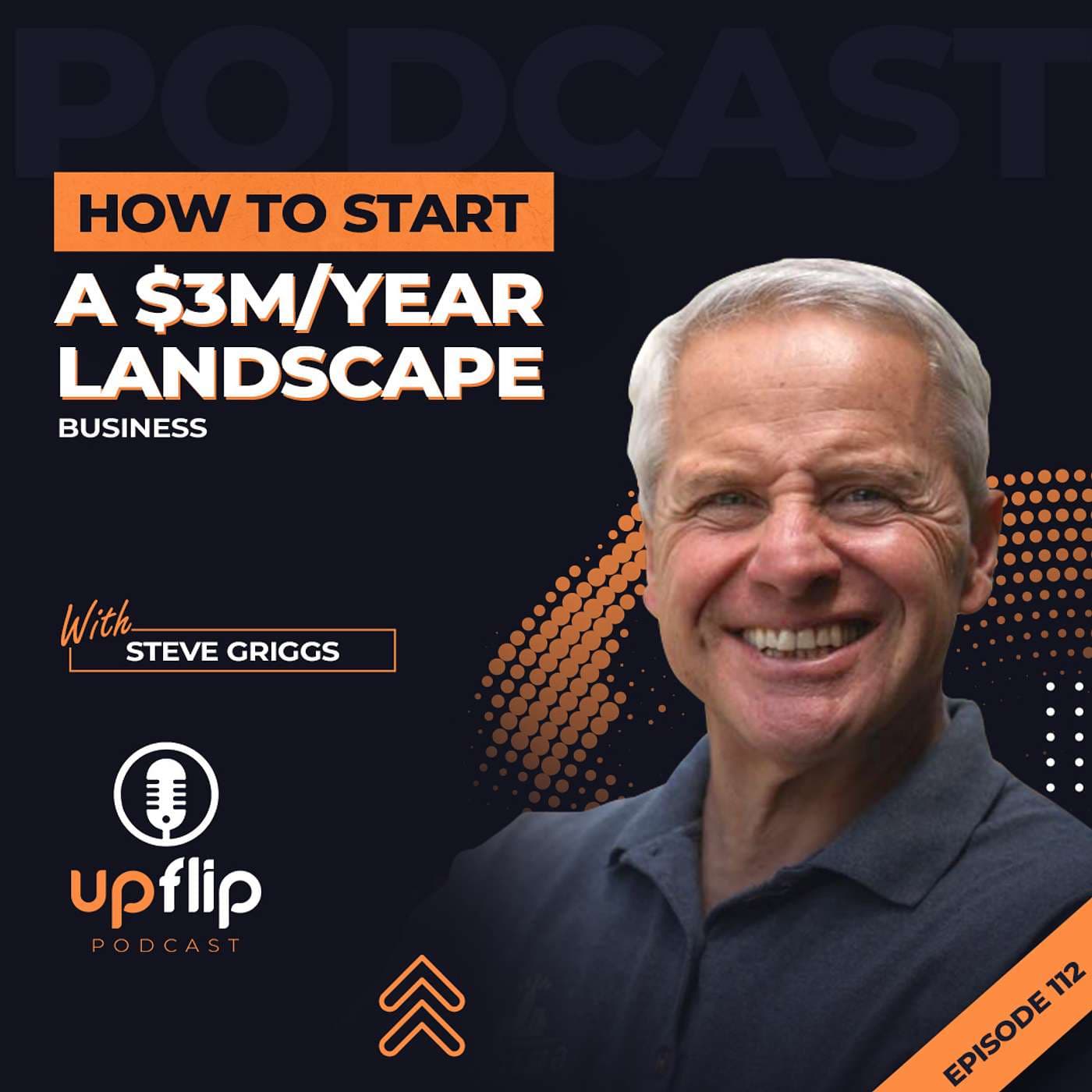
UpFlip Podcast Episode Summary: How I Built a $3M/Year Landscape Business
Episode Overview Podcast Title: The UpFlip Podcast Episode Title: Episode 112: How I Built a $3M/Year Landscape Business Guest: Steve Griggs of Steve Griggs Design Release Date: [Date Not Provided] Host: Alex Freeman
In this episode, Steve Griggs shares his journey of building a successful landscape business in New York City, grossing over $3.5 million annually. He discusses his unique business model, valuable lessons learned through experience, and practical advice for aspiring entrepreneurs in the landscaping industry.
Key Points
Background of Steve Griggs
- Initial Inspiration: Steve started his business shortly after high school, motivated by a desire to avoid job insecurity linked to union work, which his father experienced.
- Education: He attended landscape school, but emphasizes that hands-on experience is crucial.
- Business Model: Unlike typical landscapers, Steve does not own equipment but focuses on design and project management, relying on trade partners for execution.
Getting Started in Landscaping
- Education Pathways: For those new to landscaping, Steve recommends local botanical gardens and certifications in landscape design.
- Business Start-up Costs: Steve asserts that one can start a landscaping business with little to no money by focusing on design and project management, rather than investing in heavy equipment.
- Importance of Experience: He advises gaining experience in the field by working under established professionals before launching your own business.
Building Trust and Reputation
- Trust Building: Establishing trust with clients is crucial. Steve highlights the importance of delivering on promises and maintaining transparent communication.
- Word-of-Mouth Marketing: Satisfied clients are likely to refer others, making positive customer experiences a vital marketing strategy.
Marketing Strategies
- Budgeting for Marketing: Steve emphasizes the importance of investing in building relationships and maintaining high-quality work over traditional advertising.
- Social Media Engagement: He acknowledges the evolving landscape of social media and suggests a more authentic, raw approach to connect with audiences.
Challenges and Lessons Learned
- Setbacks: Steve recounts a period in 2010 when financial struggles forced him to regroup and reconnect with existing clients.
- Mistakes Made: Early business mistakes included improper contracts and underpricing jobs, which he learned from the hard way.
- Handling Crisis: Relying on established relationships helped him through tough financial times.
Industry Trends and Future Insights
- Emerging Trends: Post-COVID, features like outdoor offices, water, and fire features are in demand as people seek to enhance their outdoor spaces.
- Professional Development: Joining professional organizations and engaging in continuous learning has helped Steve maintain credibility and expertise in his field.
Final Insights and Advice
- Key Takeaway: The essence of business success lies in doing what you say when you say you will do it.
- Advice for New Entrepreneurs: Invest time in learning salesmanship and relationship-building rather than focusing solely on purchasing equipment.
Resources Mentioned
- Steve Griggs Design Website: [Steve Griggs Design](https://stevegriggsdesign.com/)
- UpFlip Academy: [Join UpFlip Academy](https://bit.ly/3YCQAPy)
- Podcast Links:
- [The Unofficial Shopify Podcast](https://unofficialshopifypodcast.com/)
- [UpFlip Podcast Episodes](https://www.upflip.com/podcast)
Conclusion This episode of the UpFlip Podcast with Steve Griggs provides valuable insights into the landscaping business, highlighting the importance of trust, experience, and adaptability in building a successful entrepreneurial venture. Steve's journey serves as an inspiration for aspiring business owners, particularly in competitive industries.
Listeners are encouraged to leverage Steve's experience as they navigate their own entrepreneurial paths and take advantage of available resources to enhance their business knowledge.
Written by AI. May contain mistakes. Listen to the episode to check what was said.
Transcript
Automatic transcript. May contain errors.0:29Surviving in New York City isn't easy. with entrepreneurs who share tips to grow and scale a business. I start with their background and learn how they got started. We'll get into their favorite sales and marketing techniques. I'll ask our fan blitz questions directly from our YouTube community, followed by my takeaways. We always have our business segment where we showcase resources you can use for your business. So make sure to stick around until the end. On today's episode, we're going to learn what makes Steve's company so great, how he's managed to survive in New York as a premier landscape architect for 40 years, and what advice he has for anyone looking to get into the industry.
0:58As a New York City resident myself, I'm excited to meet the man I've heard so much about. Steve, welcome to the show. Hey, Alex, how you doing? That was quite the intro there. You are definitely a seasoned professional at this, I can tell, for sure. Well, you gave me a lot of great stuff to talk about, so looking forward to diving into it. This should be fun. Looking forward to it. Fellow New Yorker. That's right. Let's get things started. Tell us about when and why you started Steve Griggs Design. Real quick. I mean, I started this right out of high school. I went to college for this, for landscaping, because I took an aptitude test, checked all the boxes, couldn't be in an office, and went to landscape school.
1:34That's how I started, right? That was in 1985. So thinking back on all this, I mean, why I started it is because my father was a construction worker in New York City. And I remember him coming home and saying he got laid off and the union's great. I should come work for the union. And I said, hell no. There's no way I'm going to put my trust in somebody else when they tell me, here's your pink slip. when the economy gets better, you can come back, right? So I was like, if I'm going to go down, I'm going to go down on my own terms. Talk to us about landscaping and the landscaping business 101. Like say I'm a plant enthusiast, which I am.
2:06I like plants. I'm not against plants, but I don't have any skills. What is the education or training that somebody needs to go get to become a landscape architect? I mean, so to become a landscape architecture, it's five years of school. You got to take a bunch of tests and get board certified and that whole business, right? But a lot of these schools offer local botanical gardens and get certification in landscape design. There is a shorter way to go down this route, right? I just happened to go this way because 40 years ago, there was not podcasts like this. There was not internet. It was basically get out there and do the work.
2:39So do you think as someone who has took the long way, do you think that you would recommend the long way or would you recommend kind of finding these shorter circuits that you can take? If you had to tell me straight up right now, I would probably do the shorter version just because college only teaches you so much. You actually need to be in the field and learning the hands-on experience is by far the best. Once you kind of go get the degrees or the certifications or whichever path you kind of take, if you're then going to dive in to start the company, obviously you started the company 40 years ago.
3:07Things are a little bit different now, but like someone came to you and said, I want to start a landscaping company. How much money would you recommend that they have prepared to pour into it? There's all kinds of different ways you can go. I've been doing this 40 years. I don't even own a shovel. My model is a different model than typical landscapers. The model is design and project manage the entire job because I found out that most people in the residential business, in the homeowners, they can't get the jobs executed. You can have the nicest design in the world, but you need to be able to execute that job.
3:36Otherwise, it's just a pretty picture on a piece of paper. So basically you can start it with no money. You can start with zero. You want to go out there and dig a hole, you can rent the shovel. So tell me about that business model. How does the process work for your company and why did you settle on that? Years ago, 20 years ago, we had the guys, we had the trucks, we had the machinery. Then I was finding a lot of pushback from now this model enables us to go worldwide, right? I just have to hook up with trade partners anywhere in the world and I can put my design theory into their methods. As long as you find right craftsmen, you can execute the job.
4:06It's really about coordination of the jobs, logistics. Again, that's what I learned in New York City. Logistics, how do you get topsoil up on a roof on 34th street, 30 stories up, right? So it's all logistics. Again, it's nobody wants to hear excuses, right? Nobody wants to hear why you can't make the job site. So my model is I am the guy. I am the guy. The buck stops with me. High risk, high reward. If somebody wanted to follow your business model, didn't want to have the trucks, they wanted to work on the relationships, find the craftsman, how do they go about building those relationships with people to make sure that when someone says, hey, you're the guy that's going to make sure this happens.
4:43How do you then go find the guys? I mean, again, just looking back on this, I've been doing this for so long. I've just built up so many different trade partners from ever, right? So you basically have to know what you're looking for, type of quality, type of craftsmanship. I mean, it's basically just putting the feels out there. You have a job, it's designed, you need people to execute on that job. Some guys are better with masonry work, some guys are better with lighting, and you have to assemble a team. Basically, I am like the conductor in an orchestra. I put all the players together and make the project happen.
5:13It's a very simple model. You just have to be on top of your game. As somebody kind of gets into this field, as they're starting out, how much experience should they have before they decide, I'm going to go launch my own company? Like, should they go work for somebody else for a couple of years? How do they gain that experience? Working for somebody is always the best way to go, right? Because you don't want to fake the funk. You don't want to come out there and go to somebody's backyard and tell them you're this great guy. You looked up a couple of YouTube videos on how to landscape. and then they're trusting you with their home, right?
5:41They're trusting you with their family. You don't want to get in there and mess up the job and then that reputation follows you forever. I don't give myself enough credit for looking back on the experience that I do have. Mainly, it's the negative stuff that I've tried and didn't work. I forget it. Hundreds of thousands of dollars of errors, easily. Not to make you relive some of the rough times, but I'm curious about some of those errors. What were some of the things that maybe as you look back, you're like, oh, that was decidedly a mistake and I shouldn't have done that. Very simple. Not having proper contracts, not getting change order work, saying I can do something when I really wasn't qualified to do it, right?
6:18Oh, sure, we can put that pool in there and then the mountain falls down. Get stuck on job, didn't get paid properly on charge, underpriced the jobs, didn't get enough profit. I mean, the list can just go on and on. I have that experience for sure. What might you identify as the toughest challenge of getting your business started? The toughest challenge to getting my business started, finding people that would trust you with their home and their family, right? Like it didn't start out doing three or$400 ,000 backyards. It started out with planting a couple of bushes for Mrs. Jones at the end of the street, right?
6:51That's really what it is. And from there, it just built up and the jobs just got bigger and bigger over the years going on. You have to build up a track record. How do you build that trust? Like what are you doing in your customer interactions that allows you to build trust in a way that then those people are going to vouch for you for bigger jobs or ask you back to do a bigger job. Yeah. There's several clients that I do. There's second family homes, there's summer homes and all. It all comes down to, like the book says, straight dirt, right? Just be upfront. Everybody's just full of crap, you know?
7:18Hey, I can't do the job. I'm not going to be there this week. Don't give them stories. You dogate your homework. So basically I brought that from what I learned in New York City is like, say what you're going to do when you say you're going to do it. Period. End of story. That is the whole key to this whole success. nothing else. Are you looking to launch an e-commerce store? Want to learn how to do that from those who've been there and done it? On the e-commerce master plan podcast, you'll hear e-commerce and DTC founders sharing their journey from startup to multi-million dollar success story.
7:46Every episode is packed with tactics, strategies, and tips to help you follow in their footsteps. Find it all on the e-commerce master plan podcast. Steve, I want to transition the conversation a little bit into kind of the nuts and bolts, I guess, of the marketing, not to throw a pun in here, but like how much green are you dropping on marketing, advertising, et cetera? Great question. How much green have I wasted on marketing? Hundreds of thousands of dollars. We did the TV, we did the Google search. I've done it all. I've done it all. Best marketing advice I can give if Mrs. Jones' azalea dies, that's$30 to replace and it's warrantied.
8:18You go replace that azalea because she will tell the next neighbor and the next neighbor and the next neighbor. That is by far the best form of advertising. So I'm curious there about that because that feels like a slower growth model than what a lot of people are going to sell you that work in advertising. And so like, has there been anything that you found that has worked to create quick growth for the business, or is this a slow growth industry? You know, we've done the TV commercials. That was good. I think it's all comes down to building credibility and building your awareness for people to see, right?
8:48Oh, how was the return on the TV commercials? I don't know. Like, I think it just builds awareness, right? Between the TV, the podcast, the social media, it all raises your altitude and then therefore people know, like, and trust you. That's kind of, I think it all, there's no one formula. It's$2 and I get$3 back. I don't know that. I'm not that smart. All I know is it builds awareness and that seems to generate more business. You've mentioned a couple of times, like the word of mouth being so important, the customer reviews, building that relationship. The company's got excellent reviews on Howes and Google.
9:19How are you encouraging customers to not just tell their friends, but to then go post a review for you on Google? How's those places? I don't know. I have a way of just building that type of rapport with them as we move along the job. I basically just tell them, listen, if we do a good job, I need you to give me a good review. Okay. Tell the truth. What was good? What was bad? And just go from there. You just ask them. That's it. You just ask them. Everybody's so afraid to like politically correct and all that. But if you did the right job for somebody, they will help you out. Especially like back in the 2008 when the economy took a tank and I had to go back to those clients.
9:52And if I didn't have that good reputation and if I couldn't go back to them, they were able to get me through that rough time. I can't spend$50 ,000, but here's $5 ,000 to plant some flowers and clean the place up. That helped. If you have a bad reputation, you can't go back to that well. I know you might be fed up with social media and people trying to sell you services on social media, but we can't fully ignore the social media of it all. So talk to me about how social is factoring into the marketing of the company. It's great. Actually, I've started doing my own social. I have a couple of brand strategists that kind of help me and they're like, just be more real.
10:23Because every time you look on that, everybody seems very polished a lot of it. And I've actually, the more raw I get, the better engagement I get, right? Like, you know, the fact that I posted a video saying I'm really frustrated with all the social media and the algorithm, people actually responded more to that than having something glossed out with all these memes and all the other stuff that goes with it. Just speak the truth. That's actually been a big change in the last few weeks. What's been your lowest point in the landscaping business? 2010, I think, is when we had a couple of cars repossessed and they took the baby seats out of the car and they felt really bad coming to take my cars, but the car payments weren't made in a while.
11:02Now that is ingrained in my head. I'll never forget that night, three o 'clock in the morning, they come and they thought it was somebody robbing their car, but they came and they had to take the cars, right? But they allowed me to take my two baby seats out of the car because I had two kids. That was pretty low. That sticks in your head. So that's how you save for those winter months, right? You don't want to go back there. How'd you get through that moment? Again, it goes back to question number one is I was able to draw on my existing clients that I've nurtured over the years and say, hey, everybody was suffering back then.
11:32Hey, let me clean up your yard. You know what I'm saying? They would give you little jobs. They weren't spending the big money, but they were spending five grand, six grand. There was that kind of money around. So you were able to go back to your Rolodex and call on those people because you'd done the right thing for all those years. You fixed that azalea that was dead, right? You didn't leave them hanging. You didn't take their money. They had a problem with the job and you weren't able to go back and fix it. Your word is your bond. Your word is everything. Then you mentioned that you're always learning.
11:58So I'm curious as you look into the future of landscaping, what are some of the newish trends? What do you see coming down the line in the landscaping industry that maybe our listeners should be aware of if they're going to jump into the game. Biggest trend since COVID behind that, we have gone, basically every project will either have some sort of water feature or fire feature. I find that's very, you want to give people a destination to go outside. Give them a reason to go outside. I've had clients tell me, oh, I don't want to fix up my backyard because they never go outside. I tell them, you don't go outside because if it looked like that, I wouldn't go outside either.
12:30You try to open their eyes to what's possible. Motorized pergolas are big. Fire pits are big. Outdoor lighting is big. Any element you can do to bring more people outside and get the fresh air. I mean, COVID has been a blessing in disguise for my business. We build outdoor offices now. Everybody's remote. People are really slowing down and actually smelling the roses, as they say, right? You're also a member of the American Society of Landscape Architects. I'm curious how membership in professional organizations helps the business, helps you as a professional. It all goes back to raising your altitude, right?
13:03So you write the book, you get on TV, you become the members of the landscape architects, you do charity work, you're just getting out there. You get reviewed on hows and you get articles written about you. So that raises your credibility. And I think that's taking years and years to build that up. It's not an overnight success with that. But I think that also adds to your credibility where people trust you more. Hey, this guy's an expert. You need to become the expert. You hear it a lot now, but you really need to become the expert. There's something another step beyond expert. Whatever that is, that's where you need to be, not just an expert.
13:36So getting viewed as the expert, certainly one thing that has helped there is your TV appearances. Talk to me about how those opportunities came about. Backyard Envy, they were doing some canvassing in the area to shoot a couple of episodes in my town in Piermont and all that. And we called. You just have to be open to opportunities. And we met them. We're still friends today. Mel Garrett and James are out in LA. They're in New York. So we do projects like that. It was a lot of fun. They would show up on set, make it look good. They would leave and we'd be stuck there, you know, till 10 o 'clock at night, getting it ready for the next day when they would show up and the cameras would come and roll.
14:09How did those TV opportunities kind of translate to the business? Did you see a boom in business or just kind of more awareness raising? More awareness. Hey, I saw you on the episode kind of thing. Again, I wasn't the star of the show. We were just a supporting cast that we were the contractors that installed the work, right? So, you know, I have a lot of experience in the suburbs of executing those type of jobs where some of their projects were in Manhattan and Brooklyn and all that where it's not as comfortable for them to get the backos and the escalators going. I want to talk about your process now.
14:41So I guess talk me through a client comes to you. How does it begin? How does the job begin? How do you get started on understanding what their vision is for their backyard and how you can help fulfill that? It kind of depends on which way the lead comes in. If it's just a cold call lead, we'll flush them out a little bit. will ask them a bunch of qualifying questions. If it's a referral, I go out there myself and we just talk. What do you want the space to feel like when you walk outside? Don't tell me the kind of flowers you like to shit. Just tell me the feeling you want to have when you walk outside, right?
15:11We talk about the kids, we talk about the dogs, just gathering information is key to the first meeting. Just gathering information. That's how the process starts. And then after that, they engage in a design proposal. And then we start coming up with some concept plans and I sketch some stuff on the notepad and we kind of just give them some budget numbers and then we can translate it into 3D renderings for those that need it. And then we go back to them and then we close the job. That's the design portion of it. How long does that process take? That can take a couple of weeks, three weeks, back and forth changing it.
15:43That's the easy part. The hard part is getting through the town logistics and the permitting process with the towns. That can take several months. How do you go about navigating that with them, especially as you're like waiting for the wheels of bureaucracy to turn. Like how are you communicating with the client throughout that? We have Daniela and Maureen. I have two people that actually just, that's all they handle. Maureen is strictly a permit expediter. She deals with the town. She's communicating. And one thing you don't want to do with the towns is bombard the towns with phone calls from four different people from your company.
16:12You get one establishment from the contact and then you deal with it. I like going there face to face and introducing myself to the girl behind the desk. Big tip right there. That's a great tip. So you You get through that, you get through the permitting process, then what happens? Then we schedule the job and we execute. Get the players all lined up, come up with a job schedule, make sure all the material is lined up and just hit it hard. That's it. On time, on budget, always. What are the kind of range of services that you offer as a company? Talk me through what those look like. The main services, I design and build custom outdoor spaces for affluent clients.
16:48That's pretty much what I do. I mean, that's what we do. If someone's just starting out, would you recommend that they kind of start with that vision of like, this is what I want to be doing or just kind of get those first jobs, execute well on those first jobs and then follow where the jobs take them? How would you recommend kind of going about that? If I was a new guy trying to start out, 20-year-old guy, I don't want to go to college. I'm just trying like, I need to start landscaping. Don't buy a lawnmower. Don't do it. Don't buy a truck. Learn how to sell. Like put money into investing in like podcasts like this and learning and taking some courses and cleaning up your act a little bit.
17:23Learn salesmanship and how to talk to people and stuff like that. That's where you should spend the money. Don't go out and buy a$50 ,000 pickup truck. No way. That would be a mistake, but people do it. Oh, I need a truck. But you need to really learn the nuts and bolts first. How to sell. You don't need a truck right now. You need a job that you sold to do the next job. You can always rent a truck. So this is going to bring us to the portion of our show that we call our Fan Blitz Questions. These come from our YouTube community listeners. You can head over to youtube.com slash upflip, join the community and pose questions to future podcast guests.
17:53Steve, we've got about five questions here. Are you ready? Let's go. All right. First one here from Fitins 400. How can people expand into the design architecture aspect of landscaping without formal education? Can you suggest a path forward? Contact your local community college. You know, like in New York, they have the New York Botanical Gardens. They offer design certification. I think it's whatever, 12 weeks or 24 weeks or something like that. And you can do it at night. You can go on the weekends. You can get a little certification. But again, that helps build up your credibility a little bit, right?
18:23And then just go to the nurseries, learn the plants. I mean, there's a lot of stuff that you can be doing. And I think you should really specialize in one area as opposed to like becoming the landscape expert for everything. Focus on perennial gardens. Focus on pollination gardens, right? Focus on outdoor kitchens. Don't become the jack of all trades. This one from You May Are Javed. What's the one thing that you need to get started? Chutzpah, as they say in New York. I mean, what do you mean one thing to get started? Start. Like you hear it all the time. I got to get my cards right. Just go get a job.
18:57Just do something even if it's wrong. How about that? How about that for the tip? You know what I'm saying? Like just don't sit there and Google it. Go do it even if it's wrong. Jacob Sanchez, 628. What kind of opportunities for growth exist within your company? Call me up. 914-879-5602. I need social media. I need project managers. I need designers. Man, I mean, if you have a question, just hit me up. I don't mind. If you can make it in New York, you can make it anywhere. Easily. I've done jobs in Sacramento, Atlanta, Georgia, Massachusetts, New York City. If you can expedite a landscape job in New York City, everything else becomes super easy.
19:34This one from Blue Sky Country. How do you scale a landscape architecture business? Get more work. What do you mean? How do you scale? Get more jobs, fill the roles, hire more designers. You want to be able to grow methodically, right? Like some of my projects are out of state because that's just where the projects are. In order to scale it, I would say watch your overhead. Like watch your overhead. You don't really need a three-story office, especially not nowadays, but watch the overhead. Keep your costs low. Last one in our FanBlitz questions here. at this stage of success, what advice would you give to your teenage self?
20:12Really? That's like a trick question. First of all, they didn't have podcasts like this. There was this back then. Certainly I've logged onto this and learned as much as I can for free information or whatever. Nowadays, it's a joke. Now you just got to type it in Google. And if you can't type it in Google and get off your butt and do something about it, you're not meant for this business because it is a high risk business. High reward, high risk, right? You're taking all the risk. I guess the one tip I would say is don't do everything yourself. I grew up with, oh, you have to work hard. And if you don't come home dragging like a cat, you didn't put in a good day.
20:44That's wrong. If I had to do it all over again, I would have learned to delegate more earlier on in my career for sure. It's contest time. Listeners, we have an exciting announcement and giveaway to share with you. In April, the Upflip membership site is launching, which will provide members with access to courses on everything from starting a vending machine business to running your own Google ads and everything in between. One lucky winner of our contest will receive free lifetime access to the site. You heard that right. Free lifetime access to the site where we'll be adding new content frequently.
21:18If you'd like to participate, please click the link in the show notes. The winner will be announced on March 18th. Steve, I want to ask a little bit more about some of the various projects you've done over your career, what's been the most difficult project that you've done for a client? A couple of years ago, and they have a very large family and they wanted a swimming pool and they live on a mountain, solid rock. And we were able to put the pool in the way back of the house, 30 feet above the driveway by building a roadway from the driveway up to the back of the house and bringing in large pneumatic hammers and banging out the rock and creating a swimming pool.
Read the full transcript
21:52That was tricky. That was up in Pomona, New York a couple of years ago. When you have a project like that, that is so unique and so challenging, how do you go about planning and pricing that project out? That's where we excel. That's where you can't be a commodity in this, right? If they just had a flat backyard and a farmland, they can put anybody, anybody can come in there and dig a hole, put a pool in. I like the challenging projects because they had four other pool companies over there. Everybody walked away. I said, absolutely, we can do it. Absolutely. 100%, I can do it. And you have to have that kind of confidence.
22:23You can't say, well, I may be able to do it or I think I can. No, you can do that job on time, on budget. What are we talking about here, typical budget-wise? What's the typical total invoice amount for a project? It depends on what they're doing, obviously. If they go in a swimming pool with backyard kitchen,$300 ,000 to$500 ,000. Kitchens,$50 ,000. Landscape lighting,$15 ,000. Front planting of a nice house,$25 ,000. It just varies. But I think the average sweet spot is like that$200 ,000 to$300 ,000. thousand. What's been the biggest dollar amount project you've ever done? $8.50. Wow. Residential.
22:58By the way, just for the listeners, I'd rather do 50 smaller jobs. Those big jobs, you're married to them for a long time. You're there for a long time. Everybody always calls me up. Oh, how do you get those big jobs? They're not that great. They're nice, but they take a lot of time and the margins aren't as good as you think they are. It's all about the dollars. I would say, are the margins better on those smaller quick jobs? Yeah, absolutely. Yeah, you're in and out in two weeks, it's done. You don't have to deal with the town and permits. Planting jobs, quick and easy. Those are the bread and butter jobs for sure.
23:28I presume you're in New York. There's winter, there's seasons. How seasonal is landscaping? Last year was not seasonal. We worked all the winter. This year, if you're in New York and we had 10 degree weather last week, now it's thawing out again, everybody's back. When there's two feet of snow on the ground, people are not thinking landscaping. But as Soon as the first crocus starts popping up in the spring, the phone starts ringing and it becomes mayhem. I'm trying to educate them now. Let's plan for the spring because it's coming. It's very hard to get people in that mindset when they know, oh, it's two feet of snow on the ground.
23:59I'll call them up and they'll be able to come right over. False. It takes time to plan these projects, get the permitting for these projects, and schedule these jobs. With in mind, watch your overhead. Talk to me about how you have learned to manage your finances, to handle slower seasons versus busy seasons, and make sure that you kind of keep that overhead under control. Obviously, you got a good accountant and you plan out the budget for the whole year. Say you do advertising as$5 ,000 a month, you got to need 60 grand for the year for that. You just put that aside and you have your number for the end of the year.
24:29I need$600 ,000 to break even. So your goal is to get to that 600 ,000 mark as quickly as possible, right? That may take you to August. That may take you to September. and anything after that is gravy, right? So you want to cover your overhead and you want to put it away for those winter months. Because if you have a snowy winter, you're kind of stuck. You can't depend on the weather. What advice would you offer for entrepreneurs to get through setbacks and failures and get through to the other side? Don't give up. Like, what's your choice? My wife would say, oh, you know, I really want to keep doing this.
25:02You should go get a job somewhere. You're just like, this is all I know. You know what I'm saying? Like, what am I going going to do. This is what I do. This is all I know and all I do. You're going to have setbacks. Everybody thinks that you see it all on the internet, that entrepreneurship is all, it's not. It's lonely. You know what I'm saying? Everybody wants to see you fail. They want to see you go down. Any business is lonely when you're trying to get ahead and you don't have many friends at night when you're sitting there thinking about how to make payroll, how you're going to pay for this, how you're going to pay for that.
25:30The guys want to get paid on Friday. They don't want to hear your story. They don't care. As we mentioned in the introduction, you're also a bestselling author. Let's talk about Straight Dirt. What was the goal for the book? Why'd you write it? And do you feel like you achieved the goal? Yeah. So a friend of mine, back when we were on the show, it was Grant, right? He basically said, and we did a job for Dr. Oz. And I said to him one more, I said, Doc, what do I got to do, man? You got to get published. And I asked him that. And I said, because people respect authority, right? You wrote the book on landscaping.
25:59You're the guy, right? That was the inspiration behind that. And the title was Straight Dirt, New York's premier landscaper tells it like it is. Just being from New York, publisher and everybody decided you have to have your personality come through because you're going to tell it like it is. And that was the story of Straight Dirt. It's actually a coffee table book. So it's a good marketing tool as well, for sure, by far. Steve, if you could pick the one thing that listeners take away from this interview, what would it be? The one thing I would say is if you're going to do it any business, whether it's landscaping, any business.
26:29Do what you say you're going to do. When you say you're going to do it, no excuses. That is the key. And another key is a little pro tip is that I'll get up at 4, 4.30 in the morning and I'll send my emails out to my clients. That has been very beneficial to me because when they get up at 6 or 7, they pop open their email and they see an email from me at 4.30, they go, wow, this guy really cares. He's sending me an email. I'm on his mind at 4.30 in the morning. Big tip. Has helped me tremendously. Steve, where can people learn more about you? Where can they pick up straight dirt and stay abreast of everything you're up to?
27:03At Steve Griggs Design Instagram. Yeah, I'm doing the Instagram now as the kids call it the IG. And then I got it on my cell phone. Hey, if you have a landscape question, 914-879-5602 is my personal cell. If you have a question, no problem. Straight Dirt is on Amazon. I'm in New York. I'm here. I try to be on social media, so I'm easy to find. That's what I got. Steve is not kidding when he says he's going to give you the straight dirt. That was a great conversation with Steve. One of the biggest things that I took away from it is this idea of take care of your customers, take care of your people.
27:33And if you do that, that is going to see you through the tough times. It was so interesting to hear from somebody who's been at this for 40 years in a city as competitive and difficult as New York, in a field as competitive and difficult as landscape architecture. And that for him, it really boils down to those two things. If you take care of your customers, they're going to recommend you. They're going to be there for you when you're facing tough times. And if you take care of your people, same thing, they're going to work harder for you. They're going to be there for you in tough times. And they know that you're going to be there for them when they're having a tough time.
28:02Listeners, you can find more advice for how to start a business the right way on the Upflip Hub. And if you want to hear from someone who just started in landscaping, listen to episode five of the Upflip podcast to learn how a 19-year-old entrepreneur started Legends Lawn Care Services and grew to over$200 ,000 in revenue in its first year. I'm Alex Freeman. Thanks for listening to the Upflip Podcast. I love it. Steve, it's been an absolute pleasure. Thanks for joining us here on the Upflip Podcast. Thank you. Good job. Good job on the interview.
From the publisher
They say if you can make it in NY, you can make it anywhere! Steve Griggs of Steve Griggs Design can attest to that fact. He’s a landscape architect who has worked all over the country, but primarily in NYC, tackling tough jobs no one else wants to do.
Steve’s company is one of the greatest, grossing over $3.5 million a year. He’s a best selling author who has been featured on Forbes, Grant Cardone, Bravo, and the Wall Street Journal and he’s here to give us the dirt on how to start a landscape business with almost no money. In his words, he doesn’t even own a shovel.
Resources:
- Join UpFlip Academy: https://bit.ly/3YCQAPy
- Episode 5: How A 20 Year Old Earns $17,000/Month With A Lawn Care Business
- The Unofficial Shopify Podcast: https://unofficialshopifypodcast.com/
- Steve Griggs Design: https://stevegriggsdesign.com/
Ready to be your own boss without starting from scratch? Grab our FREE Franchise Guide and unlock the secrets of proven business models that have already created thousands of success stories.
Connect with UpFlip:
- On Youtube
- On Instagram
- On Facebook
- @UpFlipOfficial on Twitter
For more insights to start, build, or grow a business, check out the resources on UpFlip.com or head to the UpFlip YouTube channel to see more interviews with business owners and experts.
Thanks for listening!


