
In short
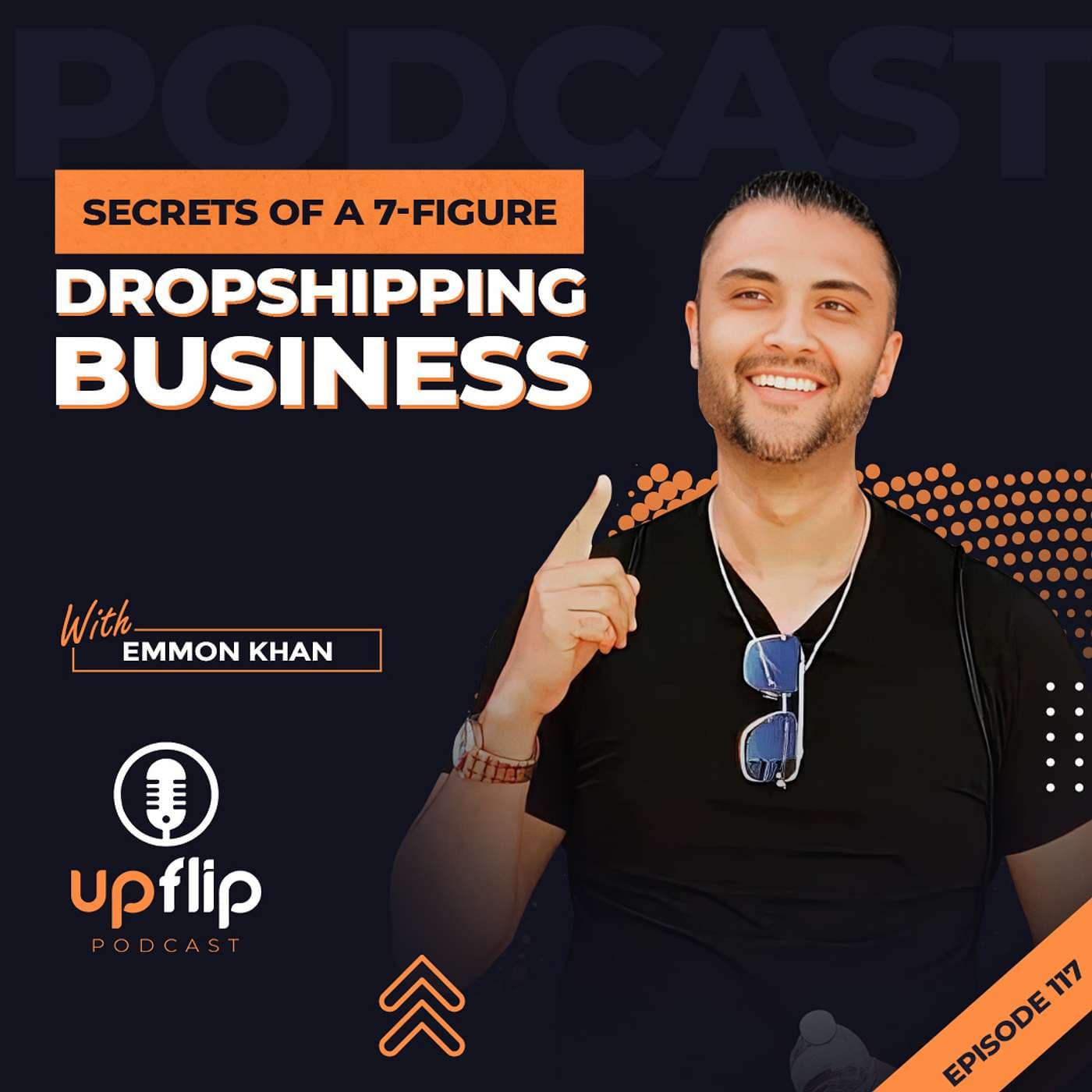
UpFlip Podcast Episode 117 Summary: This is How I Make $1M/Month with Shopify Dropshipping
Podcast: The UpFlip Podcast Episode Title: 117. This is How I Make $1M/Month with Shopify Dropshipping Host: Alex Freeman Guest: Emmon Khan
---
Overview
In this episode, Alex Freeman interviews Emmon Khan, a successful entrepreneur who has generated over $20 million in sales within five years through dropshipping. Emmon shares his journey, insights into digital marketing, and practical advice for aspiring dropshippers, especially for those starting in 2024.
---
Key Themes and Discussions
Emmon Khan's Background
- Early Life: Grew up in a poor family with no entrepreneurial influence.
- Career Struggles: Frequently fired from jobs, realizing he values his time and wants control over his income.
- Shift to Entrepreneurship: Inspired by seeing online companies thrive while traditional businesses struggled, he moved towards e-commerce and dropshipping.
Transition to E-commerce
- Initial Experience: Worked for a consulting firm, observing companies making millions with minimal staff.
- Learning Phase: After losing his job due to personal circumstances (his father's illness), Emmon dedicated himself to learning digital marketing and e-commerce skills at Starbucks for long hours.
Journey to Success
- First-Year Revenue: Made about $130,000 but faced low profitability due to reinvestment in learning and marketing.
- Growth: Progressed to making $1 million per month by focusing on the right marketing strategies, building a team, and creating systems for efficiency.
---
Key Insights and Advice
The Importance of Mindset
- Long-term Commitment: Success in business requires perseverance; quitting after a short period indicates a mindset issue rather than a business problem.
- Continuous Learning: Emmon emphasizes the value of investing in personal development and surrounding oneself with credible mentors.
Dropshipping Trends and Strategies
- Current Landscape: Dropshipping is evolving; the quality of stores and marketing needs to be higher today compared to earlier years. It’s essential to build a brand rather than just a generic store.
- Single Product Focus: Encourages aspiring dropshippers to concentrate on one or two products, crafting a strong brand around them rather than testing numerous products with minimal budgets.
Marketing Tactics
- Ad Spend: It’s necessary to have a budget to test products effectively. Starting dropshipping with zero investment is unrealistic.
- Utilizing Platforms: Recommends TikTok Shops as an emerging platform for e-commerce, suggesting it could rival established platforms like Shopify due to its organic reach.
Metrics and Automation
- Key Metrics: Focus on revenue, cost of goods sold (COGS), gross margins, and net profit to make informed decisions.
- Systematization: Initially intensive, Emmon’s business operations have become largely automated, allowing him to only invest a few hours weekly on high-level checks.
---
Fan Blitz Questions
- Is dropshipping on the decline?
Emmon asserts that while dropshipping is evolving, it will not die as a business model. It is transforming into a brand-centric approach.
- What are effective customer acquisition strategies?
Focus on creating compelling offers and using upsells in a sales funnel to recover customer acquisition costs.
- How to start learning about dropshipping?
Utilize free resources like YouTube to get a basic understanding before investing in more expensive courses.
---
Conclusion
Emmon Khan's insights and experiences highlight the importance of resilience, strategic focus, and a mindset geared towards long-term growth in entrepreneurship. His success story serves as inspiration for aspiring dropshippers, emphasizing the need for a calculated approach and continuous learning in an ever-evolving market.
For more information about Emmon Khan and to connect with him, listeners are encouraged to check out his Instagram and YouTube channels.
---
Related Resources
- UpFlip Academy: [UpFlip Academy](https://bit.ly/3YBvIIi)
- Find Emmon on Instagram: [Instagram](https://www.instagram.com/emmon_khan)
- Listen to More Episodes: [UpFlip Podcast](https://www.upflip.com/podcast)
Thanks for tuning in to this episode of the UpFlip Podcast!
Written by AI. May contain mistakes. Listen to the episode to check what was said.
Transcript
Automatic transcript. May contain errors.0:00Our guest today has turned his digital marketing expertise into eight-figure dropshipping sales. And today, he's sharing his secrets to attracting customers to a brand new e-commerce store. His take on the latest dropshipping trends and how you can profit from them. And what exactly to do if you're starting a brand new e-commerce store in 2024. I'm Alex Freeman, and you're listening to the Upflip Podcast, where we uncover how great businesses are built, how they're run behind the scenes, and how you can replicate their success. Every week on the show, you'll hear conversations with entrepreneurs who share their secrets to grow and scale a business.
0:33We start with their background and how they got started, then segue into the business section where we give you some useful resources. And finally, we'll ask some FanBlitz questions directly from our YouTube community. Every episode wraps up with my three takeaways that are key points you won't want to miss. Emin Khan is a genius in sales and marketing. He has made more than$20 million from his business in just five years. He invested over$100 ,000 into digital marketing and e-commerce courses, coaching, and masterminds. And today, I'm having a rare chance to pick his brain and share some insane value bombs with you.
1:07Eamon, thank you so much for joining us. Welcome to the show. Thanks for having me, man. To get things started, just kind of the big broad question here, what made you want to become an entrepreneur? Good question, man. It was a couple different things. I grew up very, very poor. I didn't really have a family of entrepreneurs. They were all just go to school, become a doctor, become an engineer, become an accountant, that kind of mindsets. And then as I started growing up, I saw people around me with bigger houses, better cars, more fancy lifestyles. And I thought only celebrities could achieve that type of status or type of material possessions.
1:38I think it was one of the situations where I wanted to be able to achieve those things, get those things. But I knew a job couldn't get me there. So I just went like my early childhood to probably my teens and my 20s. I just kept getting fired from one job to another, to another job, another job. I thought something was really wrong with me. In fact, I was a top performer in pretty much every position I was working for. but there's nothing wrong with me. It was just, I was never cut out to work with anybody. I just don't like authority. I don't like people. I'm monetizing my time. I value my time very religiously.
2:07So somebody pays me six burgers per year. I'm like, well, you're telling me one year of my life is worth six burgers to you. I just find it disrespectful. I like to control my time. I like to monetize my own time. So everything I do, I put a unit of one hour of my time. I put a dollar value behind it. So when I give it to certain tasks, I know how much time and value I'm giving. So I want my income to be relative to the value I provide, not by the hours I work. So it was kind of a combination of things, more just appreciating and evaluating my own time and also trying to live a better lifestyle and coming from a poor childhood.
2:39So what brought you to e-commerce and dropshipping as kind of the entrepreneurial outlet that you opted to pursue? Yeah. So back then, I mean, compared to now when you go online and YouTube and these different platforms, there's so much content and courses and free value you can get. like 10, 15 years ago when I was growing up, especially in Cleveland, Ohio, and I didn't have anybody around me. I knew that internet was a thing. Back then, dropshipping was not really big. It wasn't as mainstream as it is now. I was like, I want to be able to make money online, but how do I start? So when I used to work for this consulting firm back in the day, I used to travel around 35 weeks a year consulting with all this type of companies.
3:17They did revenue from like a couple of million to hundreds of millions of dollars per year, manufacturing companies, tech companies, pharma companies. And the businesses I saw go from zero to making millions of dollars the fastest were online companies. I used to go travel 35 months a year. I'll be in New York City. I'll be in Detroit. I'll be in Florida. And I would spend like a week at the headquarters of these companies and analyze the entire businesses. So a couple of times I got to spend time at e-commerce companies that had a digital presence and they're making money online. And like these guys have a staff of like less than 10 people and they're making millions of dollars a month.
3:48And then you have other companies, the manufacturing company that have hundreds and hundreds of employees and they're making, you know, So millions of dollars, but like a 2 % margins and just so labor intensive. So a light bulb went off in my head. I'm like, well, if I can do this same thing at a smaller scale by myself and I can learn these online skills, whether it's, you know, learning Facebook ads, Google ads, Snapchat, TikTok, I mean, email marketing, there's so many things you can get into. If I learn these basic fundamental skills, how to market myself online, I knew it was going to be a very valuable skill.
4:15It'll be off in the future. And I saw where a lot of retailers were shutting down, going bankrupt and going out of business. So I just saw this trend and everything was shifting online. So I think it was a combination of my consulting experience and seeing these online businesses and also seeing just following the market, where the market was headed in these retail bankruptcies that kind of led me into the online space. What did that first year look like for you? Like maybe it was more than a year, maybe it was less than a year, but like how long did it take you to kind of say, okay, this is what I'm doing?
4:42And then like to get to the point of being able to say, oh, this is actually working. I can now grow this, scale this. I don't have to go find another job that I might get fired from. Yeah, good question. When I got started, it was about eight, nine years ago. My dad, I was living back in Chicago. My dad got diagnosed with ALS disease. It's a pretty horrible disease. There's no cure. There's no cause for it. It's a very rare disease. And at that time, we're working at this firm and wanting me to travel, you know, consultants travel 35 weeks a year. And I couldn't travel because my dad's in the hospital.
5:10He has his terminal illness. My mom is in drive. So that probably was a pivotal point for me where I was working for this firm and I got a call with them like, guys, I can't travel. My dad's in the hospital. He's really sick. And the physician really entailed me having to travel a lot. And they just weren't understanding. And it was just really like my tone. And some words were said and went back and forth. They basically let me go. And they fired me in the worst possible time. And at that time, I was kind of already, you know, learning about the online space a bit. So when this situation happened, I lost my job.
5:37I got fired. So now I'm collecting unemployment. You know, my income goes from, you know, X to making maybe 30, 40 percent of the income I was making before. So I'm really making ends meet. And I used to literally take my mom and drop her at the hospital when my dad was staying at and go to nearby Starbucks and spend like 10, 15 hours a day at the Starbucks. Just learn about online marketing, Shopify, e-commerce, Facebook traffic, buying courses, consuming content. Because again, like I was saying previously, I wanted my income to be detached from the time I put in, but I knew I had to put in the initial time to learn the basic fundamentals.
6:08And I think this is where a lot of people fail because they want to try something, but they expect instant results. But then they go to school for four years and the job's never guaranteed. But then they try a business for one, two weeks and they fail or they don't get the result and they quit. So I knew I had to put in the time, whether it was like one month, six months or 12 months. And I almost for like seven, eight, nine months, I was literally going to Starbucks every single day, almost every single day and spending 10, 15 hours a day learning about these online marketing skills. Until I got to a point where I was making a decent amount of money.
6:37Like the first year I made about$130K and then it kind of just got better and better and better. How long did it take you to kind of start generating that revenue once you started on the journey? Well, the first year, you know, I made about$130 ,000,$140 ,000. But the profitability was very, very low because just like any business, you're learning the ins and outs of the business itself. So you're reinvesting things. So any profits you make, you put it back into the business or you spend money on, let's say, coaching and courses. So I was actually a decent amount of debt the first year. You know,$130 ,000, which is pretty good.
7:06Take-home was like very little. So the following year, you know, the first year was learning the fundamentals, but I knew what they were going to pay off. The following year, you know, I hit 100K in a month. And then we had like a team with myself, like a couple of virtual assistants. And the following year, we hit a million dollars per month. The only difference was learning information, putting systems in place, getting a team together, going out to China, spending a lot of time there, understanding the full skill of the business. It's not just like throwing up some ads and making some sales.
7:34There's a lot of data and strategy and creativity that goes behind it. I think that's a lot of people fails because I wouldn't want to expect instant fast results. As fast as money comes, it goes really fast too. But if you sit there and learn the fundamentals and you're okay with being a flatline, right? You're basically making no money. And then you understand the fundamentals of the business. What's going to happen is if you put in enough hours into that business or whatever you're trying to learn, after a certain period of time, it's going to shoot up like a hockey stick. It always does. If you put in enough time to something and you master it, it will shoot up like a hockey stick.
8:02And that's literally what happened with me. I put in my time. It was a really tough time, too, but I was going through a lot of depression and anxiety. My dad's laying at the hospital and, you know, loss of income. So it was going through a lot. And for me to be able to push through that, you know, I can look back and like, wow, I'm so happy. I went through that route and through those trials and tribulations, I was able to push forward and, you know, achieve what I was able to achieve. Are you looking to learn from real life, inspirational e-commerce success stories? Then you should be adding the e-commerce master plan podcast to your must listen list.
8:28Each week, they release a new episode interviewing an e-commerce founder or getting all masterclassy with an e-commerce expert. And right now, there are over 450 episodes in the back catalog for you to dive into. Get your e-commerce fill now. Listen to the e-commerce master plan podcast. Listeners, welcome to the Upflip business section. One big trend that we're seeing in dropshipping right now is TikTok dropshipping. We talked to Stone Ross, who's one of the early leaders in that space. You can hear his advice for how to get started with TikTok dropshipping in episode 106 of the Upflip podcast.
9:00Back to the conversation with Evan. How have things shifted in e-commerce and dropshipping from when you started? So if one of our listeners is saying, hey, I want to get into this. I want to put in my time. I want to growth like a hockey stick. How is their experience going to be different from yours if they started today? Yeah, good question. When I was doing it back then, there's a lot of restrictions that would happen. Me and me on the advertising platforms have gotten more strict. Stripe has gotten more strict. Shopify has gotten more strict. Facebook especially has gotten more strict. Back then, people could set up an ugly general type of store, put hundreds of products on there, test them through Facebook ads, and start doing sales relatively fast.
9:35And they're profitable as well, too, if you knew what you were doing. Nowadays, it's a little more harder. So the bad dropshippers have been kind of weeded out. The bad e-commerce people have been weeded out. So you have to spend more time on, essentially, you can dropship, but it has to be more on a branded side. So it doesn't look like you're dropshipping, but in the back end, you can be dropshipping, but you have to be able to take like a product or, you know, a couple of products in a specific niche and put it in a nicely designed, well-branded store. It looks like you actually have a legitimate brand.
10:05So I think a lot of people, they look for these magic tricks or these magic formulas, how to get sales or things like that. They will take like a dozen products and they'll test, you know, one product, like$5,$10, $15, another product,$5,$15, go from one product to another product, another product. When you can actually take one product and you focus on that one product and just go dig deep and just build a whole brand around that one product, this is the new age dropshipping. You're essentially taking one product and you're building a whole brand around that one product and you're scaling that up to like millions of dollars.
10:36So I think people need to stop focusing on, hey, let's just test 10, 15, 30, 40, 50 products. And then some of these younger kids, they don't have a budget to test any products. They're just blowing through their budget and they're really making an income either and looking for these crazy strategies. But I would say take one or two products, find a need in the markets and brand that product really, really well. And, you know, set up a nice store and learn traffic and scale that out. How do you go find that product? And so, you know, you going out and spending a ton of money of like getting hundreds of thousands of products and testing those products, take one or two, three products and just focus on testing those.
11:08And you can test them at really low budgets, right? You can do organic marketing. And there's also like media marketing too. There's also spy tools as well. There's one called Minia, for example, where you can go in and see which products are kind of trending and you can take a product and test it in a very low budget via dropshipping and it's a product that's well on dropshipping then you can take that same product private label it package it and kind of turn it into like a more of a branded product that you can you know build a whole like brand around but yes spy tools are good looking at working needs i really honestly think you can literally take and build a brand out of thing you look at like for example water right which is the most basic thing a water direct quantized product water go to the store costs 50 cents a dollar.
11:49But if you take the same bottle of water and you add some ingredients to it and you're like, well, this water has these 10 health benefits. Can you help you do this, this, this, this, this, this? So now the perceived value of that water is going to go up in your head because you know it has other additional health benefits versus you marketing that water at just water. So it's just, I think it's just taking a product and showing people the perceived value of that product versus like your competitors. Yeah, I think that's a really interesting point, especially like thinking like the water example is really powerful, right?
12:15That there's, You think about like Liquid Death, there's a lot of water brands that have accomplished that where what they're marketing is water. They've just found a really interesting way to do it. You know, dropshipping is also one of those things that is often billed online as you can start making money without putting any money in. Like how true is that online trope that dropshipping is something somebody can get into for no money? Or is there an expected investment that somebody should be anticipating making if they're going to get into dropshipping? I think that's a fallacy. Some of these online kind of gurus, some of these ads you see pop up in those courses, start dropshipping with no money.
12:52It is a bit of like a kind of clickbait title. That's not true at all. Dropshipping does take money just like any other business. I don't think the capital requirements as high compared to, let's say, you opening up like a brick and mortar retail store where you have to worry about the rent and overhead and employees and all these additional expenses. So with dropshipping, I think the catch is like, hey, you can literally have no investment in terms of the product side. But on the advertising side, For example, let's rank Facebook guys, which is 90 % of our traffic, Facebook and TikTok and Snapchat and a couple of platforms.
13:21You do need to have money to test products. And if a product doesn't do well, then it's like, well, you can move on to a new product and test that product or continue testing the same product. But starting with zero money, I think it's virtually impossible. I tell people if I have students or coaching students that want to come to me, you need at least a couple thousand dollars to start. Ideally, being able to test products on the dropshipping side. And if a product does well, I want them to graduate that product and turn it into actually a legit single product that you can build a whole brand around.
13:50Because when you build a brand, you know, you kind of differentiate yourself and you set yourself apart from the rest of the people who are just every single day, you know, trying to find a new little haystack, trying to find products, winning products and test one product after one product. And blowing through the entire budget, especially if you're a teenager in your early 20s, you come out of school or you're in high school. Like most of these young guys are not going to have the budget to continue to test products every single day. What are those best platforms for new dropshippers in 2024 going to be?
14:14What are they currently? Where should somebody get started? TikTok shops just started for last year. I do feel that TikTok shops or next this year and next year is going to be able to compete with Amazon and Shopify. It's going to be super huge. So I do, you know, recommend people do Shopify. Also look into TikTok shops as well, too. TikTok shops are charging zero fees right now and for new e-commerce people. And they're doing a very smart play. They have over a billion users and that people come in a platform. So previously, when people were on TikTok, for example, they would, as a product that would be advertised, people would have to go to Shopify and buy it.
14:46But now TikTok built the old in-house e-commerce platform within TikTok itself. So now people can buy around TikTok and TikTok takes a piece of every transaction. So that's going to be, I think, super huge. I would recommend people look into it because you can actually make a lot of money in TikTok shops without actually running any ads. So, you know, come back to your previous question, how much capital you need. TikTok shop is actually a platform where you can actually start with very, very minimum capital compared to even Shopify because you don't even need to run ads. All you got to do is get good at creating viral content.
15:15And there's a whole strategy around AI and creating viral content to be able to get sales into your store. We've done like 600 months with TikTok shops all organically. It's pretty insane. Yeah. So, again, like Miniyag, I mentioned, is a good spy tool for you to help like buy like winning products. It's a pretty popular tool. There's tons of other ones. There's the ad sector. There's PowerAdSpy. There's tons of other spotules as well. You can link to it. But I think Minia in terms of e-commerce is a very good one. This is going to bring us to a section of the show that we call our Fan Blitz questions.
15:40These questions come from our YouTube community. Listeners, you can head over to youtube.com slash upflip and pose questions to future podcast guests. Eben, are you ready for these from the listeners? Let's do it. All right. First one here from Bobny D. Baleck7168. Do you feel that dropshipping is on the decline? And what's the next wave of e-commerce going to look like? A dropshipping as a business will never die because if you're saying dropshipping as a business model, dropshipping is literally the arbitrage without you owning the asset, right? If you look at a real estate agent, for example, a real estate agent goes through and shows properties and doesn't actually own the property, right?
16:15He's essentially dropshipping the property because he has a buyer on one side and a seller on the other side. So he's literally showing the property and trying to sell it on behalf of the seller. So dropshipping in terms of e-commerce, it's never ever going to die. I think it's just evolving where you have to take products with dropshipping and then take winners and then turn them into brands. And then your ultimate goal is number one is like for sure cash flows. But number two is like you want to be able to have an exit plan where you build up the brand and you can sell it to another company or a private firm or venture capital firm and acquire the company and you can cash out and you take that cash and you can put it into other investments, real estate portfolio and other things as well.
16:48The job for me model is not going to die. It's here to stay. It's just, I think, evolving. I think the advertising has become a little more tougher than anything else because now people who are advertising products have to become more better marketers and trying to grab the attention of the same people because of the cost of Facebook ads has definitely gone up over the last couple of years since when I started. This next question kind of piggybacks off the back of that from Brodian4543. What are those best ways to get customers? And is there a rule of thumb for how much you should be spending on advertising?
17:16What I do is there's different ways to do it, right? If you look at crafting an offer, right? What I focus a lot now on these days is we take a product and sometimes we'll have our loss leader. So the front end of a product sometimes will break even, even sometimes take losses. And a lot of people want to make sales profits up front. So you can run ads, these things will happen. Either you're making profits up front, you're breaking even or making a loss. So somebody is breaking even or making a loss. What a lot of people will do starting out, they'll cut the product. Well, it's not making profits from day one.
17:43I'm just going to cut the product. But what you have to do is think of it in terms of like a sales funnel on LTV. So if the first product you're selling is breaking even or is a loss leader, it's completely okay. I will have a funnel built out in the back end, like two, three, four upsells where all my profits will come from. So it's okay to lose money as long as I acquire the customer in the front end. Because let's say you're selling a product for, I don't know,$50, but your cost of acquisition is going to be$60,$70 because maybe the audience you're advertising to is very expensive. It's okay as long as you acquire the customer, but you have a strong back end built out with a bunch of upsells and downsells.
18:13To acquire the customer and they're being offered an upsell and downsell, I will make all my profits in the back end and still be profitable. And I'm okay losing money in the front end. This one from BetsyLang9607, who says, I know nothing about this and I would have no idea how to start. Is it very complicated? Not at all. I think, you know, just starting out, just to learn like a basic, basic fundamentals, you can just go on YouTube, just plenty of content on YouTube, get started. I think that probably would be a best bet. You know, there's a lot of people sending courses, things like that too, which you can buy.
18:41But in the beginning, you're just trying to get a taste of it, right? Is this for me or is it not for me? I think YouTube content would probably be the best just to learn, hey, how is this setup? How do you set up a website? How do you hire freelancers to build your website? How do you run Facebook guys? Basic fundamental stuff. And if you like it, if you like the concept of it, if you like the setup and the work involved and you're generally interested, then you can dive into it more because I've been like last year I spent like four or six figures on coaching programs and different things like that.
19:05I'm constantly investing in myself because I'm very, very deeply invested in this industry. So initially, I think there's a lot of free content for you to consume. And then I think once you get into it and you actually enjoy it, then you can dig deeper and actually start investing more into it. That's going to do it for our FanBlitz questions. Listeners, don't forget, head over to youtube.com slash upflip and post questions to future podcast guests. I mean, one of the things that often comes up with e-commerce, dropshipping, you've mentioned one of the reasons you became an entrepreneur is wanting to control your time.
19:35And so often that we end up talking about passive income. So like how passive are your e-commerce operations now that you've kind of built them out? Initially, they're very, very intensive. I have a rule, any business I get into, especially the e-commerce stuff. If I can't get into it and systemize things and walk away from it and have been making money without me being there, I don't want to be involved in it. That's just my theory in any business that I get involved into. So the e-commerce stuff specifically, in the beginning, this is how I run things. I like to learn how to do everything. And if I need to, obviously, also certain elements of it, I will bring it in-house.
Read the full transcript
20:06But you need to learn how the entire business works initially. And so you're going to put a lot of hours in. So now over time, once you learn the things, you'll start systemizing repetitive paths. You have employees, virtual assistants. I haven't had hundreds of virtual assistants working for me at any point in time. You start systemizing things. And it's now, you know, from a research process to the fulfillment process, running ads, campaign setup, order fulfillment, customer service, all that stuff can be completely automated to a point where all you're doing is checking the dashboard, making sales are coming in, new issues happening in terms of like the ad accounts, things like that.
20:36So, I mean, you can get it from, you know, initially, I think you have to put in a lot of time. I think over a period of time, you can get it down to maybe five hours a week, six hours a week, 10 hours a week, just checking into the stats. And especially if you have multiple stores running like we do, you know, just kind of looking at a high level and make sure there's no operation issues or payment procedure is fine. PayPal is fine. Stripe is fine. As long as these kind of higher level things are fine and business is ready smoothly, you can just continue training stuff, right? It just, you have a system in place.
20:59And I think pretty much anything online, online space can be definitely for sure systemized. In your e-commerce journey, have you ever run into something where you're like, this has actually been nearly impossible to systematize? Or have you been able to systematize every element so far? Eventually, we figured it out. You know what I mean? We're entrepreneurs, right? We're entrepreneurs. So half of our day or half of a week is figuring out problems, issues. And half the time is actually other stuff, right? Issues, problems will pop up all the time. So I think everything we've had, we've figured out.
21:26For example, there was a phase where we kept on getting our ad accounts shut down and business managers' profile is restricted. Camera processes are restricted and they shut down. But it was scaling up too fast. And we came up with a solution of all of those. You know, we have, we got other people in the industry, doing masterminds. And I think that's one element I want to really mention is community and masterminds are super important because if you're having a problem, I'm going to see somebody else is having a problem. And if you can text them and be a caller, text away how they solve that problem, you can literally have it solved within a matter of hours instead of waiting days and weeks.
21:55What's the biggest mistake that you made when you first started dropshipping and what did you learn from it? The biggest mistake initially, some of the courses I was taking, you know, sometimes there's a saying, the blind leading the blind. There's a saying around that when you listen to the wrong people giving the wrong information about the type of things that you do. And like some guy will make a thousand bucks on a store and also they will create a course and start selling the course. And you have to be very careful who you trust out there in this space because some of these people don't have the credibility to be able to give you the right information.
22:26And then you start following them, consuming information they have. And then they kind of lead you to the wrong path. I had situations where that's exactly what happened to me. I invested in some courses, things like that too. And it wasn't a good information and I learned some wrong tactics. So I had to go back and, you know, get into some higher level groups and kind of unwired my brain to think like that because I just got wired to think a certain way. I thought this is how I was supposed to be or this hard ride, like, you know, let's say Facebook strategies or hard stuff campaigns. And it was the completely wrong way.
22:51So I think unwiring yourself and making sure the person that you're listening to is credible and they already has success and they can show you the success. and listening to those type of people, I think would be, you know, a mistake and also like a solution as well too. So just following the right people and, you know, also not listening to your friends and family. If your friends or family wants to give you advice, but they don't have experience in the thing that you're trying to make money in or you're trying to do, probably should listen to that. People that are your friends or family, like I would never go listen to hard advice from a pilot or I would go to a pilot and listen to hard advice because that's not the thing they specialize in.
23:24So just make sure the information you're consuming is from a credible source And I think that's another mistake I made early on because I was listening to the information from the wrong sources and they weren't even credible enough to provide that information. I just, they were friends and family, so I just consumed that information. So just be careful what you listen to. I think that could be like a day and night difference in your success. I really like that advice because I do think that there are so many of us that have that attitude of like, my dad knows everything. It probably doesn't know everything.
23:48You mentioned that once you've been able to systematize everything, most of your day with the e-commerce store or most of the limited hours you're spending are looking at the various dashboards and metrics. What are those metrics and numbers that you're tracking for your e-commerce store? And what are those telling you about the business? I make all decisions based off of numbers. At the end of the day, marketing, paid media, media buying, it's all based off numbers and data. So if the numbers don't make sense and they're not jiving, you know, I make all decisions based off data. Marketing is numbers.
24:16So when I look at a business, I look at my e-commerce or a dashboard, the high level stuff, right? You have your revenue, you have your COGS, you have your gross margins. Then you have your variable costs, which are all your salaries, expenses, things like that. And then you have your net profit after that. So on dropshipping in general, unless you're doing like a brand, margins traditionally are going to be anywhere between 15 to 25, 23 kind of percent. But we make up a lot of that in terms of volume because the amount of volume we're doing, I'm okay with taking 15 % because we do such large volume.
24:45Lots of gold in this interview. If you could pick the one thing that listeners take away from it, what would it be? Number one is what I tell people in any business that you start with, whether it's this or any business, you need to have the proper mindset. So a lot of people come up to me. I get, like I said, a bunch of people every single time at the gym or when I'm out somewhere, come up to me and ask all your podcasts. I saw this. Can you give me some? I mean, ask some questions. Ask all the e-commerce questions and all this crazy strategies and things they learn. I keep stuff very simple.
25:11You know, number one is like, if you start something and you try for one or two weeks and you quit, you don't have a business problem. You have a mindset issue. So what I need you to do is I need you to go back and fix your mindset. That's why I'm really big into personal development. If you have the right proper mindset of not quitting when things don't go the right way initially and you completely quit, that's, I think, the basis fundamentals and the groundwork foundation that you need to be able to have success. Where can listeners learn more about you and what you're up to? The two-way platforms would be Instagram and YouTube.
25:36Instagram, I'm very, very active on Instagram. It's emin underscore con. And then YouTube, I'm building a YouTube as well too. I have a YouTube channel as well too. I try to provide a decent amount of value. But sometimes, again, you know, solve the business. So I don't have time to put out content. But that's probably the two main platforms. The TikTok is kind of coming. But YouTube and Instagram probably would be the main two platforms. That was my conversation with Emin Khan about dropshipping and other e-commerce topics. And one thing that I really liked about that conversation was because he didn't have any entrepreneurial role models in his life, it was a bit of a longer journey to get there and becoming an entrepreneur.
26:09What that led to was him putting in the time, that kind of second takeaway for me from this It's a pleasure, Matt. Thank you for having me. You made this great point where people go to school for four years. They get their college degree because that seems to be the thing to do so that they can get a good job. But that good job is not a guaranteed thing. But then when they go to launch a business, so many people are giving it one to two weeks and then say, well, obviously not going to work out. Investing that time into the new business is such an important thing that we hear from Emin. We've heard from a lot of the entrepreneurs we've talked to on this show.
26:40Finally, the last piece of advice that I really loved from him was that if your friends and family don't have experience in what you're trying to do, why are you listening to them for advice on what you should do in this thing that you're trying to pursue? Listen to yourself, listen to your mentors, go find those experts and listen to them and use that to build your business and your future. Listeners, you can find more advice for how to start a business the right way on the Upflip Hub. Or head over to episode 164 of the Upflip YouTube channel to find out how Eric Hsu acquired single grain with just$2 and grew it into a$14 million a year digital marketing agency.
27:18I'm Alex Freeman. You've been listening to the Upflip podcast. Have a great week. Evan Kahn, thank you so much for joining us. It's a pleasure, man. Thank you for having me.
From the publisher
Emmon Khan is a genius in sales and marketing. He has made more than $20 million from his business in just 5 years. He invested over $100k into digital marketing and eCommerce courses, coaching, and masterminds. In this episode we have a rare chance to pick his brain and share some insane value bombs with you.
Emmon has turned his digital marketing expertise into 8-figure dropshipping sales. And he’s sharing his secrets to attracting customers to a brand-new eCommerce store. His take on the latest dropshipping trends and how YOU can profit from them.
Resources:
- UpFlip Academy: https://bit.ly/3YBvIIi
- Episode 108: How to Start a Million Dollar Business in a Weekend (with Noah Kagan)
- eCommerce MasterPlan Podcast: https://ecommercemasterplan.com/podcast/
- Connect with Emmon: https://www.instagram.com/emmon_khan
Ready to be your own boss without starting from scratch? Grab our FREE Franchise Guide and unlock the secrets of proven business models that have already created thousands of success stories.
Connect with UpFlip:
- On Youtube
- On Instagram
- On Facebook
- @UpFlipOfficial on Twitter
For more insights to start, build, or grow a business, check out the resources on UpFlip.com or head to the UpFlip YouTube channel to see more interviews with business owners and experts.
Thanks for listening!


