
In short
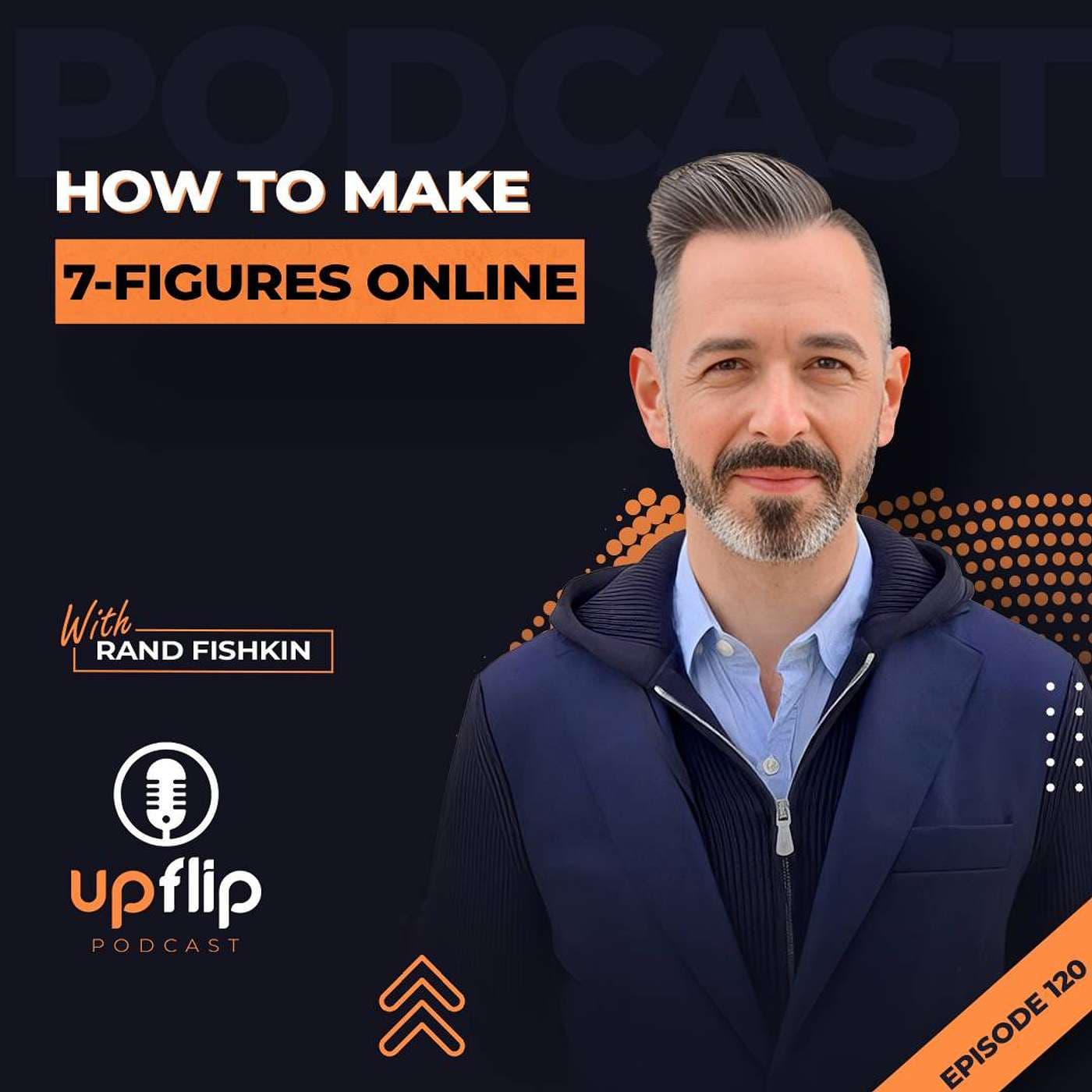
The UpFlip Podcast Episode 120: How to Go from $0 to 7-Figures Online (with Rand Fishkin)
Episode Overview In this episode of The UpFlip Podcast, host Ryan interviews Rand Fishkin, a recognized expert in SEO and digital marketing, about starting an online business and scaling it to seven figures. Rand shares his journey, insights into audience understanding, and strategies for effective marketing in 2024.
Key Themes and Discussions
Rand Fishkin's Background
- Early Career:
- Dropped out of college to start SEO Moz in 2001.
- Developed skills in SEO out of necessity when the business could not pay subcontractors.
- Inspiration:
- Influenced by his mother, who ran a small business marketing agency.
- Founding SparkToro:
- Established SparkToro in 2018, focusing on audience research tools after leaving Moz.
Understanding Your Audience
- Know Your Audience:
- Engage with potential customers to understand their struggles and needs.
- Conduct interviews and surveys to gather insights on what excites them about potential products.
- Ideal Customer Profile:
- Target individuals who have the problem you are solving and who are adjacent to your existing network.
The Role of Content Marketing
- Content Creation:
- Emphasizes the importance of content marketing for brand visibility.
- Shares the concept of “zero-click content,” which encourages engagement on social media without directing traffic away from the platform.
- Lead Generation through Social Media:
- Use social media as a primary lead generation strategy.
- Focus on genuine interactions rather than spammy tactics; engage with potential customers authentically.
Differentiate Your Business
- Unique Value Proposition:
- Identify gaps in the market to find a niche that resonates with your skills.
- Be willing to differentiate from competitors by providing unique solutions that cater to a specific audience.
- Zig While Others Zag:
- Encourage entrepreneurs to explore unconventional marketing strategies that set them apart from competitors.
Key Takeaways
- Know Your Audience:
- Conduct interviews and research to understand your customers’ needs and preferences.
- Use Social Media for Lead Generation:
- Engage actively on social media to attract potential customers without relying heavily on paid advertising.
- Differentiate Your Business:
- Find and address gaps in the market to establish a unique value proposition that distinguishes your brand from others.
Resources Mentioned
- [UpFlip Academy](https://bit.ly/4hd7P1j) - An educational platform for entrepreneurs.
- [The Principles I Used to Scale My Business to $1M/Year](https://www.upflip.com/podcast) - Additional insights on growing a business.
Conclusion Rand Fishkin emphasizes the importance of understanding your audience, leveraging social media, and carving out a unique space in the market to successfully scale an online business. The episode is a valuable resource for aspiring entrepreneurs looking to make their mark in 2024 and beyond.
For more insights, check out the full episode on [The UpFlip Podcast](https://www.upflip.com) or connect with Rand on [Instagram](https://www.instagram.com/randderuiter).
Written by AI. May contain mistakes. Listen to the episode to check what was said.
Transcript
Automatic transcript. May contain errors.0:28Today, we have a very special guest. run behind the scenes and how you can replicate their success. In this interview, Randall share what he learned in the startup world, the exact habits and routines that were crucial to his success and the most important steps if you're starting an online business in 2024. Rand, welcome to the show. Yeah, my pleasure, Ryan. Thanks for having me. I think we got to lay like the basis of like where your career starts because I think it's a really cool journey. It starts really way before, but in 2001, you were two classes away from completing your degree at the University of Washington, where I also want to note you were the intramural league football team captain and you started SEO Moz, take me to this time and officially saying, you know what, I think it's time to quit my degree and start this company.
1:09So footnote about that intramural football captainship, our team lost every game we played. Oh no. And I was definitely the least talented person on the team, but I don't know. It's kind of this thing where sometimes people see me and they're like, you, you should be in charge. All right, All right, I'll do it. So yeah, in addition to that, I had this burgeoning passion for web design and development. I kind of love the internet, even from a very young age, like going on bulletin board systems in the 90s, love that kind of stuff. And I wanted to be part of it. Like I wanted to help build the internet and, you know, make websites and that kind of thing.
1:44But I was not good at it. Unfortunately, I don't have any artistic talent and my technical skills are subpar at best. So I was kind of a failed web designer, not doing so great. And eventually it got to the point where we couldn't pay our SEO subcontractors, right? We were building websites for clients, and then we would pay an SEO person to do some work on those sites, help them rank well. We couldn't afford to pay them. And so it fell to me to learn the practice of SEO. And it turns out this is actually something I was quite good at. And over the next few years, I sort of built a skill set and knowledge base around SEO and started sharing that on a website that eventually became seomos.org, I think started in 2003.
2:22And that site started attracting, you know, readers in the SEO community, which was very small at the time, and then brought us consulting inquiries, right? So people reached out and were like, hey, we want you to do SEO for us. Or hey, would you come to my event and speak about SEO? The practice was still thought of as very sketchy and spammy and like black hat and kind of evil and dark. Yeah. But eventually that faded slowly. No, thanks to Google, who continued to paint it as kind of this terrible thing for many, many years. But by 2007, you know, we had sort of paid back our debts and we were profitable and growing.
2:56And that's when we sort of found this software. That's interesting. I want to go back to a point that you said earlier in that of you're just like, just kind of doing this on the side, just building this, what part of you in your childhood, like planted the seed for you to start your own company or just like even explore like a side project? Because I think everyone has their founding story. Like my parents were entrepreneurs, so I wanted to be an entrepreneur, but what's yours? My dad was an engineer at Boeing and he was, you know, had an extremely traditional sort of 20th century style career, like started there in 1979, quit with his full pension 30 years to the week later in 2009.
3:29But my mom was, as we were growing up, I have a brother and a sister and all three of us would like go to her office after school. And she worked running like a small business marketing agency. So helping clients with their logo and their letterhead and their yellow page ad and all the traditional marketing and advertising types of things that you might have before the rise of the internet. And so I think that was probably an inspiration for me, right? I watched my mom use early versions of, you know, page maker and Photoshop and that kind of thing. And thought that was cool. She brought home Mosaic browser, right in like 1993 or four.
4:05And I got to play around on the super early version of the internet where there was like 17 websites you could visit, that kind of thing. So yeah, I think that was definitely an inspiration. Yeah, I feel like parents, they're just like always the root cause of like inspiration, especially in starting your own companies. If you're raised by entrepreneurs, you see, I call them the three W's of like, you get to decide like when you work, like who you work with and like where you work. And I feel like that's a big inspiration. And like anyone when you start their own businesses, those three factors, and of course, like so many others.
4:32You know, Ryan, to be fair, I didn't start my own business, right? I joined my mom's small business and like the two of us were going to the other, but she'd been running it for 20 years before I ever came around. And, you know, technically Moz was a new business that kind of came out of the ashes of that old business. But in fairness, I barely founded it, right? I didn't create it. I was more of an accidental entrepreneur. And it wasn't until I left Moz, you know, in 2018 that I started SparkToro, which was really a, okay, I'm going to contact the attorneys and incorporate and do all that kind of stuff.
5:05Yeah. Let's kind of fast forward to that 2018 point, then to starting SparkToro. Take us to that moment of like, oh, I want to do like audience research tools. Like how did you identify this in the market? Because I want to like lay context for people that are listening that want to start their own businesses. Like how do I identify those opportunities? And can you kind of share how you identified it? Yeah. So I, let's see, I disagree with a whole bunch of things in sort of classic venture capital world mindset and mentality sort of famously. But I will say this. I really like this concept, which comes from sort of Silicon Valley VC world of founder market fit.
5:38I think that's actually a really good idea, right? Of finding not just an opportunity or a space that you're interested in, but one that is a superb fit with your skills and abilities, your interests and passions, and hopefully an audience that already knows you, likes you, trusts you, right? And so, you know, as a pivot from SEO, which I I was legally prevented from doing my departure from Moz meant that I sort of signed a non-compete, right? All that kind of stuff. Yeah, yeah. Non-competes. Soon to be potentially unenforceable, right? I know the Biden administration is sort of working hard to get rid of those, which I think would be a boon to entrepreneurs, right?
6:13Who could then use their abilities to start new companies. But regardless, you know, for me, audience research was this thing where it was helpful and useful to many of the people that I knew and interacted with, to many of the audiences that came to events where I was, you know, the speaker to people who followed me online, but there was almost no competition. There are not other audience research tools. Like if you were to say audience research tools to someone, you know, in 2018, most likely what you would hear back is surveys and interviews. Those are the two key like kinds of audience research.
6:47And so imagining a software platform where you could like get large scale insights and data at scale about a describable group of people on the internet without having to survey them and sort of, you know, spend tens of thousands of dollars and wait six months and get your panel and try and demographically match the panel to be representative, yada, yada, yada. Like, that was kind of incredible, but it wasn't perceived as a big market. And so there weren't a bunch of players in that space. There wasn't a bunch of investment dollars going into that space. And that's what made me like it, right?
7:15I like the fact that it's like, hey, this is a small niche. It's not well served, doesn't exist yet, but it dovetails nicely with things that I like to do and skills and abilities that I've got. And I can close my eyes for 10 seconds and I can picture what the software looks like in my head. You know, that sort of makes it real. The same thing's true with Snapbar Studio too, right? This was like a, well, a little bit different in that I had no experience at all in the video game world, but I could close my eyes and see and imagine the game in my head. And I think that ability to sort of know whether it's going to become what the vision is and why it'll resonate with people, that's powerful.
7:51Definitely. And I think it's an interesting point that you hit on that you found an industry with no competition. Certainly there's industries out there waiting to be discovered that don't have any competition. I'm curious though, was it like a challenge building something that's never been really built before? Because an exercise we're going through right now is like, quite frankly, like we're looking at our competition and being like, what are they doing that are 10 years ahead of us? And we're just going to kind of copy it in a way because they're so much farther ahead. And you guys do video production stuff, right?
8:17Yeah, video production. So saturated market. There's no lies to be told there. Yeah, yeah, yeah. I mean, definitely. I think anytime you're in a market like yours, you have to find this like unique value proposition. Like here's this thing that we do different and better than anyone else. And, you know, as an example, right, Snack Bar Studio, how many video games are out there? Like, my God, literally hundreds of thousands of things that you could play. So you have to have that unique value proposition and you have to have it kind of on two vectors. like one for you guys, I'm sure, is the product, right?
8:47Which is like about the quality and the level of service and sort of the style and the unique vision that you bring to the video production. And the second one is kind of positioning, like who are your customers? Why are you a better choice for customers like that, but not a good choice for customers like this? And who are you gonna target with that? You know, I think that that's a natural part of entrepreneurship that, to be honest, when I started my first company, Moz, I didn't think about any of that stuff, right? I was like, SEO is cool. I'm gonna help people rank in Google. oh man, I need all this data.
9:16Like, you know what? I'm going to go make a tool that gets that data that'll save me time. Oh man, I want to share this tool with my friends on the blog. You know, like that was essentially the start for Moz. So very, very unstructured, unthoughtful. You know, I hope with SparkToro, with Snackbar, it's more considered, it's more strategic. You know, I'm sure it is that way for you too. And now a quick announcement. We're launching the exclusive Upflip Academy. It's like the Netflix for entrepreneurs. Usually you have to pay upwards of$1 ,000 to get a single course. But with Uplip Academy, you'll get access to dozens of premier courses by extremely successful founders, CEOs, and owners, all for a very affordable monthly subscription.
9:55But it's not just courses. It's complete blueprints from entrepreneurs who know exactly how to run a business and their niche. It's tremendous networking opportunities. It's your one-stop destination for learning everything you need to succeed in your own business. To celebrate the launch of Uplip Academy, we're offering a very lucrative early bird price. Join now to lock in your price forever. Follow the membership link in the description of this episode. I want to hit on that first point of the unique value proposition, and specifically when it comes like online businesses, because like I said, there's so many companies out there.
10:25A lot of times you're going to have very fierce competition. Business is a war in some sense. How do you develop that unique value proposition that will actually stick with your clients? Can you take us through a few steps on how to actually do that? I think if you are trying to build a big company that's sort of hyper growth focused, it's very different from if you're trying to build a profitable small to medium business. Right. So you and I are kind of in this like, hey, you know what? We don't have thousands of employees. We're not trying to become a billion dollar unicorn. Like our goal is how do we build a profitable few million to maybe few tens of millions of dollars a year business?
10:58Make it sustainable. Like keep it going. And I love those kinds of companies. And I think for those kinds of companies, finding the unique value proposition is about saying, where are the holes in the market? So holes in the market, meaning, oh, tons of people are offering video production, but very few of them are optimizing for, I don't know, social media sharing for B2B companies. I don't know if that's actually something you guys do. Maybe it is. But if you find that hole, you know, it could be like, oh, no, it's, you know, for us, it's like fishing and wildlife types of videos. And we really help with great, like awesome, you know, find your little niche.
11:30I don't care if it's like, oh, well, we help chemical engineers in the plumbing world. Like, fantastic, right? Find your thing, find that hole, and then make sure that it also connects with your kind of unique skill set in two ways. One is from the, again, I always think about things from both product and marketing, right? So product side would be like, we can create a better product for this group of people than others can because we know specific things about that field, industry, customer set, what they need, what they don't need. et cetera. Or, well, hopefully and, but maybe or, we're better at marketing to that group.
12:06Like we have unique channels, we have unique content, we have unique pipelines, we have a unique network to that group of people that nobody else has got. You take these two things and you combine them and you have really a superpower to get a profitable business off the ground and going. And if you remove one of them, you can still stand on the other. If you remove both of them, you're probably a commodity, right? You're going to be playing the pricing game, or you're going to be trying to sort of win out through overspending on advertising. That's a really hard battle. Yeah. I feel like understanding like who you're going after and be able to speak with them is like one of the best things or like one of the most beneficial things that we're realizing right now is like, we really want to hit like companies like one to 50 that has like one marketing director that's strapped to time, resources, all that stuff.
12:55And that's really helped our marketing efforts and actually being able to speak to that audience. I will say I love sort of customer interviews and audience interviews for this reason. I spent the first 16, 17 months of SparkToro while my co-founder Casey, right, who's like our CTO, he's building the product, right? So he's like figuring out all the data sources and how to crawl and index all this stuff and tie these profiles together and get data out of them and how to store it and all this kind of stuff. Interface, right? Strike payment processing, like a million things. But simultaneously to that, right, I'm giving like input on it once every week or two, right?
13:28He'll like show me what he's up to and I'll be like, yeah, that looks pretty good. Or no, we should change this. We should do this differently this way, whatever. But then the rest of my time, I'm kind of like, you know, just twiddling my thumbs, like whatever's going on. But that is time that I almost exclusively spent doing two things. One was building our email list, right? So I'm going to conferences and events and I'm going to online on my social media channels and publishing blog posts on our website and finding content partnerships with like, you know, data providers, all this kind of stuff, doing tons of webinars, podcasts, etc.
14:01And the second thing I'm doing is wherever I go and whoever I talk to, I'm always like, oh, hey, Ryan, like, could I interview you just over a 30 minute thing and just ask you about how you do audience research right now? A lot of people were like, I don't know what that is. But sure, you can ask me questions, right? So that process was fantastic, right? Because it really uncovered kind of what percent of my audience, the people that I already reached, were trying to solve the problem that we were solving. And it kind of helped us pivot away from what I'm going to call like influencer marketing, because a lot of what audience research is about for folks who don't know is like figuring out the sources of influence for a group of people.
14:41For example, directors of marketing at small to medium companies, right? Like the ones that your agency targets. So that group of people, there are certain accounts on threads or Twitter or LinkedIn that they follow. There's certain podcasts that they listen to. There's certain YouTube channels they subscribe to. There are certain websites that they visit. There's events that they go to, newsletters that they get in their inbox, right? All those kinds of things. And that's a huge part of audience research. And, you know, full disclosure, like asking people that in a survey or interview does not work.
15:09You cannot get good data about that from asking people, right? If I'm like, hey, Ryan, tell me about your sources of influence for, I don't know, video games. Like, what do you pay attention to? And you might be like, what my friends play, you know, it's just, it's kind of like, ah, but then, you know, if I look in your browser history, it's like, oh, I'm going to find, you know, whatever, Kotaku and Polygon and Game Informer and, you know, all this stuff. And like, oh yeah, you follow these Twitter accounts and look at that. So this process of like actually asking your customers, if you have them already, or potential customers, if you don't like, hey, how do you solve this problem today?
15:42What frustrates you about it? What do you like and dislike? What would really be game-changing for you and make you go, oh my God, like take my money. What are things where, you know, when I start talking about them and I get excited about them, do you get excited about them or does that not happen? I love that part of the interview process where like I'd sit down with an agency owner, for example, and I'd be like, yeah, we're going to be able to do this. And I can't wait because it'll show you all this data and here, da, da, da, da. And the agency owner would be like, I was like, oh, you don't care about this at all.
16:10That is not interesting. But then occasionally I describe something and their eyes would light up, right? And that's when you know that you're onto a product or a feature or a data set that's really important. Yeah. I feel like that's honestly, if anyone's listening, if they're going to do selling something, audience research, anything like that. One thing that I do is I look for like body language. Like when I'm saying something to someone, are they like nodding their head? Like, oh, that is exciting. If they're flat face, like as I'm talking, like, okay, I need to pivot this messaging just a little bit.
16:36And I feel like what you said, like as you're describing something, I mean, that's how you identify those gaps in the market of like, oh, I should be building this like this is a need that people want. I wish I could convey how important it is to sort of have that base level of human empathy that you have to bring to business conversations like, OK, here's a good example. If you've ever sat down with a group of relatives, strangers, I don't know, you're at a friend's wedding and you get seated at like table eight and table eight. You're like, great. I know one person here. OK, you know, nice to meet you.
17:07tell me about your world and you know how do you know the bride and groom or you know whatever like those kinds of things and you can very quickly feel whether you've got a connection with a person right and what i'm not encouraging you to do is because i think that this can throw people off and it definitely threw me off i am not encouraging you to try and force a connection where one doesn't exist if you don't have rapport and connection with a person you don't have to blame your product or your idea. But if you do have rapport and connection, like if a vibe starts going and you're like, oh man, I really like this person.
17:40Like I can imagine us going and getting a drink after this and you know, whatever, like being friends. Cool. That's your person. Those are the ones you want to listen to. And please now do me a favor and go find the things that make their eyes light up and make them excited and the things that make them flat-faced. And I don't know, that's a hard job. Like it's one of the weirdest things founders have to do. And I am aware of very few resources that teach you this or even talk about it. Well, did we just identify a gap in the market then? If there's a reason.
18:13How do you teach people how to like form meaningful connections with other humans? That's above my pay grade. Yeah, it's tough. It's really, really tough. And I feel like something for me that a lot is like having that filter in mind with like Like what I am talking to people is like your product, your service is not for everybody in this world. It's like you don't have a product, but it's like what you said. It's fine. The people that nod that smile that are like, yes, yes, yes. In fact, Ryan, I kind of like really pissing some people off with my products. It's great. And my market position. If you put something out there that is sort of broadly appealing to everyone, which especially in B2B, oh my God, everybody tries to do because they don't want to like piss anyone off or turn off a potential customer or whatever, I actually feel like that's a recipe for marketing disaster.
18:55It appeals to nobody. And it suggests like you don't have a strong opinion about the market. So, you know, like, for example, SparkToro, one of our two big sort of positions in the market is that we think fundamentally that Google and Facebook, Amazon, Apple are almost certainly stealing your ad dollars, like just full stop, right? We think that's not to say that we hate everyone who buys advertising, right? Or that we think that anyone who, you know, puts money into those platforms is like definitely losing out on ROI. I've seen plenty of ROI positive campaigns on all four of those, but I think a ton of the ad dollars that you're spending are not working for you.
19:34And I think a ton of the ad dollars that you are spending are getting probably undercounted. And so you're getting this sort of mixed, whatever, return on advertising spend number from the platforms that are trying to like mess with you. Yeah, I 1000 % agree. I think a perfect example, I was reading Elon Musk's book by Walter Isaacson. And there was a quote, I don't know the exact quote, but it was like basically what I said earlier, like if you make a product that everyone loves, like no one will love it. And the perfect example right now is like Cybertruck. Some people despise the heck out of Cybertruck saying it's the ugliest thing in the world.
20:03And some people are like, this is the coolest thing in the world. And so it's trying to build if you're trying to think about business, building a product that not everyone loves and some people hate and some people really, really enjoy and talk to people that really, really enjoy it. I'm challenged to want to use anything Elon's doing right now. That's a great example. I feel like history will not be kind to examples that use him, but you know, certainly like I'm trying to think of something that's, that's really stood the test of time. Okay. This is back in video game world, but the Nintendo switch, the Nintendo switch was very polarizing.
20:32Like there's a lot of hardcore gamers who hate it and think it's dumb and terrible. And why would anyone play that thing? And it's not for real gamers and it's kind of a kiddie toy and the portability thing is not great. And the portability thing makes it so that it's an underpowered device. And so game developers can't put really cool games on there. And anyone who does has to make the graphics crappy. So all this criticism and best-selling console in a long time, right? And like has absolutely crushed Nintendo's numbers and they've sold a ton of games on there. And, you know, so it's absolutely right for this group of people and wrong for a ton of these people who strongly dislike it.
21:07I think that's a great way to go, even with a mass market product, right? in consumers, right? Like an automobile or a game system, it can work. But I think it's even more powerful in B2B because or in niche products, primarily because the audience you need to resonate with in order to be kind of profitable and successful is so much smaller. And so you really can afford to be the perfect thing for these people and turn off a lot of everyone else. But if you can resonate with that small group of dedicated sort of fans and customers who need you can really work. I love that. I want to take the next step in our journey here.
21:41So let's just say you do find an audience that works. A lot of people start in their own company. Some people are going to definitely be okay throwing around a lot of money. Some people are going to be a little bit more cost effective. Let's just say you nail down your audience. What's kind of like a bootstrapped way to then reach that audience? I'm a good person to ask because so far SparkToro has spent$500 on paid customer acquisition in our history. My old friend, Rob Bucci, was running a marathon for, I want to say it was for disease and I can't remember exactly what, but a charity marathon and he couldn't get anyone to sponsor.
22:15He was wearing sort of like bike shorts type shorts and he couldn't get anyone to sponsor specifically like the center of his butt. And so I was like, Rob Sparktora will do it. We will sponsor your butthole for this marathon. And that is the only$500 that we have spent so far on paid advertising for a good cause. You know, someone's got to sponsor Rob's bot. So the rest of our marketing has all come through what I essentially call like finding sources of influence and being present in those places that can include a podcast that our customers might listen to. It includes lots of webinars. It includes conferences and events.
Read the full transcript
22:53It includes a metric ton of social media marketing. Basically, you know, I put up content in places, but I also engage and interact with hundreds, thousands of other people on social media, you know, leaving comments and replies on their thing, not in a spammy salesy way ever, always in a high engagement trying to do way, right? Like I try and pump up my friends about like, hey, you're doing this thing. I think this thing's so cool. Or, you know, someone asks a question about something to do with audience data. And I'm like, oh man, okay, this is kind of fun. I actually can do this in SparkToro.
23:24Here's a screenshot of it, right? And sharing that out, we do a tremendous amount of email marketing. So getting tons of people onto our, like driving people to our website and then using the SparkToro sort of free report as a signup mechanism. I think Casey said we have close to 200 ,000 people on our email list because every week, a thousand people come to SparkToro, you know, and they're like, yeah, I want to try the free version of the tool. They've heard about it on a podcast, at an event, on a Slack channel, in an email newsletter, on a blog post, you know, in some form of media that they pay attention to.
23:56And what's great about it is, you know, it's sort of for us, it's like the proof is in the pudding. Our tool helps you find, like helps our customers find sources of influence. And then that's how we also market. So let me go back in time because my first company, Ryan, didn't do that. My first company, Moz, was very driven by SEO and content, like classic SEO content flyway. We would publish, you know, many posts, resources every week, get those posts, ranking in Google. Hopefully we were pretty good at SEO. So, you know, for a long time, Moz ranked number one for SEO, learn SEO, guide to SEO, you know, keyword research, link building, all the sort of components of that.
24:32And it worked tremendously well, right? So there's lots of ways to do this. You know, some people do it through a YouTube channel. Some people do it through TikTok, which I find quite risky today. But for a variety of reasons, some people do it a ton of like old school type of marketing. You can still see mailers and signage and real world, like physical world stuff. Pretty much every street artist out there is essentially a combination of their own street art plus Instagram, right? That's their marketing. So yeah. I love social media is such like top of the funnel activities that you can do. It's free for one.
25:05You can get such a large audience by commenting on these posts, like actually putting in genuine thought for anyone listening that like is like, like, does it actually work? I can be a testimonial that we just closed a 5k deal like last month because someone saw me posting something on social media. Like it works, but you need to actually put the effort in. And to your point, like not be spammy when you actually do it. And there's an art to do that, but it sounds like you have a pretty good formula for it. Yeah. So my colleague, Amanda Natividad, who's the VP of marketing here, she coined this phrase called zero click content.
25:36And essentially, you know, one of the frustrating things that anyone in the marketing world, social media marketing world, especially realizes the last five years is that every platform, Twitter, LinkedIn, threads, Facebook, you know, Instagram, TikTok, they all hate links. They hate links because those links take people off their platform. And that just does not work for these people, right? So, you know, TikTok wants to keep you on TikTok so that they can monetize TikTok and like addict you to TikTok. They don't want you going off to some creator site and signing up for their email newsletter.
26:08And that really sucks for a ton of social media marketers who have relied on creating content on their own site and then driving traffic to it through social media, which is a ton of how B2B world learned to do social media marketing. And it just doesn't work anymore. And so Amanda coined this turn to basically describe a, I am going to upload native video and put native screenshots and images and visuals and photos. I'm going to engage with people on social, but in a way that has no link. It doesn't even suggest, oh, I should click on, you know, it's not, it doesn't say link in profile or anything like that.
26:43It leaves it up to the viewer, right? The content consumer on these social platforms to be like, gosh, that's really intriguing. What is that? How do I go learn more about that? And just assumes that some of them will. You can't track it. There's no way to get a reasonable estimate of the ROI from that type of investment, but it works really well. You know, it's weird. It's hard to get people to buy into. It's also very non-competitive because most businesses are not willing to tell their marketers, hey, I don't care that I can't measure anything you're doing. Go do it anyway. Nobody gets that freedom, but we take advantage of that, right?
27:17We're like, oh shit, that works for us, right? So we can blow it out. I'm like LinkedIn. I look at my impression and engagement numbers. I look at following numbers. I look at likes and replies and shares. Those are all what used to be called vanity metrics, right? In the social media marketing world, like, oh, you shouldn't pay attention to that. Look at sales. Look at number of assisted conversions. Look at how much traffic came to the site from LinkedIn. Yeah, none, none, because there's no link, right? People have to go find SparkToro and like search it out. And that is what I strongly recommend.
27:48I think Amanda's like zero click content insight was transformative and has been super powerful for us. That's really good advice. And like what I'm reading between the lines to this whole conversation is like, well, everyone zigs, like you zag type of thing, which is I think I'm reading between the lines like it's a really cool strategy here. Let's move to our fan blitz questions. This is our last segment. And these questions will come from our YouTube community listeners. You can head to youtube.com slash upflip and post questions for future podcast guests. But Rand, we are going to dive into about five fan blitz questions here.
28:21And so number one, we talk about a lot. How do you go about creating the picture of the ideal client? I want someone who clearly has the problem that you are solving and preferably is not immediately in your network, but adjacent to it. So like not someone you personally know, but someone who knows someone you know or follows you on social media or sort of subscribe to your email newsletter. I like those people the best for those sort of interviews and for making an ideal customer profile and doing audience research with because they tend to produce the highest quality, most valuable insights.
28:57I love that. Next question. This one kind of has me giggling. I want to start an online business, but want to avoid using social media. What is your advice for this? look tons of people do it i think i would actually strongly urge anyone who doesn't like a channel not to engage with it because you're not going to be great at it right and there's no point in doing a channel that you will like i've never heard anyone be like oh man i hate instagram so much but i'm so good at it like no doesn't happen so yeah look email is a fantastic channel content marketing can be a great channel and so can seo still if you find a sector or niche that's sort of underserved and where there's opportunity podcasts and events and conferences and webinars Ours can be great channels.
29:37Advertising in the right sectors can still work. Word of mouth can still work. Network-based distribution, all that kind of stuff. Guerrilla marketing, go for it. There's a lot of different ways to do it. After you find your ideal client, how do you draw them in and make them a customer? Let's see. So I think this is more important and more targeted towards sort of sales-focused companies where you're kind of attracting an audience and then each individual person, you're sort of trying to sell them on your service or your product. I have not run a business like that since 2009 when I got rid of the consulting business at Moz.
30:10And to be honest, it's not my preferred way of operating. So I don't know that I have great insights for you from a sales perspective. My focus is really on that. Like I like to get people aware of the product that I offer and leave it to them to make the choice of when they need us rather than trying to nudge them or push them to do sales with us. That's fair. Whoever this is, I just read the book of like the 10 commitments of selling Really good book. I'd recommend doing that on how to get someone to actually convert. I've heard people mention that before. Yeah. Great book. Two more. At this stage of success, what advice would you give to your teenage self?
30:45Gosh, that's a really tough one. Okay. I'll do one personal and one professional. The personal one is teenage Rand. I know you have had no success with dating or romance, but don't worry. You're going to meet a girl when you're like 22 on a bus coming back from Weezer concert and you're going to be done. That's it. It's going to go great from there. So just don't stress. I didn't do a whole lot of dating, but yeah, I've had a very successful marriage. It works out. Yeah. Yeah. Worked out. Let's see on the professional side, I would say sort of like you should have more confidence in yourself and your opinions and you shouldn't be afraid of making a mistake and then going and fixing it.
31:29You really should not be afraid of letting people go who are disappointing you. Don't worry, they're going to find great jobs at other places. And if you're not happy with them, they're probably not actually that happy working for you either. So just let it go. You know, I had very much an addiction to like, I need everybody to like me. Yeah, that was dumb. Don't do that anymore. Find people who really do a great job working with you in the boundaries that you've set for what you want. And everybody else, let them go find their bliss elsewhere. And my whole life, like the technology and marketing field has had very low supply of labor to a very high demand.
32:03And I wish I had felt less guilty, you know, letting someone go. Very last question for you, two more. This is the question I told you before the episode I'm really excited for. What's the biggest purchase you've ever made? Oh, yeah. Let's see. We paid for some family members college. That was definitely, yeah. We have some nieces. I think they're technically cousins, but we call them nieces and we covered their school. And I had a friend who I worked with at Moz who tragically, he passed away from a heart condition that he sort of didn't know about because it was during COVID and he wasn't going into the doctor because he and his family were trying to watch out for that.
32:40Anyway, he had three kids and we set up a college fund for them as well. I think those are the two largest single purchases other than a house. Of course. I was going to make sure to exclude the house other than a house. Other than a house. Yeah. Bran, last question for you. Where can people find you? Where can be able to connect with you, learn a little bit more about SparkToro, you, all that. Please plug it. Yeah, let's see. So LinkedIn is probably where I'm most active. Threads as well, which has really taken off for me and for SparkToro, where I'm at Randereuter on Threads. It's my Instagram username.
33:12And then if anyone wants to get in touch directly, I'm Rand at SparkToro.com. Happy to help folks out, answer questions. If you want to give me advice about video games, great. Love it. Ran, thank you so, so much for joining us. Three takeaways that I have today are one, you have to know your audience. If you're going to start a business, do your research, talk with them. And as Ran spoke, see those cues that they're doing. Are they nodding their heads? Are they shaking up and down? Are they giving good feedback? Number two, use social media as a lead gen strategy. It's super top of the funnel activity.
33:45It's cost effective and you can attract thousands and thousands of people. And then lastly, as I spoke about it, you need to zig while they zag. Find ways that your customers are not doing and do exactly that. Go on podcasts, go to actual events in person, find ways to zig while they zag, and you have a very good chance of succeeding in your online business. And for more inspiration starting an online business, check out episode 115 of the podcast, where Michael Techku shares the principle he used to scale his business to 1 million per year. Ran, thank you so much for being here. You are the absolute best.
34:16Thank you. Thank you. You bet. Take care.
34:21you
From the publisher
When it comes to SEO and digital marketing, it’s hard to find someone more knowledgeable than Rand Fishkin. His popular blog, hundred of keynotes, and 2 hyper-successful SaaS businesses are a testament to his skill.
If you’re looking to start an online business in 2024 this is the episode for you! Rand shares the role content marketing plays in marketing today. How social media can be used to generate leads, and why appealing to everyone will appeal to no one.
Key Takeaways:
- You have to know your audience if you’re going to start an online business in 2024. Talk to them and intimately understand their struggles and what they need.
- Use social media as a lead generation strategy to attract tons of people to your business.
- You need to zig while your competitors zag. Be different and set yourself apart by being the solution to the problem your customer has.
Resources:
- Join the UpFlip Academy today: https://bit.ly/4hd7P1j
- The Principles I Used to Scale My Business to $1M/Year: https://www.upflip.com/podcast
- Connect with Rand: https://www.instagram.com/randderuiter/
Ready to be your own boss without starting from scratch? Grab our FREE Franchise Guide and unlock the secrets of proven business models that have already created thousands of success stories.
Connect with UpFlip:
- On Youtube
- On Instagram
- On Facebook
- @UpFlipOfficial on Twitter
For more insights to start, build, or grow a business, check out the resources on UpFlip.com or head to the UpFlip YouTube channel to see more interviews with business owners and experts.
Thanks for listening!


