
In short
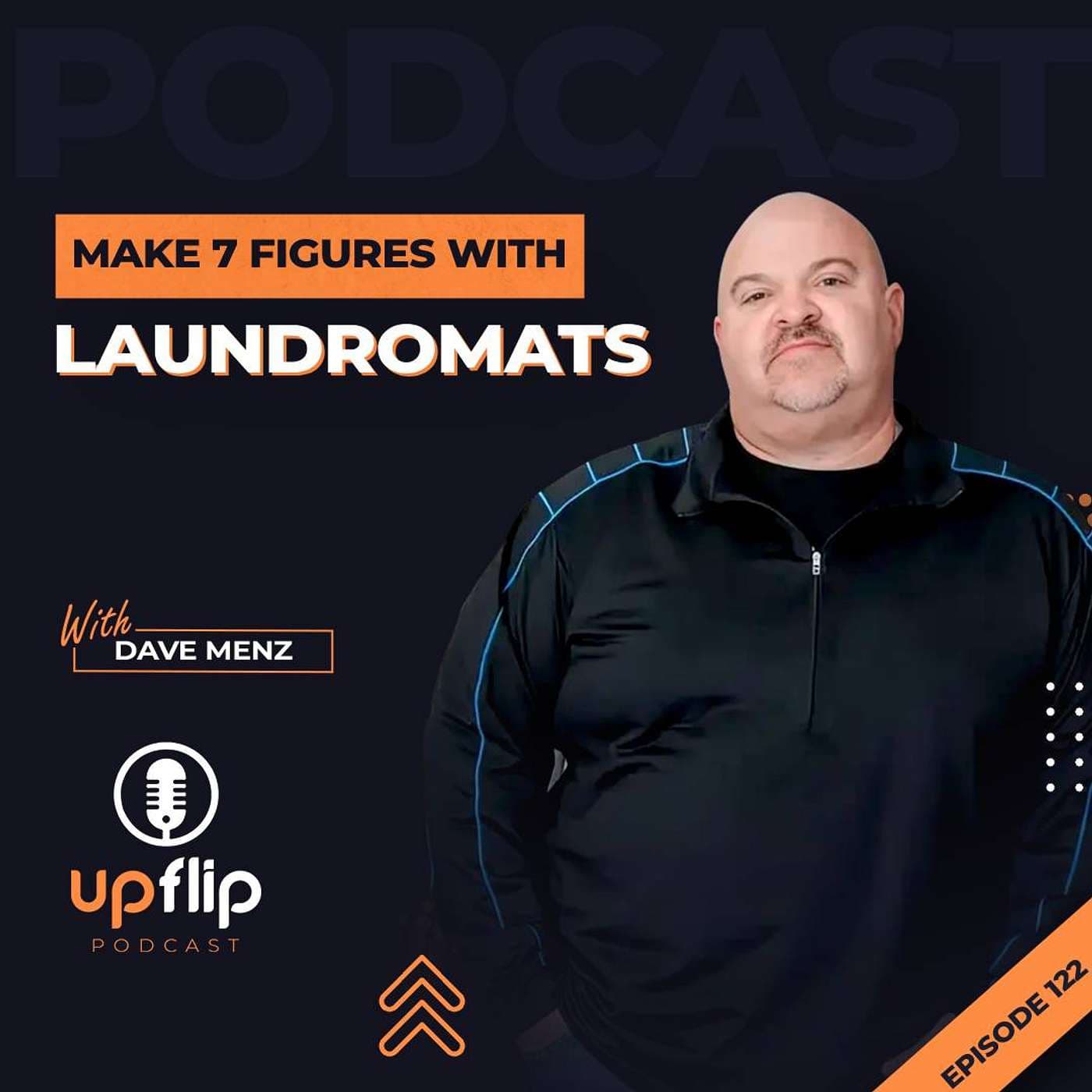
The UpFlip Podcast: Episode 122 - Here's Why They Call Me the Laundromat Millionaire
Podcast Overview The UpFlip Podcast explores how successful businesses are built and operated, sharing insights and practical advice for aspiring entrepreneurs. This episode features Dave Menz, a prominent figure in the laundromat business, who scaled his operation to $900,000 per month, earning the nickname "Laundromat Millionaire."
Episode Summary In this episode, host John Palumbo interviews Dave Menz about his journey in the laundromat industry, discussing how he transformed a side hustle into a thriving business. Dave emphasizes his commitment to helping others succeed and highlights the importance of systematizing processes in business.
Key Takeaways
- Laundromat as a Side Hustle: Dave started his laundromat business while working a corporate job, which he maintained for four years.
- Community Asset: Laundromats provide essential services to communities, making them a valuable business opportunity.
- Mentorship: Dave has helped hundreds of individuals start their own laundromat businesses, showcasing his dedication to the industry.
Detailed Insights
Dave's Background
- Early Career: Dave began his journey in the corporate world, working his way up in a telephone company over 17 years. However, dissatisfaction led him to pursue his long-held dream of entrepreneurship.
- Transition to Laundromat: In 2010, he discovered an opportunity to buy a local laundromat and, despite lacking experience, he embraced the challenge and learned through trial and error.
Why Laundromats are a Great Business
- Community Impact: Laundromats fulfill a vital need in communities, ensuring their longevity as a business model.
- Simplified Operations: The laundromat business is relatively straightforward, with a focus on cash transactions and minimal inventory management.
- Innovation Opportunity: The industry is considered antiquated, presenting opportunities for innovation and improvement.
- Flexible Schedule: Laundromats can offer flexible hours, allowing for easier management alongside other commitments.
Industry Innovations
- Technological Adoption: Recent advancements such as credit card readers and mobile payment systems are beginning to modernize the laundromat business.
- Scalability: The introduction of technology has enabled operators to scale their businesses more effectively than in the past.
Dave's Course and Educational Resources
- UpFlip Academy: Dave has created a course aimed at beginners wanting to enter the laundromat industry, which is available on UpFlip Academy.
- Community Building: Through his platform, Dave fosters a community where aspiring laundromat owners can learn and share insights.
Thought Leadership Journey
- Unintentional Start: Dave began sharing his knowledge in online forums out of a genuine desire to help others, leading to his rise as a thought leader in the laundromat business.
- Evolving to Paid Services: After years of providing free coaching, Dave transitioned to paid services to filter out serious entrepreneurs from those who were less dedicated.
- Authenticity and Service: Dave emphasizes the importance of being true to oneself and serving the community as a core principle of his business approach.
Closing Thoughts
- Dave encourages aspiring thought leaders to play the long game and focus on genuine service to their communities rather than chasing quick profits. He emphasizes that success in thought leadership comes from a place of authenticity, dedication, and a willingness to help others.
Additional Resources
- Dave’s Course on UpFlip Academy: [Enroll here](https://bit.ly/4filu5d)
- Connect with Dave: [Instagram](https://www.instagram.com/laundromatmillionaire/)
- Franchise Guide: [Download here](https://bit.ly/4aWuGvc)
Connect with UpFlip
- YouTube: [The UpFlip Podcast](https://www.youtube.com/@TheUpFlipPodcast/)
- Instagram: [UpFlip](https://www.instagram.com/upflip/)
- Facebook: [UpFlip Official](https://www.facebook.com/upflipofficial)
- Twitter: [@UpFlipOfficial](https://twitter.com/upflipofficial)
---
This episode of the UpFlip Podcast provides crucial insights into the laundromat business and highlights the potential for success through community service and innovative thinking. Listeners interested in entrepreneurship will find Dave's story and advice both inspiring and practical.
Written by AI. May contain mistakes. Listen to the episode to check what was said.
Transcript
Automatic transcript. May contain errors.0:00Welcome to the UpFlip Podcast, where we flip the script and ask successful entrepreneurs questions that all those other podcasts out there aren't asking, but probably should. They're the questions that dig a bit deeper, even get a little more personal and are designed to arm you with information and insights that you just aren't going to get anywhere else. I'm your host, John Palumbo. And look, I don't know about you, but as I scroll through my social media, I get bombarded with reels and stories and posts featuring all these entrepreneurs or experts or what have you, talking about all these great side hustles or businesses, especially unexpected ones that have made them millionaires.
0:42And one of those businesses that comes up a lot is laundromats. And I always find myself wondering, wait, are laundromats really a great business? I mean, I'm so intrigued by them that there have been times when I've even searched to see if any were for sale here in Wilmington, North Carolina, where I'm located. So I'm excited for this episode because I have with me Dave Menz, better known as the laundromat millionaire. And I'm going to ask Dave some of my laundromat business questions from why it's such a good business to be in, to what his company does in this space, to how he became a top thought leader in his field, and how the rest of us could potentially apply those insights to become thought leaders as well.
1:21That said, welcome, Dave. Thanks for coming on. Thanks for having me. I am super excited to discuss all things entrepreneurship, but a laundromat is mine to hitch, so I'm here to help in any way I can. Fantastic. So Dave, like I mentioned, we kind of pride ourselves around here on digging a bit deeper with our guests and not making our interviews exactly like ones you've probably done a ton of times and asking you the same questions that you've answered over and over. But I do have to ask some of the, I guess I'll call them the usual suspect questions right out of the gate, just to get our listeners familiar with you and your business.
1:50So with that in mind, maybe you could take a minute just to tell our listeners a bit about yourself and of course, how and when and even why you got into the laundromat business. Yeah. So the quick version is I started out at 19 years old working at the local telephone company. I'm in Cincinnati, Ohio, and it was an entry-level position, was promoted five times over the course of a 17-year corporate career. The company I started working for at the beginning of that journey was a great company, amazing place to work. And by the time I left, the company was a horrible place to work and I had a horrible boss.
2:19So that's a quick version of my corporate career. Very grateful for my time there because I learned a lot of skills and I grew up and became an adult and learned a lot of really helpful things. But the truth is, you know, I left in my early thirties and I was pretty miserable. And I always, believe it or not, going back to kindergarten, I always wanted to be an entrepreneur. And when I had this opportunity to get in with a local phone company and they offered a lot of upward mobility for a kid that didn't go to college, I kind of sold out. I kind of threw away, gave up on that entrepreneurial dream, if you will, and said, Hey, maybe I'm going to do the corporate thing.
2:47And the truth is about halfway through it, I was pretty miserable and went back to my dream of owning a business. So the quick version there is I looked at my wife one day, said I'm miserable in my job and I think I'm young enough to do something different. And so I want to go back to entrepreneurship. And she said, OK, well, we're not prepared. So the first thing we have to do is get prepared. And so what I was doing is just kind of hustling on Craigslist and Biz Buy Sell and places like that and looking for a business that would fall within my realm of financial capabilities and skill set. And obviously, a lot of them were way too high level for me.
3:16And I found a local laundromat just a couple of miles from my house for sale. didn't know anything about the business. And keep in mind, this is back in 2010. So there wasn't the podcast and the YouTubes and all those things to teach you and learn. I guess that's good and bad in a way. So I had to figure it out on my own. And long story short, I did figure it out on my own. Four years later, I left my corporate career and became a full-time entrepreneur. And that's when my business really started to skyrocket is when instead of it being my side hustle, it became my full-time life. And that's when it really took off.
3:44Learned a lot over those years and built the chain of laundromats that we now own that are very successful here in Cincinnati, Ohio, about a decade, so about 2020 or so, we were updating our personal financial statement and applying for a consolidation loan. Figured out that we were a millionaire. Had no idea. Wasn't anything we were going after. Just woke up one day, looked at the PFS and said, huh, we're millionaires. Went about our life. Didn't really change anything for us. Let's go back to work. That's kind of where Laundromat Millionaire was born. That's great. So how many laundromats have you operated over the years and do you still have them all?
4:13How many do you have in Cincinnati and any other places? Five in total. We have four today. We consolidated two of them together into what we call a superstore, a big, what they call mega laundromat. So Dave, like I mentioned, I can't even scroll through my phone these days and social media and not see someone talking about opening laundromats as a side hustle or even a lucrative business. And really what I want to know is what makes them such a great business? Yeah, there's a few things, but the biggest one for me that I honestly didn't know when I got into the industry was that it's a vital community resource.
4:43You know, when you think about, you know, we're both entrepreneurs, have a lot of different experience on a lot of different realms. And when you think about it, there's so many businesses that are good businesses, but they're not needed, they're wanted. And one of the things I fell in love with in the first three or four months is that my community needed me to be successful. My community needed me to serve them. And I stumbled into that, but that was really when I fell in love with the industry. So that's probably the biggest one for me. A few others is it's a simple cash business. So it's not an overly complex business.
5:11The restaurant industry has very thin margins and there's a lot of businesses out there that are very complex to run and difficult to maintain cashflow and things like that. You know, for the most part, we're a cash-based business. So we don't really have much, if any, accounts receivable and inventory management and loss, you know, things like that, that other businesses have. Even the bookkeeping is pretty straightforward and simple for the most part. Another thing I love about it is that it's antiquated. It's very old school. Mom and pop, We always joke that our industry is about 20 to 25 years behind the times and every other industry out there.
5:41And when you're in the industry, you're passionate as I am, and you're borderline obsessed with your industry. I won't lie. I get up every day and it makes me a little sad that that is the reality. But the truth is, when I figured that out about a decade and a half ago, it got me very excited because I just saw it as opportunity. I was like, man, the opportunity is everywhere. And I saw an opportunity to innovate and do things differently. Now, I never knew it would turn into what it has today. But I just saw a tremendous opportunity to serve the community in a way that was needed. I wasn't intimidated because it was a simple business, even though I'd never owned a business and I just saw opportunity everywhere.
6:11The last one is a lot of people refer to our industry as passive and it's not passive. You know, maybe there's passive income out there somewhere, but it's not in the laundromat industry. I can tell you that for sure, but it is flexible and that may be semantics, but I built a chain of laundromats and closed on my third one about two weeks after I quit my full-time job. So I worked at my corporate career for another four years and went from one store to two and two to three. And right before we closed on number three, that's when I left my job. I was able to do that because I was able to schedule what I needed to do at my businesses around my job, which, you know, my job wasn't very flexible at all, but my businesses were.
6:45Now, if you have a very flexible corporate career, maybe you can get into a business that isn't flexible and it can work the other direction. But for me, I didn't have that flexibility and my wife didn't either. She was a school teacher. So we needed our quote unquote side hustle, at least to start to be flexible and work around that. And that's one of the wonderful things about the laundromat industry. So those are probably the top four. But the last one I'll throw at you real quick here, John, is that scalable vertical integration is taking over our industry. And I'm a part of that. I'm infatuated with it.
7:12I'm obsessed with it. I love everything about it. Our industry used to be quarters, mechanical, everything about it was old school. There was no ability to scale. There was no such thing as vertical integration. If you wanted to grow, you just went from one to two stores. And because there was no technology or innovation or anything like that, that made it really hard to do. And once you got to a couple stores, it really wasn't scalable beyond that. You know, the people that run 30, 50, 100 laundromats today, those people didn't exist 15, 20 years ago. And so that's something that I think is very exciting because we're kind of at the forefront of that right now.
7:43I think a combination of all those things is why our industry is exploding and why we're getting this kind of positive PR that we are. That's interesting. What is an innovation in the industry that you could talk about? Yeah, so you're going to laugh. It's nothing fancy. It's just things like accepting credit card readers on machines and phone pay and having private equity companies come into our industry and build software platforms and CRMs that are for managing our businesses and our operations. Once again, things that existed 30 years ago, you know, kind of happened back in the 90s for everybody else.
8:13And we just kind of got left behind, which is kind of the nature of our industry. It's why I love this industry, as I mentioned, but it's also why I think it's such a great business. And remember, UpFlip Academy launches today. If you haven't signed up yet, don't wait. Head over to upflip.com slash academy to check it out. Dave actually has his course on the platform, which is truly incredible for anyone to start a laundromat business. Dave, maybe you could even share a little bit about the course that you've created. Yeah, for sure. Thanks, John. The course is about seven hours in total length, so it's very digestible.
8:49I always joke with people that you can binge watch it in a Saturday afternoon if you want to. It was designed around one principle, which is the beginner, the new beginning into the industry, and what do they need to know to get started and be successful? I've worked with a lot of beginners over the years, and I learned that they were all asking the same 50 or 100 questions. So we started with those. We started with a foundation. We started with the premise that the laundromat industry is a great industry, but it's not for everyone. We want to help you determine if it's a right fit for you before we dig in too deep into the weeds.
9:19And so that's what we do. Dave, let's get into your laundromat millionaire business. I personally would describe your business by saying it's quite possibly the ultimate resource for laundromat operators. I mean, I went to laundromatmillionaire.com and it's jam-packed with information and resources. And it seems like anyone who's interested in the industry could benefit from it, from people who are exploring or even considering the laundromat business, to those who are just getting started in the business, to people who might be maybe even struggling a bit or facing some challenges, maybe even people who are in the business and they're doing okay, but they just want to do things a little bit better or a little bit differently.
9:54Can you take a few minutes, just tell everybody a little bit about Laundromat Millionaire. So as I mentioned, where Laundromat Millionaire came from was kind of the start of me realizing we were millionaires. That had nothing to do with becoming a thought leader, but it was kind of an epiphany aha moment, like, wow. Shortly after that, I wrote a book, which is actually called Laundromat Millionaire, The Grit to Elevate an Industry. And I wasn't finished with the book, didn't have a title for the book, but I was already doing some kind of pre-marketing for the book and was going on podcasts and things like this.
10:21This is probably four years ago now. And one of the podcasts I was on had a pretty good following. And afterwards, I got emails and texts and private messages from different people that had heard the podcast, just sending me messages and saying, thanks for sharing your story. Well, the story was kind of, you know, I grew up really poor as a young kid in Flint, Michigan. So I grew up in poverty, went through the corporate career, didn't have the opportunity to go to college. As I mentioned, built a pretty nice chain of laundromats, eventually found myself a millionaire with starting with less than$30 ,000 to my name.
10:49And that was kind of the story that they told in this first podcast that I went on. And this gentleman emailed me after we were offline, after he'd heard the podcast, and he said, you're the laundromat millionaire guy. And no one had ever called me that. And I immediately realized that what I was looking to do with writing my book was just to influence the world. I didn't think about it being a thought leader. I just wanted to get the word out of how great this business is and how needed it is. We need amazing entrepreneurs to come into our industry and innovate and change the world for the local communities that each laundromat serves.
11:19And that was really important to me. So that's what I was trying to do. And I knew that I know marketing and I realized that if I was going to get people's attention, I was going to need to cut through the noise. And I knew I had the message. I knew I had the story. I knew I had the knowledge and the expertise, all that, but I wasn't sure how I was going to cut through the noise. And so the moniker laundromat millionaire, well, completely applicable and true was also just a way to cut through the noise because those two words together had never been used. As far as I know, I can't find any history of the word laundromat and millionaire being used in the same sentence.
11:49Because most people, you mentioned it, most people, when they talk about laundromats, they don't even realize that it's that good of a business. And I'll tell you a funny story. This has probably happened a couple dozen times over the last five years. But when I do podcasts and interviews like this, I always tell people, if you want to own a laundromat, that's great. It's a great business. But if you want to impress your friends, go do something different. Because when I meet people today, one of the first things us males ask each other and how we identify ourselves a lot of times is our corporate career and things like that.
12:14People ask me what I do for a living, just like I'm sure they do you. And I tell them, oh, I'm an entrepreneur. I'm a business owner. And they're always immediately fascinated by that. That's like the coolest thing ever, right? And then, of course, the next follow-up question is, what industry are you in? What businesses do you own? I tell them I own laundromats and a hundred percent of the time they go, oh, oh, and that's it. And they don't know what to say. They don't have anything good to say. And the look on their face says it all. They basically think that like, I own a bubble gum machine, right?
12:39They don't think it's a real business. They're just like, oh, Dave's got a lemonade stand. Like I thought you were actually like a real entrepreneur, like these famous people on TV and stuff. And so I tell people like, it's a fantastic business, but if you want to impress your friends, don't own a laundromat, don't own a chain of laundromats because it's not impressive. Well, it's interesting too. I bet if you change that and you say, well, you know, I'm the laundromat millionaire, then people will be like, wait a second. Well, and that kind of goes back to like the cut through the noise, right?
13:04The ironic thing is as kind of a thought leader today, I'm actually kind of a private person and my wife is too. And she's kind of joined me in the brand and we host a podcast together and things like that. And, you know, the interesting thing is we're both pretty private people and we'd really rather not have attention. And we're pretty private when it comes to our finances and things like that. We're not people to go around flashing pictures in front of Ferraris and that kind of stuff. So like the laundromat millionaire moniker doesn't really work or fit us at all. In fact, to this day, she despises it.
13:30She hates it. She loves everything about what we do and helping entrepreneurs. And she loves all of that, which is why she embraced the business and stuff. But she hates the name to this day. And so, but I'm an entrepreneur and I'm more interested in the mission and how, what's the best tools and resources available to me to accomplish my mission than anything else. And I have big plans. Like I said, so I'm just willing to take it. I'm not willing to take those arrows. When you go out there, call yourself the self-proclaimed laundromat millionaire. I mean, you definitely take some arrows. And I always tell people, I'm like, I don't even take offense to it.
13:59Because truthfully, if you were me and I was you, I'd probably think the same thing you're thinking of me right now. Like, who is this guy? Right? So Dave, there's a ton of talk right now in the business community about thought leadership. You've mentioned it a couple of times. I mean, and this whole idea of becoming thought leaders. And I think a lot of us want to be thought leaders in their respective fields. And I think what drives that is a couple things. Now, maybe not you after you kind of just said that, but I think what drives it for a lot of people, the first thing is ego. And I'm not saying that in a bad way.
14:26I mean, you know, let's face it. All entrepreneurs, we kind of have a little bit of an ego thing going on to some degree. So they might want to be thought leaders to help generate awareness for themselves and for their company. They might want to build their personal brand, even be what everyone calls influencers. They might want to get some attention. They might even want some notoriety and fame. They might just have that burning desire to be the name in an industry. And then the other reason that people want to be thought leaders, and I think people kind of admit this one more readily since they're not all that comfortable talking about the ego one, is because thought leadership really is a great business building tactic and tool.
15:01In other words, you can use it to drive revenue to your business. You could also, like you said, you can drive attention to an industry. And of course, there are even those chosen few who are able to make money on their thought leadership. In other words, it becomes its own revenue stream. And you, my friend, fall into that chosen view category for sure, because you've been able to take your knowledge and your experience and actually put a price tag on it. I mean, Dave, that's the thought leadership dream. So kudos to you. And we're going to talk about how you did it. But before we do that, I do have to ask you kind of a strange question.
15:35I'm dying to hear your answer to this, especially after your last response. But would you say that you're the top thought leader in the laundromat industry? You know, I mean, first of all, I agree we all have egos. and I am not the exception to that. Let me be clear. I think we all have egos. I'm proud of what I've built. I try to stay meek at Hubble, but at the same time, I am proud of what I've accomplished. And it's hard for that not to show through. I have an ego like everybody, I guess I'll say. The second one is, am I one of the top thought leaders in the laundromat industry? Yeah, I probably so.
16:02I seem to have gained a lot of traction, a lot of attention. And if I just look back from a very pragmatic standpoint, I mean, the laundromat millionaire platform, which we can get into this more, but I mean, it was kind of created by accident, to be honest with you, it was not intentional at all. And I think that's part of why we're so successful. But the truth is the platform is exploding in a way that no other thought leader in the laundromat industry is. Some are making some impact and they're doing some good and some of them are my friends. And so I'm proud of them and we try to collaborate and I encourage them to keep going and we share notes and we kind of work together because we both have a similar mission.
16:35But most people are out there just making YouTube videos of them collecting quarters and fanning money around and telling everybody how they made thousands of dollars last week and not pointing out that they didn't really make any profit. So that's kind of the other side of it. But yeah, I think I probably am. And the truth is it's completely by accident. All right. That's great. I mean, it might've been by accident, but I think there's probably some process here or even, you know, some steps that you took to establish yourself as a thought leader. Now, look, in order to be a thought leader, you have to not only be willing to share your knowledge, right?
17:05In your insights, in your experience, but you have to have worthwhile knowledge to share. And you also have to be someone that people want to learn from. But that being said, I'd love to know at what point did you begin sharing your insights and knowledge? Because I think that's a big part of the process and what kind of got you there. And why did you start doing it? I mean, was it for personal branding and awareness? Was it to get attention and notoriety? And I'd even love to know what approaches or tactics that you took? You know, were you doing interviews? Were you posting on social channels?
17:34Maybe you started a blog? I know that's a lot of questions there, but I'm just curious about that how, how it all got started. I mean, I've only been in the industry 15 years and it probably got started six or seven years into my journey, completely unintentional. And it came from a place of, I'm a very curious person. I always joke, which I think makes me a good entrepreneur. And I always joke with people that I'm the three-year-old that, you know, ask why, why, why, why, why a hundred times a day. I just never stopped. I just happened to be in my forties now. And I still ask why to that day.
18:00So when I got into the industry, I had a million questions and no answers. And there was no platform like Laundromat Millionaire out there back then. And I didn't know that's what I was going to build, but I was just trying to learn one question at a time from other laundromat owners. So back then it was pretty old school, antiquated kind of forums and message boards that are much less sophisticated than they are today. We didn't have Facebook groups and podcasts and blogs and things like that. Really. I would travel anywhere that I could. Sometimes it was local in Cincinnati or the tri-state area.
18:28Sometimes if I would meet someone online or something like that, and they would let me fly out to Texas to see their laundromat, I would jump on a plane, fly out to Texas, and I'd spend two hours with them picking their brain and seeing their store. And then I'd jump on a plane and head home. Like anything, I was a sponge. Anything I could do to learn what I used to always and still do call kind of one golden nugget. I always said, if I can learn one thing today that I didn't know yesterday, then I'll be a little bit better version of myself tomorrow. And that was how I learned. And so the answer to your question is, when did I start sharing?
18:55It was probably around that five, six, seven year timeframe when all of a sudden in these forums, I found myself able to answer other people's questions. So instead of being the beginner and the newbie, I was the veteran. It was totally by accident, but it just, someone asked a question and I had been the guy asking the question for five years and I knew an answer to that question. And so I would answer and they were, you know, this is very helpful. Oh my gosh, this helps me so much. You wouldn't believe it. And I'd get little emails and private messages. And it was very satisfying for me, just like I got into lawn or math business because I wanted to serve my local community and make the world a little bit better place.
19:28I also started helping people for that reason. So I joke that it kind of turned into a coaching business before coaching businesses were very cool. It grew to the point where I built such a great team for locally here in Cincinnati that I wasn't needed in my stores anymore. So I don't work in my stores anymore. It's the old Michael Gerber work on your business, on in your business type of thing. And I reached that point probably five, six years ago. And when I did, I found myself with a lot of time on my hands. And I basically just started coaching people one-on-one for free. If they wanted to get on the phone with me, I'd jump on the phone and stay on the phone for three hours with them.
Read the full transcript
19:58And I never charged them anything. I didn't really even think I was doing anything. I was just trying to help this lady or this guy today. And that exploded and turned into, I always tell people, if you want to build a booming business, build a free coaching business where you actually know what you're talking about and bring value. Man, that'll grow up in a heartbeat. Education is a true Trojan horse. For sure. And I had no idea. It really came from a place of, I was just grateful and still am to this day to the people that gave me all those little golden nuggets. No one was going to give me the playbook.
20:26That didn't exist. Nobody really wrote books or like I said, did podcasts back then or had workshops or things like that. But I just picked it up one nugget at a time and I was like, hey, I want to pay it forward. It's the old cliche. And that's where it started. And it just turned into me having the time because of the businesses we had built here in Cincinnati, me having the financial resources to kind of start to build a blog and start to build a website and wrote the book. You know, I wrote my book kind of the same way that I was just sharing my story on these podcasts and things like that.
20:52And what I found is people responded and said it was inspiring and it was helpful. And they were the quote unquote, 10 year old Dave Menz who always wanted to own his own business. And that just permeated my soul, if I'm honest. And I don't mean to sound cliche, but it literally just stole my heart. And I was like, you know, going back a little bit, when I first got in the laundromat business, I fell in love with the industry really quickly and went from one to two stores very quickly, probably too quickly with a lot of leverage. And I fell in love with the industry. And I looked at my wife, Carla, one day and I said, I want to own 50 laundromats.
21:21I want to own 100 laundromats because every time we take over a rundown nasty laundromat and fix it up and make it into what I call a modernized laundromat, it changes the community. Like the community was not being served properly and it literally changes the community in the same way that like a boys and girls club type of does or any type of, not that this is philanthropy, but you get the idea. And I became addicted to it. Well, one of the things that I learned when I started helping other people is it's really hard to build the chain of 10, 15, 20, 30, 50 laundromats. And it's really expensive and it would take my whole life to do it.
21:52But one of the things I learned is that I'm uniquely prepared to help other laundromat owners go and do that. And then when things like podcasts and evergreen content came out where it's magnified and I can spend 15 hours producing a podcast that will help people hopefully forever and ever, amen, or at least at that point, it might help six or 7 ,000 people with one or two golden nuggets. And I was like, okay, this is way more scalable than actually trying to do this by myself, right? One laundromat at a time, one loan at a time, one piece of debt at a time. And that was when I really fell in love and I said, okay, I have a great chain of laundromats.
22:25I do this every day. I built an amazing team that doesn't need me, but I'm still intimately involved in all the decision-making of the business. These two things, there's a synergy here, right? Between helping others and innovating in the industry and running my own chain of laundromats. Like I think the important thing to understand here for any thought leader is I did this for like seven or eight years before I ever thought about intentionally helping someone. But I was a thought leader in a very insignificant way and a coach and a mentor for probably four or five years unintentionally before I ever tried to turn it into a business that I could scale.
23:00And I think that when we look around, if we really dissect the best of the best, because man, there's some amazing thought leadership out there in the world, usually you're going to find a lot of consistencies in. They actually just did this because they wanted to make a difference, right? And yes, sometimes, oftentimes it does turn into an amazing business. The laundromat millionaire platform has exploded and God is giving us opportunities to do things in the world today that we never dreamt would be possible because of that. But it all started with me just getting down in the weeds with one little laundromatic, no money and figuring out how to serve my community in a better way.
23:32And then came the SOPs and the documentable things and the processes and the team building and hiring layers of management and the margins and the P &Ls and all the things come with running a business that's much more pragmatic. And you know what's interesting? It seems like sometimes people who are thought leaders or people who have a lot of knowledge, they're a little hesitant because they don't want to give away their trade secrets. And it doesn't seem like that you weren't hesitant about that at all. And I have a couple of questions about this, about hesitancy in a way. Were you at first hesitant when you were getting on those boards?
24:01Were you hesitant to put out your thoughts and your responses and your answers? Or were you confident in the fact that, look, I've done this. I know I have the answer to it. But I always find when people are first starting out with thought leadership, they're a little hesitant to put out their thoughts. Yeah, John, it depends on the day and the minute. The answer is kind of yes and no, because I always had the heart to want to help others. And I've always had kind of that abundance mindset. So I wasn't intimidated by, oh, what if I share my secrets with somebody else and my competitor up the road finds out.
24:30In the laundromat industry, it's a little bit different. I mean, we're a retail business, but we're also service oriented business if you're doing it right. And And the truth is that people will only typically drive about four or five miles in any one direction to visit a laundromat. Rarely will they go further than that. And so from a local perspective, you know, the Queen City Laundry chain of laundromats I had built, I wasn't threatened in that way. Although I had a bunch of people tell me I should be, you know, oh, you don't want to share this with anyone because then they're going to turn around and use it against you in your market.
24:56I'm like, there's 350 million people in the US alone. We have an international following. Like there's like five competitors in a five mile radius of my store. And I think probably the biggest thing that was kind of an aha moment for me was when I learned that I could literally give all of my secrets, quote unquote secrets away and all of the knowledge and all of the experience to all of my competitors and the odds of them taking that information and executing at a level of excellence that my team can is almost zero. I didn't know that initially. So I guess what I'm saying is there were times where I had a little bit of insecurity and like, am I good enough?
25:31And am I bringing enough value to justify this? I think that didn't really start when I was doing it for free because I thought, well, I'm doing it for free when they want. And I built up kind of this confidence in myself that, wow, I was able to help, quite frankly, hundreds of people for free. This is really what I do every day and my team does every day. And it's really what I'm passionate about. So I think for me, that's just kind of what drove me into the next progression of, like I said, the paid services. And now we have workshops where people fly in from all over the world into Cincinnati and they stay in hotel and we rent a conference center and we spend about half the time in the workshop, in the facility, at our stores, actually not theory, but real world, showing them what we do, how we do it in the facility itself.
26:09And then we spend about half the time in the classroom actually teaching them. And then obviously I do a lot of coaching and things like that. As I mentioned, my book, Laundermat Millionaire, I mean, that book is the only laundermat book ever published that received an international publishing deal. There are hundreds of books on the laundermat industry out there. Every one of them are self-published. Now, I'm not suggesting that my book is better than theirs because of that, but I think it was just written in a different way. A lot of those are just very pragmatic, do this, do that, very simplistic.
26:35My book, I invested heavily in time and finances and editing and to really building something that I'm really proud of. And I did that not because I wanted to teach people to quote unquote, how to run a laundromat, but I wanted to inspire people to go out and change their community. And that's really what the laundromat millionaire platform is at its core, what me and Carla are at our core of my life. And at the end of the day, we think that that's why we're kind of exploding is because we have been there. We have done it. We're not the 19-year-old life coach. We really, really do this and did this for a decade and a half and still do it every day.
27:06And at the same time, we have the heart of a servant. We have a heart of someone that wants to go out in the world. We're on a mission to what we call elevate our industry. In the beginning, I talked about the antiquated, the old school, the lack of innovation. The way you drive innovation is by challenging people, not being afraid to take a position on something. But if you're going to take a position, you better do your homework. You better daggone know what you're talking about. And I don't claim to always be right, but I'm not afraid to share my opinions. And my opinions are always backed up by a lot of research and data, usually my own A-B testing and things like that in the field.
27:35And now we're to the point where a lot of companies in the industry are coming to us and they're wanting to partner with us and do different things like that with us to promote their products and services. And so, you know, more doors are being opened every day. But the foundation of everything we do at Laundromat Millionaire is all about the independent owner. It's all about that one single man or woman who owns a laundromat somewhere in this world and there may be struggling. Now they may be 80 % of the way to success. They may not be going bankrupt, but we want to help them get there because we understand by helping them be successful that they will turn around if we're serving the right people, they'll turn around and serve their community in a way that I can't.
28:12I can't own a thousand laundromats in North Dakota and California and Texas. And I don't want to, quite frankly, I want to help the people that are similar to me and mindset and heart, and they want to go out there and make a difference in the world. So that's what we call, you know, elevating the industry one conversation at a time. At the point when you're giving away thought leadership, right? You're giving it away for free. And then you get to this point where you say, okay, you know what? I don't want to give it away for free to everybody. I want it to be the people who, like you said, are real passionate about it and want to make a difference and kind of almost share the same values as you.
28:47Is that the time when you feel comfortable saying, we got to put a price tag on this stuff. And the people who are willing to pay are going to be different than the people who want it for free. Like, I want to get to that point where you get comfortable saying, I'm going to put a price tag on it. Because I think there's a lot of thought leaders out there right now who are willing, like we said, education is a great Trojan horse. You can get in the door by giving away information. But that time when you're going to put a price tag on it, what's that like? Yeah, I think it was a couple of phases for me.
29:12I told you about that like two or three year journey where I did coaching for free. And it started with just one conversation and the person was like, oh my gosh, we were on the phone for an hour and a half. Like, I can't believe you spent this much time with me. Thank you so much. And you're like, I can't either. Yeah. And I kind of wasn't either, but I was like, I, you know, Carlo sometimes would be like, what are you doing? Are you insane? Like, who are you talking to? Bob in Texas? You know? I mean, she knew that I had a heart to help people and I was grateful that other people helped me in their own ways.
29:37And I just wanted to give back in a bigger way. That's where it started. Now that two or three year journey where I coach for free, what happened there is almost every time I would coach somebody, they were just eternally grateful. And they were just like, you just blew my mind. Like, you just changed my life. Those are the things they would say over and over again. And that's very satisfying to somebody who wants to help them. So they'll go change their community. Now, not everybody responded that way and not everybody actually went and did anything. And that's where I started to separate, okay, you know what?
30:04At one point I want to help everybody. And now I realize like, quite frankly, the majority of this industry, probably the majority of a lot of industries are full of people that are just takers. They're not givers. You know, I don't going to be a desire to hurt them, but I have no desire to really help takers. I want to help givers, right? If I'm going to give to you in some way, something that's very valuable, even though if I'm charging for it, I want to know that you're going to turn around and go give to your community. And it's okay after you give and provide a service to charge for it, right?
30:28And so what happened is a combination of like that whole thought process. And I realized I really had some value and I really felt that it'd become a calling for me. And I looked at and I was like, I'm in my early forties. Like I got a whole life ahead of me, hopefully. And I think I can really make a difference in this world. And I'm talking to one of my mentors one day about this kind of quagmire I was in of, man, I love helping these people and I hate helping these people. And I don't think I want to do this anymore is what I told him. And he said, well, you got to start charge. Like very matter of fact.
30:56There it is. Yeah. I was already a millionaire. I thought, well, I don't, you know, I don't need the money. I don't really want to build a consulting business. That doesn't sound fun. He was like, no, no, no. What you want to do is you want to weed people out. You want to find the ones that are chasing excellence and And you want to pour into them. And he said, the only, not the best, but the only way to do that, this gentleman is insanely successful. And he said, the only way to do that is to charge a price that a taker would never pay. And it was shocking to me because I pondered on that for a good week before I realized that he was right.
31:27And so here's what I did next, John. I said, okay, I have a pretty good attorney here in Cincinnati and I pay him$300 an hour. And that seems like a lot of money to a kid that barely graduated high school, right? And I said, okay. Okay. So what I want to think my mentor told me is you got to charge like a ridiculous amount of money. And I said, okay, I'm going to charge$250 an hour. I mean, that's just absurd. Like no one would pay that. That is ridiculous. And what I learned is some people thought it was ridiculous and they thought, who does this guy think he is? And I got some, what I call nasty grams and I would get hung up on sometimes, but probably a solid 50 % of the people I talked to, they were like, done.
32:00Where do I send it? And I was like, really? What? Like, um, actually I don't even have any way to take it. Can you be able to check? I was like, I didn't think you were going to say yes. Yeah. Right. And then I coached them and I helped them. And when I was done coaching them and helping them with these calls, they were just like, this is the best, you know,$2 ,000 I've ever spent in my life. And I thought, oh my gosh, I'm making a difference. I'm finding the right people. Long story short, I charge a lot more than$250 an hour now for my coaching, because I realized that the more I raised my price, the more I could find excellence.
32:28And it was just a process of weeding people out. And the beauty of it is what we've now learned by going from that point to now building an entire platform and needing resources to be able to do that, right? To produce a podcast costs money and takes time. What we've learned is that the more we charge for our services, the more we weed out and find the best people that really, really want to go do something crazy in this world. We find them, we generate revenue that allows us to reinvest back in the platform to build more resources. Everything I told you was intentional, but everything that I told you was just like looking for opportunities to serve.
33:02That's it. So when it comes to thought leadership, you have to have the expertise, you have to have the heart, and then you have to just look around for opportunities. And when there's not opportunities there, like there's four or five card companies in our industry that make these card payment systems where you can put money on a card in a kiosk and you can use that card to start your washer and dryer, much like you could like a Dave and Buster's gaming system or something like that. There's a million companies that do that. There's a million companies that create software for running a pickup and delivery laundry service and an over-the-counter POS to sell products and services over the counter.
33:32So I'm not going to go try to reinvent the wheel. There's companies out there that are doing these things really well. I just want to find who's the best. I want to do my homework, do my research. I want to use the product and service in my chain of laundromats. And then once they've proven to me that they are as good as I thought they were, then we can talk about a partnership. But in some cases, there's a hope. There's a need that no one is meeting, at least to the level that I think they should be. And so I'm not afraid as an entrepreneur myself to go find the right business partner and be like, we're going to fill this void ourselves.
34:00Obviously, there's entrepreneurs out there listening to this and they want to be thought leaders. They want to, they want to, you know, maybe even take their thought leadership game to the next level. What are just some maybe final thoughts or words of wisdom for those folks who are interested in thought leadership and just want to keep moving forward and kind of almost get to the point where you are. Well, I think one thing I would tell him, and this applies to all entrepreneurship, is play the long game because I'm going to be real authentic with you for a second here. When I created my first course and I wrote my first book, I thought I was going to get rich.
34:30And I wasn't doing it to get rich, but I just thought, man, I got a publishing deal. This is an Amazon self-published deal. This is an international publishing deal. And I thought, I'm going to be famous. This is going to make me a lot of money. And then I saw people selling courses for$5 ,000. And I was like, you know what? There's a problem. There's a need. So I was genuinely trying to solve a problem and a need. And I was like, I'm going to make this course and just thousands of people will buy this course and it's going to make me a ton of money. Well, that's not how it works. You see the opportunity, you see the problem.
34:58You do a whole bunch of work, which I did do. I did it the right way. You do a whole bunch of work to try to bring an amazing product or service to your industry to solve an amazing problem. And there's about a three-year lack. I mean, your heart has to be in it because if you're just chasing the quick buck, I mean, you're going to be a flash in the pan. You're going to give up. You have to be in this for the right reasons and anything in entrepreneurship, in my opinion, what separates the contenders from the pretenders is just playing the long game. I'm going to do everything I'm doing right now until the day I die.
35:25I don't know when that is. I don't know if that'll be tomorrow or 50 years from now. I have no idea, but this is what I'm going to do with my life. And the beauty is all these synergies of owning and running watermats and managing a team of 40 people here in Cincinnati that serve our local communities really well and doing workshops and podcasts. They all synergize with each other. And when I go to conferences and I'm a keynote speaker, people come up to me afterwards and they're like, hey, I have this little product or widget that I think you should try in your laundromat. I think it'll help a lot of laundromat owners serve their communities better.
35:53And I'm like, hey, sounds like a good idea. Let's give it a try. That might turn into a partnership of some kind. And then we take all those resources that we've garnered and we reinvest them back in whatever is next. Sometimes I don't know what's next until I see it in front of my eyes. I never dreamed I'd own a digital marketing company. I never dreamed I'd own a podcast. I never dreamed I don't own a coaching business, but the opportunities are put in front of me. And I just look at them and say, is this going to accomplish my mission, my mission of elevating the industry? And the truth is, I mean, I'll just speak for our industry.
36:20Most people that are trying to do some semblance of thought leadership like us, they're not doing that. In most cases, they're not doing any of the things I just described for you. You know, it's interesting, Dave, and I know you know this, but it wasn't even a question I thought to ask because I had forgotten that you were in Cincinnati. But it's so interesting because you do realize that Cincinnati is the laundry capital and you know why, right? Is it? Procter & Gamble. Yep. They were a big client of mine. I mean, I don't think people realize that Tide Fabricare is bigger than most countries.
36:51Yeah. Tide is a multi-billion dollar brand. Most people don't realize that. They don't realize how big it is. And it is in your backyard. It is right there. I mean, up on like Spring Hill Drive or wherever it is. They don't have the city. Their world headquarters is downtown Cincinnati. But The funny thing about that is we'll tell you the other side. So you are correct. I am in the laundry capital of the world. The interesting thing is in most industries, the bigger market that you're in, the bigger the opportunity, right? So if you're in New York and LA, I mean, it's why Houston, Texas, it's why Chicago, right?
37:20Of the world. And our industry is no different. So that's one of the things that has kind of made us and Queen City Laundry and Laundromat Millionaire like kind of a big deal is most people in our industry, there's a lot of big players who do really well and make a lot of money and they do it basically because they bought the right location on the right corner in the right city. And they're honestly not that good of an operator. And I know them. They're friends of mine. They're very wealthy and very successful in many cases, way more than me. But what we try to kind of promote and teach to people is Cincinnati is like the number 115th market in the country in size.
37:50Or we also don't know any stores in the city limits. All of our stores are about 25 minutes out in the suburbs on the east side of Cincinnati. So what I'm saying is our population density and our demographics and the communities that we serve are very so-so, very average. And so I like to point out to people that if you're in the number 200 market in the country, then maybe there's some relativity here. If you're in the number three market in the country, you can take the things that we've learned and make them successful in your market and it'll be magnified because of the population and the market that you serve and the opportunity that you have.
38:20I think if we were in New York and trying to do what we're doing, I think probably a solid 75 % of the industry would completely disregard us. And they'd be like, yeah, but you're in New York. But instead, what kind of happens is the opposite is people are like, man, if you can take$30 ,000 and become a multimillionaire in less than 10 years with no college degree and no business acumen whatsoever, just for some hustle and hard work and focusing on serving his community. And I'm in the number 50 market in the country. Yeah. Imagine if this guy was in New York. That's exactly right. Yeah. It's the opposite of that song, right?
38:50Like if you can make it. Yep. That's exactly right. And so people started to recognize that without me realizing it, I was just doing my thing. They recognize that they pointed it out to me. And then now I started to turn around and kind of point it out to other coaching clients and workshop attendees and things like that. Like, hey, you're in a lesser market than me. Your opportunity might be a little less, but don't think you can't make a difference in this world. And if you're in a bigger market. So my point is like the market that I'm in actually, I think is a portion of our success because people, they don't have that excuse.
39:17Now, maybe they're not looking for it, but they don't have an excuse of, yeah, but you're only successful because you were born into the certain family or you live in a certain city. None of those things are true for me. I was born into poverty. I'm in overly intelligent. I went to a very average high school and barely graduated. Like nothing about me is special, nothing at all, but that I have people tell me that my heart is special and I probably can't disagree with that. So maybe that's a little bit of that ego. I mean, the authenticity, the vulnerability. I mean, you are a true example of why everybody says the entrepreneurs that are the most successful are the ones who are real, the ones who are human.
39:53And you're a perfect example of that. Well, thank you. The last thing I'll tell you, John, is I realized I didn't know that initially, But when I started, you know, once again, making an impact and becoming a thought leader, I realized that part of the reason that people resonate with me is because I was authentic. And I realized that there was a time where I could have, you know, quote unquote, sold out, right? The vanilla ice story that he always talks about. If he would become anyone they wanted him to become, just to become rich and famous, right? And I never would have compromised in that way anyways, because I'm just too stubborn.
40:20But one of the things I realized is the reason that this was taking off. And this is, by the way, from a community aspect, Queen City Laundry. The reason our chain is so powerful on the east side of Cincinnati to this day is because everyone that works for us is there to serve the community. When you walk in the door, if you're not there to serve that customer, get out of my store. You can't work here. And so we've built a team of 40 people that believe that same thing. But from a thought leadership perspective, that's what laundromat millionaire is all about. And people have started to pick up on that.
40:45So my point in that is I reached a point early on where I realized that was my secret sauce. And I looked at my wife and I said, well, that's really good news because I refuse to try to be anybody else. Like I'm just going to be me. 100 % real. You know, there are some sponsors and some companies in the industry that don't want anything to do with me, right? They don't want me promoting their products or services. And you know why? Because they can't control me because I'm just me. And if I have an opinion and it's based on research, I'm going to share that opinion. And I always say, and when I get new information, I reserve the right to change my opinion.
41:14I don't think I'm right. I just think this is my opinion today and I'm an expert on my opinion, right? I get that right. I have that right. So that's a big part, you know, going back to teaching people to be a thought leader, be authentic, be yourself. You are good enough if you're good enough. And if you're not, you need to go get better and then come back and try it again. That's great. Well, Dave, this was fantastic. Thank you so much for the time. Really appreciate it. Yeah, man, this has been one of my funner ones. As I told you before we jumped offline, I've done 40 or 50 of these now, and this was a blast.
41:41So thank you. Thank you so much. To all of you out there listening, I hope you enjoyed this conversation with Dave. Furthermore, in case you didn't know, Upflip Academy just launched. It's a premium membership program where you'll find things like comprehensive courses and complete business blueprints created by industry leaders, a vibrant community of entrepreneurs, both eager novices and rugged veterans, and workshops dedicated to mastering very specific skills where in four weeks you'd learn what would have taken you months if you were doing it alone. And by the way, Dave is one of the course creators, so be sure to check out the link in the description to sign up.
42:17Thanks again, Dave. This was great. And thank you to everyone listening.
From the publisher
Dave Menz is a top thought leader in the laundromat business, having scaled to $900K per month. In today's interview we dig into his story of starting his laundromat business as a lucrative side hustle and evolving accidentally into the Laundromat Millionaire. His drive for helping others to succeed and his ability to systemize processes have taken his business to the next level. If you’ve considered starting a laundromat business or side hustle, this is the episode you do not want to miss.
Key Takeaways:
- You can start this as a side hustle. Dave did so for 4 years while working his corporate job.
- Laundromats are an asset to the community. It’s a necessary resource and not going out of style.
- As a top thought leader in the industry, Dave has helped hundreds of people start their own businesses.
Resources:
- Take Dave’s course on UpFlip Academy: https://bit.ly/4filu5d
- Connect with Dave: https://www.instagram.com/laundromatmillionaire/
Ready to be your own boss without starting from scratch? Grab our FREE Franchise Guide and unlock the secrets of proven business models that have already created thousands of success stories.
Connect with UpFlip:
- On Youtube
- On Instagram
- On Facebook
- @UpFlipOfficial on Twitter
For more insights to start, build, or grow a business, check out the resources on UpFlip.com or head to the UpFlip YouTube channel to see more interviews with business owners and experts.
Thanks for listening!


