
In short
The UpFlip Podcast - Episode 128: Easy Sales Strategy That Grew My Business to $125K/Month
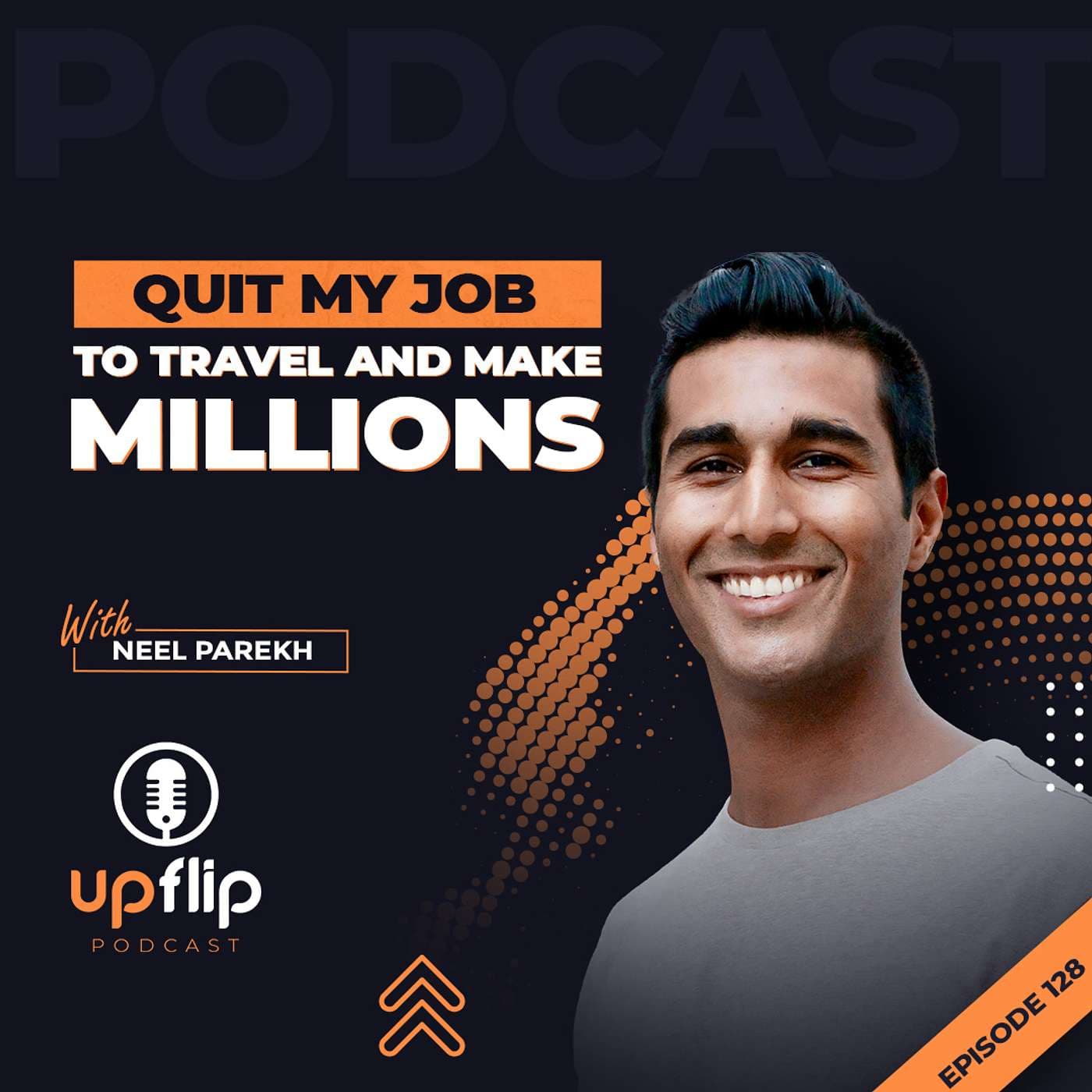
Episode Overview In this episode of The UpFlip Podcast, host Ryan interviews Neil Parekh, the CEO of MaidThis, who shares his journey of starting a cleaning business from scratch with minimal capital and scaling it to a $1 million revenue within three years. The conversation highlights key strategies for entrepreneurship, automation, and the importance of service quality.
Key Takeaways
- Starting Small: Neil began his cleaning company with less than $1,000, finding the idea on Reddit. He initially lacked experience but learned through trial and error.
- First Customer: Neil got his first customer by quickly setting up a basic website and Google ads, leading to his first booking which motivated him to continue.
- Importance of Systems: After several months, Neil realized the need for systems and processes to effectively manage his growing business. This included documenting tasks and creating Standard Operating Procedures (SOPs).
- Revenue Growth: Neil's business saw considerable growth, achieving $30,000 per month by the end of the second year and eventually reaching over $1 million in revenue.
Discussion Highlights Entrepreneurial Journey
- Discovery of Cleaning Business: Neil describes how he stumbled upon the cleaning business idea while searching for ways to quit his corporate job and travel.
- Initial Challenges: He faced numerous challenges, including finding reliable cleaners and managing customer expectations.
Business Strategy
- Customer Service: Neil emphasizes the need for excellent customer service as a differentiator in a competitive market where many businesses fail to respond efficiently to customer inquiries.
- Remote Local Model: He discusses the concept of running a local service business remotely by leveraging global talent, allowing for lower operational costs and flexibility.
Franchising
- Expansion Strategy: Neil transitioned his business into a franchise model to scale effectively. He shares the complexities and efforts involved in setting up a successful franchise system.
- Support for Franchisees: MaidThis offers extensive support to franchisees, including training, operations manuals, and marketing assistance to ensure their success.
Travel and Leadership
- Cultural Insights: Traveling to over 50 countries has enriched Neil's leadership skills, as it has exposed him to diverse cultures and perspectives.
- Work-Life Balance: Neil advocates for the idea that businesses should support one's lifestyle rather than the other way around.
Resources Mentioned
- MaidThis Franchise Opportunity: [Franchise Link](https://bit.ly/3QNIbEy)
- How to Start a $2M/Year Remote Cleaning Business: [Blog Post Link](https://www.upflip.com/blog/how-to-start-a-remote-cleaning-business)
- Neil's UpFlip Interview: [YouTube Link](https://www.youtube.com/watch?v=kVyLriqFVdc)
Additional Notes
- Strategic Unavailability: Neil discusses the benefits of being strategically unavailable as a leader, allowing team members to take ownership and make decisions.
- Franchise Insights: Potential franchisees can receive $4,000 towards marketing by mentioning UpFlip.
Conclusion Neil's journey serves as an inspiration for aspiring entrepreneurs, illustrating that with the right mindset, systems, and support, it is possible to build a successful business from the ground up while enjoying the freedom to travel and explore the world.
For further insights, listeners are encouraged to connect with UpFlip on various platforms and check out additional resources provided.
Written by AI. May contain mistakes. Listen to the episode to check what was said.
Transcript
Automatic transcript. May contain errors.0:28What's stopping you from starting a business? his own boss to get both financial freedom and the freedom to travel. Today, Neil will share his secret recipe for keeping a startup cost extremely low, how to automate your business so you're not stuck doing boring routines, and what mistakes his competition made in phone sales, and what Neil did to fix it. Neil, welcome to the show. Super excited to have you on. Excited to be here, Ryan. Thanks for having me. You're going to be a great guest. You have traveled so much. You have started a business that has scaled so big with such little money, so this is going to be a great conversation.
0:56I'm super excited for this. I'm stoked, man. We got to start at a basis level though. If people are like, who is Neil? Like, what's he doing? Well, you're an entrepreneur at heart, really. You're dabbling side hustles within e-commerce. You're blogging about pet hair vacuums and you're doing a lot more. But then one day you go on Reddit, you come across a post about someone starting a cleaning company and you told yourself, why not? I'll give this a shot. Now that you're the CEO of Made This, this all of less than$1 ,000. Can you take me to that Reddit post? Honestly, let's start there. Let's talk about scrolling through a minute.
1:24Let's go there, man. So yeah, it's funny enough, because like I got this idea on Reddit it. And I was probably like a lot of people listening. I was working in a cubicle in corporate looking online of like, how do I quit my job and travel? And you type that in and you see a photo of a guy on a laptop in front of the beach. And I was like, I want to be that guy on the beach. I want to do that. How do I do that? And all I could come up with is I got to figure out side hustles. I got to do something. And a lot of the traditional kind of remote businesses you see are like e-commerce, dropshipping, blogging, air vacuuming.
1:52So I'm like, oh, let me give all of this a shot and let me just try it out. And nothing worked. I think after a year, I had made maybe$1. It was like nothing. And look, part of it was what I call analysis paralysis, where you're just analyzing stuff, listening to a podcast, and you're like, oh my God, I'm doing so much work, but you're not really. But part of it is in those models, I was competing against the entire world, right? So I was on Reddit when I was supposed to be working. And I was like, on the entrepreneur subreddit, and I saw a post of a guy who started the cleaning company. And I was like, well, my other stuff's not working.
2:22Let me just give this a shot. So I started it and within a very short period of time, we got our first booking and it just kept going from there. That is really cool. So when you say you started it, does this mean you get an LLC and boom, you're off and running or you form the LLC, but like, how did you get that first customer then? Dude, I didn't even know what I was doing back then at all. Like not at all. Like LLC, you're like, what? Like, what does that even mean? Like I was just kind of flying by the seams. So at the beginning, like I probably should have gotten an LLC. That's what we tell our let me just whip up a really bad website.
2:55I spun up something. I made my logo in Microsoft Word. And then I just throw on a Google ad and like, let's see what happens. And then someone booked and I was like, oh my God, I got to like go find a cleaner. So I went on Craigslist and stuff. And you know, at the beginning, like, you don't know what you're doing. The cleaner's like, hey, how do I get paid? So I'll just pull outside of my building, ran down, handed him cash. I didn't realize it, but my building, everyone could watch me do that. So everyone just sees me handing cash to guys in cars. And they're like, you're a drug dealer for sure.
3:19But you know, those types the early things where you just figure it out as you go. Yeah, absolutely. That reminds me of the very first podcast I ever did three and a half years ago. I was a senior in college and my logo was from Microsoft Word. Yep. One of those documents, like the icons, it was like a little basic cloud. And I think that speaks to the scrappiness of it. So you get that first customer. Was there any problems with that first order? How did that first customer go? And how did you get your second, third, fourth, fifth, sixth, and so on? Yeah. You know what's funny is I still remember to this day, I got that first customer.
3:48And I'm sure you felt the same way, Ryan, like that first sale you make is like the sweetest. You're never going to match that high. I call it the money milestone. It's kind of that point you realize like, oh my God, I can make money for myself. I don't need to be a slave to my boss. I could do this myself. It's kind of that tipping point. And I ran outside, I was dancing. Again, two-way glasses. I didn't realize people could see me, but people were probably watching me dance outside. And after that, I just did whatever we could to execute. Meaning I had the customer and I said, hey, I got to find a cleaner.
4:15Let me go on Craigslist, find the cleaner, match them up. Then I just kept continuing the process. You know, at that time, Yelp and Google Ads were working. So I was trying that. Marketing morphs as the years go on. So it's changed. But, you know, at that point, it was just get a customer, match them with the cleaner, get them with the customer, match them with the cleaner, figure out how to do things that they come up. Interesting. So what point did you start to like put processes in place and systems in place? Because some people, they might be listening to this right now. I'm like, okay, well, that sounds simple enough.
4:40Let me just go find someone, go find someone on Craigslist. But it's much more difficult than that. At what stage did you start to like put actual systems into place with this? You know, I kind of did it by necessity. What generally happens is you do something and you realize there are constraints in your life. So therefore, you cannot run things without a system anymore. For example, I had a nine to five at the time. This was a side hustle. I had to create a system for someone to answer the phone call because I couldn't do it because I was at my desk. So I think the necessity green systemization with a lot of our franchisees now, like they have the benefit where they don't need that because we hand them the systems from day one.
5:12But if you're building this from scratch, anytime there's something you're doing repeatedly, document it. It took me months to figure out what a system is. I didn't know what an SOP was. I didn't know you have to document stuff, but you do things naturally because you just have these limitations of your life and you have to build these systems. So I'd say probably like I started diving into systems three to six months after I launched without really knowing what I was doing and then kind of kept evolving from there. And so three to six months that's in there. And we talked about it at this intro, but like you grew to$1 million in just like three years.
5:40So what revenue mark were you at here? And like, What were you seeing those first three to six months in terms of revenue? You know, not much. I'll be honest. In the first handful of years, like, you know, you see these things on Instagram, like, go from zero to 100K in three months. I'm like, you know, here's my Lamborghini. And like, look, most of that stuff is not even true. And for me, it wasn't. It's a slow grind up. But the thing about business, and especially this business model, is that if you do it consistently enough, it works. Cleaning's been around forever, literally thousands of years.
6:11It's a proven model. this isn't like a crumble cookies or a new AI startup where you have to figure out whether it's going to work. Clearly it's going to work if someone else has done it. So if you do kind of the boring consistent actions constantly works, and that's kind of what I was doing, just the basic stuff. So it was kind of a slow creep up. So in the first year, I think we made maybe like $56 ,000 in revenue total. All on the side, which is impressive though. Yeah. Yeah. Thank you. All on the side. And second year, I started to figure out systems. I started to invest a little bit more.
6:38I started to kind of get that confidence and bet on myself. So I was spending more money. I think we got to, by the end of that year, we got to 30 ,000 per month in revenue. Wow. Yeah. So it scaled fast when I started to kind of get that confidence in bed of myself. And that was the point two years in where I said, hey, let me take that leap of faith. Let me full on bet on myself. And that's when I put my notice in, I quit my job. I hit my freedom number, as I call it, which is the amount of money which covers my base level expenses. And I booked a one-way flight down to South America to start traveling and do this thing for the remote.
7:09So you quit your job, you take that leap of faith and you're not just taking a leap of faith into your bedroom to start working on this thing. You're taking a leap of faith to start working on this thing remotely. A little bit further leap. Yes. Yeah. Yeah. Well, I'm just curious, like what was the difficulties of this? Cause obviously a goal for you and a lot of goal for entrepreneurs is like, I want to start my own business so I can travel anywhere I want. And it sounds like from day one, that's kind of what happened. Like literally day one of your full-time entrepreneurship. Like, what was that feeling?
7:35Like honestly being on the plane, being like, I just quit my job. I can't even describe the feeling. It's like, I can't believe I'm doing this. And of course, my parents, first generation immigrants to the country, they're like, wait, you're quitting your very stable finance job to be homeless for a year and starting a cleaning company? What are you possibly doing? They were very supportive, obviously, but I'm sure they were very fearful inside. And I was scared because I'm like, I don't know what I'm going to do. But what I realized is, look, the worst case is it flops and I go back to the exact same lifestyle I have right now.
8:02That's it. I go back to the exact same lifestyle I have right now. Nothing changes if nothing changes. So based off that, I thought, let me just try to bet on myself. Let me see what happens. There's a lot of upside and not too much downside. And I had enough savings at the time. And the cool part about traveling is it's way cheaper than living in the US anyway. So I was saving a lot of money traveling. Ryan, to your question, the way I set up the business from the start is kind of what I call now the remote local method, which is how to have a local business, but run it remotely. There's certain models this works for, some models it doesn't work for.
8:31But the benefit of a local business is you're only competing against your local market. Remember I was talking about e-commerce and dropshipping and why it didn't work, it's because I was competing against every person in the world. But when I started to compete against the ball and pop shop down the street for a cleaning company, you know how to market better than them. A lot of the guys don't even pick up the phone. And that's kind of the hack is compete locally, think globally, and you could actually run this local business very remotely with the right systems. That's really interesting. What other businesses do you think that this works for?
9:01Yeah. So I have a couple main points of what I think this is suitable for and not suitable for. So I'll go through them. As you're evaluating business opportunities, you can think about this. So many times people think, I'm going to open up a local home service business. I got to get a vehicle. I got to get wraps. I got to get an office space. A lot of this kind of stuff. If you look at a lot of the traditional cleaning companies, that's what they do. Vehicles, supply closet, all this kind of stuff. But the work is done at the client's home and the supplies are not that big. So any model in which your labor, your technicians could go straight from their home, bring the supplies, and just go to the client's home and do the job.
9:36That is essentially a remote local model. Some models it doesn't work for is if they need a hall, like a big AC unit. Or if you have a gym, of course, people have to come to you. If you have a storefront, people have to come to you. But if you think about window washing, mobile car detailing, pet grooming, mobile pet grooming, pet walking, anything, if you look around your home, most of these things can be done from the technician going from their home to the job site, meaning you don't have to be there. Now, people still kind of think old school. People think local business. That's like what my parents had, which was a video rental store.
10:05It's a lot of capital. There's a lot of inventory. The way technology has moved and how fast it's moved, especially now with AI, automation, it's global talent. You don't need to be local anymore. But people haven't really realized that yet. I want to ask, what types of markets does this work for though? Because in the back of my mind, I come from a town of like 10 ,000 people. This is a small town in Iowa. Is that too small of a market? Or what types of markets are best suited for this? So I love thinking about local businesses this way. A lot of people are fearful of competition. The biggest question I get asked by franchise prospects is, well, there's already a lot of companies in my area.
10:40And I think about this, that's great. Congrats, they've already proven the market for you. And the crazy part is I always tell them, call the top five competitors on Google, type in made service near me, call them, tell me how many I actually pick up. Inevitably, they're like, dude, maybe three out of the five, didn't answer. And the two who answered didn't really know what they were doing. It's crazy how low the bar is. So for a town like yours, small town, first thing I would do is, are there other cleaning companies out there? And how big are they? They've proven the market for you already.
11:07You don't need to reinvent the wheel at all. Please track me if I'm wrong here. But a lot of my psychology thinks about if I find a cleaning company I like, I'm just going to kind of keep going to them until I have an unpleasant experience. But like you said, the bar is pretty low where you can beat those people out. But how do you beat those people out within a local market if someone like is already like kind of an established player. So for example, Ryan, can you tell me your company of what you do? We do video marketing for SaaS companies. We do product demos, explainer videos, all that good stuff.
11:33Perfect. When people work with you, what do they want? What is the end result they want? Really cool videos that they can use on their website, social media. Yeah. They don't care how you do it. They just like, I just want my social media account to grow. I want a good video. That's what I want. Don't really care how you do it. Just get me to the end result. When it comes to services, it's the same mentality. A customer wants their time back. Typically, they're buying a cleaning or something like that because their wife yelled at them. They're like, I need to get my place cleaned. I'm moving out.
12:00I need things done. I don't want to chase 50 people down to get a quote. Or we do a lot of vacation rentals and the Airbnb's. Those customers need to have their cleaning done between guests. And we're actually the only vacation rental cleaning franchise in the whole nation. So part of it is like, maybe if you're really price sensitive, you're going to call a bunch of people. Most people just want the problem solved. They want the end result. And if the bar is so low where all you got to do is pick up the phone, have a decent enough website, have a good customer service and take care of the customer, you're going to win.
12:28I like that. And I feel like that is very true because like in a small town of Iowa, like you just got to be friendly to people and like provide a good service. Like you're going to be able to win. But I want to talk about the expansion that you guys have done from this. You guys have a franchising model now and someone might be thinking, you know what? I just kind of want to do this myself, but I'll consider franchising. What would you say to this person that is considering franchising? Just do it yourself. So I did it myself when I started. And I talked about the struggles of me looking like a drug dealer and dancing outside and all that kind of stuff.
12:57Here's an analogy to use. So actually, two weeks from now, I'm headed over to Nepal for the Everest hike. When I'm going there, I'm going there with my wife. We hired a Sherpa to guide us along. Now, I could do this hike alone. I'd probably get lost because I have a terrible sense of direction. I probably wouldn't know where I'm going. It would take me twice as long to do it. But maybe I could do it. But also, maybe I'm going to fall into a pit. When I hire a Sherpa, this person has done this a thousand times. This person knows the exact path to take. They'll tell me, step there, don't step there.
13:26Watch out for this. Why don't we pause over here? And I could actually get to Everest when I actually do it. It's the same thing in business. If I know what I know now, back then, 10 years ago when I started, I probably could have grown two or three years faster. If you look about how much money we're making and we're doing over a million dollars per year, That's a lot of profit I missed out on just by moving slower. So the benefit of a franchise system, a coach, just anything which is going to let you speed up things is just time collapsing that learning curve, avoiding those really painful, costly mistakes.
13:54That's the benefit. That's actually what you're buying. Interesting. So yeah, can you talk about how did you know the franchise model was correct for you for expansion instead of just... How did you know that? I'll be honest, man. This was back in 2018, 2019 when I was trying to figure out how to expand. And the two options in front of me were like, well, we could expand ourselves or we could franchise. And those are the only options that came up. And it was almost like a flip of the coin of like, which one should we do? And decided on franchising because I felt that the best service for the end customers is going to be if there's an owner who cares, who's actually boots on the ground, who's actually around, who actually has ownership of that business.
14:29The way we can self expand is by having a lot of managers in different places. And I think this has proven out because You see a lot of these like Silicon Valley companies. There's like Tidy. There's HomeGlow. There's like Handy. There's all these companies which are trying to Uber home cleaning. It doesn't really work that well because you want someone who actually cares owning it. And so I said, hey, we got to go to that model, especially because you're taking a lot of Airbnb customers who need that handboarding. So we're going to start franchising it out. And it was a beast, man, because we had to convert what we're doing in a way that's replicatable.
14:57It cost well over 100 grand to get it done. I lost like a year from my life just to convert it over. So it was a big endeavor to get this to a place where we can actually replicate it in different cities now. What were some of those challenging things about get your first franchisee? What are some of those difficulties that came with franchising? Yeah. Number one, on the setup side, there's, of course, legalities and stuff to do. But if you're converting something you're doing to make it teachable and replicatable, it needs to be solid. Meaning we had to create an ops manual. They have the manual over here somewhere, which is this massive 300-page ops manual of every system we've ever created.
15:30Wow. from my brain, documented, all franchises get access to that. In fact, now it's actually way better because we have videos and stuff because it's online. So you have to create that framework. Then let's say we had our first franchisee sign up in Denver. You have to think about how do I make sure these people are successful? How do I get them to launch well? How do I over support them at a crazy amount of value? How do I make their life easier? And my whole job is how do I get you guys the same results as I did in half the time without the headache? That's the question we're constantly trying to answer.
15:56And that's how we built the franchise system. But it takes a lot because you don't really know what you don't know until you get the first one and the second one. And now we're at about 24 locations and have the system down pretty well, but still improving. Franchising is like always a super interesting because like the systems have to be so well put in place. And like, how did you build all those systems? Because like when you're replicating this across different places, different locations, like you have to have those systems in place. So yeah, how did you like replicate all those? Luckily, we had a lot of them documented.
16:21I mean, I've been doing this for 10 years now. So this isn't new to me. So I knew the answers, but a lot of those answers were in my head. So every time someone asked me a question, I'd say, oh, hey, that's something I know, but why don't I document this and put it into the training program? Then the next one, then the next one, the next one. And so it kind of took all the years of trial and error I already did. And hopefully by the training and the ops manual and the support, all the franchises could avoid a lot of that headache as well. So it's just pulling stuff on my brain and documenting it and putting it into training format.
16:50I like that. And then if someone is listening, they're like, you know what? I'm ready to get specifically with MadeThis, what's one thing that they should know about if they do franchise with you and how you set them up for success? I feel like there's a lot of things we do, which in my opinion, just like unfair cheat code. I would say, look, first of all, we use the remote local method. You can have a local business, utilize global talent. My team's across eight different countries servicing my local location. So there's a lot there that you can do. But to your question, Ryan, of what can they expect in terms of the support system?
17:20I'd say you should get involved if you want that level of support and accountability. So you go through what we call Mavis University. Of course, you get the ops manual. You get dropped into community with all the other franchisees. You have a dedicated business coach. You have weekly calls with you and your pod group. We're doing our first ever live event. We have group bundled rates where everything's cheaper for a franchisee. It's just unfair. I wish I had this 10 years ago, which is why we built the system this way is what I wish I had. There's just a ton of stuff. I would only recommend getting into a franchise if you're looking for that level of support and you want to move fast.
17:49I would say, I don't think franchising is for everyone. If you're on the fence with it. Don't do it. But it's something where if you want to move faster and avoid a lot of those mistakes and get a Sherpa, I think it could help out a lot. That's what I think the interesting part of franchising is. There's a proven model of how this works compared to just starting your own company where you have to put those systems in place and you actually don't know if it's going to work. With franchising, those systems are in place and you're following a proven system with leadership that knows what they're doing.
18:15I think that's what's enticing about franchising. Yeah, it's a cheat code. I want to say you have to vet the franchise system. Like, dude, I've seen a lot of old franchise systems that have been around for a long time, 100 units, 200 units. And it's kind of just corporate, you know? Maybe they got bought out and the people who originally started are long gone. You have a lot of these old systems in place. And then you're kind of buying in and maybe you're not getting the return and support you want. So in my opinion, the biggest benefit of a franchise system is it's de-risked. You're not trying to prove the model yourself and the support system.
18:44Those are the two things you want to double check if you use that any franchise system. And then last question here, like can you share about the franchise opportunity through Upflip? Yeah, absolutely. So we actually have a deal with Upflip as well. So anyone who inquires about the franchise, we hear this podcast and it's like, hey, maybe I should open this up in my market. Maybe I should leave my nine to five for good and start traveling or just want to get your financial freedom. Inquire with us. We contribute$4 ,000 to your marketing spend for you if you inquire and just mention Upflip. I like that.
19:12Let's make a hard pivot here to travel. This is what I am super excited to talk about. I love to travel. I was just in Japan in October, been to Switzerland, but you have been over 50 countries. How have you been able to balance like traveling with like being a CEO? Like what have you put in place to allow you to do this? Because I think a lot of people listening are gonna be like, I want to travel the world. I want to be CEO. I want to be an entrepreneur. But how do I do this? How did you start doing this? Like Ryan, I guess let's start with the mindset thing. I think there's a belief because of corporate America that this is what you do.
Read the full transcript
19:39You enter the rat race. You save a bunch of money. You retire at 65. Then you can enjoy life. It's very linear where one comes before the other. What I know to be true now, after having done this, is that's flat out not true. You could have the best of both worlds at the same time. You can travel and have an incredible life and still make a lot of money, even more money than you did in a normal night. In fact, it's also like a lot more de-risk because you're not dependent on one income from your boss. I think people don't think that. They think I have to do one or the other. One comes before the other.
20:07And so when I started traveling, it was just because that's what I wanted to do. And my business was made to support my lifestyle. And I still believe that's true. But every major spranget comes in, I tell them, your business is made to support your life. Like your life is not meant to support this business. It's not the way. It's reverse. And that's kind of the ethos of what we go with. So a large part of that is you're building, you're setting the rules here. If your rules are, I want to be able to be location independent, then pick a model that supports that. If your rules are, I'm only going to work between this hour and this hour, pick a model that supports that.
20:35Now there's some just truths if you're like, well, I want to work one hour a day. Like, okay, dude, it'll take maybe years for you to get there. Let's be honest. But there's a lot of parameters you can set from the beginning. And then as long as you pick the right model to support that and work at it, it's totally doable. You get set the rules. I was talking about my three W's on this podcast. I get to decide where I work, when I work and who I work with. I love that. That's a big driver for me when it comes to entrepreneurship is like those three W's. Because if I want to travel and like go internationally somewhere, like I want to just be able to do it.
21:03If I want to go domestically, I just want to be able to do it. The biggest thing for me, corporate, I hated asking for time off. I don't know why. Oh God, yeah. It'll be crazy. like I want to leave, like I want to just leave. You're an adult and you're asking for permission, like a school-aged kid for time off. I think it's just like that lack of control over your schedule. And I agree around it. It's like, once you get an entrepreneurship, freedom of schedule, freedom of location, if you can manage it, eventually freedom of time. There's so many freedoms that just unlock that you don't even know.
21:29And I think it just hit under this thalicy of, hey, corporation's safe. Like that's why I'm like, dude, there were 230 ,000 tech layoffs last year. Tesla just announced they're laying off 12 ,000 people. It's not safe at all. It's the opposite. But people don't know that, right? And then they're stuck in a nine to five where you have to ask for permission off. And that's just part of life. Yeah, I think a lot of entrepreneurs, they want to put their fate in their own hands. I'm in Austin where Tesla, like you just said, they just laid off a ton of people. And so a lot of times you just see the fate of your income, of how you make money is in someone else's hands.
21:58I feel like a lot of people go into entrepreneurship so they can actually control that freedom of being able to support their own income. Yeah, it's decentralized income, right? If you're reliant on one boss or one job, that's one form of income. And also, it's not really up to you. If you happen to have a manager who just doesn't like you, who's a terrible manager, then the whole income stream is dependent on that guy's opinion. That's a lot of pressure. So yeah, I completely agree with you. Exactly. And what else has travel done for you in terms of being a CEO? There's a lot of reasons. You can go to some pretty culturally amazing places with 50 countries, but how has that shaped you as a leader?
22:33Dude, what a great question. Let me think about this for a second. So I have a global team because we utilize global talent to service our local location. So I visited my team in almost every country they're in. I went to South Africa. We have a team over there. And it's funny, it's a group of Jehovah's Witnesses who live in the mountains in South Africa. Jehovah's Witnesses, great salespeople, not afraid of going door to door, selling religion. They're going to be great on the fun. So they work for us in sales. I visited them. And everywhere you go and you develop, you kind of accumulate these different life experiences.
23:00I feel like it just makes you a better leader because especially with a global team, I understand their culture. I understand where they're coming from. You can be more open-minded. You can be a little bit more patient. I don't know if this only has to do with entrepreneurship, but in general in life as a human, the more breadth of knowledge and the more experiences you have, the more it's going to affect you to be probably a more patient human being. You see things and you realize like, oh my God, this is the way the world actually works. I've been to some very luxurious places, but I've also been in the slums in India, in the middle of Africa.
23:28And you see a lot of stuff. It kind of like re-centers and gives you perspective. And now currently I'm back in Los Angeles, Northwest Hollywood, right next to Beverly Hills, right? And it's very easy to get sucked into this bubble and get sucked into the rat race and get sucked into what's going on here. But I feel like once you have that perspective of what kind of actually matters, just because I've seen it, it helps me, I don't know how to describe it, stay away from Beverly Hills, even though I'm right here. I'm in my own mind bubble. That's cool. yeah that's why i think the biggest thing for me as a leader has been with space or visuals is like once you go to like a new country that is like so culturally different i remember being in japan and i was like culture shock like where the heck am i right now but like it shaped my thinking in the sense of like people have such different ways to approach problems and like situations and like that's what just traveling has taught me is like we are all very very unique humans and some people are going to approach problem this way just because how they're raised or this way because how they're raised.
24:19And so traveling, one, is just an incredible experience. But like two, from a leadership development perspective, there's actually a lot of merit to be held with that. They do nailed it. Yeah, I think just exposure to those different cultures and seeing how other people do it, it lets you be a better leader and a better person. So definitely agree. Has there been a challenge, though, when you are traveling? What has been the biggest oh crap moment when you're traveling? Did something happen over the United States where you had to fly back or any moments like that? I'm sure there's been some high highs and low lows.
24:45Oh, yeah, man. It's funny because the most frustrating parts, and this is the most millennial Gen Z comment, is whenever the Wi-Fi is slow, I get so pissed off. I'm like, oh, just God, just give me good Wi-Fi so I can work. And I'll be in this beautiful paradise, just working and just being really, really frustrated at the Wi-Fi. So there's definitely times where maybe it's put a little bit of extra stress on me, maybe the team, if I'm not available. I do think the only reason we were even ready to franchise is because I was less available, which sounds so counterintuitive. But here's the thing.
25:15If you are always present, ready to answer your questions all the time, guess what? You are now the bottleneck. You're the go-to person for routine. I did a desert island survival trip in Panama. I got stranded on a desert island for 10 days and nothing over there. You just have to survive. Obviously, my team could not contact me. And so the whole experience was 10 to 12 days. And when it came back, nothing was on fire. In fact, they kind of figured out how to operate without me. It made the company move forward way faster. So many times, like when you're not always available, it's actually the healthiest thing for your company.
25:46Once you get to a certain point, obviously at the beginning, if you're doing everything, you probably got to be available. But over time, it's actually very healthy to be strategically unavailable. That is a phenomenal thought, actually, because very recently, like people will slack me. Like I just have my slack. Like I'm on my computer. Like I'm going to reply. Yeah. Like I'm going to reply right away just because like I have it up. But that is a great point because I've worked for someone where we were always relying on him to respond to, oh, is this approved? Should we do this? Should we do this?
26:10Should we do this? And actually taking a step back and not responding allows for that freedom and allows for them to actually move without you. I think that is a phenomenal thought. Yeah. And it just happens organically in travel because your Wi-Fi might bust out or you're like, hey, I'm going to be the Amazon rainforest. I have no Wi-Fi. Sorry, guys. It's just going to happen organically. It will force you to, number one, build systems in advance because you know you're not going to be available. So you're just going to build the SOPs ahead of time. I think my biggest takeaway away from this is like systemizing as much as possible.
26:38And that's like a step we need to take a space for visuals is like identifying those things that we do repetitively and systemize that. So once we start growing from like 11 employees to like 20, 25, 30, whatever, we're ready for that. It's just not like, oh crap, we should have been doing this for a while. And I feel like that's a big step to take as an entrepreneur. Maybe not, but that's my thought. Yeah, absolutely. One thing we do, which maybe this is helpful, maybe not as a tip, anyone who's new or we recruit to come into the operations, they are required to learn from the training materials and then they have to update it themselves.
27:06There's not a video there. They're going to record a Loom video and then they have to record it and update it themselves. So what happens is every single person's keeping it updated. They're going to learn better because they're teaching and they're writing it. But your SOPs get updated organically because that's just part of the job description. Interesting. Are you putting these SOPs in like a Google Doc or are you guys using software? I'm just curious like how you guys have systemized this. Yeah, we use Notion. We call it the internal wiki. And so our franchisees have access to that. So we have the own internal wiki.
27:34So we have a template for them where they get copied over. And that way, their remote team members can just go through the training program that we've outlined for them, and they could update it themselves as well. Okay. That's really interesting. Yeah. Because what we're thinking about doing is doing like a Loom video where like we would record ourselves doing like in HubSpot, like something we do in HubSpot all the time, and then sending it to a VA to like have them like outline it and just throw it in a Google Doc. That's how we were thinking about it. Because we either need to take that step.
27:57So Notion right now has AI tools. AI tools will do all of this. So you could record the Loom video of you doing it. And there's actually, I think it's called Tango, where you've seen it, where like it actually documents everything for you. So as you make moves on your screen, Tango, the software, will capture what you're doing and put it in written form. And all you have is Loom plus Tango, copy and paste that, put it in a notion. You're done. That's all you got to do. That is awesome. I've actually interviewed the founder of Tango before, actually. So I know that company. Ken's a stud. Shout out to you, Ken.
28:24But this has been a super interesting conversation just about expansion, SOPs, travel, of course, and like your origin story. But we are going to switch here to the very last segment, our fan blitz question, which consists of five questions submitted from our community. I'm excited if you're excited. Well, let's hit it. Let's do it. First question. Can any type of business be automated like yours is? Yes, unless it is a personal service that you are in charge of. But besides that, I truly believe with how fast tech has moved and AI and global talent, any business can get automated. And our next question, I know there are no rich quick schemes here, but if you had six months to get rich, what would you do?
29:00Should I do like get a Lambo rented and run ads for courses on Instagram? Is that an answer? I would buy that course. Yeah. So I'll give you my real answer. So I would probably do again what I'm doing right now, which is find what people actually need and are already buying. You don't need to convince people to buy something new that you just invented. Instead, if they're already searching for cleaning or window washing or pet grooming, get in front of them. That's all you got to do is market a little bit better. I like that. Get in front of people, market well. How do you connect with Airbnb owners to clean the properties?
29:32Usually they will contact us. So our SEO is really, really powerful just because our domain has been around a long time and we have a lot of search engine optimization on it for franchisees. So we rank really, really well for Airbnb cleaning keywords. We're probably going to be most local competitors in that. Some people need it. They'll type in vacation rental cleaning, Airbnb cleaning, fill out a form online. It goes through all of our automations on the backend and books a call with us or our franchisees. Awesome. Awesome. Do you pay the cleaners based on performance or just for showing up?
29:58We pay them based off a completed job. So easy enough. And there's a few bills and whistles you can do where they can make more money and things like that. But on the base level, pay per job. Nice. And then last question for you, I'll be excited for this one. What would you tell your previous boss? Ooh. I'll be honest. I actually really liked the people I worked with at my company when I was working in finance. They were all really, really cool people. And I learned a ton. The biggest thing I learned from my bosses and seeing them generate wealth is you make your money with your brain, not your back.
30:28And if you have a brain and you know how to power it, you can make outsized returns for your time. So I'd probably say thank you for showing me the weight is the honest answer. That's awesome. Neil, you're the man. Those are the five questions. If people are like, Neil, you are awesome. I want to learn more about Made This. I want to learn more about you. Where can people find you? Where can people connect with you? For sure. So if you're interested in Made This, learn more about it, just seeing if it's fit at all. You can go to Made This Franchise. That's M-A-I-D-T-H-I-S Franchise.com. I mentioned you came from Hot Flip.
30:56You're going to get a free promo in terms of four grand for your marketing spend. Ryan, I also have a podcast called the Freedom Formula Podcast. Search it called Freedom Formula. I interview different people about their own definition of freedom and how they got to it. And lastly, I'm probably the most active on Twitter. If any of you guys are Twitter people, just Neil B. Parekh, and you can find me there. Listeners, if you'd like to learn more about how Neil got started or the Made This Franchise opportunity, check the links in the show notes below. We will have them both listed there for you.
31:24Neil, appreciate you so much. And thank you for being on today. Thanks so much, Ryan. That was fun.
From the publisher
Neil Parekh started his cleaning company with less than a thousand dollars and grew it to $1 million in just three years, all while traveling to 50 countries. He found the idea for his cleaning company on Reddit and decided to give it a shot.
In the beginning, he didn't have much knowledge or experience, but he learned as he went along. He started with a basic website and a Google ad, and soon got his first customer.
He gradually put systems in place and focused on providing excellent customer service. Within three years, he reached $1 million in revenue and quit his corporate job to focus on his business full-time.
Takeaways:
- Being strategically unavailable as a leader can empower team members and allow the company to move forward faster.
- Traveling can provide valuable cultural experiences and perspectives that can enhance leadership skills.
- Franchising can be a successful expansion strategy, allowing others to replicate your business model and success. Systemizing and automating business processes can create freedom and scalability.
Resources:
- MaidThis Franchise Opportunity: https://bit.ly/3QNIbEy
- How to Start a $2M/Year Remote Cleaning Business: https://www.upflip.com/blog/how-to-start-a-remote-cleaning-business
- Watch Neel’s UpFlip interview: https://www.youtube.com/watch?v=kVyLriqFVdc
Ready to be your own boss without starting from scratch? Grab our FREE Franchise Guide and unlock the secrets of proven business models that have already created thousands of success stories.
Connect with UpFlip:
- On Youtube
- On Instagram
- On Facebook
- @UpFlipOfficial on Twitter
For more insights to start, build, or grow a business, check out the resources on UpFlip.com or head to the UpFlip YouTube channel to see more interviews with business owners and experts.
Thanks for listening!


