
In short
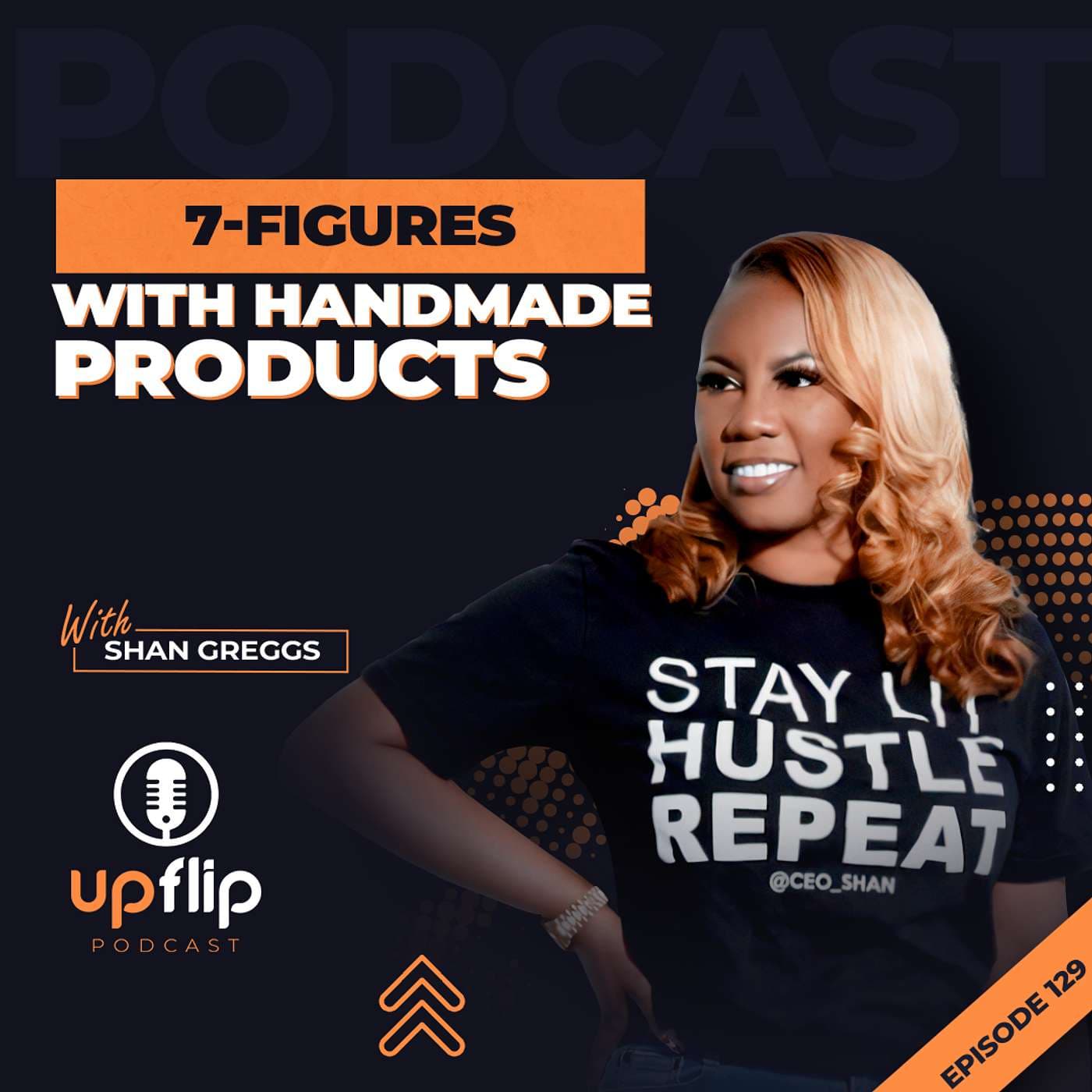
Episode Notes: The UpFlip Podcast - Episode 129 From Laid Off to an $85K/Month Business Started in Her Kitchen
Podcast Overview
- Podcast Title: The UpFlip Podcast
- Description: Focuses on unraveling how successful businesses are built and operated, aiming to share practical advice and insights to inspire entrepreneurship.
- Host: Ryan Atkinson
- Guest: Shan Greggs, CEO of Simply Sense Candle Co.
Episode Summary Shan Greggs shares her journey from being laid off as a flight attendant to founding a flourishing candle business that generates $85,000 a month. This episode uncovers the steps she took to grow her candle company from a small kitchen operation to a successful business with products available nationwide.
---
Key Concepts
Starting Point
- Initial Investment: Shan launched her business using her last paycheck of $467 after being laid off.
- Inspiration: Inspired by Martha Stewart, she started making candles as Christmas gifts and quickly realized the potential for a business.
Transition to Entrepreneurship
- First Steps: Shan made her first batch of candles with supplies from craft stores and focused on creating high-quality products that stand out in the market.
- Getting Initial Customers: She gave away candles to family and friends, leveraging her mother's workplace (the post office) to sell her products.
Marketing Strategies
- Grassroots Marketing: For the first four years, Shan sold candles from her car and participated in pop-up shops, focusing on personal connections with customers.
- Product Expansion: Transitioned from individual candle sales to selling cases, capitalizing on customer demand.
Challenges and Growth
- Initial Challenges: Overcoming the struggles of being a one-person operation for four years while managing production and customer fulfillment.
- Key Decision: Recognizing the need for brick-and-mortar presence after four years of operation.
- COVID-19 Impact: The pandemic resulted in a significant spike in online sales, transforming the business model and leading to substantial revenue growth.
---
Key Takeaways
Entrepreneurial Mindset
- Be Scrappy: Emphasizes the importance of resourcefulness and hard work in the early stages of building a business.
- Prepare for Opportunities: Shan's journey illustrates that being ready for sudden growth is crucial; preparation can lead to significant revenue increases, as seen during COVID-19.
Customer Relations
- Focused on Customer Experience: Building personal relationships with customers and creating a loyal community around the brand has been vital for success.
- Feedback Loop: Actively listens to customer preferences, allowing for product development based on demand.
Marketing and Sales Techniques
- Effective Marketing: Use of social media and email marketing to announce new products and promotions, alongside engaging customers in-person at the store.
- Product Sampling: Offering samples and running promotional sales to encourage first-time purchases of new products.
---
Resources Mentioned
- [Simply Scents Candles](https://simplyscentscandles.com/): Connect with Shan and explore her products.
- [UpFlip Podcast](https://www.upflip.com/podcast): Access more entrepreneurial insights and stories.
Social Media Connections
- Follow Shan on social media: @SimplySenseCandleCo and @CEOShan on various platforms.
- Connect with UpFlip on [YouTube](https://www.youtube.com/@TheUpFlipPodcast), [Instagram](https://www.instagram.com/upflip/), [Facebook](https://www.facebook.com/upflipofficial), and [Twitter](https://twitter.com/upflipofficial).
---
Conclusion Shan Greggs' story serves as an inspirational template for aspiring entrepreneurs. Her journey emphasizes the significance of passion, hard work, customer engagement, and adaptability in building a successful business. The episode encapsulates valuable lessons for navigating the entrepreneurial landscape, particularly in niche markets like candle making.
Written by AI. May contain mistakes. Listen to the episode to check what was said.
Transcript
Automatic transcript. May contain errors.0:00Could making candles be your ticket to freedom? a way for you to quit your job and work for yourself. The candle making industry in the US is worth a staggering$4.5 billion. But there's room for you. And today, we'll tell you how. In today's episode, we'll discuss the essentials needed to get started in this niche, how to unlock additional revenue streams in your candle making business and the exact social media strategy to achieve explosive growth. This is Ryan Atkinson, and you're listening to the Upflip Podcast, where we uncover how great businesses are built, how they're run behind the scenes, and how you can replicate their success.
0:36Our guest today is Shan Greggs, an Air Force vet who launched Simply Sense Candle Co. after getting laid off from her job. She invested a few hundred dollars from her last paycheck, and today her business is$85 ,000 per month in revenue. Not a bad return on investment. Shan, thanks so much for joining us. Super excited to have you on today. Thank you. Thank you for having me. It's going to be great because you started, as I alluded to in the intro with$467. And now SimpliSense is in brick and motor locations everywhere. Can you give us a little bit of backstory on how and like why you started to make candles?
1:11Wow. 21 years ago. Can you believe it? 21 years. I'm an afterwards veteran first off. So I love to travel. I've been around the world, but I was a flight attendant and it was another crisis, not COVID, but another crisis happening, which was 9-11. So I had only been flying maybe a year and a half or two years. So I was always the first to get laid off because, you know, no one was flying. Everyone was scared, you know, and I thought that that would be my last job because I really enjoyed that job. So I was like, man, they're laying me off again. I don't know if I can take that because that was a hardship financially, you know.
1:48So I was in my hotel room And I was like, man, what can I do? And I was just thinking. And then I was watching Martha Stewart and she was talking about candle making. And I was like, wow, maybe I can make some candles and give them away for Christmas gifts or whatever, because I'm not going to have any money to buy any Christmas gifts. So I can just make them and, you know, just give them out as Christmas gifts. So that was what I was thinking. Right. But I've always done stuff. Even when I was a flight attendant, I would go to New York and purchase accessories and come home and sell them. So quite naturally with the candles, it was just a matter of, Shan, what do you have now?
2:21What are you selling now? So yeah, I was watching Martha Stewart. She was talking about candle making and I was like, I think I can make some candles and give them away for gifts. So that's how it started. Interesting. So talk to me about this process. How did you then switch it? I'm sure people love these as Christmas gifts, but how did you then go from like, oh, this is a Christmas gift to like, I'm actually going to try and like sell these. I made my first batch. So I went to Michaels and Hobby Lobby and I got all of this whatever and I Googled some stuff and, you know, I made my first batch, which it wasn't really bad.
2:53You know, and I was like, hmm, I really enjoyed this. What if I can make a really great candle that smells really, really good and it lasts? Because I'm a candle lover and I can never really find a candle. You know, you would smell the candle. It smells good when you're in the store, but when you get it home, you really couldn't smell it. So I was like, what if I can make a candle that you can really smell? And they run out and people have to come back and buy more. So I may can't even have a business. Let me just try it. So I think that's where the passion came in because I started researching candle making, calling candle suppliers, and it just became like a fire in me, literally.
3:29So I was getting my last paycheck from United Airlines and it was$467. So I had researched all of these candle supplies. So I was like, when I get home, I'm going to invest it all and buy all these candle supplies and I'm going to make my first batch of real candles, meaning that these supplies came from candle suppliers, you know, not hobby lobbying. This wasn't a hobby anymore. That's how Simply Sense really got started. Just like that. That's interesting. I like the entrepreneurial spirit. I feel like a lot of people relate to this and like being like super scrappy, like going to like the hobby lobbies and stuff, like doing the research.
4:01I'm like, oh, how can I do this better? How can I make this last longer? I feel like that at the core. There's a great story in every entrepreneur. And it all comes back to like those early days of being super, super scrappy. So I want to talk about then like getting your first customer. It's one thing to do it as a hobby. It's another thing to do it and actually like give it to people. But to actually get a paying customer is difficult. Everyone remembers like their first time they get a paying customer. I'm curious, like how did you get your first paying customer then? So my first paying customer, like I mentioned earlier, I would go and purchase these accessories from New York and I would come back and sell them.
4:34So I just had the candles with me this time. But the thing was, I didn't really try to sell the candles. I just gave them away. Then my mom worked at the post office and I said, they buy anything at the post office. So I'm going to give my mom some. If she can sell them and see if they'll buy them. And that's how it started. So I would leave the candles and we'd sell a few, but they called me back to fly. So I'm back doing what I love, being a flight attendant. But people were calling my phone and saying, hey, I'm here at the salon or I'm here at the barbershop. Where can I get some of your candles?
5:03That's how your face just looked. That's how my face was like, what? He liked the candles like that? So I was like, oh my God. So I was like, the first weekend that I'm off, I'm going to take some more money and buy some more candles. I'm going to make them the same way I made them. And then I'm going to really try to sell them this time. And that's what happened. So, but they laid me off again. And so I got to do the candles full time. I took all my unemployment checks, purchased candle supplies, and just flipped it, flipped it, flipped it, flipped it, flipped it. We're still flipping it right now.
5:34Yeah, yeah. I got to ask. I mean, you're taking your unemployment checks and reinvesting it into your business. What were some of those emotions? Was it like, I need for this to succeed? Or like, what were some of those emotions? That's a huge risk you're taking there. Man, the emotion was like, I know that this is going to succeed. Like, I know that this is going to be big. You know, like from the first moment that I sold my first candle, made my first batch, the way I researched it. And I really put time into the formula. You know, like I didn't just make a bunch of stuff and just I really, really, really dug deep and found out the best wax, you know, the fragrance oils, all of those important things that go into making really great candle.
6:10I really did my research on that. So I was really confident when I was selling the candle because I knew it was good. Right. So it was just a matter of how can I get these in the hands of everyone? Because once you try it, it's good. And, you know, you're going to come back and you're going to buy more. So still right now, that's the goal to get the Simply Sense in the hands of the entire world, right? I like that. So what were some of those effective marketing strategies you had to like, you got your first million client, apparently it's a hack to go to a post office and sell stuff. That's what I just learned.
6:39But how did you go from like one to two to three candles being sold to like hundreds to thousands of candles being sold? Like what were some of those strategies you took to do that? When I first started, I would sell individual candles, right? So I would make my kitchen. Then I moved to making them in a garage and selling them out of the trunk of my car for the first four years. Interesting. The strategy was just to pull up. If I see a smiley face, I'm like, hello, how are you doing? I make really great candles. Would you like to smell them? And, you know, most people, they'll tell me now. They're still my customers right now.
7:09They'll say, oh, you was just a smiley face and I just wanted to support you. But then I got the candle home and it was really, really good. Right. So I went from selling individual candles at pop-up shops to selling cases of candles, which is 12 in a box. And I was selling for$48. So in order to get candles from me, you would have to purchase the case. I would drive, drop them off to you, deliver them to you. So every day I spent making candles and delivering them, making candles and delivering them every day, every day. And I did that for four years until it wasn't enough time in a day to get to all the people.
7:41So for the first four years, you're the one making the candles and you're actually the ones like selling it. So this is a one person business for the first four years. Because, you know, it started off as like a hustle, you know, but I always had the entrepreneurial mindset to know where it could go. But the first four years, I think when you're building a brand and no one knows about you, you really have to beat the streets, beat the concrete. You really have to build your brand up. And that means just getting it in the hands and as many hands as possible, you know, especially when you know you have something good.
8:11So you just really need somebody to try it. And a lot of times, even if they wouldn't buy it, I would just give it to them because I know it was good. You know, I feel like a lot of times when people talk about like startups and like in those early years, you got to do stuff that like in startup terms, you got to do things that like don't scale because that's actually how you get that traction early on is like beating the concrete, like going out, talking to people, approaching people you don't know, just because they have a smiley face and then get them to buy your candle and then get them to be a repeat customer after that.
8:37I feel like that is so true in the startup world. What were some other like key decisions or actions that like significantly contributed to the growth of SimpliSense. So those first four years, it's all you, but what was some other key actions that you did? I think I just made it my lifestyle. So no matter where I would go to dinner, if I hang out with my friends, people would know me as the candle lady and they'd be like, do you have candles in your trunk? And I always kept candles in my trunk, right? I always had candles on me. So it just became my lifestyle. So it wasn't like I'm waking up every day to sell or to make candles is just I'm waking up every day to see how many customers I can fulfill today you know so it always started as not enough supply to meet the demand it's still like that really right now too so there's not enough supply to meet demand it sounds like this is obviously like an amazing candle like you guys have a whole plethora of candles you guys are killing on social media like over a hundred thousand followers like there's a ton of demand for simply sense I'm curious at one point did it hit you were like oh my gosh like it sounds like from the beginning but like oh my gosh like this is a huge product this thing has like a ton of potential was there like one moment that you felt that?
9:38From the beginning, when I say the passion started, that's when it started, when I realized everything that this brand could possibly be, you know. So I was just like, I want to be the Martha Stewart of fragrances. That was my whole thing, right? Because I love Martha Stewart. I was just happening to watch one of her shows and that's what she was talking about. But she's always talking about different things. So that's the one that really caught my eye. And I think from the beginning, I knew that this would be a success because I knew that I was willing to put in the work to do whatever it takes because I enjoyed it.
10:08You know, I really enjoyed the candle making process and I still do today. I think people listening that might want to start their own business. They might be thinking, okay, I want to do something, but I need to do what I'm passionate about. Can you speak to like why it's important to find something you're passionate about to actually create a business in? Yeah, because you're going to have to do it all the time, right? So, you know, when you're starting a business, when you're in your business, when your business is 10 years old, you're still going to have to work either in your business or on your business.
10:35So it's best to do something that you love because you're going to do it to death. Like you are going to literally sleep, wake up, repeat. You know what I'm saying? So it's just best to do something that you have a passion for and that you love. And don't let the money be the driving back because it's going to take a while before it comes. Exactly. That's what I think is like so special about entrepreneurship is like you get to do what you're passionate about, but like you have to find what you're passionate about because there's a lot of times where revenue numbers are going to be down or something's not working.
11:03But if you can go back to that reason why, like why you're passionate about doing it, it helps so much, especially in the long run. Yeah, it really does. Yeah. So can we talk a little bit more about those other major successes or milestones in your business? It sounds like those first four years is a complete grind. It always is a grind, but like, what were some other major moments with Simply Sense? I think my first major moment was our first brick and mortar. That came like on the fifth year. Like I say, I just couldn't even get to all of the customers that were requesting. So that's how I knew that it was time to expand and pivot from my trunk in my kitchen to maybe something small, you know, not too much.
11:45But so my first brick and mortar was in front of an oil can changing station. You know how you go get your oil changed and you sit in front and you wait. So that was my first store. They let me turn that into a store and it was only$500 a month. And I stayed there a year and we outgrew that spot and we went to a bigger spot. And we say we were there for seven years and now we're at our other location. We've been there for nine years and we finally have a warehouse now. So we're moving the manufacturing and the oil line to our warehouse and I'm excited about that. Loving the insights and stories on our podcast.
12:17If you're feeling inspired by our interviews with incredible entrepreneurs, we'd love to hear from you. Please take a moment to leave us a review. Your feedback not only helps us grow, but also lets us bring more amazing content your way. Let's talk about the brick and mortar a little bit more. If someone wants to create like a CPG brand, a lot of times a great way for distribution is brick and mortar. That's how you're going to really scale this. Yeah, the web, of course, but talk to me about getting into brick and mortar and how that helped you guys. You guys are paying$500 a month. Not a lot, but I'm assuming you're turning a profit.
12:45But let's talk about the brick and mortar experience and how you guys got into that first store and what it meant for your business. Well, it helped our business a lot because now I no longer have to go to the customer. The customer can come to me. They can come. They can smell our product. If they're just hearing about us, they don't want to purchase a case of candles for$50, but they do want one or two. They can come to the store. And now we're offering more things now. So we went from candles to aroma bags, to room sprays, to burning oils, to candle accessories. So we were able to expand the product by having a freaking mortar.
13:17That really helped us a lot. you know and then we were able to come out with fragrances is this really expanded you know the territory for us as far as having a candle store where people could come and smell and and just come by and buy i'm sure you guys had like a very high smell to buy ratio where someone like actually smells your candles and like many times they're probably buying it on the spot then yeah every time you're not gonna come in a store and not buy anything even if you don't like candles now we have, like I said, room sprays. Now we expand it to the home market. We have a luxury hand-soaked linen spray, like a scent booster, which is like a detergent.
13:52You know, you can come and get a candle cake. It's just like you can't leave out of there without buying something. A lot of times someone will just only create candles. They'll only create candles for 20 years, 30 years, but you guys have a plethora of products now. How did you know it was time to like expand your product line? We listen to our customers. You know, even if a fragrance come in and say, hey, do you have jasmine we don't have jasmine you know but if i hear it again i was like you know what maybe let's get a jasmine and let's try it no just listen to the customers and what they want so if they come in and say room sprays and i'm also like really into my industry so i'll go and look at things and i you know i spend a lot of my time on social media looking at candle pages and other candle manufacturers like that so i can stay you know in tune with my market so if i see dessert candles are really popular right now, guess what?
14:42I'm going to make dessert candles. You know, if I see a fragrance, like the hotel collection is really popular right now. So let me get into these fragrances and see how can I offer this same thing to my customers. So I really do a lot listening to my customers and, you know, just being a student of my industry and my market. Yeah, I feel like that comes to like being passionate about like what you're doing and actually like being curious. Have you guys ever launched something like a new product offering and it didn't fail? And like, how was the decision made to like actually pull that? Well, that happens a lot with fragrances, right?
15:14Because I'll try a new fragrance like Palo Santo. Customers have been asking for that. So I'll search around and order different fragrances. And if one comes in and I think that I can make a really great candle out of it, I'll make it. I'll put it on the shelf. I'll send emails. I'll do a social media post. Hey, we have these new fragrance, blase, blase, blase. We have a candle club. I'll put it in their subscription and I'll give it about a month, you know, and I can really see the traction that it's getting if people reorder it if they come in and export or if I take it home and burn it and really really like it but it didn't do well so guess what we don't have room for anything that's not high performance so we take it off our shelves so we'll just try new fragrances and now we are getting into our home collection and I'm not saying that it's not good but the same way that I started with the candles and really pushing the candles it's just like starting with a new product you have to really push that product as well to your customers because they're coming in to buy what they usually buy and that's candles.
16:06So they don't know how your linen spray smells or your body butter smells unless you put it on them and really market it to them and spray them and you know, all of that. I am curious, could you give us like three steps on how you market a new product? Because some people are gonna be like, okay, for example, like I'm going to create XYZ product, but eventually I'm going to want to taper that off. But like, what are ways that you help ensure that it's going to be a successful launch through marketing initiatives? Well, first, I really try to get some footage on how I'm making it and what I'm doing.
16:36You know, I can market that to my social media audience. But my focus is really my email list. I could always use more emails, but it's really strong, right? I send out an email, I send a coupon, run a sale, let them know we have a new product. And as customers come in the store, I'm always talking about it. You know, we have it right at the counter so they can see we have this new sample. Would you like to try it? Things like that. And then I may even do like flyers and cords with that particular product on there for online. So when they order, I can put it in their box and let them know we have something new as well, and they can get a feel for it too.
17:09And then things just take time too. So nothing is going to happen overnight, you know, so just with time and consistency and once customers start to use it and then they start to reorder, then you know, like, okay, it's really picking up traction. Yeah, I feel like one of the hardest things is like you have like your core product, like your candles, of course, but like you obviously want to diversify like what you're offering and like actually doing that successfully. It's a lot more challenge than I think people think to do. Yeah, it really is because people know us for candles, right? They know us now for room sprays and certain things.
17:42So linen spray, they may buy that, but the whole scent boost of detergent, they like, oh, what is this? So, you know, of course we have to show them how to use So I do a lot of infomercials to post and to let customers actually see how that particular product is being used and can be used. Yeah, I feel like specifically for like CPG products where it's a physical good, like the best way to like market this, correct me if I'm wrong, is like actually like showing how the product is made and like user generated content. Talking about like how great your candles are or like the linen sprays or anything like that.
18:12I feel like that's a great avenue of growth for CPG brands. Yeah, and really running sales on those items too, to make it undeniably, you got to buy it. I mean,$10 when a regular price is$20. So half price off this product, you just like you have to buy it at least to try it. Because that's all you want your customers to do, right? It's just really trying things one time. And once they try one time, you know, they're going to like it. Do you have the metrics on like a repeat customer? Like, how do you guys like measure like how many people are coming back to like actually buy again? Our systems tell us first, you know, Shopify is going to tell you how many orders have this customer placed.
18:47And we also have that in place in our Clover system in store, too. So we'll know how many. But our customers have been with us since the trunk of my car. That's crazy. And I'm always at my place of business. So I'm very personal with my customers, you know, so I know them personally as far as their face, their name, what they like. You know, it's so crazy. I can see a customer that I haven't seen in a couple of months or years or whatever. And I know exactly what fragrance they like, which is weird because I can hardly remember a lot of things. my birthday sometimes how old am i i'll be like oh you want your angel wings we got something new that's similar they'd be like how did you know i'm like this is what i do i live and breathe this stuff i think it's really cool that like you are in the stores and you're actually helping sell to customers because i feel like that just makes a brand way more personable like something where it's like oh that's the founder of this humongous company and they're talking to me one-on-one and they remember what my pet's name is or my favorite fragrance like that has to help with growth so much as well.
19:47I always tease my coworkers and I tell them, y 'all not making any money. You don't make any money till I come. You know what I'm saying? Because people would say all the time, I wanted to stop, but I didn't see your car. I didn't see your truck. Used to, they say that. Now it doesn't really affect us that way. But people do stop more when they see my vehicle and they know that I'm there because, you know, they want to talk. The sales are always up. And so I stay there. So unless I have traveling to do to make other sales, I'm at my place of business. I really like that because my mom, she owns her own hair salon.
20:18And the relationship she's built with her customers and clients, some people have been going to her for 40 years now. And it's just so cool. And they love that human touch that she's able to provide. And it sounds very similar to what you're able to provide to customers as well. Yeah, I'm sure if somebody else is there, they'll be like, oh, I'll just wait for her to finish. They don't want anybody else to do their hair, right? Because they have such a relationship and they've been coming and it's consistent. I want to talk about COVID as well, because COVID was a boom for you guys in a lot of senses.
20:46Can you talk about how COVID impacted your guys' business? It made a really big impact because, you know, I started with a brick and mortar and usually it's the opposite way around. Most of my friends with highly successful business, they're highly successful online, but mine was a brick and mortar. So when COVID came, you know, I just thought I would be at home like everyone else. So as soon as everything starts shutting down, they said, well, you know, you have to be essential. So I was like, OK, we're going to get hand sanitizer. We're going to be essential because people need hand sanitizer.
21:17And that's exactly what we did. So, I mean, within a matter of a couple of days, maybe we went from making$3 ,000 to$30 ,000 online, which I had no. What? knowledge of online sales. You know, I can handle the orders that we get in trickling in every week, but now it's massive. Like, so I didn't even know about a Rolo printer. I didn't know about Go Shippo or Easy. Oh my God. Because we wasn't doing anything. So I had to get in shape really, really fast. So I went to my friend's boutique. She has a boutique, she has an online boutique. And then I started learning the online, the shipping about the Rolo printer, about the boxes and your own packaging and go ship on.
21:59And it just kind of skyrocketed from there. We made our first million dollars in COVID. We were already creeping up, you know, 875 to just creeping, creeping. But we really hit our 1.2 margin during COVID. It was hard work, but it just was unmatched because people were home. One of their houses smelled good and finances were generating and circulating. So people were spending, especially with our supportive Black-owned businesses at the time too. So it was just a matter of we went viral on a couple of things, Facebook, then we went viral on Instagram, then we went viral on Twitter. So it just was like back to back to back to back to back to back to back.
22:37So then the post office started coming to us. So now every day we still get daily mail pick up from the post office. So it changed the trajectory of our business. So no more in-store sales because, you know, we can't do in-store. So nothing is online. So it really helped me to learn that aspect of my business. That is so crazy. And it's so crazy when from like$3 ,000, like$30 ,000, like basically overnight. Yes. That had to have been a crazy feeling waking up to see that number. You know, because when you wake up, you go to work and you go to your business every day. You're really practicing for that moment that you want.
Read the full transcript
23:13So you don't have time to fumble the ball. Now you've been practicing. Now it's game time. So I need to call a few people off the bench, like my mom and my aunts to come in and help, but you don't have time to drop and fumble the ball. Those orders are coming in. We need to get it done. And so that's exactly what we did. We pushed through COVID. It was a great success for us. We still are retaining those COVID customers now. They may not be spending as much money as they did during COVID, but they're still our customers and that really boosted us as well. When it's not COVID numbers anymore, it's back to reality, but we're still better than we were before COVID.
23:50Yeah. And I like that you talked about like preparing for the moment and you prepared for the moment up into the point of that. What I heard is like a lot of it was like, oh, like we need to figure out this, this, this, this, this, this to actually like capitalize on this again. Was that a feeling of like being underwater when you're like trying to figure out all this shipping stuff, labeling stuff, or like, can you kind of take me to that? I'm just curious. Well, that seemed like that's when I perform my best, you know, like when it's time to pivot or when it's time to strap up my boots and figure something out or do things like that.
24:18That's when I'm at my best because now it's like, aha. So now I have to figure this out. So now I know I can't spend all this money on ink. It's got to be a better way because I'm printing all this stuff on my little HP printer, these labels, you know, and I'm running through this ink. So then boom, oh, that's what a Rollo printer. I was wondering how that happened. And then, you know, the post office, it's$11. It fit in this box and this box. I was like, it's got to be a better, cheaper way for shipping. I don't think that this, and then that's when you find out about the shipping platforms. And then, so now it's up to me to go through the shipping platforms and find out which one is going to work best for us.
24:54So just figuring out those things and it was new and exciting because, you know, now we're getting some real money, you know, that was just a very exciting time for me. And also we realized that we could no longer make all the candles ourselves. So we had to get a little more automated by purchasing, you know, our candle making machine and different things like that. So it was just like the growth that I knew would happen. I didn't know when or how, but it was happening. And it was just like, wow, you know what I mean? It was just like that wall factor. And it's just like, I was ready for it. It's truly like the business changes overnight where it's like, we're totally brick and mortar, but now like, oh, we need to put processes in place so we can scale like how many candles we're making so we can fulfill these orders and like, oh yeah, let's focus on online to help grow our sales over the next few years or whatnot.
25:40I think that is a very cool story. I want to wind us down to, we always do our last section of the fan blitz question where people want to join the conversation. So they actually have questions repaired for you that come from our Upflip community. And guys, if you want to join this conversation and ask amazing entrepreneurs questions, you guys can go to www.youtube.com slash Upflip and post your questions there. So are you ready to wind us down with our last five questions here? Yeah, let us do it. So number one is how many ingredients, including fragrances, do you use for your candles? I would say a really great candle consists of wax, wick, and fragrance oil.
26:17So those are the four main ingredients to making a really great candle in the container. So that's not an ingredient, but those are the five things needed. A container, wax, wick, fragrance oil, dye, and a caution label. I like it. How do you maintain loyal customers that still buy in a crowded market? Because we give the customer what they want. We give them a great product at an affordable price. And we also have like a recycling program. So once you buy a case of candles, you bring the whole box of empty jars back and you get$3 off. So I think that gives customer loyalty. And the fact that it's a personable relationship that my company have with the customers because they know it's like a movement, right?
26:56Then they're a part of that movement. And I think that makes the customer more loyal because it's their brand as well. Yeah, that keeps the customer loyalty. But I know what a great, consistent product every time to give them. They don't have a reason to go anywhere else, you know, like why? Yeah. And they get to see your smiling face. They walk in a brick and mortar. So that also contributes to it as well. Our third question is, what's the best part of being an entrepreneur? I get to go to work at 12 o 'clock. I get to be up all night. I get to sleep even if I want to. It's just my time. You know, I still have to put in the work, but I'm not an early morning person.
27:32So that's one of the things that I love about being an entrepreneur. I can manage my time and also just the feeling of knowing that you created something and started something and people love it. It's like such a great as well, you know, so those two things are really like my motivation to continue to grow my business and expand on it. I like that. Two more. If you could change one thing about your business, what would it be? one thing that i would change about my business is maybe some things as far as on the financial side of starting my business well you know it's very tough when you're starting you have all these fees you have a sign for me you have sales you have you know it's just like so many things like so i would suggest getting comfortable with paying those things initially like paying the sales tax it's not your money anyway you're just holding it to the end of the month or quarter or whatever.
28:25So just getting comfortable with doing those things early. So when you really start to bring in the revenue, you know, paying three or$4 ,000 a month for sales tax is not going to be just like, what? You know, you'll kind of be used to it because that's very important. And that's something that, you know, I think it's not talked about enough, like paying your taxes and your sales tax. Because even you think like, oh, I'm just a mom and pop, I'm just little and I'm barely making it. I don't have to pay it. And then it will come back on you. I'm a witness. And then the last question for you from our FanBlood section, what are the unwritten rules of your workplace?
29:01Unwritten rules is for us to treat the customer with the utmost respect, you know, no matter if they buy an aroma bag or a candle. We make sure we pride ourselves on great customer service. And another unwritten rule is inside the workplace. It's like you can talk on your phone. You can be on your social media. You can do whatever you want to do. As long as we get the work done, you know, we can listen to our music. We have a certain type of music playing up front, a certain type playing up back. We can do that as long as we get our work done. Shan, thank you so, so much for being here today. If people are listening like this person's awesome, I want to give her a listen.
29:34I want to give her a follow. I want to see what she's doing. Where can people find you? Where can people connect with you? Give me a follow all across all social media platforms at Simply Sense Candle Co. You can also follow me on CEO Shan too, but Simply Sense Candle Co. You get to see all the neat things we make. You can also purchase online at simplycentscandles.com. And you can also come to our Rick and Mart if you're ever in Houston. We're in the heart of Houston near downtown. We have 5217 Almeida in Houston, Texas. Guys, this was an awesome episode. Thank you guys so much for tuning in.
30:08My three takeaways from this is one, if you're going to be an entrepreneur, you have to be scrappy. Shan talked about a little bit about like hitting the concrete and like actually putting in the work early on and doing things that don't scale. to be ready for the moment. When COVID hit, she was ready. She had been preparing for her whole life for this opportunity. And once she went from$3 ,000 to$30 ,000 overnight, she took a ton of action and she was prepared for it. Third takeaway, right off of that, take action as an entrepreneur. We talk about it on the show a lot, but the biggest things that will separate a wannabe preneur with an entrepreneur is the ones that actually take action.
30:40So if you enjoyed this interview, we spilled the wax with Jennifer Edmonds on episode 80 of the Upflip podcast, dishing out how she built a sizzling 500K a year Empire, check the link in the show notes below. Shanda, you're the best. Thank you so much for sharing your story and all the insights. So thank you. Thank you. It was so fun. Thank you.
From the publisher
Shan Greggs started her candle business with her final paycheck ($467) after she was laid off from her job at United Airlines. That’s when Shan decided to become her own boss. Today, she is the founder and CEO of a wildly successful candle company that’s generating $85K per month.
Starting out, Shan made candles in her kitchen and sold them out of the back of her car. Now, her candles are available online and in stores around the country. We uncover how she was able to scale from candle making in her kitchen, to a brick and mortar store landing deals with retailers.
Resources
- https://bit.ly/3YyIRlv: Jumpstart your business with resources from the experts
- https://www.upflip.com/podcast: $500K/Year Selling Candles
- https://simplyscentscandles.com/: Connect with Shan
Ready to be your own boss without starting from scratch? Grab our FREE Franchise Guide and unlock the secrets of proven business models that have already created thousands of success stories.
Connect with UpFlip:
- On Youtube
- On Instagram
- On Facebook
- @UpFlipOfficial on Twitter
For more insights to start, build, or grow a business, check out the resources on UpFlip.com or head to the UpFlip YouTube channel to see more interviews with business owners and experts.
Thanks for listening!


