
In short
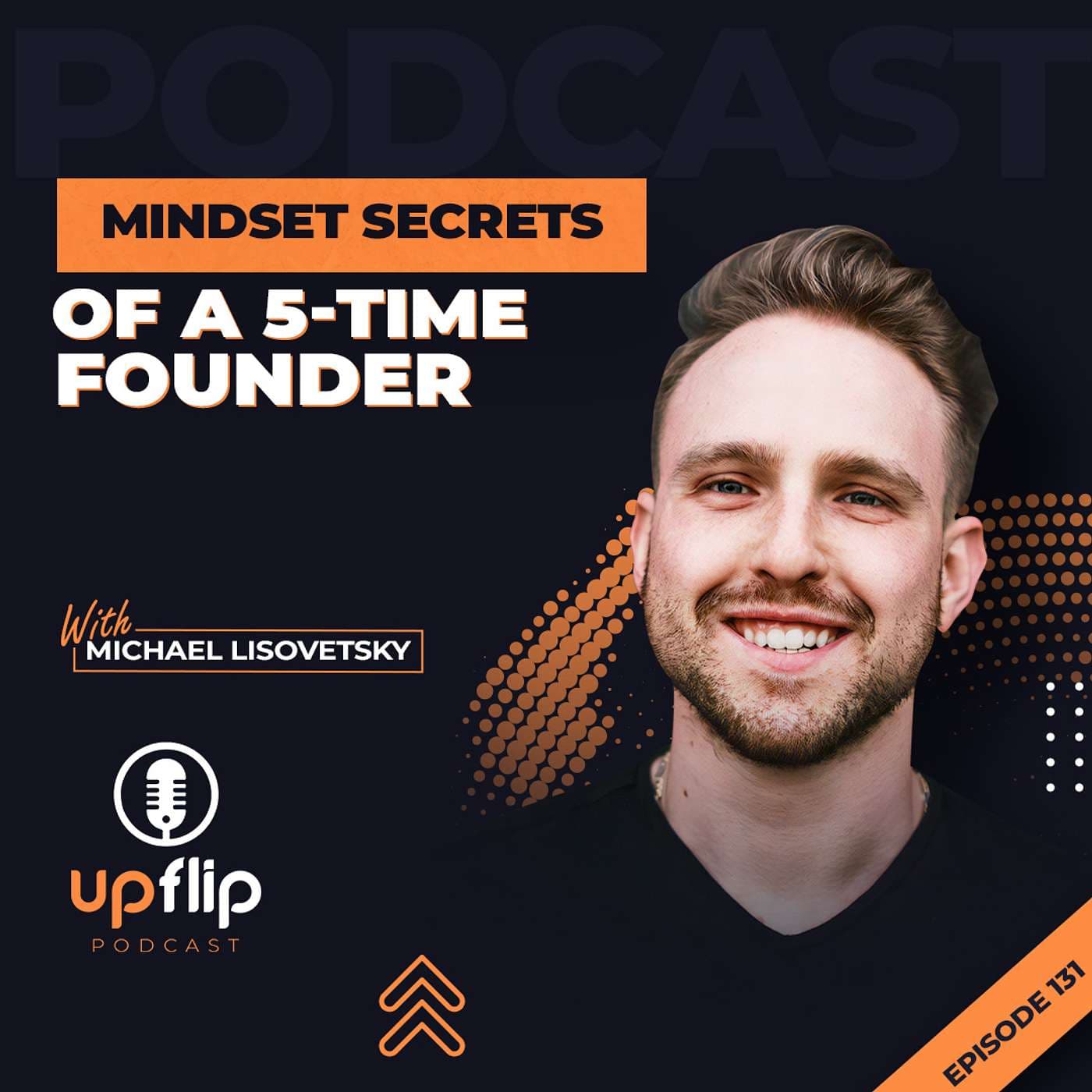
UpFlip Podcast Episode 131: How To Develop a $1.3 BILLION Mindset
Episode Overview In this episode, host Ryan Atkinson interviews Michael Lisavetsky, an accomplished entrepreneur who has founded five companies before turning 30. Michael shares his entrepreneurial journey, insights into personal productivity, and the mindset that has contributed to his success, including founding a digital marketing agency, Juice, which has generated over $1.3 billion in revenue for clients.
---
Key Themes and Insights
- Early Entrepreneurial Ventures
- Starting Young: Michael began his entrepreneurial journey at 14 by starting a web hosting company, inspired by his immigrant parents' journey from employment to entrepreneurship.
- First Sale Experience: Despite initial challenges, he successfully sold his first company at 15 or 16, learning valuable lessons in the process.
- Founding Juice
- Juice's Origin: Established in 2017, Juice came about after Michael and his co-founder noticed a high demand for quality marketing consultancy.
- Initial Investment: Before Juice, Michael co-founded a company called Skyway with an investment of $500,000 from notable investors, including Tim Draper and Mark Benioff.
- Growth Strategies
- Networking and Referrals: Michael emphasized the importance of utilizing existing networks for new clients and growing through referrals.
- Focus on Service Quality: The agency was built on the premise of delivering quality service, which contrasted with typical experiences clients had with other agencies.
- Challenges in Agency Business
- People Management: Michael highlighted the difficulties in hiring and maintaining a high-quality workforce, emphasizing the importance of finding the right talent.
- Accountability: He discussed the implementation of rigorous hiring processes and metrics to ensure accountability within his team.
- Mindset and Personal Productivity
- Persistence: The notion of "dumb persistence" was discussed, highlighting the importance of perseverance despite challenges.
- Writing Down Thoughts: Michael shared his productivity hack of writing things down to manage anxiety and improve focus, including maintaining an inbox zero.
- Core Values
- Integrity and Ownership: Michael spoke about the core values in his business, focusing on integrity and ownership, which guide the company's culture and hiring processes.
- Advice for Aspiring Entrepreneurs
- Starting Out: He encouraged new entrepreneurs to leverage warm connections for initial clients and offered valuable advice on providing value upfront to build relationships.
- Learning from Experience: Michael stressed the importance of gaining experience early to build a foundation for future ventures.
---
Notable Quotes
- "The hardest thing when you're starting a business is momentum."
- "If you don't believe it's possible, then it definitely won't be."
- "Don't do it. It's the most stressful thing you'll ever put yourself through."
---
Resources Mentioned
- [UpFlip Podcast Website](http://www.upflip.com/podcast) - Explore more episodes and insights.
- [Connect with Michael Lisavetsky on Instagram](https://www.instagram.com/mikeliso/?hl=en) - Follow Michael for insights and updates.
---
Conclusion Michael Lisavetsky’s journey exemplifies the challenges and triumphs of entrepreneurship. His insights into mindset, persistence, and the importance of building a strong team are valuable for anyone looking to start or scale their business. The episode serves as an inspiring reminder that the path to success is often fraught with difficulties, but with the right mindset and strategies, it is achievable.
Written by AI. May contain mistakes. Listen to the episode to check what was said.
Transcript
Automatic transcript. May contain errors.0:00Do you know what it takes to start a successful company? Most people struggle with only one business, but our guest today founded five companies, all before even hitting 30. This is Ryan Atkinson, and you're listening to the Upfoot Podcast, where we uncover how great businesses are built, how they run behind the scenes, and how you can replicate their success. Michael Lisavetsky began his entrepreneurial journey at 14 when he started a web hosting company. Since then, he has started five more businesses, including Juice, a digital marketing agency. Juice generated over$1.3 billion in revenue for clients like Dollar Shave Club and L 'Oreal.
0:33Today, Mike shares with us his core principles that guide his business decisions, strategies to scale your venture effectively, and what to do when you're facing setbacks in writing your company. Michael, so excited to have you on. So, so grateful for this conversation today. Thanks, Ryan. Appreciate you having me. You're going to be great to have. I think a lot of people are sitting there saying, five companies before 30, how do I do this? Well, one way to do is you start a company when you're 14 years old. So let's go back to younger Michael days. You're 14 years old and you get your first company off the ground.
1:00What are you doing? And like, how did you start this? Sure, it was crazy as I had no idea what I was doing. I didn't know I was starting a company, but once you got into it, I was like, oh, this is so cool. So my parents are immigrants. They came in 1992. I was born about five or six months later and I just saw their journey. They went from having jobs, like anywhere from delivering pizza. Eventually they became business owners. And I just, that was my dream. I was like, I really want to do it. I really want to do something of my own. The same time, I was just a big nerd. So I was building computers when I was 12.
1:28And at some point, I ended up on a forum. And I saw somebody that was starting a web hosting company. And I was like, all right, this is pretty easy. So I had no idea what I was doing. It's like better sometimes when you just don't know the benefit of ignorance. Jumped into it. I think it was that summer I learned like sysadmin, which is basically like, how do you set up servers? I worked at a data center. I was like, all right, I could do this. And I found some servers. I set them up. And I just started rolling. I mean, it wasn't a massive success by any means. I did sell it for like some really tiny amount of money.
1:55And the funniest part to me anyway now is my parents got upset when they saw the money coming. And they're like, why is someone paying you on PayPal? Like, this is suspicious. And they were worried. They were concerned. So that was an interesting experience. How old were you when you sold this then? Because I feel like selling a company, one, is just like a massive success. But two, no matter the dollar amount, it's still impressive. Even at a young age, what age were you when you sold it? Yeah, I was just like 15 or 16. It wasn't any kind of massive outcome. It was more so they actually, they took it.
2:20They built it into a big company and they resold it. And that's a little surreal. So I was like, I see the journey, like the buyer. He did pretty well, but he was dealing with his dad. I think he just had a, there's just a lot more experience that was being brought to the table. And maybe it was a project for them, but it's so cool to see that it lived on and it became something. Like this little kernel of an idea started with, and it became something. Especially when you're like 14 years old, if you want to talk about like a kernel of idea, start there essentially. I'm curious for this one, everyone, I promise we're going to talk about like Juice and like how he's generated billions in revenue.
2:48But for this company specifically, how did you get like your first client when you're like 14 years old? and just going through forums. So I did it the small grind the way I would post on forums. I found other websites to post on. I made, this is like the old internet days, but I used to have like this, used to make little graphics in your signature and used to Photoshop like these crazy graphics. And like, you basically, as you're going through a forum, you would have ads. At some point I was the moderator on like a Zoom forum, which is crazy in hindsight, but like little things like that, it would just generate traffic.
3:15I would find posts, like there's a forum called web hosting talk and people would say like, hey, I'm looking for a new host. I'm looking for that. I would just reach out to people. So everything was manual. It was just outreach, outreach, outreach, outreach. I feel like that's a great building blocks for starting your next company because you start a few more companies and you eventually landed on Juice in July of 2017, coming up on seven years. Huge feat. So congratulations to you on that. Let's talk about starting Juice though. What were those building blocks to actually start Juice? Take us to that origin story of Juice.
3:43So right before Juice, I actually built my first venture back company. It was called Skyway, raised half a million dollars from two billionaires and a couple other folks. So Tim Draper, who is like the OG VC, he invested in Skype and Hotmail and Tesla, just generational, just very wise guy. And for Mark Benioff, Tim helped us get Mark Benioff as an investor, founder of Salesforce. So did that. Thank you. Raised half a million dollars. Again, was 21, still had no idea what I was doing. But we're like, all right, a par of a rental process is terrible. How do we do a better job? And there has to be a way to do a better job.
4:14We'll start in New York City. That's where we live. So we jumped into it. We had a lot of traction. We weren't able to make that much revenue. But we ended up getting acquired also by a company called Common. So Common, based in Brooklyn, was at some point the largest co-living operator in the US. So it was wrapped by the bedroom instead of by the apartment. Joined Common, I was director of growth. So I was in charge of like, how do you scale up the buildings? They would sign new buildings, come on, I had to figure out how do we build the foundation for all the marketing that would go and then fill these buildings.
4:39So I learned a lot about real estate. And after a year, I was like, all right, I had a job for a year, been an interesting adventure. So what's next. And my co-founder and I, we had met actually through first employee Common, kind of serendipitously. He had owned a recording studio. I wanted to do a collab with Common the Rapper. Random idea. It didn't really happen. But we became friends and started working on projects together. And we'd both noticed we would get a lot of inbound for consulting. So whether it was friends' companies or... He would just ask us for a lot of marketing advice because at that point, we'd be doing a lot of growth, a lot of paid ads, general marketing strategy.
5:11And it became very natural. And we tried a project. We liked working together and we're like, all right, cool. What can we do? So we said, hey, we're going to give it a shot. We're going to start this agency and we'll see how it goes. So we both ended up quitting our jobs. Did that, had no income coming in. Just like, I'm just going to chance it. I'm going to give myself four or five, six months and see how it goes. And thankfully we had a couple of clients come in. We were able to get a couple of clients in the first month. And then that from there, it just took off. We just started reinvesting all the money into the company.
5:38And for a long time, we didn't take any money. And And then we just reinvested, reinvested, reinvested. I think there's a lot to be said right there about like, once you start making profits, you shouldn't just be paying your time, like a huge full-time salary. Start reinvesting this in the company. And this is a growth principle is like reinvesting your money. I'm curious though, you said you jumped without any income like coming in. I'm curious, what was your parents saying about this? Because immigrant parents, they're probably coming over here. They're like, oh, like risk adverse. Like, why are you doing this?
6:06You're throwing everything away. What were your parents saying? I'm just super curious on that. I mean, even when I raised money to the company before, I mean, I made mistakes there. I paid myself like$24 ,000 a year. So it was a very small amount because my logic was like, I want the runway to last as long as possible and I'm going to do whatever it takes, which was noble, but I think it was too low. I think that that kind of salary in New York City is just kind of stupid in hindsight. I think it led to a lot of stress from money that didn't need to be there, which was distracting in a way. So yeah, they considered me unemployed at that point because they're like, That just rounds to zero.
6:36That doesn't count. They were not excited. It took them a while to really buy into it once they saw that success. But I don't know. My dad's biggest dream was like, you know, big corporate job, some big brand. Climb the ladder. Exactly. So you started to really get growth in like this first year and you're thinking, okay, you know, this is actually going to work out. What were some of those growth levers you pulled on early? Because what I'm thinking from like an agency perspective, like agencies work is hard. There are a lot of competitors out there. How do I grow this thing effectively? So I'm curious, what were some successful levers you pulled early on to grow effectively and fast?
7:09Yeah, that's a great question. What's interesting is like the reason we went into it is Troy and I had both hired agencies in the past. We had these terrible experiences where either we got these super junior employees, people wouldn't pay attention, they would waste money. It just it wasn't the level of service that you would need to see success. And this was a recurring theme. Our friends said the same thing. So it was like, all right, what if we just did a good job? Which, you know, like the bar is fairly low. And of course, the goal is to do a great job. What if we just did a good job? So it's, yeah, it was like, all right, all right.
7:37So that was interesting. That kind of bar to set. So we started, then we reached out to our networks, and then we just pushed on referrals. Because we already had the networks, it was a little bit of an unfair advantage, but we were just able to go and reach out to folks. And folks, they knew us, they already knew us as knowing marketing and being some of the best people they know in terms of funnels. And like, how do you get something working? And then since then, we've been able to have just like, we've been very fortunate with the folks that we've done. Like, there was a viral Beanbag that did very well.
8:02We did their launch called Mooncod. We've done like celebrity launches now for we did Halsey's makeup line called Outface. So we've had like all these interesting experiences now and that starts to build on itself. And that's really where like you just see the compounding returns. But take you back to year one, it was tough. I mean, we made so many mistakes. Because ultimately, you have to wonder like, why is it hard for an agency to do a good job? And it boils down to the people. It's like, how do you find the best people and then hold them to the highest standards. And it sounds kind of simple, but it's really, it's not easy.
8:32It's really hard to do. And a lot of what we've learned over the last seven years is people is like, how do you find the talent develop? Like what is the right talent that will get the brands and the companies and whatever the outcomes that they actually need and they want? That is to me, the most unexpected challenge of entrepreneurship is hiring. It is so hard to find like great people that are going to do like a great job because you have to think about like the job searchers choose, you're going to get a hundred applicants for a job. How do you actually to still like who's going to be great and who's going to be good.
8:59I'm curious on the accountability part for you guys. Are there metrics you guys put in place to like hold your employees to a high level or like a high standard? I'm just like super curious on how you guys do it at Juice. We've learned a lot of hard lessons in terms of from folks that have worked out and that haven't worked out. And the other thing to consider is role person fit. You can sometimes have like the most talented person. But for me, if I was in probably a very, very, very detail oriented role, I don't know if I would do well. Like people, I'd probably frustrate people. So it's really important to just make sure that not only are you hiring well, but that raw person's fit actually connects and that that person is being set up for success in whatever they actually do.
9:35So what we do is we actually recently we've revamped our hiring process. I think we finally were able to kind of take the lessons from all the years and actually revamp the hiring process. Really, it all starts from the job description. They're getting really clear about what do you expect from people? What are they actually going to do? And when you write a really tight and well-constructed job description, what you're doing is you're setting yourself up for success because you're going into it prepared. You know exactly what you're going into it with and what you want to get out of it. We've completely revamped our hiring process.
10:02Now it's very involved. So there's an initial screening, then we do a logic test, then we do a personality test, and then we have competency tests per platform. Then we have like, let's call it a paid social assessment, a paid search assessment. And then of course, like final, just gut check. But the gut check is the last part and we've de-emphasized it a little bit. We're so thankful for your reviews on our show. If you love the Upflip podcast, don't forget to subscribe and leave us a review, just like Nick did. He said, love when this podcast comes up in my feed. As a new entrepreneur, it is so inspiring to hear all the different stories and learn from people who have been through it.
10:36Keep it up. Thanks, Nick. We appreciate your awesome feedback. So you guys are really like putting them through like the wringer essentially to see like, are they a good fit? Like, are they actually going to succeed in this role? Because like you said, like you can have a superstar personality, just a superstar in general, but if they're not in the right rule. Like you're kind of setting them up to fail in a way just because it's not matching to like their strengths. Exactly. As you become more experienced as a business owner, there are all these cliches, like you want A players or like, you know, fire fast.
11:03They're so hard. And also what's interesting about A players, I've had this experience as well. It was like, it's a cliche. And then you meet, then you have those experiences of like employees that kind of do the bare minimum and employees that are just going a thousand miles and above and beyond. and you're like, oh, that's what that means. But it's really hard to really internalize what that means until you experience it. So we, at this point, I would say put them through the ringer because like every step is a, it's really meant to weed people out. So really like it all starts in pipeline. So like, how do you get a funnel?
11:30It's, I mean, same thing as marketing as well. It's like, how do you get that pipeline? So first we start with the pipeline and okay, like how do we ensure that the person that we hire is going to succeed? And we're also fully remote. We operate across nine states at the moment. So we actually require the first thing you have to submit is a video of yourself, which that rules out a lot of people. You'd be surprised. But our inbound applicants have reduced significantly, but the quality has gone up. It's been so much less work at the top of the funnel because of those videos. Because you have such a faster idea of, is this person, does this seem like a fit?
12:01Are they saying the right things? Do they think the right way? Are they constructing sentences and their thoughts in the correct way to succeed in this specific role? I really like that. And I feel like, yeah, that goes with a lot of things. The quantity might come down, but your quality is going to go way up. And a point that I really liked, you don't realize how good an employee is until a bad employee comes around and vice versa. You don't realize how bad an employee is until like a great employee comes around. And that is like a crazy feeling. Cause then it's like, Oh, maybe I shouldn't have been like thinking this way, or I don't know.
12:28It's a pretty crazy thing. So we've talked about hiring, how to like hire successfully and how you guys do it, but growth for you guys at this stage, like where you're at, like, how are you guys still growing like year over year? Like what are some main strategies you guys are doing to acquire clients now? It's a mix. At this point, it's like, how do we tell the story of the successes and the work that we've been able to do? And how do we put that story in front of as many people as possible? A lot of the business is still referrals. The downside of referrals is that you can't really control that stream.
12:55You have a very limited amount of control. You can go, you can ask for referrals. You can only ask so many times and you can't really regulate it up and down. It's as it comes. You also don't really control the companies that are coming in. So it could be, but at this point, it's outbound. We run a lot of ads ourselves and probably we'll be doing more of that as well. Really, it's like, how do we appear in front of the right people at the right time? We started focusing more on SEO. So again, now that we have the story and now that we have the foundation, it's more like, how do we put that in front of people, in front of the right brands in their buying cycle?
13:26So if someone is just getting started out and they had to do just one strategy, one outbound strategy to get started, what would you advise someone to do early on in their business to get their first client first five clients? In an agency business, it's reach out to folks that you've worked with, whether it's past jobs, past businesses, really like go for the warmest first, just to get that initial momentum. Like the hardest thing when you're starting a business is momentum. And without it, it's going to be really, really, really tough to keep going. And you really need to start generating revenue ASAP.
13:54So that's going to be key. It's like, again, go for your unfair advantages. You have family friends, you have friends that work at certain companies that can refer you in. You have folks that you've worked with. And then if not any of that, let's say you have nothing, you can still do outbound. People are very receptive. If you come in with the right message, if you say, hey, I'm willing to work really hard, you're in my credentials, here's what I want to do. And even more so, do something for them. Make them a little graphic, make them an image, give them an idea. It doesn't cost you much, if anything.
14:21And it will help you stand out so much as a candidate or as a business owner because you're willing to actually provide value. Like a lot of folks just try to take, take, take, take, take. And that's just, it's impossible, especially when you're starting out. Yeah. That reminds me of our first outbound strategy we did here at Spacebar Visuals for like the first like five months. Our offer was a free video because we were still working out like our process and workflows. Like we didn't really know what we were doing like a year and a half ago, a year ago. Yeah, it's really smart. Yeah. And so that was like our lead gen magnet.
14:47And like, that's how we signed a few clients because what then happens is the law of reciprocity where it's like, oh, they just provided a great video and like, oh, we should actually sign. So we actually signed like four or five clients just from this free video. We did the free video and they ended up signing. That was a killer outbound strategy for us. Yeah. And talking about the law of reciprocity, like reading, right? So Influence by Robert Cialdini, great book. Just understanding all these premises, like I call it like the Batman, like the tool belt, like the more you can build your skill sets, your tool belt, like the more that you have in your back pocket, the more perspective you'll have.
15:15And then these ideas will just flow naturally because you already have them in the back of your head. Exactly. And that's actually where that came from is that book. Phenomenal book. If anyone's trying to start a business, read that book. It was killer for us. I'm curious as well for like, I want to shift to like your mindset and like leadership. Can you talk about like the importance of mindset in entrepreneurship and how can aspiring entrepreneurs cultivate a mindset that fosters success? It's very tough because it could be very demoralizing and over time, because it's basically like I call it either chewing glass or there's all these ways you could put it.
15:46The journey and anyone who tries to pretend it's not an incredibly difficult journey is just like, like, you know, even the people that succeed, success never just very rarely just comes. There's always struggle. There's always challenges. But it's like the image that always comes to my mind is there's this little meme, this miner, and he's like, he's with a pickaxe and he's going, he's going, he's going. And one of that was like, he's getting to the diamonds. And the second frame is that he's right, right next to the diamonds. He just turns around and gives up and walks away. So if you think about it, it all starts from the foundation that it's confidence, developing confidence in yourself and in the vision and the dreams that you have for yourself.
16:18So it's like, what do you want from life? And for me early on, that's what I was able to cultivate. I was able to build a vision for like, here's what I want. Here's what I feel I can achieve. And I'm just going to do everything in my power and just keep pushing forward. But it has to come from within. Because if it doesn't come from within, the second that you have those setbacks, or the second you get the 10th no or the 15th no, and you're just sitting there pulling your hair out, you're going to want to give up. But you have to, I call it dumb persistence sometimes. Like I just, I would just bang my head against the wall until I have some kind of headway, some kind of progress, etc.
16:48Yeah, I love the confidence aspect of that. And there's a big saying around like belief comes before results, something like that. But like, because you have to believe in yourself before the results are actually there as an entrepreneur. Like you said, this is one of the hardest things I have ever done is build spacebar visuals. But like, I believe we will get there even before we're hitting 100K a month in revenue. Like, I believe we will get there. And that's like one of the biggest things that comes with entrepreneurs is you have to believe in yourself to like the 10th degree. Yeah. I mean, if you don't believe it's possible, then it definitely won't be.
17:16What are your definitions of possibility? Like, where is that border for everyone has like different things that they can see? Elon Musk's possibilities that will be on Mars, right? Like that's versus some people believe that they'll be stuck in a job or they'll never be able to make a change or their lives. They're just stuck. So imagine like there's a human that believes it can be on Mars and there's a human that believes that there's just nothing can change. And those are your two extremes. So everybody's going to be a little bit different. Exactly. But it's finding that belief. And like, I always believed like I was going to be an entrepreneur and like maybe I just manifested to come to life.
17:44But like it did happen. And going back to like also like what you said about like having to be the hardest thing. We just did our core values here at Spacebar Visuals. I'd be curious if you went through a similar exercise, but like one of ours was resilience because like you're going to get punched in the face like 100 different times, but it's just getting up for that 101st time to like keep going. I'm curious, have you guys done like a core values exercise or something along that at Juice? Yeah, some of the values include like integrity is a big one. Ownership is a big one, like taking ownership.
18:10And we went through this exercise a couple of times. We ended up simplifying it down just because to drive it home. Like the point is not to have all these values that it starts to muddy in your head. But yeah, exactly. It's simpler than that. But it's very important because the more you can be explicit with what you expect from people and what you're about as a company, as an individual, the easier it will be because you'll either attract people or repel them. And that's okay. You just kind of want to put that in front of people as soon as possible. Yeah, I wish we would have done it a lot earlier.
18:38And it makes me happy that you said integrity and ownership of work because integrity is one of ours. But we have like entrepreneurial mindset, which basically means like ownership of work with ours as well. But like what also helps with the core values that we're noticing is like our hiring process. We can now screen candidates for like, do you live with these core values? We can ask questions about this and that we haven't hired yet with these core values. But that's going to be like a massive success for us. I already know. If I could make a suggestion, it would be give me an example of when you've had to show integrity or an example, because otherwise, if you don't get that specificity, then you might not get the outcome that you're looking for.
Read the full transcript
19:10So it's like, give me an example. When you had no choice, you had to have an entrepreneurial mindset. And what happened? And then does that resonate? I also want to ask about just personal productivity. obviously you have managed hundreds of people multiple projects what has been like a personal productivity hack if someone's thinking like holy crap this michael guy has done like a lot of stuff i want to do the same but i need to be productive what are some like productivity hacks that you have in your life i've learned to just write stuff down i had a very bad habit of just everything's in my head i wouldn't take notes so i've been making it a point now to just get more things out of my head this year i did a whole like annual reflection exercise i wrote myself i think it was 20 something questions and i just went through those 20 questions and i was just trying to get it out of my head more and more and more.
19:48But for me, it's maybe it's anxiety, but I just like, I just kind of always going. I don't know if it's productivity, but besides something like, let's say a superhuman, I try to maintain inbox zero. So I have, I think it's three inboxes right now and we're all at zero every single night. So that's a big one for me. It doesn't mean that you delete emails and just archive them, but it means that they're processed or they're snoozed for like, let's say one day. But what that does is it ensures that things are always moving forward and things are always popping up for you. So it's like, I'm not always the best in the to-do list, but my inbox will at least give me some directionality towards your things that are open.
20:20And besides that, I have, of course, my notes that are like, all right, here are things to keep in mind, things to focus on, where are we going, etc. That is good stuff, because I feel like productivity, like you probably have thousands of things you need to be doing. It's like, how do I actually focus on doing this? And how do I stay clear headed? That's been one of the biggest challenges for me is like, I could be pulled in so many different directions. But it's like, how do I actually just focus on one task? Exactly. So I want to pivot to our last section here. And these are our fan blitz questions.
20:45and this actually comes from our community at www.youtube.com slash upflip. And listeners, if you want to get part of this conversation and ask questions to Michael, other amazing entrepreneurs, please submit your questions there. But Michael, let's round it out with our last five questions here. Let's do it. Awesome. I'm really excited for this one. What business book had the biggest impact on you and why? Think and Grow Rich. I don't know if it's a business book. It's considered more of like a personal development book and maybe it was 17 and I read it at the right time, but it gave me this like strong belief.
21:12Like it gave me hope. It gave me perspective. I was like, it's possible. Like it gave me this perspective that I could change my mindset. So I was like a fat kid and I wasn't very healthy. I had this moment where it just flipped and actually was also related to that book where I was like, I'm going to imagine the person I need and want to be to succeed and then just do it. And it happened. Like in four months, I dropped all the weight. I was actually very shy. I was very shy. Like I wasn't good at socializing. I've gotten a lot better since then. So I was able to set that goal and do it. And a lot of the mindset work and a lot of the perspective came from that book.
21:41Another one, just like a second bonus is How to Win Friends and Influence People. Great book. A staple. It's timeless. That is such a good book. I like that tidbit that you added there. A lot of books that you read, I feel like you need to add context, like when you read it in your life. How to Win Friends and Influence People. I read that when I was like 20, when I was just starting to manage people. So like that was so beneficial in my life. Phenomenal book. If there was a movie made about your journey, what would the title be? We still dump persistence. Okay. I don't know. I've always had to just push and push and push.
22:08There's some people I feel like I could probably use like some more luck. But for me, it's just been like just push and push and push. And it's probably it. I like it. How do you get outside of your own head and finally pull the trigger to start a business? Recently, it's been more natural. The reason is like, actually, I heard a great quote from Sam Altman recently where he said, there's no pre-med for startups. You just have to do it. So I don't know how I when I was I read a lot. I used to read a lot when I was younger. At some point I read, hey, like the only way to do it is if you gain experience.
22:34And I really bought into this idea of compounding experience where like the more that I was able to do sooner, the more I would learn, the better I would get sooner. So what I would do is I would just go and try to force things and do as many things as possible or spread myself in. Now it's a little more natural. So it's like a lot more calculated in what I'm doing and how I'm thinking about it. Like right now we're working on a side project. Okay, we get a lot of leads for juice. Juice is bigger. They're not a fit for juice anymore. Can we build something? Like let's take this existing infrastructure.
23:01There's a lot of momentum there. Can we take our leads and leads from other agencies that are similar and that they can't service and find a way to service them. That's like a project right now. And we're going to see how that plays out. But that's an example. That would be a very natural progression because it's ready to, or I'm like looking at this AI idea, but it's more so, Hey, like, is this problem intriguing? Like, did I find this interesting opportunity where it's like, huh? Like, why is it this way? Or why isn't the problem solved this way in the world or something like that needs to be some kind of hook that brings to it.
23:28I like that. So it sounds like it's getting a little bit more like strategic and like what you're doing instead of just go, go, go, go, go. Yeah, exactly. Two more questions. What are the unwritten rules of your workplace? We're fully remote. So it's kind of interesting because I think that that generates different rules than let's say in an office, like some offices, the role is if someone's wearing headphones, like don't bug them. And that's sometimes unwritten. With remote, it's just finding a way to respect people in the sense of like, are they busy? Like you check in with that? How do you find that have a medium between like, hey, like pulling someone in, but also saying they might be on a call or like they might just be doing work and then they need some focus time.
24:03but just being extra thoughtful when approaching people. I like that. Then last question from our fan blitz. Why should someone not do what you are doing? Super stressful. I don't think agencies are the best business. Like if I were to do it again, knowing what I know now. So why I would say that they're very hard, especially the agency that we do is like when things go well, agencies get some credit. When things go poorly, typically they get a lot of blame. But when things go poorly, it could be the market, the product, the website, like website conversion rate. Sometimes a new website design that looks really good, nukes conversion rate.
24:32So there are all these factors. It could be seasonality. There are all these external factors. And the locus of control that we have, we focus on. How do we impact everything we can? But that's not always enough to get to what we need to be. So it's a tough business where there could be a lot of stress, ups and downs. It's a tough business because it's very people heavy. So you're very dependent on people. And you have to really learn how to hire, unfortunately, how to fire and how to manage because it's so people heavy. and ultimately as a business owner, like a lot of folks think about what does an exit look like?
25:03Or like one day, what does that actually mean? And it's tough because agencies don't trade for much. And often they're very hard to sell. Why? Because there's an assumption that we are involved in the accounts and we're involved in the sales and that we have to stay. Usually when you sell a business, you transition out. So they're hard to sell because the multiples are very low. I'll give you an example. So a lot of like tech companies, they sell it on a revenue multiple. They're like, let's say 10X revenue. An agency can sell for three to five X on an even bit of multiple. So it could be like one tenth of the multiple if you start doing it bad, if not less.
25:34And I think the NVIDIA CEO came out recently saying, like, what advice would you give to like your younger self? And he was like, don't do this because it's the most stressful thing. Don't do it. Yeah, don't do this. It's the most stressful thing you'll ever put yourself through. You'll lose relationships and you'll lose hair. But Michael, you were the man. Thank you so much for joining us. Thank you for that last part. Thanks, Ryan. But before we leave, where can people connect with you if they're saying, and I want to one, learn more about Juice and two, learn about Michael. Where can people do that?
25:58at underscore L-I-S-O underscore on Twitter, or Mike Liso on Instagram. That wraps up this juicy episode, pun intended, with Michael Lisavetsky dishing out all those nuggets of wisdom for the entrepreneurial hungry. If you love diving into the deep end of business insights today, don't miss out on episode 39, where we crack the code on developing a business mindset that leads to success. Michael, you're the best. Thank you so much for being here today. Thanks, Ryan.
26:28you
From the publisher
Michael Lisovetsky shares his entrepreneurial journey and mindset secrets that have helped him found over 5 businesses before the age of 30. From starting a web hosting company at 14 to founding Juice, a digital marketing agency,
Michael discusses the core principles that guide his business decisions. He also dives into the strategies for scaling a venture effectively, and the challenges of running an agency business. Michael’s insights on personal productivity, mindset, and the unwritten rules of the workplace are invaluable for anyone looking to start a business or scale their business to new heights this year.
Resources:
- www.upflip.com/podcast: Episode 39 How to Develop a Business Mindset that Leads to Success
- https://bit.ly/3A92ebz Kickstart your business with expert advice from industry experts
- https://www.instagram.com/mikeliso/ Connect with Michael
Ready to be your own boss without starting from scratch? Grab our FREE Franchise Guide and unlock the secrets of proven business models that have already created thousands of success stories.
Connect with UpFlip:
- On Youtube
- On Instagram
- On Facebook
- @UpFlipOfficial on Twitter
For more insights to start, build, or grow a business, check out the resources on UpFlip.com or head to the UpFlip YouTube channel to see more interviews with business owners and experts.
Thanks for listening!


