
In short
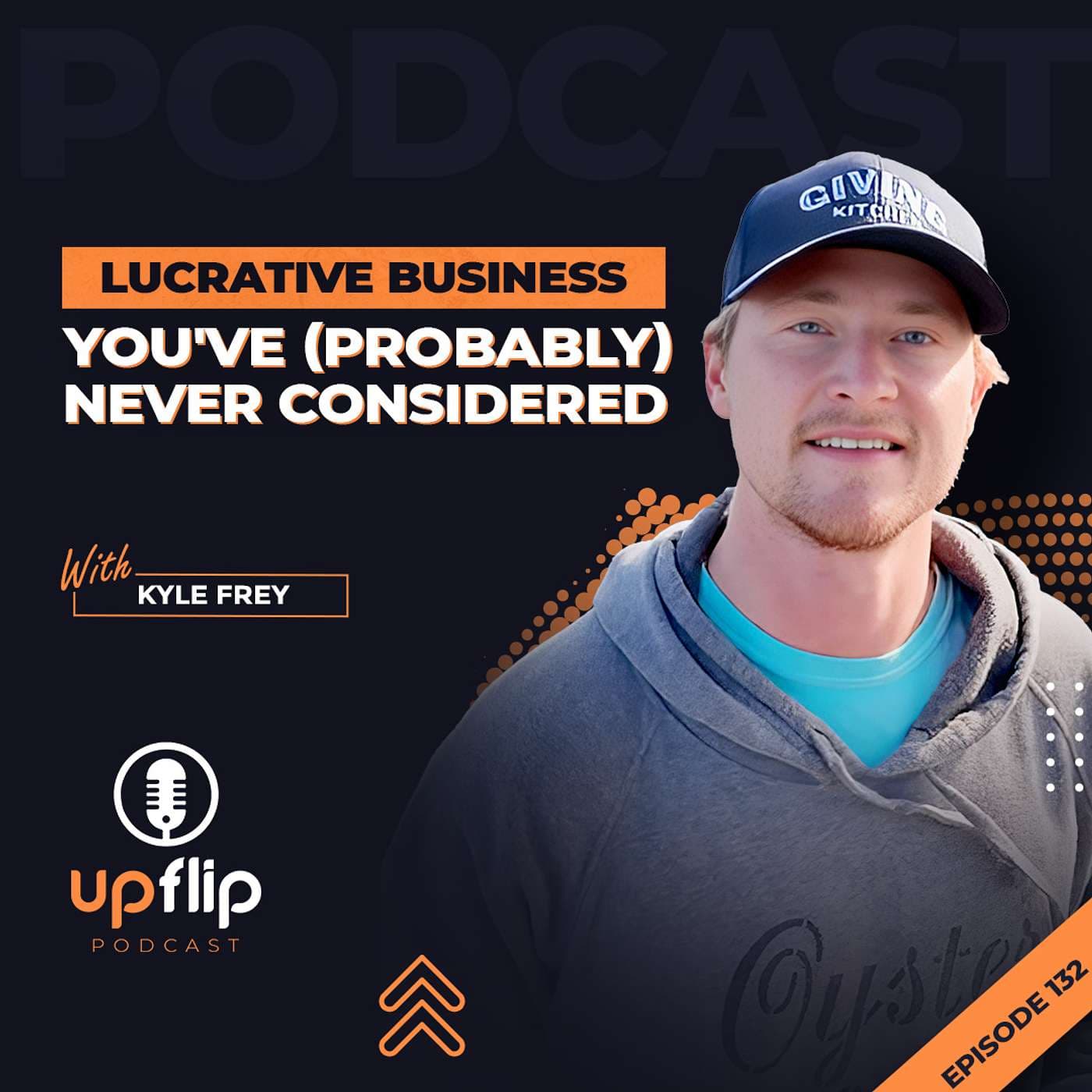
UpFlip Podcast Episode 132: This Unique Business Idea Could Make You Millions
Episode Overview In this episode, Ryan Atkinson interviews Kyle Frey, an oyster farmer from North Carolina, who has turned his unique business idea into a multimillion-dollar venture. Despite starting with zero experience and minimal funds, Kyle discusses his journey in the oyster farming industry, revealing insights into how to establish and grow a successful oyster farming business.
Key Highlights
Introduction to Kyle Frey
- Background:
- Kyle Frey is an oyster farmer making millions annually.
- He began his journey without prior experience or even having eaten oysters before.
- Business Success:
- His company generated $1.6 million in 2023 and is projected to reach $4 million in 2024.
Getting Started in Oyster Farming
- Initial Steps:
- Kyle’s interest was sparked while working on a dock where he encountered a million oysters.
- He transitioned from construction to working full-time in oyster farming.
- Starting with a Budget: He had no money but used a coin collection and a loan from grandparents to get started.
- Oyster Farming Basics:
- The process involves acquiring a lease through the state and requires a significant amount of patience as it takes about 18 months for oysters to mature.
Growing the Business
- First Steps in Business:
- Initially focused on cultivating oysters and securing local restaurant relationships.
- Emphasized direct sales to chefs to gather feedback about market preferences.
- Challenges Faced:
- Encountered high mortality rates in the initial stages (50% loss of oysters).
- Persistence was key; Kyle did not turn a profit until 2022.
Key Business Strategies
- Direct Sourcing:
- Kyle emphasized the importance of connecting directly with chefs and restaurants to understand market demand.
- Logistics of Scaling:
- The need for a land-based operation was crucial for scaling production and improving efficiency.
- Marketing Approach:
- Leveraged social media to build a brand and connect with potential clients.
- Developed a tactic of reaching out directly to chefs via Instagram.
Challenges and Lessons Learned
- Resilience:
- Acknowledged that crop failures and challenges are part of the learning process.
- Suggested aspiring farmers should work on existing farms to understand the realities of the business.
- Financial Insights:
- Initial investments are crucial; Kyle emphasized the importance of becoming both a shellfish harvester and dealer to control the product and pricing.
Key Takeaways
- Passion Over Profit: Success in oyster farming requires a genuine passion, as profits take years to materialize.
- Scrappiness is Essential: Being resourceful and hands-on is critical in the early stages of building a business.
- Seek Untapped Markets: Instead of competing in saturated coastal markets, seek opportunities in underserved areas like the Midwest.
Conclusion Kyle Frey’s journey from an inexperienced worker to a successful entrepreneur in the oyster farming business illustrates the potential for success in niche markets. His insights into the logistics of oyster farming and the importance of direct relationships with customers highlight essential strategies for aspiring entrepreneurs in similar fields.
Resources Mentioned
- [Crystal Coast Oysters](https://www.crystalcoastoysters.co/)
- [UpFlip Academy](https://bit.ly/3BYRi0I)
- [Franchise Guide](https://bit.ly/4aWuGvc)
Connect with UpFlip
- [YouTube](https://www.youtube.com/@TheUpFlipPodcast/)
- [Instagram](https://www.instagram.com/upflip/)
- [Facebook](https://www.facebook.com/upflipofficial)
- [Twitter](https://twitter.com/upflipofficial)
For more insights on starting, building, or growing a business, visit [UpFlip.com](https://www.upflip.com/).
Written by AI. May contain mistakes. Listen to the episode to check what was said.
Transcript
Automatic transcript. May contain errors.0:00There are hidden businesses that are invisible to the public eye. But those who know these gems rake in six or seven figures a year. And today we are going to talk about one of those gems. This is Ryan Atkinson and you're listening to the Up The Podcast where we uncover the secrets of building and running successful businesses. Our guest today is Kyle Frey, who is an oyster farmer. And guys, he's making seven figures a year in this business. This is going to be a super fun episode to talk about how exactly you can get started and where the opportunity in this business is. we get really technical into actually how to grow these oysters, how to get your first customer, and how to really scale this business.
0:38Super excited to welcome Kyle to the show. Kyle, thank you so much for being here. Thanks for having me, man. Really pumped to be here. It's going to be a great conversation because this is so much different from any other interview I've had. We're talking about oysters today and how you guys have gotten close to a million dollars. It's going to be a great conversation. Let's start us off there. What led you to start Crystal Coast Oysters and what were some of those initial steps you took to get the business off the ground. Okay. So when I was growing up, my dad always told me you need a product or a skill that you can scale and sell.
1:07So my whole life, I'd been kind of looking around for that exactly. School was not exactly my path. I had gotten into construction and I was working on a local dock, like a restaurant stock. The state of North Carolina was looking to really stimulate the oyster industry in North Carolina. And they figured that he would be a perfect candidate. So they basically subsidized him to get a million oysters. And when I showed up for work one day building the dock, there was a million oysters sitting on the dock. He immediately asked me, hey, would you want to fumble around with this? We looked at it. I quickly looked online to see if there was any information.
1:43There was not. And it seemed like a relatively new, cool industry. So of course, I jumped on the opportunity and was really excited to help him. I slowly actually transitioned away from doing construction on his dock as it finished up and moved to working for him full time on the oyster farm. And the work was just absolutely amazing. Being out on the boat all day, being physical. At the end of the day, I felt really good about what we were doing. My only concern was who is going to eat these oysters? We can grow them, but where are these things going to sell? We were seeing a lot of them. So I made a promise to myself that I was like, if he can sell all these oysters, I am going to get him to business for myself.
2:19I had been doing a lot of the work and I thought it was a product that I could scale. So some of the initial steps that I had to take to basically get our foot in the door. In North Carolina, we have a leasing program through the Division of Marine Fisheries. I decided to pursue that on my own and actually went and got a part-time job and started the lease application process. It took us about six months to get the lease and it was actually very good luck for us to get the lease. And once we had the lease, it kind of became, okay, now you can really move into this industry. I had no money, no college education, and I just kind of saw an opportunity.
2:58What I think is super interesting about you getting started in Oyster is that you never tried Oyster before you got started with it. But did you just kind of notice, as you said, if my boss can do it, I've been doing the work, I've been putting the lease in. Is that how the opportunity kind of came up in your head to like, I'm going to actually start pursuing this? Absolutely. Absolutely. One of the things I noticed when I was a kid doing landscaping work was the only difference between me and the boss was he was picking up the cell phone, getting the jobs, and I was hauling the rocks up the road.
3:27And so I've always been looking for something that I could actually do. And watching my boss, he handed me the opportunity. He just said, bring me back the oysters. And I did my part. I brought him back the oysters. And then it gave me the confidence to know that I could go out on my own and really attempt this. I believe being in that time of my life, I had nothing to lose. I could risk everything. And I quickly made the decision to jump into it. I did not even eat any of his oysters when we sold them. I had to grow my own. And then the first oyster I ever really ate or can remember consuming was one of my own market-sized oysters.
4:00So yeah, it was really about the lifestyle of the oyster farming and kind of the business. I could just kind of see the potential for scale in something like this. Interesting. How old were you when you started this then? I was 24 when I started working for my boss That's what I think is like such an interesting thing and like when we speak to a lot of entrepreneurs It's like i'm so young and like I don't really have anything to lose when I took the leap of faith and did my full-time Entrepreneurship. I was 24 as well because like worst thing that happens. I get a job like I don't have a wife I don't have kids.
4:27I don't have anything to support Exactly. It's almost like a superpower Exactly and it's a special time in your life when you can actually do it But I want to move so long on your story as well So you get this lease approved you said you're lucky to get it What kind of happens next then? Or like, how did you start getting like this first supply out? Okay. So we have the lease. I had no money. All I had was a coin collection worth about like 3000 bucks. I did some quick math and figured out that it was going to cost me about$5 ,000 to purchase 20 bottom cages and 100 ,000 seed and the ropes and the hooks that would go with it.
4:59There was no budget for a boat. Luckily, I had a kayak that I could borrow. And so I went to my grandparents and I approached them with this idea. I didn't go to college. so this was you know potentially the way they had set aside money for college money that i'd never had used so they were willing to give me a loan out of my college money for five thousand dollars four percent interest because interest back then was very low you know it was a good time to get that and um we basically sold my coin collection i summoned about eight thousand bucks i went and bought the 20 bottom cages went out there threw them out on the lease and then i kept my part-time job in Raleigh and I would go back on the weekends and I would just tend to my crop.
5:37It's very actually relaxing in the beginning. Just going out there, these oysters come so small that you're able to work them on a kayak and you're able to basically manage the farm that way. Can you kind of paint us a picture right now of like you on a kayak? So you're sitting on a kayak and all the cages are in the bottom of the ocean. Can you kind of paint that picture just so people have it in their mind? I think this is like a crazy story. Absolutely. We did initially have some help from somebody else to drop these bottom cages in. They're three foot by four foot bottom cages. And we drop them on kind of an intertidal area, which is about, I'd probably say 500 to 700 feet from shore.
6:09It's in a four acre lease. And these cages are about 18 inches tall. So I drag my kayak in. You kayak in, you have to go at low tide when you don't have a crane because you have to be able to get to these bottom cages. So I would generally go out on a falling tide, arrive at my lease after a nice little kayak, and then you would jump out over the side into the mud and basically walk around, take them apart, you know, pull the bags out. A lot of handshaking. We didn't have any mechanical equipment. Just really, I look at it and it was a great way to learn how an oyster grows. You know, I wasn't rushed and I was able to sit and basically take my time and learn about densities and just, I did not even really know how they grew.
6:44So just being able to see the thing grow and understand that was really cool. And the tides change every day. So the kayak trip could be in sunrise. It could be at sunset. It could be in the middle of the day. It could be in the rain, but it was just quite heavenly actually. Ah, that does sound quite lovely. And so it sounds like this is like true, like gritty in the weeds type of work here. And so you're obviously successful with it from the start. But let's talk about that first batch that you like have. How did you start to sell it then and like actually start to flip a profit with this then?
7:11Okay. So farming is an interesting business. Farming, it takes a while. It's a slow accumulation of money as opposed to being able to open a retail store and start selling product and start producing revenue right away. With farming, it takes about 18 months. if you include getting the lease and such, it takes 18 months for that full seed to come to fruition. It does grow on a bell curve and you can start seeing markets as soon as a year from six millimeter seed, but it really takes about 18 months. So during that 18 months, kind of like owning our craft, learning a lot. I mean, you kill a lot of oysters.
7:43They say you really do not become an oyster farmer until you have killed 1 million oysters. So that year, we probably killed about 50 % of them. I was not actually super interested in, And I saw the long-term potential. I was really just trying to prove that this could work to myself, to my grandparents, basically to everybody. I was, let me see if this works. It didn't really matter to me how much, even the amount that I planted was not something that I could have lived on without living at my mom's house. And so in the first year, some of it came in 2019 or it's the end of 2018. Some of it came in 2019, but I basically just took every dollar and reinvested it.
8:19And the first customers that we looked for, because at such a small scale, You can't approach a distributor and say, hey, look, I have oysters because you do not have a solid supply of them. What will happen is they'll buy you out in a few weeks and that is not a good look to go to a distributor. So what we did is we found some local restaurants that we thought we could supply pretty consistently that were within our radius. And we thought we could be pretty competitive on price. And that's exactly what we did. We approached a restaurant called Catch 109 and a couple of other restaurants that are related owned by the same person.
8:47And we offered to be their oyster supplier. And in the beginning, we always did direct to chef, consumer. And that was really for us to learn about what the chefs wanted. I mean, I was going into these places and I didn't even know what size oyster the consumer was interested or really what the chef was interested in. Getting a lot of that feedback, I was able to take that. And as we were building our business, I was able to say, okay, this is important to the chefs. We're going to really make sure we don't slack on that area when it comes to trying to be efficient or shell quality is important.
9:16Size is important. you know, too big and they kind of get out of the range. So we didn't really make a lot of money in the first couple of years, actually. We didn't turn a profit until about 2022. But the amount of information that we had or we were able to gather by dealing so directly with our customers was basically invaluable, which we used to build this business. What would it mean to you if you weren't alone in your entrepreneurial journey? If there was a place where you could find mentors and guidance, get feedback and validation, find real answers to your very specific questions, get peer support, and more?
9:48Upflip Academy is our exclusive membership program, and it's exactly a place like this. Inside, you'll find dozens of courses, masterclasses, complete business blueprints, and most importantly, a lively community of like-minded entrepreneurs. With our community, you'll never feel alone again. To make it easy for you to join Upflip Academy, we're offering an exclusive launch price. Enroll today and secure your discounted membership price forever. Follow the membership link in the description of this episode. I'm curious, I want to jump back to a part that you said here about going directly to like the chefs early on.
10:20I'm curious. So what like metrics are we looking for here? Are they looking for like the size of the oyster or like how many pounds of oysters you have? Or like, what were those early conversations like with the chefs? Because someone might be listening like, you know what? I'm kind of considering this oyster farming thing. I'm on the coast. Like, why not? But like, what are those conversations like early on? Okay. So our first conversation was size. We had typically seen wild oysters, which is another way to harvest oysters. And that is a much larger volume size oyster. So I went into restaurants.
10:48We approached them with what I had seen, large oysters. When we brought them in, what we slowly started to realize was some of the feedback was, I think it's 79 % of the population is not an oyster fanatic. There's 21 % of the population that loves oysters. So when they go out to a raw bar, there's more than likely your customer is not going to be a traditional oyster eater. So what they'll do is they'll look at the raw menu and they'll look for the smallest one for them to try. So you can get the same amount of money for that. So initially, our first big win was scaling our oyster size way down because what that did, it allowed for shipping became less expensive.
11:24I mean, the pain on your back. I think our bags went from 40 pounds or 35 to 40 pounds a piece to 13 to 17 pounds. Wow. Instead of being able to carry two bags in your hand, you could carry four. So size was extremely important. One of the next things that all of our oysters come clean and pressure washed. But what that does is it saves the restaurant the labor of having to clean it. And another problem is also the plumbing can get ruined from washing wild oysters in your sink because this was a new industry. So they all mostly had wild oysters. When we showed up with a smaller bag of clean oysters, they were somewhat surprised.
11:56But over time, some of the feedback we got was, hey, you're saving me on labor costs from cleaning them. I've had to replace my pipes because of all the mud that went down them. So then the next thing was really having a clean product that they could use right out of the bag. They're willing to pay for you to do a little bit more effort of cleaning. And then the third thing was basically shell quality. And this came from feedback from the actual shuckers, the people that were shucking the oysters. You just basically want a hard shell, which involves exposing it to some sunshine at some point in its life.
12:22And that just makes the life of the shuckers much easier. If the shucker goes to the chef and says, hey, look, I'm having trouble shucking these, that's going to slow down the restaurant. And it's ultimately going to slow down the amount of money they can make. So clean oysters, dialed down the size. We went a little bit small and then we've kind of, the market has actually shifted because it was such a new industry. All the farmers started to go super small. So the restaurants up and down the East Coast couldn't get a medium-sized oyster from anybody. So we kind of bumped our size up to what we've really found is a comfortable size.
12:50You know, it's about two and a half to three inches, but it's a thick oyster. It's definitely a thick oyster. You're making me hungry for oysters. We're going out to eat tonight, so I might be going. But of course, the question that comes to mind for everyone is, okay, this all sounds really great. It sounds like I can get started here. But how do you scale oyster farming? Talk to us a little bit about how you guys went from a small farm to what it is today. This is super interesting. I started this off the end of my mom's doc. She has a waterfront property in Moorhead City, North Carolina, which is not zoned correctly to run a commercial business.
13:23But we were exempt through farming. But basically, we started in a very, very small environment. And what we ultimately realized was this is all a logistics game. It's moving rocks around from left to right, right to left, keeping the rocks clean. And if you can create the shortest possible distance from lease to fridge or lease to processing tool, you will ultimately long term win and it'll be cost saving. So what we had to do was we had to find a land based operation that was the zoning was correct and that we would have enough space to basically expand. We got very lucky in 2022 and we found a land-based operation that was basically a thousand feet away from a lease that we had been working for years.
14:01To scale this, honestly, you need a land-based operation and you really need to think about it as a logistics game. That would, I would say, is probably one of the most difficult parts of this because you're also competing with wealthy waterfront owners, developers. And to try and sneak in and get an unzoned piece of waterfront is getting harder and harder and harder as time goes on. We got a piece of property that was right on the river. And as soon as we got it, my mind kind of unlocked because we were finishing everything that it was taking us a week to do in a day. I mean, our business and our growth rates just exploded by basically treating this more as a logistical game than opposed to farming.
14:38I guess farming is basically a logistics game. What are some of the logistics that come to like oyster farming? Because obviously it's one thing to actually like farm it and whatnot, but like you also have like the just like shipping and everything and bagging and everything that you talked about. So someone that is completely unexperienced in oyster farming, I'm assuming a lot of our community is, but they might be interested. What are some of the logistics that come with like oyster farming? I'm curious. Yeah. Yeah, no, absolutely. So basically you're going to have to sort and tumble your crop about six times in its lifetime.
15:05You're going to start with very small seed and that will go into bags with a certain size aperture hole based on the size of the seed. The name of the game is low density and clean gear. So some of the logistics are you're going to have to be able to figure out a way to get your product out of the gear type that it's in and into the processing machine or mechanism, whichever one, however you decide to sort or tumble your oysters. And then you're going to have to get it back. Some of the ways people do it is they'll bring the processing facility to the lease. We actually used to do that. we would put a tumbler on a boat, bring the boat to the lease.
15:36But that kind of as scale, you realize that you're limited by the amount of space on that boat. So basically it's getting back and forth to the processing facility and back about five times in life. And then on the final time, it's going to be your harvest. Now, during the summer and during the winter, there's time and temp regulations. Oysters are one of the most regulated foods, typically because they're consumed raw. In the summertime, we've got five hours and it's really a safety thing. So you want your lease as close as possible to that fridge. And as soon as you can get them out, You want them in that fridge cooling down even before you wash and process them.
16:08And then on the back end, the logistics, and we're working on the logistics on the other end from our fridge basically to the country. The way that it breaks down right now is all the coasts have got fairly well oyster markets developed. Where we're seeing a lot of the opportunity is in the more difficult logistical places to get to. Oklahoma City has got an awesome city, but they really don't have any veins of oyster companies going directly into them. And they love oysters. Cleveland, huge clam community, but they do not have a direct line for oysters. And there's just so many cities in the center of the country that are hugely populated.
16:42They might have access through like a few days it takes a distributor to get the product there, but that's kind of a disservice to them and to the farmer because your quality is based on time out of the water. So the experience for the oyster eater in the center of the country is not going to be the one on this coast. And I believe that's an opportunity for us to come in and fill and create very fresh product to typically underserved. You know, it's weird with oysters because it's got more of a time limit than other sorts of fish. You know, there are other purposes that you can use them for. But really, nobody has scaled to the point where they're putting 18 wheelers into Oklahoma City yet, you know, of oysters.
17:15So I'm in Iowa right now, back home in Iowa, and I live down in Austin. And like the oysters in the Midwest and like South. I was going to say, you're going out tonight for dinner. I'd be interested to know what kind of oyster opportunities you have to get to that. I'll let you know I'm in town of 10 ,000, so there's not a whole lot of oyster opportunities. But how do you guys scale to like the Midwest? What are some barriers and challenges that you guys need to overcome to scale to the Midwest and these central cities? So we've got a couple of different options that I'm currently working on right now.
17:44So we've got air freight, and this can be done through airports. So we can basically drop them off at RDU, and they'll be cold shipped. One example is out in LA. There's the potential to tap into the market in LA. And we basically worked it backwards. And I have a connection over there who goes and picks them up from the airport. And we basically load them up onto a pallet, give them to Southwest. Southwest sends them to the airport. He picks them up, refrigerating trailer, spreads them apart. And that one's actually kind of easy. But one of the things that we want to do is we want to stay out of markets that anybody's in currently.
18:13The earth community is small. And if they've developed that market. I believe there's so many other markets to have the advantage of showing up there first than trying to get into, you know, like where there's already established like New York. That's a tough market to get into. We can get into it, but it just, there's no reason when I believe inland, you know, if we're sending them eight hours up, let's just go to Tennessee, Nashville, another huge market. So we're kind of more focused on these new cities. So we've got the air freight. And then the other one is just straight up 18 wheeler trucks, maybe starting a, it's a kind of a co-op from East coast farmers, maybe a couple of states, South Carolina, North Carolina, Virginia.
18:46And I'm talking with a few right now about kind of partnering together, filling up a truck and sending it to any one of these cities that is currently underserved. And what that looks like is we'll get them to somebody and then have a distributor on the other side at as of scale that can spread them throughout whichever city that we like. It's going to be impossible for us to bring 500 bags of oysters, which is 50 ,000 oysters and drop them off individually. We need to find the seafood distributors that have established customers that are willing to, you know, push a fresh product. I like that.
19:14What's been mind-blowing for me is like all the logistics that goes into like oyster farming and like everything that actually comes with it. And I kind of want to wheel back here to like still like starting out like early on for you because I'm just curious, like if other people are listening to, like is there any like marketing done for you guys or how have you like found buyers for specifically you guys? This is our little trick that we've been using. Oh, everyone tune in. Yeah, no, this is exactly the trick. So you want to develop a small, any sort of social media presence and kind of be consistent with it and really kind of just like capture your story to explain what you're doing along the way.
19:47And it'll make sense at the end. So as years pass, it takes you a few years to really develop. It is not hard to find oyster sales in the beginning. If you're a small farm and you throw out a hundred thousand, you will sell them to friends and family. It doesn't sound right, but you will, because you'll typically start producing about 300 to 600 oysters a week. And you'll have sometimes where there's 1200, but that's 12 bags. We've started helping a lot of small farms. And I told them I'd buy their oysters from them so they could not have to worry about it. But they make a post on Facebook. Their friends have been interested in them growing and they want to support from the beginning.
20:18So with a small farm, you will have no trouble unloading any of your oysters. But as you're capturing this all on Instagram or YouTube or however you're deciding to do it, what we specifically chose was Instagram. I was able to look at the market that I would want to get into. Let's say it was in Raleigh first. I would go and I would search oyster bars in Raleigh. I would actually go to Google. So in Raleigh, I knew the oyster bars I wanted to. But when I would go to a new market like Charleston, I would go on Google and I would type in like look for the four money signed restaurants, you know, the most expensive.
20:44Then I would use that information, go to Instagram, find their page, and then I would find their chef who would be tagged somewhere or I just friend them and watch and figure out who the chef was. And then I would personally send him a DM, direct message, and I would ask, hey, are you a fan of oysters? Would you like to try a sample? That's why it was so important to capture the past of what we did because they could instantly click on our Instagram and kind of see our story. And then they decide, okay, you know, I'd like to give this guy a try. We'd send them the sample. I think I might've only had three people that did not want oysters or they just didn't get back to us because it was, they were long shots.
Read the full transcript
21:15You know, we were really trying some really crazy restaurants, but that is how we built all of our business in the beginning. We actually built our business off of our own distribution at first. One also very important thing to getting into this, there's a shellfish harvester and there's a shellfish dealer and you want to become both right from the beginning. What that's going to require is you're going to need to get a refrigerated cooler and basically take some HACCP courses, but that gives you unlimited freedom to sell your oysters. When you have to sell them through a distributor, you are not your own boss.
21:43They set the price. They tell you when to pick them up. They pick your customers. Even if it's very small, I think we invested$10 ,000 in a trailer. I borrowed that money too, but initially it allowed me the freedom to pick the customers that I wanted. And that was, in retrospect, that allowed me to build up customers. And then I was able to go to a distributor and negotiate with them. I didn't have to go in there and say, hey, what will you pay me for these oysters? I can say, hey, I've got 2 ,000 oysters sold a week in this one market. This is the price. Would you like to get them there and possibly take some more?
22:12And they would say yes, because they're going to make money on the sales that you've already generated for them through the distribution. And then the opportunity is for them to sell more if you have a good product. If your oysters are already selling every week, that generally means that your oysters are good quality. So that was the trick that we used. I still use that trick today. We're trying to get into Denver, Colorado, and I've got a few small things that I've got going on right there to develop the market, to find the seafood distributor. Like I will ask the chefs. I'll be like, Hey, who do you get your product from?
22:39Who's the best in town? Who's got the best reputation? And I can gather that information and then I can use that to approach that distributor. Not just like, Hey, buy my oysters. It's like, Hey, I know you guys are in this market. We work with X, X, and X. They've been buying oysters from us for this long. Would you like to take this over? And so that is kind of how we've built our markets in different areas. I love that. That's how we grew up. based on our visuals is giving out free videos. And then also you're providing social proof there because we work with XYZ, XYZ, XYZ, and we provide the oysters to them.
23:06I'm curious as well, what else early on is someone starting an oyster farm? Like what should they know or what are some unexpected challenges that they might need to overcome? You got to be prepared for your crop to die. So I would recommend that you go and you volunteer on a farm first and you'll know pretty quickly based on the people that we have working here now, you will know if in a week, whether you are set for this job or it's just not for you. And within that week, you'll find that the job provides actually kind of a sense of joy. If it happens to do that, then you will probably do this job for free.
23:36And you will end up doing this job for free at some point because your crop will die. It takes 18 months of free labor before you start even getting any revenue. So you just kind of have to be mentally prepared for that. If you do and you love it, I don't think it'll stop. Another thing is I would also recommend come in and don't just get one lease, get multiple leases because because one spot might not work. Even if it's growing wild oysters, it could have potentially like spat, which is set, stuck. Just the water is so, the salinity is high and that'll make your gear unworkable. We have fouling in every area, but some areas experience rapid fouling.
24:10And in 2020, we thought we had figured it out perfectly. We experienced a rapid fouling event and I was crying on the lease thinking I was going out of business. And then I was like, well, I love this, So I'm just going to try again. You know, basically, like I thought I had erased three years of work, but I didn't. I didn't lose any of the information that I had. So when I was able to set up again, I set it up right. And I knew what I was looking for. Really understand your river. Spend some time in it before you invest in picking that spot. I like it. Well, Kyle, this has been an awesome interview.
24:39And we are going to go to our last segment here of our Fan Blitz questions. And these are actually questions submitted from our community that's also interested in oyster farming. And if you guys are listening and you want to join in the conversation with Kyle and any other entrepreneurs, go to www.youtube.com slash upflip and submit your questions there. But Kyle, you want to round us out with our last five questions here? Absolutely. Perfect. Number one is what certifications do you need to get started? You're going to need a lease basically from the state. You're also going to want to have a HACCP course to become your own shelf this dealer because there's really no point of getting into this if you're not, don't control your own product.
25:12And then number three, based on the state you're in, you're going to need a shelf this harvester's license. Number two, what do you think is the minimum space needed to get started? So you will need about half an acre to grow 200 ,000 oysters. That's a good place to start. Simple enough. Is demand for your oysters higher than your current production? Yes. It's a good problem to have. How long did it take you to start seeing profits? About four years. But the profits that you're interested in come in year six or seven, when you can really start having fun and really scaling. When they say profits, It's, you know,$5 ,000 a year profit in four years, but you know, it rapidly increases after that.
25:48I like that. Did you ever imagine yourself doing something so bizarre for so much money in your youth? What did you believe you would become when you were a child? So everybody in my family went to college and I was obviously interested in making money. So I thought I would go for finance when I went to school, risk management. That was not exactly the path. But when I was a kid, I kind of had a feeling I was going to do something bizarre. As long as I can remember, I wanted to be a lizard trainer and an ice cream maker. It was a weird mix, but that is exactly what I wanted to do from the beginning.
26:18I love that. Maybe in a few years, you can combine like a lizard training session with like ice cream at the same place. That would be a unique little twist there. Life is long. Life is long. I love that. Kyle, this podcast episode was short, though. This was a ton of fun. So thank you so much for joining us. Last question for you. Where can people learn more about you and more about what you're doing? OK, so we actually started a YouTube channel this year. It's going to just be Crystal Coast Oysters. And then you can also check us out on Instagram and Facebook, Crystal Coast Oysters. And then our website is crystalcoastoysters.co.
26:47Guys, this was an awesome episode with Kyle. Here are three takeaways that I took. Number one, if you're going to do something like this, you have to be super passionate about it. Why? Because you're not going to turn a profit for three or four years and you just have to enjoy doing it. Two, if you're going to do this, you need to be very, very scrappy. Kyle was talking about like how you're in the mud, how you're wheeling stuff up, all that stuff. So you need to be very scrappy and not be afraid to get your hands dirty. And then three, instead of going to the coast where it's saturated markets, like Kyle said, be looking to these Midwest areas, the Chicago's, the Denver's, the Oklahoma City's, the Kansas City's, places that are in the Midwest that have a lot of people, but also want oysters.
27:25If I was going to be doing this, this is exactly what I would be doing. So if you enjoyed this episode, be sure to check out episode 79, where Kevin Esperuti shares how he makes 7.3 million a year with his gardening business. The link is in the show notes below. Kyle, thank you so much for joining us today. Thank you.
From the publisher
Kyle Frey has a unique business that makes him millions of dollars a year. What he does isn’t something you hear about every day. He’s an oyster farmer on the coast in North Carolina. He started his farm with zero experience, hardly any money, and at the time, he’d never even eaten an oyster. Kyle is an entrepreneur but he said it feels like he doesn’t work a single day because he absolutely loves what he does.
His company did $1.6M in 2023 and he’s set to do $4M in 2024. Kyle shares how he got started on a tight budget. How he set up his farm business, and the different ways he makes money from oysters. This is a unique interview that you do not want to miss! And if you enjoy this, be sure to check out our Youtube channel where he’ll be coming on in July!
Resources:
- www.upflip.com/podcast: Episode 79 How to Make $7.3M/Year Blogging About Your Hobby
- https://bit.ly/3BYRi0I Join the Academy and learn from top entrepreneurs like Kyle
- https://www.crystalcoastoysters.co/ Connect with Kyle
Ready to be your own boss without starting from scratch? Grab our FREE Franchise Guide and unlock the secrets of proven business models that have already created thousands of success stories.
Connect with UpFlip:
- On Youtube
- On Instagram
- On Facebook
- @UpFlipOfficial on Twitter
For more insights to start, build, or grow a business, check out the resources on UpFlip.com or head to the UpFlip YouTube channel to see more interviews with business owners and experts.
Thanks for listening!


