
In short
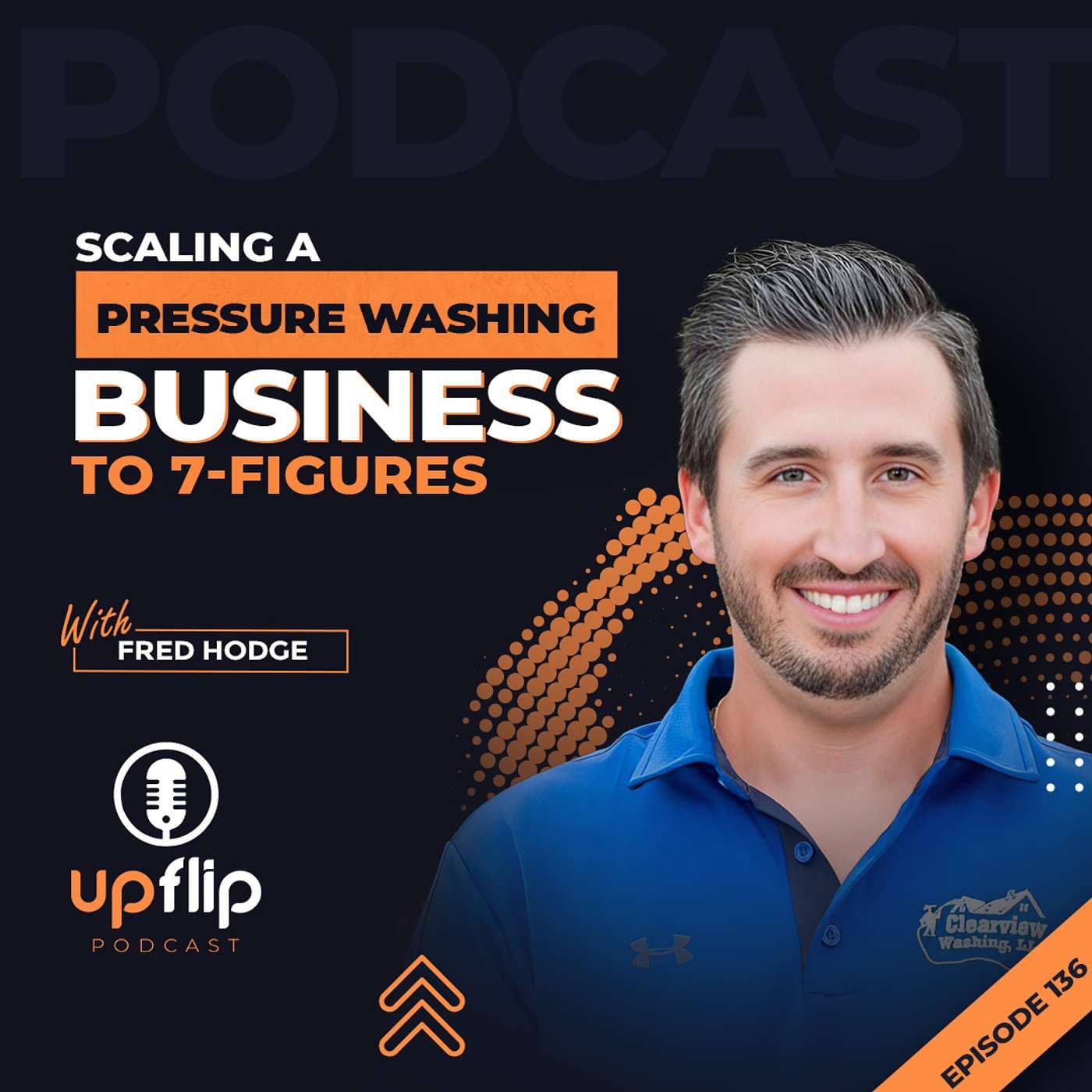
UpFlip Podcast Episode 136: How to Start a $2.1M Pressure Washing Business (On a Budget)
Episode Overview In this episode, Fred Hodges Jr., an experienced entrepreneur in the pressure washing industry, shares his journey of building a successful pressure washing business that generated $2.1 million in just nine months. He emphasizes the importance of a clear vision, exceptional customer service, and effective marketing strategies, particularly focusing on online reviews.
Key Concepts and Takeaways
The Pressure Washing Industry
- The U.S. pressure washing market is valued at over $1 billion.
- Starting a pressure washing business can be achieved with an initial investment of less than $2,000.
Fred's Beginning
- Fred's journey began in March 2004 when a window cleaning service failed to show up for a job at his parents' home, prompting him and his father to start their own window cleaning business.
- Initial marketing efforts included placing ads in newspapers, a common practice at the time.
Key Ingredients for Success
- Exceptional Customer Service:
- Fred attributes his success to a focus on customer satisfaction and going above and beyond for clients.
- Building a Strong Team:
- Emphasizes the importance of training a well-prepared crew and recognizing when to pass on tasks to others.
- Discusses the challenges of high employee turnover in the pressure washing industry.
- Effective Marketing:
- Utilizes Google and Yahoo reviews to build trust and credibility.
- Highlights the significance of online presence and utilizing SEO to attract customers.
Starting a Pressure Washing Business
- Recommended starting with commercial-grade equipment, investing around $1,500 to $2,000.
- Focus on lead generation from the beginning as it drives the business.
Strategies for Attracting Customers
- Online Reviews:
- Encouraged gathering Google reviews as they hold more influence than personal recommendations.
- Social Media & SEO:
- Utilizes platforms like Yelp and focuses on SEO to drive organic traffic to the business.
Financial Insights
- Initial Costs:
- Equipment, insurance, and marketing are primary startup costs.
- Pricing Strategy:
- Pricing should be based on factors like geographical location and service specifics, using tools like Responsibid for accurate estimates.
Metrics to Track
- Key Performance Indicators (KPIs):
- Average ticket size, closing rate, and customer acquisition cost are critical to understanding business health.
Company Culture and Team Management
- Establishes a strong company culture with core values that align with the business's mission.
- Discusses the importance of hiring processes that assess potential employees' fit with company values.
Future Opportunities
- Fred encourages aspiring entrepreneurs to embrace the discomfort of starting a business as a pathway to growth.
- Highlights the potential for significant revenue in the pressure washing sector if one is dedicated and strategic.
Quick Tips for Aspiring Entrepreneurs
- Start small and reinvest profits into the business.
- Emphasize customer service and ensure a seamless experience for clients.
- Cultivate a positive and strong company culture that resonates with team members.
- Keep a close eye on financial metrics to steer the business effectively.
Resources Mentioned
- [Pressure Washing Course](https://bit.ly/3YAr3qd)
- [Clearview Washing](https://clearviewwashing.com/)
- [UpFlip Academy](https://www.upflip.com/)
Conclusion Fred's insights provide a practical roadmap for anyone interested in starting a pressure washing business. By focusing on customer service, effective marketing strategies, and solid financial management, aspiring entrepreneurs can achieve substantial success in this growing industry.
Connect with Fred Hodges Jr.
- LinkedIn: Fred Hodge Jr.
- Instagram: @ClearviewWashing
- Facebook: Fred Hodge Jr.
Thank you for tuning into this enlightening episode of the UpFlip Podcast. If you're inspired to start your own business, visit the UpFlip Academy for additional resources and training opportunities.
Written by AI. May contain mistakes. Listen to the episode to check what was said.
Transcript
Automatic transcript. May contain errors.0:00Pressure washing is a good, clean business to start. The U.S. market alone is valued at over$1 billion. But the best part, you can tap into this market with less than$2 ,000. In today's episode, we will talk about how you can get started, how to land your first customer, and how to maximize your revenue with additional services. This is Ryan Atkinson, and you're listening to the Upflip Podcast, where we uncover the secrets of building and scaling successful businesses. And today, I'm joined by Fred Hodge, who has been in the pressure washing space for 20 years. What is his key to success, you may ask?
0:37A laser-like focus on exceptional customer service. Fred, I am so excited to have your insights on this podcast today. Thank you so, so much for being here. Thank you so much for having me, Ryan. It's gonna be a great episode. You've been doing this for 20 years and people listening that might be thinking like, oh my gosh, how do I get started? How do I get started? You're gonna be the perfect person to do that because you started back in March, 2004 with Clearview Washing. Let's kind of reel back the timeline to March 2004. What led you to start this pressure washing company? Yeah, so I was studying entrepreneurship at a university called Rowland University in South Jersey.
1:09Someone was supposed to go to my parents' house for$350 to clean the windows. The guy didn't show up. He didn't call. He didn't anything. And my dad had a corporate job in New York City. He was kind of like, stay away from corporate America. I don't like all the games they play and all that stuff. So he was giving me like a nudge towards entrepreneurship. I was obviously studying in college. When this person didn't show up, it kind of sparked us to say, hey, maybe we could offer a window cleaning. So we put an ad in the newspaper because that's what people did back in 2004. And we kind of got a couple of jobs from it to get us going.
1:37And then we eventually bought a couple other window cleaning businesses and started expanding services. But that initial, like the guy not showing up is what triggered us to start it and get it off the ground. Obviously, I was studying in college, so I could only do it like Thursdays, Fridays, Saturdays, and Sundays. But I did my business plan in college on like exactly what I was starting. So it's pretty cool. For more than half my life now, I've been doing this business, but I was able to apply real life to college and it was really cool. That is really, really cool. And I think that it's cool that it started off with just a newspaper ad.
2:08If someone's listening now, they may be like, that was a thing. It sure was a thing. I'm curious though, when you got your first lead from that, what were some of these emotions? Were you like, oh crap, I need to actually figure this out now and put this into an LLC? What was that first thing you did after you got that lead from a newspaper ad? Yeah. So we went ahead and we did the LLC right away. and then from there once the first leap came in that was a little scary my dad actually contacted another company in pennsylvania that was like an hour and a half away i think the original was he was going to get all the money for the job and he had a couple jobs lined up and he just wanted to see how he did it and all the tips and tricks he had and i think it was like 600 bucks for the day the guy got the 600 bucks he taught us kind of how to do it and then from there the next job i was like all right well we're window cleaners now and i went based off of that and i just filled myself with confidence.
2:51And it was also realistic. Like I had to study up and learn and kind of figure out how to improve. But at the same time, I wanted to go in there like, all right, I know what I'm doing. I'm professional, but I had a baby face. I was 19 years old. So like at that time, people were like, do you know what you're doing? And like, I had to like persuade them or let them know, yes, I do. And I would showcase that. Yeah, I think it's really interesting. There is definitely ageism, especially when you're a little bit younger starting a company. I know when I first started selling Spacebar Visuals, I was like 23, 24, something like that.
3:17And like I'm only 25 now, but one, I just didn't have the confidence, so it came off like you know. But it's also like, oh, I'm pretty young in the face and some 45-year-old CMO at a Fortune 500 SaaS company might be doubting you just a little bit. Yeah, it is real, but you prove yourself and then you have nothing but respect. There's even an early newspaper article that I was able to get and one of the ladies that they interviewed a customer and she's like, I wasn't sure if he was going to be able to do the job, but wow, we impressed. I see her reference in the newspaper article from back then.
3:45Yeah, I think that speaks to also getting good customer testimonials, no matter what company you're in, get those early customer testimonials to prove that you can actually do it. I want to ask as well, as someone that might be interested in starting this, they might be going, do I do this myself? Do I have to hire people right away? What did you do early on for those first customers? Was it just you or did you have a crew or yeah, take us to that. I wore every hat there was initially. It was up to me to kind of land the job and then I go do the job. And then like initially I was kind of by myself, but then like I hired one guy and I, it's like, all right, now I have a partner.
4:15And then like, if I hire three more now I could have two crews I can kind of be that operational manager and I eventually stepped into that role and then built it up until like there was enough crews that's like all right now I can actually hire someone to be an operations manager and I kind of just passed the hats off until like I was left with the ones that I still enjoy which is like lead generation hiring and culture vision like conducting meetings like now I'm doing the stuff that I enjoy and obviously over the years yeah I did have to do a lot of jobs like the first 10 years of the company, like that was a lot of blood, sweat and tears that went into that.
4:48The old company jokes now like about like how much I've like watched the past five years, but like I earn now like this 20 years deep that like, yeah, it's like it's fun when I get to go into the field nowadays, but you just don't see it often. Yeah, I think it's hard, especially when you're starting your own company. Like you definitely have to do stuff that you don't enjoy, but it's a good feeling once you get to like start passing it off. We're doing that here where like someone's taking over like account management here. And it's just like such a good feeling because I don't enjoy like doing that.
5:13I like it, but I don't love it. And something that falls in line a little bit more with like your unique strengths. But if someone's starting a business, like take that opportunity to like figure out where your systems for the business are, the way you want to greet the people, give them the script, figure out the process, put all that together so you can try to replicate that once you're off the truck. But it's still like almost like Ryan was there, you know what I mean? Like Fred was there. And that's the best way of utilizing that time. And you're learning business. You're learning how to deal with people.
5:39You're learning the tricks of the trade when discounts blow up in your face or when this with that, then things are going to happen. It's not for everyone. I guess that true rollercoaster, but it's a great opportunity. It is such a great opportunity. And I think just this business is a great opportunity as well, like pressure washing. I think it's a great opportunity, but I want to give people that advice so that they can actually go start their own pressure washing company. We don't want competitors, of course not, but let's go into like those initial costs involved with starting like a pressure washing company in 2024 today.
6:05I'm sure it's different than 2004 in 2024 today. Like what are some of those initial costs you need to get started with a pressure washing company yeah so it is different and obviously like we started off with like a 95 four doors for the ladder rack and like we just made it do for a first company vehicle but nowadays like if you're starting a pressure washing company i'd start with like the bottom line commercial grade stuff like so what that means is like four gallons a minute 4 000 psi is like the baseline like don't go to home depot that's made for the whole order it's made for like not as many uses like go to like a reputable like power washing distributor get a commercial grade machine it's going to throw you back$1 ,500 to$2 ,000, but that machine is going to make you back like thousands and thousands of dollars if you actually sell and you learn how to get customers and you do that whole thing, that machine is going to be worth its weight in gold.
6:52So that's where I would start from like a machine standpoint. And then from there, I'd put a lot of emphasis into kind of the customer service and landing the jobs initially, maybe a little bit of marketing and stuff there because leads run the show. Like if you have the leads, you'll find the employees, you'll find the equipment, you'll find you'll figure all the rest of the stuff out but if you're sitting there with a truck and equipment i'm like why isn't anyone calling me then like that that's not going to help you like uh so we need to make sure some people rush to go get the big rig and yeah like now we have all the big rigs like the thirty thousand dollar rigs on each of the trucks but like i did not start there i don't recommend starting there now it's for efficiency and for like the customer experience and all bunch of other stuff but back then it's like get the basics that you need, make do with what you got and keep reinvesting in the company.
7:36And I did it at an early age of 19. And if anyone's listening at a younger age, it's a prime opportunity. I didn't have a family. I didn't have kids. I could work my tail off. And I used to do that. I used to be little buddies and they'd be like, oh, you want to go out? I'm like, I'm actually like in the zone doing some stuff for work right now. Like I'm going to stay at the computer doing this. And like at the end of the day, like I was building my baby. And then eventually like it became a family thing. My mom, dad, brother, my wife is a CEO. Like it became a whole family thing. But like This was something that like from the get-go was to me, it was fun.
8:05Like you're an entrepreneur, you can have fun with it. Like do employee of the month. We have the big check. Like I always loved those lottery winners. Like I wanted to go on those, like, you know, those money bits where you're grabbing the money and I got to a bunch of property management functions. The property managers like it too. So like, we like to have fun and like put our own stamp on it and make it ours. I mean, that's the fun part about starting a business. So you can start for our industry, get insurance, get the LLC, get the power washer, and then start working on getting the customers.
8:30Even if it's a hustle where you got to go door-to-door, where you got to go in a networking group or post a ton on social, got to start somewhere for sure. That's literally my next question when it comes to this is like, what would be like tactics now? Like two tactics you would advise someone to get their first customer now? Number one, like I'd make a focus. You're not going to have it from day one, but the reviews mean so much. People trust Google reviews more than their friends and neighbors nowadays. So like we've got ours up to like 750, I think now. we've made that emphasis because we can use it as leverage so like from day one make it in emphasis for every job and especially if you're the owner operator doing it like basically like you're gonna make sure you go above and beyond and at the end you're gonna like find a way to make sure that they leave you a review not everyone has google you gotta work all that stuff out but get those google reviews and at the end of the day i would also make sure that i would start with social and there's so many free areas too before you even spend a dollar like i'd be all over like even Yelp.
9:25Yelp sucks if you pay for it. Not so bad. It's free. We get plenty of stuff through the pipeline through there. Obviously, Google and a website and all that stuff. I leverage our company by investing heavily in SEO and our website from the get-go and doing tons of hidden papers and backlinking and doing all that stuff. And a lot of people can't see to touch SEO. So they're kind of scared. They hear the people saying you might not see results for three months, but then they'll go and they'll pay Angie's List and all this stuff, crazy money for these crap leads. And I'm like, If you just took that money and you'd applied it towards the stuff that's going to give you the long term, that was the foundation of maybe a couple of my crews of consistent needs coming through the website and building up the strength on Google is that SEO portion of it.
10:05And especially working with a company or a person that you trust and respect that can show you the back numbers and the reports, that's where I'd start. Listeners, if you ever thought about starting your own pressure washing business, you won't want to miss this opportunity. Joshua Brown from Brown's Pressure Washing has his exclusive masterclass available through the Upflip Academy. Joshua has built a$200 million business from the ground up. And in his course, he walks you through every single step needed to start and run a successful operation. It's your blueprint to success. Check out the link in our show notes and start your journey to becoming a pressure washing pro today.
10:40Calling all wannabe entrepreneurs that want to take courses and connect with top founders and get the blueprints to run successful businesses and also calling the current business owners that are wanting to sharpen their skills and meet fellow entrepreneurs. Upflip is giving away free lifetime access to the Upflip Academy for one lucky listener. To participate, you simply have to leave us a review on Apple and then send us a screenshot as proof. That is it. And you are going to be enrolled for a chance to win a free lifetime access to the Academy. I've been in the Academy and there are great groups, courses, blueprints, to get that business idea started, but to also connect with entrepreneurs.
11:18I'm so excited now to finally be in the Uplip Academy. I know you guys would get a ton of value out of it as well. So simply leave us a review on Apple and send us a screenshot as proof, and you could have a chance to win free lifetime access to the Academy. Yeah, I think that's really good advice, and especially the testimonies. That's what we're even seeing with SpaceR Visuals is the more reviews you can get and actually send people to those reviews to check out your 10, 20 reviews you have, it just builds way more trust with customers, And especially with like a company like yours and Google reviews, I feel like that has to be like a goldmine to get that validation.
11:49Like, hey, these people are actually legit and can actually make this work. Absolutely. It's not just like a review. Like once you go through and you read them, it's like such re-endorsement. It's got the names of the texts that are there. It's mentioned in the people, the office staff by name or the sales rep by name. And like, it's just showing, like it's reiterating over and over again, like Ortegon this year and forward is all sparkle, no hassle. I want the reviews to explain that. I like that. And I feel like going back to an earlier point, like what you enjoy doing is like building the vision.
12:17I feel like you're building a vision that you like. Like you just said, like the money pits and stuff, the big checks, employee of the month, the sparkle thing. Like, I feel like that's like building a vision, like a company that you really enjoy working for, which is such a fun thing as an entrepreneur. And that's what I had to learn. Like leadership is learned. The vision portion is learned. We just like assume, like maybe I thought that way, but I like everyone just assumed that like our vision is written on our forehead and everyone can see it. But like in reality, we have to display it. We have to explain the steps to get there.
12:42how it gets there, what it looks like once we're there. And once you become good at that, that's a leadership skill that I think people can buy into. They're on the same team. We're all working in different roles in our different lanes towards the same goal. And now everyone's kind of rowing in their area towards that goal. And to me, that's big. Yeah. I'm reading a book. It's called Traction. I do not know the author's name, but it's a huge book out there, Traction. And it talks about getting alignment and your vision and your core values so everyone can be rowing in the same direction. It sounds like that's true to what which you guys have been doing as well.
13:11Yeah. And my wife's currently reading that book right now as we speak to us. So yeah, that's a good one. Yeah. Anyone that wants to start a company, like retraction to really get those boots off the ground. But I also want to talk about how you set up pricing for your services early on. How should people think about pricing? Because it's much different when you're operating with like a one five person crew. But once you get to like a huge company, the pricing is different. So someone that's one to five people, 10 people, how would you advise like that they should be pricing their pressure washing?
13:36So for us, what we do now and what I could have did when I was younger and when we started the company, we use a company called Responsibid. It's a coding software for us. And we're able to take into account exact square footage price, but then also with other questions aligned with it. Is it two-story, one-story? What's the slope of the roof? Is it just black streets or does it have Molson Lichen on it? Are there railings on the deck? Take into every account what's going on so you get the pricing exactly where you need it. Because I didn't want to have a situation as we growing probably about i think this was like seven years ago we had a responsibility i was worried that maybe three representatives from the same company could give a price of like 500 1 ,000 and 1 ,500 and be like how are we all looking at the same exact like job and like we need to like is that mcdonald's like example like if you get a big mac in jersey it better taste the same in california and like that consistency of like everything so we got responsible for that reason it's got a whole bunch of other awesome features in it but at the end of the day we did the pricing for that.
14:32When it comes down to it for pricing, I think everyone has to realize that everyone's based off a geographic region. We're starting off with how much you've invested. I know for our company that we need to get basically$300 an hour when I'm sending out to techs. So I know that's what we need for our company, but we've also grown and I got a lot more overhead and expenses and all that stuff. But when I was starting out, I think at one point it was like, all right,$100 an hour. I thought I was good at that point, but kind of knowing your numbers and almost reverse engineering, it would be the best way to see kind of what your expenses are and then seeing where you fall to make sure you're covering it.
15:07Cause you got to make sure you're making a profit. Like you don't want to just be spinning your wheels and just obviously keeping people busy, keeping yourself busy, but no money's being generated. So I'd see what you need per hour and then kind of reverse it. Cause that is how you kind of start off, but then you have to shy away from that. Cause then you can't assume that every salesperson or every person you bring in knows that that job is going to take two hours power washing it or soft washing it. It's I know that from doing this for 20 years and some of my guys know that, but that doesn't mean that's a scalable approach.
15:34So at least to get off the ground, I would do it that way. But then I'd fall into some type of bucket of pricing by a square foot, having the tangibles in there and having it be scalable moving forward. Yeah. I think the biggest thing for me that I've learned is having metrics and actually tracking those metrics so you can then reverse engineer those and having good attribution reporting. Are there metrics that you should be looking for early on when starting in a company similar to this? Like what metrics should like be most important to you that you like must track? Yeah, 100%. So the KPIs are like most important.
16:05I think they stay consistent whether you're small or large, to be honest with you. Like knowing what your average ticket is, knowing what your closing rate is, protecting this isn't a KPI, but protecting that net profit to make sure that you're being profitable. Because at the end of the day, there's four people in every transaction. Like the customer is going to get a great job. The employees are getting paid. The distributor and the people you're buying all this stuff from are getting their money. So you've got to make sure that fourth person is you. And at the end of the day, you got to make sure you're getting paid.
16:29So the net profit is important. And then you can dive deeper. You can start looking at customer acquisition costs. You can just dive into even more. But of Beesas, knowing those core ones right there, I think is important. Tracking even like if your residential commercial, which way you're going, we've had aspirations and goals to be 70 % commercial, 30 % high in residential. Last year, we're at 65, 35. So like we've gotten closer and closer. This year, I think we'll be right on the money. So like if you have certain goals, you can tie them into some of the KPIs and the metric that you're doing.
16:56But those are the ones that I would start off when you're small and just knowing your numbers, get QuickBooks. It's like, none of us want QuickBooks, but it's just one of those things as a business owner, you need it. You need your P &L. And it's like, if you don't know how to do it or you can't do it, then get someone that can do it and is capable of doing it. But it's not one of those things you just pass it along and you say, good luck, keep doing it for me. You have to be checked and make sure that they're being categorized right and everything's being done and checking in to see what the reports are saying and analyze them.
17:22But at the end of the day, if it's not something you're good at and you're like shying away from it because you're not good, it's an opportunity where you can bring someone in and you can even find a VA that has like a QuickBooks certified. So like there's no excuse because you can probably get that for five to ten dollars an hour. So like at the end of the day, there's opportunities galore depending on what you need. That resonates with me as well because I don't have a finance background. I graduate with a marketing and management degree. I have not finance at all. But finance is obviously like one of like the most important parts and like you need to be able to like confidently track what is your P &L?
17:50What is your average ticket size? So you can actually grow profitably, but also know where you can invest money at and those risks that you can take. Yeah, be strategic. Yeah. We've been thinking about that too, which we rotate years where we're going to invest actually. So we have investment years and then we have like, all right, let's try to pick all the fruit though from what's investment year. And then we reinvest next year. So we'd basically been buying two to three trucks every other year. And like, that's been working out for us from a strategy model to kind of always be monitored. Like, let sure our motto was protect the net, protect the net.
18:23So it's like, well, every decision that came to me was like, I want to do what's best by everyone and everything, but like protect the net. Like, is this a luxury? Is this over the top? Is this like, what do we need here? I'm protecting the net. And that's the way I kind of viewed everything. What I like about that strategy right there is kind of like a stair stepper model where it's like, let's invest a lot and like protect the net, invest a lot, like protect the net type of thing. And that was done with like intention, of course, to, I really liked that business model. I want to talk about that a little bit more actually.
18:49Yeah. One other thing I would recommend to anyone listening, starting off is don't mix your personal and your business. Just start it off separate from the get-go instead of like having this jumbled thing that you have to untangle later. And even if you are a little tangled and you're watching this, go out and I start separating it. So moving forward, you're not tangled because we don't want to mix the two and it just makes it confusing. And then you don't even know what you're making and you're just pulling money because money's coming in, but you're not really making money. you just spin your wheels.
19:14So separate the two. And I think that's a great model. Yeah, there's like a ton of platforms. I mean, you can go to your own bank, but like we use Mercury, great online banking for like companies as well. I want to ask about the motto too, because it sounds like this is like a yearly thing. How do you guys decide your motto that you guys have? So we have a lot of different activities within the company and that's part of the culture that like me, me and my wife kind of tie in and we kind of have fun with it. We have closing like meetings with people. We do reports where they fill out a survey at the end of the year giving us input and whatnot we rebranded this past year um we didn't keep we kept their our name that we've had for a long time but our old logo like they got stale after 20 years so the guy was turned around and just basically the other way and basically during the rebranding process we started talking about a lot of different stuff and that really like resonated with us like the all sparkle no hassle and the no hassle is key because i think a lot of small businesses put their customers through a lot of hassle and then they were realizing making it as seamless as possible, the least amount of touches, you're making it a hassle if you don't answer your phone and then they leave a message and then you play phone day.
20:16That's a hassle. When you don't show up when you're supposed to and then it's like, those are hassles. So I want to make sure that from the time that they call until they accept the quote, until the work is done, it's like, boom, boom, boom, done. And that's like, to me, the all spark on the hassle, that really resonated. And that's why we decided that was fitting for us. Yeah. What I like about that as well is a lot of small businesses, one way that you can honestly just win in business and that we're seeing this as Spacebar Visuals is like make it as seamless as possible for the client where they can do the least amount of work and get the results that they want.
20:47And that is just such a formula for winning. There's some people that like in our industry, like some people charge for like script writing and animation and storyboard. It's just like, no, like we will cover all of that. And I feel like that's true to like what you guys are doing is like be a hassle free business, provide great customer support and service. And that's just an easy way to win. Yeah. Our company was founded off of the fact that someone didn't show up or call. So like, I'm going to make sure we do the complete opposite of that. That's model number one. We're going to do the complete opposite of what caused us to get into this line of work to begin with, to make sure that that's front center.
21:17We always even joke, we're a customer service and technology company more than we're an exterior cleaning company. With the amount of softwares and tech stuff we got going on and the customer service aspect, we just so happen to power wash and clean windows. We just so happen to power wash and clean windows. I really like that. I want to talk about growing the team and managing the team as it has grown. What challenges? Because if someone's starting, they find success in this early on. They're like, okay, I actually want to start growing and managing the team. For you personally, what has been the biggest challenge with growing a team?
Read the full transcript
21:47Listen, I'm in a high turnover industry, given that we do exterior cleaning and I'm in the Northeast where we deal with the winter. So I'm already fighting a losing battle from that standpoint. So it's like, how do I beat that? And to me, I'm a certified conquer coach. So I coach a lot of home service companies on this topic and trying to overcome that. And to me, like it starts, like we used to joke that like, if you had a pulse and you could breathe, like you could work for Clearview. Maybe 15, 20 years ago, that's true. But like, we've really evolved over the recent years and we have a true hiring process.
22:16Like it starts off with the job posting. Like, Ryan, why would you want to come work for me? Like, it's just the generic thing, like what you have to offer. So the job posting is like, we have a killer job posting. Then it goes into like kind of like having someone kind of weed people out and see who's got the potential basic things like when you're available can you lift 50 pounds you have a driver's license like just basic stuff and if they're fitting all the criteria we have them do this assessment called hire bus and they basically based off of their personality they score on a scale of one to ten for each field from field tech to cpo to office to customer service to operations like literally everything and we see their scores and generally speaking the ones that scored anywhere between a seven, eight, nine, or 10 in their respective positions have been awesome.
22:58We take that, we bring them in for the in-person interview. We see what they show up, how they look. And now we ask them questions. Like I used to just kind of like, just like, Hey, how's it going? Like, what did you used to do? Like, it was just very like how I thought like interviews went. And then I learned how to interview people. And if you ask the right questions, people are going to give you the responses that they never meant to tell you in a million years. Like, what was your favorite thing about your last job? The guy who was ace and everything. Yeah. He used to hire a boss. I was ace and everything.
23:24His answer to that, he goes, I was a security guard for the entrance for like a 55 and older community. My favorite thing was I got to stand around. Instantly, oh my God, you're not working for me, man. Like that's the craziest. Like he didn't intend to say that answer, but I set it up for him and I just slipped out. Like, so like at the end of the day, like maybe it wasn't a slip. I don't know, but he wasn't going to be a good fit for my company if his favorite thing about his last job standing around. So like if you ask the right questions and if you ask them like about their previous job and they start bashing the employer or the employees, I bet you that's going to happen and come back to you without a doubt.
23:57So if you hire that person, he's going to be saying the same things about you later on. So just a heads up. So that's kind of where things stand. I say it a lot in this podcast. The biggest unexpected challenge I had when starting a company was hiring. It was so hard to weed out who's going to be successful and who's not going to be. So I want to ask, what are some other key questions that you asked in the interview process that I conceal and the audience conceals. Yeah, no, 100%. Because at the end of the day, the hiring really is. And once you get the right people in the room and you have like a room full and you look around and now we have like 18 texts.
24:27I have a motto. It says 10 days that require zero talent. Being on time, work ethic, effort, body language, energy, attitude, passion, being coachable, doing extra and being prepared. If they have that, it's almost like a clay. I don't want people with experience doing my stuff. There's a reason why they're a retread most of the time, not always, But like, this is almost like a clay, like this means they're good people. And now we have that opportunity. So like we have like a legitimate, like all the questions that we ask is helping to like peel back the onion a little bit to find out more information about who they are, what they like to do in their spare time.
24:58One of my wife's favorite is like, what did you do this past weekend too? Like to get a DA, Jiken. And it's okay if you want to relax on the couch or not. But like, what is like, what did they do that weekend too? It gives you a little glimpse into their world. But yeah, once you have that cohesive unit with like-minded people and you're bringing them in, now all of a sudden you have something to work with, with that whole company culture. And now you can help show them like we made it a motto or not even a motto. It's not a motto. All sparkly no assholes, the motto, but we made it a philosophy that we were offering a job or offering a career.
25:27And that was about three or four years ago. And that was a game changer for us. Cause like at the end of the day, like we didn't want to treat you like a job, that career mindset. We were deducting an hour a day for their lunch or whatever. Like it's a paid lunch. Now we offer two weeks paid time off. We just offered a whole bunch of other stuff that come with careers and now they treat it like a career and now everyone wins. We even have a bonus system to get an opportunity to make more money when they're kicking butt. They get paid for the reviews, $10 per Google review. There's so many ways to enhance company culture, even going around and just high-fiving or pounding everyone every single morning.
25:56Something about that physical touch, like, yo, my brother, I got you and I'm near. There's something to be said for that. I think that goes a long way. One of the biggest things I learned from Traction, and I'll be curious if your wife says the same thing, but we didn't have our core values in place when we originally did like our hiring back like four or five months ago. But I wish I would have because then you can start asking questions around like that. And I remember when I was interviewing at HubSpot, a lot of their questions at HubSpot were based around their core values. Like, how'd you do X, Y, Z?
26:21How'd you do X, Y, Z? And I feel like that is such a good way to actually hire is like to develop those core values and that framework of a person that you want to work there and ask questions about that. To me, like I heard one of the other corporate coaches said like, that's the most fireable offense in his opinion. Like if anything that goes against the core values of the company, It's one thing to be late or to mess with on something. But if you do something that goes strictly against those core values of the company, that instantaneously you have to cut bait. I 1 ,000 % agree. And it's just so good to have those out because it's really like a guiding light and you're starting to row in the right direction once you get also that vision in there as well.
26:54But Fred, we are winding down on time. This has been an awesome interview. I just want to ask for someone that is super excited for this, let's give them that extra push as well. What really opportunities are you seeing right now on the pressure washing industry that someone should definitely take note of and highly consider starting a company about. Yeah, listen, I get it. You get out what you put in. And like, to me, I'm like a person that's like, I've had this drive, I've had this goal and I'm not gonna give up. So like, if you're getting into it, give it your all. And I'll show you the potential.
27:22It took us too long, in my opinion. There was a lot of years. Like I always joke when I present that, if you look at our growth chart, like the first 10 years, it's like Prairieland. Like there was an increase, but it was like ever so minimal. And then we started introducing like technology technology and like automated systems doing all that and all of a sudden you see like oh we know what we're doing with marketing and hiring and boom we're projected for 2.6 million this year and like i just want someone to know and we're either running that out of a 1250 square foot facility because we've outgrown it we have our sales team in the warehouse we have their section we're a true entrepreneurial like style it's like we're making do with what we got and we're fully maximizing it the best we can to me yeah getting that first sale getting the first few sales getting that first employee being the first time that you're not doing the job or you're taking a step off the truck.
28:04All that stuff is scary. But I tell you, and I tell all my conquerors, if you're uncomfortable and you're putting yourself in uncomfortable situations, that's awesome. And keep going because at the end of the day, that's how you get where you've never been before by doing things you've never done before. And we've all heard that, but it starts with being uncomfortable, being uncomfortable in a room or being somewhere. And you're like, man, this is uncomfortable to yourself. And you're like, you know what? I'm doing it right. I'm just going to push forward. I'm going to go hand out some more business cards.
28:28And suddenly it's a lot less uncomfortable as time goes on. I like it. That's awesome. And that'll lead us right into our fan blitz questions, which are our last five questions of the show. These are actually submitted from people in our community. And guys, if you want to join world-class entrepreneurs and ask questions and join the conversation, you can go to youtube.com slash upflip and you'll submit your questions there. But Fred, you ready for these last five questions? I'm ready. Perfect. Number one, this is a big question. How'd you scale to$230 ,000 a month? So breaking through the million dollar mark in general and getting to those type of numbers, we had to have all our ducks in a row.
29:00So like you're kidding yourself, If you don't know how to hire people, if you don't know your numbers, and at the end of the day, you just don't know what you're doing, you're not going to be able to scale that number. So you kind of have to take baby steps on how do you get leads, consistently get leads, and knowing all your lead sources. So not to get off, but I like to have a diversified lead source. It's almost like a stock portfolio of all sources that are giving me at least five to one ROI. And that will help you kind of generate the sales you need to keep growing to get past that. I love that.
29:26How do colder weather climates such as Pennsylvania impact business planning for washing? So it's obviously being in New Jersey and one state over, it's got its pros and cons. Down in Florida, there's like about a gazillion pressure washing companies because they never have any winners. So if you can survive the winners, if you're like a squirrel collecting dots and you can survive the winners in New Jersey and Pennsylvania, new companies come and new companies go all the time. I've seen it for 20 years now. But if you plan and try to make it a year round, generate enough money for a year round in those nine to 10 months, that's where the game is played.
29:58And you kind of got to reinvest in the company. and it's a lot harder, but that's the way to go. Awesome. If you can share this as well, what's your gross profit after cost of goods sold? The goal is 20 % every year. Last year, we finished at 15%. I was happy with that, but the goal every year for us is 20%. What is your cost of acquisition per user? What's the customer's lifetime value? That's a great question to ever spend at this. Yeah. So I'm looking at it case by case and lead source by lead source. Google ads, it's a much higher customer acquisition cost, but I do get high quality stuff there.
30:27Google local services, I'm getting really quality stuff there. And my customer acquisition cost is more like 50 bucks when the other is like 80 to a hundred dollars. So like it really does vary by beat source, but we have some really killer stuff that we're doing that basically we're getting like 25 to one ROI on. And that's where I'm pumping more of our money into it. Cause obviously once you start looking at the numbers and you see what's working the best, that's where we're going to gravitate towards. Can you share that customer lifetime value as well? The customer lifetime value, the customer average ticker right now is 1500 and we are seeing that most of our clients are coming back every year or every other year, probably about at least$5 ,000.
31:01And we have a job minimum of$399. But like I said, the average ticket is well over a thousand bucks. So I'd say roughly about$5 ,000. And so we're going for that with our actual clients too. We like to offer all of our services. We're not just going there and so forth to ask. We want to do the whole thing. The crew gets paid two grand and they come back that day. Everyone's happy. They get a review, a tip, boom. It's a wonderful thing. Next thing you're done. And after this one, we will be done because what's the minimum job price you have for your services, as in what's the cutoff before it's viable for you to do it?
31:29Yeah. So$3.99 is our minimum and that's in Malibu County, New Jersey. And then it just goes up from there. And we use responsibility to like gear it. So each count has a job minimum price. So when we're putting it in, we can see what the job minimum price is for there, but we just won't go out. And you know what? The risk competition will go out for less. And I'm happy to keep those clients down because those tend to be more the headache ones that are under$3.99 anyway, even the ones at$3.99. I've wanted to switch it to$4.99, but I don't want to alienate some of our customer base. So we've been keeping it at$3.99, but that's where we're at.
31:56Awesome. Fred, you're the absolute man. Question six for you is where can people learn more about you and connect with you? Thank you so much for being here. Yeah, man. I really appreciate you having me. I'd love to connect with everyone on all the socials. So Fred Hodge Jr. on LinkedIn, Fred Hodge Jr. on Facebook. I'd love to hear you at Clearview Washing for Instagram, and I'd love to connect. Everyone, thank you so much for tuning in to today's episode. Here are just three quick takeaways for you. One, to get your first leads. Fred talked about it there, but definitely invest in your SEO. Find lead gen strategies that you can really make work.
32:28He talked about at the end about Google Ads as well, but definitely look for time to invest in that SEO and also get those customer testimonials in as well. Number two, culture matters. It does not matter the company. It does not matter if you're a SaaS company. It does not matter if you're Google or if you're a pressure washing company. You need to be building a culture that is fun for you and fun for your employees. Number three, when hiring, it is super important to make sure that there is culture alignments with their core values, what they're actually interested in. And think of creative questions that you can ask them along the way to actually understand if they are interested or if they would be a good fit.
33:02So those are our three quick takeaways. And don't forget, if you're looking to start a business like Fred's, head on over to the Uplip Academy now. You'll have a full access to our masterclass course so you can stop dreaming and finally start your own pressure washing business. Fred, thank you so much for being here. You're the absolute man. All right. Thanks, brother. I appreciate having me.
From the publisher
Fred Hodges Jr. is an entrepreneur in the pressure washing space and managed to generate $2.1 million in only nine months. He shares his insights on starting and running a successful pressure-washing business with less than $2,000.
Fred emphasizes that having a clear vision, building a well-trained crew, and providing exceptional customer service are key to creating a strong foundation in a business. He also discusses the importance of Google and Yahoo online reviews and how they help build trust with customers.
Listen in to learn about Fred’s valuable strategies for driving revenue and overcoming challenges in a high-turnover industry.
Resources:
- https://bit.ly/3YAr3qd Take our pressure washing course
- https://www.youtube.com/upflip Watch for even more tips on how to succeed in your business.
- https://clearviewwashing.com/ Connect with Fred
Ready to be your own boss without starting from scratch? Grab our FREE Franchise Guide and unlock the secrets of proven business models that have already created thousands of success stories.
Connect with UpFlip:
- On Youtube
- On Instagram
- On Facebook
- @UpFlipOfficial on Twitter
For more insights to start, build, or grow a business, check out the resources on UpFlip.com or head to the UpFlip YouTube channel to see more interviews with business owners and experts.
Thanks for listening!


