
In short
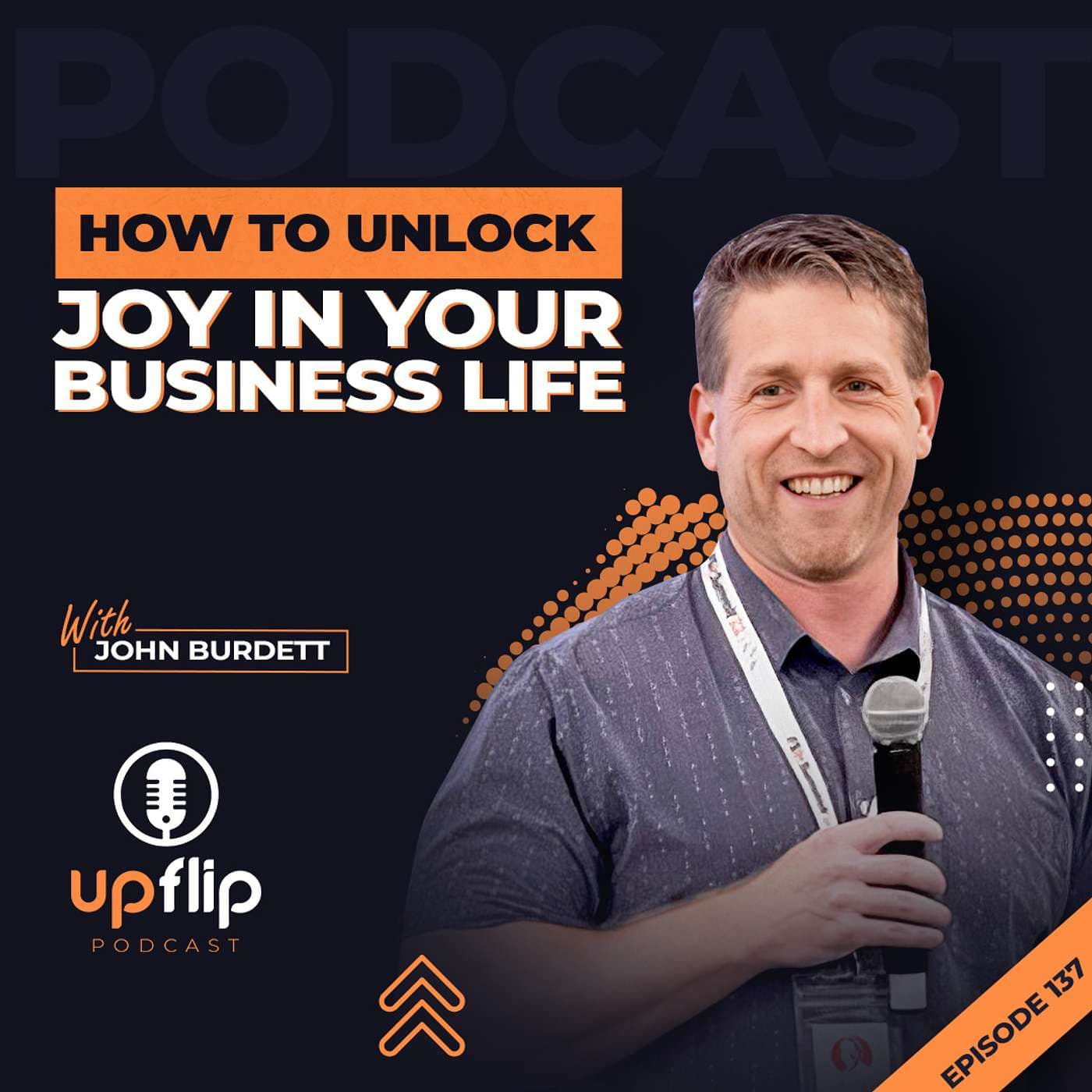
UpFlip Podcast Episode Summary: Episode 137 - How to Build a Million Dollar Business You Love
Episode Overview In Episode 137 of the UpFlip Podcast, host Ryan Atkinson speaks with John Burdett, founder and CEO of Fast Slow Motion. John shares his insights on building a business that one loves while ensuring profitability, having grown his company to $1.9 million per month in revenue and helping nearly 1,000 clients in the process. The conversation revolves around finding passion, setting clear goals, and implementing effective systems and processes.
---
Key Topics Discussed
- Passion and Profitability
- Connecting Passion with Business: John emphasizes that loving what you do is crucial for long-term success. He reflects on his journey of realizing that fulfillment comes from building businesses that align with his passion.
- The Importance of Self-Awareness: John advises listeners to be self-aware and understand their strengths and interests, which guide them in building a business they love.
- Setting Clear Goals
- Establishing Themes: John discusses the importance of setting clear annual themes and ensuring everyone in the organization aligns with those goals.
- Intentionality in Business: Emphasizes being intentional about goals to avoid unintentional outcomes. He quotes D.L. Moody: "We're all going to end up somewhere; very few of us end up there on purpose."
- Communication and Culture
- Over-Communication: John highlights the need for consistent and frequent communication, particularly in a remote work environment. He believes that aligning teams with the company's vision is crucial for maintaining a strong culture.
- Team Empowerment: He advocates for empowering team members to make decisions while ensuring they are aligned with the company's core values and goals.
- Systems and Processes
- Implementing SOPs: John discusses the significance of documenting standard operating procedures (SOPs) and how it aids in scaling a business effectively.
- Using Technology: Emphasizes the use of CRMs like Salesforce and HubSpot to streamline operations and capture real-time data for better decision-making.
- Business Model Considerations
- Service vs. Product Business: John compares the dynamics of service-based and product-based businesses, advising entrepreneurs to stay true to their strengths and interests when choosing a business model.
- Testing and Market Validation: Encourages quick testing of ideas in the market to validate potential business concepts.
---
Key Takeaways
- Identify Passion: Knowing what you are passionate about is essential for enduring the challenges of entrepreneurship.
- Be Intentional: Clearly define your goals and stay focused to avoid distractions.
- Establish Strong Systems: Creating structured processes and utilizing technology can significantly enhance operational efficiency.
- Empower Teams: Cultivating a culture where team members feel valued and empowered leads to a more engaged workforce.
---
Resources Mentioned
- [500 Free Business Ideas](https://bit.ly/3BYZH4i)
- [UpFlip Newsletter](https://www.upflip.com/newsletter)
- [Fast Slow Motion Website](https://www.fastslowmotion.com/)
Conclusion This episode of the UpFlip Podcast provides invaluable insights for aspiring entrepreneurs looking to build a business they love while achieving financial success. John Burdett’s experiences and advice on passion, goal-setting, and operational systems serve as a guide for those navigating the entrepreneurial landscape.
For more insights and practical advice, be sure to check out the UpFlip resources and connect with their community for further learning.
Written by AI. May contain mistakes. Listen to the episode to check what was said.
Transcript
Automatic transcript. May contain errors.0:00They say if you do what you love, you'll never work a day in your life. It may sound like a little bit of a cliche, but is this even possible? Most people answer with no. But what would happen if the answer was yes? In this episode, you'll learn about building a business you love, including why you can't make a lot of money without loving what you do, how to find your true passion and monetize it, and how to stay motivated and inspired no matter what. This is Ryan Atkinson, and you're listening to the Outflip Podcast, where we uncover how great businesses are built, how they run behind the scenes, and how you can replicate their success.
0:32Today, our guest is John Burdett, the founder and CEO of Fast Slow Motion. Together with his team, he has helped almost a thousand clients grow their business. Today, John will help you channel your passion into building a thriving business you love. John, so, so excited to have you on here. So, so grateful to have you. Thanks, Ryan. So glad to be here. So grateful that you have me on. Yeah, we are grateful to have you because we were talking before and I can tell you are an awesome guy and you're going to be able to like really peel back the orange on like how to build a business you love. Before I do that, though, I want to lay the ground for just so people like know the work that you do and like kind of why you do it, because you said the most pivotal moment of your career was when you realized your calling to help other people build their businesses using scalable systems and processes.
1:11This is how Fast Low Motion was started. So let's talk about Fast Low Motion. And can you talk about like what you guys do and kind of like why you love doing it, honestly? Yeah, our mission is to be a blessing to business leaders as they grow their business. What we do practically is we implement CRMs like Salesforce and HubSpot to run your whole business, not just sales, not just marketing, not just one piece, but have all your data in one place, have it all customized according to your processes and systems so that you can then therefore scale your company and you run the business. The business doesn't run you.
1:41So we're a mix between kind of management consultants and technology consultants where we guide you along what you should do. And then we get that implemented very quickly in your business. Absolutely love that. And yeah, everyone listening, like Salesforce and HubSpot are obviously like the two behemoths in the CRM industry. And you can actually build them out to its full capabilities. It's something that you can definitely scale your business with. It's a platform, like you said, and number two, you'll never outgrow it. So the sooner you do that, the better off you're going to be in scaling your business because there's nothing worse than going in and having to replace a bunch of point solutions and reconnect everything and migrate data and all the things that go along with that.
2:15Yeah, absolutely. And I worked at HubSpot for a little bit, so I'm pro HubSpot all along. But yeah, we at Spacebar Visuals, one of the first things we did this year actually was implement HubSpot because I know even though we're a super small team, like I know it'll grow with your business. That was kind of like the value prop. And that was super important for us. But let's talk a little bit more about building that company you love. People are always thinking like, oh my gosh, I want to do what I love, but I don't know if I should. I don't know if I should monetize it. Let's talk about how fast, slow motion first aligns with like what you do to love.
2:44Can you talk about like what you love to do within like fast, slow motion and kind of why it aligned with your interests? Yeah. I mean, the bottom line is life's too short to waste time doing something you don't love doing. Time is our most valuable asset. And the sooner we realize that in our lives, the better off we're going to be. Unfortunately, most of us have to get a little bit older and get some of that wisdom before we figure it out. And that was definitely my case as well. First 10 years of my career, like most entrepreneurs, like most type A people, I'm a striver. I'm an overachiever.
3:10I'm out there. I just want to win. I'm going to get it done. I'm not going to fail. I'm going to brute force it, all those kinds of things. And you get caught up in that rat race. and most of us are talented enough to be successful in different areas. But what was missing in my life was the fulfillment that I was getting from work. I was achieving goals. I was making money. I was building great companies. I was working with great people, but it was very, very unfulfilling. And frankly, I thought there was something wrong with me, which there may be. But what I realized was the reason I wasn't fulfilled is I wasn't doing what I was called to do or what I was passionate about.
3:43I was building businesses and they were fine, but I wasn't passionate about what we were doing and the customers that we were serving and things like that. And so about 10 years into my career, kind of had this revelation, if you will, that what I really love doing and what I'm really good at is building businesses. And I'm a builder. I love building things. And once they get built, I get bored and want to go do it again. And that was kind of my struggle there from the outsider. But I was like, well, you've got it made, you know, all these things. And on the inside, I was like, well, I just want to go start and do it all over again.
4:12And so that was the moment of inflection for me and is the genesis of starting Fast Slow Motion. What I really like about that is one, the type A part and like being fulfilled, because like you said, time is our most valuable asset. And like, I am extremely grateful, like for what I get to do as space or visualize. No, you're extremely grateful for what you get to do at Fast Slow Motion. And I feel just like if I had to work five days a week in a company that I don't love, and I have done that, it is one of the most like demoralizing things. And so actually being able to build something you love with people that you love doing it with makes life like a little bit more actually enjoyable.
4:45It definitely makes it a lot more enjoyable. Actually, I should be saying here. Right. Yeah. I mean, I wake up every morning and just I can't wait to start work. And there's nothing better feeling than that. And I love working. Working is a good thing. Working is not a bad thing. And unfortunately, in our culture, we've kind of got that backwards now. Everybody's talking about burnout and all these kinds of things. And those are real. Your emotions are real. Those feelings are real. The psychological effect is real. Those are all real things, but we're not addressing the root cause. The root cause is because you're doing work that you don't enjoy.
5:13It's a J-O-B. You're doing it to retire, to go on vacation or to make some money. And what I realized was you can have all those things and enjoy work at the same time. And so, you know, the topic of this podcast is what I'm very, very passionate about is building a business that you love, that is very profitable, that has a high level of excellence and high standards. You're not compromising anything and you're enjoying life and not missing out on all the other important things of life. Like if you're single, going on dates or hanging with friends or going on vacation or if you're married or have kids, you know, not missing the T-ball games and the football games and the date nights and all the other things that are important there.
5:51So I've learned to kind of coin the phrase of it's there's power in the hand. It's not an oar. You can have a great business, a great life, make lots of money, make a big impact and enjoy the journey along the way. and you don't have to make that an oar. What I really like about that as well is like being an entrepreneur, like you really do get to choose your own schedule. You get to decide like when you work and that can be a bad thing because it can be like, oh, well, I'm going to work till like eight o 'clock tonight because I have lots of stuff to do. But the other flip side of it, the very positive thing is like, if you do have a t-ball game that you want to go to or you have friends that you want to hang out with, like you really get to decide like how you spend your time and where you're going to spend that, who you're going to spend that with.
6:27And that freedom is super nice, but it can be a double-edged sword. But at the end of the day, it is super nice to have. Yeah. And you have to be really intentional about it. And I'll tell you a story of a fast emotion. So when I started the company, I started it with three core principles. And one thing I always mentor entrepreneurs about is like, be very clear about who you want to be and who you want to become. And don't compromise on that. It's better to fail fast than to meander or become something that you hate. And so often that happens in the entrepreneurial journey is you build your own prison, you get trapped into it.
6:56So be very clear about who you want to become. it doesn't mean you don't pivot or don't change some things, but the core values don't change. And so our core employee value is flexibility. And so back in 2013, when I started this company, we started remote first. We have 130 full-time people across the U.S. full-time that work remotely. I started that principle day one because I coveted flexibility and I wanted to be around my family. I didn't want to waste an hour and a half commuting every day. I wanted to be around my kids when they got up in the morning and all those kinds of things while I worked 12, 13, 14 hours a day because I was starting a company and that's how you got to do it.
7:32And it was fun, but I didn't miss out on those other things. And so we just built that into our culture and that's uncompromising. So we serve small businesses and medium-sized businesses and we don't put people on site. We don't travel a lot. We're not opposed to travel, but we're not going to go sit in a cube. And so we say no to all those business opportunities because it violates our flexibility principle. And so that's just really important. If you want to build a business you love, You got to be understanding who you want to be and who you want to become. And that allows you to say yes to the right things and no to the wrong things.
8:01Absolutely. And I love that piece of like being intentional, like the goals that you actually want to set. There's like a saying, like, like have unintentional goals and like get unintentional like results or something. So it's like being intentional about like what's that end goal in mind? Like what are the goals that I can actually place to like actually get there? I think D.L. Moody said something like we're all going to end up somewhere. Very few of us end up there on purpose. And if you're going to be intentional about starting a business, be intentional about where you want to end up and be somewhat unapologetic about it.
8:28And once again, don't waste your life building something you don't love because you need to pivot now and not realize 10 years from now that you built a business you don't like. And I want to give some actual advice to that person listening that wants to build that business that they actually love. Step one in building the first company that someone loves, what would John Burdett say to them? Yeah, first and foremost, identify the things that you're passionate about, because you're going to want to quit and the grind's tough and your passion and calling, if you want to call it that, will get you through those tough days because it's a journey.
8:59It's up and down and not everything's rosy. But if you're passionate about it, you will keep doing it. And so find out what you love and then marry that with what you're talented and good at. And then you could add value into whatever you're doing. So whatever problem you're solving, whatever service you're providing, whatever product you're building, you're number one passionate about it and the market that it serves. And you're also good at it. So, you know, I'm passionate about some sports, but I'm not good enough to be a professional athlete. You got to have both of those. And then the third thing, which is really important, is you got to make sure you can build a real business that has real profits and makes real money.
9:34Otherwise, you're just a charity or a nonprofit. it. And those are fine. Be intentional about building those. But you got to be able to validate the market that, OK, yes, I'm passionate about it. Yes, I'm good at it. But are people willing to pay for it? And can I build a sustainable business around it? And those are the three factors that I look at when I'm looking to build a business or start a business. And you don't have to have all the answers figured out, but you got to have those high level kind of GPS coordinates in place. And then you'll figure out different ways to solve the problems that pop up.
10:03Can I get a drum roll, please? Because we are giving away a free lifetime access to the Academy for one lucky listener. And it's super simple to participate. All you need to do is leave us a review on Apple and then send us a screenshot as proof. Takes five minutes for lifetime access to the Apple Academy for free. So two steps. Leave us a review on Apple Podcasts. Send us a screenshot. And the link to participate is in the show notes below. If you are a wannabe entrepreneur, the courses in there are so invaluable for you to actually get that first business idea off the ground. And then for the current business owners that are looking to sharpen their skills, there are a ton of courses in there for you.
10:41And the best part, you're going to be able to connect with other top-notch entrepreneurs in your field to network with them and learn from them. The winner will be announced on July 26th. All you need to do, leave us a review on Apple, send us a screenshot of proof, and you guys can find more details in the show notes below. Okay, so I absolutely love that advice. One, I think it's pretty intuitive. Like guys, like know what you're interested in, like know what you're passionate about, like know like what the skills, if you can do that earlier in life, great. If you do that later in life, great.
11:04Number two, though, I think is a very important step for people to take is how do I actually become profitable like doing this? I think there's a lot of creative ways in this digital age to make a business. How do you know if like your interests and passions, like you can actually make money off of that? Yeah, so business model is different. If we're building airplanes, you know, it's a little more challenging to figure out if you're gonna make money quickly. But luckily in most of us today's world, in the service world, software world, those kinds of things is I highly recommend testing quickly and failing fast.
11:35So get out there. Your product will never be perfect. Get it as close as possible, but get people to start voting with their dollars. And that's the true market feedback. You can do surveys, market research, whatever. Until they're actually paying you money to do what you do, you don't really know if you have a real business or not. So I just encourage people to get out there as fast as possible on those things. It's somewhat of a heroic effort. You You start businesses with heroes. You scale businesses without heroes. That's where you switch to systems and processes and things like that. And that's a whole nother conversation.
12:03But early on, you need to be the chief salesperson, the chief product person, the chief whatever to get it off the ground. And just don't be scared to fail. And just make sure you're always learning. So it's like playing poker. You can't win a poker hand unless you bet. And that bet is allowing you to stay in the game. And you either need to win that hand or you need to get information. And great poker players don't win every hand, but they get information every time they bet. And they use that the right hands when the pot's big enough and all those kinds of things. Same thing applies when you're building a business.
12:34Yeah, I think that's like a great analogy for it. Because like those early days, you are the chief executive officer, the chief data officer, the chief customer officer, the chief people officer. Like you're wearing so many different hats. And don't outsource those. I see people trying, I'm going to bring on somebody to do sales. No, you better do sales first, because if you can't sell it, you're the best salesperson your company will ever have because you're the one passionate about it. Now, you can bring on a sales professional later, but definitely don't outsource any of that stuff until you get it figured out, in my opinion.
13:02Yeah, absolutely. And I agree on that. We just had a podcast episode. They basically said you either need to be really good at sales or you need to be really good at the operations. You have to be good at one of those when getting the business off the ground. And if you need to find a co-founder, definitely have your weaknesses covered up. If it's operations, hire someone that can actually do the operations to get it off the ground. Yeah, just make sure you're equally yoked. It's just like a marriage. And starting a business with co-founders is like getting married or all those kinds of things.
13:26And you got to have the hard conversations early because it's going to be a journey. But just like a good marriage, there's nothing better than a business partnership that works with co-founders that you love, you appreciate, you respect. And like you said, compliment you because we can be good at everything. But yeah, you got to be careful on those decisions. But man, when it works, it works. But honestly, when it doesn't work, it's miserable. So you got to be careful. It can be very messy. So that's also something to consider getting started. I want to speak about service businesses because we're both in like the service business industry.
13:57I can't talk about products in depth, but I can give you a high level. But service industry in particular, how do you know if you should start a service business based off of your interests? You know, it all depends on kind of your background and your talents and what you get at and what you enjoy. I've been on the journey of I've done services companies. I've done product companies and definitely fell into the grass is greener on the other side conversation. So I would encourage the person to be true to themselves and what they enjoy. You know, if you enjoy serving people and doing those kinds of things, services, but businesses are easy to start, hard to scale.
14:27Product businesses tend to be the opposite. They take more capital to get going. You got to build it before they come. But once you hit the tipping point, your margins really start increasing and you get to go and it's just hard to get to that point and things like that. So there's pros and cons to every business model. And I would say, don't chase the money or the fad or whatever. Stay true to who you are and then build the business that way. So yeah, I've definitely been the person that's kind of switched around thinking that it'd be awesome to be a product company. There's a lot of challenges to building product company.
14:55Services, you're only as good as your last conversation. You can screw things up and all those kinds of things. You have those challenges, but they cash flow really quickly and stuff like that. And then one more point I'll bring up on this too is don't switch business models unless you're being intentional about it. So a lot of people start off in services because it cash flows quickly and then want to pivot to be a product company. And then vice versa, product companies are like, well, I could charge for services and do those kinds of things. They're very different business models. They're very different organizational structures.
15:22You're recruiting people very differently. And I've rarely seen, if at all, you know, a service company also become a good product company there. If you are intentional about it, you're like, hey, I'm going to start off doing services because I want to become a product company. That's perfectly fine. Just be intentional about it. But it's really hard to serve both masters on that side of the house because you get addicted to that cash flow in the services business. That's actually why we started a services business. And how we decided to start Spacebar Visuals is, one, we both had an interest in media.
15:50Two, we wanted to sell to SaaS companies. And three, we wanted to sell to like marketing teams. So those were where we had expertise in, where we had interest in and kind of aligned to like video marketing, identifying trends as well. And the cash flow, the great thing with services business, as you know, is like you could cash flow in the first month. You can land your first customer if your sales is good enough. And so anyone that's wanting to start a business they're interested in, find what you're interested in. But I'd also recommend doing services business because you can cash flow. But I'm still early in it and you can speak probably more to that.
16:17No, it's great. I think it goes back, we've said multiple times, just being intentional about who you want to become and then staying disciplined to that. That's the hardest part. A lot of times of scaling a business is staying focused. And your mentality has got to be, I'm OK failing if I'm doing it the right way and I'm going about it the right way. I'd much rather fail than like, once again, pivot over to something that turns out to be a rabbit hole that you're chasing and you never get there. If you even do get there, you're going to be unfulfilled along the way. And it's just it's miserable.
16:44What do you do to make sure you're intentional through your goals? Are you like writing goals down, vision boards or like how does that look for you just so someone else can take that away? Yeah. So what I try to do is set no more than three main themes for our businesses. And that's the theme for the year. Early on, it was like one theme. So I tried to keep it really clear. It was like about a year and a half ago, we also started implementing HubSpot, which you said you're on. Previously, before that, we only did Salesforce. All right, this is the first time we're going to implement more than one platform.
17:13So that's the major focus for this year. And we're either going to prove we can do it or we can't do it. If we can't do it, we're going to learn why and all those kinds of things. And then we align the processes and systems around that to be successful in it while also still focusing on our core business and things like that. So I try to create major focus areas and make sure everything aligns to those. I think alignment from a system and processes and both the comp perspective is mission critical. That way, we're all going in the right direction. We may be going the wrong direction, but we're going together.
17:45And if we're all going together, we can change course. But if we're all over the place, we can. So I try to stay consistent on those kinds of things, which is really, really hard to do. And then the other thing I do is I'd say very organized. So we build processes and systems and capture data for everything so that I don't have to ask for updates. I have real-time visibility to everything going on in my business. And then therefore, our team can just focus on serving our customers and doing their job and not, you know, building TPS reports and all the stupid stuff that we kind of built into business because we're inefficient.
18:19I want to talk about that. It's hard not to be consistent month over month and quarter over quarter, but year over year. How do you stay consistent? And is it goals and metrics that you have in place? Or like, how do you stay consistent with a theme throughout a whole year? Yeah. So the first thing is I communicated over and over and over and over and over and over and over. As the leader of the organization, you have to be crystal clear. You have to be consistent and you have to communicate the same. You feel like you're repeating yourself a million times, but your team's busy. We all get distracted.
18:48It holds you accountable and it holds them accountable. And then secondarily, you put a system in place, like we use OKRs and we have, you know, all these systems and processes in place to align up to those. So, OK, here's the macro thing. Let's build out every level of the organization. It builds up to that so that everybody knows the impact they're making toward the major goal. And we just measure those. We track those. We learn from those. And then we obviously make a lot of adjustments along the way. And once again, the goal is to see if we can do that. And should we pursue it? Should we double down, whatever the goal is there.
19:20And then that way we're all aligned. We all know what the focus is. We communicate effectively. And, you know, if opportunities pop up, we'll look at them, but we won't get distracted by the shiny objects that pop up all the time. We'll stay focused on this and then do things once again, kind of using that same word intentionally. Yeah. I think it's so hard, like the shiny object syndrome, especially as like a business owner, like it always pops up like, oh, should we be doing this, this, this? And I feel like having those year long themes and then actually having your macro roles broken down is a great way to like make sure you're staying consistent to like what you're trying to achieve for that year.
19:51Yeah. Holding yourself accountable. I mean, that's why I say it over and over and over again. And that way your team can call you out on it. If you start chasing that shiny object, Hey, I thought we were doing this. And if you stop communicating that, and if you stop talking about it, people will stop focusing on it and then you will get distracted or probably distracted. But there's so many frameworks. I mean, we don't lack workout programs in this world. We like people getting in shape. So pick one of them. It doesn't have to be perfect, but just follow it, be consistent and hold everybody accountable.
Read the full transcript
20:18And then, like I said, I do it to hold myself accountable because if I get distracted, the whole business will get distracted. And my job is to stay focused and keep everybody on track. I love that. The question that I want to ask here is importance of setting goals early on and also breaking that down. Are you guys reviewing these goals weekly, monthly? How does that accountability factor come in when you are trying to hit those metrics. So we use Salesforce to run our business, every part of our business from HR, recruiting, sales, marketing, account management, time tracking, project management, you name it.
20:49So we have all this, we have our OKR system built on Salesforce. So they're looking at it on a regular basis and we're getting the updates on what's going on. So once again, I can see everything in real time on what's going on and I don't have to ask questions. And then when I do ask questions, I can ask very detailed surgical questions that are like, OK, they're solving real problems and real challenges and stuff like that. And then on a practical level, like you were kind of talking about like internal goals and things like that from a client facing all of our methodology and processes are built out the same way.
21:18So every project team is logging their time the same way, building status reports the same way, following the same methodology and processes. And we just codify those in a system like Salesforce or HubSpot. And then we have all our data in place. We can build workflows, automations, early alert signals, all those kinds of things. And that's mission critical to scaling your business because you want to know everything that's going on, but you've got to have systems and processes to tell that to you because as your business gets bigger, you can't do everything in your head anymore. You'll go crazy trying to, so you can't do it.
21:50I want to ask about SOP systems processes because we're starting to implement that here at Space Force Visuals and it is like so important to actually get this down on paper. But if someone's like, oh my gosh, like I always hear about systems processes, but like I don't believe in them. Have you seen like a very positive correlation to like revenue going up, like employee count going up as you're implementing processes as well. Yeah. I mean, I don't know another way to do it. And some kind of cheat codes and shortcuts on that as somebody that doesn't enjoy it is start recording short videos. So you're going to be, in my opinion, the entrepreneur, the business owner or the co-founders, whoever it is, should be the first people to do anything in the business.
22:24And so once you prove what works, you then start documenting those systems. And I think the best way to do that is short videos. You know, here's how I do this. Here's how we track our time. Here's how we send our SaaS report. And then just put that in a system like we use Google Sites and stuff like that. There's a million free systems out there. And then it's searchable. We have our processes documented. Then the next step is start building those out in a system so that you have all the data in one place and things like that. Those videos become your onboarding videos for the new employees that come on board.
22:53Guess what? When you outgrow that process or change that process, you just re-record that two-minute video. And it doesn't need to be a professionally done video. It's a one cut. You may say, um, and a bunch of filler words. That's okay. Just get it documented. And then that allows you to onboard people and they have a clear playbook of how to do stuff. So I'm not a big fan of like writing manuals and stuff like that. I'm a big fan of short videos, a lot of automation and task generation and things like that so that we don't forget stuff, but we know how to do it. And then when we're onboarding that new employee, you know, hey, here's our onboarding learning modules around these things.
23:28And here's the videos and here's how you do it. And then they can start working on it and following those processes pretty quickly. I think what we did here at Cesar Visuals is we did the videos. And so we have it on like an SOP. And for people that just want to skim through it, what we did is had like a VA, then like go through it and like describe out everything, like very like intimately, like how to do this with like GIFs and like screenshots and everything. Just so like it is super simple. But yeah, when I build out SOPs, I feel like an actual like CEO, like someone that's like trying to actually scale something.
23:54It feels like so good because it's like, oh, my gosh, we can now hire a bunch of people to like actually do this for us. It's like such a good feeling. Yeah, we talked about time earlier. And this is where making that switch from you doing everything and not having any employees and not anything documented to a scalable business model and framework that has systems and processes. It's really you have to look at time as an investment. So you can't add more than 24 hours in a day, but there is a way for you to buy time in the future and add more margin to your life in the future. And that's by investing in things today so that you don't have to do those things in the future.
24:27And you're getting time back as a result of that. So it's more time today. I mean, it takes a lot more time to write the SOP and a document and all that stuff than it does just to do it. But if you're able to do that and allow somebody else to do it, you don't have to ever do that again. Man, those hours build up every time and suddenly you have a bunch of margin in your life, but you got to make that transition. And I think, like I said, we're talking about services, easy to start, hard to scale. That's why, because you're not making the transition so that other people can do it and you just keep doing it.
24:58Well, you don't have enough hours in the day to sell, to do accounting and all the things that come along with running a business. So we are kind of winding down on time here. I want to ask one more question before we move over to our fan blitz questions. I know you've talked a lot about like over communicating to your people, the values, the metrics, the themes, all that stuff. In a remote company, a remote first company where it's 130 employees, how do you as a CEO like over communicate like effectively across the organization? Yeah, as you're scaling it up, you have to communicate very effectively to your key leaders.
25:27So I have a saying and a thing that we do here at Fast Emotion is we try to push things down to the tip of the spear. We take the macro down to the micro. You know, the people that are closest to the customers that are doing the real work, we've got to keep those teams small and agile and really close knit. So we do everything in like a team based structure so that we take the big company and make it small again. And then we communicate down. So those people leading those groups, we're investing heavily in them and communicating with them and reinforcing processes and systems and culture and all that stuff there because they are the culture.
26:01If that tip of the spear is not aligned with what you say your culture is, you know, what you say your culture is really isn't your culture. And so we just kind of build it up that way so that, well, you know, we take the big problem and push it down to the micro. And then we empower those people to make the decisions and to follow the playbook. And if the playbook's wrong, to help us rewrite the playbook. But most importantly, we're doing things consistently and we're communicating that. So like our teams, I hear it a lot from our teams is like, I talk to my teammates remotely more than I ever did when I was in the office because they're on Google Meet calls all day long together, whether they're internally or with a client.
26:37And so they're communicating all the time at the micro level and they're very close. Like if you talk to one of our team members, they're going to say, my team is the best team. I love that. My project leader is the best project leader. And it's like, you know, recurring theme is like, well, every team can't be the best team and every project leader can't be, but that's the way they feel. But one thing we do, because being a person is important, I'm not going to lie, is it used to be every 12 months. We've moved it to 18 months because it's quite expensive and we want to do it the right way, is we bring the entire company together at a retreat location.
27:09Fly everybody in for three or four days. Not a lot of programming, a lot of social. And so it's a time where teams can talk to other teams and people can meet other people and, you know, hang out, share meals together, do some fun activities. So we invest pretty heavily in those kinds of things to get that face-to-face interaction that we miss out on a daily basis. Yeah, I feel like that social interaction is so good. There is room for communication remotely, but there is something special. And I love you have thoughtfully built a culture that you love. If you have everyone saying, oh, I have the best project manager, this, this and this.
27:40So I definitely admire that about you, John. But we've got five questions left for our Fan Blitz questions here. And these are questions actually submitted from our community. And guys, if you want to join in on world-class entrepreneurs and these conversations, you can go to www.youtube.com slash upflip and submit your questions there. But John, ready for these last five questions? Let's do it. Now at this stage of success, what advice would you give to your teenage self? Man, that's a good question. I would say be more self-aware of who you really are and what you want to be. I was not very self-aware until I got older.
28:09And I think self-awareness is a superpower. And if you know who you are, you know your weaknesses, you know your strengths, you can stay true to who you are and be a great teammate and be a great leader. I love that. Number two, kind of similar here. If you go back in time and tell your younger self, don't do this thing, what would it be? Don't chase the money. You know, it's not about the money you make. It's about the people that you get to work with and the relationships you build. And if you do things the right way and make the impact, the money is the beautiful result that comes from that.
28:37So money is a scoreboard, I think, and that's fine to win on that, but it's who you get to do it with and the people you get to impact is where the fulfillment comes from. Number three, what's the best thing about having a business that you love? Well, there's a couple things I'll say, you know, the flexibility. I don't like being micromanaged. I don't want to ever have a J-O-B again in my life kind of thing. J-O-B. Yeah. Yeah. So having a corporate job seems like hell to me and no offense to people that have those. I'm just not called to do it and that's not who I am. But, you know, the biggest blessing is building teams and seeing those individuals thrive and enjoy what they're doing.
29:12And I tell people all the time, the biggest blessing that's been in this business for me is to see my teammates do things way better than I ever could. And that's just so fulfilling. It's like, you know, same thing with being a dad. I mean, it's just like when your kids, you know, do things that make you proud and make wise decisions, there's just no better feeling in the world. It is a great feeling. We're a much smaller company, but like empowering your employees and like seeing them do like great stuff. There's truly not a better feeling than that. So I resonate with that. When you realize you're useless and you're the least important part of the business, that's a beautiful day.
29:43It makes going to T-ball a little bit more enjoyable. What was the silliest thing you've ever said during a meeting? Oh, my gosh. I've had so many blunders and so many things. I'm not sure one just comes to mind. I'm one of those people, I'll answer it this way, is like after every conversation, I'll be in bed thinking about, oh, I should have said this or I want to, you know, do I want to do that kind of stuff? So I'm pretty critical of myself anytime I talk to anybody because I want them to see my heart and what I'm really trying to say. And quite often the mouth and the tongue doesn't match up to what the heart and the mind want to say.
30:17I love that. I can give you your flowers here, though. You have done a great job as we go to our last question. Tell me one secret of business which makes me a millionaire. I was actually thinking about this the other day. So I'm going to answer it this way or say this quote. You know, you hear the questions is like, you know, what would you do if you were a millionaire? And you know how a millionaire answers that question? the same exact thing they did yesterday. So I don't think it's about amount of money or whatever. I think it's about the daily disciplines of that. I mean, Tom Brady is Tom Brady, not because he got lucky.
30:47He worked his tail off to get there and he got the results from that. So being a millionaire, making a million dollars is just a result of doing the right things daily on a consistent basis and then being self-aware and open enough to change and take feedback and not do the wrong things over and over again, but to get better and grow. So I don't know if I answer that question directly or not, but yeah, I would say if you're chasing to become a millionaire, you're probably chasing the wrong thing. I would try to find what you're passionate about and then make sure you can find a way to make money doing it.
31:18And then you'll become a millionaire and you'll enjoy it too. I love that. Well, John, wind us out. If someone's like, man, this John guy is awesome. I want to connect with him. I want to learn more about them. Where can they do so? Yeah, just go to our website, FastLowMotion.com. All of our social properties are there. Contact us for them, things like that. You can find me on LinkedIn, too. Just look up John Burdett at FastLowMotion and you can find me there. But I'm on LinkedIn pretty regularly. I'm not on any social channels, but our team is. So just hit me up there and I'll get back to you.
31:47Guys, this was an awesome episode with John Burdett. Three quick takeaways for you guys. Number one, be intentional with what you want. What are the goals that you're trying to achieve? What's the vision that you have? If you are intentional about what you want, you get what you want. When you have unintentional goals, you get unintentional consequences. So be intentional about what you want. Number two, know what you're passionate about and you're interested in. This is one of the biggest things about growing a business is that you are going to face so many headwinds. You are going to get punched in the face so many times.
32:17But if you're passionate about it and you're interested in it, it makes it way easier to survive. And number three, the last like 10, 5 minutes of the episode, we talked about building systems to grow your company. And that is one of the biggest key takeaways I took from this is going from zero to 10. Maybe you don't need systems in place, but from 10 to 20, 20 to 40, 40 to 80, 80 to 160, like you need systems in place to actually be able to grow your company. And the earlier that you can start to put those systems in place, the easier it is going to be for you to scale your company and free up your most valuable asset, which is time.
32:49And guys, if you love this episode and then you had to check out my recent interview with Chris Ducker when he shared his tips to build the business of your dreams. Look for episode 126 of the podcast in the link in the show notes below. Really fun episode with Chris. And I remember just one of my biggest takeaways is how thoughtful he was about building that business of your dreams and how many opportunities there are to build that business of your dreams. So give that a look in the show notes below, guys, and I will see you on the next episode. Don, thank you so, so much for being here today.
33:15Ton of good insights about just building a business you love. So yeah, thank you so much for being here today. Thanks again, Ryan. Really appreciate it.
33:23Thank you.
From the publisher
John Burdett is the founder and CEO of Fast Slow Motion and has helped almost 1,000 clients grow their businesses. He discusses with Ryan on how he helps his clients channel their passion into building a business they truly enjoy and now accrues up to $1.9 million per month in revenue.
John highlights the importance of setting clear goals and themes, communicating to everyone involved effectively, and how using systems to capture data can provide real-time visibility to the business. He also explains the benefits of documenting standard operating procedures (SOP) through short videos and empowering employees to follow the playbook.
Lend an ear and learn how to run a profitable business you love without compromising time to enjoy the important things in life.
Resources:
- https://bit.ly/3BYZH4i 500 free business ideas
- https://www.upflip.com/newsletter Discover even more tips, strategies, and how-to’s
- https://www.fastslowmotion.com/ Connect with John
Ready to be your own boss without starting from scratch? Grab our FREE Franchise Guide and unlock the secrets of proven business models that have already created thousands of success stories.
Connect with UpFlip:
- On Youtube
- On Instagram
- On Facebook
- @UpFlipOfficial on Twitter
For more insights to start, build, or grow a business, check out the resources on UpFlip.com or head to the UpFlip YouTube channel to see more interviews with business owners and experts.
Thanks for listening!


