
In short
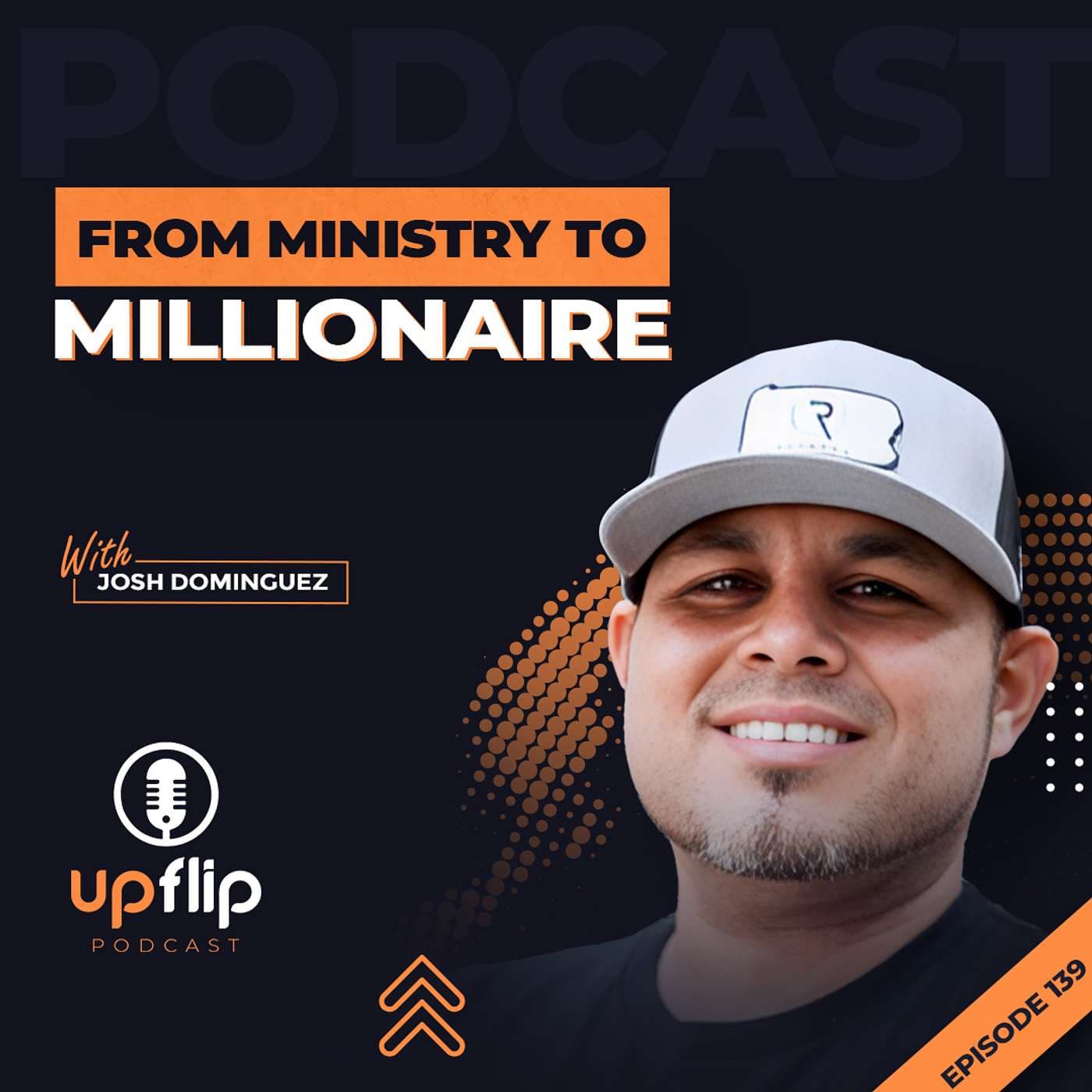
Podcast Summary: The UpFlip Podcast - Episode 139: The $1.2M/Month Niche I Uncovered While Working In Church
Podcast Title: The UpFlip Podcast Episode Title: 139. The $1.2M/Month Niche I Uncovered While Working In Church Host: Ryan Atkinson Guest: Josh Dominguez, Founder and CEO of Refresh LED
Episode Overview In this episode, Josh Dominguez, the CEO of Refresh LED, shares his entrepreneurial journey and the strategies that led him to generate $1.2 million in monthly revenue through his LED lighting company. He discusses the importance of leveraging personal networks, strategic marketing, and hiring effectively to scale a business.
Key Themes and Insights
- Origins and Transition to LED Business
- Background: Josh's journey began with a background in worship leadership and youth ministry. He gained experience with lighting technology in churches.
- Initial Business: Started with a mobile detailing business, which he launched with a minimal budget of $100.
- Shift to LED: Inspiration struck during a marketing bootcamp in LA, leading him to explore the LED niche. He realized the growing demand for LED solutions in churches, businesses, and schools.
- First Steps in the LED Market
- Networking: Leveraged connections in the church community to secure his first sales. Made phone calls while detailing cars, ultimately leading to his first sale.
- Initial Investment: Sold his detailing business and reinvested the profits into Refresh LED, buying inventory and equipment.
- Marketing and Growth Strategies
- Calculated Risks: Josh emphasized the importance of attending trade shows and investing in marketing, even when funds were limited. Borrowed money to showcase at trade shows, leading to immediate sales.
- Value Addition: He focused on providing value through educational content and guides, which positioned Refresh LED as a trusted authority in the LED space.
- Digital Presence: Utilized social media and online resources to reach a broader audience, creating a strong brand presence.
- Scaling the Business
- Hiring Practices: Discussed the necessity of hiring staff to manage operations, allowing him to focus on sales and marketing. He believes in hiring people who complement his skills.
- Revenue Growth: From $900,000 in his first year to a projected $10-12 million in annual revenue with a strong marketing strategy and a focus on high-value customer experience.
- Advice for Aspiring Entrepreneurs
- Reach Out to Networks: For anyone starting out, leverage personal connections to get those initial customers, as Josh did.
- Focus on Strengths: Identify and lean into your strengths while hiring for your weaknesses to maximize business potential.
- Start Simple: The LED business can be entered without extensive technical knowledge—basic understanding is sufficient to start.
Conclusion Josh Dominguez's journey underscores the power of networking, calculated risks, and the importance of focusing on what you do best. His success story serves as a motivation for budding entrepreneurs, emphasizing that with the right strategy and mindset, significant growth is achievable.
Key Takeaways
- First Customers: Leverage your personal network to acquire your first clients.
- Hiring Strategy: Focus on freeing up your time by hiring individuals who excel where you may not.
- Accessibility of Business: You don't need a technical background to succeed in the LED business; basic skills are sufficient to start.
Resources Mentioned
- Refresh LED: [Website](https://refreshled.com/about)
- UpFlip Academy: [Join for Free](https://bit.ly/4ho1OyT)
- Podcast Archive: [UpFlip Podcast](https://www.upflip.com/podcast)
Connect with UpFlip
- YouTube: [UpFlip Podcast](https://www.youtube.com/@TheUpFlipPodcast/)
- Instagram: [@upflip](https://www.instagram.com/upflip/)
- Facebook: [UpFlip Official](https://www.facebook.com/upflipofficial)
- Twitter: [@UpFlipOfficial](https://twitter.com/upflipofficial)
Thank you for tuning into this insightful episode!
Written by AI. May contain mistakes. Listen to the episode to check what was said.
Transcript
Automatic transcript. May contain errors.0:00Earning$1.2 million in just one month, this hidden service can do it for you. There's a high demand for it and clients are willing to pay top dollar. Want to know what it is? Keep listening to discover a new and untapped service business niche with a seven-figure potential, how to secure your initial funding so you can get started right away, and the exact strategy to market your high-ticket service even to skeptical clients. This is Ryan Atkinson, and you're listening to the Outfit Podcast, where we uncover how great businesses are built, how they run behind the scenes, and how you can replicate their success.
0:30Josh Dominguez joins the podcast today. He is the CEO and founder of Refresh LED. And guys, if you have ever thought about doing LED lights, this is gonna be the episode for you. Because when funds were tight and his customers weren't eager to try a new technology, Josh came to deliver. Now Refresh LED clears north of$1 million per month. Today, Josh is going to share some of his secrets with us, how to market this product to go from zero to$1 million a year, and then how to go from$1 million to$10 million per year. Josh, super excited to have you on today. Thank you so, so much for being here.
1:02It's going to be a great one. Absolutely, Ryan. It's awesome to be on here. I'm excited to talk with you and just share some of my story. Hopefully it can help some of your listeners out there. Yes, and I think you have an awesome story, especially the origin story, because you like first originally went to Central Bible College where you studied worship leadership. You then went on to become a youth pastor and a worship leader for a church in New York. Now you're the founder of Refresh LED. Let's kind of wind back the clock on Josh's life here. Can you kind of take us to what's led you to start Refresh LED?
1:29Yeah, absolutely. So like you said, I went to Central Bible College. I studied worship and ministry. And naturally, you fall into the equipment, working with amplifiers and lighting and sound. And you're kind of just, you know, ingrained into that whole world. And I took a position in Long Island, New York, was there for a number of years. And really, that's where I got my hands into the technology of lighting, sound, and, you know, the video space. Once I left New York, my wife and I started having kids. We settled down in Pennsylvania. and I needed to kind of get into a new niche. And at the time, I actually started a mobile detailing business.
2:04That was my very first business that I ever launched. And I remember going to Walmart and I bought$100 worth of detailing sprayers and towels and some of the basic equipment just to be able to go and do one job. And I remember that$100 at the time was a lot of money for me. And I actually didn't tell my wife about it till afterwards. and she was fine with it because we needed extra income at the time. So I really started grinding and working into that detailing business. But I fell back into the LED space that I'm in now by going to an LA-based marketing bootcamp for my detailing business. I connected with a friend of mine that was already doing LEDs, but doing it more on the rental side of things.
2:46And I got really excited about that opportunity. Came back to the East Coast in Pennsylvania, was still detailing cars. And I could not stop thinking about this other opportunity with the technology because having come from a church ministry background, I was already familiar with where technology was going in the churches. And I really just saw a huge opportunity from churches to businesses and to schools, education, and could not stop. So what I did is I started making phone calls while I was cleaning cars. I'd be out there in people's driveways cleaning their cars. I'd have an earpiece and I'd be making calls on the side.
3:20And I remember telling myself, if I get one sale, I'm going to quit detailing and go all into this new niche business. And sure enough, after making calls, I started out with a lot of my friends that were working at churches. And that was kind of a natural shoe-in to that market. And when I made that first sale, I was blown away. And I said, OK, the financial, the revenue potential is way higher than detailing. So I sold the business to one of my employees. We had about six employees at the time and moved into this space with LEDs by myself. Oh, man. I want to ask, because I think it's really funny that you went to LA for like a marketing bootcamp for your detailing business, but you left with the idea of like doing LED lights.
4:03What excited you about the opportunity? Just so if someone's listening, they can also be excited about the opportunity. Like what kind of was like, oh, this is actually really interesting. Yeah, well, I think it's important no matter where you're at or what you're doing to always keep your eyes open for opportunities. Because sometimes opportunities come in the most uncommon ways. You know, again, like you said, I went out to a marketing boot camp that was specifically for detailing. I ended up coming back to the East Coast with a whole new idea, a whole new passion and whatnot. But having come from a church ministry background, just exited a ministry position, and I was already seeing the trends with the technology, especially in the church space.
4:39And so when I saw the LED potential, I knew there was something there. And I knew that it was still very, very new in general, not just with churches. It was new for businesses. It was new for theaters and different market spaces. So I knew I had to get in. Timing is everything. Yeah, it was just a risk worth taking because at the time my detailing business was already paying me. I was already, you know, I had six employees at the time. I had crews going out to golf courses and businesses and car dealerships and all this. Interesting. So let's go back to like that first client then of for Refresh.
5:13So the first one was a church that you knew and you're making these just calls while you're detailing cars. And your first night that you landed was with the church then? Yeah, yeah. One of my first clients was a friend of mine from New York. So I already had that contact and the timing was just perfect. Ended up helping out his church. They loved it. And again, you know, after that sale, I quit the detailing business. I sold it to an employee, went all in and I started just making more calls. So still me, I didn't have an office. I'm back at home. I'm in my garage. And from the funds from that first sale, I just reinvested it.
5:45I bought some inventory, a small amount of inventory, just enough to take it on the road and go show it to people and do live in-person demos and literally would drive all over the country with one LED panel, a one and a half by one and a half panel and would go from basically door to door. I kind of felt like, well, in the pursuit of happiness, it was a little gizmo. Yeah, yeah. Basically me, going across the country, just showing people. You know, I took a buddy of mine and we would see a church and we'd look it up on Google. We call the church and be like, hey, we're in the area. I'd love to show you this new technology.
6:18Take 15 to 20 minutes. And people loved it. You know, not every person bought, but I did come back from that trip with two or three more sales. I love like the grittiness of all that, especially door to door sales. If anyone's doing door to door sales, I will tip my hat to you and give you your flowers because I know how hard that is. I want to ask a very important question for LED lighting. Can you kind of dig into that a little bit more about exactly what you guys are like providing to like churches and large companies? We can kind of give that context a little bit as well. Absolutely. So if you've ever gone to a stadium arena, you've seen those big LED jumbotron screens.
6:48So we produce and we make our own LED panels. They're more fine pixel pitch so they can be used indoors. You know, churches will put them on their stage for stage design. Theaters are starting to use them right now. You might see them inside of retail stores or casinos. So that's what we do. The big LED screens. literally can be applied to any venue, any building, commercial space, even in corporate boardrooms. We're starting to do a lot of corporate boardrooms now. But yeah, if you've gone to an arena, you've seen those big jumbo LED screens, even on the billboards, digital billboards. That's basically what they are, they're LED screens.
7:20Those are just designed for outdoors and they're wider pixel pitch. Basically, pixel pitch is a time you'll hear in the space is basically the distance between each individual dot. And they come in a variety of different pixel pitches to basically give it a tighter and a better resolution. I love that. I think that gives us a very good context now for the listeners, because I want to really dive into like getting your first customers and how you would advise someone in a similar business to like get their first customer. So if someone's listening like, holy smokes, my background actually lines up with this perfectly.
7:47Now, how would you advise someone to like get their first customer basically in this space? I mean, for me, what I did was just call it everybody I knew that was in the space or could be a potential customer. So I went to Bible college, a lot of my friends went off to ministry as well. They went on to be pastors of churches or worship pastors in their areas around the country. So naturally, my first call was to those guys. I said, hey, I run an LED company now. If you have a stage, you don't like your projection screen, maybe you have a ton of windows and the sunlight's washing out your screen.
8:17I'd love to just do a live demo in front of you. And just doing that, I got a couple of sales that really got my wheels turning with the business. So I would highly recommend if you started out a business, it doesn't matter if it's landscaping, It doesn't matter. Call everybody you know first. I think that's the most important thing you could do before spending money on Google and Facebook ads is trying to reach out to people you don't know. Build some credibility with your current list within your network. Gain some credibility. Get them to post some reviews on Google. That'll give you some traction and credibility to move on to the general public that you don't know.
8:50That is great advice. And a lot of people that we speak on this podcast, they echo that. It's like if you want to get your first customers and window washing and micro greens and LED panels, like you need to be calling people that you know. And it sounds like you kind of had like a pretty good niche that you're going after, too, with like large churches. And like you're just reaching out to your network to actually get those first clients. Yeah. And I was comfortable in that space. So you might have a space you're naturally comfortable talking to. And that's fine. For me, it was churches because I just came from the church market.
9:18And, you know, I was doing both. You know, I reached out to my personal network, but I was also doing a lot of cold outreach. Like I said, we will go on the road and we will just call businesses and call churches. And, you know, we have this product we want to show to you. Take 10, 15 minutes. And, you know, some people like this. Some people didn't give us a time to end. That's OK. Can I get a drum roll, please? Because we are giving away a free lifetime access to the Academy for one lucky listener. And it's super simple to participate. All you need to do is leave us a review on Apple and then send us a screenshot as proof.
9:50Takes five minutes for lifetime access to the Apple Academy for free. So two steps. Leave us a review on Apple Podcasts. Send us a screenshot. And the link to participate is in the show notes below. If you are a wannabe entrepreneur, the courses in there are so invaluable for you to actually get that first business idea off the ground. And then for the current business owners that are looking to sharpen their skills, there are a ton of courses in there for you. And the best part, you're going to be able to connect with other top-notch entrepreneurs in your field to network with them and learn from them.
10:20The winner will be announced on July 26th. All you need to do, leave us a review on Apple, send us a screenshot of proof, and you guys can find more details in the show notes below. And then, like, your startup cost with this. Obviously, it's probably changed a lot since you got started, but, like, what are some, like, typical, like, startup costs when starting a company like this? Like, what are those, like, first supplies that you need? Like, bare-bones supplies you need to actually sell something? Yeah, I mean, my product is a high ticket item, you know, an LED wall back when I first started, you know, 16 foot by 10 foot.
10:47It was upwards of$60 ,000 for a screen. Now it's come down, you know, we're in the 40 ,000 range now because of how we manufacture our products now. But, you know, we have our factories are overseas and we have a ton of control of quality and product design and whatnot. But, you know, to start out, you can literally start out with nothing by making calls. And, you know, if you've picked out a product or a service, sell it first, get the funds, get what you need to do it, and then go do your first one or two clients with those funds. Or, you know, I also, once I got that first sale, I kind of proved to myself that this can be done.
11:19I actually went to my dad and I said, hey, can you help me? I know he's not like a wealthy guy, but I knew that I can go to him. And I said, hey, can you help me get some inventory? So he let me$16 ,000. And at$16 ,000, I went and I bought some inventory. I bought an old enclosed trailer to be able to haul the inventory around, do some live demos, bought a computer, bought a camera. And off we went. So that$16 ,000 really got me rolling and was the fuel I needed just to get that business off the ground. I love that. That has to be so cool for you to look back on and reflect about how much you've grown up from$16 ,000 to doing$1.2 million a month now.
12:00which is, I think it's such a cool thing to look back on. It's incredible just to think back on those days. And sometimes, you know, just looking back at the pictures of the early days, I mean, it was five years ago. So it's not like it's forever ago. Yeah. That initial funding was so crucial. And if you can bootstrap it, that's great too. You know, look, my detail business that I mentioned earlier, you know, I spent a hundred bucks on products. I put some ads on Craigslist. My first detailing job was a$30 car cleaning job. So that's literally 30 % of the initial cost that I spend on products.
12:31But the first funds that you make or you spend are always what stick with you. And it's good to back on and reflect because it really just puts things in perspective now. It really does. And I know when we started Spacebar Visuals, we put like$10 ,000 into it just to get it off the ground. And now it's really cool to see what we do per month and the ROI we've had and how far that's taken us. I want to ask for you as well, though. So like I said, you guys have done like$1.2 million like in January 2024. Can you give us a little bit more like the outlook on or like some of your revenue numbers per month?
13:03Just so someone listening, they can be like, oh my gosh, this sounds like it aligns with my interest and like this is the potential for it. Can you kind of give some of your revenue figures a month per month? Yeah, I mean, it's been trending upwards over the past five years. You know, my first year in business in this space, we did roughly around 900k for the year. And this year, 2024, in January, we had a$1.2 million month. In January, we also hit a million dollars. March and April, we kind of took a little bit of a dip. And that's just the nature of our business. And probably with a lot of other industries have their ebbs and flows and they go up and they go down.
13:32Ours kind of dipped down to 7 ,800 for March and April. But this month, we're looking to bounce back up into the million dollar range. So for us, that's huge because that puts us on track to hit a yearly revenue mark anywhere in between 10 and$12 million for the year, which will be our best year yet. And coming from 900K in year one, And that's huge for us. I was going to say you're 10xing there. And I want to first off say like congratulations to you. That's like a huge accomplishment just for like what you've done. And like I know you guys have like 25 employees. It's awesome being a small business owner or I don't know if you even consider a small business, but like the opportunities you're able to give to people.
14:06I want to talk about some of those success things like what has led to go from 900k to like almost 10 million a year. What are some of like those biggest levers that you pulled to like really accelerate growth? Absolutely. Absolutely. Well, we took marketing very seriously from day one. And, you know, leveraging our personal network, but also leveraging the power of social media and Google and Facebook and, you know, putting ads out there and utilizing our cameras. Like I said, I bought a camera from day one and we've been documenting our progress and making YouTube videos. But, you know, outside of those marketing pieces, being willing to take risk within your business is huge.
14:41I mean, we did a trade show four months into our launch of our business and we didn't have the funds to do. We signed up for this trade show and it was like$40 ,000 or$50 ,000 to do it and we didn't have the money. So I actually borrowed money from a friend just to do that trade show. Now I paid him back months later, but that was a risk I took because I knew we needed to be in front of people. So we went to that trade show in Orlando and we got a 10 by 20 booth. We set up the only screens we had and we spent money on the shirts and the cards and make it look professional. I wanted to look bigger than we actually were.
15:17Yeah, I wanted to give that perception because the way that people see you is how they always think about you. So that first impression of you is kind of you're not wearing a company shirt. You know, your team looks kind of disorganized. Your booth kind of looks like half done. There's a subconscious impression that you're leaving on people. And so we wanted our first impression to the world to be top notch. And I knew it was going to cost money to do that. So I was willing to take a small loan from a friend to do that one show. How did that show? We came out with a lot of sales. In fact, the screen that we had set up at the booth, somebody came up and bought that screen.
15:51No way. Right there on the spot and wrote us a check for it. It was awesome. But be willing to take those risks because that is hard to do. What is really cool about that is like, yes, if you're going to be an entrepreneur, like you definitely have to like take those risks. But it's also like those calculated risks that you do take. People say like, oh, like take massive risks. But no, like you need to be a little bit calculated as like an entrepreneur. So going to that trade show in Orlando, like I mean, you're getting in front of like a large audience. But what were some other things that were like, we really need to do this?
16:15Because I want to have someone think like, what are those calculated risks that I need to take in this industry? And how do I know if it's a risk worth taking? So how do you perceive that when you are taking a risk in this industry of calculating? Is this going to work or not? Yeah, absolutely. Well, I mean, the other calculated risk every business has to make is bringing on people to help move their business forward. So whether that's a salesperson, whether that's a marketing individual, or maybe that's somebody to help go install these LED screens. And that was the case for me. When I started, I was doing the selling.
16:42I was doing the marketing. I was doing the installations and I was doing support. And, you know, with technology, things happen. And so, you know, whether somebody goes and actually pulls a cable, guess who they're calling? They're calling me. So I got to a point where I had to make a decision to bring on more people one by one to help with sales, to help with operations, to help with doing the installs. You know, and that's the thing. You got to have a game plan if you're going to bring somebody on. Now, what are you going to do with that freedom of time? So for me, not going out on jobs to install the screens freed me up to really lean into my strength.
17:15My strength is selling, it's doing marketing. And once I was able to get off the jobs a little bit and start to focus on sales and building out a sales team, then that's when we saw a lot of growth. So that was kind of a calculated risk. I bring a person A on that allows me to have 40 % more time. And with that time, now I can really, you know, 2x, 3x, 4x sales. Josh, I resonate with this literally so much because up to like about a month ago, I was doing all the account management here at Spacebar Visuals. I was like dealing with all the client inquiries, like doing all this stuff. Love our clients, but like it just takes a lot of work, just the nature of it.
17:47But we actually hired someone to take over account management. And now my day is freed up 40 % and also leaning into like those sales. So I think it's really like thinking about what's my unique skill set and how can I free up my time to really dive into that unique skill set similar to like what you did. Absolutely. Yeah, and I think that's a tough topic for a lot of business owners. You want to do everything. You know, we're action takers. We want to have our hands in the day-to-days and in the weeds. But when we can pull back, my rule of thumb is if somebody can do it 80 % as good as you, that is your sign when you can really back off and allow that person to go and do that thing.
18:21And if that's going to allow you to be more customer-facing, marketing, sales, whatever your strength is, that's going to help the business as a whole. So I'm really excited to ask you this question because I have been having this question in my back pocket for like every interview that I've ever done. So I'm excited to ask you this one. So you talked about like focusing on like operations and hiring like sales and marketing people, hiring ops people. How do you balance that? Because when you think about ops, like they're not like revenue generating, they're super important. A hundred percent agree, thousand percent agree.
18:49Ops is super important. They're not revenue generating like a sales marketing employee. So how do you like balance that like ratio when hiring early on? Yeah, early on, you have to value what your time is worth. And most business owners typically lean in the sales and marketing side of the business. So for me to not be in the warehouse, prepping orders, loading trucks, what can I be doing with that time? How many sales can I potentially be making? How many phone calls can I be making? Emails or live demos? I can focus so much on that. So balancing it out in the beginning is easier because, you know, you're making a single decision to pull you out of a certain thing.
19:27For me, it was warehouse operations and getting somebody in that kind of leans more into that realm with the business. And I know myself, I know that I can in an hour's time, I can make 10 to 15 phone calls and have three to four quality conversations. Maybe you said demo and out of that one or two demos, I can get at least one sale. I know for me that one sale was worth 35%, 40%, 50 % of my gross margin on that sale. So if it's$100 ,000 sale, then that one sale for me can mean$35 ,000 to$40 ,000 in gross profit. So I kind of calculated as best he can. You're never going to get it perfect. But if you know that you stepping out of the weeds is going to help push your business forward, then for me, that's a calculated risk I'm willing to take.
20:13And that's how we've grown. We've done that time and time again. Now I'm not even in sales anymore. I'm a whole sales team that manages our leads and I have more so lean on the marketing side now. Interesting. Yeah, I think it is really important, especially like when you're early on for anybody that wants to start a business, any startup founder, how can you best utilize your time and how can it be like most effective for the company? And I feel like that just comes down to knowing what your strengths are and then hiring for people that can cover your weaknesses or also free up your time as similar to what you did.
20:42Absolutely. And I think a big component to that is recognizing and being able to self-identify what your strengths are. And also, most importantly, what they're not. If you're not best at organizing or you just hate details, that's okay. But when you can identify it and you can call it out, then you are so much further ahead than most people because now you can bring people on to compliment what you're not good at. I think that is so funny because literally yesterday, like we're trying to get like a landing page up like really quick for an ad that's going out on like Tuesday. and we were like, we need like a deadline by the end of week.
21:14And I was like, well, I'll just like do it now. Like I'll finish it in like two hours, but it's like taking a step back and be like, well, we actually have like a designer to do all this that actually has like experience, like actually building it. And that's not my strength. I could do it, but being able to step back as a business owner, I think is super important. I'll let people actually work within their strengths. 100%. You'll find that once you do that, you will be so freed up and it just brings so much joy into owning a business when you can allow other people to lean into their strengths.
Read the full transcript
21:38It opens up a lot of opportunities for you. For sure. And I want to ask, you said you're focused a lot on marketing right now. What are some of your biggest marketing initiatives that you guys are taking on to like really grow this thing? Yeah, a couple of things. Number one, adding a lot of resources to our potential buyers. It's more of the give, give, give, give, ask mindset. So we're giving tools, we're giving free downloads, we're giving a lot of tips and tricks, giving a lot of value where we can. And then every so often we'll ask for the sale, ask for the quotes, and we'll ask for the connection.
22:07So it's so much of a value add mentality now because of our product being a big tip item. There's a lot of education that goes in it. And when you have a product or business that requires a good amount of education on the front end, you need to be able to deliver that in a way that's understandable. And, you know, your potential client can really grasp and chew on what you're delivering and what the content is. Because when you're buying a car, you're not going to want to watch a video that gives you the ins and outs of the engine. Unless you're, you know, you're not going to want to know how every piston fires off and every little bolt and everything within the engine.
22:39You'll get bored in two minutes and you want to watch it. But you're going to want to know, you know, what the seats feel like. You know, how much gas does the engine take? How much fuel efficiency it has? And the parts that you're going to be involved in on a day-to-day basis when you have that car. So for us, with our product, we focus on the experience. You know, what is the front end buying experience? What is the installation experience like? And really trying to give our customer a little snapshot of what that looks like, you know, from afar, because we can't go to Missouri. I'm in Pennsylvania, you know, work with clients all over the country.
23:10So we really have to be creative on how we give them that snapshot of what it's like to work with us. Yeah, I think that's a super important thing, especially once you grow your company. So you get a little bit more like brand awareness out there is like just adding value in any way that you can. If it's like, what's our process look like for the installation process, all that stuff. Would that be the same strategy you would use from going from$0 to$1 million would be that value add on social media? Or what would be your strategy there? Yeah, it would be some sort of guide. You know, if you're, I mentioned landscaper or window washer versus we're in the product-based business.
23:43But whatever your business is, if you can create some sort of product guide, you know, if you're a landscaper, kind of a landscape design guide, how to maintain your yard in 40 easy steps. You know, anything of that sort, what it does, it places you as an authority in your space. When you do a e-book or e-write-up, it doesn't have to be crazy long. Ours is only 12 pages. And I have it right here behind me. That's our LED Wall Buyer's Guide. And that is a great download on our website that anyone can go download. When we go to trade shows, it's the hottest thing that flies off our tables. And it really just answers a lot of questions.
24:16I talked about pixel pitch earlier. There's installation. There's pricing. There's so many questions, just like when you buy a car. But we broke it down in four to five easy steps in that little booklet. So if you create something like that in a digital version, create it as a PDF, have it as a free download on your website. You can use that asset and market it and utilize it for Facebook ads, Google ads. And it's a freebie. People like free stuff. So we are kind of winding down on time here. One thing I am excited to ask you about is the Uplip Academy, because I know you just got started just taking a look around at it.
24:48But you kind of explain, like, what are you most excited for in the Uplip Academy? Yeah, I just got into it. I'm excited to dive in some more. I love the community aspect of being able to connect with other business owners on country and the conversations that can really get going and just learning about other industries and talking about, you know, what are some of your struggles? I mean, I think there's a need for business owners just to connect on a just a personal level and just talk through things that you've gone through that maybe I haven't gone through. That is cool. I love the courses in there, you know, from service based businesses to product based businesses.
25:19I think there's a lot of value in there for business owners. I'm excited to dive in some more. Yeah, it's going to be awesome. And everyone, please go check out the UpFlip Academy. There's going to be some great stuff in there. But as we wind down this conversation, we have five questions left. And these are our FanBlitz questions, where our community actually submitted these for you. And guys, if you want to join in the conversation with world-class entrepreneurs like Josh, go to www.youtube.com slash UpFlip and submit your questions there. But Josh, are you ready for our last five questions from the community?
25:44Let's go. Perfect. Our first question here is, can this business work anywhere in the world? I think it can. You know, for our business, anywhere that there is video engagement from a retail store, restaurant, everywhere we go, we're looking at video of some sort. So if you're in a business or you're in a place anywhere in the world that requires video engagement, then yes. I love it. Number two, do you work contractually and how do you start sourcing materials for a client? Yes, we do have contracts with our clients. Every client has a single project contract. We don't have service contracts.
26:18Thereafter, we have a warranty program and we do source all of our materials come from overseas. We have different factories that we work with. Does one need to necessarily have in-depth knowledge in the technicalities of how to build giant LED walls? Great question. Not at all. I mean, what we say to our clients who ask us about maintaining, if you have ever plugged a cable into an amp or you've ever plugged a cable into your TV cable box, then you can jump into this business and learn it. You know, obviously, just like a car that I referenced earlier, there are so many depths and levels you can go within it.
26:51But general, high level, anyone can really do it. I love it. Number four, we kind of talked about this, but how do you get customers? We get customers by getting in front of them. So we still go to trade shows. We still go to conferences. In fact, today I'm going to New York City for a franchise expo and try to get in front of them. But obviously we utilize every channel available online, Facebook, YouTube, Instagram, paid per click ads. and we try to get our freebies in front of people virtually. Last question for you on the Fan Blitz questions. How would you feel about working for someone who knows less than you?
27:24At first, it would be tough, but it takes a little bit of maturity to understand that, hey, you know, this person probably knows more than me in some areas and that's where they need to be. And for me, most of my guys know more than I do. They're smarter than I am. And it takes a certain level of maturity to be able to say that and to bring him on. And it will make your life way easier though when you hire smarter people than you. So while it sounds counterintuitive, it's very intuitive, trust me. Yeah, never be the guy that knows everything. Yeah, and you don't want to be. But you are a guy that knows a whole lot about LED lights.
27:57And if someone wants to connect and learn more about you, Josh, where can they do so? Please plug all your websites and everything there. Yeah, absolutely. RefreshLED.com. We have a plethora of videos and freebies you can download. You can connect with me personally on Instagram at joshdomm619. My personal Instagram, I'd love to connect with you and just network. And if there's any questions I can answer, I'd love to be a resource to any of your listeners out there. For more tips on growing your business, check out episode 128 of the podcast, where I talked to Neil Parith about the easy sales strategy that grew his business to$125k per month, all while traveling around the world.
28:34It's an incredible conversation that I'm sure will inspire you as much as it did to me. Guys, thank you so much for tuning into today's episode with Josh. This was a super fun conversation to have with him. And my three takeaways that I have are number one, if you are wanting to get started in any business, service-based business, product-based businesses, anything that involves business, to get your first customers, ask your friends and family. We hear it a lot on this podcast and Josh doubled down on it today. Get your first customers, ask your friends and family. Number two, as you grow your team and making your first hires, how can you free yourself up to do what you do best?
29:05Are you best in sales and marketing role? then don't be doing ops. Josh talks about this in the podcast, and it really hits home the point of freeing up your time and how to hire effectively. Number three, what I think is super cool, Josh does this and he makes over$1 million per month, but anyone can do this. You don't need a technical background. You just need to know, as Josh says, to plug a cable into a TV, that's all you need to know. So if you are great at sales and marketing and you don't have a technical background, boom, there you go. You now have a business that can do over$1 million per month.
29:32Great episode with Josh, guys. Thank you so much for tuning in today's episode and catch you on the next one. Josh, thank you so much for being here. Great conversation. So yeah, thank you so, so much for being here today. You too, Ryan. Thank you for having me. Much appreciated.
From the publisher
Josh Dominguez is the founder and CEO of Refresh LED, a company that provides LED lighting solutions across various applications. In January alone, his business brought in a whopping $1.2 million in revenue. Josh now meets with Ryan to explain how he managed to grow a business from a shoestring budget into a company that earns seven figures per month.
Josh highlights the importance of tapping into personal networks, taking calculated risks, and providing value by producing educational content. As the business grows, he also discusses the significance of hiring and delegating tasks in order to focus on sales and marketing.
Have a listen to learn key strategies on growing and scaling your business, and the value one can provide their customers through free educational resources.
Resources:
- https://bit.ly/4ho1OyT Join UpFlip Academy for free
- https://www.upflip.com/podcast Listen for even more business success stories
- https://refreshled.com Connect with Josh
Ready to be your own boss without starting from scratch? Grab our FREE Franchise Guide and unlock the secrets of proven business models that have already created thousands of success stories.
Connect with UpFlip:
- On Youtube
- On Instagram
- On Facebook
- @UpFlipOfficial on Twitter
For more insights to start, build, or grow a business, check out the resources on UpFlip.com or head to the UpFlip YouTube channel to see more interviews with business owners and experts.
Thanks for listening!


