
In short
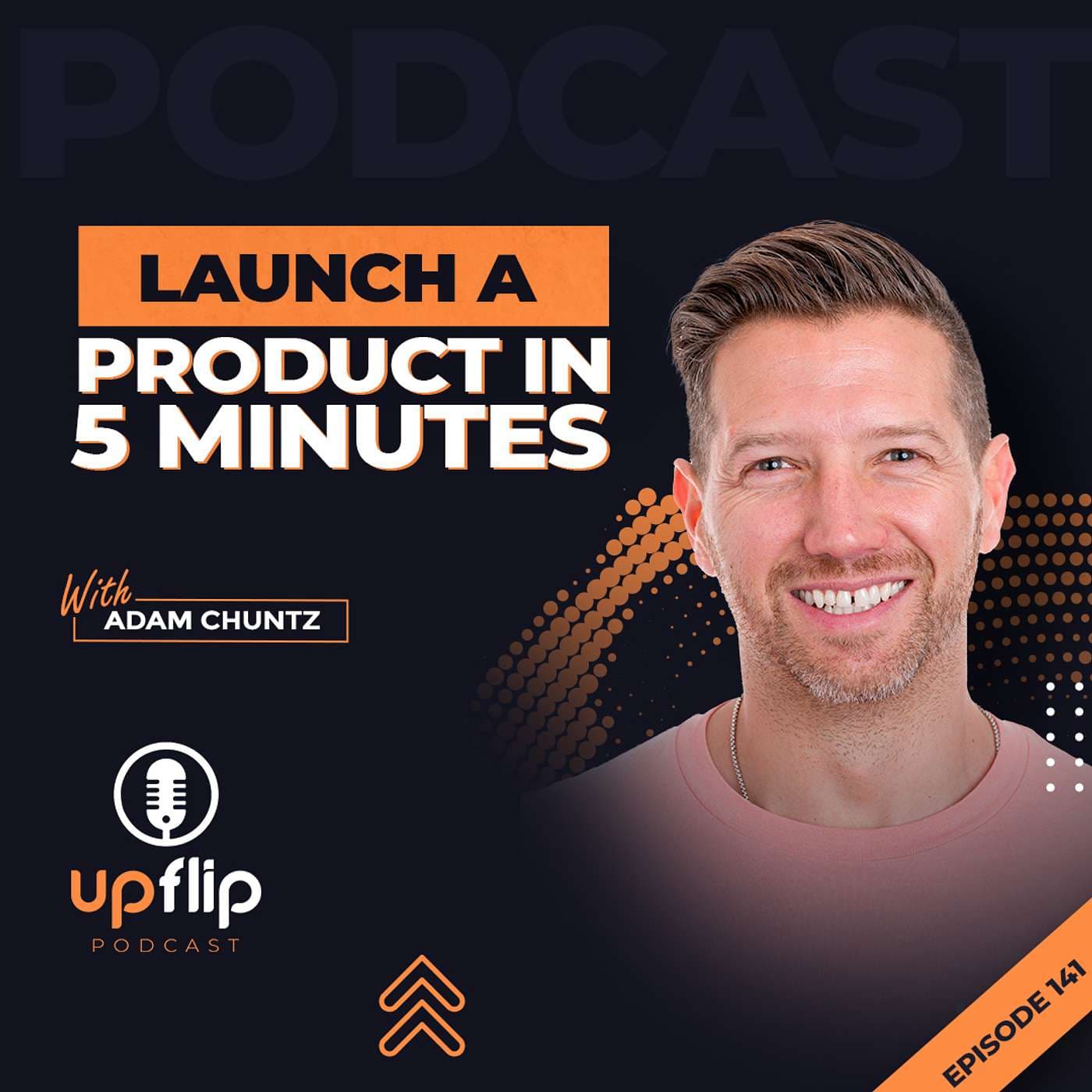
The UpFlip Podcast Episode 141: Start Your Own Ecommerce Business in Under 5 Minutes
Episode Overview In this episode, host Ryan Atkinson interviews Adam Chuntz, an e-commerce expert and founder of Blanka, a white-label e-commerce platform focused on beauty, wellness, and personal care products. Adam shares his insights on launching an e-commerce business quickly and efficiently through white labeling, the importance of community, and strategies for sustainable growth.
Key Concepts Discussed
- The Benefits of White Labeling
- Definition: White labeling allows entrepreneurs to sell products under their own brand using existing products manufactured by another company.
- Speed to Market: White labeling can significantly reduce the time and investment required for start-up, enabling entrepreneurs to begin selling immediately.
- Reduced Risk: With no minimum order quantities, entrepreneurs can experiment with various products without a large upfront investment.
- Blanka’s Unique Approach
- Business Model: Blanka facilitates the creation of customizable beauty and wellness products with minimal effort. Users create an account, upload their logo, and can generate product images and connect to e-commerce platforms (like Shopify) in minutes.
- Quality Assurance: Adam emphasizes the importance of sourcing high-quality North American products and maintaining high standards throughout the branding and shipping processes.
- Target Audience for Blanka
- Cohorts Identified:
- New entrepreneurs and side hustlers.
- Content creators and influencers looking to monetize their following with custom products.
- Beauty professionals (makeup artists, estheticians, salon owners).
- Existing brands testing new product lines.
- Building a Strong Brand
- Community Engagement: Entrepreneurs should leverage their existing communities (friends, family, social media followers) to launch products and build trust.
- Product Selection: Find products that resonate with personal passions and address community needs. Conducting customer discovery is essential for understanding market demand.
- Effective Marketing Strategies
- Storytelling: Use compelling narratives around products to engage customers.
- Sampling: Distributing free samples can help generate interest and feedback.
- Pricing Strategies: Blanka allows merchants to mark up products significantly, providing flexibility in pricing to accommodate shipping costs and promotions.
- Trends and Opportunities
- Market Trends: Adam discusses the importance of identifying current trends, especially on social media platforms like TikTok, to capitalize on emerging product demands.
- Continuous Experimentation: Entrepreneurs are encouraged to test various products and marketing approaches without the fear of large losses due to Blanka's low-risk model.
Key Takeaways
- Ease of Entry: Blanka offers a streamlined process for launching an e-commerce brand, making it accessible to a wide variety of potential business owners.
- Adaptability: The ability to quickly pivot and adapt product offerings in response to market trends is crucial for success.
- Community Focus: Building a brand around a community can drive trust and enhance marketing efforts.
Resources Mentioned
- [Start your own business with UpFlip Academy](https://bit.ly/4hmDVr8)
- [Subscribe to UpFlip's newsletter for more strategies](https://www.upflip.com/newsletter)
- [Learn more about Blanka](https://blankabrand.com/pages/meet-blanka-about-page)
Conclusion The episode highlights the evolving landscape of e-commerce and the potential for aspiring entrepreneurs to capitalize on trends and accessible technology. Adam Chuntz’s insights into white labeling provide a practical roadmap for anyone looking to enter the beauty and wellness market quickly and affordably.
Written by AI. May contain mistakes. Listen to the episode to check what was said.
Transcript
Automatic transcript. May contain errors.0:00Starting your own e-commerce store can be tricky. Product development, research, and testing take time and a sizable investment. But there's a way to skip these steps and go right into selling. It's called white labeling. In this episode, we'll learn the nuts and bolts of white labeling a product, how to take the first steps to sell your product online, and the playbook for building a strong brand around your product line. This is Ryan Atkinson, and you're listening to the Outfit Podcast, where we uncover how great businesses are built, how they're run behind the scenes, and how you can replicate their success.
0:31Our guest today is Adam Chuntz, an e-commerce veteran with over 20 years of experience. If you ask him how to launch an e-commerce business with a tight budget, the answer will be simple, white labeling. Adam makes over$1 million a year with his model, and today he'll share how you can do it too. Adam, welcome to the show. Super, super excited to have you on. Thanks for having me, Ryan. Really appreciate it. I think today is going to be a great conversation on how people can get started and reach that$1 million a year mark, because you guys are certainly on that path right now. But it all started back in December 2020 when you start Blanca.
1:01Can you kind of like tell us about like what led up to this point? Yeah, 2020 was a really interesting time in the world, as we know. And that actually really wasn't a factor in why we kind of had this idea to start Blanca. You know, it really came from this position of looking out there and seeing like this rise in a certain type of the market around independent brands really started to take the legs out of these big giants in the beauty industry. Like this is really interesting. It was right around when Kylie Jenner had started and she started Kylie Cosmetics as a private label brand. So like a lot of brands do to get things started and just see if there's product market fit.
1:36We're like, hold on a second. How can you approach this? And one of my co-founders and CEO, Kaylee, she had previously tried to start a brand of her own and gone through the hurdles. And we looked at this like this is so prohibited. It's so expensive. It's so risky. How do you democratize that in a larger way and do something that really can empower anyone to get started with a really low risk? Especially in a space like beauty and wellness products, they're really feel-good products. And they're things that people put on themselves and can help themselves ultimately feel better, especially in a time in the world when things weren't feeling that great back in 2020.
2:10So really interesting time. Cosmetics and beauty products, they're small, they're light to ship. And there's something called the lipstick index at the end of the day that's in times of downturn. Typically, products like that get commoditized and you see an uptick. So it's got one small thing that someone can buy for themselves to feel better. There's a lot of checkboxes here saying, hold on, this is a huge community. It's growing. It's a$530 billion industry. 25 % of the growth is happening in independent brands. We have to be able to service those independent brands more effectively. Sort of like bond the original idea.
2:43We weren't exactly sure how or what we were going to do there. But that's how it kind of started. Interesting. Yeah. So I think it's really interesting that it started from identifying what Kylie Jenner is doing. Just like the trends you're seeing. And you make a really good point. If anyone thinks back to 2020, nobody's feeling too good about themselves. And you guys find an opportunity to say like, hey, maybe there is actually opportunity to help people make themselves feel better through beauty products. And not only that, we wanted something to give anyone the ability to have another income.
3:11People lost a lot of jobs. There were a lot of things that were happening. So there was even another piece to that, which really spawned why we started it. And Blanca, in a nutshell, is an e-commerce platform that allows anyone to start and scale a beauty or wellness product line. And we do that in a few minutes. The way it works is someone creates an account, they upload their logo, we generate hundreds of product shots immediately. that's for their brand in one click connect to Shopify or Wix or any other store. And then you sell the product, it flows right through to us. We brand that product on site and we ship it to the end customer.
3:44And we do all of that without any minimums. That was like a huge caveat for us. And the biggest filter was like, okay, what kind of products do we want to sell? We want really high quality products that we know where they come from. So North American only products was like a massive filter for us. Say we want to understand like more local, like where can we ensure the quality and understand like the standards in which these are produced. And, you know, that was a really important piece for us. So that's how we do that across just over 400 SKUs right now. So you can kind of build an entire product line from a few to a couple hundred if you'd really like.
4:18But that's kind of it in a nutshell, just making it easy and low risk. I love that. I think making it easy and low risk is something that any entrepreneur, like when their ears hear that, they probably like perk up a little bit and they get super excited for. So for people that do want to start something like similar to this, and they go on your guys' website and they're saying, holy smokes, I'm ready to do this. Who is this for? Could anybody do this? Or who's your guys' target audience that can actually use Blanca? Great question. Really? It is anyone. At the end of the day, our audience is generally broken into about four cohorts or buckets.
4:49On one end, there's the net new entrepreneur, the solopreneur, the side hustler, everyone, the mom that wants something at night as an additional income source for something to do. Then there's like the creator economy. So we have creators and influencers who obviously already had an existing business or following and things like that. And they're monetizing that even further rather than promoting someone else's product. They can then promote and sell their own without ever having to touch it. The third are beauty professionals. So makeup artists, estheticians, even a bit of like salon owner falls into there as well.
5:22And the fourth on the larger scale are existing brands. So existing brands such as like a clothing company can either beta test a new product extension, product line, to see if there is product market fit or their audience is kind of into saying doing a small skincare line. Or they can also do limited drops. They can do seasonal drops like a gift with purchase and things like that that are really brand adjacent. So yeah, there's lots of flexibility of where that sits and who uses Blanca. Yeah, I think that's obviously a question that just comes to mind because to me, it is like, oh, you better have a following of a million followers to be able to pull this off successfully, but it can go way beyond that.
5:58It's the mom that owns the hair salon that wants to create a new product offering. And this is one way for her to actually do that. Yeah, exactly. What we've seen with the most successful brands on our platform, they're already bringing an existing community. And when you think about what your community is, it can be really simple. It can be your friends and family. It can just be little things. It can be the people you go to the gym with. Ultimately, it's called word of mouth marketing at the end day, like we trust our friends. So having that community first, whether it's small or it's large, that's really important rather than trying to reach all these other people.
6:29But that's really where we see people with the most success on the platform, like leaning into their community, understanding it. I like that. So have a community coming into this. And of course, a big question is like, what product should people offer? So if someone comes to you and they're like, Hey, I had this community, what types of questions are you going to ask them to figure out what type of products they should actually be offering? When it comes down to product offering, I think it's identifying ultimately like what you're passionate about. Like if you're selling this, you need to trust it.
6:57You need to use it. You need to be, you need to have conviction in it and believe in those products. There is no like golden answer or golden rule around like what product, what works, what doesn't. But I would say it's about building a narrative around your products. So you give people more of a reason to believe in why they need that product. Is it solving a problem? you know or is it something that is even so simple as this just fits my overall like ethos or vibe from like a color palette there's a lot of things there that's why we wanted to have a huge selection of products so that people could truly build a unique offering of just a few products to create like those more hero skews to easily make like more of a narrative around it like make a system instead of like here's a hundred different things and you just have doom scrolling that doesn't really work.
7:43So yeah, hope that answers it. Yeah, yeah, definitely. It does. And I feel like a lot of people should just be like thinking about if you're bringing that community, you're probably gonna know what that community like wants or needs or do like some sort of customer discovery to actually just say like, Oh, hey, they want like lipstick or something else. But like actually having that customer discovery, I feel like is a great way to like kind of build it from the ground up, but also know like there's actually going to be demand for it. Definitely. And finding like a use case, you know, is that something that you know, identifying a product, like maybe it's the place in which you live is really dry.
8:13And everyone's always struggling with moisturizing. It's like providing more of a solution, a complete system, understanding that what are the true factors in getting healthy skin in a dry environment? We have serums, we have toners, we have all these different things to help do that. That's building a story that's relative to your community, but you can sell it online. That's kind of the other part. You can sell it to anyone, anywhere. I like it. And let's talk about selling it to anyone, anywhere. So let's just say you have that community who say, hey, I know what product I'm going to offer.
8:42What are some of those like effective marketing strategies to get this off the ground and like get your first dollar with this? That's, you know, at the end of the day, that's a really hard thing to answer beyond, you know, ultimately really leaning into that story around what the product is. Understanding how you're going to reach these people, reach your community. Ideally, you already have some sort of a following or some way to do that and to get them in the door. Strategic pricing is really important. Understanding the way that we price the products is really, really, really affordable. So most of our merchants mark up well over 200%, which is not even close to a lot of the standards in the beauty shops.
9:21But they have the flexibility to have that big margin to play with certain costs, like putting in shipping, including shipping as a lower rate and things like that in your costs. You know, really like what a lot of people do for small brands that are starting, it's sampling. That's like an easy solution to get product in the hands of people and kind of getting them going to ideally get them to purchase something right away. Interesting. Yeah. And so when you say sampling, can you kind of expand on that a little bit more? Like gifting, like giving free samples, essentially, to get things off the ground, I guess I would say.
9:51Yeah, absolutely. I feel like that's kind of like customer discovery, again, is like understanding like, oh, people are super excited about this. or they're super excited about this and actually getting into the hands of the customer, I feel like is a great way again to like kind of make it less of a risk to like actually start like doing something like this is once you start getting that great feedback from people that they are excited about the product, then you can like really throw gas on the fire and really get going with it. Exactly. And you know, once you do have that, like you said, you just lean in, right?
10:17And recognize the things that work and the things that don't work. And we say they're the ones that work and the ones that don't just stop doing it. Can I get a drum roll, please? because we are giving away a free lifetime access to the Academy for one lucky listener. And it's super simple to participate. All you need to do is leave us a review on Apple and then send us a screenshot as proof. Takes five minutes for lifetime access to the Apple Academy for free. So two steps, leave us a review on Apple Podcasts, send us a screenshot, and the link to participate is in the show notes below. If you are a wannabe entrepreneur, the courses in there are so invaluable for you to actually get that first business idea off the ground.
10:55And then for the current business owners that are looking to sharpen their skills, there are a ton of courses in there for you. And the best part, you're gonna be able to connect with other top-notch entrepreneurs in your field to network with them and learn from them. The winner will be announced on July 26th. All you need to do, leave us a review on Apple, send us a screenshot of proof, and you guys can find more details in the show notes below. I'm curious to ask you too, someone with like limited capital, I wanna think about like those like mom and pop shops or like those solopreneurs that wanna get started.
11:22If they have like a limited budget, what ways, of course, like Samplein and all that stuff, but like what are some other ways that they can get started with like limited capitals instead of investing a million dollars right away? Yeah, I think, you know, the nature of us having no minimums or no additional fees, like there's a subscription fee to access Black each month, but it's low. It ranges from 39 to 149, depending on the scale of plan that you want. But that's it. There's no additional fees monthly on orders and things like that. The cost is super low. When you bake that across a couple of orders, you get a couple of dollars towards it.
11:54I think that's a big filter for us to really make sure that it's like it is really affordable, that anyone can do it and you only pay for the products that you sell. Starting there, there's flexibility. Ultimately, you're going to have to take a bit of a little small risk to invest in some places, whether that is in products and getting them on people or getting people to use them. I mean, these days, there's a lot of gritty ways you could advertise that aren't paying, right? You can infiltrate Facebook groups that are looking for this sort of thing. And you can find forums and blogs and things like that that are in that same sort of sphere that you're selling to.
12:26Building an email list or reaching out to your existing community. There's lots of different things depending on where those sit. Online, there's always a new way to reach people. And especially some of the technology that's happening these days, a lot more automations that can happen in that space too. Yeah, it sounds like there's a lot of good ways for someone to actually get started, like white labeling. But I also want to hit on that white labeling point because we talked about before the show, what you guys offer. You don't really promote white labeling. You kind of promote what you guys, how you would say it.
12:55Yeah, that's a great segue into how we really define ourselves and defined ourselves since the beginning is when we looked into how we were going to start this, we're like, okay, the industry of white labeling is very archaic. There's no tech, super high minimum. The people that operate these manufacturers and companies, it's very slow. Honestly, when we started, there were still suppliers that were using fax i'm not joking at the end of 2020 beginning 2021 it's crazy so we're like okay all this stuff feels like a very offline very archaic old experience so we just put this bucket around like okay private labeling white labeling is old old school we're new school we're tech so we're really taking this approach like it's the modern way to brand a product the modern way to create a branded product line that was like a big distinction for us because we're like how can people you know connect with it more everything's about brand building and understanding like what that means to people like it's about building brands on the platform you know our tagline is build your brand but within that is like all the products that you can offer and just seeing them come to life with that personalization in real time as opposed to you know two or three weeks of emails going back and forth with a supplier seeing oh here's what it could look like and then you have to order hundreds of minimums and you know all that sort of stuff we like how do we make this fast digestible and instant that someone can actually see the result right away.
14:15Oh, I see it. I want to order it. Let's go. Adam, what I think is so funny about that is it was still like 2021 and companies were still using fax machines, especially for like something like this, where like you need to be so like on it, like so like tech heavy. So I think that was like a great opportunity again for you to identify those trends and be able to notice like people are using fax machines. Why don't we just put this like a tech focused company and like actually like blow away our competition? I think that's a good caveat to that story. Yeah, I mean, like, hey, it was only one or two, but still, it was something.
14:43And I was shocked. The major takeaway from all of it is that it's slow. We're so addicted to speed these days. We need instant all the way. You know, you look at that, like we don't look at the manufacturers as our competition because we work with them. Like there are suppliers. We work with about just over about 20 different suppliers in North America and constantly adding more. But at the same time, the service they were providing was something that we could do better for this sort of, you know, initiative. You're going to order tens of thousands of units going direct to an manufacturer makes sense.
15:11But that's a huge investment. That's not like where we fit. It reminds me of an episode that we had on here with Neil Parkeith. He came on and said, like when he started his company, people were like still like not answering a phone call if you like called like a house cleaning business. And it's kind of similar to what you guys is like, how can we beat the competition with speed? And like, how do we get that to people so they can actually get their products off the ground? I want to talk a little bit more about throughout this episode, I think you have like showed like the opportunities through it, like you were identifying trends, you identified that as well.
15:39What are some other untapped opportunities in this industry that someone could consider starting? I think one piece that I spoke to a little bit earlier around existing brands treating us almost like a beta incubator to test products for their audience. There's lots of opportunity there around like we have several people on the platform that are brands on the platform that have a pretty wide product offering. They do this across lots of different types of products, clothing to, you know, widgets to whatever, they already have this brand and this community. And then they start using us for, oh, could we add some component of like a beauty or wellness product?
16:16And they start there. So I think there's opportunities around like just testing and then expanding that doesn't exist anywhere else to easily be able to plug in and just see if it works. And if it doesn't, then shift and try different ones. Yeah. I feel like just like thinking of like opportunities, like how can you identify again, like those trends that you're seeing in the marketplace and like, how can you actually capitalize on like running parallel to those trends and offering like a product that can also like meet those trends as they're both going up. Actually, on that note, it's something that we started leaning into about a year ago.
16:43TikTok is a huge instant trend, right? But they generally like grow fast and die fast. So we started right away trying to identify it, especially in the beauty space. There's all these like makeup people that are on there that do these, you know, real-time conversions. I forget what they're called, but it's where they go from like before and after. There's lots of different looks that come out of that. So there'd be like these quick looks that pop up. Like, you know, there was all these different face vibes that were going there. So we built these quick little collections of products right away as that was happening that fit each one of those looks.
17:15And that's how we promoted it to our brands that were like, okay, this is push this sort of content out and you can package these like, you know, three, four products to achieve this trending TikTok look. So that's something that we continually try to stay on to try and catch these trends as they're happening. Yeah. I feel like TikTok's like a great way to catch those trends and noticing what the market wants and then actually being able to deliver on that and market that effectively to meet those trends. Exactly. The nature of a platform like ours is that let's say brand A has five products that they usually sell.
17:44This is really great. And then there's this great trend. They're like, oh, you know what? All I have to do is go hop in the blinker, add a couple of those products for that trend to my shop instantly, package it up, do it limited, you know, limited, you do it, run it for a week or something like that. And then it's gone and you create this incredible supply demand pieces. Oh, man. We can provide like that spontaneity and someone be able to completely like change their product offering with just a few clicks. That is so cool. I think the accessibility that you guys are giving to people that like want to start their own like product line product offering, I think it's like so beneficial because like you said, in a few clicks, you can completely change like what you're offering to actually like capitalize on some of those trends that you're seeing to help your customers get what they want to see.
18:23One thought that I forgot to add on around the private labeling that a lot of people don't know is that private labeling is everywhere. It's all around us. And if you hop into some of the biggest beauty retailers in the world, such as like Sephora, about 15 % of the products on the Sephora floor are private labeled. So it has a bit of like a negative connotation when people say, oh, it's just private labeled. You know, at the end of the day, it's more prevalent than you think. And they're really high quality products and there's so many to choose from. So it's like, that's why that word feels negative.
18:51Just going back to it, it's just like remembering that it's more common than you think. than you think. I like that. I want to ask about those products then that do really, really well that Sephora will double down on for a private label. What are some of the most popular or best-selling products that you guys see through Blanca that someone should consider starting? Good question. It totally depends on the audience. The offering that we have, we have cosmetics and beauty products. That's par for the course. For there, it's lipsticks and lip glosses pretty much all day long. Those are number one and two.
19:20Any of the eyeshadow or blushes and things like that are always really popular. But then there's always like these new versions of those. Like, you know, last year it was liquid blush that was something and now that's not so cool anymore. So there's these quick trends that flow there. But then we also have a men's line, which has everything from like shaving products to hair products and solid colognes. Solid colognes are super popular on the platform. It's a really cool way to have something niche there. But then on like the more beauty kind of bath and body side, we've got like a lot of things like soap does really well.
19:51We have a whole line of like vegan and organic soaps interested that people love. And then on the skincare side, it's like the serums and moisturizers and cleansers, like just building little systems. There's just so much choice, but it depends like who you're going to sell them to, what you're going to do. Interesting. So you're telling me I could go on Blinker right now and get a cologne under my name launched within like a month? Within five minutes, if you want. Oh man, that's exciting. I might just be starting a new cologne line. Yeah. Yeah. Solid cologne is pretty cool. I started using it, you know, probably about six, seven years ago.
20:24And it was just like the coolest little thing I just you can put in your pocket. And it's like a bomb. Essentially, you just throw it on. It's so cool. So we're going to be releasing some more solid scents, but leaning into, you know, unisex and a couple of different aspects. So it's not just cologne. It'll be like more perfume, different options there. I love that. So it's just the start on what someone can get started with. And last question before we move over to our fan blitz questions. If someone is wanting to get started, just general advice for them. this private labeling service offering?
20:50What's one thing that they should know that we have not covered yet? Huge question here, but just curious. I think due to the nature of how we operate with zero minimums, and then we also handle all the shipping. So drop shipping for what you will. That allows you to really take those risks and experiment. I'd say trying to find the ultimate fit for your audience is gonna take maybe a little bit of time at the beginning. It might not, you might hit some right away. So I'd say like overall, like experiment, we give you the ability to. That's not that easy to do if you were to have to purchase this inventory yourself and like, okay, I'm convinced I'm going to order a thousand of them and they're going to sit in my living room.
21:29We eliminate all that so you can say, okay, you know what, I'm going to try this one. I'm going to try that one and see how it works. And then I don't have to worry about anything. It all just ends up at my customer's door. So we give you the ability for anyone to really experiment. That's good stuff. Well, let's move to our FanBlitz questions because we have five good questions here that are pretty technical. So I'm excited to hear your takes on all of these. And listeners, if you guys want to join in the conversation, you can go to www.youtube.com slash upflip and join in on the conversation with world-class entrepreneurs.
Read the full transcript
21:56But Adam, are you ready for our last five questions here? I'm nervous, but let's do it. You're good. You'll crush them. I'm excited. Number one, how do you do content creation planning? Oh, good question. Honestly, trends, trying to be on them and ahead of them as much as you can. So really trying to build content around those trends. But when you zoom out a little bit more, having a really focused content approach in terms of these bigger buckets or clusters, that's where we lean into. So we identify these sort of like bigger topics and within those can have different trends. That helps across the board with SEO for sure, like content marketing that Google and search engines love these like topics as a high level so that you can look like an authority.
22:37You can be the authority and expert in the space. So in terms of like content on your website, that for sure, that we spill that over into social and things like that. So we kind of take snippets from some of that content that's within those clusters and lean into, you know, additional pieces through social email and stuff like that. Awesome. I like that. Number two, how do you find problems to solve with your products and for your customers? I feel like a broken record, but trends. I think that it's identified, you know, quite often these new things pop up in terms of like what our suppliers and manufacturers and industry is asking for to ultimately solve problems such as a certain type of, we're not going to get medical on this sort of topic in terms of like where those products go.
23:19But let's say there's like a common way that you can moisturize your skin or something along those lines, just trying to like identify that and then provide that solution. And the other side, it's more of that whole system that I spoke about before rather than just that's more on the skincare side of things, but really around like what are the each of the products to complete like a system that you're the whole package in skincare is one of those things. You can have a cleanser and a toner and then a moisturizer and all these different things there. It's about that and building education around that for your audience as well, helping them understand like what each product is for and why.
23:51And like you said, trends, everyone trends, trends, trends. That's your takeaway for this episode. Number three, how can you automate everything? Everything. I mean, let's plug that into chat GPT and see what it says. Yeah. You know, at the end of the day, yeah, AI has definitely given us a lot more tools to automate. Let's face it. But there's still setups and different things. And we're talking about e-com for sure. You know, everything from email. There's some really low cost entry platforms out there. Like Klaviyo is amazing. And MailChimp even has really stepped their game up. But there's some really simple automations around like, you know, your user's journey as they're clicking through, you know, abandoning your site or thanking them for their first purchase, all that sort of stuff.
24:33On the social side of things, there's tons of like automated publishing tools. Those are all built into most of the platforms now. So that's all there, super automated there. Beyond that, like little tricks like Zapier. Zapier is a cool thing that connects different tech functions to say update. Like you say you want your bookkeeping and you aren't going to pay for a software and you just want to keep that in a spreadsheet. Zapier can just like flow all that stuff automatically through from your store into a spreadsheet. There's lots of ways to automate. And each one of those is layering in AI.
25:01You know, every day it's getting better. Absolutely. We use Zapier here at SpaceR Visuals and it is a great tool to like connect to like a ton of different systems. So I will plus one that one. Two more, I'm excited for this one. How do you keep the quality consistent? Quality is like a massive filter for us. It always has been since day one. As I mentioned from like where we source our products from, like understanding the suppliers, having really good relationships with them. They're meeting the highest level of the ISO standards in production and manufacturing, as well as most of our products being vegan and cruelty-free and all that sort of thing.
25:34That just has to be the way it is. We won't have anything that doesn't meet those. On the other side, for the actual production and the way that we brand and ship, all of that is extremely high quality. So for us, we're not putting a sticker on the product with your logo on it. That's something that is more common out there for all different types of products. We're actually printing directly onto these products with extremely high quality. And that's like very important to us to retain that like real level of like premium feel. Because that's really where we stand. We're like, we didn't want crappy products.
26:06We can have a great product, but if the thing shows up with like a crappy label on it, it's not a great experience. So we wanted that to be like the red line through everything. And I feel like that's honestly trends in the marketplace we're seeing now is like people want high quality products. They want stuff that is actually good for yourself, good for the environment. Number five, what's the best way to acquire customers? There isn't really a golden rule. Ultimately, I would start niche and try and find someone that a group of people that you can focus on right away and test and see if they align with the brand positioning that you're trying to sell this product to.
26:42And ultimately, what they're looking for, what they believe in, does that align with what you're trying to sell them? or the easiest combination is the product that you have solving a problem that they all have. You know, beyond that, like leaning into your community. Again, as I mentioned earlier, like I can't trust that enough. You realize how important that is around you. They're there. They trust you. So trust them. Adam, thank you so much for being here today. Really, really appreciate for you. Last question for you. If someone's like, man, that Adam guy is awesome. I want to learn more about Blanca.
27:09Where can they do so and where can they get started? For sure. Check out Blanka at blankabrand.com. B-L-A-N-K-A-B-R-A-N-D.com. And when you sign up, use the code UPFLIP10 in all caps, and that'll get you 10 % off your first sample orders. And then for anyone who wants to hit me up directly, I'm on LinkedIn, easy to find. Happy to talk. Happy to always jam on ideas and help people out. Awesome. Adam, thank you so, so much for being here today. Thank you, Ryan. Appreciate it. Have a good one. Thank you.
From the publisher
Adam Chuntz has an extensive background in the e-commerce industry as well as over 20 years of experience in marketing and creative services. His latest venture includes founding Blanka, an e-commerce company with a focus on offering beauty, wellness and personal care products for white labeling. Adam now joins Ryan in a conversation to discuss key strategies for his company’s success and how Blanka is able to achieve over $1 million in revenue annually.
Adam unveils the power of white labeling in e-commerce, highlights the three pillars of e-commerce triumph, and discusses the importance of knowing that research and development will take time and investment.
Resources:
- https://bit.ly/4hmDVr8 Start your own business with UpFlip Academy
- https://www.upflip.com/newsletter For more strategies, tips, and how-tos, check out our newsletter
- https://blankabrand.com/ Connect with Adam
Ready to be your own boss without starting from scratch? Grab our FREE Franchise Guide and unlock the secrets of proven business models that have already created thousands of success stories.
Connect with UpFlip:
- On Youtube
- On Instagram
- On Facebook
- @UpFlipOfficial on Twitter
For more insights to start, build, or grow a business, check out the resources on UpFlip.com or head to the UpFlip YouTube channel to see more interviews with business owners and experts.
Thanks for listening!


