
In short
The UpFlip Podcast - Episode 146 Summary
Episode Overview
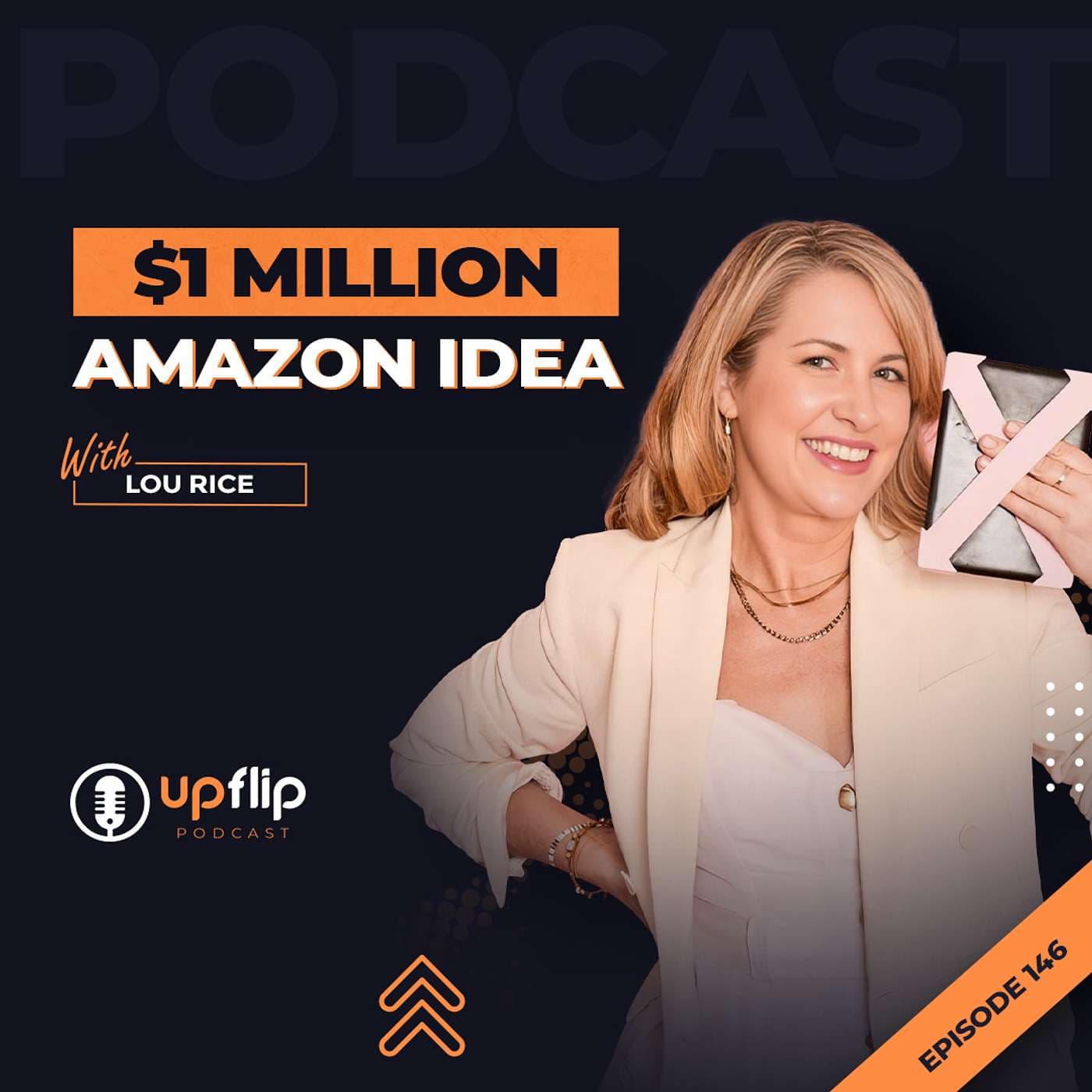
- Title: Making $1M with One Amazon Product — Side Hustle Idea
- Guest: Lou Rice, Founder of Strapsicle
- Host: Ryan
- Main Topic: Lou shares her journey in creating Strapsicle, a hand strap for Kindles, which generated over $1M in revenue within a year.
Key Points
Background of Lou Rice
- Career History:
- Former account manager and director in advertising.
- Lack of satisfaction in corporate life led to the pursuit of entrepreneurship.
- Origin of Strapsicle:
- Inspiration struck when a Kindle accidentally dropped on her baby's head during feeding at night.
- Partner Ben created the first prototype from a silicone mat, leading to product development.
The Path to Creation
- Initial Steps:
- Acknowledged the need for a strap after sustained usage of the prototype.
- Conducted market feedback with friends and family, resulting in positive responses.
- Manufacturing:
- Sourced a manufacturer through existing contacts in the industry, facilitating the creation of a mold.
- Engaged in iterative testing of prototypes to finalize the design.
Launching on Amazon
- Pre-Launch Phase:
- Product sat for four months post-manufacturing; utilized the time to develop marketing strategies.
- Gave away free products to generate initial buzz and gather reviews.
- Selling Strategy:
- Initially launched on their website before expanding to Amazon.
- Experienced rapid growth during the holiday season after launching just before Black Friday.
Marketing and Community Engagement
- Community Building:
- Leveraged social media, focusing on the Kindle user niche.
- Engaged micro-influencers and created a brand community to foster loyalty and advocacy.
- Feedback Utilization:
- Actively sought customer feedback and addressed concerns regarding product fit.
- Established a dedicated Facebook group, "The Strap Circle," for product testers and advocates.
Challenges and Considerations
- Navigating Amazon's Fees:
- Discussed various fees associated with selling on Amazon, including category referral fees and fulfillment fees.
- Emphasized the importance of understanding the cost structure when using Amazon as a sales channel.
- Intellectual Property:
- Stressed the necessity of obtaining patents and trademarks to protect the product.
- Advised entrepreneurs to secure their intellectual property before launch.
Future Goals and Expansion
- Next Steps for Strapsicle:
- Plans to expand into additional marketplaces and retail partnerships, including TikTok Shop and larger retailers like Walmart.
- Continual focus on community interaction and feedback to guide product improvements.
Key Takeaways
- Action is Key: Transition from idea to execution is vital for entrepreneurial success.
- Community Matters: Building and engaging with a community can significantly enhance product visibility and customer loyalty.
- Patents are Crucial: Protecting your product with patents upfront can save future headaches.
Resources
- Strapsicle: [Strapsicle Amazon Store](https://www.amazon.com/stores/Strapsicle/page/6104D9F1-2E9B-4205-8A3F-E50614909563?ref_=ast_bln&store_ref=bl_ast_dp_brandLogo_sto)
- UpFlip Academy: [Join for free](https://bit.ly/3WEIXXH)
- UpFlip Blog: [Business Insider Tips](https://www.upflip.com/blog)
- Franchise Guide: [Unlock Franchise Secrets](https://bit.ly/4aWuGvc)
Connect with UpFlip
- YouTube: [UpFlip Channel](https://www.youtube.com/@TheUpFlipPodcast/)
- Instagram: [@upflip](https://www.instagram.com/upflip/)
- Facebook: [UpFlip Official](https://www.facebook.com/upflipofficial)
- Twitter: [@UpFlipOfficial](https://twitter.com/upflipofficial)
Conclusion Lou Rice's journey highlights the significance of recognizing opportunities, the importance of community and feedback, and the necessity of taking actionable steps toward business success.
Written by AI. May contain mistakes. Listen to the episode to check what was said.
Transcript
Automatic transcript. May contain errors.0:28Anything is possible. You're listening to the Outfit Podcast, where we uncover how great businesses are built and the secrets to replicating their success. Today's episode is awesome. We are welcoming Lou Rice, the founder of Strapsicle, on the podcast today to talk about how this side hustle turned into her full-time gig and where the idea started from. Lou will take us through how to get your product on Amazon, the steps to take to patent, and why it's so important to patent, and also the community that she built and why it exploded her growth. So, so excited to have Lou on the podcast today.
0:58Lou, thank you so much for being here. Hey, Ryan, I'm excited to be here. 7 a.m. in Sydney. Yeah, 7 a.m. Good morning to you. I know a lot of community listeners are very excited. You've built a phenomenal community with Strapsicle. But for those that don't know your story before Strapsicle, they may be saying, who's this Lou Rice person? How did this actually happen? Can you kind of give us like what led up to like Strapsicle and like what were you doing before an Amazon side hustle like this? Yeah, yeah, of course. So I've been a budding entrepreneur, like probably my whole corporate career.
1:28I went into the advertising game, an account manager, an account director, or a suit and didn't love it. Didn't love the pressure, didn't love the deadlines, didn't love the stress and kind of been in that for 20 odd years. My partner is a creative director, my partner Ben. And it's funny, like 12 years ago, even I was living in London and I remember seeing a life coach trying to work through businesses I could start, but nothing ever really stuck. And it wasn't until I was on mat leave and Ben was as well and had baby Archie that the idea kind of came to us. And yeah, I think for me, it was we were both on mat leave.
2:04It was COVID. We didn't have anything to do. We couldn't go and see anyone. So we were like, hey, how about we just finally give this a go? Because Ben had also had a lot of ideas rolling around in his head of fixing things. And then this idea landed. Yeah. Interesting. So how did this idea land in your guys' head to specifically this one that you guys were like, let's actually start executing on this? Well, this idea actually landed on my baby's head at 2 a.m. So it's those early days, right, of, you know, feed, sleep, repeat of the newborn cycle. So it was a 2 a.m. breastfeeding session, you know, stumbled into the nursing chair, had Archie there.
2:43I was reading my Kindle because, you know, as moms, we don't like to be doom scrolling all the time on our phones at night. and reading my Kindle and I just kind of literally would have just shut my eyes for a second. And the next thing it was like, and there's Archie screams and I'd kind of knocked him on the head with the Kindle. And so Ben comes running in like, oh, what's going on? And we resettled Archie. He was okay and he's fine now. He can speak well and he's all good. But it was kind of the next day. I think Ben had been thinking about it for a while and he just happened to have a silicon mat at home and he made this really crude strap out of the silicon with some staples and he gave it me to use my Kindle.
3:20And so then I had it on my Kindle for a good few weeks and, you know, breastfeeding, lying down, you know, sitting in the chair, reading in bed. And after a while, I was like, I don't want to go back to my Kindle on its own. Like this is so comfortable. And we both kind of had that light bulb moment of, hey, let's make this a thing. Let's actually do it. Because as I said, Archie was a pretty good baby sleeping well and we had nothing else to do. So let's make something. I absolutely love that. I feel like it's really cool that you guys identified that opportunity that Ben was actually able to take the silicone mat and like build something for you.
3:51But I think it's interesting that you guys were like had those entrepreneurial thoughts, but like, right, it didn't click right away for it doesn't sound like anyways, like that next day, like, oh, let's build a product. It actually took you to use it for a couple of weeks to say like, oh, we actually might have something here. And I think that the ultimate product is the solution that solves our problem. And when it's your problem that it solves, you know, what a win. And I think Ben has this sign up in our office, which was don't die with the music inside you. And so I think as entrepreneurs, you know, we've got to pat ourselves on the back because everyone has ideas.
4:22Everyone has ideas. It's very few who can actually turn them into execution. And I think for Ben, it was like, right, this is time. This is time to actually make something, bring something into the world. And we'll definitely hit on like how you guys did bring this to the world. I want to add a tidbit here of like the other day I was talking to someone and they're like, oh, like I have a bunch of business ideas. Like what resources would you give me? and I was like, I can give you all the podcasts. I can give you all the books in the world. The only thing that actually matters is you take action.
4:45That's the only thing that'll set a wannabepreneur from an entrepreneur. So I congratulate you on actually taking action. I reflect what you just said as well. Oh, 100%. I get voice notes at the moment. I'm talking to someone about setting up on Amazon and she's asking me all these theoretical questions about it. And I'm kind of like, you're just going to have to do it. You're just going to have to do it and test it out. I want to hit how you guys then took action. So you guys identify this. Okay, let's actually start to do this. What was that next step? You had the silicone thing ready. What did you guys do after that then?
5:12I think we're a bit naive. And I think we talk about the fact that to become a successful entrepreneur, you need to have a lot of naive optimism. You just have to kind of believe that your product is going to work and is going to be a success. But we knew we were solving our problem. We did a bit of a poll with friends and family to kind of get their take on it. And then we were really lucky because we had friends who were already selling on Amazon. So they already had a manufacturer in China. Like obviously we started there because they have very high quality silicon and it's cost effective to produce.
5:40So we were able to shortcut because I think that is one of the most challenging parts of getting started is finding a good manufacturer. So we worked with a supplier to make a mold. We had to get like Ben again, very lucky. He's quite good at the technical drawing things, not my thing. He was able to draw out the design, brief the manufacturers. We kind of went back and forth. We did two molds, test molds to get the tension exactly right. And then we had it. And that's actually when we reached out to friends and family, did a bit of a survey, sent some samples out and people like, yeah, totally.
6:12We would buy this. Oh, interesting. Yeah. So it was all the feedback. Was it all like, oh, my gosh, yes, yes, yes. And that's when you guys knew like we actually have something here. Yeah, it definitely was. And again, with our product, it's like our niche is people who love their Kindles. Like how great to have a niche, a tight niche like that already. And so as soon as you find someone who loves their Kindle, then you're like, it's a very logical step to go, hey, how about a strap to help you make reading even more comfortable? So, yeah, we definitely had, I mean, obviously a lot of people like do it for iPads, which we're in the process of right now.
6:44But yeah, no, we were like, great, let's go. Interesting. I think it's really cool. And then that next step, it's nice that you guys had like friends and family that actually knew how to go in like China and do that. I am curious, just like, how was that process of like finding someone in China to manufacture this? Because I want someone that like is listening to this and like, I'm interested in like selling on Amazon as well. The manufacturing process, I don't know anything about. So what advice would you give to someone to navigate that manufacturing process overseas? Honestly, the more you can find people in your network who have done this kind of thing, who you can ask questions of and lean on, like I'm constantly in contact with people every day at the moment.
7:22I've never met them, but they've been referred to me by someone of someone of someone. So, and I'm happy to help. So just don't try and figure it out on your own. I would say there's so much information out there in terms of podcasts, YouTube videos, whatever. But equally like in your network, on your LinkedIn, there is going to be someone who has built a product before and who can, if they don't have the exact manufacturer for you, they might then be able to refer you on. So the more you can shortcut that process by finding someone who's been there before, the better. And I feel like that is like a network ad is like your network is your network type of thing.
7:53And I feel like being able to utilize those people are super interesting. So you guys get the manufacturing down. When do you guys start selling this on Amazon? Because people are probably like, okay, I get the manufacturing. But like, how do I actually start making money with this? How do you start selling? Yeah. How do we start selling this thing? People on Netflix want to know that. Yeah. And this is the wild ride, right? And both of us in the advertising industry, like this has been our jam for like 20 odd years, sell stuff to consumers. But we've had big teams around us and big media budgets.
8:21And so we were like, we got our first shipment and we were lucky again, our MOQ was only 500 units, which was really good. Got the shipment and we sat on it for four months because we were, well, we were raising a child, but we didn't quite know what's the next step. And I was tinkering around with the Squarespace websites. We actually launched on our website first. And then I was like, you know what? Come on, we've just got to do this. And I listened to a great podcast about a strategy of giving away free product to kind of build momentum really quickly in the beginning. So that's what we did.
8:49We didn't have any marketing plans. Sorry, but we didn't. And we were like, let's just get it out there and test the market. And again, it comes back to you've got to take the action, get the real customers, get the real feedback. And then you know if you've got a viable product market fit. So what we did was we gave away free product plus shipping. And I posted that offer basically in some Facebook groups I was in. So some female entrepreneur groups, a really big local group. And I posted on LinkedIn and friends and family. And it kind of went viral in these Facebook groups and on LinkedIn because all these people were like kind of, they kind of knew me and so they wanted to see us succeed, which is a really nice feeling.
9:26But people who had Kindles were like, yes, please, I'll take that. So we were able to sell, I think we set our target of like sell 200 and then we'll start charging for it. And we were able to get through that pretty quickly. But what it meant was, you know, we got a lot of reviews, we got a lot of feedback and we got a lot of groundswell really quickly. So yeah, that was probably, I think we launched in June. And then it was about five months later that I managed to get us live on Amazon. So it took me a while because I had to go back to my corporate advertising job and I'd push my mat leave back a bit.
9:58So I had to go back to that. Ben was back working full time. So then I was just hustling like early mornings, late nights. And I went back three days a week. So I had a couple of days on this, but it took about three months to set Amazon up and get that live. us. Quick shout out to Spencer Nader 3000 for his awesome review. He said, this is the best entrepreneurship podcast anywhere. I've listened to dozens of episodes while working and it's helping me so much with my own business. Hands down the best. Spencer, you are the man. Thank you so much for taking the time to leave us a review. It helps us to get our show in front of more people.
10:30And I truly appreciate it. Listeners, you can also do the same by leaving a five-star review wherever you get your podcast. Interesting. And that is the entrepreneurial hustle that we all appreciate for you, Lou, doing those early mornings, late nights types of things. What was that process like with getting set up with Amazon? Because three-month process is not a short process by any means. I'm sure you're navigating a lot of stuff. Yeah. What was that process like? And yeah, just for people to understand. I mean, I guess Amazon is like a mini kind of selling channel in itself. So you go and set your website up.
10:59You work out all your marketing over here. Kind of got to do the same thing with Amazon. So I'm a big fan of cut the check to go faster. Don't try and figure it out. And I credit Jill Stanton for that. If anyone knows, she's a great entrepreneurial figure. Don't try and do it yourself if you can literally pay someone on Fiverr or Upwork to do it for you in half the time. So I found someone on Fiverr to set up all my listings for me on Amazon. You know, there's a lot of kind of technicalities that if you're first time, you're kind of like, whoa. And I know, I know so many people who have just stopped at that point because they can't figure it out.
11:30Bad move. So I hired someone to do that. Then I hired a coach to review that. So I just wanted to make sure everything was working really well. And then, you know, you have to get all the SEO copy done. You have to create these images that are right for Amazon. So it's a lot of work. And then you have to work out the shipping plans to get your stock in there. But I was really, again, naively, we were really lucky. We launched mid-November. And of course, what happens in November, Black Friday? So we got this huge boost. And I was only going to do Amazon Australia because here I am in Australia.
12:01But then I was like, oh, why wouldn't I just do the US? Because you're actually just duplicating your store, right? So I'm so glad I did that. So yeah, like pat on the back for me. That was a good move. So we were able to launch mid-November right before Black Friday. And the coach I got was amazing. She gave me all this great advice. She was literally like, in the first four weeks, you just need to break even. Your goal is to get as many sales and reviews as possible. So you are discounting that product. You're running ads. You're getting all your friends and family to jump on and buy it because unofficially Amazon gives you a bit of a boost at the beginning to see if your product is going to be popular.
12:36So I was just hammering that. And then obviously Black Friday gave us this lift and then we'd go into Christmas. So we did our first five figure month in December from Amazon alone. Wow, congrats. Yeah, thank you. And I'd been obviously live with the business for just six months. I was like, whoa, okay. Amazon is the real deal. That is interesting. And so at this point when you're doing your first five figure month here, like a single thought at all to quit your job, like on the spot? Like, did that cross your mind at all? No. Well, I think there's a whole smoke and mirrors game around, ah, I'm doing my five figure month, doing my six figure month, because you're not really seeing that as money in your bank account, right?
13:17Yeah. And especially Amazon. I mean, Amazon as a sales model, you know, they do take a decent chunk and we can talk about the breakdown of those fees. But yeah, You're just not seeing it as dollars in your bank account. So it definitely wasn't a consideration at that point. I did, after a few months, kind of decide once we hit our first six figure month, which was about six months later, I set myself a goal of if I can match my monthly salary and my day job, if I can save that much every month for six months, then that's when I'll do it. What are those fees that Amazon charges? Because I want people to have that transparency straight up about like how Amazon charges and like you don't just net everything that you sell off Amazon, I'm sure.
13:59So yeah, if you could talk about those breakdown, that'd be awesome. Yeah, and I quite like to say, because I get a lot of people come to me and they're like, oh, I really want to be on Amazon, but I'm concerned about how much money they take. And I think you've got to frame up how you think about it as a sales strategy. So you've got your DTC, direct-to-consumer activity that you do through your website. You've got to think about how much you pay to acquire a customer with your paid ads, as well as your email marketing fees, et cetera. And that's one-to-one, right? Then you've got wholesale. And in Australia, I assume it's similar in the US, you're giving away 50 % of your margin to a wholesaler.
14:31You have very little control over the marketing efforts or the customer. You don't have access to the customer, but it's very passive. So I kind of look at Amazon right in the middle of that, a kind of hybrid model between the two. So I think, first of all, look at it. It's not, it's a different sales strategy. And then for me, again, I will preface this to say our product is small and lightweight. We are lucky in terms of cost of shipping and cost of storage, et cetera. So the two big fees Amazon will charge you, they will charge you what's called a category referral fee. It's basically a percentage fee they'll charge you.
15:01So for example, our product just sits in the electronics accessories category and they charge us 12%. And that's basically the fee to advertise our product on their platform, to be on their platform. So we pay them 12 % for that and then we pay them our fulfilled by Amazon fees. So that's the cost for them to pick the product, pack and ship it out. And that's only like for us, again, very lightweight. Our product weighs 50 grams. I don't know what that is in pounds, like 0.1 pounds or something. It's about$3 something. So I think our referral fee, we sell for$20 US. Our referral fee is about$3 something.
15:36And then our shipping fee is about$3 something. So it's about$6 something that Amazon takes. And then you pay, there's a monthly storage fee. There's a membership fee. There's a return fee. So there's a few fees in there. So it's about 35 % they take. But the upside is huge, right? So the upside is I get access to millions and millions of customers. I don't have to really pay to acquire. It's generally pretty passive. Like I can sit back and let Amazon do all the work. I'm not shipping those out. They're doing it all for me. And then the advertising costs, like obviously I'm engaged in their pay-per-click advertising, but it's relatively low cost compared to Meta and other paid methods.
16:15So I think you just got to weigh up all those pros and cons. One question that I just have to ask you about this, because I've seen like news articles about like Amazon, like some people put batteries on Amazon and then Amazon will then create an Amazon basics based off of that. And then they basically just take everything. Is that worrying to you? I'm sure it's worrying to you, but like, how do you like navigate that? Or like, how do you approach that situation about Amazon just creating a knockoff product of this? I think you've got to have the right things in place. So we have a patient on our design.
16:44So we have a patent in Australia, the US, UK and EU. We have trademarks and Amazon have a whole program that helps you protect your intellectual property from copycats on Amazon. So, you know, you kind of go a bit rude if they go ahead and go against their whole brand registry protection program. But you never know and I won't speak ill of them. My biggest piece of advice that you for any entrepreneurs turning out is like, you spend the money on the intellectual property to get that protected. Like go and pay the lawyer to get the patent if you can get the patent, get the trademark because honestly, that stuff is going to bite you down the line if you don't sort it out.
17:23And then the other thing too is like, it's about building a brand, right? We're not just selling a product. We're building a brand. We're building the Strapsicle brand. Our product is designed very specific measurements and we have all the quality processes in check. So we would hope that our customers are still, you know, Amazon's always going to be, I think, a race to the bottom in terms of cost. But there are other channels outside of Amazon. When would you advise someone to get that patent? Is it before even their first sale? Is it once they get to 100 sales? Like when would you advise someone on Amazon to actually get a patent?
17:54Like literally before you launch, as soon as you can. So, for example, my Australian patent took three or four months. The U.S. patent is still pending. But there's also a grace period of about 12 months to get it in other countries based on when you first register a patent. So you want to make sure that you're doing as many countries as possible within that time frame because I've kind of I lost that time frame now. I can't do any other countries, which is annoying. So it's all this kind of stuff that I wish someone had told me early on. And then my second question that I had from that is, so you're only selling on Amazon right now, but how are you approaching like other platforms to sell on?
18:29I know like TikTok shop's coming up. I know your own website, I'm sure. Yeah. How do you approach like selling on other platforms then? Yeah. So we are very big on our own website. So we obviously started with that. And then we've got Amazon US Australia. We've just opened Singapore. So because of Amazon, a lot of my attention has gone towards Amazon, especially working part time still. You only have so many hours in the day, right? So now I've just hired our first proper hire, an e-commerce marketing manager to help with the kind of website direct to customer side of things. TikTok shop. I'm in the process of trying to register in the US because I've got an Australian TikTok account.
19:03It's a bit complicated, but I would bloody love to open that up. My God, I cannot wait for TikTok Shop. She just hired some content creators to run our TikTok. And I don't know if you've seen what they've done in the last couple of weeks, but there's some viral, there's some amazing viral content, which is just so Kindle specific. I think it's not suitable for work, but please go check it out. but they are doing an amazing job of building virality for us. So TikTok Shop will be the next stepping stone. And then I'm really passionate about looking at just other big box retailers we can get into.
19:37So wholesale in the US is my big focus coming up. I'd love to be in Walmart, Target, anywhere Kindles are sold. And then other marketplaces. There are so many out there. It's insane. Mercado Libra in South America is apparently ginormous. Interesting. I would not think that, But I think you're approaching the strategy correctly. I'm like Big Doc Shop, Walmart, all those places, wherever Kindles are sold. Great place to do it as well. And I want to talk about some other marketing strategies that have worked for you. I know community was humongous for you in building this. So can you talk about how community helped really grow this brand?
20:10Yeah, I think my biggest piece of advice starting out is I see a lot of people post and they say, oh, I've launched my shop and I'm running ads and I'm not getting any sales. You have to be as scrappy as possible and try as many channels as possible. and as many free organic channels as possible would be my advice like go for those so I started out like I didn't even know about book talk book talk holy monongous where but wow it is a whole thing right I don't know if you know it Ryan but yeah those girls those girls they love their dark romance they love their their collie news tattooed yeah they're tattooed vampires oh my god I kind of down this book talk hole and then obviously a big subsection of book talk is kindle users so i just message these girls you know i call them micro influences like 3 000 5 000 followers not big and i just like hey and i always tried to start with that brand story me lou small aussie business created this product because i dropped my kindle on my baby's head would you like to give it a go and i got 100 100 strike rate right you have to try and make yourself as personable as possible you're not a faceless brand you need to be you i think in the beginning because that's actually the most unique quality you have about your brand.
21:20And so they all just, I sent them products. They tried it out. They loved it. And because it was so novel, it was new. They would then create reels and TikToks. And I was getting all this content, being tagged in all this content. You obviously can leverage this person's authority because they've already got an audience following them. And so the audience trusts them. And then I was able to use all that content. I then started running some Facebook ads using that content. And that's still our strategy today. Like we reach out to 10, 20 influencers a day. We have an affiliate program. If anyone out there's listening, you can just go and join our affiliate program.
21:51You get paid, you know, 10 % for every sale. So, and then I just lean into my community all the time. Like I'm asking them questions. What do you want? What do you need? I literally found a Facebook group recently called Kendall Girlies, shout out. And it was like, it's got 150 ,000 members. And I went in there and I was like, I'll search strapsicles, see what people are saying, you know? And I found a post and it was this woman saying, who here can't stand strapsicles? And I was like, whoa, whoa. I know. So I went in, I know. And as I read the comments, you know, there are a few and it was mainly around the fit, right?
22:24So a couple of our sizes, when we started, we made straps to fit a Kindle. We didn't know everyone at Booktop loves a clear case as well to wear. So then people putting the straps over their clear case and it's a bit tight because we didn't design it like that. So I was like, I had like five minutes of sadness and like, should I close the business? And then I went, nope, this is feedback. This is what you need. So then I posted in the same group, hey, would you just love to get anyone's thoughts, good or bad on this? Because we're about to do a new version. I had like 400 comments on that post.
Read the full transcript
22:52It was amazing. And everyone was like, thank you so much for being so genuine, showing up. And then I was able to pull like 200 of those people into my own Facebook group, which I now call the Strap Circle. And it's now a testing group. I know that was Ben's. it's sounding a little dodgy, but and now they're like my testers and they're going to be my big fans, right? They're going to be my advocates for life. So yeah. Anyway, that was a bit of a tension. No, no, no. I love that you really leaned into the power of community when building a product like this. And I feel like if you can do it correctly for consumer products like this, especially when such a loyal fan base of people that like read, that love their Holly and Coover, you can really tap into something like super special when it comes to growing on Amazon and being able to use marketing like that to your advantage for products like this.
23:39Yeah. And the other thing I would say too is like my biggest piece of advice that I took on board was do the things that don't scale when you're starting out. And if that means you are one-on-one talking to every customer, I would go into Amazon and if anyone leaves you a three-star review or less, you are allowed to contact that customer. You know, normally you're not allowed to get customer data. So I would send them a message. Usually it was around fit that picked the wrong size because a lot of people just don't read our sizing information. And that's the biggest challenge with our product is the sizing.
24:08So they get the wrong size. So I've messaged them and say, hey, can I send you the right size? Have a look, see what you think. I never asked them to change their review. More often than not, they would change that one star review to a five star review. And there's still one sitting there. I still remember it from that early days in the US. And it's like, she's like, update, you know, the seller did this and that and da, da, da, da. And And the story is so powerful because people see that and go, oh, wow. And also, I always say we're a small Aussie business because on Amazon, it's even harder for people to know that about you.
24:37So, yeah, don't be scared of reaching out to those customers and being vulnerable and working with them to make a better product. I love that. What I'm reading between the lines a lot from this interview is like you have like really tapped into a niche market, but like you put a lot of thought into care to like actually providing great service for them. If it's on Facebook with those three stars that are under or if it's within like your Facebook groups. So I congratulate you on that. And I want to say I'm reading between the lines here. So you do a very nice job on that. But where I want to go next is our Fan Blitz questions, because these are questions eager from our community.
25:06And guys, if you want to join in on world-class entrepreneurs, you can go to www.youtube.com slash upblip and submit your question there. But Lou, are you ready for our last five questions here? Yes, I'm ready. Perfect. We kind of talked about some of these throughout the episode. So a little reaction, but how did you build your first prototype and then begin selling? Ben created it to fit the Kindles. So he drew up the little design, sent it off to that manufacturer, got them to do a mold, sample mold for us. Wasn't quite right. Went again. And then we were really lucky to nail it on the second time.
25:36And then selling, as you know, had no plan. Gave them away free. Yeah, gave away the first$200 for free and get good feedback. Yeah, yeah. It paid off. I love that. Number two, what things did you consider when deciding to manufacture in either the U.S. or China? Yeah, I mean, for us, it's cost right. But also China has some really high quality manufacturing processes and silicon. I don't, you know, our silicon is gorgeous. So it's just a financial decision that we made. We design it here in Australia. We are in complete control of that. So, yeah, it's just economics. As a business owner, that's what you got to do.
26:12You got to look out for yourself. A little bit of a niche question here, but have you considered teaming up with Crocs shoes to do a limited edition strap X Crocs combo? Oh, my God. Wait. I hired a mindset coach, right? Two months ago, big investment, but you can't succeed in business if you don't have a good mindset on you, right? And she's a bit of an intuitive. And she was like, it's coming to me. What about if you do those, what are they called? Gibbets, the gibbets, the things that go in the crocs. And then she started and I was like, yep, let's car part that. So you have reminded me, this is a thing.
26:43Yes. We need to look at partnerships. We need to look at licensing. I'm writing it down. So good. Watch this space. Shout out to that listener who submitted in that question. So. Exactly. Come on, let's manifest it. Let's manifest it. I love that. And listen, reach out to Lou with that idea. Give some credit or whatever. Yeah. Tell me who you are. Tell me who you are. Simple question here. When you dropped your Kindle on the baby on Archie, was he okay? Yes, he was. Kids are pretty resilient. It wasn't his soft spot, you know, on the side, but he's all good now. He's a cute little guy. Yeah. I love that.
27:21And last one for you. Did you patent it? And how much did that cost? Yeah, as I've talked about, like if you have to borrow money for that in the beginning, do that. It's not cheap. I wish I'd gone the full package of you just kind of sign up through this program called the Madrid Protocol and then you can roll out patents in multiple countries. I wish I'd done that. Probably be about 10 ,000 Australian, but I think it's the best investment you will make for your business up front. I love that. Well, this was one of the best investments I made today was having you on this episode. So Lou, thank you so, so much for being here.
27:53You got to like that transition, but thank you so much for being here. People are like, oh my gosh, Lou is awesome. I love how empathetic she is. She listens to her customers. I want to connect with her. Where can people do that? Where can people connect with you? So if you want to follow Strapsicle, very simple. We are at Strapsicle on Instagram and TikTok and YouTube. We're growing over there too. And please go check out our latest TikTok. It's very funny. And then my personal profile, LinkedIn or Instagram, I am Lou Rice. Lou Rice is here on Instagram. All righty, everyone. That was an amazing episode with Lou.
28:27Really enjoyed her coming on and talk about how she grew on Amazon. And three quick takeaways from you. Before you even start selling on Amazon, you need to have a patent in place to protect yourself from Amazon itself and then also from its competitors. So definitely patent any product. Two, we talked about it very briefly at the beginning, but the difference between a wannabe entrepreneur and an entrepreneur is those that take action. I say that so much on this podcast. So, and she reiterated that. Number three, community is everything when you're building a product like this. Find those communities that are passionate about products that you're selling in parallel to, and then really dive deep in there, get their feedback, get those hands in front of products.
29:00She used micro influencers and influencers to really grow this product. So community is huge for this. And if you guys want more inspiration on side hustles that you can get started today. Check out our blog post, 47 Best Side Hustle Ideas for 2024. It's packed with ideas based on your skill set and the amount of time you have to spend each day. The link is in the show notes below. Lou, thank you so much for being here today. You're welcome.
From the publisher
Lou Rice stumbled upon her business idea by accident when an Amazon Kindle was accidentally dropped on her baby’s head in the middle of the night. This one slip led Lou to develop the business idea, Strapsicle, a hand strap that prevents any chance of dropping a Kindle no matter where you are. What may seem like a simple concept has now generated over $1M in revenue in just one year. She sits down with Ryan to share her tips and tricks to running a side hustle on Amazon.
Lou discusses the importance of building an excellent brand presence across social media, developing a loyal community of Strapsicle lovers, and creating a strong two-way street of communication with customers. She also strongly believes in acting on customer feedback in order to turn any negatives into positives for the business.
Resources:
- https://bit.ly/3WEIXXH Join the UpFlip Academy for free today!
- https://www.upflip.com/blog Check out the blog for business insider tips and strategies
- https://www.amazon.com/stores/Strapsicle/page/6104D9F1-2E9B-4205-8A3F-E50614909563?ref_=ast_bln&store_ref=bl_ast_dp_brandLogo_sto Connect with Lou
Ready to be your own boss without starting from scratch? Grab our FREE Franchise Guide and unlock the secrets of proven business models that have already created thousands of success stories.
Connect with UpFlip:
- On Youtube
- On Instagram
- On Facebook
- @UpFlipOfficial on Twitter
For more insights to start, build, or grow a business, check out the resources on UpFlip.com or head to the UpFlip YouTube channel to see more interviews with business owners and experts.
Thanks for listening!


