
In short
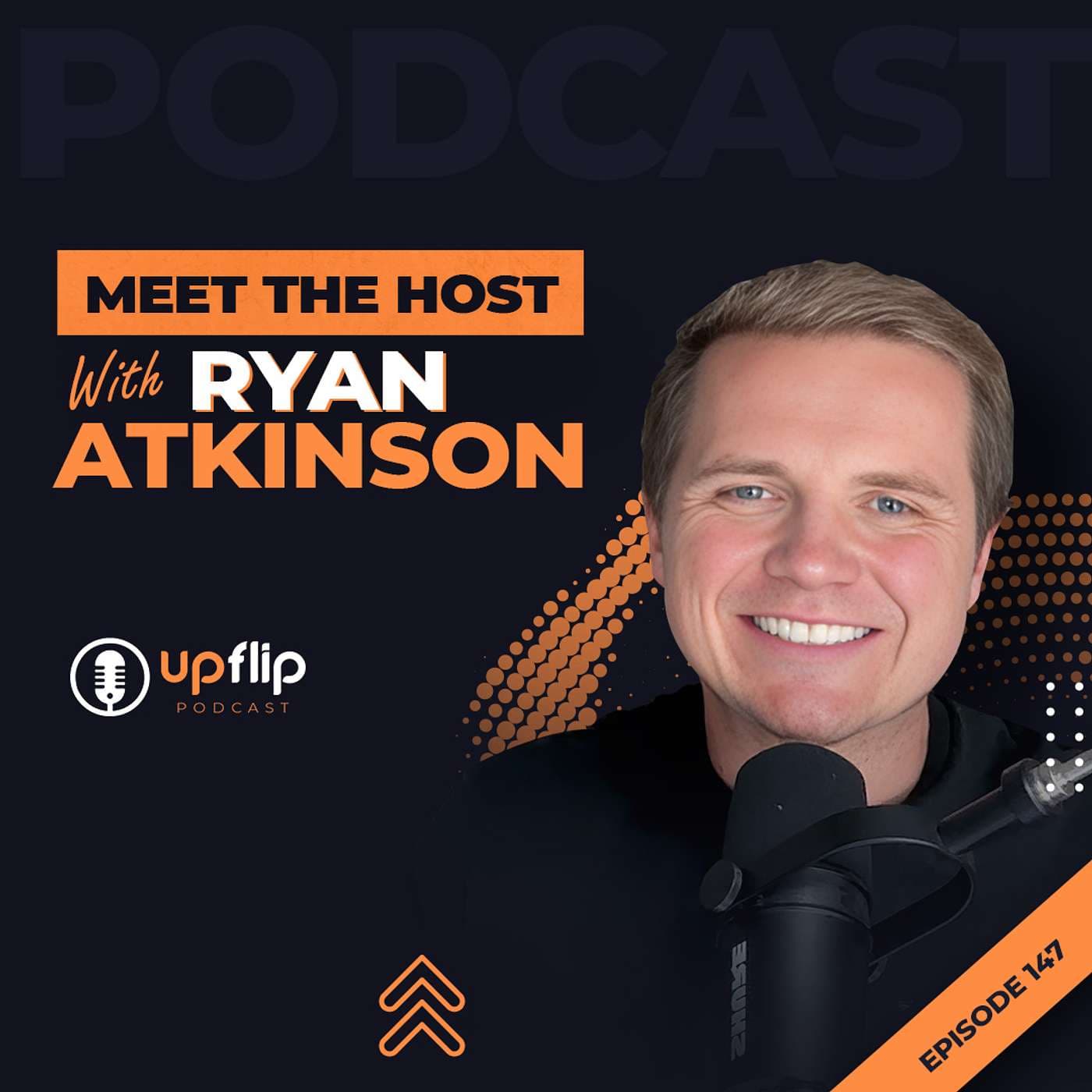
UpFlip Podcast Episode 147: Meet the Host - Ryan Atkinson’s Entrepreneurial Journey
Podcast Overview The UpFlip podcast explores the intricacies of building and running successful businesses, providing insights for aspiring entrepreneurs. With a significant following and a wealth of content, the podcast aims to make entrepreneurial knowledge accessible to a broader audience.
Episode Summary In this special episode, Ryan Atkinson, the host of the UpFlip podcast, shares his personal entrepreneurial journey and insights. Transitioning from host to guest, Ryan discusses his experiences as a co-founder of Spacebar Visuals, a video production company, and highlights the challenges and rewards of entrepreneurship.
Key Points Discussed
- Introduction to Ryan Atkinson
- CEO and co-founder of Spacebar Visuals, a video production agency established in 2022.
- Achieved over $100K in revenue quickly, collaborating with notable brands like AWS and Vanta.
- Passionate about podcasting and entrepreneurship.
- Entrepreneurial Background
- Influenced by entrepreneurial parents: a hairstylist mother and a stepfather with a flooring company.
- Initially struggled with the transition from ideas to action during college.
- Gained experience at HubSpot, where he identified the need for freelancing.
- The Spark of Entrepreneurship
- Transitioned from corporate work to freelance opportunities on Upwork.
- Identified a gap in the market for podcast production services, leading to the creation of Magic Media.
Challenges and Rewards of Entrepreneurship
- Tough Nature of Entrepreneurship
- Ryan describes entrepreneurship as the hardest thing he has ever done, marked by high and low moments.
- Emphasizes the importance of balance and maintaining an equilibrium amidst the ups and downs.
- Corporate vs. Entrepreneurial Life
- Admits the temptation to return to corporate work but values the flexibility and ownership that comes with entrepreneurship.
- Highlights a desire for autonomy in work and decision-making.
Insights Gained from Hosting UpFlip
- Key Lessons and Philosophies
- Metrics Understanding: Learning to reverse engineer business metrics for predictable revenue.
- Employee Empowerment: The importance of allowing employees to both succeed and fail as part of their growth.
- Coping with Failure:
- Ryan recounts a challenging month for Spacebar Visuals, emphasizing the importance of action plans in overcoming setbacks.
Inspirational Message for Aspiring Entrepreneurs
- The Importance of Taking Action
- Ryan encourages aspiring entrepreneurs to move beyond ideation and take concrete steps to bring ideas to life.
- Emphasizes that not every idea will succeed, but consistent action is crucial for eventual success.
Resources Mentioned
- Connect with Ryan Atkinson
- [Spacebar Visuals](https://www.spacebarvisuals.com/)
- [UpFlip Academy](https://bit.ly/4filp1p)
- [UpFlip Newsletter](https://www.upflip.com/newsletter)
- Additional Learning
- Free [Franchise Guide](https://bit.ly/4aWuGvc) to provide insights into proven business models.
Conclusion Ryan Atkinson’s journey reflects the challenges and triumphs of entrepreneurship. His insights provide valuable lessons for those looking to embark on their own entrepreneurial adventures, emphasizing the need for action, resilience, and the willingness to learn from failures.
Listeners are encouraged to continue following the UpFlip podcast for more stories and insights from successful entrepreneurs.
Written by AI. May contain mistakes. Listen to the episode to check what was said.
Transcript
Automatic transcript. May contain errors.0:00Hello, everyone. Welcome to a very special episode of the UpFlip podcast. And I say that because we have with us today Ryan Ackinson, who is typically the host of this show. And if you're wondering why we decided to make the host a guest for this episode, we did it for two reasons. First, we wanted to give all of you the opportunity to learn more about the person behind the voice that you hear all the time. And second, because Ryan isn't just an amazing podcast host, he's also an accomplished entrepreneur who has started two very unique media companies. and he has a lot of insight and information that we thought all of you would appreciate hearing.
0:39Welcome, Ryan. How's it feel, man, to be in the guest chair? It's super interesting to like, honestly, flip it. Like, usually I'm in your spot. So it is a little bit different, but super excited, super excited to give the listeners a little bit more information and a little bit more of like, who the heck is Ryan Atkinson? So happy to answer some of these questions here today. And that's actually a great place to start. Why don't we kick things off by giving everyone the opportunity to get to know you. So why don't you take a few minutes and just tell us a bit about yourself? Yeah, well, I am Ryan Atkinson.
1:04everyone. My main job is I'm the CEO and co-founder of Spacebar Visuals. We're a video production agency. And we started this agency because marketers want to do video, but they have 30 ,000 things that they need to be doing. They have ads, social posts, reporting, attribution, meetings, all that stuff. But they want to do video, but they just don't have the time. So we started Spacebar Visuals to do the script writing for clients, to do the animation, the storyboard, the voiceover, very hands-off process for them. Started that about a year ago, year and a half ago, I should say. So that is my main job.
1:33Also do some stuff with podcasting Uplip. I absolutely love being the host of the Uplip podcast. So 25 years old, I've started about two different companies, have created about over 300 ,000,$400 ,000 in revenue and about two years of being an entrepreneur. So that's a little bit more about like what I do in like my day-to-day job and how I keep myself busy is out of the streets is what I like to actually say. So you talked about space bar visuals. I believe that you created magic media even before that. Tell us what that is and even what inspired you to start that company. Yeah. So let's start the inspiration part first.
2:07So I always knew I wanted to be an entrepreneur. I was raised in small town, Iowa, Clear Lake, Iowa. Loved growing up there. Was fortunate enough to have two parents around me that were very entrepreneurial. My mom just started her own hair salon. She's been a hairstylist forever. And then my stepdad also runs his own flooring company. I've seen him grow that. So I knew from a very young age that I wanted to be an entrepreneur. I wanted to work when I want, where I want, with who I want. And that sounded like the perfect gig to me. So I went to school. I was thinking like, okay, I'm going to be an entrepreneur.
2:32I'm going to do all this stuff. At the University of Iowa, I was like all about it. I was like, okay, I have 30 ,000 ideas. I was stuck in that entrepreneurial rut where you're just like, I have so many ideas, but I don't know how to get started. So for like four years, I'm just in this rut. And then I eventually moved out to Boston to work for HubSpot out there as a BDR. And that really fueled me. I was like, okay, this corporate gig is awesome. I love HubSpot, but I need to start doing stuff on my own. So how you do that naturally is you get on Upwork and you start freelancing. And that's what I did.
2:59And some of my first gigs were with podcasting. I was a podcast guest booking person for plastic surgery. So I was reaching out to plastic surgeons like, hey, we call this podcast. And so eventually did that and understood the need of people want to do podcasts, but again, they don't have the time to do it. So Magic Media really started because I wanted to handle everything when it comes to podcasting for clients. And I'm very similar to, I believe, what you do as well. So you see the ins and outs of it. But that's what kind of spurred magic media. I've started from freelancing all the way into do a full-fledged podcast production.
3:28So Ryan, you kind of mentioned that before you took the entrepreneurial path, you worked in the corporate world. And I want to kind of go back to that for a bit. And I'm really wondering if you ever get that itch and you say, you know what, man, this is hard. I want to, you know what, I'm going to go back to where I was. I'm done with all this insanity. I'm throwing in the towel. I'm going back to the corporate world. It might be easier. You know what, John? Literally, I always say, I'll even say it on the Outflow podcast when I'm interviewing people, entrepreneurship is by far the hardest thing I've ever done.
3:56It is so challenging. It is so demanding. The highs are super high and the lows are super low. And I like to say stay at equilibrium as much as possible. But when you get people that are pushing deals out when they're signing, it is a high, high, low, low. Your actual question, would I ever go back to corporate? At my current state, heck no, I would never want to go back to a corporate gig. And I feel like people listening, they want to leave their corporate gigs. And guys, I promise you, yes, it is a thousand percent worth it. My three W's, like I said earlier, are work when I want with who I want and work where I want.
4:24And those are very important to me to have that flexibility and have ownership of my work. And just that corporate lifestyle did not give me that flexibility. For some reason, also, I have a kind of hard time taking orders from people as well. That might be a common theme across all entrepreneurs. Yeah, you kind of like break the rules. You don't want to follow the rules. You don't like people like really telling you what to do. So where my current state at 25 years old, my friend asked me this recently too, would I ever go back? Honestly, no. The entrepreneurship lifestyle is super hard, but it is so rewarding.
4:52And that ownership of work that you have, the flexibility that you have, it just makes it worth it. I just don't think I could actually go back to a corporate gig. What was it though? When did you look at it and say, I'm making that switch? What was that? What just made you do it? Yeah. For four years, it was just bundled up energy when I was at college. I was part of some clubs. I majored in marketing and management. My management focus was actually entrepreneurship. So I always knew I wanted to be in entrepreneurship. And I always had these ideas of crazy ideas, but I just never took action on it.
5:23I feel like a lot of entrepreneurs listening, especially with Upflip Podcast, people have ideas. It's just that first step. And that was always the hardest part for me. And so I was at HubSpot for about 10, 11 months, whatever it was. And then I switched jobs to a marketing role. And at this marketing role, I had so much freedom and so much free time where I was like, I'm wasting my time and I'm actually losing money if I just don't start freelancing. So I just put myself out there really, because I had so much freedom and flexibility at that role where I was like, you know what, like, let me give a shot and like actually start doing something with it.
5:50And now it's freelance was a great little stepping stone into actual entrepreneurship. You know, as a podcast, I was even for Upflip. I mean, you get the opportunity to talk to a lot of other entrepreneurs on a regular basis. I mean, you get to hear about their businesses, you learn their tricks and their strategies. You even get to hear about their failures. I always love those stories of how they overcame failure. So if you think about it, you're almost like this clearinghouse of entrepreneurial knowledge and insights because you've talked to so many people in so many industries. And I realize that you'll probably have a ton of answers to this question, but I'd love to know some of the lessons or maybe principles or philosophies that you've heard while hosting that have really resonated with you and why.
6:31Yeah, absolutely. I've been hosting the Upfoot podcast now. And even before then, I started podcasting four years ago. And my first topic was entrepreneurship. It was the business cloud. I was a senior in college and I was already interviewing entrepreneurs at this stage of my life. I love reading books about entrepreneurs. I love this topic of entrepreneurship and interviewing entrepreneurs. Some of the biggest principles that I've learned from this podcast, one that really comes to mind is being able to reverse engineer your metrics is something that a lot of people have talked about on this podcast.
6:57Know all of your metrics. And once you do that, you can reverse engineer. An example would be like, how many emails and cold calls does it take to book a client? Once you have that, if it takes 100 cold emails, whatever, to book one client, you can know, okay, well, if we send this, we can expect to have this many meetings. Once you have your close rate down, then you can say, okay, once we get 10 meetings, I expect to close four of these people. Here's our average deal size. And that just makes your revenue much more predictable and expectations are set there. I think that's really good. I just had an episode the other day with Steven Montgomery, which is going to be a phenomenal episode.
7:26Everyone, please check that out when it does come out. He said that you have to give your employees the opportunity to succeed. You have to give them the room to succeed, obvious, but you also have to give them the room to like fail. I think that's a super important concept to allow your employees to fail because then they're actually able to grow from that. So those are two that directly come to mind when you ask that question. Yeah, those are great ones. And like I said, the failure topic is really interesting too. You know, everybody talks in the corporate world, everybody's so afraid of failure and, you know, it's becoming like this theme and it really kind of came out of the entrepreneurial world.
7:57But when you're an entrepreneur, you're afraid of failure as well because it could destroy everything, right? It could really set you back. So I love that topic as well. Yeah, it's good. I think recently in June, we were having a pretty slow month with Spacebar Visuals, just quite frankly. You're going to have these as entrepreneurs. You're going to have great months. You're going to have bad months. And I remember it was like June 20th. And I was like, we're looking at one of our worst months in revenue in our company history. And I remember I was so stressed, so, so stressed. I remember I opened my journal, wrote out every action plan that I was going to be doing of how can I move this deal along, this deal along, this deal along, this deal along.
8:29We went from having one of our worst months to revenue to having above average. I'm not going to say like it was our best month, but like it was just a huge switch because like failure was right there. But you're actually need to put an action plan into place to try to avoid it as much as possible. But it is unavoidable, but you need to take action. So, Ryan, I want to wrap things up. But before I do, I'd love to know if there is a message that you'd like to give to the aspiring entrepreneurs out there who are listening. Yeah, I mean, the message is what I dealt with for the longest time of just idea after idea after idea.
8:58That could work. That could work. That could work. We all go through it as entrepreneurs. The biggest difference is just you have to take action on those ideas. Get out there. Your first idea might not work. Your second idea might not work, but your third idea could work. You need to have the ideas. But once you have the idea, you need to take actual action. Get your first customer. Find out how to do it, how to market it, how to actually get people. There is one message I've learned from UpFlip from my own entrepreneurial journey that if you guys want to get started, take action. Yeah, that's great.
9:25Well, Ryan, thanks so much for turning over your hosting chair to me and hopping in the guest seat and telling us a bit about yourself. We appreciate it. Yeah, of course. And guys, I appreciate everyone on the upflip podcast that listened to this episode. So please keep listening along, like subscribe, give us some feedback, give us reviews. We appreciate all of it guys. We were just getting started the upflip podcast and we're super excited where we're going to take you guys.
From the publisher
Ryan Atkinson is the host of the Uplift podcast, and he’s a successful entrepreneur himself. Having co-founded Spacebar Visuals, a video production company in 2022, Ryan quickly achieved over $100K in revenue and has collaborated with well-known brands like AWS and Vanta. Now it’s Ryan’s turn to play the role of the guest and discuss his success as a business owner.
Ryan talks about the challenges and rewards of entrepreneurship, shares valuable lessons learned from interviewing other entrepreneurs, and emphasizes the value of embracing points of failure as a learning opportunity. He also talks about letting employees have room to succeed and fail so they can grow too.
Resources:
- https://www.upflip.com/newsletter - Sign up for our newsletter for even more tips and strategies
- https://bit.ly/4filp1p - Connect with Ryan in UpFlip Academy
- https://www.spacebarvisuals.com/ - Connect with Ryan
Ready to be your own boss without starting from scratch? Grab our FREE Franchise Guide and unlock the secrets of proven business models that have already created thousands of success stories.
Connect with UpFlip:
- On Youtube
- On Instagram
- On Facebook
- @UpFlipOfficial on Twitter
For more insights to start, build, or grow a business, check out the resources on UpFlip.com or head to the UpFlip YouTube channel to see more interviews with business owners and experts.
Thanks for listening!


