
In short
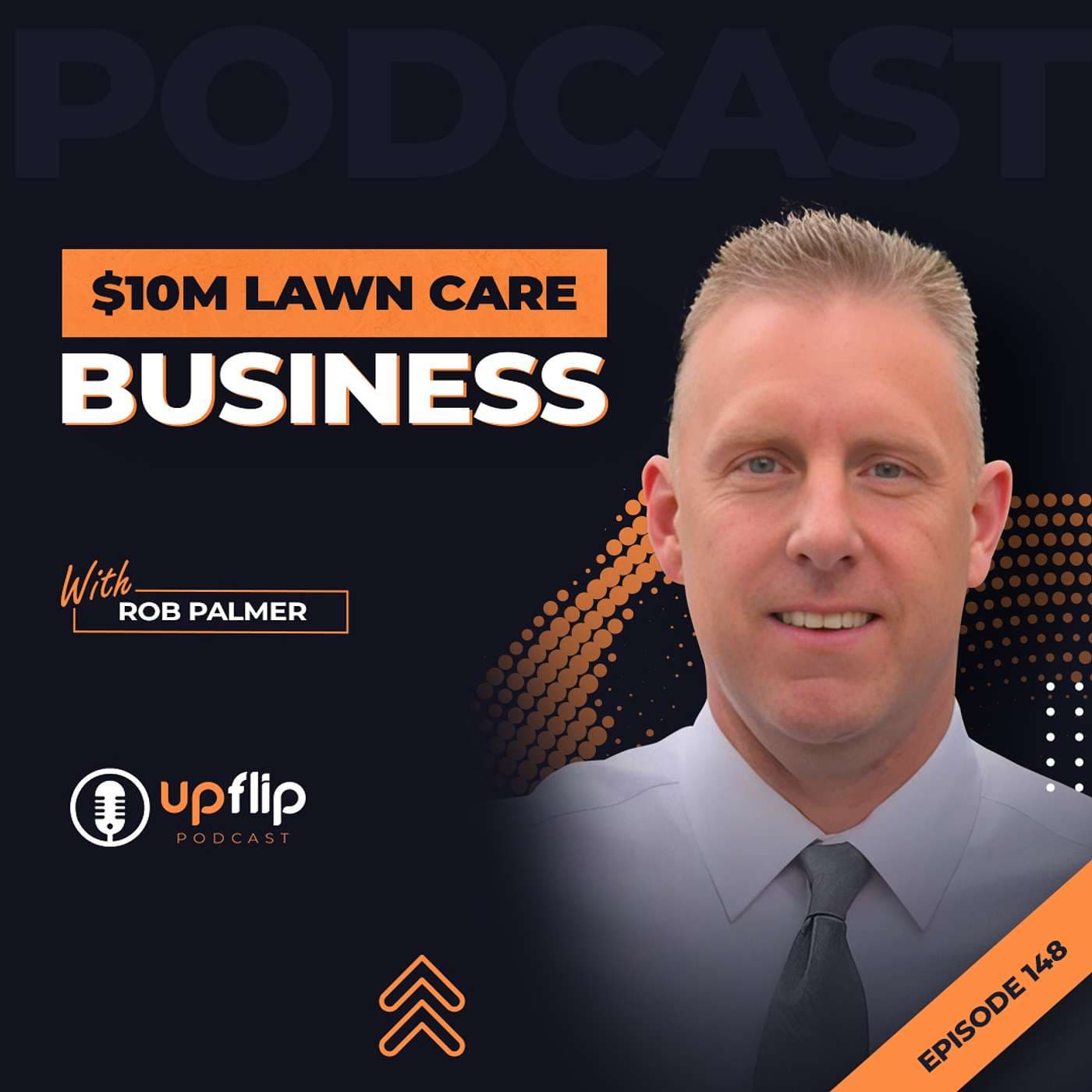
The UpFlip Podcast: Episode 148 Summary
Episode Overview In this episode of The UpFlip Podcast, host Ryan Atkinson interviews Robert Palmer, the founder of Lawn Squad, who discusses the rapid growth of his lawn care business from zero to 1,000 customers in just one year, and expanding to over $10 million in annual revenue. Robert shares insights into his marketing strategies, the importance of networking, and the journey of franchising his business.
Key Themes and Topics
- Background and Early Career
- Robert Palmer initially pursued a degree in history with aspirations of attending law school.
- He worked for Lesko, a national supplier to the lawn and landscape industry, where he gained valuable industry knowledge.
- His experiences led him to start his own lawn care business, WeedPro, with a focus on independence and entrepreneurship.
- Starting Lawn Squad
- Transitioned from a salaried position to launching Lawn Squad in January 2001.
- Motivated by a desire for financial independence and the backing of his wife, who supported taking a risk by leveraging their home equity for startup funds.
- Marketing Strategies
- Initially spent $50,000 on marketing before acquiring any customers.
- The marketing budget was allocated to:
- Direct mail campaigns (44,000 pieces mailed).
- Telemarketing, which was eventually deemed ineffective.
- Emphasized the importance of ground game marketing—networking and community engagement—as a key strategy for attracting customers.
- Customer Acquisition
- Out of 1,000 customers in the first year:
- 400 were acquired through direct mail.
- The remaining customers came from networking and subcontracting with local landscapers, which provided a cash flow boost and free sales opportunities.
- Scaling the Business
- By year four, Lawn Squad surpassed $1 million in revenue, with half coming from direct mail and half from networking efforts.
- Continued emphasis on maintaining a personal touch in customer interactions, leading to a strong brand reputation.
- Franchising with Authority Brands
- Lawn Squad was approached by Authority Brands, leading to franchising opportunities.
- Robert’s mission shifted towards mentoring franchisees and replicating his successful business model across different regions.
- Lessons and Advice
- Personal branding is crucial; businesses should reflect the owner’s personality.
- The significance of building relationships and trust with customers.
- The ongoing importance of listening to customer needs and adapting strategies accordingly.
Key Takeaways
- Ground Game Marketing: Focus on in-person networking and community involvement to build trust and customer relationships.
- Consistency and Authenticity: Stay true to your business values and maintain strong communication to build a reputable brand.
- Networking: Essential for growth, collaboration, and tapping into new customer bases.
Resources Mentioned
- [Lawn Squad Franchise Opportunity](https://bit.ly/4fsU6lR)
- [Join UpFlip Academy for Free](https://bit.ly/3C0ramb)
- [Most Profitable Franchises to Buy](https://www.upflip.com/blog/most-profitable-franchises)
Conclusion This episode emphasizes the journey of entrepreneurship through authentic marketing, networking, and the eventual transition to franchising. Robert Palmer’s story serves as an inspiration to aspiring entrepreneurs, showcasing the importance of taking risks and staying committed to one’s vision.
For further insights and resources on building and growing a business, listeners can visit [UpFlip](https://www.upflip.com).
Written by AI. May contain mistakes. Listen to the episode to check what was said.
Transcript
Automatic transcript. May contain errors.0:00Today's guest proves that the grass is greener when you take a leap and start a business. In fact, it may be way greater. Today, we're joined by the leader of Lawn Squad, who took his startup from zero to$10 million and attracted the attention of national franchisors. In just one year, he went from zero customers to a thousand customers. By year four, he grew his customer base and the company was bringing in$1 million. This is Ryan Atkinson and you're listening to the UpFit Podcast, where we uncover how great businesses are built and the secrets of replicating their success. Today's episode is going to be awesome.
0:35Robert Palmer is in the studio today, breaking down the building blocks of his mega successful lawn care business. He's gonna talk about what it takes to start a lawn care business, why you should, some of the technicalities of it and how to scale it. So Robert, thank you so much for being here. So, so excited to have you on. I know the fans are super excited to have you on as well. No, I appreciate the opportunity. It's time I get a chance to talk about my passion, lawn care, coaching and teaching. It's a good day for me and just happy to be on. Yeah, so well, I'm excited for you to coach us and teach us on this episode.
1:01Let's talk about getting started before Lawn Squad though, because one year you went from zero customers to a thousand. Everyone listening is like, oh my gosh, that's incredible. But let's lay the groundwork. What were you doing before Lawn Squad and what took you to scale? That's a great question because lawn care wasn't in my background at that point. I hadn't grown up doing it. I actually was going to college, history major, even better, European history major. Thought I was going to go to law school, just finishing up Latin classes, home for the summer. And handedly, I got an opportunity at Lesko, which was a national supplier to the Wanda Landscape Industry started basically about 20 minutes right here from my existing office and happened to see the owner of that company at a little breakfast joint.
1:37He talked about my future. He said I should come and apply for a job at Lesko, which at the time was probably doing about 40,$50 million a year selling fertilizer, seed, chemicals, equipment. And because they were based right here, I got an opportunity to take a job with them. And honestly, being able to work at the national headquarters, I had access to all of the PhDs, all the product engineers. And over the course of a year, I got what was equivalent to a master's degree program in agronomics and training from some of the best people in the industry, some of the most innovative people in the industry, people that created low-release fertilizers, all the different seed cultivars that you see out there today.
2:11So I really was working for Lesko as a salesman, covering just a small territory in Northeast Ohio, working with contractors, lawn care operators, landskeepers, selling them supplies. And as a commissioned salesperson, I wanted to sell them more fertilizer, more seed, more equipment, and really started attending some of the state and national lawn care and land skin conferences throughout the country. And really, over the course of doing that for two years, I realized I wanted to kind of do this for myself, that I didn't want to rely on other folks to grow their businesses for me to make commissions and make more money.
2:42I wanted to jump on in and kind of put my money where my mouth was and start my own business. Interesting. You wanted to start your own business. Let's start there because everyone, I think they're in similar shoes as you, especially our listeners. They're probably like, I'm doing pretty good, but I want to start my own business. So for you, how did you specifically identify the lawn care space of where you're going to get your first business off the ground? Yeah, it's a great question. I grew up the son of a father who worked at a steel mill, but had a side business as well. And so I got an opportunity from kind of an early age to watch him balance doing two different things, keeping his full-time job while starting a side business.
3:14And being a young son, you're always giving your dad advice and feedback. And he's always telling me, well, try it on your own, son. I'll take your advice, but let's see if money where your mouth is. I love that. Yeah. It was a big jump because my wife had just finished her master's degree. She was a school teacher. And we always had a goal of her raising, at least for the first couple of years of our newborn's life to stay at home and be a stay-at-home mom. So at the same time I'm making this decision to maybe leave a salaried position that I like and enjoy and her leaving a secure teaching job with good benefits, we said, if there's a time to take the risk, it's now where we don't have a whole lot of risk and liability.
3:48We can make tomato soup and cheesesteak sandwiches or peanut butter and jelly for a while if need be. And so I made that decision in January of 2001. I gave a two-month notice to Lesko and I jumped right on in and started WeedPro, which was the company that I founded and started and ran for 23 years. And I have never looked back since. A lot of people ask me, what pushed you over the top? And I just realized it's now or never. We're going to have to jump in. There's risk no matter when you do it. But if you believe in what you're doing and you feel like you've got good people surround you to give you feedback and advice, the risk is minimal because it's all decision-making.
4:20Okay. So I'm sure the formula has changed from when you got started about how you would direct someone to, let's put on that teaching and coaching hat that you have here. I'm sure the formula is different now on how you get your first customer starting something like WeedPro, something like Lawn Squad, something like that. What would you advise someone that wants to do something similar to WeedPro and actually give context first on WeedPro, what you did for WeedPro and how would you advise someone with a similar business to get their first customer? Yeah, you know, it's funny because my kids are not in the business.
4:48They're actually out doing other things and that's intentional. I wanted them to go off on their own, find their own path. But it's the same lessons that I'm teaching them that I went through back in 2001. And it all starts with that premise. It's not what you know, it's who you know. It's a matter of that ground game marketing, that guerrilla marketing. It's about getting out in your community, right? Shaking hands, attending meetings. From day one, when we started WeedPro, I really started with a single philosophy, large enough to serve, small enough to care. I knew I had to present myself as somebody of scale enough to be trusted to maintain their accounts, whether they were residential accounts or commercial accounts.
5:22They had to know, does he have a truck? Does he have enough employees? Does he have payroll? Does he have insurance? So we really presented ourselves as a much larger entity, even from the beginning. And we did that through branding, business cards, attending meetings. I'm in the lawn care space, but when I attended those meetings often, I dressed business casual. I didn't show up in my car hearts. I showed up with a nice pair of slacks, a shirt, sometimes a tie. Attended the chamber of commerce meetings, the business network meetings. And we really got ourselves out in the community because while we knew we were going to spend money on marketing and have have to put money towards that, which I want to get into because that's another risk that I took in the early days.
5:56I put money behind it. As important or probably more important was the ground game that we did. It was the getting out there, getting to the fairs, getting to the festivals, attending those meetings, presenting ourselves as a company that was large enough to serve and yet small enough to care. Try to combine the two here. I'm born and raised right here. I'm part of your community. Your grass is my grass kind of mentality, but yet show that we had the backing and the support to actually deliver upon what we were saying. So my advice has always been to all the younger entrepreneurs is always be genuine and authentic, certainly.
6:28But think of yourself where you want to be, presenting yourself that way, and then work towards that every single day so that you've got a good reputation, a good image. Robert, what I love about that advice is someone gave me advice one time when I was podcasting about two years ago. And my original setup was sitting on a tabletop with the camera looking up at me and behind me. And I know I'm home in Iowa, so my setup is much different, but I probably have a good setup. But what they basically said is like, if you want to seem bigger than what you are, like you need to like put in like equipment and stuff to like make you seem very bigger because people are going to see and be like, oh, that guy's like pretty big time.
6:57I can actually trust him similar to like what you're saying. Yeah. I mean, we're in a home services business. You know, I don't care that it's lawn care. It could be plumbing, HVAC. People are allowing you to come on their property. They want to trust you. They want to have a sense of confidence that he's not just saying he can do it, but he actually can do that. And you know, it's a tough sell when you're just starting out. You have to win that business. And some of that is, you know, you say what you do and you do what you say. And it's a simple concept, but it's often what people really miss out in those early days.
7:22And I think it's that kind of mentality, that philosophy that really kind of propelled us. It fed us. It gave us the energy to be more than what we were, but yet still live by the words that we spoke. Interesting. I love that. A lot of advice in the tech world is, especially early on, is like do things that don't scale. And it sounds like you guys were kind of doing that, Like going to like the festivals, going to the fairs and actually having your feet on the ground and doing these face-to-face interactions. You can't scale this really well, but early on, like those are the things that like really matter to get your first customer.
7:51It really was. I mean, and then we knew that, and I mean, we'll get into it. I mean, I put$50 ,000 behind marketing in year one before I had a single customer and we knew that was coming. But we also knew that, you know, getting on the ground to also gave us the ability to months before the marketing kicked in to really practice to get out in front of people and show our authenticity. And, you know, I can tell you that no matter what startup business you run, I don't care if it's tech. I don't care if it's agriculture. I don't care if it's manufacturing. You have to make a connection with the buyers.
8:19You have to know what they're looking for. You have to hear how you can solve their problems because that's how you show value. Anybody can do the things we do. That's not really where the value's at. The value's at in hearing what the issues are and solving that pain point. And so I think that was the real advantage to the ground game in the early days. And honestly, to this day, you're 24 in. We're still doing ground game as much, if not more than we did even in 2001, because we feel like it keeps us connected. I love that. I know people's ears probably perked up when you said that you spent 50K on marketing before your first customer.
8:50That's insane, I think, which I'm so excited about now. What's that 50K? What's that breakdown of like, we're your first customer. Can you kind of tell us those logistics? Remember, this is 2001. This is pre-Google pay-per-click, right? This is pre-most of the social media. It was pre-boosting, right? It was pre-SEO blog content. So this was, hey, we're going to try to design the best programs we can. Now, obviously, the low-hanging fruit were yard signs and door hangers. Again, those were really kind of just continuations of ground game, but a little bit of money behind that. But we started immediately talking to list companies throughout the country on how to figure out what is the best list to mail to.
9:26Came up with the creative and we mailed out, I want to say it was about 44 ,000 direct mail pieces. And we ended up also setting aside a little bit of money for telemarketing, which was still a big part of the lawn care industry. Now, I would tell you, I haven't done telemarketing again since year one. Hopefully we can get into that on my philosophy of marketing and interrupting customers. But we set aside some money in marketing. And I can tell you, I shot that telemarketing program quite early because I would have shoeboxes full of leads coming in that I just couldn't get out and run quick enough.
9:55And we soon found out early in that process that those leads coming from telemarketing, they weren't that good. But the leads coming out of direct mail were exceptional. And while there may have been fewer in content, we started to figure out that that was the way the consumers, they wanted to ask us for service. They didn't want somebody interrupting them all the time and trying to get in there and put their best sales pitch on to try to sell. But yeah, that$50 ,000 spend might have been the best use of capital that I've ever had, even to this day, because it really propelled us into a brand.
10:25The branding, marketing started, the lead generation began. We started to figure out KPIs and direct mail. And even less is going all the way back to trying to get a half percent response rate in those days and hopefully selling 50 % of them. We still use those numbers as motivation when we're designing direct mail programs to this day. So it took a little bit of risk, but it was well worth it. And you have to spend money to make money, right? I love that. You have to spend money to make money. I want to echo that as well. So that 50K, I mean, this is your first business. You're leaving a really nice job.
10:57Your wife's just spending her master's degree. You guys will eat peanut butter sandwiches if you want to. But that 50K, how are you funding this first 50K? I was wondering if you might ask. I have to ask that. How did you fund that first 50K? Well, the first part of that negotiation was a dinner with my wife because I was wanting to tell her that I needed access to fast cash. And we had only been in our house about two years and we had some pretty good equity in it. And so that conversation went on to say, hey, I'm going to get a line of credit from the bank backed by the mortgage on our house.
11:27And she said, you want to get$50 ,000 to spend in marketing and you have no idea if it's going to work? I'm like, well, I know it's going to work. I just don't know how well or how bad it's going to work. And she agreed to it. Again, think about her. She just finished her master's degree. She was really climbing up the pay scale, working for a very good affluent district here in Northeast Ohio, staying home with our daughter, which was what we wanted. And I think the fact that she knew she was staying at home and she was living her dream by being a state-owned mom at that point in time. She just supported it.
11:56So I literally went to the bank and put our house on the line and got a$50 ,000 line of credit. And I can tell you to this day, we generated about$190 ,000 of revenue off of that$50 ,000 expense. So nearly a four to one return, even in year one. So I think it was money well spent. And don't get me wrong. We did a lot of work to try to figure out the best list, figure out the best creative, what that offer would be because we wanted it to be successful. So we had to put just as much energy and effort into figuring out what's the best way to deploy this money. And I think it worked. Rob, I want to pause for a moment and just kind of like plug your guys' company in.
12:27And guys, if you are interested in joining Rob's team and owning a Lawn Squad franchise, check out the link in the description or head over to franchise.upflip.com slash lawn-squad to learn more. This is a super affordable franchise opportunity with top-notch training and support from Rob's team. Do not miss out on this opportunity, everyone. Check out the links in the show notes below. So Robert, when you say you bet the house and it paid off, when people say that that's actually true to your story then. I did. I bet the hell. And I didn't come for money. So there was no backup plan. It was, we're doing this.
12:57We're all in. And what was the team size when you're doing like these creatives for that first 50 ,000? Is it just you on the team? I mean, a four to one is insane, but yeah, what was the team breakdown at this point? I had one employee. He was with me from day one and he started on two months before I even incorporated the business, helping me doing some market research. And he was with me all the way during that entire onboarding time and into those first 12 years in business. And it was just he and I, and we were making a lot of phone calls, networking with folks that had done direct mail. And what really paid off for me was attending all those.
13:26As I said earlier in the podcast was I attend a lot of state and national conventions. And so what I was able to do is rely upon a lot of the folks that I met who were in this business. And they were willing to give a young startup who they weren't threatened by advice and feedback. And I got a chance to meet some of the direct mail suppliers, some of the direct mail list companies at these conferences. And so we didn't have a huge Rolodex, but we probably had a good five or six different vendors that we were talking to and getting feedback and advice from. And some guys that have been doing this a long, long time in the business.
13:54And thank God we got some good advice from them. Absolutely. And you're giving us some great advice on this podcast, especially for that first grassroots marketing efforts here. So we got 190K return on this investment. And so we talked about it. You went from like zero to a thousand customers in one year. Can you give us a breakdown of like how much came from that, from marketing, from in-person events? Just because I want people to know like, oh, like where should I be thinking about putting my efforts for an actual like Hawaii? Yeah. I would love to hear that. Yeah, no, absolutely. We ended up getting around just over 400 customers from that direct mail campaign right off the bat.
14:25And really the other 600 customers, we got to about 983 customers to be technical after the end of year one. The rest of them came from honestly networking, those business network meetings. And really a big portion of it came from, I started calling on a lot of the local landscapers who were in my marketplace who were great at mowing lawns and great at installing plant material, great at putting in patios, but they weren't really doing the fertilization because that required a specific state license. And so we met with a lot of those folks and we literally said, hey, we'll be your fertilization division.
14:53They're your customers. We'll go to their laws, we'll treat them and we'll leave them a$0 invoice just so they know we were there, but we'll bill you directly. So we became a subcontractor and it ended up being a huge cashflow opportunity business for us because I was able to get free sales. My price point had to be a little less than I would typically charge a customer because I was billing it to the landscaper and he needed to add a little bit of margin on there. But it ended up being a huge cashflow benefit to us because I'm getting 20, 30, 40 customers a week being sent to me from local landscapers who are now subcontracting us to do the fertilization.
15:24So I was getting large tranches of new customers coming in week over week with no dollars in market. And to this day, I do almost$2 million a year as a subcontractor for other landscapers. It's a great network and I'm filling their need because they either can't keep a technician on staff or they can't get them licensed or keep their license updated. And we strictly focus on that. We don't compete in any way as far as mowing or landscaping. There's no cross-contamination here. So it ends up being a very organic way to cross-market with other landscapers in the marketplace. Super interesting. I love that subcontracting piece because you just said you'd earn$2 million a year on subcontract work, and that all came through networking.
16:02I just want to hammer helm that one. No doubt about it. It is the key. It's not what you know, it's who you know. So eventually you got to know what you need to know, but it's got to start with getting that word out there, shaking hands and building trust. A question that does come to mind, because we've talked a lot about direct mail. Does direct mail still work specifically for this industry? Are you guys seeing ROIs? Yeah, I mean, I would say year in, year out, there's fluctuations in performance, but it absolutely is still a super important component. There are so many advantages to direct mail that you don't even think about.
16:30One of the things that we came to the realization about 10 years ago was even in years where wasn't performing well. It is performing well because those direct mailers for us go out basically several weeks before the beginning of the season and allows us to get customers at the very beginning of the season. And so what you'll find is while we're doing great in pay-per-click throughout the year, but we get a customer in June, we're only going to get half the revenue for that year. Direct mail goes out early. So typically every sale from a direct mail customer gives us a full year of revenue to capture.
16:57So at the end of the day, if we could pick up customers, I mean, we're looking at average customer values of$800,$900 a year, keeping those customers for 10 years. So you're looking at$8 ,000,$9 ,000 in customer lifetime value. If you end up paying a little bit more for a customer coming through direct mail, maybe in as high as$200, it's still a great investment to spend$200 to earn revenue of$8 ,000 to$9 ,000 over the course of that customer's lifetime value. So sometimes when people do tell them, we have these conversations about direct mail is, I think you need to always put it in context of lifetime value.
17:26I'd be willing to spend$300 for a customer if I know I'm going to get$9 ,000 out of it. Certainly the trick to marketing is continue to find that balance of your$50 acquisition cost to your$75 acquisition cost all the way up to$200. And you find that right mix of the overall customer value may be at$100. Some was$200 and some were$50. You want to have a good mix of different marketing campaigns so that you can supplement your program. Nice. I absolutely love that. And I feel like having a good mix of marketing programs helps a lot here. I want to keep moving on this conversation about how you guys really scaled up.
17:56So year one, you guys got a thousand customers. What did year two, year three, year four look like? I just want to lay the ground over how you have really scaled this. Obviously, starting out with zero customers on day one. I'm going to work backwards. Four and a half years later, we're crossing the$1 million mark. And I'm excited. And I'm looking back and I'm saying, how did we do this? Right? And it's crazy to think that I looked at the total value of that$4.5 million and half of it throughout that time frame was direct mail. And half of it was really the boots on the ground, the networking.
18:23So ironically, over the next five years, it became more about direct marketing and less about the networking to some extent because we started putting more and more and more money into marketing having proven that concept. What I can tell you, through five years hitting a million dollars, half the business came through marketing, half came from ground game marketing. And as we're moving into our next phase of business here at Lone Squad and we're into that franchise world, it's the number one component that I talk to each onboarding franchise about and or friends that are starting businesses in other businesses is stay committed to who you are.
18:54Stay committed to your personality. You are your business and your business has to have personality. And we could scale personality with boots on the ground. It's hard to scale personality through direct mail or pay-per-click, but you absolutely can scale personality with ground game. And that's why I hope people buy from us. We want to be the most engaging. we're not the most customized lawn care company, but we are the most personalized lawn care company. We teach that to every tech and every franchise that comes out board is let's be the best at communicating. This whole conversation has like actually got me thinking about like what we need to be doing at space for our visuals more.
19:22And I feel like it comes back down to like, cause I'm really bad at going to networking events, but I feel like getting actually, you know, boots on the ground. Like you're saying that ground game is a really good way to actually show your personality and it makes it way better. And like, it really like brings your personality to life instead of just doing like Zoom meeting and trying to sell someone over a Zoom meeting. Cause I'll back up on one thing I know. At every survey we've done for 23 years, a customer never cancels a tech by name, meaning we'll get a survey and it says, hey, the lawn didn't look good this year, but I don't blame you because Tom did a good job.
19:49They mentioned Tom. That's why they didn't cancel us. Now, some of those surveys, hey, we fired you guys because you did a terrible job. They don't mention a name. I think when you build that relationship, when you build, and even when you're trying to scale to thousands and thousands of customers, you got to find a way to scale that personalization and going to those business network meetings is just a great way to hone in on that skill. And you did so many things like right throughout like scaling this whole thing to the point where you eventually got contacted by Authority Brands, a home service franchisor.
Read the full transcript
20:14Let's talk about getting approached by Authority Brands and like how that conversation got started and like why you wanted to work with Authority Brands. For some reason, a few years ago, we kept hearing all the rumors about private equity, wanting to get in the lawn care space because of the recurring revenue model about the, you know, nothing's recession-proof, but it certainly was recession-resistant. Some of our best years, I'm almost sad to say, during the 2008 housing crisis, we had a banner year, 2019, 2020, we had a banner year. People staying home, they want to take care of the lawns.
20:41And so I think it caught the attention of private equity all over the place and received a few calls, really wasn't interested in selling the business, loved what I was doing, and really kind of rejected a number of those calls that came in. But I got a unique call from Authority Brands and I'm thinking, well, we're not a franchise. Why are they calling us? And Craig Donaldson, the CEO of the company, one of the vice presidents, Stuart Vernon and Elliot Rosemont from Authority Brands flew in and basically told me if we couldn't buy a franchise because it was really nothing available out there, then we want to buy a best in class, one that's got the business processes, the systems, somebody that we can just clone.
21:11We're not trying to get into the lawn care business. Your model works. It's proven. We just want to show you how we can clone that in West Virginia or how we can clone that in Myrtle Beach. How can we clone that in Boston, in Austin? And that's really what we've been on a mission doing for about six months now is cloning these operations in all corners of the country. I've been a high school basketball coach for 26 years. I love coaching those young men, building out a strategy. And it gave me an opportunity to not just be a coach for the two hours a night after hours with the high school team, but I'm a coach now all day long, coaching and teaching folks on how they can grow and scale their businesses from zero to a million in five years, or teach them all the KPIs, all the different marketing channels, all the different sources on how they can continue to grow their customer base and grow their people.
21:54And it's just been Authority Brands has afforded me an opportunity that I couldn't have done on my own. I could have scaled this thing nationally like they have. And a great organization, All their franchises are based around the home. The networking that we have amongst the different brands that they have is amazing. And it's just been a great organization. I'm blessed to have partnered with Authority Brands. So since Authority Brands contacted you guys have started to franchise, what has been the toughest thing of franchising this then? The toughest part of franchising, it's the fact that we want them to be their own entrepreneurs.
22:24We want them to make those decisions and go through the grind that I went through and like every entrepreneur went through in those startup days. And so, you know, it's almost like raising a child in some ways where you love your child and you don't want them to make mistakes, but you know, they have to make decisions. They have to do their own testing. They have to do their own growing. So, you know, it's being there for them, but not trying to over coach them, over teach them because, you know, every marketplace is different. They're going to know their markets a little bit better than I would.
22:50I may be an expert in Cleveland, Columbus and Cincinnati, Ohio, but I may have something to learn in, you know, southeastern Boston or west of Chicago. So really the hardest part is just understanding my role and being there for them and not overdoing it, but coaching them at their pace. As you said, you've been a high school basketball coach for a number of years and coaching is really at your core. And I feel like this is a great opportunity for you to get back to coaching, but just more in a business standpoint, but a lot of similarities as well. Yeah. Weed Pro and Alon Squad has enriched my life in ways that I'll never be able to repay.
23:19So this was my opportunity to give back, right? Yeah. I like talking at the high school career day, but this gives me an opportunity to talk with and help entrepreneurs reach their dreams that I reached in my career. And to be honest, I'm going to finish my career doing this, working with individuals that have a dream, who want to own their own business, to set their own path, to make the money that they want to make. And if I could have a small part in their success, that'll mean the world to me. We're going to move to our FanBlitz questions then, because I know people are all curious and want to learn from you.
23:45And these questions are actually submitted from our community. And guys, if you want to join in on World Class Entrepreneurs, joining on this discussion, you can go to www.youtube.com slash upflip and submit your questions there. But Robert, we've got about four questions if you're ready to wind us down here. Let's go. I'm ready to go. I love it. Number one, what do you feel like you've mastered and what do you feel like you're still learning? I think every day I'll start with the, what am I still learning? Every day, I'm still trying to figure out how can I make a difference in somebody else's life, whether it's someone answering the phone in customer service, whether it's somebody making a sale in our call center, whether it's working with a franchise owner in Southeast Boston, And it's how can I make an impact?
24:22And the way you do that is by listening, listening more than talking and trying to figure out what is it in their world. You know, I'll often say, if I gave you some pixie dust and you could sprinkle it on one problem, what's that one problem? And, you know, it's amazing the answers you'll get just from that question. You can really dive in and figure it out. So that's the thing that I'm working on the most. The thing that I've mastered is that I don't know everything, right? And I'm constantly trying to improve every single day, read books, attend seminars. I guess once you have the humility to realize I don't know what I don't know, it gives you the curiosity and energy to move forward.
24:52Robert, what I think has been really amazing so far is you have achieved amazing revenue goals and you have scaled this so fast and so large, I guess, but you are a very humble person, which I congratulate you on and I clap my hands and applaud you for. So it is definitely showing this episode. Let's move to our next question then. What is something most people assume about gaining new customers that's not true? Also, they think that, hey, I guess it's the error to say, we don't want to scale that quickly, right? Scaling that fast leaves problems in the system. You're going to have more service calls, more cancels, more potentially bad reviews.
25:26Growth sometimes can be bad. And I don't necessarily believe that. I think it's all part of your overall strategy, right? If you're building processes and systems, right? If you're working on your business, not just in your business, you don't want to put so much energy and effort in marketing without putting all the energy and effort into the operations. So I don't think the truth is just because you're scaling quicker that you're going to have some quality issues. That's not necessarily true. So if you do plan on scaling, you just know you've got to put the time and effort into building out the business processes to support that growth.
25:55And that actually leads us to kind of our next question, but how do I build a reputable brand while working on the day-to-day functioning of the business? For me, it's real simple. We live by that large enough to serve, small enough to care. Meaning, again, I am you. I am that customer. My grass is the same grass you have. It's kind of building that authenticity by being who you are. And so it's true. My business's reputation is my reputation and my reputation is my business's reputation. So we're not going to do anything that we don't think is good for me. So I'm not going to do anything that's not good for the business.
26:26So really to me, the large enough to serve, small enough to care has been kind of the driving force. So I haven't been worried about a reputation. If I was, I'd be worried about myself and that wouldn't be a good thing. I like that. Two more questions for you here, actually. What is the number one marketing strategy for someone starting out in the lawn care business? I think it's a combination, obviously, the way technology has changed. But in my opinion, I think you have to start early and often with search engine optimization. It kind of goes hand in hand with that reputation question you have.
26:52We put so much content out there because that's what we are. We're a content factory is what we are. And we've realized that when we know every grass that's out there, every insect that's out there, every disease that's out there, we know how much nutrition a plant needs. And so once you realize you're a content factory, I read the book from Marcus Sheridan that says, they ask, you answer. And that's our SEO strategy. We try to answer every single question before it's asked online. Why is my grass turning brown? How do I repair dog urine spots on my lawn? How do you control this weed? So we focused early on in our career.
27:22Back in 2008, we started with a content strategy doing SEO. We started with HubSpot in 2012. I think we're their 54th or 55th customer. And then now they're a multi-billion dollar organization. But we were with them early on because we believe that what we are is content. And we can share that with the world because we're on people's lawns every single day. You know, I have to wait for the six o 'clock news. We're going to make sure that we've given the internet with breaking stories all day long, a change of weather, the impact that has on the grass, the seasonality, the impact that has on the grass.
27:51Last year, we had a massive armyworm invasion that came up through the tropics into the atmosphere and dropped. And we're posting all day long, informing the public, hey, be on the lookout for this. Share your expertise online. And ultimately, you're going to win business organically. You know, we don't pay for those leads. Those are leads that are coming through our website because of an article. I wrote an article in 2008 titled, What is that clumpy stuff in my lawn? And I paid an Ohio State University grad student$10 to write that blog, which was great for him. He makes a little side money.
28:19That one blog that we posted, like you said, probably 2009 by the time we posted it, I bet you has generated 500, 600 customer sales since 2009 because people find that. They'll be Google searching, what is this clumpy grass in my lawn? They'll find it. If they fired it, that means they're sitting on a landing page on my website, which of course is going to encourage them to, hey, want more info? Sign up for lawn care. Fill out this web form and come right on in. So start getting your knowledge base out there on the web and people will find you. Oh, that's amazing advice. That's a phenomenal story right there.
28:49That's a heck of an ROI if you want to talk about a good ROI there. Last question for you here. This one actually comes from me. If someone's going to study one thing in European history, what should they study? I'm asked all the time, who were all the prime ministers of that Soviet Union? And I used an acronym back in the day, L-S-K-B-A-C-G, which went to Lenin, Stalin, Khrushchev, Brezhnev, Andropov, Gorbachev, Yeltsin, and Putin. Why I know this, I have no idea, but I was paying attention in class, taking a lot of notes, asked me any European history question. And I have actually, even coaching high school basketball for 26 years, the kids ask me a question every single day so I can prove to them that I was a good student, so they better be a good student.
29:23I love that. You're leading by example, Robert, and I think you're doing that throughout your whole business. So I want to thank you so much for coming on today's episode. We'll have to save those European questions for another podcast because I'd love to have you back on. But you were phenomenal, Robert. Everyone, that was an awesome episode with Robert Palmer. What really stood out to me, as I said in this episode, is he was just like so humble. Like he grew from zero to a thousand customers within a year. And he is just the most humble guy, always wanting to learn more. My three takeaways are, number one, if you're wanting to get in the lawn care business, number one, ground game, ground game, ground game.
29:53Get your feet on the ground. Go to networking events. Go to your fairs. Go to festivals. Find ways to connect with your customers in person because your personality will scale. And that leads me to number two, stay committed to that personality. Your personality will show throughout your business and stay committed to who you are and what got you there. Number three, network, network, network. He talked about he's doing$2 million a year with subcontractors now. And that all goes back to networking and actually going to these events, putting a face to the name brand, shaking hands, smiling and looking nice.
30:22So definitely network if you are in this space. And guys, if you are wanting to learn about becoming a Lawn Squad franchisee, there's a link in the show notes below. You guys can click that to learn more all about becoming a franchisee for Lawn Squad. Awesome. Thank you so much for joining us today, Robert. Thanks so much.
From the publisher
Robert Palmer built his lawn care business with grit and integrity, and he went from 0 to 1,000 customers in just one year. By year four, he brought in $1M in revenue. And now he’s grown it to bring in well over $10M a year. Rob joins Ryan to discuss how a simple business concept can be scaled this high so quickly.
Rob talks about his marketing efforts with Google and Meta ads, training with the best people in the industry, and starting a network of other lawn care companies across the country. He also discusses how franchising his business has opened many doors for Rob and why he risked his home and $50,000 to start this business with one singular marketing tactic.
Resources:
- https://bit.ly/4fsU6lR Get our exclusive deal on a Lawn Squad franchise
- https://bit.ly/3C0ramb Join UpFlip Academy for free today!
- https://www.upflip.com/blog/most-profitable-franchises The most profitable franchises to buy and why
Ready to be your own boss without starting from scratch? Grab our FREE Franchise Guide and unlock the secrets of proven business models that have already created thousands of success stories.
Connect with UpFlip:
- On Youtube
- On Instagram
- On Facebook
- @UpFlipOfficial on Twitter
For more insights to start, build, or grow a business, check out the resources on UpFlip.com or head to the UpFlip YouTube channel to see more interviews with business owners and experts.
Thanks for listening!


