
In short
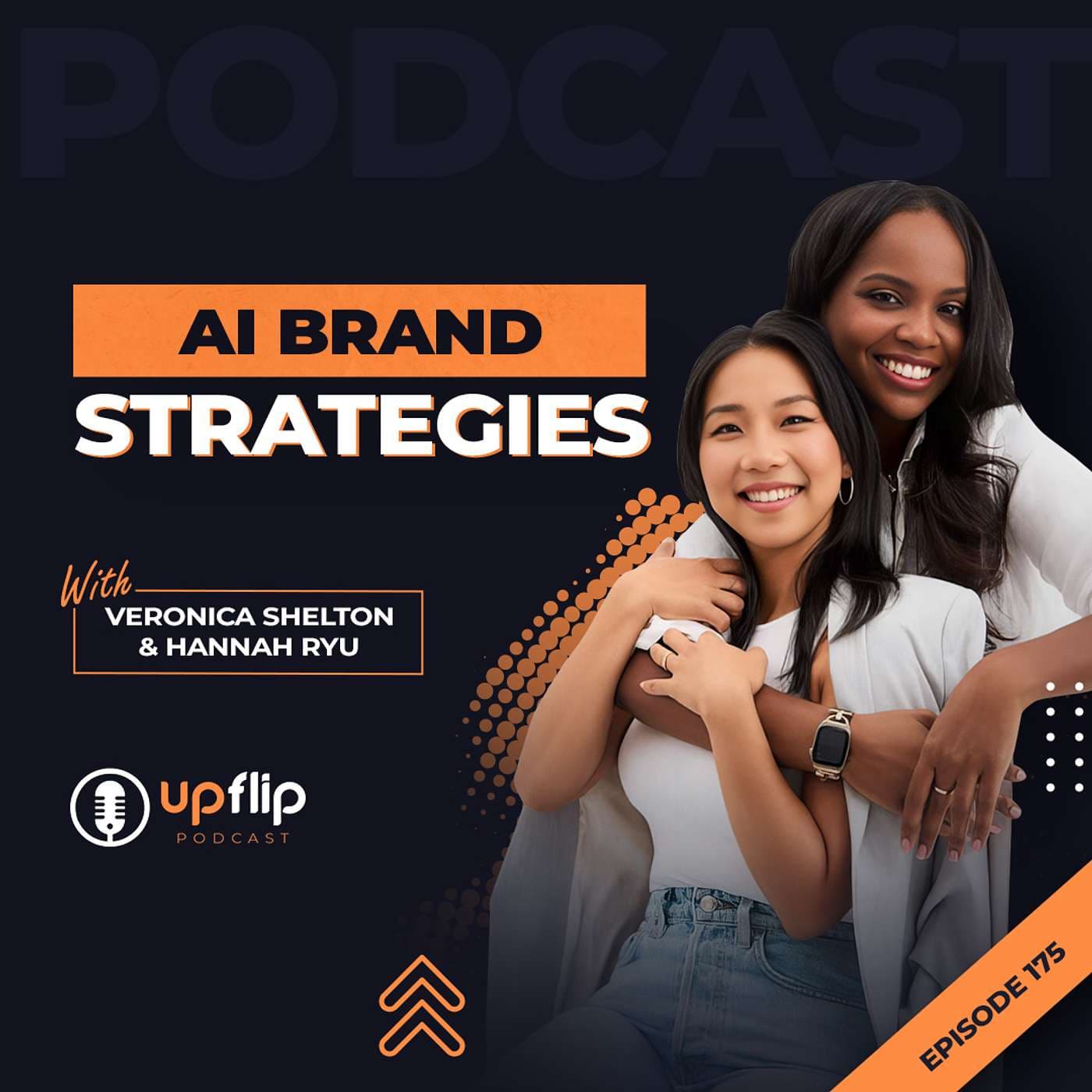
UpFlip Podcast Episode Notes: 175. Build Your Brand Using Free AI Tools (Here's How!)
Podcast Overview Podcast Title: The UpFlip Podcast Description: The UpFlip podcast explores how successful businesses are built and run, sharing practical insights and advice to inspire entrepreneurship.
Episode Summary In this episode, co-founders of Oak Theory, Veronica Shelton and Hannah Ryu, discuss their entrepreneurial journey and how they built a successful design studio specializing in branding, web design, and UX/UI. They emphasize the integration of AI tools in their processes to enhance branding strategies while maintaining a user-centric approach. The episode covers the significance of understanding customer behavior and effective brand-building strategies, particularly for startups.
Key Discussion Points
Entrepreneurship Journey
- Backgrounds of the Founders:
- Hannah was a product manager in an ad tech startup.
- Veronica was a product designer hired by Hannah, leading to their collaboration.
- Connection: Both founders connected over shared experiences as women of color in tech, which shaped their mission to support smaller businesses.
Understanding Branding and Design
- Business Description:
- Oak Theory is a full-service design studio focusing on web design, branding, and user experience.
- They work with both startups and established organizations to create impactful brands.
- UI vs. UX:
- UI (User Interface): The visual elements of a product.
- UX (User Experience): The overall experience and emotions a user has while interacting with a product.
Use of AI in Branding
- AI Integration:
- AI tools are utilized for:
- Initial market research
- Streamlining repetitive tasks
- Enhancing efficiency while retaining a human touch in design.
- Client Interaction:
- AI assists in capturing client voice and preferences through structured prompts and research methods.
Cost-Effective Branding Strategies for Startups
- Strategies Discussed:
- Focus on understanding your target audience and differentiators.
- Start with a simple landing page instead of a comprehensive brand book.
- Utilize affordable design tools (e.g., Figma, Canva, Webflow) to establish an online presence.
Key Takeaways
- Entrepreneurial Challenges: The journey of entrepreneurship involves tackling various challenges and seizing learning opportunities.
- AI as a Game Changer: Businesses should leverage AI tools for efficient branding and design processes.
- Understanding Your Customer: Grasping customer behavior and preferences is vital for crafting impactful branding strategies.
- Effective Partnerships: Strong communication and gratitude are essential for maintaining successful partnerships.
- Investing in Team Development: Hiring experts and investing in team growth is critical for business success.
Resources
- Start Your Business Today: [Link](https://bit.ly/4bdud7U)
- Connect with Veronica & Hannah: [Oak Theory](https://oaktheory.co/)
- Franchise Guide: [Link](https://bit.ly/4aWuGvc)
Connect with UpFlip
- [YouTube](https://www.youtube.com/@TheUpFlipPodcast/)
- [Instagram](https://www.instagram.com/upflip/)
- [Facebook](https://www.facebook.com/upflipofficial)
- [Twitter](https://twitter.com/upflipofficial)
Closing Remarks The episode highlights the importance of AI in modern branding while reinforcing the value of understanding the customer experience. Entrepreneurs are encouraged to take actionable steps towards building their brands with available resources and tools.
Written by AI. May contain mistakes. Listen to the episode to check what was said.
Transcript
Automatic transcript. May contain errors.0:00If you're starting a business in 2025, AI isn't just a nice to have, it's a game changer. Whether you're launching something new or looking for an edge over the competition, AI can help you work smarter, market better, and wow your customers without the stress. This is Ryan Atkinson and you're listening to the Helpful Podcast, where we uncover the secrets of building and running successful businesses. Today, we've got Veronica Shelton and Hannah Rue, the brains behind Oak Theory, a design studio that knows exactly what customers want and how to deliver it. They'll break down how to build a band people actually connect with and how AI can make the whole process easier.
0:34From fine tuning your message to speeding up your workflow, this episode is packed with simple, smart ways to stand out and succeed. Veronica and Hannah, thank you both so much for being here. So, so excited to have you. Thanks for having us. Happy to be here. Yes. Let's talk a little bit more about deciding to go into business together. Hannah, we'll have you start and then Veronica will have you follow. Hannah, what were you doing before and how did you guys meet? Let's get your guys' orange store in here. Sounds good. So I was a product manager at an advertising tech startup in New York before we started this company.
1:04And Veronica and I worked together briefly. She came in as, I knew their product designer. So I hired her for that role and we worked together on a platform product. And at the time I was managing over software engineers, customers, just the things that you do as a product manager. And when V and I started working together, like my first thought as we were on our first call was, hmm, this is going to be definitely more than just a momentary, you know, employee, the working relationship. So that's how we first met. But I always had it in the back of my mind that I felt like we had a connection and kind of the lingo and just the way we work together, that was really different from the way I worked with anyone else.
1:51And also happened to be the fact that we just look very different from everyone else around us. And so not just being like, you know we're both people of color but also being women in a tech industry we set out naturally because of that so that's how we first met veronica i'd love to hear from your end like when you first met hannah like was there that similar feeling of like this might be something more than just like a working relationship it could actually go deeper than that yeah for sure exactly what she said is it i think we've told this story so many times that we can't get it wrong but yeah on my end it was very similar i was seeing her in this space and being so impressed with how she was handling it because it was a team of all men.
2:31And so when I came in, it was like her and the boys and then me coming in and we were just the girls. And there was a bond that happened because of it. And not to toot anyone's horn, but feeling really smart in this space, in a tech space, like knowing what we're doing, having a grasp of the product we were working on and having clear ways of communicating with each other that just felt like, wow, we're really getting this done. It was great. So it was meant to be. Yes, I absolutely love that. And you guys are now building Oak Theory. And I want to get in your guys' own words. How would you guys describe Oak Theory to someone that's just first hearing about what you guys do and who you are?
3:08I would say we're a full-service studio. We specialize in web design, branding, all the way to design and development. We work on a plethora of projects in multiple industries. We are very inclusive with the way we hire, the way we work on projects, how we look at projects. It's a big part of our culture. We started off as a product design studio. So just our core was UX and UI design. And over time, of course, we've expanded as an agency. So we offer a full suite like we talked about. So everything from, you know, we have a lot of projects where we're helping startups with branding their first kind of go to market brand that includes visuals, logo, brand strategy, positioning the market to working with more established organizations who are trying to create consistency across their departments.
4:02So that includes creating design pattern libraries, making sure their UI is consistent across the board. So we have many different offerings, but the center of it, I think this is a very commonly used phrase, but very user-centric. We do a lot of research to make sure that our designs resonate with the target audience. And that goes all the way from branding to product design and development. Interesting. Let's talk about that UI and UX piece. For someone that's listening, they might just be like, oh, I've heard those terms, but I really don't know what they mean. So how would you guys describe UI or UX to our audience?
4:36So UI and UX are two different things that work really well together. With UX, you have the user experience, which is how a person experiences something. And with UI, you have the user interface, which is what that looks like. And so an example would be a phone or let's even say Instagram. you have Instagram and you can see it. You can see the little tap. When you tap, you have a heart. All of those things are UI. That's the interface. But the feeling of you tapping a heart and liking that feeling and it being positive and seeing it float, that's the UX. And so a lot of times in building out a product, it's not just about how it looks, it's how it feels.
5:15And so we specialize in both. We wanna make sure that what you're looking at, what you're feeling come together like nicely. How have you guys been able to help clients build a stronger brand identity? and where do AI tools come into play during that? AI is everywhere. It's becoming air. And so we like to use it any way we can. And it's definitely come in with initial research, right? When clients come to us and we need like to first understand maybe a new industry that we're tapping into. We're able to do that really quickly now with AI by asking the right questions and using the right prompts.
5:47With our team alone, we like to make sure that we have prompts that we use for just different tasks that might come up and be repetitive. And so we have that as well. As far as like actually helping brands evolve, now with 4.0, we can do actual research that's a little bit more live, right? And so it's like, we need to do competitive research on something that doesn't feel dated, or doesn't feel like it's just being pulled from like the first link in Google. So we do use it for things like that. Do you use AI externally as well? I know there's sometimes a debate within my company where it's like, we don't really use AI through our video process, because it's like not there yet.
6:24Maybe in five years it will be, but in our opinion, it's just not there yet. But internally, we are trying to leverage AI. So I'd be curious, what's your percentage of AI that is used for actual client-facing projects versus just like internally? I would say we really use it as more of like kind of like the calculator, like as a tool to help us be more efficient and cut down time. So like, for example, we still have a copywriter that leads projects on tone of voice, really getting and understanding the client. We could do that with AI, but we still need a facilitator, someone who is strategizing, taking them more context.
7:01But we will use chat GPT, for example, to prompt the GPT with kind of, you know, what we've learned, heard from the client to help consolidate or summarize for easier like presentation handover. So we'll use it as a tool. We definitely, I think there's so much opportunity with creating different, like our own personal GPTs by client even to help them. Like we have accounts and clients that are with us for months and or like a year. And so like building out profiles for each client so that between our sales team to the creative team, to the copywriter, like we're all kind of utilizing the same GPT to be responsive to that client.
7:43So I think that's the big opportunity of just like communication, streamline workflow. So I would say, yeah, we've been using it. We use MidJourney. We use a lot of tools to help inspire, but it would never be like copy and paste. I don't think that's not the best use case, but that's the route it's gonna go. It's just gonna make us faster and have like leaner teams, to be honest, to be able to get the same work done. Want to launch your first business with confidence? Start with a 10-day free trial of the UpWhip Academy. The UpWhip Academy provides unlimited access to 11 plus courses created by seven figure entrepreneurs who walk you through exactly how they built their businesses from the ground up.
8:21They'll show you what to do every step of the way so you can grow fast and avoid the common pitfalls that keep most entrepreneurs stuck. This is as close as you can get to guaranteeing business success. So if you're serious about launching with confidence, start your free trial of the Elphab Academy today by clicking the link in the show notes below. How are you guys like training your AI when it comes specifically to like getting that client voice right? I just wanna have our audience in mind Like if I'm going to use ChatGPT to build out some of these workflows, I need to actually train this thing.
8:50So can you guys talk about those prompts that you are using to use that? For sure. I think it varies. Every one of us has a different language and tone when we're talking to ours. Mine is like my best friend. Like I talk to it very specifically. A lot of us understand how to make our own ChatGPTs and to train it. But if we don't, it's like you go to ChatGPT, you go to that option to make your own and then it asks you the questions to train. with certain clients because we have our onboarding experiences at workshops we can use those to kind of like get a tone of who our client is we ask them questions about who they are who their competitors are what they like what they want to sound like and that gives us a great idea to just paste in our information so if it's a client that we have that let's say they're working in i don't know e-com and they're a store we are able to say okay what stores are you similar to And right there we have like maybe three examples of tones that we can bring in and like examples of like And then let's say we're like, okay, who do you want to sound like?
9:48So we can do celebrities that you would say would be your spokesman your mascot who would be your mascot, right? That gives us a voice and then thinking about the audience So then when we do audience research on who your audience is Then we're able to grab the information from that because we don't have to research that as much anymore It's more like we can pull information on the audiences already that's out there and say, okay So this is how they like to be talked to And so we pull all that information into our GPT and moving from there, we can ask recommendations on color palettes, on what moods should be evoked, what moods need to be bought into their brand, even what shapes, right?
10:26What shapes resonate, what product types resonate, what price points are going to work. There's so much that you can pull once you have that information. now. Yeah. And that's actually going to lead me to what I really want to ask next based off of that is building a brand. Businesses need to start basically from day one of how are we going to build a brand identity that resonates with their audience that people can identify that people love. Can you share how someone at the beginning stages of starting a business can use AI tools to create a brand identity? Let's talk about that more in depth and what research will they need to do before they actually build a brand identity?
10:59I would say for... Yeah. I mean, we tell this to who are friends who are starting out or like if you're starting a project on the side or starting a startup where you don't have a lot of resources that doesn't make sense to engage with an agency like ours to create a brand definitely understanding there's like a couple of components that like v just mentioned understanding your audience is you want to get that pat down like you could ask your chat gpt but like you know your market you know your audience who you're trying to reach your differentiator. And so I would say even like you could utilize Chachi Beauty to help you.
11:33It's like, hey, you're a brand strategist at a big agency. Like how would you guide me in coming up with my first go to market brand and have it ask you questions to help answer. And so training, using it more as an expertise instead of just a search tool. So that's one way. I think an important part of using AI is giving it as much context and information as possible to have like the colors to paint with. And so tone of voice examples from, you know, competitors or inspo websites that you love, or like give it a reason for why you love certain colors or logo. And so it understands the logic and thought behind your input versus just giving it the input and, you know, hoping that it catches.
12:16And so I think it's like any like person or communication that we do this with our clients when we're doing strategy workshops with them, we'll dig into a lot of like the deeper whys. What are they not telling us, but trying to tell us? And how do you ask the hard questions to get there? And so we'll do that with ChatGPT as well to help us making sure that we're tapping into the third layer, the deep questions instead of just keeping it on the surface level. You talked about it in there a little bit. But what I really like to do when I'm using a ChatGPT or AI is pretend you're a CEO at a company or something.
12:53How would you approach this problem? Because I feel like that's actually like training the AI to like, think about how you should be approaching this problem. Yeah, exactly. Or like asking it, like, what am I not thinking about? What are like outlying instances that we should know about? Or just, you know, like your consultant at McKinsey with this information in 2024? What kind of questions would you ask? Yeah, that's really, really good. I'm gonna actually start using that as well. But other questions we should be asking as well is understanding customer behavior. That's something that's obviously super important when you are defining that ICP.
13:25So how do you guys approach defining customer behavior and how can you leverage AI for that? So the way we currently do it, I think AI is great. I think the nuance of what you get from actual customer research through interviews or more quantitative research like surveys that you get is really invaluable. So with some of our projects, if the budget and time allows, we'll do UX research. And so part of that is understanding their target audience, whether they have them in-house, or we have to create lookalikes using different UX tools to get access to the target user. but we'll do like 45 minute interviews to really understand their psyche, understand their situation.
14:08I think, you know, AI could help us with the questions and pulling it together, but there's something to like a human asking and making the emotional connection to understand like people's motivations, their fears and their understanding of like, you know, a website or a tool or brand to gather that information at our agency and our studio. We do a lot of UX research and it's super valuable for us to make good design decisions based on the research output that we get. And it's like gold, because we know that we could go back to the same folks and we'll test like what we put together, like, hey, like, based on, you know, our research and what you gave us the feedback for, how do these like visuals resonate with you?
14:51Like, do we get it? Or do we miss the mark? So I think having that in person research is super valuable. Yeah, the tools that we use for those already kind of do have that AI element or some of them, a lot of them are getting it right. Like with our website, even audits, we do this with all of our clients where it's like part of the package of working with us is afterwards. It's not just about great. You have a site up good for you, but it's like, how is this performing? And so we use tools like Hotjar, right? And so it allows us our interviews to be even more in depth. And so it's like, we're seeing heat maps.
15:22We're seeing like what clients are looking at, how far they're scrolling and that data is all together. And so we can use that even for more research. But there's so much value in that where it feels a bit more manual because it's collecting data for our clients specifically, but it still uses these other elements of AI that are coming in that we don't have to worry about because it's already there. I really, really like that part. And talking to customers is like the most beneficial way to actually get like feedback from them. I was just telling Hannah before you hopped on Veronica is like we had our Q4 planning session yesterday.
15:54And then one thing that I was trying to hammer home is like, after every two or three videos, like we are going to talk to our customers to see like what they want. Can you give us like two or three questions you guys will always ask someone when you are doing this customer behavior like research? It definitely varies. The biggest thing that we want to take away is what are the goods and the bads. And I like to always go in where it's like, a lot of times people go in, what did you like? What did you like? Why? And it's like, what did you like? What did you hate? What made you uncomfortable? What did it feel as easy?
16:23And sometimes they'll be like, well, I like this experience. And they'll be like, well, how can we make it better though? What did you like about it? It's because it felt familiar. Okay, that's great. So some clients, it's great when things feel familiar. If it's a store, we don't want to recreate the wheel sometimes. We want them to take an item, put it in the cart and buy it. But then there's products where it's so familiar that there's no room. We need to add something. We need to evolve. And that's where we can grow where it's like, well, why did you like it? Because it's familiar. What is it familiar with?
16:53how can we make it better? What would make it better? What did you not like about it? I think those questions, when you dig deeper into those on mood that was evoked, how long it took, looking at the maps on going back, being like, okay, you said that this was a great experience, but it looks like it took you 0.7 seconds longer than it did to do something else. And those kinds of things, I think, come together to help with more like products, on evolving products, on being like, no, we're no longer going to have tap the heart to like something, we're going to add a double tap to make it better.
17:27That's that experience. I would like, I like to ask like, what question do you wish we had asked? Or like, what do we have? Totally. Like, because there's always like, I think people and this goes for user interviews, but also sales, it's really big. Like, hey, like, what's something that we didn't ask that, you know, for you, it's really important that we ask and align on. So I think that's always is a good question. Oh, and when we're working with teams, so let's say we have the questionnaire for the customer and the client. And usually we like to do the customer first or even with colleges, right?
18:03It's like we like to do different groups because sometimes those questions that will be answered when you ask the client those questions, they'll be completely different. And it's really great when you come back with being like, it seems like you like this a lot, but your audience doesn't. So let's dig into that, right? Are you making these decisions? A lot of clients, they'll make decisions. We're like, I want bright purple for my look, and I want big buttons. And it's like, do you want that? Or does your client want that? What I really like about that, Veronica, it's not like what you want. It always ties back to what does your customer want?
18:34Because that is ultimately who your end user is and who's actually going to provide that revenue for you. What do they want? I also want to talk about those entrepreneurs that are listening right now that are thinking, okay, this all sounds really, really great, but I need some cost-effective ways to build my brand. Can you talk to us about what are some cost-effective branding strategies for a new business on a budget? What has worked well for your clients? Knowing what your goals are and then kind of having a streamlined path for that, like maybe top three goals, and then narrowing those down to how you're going to achieve those rather than having this all-encompassing, this is who I want to be looking at, like the big picture of, oh, this company, that's exactly who I need to be right now.
19:15And it's like, no, no, no, no, no. But what's your goal? Speaking of that would be a company like, let's say it's women-owned, right? And they want to be the biggest women-owned shoe store. You don't want to be the biggest shoe store yet. You want to be the biggest women-owned shoe store first because you're niching down because then you're going to talk to probably a group of people that would resonate better and might make it easier to market yourself. And I think sometimes clients will come in and they'll just be like, no, I want to be DSW. Yeah. I want you to be DSW too. So we can get you that budget, baby.
19:46But we need to get you as much growth as possible in a little bit amount of time that they probably want to have. That's the biggest problem that we have. I think we all go through it. It's like the ideal state versus having the MVP. If you talk product conversation, just like getting started and getting feedback, we'll have people come to us like startups and they want a whole brand book. And we're like, for what? Like, what do you need a brand book for? Why don't you start with a landing page with the colors that you're curious about and then see how that resonates? Like, I think it's just like anything.
20:18Start it and then you'll get feedback and you can iterate on it and evolve it. You don't have to get it perfect. People don't even know you exist. Like, so what's their risk, right? And so I think... Yeah. And who are you talking to? And we do this all the time internally too. We'll create a new product line or we'll create like a new service. And we could wait till it's perfect, but we're like, let's just do it in two weeks and push it out and figure out how to make it better. I think that's the practice. Because then it's like, let's figure out who your audience is, because like new brands always come in with that where they're like, they know exactly who they want to talk to.
20:52And it's like, do you? Because once we launched that landing page, you're seeing that you're attracting a completely different audience than you thought you would. I want to talk about going off of like landing pages and other things to consider. What are some design tools that a new entrepreneur should consider using for their website or marketing collateral at the very ground zero roots level? What should they consider using? We're a Figma-based studio. So if you're doing the design side Figma with websites, it varies. There's so many opportunities. Again, it's knowing what your goal is. If you want to get something up as quick as possible, there are site builders, right?
21:27Site builders include things like Webflow, Squarespace still exists, things like that. And then if you're e-comm, you would go to the industry standard, which is Shopify. And there's plenty of studios like ours who can customize that experience and make it better. But those are your starts. CMS, if you want something where you know you have a team that has to go in and make edits, you want a CMS tool, SiteBuilder or CMS. CMS would be WordPress. If you're dated, like universities, usually big corporations, you'd probably use Juul or Drupal. We don't recommend it. There's so many other new things out there with higher budgets.
22:02But starting off, Those would be like the top industry standard tools to use or making a website and designing it. Then there's the other side of marketing. I know there's like a lot of like new AI website. I was playing with one last week where it's like you put in your industry, your colors, blah, blah, blah, and like craft up the website for you in like a couple of seconds. I think they're good to like as brainstorm sessions. I think for us, like we work with companies for more complex like sitemap content. It's like bigger, like more complex stakeholder. type of interfaces. But yeah, there's so many tools to just get started.
22:38I think the lack of tool isn't like the issue. I think it's typically with entrepreneurs, it's just getting started and like pulling through. And then there's Canva. I think Canva is great for marketing, for easy graphics. There's like even Etsy where you could go get templates to... Adobe Express, which they're pulling now. As entrepreneurs, the best way is to support others, right? And so if you're an entrepreneur and you're looking for something specific, take your butt on Product Hunt. Go find these tools that these people, everyone's creating right now. And that's how we found most of ours.
23:08Like Figma used to be on Product Hunt, you know, and you get in there early because you're like, wow, this is a tool that does exactly what I need. Like, go to Product Hunt, type in just the industry you're in, and you'd be surprised how many solutions are already being created for you. Entrepreneurship kind of reading between the lines, like isn't always for everyone, One, like it does take a huge emotional toll on you. The only reason I don't fall asleep at night is because I'm thinking of space bar visuals, but there is some habits that you can do to kind of lead to success. So what's something that you guys do on like a daily basis that kind of helps you guys that leads to your success?
23:43Communicate, but that's if you have a business partner. With us, it's communication for sure. I don't know. We're at a point where it's like with the business, a lot of it is running itself. we do handle a lot when it comes to like the financials and things like that we try to keep each other on track and and it definitely keeps me on track i would say definitely like a lot of gratitude that's like a big part of like our partnership is we could create like a psychological culture that could be very scarcity mindset or abundant mindset as they say and so v and i in whatever challenges we're going through because they change so much like at different phases of the business, we always try to take a moment and say like, how grateful should we be?
Read the full transcript
24:28Good problems. Good problems. We're going through this type of problem and not that type of problem. Because I think you're never going to get away from problems. Like the more revenue, there's like more problems. There's bigger issues. And so like, it's just always reminding ourselves that we're grateful that we chose this journey. We don't have to be forced into it. And we have other options if we want to. And so it's like looking at it from more like we deserve it to we get to experience this journey together. Yeah, that is true. Gratitude is huge. And keeping our egos in check. Or we get a check.
25:03So regardless, like God or higher being is like, oh, you think you're all that? We get a check all the time. That's really good. Well, I can say confidently you're getting a check from me that this has been a great interview. And I want to wind us down with our Fan Blitz questions. And these are five questions submitted from our community. Listeners, if you want to learn from world-class entrepreneurs, ask these questions, go to www.youtube.com slash upflip and submit your questions there. But Veronica and Hannah, ready for these last five questions here? Let's do it. Perfect. Number one, we'll have both of you answer these.
25:31Number one, what values are non-negotiable for you? For me, it's just getting done. Like not being so like specific about who and what, just being very goal-focused and getting stuff done. I like people on our team who just need to get it done. I think values would be honesty Like with teams sometimes it's good for them to honestly let us know i'm very quick to be like can you do it? Or can't you don't feel ashamed in this moment? I need to know if you can do this or if you can't because then I can create a solution for you But if you don't tell me we end up bottlenecking You know, so I think that's one big thing that I push and then being able to manage egos Or handle your ego.
26:12I think that's another thing that is important because we work in an industry where we're very service-based and it's the client that's important and it can't always be about us. I really like that. Now at this stage of success, what advice would you give to your teenage self? Mine would be to be okay feeling a little different, not being amazing with textbooks in school, but just always kind of ideating. Invest sooner. That's a good one. Understand, yeah, understand investments, period. Understand investing in your clients, what sweat equity is, all of those little things. Understand those sooner.
26:50Would be what I would tell my teenage. I really like that one. Number three, how would you feel about hiring someone who knows more than you? Always. I want everyone to know more than me. I never want anyone on the team who makes me feel like I know more than that. Same. Please teach us. Come in and make our company better. We're past that point. No. We don't want interns. We train. Like even with our team, we offer educational opportunities and training for them because we're like, we want you to grow with us. And that's something with most businesses. Yeah. Like when you have a team and they're attached to you, that's your legacy that you're building.
27:29All of your employees are your legacy. If you have a bunch of employees who go and they become worse or they go into companies doing horrible, that looks bad on you. But when anyone leaves our company, and if they do, they leave better always. And we love that. I really like that tidbit there. Number four, if you could have anyone in the world endorse your business, who would it be and why? Whoever's the most popular and powerful at the moment, I really don't care. I'm sorry. It's the truth. Whoever brings in the most clients at the time. I'm a businesswoman. I like Mark Cuban. I just like his like persona.
28:07There we go. I like how he does business. Let's do it. Cuban is a stud. I love Cuban. Last one for you here then. Can you tell us about your most bizarre business encounter? Mine is a client asking for my manager. I've had that before as well. Have you? Yeah. I have, yeah. I dealt with it too. And it was the most funniest moment. But yeah, that would be the weirdest. I got mine through an email. Like, is there someone else I can like speak with or something? I don't think so. It's okay. But Hannah, what about you? Mine was getting asked. It was the same thing. A client asking me if I could jump in on something that he was handling.
28:52And I'm like, we're partners. What she said with what I say. Yeah. She didn't like hearing no. Yeah. I like that. That is awesome. Well, thank you so much for joining us today. Someone's like, oh my gosh, I need to check them out and learn more about them. Where can they connect with both of you and learn a little bit more about you? We are online. So www.oaktheory.co. You can follow us on all socials at oaktheory.co or just email us at hello at oaktheory.co. Everyone, that was an amazing episode with Hannah and Veronica. Three quick takeaways. Number one, what is your end goal? When you are planning a brand, what is that end goal that you're trying to take your consumers through?
29:31Think about that and you can build a brand off of that Number two build a company that you love to lead They talked about it that they're hiring to delegate if they don't know something they're going to delegate They're going to hire They want to build a company that in 10 years that they travel if they have kids that they love and that it sustains So definitely build a company that you love to lead number three. I love veronica's tip your business partner is key We've had a lot of solopreneurs on this podcast and this was a little bit of a contrarian take here that a business partner is key for success.
30:03A lot of it just comes down to asking yourselves those questions. Can I lead this thing by myself? Where are some of my weaknesses and being honest with yourself? So absolutely love that tidbit from Veronica. And if you enjoyed this episode, check out episode 97, where we talk with Joe Papalas about how he went from zero to$1 million with AI generated books. The link is in the show notes below. Thank you both so, so much for being here. Appreciate the interview today. Yes. Thank you. Thank you.
From the publisher
Veronica Shelton and Hannah Ryu, the co-founders of Oak Theory, shared their inspiring journey in entrepreneurship, building a multi-million dollar design studio that specializes in branding, web design, and UX/UI. As women of color in the tech industry, they turned their shared experiences into a mission to level the playing field for smaller businesses, helping them create impactful and memorable brands.
By integrating AI tools into their workflows, Oak Theory has revolutionized how businesses approach branding and design, ensuring a user-centric focus that resonates with target audiences. Veronica and Hannah highlighted the importance of understanding customer behavior and conducting in-depth research to craft strategies that drive business growth. They also emphasized balancing AI efficiency with a human touch, ensuring that every design decision aligns with the client’s vision and audience needs.
Key Takeaways
- The journey of entrepreneurship is filled with challenges and learning opportunities.
- AI tools can significantly enhance branding and design processes.
- Understanding customer behavior is crucial for effective branding.
- Startups should focus on cost-effective strategies to build their brand identity.
- Daily gratitude and communication are key to a successful partnership.
- It's important to hire experts who know more than you in specific areas.
- Investing in your team and their growth is essential for business success.
- Building a brand identity requires deep understanding of your audience.
- Utilizing design tools like Figma and Canva can streamline the design process.
- Partnerships can provide support and diverse perspectives in business.
Resources:
- Start Your Business Today: https://bit.ly/4bdud7U
- Connect with Veronica & Hannah: https://oaktheory.co/
Ready to be your own boss without starting from scratch? Grab our FREE Franchise Guide and unlock the secrets of proven business models that have already created thousands of success stories.
Connect with UpFlip:
- On Youtube
- On Instagram
- On Facebook
- @UpFlipOfficial on Twitter
For more insights to start, build, or grow a business, check out the resources on UpFlip.com or head to the UpFlip YouTube channel to see more interviews with business owners and experts.
Thanks for listening!


