
In short
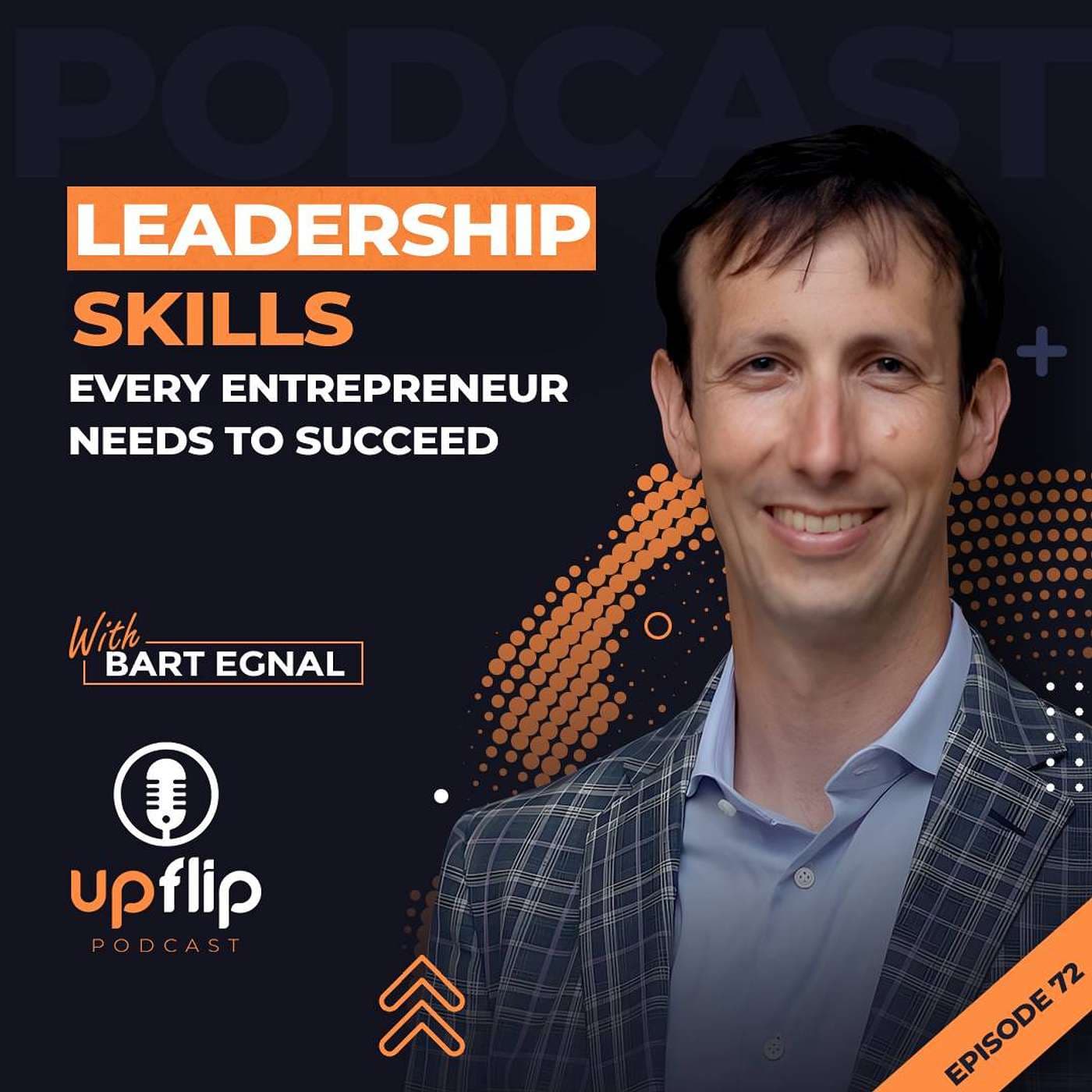
The UpFlip Podcast: Episode 72 Summary
Podcast Overview
- Title: The UpFlip Podcast
- Description: The UpFlip podcast explores how successful businesses are built and run, aiming to share practical insights and advice to rekindle the entrepreneurial spirit.
Episode Details
- Episode Title: Leadership Skills Every Entrepreneur Needs to Succeed
- Guest: Bart Egnal, CEO of The Humphrey Group
- Focus: Bart shares insights on effective leadership skills, including communication, inclusivity, and adaptability in today’s business landscape.
---
Key Themes and Insights
- The Importance of Leadership
- Current Landscape:
- There's an increasing demand for strong leadership as companies seek to develop future leaders.
- More resources are available for aspiring leaders than ever before.
- Defining Exceptional Leadership
- Core Quality:
- Effective leaders can inspire and move people to action.
- Leadership varies by role, but the essence lies in the ability to unite different stakeholders around a common vision.
- Characteristics of Ineffective Leaders
- Outdated Traits:
- Command-and-control mentality is less effective; authenticity and inclusivity are prioritized.
- Ineffective leaders often fail to bring their true selves to their roles, resulting in disconnection and distrust.
- The Role of Communication
- Critical Skill:
- Nothing gets done without communication; effective communication is vital in all business interactions.
- The frequency and nature of communication have intensified, creating both challenges and opportunities.
- Leadership Communication Do's and Don'ts
- Do's:
- Be intentional in your communication.
- Organize your thoughts before speaking or presenting.
- Transition from providing mere information to inspiring action.
- Don'ts:
- Avoid "show up and throw up" communication styles.
- Do not neglect preparation, even if you feel confident.
- Career Advancement for Young Professionals
- Advice for Aspiring Leaders:
- Deliver results early in your career to earn leadership opportunities.
- Communicate your aspirations for leadership to your superiors.
- Seek leadership experiences outside of your primary job for practice.
- Transitioning to Leadership
- Challenges:
- New leaders must navigate relationships with former peers and adapt to the expectations of their new roles.
- Leaders must prioritize company goals, even when they disagree with them.
- Identifying Leadership Style
- Self-Discovery:
- Leadership style is often innate and can be refined over time.
- Leaders should find alignment between their style and the organization's culture.
- Managing Feedback and Improvement
- Soliciting Feedback:
- Seek constructive feedback from colleagues and superiors regularly.
- Maintain openness to feedback and avoid defensiveness.
- Addressing Team Dynamics
- Dealing with Negativity:
- New leaders should assess the impact of negative individuals and consider their overall effect on team morale.
- If negativity persists without resolution, leaders may need to reassess their own positions.
---
Key Takeaways
- Leadership is about inspiring others and moving them to action.
- Effective communication and authenticity are vital in modern leadership roles.
- Young professionals have the opportunity to rise quickly in leadership positions due to high demand in the labor market.
- Continuous self-assessment and the willingness to adapt one's leadership style are crucial for success.
---
Resources Mentioned
- The Humphrey Group: [Website](https://www.thehumphreygroup.com)
- UpFlip Academy Course: [Course Link](https://bit.ly/4fBt5fB)
- Franchise Guide: [Download Here](https://bit.ly/4aWuGvc)
Conclusion Bart Egnal’s insights highlight that the landscape of leadership is shifting towards inclusivity and effective communication. For those aspiring to lead, investing time in developing these skills is essential for success in today’s business environment.
---
Thank you for tuning into this episode of The UpFlip Podcast! For more insights, visit [UpFlip.com](https://www.upflip.com) and subscribe to our channels on social media.
Written by AI. May contain mistakes. Listen to the episode to check what was said.
Transcript
Automatic transcript. May contain errors.0:00It's actually never been a more exciting time for someone who is keen to lead. I mean, companies are looking for leadership. They are keen to develop the next pipeline. They're investing in you. If you want to lead, like you've also never had more access to resources. So it's a great time for you to move into leadership. Since 1988, the Humphrey Group has helped entrepreneurs and businesses develop a more inclusive approach to leadership built around inspiring communication. 30 years later, they've worked with leaders in 20 countries and helped countless executives become inspiring leaders. I'm your host, Alex Freeman.
0:35And on today's episode, I'm talking to Bart Agnum, who's been with Humphrey Group since 2001. His decades of experience in leadership communication training have given him deep insights into what effective leadership development looks like in today's business landscape. And he's sharing those insights with our listeners in this interview. Bart, thanks so much for joining us. Thanks so much for having me, Alex. And I have to say, it's great to be on the other side of the mic. So often I'm the one doing the intro and recording for the Inspire podcast. I've really enjoyed this opportunity to sit in the other side of the chair.
1:05So thanks for having me. Yeah, absolutely. Enjoy the seat over there. To get us started, can you kind of just give us an overview of the Humphrey Group, what it does, and then how you came to be involved in the business? Sure. Yeah. And I think you set the stage well. The firm has been around since 1987. Always our focus has been on building the skills that sit at the intersection of leadership and communication. And what does that mean? It means whatever you do, if you want to be successful, you've got to move people, you've got to inspire them to act. And the way that you do that is through how you communicate your ideas.
1:37And so we think that's not a skill that's innate. It's something you can learn, develop and nurture. And we teach people how to do that. So that's today. The business still is at the core of what we did and what we do. The skills that we work on have broadened. We've also really gotten well-earned reputation in diversity, equity, inclusion space. And it's a business that spans North America. We work globally. there's about between our employees and contractors over 50 people involved and I'm proud to lead it. Incredible. So one of the terms that I think we're going to throw around a lot throughout this interview is along the lines of exceptional business leadership.
2:08Could you go ahead and offer us a definition of that and what that might look like in action to kind of frame the rest of our conversation? Well, I think you ask every guest on this podcast, what is exceptional business leadership? I'm sure you get a whole host of different answers, which probably why it's a great question to start with. So I should qualify that my expertise and the focus of the work that I do is a quality, I believe, is essential in leadership. And that is, can you move people? Can you inspire them to act? And so what does that look like in action? It's a wide range. If you're a sales leader, it's can you inspire your sales team to bring their best?
2:42If it's you're a CEO, can you unite a whole organization? People have very disparate priorities behind a vision. And if you're just starting your career, it's, hey, can you convince someone in an organization that an idea that you have is worth investing in or that position you want is one that they believe in you for? So I think whatever the role, leadership is that ability to move people and inspire them to believe in you and follow you. So that's where I'll put my stake in the ground. And I kind of want to take a look at the flip side of that. Bad leader is a clunky phrase, but what makes an ineffective leader and what do those qualities look like?
3:17Yeah, and I've been fortunate to be in the world of leadership development for over two decades. And my answers really change. I mean, when I started in 01, I started as a speech writer, I was writing for CEOs and then became a coach and built out training for organizations. I would say that the view of leadership, it was very clear what was good leadership and what was not. And good leadership was very much personified by someone like Jack Welch, you know, he ran GE for many years. At the time, he was perceived to be incredibly successful executive. History maybe shows that there was some manipulation of the results, but it was, frankly, it was a command and control, totally confident leader, always on, always corporate, gave the direction, never a doubt, you know, and it was also, by the way, I should say, usually a white man, a middle-aged or older white men.
4:02And I would say now the view of what effectiveness is, that is much less monolithic. I think we've come, particularly in the last five years, to a place where terms that are synonymous with ineffective are directive, are never wrong, are always on professionalism. And the flip side is we want people who are authentic, who are human, who represent a diversity of perspectives, who are inclusive. So I think bad increasingly is anyone who does not bring themselves, their authenticity and whatever perspective that they have to leadership and people reject that now. So I would say that if you're not being yourself, if you're separating who you are as a person from the work that you're doing, you're probably not going to be as effective as you need to be.
4:45One of the main things that the Humphrey group emphasizes is communication. Why is effective communication absolutely critical for a business leader? Well, this may sound obvious, but nothing gets done without communication. Nothing. Whatever business you're in, I know you have a wide range of audiences here, you will not be successful if you don't communicate. And whether that's verbal communication, whether that's written communication, whether it's the content you produce, nothing happens without communication. And I think, you know, that the imperative to communicate effectively has only intensified.
5:17You know, when I started, the cadence of communication was slow. Executives might give a town hall once a quarter. There might be a letter that went out. You know, then email kind of started percolating. But today, I mean, the frequency is just on overdrive. The clients we work with, it's, okay, I have a town hall, then I have meetings all day, then I have to be on Slack, then I have to produce content, then I'm on a podcast. The number of interactions for people at all level presents both a great stress and an opportunity like never before. So nothing gets done through communication and it's become even more critical that you're good at it.
5:50Are there any easy do's and don'ts of leadership communication that you could run us through? Sure. Just take all of our courses and it'll be... Yeah, that's it. You'll be sick. No, I mean, I think, look, do's and don'ts. Rather than kind of giving you a few prescriptive points, I think it's best to think in terms of a couple principles. And I think the first thing I would say when people come to work with us, the first thing that we emphasize is you need to be intentional about your communication. And what I mean by that is most people just show up, you know, the worst is show up and throw up.
6:22You know, you go to a meeting and just talk. But even when people think about, oh, yeah, I'm going to talk about this topic, you really need to shift to saying, all right, what role as a leader will influence and leadership play in my success? And how does communication be a part of that? So I think that's the first thing you have to do. I think the second thing you have to do is you really do have to put time in to organizing your thinking ahead of communication. You listen to people who sound great and you're like, oh, they're naturals. They're naturals. Well, they probably work unnaturally hard to get clarity of thinking so that they sound natural.
6:59And I'm honest with my clients because they're incredibly busy. I was coaching a CFO the other day and literally he has two 90 minute windows a week where he's not scheduled. And I said to him, look, you're not going to prepare for every meeting because not every meeting is of the same relevance. But each week I want you to set aside just 30 minutes. I want you to identify the most significant impact, audience and opportunity that you have. And I want you to get your thinking straight on it so that when you're in the moment, you can be as effective as possible. So that's the second point. And I'll give you one last one, which is you want to think about when you prepare that communication, moving from what I'd call information to inspiration.
7:34And what I mean by that is most people communicate content. They communicate expertise and knowledge about a topic, particularly as they're starting their careers, where they're establishing themselves as credible subject matter experts. And then they begin to move up. And success is no longer about what you know. It's about your ability to synthesize and articulate ideas that are clear and move people to action. And so you need to be thinking about preparing your communication, not in terms of what you want to talk about, but the ideas that you believe in that you want the audience to have. So those are my three principles for making an impact on your communication.
8:04I want to focus in a little bit on that person you just mentioned. That's a person who's sort of at the beginning of their career. For the young professional who wants to move into those leadership positions, what are the best ways for them to get started proving themselves as an effective leader and to start moving into those opportunities as they present themselves? Yeah, I think we're in a time now where it's never been a better time in some respects to be an early career professional because advancement is quicker. We're in one of the tightest labor markets I've ever seen. We know labor mobility has never been higher.
8:35And so the top three concerns of CEOs now are attracting talent, retaining talent, and preparing for demographic shifts. Number four is digital transformation. Number five is a recession. So what that means is if you're a strong performer, you have the opportunity to move into leadership earlier than you probably ever have. So how do you do that? Well, first, you got to deliver results. You have to earn the right. Put aside communication. Earning the right to be considered for leadership starts with delivering results. And early in your career, you're just going to have to put the work in. I mean, every industry, I work across all industries, you have hard work and expertise built up.
9:10I'm thinking of people in their first five to seven years in the company. But once you're doing that, once you've kind of met that bar, I think the second thing is to articulate to your people in leadership that you are keen to move into leadership. And that may sound obvious, but I can't tell you how many times executives will kind of say, oh, this person left. And I said, well, when you did the exit interview, what did you learn? I learned she wanted a leadership role. She never told me. She never told me. And had we known, we would have given her stretch opportunity. So a lot of times people wait to be recognized and they grow frustrated.
9:42So you need to be articulating within the organization that you want to move into leadership. And then the last thing is find ways to practice leadership outside of work. Because I'm never going to build the Humphrey Group and, you know, bring people in. Eventually, I was fortunate to do that and grow the company. But I didn't anticipate the realities of what leading people meant. But I kind of anticipated some of the exciting things, but really the redefinition of the relationship between you and people you lead. You go from having peers, you go from having people who you're kind of working together with to you have to sit in between the organization and your people and balance helping them perform with meeting the needs of the organization.
10:20And so if you can find a place outside of work where you can practice leadership in a low stakes environment, so volunteering on the charity board, being part of a community group, being part of organizing an event, you know, something like that where you can practice leadership. That will just give you a valuable, safe space for when you actually have to do it in the workplace. How do leaders of Fortune 500 companies plan and run their businesses? Libby Gill has served as a leadership consultant for iconic brands like Disney and Marriott, and she shared her billion-dollar leadership insights in episode 14 of our podcast.
10:54Make sure you go check that one out as well. Bart, we were just talking about that kind of transition into leadership, and that transition can be particularly challenging when it's been a promotion within. So somebody goes from being a part of the team to being the manager of the team. What advice do you have for navigating that transition? It's a really tough transition. I mean, I think a lot of times someone who's in a team, they'll say, oh, I was in charge. I could do X, Y, Z. And, you know, their colleagues say, oh, if you were in charge, you could fix this and that. I remember that happening.
11:24I was anticipating it was kind of a two-year transition from when I was running our Western Canadian operations to when I took over as the owner and CEO in 2014. team. And I faced that same thing where it was like, oh, you'll make this happen. You'll make that happen. You kind of anticipate this. And then reality hits. And I think a couple of things that will hit home for you. First is you really do have to create some distance between yourself and your former co-workers because you are not their peer anymore. And no matter what relationships you've had, you know, if you hang out with them outside of work, if you share things with them about colleagues, if you gossip when times are tough, that all just has to come to an end because you have redefined the relationship.
11:59You've gone from a military analogy, you've gone from enlisted to officer. And there's a reason there's a non-fraternization policy. So I think that's the first thing. I think the second thing is you have to recognize when you're in a leadership role, your priority is to support the goals of the company. And sometimes the tough part about that is you may not agree. In fact, if you're in leadership long enough, like a couple months, at some point you're not going to agree. And so a lot of the work we do with clients who are new to leadership is helping them reframe their identity. Like what does it mean to be a leader and how do you still preserve your authenticity?
12:28And then how do you deliver messages that sometimes are tough to deliver. You know, like I remember one time we were working with a person who was told there's a restructuring and they had to fire or lay off a large part of their team. And this person came in for the coaching and said, I'm going to tell them I'm totally against this decision. I think this is BS and they're getting screwed. So I let that sit there for a moment. I said, well, okay, so when are you resigning? And he looked at me and he goes, well, what do you mean? I'm like, oh, you don't support the decision. So I'm assuming you're resigning.
12:56He said, no, I'm not resigning. Well, either you support this decision because you're choosing to stay or you resign. You can't have it both ways. And so I think, you know, when you think about being in leadership, it is change. And the last piece I'll say is you really have to reflect on if you want it. It's unfortunate in the corporate world and government to a lesser extent that often advancement and more financial remuneration and growth comes only with beginning to manage people. There are some progressive organizations, I think, that are separating that track, but it's not always the more satisfying.
13:25It's kind of like it's unpleasant And often it may be more rewarding in the long run, but you've really got to ask yourself if it's a shift in the role and the relationships that you have that you really want. You've talked a lot about authenticity and leadership. How does somebody identify what leadership style best suits themselves and their team that they're trying to lead? And the follow-up question to that, I'll just give it to you now, is what if that's not necessarily 100 % who are naturally authentically? Yeah, well, you know, let's take the second question. What if your style is not the one that works for the team or for the company?
14:02That's another one, you know, because companies have cultures and your style may not work in the culture, even if it works for the team or it may work in the culture, but not for the team. And in my experience, first thing I'll say is once you know what your style is, you can flex here and there for specific interactions, but you're probably not going to change your style. And so early career in some ways is about trying and early might not mean in your 20s. It might mean if you enter the corporate world later in life or you enter leadership, it might take you five, 10 years to figure it out. But once you know it, it's like you're not for everyone.
14:32And if you find that there's a significant mismatch between what kind of leader you are, your values and the company, you probably need to leave because it will be painful to contort yourself for a protracted period of time. Now, if there's a mismatch between you and your team, that's a little bit different. Then you've got to look at and you have to say, huh, do I need to change the team? I mean, I find there's a lot of particularly new leaders that are passionate about leadership. And I was like this, too. You're like, I can lead. I'm going to get the most out of these people. I'm going to read every book and take every course.
15:05I'm going to prepare and I will make them successful. You know, the frank reality is that's not going to happen. It's like I liken it to personal relation. No matter how good a friend you try and be, you're not going to be friends with everyone. It's just not going to work. And one of the things about a corporation, you know, I read Hastings at Netflix, always said we're not a family. We're a high performance sports team. You know, not every player should be on your team. So I think, you know, you don't blame yourself when there's a mismatch. You just say, this fit isn't there and I need to hopefully change out some of the team.
15:31Some people will already be a fit. Some will never be a fit and some may be able to flex to meet your demands. But yeah, so that's my thought on the team. Going back to your first question is how do you learn your style? You know, there are a whole host styles. And think, as I was saying earlier around where we are with leadership today, there's a much more appreciation for your allowing you to adopt a style that is more authentic. So I think that's a great thing that world we are in today. Right. There's no, you know, you can take a personality profile, but I think there's no short way to do it other than you spend years wrestling with whether the decision's being estimated, how am I most comfortable making them?
16:10Now, some of them over time you build muscle in. So for example, my kids sometimes, oh, daddy, you fire someone. I'm like, oh my God, you know, I think they have this apprentice-like view of what running a company is like. I'm like, it's not like that. Whether it's a performance conversation or you have to let someone go or someone's telling you they need to move on. These are never easy conversations, but they're ones you can build muscle around and get good at. So there's the skill part of how you communicate decisions that you can build that muscle over time and get comfortable with it. But there are style patterns around how closely do you manage or not?
16:45How detailed are you versus generalist? How much time and contact do you want with people versus not? How cautious or aggressive argument. These are things that are more innate in my experience. So when we're brought in to coach someone, we work with very senior people on the coaching front. It'll be, you know, a bank has a senior vice president who brings us in to work with someone on their polish when they go before the executive committee or will partner at an accounting firm who's great internally, but just needs more presence with clients. So these are strong performers. What I often say when I start working with them is, look, we're not here to change your style.
17:17You're successful because of your style, but there are ways to be more consistently effective in how you communicate your ideas. So I think, you know, all that to say, you will develop awareness of your style and probably more innate to who you are. And then you want to look for that alignment with the organization and team. I want to ask about that muscle building, skill development, and how you identify something that is not within your stylistic wheelhouse versus, oh, this is a skill I like, I do need to build out. I think when you look at the skill, for example, a skill would be, can you prepare and focus your thinking ahead of time?
17:57You'd have an executive who comes to us, very knowledgeable about the business. Now they're going out in an investor relations capacity. They have to talk to analysts. They have to talk to institutional investors. And those interactions are short. You've got three minutes on a quarterly call. You've got 10 minutes at a conference. You've got two minutes on the phone. So that's a skill where you can take that expertise and teach them how to organize their thinking so they can be effective in the moment. But that person, back to the style, if they're naturally loquacious, if they like to talk a lot and they tend to talk themselves into their point and they enjoy that, they're not suddenly going to become economical in their language in an everyday basis.
18:36But they can say, hey, this interaction demands focus. This interaction demands precision. So I'm going to apply the skills that I learned to be effective in the moment. So that's the contrast. I really love that contextualization of needing the skill versus your kind of natural default. That's really a nice way to think about it. You know, like if you're into sports, you know, you watch basketball, right? You know, all the players develop free throw shooting routines, right? They all have a routine. They all build muscle memory. But they all like when you watch people shoot free throws, they all shoot free.
19:07Like they're very different. Like the release point, the consistency, they're all slightly different. Right. And so there are fundamentals of teaching someone to shoot a free throw that they've learned and they've practiced, but they all have a very different style in how they do it. So that might be a contrast there. One of the things that has struck me throughout this conversation is, and I'm not necessarily surprised by this, but that so much of leadership is company culture, team culture specific. Is there also like industry culture to think about as well? Or is it still within the company?
19:37I would say no. I would say no. You know, we've worked across finance, insurance, telecommunications, mining, you know, and you can have two banks, both here in Canada, for example, two big banks, regulated oligopolis, radically different cultures. And you would ask someone, I mean, look in Canada, you know, if you ask someone in RBC and TD and Scotia and CIBC, I would bet you if you took four people who did the same job and you asked them to describe the culture, you would hear very different things. Similarly, if you took Bell and Telus, I'm sure you would hear different things because culture really is a product of the people, the leaders and their values and how that's carried out.
20:19And those cultures change. You go through a CEO change, you go through leadership change, the whole culture in the company can change. So I don't think it's industry specific. And I think the fascinating thing that's going on in the world today is mobility between industries. So we say banking, these banking giants have tech teams in them. They have salespeople. I mean, there's all the functions, they're marketing experts, they're communication people. These functions exist in all these large companies. And so someone saying I'm a banker, I think, doesn't even do justice to the breadth of careers and different pockets of expertise that exist.
20:56So I think if you're looking to understand culture and you're saying, hey, I'm in this company and I love the culture. I love that. Yeah, I'm in, I don't know, let's just say mining. And I love the culture in this company. I'm going to go to another mining company and get promotion. Like there's no guarantee. The culture is going to be different. There may be more in common in the corporate development group, you know, in an agriculture company than in another mining one. So there's no substitute. if you're thinking about switching careers to another company, there's no substitute for having conversations with people about culture and what it's like.
21:25Now, as you get more senior, you do have the ability to shape that culture. It's one of the nice things about being a senior role. I think that's one of the things that attracts people to advancement is as you define your values, as you define what you think leadership should stand for, you can have a voice around reshaping culture. I've been really privileged to work with a lot of executives over the years who have, in some cases, in relatively short order, fundamentally reshaped the culture of an entire large publicly traded company. It's easier on a small scale, but that's one of the things that gets people really excited, right?
21:53It's not just business as usual. It's how do we move the culture here? And like, you just think about an anecdote from the past, like when Steve Jobs came back to Apple and they had this whole mess of corporate products, essentially a soulless company. And he's like, forget that. You know, we're going to do four things. We're going to do them exceptionally well and totally reshape the culture in a short time. So it's doable. And if that's something that excites you, it's worth seeking out more leadership for it. How does it differ between small businesses versus large corporations? Does finding your leadership style differ in the impact that you can have as a leader and be an effective leader?
Read the full transcript
22:29Does it differ the way in which you go about it in a small business versus a large corporation? I don't think so. You know, in both, right? The challenges are just different. So in the small business and what you get, you often have more opportunity to impact a wider variety parts of the operation because there's by necessity fewer people. You're involved in more things. Big companies are successful because they create clear role design and essentially strip down what you do to a very narrow set of tasks and allow you to master that. The flip side is most big companies move you through a career, right?
23:00So you do that for 18 months, then you move to another job. Then you move that lateral, you do that. And okay, you've done four laterals. Now you're going to move up and you're going to oversee that. So a good large company will do that because they recognize that each individual role, you're learning some expertise, but probably gonna get bored if you're there for too long. Most of our clients are large companies because they have robust talent identification, talent development pipelines. They have robust leadership models where they can say to you, here's what leadership looks like for us. Here's how we're gonna invest in you.
23:27You're gonna advance. Whereas the smaller companies, it may be more ad hoc. So I've had clients who have moved back and forth. I've had clients who have been executives and I'm working with one client. Like early in my career, he was one of the youngest vice presidents in one of the banks of a brand new function at the time called database marketing. I mean, he was in his late 20s, VP, you know, unheard of, on the rocket ship up. He was just miserable. He's like, this is the bureaucracy and the policy. I just can't stand this. And he left. And, you know, he's been in a small, mid-sized agency and he's running the agency now.
23:58He's become an equity owner. He just loves it. Just loves it. Now he's been in the same place, kind of doing the same thing for a long time. Then you've got other people who have gone to the small and they're like, you know, there's no process. Everything is kind of slapped together. It makes it really hard for me to lead. And they go back to the big companies. they say, like, now I understand how to actually because there's so much support. So there's really no rhyme or reason to it. I think you just have to start your career and see what you like. But there is a mobility, you know, between the two.
24:25Humphrey Group, we've joined from our big financial services firms, and we've had people who have left and gone into big companies as well. So, I mean, it's a great time, as I say, from a labor mobility standpoint, to try out different places where you want to practice leadership. My next series of questions is sort of a little bit more general in generalities, but I guess I would say approach them as a young person entering, looking for some kind of like general advice as they begin their career, probably the way to go about this. What's one thing that people often get wrong about effective leadership and what's the reality?
24:56I think that there's this sense that being in leadership, like I'll just put myself there. It's like, if I was in charge, all these decisions would turn out well, you know, and people will respect me even when I make the tough calls. I say that because a lot of younger people, they like to complain about, oh, can you believe this guy or her, the decisions they're making? And so I think they're just, the reality is that the easy decisions all get made within the organization. It's the decisions that inevitably are going to piss off a third to 40 % of the organization or the customers that have to get made by leader.
25:30And so you are going to disappoint people. And you are going to be the personification of their disappointment. They may like you as a person, but you will be the human embodiment of the organization's decision. So I think that what I would say is, you know, early in your career, A, have some empathy, you know, for people in senior roles. They may not make the right decision, but just understand that all decisions that must be made come with downside consequences and harmed parties. And ask yourself if you want to be doing that. So that's what I would say for someone early in their career. What area or aspect of effective leadership is the most difficult for people to master as they move into those leadership roles?
26:13And how do they go about developing in that area? I think the shift from being an expert to being a leader, I don't say expert in the sense of got a PhD or some other astronomical set of credentials. But I mean, you know, people in traditional advancement, as you spend time in a company or you go somewhere, you go to a few companies, you build expertise, and then you move up to a role where people start saying, okay, well, what's your opinion? How are you doing synthesis and providing judgment? And that's often a daunting shift in my experience because people's communication still tends to be as it was going up, which is, hey, let me tell you about the information.
26:46The challenge is saying, all right, I'm going to take a position. I'm going to show some courage here. I'm going to put a view out there, an idea on this strategy, this opportunity, and I'm going to be ready to be criticized and challenge. And so I think you just need to have the courage and conviction and have done the work to build that courage to shift how you communicate. Are there any daily habits that you've noticed that all or most effective leaders share? I know there's a whole grab bag. I mean, you can find so many listicles or maybe ask chat GPT for the daily habits. So I'll just focus my thinking on the communication front.
27:20You know, I think the simplest thing that you can do, whatever level you're at, whatever role you're in, even if you're not managing people, is each morning say to yourself, what is my most important interaction today? And in that interaction, whether it's one person or a group, what am I trying to inspire? Ask yourself and write it down. Don't just think right on a piece of paper. What action am I trying to inspire them to take? And then the last thing is write down in one sentence, what do they need to believe before they will take that action? So what's the most important interaction and with whom?
27:51What action do I want to inspire them to take? And what do I want them to believe? And that's simple act should increase your effectiveness when you communicate in that moment. So I'll add that to the long list of successful habits. This is going to bring us to a section of our show that we call our Fan Blitz Questions. These questions come from our YouTube community. And those of you out there listening, you can join the YouTube community by going to youtube.com slash upflip. You can join there and post questions to future podcast guests. So Bart, I've got eight questions. We're gonna try and get through in about two minutes.
28:22So Let's do it. I'm ready. A couple of questions here from Anirud Chala. First one being, how do the best leaders deal with insecurities knowing that they can not always be right in decision-making? I'd say two things. Do your homework ahead of time so that when you make the best decision available time and then recognize that you've done that, there's always going to be decisions that don't work out. Next one from Anirud is, what are the three biggest lessons of leadership that you have learned when maybe you failed while you've grown as a leader that you could share with people starting out to help them avoid that mistake?
28:55The first mistake I made was assuming that if you put all the time and effort you can into leadership, you will be able to lead and inspire everyone. Unrealistic. The second thing I would say is that it's not all going to go right. No matter how hard you try, things are going to go wrong, but you're going to learn more through those failures than the successes. And the third thing is you're just going to have to put the time in to really understand what your leadership style is and more importantly, the values that underpin that. That doesn't come easily. Abdullahi Abdi Noor is asking, what do you do when there are negative people in the organization or your working group that you can't remove because they are top management or important to the company in some way?
29:37What do you do? Well, I'll say, you know, as an owner of a company, if I do have someone in my top management who is consistently negative, we talk about it. We explain sometimes to get a coach and then you do remove them. Now, if you don't own the company, if you're not CEO, that can be demoralizing. So I think you have to decide, you know, how much impact is that person having on your life and your career? And if you assess that that impact is really getting you down, demoralizing you, you probably just need to leave. If they have reached that level and they are a fountain of negativity, they are not going to suddenly flip a switch and become a fountain of joy.
30:13So go. Ghazi Ghazi has asked, how do you choose the right person to join a team when you're in charge of recruiting team members? Yeah, I mean, we're with this labor market. We're always bringing new people in. We've been really fortunate. We have a great team who leads recruiting. First, we practice inclusive hiring, and there's a lot of great research out there on what you can do to be intentionally inclusive, everything from posting salaries to allowing people to send in blind resumes to having checklists on how you conduct interviews. So we've been really intentional on that. So we get a broad swath of people who represent all the possibilities that are out there that we're not unconsciously biasing ourselves.
30:48I think the second thing is you really want to do your homework ahead of time about what success looks like rather than going on kind of gut and behavioral interviewing. We found that that has led to much more effectiveness. And finally, it's really after you hire, you better have really rigorous onboarding to set that person up for success. Because if you don't, all the great work you do in the hiring will be erased and that person will be unsupported in a way that allows them to thrive. That is going to do it for our FanBlitz questions. Let us know what you think of this episode by reviewing it on Apple, Spotify, or wherever you're listening right now.
31:21Bart, just a few more questions from me. When you make a mistake as a leader, what is the best way to address it and recover from that mistake? Well, I think the first thing is you acknowledge your mistake. I mean, just having a conversation with two amazing leaders in our company, I said, look, you know, who are taking on more responsibility. I said, first thing I'm going to tell you is you're going to make mistakes. We've got your back. We're going to make mistakes, the leadership team. And so let's just all own up to them. You know, none of us is perfect. And then we can help each other. So I think you've got to acknowledge your mistake.
31:52And then you have to kind of think about what led to the mistake. You know, I used to play a lot of poker. And, you know, poker is a game where you try and calculate the best odds from a decision making. So if you can get your money in all in against the other person, you have pocket aces and they have pocket kings. That's about as good as it gets. You're still going to lose. It's been a long time since I've calculated the odds, but if I recall, it's maybe like 16 % of the time that you might still lose. Now, if you lose, did you make a mistake or did you just make the right decision, but the outcome was not what you predicted?
32:22So I think you really want to assess, did I make the best decision at the time with the information and it just didn't work out? Because you want to kind of have cognitive clarity for future decisions. Not every decision that was made correctly will result in the right outcome. And I think that kind of intellectual honesty is really important. I really love that poker metaphor because I firmly believe that my best development as a leader has occurred at the poker table because it is exactly that of what is the information that I have at the time and what is the best decision to make in this moment.
32:54So did I get the odds right? It's been so long. Yeah, pretty bang on. That's pretty close. Yeah. Yeah. Now, you mentioned unconscious bias in the FanBlitz questions. So I'm curious how unconscious, meaning that I'm not conscious of it. So how does a leader identify their unconscious bias? First thing to know is we all have unconscious biases. It's just like something as simple as for those of you, like I've never thought about this, but if you pick up a scissors, scissors are designed for right-handed people. Like if you go into a store and you buy scissors, you're buying right-handed scissors.
33:26Left-handed people need left-handed scissors. And yet, if you don't think about scissors as I'm a right-handed person, if you don't think about what kind of scissors you need, you're picking up right-handed scissors. So we all have unconscious biases. Now, we tend to look for people who we connect with, who we like, who we get along with, who are representative of us or who we'd like to think of ourselves as. And that can result in not casting a wide enough net in terms of who we're hiring, who we're working with, and also in terms of how we appreciate how work is done. You know, one of the really interesting things from a communication standpoint in the pandemic is the move to Zoom has been cited as remote work, actually much more inclusive, particularly for people who felt that the performative nature of communication in the office did not allow them to express themselves authentically.
34:16And so the ability to just do the work in a more level environment allowed people who historically maybe suffer from the unconscious biases of the workplace to thrive more. So in summary, you do have biases. No matter who you are, you may not know which ones they are or to what degree they impact you. But you can take a course on unconscious bias, understand the concept, understand its impact. And then from there, you can begin, like I mentioned, with our hiring. you know, we took some steps to say, how do we work against these biases? How do we prevent ourselves from being biased and take some steps?
34:50I mean, in my podcast that I've really worked for the last couple of years to be more intentional, one of my guests at Profit U of T, Rotman Numan Ashraf, who talks about diversity, I went to him a couple of years ago, I said, look, I think I've got a bias here on the guests I'm bringing in. I really want to make sure that I am overcoming it. He says, yeah, you know, you're fishing effectively, but are you fishing in the pond in your backyard for guests? Or are you fishing in the ocean? And so, you know, he helped me understand ways to systematize reaching a far more diverse group and ensure that underrepresented voices were heard.
35:20So you've got biases. There are ways to tackle it without having to think about changing a whole system, but really just making an impact in your leadership. Now, how do you solicit feedback on your leadership skills? How do you go getting that feedback as a way to improve as a leader? There are different ways to do it. And it also depends on the audience. You know, if you're in a company and you're already a lead that has a well-developed leadership management development program, there probably are frameworks. So for example, you may be asked to participate in a 360 degree feedback format that allows you to solicit or provide feedback depending on if it's you or someone else anonymously and it aggregates and blends it.
35:54But there are increasingly tools that facilitate great dialogue between you and your leader. So you can ask for feedback or you can provide feedback. And these tools are great because what they do is they systematize how dialogue happens and give people psychological safety and permission to share with you things about you. So if those tools don't exist, look, you just go to people who you respect or whose opinion matters. You say, I appreciate your feedback. I would like to hear feedback and I would like to hear it on the following area. And I will treat as a gift. Doesn't mean I'll automatically act on everything, but know that I value your input and insights into my development.
36:37So I think, you know, if there aren't the tools there, you can solicit it and give people permission to provide you with feedback. Conversely, one way not to get a lot of feedback is to be defensive whenever you get it. I mean, I've had people work for me where it's, you know, as soon as you tell them, say, well, I disagree with that. Well, let me give you the context for that. And if, you know, after a while, you just think this person is not interested in any feedback, no matter how you put it to them. So open yourself. You don't have to act on everything. It's just their perspective and truth, but they care enough to share it with you.
37:07It's probably worth listening to. You've talked about the labor market at various points throughout this interview. And so things like burnout, quiet quitting, low engagement, retention issues, concern for a lot of businesses today, what should leaders be doing to prevent those on their team? It's been an intense three years and a lot of the research on managers, mid-managers in particular, said they've never faced more pressures and, you know, demands on their time. There's the usual challenges of running an operation. And now you add that to the transition, the stress of COVID and now the return to, you know, work in whatever format your organization is or isn't.
37:40You know, managers are facing incredible pressure. As an organization, I think, you know, the first thing you have to do is really listen to your people. Back to where I said there's a shift in how leadership is being practice from directive, command and control to you'd better be more inclusive and more open to hearing what people have to say. It doesn't mean you have to act on everything, but people want to feel they have a voice. And if they don't feel they have a voice, they're going to check out. So if that's you as a leader of a small team, that's just keeping that dialogue open and hearing.
38:12If it's you as a CEO or an owner of a company, you have to ask yourself, you know, what mechanisms do I have? Am I doing pulse surveys? Am I listening to the organization? So I think that's That's key. Now, in terms of concepts like quiet, quitting, disengagement, I mean, it's interesting when you move to a results-only work environment, if you're really focused on that and you have clear accountabilities, I find that people will tend to just leave because if they're not engaged and the labor market's so clear and it's clear their performance isn't where it needs to be, they will exit. So if you're practicing, because they can find a great job somewhere else where they are engaged, people do want to be engaged.
38:48I find very few people want to just sit around and collect a paycheck. I don't think I've ever come across many people like that. Now, some people do sometimes feel a prisoner if there are circumstances or they need to be pushed. But when you show them their performance, and they'll often choose to move on if the performance is managed, or they'll choose to re-engage if they feel that they're being hurt. So a lot there, but hopefully that provides some feedback on that topic. Yeah, thank you for that. Bart, just in two questions in closing, the first one being, if you could pick the one thing that people take from this interview, what would it be?
39:18Well, and I know a lot of your listeners sound like they're in their early career, they're excited about the future. I would say, look, there is a lot of uncertainty right now in the labor market, in the world of work. But I would say it's actually never been a more exciting time for someone who is keen to lead. I mean, companies are looking for leadership. They are keen to develop the next pipeline. They're investing in you. If you want to lead, like you've also never had more access to resources like this podcast, the books, the YouTube. So it's a great time for you to move into leadership. I'd say the second thing is, if you want to do it, you really should begin to invest some time.
39:54And hopefully you're in a company that can make an investment in you. But, you know, in this day and age, you've got to invest in yourself. I'm not saying invest dollars, but invest your time in developing intention and skills. Now, I'm biased myself because of what I do, but around leadership and communication, they're going to help you inspire. And then third, you know, just start practicing. As I said, if you can get some safe places outside of work to practice, go for it. But take on leadership, put your hand up, tell people inside the company that you're keen and you will see that people are craving that next pipeline of leaders.
40:25What's your favorite business book and why? Well, I will say my book. No, I'm kidding. We can put a link to my book. I wrote a book on jargon and leadership and how it gets in the way. But in terms of actual, oh my gosh, I cut through so many books. So let me see. I'll pick a kind of a niche book that I read quite recently. I don't really have like one favorite book. But a recent book I read is by this guy named Dan Bigum, and he's an aerodynamicist. And he wrote a book called Start at the End. And Dan is this kind of nerdy British cyclist. Cycling is really my passion, who basically decided to take a small team of his friends and figure out how can we be aerodynamic in cycling and beat out the British national team.
41:10And he did. He's ultimately risen to now he works for F1 and professional cycling. and NAO's cycling team. But it's a book that looks at how can you take the end goal and reverse engineer and in the face of impossible odds achieve something. I think, you know, when you look at business leadership, having that common goal, that vision and energizing people around that, it was a book I read recently that really stuck with me. So I'd recommend it. Bart, where can people learn more about you and the work you're currently doing? And please do take this opportunity to properly plug your book. Sure. Thanks.
41:41Yeah. The book is called Leading Through Language. It's about why jargon exists and what kind of language to use instead. You can find it on Amazon. You can connect with me on LinkedIn, pretty active on there. But if you like the kind of content we're talking about, two recommendations. One is, you know, the Humphrey Group, we produce a lot of great content. So go to our website, the Humphrey Group, www.humphreygroup.com, subscribe to our free newsletter, and it'll feature my podcast as well. I have a lot of great guests on talking about leadership and communication. And then the other thing is I own a second company called the Niagara Institute that really takes a broader look at management training.
42:13So we have incredible amounts of content that we produce. We've got upwards of 12 ,000 people who consume our content every week, 70 ,000 people a month who come to visit the site. It's just growing exponentially. And sign up for our digest there and you'll get not only a newsletter, but you'll get guides that will help you mastering and the management practices. So those would be my two biased plugs for my companies and providing you with a lot of great resources to make yourself better. A final reminder to our listeners that we also have tons of other knowledge resources on Upflip, including The Hub, where you can learn how to start a business and on our blog with tips and information for all stages of a business's life and growth.
42:51Bart Agnell of The Humphrey Group, thanks so much for joining us. Hey, thanks for having me. It was great to sit on the other side of the chair.
From the publisher
What makes a good leader? Bart Egnal is an expert in answering this question, drawing from his more than 20 years of experience in leadership communication training. He shares his insights in this interview.
Bart Egnal is the current CEO of The Humphrey Group, which helps entrepreneurs and executives develop better leadership skills so they can manage and communicate with their teams more effectively. His mother, Judith Humphrey, founded The Humphrey Group in 1988. Bart joined the team in 2001 and set to work scaling the business into what it is today.
Now we’re picking Bart’s brain for his top insights on how to develop the right skills to be an effective business leader. He’ll talk about the importance of clear communication, how to build an inclusive culture, and other valuable insights that today’s business leaders need to thrive.
Resources:
- https://bit.ly/4fBt5fB Take our course in UpFlip Academy
- The Humphrey Group - Learn more about Bart and his company at their website
Ready to be your own boss without starting from scratch? Grab our FREE Franchise Guide and unlock the secrets of proven business models that have already created thousands of success stories.
Connect with UpFlip:
- On Youtube
- On Instagram
- On Facebook
- @UpFlipOfficial on Twitter
For more insights to start, build, or grow a business, check out the resources on UpFlip.com or head to the UpFlip YouTube channel to see more interviews with business owners and experts.
Thanks for listening!


