
In short
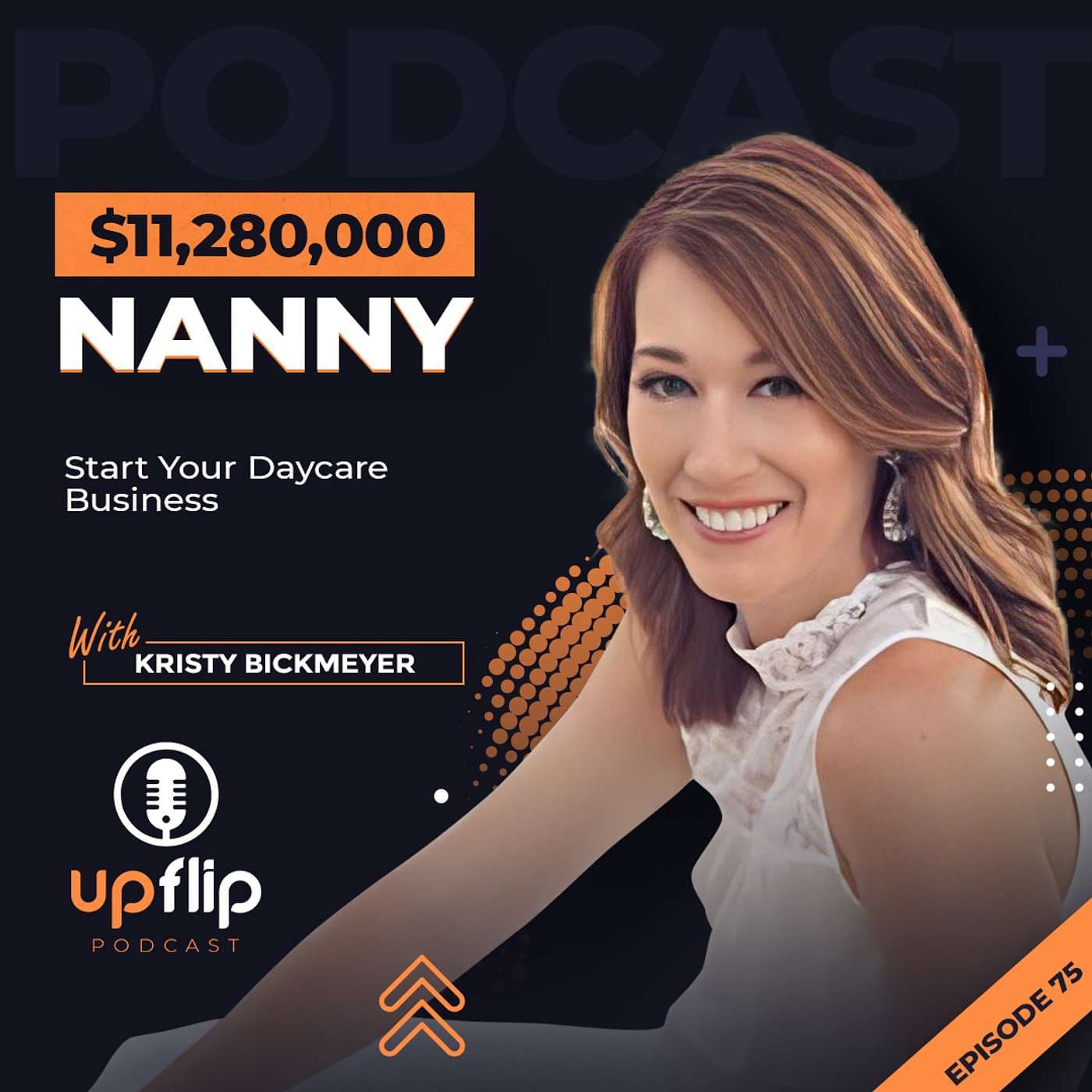
Episode Notes: The UpFlip Podcast - Episode 75
Episode Title
Former Nanny Turned $11.2M/Year Business Owner Host: Alex Freeman Guest: Kristy Bickmeyer, Founder of Twinkle Toes Nanny Agency Release Date: [Insert Release Date]
---
Episode Summary In this episode of The UpFlip Podcast, Alex Freeman interviews Kristy Bickmeyer, the founder of Twinkle Toes Nanny Agency. Kristy shares her inspiring journey from being a nanny to creating a successful childcare business generating $11.2 million in annual revenue. The conversation covers the challenges of starting a childcare business, innovative business models, and essential tips for aspiring entrepreneurs in the childcare industry.
---
Key Concepts
- Origin of Twinkle Toes
- Background: Kristy was a nanny during her college years and felt the pain of high placement fees when looking for childcare for her own child.
- Business Model Inspiration: Discontent with traditional nanny agencies that charged significant fees for limited services, Kristy envisioned a better model that focused on flexibility and support for both families and nannies.
- Business Model
- Unique Approach: Unlike traditional agencies, families do not pay upfront fees; instead, they pay nannies directly, which covers operational costs.
- Scheduling System: Development of an online scheduling system that allows nannies to pick up shifts when available, enhancing flexibility and income potential.
- Challenges Faced
- Finding a Sustainable Model: Kristy experimented with various business models before settling on the current system that has proven successful.
- Balancing Corporate Job and Business: Transitioning from a full-time job to managing Twinkle Toes, while dealing with burnout, was a major challenge.
- Growth and Franchise Model
- Franchising: Began franchising in 2017 after successful operations in three markets. Kristy emphasizes the benefits of a franchise in providing a proven business model to new entrepreneurs.
- Expansion: Twinkle Toes has grown to 21 locations across 7 states and continues to develop as a trusted brand in the childcare industry.
---
Essential Insights for Aspiring Entrepreneurs
- Start Small: Utilize personal connections and local community support before expanding.
- Customer Service is Key: Building relationships and trust with both families and nannies enhances reputation and business growth.
- Networking: Collaborating with other childcare businesses can lead to mutual referrals and support during tough times.
---
Advice and Lessons Learned
- Mistakes Will Happen: Kristy shares that many clauses in their contracts were added as a result of past mistakes, emphasizing the importance of learning from experiences.
- Importance of Passion: The foundation of a successful business is rooted in following one's passion and building something that brings joy to others.
---
Resources Mentioned
- [Twinkle Toes Nanny Agency Website](https://twinkletoesnanny.com/)
- [Get 500 Free Business Ideas](https://bit.ly/4hg4HS5)
- [Franchise Guide](https://bit.ly/4aWuGvc)
---
Conclusion This episode of The UpFlip Podcast serves as a valuable resource for anyone looking to enter the childcare industry, providing insights from Kristy Bickmeyer's remarkable journey. Her experience illustrates the potential for success when passion meets perseverance and innovation.
---
Connect with UpFlip
- [YouTube](https://www.youtube.com/@TheUpFlipPodcast/)
- [Instagram](https://www.instagram.com/upflip/)
- [Facebook](https://www.facebook.com/upflipofficial)
- [Twitter](https://twitter.com/upflipofficial)
For more entrepreneurial insights, visit [UpFlip.com](https://www.upflip.com) or check out [the UpFlip YouTube channel](https://www.youtube.com/upflip).
---
Listener Engagement If you enjoyed this episode, please consider leaving a review on Apple Podcasts or sharing it with fellow entrepreneurs. Your feedback is invaluable for improving future content!
Written by AI. May contain mistakes. Listen to the episode to check what was said.
Transcript
Automatic transcript. May contain errors.0:00This former nanny revolutionized the childcare industry and earned herself$11.2 million a year doing so. As long as humans have babies, nannies worldwide will have overwhelming demand for their services. They just need the right tools and guidance. I was putting sweat equity into it way more than marketing dollars because that's what we had. So over time, they add up to be really expensive mistakes that may be just, you know, a couple hundred dollars here and there. But over the course of five years, that's a lot. I wish someone had told me that it's not to give up. Like it's going to take longer than you think it might need to take.
0:36So to me, it's worth making less money if you maintain a higher reputation. I'm your host, Alex Freeman, and I'm here today with Christy Bickmeyer, the founder of Twinkle Toes Nanny Agency. Today's episode is the ultimate guide to starting your own lucrative daycare business. Christy, thanks for joining us. Thanks for having me. So can you start us off by telling us a little bit about your background? Why did you decide to start Twinkle Toes? Sure. Well, like you said, I was a nanny all through my college years, graduated from college, got married, had a baby, and I was working in the corporate world and needed to find somewhere for my son to go when I went back to work when my maternity leave ended.
1:15And I was not comfortable putting a three-month-old in daycare. And at the time, there was one other nanny agency in town, and they were a traditional nanny agency, which means I would have to pay them between$1 ,000 and$2 ,000. I think at the time it was$1 ,200 for their placement fee. And all that got me was a list of nannies that I could then meet and interview and decide who I wanted to hire. At that point, I would have to come up with a contract for them, pay them, pay all their payroll taxes. And then if they ever got sick or their car wouldn't start or they wanted to go out of town, I was kind of on my own.
1:48There was no backup. This was like my one option. The wheels started turning at that point. And I was like, this doesn't make sense from any perspective. Like from the business standpoint, the business would be getting$1 ,200 from me, the customer, once. And that's it. That's not a lot of revenue. Number two, from the family standpoint, like I just explained, all my eggs are in one basket. Oh, and they also only had a 90-day guarantee. So after three months, if she flaked or moved away, I would have to pay that placement fee all over again to get somebody else. So there was no security for the family.
2:19And then from the nanny's perspective, which was mostly where I was coming from, having been a nanny, what if I wanted to go on vacation and it didn't work with the family schedule? You know, I was kind of beholden to my employer in terms of what I was able to do. I wasn't allowed to get sick. You know, it just was a lot of pressure. And that's how I worked as a nanny. I worked for two surgeons. So I went to work when I had the flu because they couldn't just cancel surgery because I was sick. I didn't go on family vacations because they needed me. So once I started looking at like the reality of the way nannies are placed, it just did not make sense.
2:54And so I came up with this other system, which is what Twinkle Toes is. It's more of a network of families, a network of nannies. Families don't pay anything to us up front. They just pay the hourly fee. And from that, we pay our nannies, we pay all of our overhead, just like any other service industry business. That's kind of how we work. the nannies have access to the online schedule so that, you know, if their family's gone for the week, they can go on the schedule and pick up as many shifts as they want to make up that income. So it's just makes a lot more sense from every angle. It makes so much sense now that you've done it and created this new system, but incredible to kind of look into and see that way to disrupt that industry.
3:35What was the most difficult part of starting a childcare business? And how did you overcome that challenge at Twinkle Toes? I mean, especially considering you came in and were doing something very different from the way it had been traditionally done? Shoot, I don't know if I can pick just one thing. So we went through a lot of kind of business models before I landed on this one. Because at first I was like, well, I'll just do the placement agency thing and just charge a lower rate. But then that's when I realized from the business perspective, that's not a lot of money. Like I'll never be able to leave my corporate job making$1 ,200 or$1 ,000 a pop off customers.
4:08Because where I live in Gainesville, Florida, we don't have a huge population. And the number of people that can actually afford a private nanny is even smaller. So I didn't have this huge market to work with. But that showed me like, okay, I have to have residual income from these placements. This isn't working. So then I tried doing, I think the next thing was like a membership fee. Like, okay, family, you pay such and such per month. And from that, you get, you know, all of this babysitting and nanny care or whatever. That also was not attractive for the family to see a recurring fee because they're paying me this recurring fee.
4:41And then they're also having to pay their nanny. And if it's like a full-time legit nanny where the nanny works only for that family, they're having to pay payroll taxes on top of that. So that didn't make sense for the family. And then I landed on where we are now with just the network of nannies, the network of families, the online scheduling system, which also didn't exist. I had to create that as well. So I would say landing on the actual business model that worked, that took off was the hardest part. And you made mention there that, you know, you started the business as a side hustle. So how long did it take before it became your full-time job?
5:15And how did you know it was the right time to leave your corporate job? It was my goal. As soon as I had to work my very first Mother's Day, I was in property management, in student housing, and somebody had scheduled move-out day for Mother's Day. You know, you schedule this a year or two in advance. I'm sure they just didn't realize. But as the property manager, I had to be there. I had a four-month-old baby at home. It's my first Mother's Day and I'm walking filthy student apartments. So that was when I decided I was leaving this job. And at that point, Twinkle Toes, I don't even know if we had actually registered as an LLC yet, but it was definitely rattling around in my mind.
5:49And then I became pregnant with my second child about, I don't know, 16 months later. And I was at work only thinking about Twinkle Toes, making Twinkle Toes calls, sending Twinkle Toes emails. That was clearly where my interest was and where my passion was. and I'm a big believer that you can't do two things if you're doing two jobs like you can't do them equally well you're going to do them equally terribly or equally mediocre and that's not an option for me if I'm doing something it's going to be all the way it's going to be as well as I could possibly do it so I finally just talked to my boss who is also a mom a new mom and I told her look I've started this other thing I got to get out of this what can my exit plan be and it's funny, she actually, she lived in Tampa and she became one of the first clients of Twinkle Toast Tampa when we opened down there.
6:36So she was a huge supporter. She wanted to help me, you know, kind of get out of the corporate world and follow this. And she worked with me to do that. Obviously working a main job and then managing a side hustle is difficult in any situation, but especially when you're trying to like actually grow the business, how did you do that without burning yourself out? And what advice can you offer someone who has a side hustle that they'd like to grow into something that is their full-time income? Well, I did burn myself out. I burned myself out on my corporate job. That was getting in my way. And so I was burned out on that.
7:08So that's what I left. But I was just telling someone the other day, I did not go to a park, a play date. I didn't go anywhere without talking to someone about my business because I was immersed in this kid world. I had a baby and we're going around and doing things and shopping at the baby places. And I didn't go anywhere or meet anybody where they didn't leave that conversation knowing about this business that I had started. They had a card, you know, I told them how it worked, told them to call me. It was just on the forefront of my mind all the time. It was an obsession. My husband was a big supporter and he took cards to his work and this family that I had nannied for, the last nanny job that I had, the two surgeons, I told them about it and they sent out an email blast to all of their co-workers in the hospital to put the word out for me.
7:52And once that happened, that was like, okay, I need to like quit my other job because this is really taking off. So that was a huge help. But I did burn out. You know, I don't think you can do two things well. And I just burned out on the thing I wasn't interested in. What mistakes did you make in the early days of the business? And what did you learn from those mistakes? Well, like I said before, having different business models, I learned that those business models don't work. And I just kind of tweaked them along the way. I made a lot of mistakes. It's funny, my contract now that I signed with my nannies and that I signed with my families, almost every clause is because this has happened before.
8:27Now this is in our contract. So a lot of it is like, oh yeah, I didn't think about that when this first started, but now we've, you know, come to this issue. We need to write that into our contract so that people know what to do when it happens and what not to do. So my whole contract is that same with the nanny handbook. I give them a handbook of like, this is how things work. You know, this is how you put in for time off. This is what's appropriate to wear and not wear. All of those things too are from like things that, you know, nanny showed up at a parent's house wearing something inappropriate.
8:56The family calls me upset. So now that goes in the handbook as like, hey, suggestion, don't show up in a miniskirt if you're expecting to get on the floor and play with two-year-olds. But all these things like, oh, I didn't think I needed to say that, but I do, I do need to say it. So there've been a lot of little things. I wouldn't say there was anything that was like, you know, major mistake. It was just a bunch of smaller and they were all, you know, when they add up, they're very expensive mistakes. You know, I lost that family because the nanny shows up looking inappropriate. And so that's what they think my girls look like.
9:26Different things that happened with the contracts, like, well, you know, I lost this family because of that, or I lost this nanny because of that. So over time, they add up to be really expensive mistakes that may be just, you know, a couple hundred dollars here and there. But over the course of five years, that's a lot, you know, so small things, but they amount to big things in the end. Yeah, that kind of leads me into this. I want to ask you about skills or just like personality traits to thrive as a child care business owner. I'm particularly interested because unlike a lot of the business owners that I talk to, child care, it doesn't get more personal than child care for the customer.
10:01And so I'm just curious about what are those special skills that you need as the owner of the business to help the business grow and thrive and ultimately make your customers feel as safe as you want them to feel? Right. Well, and I would take it even a step further. It's not just child care. Child care alone is personal, but this is child care in their home. So you're not taking your kid to a daycare. You're inviting someone into your home to have access to your entire life. All of the things that you have laying around your house, that person has access to while you're gone at work all day or, you know, sitting in your home office.
10:34So it's even more personal. So for me, and this is a common misconception, you don't need to know anything about children necessarily to run this type of business. I have people call me all the time that tell me they would be a good franchise owner because they were a good nanny. And I talk to them and it's like, yeah, I bet you are a great nanny, but you have no idea how to run a business. And so they're two very different things. So what it takes is somebody who can make that family feel comfortable. And as a mom, I have the added advantage of being able to tell them, listen, when I interview a nanny, if I wouldn't let her watch my kids, I'm not going to recommend her to you.
11:09Now, I do have franchise owners who don't have children. And so they can't say that. But I think being a mom or being a dad adds that extra level of like, yeah, I know how hard it is to go back to work after you've had a baby. I know how hard it is to come home at the end of the day. And, you know, the kids are screaming and they're hungry and the house is a mess. And like, I get all of that. I think the number one thing is just finding a way to make the families feel like they're in good hands with you and invite them to completely trust the process to you, to me, so that, you know, you don't need to get on care.com.
11:39You don't need to go, look, I am doing this for you and I'm going to take good care of you. And it's the same with the nannies. You know, when I'm hiring nannies, a lot of them are younger. They're college age girls. I'm sending them into people's homes and I need to make them feel comfortable and know like, listen, I've been to their house. I have been in there. I've met with them. They're normal. They're not crazy. You know, they're not hoarders. They're not like I'm taking care of those people, too. And I need to let them know, too, like if an issue comes up, if a father makes you feel uncomfortable, call me.
12:06I will take care of that. So it's kind of working both sides to make sure that it's a compatible and comfortable fit. Quick reminder for our listeners that if you want to hear more advice on how to start and grow a side hustle, listen to episode 68 of our podcast, where I interview Nick Loper of Side Hustle Nation about the best side hustles to start in 2023. Christy, talk to me about the actual startup process. How much did you invest to get the business started? And what are some of the kind of main expenses involved in opening a childcare business? Well, it depends on what the business is. I can tell you that I had no money when we started.
12:41I designed my own brochures and business cards. I had them printed at the local print shop. I had a$15 website. I mean, I didn't have a lot of money to put into it. But because I was so committed and would pound the pavement, like I had door hangers made, I wouldn't put door hangers on doors in the heat. And I mean, I just, I was putting sweat equity into it way more than marketing dollars, because that's what we had. That's what I had to give. My biggest expense was insurance and still is insurance because finding insurance for a childcare company is hard. Number one, a lot of people don't cover it.
13:13Those that do cover it, they want an arm and a leg for it. So that's always been my biggest expense. The great thing about a Twinkle Toes or probably any nanny agency, but Twinkle Toes especially, is we don't have overhead in terms of a building, employees to pay unless they're working. You know, like when places got shut down for COVID, my friend that owns a daycare still had to make her mortgage payment. She had to keep her lights on. She had to pay her people or they weren't going to come back after the shutdown. And we didn't have any of those problems. It was like, man, I'm working from home and my people don't get paid unless they work.
13:45You know, I just was very grateful for this business model. So depending on what the childcare company is, there's different overheads. Every business has a little bit different overhead, but it's mostly at this point, insurance, marketing, things like that. Now, my understanding there is that you didn't take on any debt to start the business. How did you finance the work that you did? Obviously, lots of sweat equity, but obviously some of that stuff does cost money. How did you come up with that money? It was just out of the profit that I made from the business. Every dollar that I made went right back into it.
14:13Now, remember in the beginning, I had a corporate job. So I had an income, but I quit that job well before I could replace that income with the nanny agency. So there was a period of a few months where it was like, I didn't have any money coming in from my corporate job. Not much was coming in through the business. When it did come in, it went right back into the business. So we ate rice and beans lots of nights. We lived in a very modest home. I mean, it was like less than a thousand square feet. I drove a 12 year old car. You know, I wasn't trying to ball out of control at that point. You know, it was just I was thinking of the long game.
14:48You know, if I can live on rice and beans now, then I can put every dollar back into it and grow the business into what I want it to be in five or 10 years. And how long did that process take? When were you able to maybe stop eating rice and beans? It was probably six months after I left my corporate job. As someone's planning to dive into this business, what are some of those steps that they should take before they actually, you know, are open for business? How do they plan and prepare for the actual opening of the company? Well, I think the first thing to do is to know your market. So do some market research, get to know your town.
15:21What's your competition? What are the daycare rates? What daycares are available? What other nanny agencies are already out there? What are they charging? What do nannies expect to make in that area? Who can you network with? I grew up here, so I knew a lot of people just around town. I had worked as a nanny, so I had those parents who I knew would support me, like I mentioned before, the surgeons. And I also had a network of girls that I could call and be like, hey, do you want to work for my agency? Because I was just out of college myself. So I still had those connections. So think about networking.
15:50Who's going to be OK with passing out cards on your behalf or who's going to let you put up brochures at their place? So I would say start with figuring out, does your area need this business? Can it support this business? You know, if you've already got six just like it, maybe do something else or do something in the same area, but different enough that you stand out. Now, you made mention of insurance being its own special kind of hassle, but are there other like unique things in the childcare industry that are required of you that aren't required of if I wanted to go, you know, open up like a Jimmy John's franchise or something?
16:23So how do you go about dealing with those types of issues as a company? If you wanted to get into, say, a daycare, even a home daycare, there's a lot of regulation around that. But if you're doing a nanny business like I'm doing, knock on wood, I mean, there's at this point no oversight in terms of regulation or certifications needed. So in the world of childcare, it is the one where you're dealing with the very least red tape. And obviously, you know, working in that kind of environment, reputation becomes absolutely everything. How do you build that reputation and customer trust as a child care business?
16:58What has worked well for Twinkle Toes? I mean, it starts with who we hire, because that's ultimately who is representing you in everybody's home. I mean, the family calls me, we have a 20 minute conversation. And then from there, their day to day interactions are with their nannies. So it starts with who are you hiring to send into their home and making sure that those people represent what you want represented about your company. The second thing I would say is when there is an issue, I mean, there's issues, there's always issues, any business, you're going to have issues, the nanny didn't show up, or she showed up and she smelled like cigarette smokes, or she showed up 20 minutes late and didn't even apologize or whatever it is.
17:35What I've learned is families just want to know that you are listening to them and that you care about how this affected their day as a consumer. And I've seen this just increasing, you know, in the last three or four years, and it drives me insane. But customer service is the absolute worst I've ever seen just across the board lately. And, you know, if you have an issue with a company, it's hard to get ahold of anybody to get anyone to call you back. If they do respond, it's an auto email, like, oh, here's a$20 gift certificate. See you next time. Like, that's not what I want. I want you to get on the phone and listen to me and understand that this is a big deal to me.
18:13And I want to hear an apology. And that's what I try to always give my families. It's like, I'm really sorry this happened to you. I understand this is not what you needed today. How can we fix it? So I think just taking responsibility for it as the business owner and giving the family access to you as the business, as the business owner, and just say like, totally our fault. Or if it was my fault. You know, I'm sorry, I messed up the schedule. Just take responsibility, own your mistake and ask how you can fix it. That's how you keep the customer. You can't change what already happened, but you can do better next time and retain that customer just by letting them know that you care.
18:49Based on that answer, I would assume at least some portion of your new customers are coming to you via referral. Is that the primary method or are there other advertising platforms or strategies that you're using to bring in new customers? So it depends on the location and where we're at in the launch process. So Gainesville, for example, we've been around for 12 years. It's almost strictly word of mouth at this point. Tampa, same thing. That was the first one that I opened besides Gainesville. We don't do hardly any advertising there because it's all word of mouth. And both Gainesville and Tampa have a waiting list of families that need nannies just based on word of mouth.
19:24Now, if we're starting up, let's say in Nashville, no one's ever heard of us there. So we have a whole marketing plan that the franchisees get, and it's got multiple layers and different things that we do, different points we hit with our customers. But ultimately what it comes down to is when the phone does ring, how do you handle that? And are you responsive? Do you get right back to people? Are you available to talk with them? This isn't a business where someone just, you know, puts in a request on a website and you don't really have to do anything. Like it's very personal. And so being there to interact with the customers, with the families, with the nannies, that's what keeps the phone ringing.
19:59So I would say our initial marketing push gets the phone ringing, but how you respond to them keeps it ringing. You've made mention of other friends that also work in the childcare business. Can you talk about the importance of networking and building those relationships with other owners in the childcare space? Yeah, I mean, networking is huge regardless of what the business is. For me, I own the nanny agency in town. The other one that I mentioned before has since gone out of business, by the way, the one I used to work for. I'm friends with multiple daycare owners and we have great relationships.
20:27We don't see each other as competition. We have things set up where, you know, if this one daycare has a waiting list for their infant room, she'll recommend twinkle toes. So that family can get a twinkle toes nanny just until a spot opens up at her daycare. So she doesn't have to worry about them going to another daycare to get on their waiting list and maybe ending up there long-term. And I've made it so that we understand like, yeah, as soon as you get that call, your nanny's done, you go join that daycare. It works for me. It works for her. When COVID happened and her people were out of work, they came to work for me.
20:58So she didn't have to worry about them, you know, getting a job somewhere else that was going to keep them forever. They came with me temporarily. Once she reopened, they went right back to work for her. So I think it's huge having those mutually beneficial relationships. This is going to bring us to a section of the show that we call our Fan Blitz questions. These questions come from our YouTube community. Listeners out there, you can join the community. Go to youtube.com slash upflip and you can post questions to future podcast guests. A couple of questions here from the community, Christy. And a shout out to IDC, Ryan Redinger, Lovingly and Leighton Brand, who submitted questions that we have answered already in the show or will answer later.
21:36But a couple of ones that came in that we haven't answered yet, one of them being from Ryan Redinger. What advice would you give to someone trying to start a nanny or daycare business that you wish someone would have given to you? Oh, that's a great question. I wish they would have told me, don't even consider doing a daycare. Just go with a nanny agency. that to me is just off the table, just with all the regulations and with the potential shutdowns and stuff in the overhead. So I'm just going to stick with nanny agency. I wish someone had told me that it's not to give up. Like it's going to take longer than you think it might need to take and just be consistent and don't give up.
22:11Lovingly asked, what degree did you get? I have a completely useless degree in history from the University of Florida. Very expensive piece of paper that I've never used. And Leighton Brand also asks, what value adds do you offer to clients to increase the service offering and ultimately the fee? Or if any, I'm not sure if you do. That's a great question too. So we do kind of like I mentioned, but I didn't say specifically in the beginning, we offer backup nanny services. So if your nanny gets sick, can't come in for any reason, we always have somebody on call on standby that can step in for your nanny.
Read the full transcript
22:43So you don't have to disrupt your day or miss work. We have insurance, which is something that private nannies don't typically bring to the table. So if something happens on the job, something even in your home gets accidentally broken, the nanny's covered for that. We pay the nannies so the family isn't then responsible for figuring out her taxes at the end of the year, paying payroll taxes, issuing a W-2. Those are the three big ones. The other big thing, which is probably the biggest thing, is we spend all day, Monday through Friday, eight to five, interviewing nannies so that families don't have to.
23:13Because any family who has gone out there on their own and tried to find a nanny knows they either don't show up for the interview. I mean, maybe you get lucky and you find someone great, but nine times out of 10, they don't show up for the interview or they show up and they don't have the experience they said they had, or they don't have the availability that they said they had. So this is what we spend our time doing and only sending the nannies to the family to interview if they have a clear background check, CPR certified, have the availability, have the experience, have excellent references.
23:42So the family then isn't spending all of their time being a recruiter. That's going to do it for the fan blitz questions. Listeners, let us know what you think of this episode by reviewing it on Apple, Spotify, or wherever you're listening to the show right now. Are there different levels of service in that like, well, you only need the nanny Tuesday and Thursday? Or how does that all work? No, there aren't really different levels of service because all of our nannies come equally qualified, whether they're there just for Saturday night babysitting, or you need a Monday through Friday, everyone's going to have at least three years experience, clean background, CPR certified, excellent references, clean driving record.
24:18And every family needs something different. Maybe you need full-time, part-time, mother's helper, whatever it may be, you're still getting the same quality of nanny. So there isn't really a price differentiation because that nanny is getting what she's qualified to earn, regardless of what she's doing there. And talk to me about the online scheduling system that you use. How does that system work and how did you get it created for the business? Oh, gosh, that's been like a five-year process that I've been working on. And then I thought I had it perfected. And then I was like, no, you know what?
24:49Now I want it to process payments. So then we had to rebuild the entire thing. So where it stands now is like the finished product. It's what I've always dreamed of. It's what I want. So it is just a website and nannies have a login, families have a login, managers of the locations have logins. Families can go in and put in their own requests and say, hey, I want someone for Saturday night. Now, this has to be a family of record with us. This isn't like any Joe Schmo coming to town for the football game can do it. Like you have to have a contract on file with us. We have to have spoken with you, payment on file.
25:21But once you have all of that, and once you're in our system, you can put in a request. It goes out immediately to all of the nannies via email. So the nannies, every nanny in Gainesville sees an alert that's like, hey, you know, the Smith family needs someone Saturday night. If that nanny is interested in it, she just goes on there and requests it. And then it's up to the manager to approve somebody for it. And the reason we have that last layer of the manager approving is because we know our girls. And I say girls just because the vast majority of them are girls. We know whether or not they have the appropriate experience, whether or not they're going to get along with this thing.
25:52Like this is why we interview them and we know them so well so that we can make these kind of judgment calls. So it's not just, oh, she's available. Let's send her. I mean, does she have the experience to care for a newborn? And we know whether or not she does. So we approve based on that. But then it also, And back in the day, like when I first started, I had to go everywhere with my huge laptop because I had everyone's information on a Word document. And so once I had a schedule figured out, like once I knew who was coming to this family, I would have to open an email, send all of her documents as an attachment, tell them who was going to be there, do the same thing, send the nanny all of the family's information so she knew where to go.
26:28And this way it's all uploaded. It's all cloud-based. Everyone's information is there. It's literally the touch of a button and the information gets shared. In addition to that, the nannies put in their timesheets on the scheduling site because they're paid by the agency. They're not paid by the individual family. So they can work for five families in a week. They just put it all on one timesheet. They get paid direct deposit every Friday. The family's card gets charged once a week. So it's all in this one site. It's very user-friendly. You can do it from your phone. It's just light years from when we started.
27:03I mean, I used to spend 20 hours a week easily just paying people. And then we had three different platforms because we had like, we got to put everyone's information in this one website to pay the nannies. Now we have to go to this other website and put in all the charges to build a families. It was very cumbersome. So it's all streamlined. It's all in one system now. With it all in one system, is there anything else that you're using to manage your workflow or have you been able to fully build it into this system? No, I mean, it's all there. It's everything from scheduling to payroll. I say that and I remember the only outside system we use is we do contract with a company that does all of the background checks.
27:39So that's the only other website that we need. In that answer, you mentioned a family needed to be a family of record. Can you talk through the intake process for a new Twinkle Toes customer? Like someone comes to the website says, I would like to be a customer. What happens then? So they would go to the family registration page on our website, fill out basic info about their family, names, phone numbers, email addresses, where they live, stuff about their kids, any allergies, any pets, anything we might need to know coming into their home. And then they're taken to the contract page where they see the terms of agreement, sign off on that.
28:13And then the third page is the credit card form where they just input their payment information. And that's stored not in our website, but in a secured third-party payment processor system that we're linked to. So all of it's stored securely there, but it's just each page directs to the next. So it's boom, boom, boom. Within five minutes, you're up and running. Wow. That's incredible to kind of get there. And then did they go through an interview process at all? How do you go about meeting them? What does that all look like before they can actually bring a nanny into the home? Right. At minimum, we talk to them on the phone.
28:42Now, sometimes we'll get phone calls and say, hey, you know, I have an emergency. I need somebody here tomorrow. And there's no time to actually go there and do an in-home meeting. If that's the case, we'll jump on a Zoom call just so we can do some face-to-face meeting and get a feel for them and, you know, their home and where they're at and everything. What we'd like to do and try to do with everyone is actually go to their home for an in-home meeting. And there's two reasons for that. One, obviously, we're selling them on the agency. You know, we're showing them the level of service that they're going to get from us.
29:10We're meeting them. We're building a relationship. But we're also checking out where they live. Like we're making sure that this house is relatively safe. If they have a pool, is there a pool gate around it? Are there childproof locks on the door so the kid can't run out if the nanny's in the bathroom or is everything appropriately secured? Is it a clean environment? And I don't mean clean, like I just mean lived in fine. I just mean like, I don't want to see like dirty ashtrays and mold and stuff like that all over the place. So, and if they have pets, are the pets friendly? Did their German shepherd growl at me when I walked up?
29:43And is that going to be a potential threat to the nanny? So we're scoping it out as well as making sure that they're comfortable with us. We're making sure we're comfortable with them and making sure that a nanny is going to be safe going in that home. And then obviously with all of these checks, I'm sure the level of issue is limited, but I'm sure issues come up. So what is the process for handling an issue either with a nanny or with a customer? Well, the first step is get on the phone and talk to them because what I've learned is a lot of people will send an email and it can sound really nasty and, you know, not very nice.
30:12But then when you actually get on the phone and are talking to somebody, the tone completely changes. And you're much more likely to resolve an issue if you can actually talk on the phone with somebody. If it's just these very business, like back and forth accusatory emails, you're never going to get anywhere. In fact, the policy that I have with all my franchisees is if you're going back and forth with someone, whether it's an issue or maybe just scheduling stuff, if you're on the third email back and forth, pick up the phone and call them. Like you should not have a thread that long with a customer.
30:40I mean, just call them and deal with it. It depends on what the issue is on what happens from there. You know, if it's something really unforgivable, then, you know, obviously that nanny is going to be taken out of our system. We're not going to send her anywhere else. We're going to not charge the family for whatever it is that happened. Or if it's something where the family was inappropriate with the nanny or like I've had people, I call these people repeat offenders, where they'll call, oh, I need somebody Friday night. The nanny shows up and then they're like, oh, I forgot to cancel. No, we don't need you.
31:08Well, we're not going to keep doing that. Like that's really unfair to the nanny. This is her income. Like she's counting on this money. And so we'll stop serving families who are repeat offenders in that regard. We just try to find a resolution that's fair to everybody. And that puts the kids first. Number one, kids safety is always, always first. But then also we're looking out for the nannies and remembering that this is their source of income. What's the biggest challenge in the business today? I would say the biggest challenge, and this has been the biggest challenge from day one, finding good nannies, finding enough good nannies.
31:39If we hired everyone that applied, we would not have a problem filling all of the needs and we wouldn't have a wait list. But because we're selective with who we hire, you know, I would say we hire maybe two out of every five people we interview. So because we're selective and we have standards, it creates It's a waiting list for our families. It causes frustration because we see like all this potential for revenue. If we could just find the nannies to come work and fill these open jobs, you know, we'd be so much more successful. But then to me, it's worth making less money if you maintain a higher reputation.
32:11And I tell families all the time, it might take me six weeks, but who I send you is going to be excellent. So if you can just give me the time I need, you know, if you need someone now, I can send you someone now, but you're not going to love them. My goal is for you to love them. So give me a couple of weeks. But I feel like that's the case in every industry across the board, especially now. It's just finding workers, finding people who you're comfortable sending out to represent you. What is that screening process for a nanny to be hired by a Twinkle Toes location? So they have to have at least three years of child care experience for non-family members.
32:42It doesn't count if you babysat your little brother for three years. You have to have at least three written references from people who are not family members. You have to have a clean background. So the background checks we do are criminal and civil. So the criminal background check, I think everyone knows what that is. It shows if you've been arrested. But the civil is going to show things like evictions, restraining orders, stuff that reveal your character, but they're not necessarily illegal. So they won't come up on a criminal background check. And then we also do a driving record check. And in all of these, we go back seven years.
33:15So wherever this nanny has lived in the last seven years, we go into those individual counties and do all of these searches in those counties. Social security number verification, sex offender registry check, which that would also show up on the criminal background check as well. So that's kind of overkill, but it makes the parents feel more comfortable. That shows on the report. And then we do at least one face-to-face interview with them where they actually come into the office so we can see them, smell them, talk to them. And I say smell them, I'm not joking. Like if they come in smelling like weed or cigarettes, no, I'm sorry.
33:48And that doesn't come through on a Zoom meeting, right? Like they could have a wonderful Zoom interview, but you can't smell that they're smoking a pack a day and the families don't want that. So to me, that is important. And then we actually call and talk to all of the references. Everyone that fills out a reference form for them, we call and have a conversation with them. And then we make those reference forms available to the families. And it has the person's name and phone number on there. So the families can call and chat with them if they want to do that as well. Now, Twinkle Toes, you offer franchise opportunities.
34:16When did you start doing that? And why did you choose that approach to growing the business? And how many locations are there currently? We became a franchise in 2017. Prior to that, I had opened in Tampa and I was the owner. I just hired a manager down there to run it. And then I had also opened in Jacksonville and my sister-in-law was running it, but I was still a partial owner there. We decided to franchise because people were moving to different parts of the country and wanting a twinkle toes there, whether it was a nanny that wanted to work for one or a family, you know, moved away to South Carolina and really wanted something there.
34:49But I just saw that like, okay, I've proven this business model in three different markets now, Gainesville, Tampa, and Jacksonville. I'm pretty certain that it could hold up in any market. Let's go ahead and take the additional steps and expense to become a franchise. The options for me to expand were either to own all of the locations and just pay a manager to run them, but that takes time, energy, and money away from me, you know, because I'm paying all the startup costs and I'm managing the manager. And I was looking for something more passive because at this point I had two kids. They were starting to go to school.
35:21I was looking for a more passive income. I didn't want to keep pouring every dollar back into the business. So franchise made the most sense. Although there is a lot of initial costs to becoming a franchise, you sell one franchise and you've recouped that cost. So it's definitely worth it. Currently we're in seven States and we have 21 locations. What's the monthly revenue for a Twinkle Toes franchise on average? That's a really tough question because just like anything you do, you get out of it what you put into it. You know, if you open a franchise and you just sit on it and you don't do any networking or marketing or answer the phone when it rings, you're not going to be making any money.
35:55But if you really bust your butt and you network, you know, twice a week and you're going to mom's night outs and you're all over Facebook talking about it. I have franchisees who have recouped their initial investment in six months and are paying themselves a salary within a year. Yeah. And that's because there is no overhead. The only overhead is insurance. But in terms of ongoing expenses, you're not digging into the red every month. I'm also curious about culture at Twinkle Toes. Obviously, a distributed workforce for each of the franchisees, but then also wanting to make sure each franchise is representing the Twinkle toes brand to the best of its ability.
36:32So how have you gone about instilling the company's culture into such a distributed workforce? Well, I think it's all about like a constant touch point from me, from the CEO, from the founder, because no one loves this company more than I do. And that's not something I can outsource. So one of the last steps in the franchise purchasing process is a CEO call with me, where if you're far away, we do a Zoom meeting with me and whoever the potential franchisee and their spouse is. If you're in Florida, I'll come to you. We'll meet up for dinner or whatever it is. So that's the final step because it's like, all right, they've already gone through the numbers.
37:10They know they want to do it. Now I'm just seeing if I like them and if they like me. And if we can have a rapport, can I talk to them honestly? Can they ask me questions? Are we comfortable with each other? And then we also do a company-wide retreat once a year, like the end of this summer in August, we're all going to Aruba. There is no training. There's no work. That's just time for us to go somewhere else, chill, no kids, and just like bond together and have a good time together. And then in January, everybody comes to Florida and the Trickle Toes Gainesville location supports a foundation called the Phoebe Louise Dooley Foundation for Childhood Cancer.
37:46And we have this huge gala every year that we're the main sponsors for. So everyone comes here for that. And it's usually a dress up event where there's like some kind of theme. And that's just a weekend long party. We have the best time there. And then what are the pros and cons as you see them of either choosing to start a child care business from scratch versus buying into a franchise like Twinkle Toes? Is there a type of person that's best suited for each type of approach? If you want to do things your way and you think you have a better idea than the franchisor, then do it, you know, go out there and make it happen.
38:20But if you don't want to make very expensive mistakes that I've already made over the last 12 years, I mean, that's the beauty of buying into a franchise, right? It's a proven concept that works. You buy into it, you start making money. That's how it works. Otherwise, you're out there floundering, seeing what works, you know, going through different types of business plans, business models, contracts, these are all the expensive mistakes I made until I found exactly what worked. And at this point, we've gotten it down to a science with, you know, the marketing plan, regardless of the market, the marketing plan works kind of across the board.
38:51It's beautiful. So I would say those are the differences. To me, it doesn't make sense to reinvent the wheel. Like if I were starting over and I had a Twinkle Toes franchise option, I would have done that. I would have saved me so much money if I could just pay the flat fee, get everything I need, and then start, you know, marketing the business versus spending all the time and energy trying to make it work, figuring out what works and what doesn't. But on the flip side, even if you're that independent type person, which I am, like I am not a corporate employee. I learned that about myself real quick.
39:22Like I can't blindly follow instructions just because someone tells me to do something. I need to know why, how does this make sense? Why are we doing it this way? But if that's you, you can still be a good franchisee because you have such autonomy in your market. I mean, the requirements that I have are like, listen, you meet these goals every quarter. I don't care how you're doing it. As long as you're following the law, following the contract and meeting these goals, get creative, do whatever you want to do. So you still have that freedom as long as you're meeting these goals. So I feel like it kind of works for either type of person.
39:53If you could pick the one thing that people take from this interview, what would it be? I would say the one thing I would want people to take from this interview is to follow your passion. Like I never knew when I was a nanny, because that's what I was passionate about. I loved it. And it wasn't just the kids that I loved, I loved finding ways to make the parents' life easier. If that's your passion, that can be your business. It's a matter of following your passion and finding a way to make money at it. And then to grow that into something bigger and bigger. I wasn't thinking that way when I was a nanny until I became a parent.
40:25And then I was like, oh yeah, you know, there's this other business model that's super close, but it's not exactly what it should be. So let's tweak that. So I would just say, follow your passion, find what your passion is. First of all, what makes you happy and do that and figure out a way to make money doing it. What's your favorite business book and why? I really liked Good to Great. Gosh, I have two. I'm going to say the one I most recently read, which is The 5 a.m. Club, because I've started doing that, waking up at 5 a.m. so that I have a couple of hours of uninterrupted brain time. And that has made such a difference in my productivity.
41:01Christy, where can people find out more about you and Twinkle Toes? You can find out more at twinkletoesnanny.com. That is going to do it for this episode of the UpFlip Podcast. Listeners, you can find more advice on how to start, grow, and build a business from scratch at the UpFlip Hub. And if you like this episode, please make sure to review it on Apple Podcasts to let us know. Christy Bickmeyer of Twinkle Toes Nanny Agency, thank you so much for joining us. Absolutely. Thanks for having me.
From the publisher
Since it was founded in 2011, Twinkle Toes Nanny Agency has grown to more than 20 locations across 5 states, adding up to a total revenue of nearly $12 million a year–and they’re not done growing yet. Founder Kristy Bickmeyer shares how to start a daycare business and grow it to 8-figure revenue in this episode.
Kristy’s experience as a mother led her to starting a childcare business. She was stunned by the high placement fees nanny agencies charged when she searched for a nanny for her son. As a long-time nanny herself, Kristy knew she could find a better way to connect parents with the childcare professionals they needed, and Twinkle Toes was the result of this innovation.
If you’re wondering what it takes to start a profitable nanny or daycare business, this interview with Kristy will answer your questions. She’ll share the main challenges of starting a nanny agency and how she overcame them at Twinkle Toes. You’ll also hear how she manages her workflow, how she connects with parents, and everything else you need to know to start a childcare business of your own.
Resources:
- https://bit.ly/4hg4HS5 Get 500 free business ideas
- Twinkle Toes Nanny Agency - Learn more about the company on their website
Ready to be your own boss without starting from scratch? Grab our FREE Franchise Guide and unlock the secrets of proven business models that have already created thousands of success stories.
Connect with UpFlip:
- On Youtube
- On Instagram
- On Facebook
- @UpFlipOfficial on Twitter
For more insights to start, build, or grow a business, check out the resources on UpFlip.com or head to the UpFlip YouTube channel to see more interviews with business owners and experts.
Thanks for listening!


