
In short
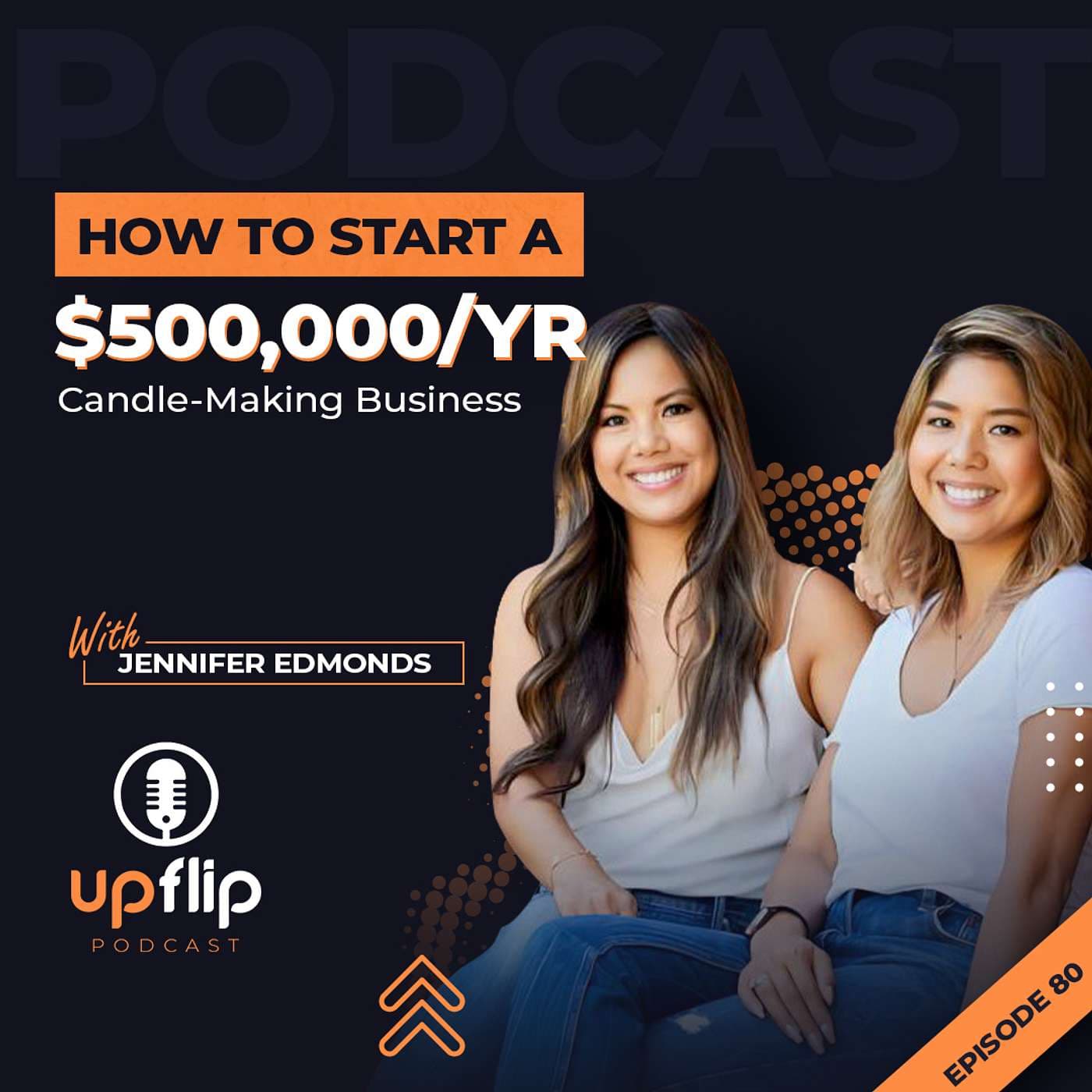
UpFlip Podcast Episode 80: $500K/Year Selling Candles… HOW?!
Episode Overview In this episode of the UpFlip Podcast, hosts Alex Freeman interviews Jennifer and Jocelyn Edmonds, founders of Rx Candles, a candle business that has grown from a side hustle in 2013 to a successful brand generating $500,000 a year. The episode focuses on their journey, marketing strategies, and lessons learned along the way, providing insights for aspiring entrepreneurs looking to start their own candle business.
Key Takeaways
Founding Rx Candles
- Starting Point: Jocelyn initially made candles as a hobby. The idea of turning it into a business led to a Kickstarter campaign that raised $3,000.
- Initial Sales: They began selling candles at local markets in Los Angeles, using borrowed resources for their first pop-up.
- Transitioning Jobs: The growth of Rx Candles allowed both sisters to leave their corporate jobs to focus on their business full-time.
Business Growth Strategies
- Community Engagement: Rx Candles maintains a presence at local markets, which continues to be a profitable channel despite the growth of online sales.
- Product Expansion: They diversified their offerings by creating custom candles and wholesaling, which opened doors to larger markets.
Marketing Insights
- Using Kickstarter:
- Importance of storytelling and clearly communicating the use of funds in campaigns.
- High-quality visuals and cinematography can enhance the likelihood of success on platforms like Kickstarter.
- Email Marketing: Initial email collection was organic, driven by customer requests. Once established, newsletters generated significant sales.
- Social Media and Digital Presence: Active on Instagram, Facebook, and Google Ads, their strategy includes showcasing their product visually across multiple platforms.
Operations and Scaling
- Hiring Practices: Initially, the sisters made all products themselves. As the business grew, they hired part-time help, allowing them to focus on business development rather than production.
- Inventory Management: Emphasis on bulk purchasing to reduce costs and ensure availability of popular scents.
- Quality Control: Challenges with supplier quality were addressed through strict communication and sourcing strategies.
Custom Products and Collaborations
- Pros and Cons of Custom Orders: Custom jobs can showcase creativity and extend brand reach but come with risks such as sourcing costs and inventory challenges.
- Collaborations with Brands: The sisters discuss how opportunities with large brands (like Netflix and the LA Clippers) arise from consistent market presence and positive customer interactions.
Lessons Learned and Advice
- Mindset for Entrepreneurs: Treat your side hustle like a legitimate business from the start. Expect to work harder, not less.
- Community Interaction: Engaging with customers directly helps understand their preferences and fosters relationship-building.
- Reinvestment: Continuously reinvesting profits into the business has been crucial for scaling.
Resources Mentioned
- Rx Candles Website: [Rx Candles](https://www.rxcandles.com/)
- UpFlip Resources: [UpFlip Hub](https://www.upflip.com/) for additional business insights and guidance.
- Email Marketing Tools: Recommendations include Klaviyo for email marketing.
Conclusion The episode highlights the Edmonds sisters' journey from hobbyists to successful entrepreneurs in the candle industry. Their emphasis on community engagement, strategic marketing, and a strong understanding of their product has been instrumental in achieving their impressive revenue. Their story serves as an inspirational blueprint for aspiring entrepreneurs.
Connect with Rx Candles
- Instagram: [@rxla](https://www.instagram.com/rxla)
- Facebook: [Rx Candles](https://www.facebook.com/rxla)
- Threads: Available under the same handle.
Listeners are encouraged to subscribe and leave a review to support the podcast and gain more insights into building successful businesses.
Written by AI. May contain mistakes. Listen to the episode to check what was said.
Transcript
Automatic transcript. May contain errors.0:00From selling candles at flea markets to custom orders from the LA Clippers, we're delving into the journey of two sisters who built their$500, a year candle candle business from scratch. You can start as a side hustle, but even as a side hustle, you have to treat it like it's a real business. The best advice I got was to stop working so hard in our business and work on our business. Just constantly looking over our business and seeing where we can actually spend more money to get a savings in bulk that we can pass along to the customer is how we've been able to scale. The reason we still go to the markets is because we make money there.
0:37If you want to scale, again, it's reinvesting your money back into the business and continuing to just chug along, get at it. I'm your host, Alex Freeman. And if the thought of starting a candle business ever crossed your mind, you can't miss this episode. Jennifer, welcome to the UpFlip podcast. How are you? Hi, I'm great. Thanks for having me. Can you share a bit of your story and how you started RxLA? Yeah, for sure. We raised$3 ,000 with the Kickstarter campaign. With that, we bought some essential oils and vessels to start our pop-ups. That was our first goal to get in front of customers to sell.
1:15We didn't need that much money because Jocelyn already had the recipe and the tools. She already bought those with her own money. And then we just went to our own community. We borrowed everything from our friends and family. We borrowed a pop-up tent. We borrowed tables and tablecloths. So we just dived right into our first flea market. Now, you made mention of the way in which you utilized Kickstarter to kind of get that seed funding. Can you talk about any tips you might have for someone who is thinking about going the same route and wants to make sure they have a successful Kickstarter campaign?
1:44Yes, for sure. Kickstarter now has grown, as everyone knows, into a really good source. But now it's highly competitive. You have to have a really good story. You know, tell them why you're raising money and make that interesting. If your corporate job is killing you, tell them it's like sucking your soul. You want to be passionate about your project. and if you're risking at all, tell them, I don't have a background in this, but I love whatever I'm doing and that's why I'm trying to raise money. The second part is people really want to know on Kickstarter what you're going to do with the money.
2:17If I give you money, how is this going to help you? And why do you need it? What are you going to do with this money? But more importantly, you really need to have good cinematography now. We did ours on an iPhone 4. That's how long ago it is. Now people really do hire sometimes someone to film and edit their process. Because a lot of times they want to see not only who you are as a person, but also where are you planning to make this? Do you have a factory? Take us to the factory. Have you done any research? Because people do want to give money, but they also want to know that they're giving it for a good reason and they're going to get something in return.
2:53So yeah, if you're only asking for a couple thousand bucks, you maybe don't have to convince so many people. Sometimes people just want to help. But with Kickstarter, you have to meet a minimum, right, for your campaign to get funded. So if you're so far from that like$50 ,000 goal, people then want like kind of a good prize at the end to give their money. Now, I could be wrong here, but a lot of those tips also seem like a way to be competitive in the candle business because it can be such a competitive industry. There are so many places people can buy candles. But exactly what you were describing seems like a competitive edge for this type of business.
3:27Is that true? Yeah, definitely. Before starting a candle business, there's a ton of planning. For us, we didn't do a business plan or anything like that because it was a side hustle. But you can spend a lot of money. It can go right down the drain if you don't have good planning. So talk to me about what RXLA's competitive advantage is in the space. Tell us a little bit about the company in that way. It didn't happen from the start. Our competitive advantage now is that we're creating our own fragrances in-house. So that's really clutch for us because people come, you know, there's a lot of candle businesses and perfume businesses out there now, but they come to our booth and it's unique.
4:03It's friendly as in all the fragrances are very neutral, but just having the ability to create our own fragrances gives us that competitive edge. You mentioned not having a plan before, before you kind of dove into it. So talk to me about the development of the business. What was the thought at the start? And then how did you end up where you are now? So when we first started our first day at a flea market, which was hard to get into, we are still permanent vendors at Melrose Trading Post in Los Angeles, which is one of the oldest flea markets. It attracts tons of celebrities. But even to get into that, we had to wait in line all day and like apply and kind of like show them what we had.
4:42And luckily at the time, they didn't have a lot of candle vendors. So we got it. But we high-fived off making$20 each that first Sunday. And we were there for 10 hours. And that doesn't include how long it took to make the product and set up. So we really just didn't have any expectations. We were just shocked that anyone would even consider buying something from us that we made. I come from a sales background and I can kind of sell anything. But when it comes to something that you personally make, it's really hard to sell sometimes because it's so personal. I love that. So we went really slow because we didn't have any expectations.
5:17And the money we did make, we would pay ourselves maybe 20 bucks, but everything else went just right back into bulking up and getting more inventory. So we started as a sole proprietor, which is definitely my recommendation for anyone looking to start a candle business or a business in general. I see a lot of friends and family now coming to us and being like, Hey, I got my LLC license. Now what as a business? And that's like one of the most expensive routes you can take because it costs money just to have that LLC, where if you're a sole proprietorship, it doesn't cost you anything. So I think even just when you're starting a business, you want to keep your overhead as low as possible.
5:53And it's hard not to want to make everything legit. Our flea market stand, looking back at it, was super embarrassing. But at the time, we didn't have the resources. And I'm kind of glad we didn't because I wouldn't have wanted to just start with$100 ,000 and then throw all this money and see like, oh, is this what we need to do? We started with like paper stickers that we were printing at home. And then we got real labels after we found out which fragrances were selling. So not jumping in too deep with like being too professional at first, you know, helped us not have too much dead inventory.
6:28With that in mind, if someone is unsure about if they want to jump full into the candle making business, but they think that's where they want to go. What is like the minimum that they need to test the waters, so to speak? Like kind of how I just said, you could start with$100 ,000 and barely kind of be getting started. Or you could start with$100. Your approach is just going to be totally different. If you start with$100 ,000, you know, you're going to be spending a ton of money on advertising to get rid of all this inventory you just made ahead of time. If you start with$100, you might have like a couple of testers and do some pre-sales based on the testers people are liking so that you can get the money to actually invest to buy the supplies you need for your inventory.
7:09But it can be pretty minimal. You can get a wax melter. It doesn't have to be. We have four 65 pound wax melters now, but we started with the little Instapot ones that you can buy just for, you know, cooking at home. Then you need a pouring pot of some sort, just some sort of stainless steel pot, some vessels. And vessels can be anywhere from like free to 10 bucks for a nice one. But I've seen people reuse other candle jars that they have. People are using mason jars, they're cutting wine glasses in half. So if you're starting, you know, with a tighter budget, you're going to want to source these things like cheaper as far as your supplies go.
7:48But I would say, you know, you could do it for 100 bucks, start just with a handful of candles to sell your friends or family or even on Instagram. or if you really want to do the pre-sale thing, you could do it with no money. You can throw up something on AI, get like a look of the candle you're going for, price everything out. And when you get your sales, tell them it's going to take you, you know, two weeks to get these out, three weeks and do the pre-sales. Again, you know, people really have to trust you because fragrances are personal. Like you don't want to get something that you smell and you just hate.
8:20So you're going to have to be really descriptive when it comes to how something smells so you can sell it to someone if it's not right in front of them. And then I imagine making sure that you deliver on that description, that they don't end up with a candle that smells different from what they ordered. And I'm curious, how do you, you know, if smell is such a personal thing, how do you make sure that your descriptions of the smell are such that someone's going to be like, oh, yeah, this is what I ordered? One hundred percent. Like going back to, you know, our competitive edge, making our own fragrances, I think we really know, you know, what we're talking about with the notes and everything.
8:53But for me, I like to describe it as say, like our white tea candle and fragrances are best selling fragrance. And to me, I compare it to going to the Westin or going to a fancy resort, a lot of them are using this white tea type of fragrance because it's neutral. So that helps build like imagery in someone's head of what they can expect versus if I tell you it smells like ylang-ylang and bergamot. You're going to be like, well, what does that smell like? And also a lot of perfumes and fragrances and everything have the same ingredients, but how it comes out, it's going to smell totally different.
9:28So yeah, you have to kind of go with more of like a feeling and vibe, not just the ingredients because the outcome can be very different. Listeners, if you're looking for further advice and other perspectives on starting a candle business, you can head over to the Upflip blog where we share advice from the owner of Black Sunflower on how to start a$200 ,000 a year candle business. Jennifer, I want to talk to you about branding and getting started. You talked about looking back at your first booth and it being embarrassing. Can you talk about how you went about building the brand? Yes. So we started, like I said, off with just regular things that we could do at home.
10:04It was super DIY. I had paper Avery labels that we were printing at home. And then from there, every time we had more money, we were able to reinvest and we decided what was going to be more impactful for the customer. And a lot of people were saying like, I really like this candle, but these paper labels like rub off. So labels was one of our very first like bigger investments. And it's bigger because to get a good price, you're going to have to buy, you know, a thousand labels. So now you're committed to selling a thousand candles of the same label, right? Or same fragrance. So we started off that way and building the brand.
10:38And luckily, since we're face to face with our customers selling at farmers markets, pop ups and things like that, they told us what they wanted. They said, I love these candles. I already bought 10 of them. Give me more. Like I want a diffuser. Can you do that? And after hearing it from so many people, we busted out with diffusers. Next, they wanted perfume. And it's funny because I would kind of push back a little like you want perfume, but why would you want a perfume that smells like a candle? Like you want to smell like your house? And they'd be like, well, these are divine. Like, yeah, I want to smell like this.
11:07So we got perfumes and then people wanted to make their own candles. So they wanted the oils that they could buy themselves. So luckily, building our brand, we just had straight up guerrilla marketing. We were in people's faces. They told us exactly what they wanted and we did it. And with that face-to-face, what were you then doing to further nurture the customer base? I know that your email list has really factored into your growth. What were you doing to kind of capture email addresses and make sure that you were connecting with the customer even when they weren't necessarily standing directly in front of you?
11:38I want to say we were collecting emails for five years before we did anything with it. And even that was just purely because again, customers were forcing us. They were like, I'm writing down my email, like, send me information where I can buy these. And we're like, you can't, you have to come here. And they're like, I don't want to come to the farmer's market every Sunday to buy these, like get a website. So we got a website. And at first, I think we were on Wix or Squarespace. Those are really affordable websites for people starting out. and it just is a template and it had a built-in email area.
12:12And I didn't even know people were putting their emails in it. So one of my friends one day was like, you got to start doing your email list. I'm like, I'm overwhelmed. We're making everything. We're selling them. I can't do one more thing. And she set it up for me. And she's like, look, I'm going to send this up and you're going to see how much money you make. And you're going to want my help doing this because it's like you're just losing out not doing it. And she opened it and she was like, holy crap, Jen, you have as many email subscribers as my business. And she was working for like a legit known, well-known LA brand.
12:42And she's like, you have the same amount of email subscribers. I'm like, from where? Where did you find those? She's like, you have to pull them in. You have to extract them and put them in to another system. So we use Klaviyo now because that's what she told me to use. Formerly, other people were using MailChimp, but they, I don't know, at some point, they didn't have a relationship with Shopify anymore. So we went with Klaviyo. And the rest is history. The first couple newsletters she did for me, we made the same amount we made in one newsletter as one Sunday at a market. So I'm like, we spend the entire week preparing for this market.
13:17We have to pay rent. We have to bring all this inventory out. It's backbreaking. And then, you know, boom, she sends out a newsletter. We make the same amount of money. So I was like, okay, I guess we need to spend time on this. So when you're at that point, then how does the business pivot? How does it change what your kind of like day to day looks like? It's tricky because we have to have enough inventory to go out to all our pop ups still, which is a lot of inventory. And then that means we need to have back stock in the warehouse. So we're, you know, spending a lot of money on just inventory sitting around so that we have it on hand to be sent out, which is important for us as a small brand.
13:53A lot of people want and know when they're buying from you online that this is going to get shipped out. Like it's sitting in the warehouse, it's ready to get shipped. All I have to do is wait for the amount of time it takes you to print the order and ship it. And then the shipping time, because you know, we're not Amazon, it's taken five days through UPS to get to someone. So that part's hard, just having inventory to be online and to like run ads, because you just never know what people are going to buy either. We might have, you know, 2 ,000 candles sitting around, but they want the one fragrance that we happen to be sold out of.
14:23So pivoting to doing online marketing, which is what I would categorize emails as, is just making sure that I'm the one on top of the emails. I know what we have in stock. If we don't have it in stock, I can't run an ad on that or send an email or a special. And then now just getting a little bit more smart about it. Like before I might just do 25 % off the whole website. And now I look around and I see like, hey, we have extra rollerballs. That's what's going on sale this week. That's all that's going on sale. But yeah, it's fighting kind of with yourself on it. Because overall, I'd be like, oh, people aren't going to open this email if there's not some really good special in there.
15:01They're not interested in what I'm making them buy if it's rollerballs or oils. But it's kind of like a Pandora's box, right? Because if you want to sell the rollerball, then I got to do like a newsletter and a blog on like why the rollerballs are the bomb and why you're going to want to buy this. And guess what? You're getting a discount today for buying it. So you can't just kind of like spit it out and expect people to open your email and want it. You kind of have to educate and pump them up for it, too. Beyond the email, what other digital marketing are you doing? What kind of social strategy do you have?
15:31How important is that? And are you doing other things like Google ads and that kind of stuff? Yeah, we are kind of dabbling in it all. I think I spend most of my time on the emails because those are tried and true customers. I know that they want what we're putting out. Getting a new customer through a Google ad or an Instagram ad can be a little bit harder. So with those, it's good because you can say, hey, on Google ads, I only want to spend$10 a day or I only want to spend$200 a month on this Google ad. And it will just stop every day so that I'm not going over that budget. And then you have to go back and look at how is this ad performing?
16:08If it's not performing very good, then like, let's create a new ad and give or if it's doing very good for us, you know, I can see on my website on Shopify, the analytics, like what's bringing in the most customers. So then we got to pivot and say like, hey, Instagram's like killing it right now. We got to post more pictures, bring in more ads for new customers and things like that. But the key for ads, if you're going to pay for them is kind of knowing your budget and then setting those parameters. You don't want to just let Google ads like go for it because you're going to get a bill for 3000 bucks at the end of the month.
16:38Yeah. And so with that, you know, it's interesting to me that obviously there's now a robust digital side to the business, but you're still going out to the markets. Why do you still make sure you're going out to these pop ups and doing the markets and the in person stuff? We just really like to be in front of our customers and we're still learning. But also, you know, we have grown our wholesale significantly. All our eggs used to be in this pop-up space. And then when COVID hit, it was like, wow, what are we going to do if we're making three-fourths of our money from pop-ups? So again, we were forced to pivot.
17:12But the reason we still go to the markets is because we make money there. In person, when you smell our candles and perfumes, it's undeniable, man. People come to the booth, they put on a perfume, they walk away and I can't tell you how many times a day I have to smell someone's arm or neck because they're like, I put this on, I can't stop smelling it. I love it so much. What is this smell? So I'm like sniffing people's bodies all day, like they can't leave without buying it. But yeah, the face to face interaction is just so great. And we're still connecting with so many new customers, even at the same pop ups, because in LA, you know, they have pop ups that 10 ,000 people are coming through every Sunday.
17:49So in other cities, I could see how that would be challenging. You know, if it's always raining, or it's cold, you're not getting people outside. But where we're located in Los Angeles, and we'll travel to San Francisco and do pop-ups too. People are out and about and they love that customer interaction. They want to chat with us. They might not even be talking about candles or anything. They're just talking about what restaurants are around or they like our story too. So when we're just face-to-face with the customers, we really get to give them who we are as a brand, not just a product that's a picture on Instagram.
18:20But yeah, Instagram and the digital space, it all has its place. And now luckily we're able to kind of recycle everything. Everything goes hand in hand. If I have to post a blog, I need that picture. So I'll take that same picture or the same picture from a photo shoot, stick it in Canva, tweak it up a little bit. And that picture goes on our blog. Then it goes on Instagram. Then it goes on Facebook. It goes to the newsletter. It goes to the text messages. But everyone wants to see it in a different way. So that's the part that's going to take up a lot of time because you can't just put the same picture everywhere.
18:53They want like kind of a different picture, kind of different information, depending on who you're marketing to. But at least now my resources are getting recycled. Like I'm not just doing a photo shoot for just one picture on my website. I'm using those photos over and over again to keep trying to sell these items. You've added wholesale and bulk ordering as well. Can you talk about when you layered that into the business and how that all came about? Yeah, thank God for technology. Again, people come to our booth and be like, I want to buy wholesale and I want to take it home right now. And, you know, they would take our whole inventory and then we're like, how do we deal with these wholesale numbers?
19:30How do I know they even have a license and all these things? And so for a while, I was handling wholesale on my own and just trying to do my best to like keep everything categorized, which at the end of the year for tax season was just a nightmare because, you know, one more hat for me to wear as a business owner. But now we use Fair. There's so many new apps and companies that are making every aspect easier. And for us, I find we're on a lot of wholesale platforms now, but I find I really like Fair because they let us import our own customers. So I'm not necessarily paying them commission to get me new customers.
20:04They do take commission if they find me a wholesaler that wants to buy from us. But they just simplify it because you have to already be licensed to be on Fair. So I'm not getting people kind of like scamming me trying to just get wholesale for free, you know, like, but they're just a regular buyer. But it connects me with so many shops around the world, or they are international now, but mostly in the US for this platform. But the platforms are now just taking so much off of the business owner. Like now I can just have my catalog up here. And the order comes to me just like if you're ordering from my website versus in the past, I would have to get your business license, get your order, you'd be like, Oh, I want this fragrance.
20:44And I'd say we don't have it, you know, then we'd be going back and forth. then back and forth for like even a week. And this person's just like, I just want these products. Can you hurry up? You know, there's so much conversation to be had. Now they can just get onto their fare. They see exactly what I have in stock. They see when it's going to be back in stock and they order and then I can fulfill it from there. In the past, I'd have to call them back and be like, okay, now I've looked at how much your order is. I've packed it all up. I had to weigh it myself and it's going to cost this amount.
21:13And they might be like, oh, that's too much. Can you take out 10 candles? So fare really, really helps because now they just fulfill it and they send them a bill for the shipping if they're paying for shipping on the back end. So those things are game changers because it doesn't sound like a lot, but those are huge time sucks. It could take me a whole day just to do or half day just to do one person's order on wholesale. And now I don't have to do that. And now that I don't have to do that, our wholesale is up 100 % year over year because I'm not involved in it. When someone has to do something, when a customer has to do something that's too hard, they're business owners too.
21:51They're just going to say, forget it. But now they could just hop on there and order. So different platforms are big game changers. Peeba is a new platform that I definitely recommend to people if you're trying to sell in Asia. And it's exactly like FAIR. They basically hit me up and told me they stole fairs model. And they're like, you can import everything just like fair. It works just like fair. And that's important too, because I've been on other wholesale platforms where you have to do data uploads. And if your owner and you know what that is, oh my gosh, it's a disaster. You know, you're doing like HTML code, you're sending them Excel spreadsheets, you're trying to like label all your pictures so that they match the skew for, you know, but fair and people, they took all that out of there.
22:34It's just like uploading any other website. You don't have to be tech savvy to work with them. But Piva, man, people in Asia, they are buying USA made stuff right now, which is kind of crazy. Like before they'd be, you know, made in China is great. But now they're like, no, people here want made in USA. So they're importing our candles by the pallet to get to their stores. So even in like, I think one month, we surpassed a whole quarter on fare just because of the sheer volume that they're exporting stuff into China now. But again, like just going back to the platforms that, you know, before we would get inquiries from China, but there's just no way I'm not I don't know how to deal with customs.
Read the full transcript
23:12I don't know how to ship this to you. And now these platforms, they just take care of it all. One, thank you for all of that great information about the wholesale and the different platforms, because then there's this other aspect of the business that is custom candles for events, like weddings, community groups, all those kinds of things. And so I want to kind of dive into that. I guess let's start with the pros and cons of offering custom products. Yes. Oh, gosh. I think some of it can be sort of obvious. The pros are you get to work with some really cool brands. And for us, I would say that we are my sister and I, the owners of the business, we're very like we were all over the place.
23:50You know, like if we had our choice, our candles, some of them might have colors and they might have like crazy fragrances or crazy labels because we get bored and we want it to be fun. So doing custom stuff really lets us go outside of our brand and do things that our brand can't do because we're quiet luxury, we're muted colors and tones. But for weddings, we've done some stuff where they're like, oh, you know, we're in an orange orchard. So their label has all kinds of orange trees on it and things like that. So doing custom stuff really lets you showcase who you are and get to like change things up.
24:24And when other people are exposed to those custom items, they're like, oh, wow, you guys do so much more than just what you have online. And that's how we've reached even more customers like the Clippers saw that we had a custom candle for Netflix and they're like, hey, we want it for ours. And we're doing this special event. I didn't know you guys did that, but we want it to smell like this. Can you make this fragrance for us? It's not on your website and they want something special. So doing custom stuff, you know, it kind of is a snowball effect when other people see it. Everyone wants to feel special.
24:55So they want their name on it. They want their fragrance on it, whether that's a bride or a corporation. A corporation is doing gifting and they want the people that they're giving the gifts to to feel special and to make their corporation look good. The cons are, it can be very expensive sourcing all these things. We don't want to just have all these custom vessels in our warehouse sitting around waiting for the next person to order. Because again, they're customized. We don't know if Netflix is going to like this black tin that we use for somebody else. So not buying in bulk for these companies can be very expensive.
25:31It's time consuming to be sourcing the items that they want. There's always the fear that they don't like it. And if you make something custom, we can't necessarily just sell it on our website. So you have to make sure the paperwork's all in line too, that they know what they're getting and that it's final sale and they're happy with it so that they use it and come back. The pros would definitely be just getting your brand out there in different ways, being able to showcase who you really are and have some creativity. And then the cons, definitely pricing. You would think like, oh gosh, you guys are killing it.
26:03You're doing stuff for the Clippers and Netflix and all that. And while these companies do have bigger budgets, they can also go somewhere else who can produce it for less. So you still have to be very competitive with your price. You're not necessarily charging them double what you usually would charge. you have to still have it in line with what other people can do for them too. So they stick with you. You mentioned two of the really cool brands that you've worked with, the Netflix and the LA Clippers. Can you talk us through how those deals kind of happen? Like how do you end up being approached, approaching them?
26:34And then what is the like the bid process like to actually securing that kind of job? Now we're really lucky in LA because so many of these corporations are for now in LA. And a lot of the corporations have these really cool initiatives to work with the community and they're super big on small brands. So we've been lucky just because we're at the pop ups and consistent, which is another reason we continue to be there and have a presence. They approach us. Our first big gig was with Apple Pay and Apple Pay was working with Smorgasburg and small vendors to use Apple Pay to show us like the pros of offering Apple Pay at our booth.
27:14as a merchant, a credit card merchant for us. And they said, hey, we have this big thing coming up. Can you guys make custom candles for us? We made 4 ,000 candles for them to give away. I think they were charging people a dollar for our candles to get out on the street and hope that they'll sign up for Apple Pay in return. So that was a really cool gig. And then from there, BuzzFeed saw us. They had us come out to their corporate offices to sell our candles to their employees. And it was just something that they thought was cool to have something special for their employees to be able to take paid time to just go walk in the courtyard, eat their lunch and like buy candles.
27:52And then that got around some Tesla employees saw it and was like, come to Tesla. I want this. I want to shop on my break or, you know, we don't have time on Mother's Day to get all the presents. So come out. A lot of guys work at Tesla and all these men were providing, you know, kind of a cool thing for our employees to come shop because they don't have a lot of free time. So they feel like it's kind of a service. They're either providing their customers or their employees. So luckily, we've just been getting around by word of mouth. Tesla, BuzzFeed, Apple, then Netflix, we did a pop up with them for Earth Day, which turned into them wanting to do custom candles for a new film that was coming out.
28:30And then the Clippers thing happened because the girl that was in charge was a huge fan. And it just popped in her mind that she wanted to do our custom candles for her wedding and for the Clippers thing. So luckily, just by being out and being present and having a good product that sells itself, we've been able to just circulate in the LA community. But as far as pitching to brands go, when I do have to do that, if they're like, we're looking at several different gifting options that happened to us with the agency, that's a really big real estate company in LA. They're the ones that are doing like, you know, the billion dollar houses and they want to give their customers a really nice housewarming gift.
29:14But we had to pitch to them because they were thinking about doing all kinds of different options. So when it comes down to pitching, nowadays, I didn't have it before, but I use ChatGBT and I like mid journey to try and do some mockups. So we don't have to necessarily make a bunch of customized candles to show them. Because again, that's going to be really expensive for us to source testers that they may or may not want. But we do our best to just pitch through using AI. You know, you can literally write in there like, pitch me candle company to whatever agency you're looking at. So that's very helpful.
29:47As you kind of like talked us through this, it strikes me that the business itself has scaled what feels very naturally, just kind of like listening to customers saying yes to opportunities. As you look back on the business having scaled, what advice can you offer to somebody who is starting out and would like to achieve the scale that you've achieved? I think having really good expectations and focus, you know, those big opportunities for us are sick and awesome and we love doing them. But they're not the moneymakers of our business. It helps us advertise. Sometimes people are going to ask you to do stuff for free just to...
30:26Can you make these candles for Netflix, as an example? And then you're going to get exposure out of this. So if you want to scale, you got to do it the old-fashioned way. You got to get out there. You have to market. You have to have a good product. And you have to be consistent. You have to ship on time. And people have to know they can rely on you as a legitimate business. It can't, you know, you can start as a side hustle, but even as a side hustle, you have to treat it like it's a real business. If you want to scale, again, it's reinvesting your money back into the business and continuing to just chug along, get at it.
30:59It also strikes me that with all of these opportunities, you then find yourself having to make a whole lot more candles. How did you handle scaling production? And what does that look like now? Luckily, we have just like such a good team. My sister and I used to make the candles do everything ourselves. And now we have two part timers. That's it. Maybe three third person to work pop ups. But Jesse works for us. Actually, he does work full time in the warehouse and he makes all the candles and perfumes and pours and things like that where my sister and I will create all the fragrances. And so it makes it easier for the guys to just go in and bottle all our poor things, right?
31:39So the best advice I got was to stop working so hard in our business and work on our business. So that was a huge thing for us to scale is for me and my sister not to be physically making every single product ourselves. We still have a huge hand in it. We're definitely we don't have like a warehouse manager making sure. So that's still our job making sure everything's being made correctly. I'll kind of further the question here because I'm curious about But not only as you scale production, the challenges that are there, but then like also in those growing phases, like how did you evaluate, okay, we have to add another person and financially that's going to make sense beyond this moment.
32:18Again, just taking a cue from like how we grow as a business, like all organically. There came a time when we knew we had to hire Jesse, which was back further along to take some of the work off our hands. And in turn, I knew that by hiring him, I had to make up the cost by doing more marketing and more advertising. And now rather than keep on hiring people, I'm using other tools to take more off of our plate. So using again, FAIR and Piba to handle our wholesale, just having things go more digital so we're not doing everything so manually. So that's helped a lot so that I can achieve more day to day and still have time to be working in the warehouse.
32:59house. Another thing for scaling is buying everything in bulk. So before, you know, if we're buying, fragrance oils are super expensive. The perfume oils, they can be for high-end ones, meaning perfume grade, they're cosmetic grade, they're cleaner, they're better for you. And then they smell a lot better too, because they're not as synthetic. They have more natural oils in them. They can be anywhere. If you're not buying in bulk, they could be like$5 to$10 an ounce. And it takes one ounce to make one of our candles. So getting that cost down is huge. So we had to scale back on fragrances. So scale back on the fragrances.
33:40That means we're able to buy more of one fragrance to get that price down. So just constantly looking over our business and seeing where we can actually spend more money to get a savings in bulk that we can pass along to the customer is how we've been able to scale. And then just getting rid of products that aren't necessarily selling as quickly. If they can't sell quickly and I can't get through the ingredients fast enough to buy in bulk, then we can't sell it anymore. I can't just buy one jug of alcohol. I got to buy a barrel of alcohol. So that means we need to make these products and we need to sell them.
34:18So yeah, scaling for us means buying more in bulk, not necessarily having to take on more people for more labor so far. And then from here, it's going to be automating our label process. It used to take us a long time to put on labels on our candles. And now we get those screen printed. I'm not sure the proper term if it's screen printing or laser printing or whatever, but we get them printed onto the candles now. And eventually we're going to have to do that with the perfumes and the room sprays and everything. And that cuts down on labor so we can still just make things faster without hiring more people.
34:53As you kind of like go through the process of finding suppliers and making sure that, you know, you can get it at the right price, you obviously also want to keep an eye on quality as you're offering a high quality product. How do you vet vendors and suppliers to kind of hit that vector in the right spot? Yeah, that's all part of it. It's so, so, so frustrating because we're working with a candle factory that makes the same vessels for Veloospa, which is obviously a super well-known high-end candle company. I mean, they're big time. And the first round I got from them, and this is a huge investment, they were cracking.
35:29The jars are cracking. So even spending more money with a well-known supplier doesn't mean I'm getting a better product per se. So it's still about having that communication with the factory and being like, I need this, you know, you have to know a lot. And for us, we learn as we go. They were like, Oh, yeah, that vessel only, you know, lasts up to 200 degrees Fahrenheit. If you want 700 degrees Fahrenheit, it's going to cost this or we buy our bottles from really reputable sources, and they're still leaking. So it's a constant back and forth, you know, trying to find vendors who have the best price, the best quality, but you still have to be on top of it.
36:04because even just now I got a whole two pallets of perfume bottles that were leaking and I had to call them, send videos. You know, they don't always just take your word for it. So you just really have to be on top of it. But finding the vendors in the first place can be very difficult and it always is going to cost more money, unfortunately, because now we work with a third party, a guy that was also a fan of Rx and he was like, I can help you guys import stuff. All of our ingredients are from the USA, which is important for us, but vessels, there's not a lot of glass factories in the United States.
36:38So that's more difficult. We do import our glass. So our third party takes a, you know, a big cut and they help us talk to the factories to make sure that we're getting what we need. And then they also take care of customs and shipping it to us. Because I do work with one factory directly and cut out my middleman, but that's the problems I face instead of just telling my middleman, hey, these are messed up and then crediting me or fixing it, I have to then get on the phone in the middle of the night with someone in Italy to tell them that these didn't work right. And they don't always speak English.
37:13So even being like, oh, where's my order? Where's the tracking? You know, they're like, oh, it's at the port. I have to like figure it out. So yeah, working with someone that you trust, a third party is helpful. And I think that can save you money in the end, even though you're paying them, but they have all their resources, they have the connections to find, I can show them like a glass I want, and they can find it and quote me on several different factories they've talked to and get me samples so that we're comfortable and happy with the stuff that we're getting. Because as a single person, as a single company, if you don't have, you know, sometimes if you're not talking about a million jars, these factories aren't even going to talk to you.
37:54But they'll talk to a third party supplier that they trust and they know they're not wasting their time because you're actually going to order glass. It is definitely difficult if you are starting to scale working with a third party person to help you do that. An importer, I highly recommend. Otherwise, me and my sister would also find glasses we like and we would scratch off the labels and find out where it was coming from. So that's another way to try and find out because a A lot of the people in the US, they're just middlemen, you know, like SKS Bottle. They're a huge bottling company and I do really like them.
38:28They have great customer service, but they are getting their bottles from overseas. So if you can find out what factory is actually producing them, you can sometimes cut out the middleman. So another thing I did one time was I was in a restaurant and I happened to walk by their storage, going to the bathroom. And I was like, oh, taking pictures of the boxes because it had the name of the glass companies on them. So sometimes you just have to be really resourceful. Not sometimes, all the time. If you're an entrepreneur, you just have to be resourceful. What's one thing you wish you knew before you started the business?
39:01And how might that have changed things if you had known it from the start? You know, I'm kind of glad I didn't know a lot of things because I think it might have deterred me in a way because it is a lot of work. I guess that's what I wish I would have known. Being an entrepreneur doesn't mean you work less. You work more, a lot more. But you got to work at something you're passionate about. So I guess I wish I would have known like really, really what a candle business entails. I'm carrying 50 pound boxes of wax all over the place. When we started, I couldn't carry them. I couldn't get it out of my car when we went to go buy them.
39:37And we're buying like one case of wax at a time. Now we buy them by the pallet and get them delivered. But you know, physically, I couldn't do it. And when you think of starting a candle business, like that's not what comes to mind. carrying a 50 pound box of wax up the stairs to the kitchen. But I wish I would have known how resourceful I had to be. And I think I would have opened up sooner about using those resources. I never wanted to bother anyone. So, you know, even with the emails and how to do it and how to export, I would have asked my friend for help much sooner because that was really huge for us.
40:10And believing in yourself, it takes a lot. And you have to really believe in yourself to sell what you have and to know you're going to make it through. So if I believed in myself, I would have believed in our products faster and I would have gotten to stores faster. I just didn't feel comfortable asking for those things up front. So it took us two to three years to go full-time on the business where I think we had the capability, my sister and I, to do it within a year. We were just scared. What's your favorite business book and why? You know, I don't get a lot of time to read, sadly. So I listen to podcasts when I'm commuting to work.
40:48And I really like Shopify Masters because it's super invigorating. You hear about all these different businesses and how the business owners are doing things kind of like Uplift. And you get all these little nuggets, even if they're not candle brands. It's like, you know, socks. How did they scale? How did they pivot? Where did they find places to import their ingredients and supplies from? So I really like Shopify Masters. I really like Uplift, of course. I really like Business Wars. Do you listen to that? Oh, I am obsessed with that show. That show's so good. Yes. And it also helps, you know, not just like learn things, but be like, oh, wow, like everyone is facing these things that I'm facing and we're going to get through them or I can figure it out.
41:34They figured it out. I can figure it out. Lastly here, where can people connect with you and or learn more about RxLA? We're all over the place. It's shoprxla.com, at rxla, the brand on Instagram, on Twitter. That's our Facebook handle. And we're on threads now. That is going to do it for this episode of the UpFlip Podcast. Listeners, you can find more advice for how to start or grow a business the right way on the UpFlip Hub. And if you like this episode, let us know by leaving a review on Apple Podcasts or wherever you are listening right now. Jennifer, thank you so much for joining us. Thank you so much for having me.
42:11Thank you.
From the publisher
Jennifer and Jocelyn Edmonds started Rx Candles as a side-hustle in 2013. A decade later, they’re a $500,000 a year company and an established brand in the fragrance and candle niche. You’ll find out how to start a candle business like RxLA in this episode.
Jocelyn started making candles as a hobby. When she saw there was potential to start a business doing something she already loved, she launched a Kickstarter to get funding and brought Jennifer on board. They started off selling candles in markets around LA and grew organically from there, eventually quitting their full-time jobs in the corporate world to focus on the business.
You’ll still find Rx Candles at markets around Los Angeles, but their candle business has grown far beyond that local area. In this interview, you’ll find out how they expanded their reach through online sales and how things like custom candles and wholesaling have helped them grow their business. You’ll also learn what mistakes they’ve made along the way and the lessons they learned that helped propel them to a half-million a year revenue selling candles.
Resources:
- https://bit.ly/3YzGE9w Connect with likeminded entrepreneurs
- Rx Candles - Learn more about the company on their website
Ready to be your own boss without starting from scratch? Grab our FREE Franchise Guide and unlock the secrets of proven business models that have already created thousands of success stories.
Connect with UpFlip:
- On Youtube
- On Instagram
- On Facebook
- @UpFlipOfficial on Twitter
For more insights to start, build, or grow a business, check out the resources on UpFlip.com or head to the UpFlip YouTube channel to see more interviews with business owners and experts.
Thanks for listening!


