
In short
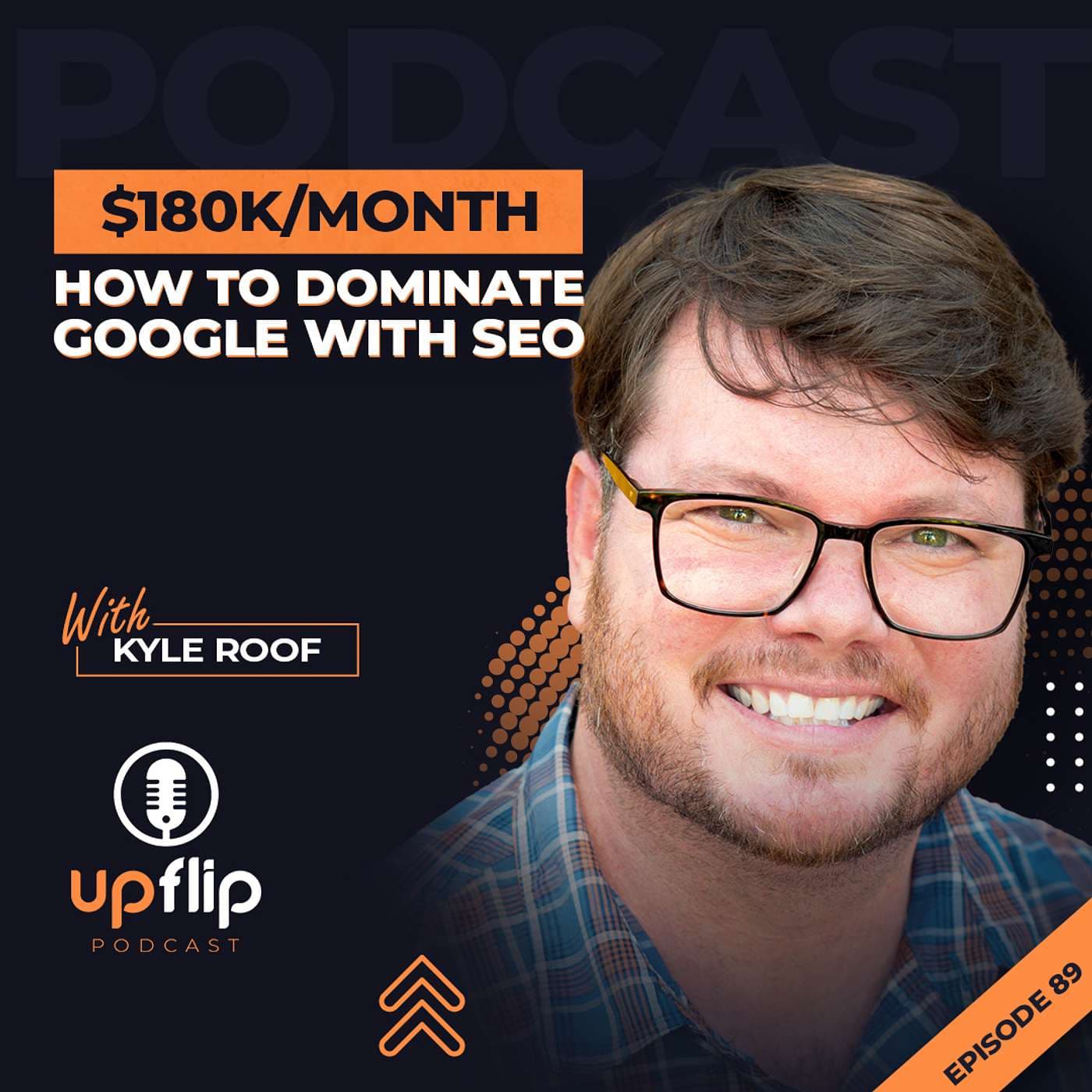
UpFlip Podcast Episode 89: $180K/Month - How to Dominate Google with SEO
Episode Overview In this episode of the UpFlip Podcast, host Kyle Roof shares his journey from freelance SEO work to co-founding High Voltage SEO, a successful SEO agency that generates $180,000 monthly, even amidst the rise of generative AI. Kyle explains the fundamentals of SEO, how to stand out in a crowded market, and offers valuable insights for both budding entrepreneurs and established business owners looking to leverage SEO for growth.
Key Points
Introduction to SEO and Kyle Roof's Journey
- SEO's Resilience: Contrary to popular belief, SEO is not dying due to generative AI; rather it is evolving.
- Founding High Voltage SEO: Kyle entered the SEO field in 2014 when he took over clients from a friend and later formed an agency, High Voltage SEO.
- Unique Selling Proposition: High Voltage SEO differentiates itself by conducting scientific tests on SEO strategies, establishing a data-driven approach.
What is SEO?
- Definition: SEO (Search Engine Optimization) is the practice of improving the visibility of a website on search engines like Google.
- Storefront Analogy:
- A website without optimization is like a neon sign in a basement – it looks good but serves no purpose.
- SEO increases visibility and traffic to a business, similar to visually attracting customers to a physical storefront.
The SEO Process
- Four Core Principles:
- Find: Ensure Google can locate the website.
- Crawl: Make sure Google can navigate the site easily.
- Index: Ensure Google understands the content.
- Rank: Optimize content so Google ranks the page favorably.
Competitive Edge
- Scientific Testing: High Voltage conducts SEO tests to validate strategies, differentiating them from competitors who may lack empirical backing.
- Communication and Roles: Emphasis on defining roles within the agency to ensure accountability and streamline processes.
Common Mistakes in SEO
- Hiring the Wrong People: Kyle emphasizes the importance of swift decisions regarding team fit and the negative impact of keeping unsuitable hires.
- Understanding the Market: Businesses must familiarize themselves with SEO jargon and metrics to engage productively with SEO service providers.
Managing an SEO Agency
- Low Start-Up Costs: SEO agencies can operate with minimal expenses until they secure clients.
- Building a Strong Team: Effective communication and defined roles are critical in a remote work environment.
Engaging with Clients
- Client Education: Educating clients about SEO practices ensures mutual understanding and sets realistic expectations.
- Opportunity to Learn: High Voltage aims to empower clients so they feel confident to manage their own SEO following their contract.
SEO Metrics and Monitoring
- Key Indicators:
- Growth in keywords and impressions are critical metrics to gauge SEO effectiveness.
- Monitoring competition and adapting strategies is essential for long-term success.
Future of SEO with Generative AI
- AI's Role: Generative AI can aid content creation but will not replace the need for quality SEO practices.
- Efficiency: While AI can accelerate content creation, it can also amplify poor SEO techniques if misused.
Conclusion
- Continuous Learning: Kyle encourages listeners to engage with resources (e.g., Moz, Ahrefs) to deepen their understanding of SEO.
- Empowerment Through Knowledge: Effective SEO can be mastered by individuals, and agencies should be transparent about their strategies.
Resources
- [High Voltage SEO Website](https://hvseo.co/)
- [UpFlip Academy Google Ads Course](https://bit.ly/3YBzKAs)
- [Franchise Guide](https://bit.ly/4aWuGvc)
Connect with UpFlip
- [YouTube](https://www.youtube.com/@TheUpFlipPodcast/)
- [Instagram](https://www.instagram.com/upflip/)
- [Facebook](https://www.facebook.com/upflipofficial)
- [Twitter](https://twitter.com/upflipofficial)
---
This episode of the UpFlip Podcast provides a treasure trove of insights for those looking to enhance their understanding of SEO and how to apply it to their business strategies effectively.
Written by AI. May contain mistakes. Listen to the episode to check what was said.
Transcript
Automatic transcript. May contain errors.0:00With ChatGPT making the rounds on the internet, many say it's just a matter of time before SEO dies. unless you're Kyle Roof, in which case SEO is alive and well. GPT and generative AI can help you do SEO a little bit faster, but if you're a bad SEO, it's just going to help you do bad SEO faster. If your website was a storefront, you have people walking by, SEO can increase the foot traffic. The first thing is, can Google find your website in the first place? And there are aspects of SEO that help that happen to encourage Google to find your site. Once Google can find your site, can Google crawl your site?
0:33can it get through your site and get to all the pieces of your site effectively and easily. You can't teach Google anything. So do the search for the term that you want to win, look at the pages that Google is rewarding, and then that's the page that you need to give Google. Let's learn how to dominate Google SEO and print heaps of cash while doing so. Kyle, welcome to the show. Thanks for having me. Happy to be here. So let's get started with, you know, when did high voltage SEO start? How did you get to where you are right now? Yeah, sure. So it was 2014 or thereabouts. I'd been working with my now business partner on some projects.
1:08He was hired by this company in Australia to be their CMO. And he gave me all of his remaining SEO clients. And then about two months later, they fired him. And it wasn't anything that he did because a few months after that, they went bankrupt. But after he was fired, he came back and was like, so about those SEO clients that I gave you. And we had worked together for a bit on these projects. And so both kind of came to the realization, why don't we just start an agency? And so that's what we did. We formed an SEO agency kind of starting with those clients. Incredible. And what would you describe as high voltage's kind of competitive advantage?
1:39What makes you different from SEO agencies, which, you know, if you want somebody who's really not great at SEO, you can probably find one super cheap somewhere on the internet. What makes high voltage different? In 2015, I spoke at my first conference speaking on stage, and it was a very high level conference, And there are only about, I'd say, 40 people or so in the room, real high-level group. It was a kind of conference where you could talk to the people presenting. It was real intimate, kind of a back and forth. And the topic that I was seeking on was how to run SEO tests, how the method that I had developed for running tests.
2:11And I really thought it would be collaborative in the sense of, okay, this is what I'm doing. And then other people would share what they were doing. And about five minutes into the talk, I realized quite quickly, nobody is doing this. No one's doing this at all. Like people are doing some things, but not in this particular way. And that's when I realized we had a huge edge that we could then put out that we actually run SEO tests. And the line that we used back then that was really helpful to land clients was, you know, talk to the agencies that you're looking at, ask them what tests they're running right now.
2:38And if they don't have an answer to that, that means they're going to test on your site. You know, they're learning on your site. And we were really able to distinguish ourselves as this is a scientifically backed method. This is math based and kind of differentiate ourselves that way that it's not, you know, magic and pixie dust and stuff like that. that there's real science behind what we're doing. Now, I also want to ask about your partner, your co-founder and getting things started. Now, first to establish for our listeners, you did not know each other in person when you first started working together, right?
3:06Yeah, that's correct. That's correct. He actually hired me for a job off of like freelancer or something like that, or Elance or whatever it was called way back in the day. He posted a job and I responded to it. That's kind of an incredible story because like obviously founding with a partner is different from being a solopreneur in that moment and probably an extra layer of challenge when you're not necessarily like in the same place. Can you talk about how you kind of work through those challenges? One of the things that you really need to do is define roles as you aren't going to be going to an office together and staring at each other.
3:37And you can't just kind of pop over and say, hey, you really need to define who is doing what, who's responsible for what things so that that way, you know, all those things will get done. Otherwise, I think it's really easy for things to slip through the cracks. Andy, my business partner, is really good at processes. running a business is one of his special skills and how to systematize that, which is also, I think, a huge thing that you do when you're running a remote office is you have to have really strong SOPs in place, not just for the consulting that you're doing, but also how you're running the company and how you're getting things done.
4:05And Andy really does that very well. I was more on the SEO side, developing the techniques and the strategy. And then as we grew, kind of overseeing the implementation of those things, I'm also sort of the face of the company. So I do the podcasts like this one and I go on stage and I speak and I go on the road and stuff like that. And so we quickly able to identify where our strong suits were and then enabling that person to do that. Whenever we have like disagreements on something, if it is on the business side, I know that Andy has heard my objection or my thoughts on what we're doing. And in the end, I will defer to his judgment because he does that well.
4:35When it's on the SEO strategy side, if Andy disagrees with something, he would voice that disagreement or offer the suggestion. But then at the end of the day, if it really does come to an impasse, that was on me, you know, and he would defer to my judgment. And in doing so, you really created a really nice partnership to be able to grow out this SEO agency. And even though we really didn't meet face-to-face for about a year and a half. And as you started the business, how did that differ from your previous life as a freelancer? And what was that transition like for you? Wasn't too different. My life as a freelancer was not that long, actually.
5:07It was more like I kind of started doing it and then was into the agency. Communication is absolutely critical. And so we have an internal policy that if somebody has sent you a message on one of the front of the, on your team, you need to respond within 12 hours, kind of regardless of where you are on the planet. And if it's a client, it has to be responded to within one business day. And so kind of making sure that that communication is happening makes it a lot easier in order to kind of transition. And that's what I was already doing in my freelance roles anyway. I had that level of communication.
5:33And so we just kind of made sure that that continued and then things really weren't too different. And what might you say are the advantages of founding an agency versus working as a freelancer? Because, you know, sometimes those can kind of feel like two sides of the same coin, but there are certainly pros and cons of each. And I'd love your thoughts on that. There are certainly people that it's a one-man band, right? And they're calling themselves an agency when really it's just more like one person and they're coordinating some VAs. And there's nothing wrong with that. I think the reason that you would do that rather than just kind of calling yourself a freelancer is credibility.
6:05If you want to land, I think, larger clients, you'll need to be an agency. I don't know. I don't think it's quite as easy for a freelancer unless they're specializing as like a consultant. You know, I will come in and I will work with your team to, you know, build it. I've seen that done successfully and them being very upfront that they are just one person because that's all that they're doing. They're not doing any fulfillment. But otherwise, I think if you want to grow and you want to land larger clients, I think you will have to become some form of an agency or present yourself as an agency.
6:36Reminder for our listeners that learning from the experts is one way to avoid making costly mistakes with a new business. You can find that kind of expert advice on the UpFlip Hub, which has advice and insights from real-world business owners that you can apply to start or grow any business. Kyle, coming off that little ad read there, I'd love to hear a little bit from you about what mistakes you might cite that you made early on in the business and what lessons you learned from them and that our listeners could learn from them as well. I think one of the biggest things identified, hiring the wrong people.
7:06I think you can tell early on if somebody is a good fit or not. and if they aren't a good fit, it's only a good thing to get rid of them faster. The longer they stay around, the more they're going to drag down their team members. They're going to cause problems here and there. It's going to be harmful for your business. And so once you identify that somebody isn't the right person for that position, you need to either find them another position or they need to not be in your company anymore. And even to that end, I was fired by our HR department from hiring. Like, you're not good at this. You know, the people that you bring in are not who we need.
7:39And they're right. They were 100 % correct. And so knowing your own limitations in that too, like, you know, we need to hire A players here and who on our team can do that, can properly evaluate who we're looking at and make sure that they're going to be able to produce in the way that we need them to produce. And me acknowledging that I was not that person on the team was a big movement forward for us. And the people that we've had in charge of that subsequently have done an amazing job. That your HR department was able to fire you from hiring people and you and your co-founder being able to so clearly define roles indicates to me that as a company and perhaps as a person, you have cultivated a culture of good feedback and honesty with each other.
8:22How have you gone about doing that? Or is that something that's been sort of innate to you as a person or did you have to learn it? I think it's one of those things you have to treat people like people. And if you do that, you're going to get it in return. And so acknowledging somebody else's strengths, when you also talk about their weaknesses, that's not a negative. That's like, hey, you are best used here. So you do this. I will work on that because I think I can do it pretty well. So, you know, if you have conversations like that that are treating people as they are, I think you can do pretty well.
8:52I don't know that we ever sat down and really had that conversation, like how to do that sort of communication. It did seem to come naturally. I would also say it's a lot easier to have conversations when things are rosy, when things are like just starting off and your things are good. Have the harder conversations then rather than letting them sit and fester. And then when it's an actual problem and then you have to have that conversation, it goes a lot worse. So set like boundaries, I'd set rules, I'd set however you want to handle things. And you want to set that as early as you can so that when times are a little tough, you already have that in place and you know what to do or what you're doing.
9:23And then one last question kind of here about the operation of the business. I'm curious if somebody is listening and they are interested in starting an SEO agency, what are some of the expenses that they should be planning for expecting as they both get started and then grow the company? One of the really nice things about doing an SEO agency is you don't have a lot of expenses until you have a client. It's pretty cool that you can basically run a company extremely lean until a client comes in and then you kind of can grow the business as you gain clients and your expenses go up kind of in proportion to the clients that you acquire.
9:59The initial startup cost is extremely low. I mean, you don't have to have an office. You can work from your kitchen table with your computer and Slack and those types of programs are free for a certain number of users. So you don't really have those expenses until you actually have a decently sized team. So a lot of those tools that you might end up paying for later will let you grow or they charge based on seats. And so that's just presumably as you're bringing in people for those seats that you are bringing on more and more clients. That is actually one of the sexier things of running an SEO agency is that you can do it with very little capital outlay to start.
10:35Maybe the only thing you might be doing might be advertising, but there are still a lot of ways you can do that at minimal cost as well. So that was, I think, a reason that we were able to start an agency is because it didn't take a lot of cash to get it up and running. Now I want to shift our focus of the conversation a little bit for the other subset of our listeners who maybe don't want to start an SEO agency, but obviously have a lot of questions about SEO. And since we have an SEO expert here with us, I'm going to take the opportunity to pose some of those questions. So just to begin, for those that maybe are only familiar with it as a buzzword, why is SEO important for business owners?
11:08If your company has a website and you're not really doing any optimization, and this is for most businesses, obviously not all of them. most fall into this category. If you've got a website and you're not optimizing it, it's really like having a neon sign in your basement. I mean, it looks pretty, but it's not doing anything for you. You want that sign to be effective to draw in clients, that's where you have to optimize the website. And that's really what SEO can do for you is get your website out there. I think one of the things about SEO is that it's really, I like to think of it as like a storefront.
11:36If your website was a storefront and you have people walking by, SEO can increase the foot traffic of people walking by your storefront. They'll increase the foot drag of people seeing your website. It can't necessarily get them inside the store and it can't necessarily force them or make them buy anything more than they would have anyway, but it can increase the number of people that are going by. And if you look at the numbers, like let's say for every hundred people that come by, 10 go into the store and one will make a purchase. If we can just increase the number of people walking by and all those numbers remain the same, you make more money, you become more profitable.
12:08And so that's really, I think the objective of SEO is to get more eyeballs on your website because then just if the numbers hold steady, you're going to do much, much better. That's a really, really useful analogy. Thank you for sharing that. Can you give us some of the core principles of effective SEO? What should people be looking at in their SEO strategy to make sure that it's going to be effective for them? There are really four parts to that. It goes under find, crawl, index, and rank. Rank is number four. And a lot of people think of SEO and ranking as the same thing, and that's not the full picture.
12:39The first thing is, can Google find your website in the first place? And there are aspects of SEO that help that happen to encourage Google to find your site. Once Google can find your site, can Google crawl your site? Can it get through your site and get to all the pieces of your site effectively and easily? And then once Google can crawl your site, can Google understand what your site is about? Can Google index your site? Can Google say like, okay, I see that this page is about this thing, and I'm happy to put it into the index. And then once it's in the index, that's when a ranking comes in where you want to do things to optimize the page so that Google will like it more.
13:09And that takes signals that Google can find on the page and perhaps outside of your site. That's the fourth step of it because you can do all the on-page work, all the off-page work. But if Google can't find your site to begin with, it doesn't matter. So you really need to make sure that you've got those four elements that you're keeping track of those things or checking those things. And then whoever's providing your SEO for you is discussing those as well. Because again, it doesn't matter if you, it doesn't matter how great your on page or your content is, if Google's not going to index it, you know, so making sure that you're hitting those four principles really kind of comes out.
13:40That's what core SEO is. You know, there are certainly people that have listened to that, have discovered, okay, I need a lot more help than I maybe thought that I did. where should they turn initially to start learning a little bit more about SEO? What are some like knowledge resources that they could go to that they can then better understand to then probably either go much deeper or bring somebody into the company to work on their SEO? Where should they turn first to learn more? Yeah, that's a great point because you do want to have like the terminology. You want to know what you're talking about.
14:09You want to know the basic concepts there. It's kind of like, you know, you take your car to the mechanic. I don't, I'm completely beholden to them because I have no idea what's going on in the engine. And they could tell me my slipper widget is broken. I'd be sure. I'd be like, okay, why not? That must be a thing. And what's nice about SEO is that while there is a lot to it, you can wrap your head around a lot of the concepts so that you can at least be knowledgeable about what can be there or what should be done. Some of the major tools out there like Moz or Ahrefs have really good beginner guides.
14:39I'd start there. They're free resources. They are in kind of written form and also video form. And I think that's going to give you a lot of the basics, at least give you the terms. And I don't necessarily agree with everything they're going to talk about in terms of strategy, but that's not the point. The point is you'll know what those terms are, what you should be looking for, what you should be considering. And a lot of the information they provide there, I think, can do that for you without really any expense, just the time of going through it. And they're not very long either, as I recall.
15:04I haven't looked at them in a while, but last time I checked it, they're pretty digestible. And I think that will at least give you the playing field. This is what we need to be looking for. This is what we need to do. And you'll have the terminology so that when somebody's talking to you about what they're doing and why, you'll know what those terms mean. And one of the beautiful things about SEO and a digital marketing world is the vast amount of data that we can end up with at our fingertips, but maybe it can also then create a lot of noise. What are the key metrics that somebody should be looking at to understand how effective their SEO is being for them?
15:37Healthy websites will gain keywords and impressions. That means they will grow in terms that Google is ranking that site for, and then the number of people seeing those pages, those are impressions. It's actually the opportunity to click into the site. Those are the two, I think, biggest indicators that your SEO is doing a good job. You are increasing in keywords and impressions. We do measure things like clicks, and we do measure things like ranking position and stuff like that. But a lot of those things don't really tell the story about how effective the SEO necessarily was. But I think the two growth factors that you can look to and you should be monitoring are, am I gaining keywords?
16:16Am I gaining impressions? Because if you're not, if you're flat or you're going down on both of those, that's a sign that there's a problem. And so somebody maybe recognizes, hey, I've got a problem. I'm going to implement an SEO strategy. I'm going to hire a company to come do that. What kind of timeline should they have as an expectation to start to see results and improvement from whatever changes they make. Internally, well, in our company, we have a proprietary algorithm that we put together that gives an estimate on how long it will take to win certain terms. And that starts from a one to two month sort of situation and goes to 12 months plus.
16:49A lot of it is dependent upon how many competitors there are that are going after that particular term. So you can look at this by doing what's called an all in title search. So you write all title and squish it all together, no spaces, and then colon, and then put in the search term that you're interested in, whatever product or service you're selling or that thing that you want to show up in Google for. And then Google will show you how many results have that term all in the title. And if it's like 20, 50, that's a great number. So that's not a lot of people going after that particular term.
17:18When you get into the tens of thousands, that's a problem. That means a lot of people are very interested in that and you have to beat all of them, or at least you have to be a bunch of them in order to show up on page one. So when you look at terms that have a fewer amount of results as an all-in title, that's something you can probably do in a month or two. The competition is not overly aggressive towards that term. There are not a lot of people going after it, but if you see it's in the tens of thousands, that could be a term you're never going to win. And so that's maybe a way to gauge the terms you're interested in and how likely you are of winning them or not.
17:47So this is going to bring us to a section of our show that we call our Fan Blitz Questions. These questions come from our YouTube community and listeners, you can go join the YouTube community by going to youtube.com slash upflip and you can post questions to future podcast guests. Kyle, some of these questions are very specific and I'm sure you could talk about them for a very long time, but we're going to give you about 10 to 15 seconds to answer each one of these and or point the listener to a resource. Are you ready? Quick question on the rules. Is it 10 seconds in total or 10 seconds for each one?
18:16For each one. Okay, okay. A little loud buzzer will go off. So if you take 15 or 20 seconds, we'll allow it. What will I win? What will I win? Just the love and adoration of our listeners. That's all I need. That's all I need. Right. Right. So to kick this off, we got a question from Brad King looking for best advice for establishing informational database sites. So this isn't an SEO tip, but something I would consider doing is like a Chrome extension or a plugin or an app. And if you can add some sort of gamification aspect to it, people love useful tools. And a really good way to have people share your website is to have them using your tool and they're going to tell other people about it.
18:52So I would look to do something like that. Next one is from AB, who wants to know how you can get blog content to rank on top of search results that Google mostly pushes e-commerce products for. So this is a great question. And the answer is you can't. You can't teach Google anything. So do the search for the term that you want to win. Look at the pages that Google is rewarding, and then that's the page that you need to give Google. And if it's a long form article, that's what you got to do. People come to me all the time like, I'm trying to get my product to rank and I can't get it to rank. And then you do the search and there are no products on page one.
19:21And so there are 500 word product pages going up against a 2 ,500 word long form article. You're never going to win. So look at the search, see what Google is rewarding, and then Google that page. This next one's from Darian, who works for an education company offering Lean Six Sigma training and certification tips on nurturing leads, new email subscribers to deals. So something that we've done is like a free video series that's educational. So I can see in this situation like five mistakes everyone makes with Six Sigma or is Lean Six Sigma right for you kind of a thing and make it educational and informational so that one people know you know what you're talking about.
19:57You've thought about these kind of things. And by the time they reach back to you after they've gone through that series, that means they're really warm. Like they saw your series, they liked it. Now they want to buy from you. So that's something we've used effectively and perhaps could be used effectively here. Chris Tria has a villa that's on Airbnb, recently put it up also on Facebook and Instagram. How can I increase ranking on Google and on those social media platforms to increase visibility without paying for ads? So I know Airbnb results will appear in the SERP sometimes, and I think Facebook does as well.
20:29Probably the only thing you can control there is your title and the description of the property. And so if you can write a title that is keyword rich and keyword focused, and the same thing with the description, if you're getting terms in there that people would search for, that's what I mean by keyword rich, that might give you an opportunity for that to show up in Google. I'm not sure there's too much else you could do. Last one here. What would you tell your previous boss? You know what? I've never really had a boss. The bosses that I've had were in transition jobs, like waiting tables while I was in college or bartending when I was in law school.
Read the full transcript
20:55It was pretty rare for me to have had a boss, so I left on good terms with all of them, too. So the only thing I would tell them is, hey, things were good. The plan worked, and here we are. I love it. And that is going to do it for the FanBlitz questions. And listeners, thanks to you, the Upflip podcast has hit a major milestone with over 500 ,000 downloads and counting. If you want to help us continue to grow the show and reach more people who need to hear it, leave a rating and review on Apple Podcasts today. Hey, Kyle, I want to kind of continue our conversation in SEO methods and kind of some of the products that you offer.
21:28You've mentioned running SEO tests. Obviously, I don't expect you to give us any of the proprietary information here, but can you talk about like the process of developing SEO tests and what that kind of looks like for you all and how you kind of make sure that what you're doing is working? I can tell you running tests is actually not a lot of fun. It sounds like it's fun, but the amount of tests that end up not working far surpasses the ones that actually give you a result. And I'm not saying that you found something you're not found, because not finding something is also very valuable. But in just the ones where you're halfway through the test and you realize you set it up wrong at the beginning and the results you got are worthless.
22:04That happens more times than not. But there's a concept in psychology and psychological testing that's called the weight of smoke. How can you weigh smoke? And it comes from this apocryphal story about Isaac Newton being challenged to weigh smoke. And what he did was he weighed a cigar, it's 10 ounces or whatever. He lit the cigar down to ash. He weighed the ash at three ounces. The weight of smoke is seven ounces. And the concept there is that everything is measurable if you can think about it the right way. So psychology has those questions like, how do you measure happiness? And I personally don't know how to do that, but they've done that because it's not necessarily measuring that particular thing, but it's kind of getting around it or getting to it in a way.
22:41And it's just, it requires the imagination to do so. And so while Google is wildly complex and it's one of the most amazing things that's ever been invented, you still can learn things about it. You still can test it. It just requires thinking about it in the right way. And that's the biggest part of the SEO test process is getting down to what you actually are trying to measure. Someone will say like, I want to see if this technique works. Well, that could be a case study, but it wouldn't necessarily be a test because a test needs to come down to one thing. You're measuring one thing and you're seeing the outcome of that one thing.
23:14And so we don't need to go into the details of the test process, but really if you decide to run a test, you want to see if something works, really get it down to that one thing that you're looking at. And then you can probably figure out a way to measure that. One of the first products that you developed for clients was called the reverse silo. Can you explain what that is and how it ultimately helps pages rank better? That was a lot of fun. That was a fun breakthrough in my SEO moments or my SEO career. A lot of people think about that target page. That's the page that you've got for a term that's very important to you.
23:46And you want to push that up in Google. And you're going to work on the content on that page. And maybe you're going to post it elsewhere to get people to backlink to it and stuff like that. That's your target page. What a lot of people don't realize is you can create pages on your site that support that page. And the concept is that those pages all link to each other and then they link up to that target page, creating what we call a reverse style. And the reason we call it reverse style is because most people think about that target page kind of at the top of a pyramid throughout their site. And this is kind of looking at it from the other way.
24:13That layer at the bottom of the pyramid is actually the important layer because you're going to use that. You're going to research keywords that you can win relatively quickly. And as those pages rank for those terms and as they start to get clicks and impressions and stuff like that, they build their own authority. They build their own strength. And if you properly interlink in the reverse silo structure, then you can benefit that target page by just using the strength of your own site. It's an extremely effective technique. It is white hat, which means it's within Google's guidelines. It will also help reduce volatility in your site.
24:43If your site is really bouncing around a lot, building out these silos can actually stabilize your site and creates this cycle of good at your site. So that's kind of the very basic concept of what it is, but it's finding terms that you can win quickly, putting up pages for each of those terms, interlinking those pages together, meaning one page links to the other, that one links to the next one. And they all link to that target page you're trying to benefit, and they don't link anywhere else because the purpose of those pages is only to support that target page. it's my understanding that the client you had this breakthrough with ultimately ended up firing you despite the fact that it worked and got the page up on to page one what did you learn from that experience you know uh i that was hilarious when when it happened it was actually like i wasn't even upset i just thought this was the funniest this was the funniest thing of all time this site they had these really competitive terms and they were type of terms that only get a handful of clicks and if they could get it those clicks it could turn into real money when you looked at the metrics of this site in any tool deal, like their rating, if you will, like their domain rating was a zero or a one, depending on the tool, because some schools default to a one, you know, in terms of a score.
25:50So like it had no external strength that could be measured by the tools that people would use. But I saw that they had three years of blog posts that were excellent, like incredibly well-researched pieces, decent length, and you can see they're getting a lot of traffic. So I realized like, you know, these things must have power of their own. They've acquired all this power. So then through interlinking, we said, okay, these five are going to support this target page. And these seven are going to support that target page. And these three for that target page. And we basically divvied up the entire blog and then did the interlinking structure.
26:20And I think we got eight of their top 10 terms on page one in about a month, month and a half. And it was at the end of that second month that they said, we didn't do anything. And they fired us. You're not doing SEO. And maybe the lesson learned would be like, you need to explain what you're doing a little bit better and why this is SEO, but I think they were probably going to fire us anyway. But I did learn that the technique works. You know, that is, this is an amazing technique that's very powerful and it doesn't require any SEO magic. It's simply using the resources that you already have and just making sure that you've linked correctly.
26:56Is this a field where you find yourself often working with clients who have enough knowledge to be dangerous in that, like a doctor dealing with patients who read the latest article on WebMD. And so then now they have a lot of strong opinions that are not necessarily anywhere close to your expertise. Do you deal with that a lot? And how do you deal with that? How in my career, I don't deal with it as much, but in the beginning, absolutely. Like we'd be in the client meeting and somebody said like, you know, my cousin's uncle's nephew's brother has a blog about Disneyland. And they said that they didn't like this thing that we're doing.
27:28It's like, you gotta be kidding me. The best way to handle those situations is to handle them in pre-sales. When we sell the client, we show them this is approximately what we're going to be doing. We are a very content-focused, researched-focused agency. We want to get a lot of content up, the right content to help you out because that in the long run will make your site evergreen, the evergreen growth process. It's not going to be a quick spike in traffic. It's going to be a slower burn, but this is why. And you lay all that out. So sometimes we'll have people that talk to us and they have a one-page website and they don't want any other content.
28:03And it's like, well, then we're not a good fit. That's just not going to work because we need to get content on your site. And that's what our techniques are, are all based around. Or they're like a situation where they've got some proprietary type build on their website and it takes four weeks to get a webpage up. Well, that's also probably not a good fit client either because we want to get maybe 15 to 30 pieces up a month, something like that. And if it's going to be that long of a process, then we're going to be sitting on our hands for a while. So again, that's not a good fit. So I would try to avoid those situations at the beginning by saying, this is what we're going to do.
28:34And if they're not happy with that, if you're getting pushback from them, it's only going to get worse after they're paying you. And so you can then kind of make that decision like this isn't the right fit here. And I think you need to find a different agency. I want to not fully go back to your storefront analogy, because I'm curious about how SEO intersects with a site's conversion rate. is optimizing a website for conversion go hand in hand with optimizing for SEO or how do they work together to help businesses further monetize? I think they are slightly different things. As I mentioned, SEO will definitely get you more foot traffic and that's really its main goal.
29:11But some of the things that are important in SEO, I think are also important in conversions in that, you know, that term you're going after, you want that high up on the page so that people and search engines read it quickly. So it's easy for the search engine to understand this is what this page is about, but then it's also reassuring for the visitor that, okay, I know what this page is about. Have you ever looked at the description that's in Google and the search results and you click on it and then you can't find that information on the page? Yes. Very frustrating experiences and it probably kills conversions.
29:39So in that sense, why would you have written this really great thing that got the person into the page, but not also have that on the page so they can get that information that they're looking for and potentially convert. And so that's where I see a lot of SEO and CRO kind of coming together is in those very practical things of getting your most important stuff at the top. I think that's a pretty basic and powerful CRO principle as well. And then also the thing that brought them to the page that they also are satisfied once they get to the page. And that comes with the description matching what's actually there.
30:06When you're developing an SEO strategy, does it differ by the type of business or is the only difference really going to be like what keywords you're trying to rank for? Or are there certain strategies for certain types of companies that aren't effective for other types? A lot of it is relatively the same, but there are some definite bespoke aspects to it. If somebody has a financial advice type site versus somebody that's got an e-com shop, those are going to require some different things because you're dealing with different types of pages and you're also dealing with different audiences. A lot of the concepts though for the research are going to be the same.
30:40It's just, you're going to be tailoring it to that specific niche or keyword type or even like persona type too. A different person is going to one site than the other, most likely. Those things will differ. The only other thing I would really be concerned about is if you're looking at an agency and they've got kind of one size fits all packages, like with this package, you get four backlinks a month. Well, do you need four backlinks a month? Do you need more? Do you need less? Do you need that every month? Probably not. There are probably situations where you don't need any backlinks and there are going to be situations where you need a lot.
31:08And so things need to be adaptive to the situation, the goals of the site, and then obviously the type of site that it is. So that's kind of where I think the customization would come in. And obviously, you know, much of our conversation lurking kind of in the background of it is Google as the largest search engine, which makes sense. But are Google SEO strategies also going to lead to high rankings on other sites? Or are there certain things that need to be done for Google and certain things that you need to do for some of the other search engines that are out there? What's nice is most of the other search engines are really focused on on-page.
31:41And the on-page that you're going to do for Google is often really what they like as well. The other thing is that Bing runs most of the other search engines. They're built off of Bing and you can do a quick search and find out, but nearly every major search engine that isn't Google is run off of Bing's search results. They tailor them a little bit and tweak them a little bit, but it's essentially just a dressed up version of Bing. And the more that I've worked with sites, the more I can tell you that Bing really does like clear, easy to understand pages. Surprise of the century. So does Google as well as your visitors.
32:14And so if you have pages that are easy to get through in terms of like the semantic structure that has one title, you know, one each one, it has different sections on the site with little subheadings, you know, that makes sense. That's what Google likes. And if you just do that by nature, you will get those other search engines and you don't have to worry about doing something different for like five different minor search engines because they're all probably Bing anyway. Sort of on that, and this will kind of transition us into our next kind of section as well. How often are SEO best practices changing?
32:42Not a lot, to be honest with you. If you were to think about Google on a bell curve and there's that 80 % in the middle, that's like the core of Google. And then maybe you got like 10 % on either side. The stuff that changes is that 10 % on either side, not the core part. Google gives good results. And the reason that they have the market share that they have is because people like using Google and they know that they type in something, they're likely to get the information that they are looking for. And so there's really no economic reason for Google to change that. If people are happy with the results, then they don't need to change it.
33:09They can spend their money on other things. What they spend their money on is on those fringes where somebody's trying to game Google in order to get better results. And that's the stuff that changes a lot. And that's where people are constantly trying to stay ahead of Google because that's the game they've decided to play. If you don't do that, if you kind of stay in that middle part, you're going to be fine. And you don't really have to worry too much about, quote, Google changing all the time. You do need to be mindful of your competitors changing all the time. And the goalposts do shift as more people get competitive on a term.
33:36You might have to increase things on your site, or you might have to do something a little bit more. That's what you need to monitor. Not necessarily that Google is changing, but your competitors might care. Anytime you land on page one, the reality is you've pushed somebody off of page one, and they might not be happy about that. We often like to think of that we're the only SEOs in the world. And as we, I won this term, that's great. I'm the only one doing anything. And that's just not the case. There are other people that probably care about it too, and they're going to try to do something to get that term back.
34:00And so that's what you really need to, I think, focus on is watching the landscape to see if new competitors have come in, or if you can see a trend on what type of page that Google is rewarding, it might not be your type of page anymore. And that would mean something like you need to create a different page. Those are the things that I would monitor and worry about in terms of changes. So then looking ahead, obviously we're in the midst of a disruptive moment in a lot of industries with generative AI, or at least businesses looking to how can this be disruptive? How do you foresee generative AI impacting SEO?
34:30The sky's falling. SEO is dead. For the decade plus that I've been doing SEO, SEO is always dying. Something is killing it, or it is dead every year. And somehow not only has it survived, it's thrived. And in spite of this new thing, which I think will have some impact. It will not have nearly the impact that a lot of people are predicting. For example, you know, GTP4 came out in what, February, I think? And people said, this is it. This is the death knell. And now we're in July and it still hasn't done that much. You know, it really hasn't changed that much. What I think it will do in terms of SEO is it's going to help you generate content a little bit faster.
35:15It'll help you with content ideas. And I think it'll help get you an okay first draft on some things. But that's about it right now in what the current iteration of GBT is. It's not the death of SEO by any way, shape, or form. I was talking with a friend and it occurred to me, GBT and generative AI can help you do SEO a little bit faster. But if you're a bad SEO, it's just going to help you do bad SEO faster. That's all that it's going to do. It speeds things up, but it doesn't necessarily provide anything good, you still have to give it that thing to give it back to you that would be useful and something that can benefit your SEO.
35:51But otherwise, if you just let it do its thing and you're not good at SEO, what you're going to get back from it is not good SEO. And it's just going to harm your sites faster. As the company has expanded and as your clients have gotten bigger, what does your day-to-day look like now in the business? Mine really is more just on the hiring strategy. I haven't spoken to a client in years. I'm not part of the sales process. And then once they onboard, I'm not part of the fulfillment process. They may have seen me speak or they may have seen a video or they listened to a podcast like this. And that's maybe how they heard about the company and they heard about my techniques.
36:20But I will not be involved with the client on a day-to-day basis. But I will be there for the strategy. You know, when the account managers are talking about, okay, these are their needs. These are the goals. This is what we want to do. What do you think? I'm involved in that part of it to make sure that the strategies give us the highest likelihood of success. But for me, most of my day-to-day is spent on our software, Page Optimizer Pro. That's where I spend the majority of my time right now. And speaking of, we actually have an AI thing that we've implemented. And it, again, really is going to help people get their SEO done, hopefully faster and in this case better as well.
36:48But we do have a pretty big disclaimer that our tool, like any other AI tool, needs a lot of editing. When you get the content back, you can't just take that and put it on your site. I think that would be detrimental. You do need to edit for tone, brand, and factualness. Is this actually true? Because AI is really good at lying and lying confidently when it gives you information. Kyle, if you could pick the one thing that people take from this interview, what would it be? You know, this is the question that stumped me. I don't know if people know that a really good podcast like this one send out questions in advance, which is really nice.
37:18And so I can think about some answers and try to give something thoughtful. This one stumped me the most though. I hope people will understand that like there is a lot to SEO, but it can be done and it can be done very well. And it's not magic. The people doing your SEO should be able to show you everything that they're doing and they shouldn't have any problem with that. So one of the fun things when we lose clients, you know, say after a six month or 12 month contract is that they actually feel they have the confidence to go do SEO on their own. You know, that they've, they've seen what an effective campaign looks like and they feel that they can do it, which is fantastic.
37:47You know, so that empowerment is a great thing. So I guess maybe the takeaway is there's a lot to it for sure, but you can definitely wrap your head around it. And if you want to do it, you can do it yourself. Obviously it's a lot of work. So having an agency isn't a bad idea, but again, it's not going to be the same experience as taking the card to the mechanic as we talked about. You can actually be involved in the conversation and understand what's being done and why. What's your favorite business book and why? I would like to say I hate business books. Most of them, I really can't stand most of them, but a good one that I can recommend is called The Algebra of Happiness by Scott Galloway.
38:19And this book explores the idea of, can you be a high income earner and also happy and what would be involved in that? And I think it provides a really great perspective on how to be somebody that wants to be successful in a monetary sense. I really, really enjoyed the book. I've read it a couple of times and I always take away a little something. Kyle, where should people go to connect with you and or learn more about high voltage SEO? You know, the easiest thing would be to go to my website, which is kylroof.com. That's pretty easy. And my stuff is all posted there so you can see what I'm working on and links to like software training and the agency are all in there.
38:55That is gonna do it for this episode of the Upflip Podcast. Listeners, you can find more advice for how to start or grow a business the right way in the Upflip Hub. And if you liked this episode, make sure to let us know by leaving a review on Apple Podcasts or wherever you are listening right now. Kyle Roof of High Voltage SEO. Thank you so much for coming on the show. Thanks for having me. That was a lot of fun.
From the publisher
Have you ever wondered how to rank on Google with your business website? SEO is the answer, and Kyle Roof is the expert. In this episode he’ll share how to start an SEO agency that brings in $180,000 a month–even in the era of generative AI.
Kyle didn’t set out to start an SEO agency. He got started in 2014 when a friend and business partner took a new job and needed someone to take over his SEO clients. From these accidental beginnings, the two of them came together to found an agency–and High Voltage SEO has been thriving ever since.
One way High Voltage SEO stood out from their competition was by running SEO tests. In this interview, Kyle will explain how this gave them an edge in the market, as well as what they’re doing today to stay relevant as technology evolves. He’ll also share some insights into how SEO helps pages rank on Google and how to use these strategies to grow a brand’s digital footprint.
Resources:
- https://bit.ly/3YBzKAs - Take our Google Ads course in UpFlip Academy
- High Voltage SEO - Learn more about High Voltage on their website
Ready to be your own boss without starting from scratch? Grab our FREE Franchise Guide and unlock the secrets of proven business models that have already created thousands of success stories.
Connect with UpFlip:
- On Youtube
- On Instagram
- On Facebook
- @UpFlipOfficial on Twitter
For more insights to start, build, or grow a business, check out the resources on UpFlip.com or head to the UpFlip YouTube channel to see more interviews with business owners and experts.
Thanks for listening!


