
In short
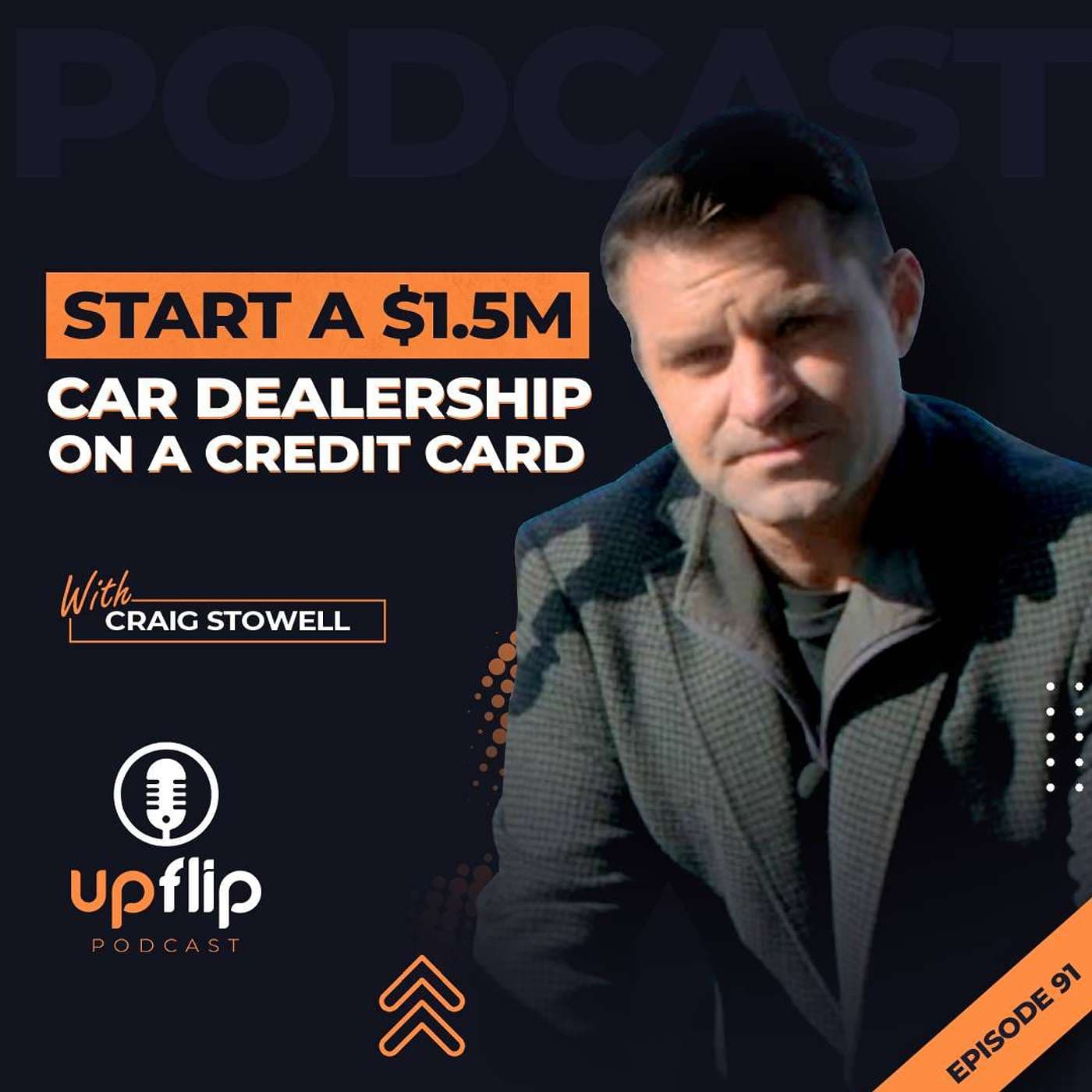
UpFlip Podcast Episode 91: Started a $1.5M Car Dealership on a Credit Card
Podcast Overview The UpFlip podcast hosts entrepreneur Craig Stowell, who transformed a $400 investment into a successful car dealership named Flying Wheels, achieving $1.5 million in sales. Craig shares invaluable insights about starting a car dealership with minimal capital, overcoming challenges, and building a profitable business through strategic car flipping.
Key Highlights from Craig Stowell's Journey
Early Entrepreneurial Spirit
- Craig's entrepreneurial journey began in childhood, flipping BMX bikes.
- By fixing and reselling bikes, he learned early lessons in business and value creation.
Starting Flying Wheels
- Initial Investment: Craig launched Flying Wheels with approximately $10,000 in capital and a credit card loan.
- Business License: Faced with challenges in obtaining a dealer’s license, he dedicated eight months to paperwork and learning the industry requirements.
- First Cars: Used credit card advances to purchase his initial stock of cars, leveraging 0% interest terms strategically.
Overcoming Fear and Risks
- Craig emphasized that he did not let fear dictate his actions; instead, he viewed risks as opportunities for growth.
- Building confidence and understanding the market were crucial to his success.
Major Lessons Learned
- Mistakes: Craig considers procrastination as one of his biggest mistakes, realizing he should have started sooner with his YouTube channel and business ventures.
- Continuous Learning: Craig stresses the importance of learning from everyday mistakes and adapting.
Business Strategy Insights
Sales Philosophy
- Craig differentiates his sales approach by avoiding the pushy car dealer stereotype. He focuses on customer needs and building relationships.
- Customer Engagement: Asking genuine questions to understand customer preferences is key to effective sales.
Marketing and Advertising
- Initially leveraged free platforms like Craigslist and has since expanded to include major automotive websites (Cars.com, CarGurus).
- Social Media: A significant portion of his business comes from YouTube, where he engages with potential customers through relatable content and tutorials.
Team Building
- Craig involves his team in the hiring process, ensuring that new hires fit well within the company culture.
- He emphasizes the importance of mutual respect and positivity in the workplace.
Current Challenges
- Staffing shortages are a significant challenge, leading him to take on various roles within the dealership, including manual labor.
- The rising costs of doing business, including operational costs driven by inflation, have necessitated strategic planning and budgeting.
Future Outlook
- The automotive industry is shifting toward online sales models, a trend Craig has embraced in his dealership operations.
- Craig believes that traditional car dealerships may become less relevant as more consumers prefer the convenience of online purchasing.
Key Takeaways
- Entrepreneurial Spirit: Cultivating an entrepreneurial mindset from a young age can lead to future success.
- Customer Understanding: Relating to customers and knowing their needs can enhance sales processes.
- Embrace Technology: Leveraging social media and online platforms is crucial for modern business success.
- Adaptability: Continuous learning and adaptation are vital in facing business challenges.
Resources Mentioned
- [Flying Wheels Website](https://www.flying-wheels.com)
- [Start Your Own Business with UpFlip Academy](https://bit.ly/3YDD6Dl)
- [Franchise Guide](https://bit.ly/4aWuGvc)
Conclusion Craig Stowell's story serves as an inspiring reminder of the potential for success in entrepreneurship through hard work, adaptability, and a focus on customer relationships. His journey underscores the idea that with the right mindset and approach, even significant challenges can be turned into opportunities for growth.
Listeners are encouraged to engage with Craig's YouTube channel and explore the resources available through UpFlip to further their own entrepreneurial ambitions.
Written by AI. May contain mistakes. Listen to the episode to check what was said.
Transcript
Automatic transcript. May contain errors.0:00How does one go from flipping BMX bikes in school to launching a million-dollar car dealership on a credit card? What does it take to turn$400 into a Ferrari? Craig Stoll knows, and his story is one you don't want to miss. Buckle up as we dive into the world of cars. Whether you want to know the secrets to buying them cheap or want the blueprint to start your own dealership. I get calls from all over the country and I ship nationwide because I make YouTube videos. It doesn't happen overnight, nor do I want it to. It's just slow and calculated growth opened doors for me. Any entrepreneur that's starting your business, do the math.
0:34figure out what everything costs going into it. Don't learn after the fact. Being a yes person instead of a no person is going to get you very, very far. When everyone in the world wants to say no because they don't feel like doing something and you say yes, someone will notice that. Someone will appreciate that. Whether it's your employee or you are the employee, someone's going to notice and respect that. I'm your host, Alex Freeman, and here's Craig Stoll on the Upflip podcast. Craig, thanks so much for joining us. Hey, I'm excited to join you. I love doing stuff like this. So to get us started, can you tell us when and how you started Flying Wheels?
1:09Yeah, sure. I actually started a car dealership long ago, right around 2008 in Florida. I was working for someone else 70 hours a week, and I've always done things like this. Like you had said, BMX bikes all the way to cars my whole life as a side hobby or side hustle. Decided I wanted to do it on my own. If I put that many hours into my own business instead of working for someone else, I thought there's no way I could fail. And here we are today. So I started a business in Florida, car dealership out there. I sold it when my wife got pregnant so we could move home. And I started again in 2010.
1:37So Flying Wheels has been 2010 to current and steadily growing since. So like you said, you've been doing all kinds of stuff since you were a kid. What do you think it was about your upbringing that gave you that entrepreneurial spirit? I didn't realize it until recently. My son's 13. So he's into buying and selling sneakers. He buys bicycles and he cleans them up and fixes them. It's fun watching him. I really enjoy that. it's like being a kid again. And it brings me back to when I was his age. I really had no interest in that until I wanted things. Once I got a want for things and it wasn't just bought for me, I figured out ways to earn them myself.
2:10So if I needed money, I figured out what I needed to do. Working for$4.75 an hour, back when that was minimum wage, if I want to age myself, wasn't cutting it. I would want a bicycle that all my friends have. My parents refused to buy it for me. So I'd start off with something smaller or get something free from a junkyard or on the side of the road, fix it, clean it, trade it. or sell it in the one advertiser way back then, which would be today's marketplace, and use that money to roll into the next bicycle. Bicycle to four-wheeler, four-wheeler to dirt bike, to my first car, to paying for college and starting my own business and so on and so on.
2:43It's just a snowball effect. Talk to me a little bit about starting that first dealership. How much capital did you have and what were kind of those startup costs? Sure thing. So I had no money. I was 23 when I started and my wife and I were girlfriend at the time were just starting out. And like I said, I was working 70 hours a week for someone else and there still wasn't a lot of money to be made. So I didn't have a lot of working capital. What I did have, I used towards my startup costs. I had about$10 ,000 and I figured I could get that done for around$10 ,000 to get everything started. And I did, but there were a lot of hoops to jump through and it was about eight months worth of work to get my dealer's license and find my location and get the correct bonds and take the classes, everything that was involved.
3:21It was tedious and a lot of work. And once I got my license, I realized I'm broke. I have no more money. So I took a credit card loan, not in advance. Credit cards, when you get your paper statements, they'll give you cash advance checks. And for a fee of$125 and 0 % interest, they'll give you a loan. As long as you pay it back within that certain timeframe, I'm warning everybody, pay it back. You're going to get in trouble if you don't. So I bought my first car with that credit card advance. I bought my second car still using that credit card advance. Now we're talking 0 % interest for like 12 months.
3:54So I had about 11 months to buy cars with that money before I had to pay it off. And by the time I got to that deadline, I was rolling at that point. And I could pay off the loan, have my own cash and just buy my own stuff slowly, inexpensive cars, whatever I could afford and work from there. That's obviously just a huge leap of faith. And a lot of people are afraid to take that leap? How did you overcome that fear and actually get yourself to do it? I've never really had that fear. I mean, everybody has doubts, doubts themselves, and then you grow confidence as time goes on and everything's a risk, but I've never really had that fear.
4:28And like I said previously, I was working 70 hours a week for someone else. And if I put that much time into myself, if I invested that much time into myself, learning, moving forward, the risk really isn't there. I already know there are other dealers out there. They're surviving. I've done this my whole life as a hobby anyway. Why not just do it full time? So I didn't really have that fear and that risk when I jumped in. I kind of had a little bit of confidence with myself, maybe too much confidence. On that journey, what's the biggest mistake that you've made as a business owner and what did you learn from it?
4:58I make a mistake every day and I learn from every mistake. And one of the questions you would ask me previously was what mistake I made and what I learned from it. I learn from my mistakes every day and I move forward. And without making those mistakes, you would never learn. I wouldn't say I've really ever made a gigantic mistake. Probably my biggest mistake would be I didn't start soon enough. I wish I did it earlier. I have a YouTube series that I fully wish I got into it long ago and I kind of procrastinated on it. You know, I'm behind where I would have liked to be because of procrastination.
5:27So that would probably be my biggest mistake was waiting too long to do things. Maybe having just a little bit of fear of jumping in and going forward. Hey, Off-Up listeners. You know we're all about diving deep into the real stories behind great businesses. Well, let me introduce you to another podcast that's had a massive impact on many businesses, including ours, Perpetual Traffic. They've been delivering cutting-edge digital marketing strategies for years. And with the rising cost of customer acquisition, they're more relevant than ever. Perpetual Traffic recently had Ryan Deese on the show.
5:58He's basically one of the founding fathers of digital marketing, and he went deep into the art of messaging. how to connect with your ideal customer, and gave a sneak peek into the marketing trends of 2024. It was super valuable. But what we appreciate most about Perpetual Traffic is their mission. That is to help businesses achieve their vision and make an impact on the world through digital marketing. So if you're looking for the latest strategies to grow your business, go check out Perpetual Traffic on your favorite podcast app or simply click the link in the show notes. Trust me, it's worth a listen.
6:27Craig, I want to ask about customer service in the sales process as a car dealership owner here? Because there's obviously a stereotype of the pushy car dealer. How do you approach sales to break that stereotype and show customers that you do things differently? That's an easy one for me. And I can just start by saying, I've bought cars from car dealers before and I've been in timeshare shows or presentations and I despise them. I just strongly dislike high pressure sales. I don't like the feeling it gives you where you just feel obligated and pressured to buy something. I've never liked that.
7:00And for that reason, I've always been 100 % opposite. I'm a very cool, level-headed salesperson. And I say salesperson extremely loosely. If you want it, you're going to buy it. If you don't want it, you're not going to buy it. I don't want to push you into something you don't want. But I do want to show you the reasons why you would or would not want said vehicle. I was a training manager in Florida before I started this business and it was business to business and door to door and it was hot. And we were taught to be a little pushy and be able to overcome objections. And I actually did better by just being relatable.
7:32Listen, I know you don't want me here. I know you're a business owner. You don't have a lot of time. Let me just tell you what I have to offer. If you don't like it, I'll leave. If you do, then I'll keep talking. So something like that was far more relatable to somebody than me just saying, why don't you want this? Well, what if I could do it today? What do I have to do to get you in this car today? That stuff is so cheesy and me not doing it has always helped me with my sales. What advice can you offer for developing those sales skills so that you aren't being in a high pressure environment, but you are still maybe putting the product forward in the best light?
8:02So this works in just about any industry. I observe and I ask questions. People like to talk about themselves. They love to talk about themselves. So if you just listen, they'll tell you what they want to hear. What's their hotspot? Is it, I have children? Okay, well, this car is safe and it fits car seats. Are there decals on their car? Maybe they like fishing and let's chat about fishing. What clothes are they wearing? Do they have pets? Okay, well, now that I know you have two gigantic dogs, maybe a Suburban is a better fit than a Tahoe because it's a little bit larger for your dogs. So being able to relate to a customer and fit their needs is a little bit easier than just trying to say, I have this car.
8:37This is the one you want. Has that ability to relate to people been something that you've learned or is it sort of an innate thing that you've just always had? I think I've always had it, but the skill has grown over the years. So being able to have a conversation has always helped me, which is kind of tough because a lot of people don't have conversations. Most of the stuff's done through text message and through emails now. I think being able to have conversations is big. And just great example that I'll say really quickly, I was at dinner with some friends and one of the husbands, I don't know him very well, and he wasn't much of a conversationalist, let's say.
9:07So I introduced myself and I asked questions until I found a hotspot. What was something that he got more engaged in that question than others? Now I know what we can talk about. Okay, good. I know a little bit. I have a little bit of knowledge on that topic. Let's have a discussion. Now we are talking instead of just having that awkward silence between each other. And it helps build relationships. Any questions you can offer that we should all maybe have in the back of our mind to kind of get that kickstarted? Don't go for the weather. Hey, nice day out there. I'm going to rain tomorrow. don't do that stuff.
9:37Observe. Like I had mentioned previously, I noticed somebody had a car seat in the back of their car. Oh, do you have a son or a daughter? How old? I have three. Stuff like that. Observe. Just use your surroundings and discuss from there. As kind of an extension of this conversation, you may mention you've bought cars before. So now you have been on both sides of this transaction. What, in your view, are customers looking for from the car dealership? And how do you make sure you provide that at Flying Wheels? Every customer has, I would call it a hotspot. What are they here for? Somebody yesterday, they wanted$1 ,500 off the price of a car.
10:09They were not coming in unless they were getting$1 ,500 off before they even look at that car. I know that's his hotspot. Another person, if they talk about, oh, I was in a car accident in my last car. It saved me. I felt so safe in that car. Now I know this person cares about safety. So that's what I want to make sure I focus on, find a vehicle that's safe for them. I had mentioned it either. I have two big Mastiffs. Oh, okay, well, now I know what type of vehicle you want. So to be able to provide the correct customer service, you have to know your customer in order to do so. You just have to ask questions, genuine questions, not, hey, let's have a fake conversation questions.
10:43Ask questions that help you learn about the customer's needs. And that's how you learn what they're looking for in a car dealership. It's not always price. It's not always reliability. It might be something very specific to them. And part of the job is to figure out what it is. What does the marketing mix look like for your car dealership? It changes regularly, especially after COVID. So it was when I first started, it was Craigslist was free and we would just blast on Craigslist as much as possible. And it was free and I was young and new with no money. So that's what made it great. Facebook Marketplace is that new Craigslist and it's free and everybody's on it.
11:17It's a lot of work to use Facebook Marketplace. But as my business grew, I'm everywhere. So I'm on cars.com, CarGurus, AutoTrader, Kelly Blue Book. Everywhere people look, you'll find my eyes. But the free ones always seem to work the best, but they're also, again, the most work for me. So with that in mind, what does the typical advertising spend look like? And I guess I ask that question both in terms of monetary and in terms of manpower and hours. Emails are the most work. Responding to emails, especially if you're not doing it quick enough. People are hot, either impulsive. I'm looking at this now.
11:49I need to have an answer right now because if it's Saturday and you respond Monday, it's too late. They forgot about that car and they probably already bought something on Sunday. So that's difficult. And I'm paying for every single lead. So whether it's cars.com or CarGurus or Autotrader or free on Facebook, all of those leads cost me money or time. So every time I don't respond to one, it's a dead lead and a waste of money. I started on free websites and that's what I focused on. I spent all my time on the free websites because I needed to keep my costs down, my overhead low. Now I'm everywhere because my budget has grown, because my business has grown.
12:21And that's what I always say to young entrepreneurs. don't dive all in. You don't need to have a million dollar business right away. You don't need to buy into every single vendor right away. They're expensive. Start with one, see how it works. Test the waters with another. A lot of times they'll give you free trials for 30, 60, 90 days. Try them out. They're not returning. Get rid of them. And I have no problem firing my vendors even to this day if they're not performing. How does social media factor into all this? Well, you're talking to a YouTube car salesman. So as far as social media performs, it's my life.
12:52I get calls from all over the country and I ship nationwide because I make YouTube videos. And it's not even specific. I make a Corvette video. A viewer will see a truck in the background and they'll call me the next day. Hey, I saw that F-150 in the background of your video last night. Can you tell me a little bit about it? So I ship nationwide because of it. That is not the traditional car dealership. Social media before is big now and it started to get big for car dealers and COVID, but I've always done it. Hey, this is what I have. This is what I learned. I always thought it was interesting to put stuff out there, see what it's like.
13:20I like to see what it's like for other people in their industry. And I like to show what it's like in my industry and people like to watch it. And as I had said before, no pressure, they now feel comfortable. They have a personal relationship with me because they know the business. They know me. They watch my videos and they feel comfortable enough emailing us about a car because they trust everything I've said over the past year or two, three years that they've been watching. So they know they'll get what they expect when it shows up at their door on the other side of the country. So social media is a big part of my business.
13:46Let's talk about your YouTube start over 325 ,000 subscribers on YouTube. How do you grow a subscriber base on YouTube? This isn't easy. So everybody, when they see what I have or what I do or our income on YouTube, they go, oh, I'm going to start that. It is not easy. I've been doing this for seven, eight years. And you as a podcaster and having your own YouTube channel know the same. It's not an overnight success. And I don't want it to be an overnight success. I learned along the way. I started because I wanted to put a Corvette engine in a Nissan 240, which was my drift car. And it was a lot of work to do the research and it took me months.
14:18So I vlogged everything. This is what you need for brake booster. This is what you need for wiring harness. This is how you mount the transmission. And I video those things and people started asking questions for the next video. So I'd make my next video based off what they wanted. And then they'd ask about cars in the background or, Hey, can you take me to an auction? So I do an auction video and I basically piggybacked one video off or another by listening to what my viewers wanted. You want to see this? Good. That'll be the next video. Oh, you have questions about that? Perfect. I'll answer those questions in the next video.
14:44And I respond to comments and I engage. I try to keep my videos engaging. That's what helped grow my channel. It wasn't, here's the car I have for sale. It was, hey, this is me. This is my life. It's not just the car dealership. Then once you have grown that following, how then do you start to convert that following into revenue, either by making them paying customers, buying cars and shipping them across the country or through other means? How do you go about doing that? It used to just be car sales. That's all it was. We buy cars, we fix them, clean them, we sell them for a profit, rinse and repeat.
15:15And that's it. As social media grew, a lot of other doors opened for us. So we now have YouTube revenue, which takes a lot of pressure off the sales. I don't have to always be selling as much as I did to cover that overhead because we have YouTube revenue. We have media partners. So people will reach out and say, Hey, Craig, will you try this jump pack for us and see if you like it? If you like it, we'll pay you to put in a video. So that helps out a lot as well. But the sales are our main priority and people see all over the country. And if they're looking for something, they email us and we'll find that too most of the time or at least try to find it for them.
15:46And same thing, we ship it all over the country. Other people, as I mentioned, I just listen to what people want. I had people constantly asking me, Craig, how do you start your dealership? Will you mentor me? I don't have the time for it. So I created a course that teaches people step by step how to start your own dealership, how to get your own dealer's license or just how to buy and sell cars legally without a license. Startyourdealership.com. if you don't mind a shameless plug, teaches everything I wish I knew when I was 18, 20, and 23 when I was starting the business. If I could teach myself back then what I would want to know, that's what I created a course for.
16:17So we get income from that as well. This is going to bring us to a section of the show that we call our Fan Blitz questions. And these questions do come from our YouTube community. Listeners, you can go join that community by going to youtube.com slash upflip, and you can pose questions to future podcast guests. So Craig, I got six questions we're going to try and get through in about a minute. Are you ready? I'm going to preface this. I didn't even read these questions, so I'm going off the cuff on these ones. Let's go. Here we go. Okay. First one is from JJ Barker. He wants to know some of the niche business opportunities that you've discovered in your time.
16:47The courses, I love teaching people. I love educating, which is why I make the videos. So startyourdealship.com is so fun for me because it's a lot of one-on-one stuff. I love brand partnerships with products that I actually like doing. So if I use the product, I love promoting those products. That's a great income stream that I never would have expected before. Colonel Korn wants to know, how did you start flipping BMX bikes, were BMX bikes your hobby? Colonel Korn, I love the name, first of all. Two, I had a bike that my parents bought for me. I used it. I had fun with it. It wasn't the bike I wanted.
17:16So I sold it and I bought a used bike that needed work. I bought that used bike, fixed it, clean it, sold it until I just kept turning them over. One after another, if I bought it for 25, I fixed it, cleaned it, sold it for 50, 50 to 75. And it was always low dollar amounts. And then I'd move on and on, keep searching. But that was part of the fun for me. Space sleeps is asking if the Ferrari you bought a dream car or do you have other dream cars? I have so many dream cars. This was one of them. I have two red cars in my garage. My Dodge Viper is my dream car. The Ferrari is the dream car. I met the goal and it was more about the goal than the car.
17:50And I have plenty others, so we'll keep the series going. Hugh Galmo wants to know, how much capital do you advise somebody starts with if they want to get into a dealership? Overhead is key, not capital. Yes, you do need working capital. You have to keep your overhead down. Don't throw all your money at everything. Figure out what you need, what you don't need. Every industry is different. It's going to require a different amount of capital. You'll have to figure that out on your own. I did mine with$10 ,000 and a small, small loan to buy a car. Keep your overhead low. 2288 asked if you use a specific floor plan for the dealership.
18:19I don't use any floor plans. I hate owing people money. I pay all my debts off as soon as possible. I did have floor plans when I started out on cars that I really wanted that I couldn't afford, but I don't base my business on floor plans. Last one in the FanBlitz questions from Chris Espoir, who wants to know, what are the social benefits of owning a luxury car versus a standard car? I would prefer a standard car over a luxury car because I went to the beach in the Ferrari the other day, parked it outside, and I couldn't enjoy myself. I was constantly looking over the edge as people were taking photos of it or people were poking their heads in.
18:50Had it been a Corolla, I would have had a great time with no stress. I would much rather a reliable daily driver than a luxury car. That's going to do it for the FanBlitz questions. If you've been listening to the Uplit podcast for a while and you like our episodes, hit pause now and leave us a quick review on Apple Podcasts or a rating in the Spotify app. It will help other aspiring entrepreneurs find the show and hear these nuggets of gold from our guests. Craig, I want to talk about networking and mentorship now. You said you don't have time to mentor specifically folks. You started the course, but I want to start first at if you have a mentor, do you have somebody that you turn to.
19:23For sure I do. Yeah. Yeah. And it's absolutely a few people in my family. So anybody that watches my videos knows Papa Al. Papa Al was an auto tech teacher. He's my grandfather. He comes down the auction with me every single week. He's the car guy. He was a Ford mechanic in the sixties, an auto tech teacher up until 15 years ago. He's taught me a lot about cars and he still is teaching me every day. Little wisdom tips. My father was the entrepreneur. He owned a business when I was young. He had me when he was young and was forced to start doing what he needed to do to survive and support us. I've learned a lot about business through him and I still call him daily when I have questions or as you had asked before, what mistakes do I make?
20:01If I make a mistake, I call him or if I think I'm going to make a mistake, I call him, get his opinion, at least so I'm not just making decisions on my own. I have another opinion helping me out. You mentioned this in the Famblitz questions, how much you enjoy the teaching aspect of the content that you're making. What are the benefits of sharing your knowledge with other entrepreneurs? I think it's relatable. Number one, I have a lot of emails and DMs about people saying, oh my God, that was hysterical, or thank you so much. I really needed this video, or I wanted that update about the automotive industry.
20:29Thank you. And they appreciate it. When somebody appreciates it, it's rewarding for me. Just selling somebody a car isn't always rewarding. They buy a car, they pay me, they leave. I never hear from again, which is actually a good thing. If they call me, it's usually because they have an issue that I have to take care of. So there's nothing truly rewarding about it. Educating people and having people be appreciative is what's rewarding. And that's why I enjoy it. And you've spoken at industry events like the National Auto Dealers Association convention. How have you landed those kinds of opportunities?
Read the full transcript
20:57And why are those good for your business ultimately? That was my aha moment at the National Auto Dealers Association. The president of the NIADA, the entire country, called me personally and invited me to Vegas, says he's seen some videos. He would love to have me out there to speak. This was pre-COVID. This was before everybody was social media. We flew out. They put me up in a beautiful, beautiful suite. He invited me to sit with him at the head table during the convention. And I got to speak about what I do online, but what my videos do, how they perform, how you can set up your own YouTube channel for your car dealership.
21:30It was really rewarding and I enjoyed it. But like I said, that's my aha moment. That was the moment I said, wait a minute, I have something here that's more than just me making videos about whatever project I'm working on or how to open up an Audi TT when you're locked out of it. There's something here that people like. And that's when I really started to focus a little bit more on it. That was really great. At that point, I had like 20 ,000 subscribers, very little income revenue from YouTube. It was more just a hobby. It was nice. It went from there to I was on CNBC. I went to the Washington Capitol.
21:59I spoke with some people might not like this, but I spoke with Nancy Pelosi and I was in the Capitol building. It's really has opened up some doors just being on social media. And as you've kind of built that national profile, what challenges does that bring to you as a dealer, especially in a business that I think a lot of us think about a little bit more locally than maybe you're doing it? My world is out there. My life is out there. Everybody sees everything I'm doing, the good and the bad, which I think is a positive for my YouTube channel. I don't just sugarcoat things. It's not just always glorious.
22:30Hey, look at how much money I made on this car. People like to see that. But they really like to see when I'm going through problems or headaches and how I overcome them. That's a big part of my channel as well. And it shows people what I go through, which is one of the reasons I made this. I want people to know that used car dealers aren't bad guys, at least not everybody. We are humans. We have wives and husbands and children and just a lot of things going on outside of the dealership. And there's a lot that we deal with. It's not just like shady used car dealer. I wanted to show that to the world.
22:58But as far as problems making videos, I'm an open book. So people know what I pay for cars. They know like, hey, you had a problem with that vehicle before. What about this vehicle? So it's all out there for the world to see. With that open book status, what does revenue look like in a typical month today? Oh, geez, that is so personal. So revenue changes monthly. My car dealership, I always tried to make a very specific amount per month when I started. And as my overhead grew, so did my income requirements. I needed to make more money because I was spending more money. And then as I had mentioned earlier, as my incomes diversified, we used the car dealership to expand in other ways.
23:37We purchased some rental properties, some commercial rental properties, some other properties. We started the courses, we started doing partnerships. So it doesn't happen overnight, nor do I want it to. It's just slow and calculated growth opened doors for me that started from me living in a duplex with my wife to now having, I mean, financially free, I can do whatever I want if I want to. I could stop working if I wanted to, which is a really cool feeling. I just don't know what I would do if I stopped working because anybody watching this, listening to this is an entrepreneur. If you're an entrepreneur, you're always looking for the next thing.
24:09You're always looking for, how can I improve? So there's no stopping after this, which is why I kind of just keep growing and everything has grown into, like we just did an interview with CNBC where they followed me around because we're doing 3 million a year in sales at the car dealership alone. And we're a small shop. You've made mention of overhead and watching the overhead and keeping overhead low, but what are some of those main overhead expenses that if someone is wanting to follow in your footsteps that they should be thinking about and being aware of as they look down the horizon? There were a lot of things I didn't think about when starting.
24:38And that's why I wish I could go back and tell myself what to expect. I started at$2 ,500 a month were my expenses, like the rent and the internet, my cell phone. That's about all I had. And I was advertising on everything free. So it was cheap. As the business grew and I got more cars, that wasn't working anymore. I had to hire somebody. You have to think, how much do they need to be happy? Because you want them to be happy. You don't want to just scrape by with as little as you can hire somebody. And everything happens that way. You get insurance costs. And then next year, my insurance company sends me a letter that says, hey, Craig, your insurance went up.
25:08My internet went up. My alarm company's bill raised. Everything has increased, especially with inflation rate recently. And one of the things I dislike the most is having to pass that cost on to someone else. I have rental properties I had mentioned I had to raise somebody's rent and I hadn't done it in almost 10 years because there's such a good tenant. And I was so apologetic to even have to do this because I don't want to. I hate when the prices are raised to me. I don't want to raise it to other people, but that's the cost of doing business now. Everything's more expensive and you have to consider that.
25:38So any entrepreneur that's starting your business, do the math, figure out what everything costs going into it. Don't learn after the fact, how much are these things going to cost me budget accordingly. Obviously, one of those expenses is various members of the team. How have you gone about building the team for flying wheels? My team has come and gone. I don't just hire anybody. I want people that sit. And I always ask my manager or our mechanic, they all interview whoever's coming in. We ask, do you feel like this person fits with you? Because if they don't, you have to work with them every single day.
26:10And if there's a drain in the group, everything's going to go down that drain. They're going to bring out the negativity in you or they're going to bring out the positivity in you? What is this person going to bring to the table? Is it going to be good or is it going to be bad? Are they an asset or are they a liability? And sometimes I've made mistakes hiring, but we learn pretty quick. And I've always said in the hiring process, this is a trial, 60, 90 days trial period. We'll know within 30 days, your best habits, your worst habits. Everyone's going to be great for 30 days. After that, you'll start to see how they really are.
26:36And I base everything on a trial period. Okay, I'll give you the opportunity and let's see how it works. And we'll renegotiate or we'll speak again at the next point and see if it's working or not. And this is a team discussion, not just me saying this is or is not working. It's all about everybody in the business. If everyone else is happy, we'll all be happy together. As the team has grown, how has your day-to-day role changed? What are you working on on a day-to-day basis now? Well, you know, I've had a large team at times, which sometimes made it easier. Sometimes it made it more difficult for me.
27:07Right now through the summer, we're running on like a skeleton crew. And even yesterday I was washing cars. I was holding a mop and bucket in the hot sun, washing cars because I didn't have anybody doing it for me. We lost a really good person that was from Turkey. He moved back to Turkey and he was such an asset for me. And I'm having difficulty replacing him. And I think I've spoken to a lot of other dealers that are still having the same issue too. They're having staffing problems and I'm there. I washed a car yesterday, but I was in South Dakota last week. So I was out riding Arlie's at bike week.
27:38And before that I was on my boat, but they were like last night, I work till 930 at night in my office in the dark. So I make sacrifices when I can, so I can have the freedom when I really want it. But don't be afraid to pick up that bucket or that mop and wash the floor, clean the windows or do work that you'd expect the lower man on the totem pole to do. It shows a lot of character for yourself and builds appreciation from your employees. That actually may be the answer to this question. But extending off that, I'm curious what you think are the key traits of a successful business leader? Problem solver.
28:12So I consider myself not a car salesman, not a YouTuber, not whatever. I am a professional problem solver. So there are how many people in every place you go where they say no, or we can't do that, or this isn't possible. Everywhere, everywhere I go, especially today's world, the people that can find solutions will always be the most successful. So every single day when somebody says, Craig, I can't figure this out. Craig, we can't do that. We figure it out. There is a way. You just have to find out what that way is. And being a yes person instead of a no person is going to get you very, very far.
28:48When everyone in the world wants to say no because they don't feel like doing something and you say yes, someone will notice that. Someone will appreciate that. Whether it's your employee or you are the employee, someone's going to notice and respect that. What are your biggest source of problems currently? Staffing, for sure. I'm having a heck of a time hiring. Seems like everybody wants to work part-time for more money. So I've had people walk in the doors asking for a job for years and years. Now I am advertising everywhere to get people in the doors and we don't even get phone calls. And I wish I had the reason.
29:19It's not money because we've paid more, we've offered more, I've given more incentives. Our phone doesn't really ring for help. I mean, when the grocery store is paying as much as we're paying for less responsibility, why would they come to me? I don't blame them, which is unfortunately what's causing me to wash cars on my own when I need to. I've outsourced a lot of it. I've outsourced a lot of the auto repair. I've outsourced a lot of the auto detailing to people just to keep our business efficient. What do you see as the next big opportunity for growth in the car sales niche in the next five to 10 years?
29:52That's an odd one. And I wish I could predict the future, but what I'm seeing right now is new car dealerships are going to be a way of the past. Every car I've bought that's new in the past few years, I've bought online. I've gone into the dealership and they've even said, go online, place your order. We'll call you when the order's ready. Both my Corvettes, I have a EV Hummer that's on order and something else. They send me out of the door to go do it online. And then when the car shows up, they call me, hey, Craig, your car's in. You can sign the paperwork and give me a check. I don't know, honestly, what role they had in any of that.
30:23When I bought my newer Corvette, when it came out, they sent me home. I ordered it online. I paid my deposit over the phone. They called me when it came in. I signed paperwork, gave him a check and they had no idea what any of the buttons did. They couldn't show me how the car worked. They couldn't show me to put the top down. What were they there for? I have no idea. That's what's going to be the future. Everything's going to be kind of Tesla bottle. You order everything online, it gets shipped to your door. You process everything on the computer. That is going to be the future and it's more profitable for the manufacturers anyway.
30:49What is your favorite business book and why? I have two books that I've read several times. I'm not much of a reader on paper. I fall asleep, but it's hard for me to focus. I love audio books. So driving around, I listen to audiobooks all the time. And it goes back and forth between like how to be a better father, a better husband to business entrepreneur books. And Rich Dad Poor Dad is the obvious. It's taught me a lot about life decisions, money making strategies, how to look at things differently. And then how to make friends and influence people is another go to for I'm sure you've had that answer several times.
31:24But we had talked about how do you learn how to talk to people? That book will tell you everything you need to know on how to negotiate, how to make friends, how to get people to decide in your favor. Those are two of my favorites. Craig, where can our listeners connect with you if they haven't already? YouTube is my favorite. Watch my YouTube stuff and tell me what you like and what you don't like. And I read those comments and I would love for you to check out my channel, Flying Wheels. Type it in Google. It'll be the first thing that comes up. I am on TikTok and Instagram and those are day-to-day.
31:52So YouTube is long format and TikTok and Instagram and Facebook are, hey, this is what's happening today in short form. So all of which is really interesting. And I put it all out there. I don't hide anything. That is going to do it for this episode of the Upflip podcast. Listeners, if you like this episode, make sure to check the show notes for the link to episode 30, where you can learn how to start a mobile detailing business with just$500. If you're a new listener and want to hear nuggets of gold from amazing entrepreneurs every Monday, make sure to hit the follow button and see you next Monday.
32:20Greg Stoll, Flying Wheels, thanks so much for joining us. Thank you so much, everybody.
32:27Thank you.
From the publisher
Craig Stowell turned a $400 investment into a $100,000 Ferrari by flipping cars. In this interview, he’ll share how he started his car business, Flying Wheels, and his advice for how to start a car dealership without needing a huge upfront investment.
Craig has had an entrepreneurial streak since childhood. As a teenager he’d buy, fix, and sell BMX bikes, and he earned enough doing it to buy his first car. In his 20s, he quit his 9-5 job and used his car flipping skills to start his own dealership, which has become nationally recognized for its high-quality used vehicles.
While Craig is a natural salesman, scaling Flying Wheels to millions of dollars in inventory wasn’t easy. He’ll talk about what he struggled with when growing his car flipping business and how building a high-performing team drove his success. He’ll also share the challenges of starting his business during a recession and how he’s navigating the issues business owners face today like inventory shortages, price hikes, and inflation.
Resources:
- https://bit.ly/3YDD6Dl Start your own business today with UpFlip Academy
- Flying Wheels - Find out more about Craig and Flying Wheels at their website
Ready to be your own boss without starting from scratch? Grab our FREE Franchise Guide and unlock the secrets of proven business models that have already created thousands of success stories.
Connect with UpFlip:
- On Youtube
- On Instagram
- On Facebook
- @UpFlipOfficial on Twitter
For more insights to start, build, or grow a business, check out the resources on UpFlip.com or head to the UpFlip YouTube channel to see more interviews with business owners and experts.
Thanks for listening!


