
In short
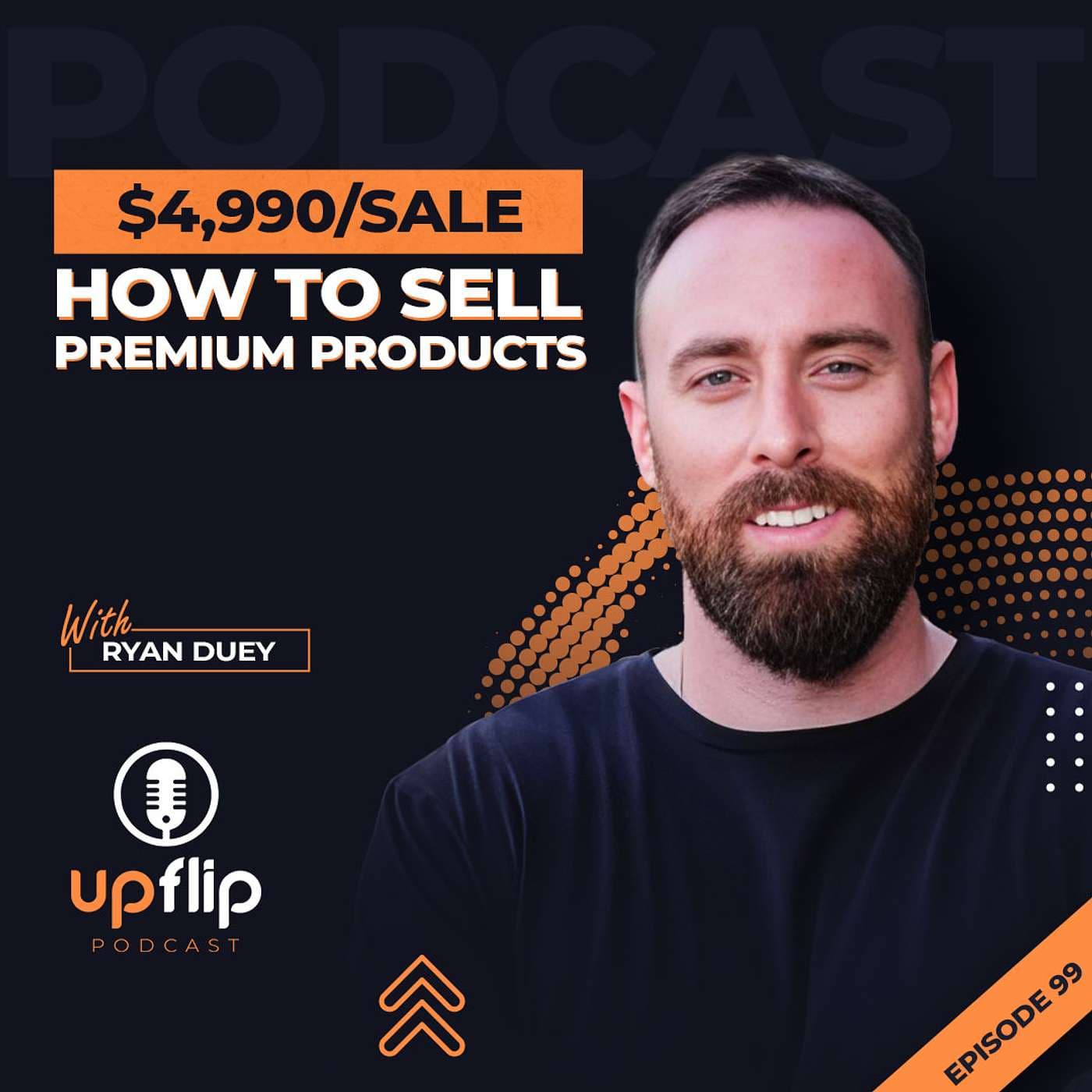
UpFlip Podcast Episode 99: His Guide to Selling High Ticket Items Online
Episode Overview In this episode of the UpFlip Podcast, host Alex Freeman interviews Ryan Duey, co-founder of Plunge, a company that specializes in cold plunge therapy products. The discussion centers around Ryan's entrepreneurial journey, the creation of Plunge, strategies for selling high-ticket items, and the challenges faced in building a successful business.
Key Themes
- Transformation Through Experience: Ryan's entrepreneurial path was sparked by a near-death experience during a motorcycle accident in Thailand, leading him to self-discovery and ultimately, the creation of his business.
- Niche Market: Ryan emphasizes the importance of understanding and catering to a niche market, which in this case is the health and wellness sector.
- Partnership Dynamics: The relationship between Ryan and his co-founder Michael Garrett is highlighted, showcasing the significance of complementary skill sets and strong trust in a business partnership.
- Marketing Strategies: The episode dives into effective marketing techniques for high-ticket items, including influencer partnerships, targeted outreach, and leveraging customer experiences.
- Product Development: The importance of product design and customer feedback in creating effective, desirable products is discussed.
Detailed Summary
- Ryan's Journey to Entrepreneurship
- Near-Death Experience: Ryan recounts how an accident forced him to reassess his life and pursue his interests with urgency.
- Introduction to Cold Plunge: His initial exposure to cold plunging through Wim Hof’s methods ignited his passion for the health benefits associated with it.
- The Founding of Plunge
- Meeting Michael Garrett: Ryan met Michael while both were opening float therapy spas in Northern California. Their friendship built over years eventually led to their partnership in Plunge amidst the COVID-19 pandemic.
- Market Gap: The duo identified a gap in the market for home cold plunge therapy solutions, which inspired the launch of Plunge.
- Partnership Insights
- Co-CEO Structure: Ryan and Michael operate as co-CEOs, leveraging their distinct skill sets—Ryan focuses on people and marketing, while Michael concentrates on product development.
- Advice for Potential Partners: Ryan advises prospective business partners to establish clear roles, maintain trust, and ensure open communication.
- Selling High-Ticket Items
- Targeting Niche Customers: Ryan discusses strategies to sell premium products, emphasizing the need to connect with health-conscious individuals and businesses.
- Influencer Marketing: Collaborating with influential figures in the health and wellness community has been a core strategy for Plunge, enabling broader reach and credibility.
- Shark Tank Experience
- Impact of Shark Tank: Ryan shares how appearing on "Shark Tank" provided significant exposure and helped validate their product, contributing to brand growth.
- Product Development and Brand Philosophy
- Cold Plunge Products: Plunge focuses on creating products that promote resilience and are time-efficient for customers with busy lifestyles.
- Design Process: The design of the Plunge products prioritizes both functionality and aesthetics, ensuring they are appealing and comfortable to use.
- Overcoming Business Challenges
- Growth Management: Ryan discusses the rapid growth of Plunge and the challenges of scaling the business, including staffing and production adjustments.
- Customer Experience: Emphasizing customer service, Ryan highlights that positive customer experiences are essential for driving referrals and repeat business.
- Closing Thoughts and Future Goals
- Maintaining Work-Life Balance: Ryan shares insights on preventing burnout and emphasizes the importance of self-care alongside business responsibilities.
- Long-Term Vision: There is a focus on continual improvement of products and processes to better serve customers and adapt to the market.
Key Takeaways
- Trust and Compatibility: Successful partnerships are built on mutual trust and complementary skills.
- Market Validation: Engaging with influencers and leveraging customer testimonials can significantly impact sales of high-ticket items.
- Focus on Resilience: Products should aim to solve real problems for consumers, making their lives easier or healthier.
- Continuous Adaptation: Businesses must be agile and responsive to changes in market demand and customer preferences.
Resources
- Learn more about Plunge: [Plunge.com](https://plunge.com/)
- Franchise Guide: [Unlock Proven Business Models](https://bit.ly/4aWuGvc)
- UpFlip’s YouTube and Social Media:
- [YouTube](https://www.youtube.com/@TheUpFlipPodcast/)
- [Instagram](https://www.instagram.com/upflip/)
- [Facebook](https://www.facebook.com/upflipofficial)
- [Twitter](https://twitter.com/upflipofficial)
Conclusion This episode of the UpFlip Podcast provides valuable insights into entrepreneurship, marketing high-ticket items, and the importance of product development and customer experience. With Ryan Duey’s journey and advice, listeners can gain practical knowledge applicable to their own business endeavors.
Written by AI. May contain mistakes. Listen to the episode to check what was said.
Transcript
Automatic transcript. May contain errors.0:00A near-death experience set Ryan Dewey on a path of self-discovery. From the jungles of the Amazon, the serenity of float tanks, and ultimately the creation of$5 ,000 plunge baths. The product, it speaks for itself. Majority of the reviews have a statement about how this is changing their life. We identified around 20 people that we thought were highly influential in the health and wellness fitness space. We felt if we can get our product in their hands in a certain time frame, it'll feel like we're everywhere and kind of at the forefront with everyone. We have grown so quickly and it's awesome.
0:35That's the challenge every business owner, entrepreneur wants to have. I'm your host, Alex Freeman, and I'm here on the Upflip podcast with the entrepreneur making cold plunges as common as your morning brew. Join us as we uncover the secrets behind Plunge's success in creating and selling premium products. Ryan, thanks so much for joining us. I loved that intro, man. Glad to be here. It was awesome. So to get things started, can you just share your story and how and when you started Plunge? Yeah. So the genesis of Plunge, I really actually trace it to when Mike and I first met. So Mike and I met in 2015.
1:08We were both opening brick and mortar float therapy spas in Northern California. He was opening in the Bay Area. I was opening in Sacramento and it's very niche business. And I'd seen this guy opening it and I was opening one. I was like, oh, I got to meet this guy. So I walked in right first month he had opened in San Francisco. I walked in and said, hey, we're going to be friends. And we became fast buds. We weren't business partners, but we just got really close and bounced a lot of business stuff off each other. Fast forward, 2020, pandemic, March, everything happens, March 2020, and our businesses are shut down.
1:37So it gave us this very unique moment in time. And Mike was the one that really initially ran with that into developing a cold plunge. And it started, this was a passion of ours, like the question, how did I get into it? I first learned of cold plunging back in around probably 2014, like from an actual, in this way that we view it now. Of course, I was getting an ice baths stuff back with sports and things like that. But it wasn't quite the perspective I have on it now. Anyways, learned of it through Wim Hof and the work that he was doing. So I was doing it super passionately. Same with Mike. Mike had the chest freezer.
2:08I was local rivers. I had created a trade program with our business and a local business that had a cold plunge that was literally for me, for our employees, but I was in every day of the week. And so Mike starts developing this product. He comes to me and says, hey, you want to create a business around this? We saw a gap in the market and it took me a couple months to kind of see his iteration of the product. He's very product focused and saw the improvements and that was really the genesis of it. We both loved it. We knew we had an email list from our float centers to be like, hey, the plan was we'll build 20 of these and we'll hand deliver to your homes.
2:40This is what we've been working on during the pandemic. Who's interested? And from there it was just taking those steps and then kind of the rest is history. I think the place I want to start following up there is with your experience starting with a co-founder where maybe previously you hadn't done that. What was the experience like of kind of starting the partnership? And how did you know that it was gonna be a fruitful partnership? That's why I always start with the story of when we first met, because we met on the grounds of friendship and we built our friendship for five years. Little did we know we were building our business partnership.
3:12So there was never any intention of going into business together. We did a big fundraiser in 2018 for MAPS, the Multidisciplinary Association for Psychedelic Studies. We did a fundraiser through Floating. national fundraiser to donate to maps. That was our first time really like working together, saw each other, how each other worked, really acknowledged, respected each other. So I say all that is when we finally committed to launching Plunge, it was, you know, the fastest thing I've ever been a part of. It was like all the seeds have been planted and nurtured and total, like I didn't, I didn't have any doubts in his character and how he operated.
3:49I think the thing that we did potentially get, like there was some luck involved that it just worked out so well was our skill sets. Like our skill sets, we didn't quite realize were very different into, like we co-CEO the company. It's a very rare thing. I can't envision it doing anything else, but it's very easily delineated. He's product, he's things, I'm people. And it buckets very simply throughout that. So for us as co-founders, I did it solo. It's definitely one of the most lonely journeys you can do. And there's, yeah, you get to make every decision, but at the scale that we're going at now, I can't imagine making every decision by myself.
4:25And I tip my cap to every CEO that doesn't have a co-CEO. And it's been instrumental. It's one of our superpowers with the company is how him and I run it. Now, for our listeners who are like, I've got a friend I could go into business with, you know, you mentioned the luck of your skillsets kind of delineating very perfectly for yourselves. I guess, what advice can you offer for somebody that's like got a friend that they think they can go into business with, how should they structure and build that business side of the relationship? Very clear in your roles, like find out what each other really loves to do.
4:56And then where there's crossover of what you both really love to do, like you need to create boundaries there. Like our crossover tends to come into marketing, a bit of design. So those are the worlds that there's usually a little give or take, or we'll have our pushback with each other. But we know that that's kind of where it comes up. Outside of that, it's very, if I have a strong opinion, he's usually relinquishes and says, hey, run with that. I trust you. Vice versa. Above all, again, the skill set thing can be worked out. But above all, do you trust the character and integrity? And I mean like fully trust.
5:31Like there's not a 1 % like, hey, is something going on that I'm not aware of? Like, is it, are you comfortable saying everything to each other? And if that's a yes, it's a really good potential for a good business partner. Now, I just want to ask about how your experience with the float business helped you as you got Plunge started. How did that experience kind of prepare you to enter into the world of like actually building out and selling the equipment? I think from actual business learnings, not much. They are such different businesses. One's a service brick and mortar. One's a online product business.
6:07So very different like processes and systems in place. What I did learn, opening the float center was one of the hardest things I've ever done. So just the endurance of raising money and getting contractors and getting it across the finish line, knowing I can do it, I think, which doesn't have to be just from another business. We can do hard things and learn our capabilities through many things. But that, I think, was number one. Number two, it's how we got our first customers. We emailed those businesses and said, hey, who wants to buy a cold plunge? And they were crossover type customers, people that are going to a float or they're into floating, good chance they're into cold plunging as well.
6:44So I think that was like, it was an entry into getting our first consumers. And secondly, it's like, there are worlds that I'm very passionate about. I'm passionate about health and wellness. Not just passionate, it's just my lifestyle. So I think that's been a big thing of like, It's not a trend that I get into and I'm like, oh, this is hot. I'm going to hop into this. It's like, no, I do this for a while. And I'm like, oh, no, I love this. I want to get this out to more people. How do I do that? So I think that model from floating carried over to plunge. And your entrepreneurial journey started with a near-death experience.
7:18Can you talk us through how that experience changed your mindset and kind of set you down the entrepreneurial path? That experience accelerated my life. And what I mean by that is I never quite viewed myself as like an entrepreneurial person. I think I was just more of like, if I wanted to go after something, I would go after it. But that brought me such to the forefront of like, where am I not going after something that I'm kind of kicking the can? I feel young. I could do this later on in life. And I think that was the laying in that hospital bed for the few weeks that I was. It was like, what do you want to do right now?
7:52Like, you know, just that beautiful, shaken experience. It's like tomorrow is not given. this is truly you know it's like the momentum of life kind of gets shaken from me and so i think that was that and for me it was at the time it wasn't even really starting a company it was i really wanted to go to the jungles of the amazon and drink ayahuasca like this is back in 2012 2013 i didn't know anyone that had done it i had heard a couple people and i was so curious to go explore the depths of kind of myself like what is spirituality to me like who am i as a person very deep questions. And that experience just seemed like such an adventure that I would do later in life.
8:32And it just was like, nope, I'm doing that now. And that was just one of the pieces upon this journey of entrepreneurship. Going to the jungle, I thought I was going to go to the jungle and I was going to have this experience of like, you need to quit your job and you need to go start the float center. And it was the exact opposite. I get to the jungle, I was like, stop worrying about that. We have a lot of other things to be working on with yourself right now. And so went through that process. And then that ultimately sped me up to feel capable and feel confident enough to go launch my own company.
9:01I feel like it was more out of a mission. It was like, there was like a selfishness of when I wanted to go start Capital Floats was one was I wanted to be around people that floated all the time. And I didn't quite have that network. So there was a total selfish purpose of like, man, I just want to be around these type of people. And I don't quite know how to do it. So maybe I just build a place that people come to, I can meet all these people. So there was total selfish and then selfless of like, this has changed my life, the practice of floating. How do I get this out to more people? And combined that, and that gave me the fuel to go off and do it.
9:33Listeners, if you're looking for more insights into how to develop and launch a product, check out the Uflip blog on product development, the ultimate guide, where you'll find advice and insights from other product designers. Find the link to our blog in the show notes. Ryan, how would you describe the Plunge brand? Can you kind of give us the overview of the products you're selling and the problem they're solving for customers? Yeah, I think from a brand perspective, our mission is to make resilience mainstream. So it's our products. We have our cold plunge lineup where you have the sauna coming out.
10:03Both those products at the core are to help build resilience in us as humans. So that's like what a North Star is of any product that we're developing at the core. Is it solving for that? Secondary, the next biggest thing that we are solving is time. Lots of health and wellness modalities, but cold plunging, it is the best ROI on your time that you can find two to three minutes to go from how you feel prior to how you feel after. Our sauna, high heat sauna, that can crank up to 230. It's a 10 to 15 minute experience as opposed to a 60 and a number of other saunas. We're really trying to solve that of people that are high impact people that are living robust, fulfilled lives?
10:41How can they work in these modalities that fit into life and maximize it? So above all, building resilience, secondary, is this providing strong ROI on your time? What kind of research were you doing beforehand to kind of validate the ideas? And how did that information ultimately influence the design of the products? It's a great question. Research-wise, the research was on ourselves. we were it was what we were doing we felt incredible it was like to this value prop of like time and how like roi on our like what we feel getting in that was so clear we're like this is incredible i don't quite know what's going on here i don't know how to quantitatively or qualitatively say what's happening but we felt it we knew it was like a net positive in our life so that was kind of the start i think the design of the unit we did have strong opinions and how that should be.
11:30We felt that this experience is you're manufacturing the fight or flight experience. That's the point of it. And that's very hard to do in the world. Usually fight or flight can only come in in unknown moments, someone cutting you off, someone all of a sudden yelling at you or random moments that kind of trigger things. Well, the cold triggers the fight or flight. So we wanted an experience that you could actually learn to relax into it. So it was really important that we had a tub that had some ergonomic dynamics to it. And that's blood into our sauna now. Our sauna is very unique into the back panel is at a 15 degree angle.
12:01So when you lay back, you can find some comfort there. So we wanted to create comfort in this like highly uncomfortable scenario. So those were like real big dynamics that we wanted. And we also wanted all of our products to look really like sleek and unique, you know, pieces that you feel confident and proud to put out in your backyard or they don't need to be hidden. So those were two dynamics to like, does it actually solve from a effective, like ergonomic standpoint and from a like aesthetically pleasing dynamic. And those were the two main things that we've set out to instill in all our products.
12:32So then what does the design process look like to achieve those goals? It's developed over time. I mean, it started, the first one was really Mike and I in a garage, just like testing out, literally buying every bathtub that's existed, getting into it. Mike's six, six, I'm six foot. So we have different heights. Like how far should your knees bend? How far do we want to expose ourselves? Like what is the ultimate width? What is too much water? Really, it was just trial, getting a ton of different units, testing them out. And that's developed over time as well. We've gotten a ton of feedback. We get, you know, as more and more units go out, we get more understanding from the consumer.
13:06The sauna design was a next step in that evolution. We actually brought a group of sauna designers into the fray with us. That was where Mike and I kind of were outside of the box, had a lot of crazy ideas, which they supported us in and equally kind of brought us back down to earth of like, that's just not feasible. But we ended up where our current sauna is at. It's a pretty revolutionary design and engineering of how it's at an angle, how it's all tongue and groove, easy setup. That's been the design. And then our current, we are evolving the plunge lineup. There will be new evolutions of future generations of plunges.
13:39And that's a much more sophisticated with our engineering department as we've hired in that space to go through more industrial designers and more in-house design mock-up, testing, feedback. And then we kind of put it into production. To answer your question, started very like just Mike and I shooting ideas off and then it's developed into actually have a team that does this and we have a process that's improved a lot over time. And then what are the differences between the consumer version of the plunge tub and the commercial version of the plunge tub? And I guess the immediate follow up question there is why have two different versions?
14:12The reason is it's mostly for volume of plungers. So like if it's at your house, the real need is like how quickly the water turns over and how cold can you keep the water? So humans are, we're warmer. We tend to heat the water up. So if it's at your house and it's just you and your wife or maybe a friend, it's like you only need our quarter horsepower chiller. That tends to work really, really well. The commercial unit, they all come with our one horsepower chiller. They all have a more robust pump. So the water turns over quicker, really comes down to how much water can you push through the unit in a cycle.
14:44And that will speed up the cooling process and the cleaning process. So a more robust pump, moving more water through the unit. Let's say as opposed to 12-minute turnover, you get it down to 10 minutes, that improves the unit a lot. We have about 50 % larger filter on the commercial. So it just collects more dirt, more debris. The more debris, the more dirt you catch, the less the water flow decreases. And then we also have a hair trap on the commercial unit. Most people in commercial are getting in in bathing suits or after a workout, they might have lint from their clothing. That's one of the main factors of slowing the water down is lint and debris get caught into the pump.
15:21So we have a hair trap there that you don't need to drain it. It's a simple, you could close the valve off, pull the hair trap out, clean the lint out. And that's like a daily or weekly, depending on the volume. So it's just more tools to make it run better longer. It adds a little more maintenance, but it just makes a more effective unit. In the residential unit, you don't need much. You just need good filtration, ozone, and a pretty standard pump and chiller. And it works for most people. And obviously, in addition to the plunge tub and the sauna, there's also accessories and supplies to sell.
15:51Can you talk about the process of deciding, you know, which of those would be developed in-house, which would come from suppliers, and how you decided what specifically you wanted to be offering in addition to the main product? I wish we had more foresight into this. So we, you know, we start selling the plunge. We were treating it at our house with hydrogen peroxide. That's how it started. And it was like, oh, this works for us. And well, not everyone's in California. Some people are in very humid environments. Some people are in, you know, different heating and temperate and it just varies. Water temperature varies.
16:23So very quickly realized like, oh, we need to become water experts. So then we hired consultants into how to test water and, you know, bacteria levels. So that was an interesting journey for us into really understanding how the water needs to be treated. And from there, we've come up with our protocol. It's more of an overarching protocol. It obviously varies. A region could be a little different from the others, but the protocol that we have out on the website now works for everywhere. From a maintenance standpoint, we wanted to have options of whether it's a chlorine option or a non-chlorine option.
16:52It's important for our customer that they have that option. Some, especially in the commercial environment, prefer the chlorine. It helps. It's less probably water change that you would need, water turnover. We created that protocol. It's been a great revenue structure too. We have a maintenance kit there. It's a subscription kit. It makes it really simple for the customer to get their filters, get the chemicals they need to treat it. And that goes out automatically every six months. And so it's just made for ultimately a better customer experience. And, you know, we've had to learn a lot with the commercial side too, because that volume is substantially different where, you know, a residential, maybe one to two plunges a day, we're getting commercial centers up to 50 to 60 plunges in one unit a day, totally different treatment of what they need for the water.
17:32So we've put out multiple protocols, multiple maintenance kits, depending on your use case. When you first launched the product, You talked about kind of sending those initial emails to your previous float clients. Can you talk now about how you go about attracting and connecting with kind of those high-end customers for the brand? It's evolved a lot over time. I could say what we have done in the past, we leaned heavily into influencer marketing, which has been a huge win. And it still is a massive part of our marketing budget, our team. We have people that actually just manage that side to the business.
18:03And so it's allowed, I just think that's the key for all this. People have built strong communities. You want to align with people that have similar values and have high integrity. So we go after those and that's been critical. Next, and everything from there, we've really moved from our influencer marketing. Everything starts with like a product trade. We've never gotten into a paid agreement without someone using and like loving our product first. Our product allows that. It allows us to get in front of a lot of people. It's a high price product. So we can get a very good deliverable to start from somewhere.
18:32And we try and create a win-win scenario, like what's comfortable for them to do, what we feel good about. unit goes out. And then it really, the next step of creating contracts and partnerships that allow us to go deeper in some of these communities happen very naturally. It's like we love working together and we identify core groups that we want to go after. CrossFit had been a big focus for us for a couple of years. Have partnered with Rich Froning, Noah Olson, Danny Spiegel, Mayhem, some of these big groups that we've gone after. Also just trying referrals are such a massive part of our business.
19:02And so we invest heavily into our customer experience, an area that we're really trying to improve, make better from like, even from down to the delivery, we include premium delivery on all of our orders. It's in the cost where FedEx shows up with a team of two, puts it in your house, goes up a flight of stairs if you need, takes away the pallet, and you're really just left with filling it up with a hose and plugging it in, which is created, you know, from start to finish, we like to think like a really good customer experience and we're trying to improve it. That's an area that no matter what we do in the marketing world, it will never beat like someone getting a plunge and telling their friend that this was a great company to work with.
19:35I just I love the product and they've done right by me. Those are two core areas that we focus on. So this is going to bring us to a section of a show that we call our fan blitz questions. These questions come from our YouTube community. Listeners, you can join that community by going to youtube.com slash upflip and post questions to future podcast guests. Ryan, I'm going to give you about five questions here. We're going to try and get through in about 90 seconds. Are you ready? Let's do it. All right. First one coming from Riva Killa asking about a recent study that said cold water therapies, the worst thing for post-workout recovery?
20:06I guess I'm going to reframe that question with, there's obviously a lot of constant studies and news in the health and wellness space. How do you deal with that kind of constant changing of advice? I think that every study, obviously, you need to understand what the sample size was, what were they actually studying for, what does that actually mean? Worst thing to do after a workout? I think that's a pretty dramatic statement. And that is a hot debate in the area. Plunging right after your workout, you want that inflammatory response when you're tearing your muscles down. That's the point. That's how we build strength and muscles in our system.
20:37Is cold plunging stunting that? There's an argument that it is. Does that mean you should plunge maybe two hours after your workout, potentially? Or you could be doing it right before. That's become a big thing in the workout community, especially like our CrossFit athletes. They love it right before. It's almost like a pre-workout. However, I would say this. I have found, I know we got 90 seconds, but I'll be quick. I have found that people saying not to do it post-workout, it's been more of a world of almost an excuse not to do it. Dr. Kelly Starrett, one of our massive partners, his big thing is you get cold when you can get cold.
21:08We're almost overthinking it when we're concerned if it's after a workout. You're going to be able to work out more tomorrow. You are going to recover quicker. That will happen. So if you're long game, if you're playing for strengths, if you're Chris Bumstead and you're going for the world title, you might want to be pushing it four hours after your workout or doing it before. But if you're an everyday person, I think we're overthinking it. Yeah. AI Mo Bashir wants to know if they can resell your product on Amazon. No, we do not do resell on Amazon. Saying if you're reselling it as an individual in the marketplace, yes, but we do not do Amazon resell this time.
21:40If something were to happen to you, what happens to the business? Great question. Mike and I, we have a very clear operating agreement in how that goes down, that if something happened to him or vice versa to me, there are clear guidelines and structures in place to keep the business moving forward. Everything comes down to Mike and I have to decide on things together. And we have a clear structure if Mike, God forbid, had something to happen to him or vice versa. If you could sell your product to one celebrity, who would it be? Andrew Huberman would have been the name that I would have said, but Andrew does use our unit.
Read the full transcript
22:10So that's been like the ultimate win. The person that doesn't have one yet, The Rock. Great answer. Last one here in the Famblitz questions. What are the unwritten rules of your workplace? Take care of your shit. Handle your work. We are very flexible. We have like a hybrid policy of in-office, but it's very loose. there's no micromanaging we are for better or worse kind of the opposite of that and a new one that's come in that i'm kind of observing is it's everyone's starting to bring their dog to work we don't have a rule around that it seems to work fine and all the dogs get along but that's just started over the last two months is this unwritten dog policy that seems to be dogs are allowed which is fun to see i love it i love it listeners if you've been listening to the upflip podcast for some time and you like our conversations with amazing entrepreneurs business owners and ceo you can help other aspiring entrepreneurs discover the show by leaving a review on Apple Podcasts or rating our show in the Spotify app.
23:03You may also hear us read your review in one of the upcoming episodes. Ryan, it's obviously, it's an expensive product. How do you respond when customers say they can't afford it? Of course, it's a huge purchase for most people. It's a, you know, thought out purchase. I think for us, it's been a core feature to us is like, we've wanted to price this. When we came out of the gate, we could have priced it at 10 grand because that was kind of what the market was calling for. And we were like, we actually weren't going to launch the business unless it was at five grand. Our goal is to create more cost-efficient coal plunges.
23:33And that comes with us improving the technology, getting more specific in the use case for them. So my answer to that is in the short term, we're working really hard to create better financing options for people, 24, 36, 0 % financing options. We are also working hard in the R &D to have more affordable units for people. So that's our long-term way to get more use case. And not just pricing, but you live in an apartment. Right now, our current unit doesn't quite fit for that. Can we build a unit that does work on inside, that's not noisy, that's a small footprint, that is affordable for that? So that's my answer there.
24:07I think there's a lot of ways to find affordability in getting cold. You know, whether that's finding a commercial location, a lot of those are popping up. You can get on a cheaper monthly membership. Cold showers, they work. Seasonality, most of us are near a body of water in the wintertime or even spring and fall tend to work really well. So there are ways to get cold that are outside of just purchasing our unit. You also have a lot of customer reviews and testimonials on the site. What are you doing to encourage those positive reviews from customers? Obviously, email follow-up flows, you know, as we engage the customer after to see how it is.
24:39The product, it speaks for itself. Like you can read the reviews. I'm sure you've gone on. I mean, majority of the reviews have a statement about how this is changing their life. Our company motto is take the plunge, change your life. We didn't like sit in a war room and come up with that. It was literally like we just kept reading it all the time. This thing's changing my life. This thing's changing my life. And we just like said it one day and that's become the mantra. So the review, people want to share about it. It's transformative. When we find things that matter and impact our lives positively, we want to talk about it.
25:07So the reviews have happened pretty straightforward, but we try and be proactive with them. Everyone gets a follow-up email asking them how their experience was. They've been critical for the growth of the company. Let's talk about Shark Tank. What was the experience of being on Shark Tank and how did that ultimately impact the business? That was such a cool experience that came out of nowhere. they had reached out to us to ask us if we would be interested in applying. We were just in, we had company was probably one year old when we filmed that episode. I don't know, as an entrepreneur, it's like a kind of a dream come true, you know, walking out into the tank with Cuban and Robert and Lori and, you know, all of them and just kind of going out there.
25:44And they were all super cool, really supportive of the business. Awesome, like personal experience, first and foremost. For the business itself, we had gathered a lot of momentum so that we filmed in September of 21. It aired May of 22. So we're pretty late in that season. We had developed a ton of momentum at that time. So it was really hard to tell what Shark Tank did in the moment. Our web traffic went ballistic. It's a unique product to go on to Shark Tank. It's not an impulse purchase. It's not a bag of chips that you... So I'm going to try it out. So it was tough to tell. However, we still see about four to 5 % of sales are attributed to that episode.
26:20People are like, I learned about you through Shark Tank, which is massive. That is much larger than I would have thought when we went on. I would have thought we maybe would have had more like upfront, but understanding how the show works, you know, you get the rerun every three months, massive on MSNBC. There's this whole community behind Shark Tank that write blogs about it and follow-up stories. And it's just, you know, their own personal bloggers and influencers in that category. So there's a ton of like SEO play on the back end. You know, I have only glowing things to say about Shark Tank, the production, and just the overall value from it.
26:51And then I want to ask a little bit more specifically about social media. I know you mentioned influencers kind of being important at the beginning of the company. You've built a solid presence, 165 ,000 plus followers on Instagram. How have you gone about building that following as a business? So early on, we created a list, what we called the entourage effect. And we identified around 20 people that we thought were highly influential in the health and wellness fitness space that we really respected and admired. We felt if we can get our product in their hands in a certain time frame, it'll feel like we're everywhere and kind of at the forefront with everyone.
27:25So that was like an initial campaign. Since then, we're very deliberate. Instagram's kind of our core platform. We're starting to really put more resources to YouTube. It's kind of our next frontier. You know, TikTok, we're utilizing it, LinkedIn, all platforms we use, but like Instagram's super focused. Like Mike and I dedicate meetings a week to the content that goes out there. We pick apart what we put out there. Maybe it's overkill, but like we're cutting out. That was a word that didn't need to go in there. We really care about what gets presented there. And we've brought people in now that can kind of see that vision and bring that forward.
27:56So we want value. And I think that's where we've grown. We've also been able to do... Giveaways work really, really well with our product. So aligning with the right people for giveaways, and you can get follower increase through that. So it's been a bit of just consistency. Like, okay, are we providing entertainment? Are we providing education? Are we providing real value in this post? And then from there, we've had great kind of strategic partners throughout the way to have bigger jumps with the follower count. And now, you know, like I mentioned, we're going into new platforms and really trying to be deliberate there and improve the content we're putting out on other platforms.
28:29Now, one of the obviously things that's important about a product company is that it can be, you know, scaled. So what are those things that make a product company scalable and how have you built those into Plunge? So for us, I think it comes down to how we designed the product originally. You know, we don't white label this product, but we have a team of come to 150 ,000 square feet of manufacturing facility, we'd build this unit. So I think a big differentiator from us to most everyone else in the cold punch space that are more white labeled products. A couple of things. It allows us to control the whole process.
28:58We can speed up our production. We can add more people to the line. We can do double shifts. The product itself, how it's designed, works very well in an assembly line. So it's a very streamlined process. It's more of we have a system in place that we can scale this product. And it's something we're very focused on right now into getting our lead time down and being a product that, you know, you purchase this, you're going to get it in less than a week. Right now we're at five weeks, which is just not where we want to be. To me, it comes down to the manufacturing side of the company and how we own that.
29:27That's not some outsourced third party that's doing that for us. So it's allowed us to move very quickly and control that whole process. How has the leadership team expanded as the company's grown? It's expanded substantially. Mike and I, we co-CEO it. We have We have a pretty substantial VP group now. As we've built out, we're 150, 160 employees. Now we're building the levels of director level, manager level, VP level, and really getting clear into what departments are. We have our manufacturing, supply chain, production, engineering, marketing, customer experience, like all these areas that now we're bringing in VP level people that have been there.
30:03That's our big focus right now is hiring people for departments that, this is new to me. It's new to Mike. We haven't run a company of this size, but bringing in the people that have led teams of where we envision ourselves going. And it's been great. It's a big part of our culture is, you know, things can get testy and fiery and there's healthy disagreements. But at the end of the day, the best idea wins. And that goes for Mike and I. We have a meeting structure. We call it our L10. And it's basically all leadership gets in there. And it's really just knights of the roundtable and top idea wins out.
30:32I think we do a really good job of putting kind of ego to the side and what is best for the company. And that's gotten us this far. and something we really want to, you know, make sure it's deep in our ethos and keep moving forward with leadership is all bought in really, really well with that. And how do you go about finding and bringing into the company or elevating to leadership, high quality talent? It's varied at different times. I mean, it depends the role that we're looking for. We're a company that's, you know, I think kind of out in the forefront. So people have reached out to us. We've hired some like pretty high level people, just not even through recruiters that have just maybe seen a posting, reached out and done it.
31:06We've also used recruiters and those have been very helpful for us. We are more of an in-office culture. So, you know, there's trade offs to that, you know, being in the Sacramento region, we have to normally play with our talent pool in this region or we're recruiting and having people, you know, we have to convince them and get them excited to move here, which is another, you know, challenge. We have a couple of people that are hybrid or more remote, but we've really leaned into that in-office culture. We've just grown so quickly that it's been important to actually have people in the office.
31:33You can walk over, talk to someone. And so yeah, we've leaned into strong LinkedIn presence that has been really successful for us from a recruitment standpoint. I was a little skeptical there, but it's actually really good teams that we work with that help us get out there on the LinkedIn front. And that's probably saved, I don't know how much money we've saved just through people organically reaching out. And then we do have a good recruiter base that has found us really good candidates. To me, that's important. They really start to understand our culture and they can streamline the process of who's going to be a good fit for us.
32:02What's been the most difficult part of growing Plunge and how did you overcome it? Really depends the quarter or the month or the week you're asking me. You know, I think just for an overarching answer, it's growth. Like we have grown so quickly and it's awesome. That's the challenge that every business owner, entrepreneur wants to have. And what worked last week doesn't work this week. Like that's sometimes the pace that we're moving. So it's like, how do I really look out on the horizon? Like, where are we going? And like customer support, okay, shoot, we're increasing our production numbers by 30 % this month.
32:36We need to hire, like we need way more support agents to be able to be in place for that. I mean, we've doubled our staffing size in four months. So it's just that what comes with that, HR being able to handle that and onboard people correctly and make people feel they're set up for success, you know, meeting structures and are we having the right cadence? Are we meeting too much? Are we meeting too little? all these things are growth challenges. And I would say that's kind of overarching to the whole thing of like, and it just switches so quickly for myself. What the biggest challenge is is how far out on the horizon can I like project us going and create the system that gets us there.
33:10And I feel like over time, I've been a little behind on creating the system more to not, you know, maybe underestimating the size of the market. It's a whole new market. It's like, is it really this big? Is it growing this quick? I don't want to get ahead of our skis. And so I think that is kind of been some roadblocks for us. How do you avoid decimating profit margins as revenue scales? How have you gone about doing that and protecting the company that way? How has that worked for you? We have our growth side of marketing and we have our brand side of marketing. Growth side of marketing, to me, it's a very simple calculation.
33:41That's more you have attribution. Our paid spend is very clear what ROAS is, what total CAC looks like. We can pull the levers that way. So we've been very controlled. We know what that number is and we've played that really, really well. Where I think as we grow, what we really need to monitor is the brand side, which is super important for us. But there's less understanding into where that ROI is coming from. Like what was the ROI of doing this activation? There are certain ways to figure it out, but we don't quite know. You know, so I think it's just putting strong guardrails, I guess would be the word to be put in place.
34:13We're really focused into like fully embedded CAC. So we take in and we chart that. I mean, we are looking at that. It's really reported to leadership weekly, but we are seeing that daily. And that's every dollar that goes into selling a cold plunge. And I'm talking every dollar from the commission to our sales team to an influencer tub to the dollar spent on Facebook to an agency's dollar, everything embedded into that. And we know what our cost per unit is. So we just really monitor that. And if it's too low, that's telling me we're not doing enough. And obviously, if we're getting too high, we're getting out of whack on there.
34:47So I think it's just strong attention to that total CAC. What would you say has been your smartest business move? Getting started. Maybe not a sexy answer. We moved so quick to start. I think that we would have waited a year. We wouldn't have been really first to market the way that we did it. And I think early on, a really strong move that we did that I think was a little, you know, we had a lot of differing opinions on this, but you know, the company's name is Plunge. We bought the domain of thecoldplunge.com for a dollar when we started. No one had owned that key term. And at the time, running back to 2020, it was like ice bath was still this term that still wasn't even in the zeitgeist, but it was more the common term if you searched for it.
35:27Cold Plunge was no one owned it. We were like, we're going all in on this and we're going to make this the term that people use. Are we the sole reason for that? No, I don't think so. I think we just made a good bet on that key term. And because of that, we rank first in those categories. We've sent Botplunge.com. We have a very strong domain. You can pay your way all the way to the top, but if you got to have some strong organic, and if we would have waited another six months, who knows where things go. And I think getting that key term early on, we were first page ranking in Google our first month with no spend.
35:56So we were getting calls. We were in the garage of people in Florida, people in Arizona like, hey, can I buy a coal plunge thinking we're this big company? I think those key decisions early on were massive. How do you keep yourself from burning out as the co-CEO of a growing company? That's a constantly evolving piece. I think I sleep. I've noticed probably 90 % of my problems. If I go to bed, they tend to go away. Now over time, I've built a better structure around myself. I have trainers. I have people that are there to support me on my health, keep me in check. I have an incredible girlfriend.
36:29She's awesome to bounce ideas off of or keep me in check or just someone I can share a lot with. I don't think it's like a silver bullet, but I think all of those being a healthy ingredient in the process is really helped over time. And by no means, I have times that I feel burnt out. And the one thing I will add to this is if I feel like I'm working towards that I get to go work on the things that I love, that takes the weight of burnout away from me. Because there are days that I'm like, I don't want to be doing this, which is fine. It's part of the process. But do I feel like I'm working towards the areas that I just love about the business?
37:03And if I feel like I'm getting closer to that, burnout seems further away. What's your favorite business book and why? I think I'm more business pods. I have a business pod in my ear all the time, whether it's just how I built this was so important for me when we first started this company. I listened to that every drive. I had an hour 15 commute there and back when we were in this bike shop. I was listening to how I built this both ways every time. Just feeling that early entrepreneur story. My first millions become massive for me into just the different types of businesses they're bringing on and discussing.
37:38Acquired, I think it's a great podcast into buying and selling businesses. Anyways, when I read, I tend to read historical fiction or just history books. It's kind of what I get into. So business has been more through audio. Ryan, where can people either connect with you or learn more about The Plunge? Plunge.com. Go to plunge.com. All things Plunge related are there. For me personally, Ryan Dewey, Instagram, you can check me out, Ryan Dewey and plunge.com. That is going to do it for this episode of the Upflip Podcast. Listeners, if you liked this episode, make sure you check out the show notes for a link to episode 19, where we tell the story of bunch bikes and how Shark Tank helped them grow their revenue to$2.7 million.
38:18Don't forget to rate us in Apple Podcasts and Spotify, and we'll see you next week. Ryan Dewey of Plunge. Thanks so much for joining us. Thanks, Alex. This was fun.
38:29Thank you.
From the publisher
Getting into a motorcycle accident in Thailand launched Ryan Duey on a journey of self-discovery that culminated in him starting a float tank business. Find out how he started his business and his advice on how to sell an expensive product in this podcast episode.
Ryan was a float tank user before he started a business in the niche. He found the immersion experience so transformative that he was driven to bring it to people in Sacramento. While opening his flotation therapy spa, Capitol Floats, he met Michael Garrett, who owned his own float spa in the Bay Area. The two became fast friends, but it wasn’t until the pandemic shut down their float spas in 2020 that they decided to become business partners with Plunge cold water therapy tanks.
Making high-ticket sales can be a challenge, especially when you’re catering to a niche clientele. In this interview, Ryan explains how to sell a premium product to both individual consumers and other businesses. He’ll also share how Plunge’s appearance on Shark Tank helped them grow their business and the biggest challenges he and Michael had to overcome when they took the plunge and started their company.
Resources:
- https://bit.ly/4hvj31g Start your business today
- Plunge.com - Learn more about Plunge at their website
Ready to be your own boss without starting from scratch? Grab our FREE Franchise Guide and unlock the secrets of proven business models that have already created thousands of success stories.
Connect with UpFlip:
- On Youtube
- On Instagram
- On Facebook
- @UpFlipOfficial on Twitter
For more insights to start, build, or grow a business, check out the resources on UpFlip.com or head to the UpFlip YouTube channel to see more interviews with business owners and experts.
Thanks for listening!


