In short
This Cultural Life - Episode Summary: Alicia Vikander
Podcast Overview
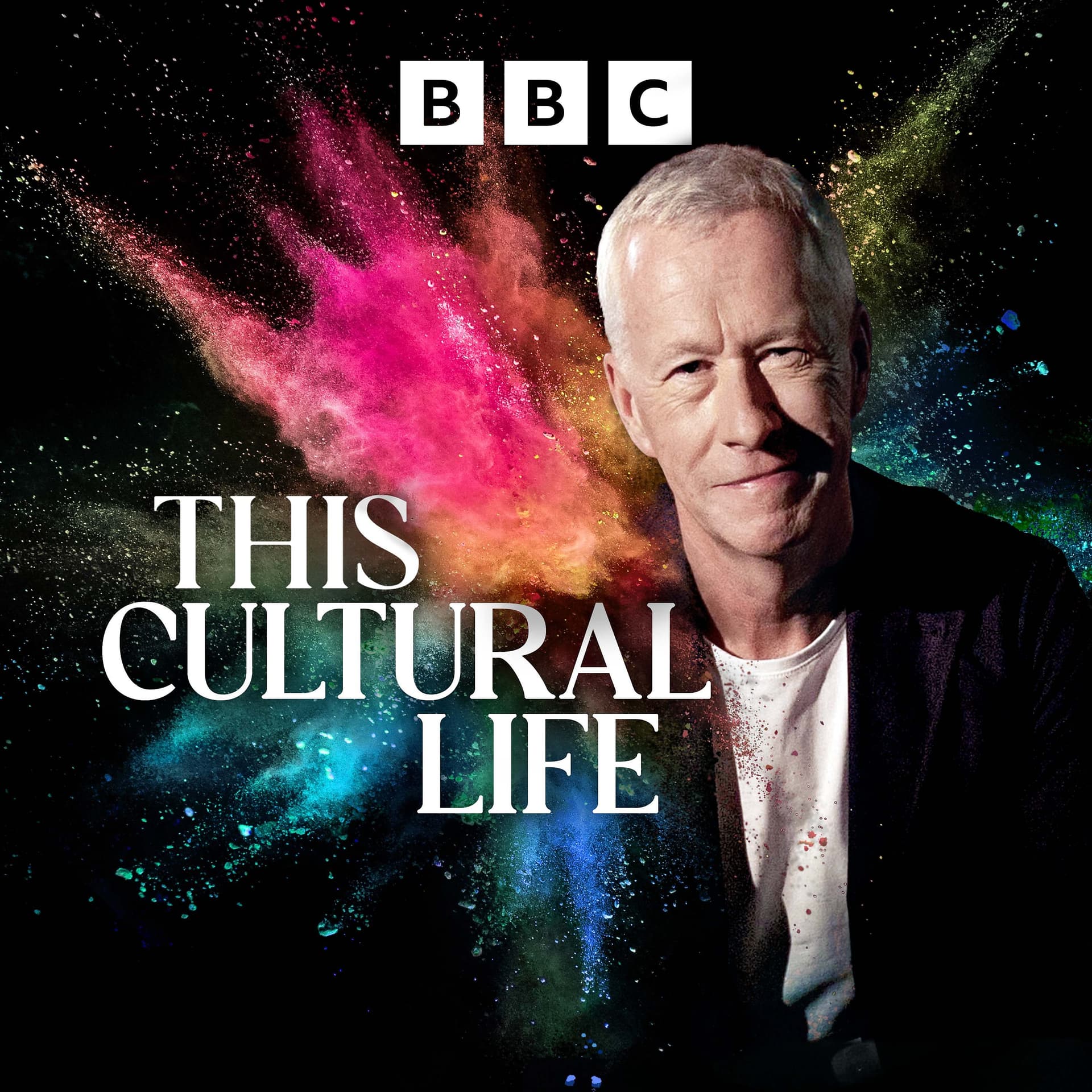
- Title: This Cultural Life
- Host: John Wilson
- Description: In-depth conversations with leading artists and creatives across various fields including theatre, visual arts, music, dance, film, and more.
Episode Information
- Title: Alicia Vikander
- Description: Swedish-born actress Alicia Vikander discusses her career, influences, childhood experiences, and her upcoming return to the theatre in Ibsen’s *The Lady From The Sea*.
---
Key Points
Background and Early Career
- Early Start in Theatre:
- Alicia Vikander began her acting career at age seven in a musical by Benny Andersson and Björn Ulvaeus (ABBA).
- Grew up surrounded by culture and performance due to her mother, Maria Fahl, a successful stage actor in Sweden.
- Childhood Experiences:
- Vikander spent much time at the theatre, often accompanying her mother to rehearsals.
- First significant film role: *Anna Karenina* (2012), which led to her breakthrough in British cinema.
Notable Roles and Achievements
- Recognition:
- Became globally acclaimed for roles in films such as *Testament of Youth* and *Ex Machina*.
- Won the Academy Award for Best Supporting Actress for *The Danish Girl* (2016).
- Diverse Roles:
- Vikander has taken on various characters, including:
- A humanoid robot in *Ex Machina*.
- A spy boss in *Jason Bourne*.
- Lara Croft in *Tomb Raider*.
- Gloria Steinem in *The Glorias*.
Personal Influences
- Family Background:
- Vikander’s mother was a prominent figure in her acting journey, while her father, a psychiatrist, influenced her understanding of human behavior, which she applies to her roles.
- Impact of Parents:
- Vikander reflects on how her parents’ professions (theatre and psychiatry) shaped her approach to acting, particularly in understanding character motivations.
Transition to Theatre
- Upcoming Role:
- Vikander is set to return to the stage in a new adaptation of Ibsen’s *The Lady From The Sea* at The Bridge Theatre in London, marking her first theatre role since childhood.
- Rehearsal Insights:
- Describes rehearsals as both exciting and nerve-wracking, particularly as her mother passed away two years prior, adding emotional weight to her return.
Creative Process and Role Selection
- Role Preferences:
- Vikander expresses a desire for characters that are multi-dimensional and reflect a wide range of emotions, rather than being one-dimensional.
- Influence of Cinema:
- Cites *The Piano Teacher* featuring Isabelle Huppert as a pivotal film that influenced her understanding of complex female characters in cinema.
Industry Reflections
- Changes in the Film Industry:
- Discusses the evolving landscape of filmmaking, particularly the challenges of producing independent films.
- Expresses ambition to develop projects as a producer, emphasizing collaboration with passionate creatives.
Closing Thoughts
- Personal Driving Forces:
- Reflects on her creative joy and vulnerability as she returns to the stage, expressing excitement for the new challenges ahead.
---
Conclusion Alicia Vikander's appearance on *This Cultural Life* showcases her journey from a child actor to an Academy Award-winning actress, emphasizing the importance of her upbringing and personal experiences in shaping her career. The conversation highlights her upcoming theater return, her dedication to complex roles, and her aspirations as a producer in an ever-changing film industry.
Written by AI. May contain mistakes. Listen to the episode to check what was said.
Transcript
Automatic transcript. May contain errors.0:29You're about to listen to This Cultural Life. This Cultural Life, the series in which some of the world's leading creative people choose the most significant influences and experiences that have inspired their own work. I'm John Wilson, and my guest in this episode is the Swedish-born actor Alicia Vikander. At just seven years old, she starred in a musical written by Benny and Bjorn of ABBA and appeared on Swedish television. Alicia's breakthrough British role was in Joe Wright's version of Anna Karenina in 2012. She won further acclaim for playing Vera Brittain in Testament of Youth and a humanoid robot in the thriller Ex Machina.
1:04In 2016, she won an Academy Award for her supporting role alongside Eddie Redmayne in The Danish Girl, along with BAFTA and Golden Globe nominations. Since then, her diverse screen roles have included playing a spy boss in a Jason Bourne thriller and Lara Croft in Tomb Raider. When we met, she was preparing for her first theatre role since she was a child in a new version of Ibsen's The Lady from the Sea at the Bridge Theatre in London. Alicia Vikander, welcome to This Cultural Life. Thank you so much. You were born and raised in Gothenburg, Sweden's second largest city. And I believe your parents separated when you were very young, but you've chosen both of them as formative influences on your work and your mother in particular.
1:53Let's start with her. She was a very successful stage actor in tweden maria fahl yes tell me about her work well i mean i did grow up in a house where culture and theater film music was so much part of my environment um and obviously you know my my parents divorced uh when i was probably just a few months um i think oh so you have no memory No memory at all. You know, and for all those times when my mum couldn't find a babysitter, I spent all that time at the theatre. And rehearsals, I appreciate. Yes. So I think, you know, it's interesting because my son is four and a half now. And I think it was around that time when she actually took me in and it was actually quite dramatic.
2:43And it's still one of my few memories that I have of her being on a big stage. and it was some sort of, you know, dramatic moment and she said something and then she walked in the back of the theatre and she opened this huge gate and she went out and she locked and I still thought that that was it. My mum's now gone forever. What was she? Do you know? Do you know what the play was? I can't remember what play it was. No, I just remember, it's funny because, well, I'm doing an adaptation of an Ibsen play now and I remember during that, one of the first plays I ever saw was Per Gint. and I wonder it could have been that but I'm not sure.
3:20So she was a classical actor mainly. Yeah she did a lot of Shakespeare when I came to London when I moved here first and I kind of realised I was like no but I'm very you know I've seen most a lot of Shakespeare but I kind of haven't because I've seen them in Sweden you know which is kind of interesting but apparently she waited then two more years until she took me back and then of course I just have memories of being there so much. And growing up, did you have a sense of your mother's status, the way she was regarded? I mean, what was her reputation as an actor? I mean, she was at the State Theatre, having one of those contracts, working on one of those theatres, then you've made it in Sweden.
4:02She was in rep then, she was playing a variety of roles. Yeah. Growing up, I just, it was just the most natural environment. I did fantasise about what it would be like if I could be up there myself. But you were up there from a very young age. At the age of seven, you had a major role in a stage musical written by Benny Anderson and Bjorn Jelváez from ABBA. Tell me about, I think, if I get this right, it was Christina from Duvemala? Duvemala, yes. And it was staged at the Gothenburg Opera House, which is a big stage. It's like you know, 1500 a night.
4:48And that's funny now when I think about timeline, about if I was too scared to watch rehearsals by five, but I was at least six then when I went to audition for that musical. And what I've been told then too, and I have vague memories, is that it was this note put up in the theatre, probably at a lot of schools as well, that they were looking for the kids or the children to be part of this musical. And it was a lot of her colleagues' kids who were going, but they were older than me. Right. And I told my mum that I wanted to go, and she's like, no, you are too young. I don't think that's right.
5:29Oh, so she wasn't pushy stage mum. No, no, no. She was totally against me doing that. I just had, like, tantrums and fits and, like, locked myself in my room. until she said yes. Until she relented. And so what was the part that you were playing? I think it must have been one of the few children who did the entire four or five-year run. Five years you were in? Yeah, like half my life by the time I was 10. I mean, I didn't remember not doing it by the time. I mean, I do remember what trauma was when it was over. And I started then because it was Christina from Duvimola. She had seven children. so I started off playing the youngest child and by the time I finished I played the oldest one so I did all the parts so normally like the older ones you know had to be let go because they were too old but you could work your way through the 80s yeah yeah yeah exactly it was cool to be hired by them as my first job it was a big hit in Sweden yeah yeah yeah it's still I think it ran I mean it's run for I don't know how many years but if you were joining that auditioning at six maybe on stage at seven and you're in it for five or six years yeah what did that do for you growing up did you feel like a star no it's that's the thing i think i think i went to a on audition when i was about 12 and i was not very good and it didn't go very well i still have this reminiscence of me realizing or being aware what it is i'm doing for the first time and that you can't take it for granted yeah and also just like it was just second nature i never reflected over that i was just it's interesting i just it was just something i really loved doing i think at 12 i was like wait a minute so this is like something you this is serious this could be a profession this is something that you actually really love and you want to do well and maybe now you started to overthink things and was your mother encouraging you i mean what was her attitude?
7:30I think she wanted to make sure that it wasn't anything that she had pushed on me, which she definitely never did. But she introduced me to it, obviously. But then she tried to stop your auditioning initially. I wonder, was that because she knew it was such a precarious industry and that actually... I think so. And I think she felt, you know, now I have a soon five-year-old, I would probably do the same thing. I would probably just say, wait a minute. And it's interesting because now I found myself, me and my husband have been like trying to, oh, but our child might want to do tons of other things, things that we are not interested in.
8:11And we kind of had never taken him on set to show him anything of what we do, really. And then, you know, it's just interesting. So the nursery called up because they built this outdoor stage at the nursery. And they were like, oh, it's so hilarious. We're like, we can't take him off the stage. And we're like, really? Because he has never been, since then we've now taken him to the theatre, but we hadn't. We should just mention, for those who don't know, you're married to Michael Fassbender, the actor. So your children have double pressure then. Yeah, and I think then we were even more aware that we want him to find his own thing, you know.
8:47But then it's interesting to just see. I just don't know how much it's genetic. Obviously now if he's interested in it and if I feel like he seeks it, I would let him do it. The interesting thing is from a very young age, you had these almost parallel careers acting but also dancing. You performed as a dancer and at 15 moved to Stockholm to train very seriously. I think you moved there by yourself, didn't you? Yes. I mean, nowadays they have a boarding school, but they didn't back then. So then if you're a student from another city and you got in, you had to move. Was that daunting because Gothenburg and Stockholm are, what, 400 miles apart?
9:28Yeah, exactly. I mean, I had only, I think, been to the capital like twice. So I had really no clue. Were you quite independent at 15 though, having had all that stage experience? Yes, of course, I had done work. it's long hours and you have dedicated your spare time and you know effort to perfect your your dancing and the goal is to hopefully get into the last three years of uh the education which is in stockholm so i think by the time i actually got in it's like well now now i'm here i need to do it it's it's interesting when i see 15 year olds now and i'm like it was okay i mean we were like nine eight nine ten of us in our class who were living by ourselves at that age and yeah I think I went out to like 4 a.m in the morning like three times maybe in the first week just because I could and then I realized that I was so tired and I had to be up and I mean we went six day weeks in school and we I mean I was in school at least and also 12 hours a day and training for the ballet at that level it's incredibly physically demanding so why did you choose acting over ballet?
10:38Well I mean it kind of goes hand in hand doesn't it? What I realized was the last year at school for the kind of last year performance I did the lead in one of the cast in La Sulfide but then the witch is a big character part they were only asking guys to come in for the audition for the part and I was like I want to go in for the witch and I did and then I got that And I got that in the second cast. So I played half of the shows. I did the La Sulfide and then I did The Witch. And then I think also I realized, I was like, wow, well, I prefer the big character part much more. I think, you know, that was also my talent, I think, in school.
11:23I did definitely not have the best technique or feet. As a dancer. No, as a dancer. But I, from a young age, realized that I managed to get quite far because people only looked at my face. in the way I kind of performed. I made people be in the story and be with me. You were expressing. Yeah, exactly. And that was my focus. You had the face but not the feet. What was wrong with your feet? It sounds like it was looks, but you know what I mean. It's more about how I embodied a character, hopefully, and translated emotions. And I think by the end, maybe I wanted to add on some words to it. That's interesting that you're taking the acting to the ballet.
12:01What is the legacy of the ballet now on the acting that you do? Well, I just came from a studio here in Soho, doing some ADR for a scene in a film coming out. Hopefully there's a work to him where I had to do a little dance piece. So that's the thing when most people ask me, like, why did you leave to go and do? And that's not really how I felt. I felt like I was... You've never left it behind. No, but I was performing. I never went to theatre school, but I did do nine years in ballet school. And one thing that I admire that we did at school, you know, they actually had us from the age of like 10, 11.
12:37Every week we had to bring a piece of music and choreograph something and show to our fellow students. And that opened up creativity that I think I still use in my physicality and my work. Let's talk about your father, Svante Vikander. He's a psychiatrist. but in the email that you sent in to us, you said that you love discussions around human behaviour with him in particular. Has his job informed your choice of roles, do you think, or helped you, when you take on a role, explore the motivations of characters that you play? Now, when I reflect upon growing up with my dad, my dad is a very intelligent man, someone I look up to a lot, and we tend to talk for hours.
13:23And I think then, you know, human behavior and that is obviously his interest. And I think when I do my work, that's kind of where our professions meet. It's me also trying to reflect and I use all my own experiences and emotions and fantasies and ideas about what different characters and people can do and the way they can behave. You say he also led you to a love of sci-fi. Yeah. Is he encouraging him to read sci-fi books or to watch the films? Well, when I grew up here, I mean, he still has his office down in the basement. And there's a lot of bookshelves. And he just said, yeah, you know, this is like my work.
14:05And it's all the same thing. But this is medicine. And this is all like sci-fi. But actually, it's just, it's all. Really, he doesn't have a distinction between the real science and science fiction. Well, then we come into very existential questions about, you know, science. and religion or belief. So my dad late in life changed his expertise and became a specialist for trans men and women if they want to go through the last stage of a gender confirmation surgery. He's the doctor that can make them get a state-funded one. So he did that at the age of 60. So he's doing psychological assessments of people who were undergoing that kind of surgery.
14:47Yes, so he was mostly working with people in court and like people with like heavy psychotic patients. And then he went kind of back to school at 60 and decided that that's my new subject. When did he do that? Around 15 years ago. So this is before. Just before. You made a film called The Danish Girl with Eddie Redman who plays somebody who in the 1920s. Tom Hooper thought I lied when I met him the first time. Tom Hooper, the director. The director, I told him this story about my dad. And then after he said, it's so funny because now I met you there I thought that was like something you just I was like do you think I went in and lied about that that would have been strange but um no it was a coincidence obviously but um with that what I was gonna get to was that he you know shared uh again some of his favorite old sci-fi books and then he said oh maybe my favorites I've read it three times that he caught the left hand side of darkness by Ursula Le Guin.
15:47Yes. Then I read it. And I'm like, Dad, you must have been like 18 when you read this. And it is a book in that time, which was very controversial or like, you know, new in its thinking, because it's about a people that are genderless, and how that changes behavior, if you remove that from a society. and I thought that's interesting you're talking about the science your medicine, how it's all one and I was like that's your favourite book and scene now this is like terms that you didn't even have when you grew up and now it's your profession. But if your father switched those scientific disciplines before you started making The Danish Girl in which you're playing Gerda Wegener who was the wife of Lili Elba who was a person, the Danish Girl of the title, who underwent gender surgery.
16:40Now, did it inform your understanding of that role? Because Gerda was incredibly supportive. Yeah, I mean, yes, this is one of the particular moments, obviously, when speaking to my dad was very informative. You're still angry with me? I'm not angry with you. I'm worried about you. You heard my wish, girl, when no one else could hear me. You did. Come. We both need our rest. Also talking about his work as a scientist, his interest in science fiction, reminds me that in 2014 you were in the sci-fi film Ex Machina, in which you play an AI robot called Ava, created by this tech billionaire, but it's as much a psychological thriller as it is a sci-fi film.
17:37Do you think you were drawn to that role again because of your background and those conversations? For sure. I mean, I was so psyched when I got that script, but it was also because it is maybe still one of the best scripts I've read. By Alex Garland? Yeah. And what was it about that script that's so intriguing? Well, very rarely do you shoot a film and every single word that was on the script makes it to the final edit. And there's like no add-ons. It's very much what you see in the film was what I read. But then it was ideas that it's kind of remarkable that 10 years have passed and things that people are like, well, that's fantasies.
18:18And oh, it's a character based on your like Google searches. And back then I remember, but that's crazy. What do you mean she's created from a Google? And now everyone knows that everything you Google is like, you know, you know, because the tech billionaire has harvested the information of everybody in the world that uses social media. That's the way how he's built the psychological profile of Ava. Yeah. If you knew the trouble I had getting an AI to read and duplicate facial expressions, you know how I cracked it. I don't know how you did any of this. Every cell phone just about has a microphone, camera and a means to transmit data.
18:55So I turned on every microphone and camera across the entire planet. And I redirected the data through Blue Book. Boom. Limitless resource of vocal and facial interaction. You hacked the world's cell phones? Yeah, and all the manufacturers knew I was doing it, too. But they couldn't accuse me without admitting they were doing it themselves. Here, we have her mind. Structured gel. I had to get away from circuitry. I needed something that could arrange and rearrange on a molecular level, but keep its form when required. Holding for memories, shifting for thoughts. It's interesting you say it all came from the script, from Alex Garland's script, but that film is very much, it's almost like a chamber piece, isn't it?
19:41We say it's a sci-fi drama, but it's very much script driven. And there's really only three characters. There's you, there's a character played by Domhnall Gleeson and also Oscar Isaac, who is playing this rather shady tech billionaire. But it sort of goes back to theatre in a way, isn't it? It could almost be, you know, the house in the country is Chekhov. Yeah, I mean, we kind of had that one. Well, Ava is mostly in one room, the entire film. So it was very much like staging that performance. And obviously it was talking about dance. It's probably one of the films where I've actually incorporated my movement more than anywhere.
20:21And I think that was one of the tricks of me finding that character, I think. It was interesting because on the page, it wasn't much description of her. I think it just said it's the most beautiful piece of equipment. But it was very much a blank sheet of me trying to figure out how does this thing move. And I realised it was very much as soon as I started to become like a human 2.0 and not playing the idea of a robot or just perfect the person, the human, then it started to become a bit, you know. But for those people who haven't seen the film, what we see of you is it's your face, recognisably you, but the rest of your body looks robotic through the use of CGI.
21:09Yes, but it is amazing. If you saw a phone, I have it on my phone. I actually have a full-on mesh spider suit that took five hours to put on. So that's the motion camera technology? Well, no, because we didn't have that much money. So we couldn't change all of me. So all the pieces that are not machinery is filmed. So those pieces are me. So we had to make everything, and then they just removed certain bits. And inserted the robotic aspect of you. Yeah, but we couldn't do the whole body. So it's like you see my body with these pieces flipped out. And I think it won the Oscar for Best Special Effects.
21:50Yeah, rightfully so. But what challenges did it pose for you on set using that kind of technology? It was tough because we were in a tin box in that studio and it was a heat wave in London. And I was in like a plastic full-on, like, you know, I was completely naked. I mean, they made my entire body and my full head. They built my forehead onto my skull. So also what you see, the lines of that is also makeup, not CGI. It actually looks like that in real life. So we should explain the top of your skull is sort of exposed. Exposed. My hairline doesn't exist. Instead, my forehead went like further up on my head, on my skull.
22:33So they actually had to do that with prosthetics. And we see robotic technology in the wires. Yeah, in the back of the head. Yeah, exactly. But that meant that for me it was more like, you know, very organic in the sense that I was in that Ava costume the entire day and boiling inside. So I had to work with that. But in one way I did feel like another creature when I had that costume on because it wasn't like nowadays when a lot of motion capture is used. So I didn't really have that. The Academy Awards recognised the technology. A lot of people love the film because it is a real psychological thriller, drama, building tension.
23:12What did your father make of it? Oh, he loved it. I mean, both my parents used to read all my scripts. And, I mean, because of his interest, I knew that he was going to like it as much as I did. And it's the one time he actually came to set, too. He came to Norway and was there when I was filming.
23:40Your next choice for this cultural life, Alicia Vikander, is the 2001 film The Piano Teacher, which stars Isabel Huppert.
23:58And was directed by the Austrian filmmaker Michael Haneke. It's a really disturbing psychological drama about a sadistic affair between a woman and a younger student. And it contains some extremely graphic sexual scenes, including violent scenes. When did you first see this? I mean, 2001. Well, I was 13 then. You saw it when it first came out? Yeah. 13 years old. So I remember that my mum, I overheard a conversation that she had with a girlfriend, I think. and you know that they both thought it was a really powerful film and I kind of I think she had like rented it or something and then I asked can I see it can I see it and she was like no you have to maybe wait a little bit on that one and then she went to the theater I think that night and I watched it and I was kind of flawed but above anything I mean yes it is very explicit and all of that but it was it's it's just interesting now and i'm like yeah that's an interesting film to maybe have as my you know one of my big references but i guess it was when i saw for the first time a portrait that a woman did an actress is about a pair made me see that film can go to places and show talk about human behavior again with such raw emotion and with someone who clearly is troubled and makes a lot of unmoral decisions I still felt so much for her and felt totally on this woman's journey and I think in one way that was just I hadn't seen a performance like that you know that that is part of the work and that that was when I realized what what theater what film what this kind of art can do.
25:49I checked back in the reviews to see how it was received when it came out. And there was one that particularly struck me by Peter Bradshaw in The Guardian, who pointed out that at the first screening, a lot of people walked out. And he said, I made it to the end, but I think I left the cinema on my hands and knees. What was your reaction seeing The Piano Teacher at 13? Well, it was a similar thing. But I think the fact that you could be as brutal and honest in a portrait of a person. And I guess then because she is a woman and I was a young woman going into, you know, becoming a sexual being around a time.
26:27I think it was kind of terrifying, but also thrilling of seeing that this medium can handle and can choose to even tackle these kind of emotions. And was it Isabelle Huppert's performance in particular? For sure, yes. There was somewhere that I guess that's why I chose it. And a part of me is like, wow, whatever she made me feel, all the things on the spectrum of like, I don't know, such a wide range of emotions that you can do. And I think, you know, I was so impressed with that I felt for this character, even though she's so extreme. And it's interesting that you have taken on such a diverse array of roles in your career.
27:10And actually, you are very, very prolific, despite still being very young. But a lot of the roles are psychological portraits. Do you think so much of it goes back to that experience of seeing that film and watching? Yeah, I think so. I think that was like a knock in the gut to see that film at that age. Let's talk about some of your roles. Your breakthrough film role was in the Danish film A Royal Affair. And you played Queen Caroline Matilda, who was the English-born Queen of Denmark, married to Christian VII. 7th. So there you are, a Swedish actor playing an English woman, but speaking in the film in Danish.
27:47Did you have an English accent when you were speaking Danish? Well, I mean, to be honest, really, actually, no one spoke Danish in the Danish court at the start. You know, here we choose to speak Danish. What were they speaking? They were speaking probably French. Right. Yeah, most of her letters are in French too, even to people back home in English, because So I was able to read. I mean, that was pretty incredible preparing for the role. But yes, I mean, I did speak Danish, but obviously I had an accent. So in one way that fitted. And they actually did say that I sounded a lot like the queen who's married into the Danish court.
28:22So it was signified people would read you as an English woman. Yeah, like a foreigner. You've played a series of very strong, self-determined women throughout your career, from Catherine Parr, Henry VIII's widow, to Vera Brittain in A Testament of Youth. to Gloria Steinem and also Lara Croft, of course. Are these the sort of roles that you particularly look out for when you're choosing scripts? It's interesting. I think over the last few years, you know, we're more aware of there's a lack of female roles or female directors, writers, stories in general. And then I think there was an emphasis of like strong female character.
29:02And I don't know where that is. in the sense of like, I just want going back to the piano teacher, even if that's very different, but it's more about not making one-dimensional female characters. So I think it's more that I want to have as big of an honest and wide range of emotions that the character had the possibility to inhabit in whatever story. I think the link I was making between those characters is that they're women who are determining their own destiny, their own fate. I mean, Catherine Parr, of course, survived Henry and he was played in the film Firebrand by Jude Law. I mean, almost unrecognizable, but he was also and stinky.
29:43Yes, stinky too. I mean, he brought I use music a lot because it's a very direct form of you getting into an emotion and kind of keeping you within a moment or scene whilst you're shooting it. and you have to break all the time. But he instead brought scents, which obviously also is something that will bring back to certain memories within a second. These specific smells I've actually never, ever come across before in my life. But I guess that was the whole point for us to realize what it must have been like that time to be around Henry and his ulcer leg. He's ulcer. He employed a perfumier to create a scent which was...
30:27I mean, I don't know. You should have just looked at the tags on the things in that box. But it was just like... What did it say? I mean, it was just pus, dried blood, like old feces. I mean, it was just horrendous. And he really did genuinely stink then? It was so bad. So we have a take where the camera operator started to shake. I mean, we both feel it like, you know, in the size of my view. And then he went and goes down. He fainted. No, he couldn't stop. He was going to be sick. He was gagging, yeah. God. That was pretty wild. I didn't know that Let's Mouse could actually physically do that to you, but it was pretty horrendous.
Read the full transcript
31:11But that explains the reaction from everybody around Jude Law in those scenes, where they seem to be visibly recoiling from him. So it worked. Yeah. And you say you use music, not perfumes, stenches. What sort of music do you listen to on set? On that film, I listened to a lot of techno. Which is not the sort of music you would immediately associate with a quarter of the eighth. It's funny, it's actually Joe Wright was one of the ones who, when we did Anna Karenina, he brought techno on huge speakers between all takes to kind of keep a certain tempo and like heart beat. And then it's interesting with this film, it was that thing of like constant fear and constant stress.
31:54I know myself if I'm anxious that's the one thing I notice how you can walk around one day and have a heartbeat that is way higher than it should be and that is just constant and by having that I kind of like was able to kind of just keep my and it is for me it helps to not have maybe more instrument you know instrumental music and not lyrics and that kind of music gets you quite physically into a momentum so. But you're saying if you're stressed on set, techno calms you down? No, I wanted to stay. Oh, you wanted to stay in that state? Yeah, exactly. Oh, we see, because she's living in a state of fear anyway.
32:31So between, I just get a heart, you know, feeling like a heartbeat going all the time to just feel like you never rested. We share a memory that is worth all the rest of the world. We send our men to war because we think it's the right thing, the honourable thing. No more of it. In Testament of Youth, you played Vera Britton, of course, the first World War nurse and pacifist. How did you go about preparing for that role? I got to meet Shirley Williams. Shirley Williams. Her daughter. Her daughter, British politician. Yeah, that was one of my first English-speaking roles. And she invited me. I got a phone call.
33:13They were like, well, she wants you to be at the House of Lords at 2pm today. Bring your passport. and I don't know I was like six seven passages to get into where I met her and the first thing she said was like oh so you're the Swedish girl playing my mother and I was I felt like one of those nightmares you know when you have told that you're a trapeze artist and that you can go straight on stage that was a bit how I felt and I was like how am I going how is this gonna go but I mean I I guess it turned out well in the end, considering that she actually, I mean, she was absolutely wonderful and she came and helped us promote the film and travelled with us.
33:53But I was going to ask whether you had sought her advice, but in fact you were summoned by her. I was summoned by her, yeah. Did she want to know how you were going to portray? Yeah, she seemed to, I think she was questioning me when she met me the first time. But by the end, I think she was very happy with the film. At least that's what she said and the novel itself. was obviously a huge help. In 2016, you won the Academy Award for Best Supporting Actress for that role that we've already discussed in The Danish Girl. How did that win change the opportunities for you as an actor? It's so hard to say.
34:33I don't know. But I guess, you know, it's interesting, especially now, the last few years, the industry has really changed and how you fund film or what films can be made and what people watch. And obviously now I feel like most of the things that I have lined up ahead of the next year or two are things that I'm developing. As a producer. Yeah, from a much earlier stage. And that's kind of how you put together things and you have to gather the creative talent before you get finance. But the way the industry is going at the moment It's so much harder to make those interesting, smaller budget, independent films, isn't it?
35:13I mean, that must be having played such an eclectic range of roles in a great diverse array of films. That must be worrying for you, isn't it? Yes. I mean, I guess that's what I'm doing. I'm now gathering people that I hugely admire, look up to and that I really love working with, want to work with and try to make these projects happen. You know, obviously, like, festivals still exist. Those help those independent films tremendously. But where TV is now, too, there's a lot of very interesting things being made that was a medium that you didn't look the same way at 10 years ago. You played Lara Croft, of course.
35:56You've been in the Jason Bourne franchise. Does the Marvel universe beckon? I absolutely loved doing, like, Tomb Raider especially was kind of the action film that since I was a kid I dreamt of be part of. I think, you know, if it's Marvel, I think it's more maybe talking about like bigger studio productions. Well, right now, if there's anything I'm trying, you know, talking about my love for sci-fi, there was these trilogy of books that me and some other friends got the rights for and trying to develop now. And that is a dream that it would, hopefully, hopefully. Probably not too long we could talk about it, but I would love to do something on a much larger scale again.
36:42So hopefully that could be a possibility and then it's fun because I've been part of the journey from the start. And you're about to go into rehearsals to play Elida in Ibsen's The Lady from the Sea, a new version written by Simon Stone. It's going to be at the Bridge Theatre. So this is the first time you're going to be on stage. Since I was 19, yeah. And then I was dancing at the opera house in Stockholm. And so first dramatic role since you were a child then, I presume. Yes. How does that feel? I mean, I'm tremendously, wonderfully nervous. You know, I'm like, I'm really excited. But nervous.
37:21Yeah. And I feel like, you know, my mum passed away two years ago and I always thought I was going to be on stage. To be honest, in Sweden, if you're an actress, you're on stage. Even the most successful actors, that's what they do. And then, you know, you might go and do a film or TV show once in three years or something. But, you know, if you're an actor, that's what you do. So I feel like she's definitely with me in a wonderful way now. And I feel like she is kind of looking down and saying, oh, you're finally becoming a real actress now. But that's going to be very poignant for you, isn't it?
37:54Having known about your mother's career and she spent her whole life on stage. Yeah. You've kind of closed the circle in a way. Yeah. Going back. What determined this decision then? I think, I mean, I used to live in London. This was very much my home for several years. And then we've been living in Portugal. But then obviously, you know, because of our work, we tend to be away most of the time of the year. But then my husband was working here last year. And I was back in that, you know, being in London and having the chance for a few months to just be immersed in another kind of cultural life, I guess, here.
38:30Then I was like, well, I really want to do this. And I think then I kind of told like very actively my team, I was like, I really, really want to do a play. And did you say I particularly want to play Ibsen or I want to be in? No, and I think, you know, out of like new playwrights, you know, Simon Stone and Robert Icke to, you know, young people who kind of reimagined these old classics. I really found them incredibly powerful on stage and something that I as a more modern audience very much related to. And I felt suddenly these old stage plays are really shown in a different new light. So when I was told if I wanted to have a chat with Simon Stone, I was super thrilled.
39:11I mean, I think Yerma is a masterpiece. Phaedra too, that he put up at the National. So when we had our first chat and he told me the ideas that he had for his reimagination of this play, I got really excited and we did a workshop week for a week. So he's harvesting ideas then? Yeah, so I mean, it was amazing. Andrew Lincoln is also in it and the rest of the cast. We all came in on the Monday. We have no idea what we're doing. And it was kind of exciting. I was like, I said to myself and to Andrew, I was like, I haven't really gone in today or work like this on a new project and not knowing anything.
39:54But I'm really excited. And then we sat down and then we had these pages in front of us, like 15, 17 pages. And what can you tell us about the setting, concept, time? I mean, it is like you are made set now. Yes. It's set in England. So it's a contemporary reimagination. It's a full contemporary reimagination of the play, yes. So we read these pages together off book just as they came in. And he was like, yeah, I started two days ago. And I was like, well, that's crazy. I was like, okay, someone can write. But I was like, is it any good? That's the question. And then we read it the first time.
40:30And I think we were quite blown away. It's, you know, it's an Ibsen. So it's definitely going to go there and handle some quite heavy concepts and traumas and ideas for these people. But it's also, I mean, it's so fast and so quick and funny, too. And then over that week, he wrote every day a few more pages. But we only have about 40 pages. So I know he's right now writing the rest of it. So I don't know how it ends just yet. Will you be taking your son to see it? I've been thinking about that. I think he might be too young to see this particular place and see, especially where I think my character is going in this.
41:09But I think I want to bring him to the actual stage because now he is, you know, taking him to a few shows and he loves that. Ibsen has brought you back to the stage for the first time since your childhood. More generally, what drives you on creatively as an actor? I think whatever feeling I had that workshop week when I came home in the evening, well, my husband for sure saw I was like, came in beaming. I was like, whatever this was the last few days, I've had so much fun. And my God, why haven't I done this before? And, you know, to then, after I've done this for quite a few years, put myself yet another time in a situation where I'm, you know, I feel extremely vulnerable.
41:51You know, I feel like, obviously, you know, it's been a long time and now I'm going to stand up there. And obviously, I'm going to hope that it's the money worth when people arrive. But I also had such creative joy. So I can't wait. Elissi Vikander, thank you very much indeed for sharing your cultural life with us. Yeah, thank you so much. Thank you. Thank you.
42:42Life on BBC Sounds or wherever you get your podcasts internationally. And please do subscribe so that you never miss an episode. From series producer Edwina Pittman and me, John Wilson, thank you very much indeed for listening to This Cultural Life.
42:59Look, we found this. Nicky's never seen this before. Oh wow. It was just here. In homes across Britain, children and grandchildren are discovering stories about their families in the Second World War. I've never noticed it before. It's a battered old suitcase. Do you want to open it? I'd love to open it. Not the war you're thinking of, the fight against the Nazis, the other story of World War II, the one on the Asian front against Japan. The battle was gun battle, really, and kept on pounding them, pounding them, pounding them. I'm Kavita Puri from BBC Radio 4, the World Service and the history podcast, This is the Second Map.
43:4380 years after the end of that war, why don't we remember it as well as we should? Listen to The Second Map, first on BBC Sounds.
From the publisher
Swedish-born Alicia Vikander won global acclaim in 2015 for playing Vera Britten in Testament Of Youth, and a humanoid robot in the thriller Ex-Machina. The following year she won an Academy Award for her supporting role with Eddie Redmayne in The Danish Girl, along with a Screen Actors Guild Award and BAFTA and Golden Globe nominations. Since then her diverse range of screen roles have included playing a spy boss in the film Jason Bourne, computer game heroine Lara Croft in Tomb Raider, and Gloria Steinem in the biopic The Glorias. The daughter of acclaimed stage actor Maria Fahl, she tells John Wilson how she first performed on stage at the age of seven in a musical written by Benny and Bjorn of ABBA. She also appeared in Swedish television dramas and films as a child actor. In 2025 Alicia Vikander makes her return to the stage in a new version of Ibsen’s The Lady From The Sea at The Bridge in London, her first theatre role since she was a child.
Producer: Edwina Pitman