In short
This Cultural Life - Episode Summary: Alison Balsom
Episode Overview In this episode of *This Cultural Life*, host John Wilson interviews renowned classical trumpeter Alison Balsom. They discuss her influences, experiences, and the significant moments that have shaped her illustrious career in music. Balsom, who has released 17 studio albums since 2002 and received numerous accolades including Gramophone Artist of the Year and an OBE, reflects on her journey, her upcoming performance at the 2025 BBC Last Night at the Proms, and her decision to retire from performing.
Key Themes and Discussions
Early Influences
- Introduction to Trumpet:
- Balsom recalls the moment she first played the trumpet at her uncle's house, expressing immediate affinity for the instrument's sound.
- She reflects on the resonance she felt from the very first note, noting that her sound has retained a similar quality over the years.
- Musical Background and Inspiration:
- Raised in a non-musical household in Royston, Hertfordshire, Balsom's musical journey began with free lessons at school.
- Influences included listening to bands such as Queen (notably a concert at Nebworth) and experiencing classical concerts that piqued her interest in orchestral music.
- Significant Recordings:
- Balsom mentions her early discoveries of jazz through trumpeter Dizzy Gillespie and classical music through Bach's Brandenburg Concertos with conductor Trevor Pinnock.
Career Development
- Training and Performance:
- Balsom emphasizes the difference between being a soloist and an orchestral player, citing the need for personal expression and a strong voice in solo performance.
- She shares insights on the physical demands of playing the trumpet, comparing it to athletics and discussing the importance of breath control.
- Teaching Influence:
- Notable mentors like her middle school music theory teacher Adrian Jacobs and her teacher at the junior Guildhall, John Miller, played pivotal roles in her development as a musician.
Challenges and Reflections
- Repertoire Limitations:
- Balsom expresses frustration over the limited repertoire for the trumpet compared to other instruments, making it challenging to find pieces that resonate deeply.
- Music Education Advocacy:
- Balsom advocates for the importance of music education in schools, emphasizing the need for students to engage with music as a form of personal expression and creativity.
Retirement from Performance
- Final Performance:
- Looking forward to her last night at the Proms, Balsom sees this as a culmination of her career, feeling ready to step away from the demanding lifestyle of a solo artist.
- She reflects on the emotional and physical toll of performance, including the need for constant practice and the stress it places on personal life and family.
- Future Aspirations:
- Post-retirement, Balsom expresses a desire to explore other creative avenues, including painting and design, freeing herself from the rigors of performance.
Key Takeaways
- The Human Connection: Balsom highlights the importance of human expression in performance, emphasizing the need to convey emotion through music rather than merely executing notes.
- Legacy of Influence: She acknowledges the impact of her influences, both musically and personally, shaping her identity as a performer and educator.
- The Importance of Music in Education: Balsom passionately discusses the need for music programs in schools, advocating for the benefits of musical engagement in cultivating creativity and emotional expression.
Conclusion The episode concludes with a reflection on Balsom's storied career, her impending retirement, and the legacy she hopes to leave in the world of classical music. She remains committed to promoting the trumpet as a versatile and expressive instrument, while also looking forward to embracing new creative pursuits.
Written by AI. May contain mistakes. Listen to the episode to check what was said.
Transcript
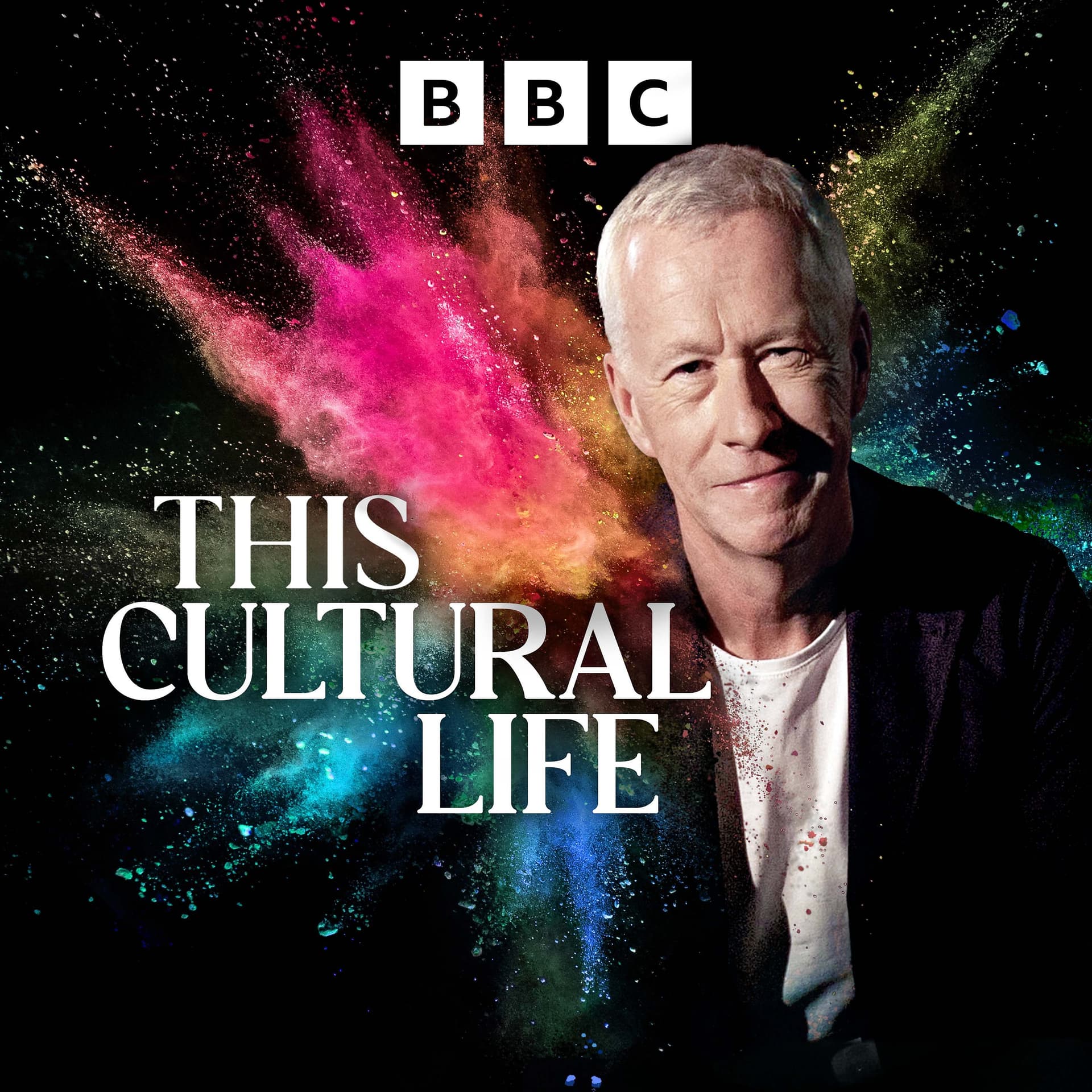
Automatic transcript. May contain errors.0:28You're about to listen to This Cultural Life. the series in which some of the world's leading creative figures choose the most significant influences and experiences that have inspired their own work. I'm John Wilson, and my guest in this episode is the classical trumpeter Alison Balsam. Having recorded 17 studio albums since her debut in 2002, she's been named Gramophone Artist of the Year, she's won three Classical Brit Awards, along with an OBE for services to music, and has played with leading orchestras all around the world. She'll be performing at the 2025 BBC Last Night at the Proms, but as will become clear towards the end of this interview, it promises to be a huge moment, one that will bring the curtain down, not only on this year's Proms, but on her whole career as a trumpeter.
1:15Alison Bolson, welcome to This Cultural Life. Thank you very much. You are one of the world's greatest classical trumpet players. The trumpet is a notoriously difficult instrument to play. Do you remember a moment when you first blew a trumpet and made a sound from it? I do. I was at my uncle and auntie's house and my uncle had lots of different instruments in the house at the time. And me and my brother and my cousins, we were just playing and I had to go on this instrument. And I thought, wow, that's an amazing resonance. That's an amazing sound. It's really fun. It happened immediately. And weirdly, I do feel there was something in my sound in those first few weeks.
1:53the way, you know, obviously my body made the sound that I, it's exactly the same now, 40 years later. Really? It's the same sort of personality coming out in the sound of the trumpet. So personality rather than physicality then? Well, a bit of both, I guess. And also when you start the trumpet at the age of seven or eight, you grow your body, you know, my body is sort of half trumpet. I've grown around the instrument. I've grown up with it and I've breathed, you know, the breathing that one needs to create the sound. It's a bit like being a singer. If you listen to a child singer, probably, you might be able to recognise some of the qualities when they're much older.
2:26Did you love the sound straight away that you could make? I did. Was that part of the appeal? I loved the sound. I found it very elegant, very pure. It sort of touched you to the core immediately and I didn't ever think of it as something that was kind of brash or militaristic. Well, it has a voice, doesn't it? It is a voice. A bit like the human voice. Exactly. You grew up in Royston in Hertfordshire. Just give us a sense of home life. What did your parents do? My dad was a builder and my mum was a social worker in child protection and I have a brother, younger brother. I loved living in Royston and I went to school in Royston until I was 16.
2:58Musical household? No, I didn't grow up in a musical household. I just had the chance to start playing at school when I was about seven or eight. I had the chance to have free lessons, as all my friends did at that time. And I already had played a note on the trumpet, so I knew that I could do that. You gravitated towards that? I gravitated, yeah, towards it. But so did a lot of the other kids. You know, a lot of my friends, both girls and boys, thought, wow, what a fantastic thing. I mean, we used to play stuff like The Muppets theme tune. But I also remember, like it was yesterday, playing a Bach chorale, a very simple four-part harmony in this Jisoo priceless treasure it was.
3:35And it had a top F above the C in the stave. I remember thinking it was incredibly difficult. But I remember the physical feeling of the resonance of four people playing together and that incredibly satisfying, beautiful sound. And I must have only been playing for a number of weeks at that point and I remember it really well. So it's the physical experience of playing with other people as well because you are literally moving air around a room, aren't you? Exactly that. Did you have any understanding of the repertoire? Was classical music played at home? No, it wasn't. I remember things like my dad loved the Carpenters and still does and Tubular Bows was played and there wasn't really much classical music at that time.
4:13I was taken occasionally to the Royal Albert Hall for Christmas carols, concerts, and I was taken to hear English Chamberlain play some Mozart. I remember that really clearly and one or two other concerts I was taken to but that was already after I'd shown an interest in classical music. Let me ask you about another concert that you mentioned in the notes that you sent to us and you said about hearing Queen play live at Nebworth being an early inspiration. Hearing them rather than seeing them. Yes, our whole family is, you know, we're really big fans of Queen and my love of Queen came from the fact that my grandparents lived in Nebworth and we used to see a lot of them.
4:49And I remember my mum and my uncle in particular being really excited about going to hear them across the fields. Me and my cousins and my brother, we weren't old enough and we were in my granny's house and just listening across the fields to this Queen concert, but it's the longing for this band. Nebworth Village is some way away from Nebworth House where they were playing, but was it very clear? Very clear, very exciting, very loud. And we'd gone down earlier in the day and we'd seen the excitement and the fact that I think at the time people could kind of if the security guards weren't watching, you could probably sneak in.
5:21And there was a lot of excitement, longing that that would be us. This was 1986, I think, wasn't it? So you would have been seven years old. Yeah, it's become sort of mythical in my head, the fact that they were really playing live. And I feel that around that age, seven or eight, I had so many powerful and quality experiences of music that have stayed with me. I think the rest of my life is sort of searching for those moments of inspiration again, You know, that feeling of like, wow, I've just discovered this for the first time. And you say they were mythical in your head, Queen, at the time.
5:52It's a legendary concert, that, because I think it was the last time that Freddie Mercury ever performed live. So, I mean, that was quite a concert to have heard. No time for losers Because we are the champions
6:12Of the world
6:19I mean, he was known as the great performer as well. Do you as a performer, how much thought do you have to give to your projection to an audience, or are you just always concentrated on the notes that you're playing? I think the performance is like a portal in many ways into what's happening, what the content is, and I think, of course, the music that was written by Queen, by Freddie Mercury, is fantastic, but it was the delivery, his charisma, his aura on stage, and his magic. I think that's why he is, you know, remembered the way he is. And I think performers have something very valuable to offer the world.
6:56I think about this a lot, actually, because I don't compose myself. And you think, well, what are you doing when you're just a sort of electrical conductor from the composer to the audience? How important is that? And I think you both have to get out of the way to allow the intention through and people to feel as moved as possible by the material. But you also have to bring the humanity to it. and that's something I've spent a huge amount of my life thinking about with an instrument that's technically quite clunky. It's like bathroom plumbing. How do you get out of your own way with the technique and the physical stamina and the limitations in order to basically use it as a pure voice?
7:42On This Cultural Life, Alison Balsam, my guests choose the most significant influences and experiences that have inspired their own creativity. And we're going to start with a recording of the great jazz trumpeter, Dizzy Gillespie,
7:58which you say you borrowed from the local library, Royston Library, at the age of seven. So very soon after picking up the trumpet. Yeah, I think my mum and dad thought, wow, she loves the trumpet. Let's go and see if we can find out some more about it because they didn't play. and we found this which was so fortuitous because even now when I listen to it I think this is one of the greatest trumpet recordings of all time What was he playing? It was the RCA Masters recording of Con Alma, Night in Tunisia and things like that It was a trumpet sound I'd never heard and it was very different from anything I do now or could ever do
8:44It was this voice which was incredibly sophisticated. It was instantaneous. His improvisation was just something... Even now I listen to it, I can barely... I can't believe the sophistication and the multi-layered construction of his solos.
9:10And the speed as well. The speed, but also, yeah, the virtuosity. But it's not just impressive, it's so moving. The idea that someone could express themselves through an instrument in such a pure, I mean, both abstract and pure way was completely jaw-dropping for me. And it's quite strange because I didn't ever then take up the trumpet in that way. I wasn't a jazz trumpeter. I was doing a very sort of classical training, like learn the notes, learn to read the music, play with others in a band or in a classical group. Are they very different disciplines then? I think they're very different. Can you play jazz trumpet, though?
9:43Could you? If somebody said, play Night in Tunisia, could you do that? Oh, yeah, I mean, I could play it. I could play Night in Tunisia. I couldn't do the solos because I think fairly horizontally as opposed to vertically. I think in melody and not in harmony. But if you heard Dizzy Gillespie on any particular night playing Night in Tunisia, it would never be the same because that's all about improvisation. Is that something you could do or are you totally wired up differently? I'm wired completely differently and I wish I could do that. And I do think it has influenced me hugely, but I can't do that.
10:13It's like it would be easier for me to pick up a clarinet and play it than it would be for me to do that with the trumpet. Was it Dizzy Gillespie or the trumpet? And I'm wondering, you know, if you'd picked up a cassette of something by Miles Davis or Chet Baker or Donald Byrd or one of the other great jazz trumpeters, do you think you'd be talking about them right now? I don't know. I mean, I love those trumpeters, but Dizzy had something. It wasn't about the trumpet. It was about his voice. It was about his means of expression. The trumpet was his vehicle, but it was about his character.
11:03You've also chosen a 1982 recording of Bach's Brandenburg Concertos with Trevor Pinnock conducting the English concert, and he's also playing harpsichord on this recording. Who introduced you to this record? My uncle Peter, he gave me a cassette of this. Is this the same uncle that had the instruments at home? Yeah, yeah. And I remember having a new Walkman, and I remember being in Hitchin. I remember where I was standing. It really is in my memory, like when my life changed, because it's the harpsichord. You know, it's Trevor leading this orchestra from the harpsichord, this incredible ensemble of extraordinary musicians.
11:46It's like a breath, it sounds like such a cliche, but it's like a breath of fresh air. And you can hear, even with this instrument that's limited, with the harpsichord, you can't really control the volume and the touch that much. It's much more about the rhythm and the phrasing and the pacing and the intention. And even at that age, I couldn't have analysed what was happening, but I felt something. I mean, goose pimples from the first second I heard it. And I was so intrigued. I didn't even know what Baroque music was or what the instruments were. I don't think I'd ever heard a live harpsichord.
12:19But it was something about these musicians taking this material and bringing it to life was one of the most beautiful things I've ever heard in my life and still is to this day.
12:36But there are six concertos with strings and the brass and so much complexity going on. Why was it the harpsichord, do you think? I think it was his musicianship.
12:54I think he was just a great leader, a charismatic, like the Baroque equivalent of someone playing an incredible guitar solo, and it being the highlight of the whole festival kind of experience.
13:28and he'd obviously chosen the instrumentalists and they were all playing their socks off and just brilliantly and there was obviously an atmosphere in the room which was quite, quite magical. And I have had the great privilege of working with Trevor Pinnock since then. And it is one of the highlights of my life, unquestionably, to be in the room with him when he's that focused, when he's working. And he's like a magical being who is able to conjure something in the air and make everyone sort of aim in the same direction. You know, he was a tour de force and he knew exactly what he wanted to say.
14:00He was a virtuoso on the harpsichord, but he knew exactly the colour he wanted to create by putting these musicians together. and it was the perfect storm. And he had founded the English concert in the early 1970s, one of the first groups, I think, to play on period instruments and that's a lot more common these days. But can you just explain the difference in the sound that they produced? Yeah, until then it was very much the tradition to play in a quite plummy, romantic style, you know, that you were playing Brahms or Mahler or something quite romantic. And the timbre, you know, the string players would maybe use vibrato and the instruments would not be that loyal to what we knew were historically what the composers had written for.
14:42It's a more expressionistic play. Yeah, more sort of heart on the sleeve, let's just interpret it in a 19th century type way. And then there was this incredible group of musicians, Trevor being one of them, who said, actually, this isn't what Bach meant. This isn't what, how, we now know that there were these instruments and they sounded different and the tuning was much more difficult and there was a lot that was very much more challenging in terms of getting the intonation and making them work and not completely fail and the gut strings and what have you. But if we can manage to do it with really, really great players, the effect is going to be absolutely thrilling, and that's exactly what he did.
15:17They were really the vanguard.
15:33I see him as quite a maverick, you know, that he thought, well, I'm not just going to do what's expected. I'm hungry to find out what this might sound like. And obviously that was over 50 years ago now, and it's changed the whole landscape of early music. And as you say, you worked with Trevor Pinnock, most notably in 2012 when you recorded an album called The Sound of the Trumpet, featuring Baroque pieces by Handel and Purcell.
16:03You played on a Baroque trumpet. So what's the difference technically and musically between that and the sort of more conventional contemporary, the modern trumpet? Well, the trumpet of that time didn't have any valves, was the main obvious difference. And the valves add all the notes of the scale. So at the time when the trumpet were really treated as a musical aristocracy because it was so difficult to play in the very, very upper registers of the long, straight tubings. So on a Baroque instrument, you are creating every note, the differential notes are created only by your lips. Yeah, exactly.
16:35Is that physically a lot harder? It's a lot less accurate. Is it harder? It is a bit harder, yeah, I guess. But what you gain from that is technical capabilities the trumpet had at the time. And it doesn't sound like there's any limit when you look at their writing, but actually they didn't really write anything for solo trumpet, not much. There's the Purcell Sonata and one or two other things. So I took to arranging this whole album for the natural trumpet.
17:14It was a really wonderful musical challenge to try to pull that album together. I would say that early music is the great love of my life and so I wanted to explore it more, I wanted to play it more and I couldn't find the repertoire so we created it. I went to Trevor with this project and it was a... I had to kind of audition for this because he's not someone who's just going to say yes to a really crazy idea unless there's a very good musical reason for it. What was it like working with him then after having admired him so much? It was both terrifying and one of the best things I've ever done musically.
17:54Your next choice for this cultural life, Alison Balsam, is Adrian Jacobs, your middle school music theory teacher at Greenaway School in Hertfordshire. Why have you chosen him as such an important influence in your musical life? I've chosen him because I think good teachers are just so, so precious and make the difference between, you know, somebody finding something that they really, really, truly love and then just maybe falling away from it when they and they miss their potential. And he was someone who was he was a quiet man. He taught me, I remember, before I went to the junior guild hall on a Saturday morning, which I adored.
18:30But before I had that opportunity and even knew about it, I went to his house at sort of eight o 'clock on a Saturday morning to learn music theory. And I think it was a very selfless thing that he probably is probably the last thing he needed at the weekend after teaching a bunch of middle school kids all week. So this is before you thought, I want to be a solo performer then. How seriously were you taking it at this point? I was just really enjoying it. I knew how to play in my local brass band. I loved seeing my friends at band. I loved playing the trumpet and the cornet. but I didn't know that if you press down the second valve on the trumpet that that meant that was an F sharp and I didn't really know what an F sharp was and through his patience and his just gentle, clear explanation I went from knowing nothing and never feeling like I knew nothing to really having a great enjoyment and an understanding of what was going on with the music.
19:21A person like that in a child's life at the age of 10, 11 is such a crucial, you know, someone you can really trust because they can see you've got a passion. And then I was so lucky to go to the junior guild hall and study with the great John Miller, who, honestly, for years I thought, I'm just going to study with him and he's going to be my teacher every week until he dies of old age, a very great age, and then I will stop. Because I can't imagine my life without having him as my guide with the trumpet, who was such a great teacher. I sometimes describe him as Mr. Miyagi from Karate Kid. where you think everyone else is flying around the scales and playing high notes and being really impressive.
20:00And I was just doing the musical equivalent of wax on, wax off and just playing these long, slow tones and just gentle, developing my sound, the breadth of my sound and my musical voice, I guess, but not in a sort of virtuosic way. It's one thing to be studying notes on paper and learning technique in a classroom. What about seeing a master at work? What was the first serious classical concert that helped you forge your young ambition? One big concert for me was going to the Barbican when I was about 10. And Håkon Hardenberger, the Swedish trumpet soloist, was playing the Humboldt Concerto with the English Chamber Orchestra.
20:39And it was the first time I really understood that the trumpet could not only play a tune at the front of an orchestra, but flourish incredibly and make the most incredible sound in that context of being accompanied by the strings. And he was a superstar at the time, and I remember it was a big deal for our family to go to London. I remember getting the tube and going to the concert, and I remember the next day at school telling everyone I'd been to London to see this concert, and that made a huge impression on me.
21:21And did it make you think that night, watching that concert, I want to be up there on that stage playing that repertoire? I think it did. I mean, it's really, that's an interesting question because it's sort of a contradiction in me that's run through my whole life, which is I both want to be up there doing that, but also I couldn't possibly go up there and do that because that would be terrifying. But listen to how good that sounds. I need to do that. So I've had that all my life where it's both something that I have to do, but I'm terrified to do. But something must have changed because you were going to the junior guild hall, as you say, and then you went to Paris to study later on.
21:58So at some point you must have thought, this is going to be my life. I've got to take this thing incredibly seriously. I never had a moment where I questioned, shall I do this or not? You know, I always wanted to be a solo trumpeter. I didn't want to be in the orchestra. I didn't want to do anything else. I was like, I have to try and do this. And it may not be possible, but that's my dream. I'm going to try and do that. And actually, I did get to stay up late and see Hardenberger play the Haydn Concerto at the last night of the proms and think that's just the best thing in the world. I mean, I've got to do that.
22:45But is it very different training as a soloist to becoming an ensemble player as part of the orchestra? It's very different. It is a very different training because you have to have something to say, I think, if you're a soloist. You can't copy your teachers. You can't just play the repertoire. You know, the repertoire has been a huge challenge in my career because there's so little compared to other instruments. And I want to play pieces of music that have great meaning and gravitas and, you know, you can get your teeth into artistically and they have integrity, but also you're not going to completely alienate everyone and no one will come to your concerts because you're only playing, you know, very avant-garde music and you have to believe in it.
Read the full transcript
23:24It has to be the music that you love and you can communicate to others. And so that's been a huge, wonderful challenge of my career, which is a very different set of challenges than if you play a trumpet in an orchestra. How physically difficult is it to play the trumpet? It's really difficult. It's really difficult. That's why I think it's treated sometimes like a sport. It's like a weightlifting sport because you have to have a physical strength to even play high notes and play loud and make a note in the first place. My approach has always been, of course, you have to have that physical strength, but I think of it like a dancer as opposed to a weightlifter.
23:59Instead of just lifting the weights and therefore I've achieved it, it's about, well, you need to be incredibly strong, but it's more of a sort of internalisation of that strength in order then to be able to be an artist and express yourself. You have to be physically strong because your respiratory system has to be really top-notch, doesn't it? Yeah, your breathing has to be absolutely... I remember a really great teacher of mine once, Steve Keevey, telling me that if you organise your breathing, your lip will never get tired. So you're constantly trying to build the embouchure muscles, but actually if you've organised your breathing properly and you've got a great breathing technique, that's not going to happen.
24:32You know, using your lungs to the absolute maximum capacity and with a great technique. And, you know, like imagine if you're stressed and you have to walk on stage and make a speech, it's possible that your talking voice might go a little higher than usual. That's the first, you know, if that happened on the trumpet, you're finished. You probably wouldn't get through the first movement of a concerto. It's a very, very sort of delicately calibrated physical exercise that if you sort of psych yourself out near the beginning, you're not going to get through, which is why it's such a sort of tightrope walk to be a soloist.
25:01And because of those physical demands, Is that why it is an instrument that has traditionally been far more associated with men than women? I think that's the stereotypes of the instrument, that it's sort of loud and it's physically demanding. But as I say, it's, you know, so is swimming and so is dancing. I don't think people would say they're masculine pursuits. And it's about doing them really well. You know, I think if you look at any instrumentalist, any soloist on any instrument, you know, they bring the masculine quality to their playing, but they bring the feminine quality. It's a really loud instrument as well, isn't it?
25:34I mean, in terms of practising, it can be really antisocial, can't it? I don't think it's the worst. I think other instruments could be worse. I mean, it depends if it's your natural instrument. I think people often, you know, if it's not for you, then maybe just find another one. Look, if you're practising at home and the window's open, I'm sure the neighbours are really happy. But if you're a kid who's really struggling, it can, and, you know, you hear two hours of that floating across the ground. I think if you were just starting out, you wouldn't be able to play for two hours because your lips would be tired.
26:01But also, I don't know if I agree with that. I think it's quite a quite innocently beautiful sound when you hear a child practising the trumpet. It's better than, you know, hearing someone play something over and over again on the... Actually, I'm not going to say it. And I should say that any child who's practising the trumpet, keep going. Keep going. And also the thing with me, I didn't actually love practising on my own, ironically, that much. I wanted to go and play in my band. I loved the social aspects of it. I loved seeing my friends and it just being a really, like, kind of wonderful leveller.
26:30You know, this was the sort of the leitmotif of everything we were doing was like, oh, keep keep playing this piece that we're learning. But also what happened last night on TV? And it was the background to our lives, but in a in a really joyful way. Do you think you would have had the same opportunities if you were growing up now and going to the same state school system? Absolutely not. If I was at school now, I wouldn't be playing. You have, of course, been a very prominent campaigning voice for music education in schools. What needs to change as far as you're concerned? I really think there needs to be great value put on the teaching of music and most importantly the playing of music, the chance for people to play music with others.
27:12And I feel so devastated for so many people that they don't have that opportunity because it's not about becoming a professional musician. It's the idea that people don't have that opportunity to express themselves. you know they we don't go to school just to get a job we go to school to you know have a full all-round education and to be able to express ourselves and learn about ourselves and I can see how many children at school now need that so much and it's taken away from them and it's the idea of playing with other people and opening your ears and your minds and your hearts it's such an easy way to do that when you're playing instruments with other people it's such an obvious one I mean it's been scientifically proven that this works and it's a gateway to all of your other subjects We know that.
27:54And the idea that it's not prioritised in education is, to me, is a great tragedy. And it's very short termist. And, you know, there's a huge sea change that needs to happen in education in the West anyway. You know, I think Gabor Mate says the last thing that should ever be cut from education is playtime and music because we need to develop our brains. We're not, it's the last bastion of, you know, humanity is like, never mind about AI, that can do the maths. but we need to bring what's human about us. That's what's magic and what's special and music is able to unlock that. And particularly in increasing numbers of people who are recognised to be neurodiverse in some way, this is something that's fascinating to me and something I'm learning all about.
28:37Those of us who are neurodiverse, having other ways to express ourselves other than in words or through academia.
28:52As you've already alluded to, there is a relatively small repertoire for the trumpet. Is that frustrating? Yeah, it's really frustrating. So frustrating. If only the trumpet had had valves a bit sooner, and Tchaikovsky and Brahms and Beethoven and all the greats had written for the instrument that we have now. I think they would have done. If the instrument had had such a facility that it has now, they would have realised what incredible power and nuance and subtlety and the multifaceted colours that it does have. and so when Wynton Marsalis wrote a trumpet concerto a couple of years ago I was incredibly excited because of course he knows exactly what he's doing with the trumpet but he also knows exactly what he's doing with orchestration and large scale structure and it felt a little bit like being handed the Tchaikovsky trumpet concerto because I knew it was going to be something really to get my teeth into really to spend time investigating and exploring and that it would be working for the trumpet because he understands how to write for the instrument.
30:07Was that quite rare then for a top-notch composer to be writing a new piece for the trumpet? Pieces are written for the trumpet, but I felt that I had an understanding and a love for Marsalis' style and what he wanted from that piece and I was intrigued from the first moment I heard he was writing it and it was why I've been touring less and doing less sort of just on the tour around the world constantly but when I realised I was going to get the chance to play that piece I thought, oh no, I have to keep going, I have to go and do that. Can you ask composers to write pieces for you? Have you done that?
30:45Yeah, I have. And they have. And one wonderful highlight was Thea Musgrave writing for the trumpet. Again, she's not a trumpeter, but she wrote in a way that was fresh and interesting and original. And no one's ever really written for the trumpet quite like she did in that piece. The trumpet is an instrument I believe in hugely. It's an instrument of today. It really can express powerful emotions. and it has the power to stand in front of a large symphony orchestra and create those many, many colours. It's a wonderful instrument for people to write for. Have you run out of repertoire? I mean, I don't know about running out.
31:27I mean, I wonder whether I've probably said everything I've got to say on the great classics of the repertoire. Because you've done all the ones that are available for the trumpet. I mean, I've spent a lot of time thinking about, you know, For example, the Haydn Concerto is really one of Haydn's greatest works, in my opinion. And I've really studied Haydn. And Hummel, he wrote this concerto a few years after Haydn wrote his. Again, for an incredible virtuoso at the time who had developed the instrument somewhat and it had some keys so it could play more of the notes. You know, it is a very Mozartian concerto.
32:01It feels the closest we will have to a Mozart concerto. And it is a masterpiece. And I feel that I've played them many times. and the thing is you bring your life to those pieces so you can play it technically, they're not the hardest pieces but what you have in your life and you have to say at the time is how you play those pieces and I've been so lucky to play with some of the greatest orchestras in the world and the light hits them in a new way and they feel different every time but this chance to play the Hummel at the last night of the proms it feels very final for me I know what I want to say about this piece but I don't think I'm going to have anything more to say afterwards.
32:39About Hummel or about the trumpet? About Hummel, I mean, the trumpet is just the best thing ever. I would always champion the trumpet, but I personally have been playing the trumpet for 40 years and I've followed my particular path very honestly and with authenticity and I feel that I've come to the end of that path. So is this not just the last night of the proms, but your last night on stage? This is going to be my last night on stage, yeah. because it's not something you can half do. You have to be on the road all the year round. Like what I've been doing the last couple of years is like doing the Wimbledon final and then no tennis and then the French Open final and then no tennis.
33:16It's just, you can't, it's not sustainable at that level. And I want... And you have family. And I have a family. But I feel very passionately about this particular concert, particularly because it was that first concert I ever saw on TV where it made me think, look at that, it's the trumpet soloist at the last night of the proms. and it was a, you know, it hit me between the eyes of, wow, that's a brilliant thing. And I've been given that chance again for the second time and I just think, it's a sign. So here now comes trumpeter Alison Balsam with conductor David Robertson to play Joseph Haydn's trumpet concerto in E flat.
33:54I played the Haydn at the last night of the proms in 2009, but I was a very, I was actually 12 weeks pregnant in 2009, So I felt really sick and I feel like I've changed as a person quite significantly since that concert.
34:14So I'm really intrigued how this is going to feel because this is a precious, treasured institution, the proms for me. And I feel that it's been with me all my life. And this is a great privilege, of course, to play again at the last night. I've already said that you are probably the greatest living trumpet player and you've just said that this is the end this is the last concert so this is a really significant moment then that you're facing Yeah Does it feel poignant? It doesn't feel poignant at the moment because I'm very, very focused as one has to be when you're playing a concerto and I feel that I just want to I'm just doing what I do which is I'm going to make sure that that's a really good performance of the Hummel and I will do whatever it takes and whatever it costs me to make sure that that goes really, really well.
35:00And I don't think I can afford in any way to be thinking about anything sentimental because it's still part of the discipline, the self-discipline and the rigour of having to make sure that it's any performance. Your worst performance is the best one everyone else has ever heard. It's the self-discipline and the preparation that has to go into it. I'm only focusing on that. And then afterwards, perhaps, hopefully, if it goes well, I'll look back and go, well, that was a great one. And, you know, I mean, it's a win-win. Either it's a mic drop moment or it's terrible. And I'll be like, see, I told you I should stop.
35:35But you've already talked about how it's so physically demanding. You have to keep yourself in shape, not least your lips. You have to keep playing to stay at that level. So are you suggesting that once you do this last night at the Bromwich, that's it? You're putting the trumpet down. You won't be playing it anymore. Yeah, because it's really hard with the trumpet to just do it a bit. because it will only take a couple of days before you can't really play as well. And then two weeks later, I wouldn't get through the whole concerto and no one would want to hear it at all. It doesn't take long.
36:03The muscles in your mouth when you play the trumpet, there's hundreds of tiny muscles in your embouchure. Whereas on the piano, you would be able to play the piano for several weeks if you hadn't really practiced. Whereas the trumpet is not like that. It's a couple of days. And obviously, I don't like playing the trumpet when I'm not very good. and also all my life I've had so many things that I've also wanted to do. My practice has always been something that's sort of pulled at me, like, oh, I need to practice, but I also want to go and make this big theatre out of paper or I want to go and design this thing.
36:39There's just stuff I want to make all the time. So there's new creative ambitions. I've got so much creative energy that I've had to just shut down because of the self-discipline needed to be mono-focused on being a soloist. How significant is it that your dad was a builder and a maker? Yeah, I think really, really significant. I'm very much like my dad and I love making things and I love problem-solving in a practical way and coming up with a solution in terms of how to build something or make something or design something. And I feel that I've not been able to really enjoy that. You know, even when I've travelled around the world and been to so many interesting places, I've not really enjoyed them as much as I could have done because I was so focused on doing a good job with the music.
37:19And I just think, you know, after 40 years, it's time to just explore some of those avenues. But you are in effect retiring at the age of 46. A lot of people in the classical world would be quite shocked to hear that, that you are putting your trumpet down. I mean, will it feel, do you think, like a relief? Are you looking forward to this curtain closer? I'm both looking forward to it. I mean, I am actually really looking forward to the last night of the prom. But I'm also really looking forward to not having that constant thing hanging over me where it's constantly like, is your lip going to be OK?
37:53Are you going to have the courage to just walk out in front of 80 people and, you know, 6 ,000 people in the audience and the orchestra and just proving yourself time and time again with, you know, when you've got if I had these pieces that I don't have that I mentioned, you know, the Brahms and the Beethoven, I probably would carry on exploring them for the rest of my life. but I don't have them. I don't have the repertoire in order to delve deep into the content itself. I feel that I've spent a lot of my career creating content and curation of juxtaposition of different types of repertoire and look at the trumpet, it can do this, it can do that and now look at this show I've put together.
38:28And I've done that. I've done that. I don't see any need to repeat it for the sake of it. But you talked very movingly about that moment in the classroom where you first picked up the trumpet, it made sense to you, it was your instrument. Is there any regret looking back that you didn't pick up the violin or the piano? Not at all. I love the trumpet. I'm so happy that I picked up the trumpet. It's such a beautiful instrument and I will always think that. But, you know, you have to remember I don't sit with, you know, four friends playing brass chorales. That's not what I do for a living. You know, what I do is I play on my own and I join orchestras on my own and I travel on my own and I walk out on the stage on my own and I play a piece.
39:03And if that piece was, if I had lots of those pieces that I could just spend the rest of my life delving into. I would, but I don't. And you have a family, of course. You have kids and you're married to a previous guest of This Cultural Life, the film director, Sam Mendes. Yeah, so Sam, of course, is a huge cultural influence on me. Incredibly eclectic gatherer of all things cultural. Having a family and wanting to see my family is certainly one part of my decision. Has the touring taken you away from the family in a way that you just don't want to do anymore? Is that part of the reason? I think I'm, yeah, I'm done with touring because it's something that is incredibly intense and it's not just that you're physically removed from your family but you're also mentally, emotionally just somewhere else.
39:55It's incredibly intense and all-encompassing when you're working as a soloist and you're on the road And that's something that I've spent many years doing already. And as you head towards the last night of the proms, and as you've just told me, your last night as a trumpeter, that hopefully will be a highlight of your career. But looking back over everything you have achieved, is there a particular recording or a concert that you are most proud of that sort of lodges in the memory? gosh that's an interesting question because i i'd have to think about that i haven't thought about it because i'm always so busy looking ahead yeah i i don't really look back so not really so hopefully it will be the last night yeah performing the homo probably but i'm so trained to just keep keep improving and like well what went wrong with it what would i do next time and how would i you know approach it next time psychologically and what would i you know so it would be it's a big moment to go and that's enough you're that was enough you know the intention of what you were trying to say through music was enough rather than you know trying to be perfect
41:17And normally at this point in the interview I ask my guests about what drives them on creatively through the medium of their chosen art form and if it's not going to be the trumpet what is going to drive you on creatively having a creative urge as you clearly do there's so many things i want to do i i mean none of it's going to be world beating i'm not going to be a world famous anything else i don't think but you know i really want to paint i really want to make things i really want to draw and learn another instrument i don't know if i might yeah i might i see i have these recurring dreams about playing the viola and the cello and the violin and you know really delicious chamber music.
41:54But also, I just have always wanted to design things. I just want to sit quietly and design things. That's what I was maybe supposed to be as a designer. Alison Balsam, thank you very much indeed for sharing your cultural life with us. It's a pleasure.
42:17Well, I really hope you enjoyed my conversation with the classical trumpeter, or should I say former trumpeter Alison Balsam who joins an illustrious roster of virtuoso musicians in our archives including violinists Nicola Benedetti and Nigel Kennedy pianists Vick Inge Olufsen and Sir Stephen Hough and opera stars Joyce DiDonato and Kiri Takanoa you can hear all of them along with every other episode from all of the previous series if you search for This Cultural Life in BBC Sounds or wherever you get your podcasts internationally And please do subscribe to the series and switch on push notifications on your device and that way you'll never miss an episode.
42:55From me, John Wilson, and series producer Edwina Pittman, thank you very much indeed for listening to This Cultural Life.
43:05I'm Kate Lamble and from BBC Radio 4, this is Derailed, the story of HS2. It's the tale of a railway which divided Britain. An ambitious idea brought down by political reality and what it tells us about why we struggle to build a better future. We'll hear the inside story of how the dream of HS2 was created before it morphed into a political nightmare and national punchline. The absurd spectacle of a£100 million Bat Tunnel holding up the country's single biggest infrastructure project. through backroom deals, bat tunnels and the reality of power in the UK. Listen first on BBC Sounds.
From the publisher
Classical trumpeter Alison Balsom talks to John Wilson about the most significant influences and experiences that have inspired her career. Having recorded 17 studio albums since 2002, she has been named Gramophone Artist of the Year, won three Classical Brit Awards, along with an OBE for services to music. She has performed with leading conductors and orchestras around the world, including at the Last Night of the Proms.
Producer: Edwina Pitman