In short
Notes on "This Cultural Life" Episode: Anne Enright
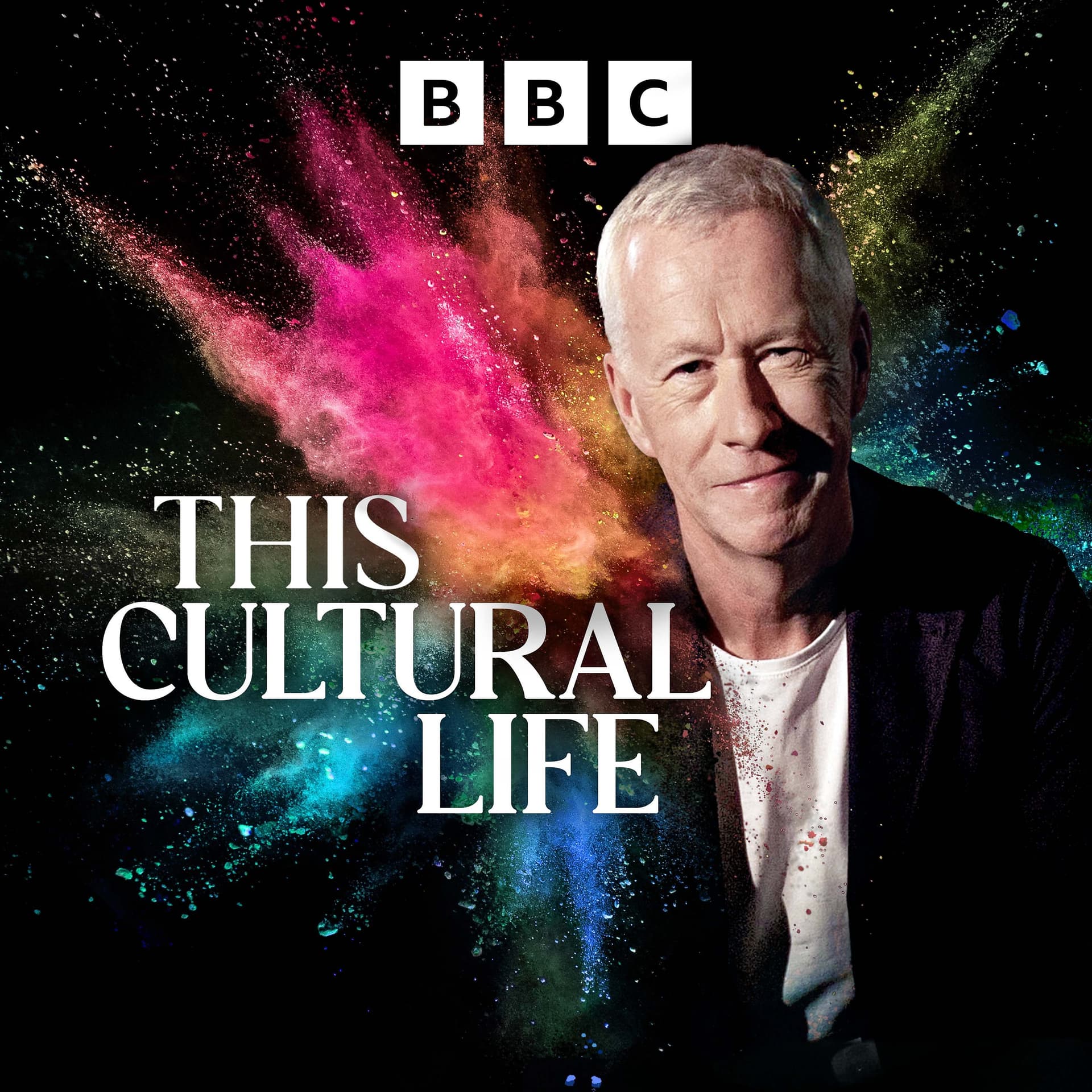
Podcast Overview Title: This Cultural Life Host: John Wilson Description: In-depth conversations with leading artists and creatives across various fields including theatre, visual arts, music, dance, and film.
Episode Details Episode Title: Anne Enright Release Date: [Insert Release Date Here] Guest: Anne Enright, Irish novelist and Booker Prize winner
Author Background
- Notable Works:
- *The Gathering* - Winner of the Booker Prize in 2007
- *The Forgotten Waltz* - Winner of the Andre Carnegie Medal for Fiction (2012)
- *The Green Road* - Winner of The Irish Novel of the Year (2015)
- *The Wren, The Wren* - Shortlisted for the Women’s Prize for Fiction 2024
Key Themes and Discussions
Childhood Influences
- Early Environment:
- Childhood home in Dublin suburbs and holidays in Kilkee.
- Family dynamics emphasized through shared reading experiences.
- Objects and books in her family home as significant markers of memory and creativity.
- Literary Inspirations:
- First book read at age four was *Now We’re Year Six* by A. A. Milne.
- Early exposure to diverse literature, including *Ulysses* by James Joyce, which she read on a cycling holiday at 14.
- Influence of Caryl Churchill's *Top Girls* on her understanding of female representation in literature and dialogue.
Writing Journey
- Influences and Mentoring:
- Angela Carter served as a mentor at the University of East Anglia.
- Carter encouraged authenticity rather than traditional teaching methods, fostering a sense of equality among writers.
- Creative Development:
- Transition from acting to writing, influenced by experiences in theatre, particularly with Rough Magic Theatre Company.
- Exploration of themes of family and memory in her novels, particularly in *The Gathering*.
Artistic Influences
- Pollock Holes of Kilkee:
- Described as a metaphor for creativity; likened writing to diving into the unknown.
- The natural world and rural experience deeply inspire her character development and narrative themes.
- Joyce’s *Ulysses*:
- Discussed as a resource that empowers her writing, illustrating the capacity to write about the mundane and the profound.
- Emphasizes freedom in literary expression and the embrace of everyday life.
- Caryl Churchill's *Top Girls*:
- Explored female dialogue and the complexities of womanhood, influencing Enright’s writing style.
Recent Works and Reflections
- *The Wren, The Wren*:
- A multi-generational family saga, reflecting on themes of love and loss.
- Phil, the family patriarch and a poet, represents a tension between rural and urban identity.
- Artistic Commitment:
- Discussed the challenges of maintaining creativity and the importance of perseverance in writing.
- Opened up about her current writing process, hinting at new projects inspired by personal memories.
Conclusion
- Anne Enright emphasizes the interconnectedness of personal history and artistic expression, navigating through family dynamics and societal expectations.
- The episode highlights the importance of female voices in literature and the ongoing evolution of creative influences in Enright's work.
Key Takeaways
- The significance of childhood environments in shaping creativity.
- The importance of literary mentorship and the development of one's voice.
- The influence of societal and cultural contexts on artistic expression.
- An ongoing commitment to exploring complex themes in her writing.
Additional Information
- Producer: Edwina Pitman
- Archive Readings Used:
- Extracts from *The Gathering* and *The Wren, The Wren*, alongside excerpts from *Top Girls*.
Listening Recommendations For listeners interested in reflections on family, creativity, and the writing process, Enright’s insights provide a rich exploration of how personal histories inform artistic endeavors.
Written by AI. May contain mistakes. Listen to the episode to check what was said.
Transcript
Automatic transcript. May contain errors.0:00BBC Sounds. Music, radio, podcasts.
0:12Welcome to This Cultural Life, the series in which leading artistic figures choose the most significant influences and experiences that have inspired their own creativity. I'm John Wilson, and my guest in this episode is the Irish novelist Anne Enright, winner of the Booker Prize in 2007 for The Gathering, a story about grief and family secrets. She was appointed as the inaugural Laureate for Irish Fiction in 2015. Anne Enright is the author of seven novels, including Actress and The Wren, The Wren, and three collections of short stories.
0:49Anne Enright, welcome to This Cultural Life. Thanks for having me. On the show, before I ask my guests about their choice of creative influences, I usually ask about memories of childhood homes as a sort of preamble. but your first choice for this programme is your childhood home. So let's dive straight in. Take us back there. Well, it's very much on my mind at the moment, I suppose, because we're clearing out the family, we're clearing out the house. Because my mother died just last November and we are... I'm just coming across, you know, all these objects. I think it's sort of amazing to have that continuity, to be born in a house that you never move away from.
1:26That's a bit of sweet endeavour, though, isn't it, having to clear out the house? It is. It's really interesting. I got very minorly obsessed with my mother's button box, a tin of buttons. And I could recognise the outfits from, you know, she used to run up an outfit for your confirmation outfit. There's the blue button right there. So these objects really hold a kind of magnetic interest still for me. And the books, I mean, there aren't a huge number of books there, but some of them go back to, there's one book that my father smuggled back into Ireland in my mother's suitcase from their honeymoon in order to evade the censorship board, which is The Golden Ass by Apuleius.
2:07And there it is, it's on the shelf. And that would not have been allowed if they'd opened the suitcase and found it. That would have been confiscated, would it? Why? I don't know if it would have been. It's like Horace or, you know, it's... But why would that have been... But it contained some obscenity. Ah. So it was intriguing to him that he wouldn't be allowed to read a classic. What did your parents do when you were growing up? They were both civil servants, actually. My mother had to give up her job as a civil servant when she got married, as women did, and my father continued. In Dublin?
2:37Yeah, he grew up in County Clare and she grew up in Dublin. And when did your love of books start as a child? Well, very early, I suppose. But yeah, when you say love of books, it's like almost as though books are objects. And I suppose they are, in a way, objects. I mean, there I am looking at these objects on the shelves in my family home. I'm the youngest of five. and everyone had their bookshelf and there would be a kind of distinctive personality to the books that they had on their shelves and a little bit of rivalry and taking books, not returning books. They were just very much, when you say love of books, they were there.
3:13That's a presumption. I was presuming that you had a love of books because you're a writer, but I mean, that doesn't necessarily follow. Was there a shelf set aside for you by your parents? Yes, when the shelves went up, I had my own shelf. And my first ever book was Now We're Year Six by A.A. Milne, which delighted me beyond measure because I was only four. And it was the best thing ever. Did you become a voracious reader? So I had been reading before that. I was kind of performatively reading. Before four? I was, yeah. Yes, I was. I never used to talk about this because it didn't endear me to people really to be so precocious.
3:50I was a bit shy of it. It sounded a bit boasty or something. But yes, I was reading at three for sure. and so Four was my first official book. What sort of books were you reading, you know, eight, nine, working your way through? Was it the sort of books that other kids of that age were reading or were you sort of reading ahead of? So, well, there were two things. One was that I went to the library after school when I was five and six and seven and so there was the children's section of the Ratmines Library and it was a lovely little nook and I read all the books that were there. Then there were also the adult books that I tried to read and that was always interesting because when I wrote...
4:26You don't want to know. You don't want to know. Anne, it's the remit of the programme. Yes. Anyway, when I had read all the books and convinced the librarian that in fact I had read all the books in the children's section, I blagged my way into an adult ticket to the library. And so they handed me the adult ticket and they just sort of leaned over the counter and looked at me and not laughed quite, but let me at it. I mean, there was no guidance or whatever. So I was completely lost in the adult section. This is fantastic stuff, though. I mean, you seem still slightly embarrassed by your precocity.
5:00Yes. Well, you don't want to be a freak. And also, I mean, I didn't understand everything. But, you know, if it was slim and if it was a black penguin, then I'd read all of it. You know, I'd be quite happy reading Utopia by Thomas More or Candide. They're small. They weren't that threatening. Right. OK. I wasn't big on the test of the D 'Urbervilles. But Candide at what, six or seven years old? No, no, no, that would have been when I was 10, 11. Yeah, you see, it doesn't make you like me either. There you go, six or seven. I think it's fantastic. So if you were reading these stories and soaking it all up, were you then telling your own stories?
5:39When did you start inventing fiction in your head? I do remember an essay that I wrote at school about the class being washed up on the desert island and reading it out to my mother as she was at the sink. What do I think about her being at the sink? I don't know how pleasant that was for her. And I wrote nonsense poetry as well, which was a more personal thing. I do know that the education system in Ireland at that time encouraged the writing of stories and of essays and never told you how to do it. You can tell American students have been told how to write. A paragraph starts with a topic sentence and ends with a conclusion that leads to the next topic sentence.
6:18Nobody told us what to do. And just to bring you back to your choice of your childhood home as a sort of formative influence on your creativity, clearly, I mean, as you're saying, you're clearing out the stuff from the home at the moment, but it's taking you back. And does it make you realise that your creativity very much is rooted in those memories? I'm really interested in how spaces hold emotions and what inheres in objects and what things mean to us. I think a writer is interested in things meaning something. If you're putting them in a book, it's because they mean something. And that house to me is every corner of it is meaningful in some kind of way, holds a moment or an emotion or a relationship.
7:02And so it's a story in itself. Your books are very often about families and family homes and uncomfortable truths about family history. And we see it especially in The Gathering, the novel which won the Booker Prize in 2007. story about a big family coming to terms with the death, the suicide of a wayward son. I would like to write down what happened in my grandmother's house the summer I was eight or nine, but I'm not sure if it really did happen. I need to bear witness to an uncertain event. I feel it roaring inside me, this thing that may not have taken place. I don't even know what name to put in it.
7:42I think you might call it a crime of the flesh. But the flesh is long fallen away And I'm not sure what heart may linger in the bones Where did that story take root in your imagination? Well, the central difficulty of the story was available to me It was in the air I never questioned what it might be So Liam's suicide and why And the source of that was I didn't reach for it at all I had to reach for the other How to shape it or what the history was what the relationship was between the imagined and remembered history, all of that. I'm not expressing this very well. I'm very bad at those questions.
8:24Where did the story start for you? Because it's such a continuum. It's like, where do you step on this moving walkway? I don't know. Where do you step into the river? Where did you climb in? Where did you get out? It's probably too much of a simplistic question. But, I mean, did you know the suicide had happened? Is that why the family was brought together? When I started that story, I thought I was going to write a kind of historical epic that would sell like hotcakes and would go from Dublin in the Joycean past to Dublin of the present. And I didn't even think about the central tragedy. That was just there.
9:00I didn't have to invent it. It just felt real to me. It was the story that had to be told there. So what I had to invent was a kind of trail of causation and then undo that trail of causation and just think about what the fantasy was, what the memory was, what the reality was. So those questions about the difference in how we hold the past in mind are key to how the book started to function.
9:31Your next choice of creative influence another childhood memory are the Pollock Holes of Kilkeye which itself sounds like the title of a novel It does, doesn't it? What are the Pollock Holes? Well Pollock as you know are little fish and Pollock Holes are named after these little fish which you can see when you go snorkelling and diving in the Pollock Holes so they're tidal rock pools in Kilkeye my father's family grew up on Loop Head in County Clare on a bare kind of... The house didn't face the sea, which was about a mile down the road. The cow shed, if you looked out the back of the cow shed, you'd see the sea.
10:03It was turned away from the sea, as those houses often were. So that's that fantastically beautiful part of the west coast of Ireland. Yeah, very bare and amazing in the west coast of Ireland. We used to go there on our holidays down to the farm and run absolutely free range, help with the hay and do all of those kinds of things. And every day we'd go down to swim, according to the tide in the Pollock Holes, which you had to wait until the tide went out. And then the water was so cold because it was basically scraped from the bottom of the sea. It was water from the bottom of the sea. I was going to say, even in summer, it must have been, this is the Atlantic, isn't it?
10:38Yes, it's the Atlantic. And the water is astonishingly clear and pure there. We had five Northern Irish cousins who used to also come down. And so we'd basically spend the day there, turning that really interesting kind of mottled orange I mean, if your skin didn't turn orange as well as purple, you know, and the tips of your fingers white. But I had so much fun. And the pools are very small, but to a child, they were enormous. And they were full of anemones and, you know, grasses, seagrasses and nooks and crannies and sea urchins. And it was amazing. So there's this idea of just running as a pack and doing whatever the hell you liked.
11:22And if I reach for ideas of creative freedom or of creativity, that kind of thing of diving into the water makes all the kind of sense to me. As though writing is a kind of underwater experience or imagining is an underwater experience. So that's why I chose it. It just seemed to hold some kind of key to a sense of what now everyone calls flow, of just being in a different place and it being amazing or potentially amazing or potentially dangerous. That's really fascinating. So it's that memory of those tidal rock pools and seeing the, I mean, it's the world changes when you're seeing it underwater.
11:58The refracted light and seeing creatures that you wouldn't ordinarily see. But you're equating that with the sense of creativity when you're writing fiction. Even almost the kind of the bang of the water in your ear as a kind of punctuation point. It's like you're in. Writing is also an imagination is also a very physical process. And it contains ideas of travelling and discovery that are very embodied. So that just seemed to be the right thing to sum that up. I mean, people say things to me that I find strange. Sometimes people say, oh, you're very brave. It's not really a word I use. It's kind of the thing your mother-in-law says about your carpet.
12:44It's very brave. But that idea of freedom and its necessity in making work, I suppose that's brave. But you don't feel you're going up against anything. You're going towards something sometimes. There's a reason people really want to be artists. and I think freedom is part of that somehow. In your most recent novel The Wren, The Wren, which is another multi-generational family saga, the family patriarch is Phil MacDarrer, who is a revered Irish poet who's renowned for his love poetry and he's writing about the natural world as well. Did the Pollock whole memories feed into the creation of Phil, do you think?
13:27So Phil is an Irish lyric poet. I mean, the way that the Irish tradition defaults to the lyric can be a frustration for some who prefer that it did something less kind of poignantly gorgeous. And I don't know, more sophisticated or interesting or different. But Phil is from a rural tradition. And I found that move down to the country and back to Dublin, the tension between the country and the town was quite productive and interesting. Because the countryside was very valorised in the Irish tradition. it was like the Irish soul was in the countryside. So what were you doing sitting in the suburbs of Dublin?
14:04And you would say, no, I know that other thing too. I didn't entirely trust it either. I thought the countryside was a place of difficulty and poverty and also beauty. So it was part of the Irish National Project, you know, to populate the Irish countryside with noble, noble characters to turn poverty into heroism. and that's great but it becomes kind of idealised and untrue. It was also hard on women in general. And all of that is embodied in this character of Phil McDowell. There's Phil, he's an Irish poet of a certain style and a certain generation and people think his poetry is lovely which it is up to a point.
14:43It has loveliness in it and they think he's a great poet because he does this thing which is actually the thing that people wanted at the time. The wren, the wren was a panic of feathered air in my opening hand, so fierce and light. I did not feel the push of her ascent away from me in a blur of love, to love indistinguishable, my palm pinpricked, my earthbound heart of her love's weight relieved. And oh, my life, my daughter, the faraway sky is cold and very blue. The poetry, as written by Phil McDarrah, intersperses the narrative. But this is poetry that you have had to write on his behalf. It's a tricky business, isn't it, imagining yourself into the mindset of a great Irish poet?
15:33Well, I say great. He was taught great at the time. He was revered at the time. I mean, Phil is not a great poet. I knew that I had to write poetry that would pass as good enough for the time. So it would contain that particular brand of sentimentality that people thought was gorgeous just for 30 years or so. Still do some of them, actually. But anyway, no, scrub that. So it isn't parody and it isn't pastiche and it's not quite possession either. I knew Phil very well. I didn't have to make him up. What do you mean you knew that type of man? I knew, yeah, I knew that type of man. I knew what his hurts were and what he aspired towards and what he despised and what he wanted.
16:17And I knew the kind of prevarications. I knew how he made some things bigger than they should have been and also how self-regarding he was. So, I mean, all artists are self-regarding. So to call a writer or an artist egotistic is just to call, you know, water wet. It's not, you know, it's not new. And Phil sort of accords a little with the misogyny of the time. I knew that very intimately. Isn't it funny how well you know your enemy in some way? Your enemy? Well, if misogyny is the enemy. Oh, I see, right. Yeah, not necessarily that type of man because he's of a particular generation as well and a particular social mindset.
16:57He's what used to be known as a bit of a bousy. You know, he's not middle class. He's not respectable. In my youth, you would come across these drinking men who were dangerous and damaged and almost interesting. And based on any particular real life Irish poets? The problem is Irish poets are lovely. They're notably nice. So I can't think of a poet in particular. But, you know, you mix a bit of some lecturer with a bit of a prose writer and a bit of a painter. Yeah, you can mix it up. It's fine.
17:33Your next choice for This Cultural Life, Anne Enride, is James Joyce's Ulysses. So when did you first read it? Don't tell me you were, you know, eight or nine or something. Well, you see, this is the problem now. The when question. I got so tired of precocity. But I was ambitious as a reader, as you can tell. So I went on a cycling holiday when I was 14. And I'm amazed also, speaking of freedoms, how we were let out the door. I mean, off we went. A group of women, young girls, cycling through Cork and Kerry. We started off in Kinsale. And I had some money from a summer job. And I went to the bookshop in Kinsale and I bought my copy of Ulysses.
18:13because I thought that's what you were supposed to do. I needed reading material for the holiday. So I read it performatively in various youth hostels. Oh, I see. Knowing that everybody was looking at you saying, look what she's reading. Look what she's reading. Because this is a book that had a reputation, particularly in Ireland. I mean, again, revered as a great book, but regarded by many people as an absolutely filthy book, which shouldn't be read by 14-year-old girls, probably. Yeah, Monk Gibbon called it the dirtiest book in the world. I think by the time, it was 1977, and I think by the time that idea of it as an obscene book had slightly been surpassed by its obscurity, that if you could find out what was in it, you were welcome to the smut, you know, if you could understand it.
18:56When my mother discovered I was reading it, she had a very strong reaction and told me that I couldn't. I said, well, what's wrong with it? And she said, it's scatological. And I said, what does that mean? And she said, look it up, which was her great response. Look it up. So I looked up Scatological and I thought, well, that's very boring. Why is that? I mean, it's technically, I mean, clearly dirty, but why is it dirty in a way that you couldn't read? Anyway, so she knew enough about it. Her mother had read it and hid it under the quilt in that house where she grew up. And her mother got it from the local librarian in Phibsborough and Mrs.
19:33Doody, who would pass it under the counter to women of good character if she knew that they wouldn't be corrupted by it. So that would have been in 1932 or whatever. So it was quite famous as a book. So my granny would have read Ulysses and hidden it away. So you would have known about Ulysses at 14 when you went to buy it. Did it live up to expectations? I think at that time I read the first three episodes and enjoyed them very much and didn't see what the problem was. I mean, Proteus gets very drifted, doesn't it? When I went back, I read it again the year before last and going to that section, Proteus, where Stephen Daedalus is wandering on Sandy Mount Strand, I re-experienced that real need to fall asleep in the middle of it.
20:18It was like an enchantment that I was going to fall asleep. It was so close to dreaming whatever was starting to happen in my mind as I was reading it. Not something that people boast about with Ulysses that it sent them to sleep. It was sending them to sleep in the most interesting way. So when you re-read it last year, Was that the first time you'd re-read it for a long time? No, no. Do you go back to it regularly? I read it when I was 18 without notes, which, you know, is pretty much the way to go for me. It reads Ulysses young and without a clue, without any idea of what it's about. It's a partnership, reading Ulysses.
20:54It's a very... The reader brings so much, and it's very much about your individual response, and that response changes. Do you feel you understand it better now, or is that not the point? Well, exactly. I mean, understanding isn't the point. There's plenty that's comprehensible in it. So it's like reading poetry or something. If you understand poetry, you're limiting poetry. Did you already have thoughts about being a writer yourself when you read Ulysses at 14? I mean, I really must have done, and they wouldn't have come from me. You mean other people were saying to you, you've got a great imagination.
21:27Yeah, you're annoying in the way a writer should be annoying. Could you go and annoy people properly, please? You keep guarding yourself against this, don't you? Against what? About the sense that you are too precocious and that you're too self-regarding as an artist. Yes, I do, don't I? Yeah, I do. What did Ulysses, though, offer you as an artist, as a writer in later years? Did it give you sort of almost licence to write in a particular way? Does it come back to freedom again? Ulysses is a resource. I mean, it's like running water. It keeps coming. It keeps making itself. And you can dip into it and out as needed.
22:06Like the Pollock Holes. Like the Pollock Holes. Very watery, this. Very guarded, very watery. First of all, Ulysses tells you you can write about anything. And it tells you that everything is interesting in some way. Bloom's sections are very embodied. They're very domestic, very ordinary day. You can get anything out of it. And it works by opposites. It keeps moving. Yeah, I suppose you could. I mean, the problem, a lot of male writers when I was growing up would pitch themselves against Joyce and say, well, if you can't be as good as Joyce, why bother? Which is like saying, if you can't win the marathon, why go for a walk?
22:42You know, so I didn't find that Joyce was this terrible authority who was telling me I wasn't good enough. I didn't have that in it. That wasn't the lineage. So I just, yeah, felt more empowered than not by Joyce.
23:04At 16 years old, you went to school in British Columbia, in Canada, on a scholarship, and then you returned to Ireland to study English and philosophy at Trinity in Dublin. So by that time, was it there in your mind, this is my destiny, I'm going to be writing novels? I didn't have a fixed sense of destiny, I have to say. I wrote bad poetry in school, I wrote bad poetry in Canada, and in college it was all about plays and acting and all the rest of it. So I didn't have a sense of the ivory tower that I was trekking towards. That wasn't the pilgrimage. It was writing plays with people, improvisational.
23:39It was making things up in the rehearsal room. It was having a great good time, basically. Which brings us to your next choice, which is the 1982 play Top Girls by Carol Churchill. And this is a work which you not only saw, but you acted in whilst you were a student at Trinity. What do you remember about the production then that you put on? Yeah, the gang of people I was at college with, we were in the student theatre day and night and we were putting on a play a week and we worked all the hours and we had the best fun. And they formed a group called Rough Magic Theatre Company, which is still going today.
24:15Rough Magic. Rough Magic Theatre Company. And one of the first productions was Top Girls. And it was a professional piece of work. It was by Carol Churchill. and it's an all female play with seven I think characters from history at a dinner table in the first act and then quite an interesting sort of polemic about women at work or women at home in the second act and they go on to play other characters in the way that Carol Churchill does so well and so that first act though with all these overlapping stories I had no dialogue I was playing a character called Dahl Gret who is a medieval mad Dutch woman who invaded hell in a Bruegel painting I had a monologue at the end, but I didn't partake in this amazing chat and banter that was going on around the table.
Read the full transcript
25:00I'm sorry, I'm so mad. Do you want to eat? No, no, don't bother. Of course it's no bother. I'm not hungry. Well, have some pudding. I never eat pudding. Griselda, I hope you're not anorexic. We're having pudding, I am, and getting nice and fat. If everyone is, I don't mind. Now, who do you know? This is Joan, who was Pope in the 9th century, and Isabella Byrd, the Victorian traveller and Lady Nijo from Japan, Emperor's concubine and Buddhist nun. 13th century at nearer your own time and Gret, who was painted by Bruegel. Grisaldas in Boccaccio and Petrarch and Chaucer! Oh! Because of her extraordinary marriage.
25:53I like profiteroles, please, because they're disgusting. Lafalione, please! Lafalione, please! Carol Churchill does a thing with dialogue which she inserts a kind of forward slash, meaning the next character is interrupting now. So it all overlaps and mimics real speech. So it got me very interested in how women talk to each other, which is they overlap a lot. Men are more territorial, more or less, in their speech patterns. That's interesting because the play is very much about female empowerment as well, isn't it? And about what constitutes success for a woman. And yet there are these sort of kind of power struggles going on within the play between the women themselves.
26:31Yes. So did that dialogue that you're talking about in Top Girls, did that influence your own writing, do you think? I mean, it was like you had David Mamet one day and you had Carole Churchill the next day. and what they were doing with cadence, rhythm, how much of the tension in the scene was in who held the dialogue or who held the silence, which can also be powerful. It was just a very easygoing, fun way to learn very serious stuff or to get it into your bones somehow. Did you start to write your own plays as well? I think I did, yeah. What do you mean you think you did? I think I did. There might have been some, yeah.
27:08You mean they're still in a bottom drawer? They're still in a box somewhere, yeah. They're never going to get staged? No, no. I mean, bad poetry, bad plays. I went on in UEA to write a big bad novel that never saw the light of day. So that's the underside of my creative iceberg. I'm going to come to that because that's when you're learning about creative writing. But just at the time, Rough Magic, you're on stage. So you had thoughts of being an actor, of carrying this on, taking it seriously. There was a day, I think, in April 1985, where I got two offers of work. I mean, it was the year after college and there was no work.
27:46It was the 80s in Dublin. There was no work full stop. Very little work for female actors and there was no work for writers. And on one day I got two offers of a job. One was from Gary Hines of Druid Theatre Company, who offered me the part of a maid in a production in Galway. And the other was an offer from RTÉ to write on a pilot for a prison series. that didn't get made. I contemplated the maid problem quite seriously. I thought, I'll be playing maids until I'm 35. Because I'm never going to be the girlfriend. You know what I mean? I'm never going to be the one. It was a production of Dracula.
28:25So I'm never going to be the one that gets bitten by Dracula. I'm going to be the maid, right? I knew that the kind of roles that I would be given would be limited. Anyway, I chose the writing job. But did you enjoy being on stage in the spotlight? I did. It wasn't me. Oh, you could be somebody else and that was liberating in a way. That was so much fun. I mean, I got tired of other people's scripts, put it that way. And I also realised very late in the day that by playing the maid, for example, in Ibsen's Ghosts didn't mean I understood the play. But it was great to inhabit another character for a while or be another character or be possessed by another character.
29:03You wrote about life in the theatrical spotlight and life offstage in your 2020 novel Actress, about a woman who's trying to come to terms with the life and the early death of her mother, who was a very famous Irish actress or somebody who presented herself as an Irish actress. How much did your experience with Rough Magic feed into the writing of that book? That book is a kind of love letter to the theatre, not just the theatre that I was doing with Rough Magic, but the theatre that my mother went to in the 1930s. You know, the theatre of Micheál MacLeomore and Hilton Edwards, the old gate, the old abbey, back to the fit-ups of Annie McMaster.
29:48Just the tradition is both glamorous and nostalgic and tawdry. And yes, it was a love letter to all of that.
30:01Your next choice of creative influence is the novelist Angela Carter, who was your tutor when you went to the University of East Anglia to study creative writing. I presume you'd read her books or some of her books before you enrolled there. Yes, I mean, in university life, you read Carter quite naturally and say, yeah, well, this is just what's happening now. This is a good book. I had no ideas of reviews. I had no idea of the environment into which such a book might happen. But I think I caught at that time a sense that she was writing something that made entire sense, but that hadn't been said before.
30:35It was like taking what's in the ether and making it clear that I love so much about, particularly the short stories in the Bloody Chamber, where she took fairy tales and turned them on their heads and made the heroine, you know, the victim into the not victim or whatever. I kind of think Disney should pay her 10 % into her estate for Frozen and all those new heroines that came after. She broke the pattern. So you knew of Angela Carter. What did you make of her when you first met her? Well, I met her on the page, so what I made of her work was that it made entire sense. No, but when you met her as a tutor and suddenly she was teaching you and...
31:14Well, she didn't really bother doing that teaching thing. That would be an exaggeration. No, one met Angela with great trepidation. Angela waved, very delicate, she was an elegantly presented person, she waved her hand over one's pages and said, she said to me, well, that's all fine, she said, and talked about other things. That's all fine. Yeah. So you remember times when you presented her with a piece of writing and you were expecting feedback, Aboriginal, or critique, and she just said, fine. Well, that's all fine. Well, you know... Was that encouragement enough? This was before the idea that students should be kind of fed, commodified units of learning.
31:59She wasn't going to teach writing. She was going to recognise it. I respected that completely. I was so happy to be read and recognised. I didn't find that's all fine to be disappointing at all. So she never encouraged you to pursue a career as a writer? She was marvellous. She was asking me questions, basically, what are you going to do now? I said, I'm going to go back to Ireland. And she said, why? Ireland is a complete backwater. If you wanted to be a writer, you went to London. And I said, well, for a man. And Angela said, oh, all right. Like she was allowing me to go back to Ireland. To that, you know, wretched provincial non-place.
32:39She wrote a very beautiful line from my first book of short stories. And everything in her attitude and in her questions and in her engagement and her talk about kabuki versions of Shakespeare or whatever else was interesting her at the time allowed me to think that I was in some way her equal and that I was also a writer. And that was just all I needed. And you said that there was a big grand novel that you started writing. What was that? People say I write about the family, but in fact what I write about are different languages, you might call them. The difference between consciousnesses, you know, what one person carries around with them and how they express themselves being so different to what another person does.
33:20And this, when I was in UEA, it was an interest in postmodern, as it was then known. I had three books, that would be one book, written in three basically different languages. It was a kind of fever dream, the whole thing, based on the legend of Troilus and Cressida. So there was a Greek section. There was a restoration comedy, in restoration comedy sort of language. Fai, sirrah. and then there was a modern section and it was just impossible, unreadable and not very interesting and it failed. Did Angela Carter see that? So she would have seen a couple of fragments of it, yeah. I mean, nobody asked me about the overarching structure or all the things that I might say to my own students and I'd say, here's the three-act structure.
34:09Where does it go? Malcolm Bradbury famously started that course at UEA, the creative writing course. He did. Was he teaching you as well? See, what Malcolm had was, and I think it's really key to a good creative writing course, he could read who were the good students on their applications. So you get the good students in and then you let them at it. You let the workshop do its thing. You let them read each other. You don't say too much about their work one way or the other. You let them at it. And it was, I think, a very successful method. It's not currently practised. I mean, you can only get away with it for so long.
34:42So Malcolm's first two students, I think, were Ian McEwan and Kazuyo Shiguru. So that's good reading right there. Both of whom remember him taking them to the pub for tutorials. Did you get that treatment? Did he actually teach you? Yeah, he taught. He smoked his pipe in class and smiled. I suffered, I think, in that environment from a strange idea that Irish people could write. So there was nothing really to be said about my pages. I would just say, no, actually, all Irish people don't write like this. This is, you know, different from other Irish writers. You worked also as a television producer for several years, producing a live show called Nighthawks, which was broadcast on the main channel in Ireland, RTE.
35:26An exciting job initially? It was fully exciting. So I was brought in quite young to match that demographic of the under 25s. So we put on this rather hectic show called Nighthawks, but it was all handheld cameras. We had a lot of fun. In the first year, I directed in studio, live, three times a week. That was kind of astonishing. So I was calling the shots, as they say. But it's a relentless job, isn't it, in demanding. And you've talked before about how you had burnout. Yes. You just left. Well, it took me a long time to describe it as burnout. I had all the kind of things that people who burn out have.
35:59I was a workaholic and I was overly conscientious and I couldn't delegate and all of those things. And then suddenly I couldn't move. leaving television, did that make you realise that maybe you should have stuck to writing? Or, you know, did it make you head back to writing? Or had you never stopped? Yes. I mean, there are, sometimes I recognise in a writer the fact that they've never had what used to be called a real job. I know real jobs don't exist anymore, but that could be possible in the old days. You'd meet a writer who'd never done anything other than write. So I thought maybe it was a good experience, but I thought I had really spilled out my youthful talent and endless enthusiasm for a kind of machine that was indifferent to it.
36:39And I could have really kind of thought afterwards, what was the book that I'd lost? Well, do you think you did lose a book? What was it? Yeah, I don't think it was a very good book. I lost another. But do you not think that the experience of working, of having that very demanding job has now then informed the books that you've written since? So television gave me a number of things. I suppose life experience is one of them, but it was also a creative experience in a sense of timings. So everything lasted three and a half minutes, which is now quite long, but then was really super short. And I could somehow, I knew three and a half minutes in my dreams I could call 2.29 and get out.
37:17It also concretised something I knew about fragmentation and collage and throwing things at the wall and seeing what might stick. And it was quite creative as well. So my first novel then was all of those things. I don't think it made it a very good novel. But it confirmed that there was something other than 19th century realism. So it confirmed me as a modern or as a contemporary writer to myself. In 2015, you became the inaugural Laureate for Irish Fiction, a position which you held for three years. What did that entail? What did you think the mission was? So being the first, I didn't know really what it meant.
37:58I suppose I had to make the job. It was half a job and half an honour. It involved writing three lectures, one a year, and some teaching in UCD and NYU. But for me personally, it really obliged me to step up to something that I had been at odds with most of my writing life, which might be called the Irish writing tradition. So I had to give up really and go home. I had to be in Ireland in my head for three years and really seriously wonder what that meant. So the essays I wrote were about the Magdalene laundries, about gender representation, which was an overdue kind of subject. Within publishing?
38:42Within reviewing, actually, in Ireland. Ireland was so busy being itself, having its own hearts and loveliness that it didn't really consider women as, you know, feminism as an issue other than a reproductive issue. So I was really interested in the female voice and how it was heard or not heard. It's being heard more clearly now, isn't it? With Sally Rooney, Emma McBride, Anna Burns, fantastic writers who have come to prominence in the last few years, really. Absolutely. So I was only calling something that had already happened, I suppose, the best, you know, people call you brave. Well, no, but I did address some corners of unconscious bias.
39:23I mean, for so many decades of my writing life, I was the woman on the panel and people would ring me up and say, we don't have a woman. We're doing an Irish conference. We don't have a woman. And would you be that woman? I mean, by the end of it, I felt like suing for being in a kind of hostile working environment. You'd be the only woman. What's that supposed to be? And so you couldn't be a writer. You had to be a woman who wrote. It drove me literally nuts. I mean, all I wanted to do was be a writer. And you are a successful writer, Anne Enright. What drives you on creatively? It's such a shifting thing.
40:00Let's call it what allows you to sink into it rather than what drives you on. So it's not a drive. It's a... An acceptance. An acceptance, maybe, yeah. Somebody asked me recently, and the question I get asked all the time is, how did you start writing? And I, late in the day, realised that that's not the question because so many people start writing. The question is, how do you continue? So it's about consistency and endurance and all those kind of things. Or it was for a long time. Now it's just something I do. You catch me at a bad moment with this question because I'm not writing a book at the moment.
40:37Well, that was the next question. Yeah. And there isn't one then? No. Does that worry you? Ah, sure, maybe I've done enough. Enough books? That's a joke. Phew. That's meant I'm not telling you. You have to finish before you can start again. And The Round The Round, my last book, isn't entirely finished. It kind of lingers. You leave the characters. for me a length of time after that they have happened in your book and been published. So each book is answering a different problem one way or the other. You don't quite know what the problem is until you've written the book and then you say, ah yeah, that was the problem.
41:19You're waiting for the problem to make itself, to coalesce in some way or become, to crystallise. Anyway, I've a few little things I'm writing about the buttons in my mother's tin of buttons. That'll be a start. Oh really? Where we started the conversation? Yes. I look forward to the answer to that problem Anne Enright thank you so much for sharing your cultural life with us thank you, it wasn't as awful as I thought it would be why would you have expected it to be awful? oh I don't know, because you're always actually hiding you haven't hidden from us have you? of course I have well I think we've got something with insight ok
42:04Well, if you enjoyed that conversation with Anne Enright as much as I did, you might like to know that we've had many more prize-winning novelists on This Cultural Life, including Margaret Atwood, Ali Smith, Ian McEwen, Leila Slimani and Abdel Razagunna. You can hear all the previous episodes and subscribe to the series on BBC Sounds or wherever you get your podcasts internationally. From me, John Wilson, and producer Edwina Pittman, thank you very much indeed for listening to This Cultural Life.
42:35Look at this. I found a secret room and it's behind a trap door. We're looking for someone who controls one of the largest gangs of people smugglers. He calls himself Scorpion. The top one? Impossible you can find them. His gang has made millions from people coming to the UK in small boats. This was so cold. So cold I want to die. Finding him won't be easy and it will be dangerous. Oh, we need to get out of here. So, get in the car. I'm Sue Mitchell and this is Intrigue to Catch a Scorpion from BBC Radio 4. Listen on BBC Sounds.
From the publisher
Irish novelist Anne Enright is the author of seven novels, including The Gathering, winner of the Booker Prize in 2007. Her 2012 novel The Forgotten Waltz won the Andre Carnegie Medal for Fiction and her novel The Green Road won The Irish Novel of the Year in 2015, the same year that she was appointed as the inaugural Laureate for Irish Fiction. Her latest novel The Wren, The Wren has been shortlisted for the Women’s Prize for Fiction 2024.
Anne tells John Wilson how her childhood home in the suburbs of Dublin, and holidays spent at the Pollock Holes in Kilkee inform her writing. She recalls her book-devouring household and first reading Ulysses while on a cycling holiday at the age of 14. The play Top Girls by Caryl Churchill was also a creative influence, particularly in the way Churchill wrote dialogue for women who were at the time, so underrepresented on stage. Anne also cites the influence of the writer Angela Carter, both as a writer of contemporary fiction and as her tutor and mentor at the University of East Anglia.
Producer: Edwina Pitman
Archive and readings used:
Extract from The Gathering, read by Anne Enright Extract from The Wren, The Wren, read by Charlotte Pyke Extract from Top Girls by Caryl Churchill, BBC, 1992