In short
Podcast Summary: This Cultural Life - Episode with Annie Leibovitz
Episode Overview
- Host: John Wilson
- Guest: Annie Leibovitz, renowned American photographer
- Main Focus: Leibovitz discusses her influential career, cultural inspirations, and her iconic works in photography.
Key Themes and Discussions
Introduction to Annie Leibovitz
- Career Duration: Over 50 years in photography
- Famous Works: Captured notable figures including John Lennon, Demi Moore, and Queen Elizabeth II.
- Artistic Style: Known for elaborate shoots with a cinematic or painterly quality.
Personal Background
- Early Life:
- Born in 1949 in Connecticut.
- Family background influenced by her father's military career, leading to extensive travel across the United States.
- Creative Influence of Her Mother:
- Leibovitz credits her mother, Marilyn, as a significant influence on her creativity, citing her mother's artistic background and support.
Influences on Photography
- Visual Imagery:
- Discusses the impact of traveling and changing landscapes on her visual imagination.
- The car window as a metaphorical "first frame" for her perception of the world.
- Inspirations:
- Influenced by photographers like Robert Frank and Henri Cartier-Bresson, particularly in candid street photography.
- Emphasized the importance of storytelling in photography through personal experiences and the relationships with her subjects.
Career Milestones
- Early Work:
- Began photographing protests during the Vietnam War, leading to her role at *Rolling Stone* magazine.
- Transformative Experiences:
- Documented rock stars as a tour photographer, emphasizing candid moments over staged ones.
- Notable for her photograph of John Lennon taken just hours before his assassination.
- Evolution of Style:
- Transitioned to more staged, conceptual portraits during her time at *Vanity Fair*.
- Collaborated with various celebrities, showcasing their personalities through creative imagery.
Significant Projects
- Photographing John Lennon:
- The iconic image of Lennon became a poignant memorial following his death.
- Discusses the emotional weight and storytelling that emerged from that moment.
- Queen Elizabeth II Portrait:
- First American photographer to create an official portrait of the Queen, illustrating the unique challenges and traditions of royal photography.
Reflections on the Art of Photography
- Timelessness vs. Trends:
- Leibovitz emphasizes the importance of creating timeless images that resonate over time.
- Impact of Technology:
- Discusses the growing role of AI in photography and how it influences traditional practices.
- Expresses confidence in the human element of photography despite technological advancements.
Legacy and Future Aspirations
- Body of Work vs. Individual Images:
- Holds a holistic view of her career, focusing on the collective body of work rather than a singular "great" image.
- Passion for Photography:
- Conveys a deep love for her craft, emphasizing the joy it brings her, which she hopes to pass on to future generations.
Key Takeaways
- Annie Leibovitz's work is deeply influenced by her personal experiences, familial relationships, and the changing landscapes of her childhood.
- She has pioneered a style that blends candid photography with staged conceptual portraits, reshaping the way celebrities are depicted in media.
- The emotional connection with her subjects and the stories behind the photographs are central to her creative process.
- Leibovitz's insights on the future of photography highlight the tension between technology and artistic integrity, emphasizing the irreplaceable value of human connection in visual storytelling.
Conclusion The episode provides an intimate look at Annie Leibovitz's artistic journey, her reflections on influential figures in her life, and her thoughts on the evolution of photography in the modern age. The conversation illustrates how her experiences have shaped her artistic vision and the enduring impact of her work on both photography and popular culture.
Written by AI. May contain mistakes. Listen to the episode to check what was said.
Chapters
Tap a time to open that second in VOCapturing Iconic Moments
0:45 to 2:03
Discussion on Annie Leibovitz's photography style and famous subjects.
“a naked and heavily pregnant Demi Moore, and Queen Elizabeth II in the staterooms of Buckingham Palace.”
Annie's Early Life and Family
2:03 to 3:30
Exploration of Annie's childhood and family influences.
“my guests discuss their most significant influences, experiences and inspirations.”
Traveling Influence on Visual Imagination
3:30 to 4:36
How Annie's travel experiences shaped her artistic vision.
“My parents would drive straight and they would never let us stop at any kind of roadside attract.”
The Impact of Her Mother
4:36 to 7:22
Delving into the relationship between Annie and her mother and its impact on her work.
“and an image in your book Women, which was published in 1999, the very first image of the book, which is your mother, close up, black and white.”
Encouragement in Creativity
7:22 to 9:24
Annie shares how her mother supported her artistic journey.
“I've got the photograph next to me and I'm looking straight at you and looking from photograph to daughter.”
Journey into Photography
9:24 to 12:03
Annie discusses her transition into photography and influences from great photographers.
“She really believed in having her children be who they want to be.”
Touring with the Rolling Stones
12:03 to 13:32
Annie explains her experience photographing the Rolling Stones and its challenges.
“I never got a chance to really look at it when I first did it because it was so, it was tough.”
Entering the World of Rolling Stone Magazine
13:32 to 14:01
Annie recounts how she got her start at Rolling Stone and her early work.
“Because I really believe that you should become one with whatever you're doing.”
Annie Leibovitz's Journey to Rolling Stone
14:01 to 16:48
Learn about how Annie Leibovitz's journey began with her photographic work during protests.
“I'm just going to rewind briefly because it's interesting that your route to Rolling Stones, the band, was Rolling Stone, the magazine.”
The Iconic Photograph of John Lennon
16:49 to 19:16
Discover the story behind the famous photograph of John Lennon taken just hours before his death.
“I mean, the truth is I had such free reign.”
Show all 20 chapters
The Evolution of Annie's Photography Style
19:17 to 21:40
Understand how Annie Leibovitz's photography evolved during her time at Rolling Stone.
“And so in order to see what you're doing, you would shoot a Polaroid.”
Transition to Vanity Fair and Conceptual Photography
21:41 to 24:06
Explore how Annie's transition to Vanity Fair influenced her photography and style.
“You developed the more conceptual staged portrait style.”
The Women Project and Its Evolution
24:07 to 26:18
Learn about Annie's work on the 'Women' project and its significance over 25 years.
“I mean, like almost the stupider the idea, the more interesting the picture, like painting the Blues Brothers blue.”
Legacy of Susan Sontag and Personal Reflection
26:19 to 28:00
Delve into Annie's relationship with Susan Sontag and the impact on her work.
“Do you look at the more recent photographs and see a development of your approach to shooting women?”
Exploring Annie Leibovitz's Early Influences
28:00 to 29:19
Learn about Annie Leibovitz's experiences with significant cultural figures and how they shaped her career.
“of everything she achieved on the way that you see the world through your work?”
Photographing Queen Elizabeth II
29:20 to 31:38
Discover the fascinating story behind Leibovitz's iconic portrait session with Queen Elizabeth II.
“but I helped her get over there and helped set it up.”
Behind the Scenes of a Royal Shoot
31:39 to 34:24
Gain insight into the challenges and decisions made during Leibovitz's royal portrait shoot.
“10 years later, I like to tell the story to young photographers, because I don't want them ever to give up, you know, about less than you asked, you asked, and it was like, they kept it on file.”
Artistic Inspiration and Influences
34:25 to 36:45
Explore how Annie Leibovitz draws inspiration from art history and her own experiences.
“and then we had a regular, you know, and so yes, she was supposed to not wear the crown to begin with because basically she was going to put the crown on.”
The Impact of AI on Photography
36:46 to 40:18
Discuss the implications of generative AI on the photography industry and Leibovitz's perspective.
“You are known also for your big elaborate staged photographs, sometimes featuring multiple sitters.”
Passion for Photography
40:19 to 41:42
Reflect on Annie Leibovitz's enduring passion for photography and her creative journey.
“And is it the moment when you click the shutter or when the image is revealed in the dark room or on the digital?”
Transcript
Automatic transcript. May contain errors.0:08Welcome to This Cultural Life, the series in which the world's leading artistic figures choose the influences and experiences that have most inspired their own creativity. I'm John Wilson, and my guest in this episode is one of the all-time greats of photography, Annie Leibovitz. For over 50 years, she's captured rock stars, actors and politicians in the pages of Rolling Stone magazine, Vanity Fair and in museums and galleries around the world. She's renowned for elaborately designed shoots, sometimes involving multiple celebrity sitters, and for creating images that have a cinematic or painterly quality.
0:43Her best-known photographs include John Lennon just hours before he was murdered, a naked and heavily pregnant Demi Moore, and Queen Elizabeth II in the staterooms of Buckingham Palace.
0:57Annie Leibovitz, welcome to This Cultural Life. Thank you, thank you. It's incredible to be here. It's great. I'm not sure if you have a camera with you now, but do you generally, as a rule, always have a camera with you? Are you pointing to your phone on the desk? I'm pointing to my phone on the desk because, you know, if I could have a camera implanted in the middle of my forehead, I would. And I am not a technical photographer, although I had to learn a little bit about technical along the way. But it was too easy to just fall into working with the iPhone and carrying it around. I used to always carry a camera, but it really suffices.
1:34And I really have always believed in what's in the photograph. I'm not so much worried about how you get there. Do you have as many photographs on your phone as the rest of us? You know, here's the other thing. I am a very good editor. I really do understand, you know, what is a good photograph and what is not. And what I do have is I have an office. And every few months they download it and put it into storage.
2:02On This Cultural Life, Annie Leibovitz, my guests discuss their most significant influences, experiences and inspirations. And your first choice for this programme is your mother, Marilyn. Before we talk about her creative influence on you, just set the scene if you would. You were born in Connecticut in 1949. And as I understand it, you were moving around the world a lot because your father was an officer. You know, it wasn't the world, it was really the United States. My father wasn't stationed out of the United States until the Vietnam War and then he went to Clark Air Force Base in the Philippines.
2:33and I was already going to school at that point. I was going to the San Francisco Art Institute. They desperately wanted me to go to the University of Philippines and I said, no, I'm not going to the University of Philippines and I went to the San Francisco Art Institute as a painting major. But before that, you were traveling around the States a lot then. There was a lot of... It was a lot. Following your father's work. In retrospect, I mean, being one of six kids, it was a great, great childhood. I mean, you're talking about Ohio, you know, talking about Biloxi, Mississippi. You're talking about Fort Worth, Texas.
3:07You're talking about Fairbanks, Alaska. And we traveled, you know, one of six kids. You know, we were our own best friends. And, you know, if we were somewhere for a couple of years, I would think, well, we're going to get out of here soon. You know, I didn't have you could reinvent yourself in the next city or the next town. And driving from city to city. Yes, we always went in a car because we couldn't afford. We didn't stay in motels. We slept in the car. My parents would drive straight and they would never let us stop at any kind of roadside attract. And, you know, we didn't have to see the alligators or, you know, whatever you're supposed to see in Florida.
3:40We drove and we'd be squished in the car. I mean, it was, you know, it was definitely against the law. There was no seatbelts at the time. And, you know, I remember like rolling over on my little sister, you know, it was it was definitely close quarters for sure. Moving from city to city, from state to state, the landscape changing all the time. What does that do for the visual imagination? Well, my older sister and I have talked about this. She's also an artist. And we realized that the car window for me was probably the first frame, you know, that you saw through the side window of the car. and I think that's why I was so enamored with Robert Frank and the book The Americans because he went out on the road with his family and traveled across the United States and took those pictures.
4:27It was probably the most, I know we're getting off subject here. Well, let's come back to your photographic influences, but let's start by talking about your mother and an image in your book Women, which was published in 1999, the very first image of the book, which is your mother, close up, black and white. There's a kind of timeless quality to this portrait. When did you take this? It was done for the women's book. I asked my mother to sit, you know, in 1999 for that picture. And she was in her middle 70s. You know, it's funny because I get asked a lot about what is my favorite photograph. It's very hard for me to answer that because I really believe in the body of work.
5:12And especially as I get older and, you know, the years seems a little bit numbered going forward. You know, I'm very, very interested in what the whole body of work will say. But it's a photograph that changes with time for me as I look at it. Each time I look at it, it tells me something else. And, you know, when I photographed my mother, you know, this is after growing up in this crazy family. She shot eight millimeter film. I mean, she was she took pictures. She came from a very, very creative family. They all learned to play the piano. She took lessons from Martha Graham. She was a dancer.
5:50She was a dancer. She was definitely a dancer. But this is done late, late 90s. She's sitting for this photograph in upstate New York. and she was very nervous. Really? Because she looks very strong and determined in this photograph. Well, thank you. She is, and I want to say I knew all of this when I was taking the picture, but it's so not true because I like to say, well, I knew my mother was intelligent, but she never showed it really in a picture and I like that her intelligence comes through. But it was mostly that she was very nervous about being photographed and she said to me, well, I'm afraid of looking old.
6:31And I mean, I tell you, I can't even talk to you about this picture without starting to, you know, be very emotional about it because, you know, I knew I wanted to take a picture of her, you know, because growing up, we were told we had a smile in all those pictures. I didn't want her to smile. And her fragility at the moment was very beautiful to me. Did you tell her not to smile then? I think I just didn't ask her to smile. I think she didn't know what she was supposed to do exactly. Do you think she was nervous because it was you taking the photograph or did she just generally not like being photographed?
7:11I think she didn't like... She must not have liked herself right then, how she was growing older. And how old was she here then, mid-70s? She's the age, probably the age I am now. I was going to say, so you're probably exactly the same age. What's really striking? I've got the photograph next to me and I'm looking straight at you and looking from photograph to daughter. I mean, you do look very similar. Do you see that? You've got the same eyes, you've got the same nose. I have some of it. I mean, she was one of eight. And probably the most important photograph that inspired me was her family picture taken on the boardwalk in Atlantic City, lined up with all of her brothers and sisters.
7:49They were lined up in order of size, you know, from little to, you know, to being in the mom and the dad on either side and taken by an anonymous photographer. Such an important picture to me as far as how to take a photograph. I didn't know how to take photographs to begin with. And that really inspired me. So, you know, we had a show at the Corcoran in Washington, D.C. And we I blew up the photographs fairly large. And she stood by the photograph and she was signing. She was signing people's programs. You know, she felt like she was a star. But, you know, it was funny because, you know, the story goes that my father saw it and he didn't like it because, you know, she wasn't smiling.
8:28But what has happened since in the years have followed, I realized it's as if there is no camera there. She's looking at me. You don't feel a camera in that photograph. You know, one person said to me, oh, she looks like she loves you. You know, and I said, well, I'm not too sure that's exactly right. But then, And of course, I start crying. She does. She loves me. She loves me. But, you know, it's more as a photographer that there's no camera there. So I think that's the barge race. That's where you're really interested in. You should be in the picture. You should be in the image. And you're talking from the perspective of a photographer as a viewer.
9:09I think I've got to say that that portrait does work on that level. There's a determination, there's a strength, but also real tenderness as well in the way that she's clearly looking at you, her daughter. Did she encourage your creativity? Definitely. The dance classes, the piano lessons, guitar lessons. She really believed in having her children be who they want to be. I had a really difficult art teacher in high school. She was giving me a really hard time and my mother marched to school and had it out with her. You know, because I was accepted at the San Francisco Art Institute and this teacher had pulled me aside at the end of class and said, you know, Annie, you're not going to make it.
9:51You know, I heard you got into that school. And I remember going home crying and my mom just marched to the school and just had it out with her. So Mrs. Davila, I remember her name. You'll never forget her name. I'll never forget her name. So when you went to San Francisco to study art initially, but then moved into photography, and you say the influence of Robert Frank in particular. Well, it was a school of photography. It really was fine art photography. I mean, you were taught Robert Frank and Cartier-Bresson. This is a school that Ansel Adams taught at. Eugene Cunningham was teaching there at the time that I was there.
10:30And were you trying to emulate the style of Cartier-Bresson or Robert Frank and those people? Not just me. Everyone did. There were brilliant young photographers there. I was like so-so. And that was the school that was taught, was Robert Frank and Cartier-Bresson. It was very candid street photography that they were known for. Its title is really personal reputage. But it's also, they were both the fathers of 35mm photography, the small camera. And carrying it around, of course, Cartier-Bresson was the decisive moment. Did you ever meet Cartier Bresson or Robert Frank? I did, yes. When I finished the Rolling Stone tour in 1975, that tour and I was a tour photographer, Robert Frank was on the 72 tour.
11:16And I was working for Rolling Stone and I was on the road for two or three of those cities and I couldn't believe Robert Frank was in the same room that I was in and I was like a wreck because he was like, you know, my God. He said one thing to me once backstage. He said, you can't get them all. You can't get all the pictures. So, no, it was an amazing, amazing thing to be able to be on that tour with him and see him work. So in 1975, when Mick Jagger asked me if I would be the tour photographer, I, of course, said, you know, I'm going to do this because I want to do what Robert Frank did.
12:02When I finished that tour, and the work was kind of, I never got a chance to really look at it when I first did it because it was so, it was tough. It took me about eight years to get off that tour, you know, so basically I was still writing the tour, and then eventually I recovered myself and continued on. Well, should we just explain to listeners? To an extent, you immersed yourself in it. I was hired to maybe put out publicity pictures, and I went into it full on. There's a candid intimacy to so many of those photographs and they're not just photographs of the band on stage. They're backstage.
12:37It's Keith Richards passed out. It's Mick Jagger famously with a towel wrapped around his head. They are... No, I was... I really... I wanted to be Robert Frank. I wanted to go in there... And how did you achieve that intimacy? I just gave up everything. I totally went into it so deep. I will never go into anything so deep like that again. You had to win their trust, I presume. Yeah, I mean, I knew them from the 72 tour. I was on that for a few. And I did some nice work for Rolling Stone magazine. You know, Jan Winner didn't want me to go. He said, you know, you're just going to come back a mess.
13:11And he was right. You know, when I went on that tour, I said, oh, they're sitting in all these great hotels. I'll take tennis lessons. I brought my tennis racket. You know, I thought I was going to be like improving my tennis game and everything. I was just so naive. I just was so young. So you went in healthy and came out a drug addict? Came out, yes, a little bit of a drug addict, yeah. Had something, you know, overtake me a bit. Because I really believe that you should become one with whatever you're doing. And, of course, that was the stupidest thing to be with a band of men on the road. Was the drug addiction inevitable in that case then because of the environment in which you were living?
13:46No, I mean, Keith was very kind and said, you know, just he kind of gave me some warning signs. You know, you don't have to be us, you know, basically. But I think in order to really do it, I had to sort of go into it. It just took me a little while to get out, but I wasn't ever used to anything overtaking me. It was quite a surprise. I'm just going to rewind briefly because it's interesting that your route to Rolling Stones, the band, was Rolling Stone, the magazine. Sure. Which was started by Jan Wenner in 1970. And I think you joined only a couple of years after it had started. How did you get the job in the first place?
14:24Well, going to school, San Francisco. There was a demonstration in downtown San Francisco, and I just went out and took photographs. I mean, it wasn't a big surprise in San Francisco. During the Vietnam War, there was a lot of protests. And my boyfriend at the time was a photographer, and he drove me to Rolling Stone the next day with the photographs. And they were sort of impressed that I just shot it and I was printing it. And they asked me to start doing work for them. What did your father, who was an army officer or air force officer, what did he feel about those involvements recording anti-war, anti-Vietnam protests?
15:01It was definitely hard. Hard on your relationship? Well, yeah, I mean, hard for both of us. He was going in and out of Vietnam every month because if he went in, he didn't have to pay his taxes. So he would go in so he didn't have to pay taxes as a soldier. Sure. It was because I went to visit my family there during, I didn't want to go there, but they, my father came back and dragged me back there. And I went to Japan with my mom, who was wanting to go to a scientific conference there in Japan. And I bought a camera and went back to the air base and started taking photographs. That's how it starts.
15:40And then went back to school and found the photographic community to be more vibrant and social. And I wasn't ready to be a painter. I mean, you have to really be ready to isolate yourself in painting. And when you're young, you want to be around people. And photography was so, you know, you could go out into the world. But in terms of your sort of cultural identification, as you say, your father is in and out of Vietnam. The war is raging, but you're there at the center of the counterculture. That's right. This new magazine, Rolling Stone. Were you given a free reign to develop your own style and pursue your own projects?
16:20You know, I love that question because, I mean, there wasn't it wasn't like anyone had any ideas about how to how to direct or no. I mean, it was, you know, to their credit, it was a word magazine. I mean, they had great writers, always great writers. And the photographs, when I first arrived there, they were like being chopped up in little montages and they would get publicity pictures from the bands and they didn't really care about imagery at all. So it was pretty young. I mean, the truth is I had such free reign. I just sort of grew up with the magazine and learned to do what I wanted to do that, you know, no one can really on some level tell me what to do anymore.
17:03Let me ask you about one of your most famous images of your whole career, but certainly of your work for Rolling Stone. In 1980, you went to photograph John Lennon, and he's pictured from above, naked, in a fetal position, and he's wrapped around his wife, Yoko. And I think it was only about four or five hours later that Lennon was murdered in the street outside the same apartment in which you had shot him. You had photographed him. And your photograph became the next cover of Rolling Stone. Right. A commemorative issue. And it's become such an iconic image. Yes. Yes. For you, what stories does that single image of Lennon tell?
17:43Well, it's not so different on some level from my mother in that how the stories sort of change, you know, even with his death, you know, that what started off as a photograph of their relationship became more of a goodbye. I was coming to this place in my work where people were sitting for the covers. And I had just done a series for Life magazine on poets. And I started to think about, is there a way to sort of show their poetry in the portraits? I did Robert Penn Warren among that series of poets. And it was really an interesting exercise. So when I went to see John and Yoko, I was enamored with the romantic part.
18:31And, you know, they posed nude for, you know, the cover of Rolling Stone, the two virgins. It wasn't unusual for them. And I just thought it would be great if maybe we do something. Again, what's really important to understand is I was sent in with the directive that I should just photograph John. They're not really interested in John and Yoko because Yoko at the time was still, there were still a lot of issues about, you know, did she destroy the Beatles or whatever? And she wasn't well liked. Of course, she was an artist way ahead of her time. So, but at the time, you know, when I saw John, I said, you know, hey, you know, they really want me to photograph you by yourself.
19:10And he said, well, we're going to have to do something really, really good, you know. And, you know, what was really nice is I took a Polaroid because in those days, you know, it wasn't digital, it was film. And so in order to see what you're doing, you would shoot a Polaroid. And I showed John and Yoko and they loved it. Because it pops out and develops within five minutes or something. So you can see what it's going to look like. Exactly. Yeah. So what was really hard is that, you know, I got a call from Jan Winter that evening to say, you know, that he had been shot. And so I went to the hospital and waited for the final word.
19:45We have a rather startling story that just came in here. A man who has been tentatively identified as John Lennon, the former Beatle, has been shot on Central Park West outside the Dakota where John Lennon lives. Police rushed him to Roosevelt Hospital. We have no word on his condition right now. It's still, I mean, it definitely makes you very aware of what you're doing and life. And when someone is killed, yeah. I knew we had the film. I was very, I suddenly became very careful about the film. You know, I went into Rolling Stone a couple days later, and they were mocking up the single image of John.
20:35I went into Jan's office. I said, Jan, no. I promised John that we would run Yoko with him. And he changed the cover. They're handing out flowers and buttons. And there are signs everywhere that we look around that says, peace and love. And we will miss you, John. We remember you. That is the kind of mood, that is the kind of feeling that permeates this crowd. The power of photography is often that an image of a person comes to define how we all think about that person in the future. How much do you think about that when you're preparing a shoot? I tell you, what I do think about now is I think about timelessness.
21:14I'm hoping I can get back to whoever I'm photographing, and I do. I have several relationships, like the Williams sisters, you know, photographing them when they're 16 or 17 years old. And then, you know, photographing Serena when she's pregnant with her first child. So I don't feel like there's many people who have the opportunity to do what I'm doing over such a long period of time. So I'd like to think I'm doing something that feels timeless. I feel responsible to that if I can. It was while you were working for Rolling Stone magazine that your style began to change. You developed the more conceptual staged portrait style.
21:49Right. So what prompted that change? Well, you know, honestly, it was that series of poets for Life magazine. But I was doing the covers. And when I arrived at Rolling Stone as a kid, they were throwing anything on the cover. And then I said, you know, if we're going to do covers, why can't people sit for us? Why can't we make it like an appointment for the cover? And they said, oh, that's a good idea. So after a bit of that, you know, it got to be that, you know, let's do something special for the cover. I would sit at the newsstands and look at magazines from New York and Europe. And I would see all these great photographers, Guy Burdin and Richard Avedon and Irving Penn.
22:33And then I started to really look at portraiture, you know, Beaton and Nadar and Diane Arbus. And, you know, I started to create this kind of encyclopedia of work in my head that could relate to the people I was photographing. But that very staged conceptual portrait became your signature style and led to you being offered a staff photographer job on Vanity Fair magazine. What effect did Vanity Fair have on the aesthetics of your photography? Well, I think, you know, we were headed into the 80s and it got to be glitzy and bright and big. And Tina Brown was there and she just put me to work. You know, Bea Feitler, who's an important art director for me, taught me so much.
23:20She made me learn how to edit my work. And she taught me that in order to go forward, you had to look back. And I really was hungry to broaden my scope of subjects. And the style as well. so you have that storytelling aspect. Well, the storytelling aspect started, I think, I was still at Rolling Stone. But I'm wondering whether working with big Hollywood stars, people who are storytellers in a way, helped you develop or encouraged you to come up with those sort of images. I'm thinking of, you know, famously there was Bette Midler almost in a bath of red roses. She was a musician. That's true, yeah.
23:59That was her first film, actually. But yeah, no, it was fun to think conceptually. It was fun to think like, oh, why don't she be in a bed of roses? I got a little cocky, for sure. I mean, like almost the stupider the idea, the more interesting the picture, like painting the Blues Brothers blue. I had a real, you know, bet with the writer. You know, could I do that? You know, I don't think they're going to do that. Whoopi Goldberg in a bath of milk. Right. That was a set of comedians. I'm seeing Whoopi in this room in Berkeley. She's not anyone yet. We had no idea that that's what it would look like until she got into the tub.
24:33And then it was like, it was really kind of extraordinary. But it was a whole, I mean, Meryl Streep hated having her picture taken. I had a leftover idea for James Taylor where I was going to like paint his face white. And so I just thought of Meryl being a mime. You know, we paint your face white. And then she started to pull her face apart. She's like tugging at her cheek. Yeah, she's tugging her cheek, yeah. And pulling the skin away. No, it was kind of a wild, good ride, yeah. The book Women, which we've been talking about, is the second volume which has recently been published alongside a new edition of the original 1999 edition.
25:10A lot of images of very successful women, high-achieving women in all sorts of professional fields. But the interesting thing is the first volume published in 1999, there's a mixture of famous people, I don't know whether it's Joan Baez or there's a couple of actors, but there are also women in their everyday situations. There was a woman living in a restroom, in a bathroom, a homeless woman. There were abused women. There's a soldier here. The first book is really intact completely. This second book, it's really kind of like, here we are 25 years later. Here's some photographs of some women. Good, strong, simple pictures.
Read the full transcript
25:49And when you read the bios, it comes to life. The bios are better than the photographs, I think. No, seriously, when you see who these women are and who we are. But what's interesting is that, as I say, there's a lot of high achievers and successful women in the new volume. So it's testament to what's changed, arguably, in the last quarter of a century. I was more interested in, did we slide back? Have we been sliding at all? And I think that's a better way to look at this. But seeing these two volumes side by side, 25 years apart, has your technique changed? Do you look at the more recent photographs and see a development of your approach to shooting women?
26:29Yeah, not women, but the way I take photographs. I mean, I've become more environmental. I really like to be somewhere that relates to the person. When you look at the early work, you know, 25, 30 years earlier, it's simpler. One of your most famous photographs of a woman is the one of Demi Moore, which you took for the cover of Vanity Fair magazine when she was eight months pregnant. Right. I mean, it was deemed to be a stunning, shocking photograph at the time. That's not in either of these volumes, is it? No, you know, sometimes I don't like to take away from everyone else. I mean, I think there was a moment with Demi.
27:09I'm not too sure we knew kind of what we're doing. And what is in there is Rihanna. And Rihanna took what Demi did and took it to a place. I mean, that woman is extraordinary. In these pictures, she's pregnant with her first child. The second child, she announces at the Super Bowl. And the third child, she's announcing at the Met Gala. So this is not a history of women. These are images for what's possible. and their images for our daughters and our sons. Let me just ask you about Susan Sontag, who, as you say, came up with the original idea for the first book, Women. And Susan Sontag was your partner for, I think, around 15 years until she died in 2004.
27:55What do you think is the most significant legacy of your life together, of her work, of everything she achieved on the way that you see the world through your work? Well, I mean, I think, you know, I was coming out of glitzy years at Vanity Fair. When I met her, I photographed her. I knew it wasn't going to be on the jacket, but for AIDS and his metaphors, she was obviously, you know, an icon. And I think my time with her, we didn't really talk about photography, but she wanted me to be serious. And she wanted me, in retrospect, she was really tough, but she wanted me to be good. She wanted me, and I didn't quite know what I exactly, I was in a funny place, I think, working for Vanity Fair.
28:46And she loved what I did. She loved popular culture. And she showed me a whole world of people and places. You know, I met Robert Wilson and Oliver Sacks and Salma Rushdie. And it was just a whole world of writers and artists. you know, Brznikov. She also, I believe, took you to Sarajevo at the height of the Bosnian War. She didn't take me. She didn't want me to go. Oh, really? But you went with her because she was, I think, putting on a production of Waiting for Godot there, wasn't she? She was directing Waiting for Godot, and she did not want me to go, but I helped her get over there and helped set it up.
29:25Of course, Vanity Fair wasn't real excited about me going, and I had to sign a letter that said if I was killed that I didn't hold them responsible, you know, before you left. It was fun. Anyway. But did that change your outlook, your aesthetic, do you think, when you came back, when you went straight back to the celebrity shoot? I guess, you know, someone reminded me just recently that when I came back, I said, well, at least I wasn't, you know, worrying about which side I should shoot Barbra Streisand on, you know, it's like, and by the way, I don't worry about that at all. I mean, I just kind of might have made that up at the time.
29:57But, you know, it's definitely an important experience.
30:11Your next choice for this cultural life, a significant landmark in your career, was photographing Queen Elizabeth II at Buckingham Palace in 2007. And this was a shoot that produced four published official portraits. You were the first ever American photographer invited to take an official portrait of the monarch. I know you're searching through your notes at the moment. I know, I know. I'm ruffling through papers as I have it kind of. How did the commission come about? Well, when Susan and I were first working on the first volume of the women's book, we thought originally we might do women of the world.
30:47And certainly, you know, Queen Elizabeth was on that list. And we sent a request about photographing her in 1999. As we started the book, Susan said to me, you know, you should really stay in your own backyard. art. You should stay with what you know and stay in America and photograph in America. And it was the smartest thing, of course. And then also thinking of the idea of all walks of life, you know, in America. We didn't hear from the palace. It wasn't a problem. You know, it was okay. We weren't expecting to hear from the palace. Years later, 10 years later, I am, you know, I get this request from Buckethead Palace.
31:24You know, we thought they were kidding, of course. Would I come and photograph the queen. And of course, you know, absolutely. At the end of the sitting, I turned to one of the people, you know, working with the palace. And I said, you know, this is really nice. I mean, but why me? And she said, Oh, well, you asked. 10 years later, I like to tell the story to young photographers, because I don't want them ever to give up, you know, about less than you asked, you asked, and it was like, they kept it on file. And And I guess when they were going through their whatever, so it was amazing. And of course, I returned for a second sitting.
32:03You did. But before that, though, there was a documentary film about the workings of the royal household. It was called Monarchy, the Royal Family at Work, made by the BBC and RDF Media. And it included footage of that shoot. And it shows how pressed for time you were. I think you had half an hour with the Queen to do four shots. and there is a slight disagreement with the Queen about whether she'd be wearing her crown or not. I think when you're working with someone like the Queen, I mean, to be given a half hour is a lot. Did it feel stressful, though? I mean, sure. I mean, having been asked to do it, you know, you have a certain kind of security in that.
32:42It's different than a magazine assignment, for sure. And there's a great tradition of artists that are asked to take the Queen's portrait And, you know, it's wonderful to be part of that tradition for sure. It's kind of amazing. You're giving catalogs of her clothing. You're giving catalogs of her jewelry. And you can pretty much say what you'd like to do. I mean, I said I wanted to photograph her on a horse at Windsor. But they said, you got Buckingham Palace. That's it. No horse. What you got was the queen in some of the state rooms. It was a photo shoot that proved to be very controversial.
33:17Right. Because of the trailer for the documentary that was shot, which appeared to show the Queen's story out. It was ridiculous, right, because she was coming to the shoot. She was walking down the hallway. She was, you know, irritated because the robes weighed 75 pounds. And I think it took so long to dress. I'm not changing anything. I've got enough dressing like this. Thank you very much. Your Majesty. This is my extraordinary crew that we are so glad to be here today. She was storming into the shoot. She wasn't storming. She never stormed out of the shoot. And so I, having a half hour, having looked through the clothes and everything, I had designed in my head the shoot where she would basically, I would peel off the cape and then shoot her in the dress.
34:07She was happy with all of that? No. She came down the hallways saying, this is the last time I do this. These things weigh 75 pounds. I'm not doing this anymore. She was like, you know, really, you know, irritated. But she walked into the shoot and I showed her some pictures of the park I shot in the back and and other things I had done and what I'd like to do with her. And she just sort of settled down. and then we had a regular, you know, and so yes, she was supposed to not wear the crown to begin with because basically she was going to put the crown on. So I wanted to shoot her without the crown.
34:45So I was trying, and I didn't say it very well. I just said, you know, do you think you could take the crown off? I think it will look better without the crown. I've heard you do your own hair, which I believe is so amazing, your own hair and makeup. Could we try it without the crown? It will look better, less dressing, because the garter robe is so extraordinary. Just dressing. What do you think this is? What I mean is, if you take the crown... I loved it. I loved her, and I loved it. It was like she totally settled down, and we started taking pictures, and she even took the crown off, put it back on, took it off, put it back on, and she stayed the entire half hour, if not more, and she did not stop till I said, thank you very much.
35:32And we talked a little bit about other photographers because she's the most photographed person in the world. We were talking about the early pictures, about Cecil Beaton, exactly. And I said that I was using Cecil Beaton as some reference. And she said, you must find your own way. And I said, boy, was she right. In the very first shot that you posed the queen alongside a window, there's natural light coming in from the right-hand side. It's almost like a reverse Vermeer. But we also see in the finished photograph the size of the palace room, and there's a huge door in the centre of the photograph leading through to another room.
36:13And it's a composition which, to my eye, is very much like the Velázquez portrait, Les Meninas. Did you have that artwork in mind? And believe it or not, Cecil Beaton did inspire me in the sense that he worked in the palace and he worked on the grounds. I really wanted to take her out on the grounds. But if we were going to be in those rooms, I wanted to feel like the age of the palace. I wanted you to feel natural light that those big, big windows and doors were there because they didn't have electricity to begin with. And light came in through those doors. You are known also for your big elaborate staged photographs, sometimes featuring multiple sitters.
36:56You know, we've seen it for Vanity Fair covers with film stars and music stars all crowded together. David Hockney in the 70s did a lot of work with Polaroids where he was creating composite images, almost like collages. David Hockney is our greatest artist of our time, I think. I mean, when he did that work, he'd start to do those collages. it made me weak in the knees because he totally opened up the frame. You know, if you can imagine having studied Cartier-Bresson and Robert Frank where you're trying to get everything in the frame, he said, no, no. He opened it up and it was mind-boggling because I realized you didn't have to stay in the frame because our eye sees peripherally like that.
37:39And I was just mesmerized. And it's playing with perspective and depth of field as well. Yeah, I was totally inspired by David Hockney. and he should have been on this list. He still does inspire me because he embraced new technology right away. Talking about technology and the way it changes photography, one of the biggest challenges to photography at the moment is the use of generative AI, which can emulate the styles of professional photographers, including you. You can download an app in which you can turn your own photographs into the style of Picasso or Van Gogh or whatever, or Annie Leibovitz.
38:15Many artists, visual artists and musicians and actors have been lobbying for more legislation, more protection to stop AI companies harvesting their creative output. And I read that you recently said that you weren't worried about AI. I guess I can. I understand the idea. But I trust us as people and human beings and the audience and how we see things. And to me, stuff still feels forced and phony. Now, that doesn't mean that it won't get to a place that is really good. But I don't know. I just believe in us as people. I mean, I think, you know, like my daughters, occasionally they have non-phone days.
38:55They just put their phone down. You know, I just think we're going to, it will be bad before it gets better. But I think we can deal with this. How much are you using AI yourself in your studio? Is it offering you greater artistic possibilities in creating images? No, sometimes I do, because I do actually compose pictures differently now, and I'm more like painting. Sometimes I'll play with it a little bit, you know, to help me bridge a little piece of something like a wheel or something. And that's I'm not making any sense. No, I would never use use like in a big way. But in effect, thousands of professional photographers are being put out of business by Aon, particularly in the world of advertising.
39:39If you were starting out today, do you think you would be more concerned about AI? Probably. I mean, I can't be that concerned about advertising as much as journalism. God forbid that anything like AI should enter into journalism. I think advertising has always been a little, I mean, Campbell's soup cans, you know, I mean, it's kind of like the place for it. You know, if you ask me, I mean, if it's going to happen somewhere. But there are too many parts of photography where it can't and should not touch it. Do you still get a thrill taking photographs? Oh, God, yeah. And is it the moment when you click the shutter or when the image is revealed in the dark room or on the digital?
40:26I have to tell you, I don't worry about how many pictures I take or don't take or anything. Because as I said, I'm a good editor. I bring it back. I still look at imagery on paper. and I do my edit and I kind of pull it together. And I mean, it's just a photograph when it comes down to it, you know? Just a photograph. It's just a photograph. I mean, look, I have a big responsibility and I care so much about the portrait work and I'm going to stay in this to the bitter end. It's not even bitter. I'm just so lucky. I love what I do. And I meant that about being timeless. I just feel like I have more tools available to me now to work with.
41:04And many more photographs to take, clearly. We started this conversation with reference to this photograph of your mother. And you said, it's impossible for me to choose one image. But is the part of you which is still chasing the possibility of the great Annie Leibovitz image? Or do you think it's already out there? I just don't think that way. I've never thought that way. I really love the body of work. And what drives you on creatively every day? It sounds corny. I love what I do. You wish it for your children. That's all you want is for them to find something they could love so much that it just it takes them through their life.
41:41Annie Leibovitz, thank you very much indeed for sharing your cultural life with us. Thank you. Thank you, John. Thank you. It's really good. I think I'm exhausted.
41:58Well, I really hope you enjoyed that conversation with Annie Leibovitz, just one of many world-class visual artists who we've had on this cultural life, including two other great photographers, Martin Parr and Sebastio Salgado, both of whom sadly died in 2025 and leave huge artistic legacies. You can hear their interviews, along with every episode from all of our previous series, on BBC Sounds or wherever you get your podcasts internationally. And please do subscribe so that you never miss an episode. From me, John Wilson, and series producer Edwina Pittman, thank you very much indeed for listening to This Cultural Life.
42:37I'm Shari Vahl, and I've been investigating fraud for decades. Now I'm shining light on the secret techniques criminals use to steal your money. With insight from guest experts and the real people involved in these scams, so you can see the fraudsters coming before it's too late. That's the new series of Scam Secrets. Listen now on BBC Sounds.
From the publisher
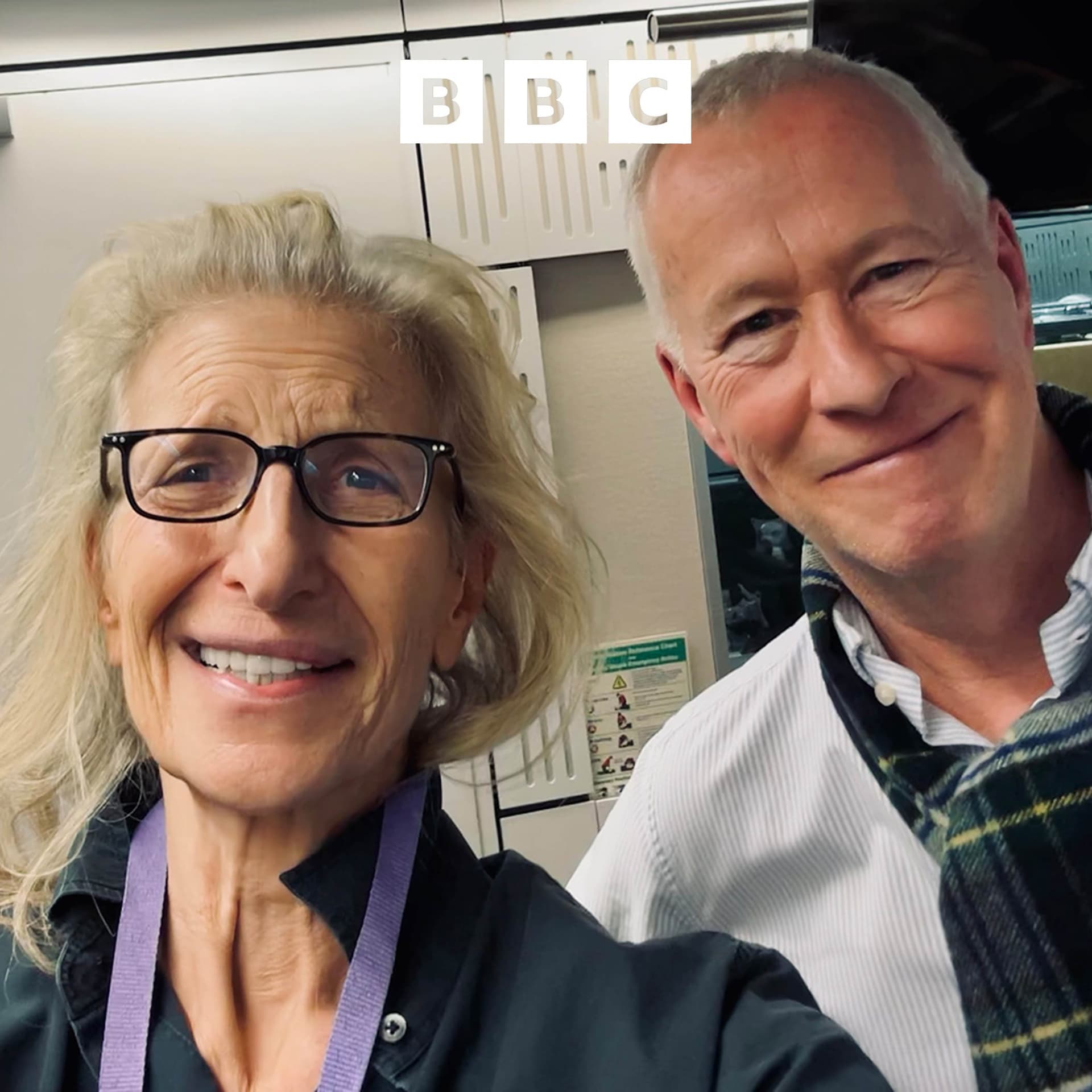
American photographer Annie Leibovitz talks to John Wilson about her career and cultural influences.