In short
Podcast Summary: This Cultural Life - Antonio Pappano
Episode Overview In this episode of *This Cultural Life*, hosted by John Wilson, the renowned conductor Sir Antonio Pappano discusses his early life, career evolution, and perspectives on the state of the opera and classical music in the UK. Pappano, who recently stepped down from his role as the musical director of the Royal Opera House after 22 years, shares touching stories from his childhood, his formative years in music, and the challenges faced by the arts sector today.
Key Themes and Discussions
Early Life and Musical Beginnings
- Background: Pappano was born in 1959 in Essex to Italian immigrants from the Campania region of Italy.
- Family Influence: His father was a singing teacher, and from the age of 10, Pappano served as his accompanist, which he described as a pivotal moment in his life.
- Musical Education: After a tragic loss of a sibling, his family moved to Connecticut, where he continued his music education with notable teachers, including Norma Verrilli and Arnold Franchetti.
Career Development
- Mentorship: Pappano credits his professional growth to conductor Daniel Barenboim, who employed him as an assistant for six years. This experience was crucial in shaping his conducting skills and understanding of the music industry.
- Royal Opera House Tenure: Appointed musical director in 2002, Pappano reflects on the challenges and triumphs during his tenure, including navigating financial and managerial upheavals.
Challenges in the Arts
- Funding Issues: Pappano expresses concern over the diminishing support for opera and classical music in the UK, citing a lack of political engagement and diminishing arts education in schools.
- Cultural Perception: He argues that opera is often viewed as elitist, which impacts public support and attendance. He advocates for a shift in perception to highlight the value and cultural significance of opera.
The Future of Music
- Transition to LSO: Pappano discusses his new role as chief conductor of the London Symphony Orchestra, emphasizing a desire to explore more symphonic music alongside his operatic work.
- Cultural Advocacy: He calls on leaders and the Arts Council to actively promote the importance of the arts and their funding, stressing their role in enhancing emotional intelligence and societal development.
Key Takeaways
- Passion for Music: Pappano's journey illustrates the profound impact of early musical education and family support in shaping one's career.
- Role of the Conductor: The discussion highlights the skillset required for conducting, including both musical mastery and leadership qualities.
- Opera's Relevance: The episode underscores the need for greater appreciation and support for opera and classical music in contemporary society.
Conclusion This episode offers deep insights into the life of Antonio Pappano, not only as a conductor but as a passionate advocate for the arts. His experiences resonate with the broader challenges facing cultural institutions today, prompting reflections on the importance of music in our lives and society.
For further insights, listen to the entire episode on [BBC Sounds](https://www.bbc.co.uk/sounds).
Written by AI. May contain mistakes. Listen to the episode to check what was said.
Transcript
Automatic transcript. May contain errors.0:00BBC Sounds. Music, radio, podcasts.
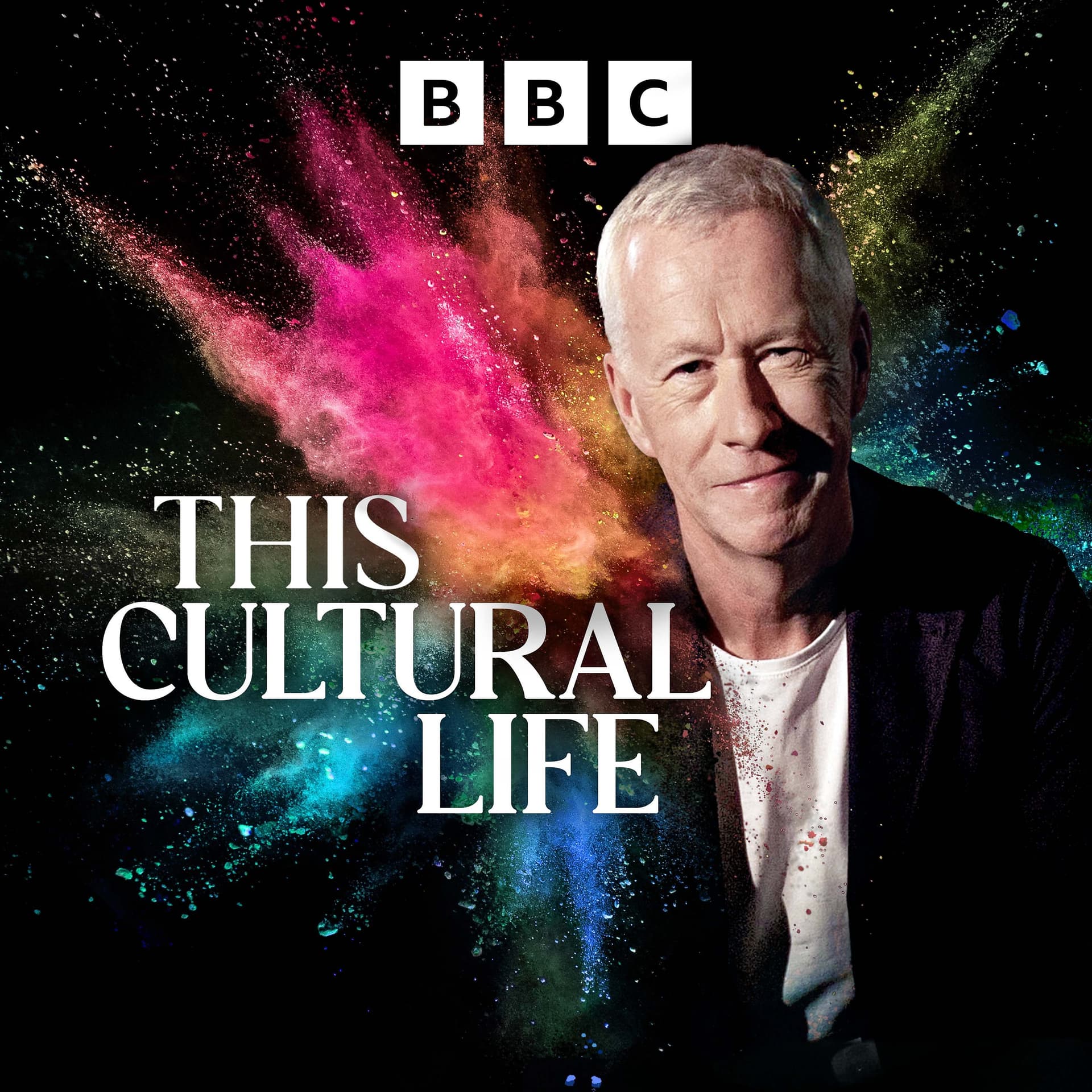
0:11Welcome to This Cultural Life, the show in which leading creative figures reveal the inspirations and experiences that influence their own work. I'm John Wilson, and my guest in this episode is Sir Antonio Papano, one of the world's most acclaimed conductors. He started work at the age of 10 as an accompanist for his father, a singing teacher. His professional career was nurtured by the conductor and pianist Daniel Barenboim, who employed Papano as his assistant. After leading orchestras in Brussels and Oslo, he was appointed as musical director of the Royal Opera House in 2002. Stepping down after 22 years leading Covent Garden, he joined the London Symphony Orchestra as chief conductor.
0:52Antonio Papano was knighted in 2012 and conducted the orchestra at the coronation of King Charles in 2023. An award-winning recording artist, he's conducted on over 70 live and studio albums.
1:15Antonio Papano, welcome to This Cultural Life. Thank you very much. You were born in 1959 in Essex, the son of Italian immigrants. Where were they from? They were from the Campania region in the south of Italy, in the province of Benevento, in a tiny village called Castelfranco in Miscano. It's a kind of rough-hewn, gorgeously burned browns and fantastic vistas. But like I said, in a very, very tiny place. And did they meet in Italy and come here together? My parents were engaged for 12 years and they were married here at the age of 24. They'd been engaged for 12 years? What, from the age of 12?
2:01Yes. They lived not even a stone's throw. They lived about 10 metres from each other. So they're very, very close. What brought them to London then? Well, the village offered little hope for any kind of progress in life. And so most of the young people emigrated. So they settled in London. They got married. They had you and your siblings. What are your earliest memories of home life in London? Well, living in a council flat, you know, very close to other people, you know. This is in Pimlico. We were very lucky after my parents came back from Essex. They started in Essex because they worked as domestics for a well-to-do family.
2:43And that's why I was born in Essex. But then they came to London and were almost immediately up for getting a council flat. And this was on Old Pie Street behind Strutton Ground. Victoria, actually, is where we lived. And we had three different council flats there. We moved from one to the other. And so we lived in the Westminster until about 1971 when I think my parents bought their first house. And that was in Clapham Common. Big deal, move from, you know, the centre out to the south London. But the house was, you know, we'd made it. And your father was a singer. Where did he perform primarily?
3:27He was a singer, yes, but his time in England was primarily as a voice teacher. He was going back and forth to Italy. My mother working three, four jobs supporting him, and he working in restaurants at night to support himself in Italy, studying with a very illustrious teacher called Ettore Campogagliani. And everybody studied with him, Luciano and Mirella Freni. But my father observed him teaching and picked up the lingo of teaching and the passion for it. So I realize now that my father didn't resolve all his technical problems, vocally speaking. And so teaching was a necessity. He also was a rather nervous performer, full of sort of an Italian sunshine in his voice.
4:20It was great. But I think he trembled a bit. So he was never going to make it professionally as a singer. I think he realized quite soon on that perhaps he wasn't going to make it. But the teaching offered him an opportunity to experiment, not only on other people, you know, and his ideas, but on himself, because he kept studying all along. I started playing the piano about the age of six, much against my will. But there was a, shall we say, a forceful hand aided in my continuing studying the piano. You mean your father's? Yes, and I got good enough where by the age of 10, I was playing for his students.
5:05And it became part of what was a family business. And I did that for 12 years. That's incredibly young to start work. And did it feel like a job? I haven't stopped since. Of course, there were times, you know, in the teenage years after we moved to America in 1973. My mother's sister and her parents had moved there already. And my parents lost an eight-month-old little girl in 1971. And this was devastating for my parents. And they kind of needed a release from all this sadness, frankly. And they just upped and said, we're going to give it a try. We're going to move to America. And that was it.
5:51We moved to America. They said they'd give it a six-month trial. Well, six months later, after we'd just bought a house in London, they came back, sold the house, sewed the money up in their clothes, took the flight back and started a completely new life. This is your sister who died when she was a baby. Yes. And you remember that moment. I remember very well. To this day, I don't really know how, why she died, But it's, I remember the screaming and the crying and the devastation that my, that also hit my father, you know. And how old were you at that time, Jim? I was 11, 12. Oh, so you had a full understanding then of what was going on in the house.
6:46Oh, absolutely, you know, I mean, she was my sister. I mean, you know, my brother and I used to change her, you know. Now, she was, you know, she was there. Her name was In Coronata, where we call her Tina for short. And, you know, she was just a wonderful thing. But she was a wonderful thing for our family that then became the reason why we just picked up stakes and took off, you know. I want to talk about your time in America in a moment, but just in that flat in London working with your father and going out and meeting these students of his. Just to explain your job as the accompanist, he was coaching them but he needed music for them to sing to.
7:37My father played the piano with one hand mainly so he couldn't really supply chords, harmonies. So what it ended up being was that he would do a half an hour of vocal exercises and then I would take over and depending on the development of the student it could be that they were working on Italian art songs which are the Bible, shall we say for learning the bel canto school of singing a type of singing that is built on certain precepts of smooth, what we call legato singing but also well-supported singing using the diaphragm in the correct way and opening the throat on the high notes, but learning how to use the passaggio or the bridge in the voice that you have to carefully manoeuvre, get through that little tunnel and then open up the top of the voice.
8:34It's very scientific, actually, and has to do with the physiognomy of the throat. It sounds athletic, the way that you're listening. Yes, well, it is. I mean, of course, it sounded like voodoo to me when I was a kid, but I learned to understand it. So I would play art songs, pop songs, operatic arias, musicals, you name it, I played it. And I learned, of course, to sight-read anything that was put in front of me. Was there a really strong work ethic in your house? Is that what the expectation was, that you would work at that level? The immigrant work ethic is, I think, a thing of wonder. If there's anything that defines me, it's that.
9:14Certainly in the case of my father, he worked himself to death. I mean, he never had less than two jobs or it was always trying to earn more money. You know, these people came from nothing. My mother always worked two, three jobs. So what was she doing here in England? She cleaned offices. My brother and I used to get up at 536 in the morning to go clean offices with her before school. What? Yeah, of course. But sorry, you were actually cleaning. You weren't just sitting there doing homework. No, no, no. No, we're cleaning the offices, emptying the rubbish bins and dusting the desks. Sure. What's that done for you in later life?
9:52Well, I seem indefatigable and I have a lot of energy that is genuine energy. A lot of that comes from my mom, who is a fireball, and she just turned 90. But that energy, even after 22 years at the Royal Opera House, I think the setting of an example, if you're the boss, if you're the musical boss or the artistic boss like I am you have to set an example of the kind of energy that you need to devote to make this place or to create a family of workers to create the best product possible and that certainly comes from my parents it's something that's stronger than me
10:41On This Cultural Life, Tony Papane My guests reflect on the most important influences, experiences, people and cultural works that inspired their own creativity. And you've chosen receiving your grade five piano certificate by post. When was this and how old were you? I must have been 11 or 12. It's fantastic here in England that you can take examinations, official examinations, with something called the Associated Board of Music. and your progress can be measured in practical, that means in playing of your instrument, grades one through eight, and in theory. And I passed with the grade five, which is an intermediate.
11:27You know, I wasn't Arthur Rubinstein or anything, but the light bulb lit up, you know, the bell rang. It was a message that this was going to somehow be my life. And this is the moment when the envelope arrives through the door and you open it and you see that you've achieved that. Yes. And today, you know, I wouldn't think of it as such a big deal. But back then it was huge for me. And I never looked back. I mean, it was difficult to define what I would become. I had no idea about becoming a conductor. I wanted to work as a pianist. But it was going to be music. It was going to be music. I realized how strong that passion was.
12:07And I've just been following it ever since. So you enjoyed playing the piano as a kid, or was it a chore to achieve that grade five? At first it was a chore, but when you start getting good, then something else takes over. You initiate an inner life, an emotional life that is so rich and so private and so intimate that you are defined by this passion, by the development of your emotional intelligence, which I think is much more important than just intelligence per se. But if you're 10, 11 years old, practicing the piano every day, achieving that, what are you missing out on at that age? What were your friends doing?
12:50Did you have any friends outside on that? Well, yeah, friendships, that's always been a very difficult subject for me because I did have friends when I was very young. But, you know, if after school you're getting on the ADA bus and you're going to Marilbone High Street where my father used to work in the studio teaching. Well, then I had no after-school life. Did you feel that you were missing out? I did miss out and I did feel a certain resentment at some point. A bit later, I was looking back and saying, Jesus, what happened? What was I doing? And yet the family business and playing organ in the church and playing in the restaurant cocktail piano, you know, and playing recitals for singers and instrumentalists, playing for my father's students.
13:45That's a peripatetic life and it distracts you. You say you moved to Connecticut in America with your family when you were in your early teens. Well, not even that, I guess. Thirteen. And you're taken there because of this tragic event, the loss of your sister. So you arrive in America as a family, I guess, with a great sadness and a sense of loss, overriding possibly the hope and the excitement of a new life. What are your memories of arriving in America? Well, the most immediate one is the ice blue Cadillac that took us from the airport to Bridgeport, Connecticut. And it had air conditioning.
14:23You know, I mean, what car had air conditioning in London in the early 70s? Very few. but very quickly something had to be done about my musical training because this was the elephant in the room and of course my father had to set up a studio and my aunt knew nothing about music but there was a piano and organ shop literally a hundred meters down the road your aunt so this was your father's sister or your my mother's mother's sister that's why you'd gone to connecticut she was she was there with my mother's parents and they took us there to this music shop and I met the old lady uh Anna Verrilli who was formidable character and she says wait for my daughter and her daughter uh came about an hour later Norma and I played some piano you know I was looking for a piano teacher and uh it's not like we shopped around this was it you know in your street you know in the street And after I played this dreamy piece by Franz Liszt, it was a consolation in D-flat.
15:29Very dreamy, and I'm sure I, you know, wallowed in its gorgeousness.
15:42She kind of dryly said, do you play any Bach? You know, and from then on I became a student. And she, over several years, turned me into a real musician. What did Norma Verrilli do for you then? It was not only about music, it was about life in general. But the music was defined in such an expansive way in that, of course, I was put on a diet of the classics, mainly Bach, but also, of course, Mozart, Beethoven, Schubert, Brahms, Schumann, Chopin. But she was part of an early music duo with her then husband. I heard music that I'd never heard before. Monteverdi, Zemful, Isaac, Ferrabosco, Morley, Campion, Dowland.
16:36All these incredible composers that hit me really, really hard. That, in combination with the American songbook, You know, these two-minute gems that, like the early music, said everything they needed to say in that short amount of time. Gershwin, Cole Porter, Jerome Kern, Richard Rogers, Harold Arlen, you name it.
17:11we played a lot of two piano music piano duet stuff so we're playing the symphonies in arrangements for piano duet or two pianos
17:25all this stuff and we concertized a little bit she put me in contact with her former teacher Arnold Franchetti who was an old man Italian who had moved to the States many years previous but who studied with none other than Richard Strauss in Munich and so there was a history there and sat on Puccini's lap when he was a kid because his father ran La Scala Opera House so I would do harmony lessons with him and counterpoint lessons that he'd done with Strauss and show me sketches and gave me his piano score of Zalome That was precious. You didn't know at that, even at that stage then, what you were going to do with those skills.
18:07No, conducting was never a part of that. My father revered the great accompanists that he used to work with in England, among them Robert Keyes, who used to work at Govan Garden, Norman Feezy, a guy named Mr. Coop, I remember. So my idea of getting to the top was to become one of them, to become a great accompanist for opera rehearsals, if you like, or a great accompanist full stop. Your parents, of course, had been immigrants to the UK. Now you're an immigrant in America. Did you feel American or British or Italian? I felt very British when I was there. I had a sort of Cockney accent. My brother lost his accent in what seemed like two days.
18:54He just became American. And I didn't so quickly. English people listen to me now and say, oh, yeah, there's an American accent there. But in America, they sense a very strong British accent. And to this day, the question of whether I am English, Italian or American, there's no question that it's a minestrone.
19:21your next choice is the pianist and conductor daniel baron boy
19:43When did you first meet? In New York I started studying German and I met some singers at the New York City Opera where I started working. means I had to leave my father's business. That was a wrench. That was very difficult. And all of a sudden, I was traveling to New York every day, an hour, hour and 20 minutes on the train. Was your father happy for you or was he upset that you were leaving? My father was, I think, devastated, although he never expressed it because it took him years to find somebody to replace me. My mother was elated. She pushed behind the scenes. She pushed me. You've got to do this.
20:21You've got to do this. I met two singers and they said you play like an orchestra you've got to conduct you've got to come to Europe and if you want to learn German you have to come to Germany and and that's what I did I got a job in Frankfurt working in a house that was all about the staging the stage director and the conductor working in tandem fantastic during that period I got a call to come and play some auditions for Daniel Barenboim who's looking for a bass baritone and a soprano for the new ring. And I met him in Berlin. And the story goes that while he's sitting there with Wolfgang Wagner and the stage director, that during the introduction of Isolde's narrative, which is this very stormy thing at the piano, he turns to Wolfgang Wagner.
21:07I don't know about her, she hasn't opened her mouth yet, but him I want. He wants the accompanist. Yes. And that's what happened and I became his assistant for six years started in Israel doing a Mozart operatic cycle and then I went to Bayreuth at the Wagner festival with him the home of Wagner I mean that's that's an auditorium that was sort of designed by Wagner himself yes and where Daniel Barenboim did some of his most inspiring performances of a repertoire that he had mastered and where I learned how to become, I didn't know it at the time, to become a conductor.
22:07I'd started conducting a little bit. I mean, I couldn't conduct my way out of a paper bag. I was really rubbish. But I knew what I wanted. I just couldn't do it with my hands. But I knew with a combination of some kind of authority and knowledge of how I wanted the music to go, I got the result in the end. Barenboim is not only incredibly well-known as a conductor, he's a man of great charisma as well. So were you watching him? Were you following what he was doing? Did he become a mentor to you? Daniel very much became a mentor. I was playing rehearsals for him all day long. And believe me, to watch him work was a revelation because how the music and the theatre and the acting all went hand in hand, that went on to then define me and define what my purpose in life then would be.
23:05I also, of course, can you imagine playing the piano for him? It's not an easy thing to do because of his prowess at the piano. But putting on something like The Ring, where in Bayreuth you put it on four operas, almost 15 hours of music, you prepare it and you put it on in one go. You rehearse for two months. So I learned how to do the schedule. I learned to coach the singers properly. I learned to translate his desires about the music to the singers and get them to fit into his vision of what I wanted. I watched him collaborate hand in hand. This must have been amazing to have witnessed him at close quarters for those years.
23:49Did he ever hand you the baton? Oh, he would throw me into the orchestra pit. I remember the very first time because he would go out and listen to the orchestra. And it's a very special situation in Bayreuth. The orchestra is placed underneath the stage, so it's a very mysterious and very, very strange set-up, creating a phenomenal acoustical reality, like no other hall. But he threw me into the pit to conduct the most difficult five minutes of Tristan and Isolde, which I had learned on the piano about three weeks before. And it's a part that's in five beats.
24:35And yet you don't, if you beat five beats, it's too quick and you get, you know, your arms get twisted like into a pretzel. So you have to do a combination of one, two, one, two, three, one, two, one, two, three, or something like that. And I thought, well, he'll have lots of markings in his score which will guide me and I can follow them. It was spotless. His score was spotless. I mean, the ice-cold sweat started coming down on my forehead.
25:14But I survived it, actually. Yes, I faked it. I faked it, but I kept it together and with a certain authority. And I remember him talking about the authority. Another time was he sent me down there to conduct the beginning of the funeral march from Goethe-Demmerung.
25:37And that's notoriously difficult to conduct because there are these curly cues in the orchestra, these wind-ups. And you really don't know, I don't know to this day what I do with my hands when I conduct that moment. Should explain that you are doing it now. You are moving, you're gesticulating. Yes, I'm trying to figure out how I did it. But then I just went in there and my arms just did it and I put my head high and I was like some little Il Duce or something.
26:15Do you have to be a dictator as a conductor then in that situation, do you think? Well, you have to be sure of yourself. Let me put it that way. There have been dictators. I mean, you know, people like Toscanini. But we've got to remember that even that Toscanini was responsible for creating an orchestral etiquette in Italy when he was a young man, it was a complete shambles. Musical discipline and just social discipline was non-existent. So you had to be a tyrant. And all those earlier conductors came from a little bit that kind of situation and where their personality, you know, had to be really upfront.
27:02Nowadays, that's viewed upon very unkindly. But believe me, all orchestras want a strong point of view from the conductor. The way I treat the subject is as long as I'm really, really well prepared and that I know what I want to do with this music, my authority will ring true and I don't have to put on any Napoleonic sort of stances in my demeanour or gesture. So my authority comes from there, but it's a thorny subject.
Read the full transcript
27:43It's when you go from pits to Arco that there, the singing, that the culture of that, it just, and you get that, okay? Once again, really vibrate the pits for all your worth. And the bum.
28:02Yeah, exactly. And that'll help the musicality of the whole thing. Very good. And then in 2002, you were appointed as the new musical director of the Royal Opera House in London. A return to London, of course. What made you want to come back here? Well, there are certain jobs you just don't turn down. And being the music director of Covent Garden is one of them. Coming back to London, to an opera house, where previously, I'd had the biggest disaster of my career. I came in 1990, as a guest, replacing John Pritchard, who was recently deceased at the time. and, you know, in an opera, La Boheme, which I knew, I thought, you know, better than anybody.
28:48I'd played it a million times. I'd conducted it. Oh, this was a great opportunity to make a step, a career step. Wrong. It was a weird thing because in the first seven shows, and there were 14 in all, I had seven different tenors. It wasn't supposed to be that way, but the original tenor cancelled after the first performance due to illness. And then I had a revolving door of tenors. And that, the kind of experience of, you know, just reinventing your interpretation with a new element every night, I just didn't have that kind of experience. And it was just a nightmare. Was it a nightmare at the time or was it a nightmare after the reviews came in?
29:32Well, the reviews were, I didn't see them, but they tell me they were shockingly bad. I mean, like horrific. I mean, I did get the last laugh. I became music director of Covent Garden, you know. You took over from Bernard Heitink, who had been musical director at the Royal Opera House for, I think, about 15 years. This was at a time which, shortly after, there'd been a lot of managerial and financial turmoil at Covent Garden. Was it daunting? Not for me. I just did the job. I just went to the rehearsal on day one. Maybe it didn't bode well that I had to have emergency root canal that morning, but I showed up on day one, my jaw out to here and I just got on with it and then I've been very lucky together with Tony Hall and Alex Beer to have chief executives who have really taken care of all the non-musical stuff and I've been allowed to be an artist or what I prefer to call myself is more an artisan I'm in the workshop I'm hammering away.
30:39To go back to the Italian immigrant image, I'm with the spade, with the shovel, you know. You're talking metaphorically, of course. You're not building sets out the back. No, I'm not building sets, but I'm building productions, I'm building relationships, I'm creating a family of artisans around me. So what was before quite irritable, because they're cold and there's no hope, becomes...
31:11And each production is a combination of so many hours of blood, sweat, tears, but tons of enthusiasm and joy of being around something that I love.
31:52And having worked as an accompanist for so long with your father and, of course, playing in bars, working with singers, do you think that made you particularly good at conducting opera and working with those singers? I think that having been exposed to a lot of the Italian operas, you know, that I used to play for my father, I'm talking about things like Aida, Otello, La Bohème, Madame Butterfly, Lucia di Lammamore, Tosca, Rigoletto, I mean, the great La Traviata, the great, great, great, great operas. And you've got to understand that I not only played these pieces for my father, I sang all the other roles in the duets, you know.
32:32So I somehow had them in my voice. And I knew the words. I mean, I could now sing to you the whole of La Boheme from memory. And when you have that as a part of your inner self, that's your library, that's fantastic equipment to prepare you. but because I was greedy I wanted the German operas and I wanted the modern operas and I wanted the French operas and so my time at Covent Garden and when you look at the repertoire has been extremely varied. So this is nearly 22 years now in one of the top jobs in opera it's a great critical acclaim and yet you say that when you left your father's business he was devastated you were leaving him.
33:16Was he proud of you and what you achieved? Yes. I mean, for me to become music director of Covent Garden, a place that he thought was a temple, you know. I spent 30 years talking to my parents on the phone a lot. My phone bills over the last 30 years have been a thing of wonder, you know. But I do it because I haven't made enough time to go back and I've been absolutely consumed by my work. I'm not proud of that. but somehow my parents understood that because they were exactly the same. Did he come and see you conduct much? He came to my first night here of Ariadne of Naxos.
34:03An opera which he knew nothing about but he was here.
34:18When you took over the Opera House in 2002, as I say, there was financial turmoil still being sorted out. Has it become harder to put on opera in the time since you've been there, given the financial pressures? I think opera in many quarters is seen as something elitist. I mean look the politicians for instance don't come to the opera house they used to whereas you know in Italy the president of the republic would come and you know be big applause it would be celebrated by the audience and in Germany as well yeah and in Germany too here it's looked upon with great suspicion that that drives me nuts I have to tell you you know England a haven for culture whether it's pop culture or classical culture, literary culture, theatrical culture.
35:09This is one of the great addresses, and yet we're embarrassed by it. Music education has been taken out of the schools, even though it's a fact that the brain, through music, develops in a much enhanced way to make the avenues more open for literature, for maths, for history. the greater the emotional intelligence the greater your ability to strategize to get on with your fellow men so yes we've had a rough time in the opera business because the money becomes less and less every year at the Royal Opera House we have to raise a tremendous amount of money I mean arguably having grown up in a council flat in Westminster probably about a mile from where the opera house is you are the poster boy for social mobility for cultural mobility Yeah, but I work my ass off.
36:02It's toil, toil done with great joy. But why be embarrassed about something that is a treasure? The Royal Opera House, the English National Opera, the Welsh National Opera are beacons. they're internationally recognized centers of excellence you know honing talent presenting talent educating audiences and they are places that young talent looks up to you have to take care of the big places and also spread the gold as i like to say in the more rural areas or in in other smaller cities. But now there's a certain strange and misguided wokeism that it's great, you know, if you're supporting an opera in a church basement or something, that that's more important than the Royal Opera House and the English National Opera and the Welsh National Opera.
36:57Give me a break. And you say the politicians don't come to the Opera House. What is your message to those politicians about music and the teaching in schools from somebody who started learning about music from a very young age and the potential, what it can do for you? Well, look, I participated in the coronation. I conducted a lot of the music. One of the great things about the coronation was a lot of British talent on display. What a moment to be proud of what goes on in this country. It was just quite something. Save the peace And give the government
37:44So I think that politicians, the Arts Council on top of that list, have to be advocates of the arts, not just thinking about the money, but pushing the message of the importance of the arts and how it nourishes people. Do you think they understand? Well, no. Well, I don't see it from the Arts Council at the moment. I'm very, very disappointed in the Arts Council at the moment, I have to tell you. I'm hugely disappointed because I think they will say that, oh, opera is not a growth industry. Rubbish. see the intensity of the audience when they see a performance at one of the opera houses that I've mentioned and see the heat that is created and the emotion and the inspiration and how young people are coming to the opera house we need support not only money we need the message is important and we need to be proud of what we do because it's internationally recognized as sensational and it should stay that way.
38:54Which is the opera for you which is the one that best embodies all that is great about the art form? Which one would you say to people who didn't know opera? Go and see that and then you'll understand. Well, it's not just one opera. No, I've asked you. If it came down to one for you. But it's The Marriage of Figaro by Mozart. It's so funny. It's so human. Perhaps the greatest existence in a conductor's life is to be in the rehearsal room preparing a production of The Marriage of Figaro. You're laughing, you know, peeing your pants laughing all day long with the stage director and all the craftiness and all the chicanery and all the intrigue and all the sensuality.
39:35Oh, God, it's fantastic.
40:01You've spent your whole majority of your life accompanying and conducting singers. Now you're about to join the London Symphony Orchestra. Are you looking forward to working with more symphonic music than you might previously have had time for? I've always tried to find a balance between the opera and symphonic work that I do. But now I want to do more symphony than opera, I decided. I've been conducting the London Symphony since 1996 and I've never stopped conducting them since. But this is now a deepening of the relationship. I'm beyond honoured, thrilled. And what are the prospects? What are you most looking forward to with the LSA?
40:40Well, I'm drawn to English music and I want to celebrate that very much.
41:03Vaughan Williams, Walton, Elgar, of course, Tippett, the new music that's being written.
41:16Addis, Turnage, so many others And what drives you uncreatively? Well I'm a workhorse so I'm unstoppable As I get older of course I want to do just enough and not too much I've done too much all my life and so I've got to find the right balance of work and rest and you know I'm married I have a lovely lovely wife who wants to spend time with me still and I've got to take care of that too Tony Papano thank you very much for sharing your cultural life Thank you
42:00A really fascinating and inspirational conversation with Antonio Papano, just one of many musical guests that we've had on This Cultural Life, including the pianist Vickinger Olufsen, percussionist Evelyn Glennie, the composer Errolyn Wallen, and superstar violinists Nicola Benedetti and Nigel Kennedy, along with songwriters including Nick Cave, Neil Tennant and Paul McCartney. All and many more episodes are available on BBC Sounds or wherever you get your podcasts internationally. Please do subscribe to the series. Just search for This Cultural Life. From producer Edwina Pittman and me, John Wilson, thank you very much indeed for listening.
42:40I'm Helena Bonham-Carter and for BBC Radio 4, this is History's Secret Heroes, a new series of rarely heard tales from World War II. None of them knew that she'd lived this double life. They had no idea that she was Britain's top female codebreaker. We'll hear of daring risk-takers. What she was offering to do was to ski in over the high Carpathian Mountains in minus 40 degrees. Of course it was dangerous, but danger was his friend. Helping people was his blood. Subscribe to History's Secret Heroes on BBC Sounds.
From the publisher
Sir Antonio Pappano is one of the world’s most acclaimed conductors. He started work at the age of ten as an accompanist for his father, who worked as a singing teacher. After leading orchestras in Brussels and Oslo, Pappano was appointed as musical director of the Royal Opera House in 2002. Stepping down after 22 years leading Covent Garden, he has joined the London Symphony Orchestra as chief conductor. Antonio Pappano was knighted in 2012 and conducted the orchestra at the coronation of King Charles III in 2023. An award winning recording artist, he has conducted on over 70 live and studio albums.
Antonio Pappano tells John Wilson about his upbringing in a central London council flat, the son of Italian immigrants, and his love of music from an early age. He recalls the significance of receiving his grade 5 piano examination result by post, "a lightbulb moment” in which he realised what he wanted to do with his life. He also describes his parents' grief after the death of his baby sister, which led to the Pappano family moving to Connecticut, where Antonio continued his musical tuition under a local piano teacher called Norma Verrilli and composer Arnold Franchetti. His professional career was nurtured by conductor and pianist Daniel Barenboim who employed Pappano as his assistant for six years, a period in which he learned the art of conducting. He also looks back at his 22 years leading the Royal Opera at Covent Garden and talks candidly of his concerns about the funding and championing of opera in the UK.
Producer: Edwina Pitman
Music and archive:
Puccini, Turandot, Act 1 Ah! per l’ultima volta! Liszt, Consolations S.172 for piano no.3 in D flat major; Lento placid Monteverdi, Dolci miei sospiri Gershwin, The Man I love Prokofiev, Symphony No.1 in D Major, Op.25 for two pianos Mozart, Piano Concerto No. 20 in D Minor, K. 466 I. Allegro Wagner, Das Rheingold, Act 1, Rheingold, Rheingold! Wagner, Tristan und Isolde, WWV 90, Act 3 Scene 2 O diese Sonne! Götterdämmerung, Act 3 Siegfrieds Trauermarsch Following Pappano, BBC Radio 4, September 2017 Puccini, La_Boheme, Act 1, Che gelida manina Strauss, Ariadne auf Naxos, Opera Handel, Zadok the Priest, HWV 258 Mozart, Le Nozze di Figaro, Act 3 Sull’aria che soave zeffiretto Vaughan Williams, Fantasia_on_a_Theme_by_Thomas_Tallis Ades, Three-piece Suite from Powder Her Face - Suite No.1