In short
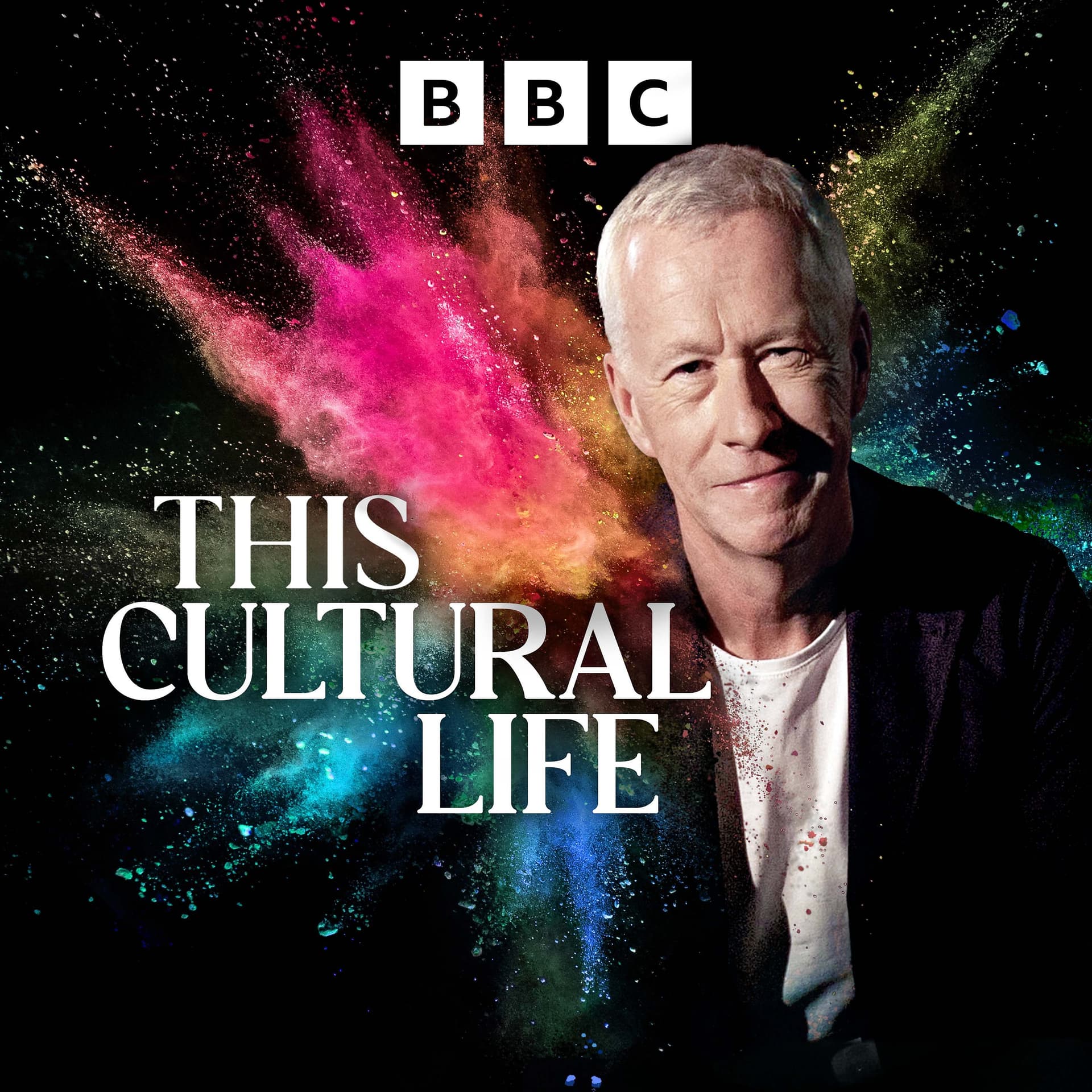
Podcast Summary: This Cultural Life - Antony Gormley
Episode Overview In this episode of *This Cultural Life*, host John Wilson converses with renowned sculptor Sir Antony Gormley. The discussion covers Gormley's artistic journey, influences, and notable works, including the iconic Angel of the North. Gormley shares insights into his childhood, artistic education, and transformative experiences, particularly his meditation practice and its impact on his art.
Key Themes and Discussions
- Personal Background
- Catholic Upbringing: Gormley talks about growing up in a devout Catholic household, which significantly shaped his worldview and artistic expression.
- Family Influence: His father, a self-made man of Irish descent, instilled a love for literature and art, including early exposure to Dante's *Inferno*.
- Education: Gormley attended Ampleforth boarding school, where he was encouraged by art teacher John Bunting, which opened up his artistic potential.
- Artistic Influences
- John Bunting's Impact: Bunting's passion for sculpting and modernism inspired Gormley to explore his creative instincts without the confines of traditional forms.
- Anthropology and Art History: Gormley's education at Cambridge in anthropology, archaeology, and art history influenced his understanding of cultures and human evolution.
- Meditative Practice
- Vipassana Meditation: Gormley's experience studying meditation with S. N. Goenka in India deeply informed his artistic process, emphasizing mindfulness and the exploration of being.
- Art as Experience: He contrasts traditional learning with experiential wisdom gained through meditation, which shaped his approach to art-making.
- Signature Works
- Angel of the North: Gormley's most recognized piece, a monumental sculpture representing transformation and technological progress.
- Body Casting: Describes the process of using his own body as a medium, moving from traditional representation to an exploration of vulnerability and existence.
- Crosby Beach Figures: Gormley's public installations provoke reflection on human existence in relation to nature and the elements.
- Political and Social Commentary
- Art's Role in Society: Gormley expresses a desire for art to confront social issues, such as climate change and migration, emphasizing the importance of human vulnerability.
- Responses to Art: Describes varied public reactions to his work, including affectionate interactions and confrontational responses in politically charged environments.
- Future Directions
- Continued Exploration: Gormley discusses his ongoing commitment to creating art that engages with the elemental, emphasizing shared experiences and community connection.
- Art's Potential: He believes that art should be a response to real-world issues, capable of evoking emotional and cognitive changes in society.
Key Takeaways
- Gormley's work is a reflection of personal experiences, cultural history, and meditative practices that challenge traditional art forms.
- His sculptures invite viewers to contemplate their relationship with the environment and society.
- Art serves not only as a medium for personal expression but also as a platform for addressing critical social and existential questions.
Conclusion Through John Wilson's dialogue with Antony Gormley, this episode illuminates the intricate relationship between personal history, cultural influences, and artistic practice. Gormley's commitment to exploring human existence through sculpture showcases art's power to resonate with and challenge the public, reaffirming its role as a vital aspect of society.
Written by AI. May contain mistakes. Listen to the episode to check what was said.
Transcript
Automatic transcript. May contain errors.0:00BBC Sounds. Music, radio, podcasts.
0:11Welcome to This Cultural Life, the show in which leading creative figures reveal the inspirations and experiences that influence their own work. I'm John Wilson and my guest in this episode is the sculptor Sir Anthony Gormley. For over 40 years, he's been using his own body as the basis for his artistic work and is known for creating cast-iron human figures that stand on high streets, rooftops and beaches, as well as in museums and galleries around the world. He won the Turner Prize in 1994 and the prestigious Premium Imperiali in 2013. Anthony Gormley is probably best known for the Angel of the North, a monumental winged figure on a hill in Gateshead, which, overlooking the motorway and a mainline railway, is one of the most viewed pieces of modern art in the world.
0:57It's very nice to see you. You look very, very healthy. Thank you. And smart. I've come in my studio clothes. Yes, but you've come from your studio, so that's fine. This is my studio, the clothes.
1:12Anthony Gormley, welcome to This Cultural Life. Thank you for having me. You were born in London in 1950 into, what I understand, was a very Catholic household, and you were the youngest of seven children. What was being the youngest of that many siblings like? The truth is that all of the systems that the family ran on had been decided, and I was pretty out of the picture. There was nothing I could contribute, I felt. Tell me about your parents. Father, a pharmaceutical producer, a self-made man, really. And he was of Irish descent, as I understand. Yeah, his father had come over in the famine.
1:55And you're German on your mother's side? Yeah. My mother had come over to teach Swiss physiotherapy at St Thomas'. And I think it was love at first sight. They were an incredible couple. And what about cultural upbringing? Were you exposed to art as a child? Oh, yeah, that was... I just remember so vividly my dad taking one of my poems to his work and getting it typed out and then him handing it back. And that was really amazing. He had quite a good library and one of the books was Dante's Inferno. And it was illustrated probably at the end of the 19th century with these drawings that were so vital, the most terrifying of all these two men coming out of the ice with one man taking a bite out of the skull of the other and blood streaming down the face and onto the ice I remember that very very powerfully yeah he was very keen on art and would go to Italy a lot he would get you know Roger Fry to come to his factory and talk to his employees He was very good at looking at art.
3:16And around the house, there weren't that many original works of art, but they were just loads of reproductions, particularly of Fra Angelico. How important was your religious upbringing as a child? Oh, it was absolutely central. Every day it was prayers immediately out of getting out of bed, always grace before meals. I used to have to get up at 6.30 to go and serve Mass with Father Collinwood down at Temple Fortune, get on my bike and pedal down there. My father's faith was just absolute. Absolutely.
4:00On This Cultural Life, Anthony Gormley, I asked my guest to choose the most significant creative influences and experiences that have inspired their own work. And your first choice is the art room at school and your teacher, John Bunting, and this was at Amplethorth, the boarding school, Catholic boarding school. Did you already have an interest in making art before this point? I mean, I know your father was introducing... No, absolutely. And I have to thank my parents for the encouragement they gave me. I can remember going to the Camden Arts Centre painting classes there and being praised for using the whole of an imperial sheet of paper.
4:40A strange thing to be praised for, but maybe relevant. Going to Ampleforth was just an absolute opening of my world. The availability of everything in terms of making. Aged 11 or 12, I made a bench out of solid English oak. But actually, I still have because I gave it to my mother. It was part of our family life. That was a really important thing. So who was John Bunting then? Ah, John Bunting really was the Eminence Grise of the art room. An extraordinary man, a passionate sculptor. He would wear brogues and corduroy trousers and a Harris tweed jacket and there would often be little bits of elm kind of chips kind of attached to his knitted jumper.
5:32But he was extraordinarily supportive and the art room was this place where people of a like mind would gather and do stuff and look at each other's work. It was always open, so I'd rush down there, you know, before early morning roll call and get something going. And then... Get something, what sort of thing? Well, it was usually paintings. And I might mix acrylic paint, oil paint, varnish and poster paint together and begin making this thing that was not only the depiction of a landscape, but was a landscape itself because there was stuff going on. When I say I would be dashing up, I would go and see how much of it had dried, whether it could be tweaked in a little way.
6:25I was doing very cataclysmic works, really to do with the beginning and the end of the world. Back to Dante then, is it? Yeah, yeah, maybe. There was always a lot of the unsettled relationship between joy and damnation in the work. I think if you have been brought up with the carrot of grace or heaven and the whip of everlasting hellfire, they kind of do permeate absolutely your imagination. And so you're painting primarily. John Bunting is your teacher there, but he is known. He had worked as a sculptor of some renown, hadn't he? Oh, yeah. To describe his work. What did you know? He made life-size elm bodies, usually related to biblical stories or from the Gospels.
7:20He was a student of Leona Underwood. This was early British modernism, something that came out of Epstein and Gill, but had evolved. But I wasn't particularly interested in his work. It was just, here is a man who has given his life to sculpture. and he embodied that and an interest in modernism. So he would throw me Eliot's Four Quartets and say, read this. But there was an ethos in the art room and Father Martin Haig, who was also a teacher there, was part of this ethos. What are you trying to say, Gormley? Is this finished? What's this doing here, this line? Why doesn't it continue? What's the connection?
8:08Where's the structure? There was a sense that in the art room, you were not having to perform your ability to memorize great thoughts of great men from the past. Here was a subject that came out of you or your response to life, to experience, and given exactly the same serious critique as an essay that you might have written about Caesar's second campaign in Gaul. And that was really, really important to me. And liberating, I presume. Totally liberating. Father Peter at Junior House had said to me one afternoon, we've got a ball there, call me, do you want to do something on it? And I made a mural with a friend that stayed there for about 25 years.
8:57Sorry, what age was that? That was your junior school? I was 12, yeah. I mean, very similar to the bench story, that something that I had made could become part of, as it were, other people's experience. That was so significant for me in terms of, oh, yes, so I can contribute to the world. But if that piece was done at 12 years old and stayed there on the wall for 20 years at the school, do you regard that as your, is that the first? No, it was a terrible painting. Don't even let sink by it. You don't claim it as your first artwork. No, I mean, it was an awful thing. But the support of significant others looking at the things that you'd made and giving them a place in the life of the community, that was amazing to me and a great inspiration.
9:46You eventually went to Cambridge to read anthropology, archaeology and the history of art. That suggests that even at that point you weren't thinking I'm going to be an artist. I couldn't believe that I could get into Cambridge. So it came as a bit of a surprise that they gave me a place. It was just so amazing to have this opening up on, in a way, the cultures of the world. Having been so fixed into a theocentric, Catholic, Christian, Western kind of worldview, to learn about the Cheyenne and the Blackfoot and the Plains Indians, to be able to handle the skull of Australopithecus afarensis, to see that long story of our species evolution firsthand, to then look at its diversity across the entire globe.
10:41That was a really, really important grounding for me. And it was just brilliant to then go from that to then look at Western art history. Going to Cambridge, you know, I lost my faith within my first year. I realised, helped by my studies in anthropology, that this was one worldview amongst many. And I think Cambridge in 1968 was a very different place to what it is now. We were encouraged to broaden our horizons, to see where our cultural kind of conditioning had put us and question it. And did your father know that you had lost your faith? Yes, he did. And yeah, this was a problem for him.
11:31Your next choice for this cultural life, Anthony, is S. N. Goenka and studying Vipassana meditation with him in India, 1972, between 1972 and 1974. Let's start with India first of all. What were you doing there? How did you get to India? It took me a year to get there, because it was the time of the India-Pakistan war. So I spent about five months in Afghanistan. So I arrived in India via Amritsar and met some Tibetans. And they said, well, you better come with us to Dalhousie, this hill station in the northwest. And just as it happened, this Burmese teacher called S.N. Goenka was giving a 10-day vipassana course at a hotel.
12:22I called it a hotel. It was actually very, very basic because of large tin shed on top of a very steep escarpment. I did that 10-day course and it changed my life basically. And I went on to do nine more of those 10-day courses in different places all over India. I sort of followed him or our paths crossed in various places. and Vipassana meditation is the absolute antithesis of everything that I had understood to be the basis of wisdom it didn't come from books it came from the direct experience of being itself and to do that you had to be still you had to be silent you were trained with three days of mindfulness of breathing anapana and when you had achieved that focus you could then transfer that focus to the body as a whole and this I think engagement with what I call now the darkness of the body that once you close your eyes you enter a space that is dimensionless, objectless and of infinite extension.
13:39This darkness of the body is the absolute antithesis of a, you could say, whether it's Platonic or Christian idea that we're always moving towards the light, that somehow darkness is always negative. This made me realize that actually this darkness that was so similar to the darkness of the night sky was actually a place of power of enormous potential. of extreme freedom. And I'd had an inkling of it earlier. Between the ages of six and 11, I was enforced to go upstairs and have a rest after lunch. And I had had an inkling about this infinite space that lives the other side of appearance and within each and every one of us.
14:35But Vipassana made it real for me. And that realization that came through the technique that was taught to me by S.N. Goenka. And what was that technique? I mean, what was he doing practically? Basically, you sit and through anapana, you concentrate on the breath coming in and out of the body, concentrating on the top lip until they call it a beige, this small pearl sized point of concentration. is bright, like a bright point of light. And then when you start the vipassana, you transfer that to the top of your head. And then you scan your entire body. It could take an hour or two, moving this point of concentration through the entire space of your body.
15:34At the beginning, this is a long process. There are places of resistance where you lose contact with this investigation of the material fact of your being. But after time, you can actually simply slip into this field of awareness. And do you still practice this? I do it whenever I can. The truth is that in the modern life, those times are limited. but that process became absolutely central to the way that i made my work so the first work that i made on coming back from india was a work called sleeping place which was just a cotton hospital sheet dipped in plaster and placed over the body of a friend what did that work do it indicated a human space in space it talked about human vulnerability but also our connection with life and space around us.
16:37And I went back to that work, which I made in 1975, in 1980, when I realized that actually I wanted to use the body as my primary vehicle and not the body as appearance, not the body as some kind of narrative protagonist in a story. but as a place, the place of being. And in order to do so, I had to use my own existence. I had to use my own life. I had to use my own body as tool, material and subject. But it's interesting that first piece that you're describing, having come back from India, and that's reflecting on the experience of Vipassana meditation, but also, I presume, is drawing on the images that you saw around you in India of people sleeping under pieces of cloth.
17:30on the street. Absolutely, yeah. No, I mean, it's a very common, even today, experience. You get out at Hauras Station in Calcutta, and there are these white shapes that look like shells, you know, people wrapped in doughties, sleeping on the platform and then sleeping on the streets outside. Was that intended as a comment on that sort of social situation that you saw, or was it something more existential? I think, yeah, well, I think it's both. You know, where do we belong? Where is our place. Our primary dwelling place, I think, is the body. But then how that body then fits into the situations, the habitat that our species has made for itself is very open-ended, uncertain.
18:15It's interesting that you talk about studying with John Bunting at school, primarily painting, not being interested in sculpture, and yet you come back from India and you start working in the sculptural form and using the body. Which other sculptors or installation artists did you see it around this time early in your practice, in your career, that you admired and who possibly you were influenced by? Yeah, I had to make a decision in India whether I was going to take Buddhist meditation seriously enough to become a monk and do that, or whether I was going to come back and be an artist. You seriously thought about becoming a monk?
18:51I certainly did, yeah. But anyway, I think for me, the joy of sculpture was to make something that went into the world. This was not about making a picture of something. It was not referent. It was something that once you put it into the world, changed the world. It was a way of interrogating the world, not of reproducing it. So whose work were you looking at that possibly steered you in that direction? Yeah, I think I can remember the 1978 show of Carl Andre at the White Chapel, which was an absolute revelation to me. The simplicity, the acceptance of material as it comes. Had he already had the furore at the Tate with the bricks?
19:38Yes, he had. That had been a few years ago. Yeah, equivalent eight had already been bought for the National Collection at the Tate and caused a huge ruckus. But then, I think, going after art school in 1979 to America and being introduced to the lightning field of Walter de Maria, this extraordinary work in a high plateau in New Mexico, one mile long by a kilometer wide, over 200 poles that were very sharp at one end. and about 2 1⁄2 inches in diameter for most of the pole that describe an absolutely clear horizontal plane. And they react to light and space in an incredible way. This may be the most expensive sculpture ever made, costing over a million dollars to build.
20:40400 stainless steel rods, their tips forming a level plane of spikes one kilometre wide and a mile long, the whole thing laid out correct to 1 16th of an inch.
20:57The artist who conceived this work is Walter de Maria. This site was chosen because it was remote and isolated. The part of the content of the work is the ratio of people to space. So if we think of four to six people in one day walking through the field, they have a very private experience. Very obviously, very literally, this was an acupuncture of landscape. It made you more aware of everything that was around it, as well as the quality of the light. That was an extraordinary inspiration. So you stayed there. For those who don't know the lightning field, as a viewer, You have to stay in sort of chalets, don't you?
21:42Well, there was one sort of log cabin. A shack, yeah. And look at the field over a period of days. The conceit is that they're metal poles, so that they'll attract lightning at some point. I don't think that ever happens. Well, it happens very, very rarely, but what they do attract is light. And so, you know, in the early morning and as dusk falls, these needles become golden. They kind of vibrate with an unearthly light. What this work does is it says this is not a singular object. This is a field. This is a matrix that you are invited to bring your body, your mind, your feeling into. And it becomes this reflexive space rather than reflective object.
22:30This connected so strongly with the whole Vipassana meditation thing that here is sculptural. being used as an instrument for awareness of being. What is the subject? Well, the subject is your experience of being within the field. Whatever you bring in will be amplified, as well as everything that is already there will be amplified. So that ability of an object to make you feel more alive, alert, aware, there in the present moment was an extraordinary inspiration for me. And you could say that there are many works that I have made that absolutely refer back to that inspiration. Winning the Turner Prize is seen as a mark of real achievement.
23:24I'm very pleased to be absolutely the first to be able to congratulate this year's winner. Congratulations, Mr Anthony Gormley.
23:43We're going to move on to another inspirational artwork now. You've chosen those monumental human-headed winged bulls, ancient Assyrian sculptures from the Palace of Sargon, which stand in the British Museum. When did you first see them? Well, I must have been six or seven. My dad would take me a lot. And I think going into that gallery on the west, where you start with the stelae from Assyria and then you see the winged lions and then you see the great heads of Ramses II and Amenhotep. That was such a powerful experience for me. Here are these things from Sargon is 705 BC. These Middle Kingdom heads made out of the hardest granite known, made 3 ,000 years earlier or more.
24:37The fact that these massive geological materials could be made into a witness of us and of time. I mean, I couldn't have put it like that at age six, but there was something, the present experience of these things from unimaginable depths of time really touched me. I was just stunned by their power, the beauty, the curls of the rings, of the beard of the sacred bulls, these watchers at the gate of the Palace of Sargon. They're sort of identical bulls, aren't they? They're identical. They look forward. They have five legs because from the side you see that they're actually moving from the front.
25:33They are symmetrical. Do they have wings on the side? Massive, massive wings that are, well, I mean, I guess this is also an intuition about what sculpture can do, that yes, you can take the known and turn it into something completely unknown. So this mixture of either lion or bull, which then has the wings of an eagle and the face of a man, and not just the face of any old man, a face of a king. The king Sargon himself, with his magnificent crown and extraordinary beard and the ringlets of his hair. But it's a hybrid figure, animal body, human head, but with mythical wings. How significant is that memory, linking it to what you did?
26:19Oh, I see. And in Gateshead with a human figure with huge wings. I've never connected the two things. Really? I guess that the angel, I was thinking about technology and about, well, 1911 and the flight of the Kitty Wake. And with the angel, I was just trying to say, how have we been transformed by this extension of our arms, literally, by our technology? But do you think subconsciously it goes back? Yeah, maybe. I mean, no, you've probably unearthed a very clear connection. Designed and built over the past four years, the Angel of the North took less than a day to put out. I'm overwhelmed, actually, I think it's brilliant, and I'm very impressed that...
27:03It just puts us on the map and makes a proud Geordie feel even more proud. I was concerned, you know, is it going to work as a piece of sculpture? Are its proportions going to work on this scale? But I think the great thing is that it looks like it needs to be the size that it is. and that it works in the context. In other words, I mean, well, I'm thrilled. The Angel of the North in Gateshead remains your most famous piece, but for over 30 years you've also been so well known for those male figures that stand naked in public places all around the world. Do you remember the first time that you cast your own body to create one of these works?
27:38Yeah, I remember it vividly. It's on show now at Tate Britain as part of their rehang, and it's the first work that I made in plaster. I'm in a very tight fetal position with my knees clamped by my elbows with my mouth open. Through the whole of the mouth you can still see the dark interior. And this was a breakthrough. It was a slow realization that actually I didn't have any choice. I had to use my own body as my primary material. This was a return to vipassana. This was a return to this moment of intense concentration in order to hold a position, but also be in that place of, I would like to say, transformation from going from body to space, from matter to mind.
28:33And for probably 15 to 20 years, I worked with Vick and Parsons, my wife, who's also an artist. and I was, as it were, the material that had to then be registered by putting successive layers of scrim in plaster and then wrapping it around me. You were encased, literally. I mean, for many people listening to this, it would sound absolutely hellish. I mean, the idea of claustrophobia, you say that you then concentrate, it's the vipassana which gets you through there, but also that relationship with your wife, Vickin, because it relies on huge trust, I presume. Yeah, massive trust. You have to trust that the person who is encasing you in something that is stronger than you are able to break will indeed release you.
29:24How are we going to get you out? Along the gap between my thighs and my chest.
29:33It was a realisation, I have to use my own existence. I want to break the relationship of artist to model that had been so, in a way, enforced over most of the period of the development of Western art anyway. I want to deal with first-hand experience. I want this to be about a real moment of lived time. And, yeah, it was important to me that this had to come at a certain cost. It had to be the result of a real experience in which life and death were, in some sense, kind of put into jeopardy. It must have been a relief when computer technology came along, which allowed you to have your body scanned rather than encased in plaster.
30:17What effect did the scanner have on the work itself? Well, I think if Leonardo was alive today, he would be using Rhino. Rhino is the scanning equipment? No, Rhino is the software program that allows us to translate the scan into something that we can turn around on a screen and look from all directions. So you can play with the full three-dimensionality of an object. And I think that's liberated a whole other kind of potential, which is instability. Increasingly, the works have become consciously less certain of their ability to stand or of their place in the world. and in the last show, Body Politic, there's a work called Stand that shouldn't be standing at all because it's so precarious.
Read the full transcript
31:10I was only able to capture that moment by being able to scan something that rather than taking an hour or two hours to mould, takes a minute. The body casts that we have seen on city rooftops, on Crosby Beach, near Liverpool, many other places all around the world are always solitary, naked figures based on your own body. What reactions are you hoping that those figures will elicit from us? For me, the biggest single thing that challenges our species is our relationship to the planet, our relationship to the elements. I'm really talking about human vulnerability and our dependency on the planet that supports us.
31:55and putting those works, this is my version of the lightning field, you could say, but I've put it in this elemental zone where human lived time is seen against sidereal time, the time of the tides, the rising and the falling of the sea. These are the figures on Crosby Beach. Yeah, and the works that are furthest out, they're about a kilometre out towards the horizon. At a high tide, they're about eight metres below the surface. I'm asking people to think again in the same way or feel in the same way that I felt in 1979 in the needles of the lightning field, their own lives in relation to the tide, the water, the earth, the sky, and feel our dependency on those elemental forces.
32:49There's often a very sort of affectionate reaction, isn't there? We see it particularly at Crosby Beach where people pose and do selfies in front of them or put clothes on them. I mean, there was a different kind of reaction in Londonderry when you had a figure on the walls, on the ancient city walls overlooking the bog side. And I think that figure was attacked. Yeah, burnt, yeah, and spat at. Why? What do they call that? When they put a burning tyre around somebody's neck. Necklacing. Necklacing. You know, that was an attempt to see, could art act as a poultice and draw to itself the kinds of violent reactions that happened during the Troubles?
33:29that was a an extraordinary privilege in a way to go to a divided community and try and make a work that made sense of a very painful and long-standing religious but political and emotional divide between two communities and i i did it by making these double molds of two figures that were crucified to each other made out of ordinance quality steel that would resist a bullet, would resist a missile. The eyes were open like the eyes of a balaclava so that you could look through the eyes of one and out the eyes of the other. And I took, there are three of these double works and I chose these three positions that were critical on Derry Walls.
34:19One was on the Fountains Estate where there was a Protestant estate just the other side of the walls and looked back onto the cathedral that was the one that was necklaced and burnt there are just amazing terrifying images of how they not only threw this tire on so that the head is surrounded by all of the wire of a car tire but then having thrown petrol on they then threw the red plastic petrol container onto the burning tire and the whole thing just got covered in this red plastic dripping blackened gooey kind of mess. A very powerful almost totemic image that took me back to the kind of Yoruba nail effigies that I'd studied in anthropology.
35:12But you hadn't anticipated that reaction? No, I hadn't but it was you know We live in a world in which art has been commodified and institutionalized We don't, you know, I just say art belongs in the world. Art is about life and it needs to be in life. And actually, right from the very beginning, I wanted to make work that I then kind of test out what can this do in the world? How will life, as it were, collective life, respond to this still silent object placed in the stream of life? and I think that our whole conception of art now is either as an item of extreme financial value and therefore only of a certain elite to be interested in or it has to do you good and you have to see it as some part of some kind of history and that's a denial of its potential.
36:06Art can change the way that people behave, can change the way they think and feel. I mean that was in the end my criticism of minimalism and conceptualism and all those amazing American artists that had inspired me. Somehow the emotion wasn't there. I think that art's most powerful way of affecting us and of changing the way we are is through how we feel. So even though you didn't anticipate that reaction or want that reaction, you accepted that. Well, no, I think it was a vindication of here is art doing something in the real world. You could say, well, this is destructive, but actually the work was stronger than that destructive urge and remained there.
36:50And one of those pieces is still there, not the one by St. Augustine's. That's a reaction to your art in a very specific social, political, sectarian environment. government some issues political issues have become more urgent since you started making work climate change and migration in particular are you increasingly mindful of a political dimension to your work well that's why the last show was called body politic and and i think that tried to in a very open way just question these two I think utterly primal human needs. The one is that our entire history has been a history of migration. We all came out of Africa about 70 ,000 years ago.
37:41The success of our species has been the fact that we are able to survive in such an unbelievable range of environmental conditions. But at the same time, we need security, we need home, we need sanctuary. But when does a sanctuary become a prison? And in the context of kind of fortress Britain, in all of the, you know, the iniquities of everything that Suella Braverman was perpetrating on genuine migrants who had left everything that they held dear in order to have a life at all. I felt that I had to make something that referred to that. And so in body politic, we have this dialectic between these bunkers, these concrete works that are made for a single body that nevertheless look like buildings and actually are buildings.
38:34They are the smallest building that you could make for one body that fits pretty exactly. And then this room called resting place which was 244 body forms lying on the floor some of which look abject and some of which just look like somebody sunning themselves on a beach the recurring question as an artist in your work is about place and space and our existence as individuals because you've returned to the subject again and again over the decades do you now have a greater understanding do you I mean, what have you learned from your own work? I think that the more we admit to our own vulnerability, the wiser we become.
39:17I worry about the rise of AI, of our falling in to the power of our own technology. I think it's very simple. We have a limited planet. We cannot have infinite growth. The idea that GDP and endless growth is in any way logically possible is just ridiculous. So we've got a very short time to learn how to live with the rest of the biosphere and the planet. You are still creating work from your own body, aren't you? Yes, yes, I am. I mean, but all of the work from the last 10 years has been the materialized pixel. So they're not in any way representational. Whereas Time Horizon that is being shown at Houghton Hall is very obviously these are these are like industrially made fossils of the human body, which happens to be mine.
40:11But it could have been anybody's. And because it is your body every time you were preparing for one of those shows or creating a whole new series of casts. Did you have to get match fit every time? I try to keep fit, but I'm talking to you with my back brace on because I did my back in about a week ago. I mean, I think that's the wonderful thing about sculpture. Sculpture is about thinking by making, and you keep fit doing that. And what drives you on, Anthony, creatively? I guess I've got a fifth or a sixth of my life to lead, and, yeah, I'd like to use it well. I'd like to make things that matter.
40:57art is a privilege to make but it only makes sense when it's shared I don't care about being in museums or in a way doing shows I would like to make work that confronts the world but also tries to change it I'm lucky insofar as there are one or two projects that I'm working on at the moment that I think continue those first steps that might be the Angel of the North, Iron Man, Another Place, works that are embedded in the elemental world, but call out to people's attention. Anthony Gormley, thank you very much indeed for sharing your cultural life with us. John, thank you for having me.
41:53And if you enjoyed my conversation with Anthony Gormley, he's just one of many artists that we've had on This Cultural Life, including Tracey Emin, Maggie Hambling, Jeremy Deller, Gilbert and George, and my favourite, a very rare meeting with 92-year-old painter Frank Auerbach. Just search for This Cultural Life in BBC Sounds, where you can listen back through our previous seven series and you can subscribe to the podcast. From me, John Wilson, and producer Edwina Pittman, thank you very much for listening. I'm Kavita Puri, and in 3 million from BBC Radio 4, I hear extraordinary eyewitness accounts that tell the story, for the first time, of the Bengal famine which happened in British India in the middle of the Second World War.
42:39At least 3 million people died. It's one of the largest losses of civilian life on the Allied side, and there isn't a museum, a memorial, or even a plaque to those who died. How can the memory of three million people just disappear?
42:5880 years on, I track down first-hand accounts and make new discoveries and hear remarkable stories and explore why remembrance is so complicated in Britain, India and Bangladesh. Listen to Three Million on BBC Sounds.
From the publisher
For over forty years, the sculptor Sir Antony Gormley has been using his own body as the basis for his artistic work, and is known for creating cast iron human figures that stand on high streets, rooftops and beaches, as well as in museums and galleries around the world. He won the Turner Prize in 1994 and the prestigious Premium Imperiale in 2013. Antony Gormley is best known for the Angel Of The North, a monumental winged figure on a hill in Gateshead which, overlooking the motorway and a mainline railway, is one of the most viewed pieces of modern art in the world.
He talks to John Wilson about his Catholic childhood and the influence that his former art teacher, the sculptor John Bunting had on him while he was at boarding school. Being taken by his father to the British Museum and seeing the colossal human-headed winged bulls, which once guarded an entrance to the citadel of the Assyrian king Sargon II (721-705 BC) captured his creative imagination. Gormley also chooses the life-changing experience of learning Vipassana meditation in India under the teacher S N Goenka, as one that has deeply informed his work.
Producer: Edwina Pitman
Archive: The Shock of the New : The Future That Was, BBC 2, 1980 Nightwaves, BBC Radio 3, 1994 BBC News, 1998 Five Sculptors : Antony Gormley, BBC2, 1988