
In short
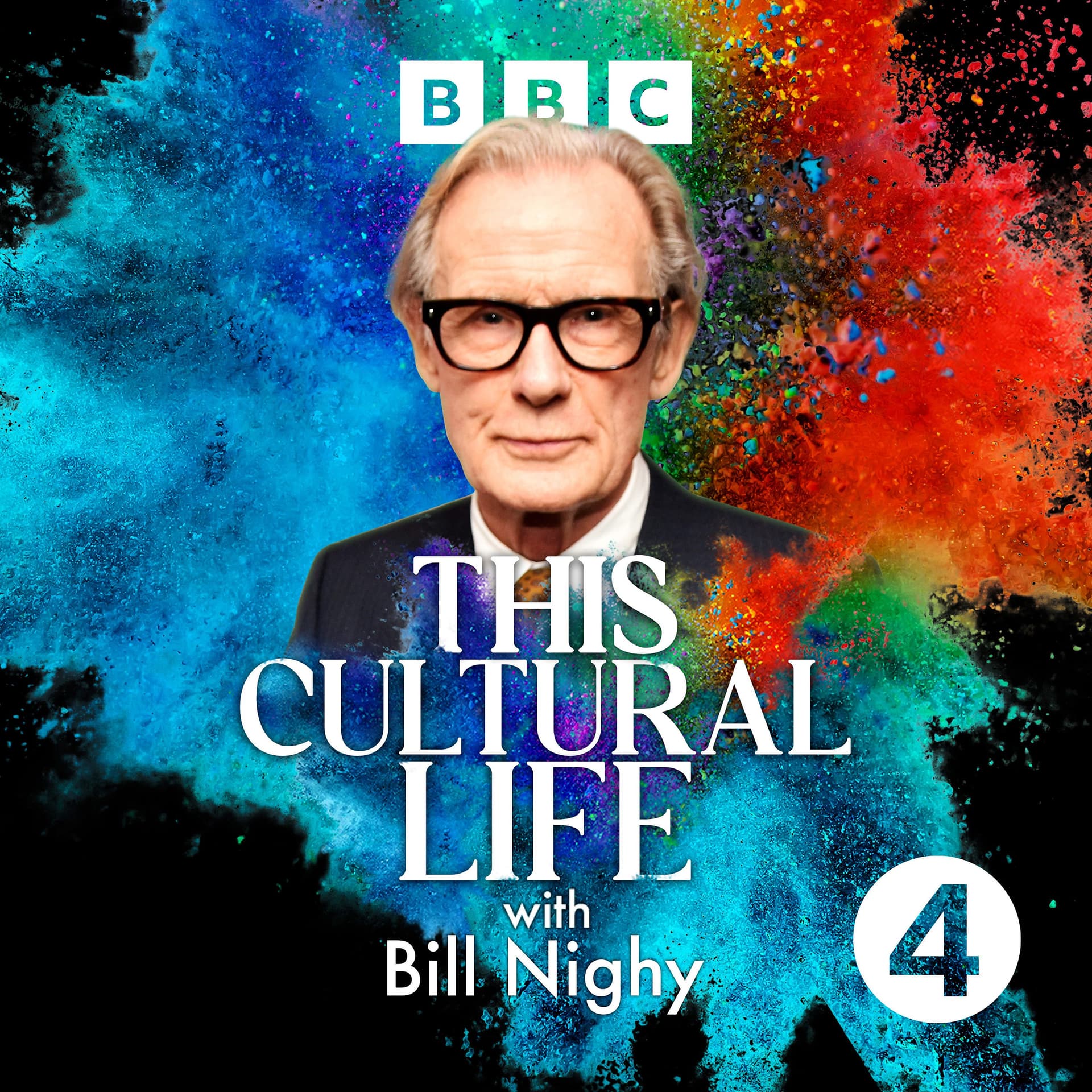
Podcast Episode Notes: This Cultural Life - Bill Nighy
Episode Overview
- Host: John Wilson
- Guest: Bill Nighy
- Description: Bill Nighy, a prominent British actor, discusses his fifty-year career, early influences, and notable roles in theatre and film, including his recent work in the film *Joy* as Patrick Steptoe.
---
Key Themes and Topics
Early Influences
- Family Background:
- Born in Caterham, Surrey, 1949.
- Father: Alfred, a motor trade businessman, modest and reserved, influenced Nighy with a love of music and cars, particularly the sounds of engines.
- Mother: Catherine, a nurse from a large Catholic family in Glasgow.
- Cultural Upbringing:
- Limited exposure to books and theatre in childhood; family did not own a television.
- Cinema visits were significant; early experiences included films like *Bambi* and *Reach for the Sky*.
- Influential Figures:
- Father Richens: A drama teacher who encouraged Nighy's early performance in school plays.
- Father Kensington: An English teacher who recognized Nighy's potential in writing and storytelling.
The Path to Acting
- Nighy initially did not aspire to be an actor; he wanted to be an author.
- Experiences at the National Youth Employment Agency led to a job as a messenger boy, which he later left to pursue writing in Paris.
- Encountered challenges and adventures in Paris, emphasizing a longing for artistic expression.
Professional Beginnings
- Joined the Liverpool Everyman Theatre rep company in the 1970s, where he worked with talented peers like Jonathan Pryce and Julie Walters, despite feeling insecure and unqualified.
- The environment fostered political engagement through theatre and shaped his understanding of social issues.
Notable Collaborations
- David Hare: A significant figure in Nighy's career, directing him in plays like *Pravda* and *Skylight*. Nighy credited Hare with recognizing him as a leading man.
- Michael Gambon: Nighy admired Gambon's unconventional acting style, which inspired him to embrace a more authentic approach.
Key Roles and Performances
- Discussed his roles in various films, including *Love Actually*, *Still Crazy*, and his latest role in *Joy*, where he plays a pioneering IVF surgeon.
- Reflected on the comedic and dramatic aspects of his roles, noting the importance of good scripts and collaboration with talented creators.
Personal Insights
- Nighy shared feelings of insecurity throughout his career, often downplaying his talent and fearing exposure as a "bogus" actor.
- He expressed a desire to explore new genres, particularly action roles, while considering the complexity of aging in the industry.
Reflections on Career and Identity
- Nighy emphasized personal authenticity in his performances, advocating for being oneself on stage.
- He mentioned the importance of humor and genuine engagement in acting, rather than merely following theatrical conventions.
---
Key Takeaways
- Cultural Roots: Nighy’s early life experiences shaped his artistic inclinations and storytelling capabilities.
- Acting Journey: Transitioning from a desire to be an author to a prolific acting career highlights the unpredictable paths of creative careers.
- Influence of Collaborators: Significant partnerships (like those with David Hare) can define an actor's trajectory and opportunities.
- Self-Acceptance: Nighy’s journey illustrates the struggle with self-doubt and the importance of embracing one’s identity as an artist.
---
Conclusion Bill Nighy’s conversation with John Wilson reveals a multi-faceted view of an actor's life, highlighting the importance of early influences, the impact of collaboration, and the challenges of maintaining authenticity in performance. His reflections serve as an inspiring testament to the complexities of a creative career and the enduring passion for storytelling through acting.
Written by AI. May contain mistakes. Listen to the episode to check what was said.
Transcript
Automatic transcript. May contain errors.0:00BBC Sounds. Music, radio, podcasts.
0:12Welcome to This Cultural Life, the series in which leading creative figures reveal the most important influences and experiences that inspired their own creativity. I'm John Wilson and my guest in this episode is the actor Bill Nye. A star of stage and screen, he's enjoyed a 50-year career now and is among Britain's most prolific and much-loved actors. Acclaimed for national theatre roles in plays by David Hare and Tom Stoppard, his popular appeal lies with scene-stealing appearances in films including Pirates of the Caribbean, Harry Potter and most famously Love Actually. Bill Nye has won BAFTA and Golden Globe Awards and was Oscar-nominated for his starring role in the 2022 historical drama Living.
0:54And you, where do you want me? Here, actually, yeah. You are... Are you good? As Nathalie attired as ever. Well you can talk, look at you. Well, I'm interviewing you so... Do you know what I worried about this morning as I left the house? Go on. I didn't shave. Oh, right. I thought I'm interviewing Bill Nye and I haven't shaved but look at you, you're bearded. I've never seen this before. It's had what you might call a mixed reception. A woman in the street the other day said, she just looked at my beard and went, oh no. I said, well it's for work. She said, what are you playing? I said, I'm playing a man who's falling apart.
1:27She said, well, it's working.
1:32Bill Nye, welcome to This Cultural Life. Thank you. You were born in Caterham in Surrey in 1949, and your father ran a garage, so were you living above the workshop, above the petrol pumps? Yeah, we lived in the garage, and you opened our front door and there were the petrol pumps, and the workshop was sort of adjacent to the, not quite the kitchen, but, you know, and we had a resident inventor in a hut round the back who used to invent things. I think the first time I was paid for anything was petrol pumps. Right. And, yeah, my father was in the motor trade, and his name was Alfred. What was he like, your dad?
2:08My father was a very, very remarkable and decent and lovely man. I was lucky to have him as my father. He was very reserved. He had a modest kind of way of conducting himself, but he was kind of cool, and he was a big Bing Crosby fan. His personal style was entirely based on Bing. What? You mean he was a tyre? Yeah, to some degree, yeah. Because obviously you think petrol pumps, it's overalls. He was the white coat. He had the white coat. Yeah, he was a cool guy. What about your mum? And my mother, Catherine, who was a nurse, she grew up in Glasgow. She was, you know, one of ten, the usual kind of Catholic environment in the Gorbals in Glasgow.
2:47I don't quite know why they ended up in a little Surrey town. And what about, you mentioned Bing Crosby a moment ago, your dad being a big music fan. Was that, in terms of cultural upbringing, at home. Music was a big deal. What about books and films, theatre, that sort of thing? No, we didn't have a television. You did go to cinema. You went to, you know, kids' cinema kind of thing. I got taken home during Reach for the Sky. They had to put me to bed. That's the Douglas Bader film, isn't it? Yeah, the Forest Fire and Bambi, they also had to take me home. I couldn't, I didn't survive the Forest Fire.
3:21Like many children I've discovered over the years. Oh, yeah. Not so much books, although books became my major pleasure. Music was... My father had two long-playing records. One was White Christmas by Bing Crosby, obviously, and the other was the start of, I think, the 1953 Le Mans road race. And he would talk me through the gears, usually on Christmas morning, because it was the only time he had any time. Sorry, a gramophone record, which was the commentary of the race? No, it was the sound of the engines. It used to drive my mother mad. So he was a petrolhead, your dad? He was a petrolhead. He was a pioneer of the combustion engine.
3:57he was in the early times of that development and he went round Brands Hatch in a supercharged Bentley you know he was an enthusiast yeah that's an extraordinary idea though that you would listen to the sound of engines but of course the pitch and you know there's a musicality to that of course yeah he'd say this is there listen that's second you know he's going into third that's fourth gear you know he'd do all that he was a real enthusiast did you inherit that love of cars? no I don't drive I don't own a car I passionately don't want to own a car Can you drive? I can drive. I passed my test when I was 17 on the first go.
4:31My father couldn't believe it. He taught me to drive. One of his things was it's how you recover that counts. Oh, you mean if you make a mistake on the road? Yeah, you always say on the test, if you mess up, just, you know, don't panic. It's how you recover that counts, which I've hijacked that for other purposes throughout my life.
4:51On This Cultural Life, my guests choose the influences and experiences that have inspired their own cultural lives. And your first choice is somebody called Father Richens, and this is your drama teacher at school. Little Richens, as he was, you know, obviously called. Little Richens. Little Richens, yeah. He was a drama priest, and he would put me in plays, and I was tall, which was handy, and I had, I suppose, I don't really... The thing about this whole thing is that I don't remember anything, so let's get real, you know. and the only things I do remember are things that I've anecdotalized for the boys in early times so I'm not a reliable witness because I got I left school at 15 because I flunked everything I ran away a couple of times I ran away I was going to Persia I ran away with my friend Peter and I had seen Persia and shows you how long ago on the map and we thought it said the Gulf of the Persian Gulf yes so we figured that was kind of sounded great and all I wanted to do was be elsewhere.
5:52So we went and we got as far as Marseille and I was trying we were trying to jump a ship and there was some very spooky guys. Of 15? Just before O levels, yeah. But you had been performing under the tutelage of Father Richens up to that point. Had he spotted your potential? No, not really. Well, I don't know. I doubt it. We did plays but it wasn't, I was never going to be an actor. I didn't have any desire to be an actor. I never particularly I mean, I didn't want to go to work. That was the big thing. I just didn't want to go to work. None of the options seemed in any way attractive. I didn't, I knew I was pretty good at knowing what I didn't want.
6:28When I was, I suppose, 15, maybe 16, you, what you did was you went to the National Youth Employment Agency with your mum. And I went down there with my mum and there was a bloke there with a big book of jobs. And he said, what kind of, you know, what kind of area are you interested in? And I said, because, you know, it was a big day for me. Nobody had really asked me before. I said I want to be an author and my mother put her foot on mine down underneath the desk and pressed down really hard as if to say don't be so bloody stupid and the bloke was really kind and he said well I don't have any jobs for authors, I said well I didn't imagine and he said well let's have a look in here and see if there is anything what comes close set you off in that direction so he got me a job as a messenger boy on the Field magazine which was in Stratton Street which was hunting, shooting and fishing.
7:18It was a magazine specifically for the landed gentry. They had debutante of the month. And I was the kid in the office and I used to change the magazines in all the big hotels. I used to put the kettle on. And then Sir Geoffrey Harmsworth, who was the lord who owned the magazine, he asked me to go to his office and I thought I was going to get fired. And he said, if you get shorthand and typing, I'll put you in the sub-editor's office. So the man in the National Youth Employment, it was kind of working out. You know, I would have at least been paid money for arranging words on a page. So, you know, sort of being an author, sort of being an author.
7:54Anyway, I blew it because I ran away again to Paris because I'd read, you know, I am a walking, talking cliche. I'd read the first 49 short stories of Ernest Hemingway and F. Scott Fitzgerald and Ford Maddox Ford and anyone else who'd been in Paris. and I thought you had to go to Paris and I was going to go to Paris and write killer sentences and get a girlfriend. That was the plan. Fiction, was that the idea? Yeah, yeah. Had you written anything at that point? No, but when I was at school, the other influential priest was Father Kensington, who at one point read one of my essays out. The only thing I was any good at at school was the thing that I already knew how to do, which was to speak English.
8:32If I had to do anything where you had to apply yourself to kind of learn, like mathematics, or physics or anything like that. Forget about it. You know, I was useless at all those things. Were you a natural-born loafer, do you think? I think I've got it in me, yeah. I'm quite good at loafing. I'm a slacker. I'm a suburban slacker, I like to think of myself. I have clothes for that. But what was I saying? But then at one point, Mr Weir, who was also an English teacher, I was waiting to be beaten by Monsania McLean. And while I was waiting to be beaten, Mr Weir came in and said this most extraordinary thing.
9:07He said two extraordinary things. One was after university. I was like, what? You've got, you know, nobody. You know, it was never going to happen. It's not like now where everybody, you know, obviously everyone goes to university. I didn't know anybody had been to university. And then the second extraordinary thing he said was, you'll want to try your hand at the novel. He actually said that. It's embarrassing to me now, but he did actually say that. And I thought, you know, you haven't met my, you know, you don't know the context here. Anyway, so I ran away from, I ran away from, I know I'm jumping around.
9:45I ran away from the Field Magazine to write the great English short story. In Paris. In Paris. Never wrote a word. And I begged on the trocadero, avez-vous en france pour moi, madame, is the only French I have. And my friend Brendan Thomas Elliott and I, he came with me. He joined me there. We would pretend to mistake American tourists for French people. They would bring the coaches up to have their picture taken with the Eiffel Tower. And we would intercept them and say that, you know, I would say my parents have recently divorced. And unfortunately, my maintenance check hasn't arrived. And I wouldn't normally do anything of this kind.
10:17But I just wondered if you had a couple of centimes that I could possibly, you know, because I haven't eaten. And they'd go, oh, my God, when did you last eat? And I'd say, you know, blah. and the photographers would come up and offer you 250 francs to sleep with what they described as old women and you could have 250 francs plus your dinner. What, as a gigolo? Yeah, but I'd never slept with anyone so obviously I couldn't apply. You weren't qualified? I wasn't qualified. Were your parents worried when you arrived in Paris? Did they know you were in Paris? No, they didn't and they were terribly worried.
10:50It was a lousy thing to do to my parents and when my father died they found in his what was, you know, his papers there was the letter that I'd written him saying something the most pompous, lousy letter about how I was nearly 17 and you can't touch me and I can no longer live under your oppressive regime I mean, complete nonsense and then I finally, I did go home and I made it up to my father and my mother But that's quite poignant that he kept the letter Yeah, he kept the letter
11:30your next choice for this cultural life is your love of music bill and in a note that you sent to us you referenced in particular frank sinatra van morrison and bob dylan you walk into the room with your pencil in your hand you see somebody naked in you You say, who is that man? You try so hard, but... So is it about delivery of the line? Well, yeah, that was how I was... I had great difficulty sending you that list of things because I don't know, I can't remember anything and I don't know what, you know, it's hard to know what contributes to your cultural development. But music is a big part of my life.
12:15I listen to music all of the time. It's constant. and my two great enthusiasms are music and books, not films, not the theatre. I'd never been to the theatre when I went. I'd been to the theatre once when I went to drama school. What happened later was that there was a girl who paid some attention to me, which was very, very, very intoxicating and I didn't last very long. I lasted two or three weeks before I was spotted as someone who was not in any kind of shape to be anybody's boyfriend. But in that period, she suggested drama school. She could have said astronaut and I would have given it a shot.
12:51I thought we were going to be together for the rest of our lives because we'd kissed quite a lot, you know, and I'd only just finished being a Catholic, so I thought that we'd probably... I had names for our children. That's a clincher, isn't it, the kiss? I should have... Yeah, I should have carried paperwork to that effect, that if you're kind to this boy, you'll never... He will start a religion. Did she take you to the theatre then? She took me to the theatre where, crucially or tragically, I saw an all-male version of As You Like It, where Anthony Hopkins played Phoebe and Ronnie Pickup played Rosamund.
13:24So I got all confused. And when Gavin, my elder friend, who's a year older than I, when I got the letter which said, you're granted an audition, I'd never seen... For drama school. For drama school. She'd written the letter and everything. I didn't know what audition meant. I thought it meant you'd got in. So I was already embarrassed. Then they said you had to have three minutes of modern and three minutes of Shakespeare. And Gavin and I went to the library and we stole. We could have borrowed it like everybody else, but for some reason we were sort of developing a criminal mentality. Anyway, we stole the complete works of Shakespeare and we stole the complete works of George Bernard Shaw, which we thought was sort of modern.
14:05And we took a stopwatch, his dad's stopwatch, down the pub, and we sat there. And because we'd been to a boys' school where boys played girls, and also because I'd seen an all-male version of As You Like It, I thought cleverly, I thought I'd give them one woman and one man for my drama audition. I gave them Eliza Doolittle for the woman and then we chose a speech from Twelfth Night which I had apparently studied at school, the first line of which was, I left no ring with her, so we figured that's a boy. It's not. It's one of the most famous female speeches in the history of audition speeches for girls.
14:42It's Viola dressed as a boy, Cesario. I had no idea. So when I did them on the stage at the drama school audition and I was walking from the stage to the panel of people who were looking a bit, you know, confused, and the bloke said, you chose to do two women's parts. That was interesting. And I thought, Gavin, because Gavin was supposed to be the expert. You know, he was outside in the car. And he said, that's interesting. Why did you do that? I said, because I thought it would be interesting. What are you going to say? So anyway, they asked me back with more suitable material, and I went back and got in.
15:16Although that was gender-blind casting, right? Well, quite. Ahead of your time. Exactly. Although you really are not known for Shakespearean roles at all. I mean, just thinking back through your CV, have you done any Shakespeare professionally? I've done two Shakespeare plays professionally. One was The Taming of the Shrew in Chester at the Gateway Theatre. Donald Sinden came and apparently remarked that he'd never seen an actor act with his legs before. that's a quote he can talk, I saw him in London Assurance he was brilliant, but he also had a lot of leg work going on and the second one was I did King Lear with Anthony Hopkins at the National Theatre as directed by David Hare but other than that I played Edgar naked?
15:59no, I wasn't naked I know you're supposed to be naked I think I had some kind of loincloth but then I retired from Shakespeare sometime after that in the bathroom I remember nobody took a blind bit of notice but I just thought I can't go through this anymore because I don't have any any particular interest in you know the delivery of Shakespeare I mean I understand he's the greatest poet the world has ever known but the performance of it I will leave to other people Right, okay this is already the most digressive edition of This Culture Life I think we've had because we started with Sonata and Bob Dylan Morrison.
16:38So just getting back to that, all of the, you think about those three voices, they are instantly recognisable. Yeah. Were you particularly drawn to the phrasing? Yeah. I mean, whether I was consciously drawn to it or not, but I now know that I was, and I am thrilled by it. But did you have musical ambitions yourself at all? Well, yes, I wanted to be in the Rolling Stones. I wanted to be a rock and roll star, frankly, but it was never going to happen, really. Yeah, sure, I threw shapes in front of the wardrobe mirror. Don't worry about it. But the idea that I would ever do that in public was not something I think I ever imagined I'd dare to do.
17:15And yet you lived the musical life vicariously with ageing rock star roles in Still Crazy, the film from, what was that, 1998, and most famously is the kind of ludicrous Billy Mac in Richard Curtis's film Love Actually. Who were you channelling for those parts? I don't think I was channelling anyone. I'm not really that there wasn't I'm not a mimic. Therefore, I don't you know, I just we're still crazy. I had to go to do the screen test to I think it was a disused tax office in Pinner. And it was early in the morning and they put me in four inch fake crocodile platform heels and a pair of black velvet loon pants that stopped just under my navel.
17:58and they put me in a kind of swing-wing-shouldered lame top, which didn't meet my trousers, and I was 46. And they put hair extensions in and rock-and-roll make-up, and there was just me and the director and this cameraman and a mic stand and my nightmare, the thing I vowed I'd never, ever be involved in, and it's the only time I've ever been involved in, which was a karaoke machine. And I had to karaoke, guess what? obviously To Smoke on the Water by Deep Purple. Right, OK. And you've got a choice. You either run from the building or you simulate sex with the mic stand. And I simulated sex with the mic stand and I saw the cameraman's...
18:40I saw the cameraman's shoulders going up and down. And I thought... And it doesn't take much to get... You know what I mean? Once you see that, you think, all right, OK. All over the world tonight Feet are hitting the ground Day is following night And I got the gig. Yeah, but I don't... But Billy Mag's not a... I mean, similar sort of character, isn't he? A lot of kids watching Billy. Oh, yeah. Hi, kids. Here's an important message from your Uncle Bill. Don't buy drugs. Become a pop star and they give you them for free. And I do believe... Middle-aged comedy. Jagger-esque. Oh, come on. I don't think we could go that far.
19:24Please don't say that. No, because Mickey's one of your heroes, so that would be disrespectful. Well, I think the Rolling Stones are without question. It's not even, you know, it's not even a matter of opinion. They are the greatest rhythm and blues band the world will ever know, probably.
19:40Your next choice is the Liverpool Everyman Theatre, whose rep company you joined in 1974, acting alongside people like Jonathan Price and Pete Postlethwaite and Julie Walters and writers there, Alan Bleasdale, Willie Russell. What led you to Liverpool in the first place? I had, once again, I had retired from acting because I never thought I'd be an actor. I didn't burn to act. I remember reading two things about acting. One was Laurence Olivier was asked, what is the basic requirement for being an actor? And he said 100 % confidence. I operated with no confidence whatsoever. I had years of standing on stages, not being able to move, paralyzed by self-consciousness.
20:21It's amazing that I ever persisted. And the other was Rod Steiger saying, you've got to burn. If you don't burn, don't act. I am never going to burn. You know what I mean? Do you smolder? No, I couldn't even smolder, to be honest. But I retire. I was always retiring. In a minute, I was going to work out what to do with my life. Anyway, I was selling women's clothing off a stall in Croydon Surrey Street Market, which is one of the oldest markets in London. And it was the Cheesecloth Summer, which is, for those still alive who remember, They were wraparound skirts full length. I used to wear one in order to advertise the product.
20:57And the man across the street, the Eggman, he despised me. And I was very good at it, actually. I was quite good at selling cheesecloth, except it all came back on a Monday because it would shrink to a postage stamp as soon as you put it anywhere near water. Anyway, and then a friend of mine who knew Jonathan Price said, you should see this bloke. And so I got a letter saying, would I like to audition for the Liverpool Everyman Theatre? I thought, all right, one more shot. And I drove up and there was this mass audition and I was worried about the stall and I did it quite vigorously, I think, because I just was I wanted to get back.
21:30Anyway, I got the gig and turned up in Liverpool and Liverpool, without question, was a huge cultural event in my life. Just just generally speaking, I sort of came of age in Liverpool. And as you say, the company was jam packed with people who were overburdened with talent, you know. and I felt very, very, very insecure. It was also a very politically engaged theatre. And by the time I got there, I'd arranged not to know what left and right meant. And it got too late to ask anyone. Were you just politically naive? I was just a mess, really. My nickname was Nervous. There are still people left alive who will call me Nerv.
22:12I was not in any kind of shape to consider politics or the outer world. I was just trying to get through the day. I was a neurotic. People would beg me to sit down or to take my coat off because I could never do either of those things. Anyway, when I got to Liverpool, I didn't know any of this stuff about politics. I remember I'd bought The Times when it used to be a huge newspaper one day just because I liked posing with it. And the director came up and grabbed it and screwed it up into a ball and threw it across the room and said, I don't think there's anything for us in there. And I thought, oh, that's a clue.
22:46The Times is not the thing. I mean, the idea of going to the Everyman Theatre in Liverpool in 1970-whatever and buying the Times... Well, this is really politically vibrant times, especially in Liverpool, especially at Everyman, where you have Bleasdale and you have Willie Russell and people like that, and Alan Dosser, who was the artistic director at the time. And these are plays that are being performed about dockers or people unemployed and social struggles. Were you not energised? Yeah, yeah, no. Once I got there, it was an amazing place to be. Willie Russell and Alan Bleasdale were still teachers, you know, they still had the day job, but they would write, and whatever was happening in the city, there'd be a play about it.
23:24Yeah. It was an amazing place to be. We would play ball stools and we'd play pubs and we'd play, we'd go all over the area. It was a fabulous, it was an amazing, you know, but then it's funny when you get, you know, you get much, much, much, much older and people's, you know, on the 40th anniversary, people are asking you, what was it like to be at the forefront of British political theatre? And you think, oh, really? I thought it was a bunch of us in the back of a van feeling, you know what I mean? But just in terms of the character who arrives in Liverpool, and you talk about your nerves and slightly shy and slightly politically naive, with these people who are, you know, whether it's Jonathan Price or Pete Possleswate or Julie Walters, who are very vibrant and, from what I understand, you know, very confident people.
Read the full transcript
24:05Did you at that moment think, this is where I need to be, this is what I should do, I am now an actor? I wish I had, but I didn't, no. I thought that in a minute someone would tap me on the shoulder and say, you know, I don't think, you know, what are you doing here? I had, and I still to some degree, a kind of anti-talent for undermining myself and I never felt comfortable. I always felt that I was a bogus member of an extremely talented group and I spent my life just tap dancing trying to make sure that nobody busted me for it. That was how I went to work. You know, it's when people talk about have you got a method or a process and when people used to sit around and talk till three o 'clock in the morning about acting and process I would put the kettle on because my shameful secret was I didn't have a method or a process I was too busy trying to obscure the fact that I couldn't act so I never got around to those things
25:02The next choice that you've brought us is the playwright David Hare and you've starred in several of his works on stage and on screen including the plays Pravda and Skylight, The Vertical Hour, and, of course, in his Johnny Warwicker trilogy of television dramas in which you played an ageing spy. When did you first meet David Hare, then? I met David Hare when I auditioned for Dreams of Leaving, which was his television play, and I got the part. As a tabloid journalist? Yes, I was, was I? Yes, I was. I walk down Fleet Street, I go into the bars. There you'll find the retreat into alcohol, the smell of bad conscience heavy in the air.
25:45I dread a lifetime randomly producing something which we all distrust and despise. I dread the effect on my person of a lifetime given over to royalty and dogs. If we work here can't believe in it, then how the hell can the people out there? When I read the script for Dreams of Leaving, it was an extraordinary experience because I'd never read anything contemporary that I really kind of recognised or admired to that degree. Not just the ideas expressed, but the way in which they were expressed. It was so exquisite, and the dialogue was so refined and funny. I mean, he tells world-class jokes. There was something about it that just rang in me, and it really helped me because I was so unconfident that I just couldn't suspend my disbelief.
26:31David Hare not only wrote that, but he directed you in that. So what did you learn from him at that point? I don't know what I learned from him at that point because I can't remember, but I know that I was deeply impressed by him. David counted recently. We've done ten things together, and he is the single most influential thing in my professional career, along with Richard Curtis, who basically changed the way I go to work and changed the course of my life. But David, he's given me the greatest opportunities, opportunities and and he basically was the first person really who'd ever considered me as a leading man and I wasn't really leading man material you wouldn't have thought not you know I was actually wondering whether this was Dreams of Leaving was your first screen role your debut but I actually earlier before you arrived I looked up your cv and it turns out that one of your very first screen roles was in The Bitch with Joan Collins and it just said Bill Nye flower delivery boy yeah uncredited.
27:28Any lines? Flowers for Mrs. Salmon. I think that was my line. You see, again, I may have dreamt this. I'm not a reliable witness. So if any of this is untrue, I'm sorry. But I think I had to go, flowers for Mrs. Salmon, and I got I know, funny how certain things stay with you, I got£150. I'm very good at remembering the money. But yeah, that was a big payday. Anyway, David Hare, yeah, I mean, we then did A Map of the World, which was where I played a leading role. That was in the National Theatre, wasn't it? That was in the National Theatre. You mentioned in a note that you sent to us Skylight, which, of course, you played a couple of times.
28:06Yeah. That was a role that you took over from Michael Gambon in, I guess, the mid-1990s. What are your memories of Gambon's performance? Well, I had great difficulty writing this list, but I wanted to include Michael Gambon because Michael Gambon was very influential in terms of what was possible. There were lots of people up ahead and there were certain conventions in place which I didn't admire or at least I didn't identify with. Whereas Michael was some other thing. Michael was like not being in a play. Everyone else was in a play. And he came on and you think, is this okay? I mean, has he just wandered in?
28:44That's the holy grail. Michael didn't ever look like he was in some play. I loved Michael Gammon. I kind of just loved him. We didn't work together that much, but I would get quite emotional just meeting him in the street. I mean, there was something about Michael that moved me tremendously. And his performance in Skylip, I wrote to him. I never write to anybody. You know, I never write to anybody. I wrote to him, and I think I said, you know, how much I'd enjoy the play. And I said, I now consider you to be the leader of my profession. And he wrote back and said, thank you for your support. I'm wearing it as I write this note.
29:23But when you revere somebody and they are that good in a role that you are taking on, what do you do? Do you try and emulate some of that performance or do you have to kind of strike out on your own? Well, the first time I did Skylight, you know, traditionally what would happen is I'd turn it down because I'd be, you know, just funk. You know, I was always doing a runner. And with Skylight, I spent the first days of rehearsal not trying to be Michael Gambon, but just suffering because I wasn't. But then I came to the conclusion that there's no future in that and I can't, you know, I am not Michael Gama.
29:59So I did this, you know, reckless thing and sort of did it as me and it kind of, you know, worked out. That was a huge shift in my thinking that I could play a leading role of that kind in a play, a role that size. And Skylight is one of my favourite plays, if not my favourite play. So you're playing a very successful restaurateur who is back in a flat with a former younger lover. You played that role twice, in fact, first of all taking over from Michael Gambon and then actually about ten years ago when it was revived in the West End and you played with Kerry Mulligan. Do you mind? Do I mind what?
30:42No, I'm just asking. What? I'm asking, will you grate the cheese? Do you mean... this?
30:55I do. Are you serious? Is this what you're calling... the cheese?
31:04Yeah, I forgot to get fresh. I wouldn't give this greasy lump of crud to my cat! I do not believe it! Kira, what's happening? Are you really living like this? Why didn't you save a crisis? I have this supplier! I'm sure! For all types of cheats? I have this really great bloke. Of course, your whole life is really great bloke. I mean, I can get you a weekly delivery, no problem. He'll send you fresh parmesan whenever you need. Nevertheless. Is that the secret of your success? Is that the key, just to be yourself, though? Well, in certain areas, yeah, it is, yeah. I was always trying to moody it up.
31:37I used to get reviewed for twitches and sort of nervous kind of things, because I'd think if I, you know, and I'd keep moving all the time, because if you didn't like this, you might like this. You know, like present a moving target. It was all insecurity and putting sort of flourishes where there's no need for flourishes because I didn't have the confidence just to say the line. And there was a lot of that going on. I mean, you can't be anyone else. So, you know... Be yourself. You've got to be yourself. You may be affecting an accent or you may be, you know, there may be technical things that you have to achieve or, you know, physical things that you might have to do.
32:12Do you still get nervous on stage? I get nervous opening plays, yeah. And I get nervous the night before starting a film. Everybody, I think everybody does. There may be some, you know, people that don't, but I do. Opening a play is, it's kind of, officially, it's terrifying. You know, you can't get round it. I mean, it is for me anyway. How do you cope with those nerves? I sometimes, well, one of the ways in which I try and cope with it It's like with The Map of the World, which is why I mentioned that. It's because I believed in The Map of the World. I was overjoyed to find David Hare's work because I agreed with him.
32:55And the thought that you were involved in a group to present some information and deliver it as efficiently as possible was a way of me unplugging all my, you know, vanity and self-absorption and just go to work because this is important stuff. You know, it's vital. and beside the point how you might be feeling. That's one way in which I do it. The other is that you just consider yourself ill. Your breath is short. You've probably got a headache. You've probably been to the toilet 18 times in the last hour unnecessarily. All those things. You feel sick and it's like you have some mystery illness.
33:33And then you think, well, I've been to work ill loads of times. You know, you can't not get... One of the things about being an actor is you can't not go to work. Doctor showbiz kicks in, doesn't it? Well, kind of, yeah. For as long as you're on stage, you're fine, and then you come off and fall over. David Hare wrote the Johnny Warwicker series for you, and I think he said it's the only time he's written a role with a particular actor in mind. In certain words, I gather we're back in the Middle East. We're always in the Middle East. I don't like faith jobs. I don't have anything to do with faith.
34:00Still no faith yourself, Johnny. The sun will rise in the morning. I'm going to have a drink at six. That's my faith. Really? A lot of people in your church, are there? Most people. Most people are in my church. Is he the character that is closest to you as a person, do you think? I don't know the answer to that. I don't know how to answer that. I know that I loved... I'd waited quite a long time to be a spy. Yeah, I suppose that maybe there are similarities. Yeah, I guess. I'm not quite as efficient as he is, but, you know. That was a trilogy that he wrote for you. Yeah. And the second one of the series, Turks and Caicos, Christopher Walken features with you.
34:36I'm not going to say co-star because he plays a CIA agent. and his name also appears on an email that you sent to us about one of your influences. So were you a big fan of Christopher Walken before you got to work with him? Oh, yeah. I couldn't. Why? Because everything he does is poetic. It's like watching Lionel Messi, or rather Lionel Messi, I now understand, because he was named after Lionel Richie. This is breaking news. Everything that Christopher does, if Christopher reaches for a cup, it's poetic. It's not just that he was a dancer, it's just that, although he was, I find him compelling and compulsive and deeply attractive and very funny and very spooky and anything you want.
35:17And I also put Adam Sandler on there. And Adam Sandler in Punch Drunk Love was a very influential performance for me because it's the Holy Grail. And Christopher does it as well, which is getting laughs without getting caught trying, where it's perfectly integrated in the material. But then, of course, you have to have the material. Punch Drunk Love is one of my favourite films and Adam Sandler in it. His performance particularly, I found, and I wrote it. I was about to do a film written by Richard Curtis on the television called The Girl in the Café in which I had to get laughs without getting caught.
35:50And I wrote Adam Sandler's name on the front of my script as a trigger. And then a year ago or whenever I was on a kind of an awards season thing, I got to meet Adam Sandler. And on the way to meet Adam Sandler, I thought, don't go and say, you know, I wrote your name on the script. And as soon as I met him, he was so gracious, so charming, and I just immediately said, you know, I put your name on my script, you know, incredible, and punch your own love, and uncut gems, and the hustle. Do you analyse other actors' performances? Do you watch, do you study, and do you borrow? I don't study. I do steal things occasionally, but you often steal things without knowing.
36:28I know that I stole one thing from Anthony Hopkins. Anthony Hopkins, who played Lambert LaRue in Pravda by David Hare and Howard Brent at the National Theatre, which was like a bomb going off at the National Theatre. It was a huge, huge hit. And he played a newspaper tycoon. But he used to do this really offensive thing of going up to people that he didn't like and smelling them on either side of his face. So he'd go up on the left side and on the right side. It was such an offensive thing to do to anybody. And I nicked it. I used it in Blue Orange. Joe Penhall. The Joe Penhall play with Churitel Ejiofor and Andrew Lincoln.
37:05And I did it to Andrew. And we did it in the round so that you could see the audience behind his head just going, oh, God. So that is something that you have observed from another actor and borrowed. But you've alluded to before there are certain mannerisms that you have. I mean, it's been said you are the master of the double take. Are you aware of that? I am sometimes, yeah. I am a lot, actually. I'm very, very pleased to have this conversation. Anything about being, you know, that's something I really, you know, I take to heart. You know, I mean, even if it's not true, you know, but the master of the double take.
37:39I mean, that's like, it's like I spent so many years standing on stages, not knowing what to do and not knowing what to do with my hands and having conversations with myself, like move across this. I can't move, move across this. I can't, you know, those kind of conversations, like torturous, agonizing, years of it. I don't know why I carried on. and then I worked out that as soon as the sooner in the rehearsal process that you do something, anything scratch your head, jump up and down, anything to crash through the self-consciousness the less time you're in agony that was just a practical consideration so I would do that and I would and I would, what was the question?
38:14It was about the double take You just did it there as you asked me But I can remember the first time that anyone said to me, a director, Charles Sturridge said to me take it down a bit Bill and I was completely thrilled that I'd taken it up enough to be told to take it down. I used to do this thing of doing a double take on anyone who came on the stage or anyone who came on the set. And it was partly to amuse myself and partly I used to use it just as a mechanism to get moving. I love the fact that I can do a double take. I have achieved a triple take on occasion, but you have to have drunk a lot of coffee.
38:48Have you overcome that insecurity now, do you think? Yeah, to some degree. not entirely no it depends on the job I mean I've had jobs recently where I've once again I'm up in a hotel room not sleeping banging my head against the wall and then I have to remind myself how old I am I go when is this what is this you know I mean you're going to be dead quite soon but you are a very successful very prolific actor you've done everything from fringe theater to big blockbuster movies you had great acclaim for that recent film living and in the new film Joy in which you play the pioneering IVF surgeon Patrick Steptoe in fact I've got to say that's another role in which there is a double take within the first ten minutes what attracts you to a part these days is it character quality of script or the size of the paycheck quality of script you know real good scripts aren't that thick on the ground and when you get one it's not complicated you know you go to work you know I am interested in the paycheck but if there's a really good script any actor will go to work you know you make some money somewhere else I mean then you get into other considerations like who else might be in it with you or who's directing or where it might be and where it might be is actually beside the point I don't care where it is really but it's entirely to do with the script Is there a dream role?
40:12Well I used to joke that you know press conferences and things Because when you get to my age, people say things like, what's left, Bill? And I used to say, well, you know, my action career seems to be slightly overdue. Maybe they're getting it ready now. Nobody's called, you know, and everyone would laugh. And then I was talking to my agent a while back, and I was half joking about it. Because I was swiping on my iPad trying to find something to watch. And I found a film that I'm in that I didn't know was on there. And I clicked on it reflexively. And underneath, you know, like they give you five other things you might like if you like this one.
40:48And they were all people dying. So I thought, and I've done quite a lot of dying. And I'm grateful for that because, you know, I get those scripts. I mean, I should be so lucky. But I thought I might want to get out of the dying business for the last 10 minutes. So I thought if I screenshot this page, I could just send it to people and say, this is what we don't want to be involved in. And if I am going to die, because I thought my only exit strategy is action. and then I thought if I'm going to die I want to die in a hail of machine gun fire I don't want to die in my pyjamas and I don't want to die on a drip these are real considerations by the way yeah yeah yeah Marvel franchise you could dial in a hail of lasers well I'm working on it anyway I'm working on it so I would be an unlikely ancient something with a tiny superpower I only need a little superpower It doesn't have to be a big fuss about it, just something just to keep me out of trouble.
41:46Bill Nye, thank you so much for sharing your cultural life with us. Thank you. I don't know whether you make any sense of that, John.
42:00And if you enjoyed my conversation with Bill Nye, he's just one of many actors who have been my guest on This Cultural Life. Andrew Scott, Judi Dench, Florence Pugh and Glenda Jackson and there's just a few who you'll find in the archive. Just search for This Cultural Life in BBC Sounds or wherever you get your podcasts internationally. And please do subscribe to the series. From me, John Wilson, and producer Edwina Pittman, thank you very much indeed for listening to This Cultural Life.
42:31Hey, friend, I'm Randy Feltface, the world's most entertaining non-human comedian. And if you like stand-up sitcom and sketch comedy, you're my kind of person. For a different episode every single week from a vast range of your favourite comedians and freshest comedy talent, then listen to Comedy of the Week on BBC Sounds from BBC Radio 4. Do it now!
From the publisher
A star of stage and screen, Bill Nighy has enjoyed a fifty year career and is now among Britain’s most prolific and much loved actors. Acclaimed for National Theatre roles in plays by David Hare and Tom Stoppard, his popular appeal lies with scene-stealing appearances in films including Pirates Of The Caribbean, Harry Potter and, most famously, Love Actually. Bill Nighy has won Bafta and Golden Globe awards and was Oscar nominated for his starring role in the 2022 historical drama Living. His most recent film is Joy in which he plays obstetrician Patrick Steptoe, one of the pioneers of fertility treatment.
Bill Nighy talks to John Wilson about some of the earliest influences on his career including a school drama teacher. He also recalls joining the Liverpool Everyman rep company in the 1970s and the influence of playwright David Hare who cast him in many of his works including Pravda, The Vertical Hour and Skylight.
Producer: Edwina Pitman