In short
This Cultural Life: Episode Summary - Cynthia Erivo
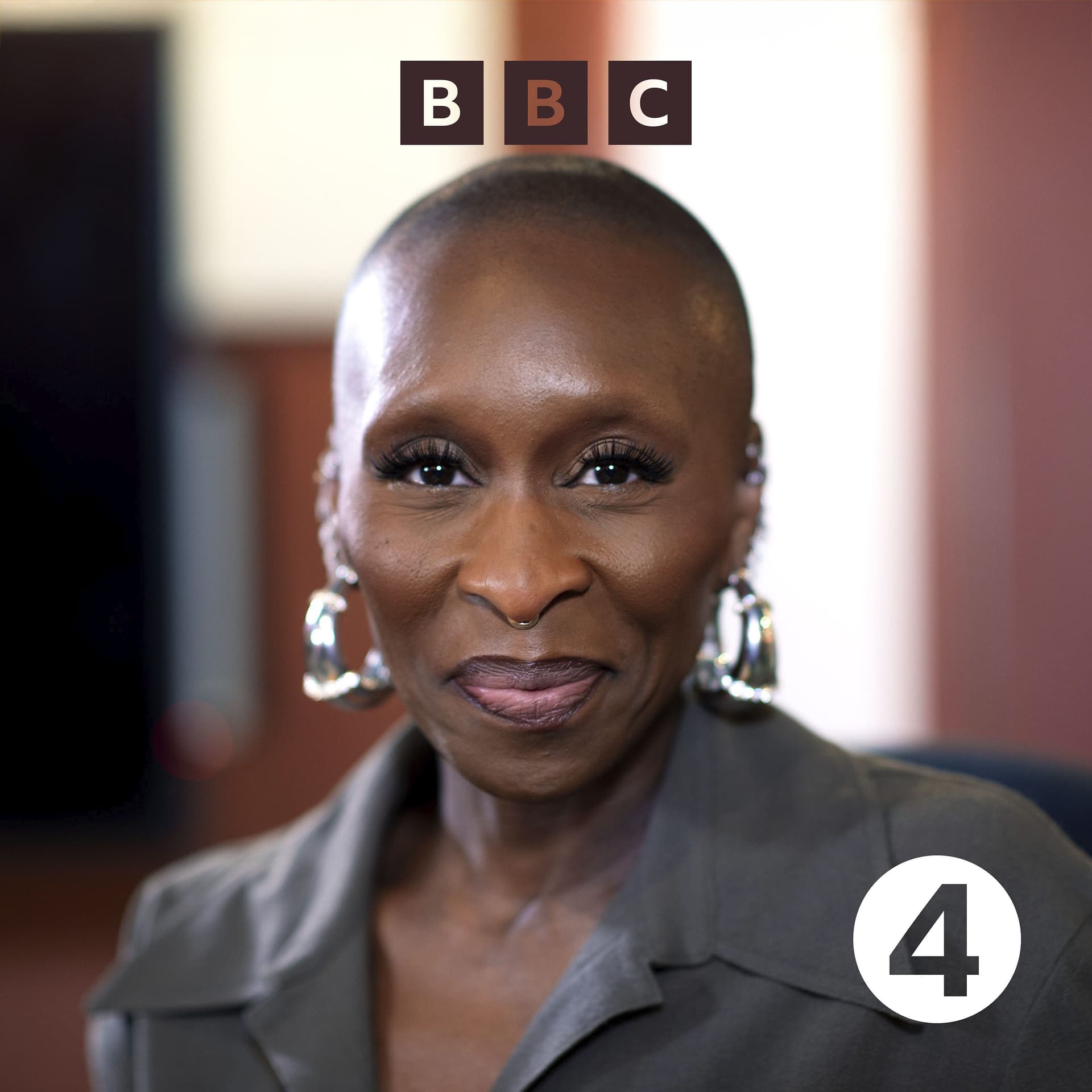
Episode Overview In this episode of *This Cultural Life*, host John Wilson interviews Cynthia Erivo, a celebrated actor and singer, renowned for her work in musical theatre, film, and her powerful singing voice. The discussion covers her early influences, notable performances, and significant creative moments throughout her career.
Key Themes and Discussions
Early Life and Influences
- Background:
- Born in South London to Nigerian parents.
- Raised by her mother, who worked as a nurse and a health visitor after initially cleaning houses.
- Parental Influence:
- Cynthia recalls her mother's support and determination to ensure a nurturing environment despite familial challenges, including the absence of her father.
Mentorship and Education
- Key Mentors:
- Helen Rycroft - A music teacher who recognized Cynthia's talent early on and provided her with various opportunities to perform and learn music, including classical pieces.
- Rae McKen - Another influential figure who encouraged Cynthia to pursue formal training in acting.
- Drama School Journey:
- Cynthia attended RADA (Royal Academy of Dramatic Art), where she initially doubted her acceptance but ultimately succeeded, marking a pivotal moment in her career.
Career Highlights
- Musical Theatre:
- Gained fame in the London theatre scene before transitioning to Broadway, particularly with her role in *The Color Purple* which earned her a Tony Award.
- Film Roles:
- Starred as Harriet Tubman in *Harriet*, earning two Academy Award nominations.
- Recently nominated again for her role in the film adaptation of *Wicked*.
Emotional Challenges in Performance
- Cynthia discusses the emotional toll of portraying characters with deep trauma and survival themes, particularly in *The Color Purple*.
- She shares a poignant moment of vulnerability during a performance where she broke down on stage.
Creative Inspirations
- Fashion:
- Erivo expresses her admiration for Alexander McQueen's exhibition, *Savage Beauty*, emphasizing its artistic storytelling that transcends mere clothing, reflecting her personal style and expression.
- Thematic Resonance:
- Cynthia relates to the themes of prejudice and acceptance in *Wicked*, reflecting on her own experiences of feeling like an outsider.
Personal Reflections
- Cynthia discusses her identity, feeling "othered" in both race and socio-economic status, and how these experiences shape her artistry.
- She articulates the importance of storytelling and challenging herself through diverse roles, including the desire to explore classical music publicly.
Achievements and Aspirations
- Cynthia has garnered multiple prestigious awards (Tony, Emmy, Grammy) and discusses the significance of possibly winning an Academy Award, which would make her an EGOT (Emmy, Grammy, Oscar, Tony) achiever.
- She expresses a desire to continue exploring and sharing stories that resonate with people, reinforcing her commitment to using her platform for positive impact.
Conclusion Cynthia Erivo's journey from South London to becoming a celebrated global star is marked by resilience, mentorship, and a profound connection to the arts. Through her storytelling, she seeks to inspire and uplift others, advocating for the importance of representation and the transformative power of music and theatre.
---
Key Quotes
- "I think it made me quite angry when I was a teenager, and I sought out a way to prove that I was lovable."
- "Music is so vulnerable when you sing; it's very hard to lie."
- "Creatively, I think it's challenge. It's things that scare me, things that force me to learn something new."
This episode of *This Cultural Life* reveals not only Erivo’s artistic journey but also her deep introspection, revealing the personal and cultural influences that shape her work and artistic perspective.
Written by AI. May contain mistakes. Listen to the episode to check what was said.
Transcript
Automatic transcript. May contain errors.0:00Hello, I'm John Wilson. You're about to listen to This Cultural Life. Episodes are released weekly, wherever you get your podcasts. But if you're in the UK, you can listen to the latest episode first on BBC Sounds, seven days earlier than anywhere else. Do subscribe to This Cultural Life on BBC Sounds and make sure you have push notifications turned on and we'll let you know as soon as new episodes are available.
0:30Welcome to This Cultural Life, the series in which the world's leading artistic figures choose the most important influences and experiences that have inspired their own creative lives. I'm John Wilson, and my guest in this episode is the actor and singer Cynthia Erivo. Having made her name with musical theatre in London, in 2015 she became a Broadway star and won Tony, Emmy and Grammy Awards for her role in The Colour Purple, the musical adaptation of the Alice Walker novel. Her screen acting credits include the title role in Harriet, about the 19th century abolitionist and campaigner Harriet Tubman, a film which earned her two Academy Award nominations.
1:09And she's just been nominated for another Best Actress Oscar for her starring role in the hit film musical Wicked. I think I'll try defying gravity And you can't pull me down Cynthia Erivo, welcome to This Cultural Life. Thank you very much, thank you. I read that your mum said once that you were singing before you could talk. That's right, yeah. Were you always aware you had a beautiful singing voice? I think it took me a second to realise that I could sing. My mum says I was singing when I was a baby and definitely when I was around two, but I can't remember that far back. I think I realised that I could make a sound that was pleasurable when I was 11.
1:54And singing along to the radio? What would have been happening in early 90s, I'm guessing? Early 90s? So I was listening to Magic FM, old school, 90s. So I'm listening to everything from Spandau Ballet, Kate Bush, Annie Lennox, then Aretha Franklin, Patti LaBelle and Mary J. Blige. But because I was a 90s kid, I had lots of R &B influences as well. So Brandy, Monica, all those.
2:29You were born and raised in South London. Both your parents were Nigerian. What are your earliest memories of home life? We had a good time. I was very well with my mum in Stockwell and I remember feeling like we lived in a little masonette so our neighbours felt like family as well. When my mum had to go to work I would stay with a neighbour. What did your mum do? At first she was cleaning houses and then she studied at King's College and became a nurse and then she moved on to being a health visitor. Like an antenatal health visitor. Yeah, that's right. She was visiting mothers-to-be. Mothers who had just had their babies.
3:02Oh, right, okay. Postnatal, yeah. Postnatal. And your dad had left the family, I think, early on, but then I think at about 16 he told you that he didn't want any contact with you at all. That's right, yeah. With the whole family. Yeah, he told it to me and then that sort of maintained just for my little family there. And I had the choice. My mum was really good about making sure that we still had sort of a relationship with our dad when we were quite young, and then the choice was his in the end to end that. What impact did that have on you, do you think? I think it made me quite angry when I was a teenager, and I think I sought out a way to prove that I was lovable, that I was good enough to be loved, and so some of my determination was about proving myself.
3:50but I think over time I've had to change what that is because it doesn't sustain. So I've found ways to love what I do for me and love what I do for, what it can do for other people and how other people can be inspired by it, you know. And honestly, the joy in my mum's face is really quite something when she's enjoying what's happening. And this is one of those moments, yeah.
4:23On This Cultural Life, Cynthia Erivo, my guests choose the most important influences and experiences that have inspired their own creative lives. And your first choice for this programme is a teacher at your school, La Retraite, Roman Catholic Girls School in South London. Tell me about your drama teacher, Helen Rycroft. How did she encourage you? Helen Rycroft. So she was the resident music teacher and she sort of spotted what I could do and the potential that I had really early. So when I first got there, I started playing the clarinet, but she sort of recruited me to come in and play more. Whatever I wanted to try was open to me.
5:00And I don't think that was the norm, but she just wanted to make sure that my taste for wanting music and singing and performing was always fed. And this is secondary school, so you're talking from year seven? From year seven to sixth form, really. We'd always set up a choir and she would always give me a solo and it was always a classical piece of music. I would have lessons with her and only her, even though there were many students, but she would always take me for a lesson and we would learn about Schubert Lieder or we'd learn about Handel or we'd learn about Beethoven. It was always something to just enhance my knowledge of music.
5:40Was there a particular moment that you remember that drew you towards performance at a young age? I don't know if it was a particular moment. I think it's sort of like a succession of different things that moved me in that direction. But you knew you wanted to perform from a young age. Yeah, yeah, definitely. I kept finding ways to do it. There was an interesting sort of like after-school troupe that came to pick kids to be a part of their summer programme and they picked me and we did, which is insane, a musical version of the Caucasian Chalk Circle and I played the Queen. and I just remember having the best time and all we had was this sort of blank room with no scenery and sheets for a robe and a makeshift crown and the ability to imagine and create out of nothing was so cool.
6:31I was like, we can do this with nothing and adjust our imaginations and I can be whoever I want to be. Like magic, isn't it? Yeah, that just, it was so thrilling. So it was really exhilarating for me. I remember the feeling to this day, and that's still something I chase and look for, and it's something that still happens, you know? Yeah.
6:55And in an email that you sent to us, you mentioned a particular formative moment around this time when you were singing a requiem by the British composer John Rutter. That's right. Why was the Rutter requiem so important to you in particular? It just seems to have stuck to the sides. It's one of those moments that I cannot get out of my head, that I go back to often. And I listen to the Rattlet Requiem now because it reminds me of a really wonderful moment that I experienced.
7:29Pia Yesu was my solo. And I just remember feeling really good about myself to be able to sing something like that. I still remember the sound of all of the voices together.
7:45Our school would join up with an adult choir and we'd have a full orchestra playing with us. And to know that music can do that, that's the first time I experienced a full choir with a full orchestra.
8:06Did you ever consider at a young age that classical music might be the root, or even opera? I think I did, because that's what I was learning. And sometimes there's part of me that's daring enough to be like, do I try a piece of classical music? I don't know, maybe. You know the repertoire? What would stop you? I don't know, I think maybe people, because I know that people don't necessarily expect that of me, I haven't done it. But it's there, and it has been for a long time. Operators have definitely been things that I love. And when I went to drama school, that's what I was singing with my singing teacher.
8:42That's what I would do. We would do, I remember we did Salce Salce from Othello. And even when I was on stage on Broadway, my singing teacher we would do, it was classical music, because it's the one thing that, for me, keeps my voice really healthy, singing that way. So maybe one day I'll do it publicly. Lara Trait was Catholic school. So was church a big part of your cultural upbringing? Yeah. Yeah, we went to church every Sunday. At Christmas time, we'd do the midnight mass. Were you singing in church? I did. I mean, as a solo performer or just part of the congregation? Sometimes as a solo performer.
9:18And then when we moved to East London, I ended up being the choir mistress. I took over the choir. And led the choir for a little bit, yeah. I think I was just always searching for ways to do music. You played Aretha Franklin in 2021 in that National Geographic television biopic. Aretha famously started singing in church and her gospel roots never left her music. Could you relate to that in any way? Or was your church upbringing a very different experience? My church upbringing is very different. The Catholic Church is very traditional. but I think I kept trying to infuse pieces of gospel within the repertoire of the music that we would be singing at church but I think when you're encouraged to sing in church that is something that doesn't leave you because it feels like you're always singing for the right reasons and then you can share that with everybody else.
10:10My doctor said, take it easy Oh, but your loving isn't much too strong I made it to you
10:22And when you played Aretha in that biopic series, how do you approach the job of singing Aretha, not just the drama of her life? It's actually inhabiting her vocal range, which is so distinctive. Was it an impersonation or were you... I mean, how did you go about studying? So I think what people don't realise about Aretha is that she's a brilliant technician and I would just study how she would use her voice. so that you would pick up certain habits and then start placing them within the songs that you hear. I didn't want to do an imitation because that then becomes sort of devoid of emotion and heart.
11:01Impersonations are fun, but when you have to sustain over a series, you have to learn the person. So you learn what makes her tick and how she has slightly sibilant S's and how she's less open than you realise. And then when she opens up, it's much bigger than you can sort of describe. when she sings opera, she did that wonderful version on the Grammys. Vinger, Vinger. Oh, Nessun Dorma. Nessun Dorma, that's it. Nessun Dorma
11:37Nessun Dorma She did a version of Nessun Dorma and that voice quality is very different from the quality that she uses for Rocksteady, you know.
11:58And also, as she ages, her vocal quality slightly changes as well. It actually becomes way more open, becomes broader, bigger. And when she's younger, it's slightly more reserved.
12:15But today I'm singing the blue I love the technical side of singing, the study of it, because I think once you get a handle of that, you can then really play.
12:40Well, of course, in 2022, you starred in a whole BBC proms concert featuring the work of your favourite singers, including Aretha Franklin and Etta James and Nina Simone.
13:05You're mine.
13:17And as you were sort of referencing when we were talking about Aretha there, it's about marrying attitude with technique. Does the technique come very easily? Can you adapt your voice very easily? Yes, for me it does. I'm lucky and I'm also curious. so I've been learning and practicing and exploring my voice for a very very long time because I want to see what else it can do and and so when you're singing on stage in front of an orchestra that is more about the attitude and the storytelling from song to song whereas if you're in a show and you're playing a character it's more about the journey of that character from the beginning to the end which has to grow and has to change they can't be where they are at the end at the beginning you know That's the distance between when you're singing on stage as you.
14:01It's my interpretation, Cynthia's interpretations of a song. What does it mean to her? And I say playing Cynthia because there's me, but there's also whoever the character is in that song. Right. You know? When I sing I Who Have Nothing, that's a different version of Cynthia who sings Nume Kitipa. They're both heartbroken in very different ways. One is determined and one is letting it go. I will offer you peace and rain Come from peace and we will not I will die until after my death I will offer you again A light and light I will offer tomorrow Love is a law Love is a law Where you will be a reine Don't leave me Don't leave me
15:02You attended extracurricular drama classes and it was there that you met another great mentor of yours, Ray McKen. Who is she? How did she take you to the next stage of your development? I met her originally when I was 15 and the Young Vic, and I don't know if they still do this, I hope they do, they would do youth companies that would take on a version of whatever was on in the main house. So I went to an audition with a friend. They were going to do Romeo and Juliet. I was there to support my friend. How old were you? I was 15. But you'd already started drama classes at school. You were already interested in drama.
15:41I was already interested in drama, but I didn't know that this was happening, so I wasn't prepared for it and I just sort of went. and Ray saw me and said well why don't you audition as well then you're here you might as well so I said okay I'll try and ended up playing Juliet in this youth company and so I don't know if I bit off more than I could chew or just fell into it and then after that I didn't see her for a very long time and I sign up to a young actors company at the Stratford Theatre Royal and on the First day, I go into the foyer and Ray walks in. And I go, what are you doing here?
16:20She said, well, I'm teaching the Young Actors Company. I said, oh, my goodness. She goes, but I love that you're doing this, but I think you should train. And I didn't know what she meant by train. I said, train what? She said, well, I think you should go to drama school. She meant formal training. She meant formal training. I said, they have drama schools? How do I do that? Well, you didn't even know about the concept of drama school. I didn't know. No, I didn't. I had no idea that you could go to a drama school to formalise your training as an actor. I had no idea. She said, well, yes, I do think you should apply for RADA.
16:53I said, what's RADA? She said, well, the Royal Academy of Dramatic Arts. I said, no. I'm not going to apply for a place that's called the Royal Academy of Dramatic Arts. I'm not going to get in. She said, well, then you can't do this class. So she said you apply or you're not coming. So she forced you to apply. Yeah, I said, fine, I'll apply. Not thinking I would get in, but the immediate was what I wanted. I wanted to go to this class and I didn't want to be stopped from doing that. So I applied for RADA and she helped me whilst we were doing this youngster's company with the auditions, with the speeches.
17:30So the application was accepted, you then get an audition, which is a very rigorous process. Yes. Very hard to get into RADA. There are four stages before acceptance. You have to do Shakespeare as well, don't you? Yes. You have to do one Shakespeare piece or something or one contemporary piece? I did two Shakespeare speeches and one contemporary speech. Had you done Shakespeare at school? Were you familiar with the language? I was familiar with it, but not familiar with the language because we hadn't really done Shakespeare at school. This was really the first time that I'd gotten my teeth stuck into it, and I got in.
17:57You haven't done Shakespeare professionally in the years since, have you? I have not, no. Why not? I don't know. I would love to. You're open to offers. Completely. Let's just put that out there. Very, very much so, yeah. A particular role that you would play on the stage or on the screen? I would love to play Emilia or Cleopatra. Right. Yeah. It's been a while since we've seen Cleopatra. Yeah. Yeah. OK, well, that's out there now. Thank you. Yeah. How did it feel to get into drama school when you were accepted? What was the experience like of being there? I was in a slight disbelief. I remember I got a call.
18:35They would call you and say, hey, we just want to let you know that you have been successful and we'd love to offer you a place. and I said, are you sure? I remember I asked him, it was the first thing that came out of my mouth, are you sure? He said, yes. And I hadn't told my mum that I had auditioned. So when I auditioned, I had quit university to do this young actors company and I hadn't told my mum and I didn't tell her that I was auditioning for Radha and I didn't want to tell her because I didn't want to, if I didn't get in then I didn't have to tell her. But then I did, so I had to tell her.
19:10What did she say? She said, I wish she'd have told me because I would have helped. Last year you were appointed vice president of RADA. Yeah. David Harewood is the new president. That's right, yeah. Having succeeded Kenneth Branagh. Yeah. What are the main challenges facing the school? I think it's about trying to make sure that the building blocks see them through to the very end. So what I've been doing for the last sort of few years, I want to say five or six years, is going in and teaching the third year. We call it performance through song. it's using emotion it's using immediacy it's using personal experiences because music is so vulnerable when you sing it's very hard to lie you force them to be really vulnerable and open so I love going in and teaching that and I've been doing that for a while and what I've wanted to do is make sure that they are having a path from drama school at the very beginning to their third year and out into the working world and making sure that students that know that they're stepping into a business as well, not just a passion project.
20:12You're giving back what you received in Helen Rycroft and Ray McKenna. You had people who spotted your potential, who encouraged you, who pushed you. How much has changed in terms of opportunities and accessibility for young working class performers since your time at drama school? I think it's changed a lot. I think I had a lot less opportunity. I had to fight a lot more for it. I don't think it's perfect now, but I do think that the range is wider. There's more opportunities to be seen. Despite music and drama slipping its way off the curriculum in state schools. Which is devastating because it's such a beautiful way of learning.
20:53And for students who don't learn the same way as every other student, whose way of learning is very different, music and drama are often the ways in. That's sad. I think sometimes we discount how important drama and music can be for students. So Radha is still really important for you. You're coming back and you're serving as vice president. But you live in L.A. now, don't you? I do, yeah. Do you reflect on the fact that you are arguably a much bigger star in America than you are in Britain? Sometimes, but there's nothing that I can do to control that other than keep working. Why do you think that is?
21:28I mean, I can only do the work that I get, you know, and I haven't necessarily done a lot of work in the UK. I wish I could and I'm always open to it, but if the opportunity doesn't knock, then I can't be at the door. After graduating, you had stage roles in The Umbrellas of Cherbourg, in The West End, and then you toured the UK in the production of Sister Act, playing Sister Mary Clarence, which was the role that was taken by Whoopi Goldberg in the film version. But, of course, the big break came with another role that was made famous by Whoopi. That's right, yeah. You played Celie in The Colour Purple.
22:03That's right. Like the colour purple Where do it come from Now my eyes are open Look what God has done It's in the grain of love It's in the mighty tree It started off at the Meniere Chocolate Factory and that transferred in 2014 to New York. Tell me, what does a Broadway debut feel like? Crazy. Really wild. I was definitely a fish out of water. To go from a theatre that held 200 people, where people are this close to you, to a theatre that's now in Cross Arch and there are a thousand people is very, very different. But the intimacy is still there. How many of the cast transferred with you? No one, it was just me.
22:57So that was an adjustment because it meant that I had to learn people again. But once I was able to do that, it was one of the most incredible experiences I have ever had. People wanted to see this story and I got to know so many incredible artists all at once. It's just, it was awesome.
Read the full transcript
23:34Playing Celie won you a Tony Award. You won Best Actress in a Musical. The Colour Purple, though, is, of course, the story of abuse and survival, trauma. How emotionally challenging was it to perform that night after night? Yeah, really, really challenging. I had to figure out a way to process it every day. We did, I want to say, over 300 performances. And so if in the 300 performances you're called ugly every day, after, I don't know, night 100, 150, the line between you and the character becomes very, very thin so it doesn't feel like it's the character. It feels like it's you. It was tough.
24:20And I was exhausted a lot. But there is something really joyous about how Celie survives and how she finds the will to still love not just other people, but herself. I think that's the thing that I really loved about the story, that a person who could be so maligned and hurt and wounded could still find her way to forgiveness and hope. But as you say, that is a huge emotional journey that you go through over two and a half hours, three hours every night. Were there any nights where it became just too much? Yeah, yeah, yeah. I had a breakdown on stage once and I just... Actually on stage? Actually on stage.
25:06What happened? The words just wouldn't come out anymore. And it wasn't that I had lost the words. They were in my mouth. I just couldn't speak. All I could do was cry. I couldn't do it anymore. Was it at a moment when Celie would have been crying and you could just follow that moment through? Yeah, but it surprised me and it just happened. And I was lucky because I was on stage with Isaiah Johnson, who was playing Mr. at the time, and he just waited. And you know when someone is looking at you in your eyes and they can't say anything, but you can see everything they're saying. And it was just, I'm here.
25:42It's fine. I'm here. It's fine. Just keep going. and he just waited and he was so patient and he was so caring. So I felt like I was really, really supported in that. But I did. It was tough. Yeah. Looking back on that, though, because as you say, that line between you and the character is almost crossed. Do you feel, looking back, that actually that performance, however difficult emotionally it was, was possibly a great night for you in terms of the performance? Maybe. I think so. because I think sometimes the best moments are when you and the character do cross, when you can't tell one from the other because it all has to come then from truth and humanity, you know?
26:28If I'm free, my family should be too. I made up my mind, I'm going back. Why are you back here? It ain't safe. I come to get you. Bring all of you to freedom.
26:44I'm gonna leave you. Harriet, welcome to the Underground Railroad. In 2018, you played another heroic African-American woman when you played the 19th century abolitionist and activist Harriet Tubman in the film Harriet. I can imagine that filming that would have been a really physical challenge. We talk about the emotional challenge that you faced playing Celie, but what you had to go through playing Harriet was... Wading through rivers, being chased through the woods. Yes. Yeah. And we were shooting it in, I think we were Virginia. It was November and it was freezing. And most of it is shot at night because that's what happened.
27:24She would travel at night, hide in the day and travel at night. So we were shooting it in the dead of night. It was always freezing cold. We're in the middle of nowhere. And so you have no coverage at all. And it was just both emotionally taxing and physically taxing. But I think I bought it on myself. I really had no intention of doing it any other way. I remember there was one night when we had to shoot her literally wading in the water. And my director had said, well, usually you put on a wetsuit, which is supposed to keep you warm in the water. And I said to her, would Harriet have had a wetsuit underneath her dress?
28:06And she said, well, no. I said, well, then how can I properly show you the experience if I have a wetsuit under my dress. One, I can't move the way I would need to move and two, I wouldn't feel what I should feel. Well, we see the shock of the cold when you enter the water. Yes. Yeah. On purpose. But that's what would happen. So you did all your own stunts then? Yes, I did. Yeah. Apart from, I presume, spoiler alert, a moment when Harriet jumps off a bridge into the... They wouldn't let me. Into the rapids. They wouldn't let me. They would not let me... Because I think they could have wired me and I would have been fine, but they were...
28:42Oh, you were up for it? I'm always up for whatever the character needs, yeah. It was like a 40-foot drop. But if I'm on wires, I'll be fine. I wanted to do as much as I possibly could wherever I could. So whether it's horse riding, whether it's running through the woods, whether it's falling in a ditch, whether it's waning in the water, climbing on the mountain, I'm fine. I want to do it all. Being bitten by an asp at the end of Antony and Cleopatra. Yeah, fine. Let's do it. Let's figure out a way.
29:13Your next choice for this cultural life, Cynthia Erivo, is seeing the Alexander McQueen exhibition, Savage Beauty, at the V &A in 2015. Why have you chosen this show about the acclaimed fashion designer who died in 2010, of course? Because I feel like it was like fashion come to life. It wasn't just clothing. I feel like it was storytelling and art colliding. I feel like Alexander McQueen had a really particular understanding of how music and fashion could be married together. Were you a fan of his work anyway? Yeah, because it was dangerous and it had something to say and it allowed the women who wore it to be feared or to be different and dangerous and strong and feminine all at once.
30:04And something about savage beauty, even those two words together, just evoked something really visceral in me. And I happen to love fashion. But to see it in that way made me understand that fashion isn't just the clothes you wear. It is what you're feeling, what you want to say, who you think you are or want to be, and what you want the world to see. Was that inspiring for you or an affirmation of what you already thought about the way that you should present yourself? I think so. I think there's such a rebellion in it. And I think that's kind of what I live by in my own aesthetic. You are very well known for your very striking images.
30:47I mean, she's described today. Actually, you're relatively understated in your clothes. But of course, you have your nose ring. You have very big jangly earrings. You have your bejeweled long nail extensions there. Fashion's always been important for you then, has it? Yeah, very much so. And dressing in an ostentatious way, a way that sort of makes a statement. Yeah. And it's not because I want to make a statement for other people. It's what I feel like on the day. So sometimes it is kind of understated. Sometimes it's monochromatic and everything else can do the talking. And sometimes it's really bright and colourful and mismatched and architectural because that's what I feel like on the day.
31:26But I feel like it's another extension of expression that we have at our fingertips that I think sometimes we're afraid to use. but I just have no fear of it. You are physically small. You are what? Five foot one. Five foot one. Yeah, when I'm not in heels. Have you got heels on today? I do have heels on today. God, they are. Six inch heels, I would say. That's right. Spikes. Yeah. Do you use clothes to enhance your sort of physical presence? They're like armour. I think sometimes it's like armour, you know. I like being a small person but I think that there is something about clothes that can take up a little bit of room, you know.
32:04And if you've always felt like that, the last few months when you've been promoting Wicked, I mean, it's been like a sort of one long catwalk for you, hasn't it? I think so, a little bit, yeah. It's been so much fun to just play. And some of it is from my closet and that my amazing stylist, Jason Bolden, has been able to play with. And sometimes we find these wonderful pieces and there are pieces that are made for me. I've been very lucky and it's been a wonderful experience. Shouldn't a girl who's so good inside have a matching exterior? And since folks here to an absurd degree seem fixated on your verdigris, would it be all right by you if I de-greenify you?
32:53Wicked is the backstory, of course, of the two witches from The Wizard of Oz. and you play Elphaba, the green-skinned witch who becomes the wicked witch of the West. It's a story of otherness, of prejudice and of acceptance ultimately. Is that why the role appealed so much, do you think? Yeah, I think so. I think to be able to play a character that has to experience that kind of arc is really rewarding. What I love about this story is that Elphaba has to learn to love herself as she is. and she has to learn to open herself up to being loved by other people, by Glinda. They have to come to each other.
33:36They have to find acceptance for each other. They kind of have to change their minds about each other. And it's only when they can do that that the rest of the story continues. Were you drawing on aspects of your own experience then, playing Elphaba? Yeah, yeah, yeah. You could relate to her? I could. I mean, whether we talk about what it feels like to be an other. In what way? how would you define your otherness or how did it feel when you were growing up? I think I've always felt a little odd, even with my family. I'm the only one who's really stepped into this world of art and acting and singing.
34:10There's no other person in my family that does this. So I definitely felt like an odd one out and there was no blueprint to follow. So I've had to sort of really forge my own path to where I am. And even then, it's sort of, how do I, not knowing that there was a drama school, not knowing that I could, I had to find these things out as I was going along. So getting here has been an interesting journey. And then when you do get to places like Arada and some of those students are very well to do, they have money and they, because I had to work whilst I was at drama school and that was hard. and when you do have to do that and people don't have that kind of experience, when you turn up on a Monday and you're exhausted because you've worked on the weekend, it looks like you don't care, but actually you're just tired because you've been working, but you still are trying to be as present as you can.
35:04So the otherness that you're experiencing wasn't just about race, it was about social disadvantage. Social disadvantage, yeah. And you come up against that a lot of people. Theatre can sometimes be very elitist and it doesn't necessarily make room for people who aren't. socially privileged. So you have to face that challenge often. And then I look how I look, you know. And when you're 15, and you know, you're queer, but you can't really say it, and you don't really understand it, and you're figuring it out. That also feels a little isolating. Gender politics, sexual politics have changed since then.
35:38I mean, was that a particular difficulty growing up in your teens? That sense of queerness? I think so, because I really didn't know how to, I was trying to figure out how to navigate that? Like, how do I even begin to explain it to anyone? No one was talking about that. No one was saying anything about being queer. It was never spoken about. Do you think that's partly what led you to the theatre? Because you saw theatre as a refuge. Maybe. It was a safe space. Yeah, I think theatre is a safe space for a lot of queer kids. For any kid who feels a little bit different to be honest. Not just us queer folk.
36:12It's anyone who doesn't necessarily fit in, you know? Did you see Wicked on the West End stage when you were younger? No, not when I was young. I saw it when I was 25. And I first heard of it when I was at drama school. Whenever I would have sort of like odd bad days that just didn't feel great, a friend of mine, Michael Pevoy, would always, he'd play the piano, so he would grab a bunch of librettos from the library and would sit at a piano and just play, and he would always pick up Wicked. By the time I'd left drama school, I knew the music, like the back of my hand and I had not seen the show.
36:47So I left Drum School when I was 23. It would take another year before I could afford to go and get a ticket. So it was on my 25th birthday, I went to see the show. But initially it was the score and the libretto. It was the score and the libretto, the music. And the themes, were you relating to that idea? Because it is a parable, it's a very powerful parable. Yeah, of like not fitting in, not being the one that gets chosen, and then having to rise above all of that.
37:21I fell in love with the music and then fell in love with the story.
37:30You were talking about singing techniques earlier and breathing is very much a part of that. The big number in Wicked, of course, is defying gravity, which you perform in the film whilst flying. I mean, physically, how hard was that? Hard. Singing and flying. Very, very hard. Because the first time you do it, everything feels like it's completely out of whack. Nothing feels like it is connected. And so you have to find a way to connect the dots. I had a really wonderful vocal coach, Anteo Bacette, and my stunts coordinator. They worked together like an army to make sure that I was set up in a way that I could actually do it.
38:07We were rehearsing all the stunts way before we even began to put anything on camera. We were practicing the moves over and over again, just so that my body could get used to what it felt like to be lifted up in the air and spun in the air. So my body was really used to it. But then you add a costume on top and a corsetry is something that restricts your breathing, restricts your diaphragm. And your diaphragm is what you use for the support and your lungs are what you use for the breath. And if you don't have breath and support, it becomes very hard and everything sort of becomes slightly unstable.
38:40So that's where Antaea comes in, who helps me find another place to place the breath. So instead of using just the front part of my body and my lungs, I could access my back and my sides so that I could create more space in my body for breath. And you place support and tension in the other parts of your body. so the legs and the arms and the calf muscles because you usually have the ground underneath you to make these sounds. You're normally rooted because it's such a physical processing, isn't it? You have to kind of literally physically root yourself in the ground. If you don't have that, you're adapting the technique totally.
39:17So if you care to find me, look to the western sky As someone told me lately Everyone deserves a chance to fly The girl from South London who is now a big star and it's, I mean, the publicity for the film, everything about Wicked has put you onto a totally different level of fame. Is stardom all it's cracked up to be? For me, it's been pretty good because I have good people around me. It comes with bumps and scrapes, but I'm having a good time and I think that if I keep reminding myself, as long as I can keep my feet on the ground, then it's not happening to me, it's happening with me. You've won the Grammy, you've won the Tony, you've won the Emmy.
40:03You've been nominated for Oscars. What would winning an Academy Award mean? I mean, it would mean a lot. It's the accolade that every actor wants. It's the pinnacle, isn't it? And I think it would mean a lot to do that. After all of this journey, to get to that point would be wonderful. Even just to be nominated is really special. It would make you an EGOT, of course. It would make me an EGOT, yeah. Somebody who has won the Emmy, the Grammy, the Oscar and the Tony. I think you'd probably become, if you'd won an Oscar, you'd become probably the youngest ever member of that EGOT club. That's correct, yeah.
40:35No pressure. What would it mean for your mum, do you think? She's already voiced that she wants it for me. She's in no uncertain terms. She's been the driving force, really, hasn't she? Yeah, yeah, yeah. She's the one that spots when I'm, if I've taken a break for too long, if I've stopped singing. I remember when I was 18, I don't know, I just maybe became a little disillusioned. I stopped singing for a little bit and she noticed and she just slyly said as she was walking to the kitchen, I hope you haven't stopped singing. When are you going to sing again? And then she left it at that. And it just reminded me that my mum's paying attention.
41:10She actually wants me to keep using my singing voice, my voice. and I'm a firm believer that if you have something and you don't use it in the right way, you'll lose it and I want to keep using my voice in the right way. I want to keep singing and telling stories as much as I possibly can so she's definitely a driving force for sure. And she would be alongside you at the Oscars. Yeah, she better be. She doesn't have a choice. What drives you on creatively, Cynthia? Creatively, I think it's challenge. It's things that scare me, things that force me to learn something new. And hopefully the more I can open the aperture on the stories we can tell and who can tell the stories, then the more driven I feel.
41:53So I want to tell all the stories. I want to tell things, whether it's an action movie or period drama, whatever it is. Antoinette Cleopatra. Yes. And I say it because that's petrifying. And that's why I want to do it. Yeah. I'm looking forward to that. Yeah. That's the role we want to see you play. Okay. Cynthia Erivo, thank you so much for sharing your cultural life with us. Thank you so much for having me. Thank you. This was wonderful.
42:43John Wilson. Thank you very much indeed for listening to This Cultural Life.
42:51Join me, Rachel Burden, inside Café Hope. Thank you so much. Thank you. Radio 4's virtual coffee shop, where guests pop in to tell us what they're doing to make the world a better place. I really believe that food waste and food poverty shouldn't coexist. From those helping feed people, to those helping them get out and about. We've now created a scheduled bus service running six days a week. Hear about the plans, the struggles and the triumphs. We've had a really supportive local community here. A home for people who've dedicated their lives to helping others. The new series of Cafe Hope with me, Rachel Burden, from BBC Radio 4.
43:29Listen now on BBC Sounds.
From the publisher
Born and raised in south London, Cynthia Erivo made her name with musical theatre in London, starring in shows including The Umbrellas Of Cherbourg and Sister Act. In 2015 she became a Broadway star and won Tony, Emmy and Grammy awards for her role in The Color Purple, the musical adaptation of the Alice Walker novel which had transferred from London. Her screen acting credits include the title role in Harriet, about the 19th century abolitionist and campaigner Harriet Tubman, a film which earned her two Academy Award nominations, including for Best Actress. Oscar nominated again for her lead role in the musical film Wicked, she became the first black British woman to receive multiple Academy award nominations for acting. An acclaimed singer, she performed a solo show of songs made famous by female artists including Aretha Franklin, Etta James and Barbra Streisand at the 2022 BBC Proms.
Cynthia Erivo tells John Wilson about the influence of her Nigerian born mother, who raised her as a single mum. She remembers two mentors who encouraged her to perform at at young age; school music teacher Helen Rycroft, and Rae McKen who ran a local drama club. Cynthia recalls winning a place at the prestigious drama school RADA, and returning to become Vice President of the institution last year. She talks about the emotional pressures she underwent on playing Celie in The Color Purple, a story of abuse and survival, and how the themes of prejudice and acceptance explored in the musical Wicked, resonated so strongly with her. Cynthia also chooses the 2015 Alexander McQueen exhibition Savage Beauty at the V&A as a inspiring creative moment, and discusses her love of glamorous fashion.
Producer: Edwina Pitman