
In short
Podcast Summary: This Cultural Life - David Hare
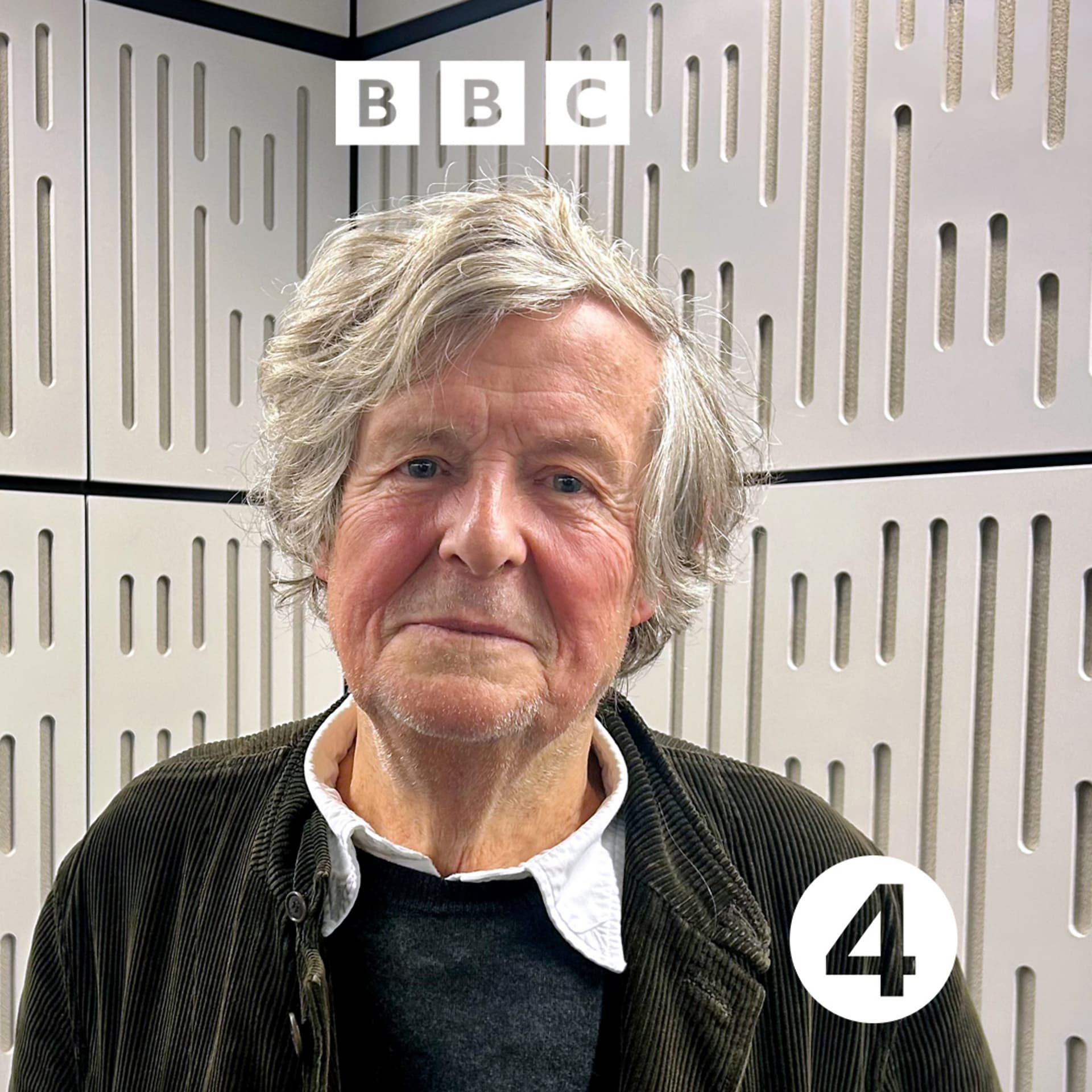
Episode Overview In this episode of "This Cultural Life," host John Wilson converses with renowned British playwright, screenwriter, and director Sir David Hare. The discussion delves into Hare's artistic evolution, his formative influences, and how his work intertwines the personal with the political. Hare is regarded as one of the UK's most significant playwrights, known for creating deeply socially conscious works that resonate with contemporary issues.
Key Themes and Highlights
Early Life and Background
- Bexhill-on-Sea Influence: Hare identifies his upbringing in Bexhill, defined by post-war societal norms and trauma, as pivotal in shaping his creative imagination.
- Social Conformity: The town's repressive atmosphere, marked by adherence to respectability, ignited Hare's desire to explore themes of personal and collective struggle in his work.
- Family Dynamics: His father's absence (being a sailor) and his mother’s fear of the world influenced his perspective, instilling a sense of caution and a desire to understand the complexities of life.
Influential Figures
- Raymond Williams: Hare's tutor at Cambridge, whose concept that "culture is ordinary" significantly impacted his views on art and society.
- Cultural Impact: Williams' ideas encouraged Hare to perceive culture as reflective of societal undercurrents rather than a top-down imposition.
- Kate Nelligan: An actress and Hare's collaborator, who played a vital role in shaping his early work.
- Partnership: Their relationship was both personal and professional, leading to the creation of pivotal plays including "Plenty."
- Nicole Farhi: Hare's wife and a former fashion designer, whom he credits for transforming his self-perception and enriching his understanding of societal dynamics.
- Inspiration for "Skylight": Their relationship inspired the themes of class and emotional complexity explored in this successful play.
Major Works and Political Engagement
- State of the Nation Plays: Hare's plays in the 1980s, such as "Racing Demon," "Murmuring Judges," and "The Absence of War," reflect significant social and political issues in Britain.
- Geopolitical Themes: Works like "Via Dolorosa" and "Stuff Happens" address international conflicts, emphasizing Hare's commitment to exploring the intersection of personal experiences with broader political narratives.
Artistic Philosophy
- Journalistic vs. Artistic Intent: Hare distinguishes his work from journalism, expressing a desire to be ahead of societal trends rather than merely reporting them.
- Theatrical Impact: He aims for his plays to provoke thought and discussion, often leaving audiences with complex emotional and intellectual responses, rather than simple resolutions.
Challenges in Contemporary Theatre
- Cultural Landscape: Hare reflects on the challenges facing modern theatre, particularly regarding funding and support for playwrights.
- Loss of Repertory Theatre: He laments the decline of repertory practices that allowed for diverse voices and innovative works to thrive.
Personal Reflections
- Self-Critique: Hare candidly discusses his struggles with self-doubt and self-hatred, acknowledging how these feelings have influenced his writing.
- Legacy and Mortality: As he advances in age, there is a sense of urgency in his creative endeavors, with new works in progress that he hopes will resonate with audiences.
Conclusion David Hare's conversation with John Wilson provides a deep insight into the life of one of Britain’s most important playwrights. His reflections on personal history, influential figures, and the significance of political engagement in theatre underscore the powerful role that art plays in society. The episode concludes with Hare's thoughts on the future of theatre, emphasizing the importance of sustaining artistic voices in a changing cultural landscape.
---
*Produced by Edwina Pitman, this episode is part of a series featuring leading artists discussing their creative journeys and inspirations.*
Written by AI. May contain mistakes. Listen to the episode to check what was said.
Transcript
Automatic transcript. May contain errors.0:00Hello, I'm John Wilson. You're about to listen to This Cultural Life. Episodes are released weekly, wherever you get your podcasts. But if you're in the UK, you can listen to the latest episode first on BBC Sounds, seven days earlier than anywhere else. Do subscribe to This Cultural Life on BBC Sounds and make sure you have push notifications turned on and we'll let you know as soon as new episodes are available.
0:28Welcome to This Cultural Life, the series in which the world's leading artistic figures discuss the influences and experiences that inspired their own creativity. I'm John Wilson, and my guest in this episode is the playwright, screenwriter and director Sir David Hare, a writer for whom the political and the personal are deeply entwined. He made his name at the National Theatre with Plenty in 1978, a play which transferred to Broadway and was also adapted for a film starring Meryl Streep. In the 1980s, he became known as Britain's preeminent state-of-the-nation playwright, with racing demon, murmuring judges, and the absence of war examining the Church of England, the judiciary, and party politics.
1:09He tackled the international geopolitics in Via Dolorosa about the Israeli-Palestinian conflict, and the invasion of Iraq with Stuff Happens and The Vertical Hour. His film screenplays for The Hours and The Reader saw him twice nominated for Academy Awards. David Hare was knighted in 1998 for services to theatre. David Hare, welcome to This Cultural Life. Thank you. You were born in St Leonard's in East Sussex in 1947, and you lived there until you were about four or five years old, and then you moved a short way along the coast to Bexhill-on-Sea. And Bexhill is your first choice that you've made for This Cultural Life.
1:47Why Bexhill? I think Bexhill is the most significant influence in my life. There was no such thing as post-traumatic stress disorder when the Second World War was fought. But Bexhill was full of men who had fought in the Second World War and didn't know why they were feeling so uncomfortable. There were a lot of traumatized men, and all they wanted in the town was peace and quiet. And that went with a sort of lower middle class feeling about respectability. The code was, you know, don't smoke in the street, women not allowed to wear trousers, don't push washing out on Sunday. All societies have codes.
2:23But this was a particularly repressive one that was about respectability. There was a lot of sexual repression. Obviously, if anybody was remotely heterodox, then they were in trouble in Bexhill. There was one black person in a town of 25 ,000 people. So you couldn't help noticing that there was a distinctly conformist heir. And so if you were brought up there, your own imagination was really all you had. Tell me about family upbringing. Your father was a sailor, wasn't he? So he was away 11 months of the year. And so my mother brought us up. What happened in the month that he was back? The month that he was back, he had loads of money in a roll of notes.
3:03And he would come and we would enjoy a quality of life completely unlike the quality of life we enjoyed the rest of the year. And he expected us to be grateful for this. He'd be taking us out for steak and chips at the Star Cafe in St Leonard's. And that would be, you know, a great treat. He also, because he was a purser on a P &O ship, he was sent a lot of free gifts, like a whole lamb would arrive or pineapple chunks would arrive from Hawaii, stuff that fell off the boat, so to speak. And stories of the world, I presume. It's amazing how provincial my father was considering that he sailed the world.
3:39And the other thing I have to add is that he was completely indifferent to his children. No interest in my sister, no interest in me. And I think, by the way, that's why, as we talk on, Various people have been father figures in my life because I didn't really have one. Well, I was going to say, what effect did your father's absence have on the personality that was forming in the young David Hare? I think it was more that my mother was adrift in the world and it was a world she feared. She'd come from Paisley, which is a particularly rough town outside Glasgow, just five miles from Glasgow. and she'd moved to the south and she still regarded the world as extremely dangerous and her life was full of fear and I've had to spend a lot of my life trying not to be frightened because I inherited from her a sort of feeling that the world might be terrifying.
4:32So when I became a playwright later, there was one side of her that was very proud because she herself adored the theatre but the other side was extremely fearful meaning he's put his head above the parapet and really he's drawing attention to himself, he's showing off and those are lower middle class crimes. Was it a happy childhood though looking back? I didn't feel happy at the time but I think that it has served me in very good stead partly because it left me not a snob. In other words, when people attacked Margaret Thatcher calling her a grocer's daughter and I thought, hang on, I come from grocer's daughters, these are my people.
5:12So you're proud of suburbia? Please object to what Margaret Thatcher does. And in my opinion, what she did was catastrophic for the country. But don't object to her on class background. And that has really informed me through my whole life. The second thing Bexhill gave me was a love of anything that is not Bexhill. I wake up thrilled if I'm going to a rehearsal. I'm thrilled to visit a film set. The idea that I've been privileged enough to meet the great writers, great actors, great musicians, great artists in my life when I'm a boy from Bexhill, it never loses its excitement for me. So you still have that appreciation of culture, the possibilities of life.
5:55I'm incredibly lucky to have got out of Bexhill. From the way you're describing it, it was a kind of a lower middle class upbringing. We were in a semi-design. You didn't really have much money for 11 months. Oh, no money for the 11 months. It was mince and potatoes. And yet you were educated at a public school at Lansing. Scholarship boy. Right. You know, those are the days of social mobility. I got a scholarship to my prep school. I got a scholarship to my private school. And I got a scholarship to Cambridge eventually. You could do that. You could ascend through the class system. Did you feel like an outsider at school?
6:26I really don't like that word. In other words, everybody claims to be an outsider. You know, I'm sure King Charles claims to be an outsider. I'm sure Tom Cruise claims to be an outsider. It's sort of become such an easy word. But I do think one step back, yes. Did you feel at the time that you were looked down upon by some of the other people? When I turned up at Lansing, you know, I had a slightly off accent. Off. Meaning not plum middle class. Oh, right. And I had to correct that in the first few months. But I also felt probably wrongly that all the other boys understood the codes of that place.
7:04that there was something called the middle class that was absolutely cut from the ribeye of Surrey. And I felt not one of them. Did you feel like you had to assimilate, though? Oh, I was trying desperately to assimilate, but nobody was remotely convinced. The accent works, doesn't it? Yeah, I've changed the accent. Of course I have. And it's stuck to this day, because a lot of people regard you as a middle class person. Of course they do. They don't know anything about my background. But that's why I would never dare to call myself an outsider. How could I? Your 1978 play Plenty, one of your first big successes, which premiered at the National Theatre and then moved to New York and then was later adapted as a film starring Meryl Streep, is about post-war dissatisfaction.
7:48And the protagonist, Susan, served in the special operations executive behind enemy lines during the war. And her life in peacetime is now dull. This work is hell. No doubt. I am living in hell. Why do I lie? We have to get there by midnight. What do I do it for? It's your profession. That's what's wrong. In France... Ah, France. I told such glittering lies. To produce what my masters call good copy, it is simply a question of pitching my intelligence low enough, shutting my eyes and imagining what it's like to be very, very stupid. This is all the future holds for any of us. We will spend the next 20 years of our lives pretending to be thick.
8:32Are the themes of that play that you explore rooted in Bexhill? Completely. In other words, I felt I'd missed the big event. The big event was the Second World War. And unfortunately, I was born after it. So I didn't know why everyone was behaving in the way they were behaving, which seemed to me very odd. But of course, it was a reaction to everything they'd seen and felt. There is that idea that Susan Traherne needs something else in her life because it's been so exciting during the war. whereas the men are quite happy that everything is... Yeah, because they're recovering from what happened.
9:05They're recovering from it. But she can't adjust. What motivated the play was reading a statistic where it said that 75 % of the women who were SOE were divorced within 10 years of the war. And so you thought, oh, I see, you come back and nothing is ever going to be as satisfying again. So it's about an idea of lost utopia, a place where you're challenged. And although it's incredibly dangerous, it's also incredibly fulfilling. And that's a universal theme, I hope, and not just a historic theme.
9:39Your next choice of creative influence is the socialist writer and academic Raymond Williams, who was one of your tutors at Cambridge University where you read English literature. What did you know about Raymond Williams before you went to Cambridge? Well, I've read Culture and Society. The book for which he's best known, isn't it? Yes, and up till that point, I had thought that culture was something completely discreet from society, and literature was something that was nothing to do with what was actually happening in the society at the time. And then you suddenly read this revolutionary book in which Raymond argues in his famous phrase, culture is ordinary.
10:16And he argues that the culture of the time is the expression of what's going on underneath. When I got back from the army in 45 to Cambridge, everybody was using this word culture, which I'd hardly heard them use before. And I wondered what it meant, because I could pick up at least three different senses in which they were using it. There were so many false accounts of the past in that area of what people had enjoyed. I mean, it took years to understand the foignet does the real history of the music hall, as distinct from the official account, a nice boozy, sentimental one, or looking down on it.
10:54The real history is much more complicated, much more interesting, but people wouldn't have thought the music hall was a fit subject for history. It's the expression of social movement that is happening unseen under the surface of society and which is given expression by great writers who penetrate further below the society than the ones who just dance around on the top of it. You know, it's a sort of anti-Bloomsbury, anti-drawing room, anti-elite attitude to culture. So challenging that notion that culture is imposed top down, it's prescribed for the good of society. Exactly. That the great writers are the ones who detect what is going on under the surface.
11:35How did you come across the book? It was in the library at Lansing. But what attracted you to it? Who led you to it? Or did you just stumble across it? I stumbled across it and I thought it was fantastic. And on the flyleaf, it said, Raymond Williams teaches at Jesus College, Cambridge. I'd never heard of Jesus College, Cambridge. But I said to my English teacher, I'd like to go to this place called Jesus College, Cambridge, because I'd like to study with Raymond Williams. And he said, well, sit for the scholarship then. So I sat for the scholarship bank and I got in. The problem was that Raymond was so busy doing other things.
12:09On May the 1st, 1968, he famously was the editor of the May Day Manifesto, which was a recipe for revolution in urban Britain. So, you know, that took him a little time to write. For the first two years, he wouldn't teach us at all. He just refused. That was very, very disillusioning. And it did mean that Cambridge was not, for me, the intellectual glorious place that I had hoped it was going to be. And when I did finally get to be taught by him, he was a great teacher with whom I profoundly disagreed. I remember just not believing in the possibility of working class revolution in Britain. And because Raymond had been a tank commander in the Second World War, I remember saying to him, and who exactly is going to take the post office tower when your revolution comes?
12:55Are you going to be the person driving the tank up Tottenham Court Road to destroy? How exactly is this revolution going to take place? I do not understand it. And for a while, all my instincts were to satirise the left rather than to belong to the left, because I thought their dreams were so ridiculous. I thought they were absurd. Where were these conversations taking place, bearing in mind that you'd gone to Cambridge to study English literature under Raymond Williams? You weren't there to study revolution. Raymond wouldn't talk about literature. I mean, he never talked... We'd usually talk about the Dennis Potter play that had been on telly the night before.
13:32And when I went for a tutorial about D.H. Lawrence, I handed him my long, boring essay on D.H. Lawrence, and Raymond's entire contribution in return to that essay was, yes, D.H. Lawrence, poor bugger, poor bugger. That's all he gave me. He wanted to talk about anything but literature. and because he knew that I was interested in politics and I was interested in theatre and I was interested in ideas, not that he ever went to the theatre, by the way, he taught a course called Ibsen to Brecht, which was the first theatre course at Cambridge, but he never went. He hated it. If you said to him, do you want to come and see my production of such and such, this very, very distant look came into his eye.
14:18He never wanted to go. And he was busy writing these interminable Welsh novels about life in 680 in obscure parts of Wales. I mean, he was a genuine intellectual with whom I did nothing really but quarrel. And he would be amazed to hear me now talking about him in these terms. But I realised he fixed my life without my understanding it at the time. Did you seek him out as a father figure? Yeah, exactly. And by curious coincidence, before he died, Raymond's last words to me, not in reference to me, was, I can't be a father to everyone. I remember Eric Hobsbawm making a very mean joke when he said, it is only in England that the revolution would be led by a literary critic.
15:07And yet it's true, everyone deferred to Raymond because he had incredible moral integrity that the rest of the left did not have in such abundance. Did he know that you had sought him out as a father? No, it was not personal. It wasn't about that. And he'd have been amazed to... And I think I've only realised it years later. What's been the main legacy of Raymond Williams' thoughts, his writing or his lack of teaching on your life and your work? In my life? Yeah. Constantly going back to the street. to try and find out what's happening. So the number of people who come to me and say, will you do Boris Johnson?
15:42Will you do Donald Trump? I say, no, they've already happened. What I'm very good at is writing about things that are about to happen because I've found out what's going on. And so that has involved me in a lot of projects which involve research. The most striking example was Murmuring Judges, which was a play I wrote in the early 90s about the police, the prisons and the legal system. And I spent a week in Clapham police station and police were really angry going around saying Margaret Thatcher has created these huge divisions in society. And our job as police is to go and bandage the wounds that she has created.
16:25And she needs to come to some of the council estates that we go to, to see what the effect of her policies had been. And I went, wow, left wing policemen. But they weren't really left wing. They were more defining their profession as something that was an emergency service to help cure the ills that have been created by politicians. But that revelation challenges the view at the time, which was that the police were on every march. Hopelessly corrupt. Or they were always derided as Maggie's boot boys. Yeah, exactly. So what I'm saying is I saw long before the police, as they are, you know, 30 years later, accused of being overly woke by right wing politicians.
17:08I could see the police were heading that way because of their personal experience of what they saw and the people they saw who had been abandoned. it drives me nuts when people say that my writing is journalistic because unlike journalists, I intend to be ahead of what happens, not behind what happens. I'm reporting on what is going on that no one else has noticed is going on. You have done, though. I mean, with Stuff Happens, the vertical hour, and when you're talking about the Iraq war. No, it's not true. It's not true. With Stuff Happens, the whole play, which is, for those of you who don't know it, which I imagine is most of you, the diplomatic process leading up to the invasion of Iraq.
17:50At that time, the theory which I advance, which is that the American leadership exploited 9-11 in order to do something that had nothing to do with 9-11 and that George Bush took Tony Blair for a complete ride, that was a staggeringly unpopular point of view in 2003. I was way ahead of the curve on that. Now it's the accepted view of history that that's what happened. Going back to the late 60s, what sparked your interest, or how did you get involved in theatre at Cambridge originally? I tried acting and I was really terrible, but I could see that when actors were in trouble I could help them.
18:30And I've always been able to see the clockwork behind acting, and so, you know, therefore the obvious job is director. After university in 1968, you set up the Portable Theatre Company, which travelled around the country taking plays to unusual venues. So you set out on the road as a director but along the route you turned into a playwright. How did that happen? Just real chance. What happened was another playwright failed to deliver a play. We had nothing to rehearse the following Monday and on Wednesday I started writing a one-act play. Only 60 minutes, four days. And the play was rubbish but...
19:07Which play was that? It was a play that is consigned to history called How Brophy Made Good. And it was a satire about the possibility of revolution in England, my old bugbear. I just saw when I handed the scripts out that the actors looked at the page and they went, oh, OK, I can say that. He can write dialogue. And it took a long term to learn to write plays, but I could write dialogue. What made you so politically engaged at the time, do you think? Well, 1968. Right. I mean, what are you meant to say? Student riots, political assassinations. Look, also, I had travelled through the Southampton, South of America.
19:42At the age of 17, I'd gone on a tour. I'd gone into cities that had been burning the night before. I had seen the civil rights movement at first hand. I'd met Clifford and Virginia Derr, who were responsible for bringing the Rosa Parks case. So I'd seen the best of American radicalism. I'd also remember I'd seen the best of British radicalism, which I would take to be Raymond Williams. But how would you describe your politics at the time? Satirical. Not revolutionary? No. Because you couldn't take that seriously because you thought it was just simply not going to happen? I wasn't a Marxist. I believed in the power of individuals to change history.
20:19Did you think that theatre could play a part in affecting political change? God knows what I thought. I thought that going out on the road, which was largely inspired by my friend Tony Beekar, it was his vision more than mine. The only way you would change the audience was by changing the places where you played. It was as simple as that. So if the British theatre was oppressed by a middle-class audience, the only way you could change it is go to the place where people live. So it wasn't what you played, it's where you played it. Where you played it and what you gave, which was shocking and disruptive and was really intended to say, have you noticed that capitalism is about to crash?
20:57Now, in that, we were entirely wrong. It was agitational theatre. There's a wonderful saying of Howard Brenton's where he says, agit is a lot easier than prop. meaning it's very easy to say what's wrong. It's very difficult to say what's right. Did you get the bug? Did you feel you could do it as soon as you'd written that one, Brophy? Totally. And remember, the first play I wrote, which was Slag, the first full-length play, was produced by the leading producer in the West End, Michael Codron, at that point. And so I was living this strange, divided life where I was simultaneously on the wildest extremes of the fringe change and a mainstream commercial producer was saying here's the next big commercial playwright in your memoir which you wrote about 10 years ago you said that you made two rules early in your playwriting career that you would never write a play if you had nothing to say and you would never write for money have you stuck to those yeah do you think why was that so important because the world's full of bad plays and bad films it doesn't need any more i'm a writer who has to believe in what they're doing.
22:06And if I don't believe, and I turn down a certain number of films and theatre projects on the grounds, you really don't want me because I will do this very badly, because my heart will not be in it. I can only make it work if I'm completely committed to the idea that I am writing the most important film or play of its time. You may say I'm pathetically delusional, but that is what has sustained me for so long. But what determines whether a subject is worthy of a David Hare play. Well, that to me is as mysterious as what determines for a painter, what do they paint? There is no answer to that question.
22:42Your imagination just fires. When I did the play about the privatisation of the railways, I spent a week in workshop with Max Stafford-Clark, who loves railways. And so he was in bliss. I was going, I don't think there's any story here, Max. There's just a lot of train crashes. What the hell is this about? I don't need an evening for railway fanatics. It's just not me. and then I started talking to the bereaved, people who had lost relatives, as opposed to people who had survived and they could not agree on anything. They could not agree how to have a celebration on Paddington station because the survivors wanted a celebration whereas the bereaved wanted a denouncing of the railway company and once I saw that huge difference between bereavement and surviving.
23:28I had a universal theme that was metaphorical and was nothing to do with train crashes and nothing to do with who owns the railways, but was about that great theme of necessary and unnecessary suffering. How do we limit the amount of suffering that we do and praise to anyone who through social and political work can mitigate the suffering so that life is not so miserable on earth while we're here. And that play, The Permanent Way, that was sort of borne out of the headlines about the Potters Bar crash and the Laput Grove crash and those other disasters on the railways. But over the course of the career, you have written many plays based on real events and real people, whether that is the Iraq War or whether it's Gaza and the judiciary and the church and all of those institutions.
24:19What does a play do for our understanding of real-life events that investigative journalism can't do? It has to have a metaphorical dimension. So with The Permanent Way, a New York friend of mine came out of the performance in floods of tears and I very facetiously and stupidly said to him, oh, I didn't realise you cared so much about the railway system. To which he replied, I didn't. I saw the whole thing as being about AIDS, about why did people not move to prevent these unnecessary things happening? why did the government do so little to help people who could be helped. So he'd seen it entirely about the friends of his that he'd lost through AIDS.
25:02And as a playwright, that is a very welcome reading for you. That to me is the whole point of doing what I'm doing, for it to resonate in different ways in people's minds. I think what's so striking is that so many of your plays set up competing viewpoints and you've always claimed you don't want to tell the audience what to think. So what effect do you want primarily your plays to have on an audience? Well, you know, I saw the Roald Dahl play, Giant, and the first act of that play, my wife and I came out, and it's a play about Roald Dahl's anti-Semitism. For 15 minutes, we discussed the play, not the acting, not the production, just the themes of.
25:45It was so stimulating, that play, that you came out, And I said to my wife afterwards, how long is it since we actually spent 15 minutes talking about what we have just seen? Because usually you just hear people say, are you going skiing this year or whatever? And that to me is a live play. It's a play that makes you rethink what you believe and what you know and turns the soil over so that you think and feel afresh. And that to me is very, very exciting. And I think theatre does it much better than other art forms. Your plays have divided the critics over the years, haven't they? Yeah. And you've been labelled the classic champagne socialist playwright.
26:27How thick-skinned are you? Do you have to be thick-skinned to be a political playwright? I think I realised very early that the things you needed to be a playwright were theatres to put your work on, you needed audiences, you needed critics to get the audiences in, and you needed great actors. Of the four, I rapidly discovered the critics were the least important, meaning that people began to attend my plays in spite of the critics, and they found their own audiences. You know, it happened to me recently with a play called I'm Not Running, which was at the National Theatre. When we went to the PR office to try and find a good review to put on the poster, we could not find a single phrase from a critic in praise of the play.
Read the full transcript
27:12I said, what about star ratings? They said, you don't want to know. There is not a single word in praise of this play. And yet it played to 50 ,000 people. 50 ,000 people came. And if they're listening now to this cultural life, I would like to thank them for trusting their own judgment over the judgment of Murdoch or Rothermere or any other kind of journalist. Because bless you, you are the people who believe in your own judgment. And I think I've always attracted them. Do you read the critics? No. Never? No. Not even the good ones? No. Do you avoid them because they would hurt too much if you read them?
27:52It comes through the ether. I mean, Judi Dench has a great tactic, which is to walk into the theatre on the second night, and she walks in and she says, I haven't read them, but I hear they're very good. And that closes the subject. But sure, criticism's come back to you. There was a Murdoch journalist who criticised my memoir, The Blue Touch Paper. and really laid into it, apparently, saying nobody hates themselves as much as David Hare. It's a literary attitude to pretend that your life has been marred by self-hatred. I just thought, well, if you've never experienced self-hatred, good for you.
28:29I promise you it's not a literary affectation. But you're saying you suffer from self-hatred? Oh, God, yes. For years and years and years. What, personally or about your work or what? In what way? I just didn't like myself. It's changed as I've got older. But what didn't you like when you were younger? I thought I was shallow and opportunist and overly ambitious. Isn't that not being just young, though? Wanting to get somewhere? Yeah. Don't you need to be shallow and ambitious if you want to get there? Yeah, but that's not a very attractive quality, is it? It's not something I'm particularly proud of.
29:04Your next choice, David Hare, is the actress Kate Nelligan, who starred in several of your early plays, including Plenty, at the National. When did you first meet her? I first met her when she was cast by Michael Blankmore and Michael Codron in Knuckle, which was a play that I'd written. Michael Blankmore directed in the West End. I was just, you know, taken aback by her. I thought, oh, my God, this is the most perfect. And we felt the same way about each other. I was very, very annoyed when Brian Cox, in his autobiography, referred to her as my muse. I mean, far from being my muse, Kate was absolutely my equal partner.
29:41In other words, I fired her imagination, she fired mine. And Knuckle, she got absolutely astonishingly reviewed as the best post-war debut by any actor. And then we did Licking Hitler, in which she was wonderful. And we did Plenty, both here and in New York. And we did Dreams of Leaving. And we were two young people who, exactly what I'm talking about, crazy with ambition, fired up by each other. and I think it made us insufferable people. But on the other hand, it fired a level of work that I don't think we would have achieved without each other. Several actors have been on this programme and talked about the influence of writers and directors.
30:22In fact, Bill Nye was sitting here in that very seat talking about you as an influence on his career. But perhaps it's surprising to hear it the other way round, the writer being inspired by the actor. So specifically, how did Kate Nelligan inspire the writer? She 100 % believed in me. when I wrote the first and second acts of Plenty she started talking to me about her experience of her mother going mad and that deeply informed the kind of madness that Susan Traherne has in the second act and I just felt that she could lift my work and I think jet fuel it is really the word I would go for Did you write Plenty for her?
31:00No I wrote it and another actress was originally cast and I was not going to direct it and Bill Gaskell, who was going to direct it, suddenly said to me, you care so much more deeply about this play than I do. I think you should probably direct it yourself. When I decided to direct it, then I went to Peter Hall, who was running the National Theatre, and said, I don't want the actress who's been cast. I would like to do it with Kate. And that's what I mean about a certain ruthlessness. You know, that actor's feelings, I'm sure, were terribly hurt. And I was capable of doing stuff like that. I'm not sure I'm capable of doing it now.
31:33It wasn't just a professional relationship, though, was it? No. You had a love affair with Kate Nelligan. It was an intimate relationship. We were obsessed with each other without necessarily being suited to each other. But it was a relationship which went on for several years, as I understand it. Over the years, over the years. But it did result in the end of your first marriage, didn't it? It was complicated. You talk about self-hatred, you know, I recommend infidelity as a wonderful engine of self-hatred. How did that experience work its way into specific plays or characters or themes? Everything.
32:05Good behaviour, bad behaviour, Secret Rapture. My God is so informed by the breakup of my first marriage. The more intimate plays are really that period of my life, which was absolute chaos and breakdown, pretty close to nervous breakdown at one point. I would not wish to go through it again.
32:30You've also chosen for this programme your wife, Nicole Fari, as one of your most important inspirations on your life and work. Nicole, of course, former fashion designer, who now works as a sculptor. Where do we see her influence in the work of David Hare? Well, I think that she was just incredibly refreshing in blowing into my life. And, you know, I'd always been motored on grievance. I'd always thought I was uniquely hard done by. I really nobody suffers the way I do. And self-pity was my motivation. Well, if you're married to Nicol Fari, you sort of can't be self-pitying. That strategy is out the window because you just know how lucky you are.
33:12And so a lot of my illnesses and wounds were healed by her. I can't be the total shit I think I am. Because Nicol Fari has chosen me. And she's so obviously a good person. The more you get to know her, the more you admire her. and she introduced me to a level of society that I didn't know, which was basically business. She was in retail, and arts folk don't meet... Well, they've begun to meet business people lately because of private sponsorship, but at that point they didn't. And so Skylight is entirely a product, and that became my most successful or most performed play. Skylight is about a very successful restaurateur who visits a much younger former lover in her flat one night, years after the affair has ended.
33:57What was the starting point for that play? I always start with a visual image, and the visual image just of this desolate flat in which this woman is making life apparently unnecessarily hard for herself. Just, I loved the idea of it. You see, it wasn't until I left your restaurants, those Carpaccio and ricotta-stuffed restaurants of yours, it wasn't until I deserted that Chelsea milieu. Which, in my memory, you liked pretty well. I do like it, yes, that isn't something I would ever deny. But it wasn't until I got out of your limousines, until I left that warm bubble of good taste and money in which you exist.
34:30Thank you. It was only then I remembered that most people live in a way which is altogether different. Well, of course. And you have no right to look down on that life. You're right. Thank you. Of course, that's right. However, in one thing, you're different. I do have to say, Kira. In one thing, you're different from everyone else in this part of town. How is that? You're the only person who's fought so hard to get into it when everyone else is desperate to get out. Oh, yeah, very much. But it was also that I'd written three plays, Racing Demon, Murmuring Judges and The Absence of War all of which had large casts and I felt I was throwing people onto the stage and throwing them off and not really going deep and I went to a Lucian Freud exhibition in which I felt intense jealousy of painters I just thought, oh my god you can capture everything with brush strokes and go deep into character and I thought, well I'll do a Lucian Freud painting I'll go deep by doing what I had sworn I would never do which is write a play in a room.
35:25And, of course, the paradox is that it's much my most performed play because it's cheap. But the question was, really, because you say that led to Skylight, that introduction that Nicole gave you, opening a door to a different sort of strata of society. What was the link between that and Skylight? Grievance, again. It just seemed to me hilarious that business people had such a grievance and that you could be rich and have a grievance. It's really hard for me. I mean, we're going through it at the moment, We're just hearing a lot of people moaning about a Labour government in the most insane way.
35:58I mean, do they remember what the last 13 years were like? And yet all they do is moan about how hard it is for them now. These are immensely rich and successful people who think they have a grievance. They're just very lucky to have a lot of money and a successful business. I have a great deal of sympathy for those people running smaller businesses who are having a much rougher time, who are the people I came from originally. And I do understand that a national insurance raise does not help them. But having said that, I just saw the opposition between those private entrepreneurial attitudes and working in public service.
36:33Which are the arguments which are played out in the play. And every time Skylight is revived, I never change a word. People say, oh, but these are the arguments we're having now. And I would say the argument really essentially between plenty and distribution. Are we here to create wealth? Are we here to distribute it? does the justice with which it's distributed matter or does the fact of its creation, which matters more? That argument goes back to Sophocles, it goes back to the Greeks. And so the governing metaphor of the play is much bigger than the circumstances or action of the play. You started out as an angry young playwright.
37:09You're now in your late 70s. Are you still driven by a sense of injustice, do you think? Oh, yeah. I think it's one of the great things to write about. Most left-wing plays are about an obvious injustice. and then the injustice is set right and everyone leaves the theatre feeling wonderful about themselves. And that kind of play is very, very commercial and I'd love to be able to write that kind of play but unfortunately that's not the kind of play I write. I mean, unfortunately for my bank balance. The kind of play I write is the kind of leaving you disturbed, ruffled, just with your mind in turmoil.
37:47That's the kind of political play that I want to write or that I'm born to write. I can't do the rally round the flag stuff. It's never been in my character. Unfortunately, your artistic imagination is doing things over which you have absolutely no control. When you started out, though, theatre was regarded as a very important business. It could make headlines, it could challenge, or it could change public attitudes. Can it still do that? Look, I think it's extraordinary that for 55 years I'm one of a generation of writers who've been able to live and survive in the theatre. Everybody thinks this is normal.
38:24It's not normal. And it's also not a tribute to us. It's a tribute to the incredible richness of the culture into which we were born. And my only fear is that, say, Beth Steele, who wrote that wonderful play House of Shades, or Joe Murphy and Joe Robertson, who wrote both The Jungle and Kyoto, will not be able to sustain that career in the same way that we were able to for as long as we were able to. And once the theatre can't sustain its living writers, it really is drastically impoverished. What needs to change then? Well, subsidy to the regions. In other words, I don't really believe that if you're out there in the regions as an artistic director, I don't think you begin to be free.
39:12it is very very hard to present the work you want to present to risk failure. Sorry you're saying the regional theatres are risk averse because they don't have the I wouldn't even use that word I wouldn't dare use that word risk averse I have absolutely no right to judge anybody but I would say that if they believe that a particular writer was the writer who that region should be hearing or the whole of the country should be hearing it's very very hard for them to back that single writer to the degree which we once backed John Osborne or Edward Bond or Harold Pinter as the voices of their time.
39:50That kind of backing is what's missing at the moment. Once that goes, and I would also add once the National Theatre drops repertory, which it appears to have done, you really are eroding the culture in a profound way. The National Theatre is meant to present the world's drama. And it doesn't at the moment. It does semi-commercial runs, angling for the West End, one play after another. That's not repertory theatre. That's not art theatre. Shaw and Granville Barker created the idea of the National Theatre for art theatre. You know, the National now, it generates so few plays and all in runs and no repertory.
40:30So the days in which you could go and see six plays in a week have gone. And I think that's terrible impoverishment. Are you suggesting that they have too much of an eye on the commercial sell-on and the West End run? They say they can't afford to do it anymore. Well, they have a point, don't they? Look, I am entirely a creature of post-war repertory. Peter Hall, when Plenty did not get the reviews that he needed, he said, I will protect it. I will run it on Fridays and Saturdays, which are the best nights of the week. And I will shelter it and we will run it for a long time. He said, I've been told by the board to close it.
41:05I will not close it. And by the end, it was full to standing ovations because he allowed the audience to get at it. Now, who curates plays like that now? Who is able to have the money to curate? And that kind of sense of enriching the culture, not just doing show by show by show, that's what I don't want to see go because I think it's so important. You started out touring the country in a van, but you are now a pillar of the establishment and knight of the realm. Can you still have that satirical, cynical eye on what's happening in the same way? Well, that was essentially the argument that I had with my first agent when I wrote Knuckle.
41:47And he said, you're no good at the serious stuff. Stick with the jokes. Maybe he was right. What drives you on creatively every morning? Well, I've got to get a lot done before the end. So you're worried about time? Oh, God, yes. I've written four plays. They're not on yet. All of them are with producers. They're going to happen. and as I say to my agent it is either the gracious burst of creativity in a living playwright since Elizabethan times or it's all complete rubbish it's one or the other but the whip is on my back David Hare thank you very much indeed for sharing your cultural life with us you're absolutely welcome
42:29well I hope you enjoyed that conversation with David Hare who's just one of many writers for the stage and screen who have been guests on the show, including Erin Sorkin, Sally Wainwright, Lucy Preble and Mike Lee. You can hear those and over 100 more episodes of This Cultural Life on BBC Sounds. And while you're there, please do subscribe to the series. That way you'll never miss an episode. From me, John Wilson and producer Edwina Pittman, thank you very much indeed for listening to This Cultural Life.
43:01I'm Alex Kretosky. And I'm Kevin Fong. How do you feel about AI? Does it scare you? Very quickly that question comes up, you know, is it going to think for us? Does it excite you? I say, how is the AI going to help us to think better? Do you worry about how it'll change your life, your job, your kids? AI is built into many of the software applications that we now use in the schools every day. In every episode of The Artificial Human from BBC Radio 4, Kevin and I are here to help. We will chart a course through the world of AI and we will answer your questions. It doesn't just lie, but it lies in an incredibly enthusiastic, convincing way.
43:38That ability to be able to kind of think critically is just going to be so important as we move forward. The Artificial Human with me, Alex Kretosky. And me, Kevin Fong. Listen on BBC Sounds.
From the publisher
The premiere of David Hare’s play Plenty at the National Theatre in 1978 marked him out as one of the UK’s most skilled and socially conscious playwrights. Plenty transferred to Broadway, Hare adapted it into a film starring Meryl Streep, and in the following years he became known as a writer for whom the political and the personal are deeply entwined. Often referred to as Britain’s pre-eminent ‘state of the nation playwright’, his plays in the 1980s examined a wide range of social and political issues, including the Church of England in Racing Demon, the judiciary in Murmuring Judges and party politics in The Absence of War. He tackled international geopolitics in Via Dolorosa - about the Israeli-Palestinian conflict - and the invasion of Iraq with Stuff Happens and the Vertical Hour. Equally skilled as a screenwriter, his film screenplays for The Hours and The Reader saw him twice nominated for Academy Awards. David Hare was knighted in 1998 for ‘services to theatre’.
He talks to John Wilson about how his lower-middle class background and family life in Bexhill-on-Sea stimulated his imagination. He pays tribute to some of the most formative people in his life: his Cambridge university tutor, the Welsh writer and academic Raymond Williams, whose maxim that ‘culture is ordinary’ had a profound effect on his life as a writer; the actress Kate Nelligan, who starred in several of Hare's plays, including Plenty; and his wife Nicole Farhi who, he says, transformed his idea of himself and who inadvertently helped inspire one of his best loved plays, Skylight.
Producer: Edwina Pitman