In short
Notes on This Cultural Life Episode Featuring Eric Idle
Episode Overview
- Podcast Title: This Cultural Life
- Episode Title: Eric Idle
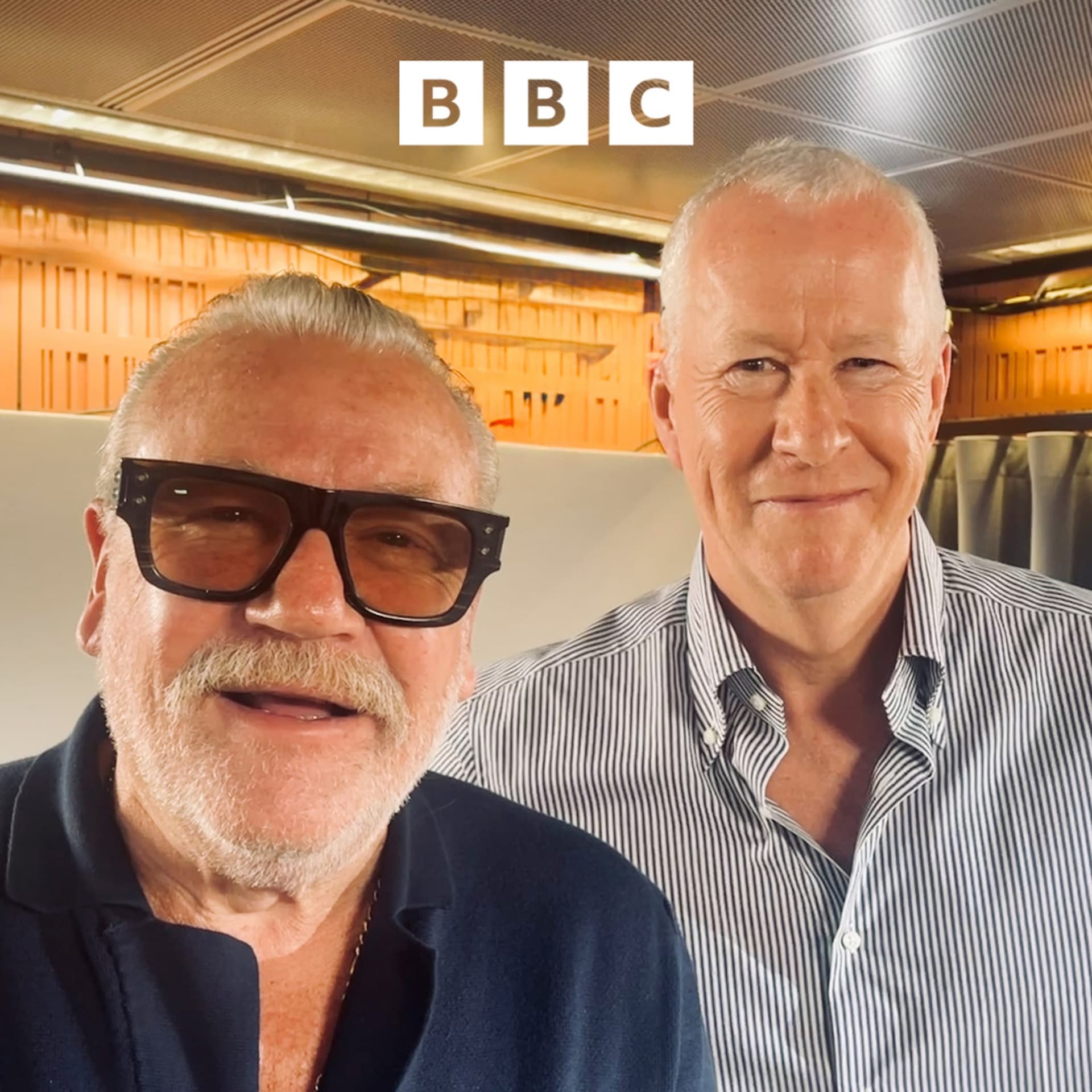
- Host: John Wilson
- Guest: Eric Idle
- Producer: Edwina Pitman
Description In this episode, Eric Idle, a comedian, writer, musician, and founding member of Monty Python, discusses his creative journey and influences with host John Wilson. Idle's career spans television, film, and theater, including works like "The Life of Brian," "Monty Python and the Holy Grail," and the Tony Award-winning musical "Spamalot."
Key Themes and Discussions
Early Life and Influence
- Childhood Background:
- Born in South Shields, raised in various locations in the UK; significant early years spent in boarding school in Wolverhampton.
- Father died in a car accident shortly after WWII, impacting his childhood experience.
- Grew up in an environment where most boys were fatherless, influencing social dynamics and bonding.
- Creative Influences:
- First formative experience with comedy was seeing Morecambe and Wise at the age of five.
- Discusses the nature of comedy in early life and how it provided an escape from rigid schooling.
- Influenced by shows like "Beyond the Fringe," which showcased irreverent humor.
Career Development
- Musical Comedy:
- Introduced to guitar and writing at a young age, which became key outlets for his creativity.
- Emphasizes the significance of Elvis Presley’s television debut in sparking his interest in music.
- Monty Python:
- Began working with John Cleese, Graham Chapman, Michael Palin, and Terry Jones while writing for shows like "The Frost Report."
- Monty Python formed as a collective where each member had distinct writing styles and contributions; Idle often wrote alone.
- The show broke traditional comedic forms, eliminating fixed punchlines and embracing absurdity.
- Major Works:
- Spamalot (2005): Based on "Monty Python and the Holy Grail," it became a long-running success on Broadway and in the West End.
- The Rutles: A parody of The Beatles, showcasing the absurdity of the music industry.
- The Life of Brian: Explores the challenges of creating a film that critiques religious themes without offense.
Personal Experiences
- Health Challenges:
- Diagnosed with pancreatic cancer in 2019, leading to a reflection on life and mortality.
- Continues to perform and write, finding joy in entertaining and connecting with audiences.
- Cultural Commentary:
- Discusses the changing landscape of comedy and the implications of "cancel culture" on humor.
- Emphasizes the importance of pushing boundaries in comedy while considering the audience's response.
Final Thoughts
- Idle reflects on his legacy, the importance of laughter, and the fulfillment he finds in creating and performing.
- The conversation underscores the impact of formative experiences, the significance of collaboration, and the evolving nature of comedy.
Conclusion Eric Idle's journey from a fatherless child to a comedic icon reveals the profound ways in which personal experiences shape creativity. His reflections on Monty Python, musical comedy, and the challenges of health illustrate a life dedicated to humor and artistic expression. The episode serves as a testament to the enduring power of laughter and storytelling in navigating life's complexities.
Written by AI. May contain mistakes. Listen to the episode to check what was said.
Transcript
Automatic transcript. May contain errors.0:28You're about to listen to This Cultural Life. of This Cultural Life, the show in which some of the world's leading artistic figures discuss the influences and experiences, the people, places or cultural works that have most inspired their own creativity. I'm John Wilson and my guest in this episode is the comedian, actor, musician and writer Eric Idle. A founding member of the Monty Python troupe, he wrote and performed across their four television series and the films including The Life of Brian and The Meaning of Life. As a songwriter, he was responsible for much of the Python's musical comedy, including Always Look on the Bright Side of Life.
1:04He created the comedy series Rutland Weekend Television and the Beatles parody band The Rutles, which toured and released albums. In 2005, Eric Idle created the Tony Award-winning musical Spamalot, based on the film Monty Python and the Holy Grail, which for more than 20 years now has run twice in London's West End and on Broadway and has been staged in 14 countries around the world. We met in London as he embarked on a solo tour of the UK.
1:36Eric Idle, welcome to This Cultural Life. Thank you. You were born in South Shields but brought up, I believe, in various parts of the UK. Where are your earliest memories rooted? I think I would say Wallasey. I was at school at five. Merseyside. On the Merseyside, yes. And then at seven, I went to exotic Wolverhampton, where there are lots of memories, but not always good ones. I was there for 12 years at a boarding school, which was paid for by the RAF. And this is because your father, I believe, died when you were... Two and a half. Yeah, he was in the RAF from 1941, but he was hitchhiking home.
2:16and he was killed in a car accident on the way home. Christmas Eve, yeah. At the end of the war? After the war had finished? But they hadn't been mobbed because I think they thought they were all going to go to war with Stalin. That's terrible, though. I mean, the war's finished. And he was killed in England? In England. He was in a base in England and they said to the RAF, well, don't use the trains. It's Christmas time. Hitchhike. Because everybody stopped for the guys in uniform. And he was in the back of a lorry and it swerved. So you have no memories of him? I have a few vague pictures and a few, you know, because they were away also all the time.
2:52He was in India and he was in, you know, Wellington. He was actually a rear gunner, a wireless operator, kind of the worst job in the world, really, and the little turret at the back. Tail-end Charlie, as they were now. Yeah, exactly. And so you were brought up by your mother alone. Did you have siblings? No. So how did she cope? Well, I mean, she didn't really. but she was a health visitor in Wallersey, and then I went to school there, and then she found this RAF place where it had taken over an orphanage. Really, the oddest thing of all about being in school there was nobody had a father. And I think that's psychologically very strange.
3:30And none of the kids there? Well, I mean, they're all being paid for by the RAF. I'm very grateful for that, actually, because without that, I wouldn't have gone to university at all. I mean, it was, you know, later on, you find your escape by reading and learning as you got older. So a whole school full of fatherless boys. I know. What did that do for the bonding process or the dynamics, social dynamics? It made you into gangs. You were very, our form was very, you know, we'd climb over the wall and get beer and chase girls. And they never took a straight exam ever because we'd always break into the master's studies, take the back off their, you know, cupboards, get the exam papers.
4:10and then exam paper itself and we'd write out the answers and take them into the exam. So the only straight exam they ever took was O-level at 16. And when I came back from that, there were only six of us left. They'd all gone because they didn't really learn anything. They'd just copied. And what was the teaching like? Pretty poor. But, I mean, my history teacher was great and a geography teacher. And my history teacher wrote to Permanent College and recommended me at Cambridge. and that was kind of unusual because nobody went to college, even universities. I mean, looking back now, was it a happy childhood despite the fact that you didn't know your father?
4:47No, no, no. But there was time, I mean, the holidays were great, you know, and then you're back again, you know, in boarding school for 13, 14 weeks and it was a bit rough, you know, the guys were tough and it was, you know, pretty grim.
5:04On This Cultural Life, Eric Idle, or my guests choose the most significant influences and experiences that have inspired their own creativity. And your first choice for this programme is seeing Morecambe and Wise when you were five years old. Where was this? That was in Manchester, and I was taken to the music hall because this is long before television. Meet those energetic young partners, Morecambe and Wise. Thank you, thank you. Thank you, Jack. It's like being in the front room, isn't it, with all these youngers? Morgan and Weiss, I think, were only 23. I worked it out later. They were the sort of age I became a comedian.
5:39But they were really funny. And in those days, they could live by doing the same act all around England. I mean, television killed all that. You know, you could have to have a new show. But was their act that you saw at the time, was it similar to the sort of thing we saw later on our television screens? I think pretty much. I mean, it was a double act. The interplay between them, you know, was very nice. The relationship was great. How many children have you got? One and one on the way. One on the way? I didn't know. You kept that a secret. Did I? When's he expected? Tomorrow. Tomorrow? Yeah, it's coming on the 4.30 from Leeds.
6:20It's with the grandmother. And in the variety shows, of course, you have the comedians, but also you have the musical acts as well. You had a few musical acts, and you had one, which was absolutely breathtaking. well the entire stage was filled with naked girls and they weren't allowed to move and they would do the seasons of the year they were discreetly covered by you know leaves and things but they stayed there whilst the band played for about five minutes completely naked you know it's like oh my god what is this and i remembered that quite well do you think you took any of those gags that you saw morcom and wise doing back to school or did they influence i wasn't at school then.
6:57But in later years, do you think comedy helped you? I think it helped very much so and I think I find myself saying funny things and I think comedians lack a sense of censorship and they say things they shouldn't really at the right time and so the whole form would laugh and I'd get beaten But did that make you popular with the kids? I think it sometimes saved you being beaten up because it's very hard to hit somebody who's making you laugh. But you're being beaten by the teachers instead. Well yeah, yes, yes, because I think I was beaten once for silent insolence. Silent insolence. It was a look, though, was it?
7:33Really unfair, that one, isn't it? What sort of look were you giving? I have no idea.
7:40In the notes that you sent us, you mentioned getting a guitar and a typewriter when you were around 12 years old. So, of course, being known as a comic performer, a writer and a songwriter, they sound very significant gifts to have received. Well, I think the thing was Elvis appeared on television, and that just changed our lives. We just loved him. So I wanted a guitar immediately, and now we're in a little skiffle group, and we played, and I always had the guitar. I've had it ever since, but my gran gave me a typewriter because I used to write short stories and things and read out to the form, but having a little portable typewriter was amazing.
8:17So at the age of 12, did you imagine from then that you might have a future as an entertainer in some way, or a writer? No. I mean, you know, it was getting through the week, really. I mean, you know, they said, what, are you going to be on? I think I'd always say journalist, because it seemed like a writing thing to do. But I didn't have an idea what it really meant. So writing was your main outlet then at that time, with that typewriter? Well, reading has always been my main outlet, because I think that allows you, in a big school, like a dormitory that's 100 yards long, in a big school, privacy is what you need.
8:52And so reading was the real escape.
9:00Your next choice for this cultural life is the satirical review show Beyond the Fringe, starring, of course, Peter Cook, Dudley Moore, Jonathan Miller and Alan Bennett. When did you first see it? I think in my scene about 1961 or 62. I had a friend who lived in London and I'd go and stay with him and we'd go and see every play and we'd go to the Royal Court Theatre. We saw Joan Littlewood's Oh What a Lovely Wall, which was the most magnificent production I've ever seen of anything. The Stratford East. Stratford East, amazing show. But then we went to the Fortune Theatre and we couldn't get seats so we had standing and I was grateful because I'd just rolled round the wall all evening.
9:44Mr Spigot, you are auditioning, are you not, for the part of Tarzan. Right.
9:54Now, Mr. Spigot, I couldn't help noticing almost at once that you are a one-legged person. You notice that. When you've been in the business as long as I have, Mr Spigot, you get to notice these little things almost instinctively. They just made me laugh and laugh and laugh. I didn't realise you could laugh at all the things we were suffering from. And they laughed at everything. And that was very, very liberating. And I bought the album and I learned all their monologues. And from then on, I just wanted to do comedy. It's about the irreverence, really, isn't it? The fact that you can mock... The subjects they talked about.
10:44Mocking the establishment. Yes, and they were very, very funny. I mean, Peter Cook was a genius and wonderful, but they were all very, very funny. At one point, Peter Cook did Macmillan, which was unheard of. You mocked the Prime Minister. Dear Prime Minister, I have an old age pensioner in spice kneeling on a fixed income for some two pounds, human shillings a week. This is not enough. what do you of the conservative party propose to do about it?
11:24And I think he even came to one show and the audience was like just the idea that you could mock everything everything you were supposed to take seriously at school was being laughed at. Did you only see the show once then? Yes. But it lodged itself so clearly in your memory. Oh no, it changed my life. I mean, I got the album, you see, and I actually then went to Peter Cook's college, Pembroke College, where they were still using his funny voices, you know. I could have been a judge, but I didn't have the Latin. You still do it to this day, though, don't you? Peter, you can't help it. His voice is in your head.
12:00It's one of those voices that you are known for throughout Monty Python, that voice that you've just done there. It is very much rooted in Peter Cook, isn't it? Yeah, I think that's true. I never had any Latin, you see, because I was torn away from school when I was very young, unnaturally ripped from school I was when very young. And I was down the mine at nine. I was down the mine, nine years old. I was down the mine at nine at seven, every morning, down the mine. Working from seven to nine every day, down the mine. For seven and nine a week, down the mine I was, all down the mine at nine at eight.
12:32What, sixes and sevens all down the mine at eight? He was an extraordinary... He could do an entire cabaret improvised, which is sort of unheard of really and nobody did improv at all everything was written at Cambridge Did that scene, Beyond the Fringe was that the spark though for you as a performer? Did you think actually I could do that? I think it was a spark of saying you don't have to take all this seriously this is all rubbish you can be funny about it and it changed what I wanted to do so when I got to Cambridge the first thing I did was audition for the comedy review because that changed my life Was that part of Footlights?
13:08No, it's just the Pembroke College Review. I was auditioned by two of the goodies. Who? Timbrook Taylor? Timbrook Taylor and Bill Hardy auditioned me at the end of my first term and put me in the College Review, which I think is really weird. And they gave the first sketch I ever did, they gave to me. It was written by John Cleese. When you first met John Cleese at that point, did you establish a rapport, a relationship with him? Well, he came with Humphrey Barclay, and they were very kind and encouraging. And they said, you must join the White House. And then I did the next term. You had to audition, a live audition in a smoking concert there.
13:44It was very strange because I looked down. What's his name? Amos. Kingsley Amos was sitting on the front row. I'm never not being able to believe Kingsley Amos was sitting there watching me audition for the Footlights. Then they put me in the Edinburgh Festival replacement cast and I did all the Bill Oddy roles, which were mainly songs. So I learned about singing funny songs. He wrote very, very witty lyrics, Bill. And then when he did I'm Sorry, I'll Read That Again, every week he'd do a new song. And I became a writer for that. This is just after Edinburgh, when you started first writing for television and radio on I'm Sorry, I'll Read That Again, and also the Frost Report, of course, on television.
14:25And writing for those shows as well were John Cleese, Graham Chapman, Michael Palin and Terry Jones. So was there a bond between you immediately as a quintet? Well, Cleese was actually in the show. He was in the show with the two Ronnies. And Marty Feldman was a script editor. And it was lovely. There were every major, and Barry Cryer, all the major writers. And they just, we were very young, we were 23. And they were very kind and helpful and accepting and encouraged us. The lowest amongst the jobs was writing just one-liners for David Frost. And then we won the Golden Rose of Montreux. and my bit, my quickie, was actually on the BBC News.
15:06And I'm thinking, oh, this is a bit good. What was that? Well, it was a sort of karate joke, which Ronnie Corbett did. You know, when they bang a piece of wood and the wood splits. But he banged the piece of wood and his hand dropped off. And that was on the news. And that was yours? Yeah, that was mine. That's interesting, though, because that's a visual gag that you establish yourself with. And yet you're so known for your wordplay, really, aren't you? You're kind of more of a sort of a word man. Well, I think that was a sort of cliche about Pythons, but I think in a sense we all, you know, you write some visual stuff.
15:41Was there a time then, was there a moment around when you were all writing for Frost that you started to look at each other and think we could work together? What was that? Oh, it was a while before that. Humphrey Barclay, again, he asked me to write a children's television show called Do Not Adjust Your Set. And I said, OK, I will, but I want Mike and Terry. And so the three of us wrote it, and there was this very strange group called the Bonzo Dog Doodah Band. Vivian Stachel. And they were an art school band. And they were very weird, and I think they altered the way... They put a bit of the madness into Python because we were writing tight little Oxford and Cambridge review sketches, but they were much more situationist and did weird songs and weird performances.
16:26By Jove Carruthers, I'm awfully frightened. Brighton be like me, but you're shaking all over. I'm not shaking, I'm just doing the shimmy, that's all. And I think they had a very strong influence. And that's where you got that absurdity, the surrealism. I think that really pushed the surrealism. And that, when Gilliam came and joined for the second series, and Mike and Terry said, no, absolutely not, go away. And I said, no, no, no, there's something about this bloke. Because he was an artist, a cartoonist. So eventually you all joined forces I think John got an offer from the BBC and then we had an offer from ITV saying now you've done so well we'd like you to have a grown-up show at 9 o 'clock unfortunately we can't give you a studio for another 18 months and so in the meanwhile John and Graham said oh we've got this offer from the BBC for a Sunday night show and we thought well we might as well do that while we're waiting for our big break So Monty Python's Flying Circus first came about as a sort of fill-in.
17:28Well, we thought, well, why not? We might as well just do this one, and then we're going to get, you know... Famously, John Cleese and Graham Chapman wrote together, and Terry Jones and Michael Palin were the other writing duo. Did you always write alone? Yes, I did. I don't like talking to people in the morning. I think you shouldn't speak to anybody before lunch. So I'm a very early writer. I get up early, I write at 5.30, and I write alone. And people say, well, how was that? and I said, well, I still work with myself. I've still got myself as a partner. How did that work within the setup, the writing setup for Python, though?
18:03Well, it was bad because they had two votes each and I only had one. So you were voting on which sketches would make it to the show? Yeah, I mean, exactly. You'd vote which bits would go in and obviously they'd make sure their bits would go in and you would be down the list a bit. Did you have to raise your game then? Did you feel that you had to...? Well, in a group, you learn a lot. John and Graham had been doing a sketch a week on the Frost Report so they were writing really strong, powerful stuff and then Mike and Terry would tend to write more visual stuff and then I don't know what I'd write you write whatever comes out of your mind but you had less power because they didn't vote you first and this was really strong now you say, boy, immediately Evening, squire You married?
18:53Yes. I'm a bachelor myself. Is your wife a goer? Eh? Know what I mean? Know what I mean? Nudge, nudge. Know what I mean? Say no more. Beg your pardon? Your wife? Does she go? Eh? Know what I mean? Know what I mean? Does she go? Eh? She sometimes goes. I bet she does. I bet she does. Say no more. Say no more. Know what I mean? Nudge, nudge. But I'd actually sent it to the two Ronnies. And they sent it back because there's no jokes in it. It's just suggestion. Well, it's all in the performance. Yes. If you read it on the page, it's not funny. Say no more, say no more. Know what I mean, know what I mean.
19:28Nudge, nudge, nudge. Send it back. And who was this creepy sort of lecherous bloke who was suggesting that the bloke at the bar's wife was a bit of a goer? I think he was a sort of pub character in Warwickshire and other places. You know, he was a fairly common kind of person, you know. Nice, nice, you know. And a little bit Viv Stanchel, I think, would do a bit of that too. I don't know, it got into my head. And when I read it to the Pythons, I read it in the voice. And they said, well, that's in. It was one of the first things to go in. One of the first sketches? Yeah, because we'd read through our stuff.
20:02And if it made us laugh, we'd put it in the show. And if it didn't, we sold it to the two Ronnies. We tried to. So you first come together, the five of you and Terry Gilliam, so it's six. Was it a comic marriage of convenience or did you all get on? I think the thing is we had no idea what we were going to do. I think we'd done our, you know, that 10 ,000 hours thing. We'd done our 10 ,000 hours. We were in the right space and the BBC didn't really care. They were just trying out this empty slot they had at 10 o 'clock on a Sunday night. When the pubs closed, they had the feeling that people were still awake.
20:41And so they weren't really concerned. concerned. They didn't read the scripts. They said, just go away and make 13 shows. So we didn't really know what we were going to do, so we were sort of pushing the boundaries. We got rid of punchlines, for example. Because it's so boring. You do a whole sketch and then it all depends on the punchline. And Gilliam was often given the task of taking the sketch on into the setup for the next sketch. Visually, with his animations. And I think that gave the whole show a framework and it seemed like it was about something. Yes. But it became popular even in America, though, which is surprising given so much of the humour was very, very British and absurdist.
21:21It only became popular in America after we'd finished doing it. So we weren't bothered by stardom, which was very nice. It came on quite by chance when we were opening The Holy Grail. So that would be 1975. So when we hit New York, we were kind of a cult hit, you know, and then they saw the movie, The Holy Grail, and that was the first time we were sort of realised of people, there's something special going on here. Even Elvis was a fan, I think, wasn't he? I couldn't believe it. I found it in a book that Elvis called everybody squire after my nice nudge sketch, which was, you know, it saved my life at boarding school.
21:58I couldn't believe it. Which of the Python sketches are you most proud of, of yours? Of mine? I mean, I'm very proud of the fact that Always Look on the Bright Side is the number one funeral song in England for the last 20 years. I find that very moving. It really pleases me that people choose that at a very solemn moment and a sad moment in their lives. For life is quite absurd And death's the final word You must always face the curtain with a bear Forget about your scene Give the audience a grin Enjoy it, it's your last chance of the hour So always look hard That was very close to my heart. I think Nudge I'm most probably known for.
22:45You know, it's a long time ago. It's 40 years ago. And it's interesting that Monty Python's Flying Circus on television only lasted for, what was it, four series? Three series, because John left. We did a fourth series without him. Of course. He was the first one to call time on it. Did you think that was a bad decision? Did you want it to continue? I think we did want it to continue, but we were on tour across Canada, and John said, now I've had enough, I'm leaving, and went back to write some show about the hotelier. I don't know whatever happened to that. But then Graham said, let's carry on doing it.
23:18You know, we were already writing the Holy Grail. So we said, well, let's just write the film. And then John came back for the film. And Monty Python and the Holy Grail, this is the first of the films in 1975. Completely absurd series of, well, almost like sketches about the medieval king and his knights on a quest to find the Grail. It wasn't all about Arthur. As you say, there were sketches and they were just put in a random order and we had no real end. It was a terrible end. The police come and stop it. But it had some very wonderful, funny scenes in it, which are still funny, and I got the lovely job of having to adapt it.
23:56Well, this was nearly 30 years later, wasn't it? Yes, exactly. When you adapted it for Spamalot in 2005.
Read the full transcript
24:06One day I went, the Holy Grail would make a perfect musical because it's the small v the large. It's like the ringing cycle, but done as a comedy. And so we started to do it, got the permission. And Mike Nichols was directing it? Mike Nichols directed it, which was amazing. But it didn't really have an Act 2. So the Act 2 was the really hardest thing to do. Eventually I'd done 17 drafts when it opened. It's very much a solo project for you in terms of a Python thing. Well, I mean, John Dupre, he wrote the music with me. But you didn't have John Cleese or Michael Palin? No, that's why it was a success.
24:40Did you say to them, I'm taking the Holy Grail, turning it into a musical, do you want to be involved? Or was it just you? I mean, I had to ask permission, you know. We sent them, I think, a draft and demo of about five songs we'd written, including which the song that goes like this. Once in every show, There comes a song like this It starts off soft and low And ends up with a kiss Oh, where is the song That goes like this Where is it? And they like that one because it's very Python. It's about itself. And so they said yes, which is fairly amazing. I think because they thought it would be a flop.
25:29So none of them said yes and what's my part in it, what's my role in it? No, they were encouraged, I sent them every draft and I encouraged them to come to rehearsals John was in it, John plays God and he came and visited the set one day and quite by chance they were rehearsing the song he'd written with Graham We're Knights of the Round Table We're Knights of the Round Table We dance whenever we're able We do routines and chorus scenes We do footwork in peg cable We dine well here in Camelot We eat hammock, hammock, Spamalot. It was very moving. It's 30 years later, and we're in a rehearsal room on Broadway, and I think we both cried a little bit, because it was just extraordinary that this was happening.
26:11It sounds like you regard Spamalot as one of your most satisfying... Oh, the best, the most fun. The most fun was Rutles and Spamalot.
26:24Eric Idle, your next choice for this cultural life is George Harrison. So how did you meet him? Well, he befriended me. I mean, it was 50 years ago that I went with Gilliam to L.A. and we had a screening of the Holy Grail at the Directors Guild. And at the end of it, somebody tapped me on the shoulder. I turned around and it was George Harrison. He said, I've been looking for you. Come on. And then we talked all night. and we sort of bonded. And looking back on it, I think we played similar roles in our group that he had two big powerful blocks, he had then a McCartney and I was between two big powerful blocks and we were like the individual ones who had to sort of, you know, bounce in between.
27:07Which because then he said to me, what's John like? And I said, well, what's your John like? You know, so we compared groups. And what was the conclusion? Lennon was similar to Cleese? Well, I mean, they're both powerful, very powerful people, powerful figures. I've never had a... And also, I played guitar, you see, so I could sit and play with them. I played songs. So if I got up to George's, there were Ian Pace and Deep Purple would come and everybody, Dave Edmonds would come in and play. And we'd all sit and sit around and play. In 1979, Monty Python reconvened for The Life of Brian. And, of course, George Harrison played such a key role.
27:42He underwrote the film. He paid for it, didn't he? Well, yes, because we wrote it in Barbados, the last draft, and I knew a guy who lived there and he couldn't wait to read it. And he fell out of bed reading it and he wanted it. He bought it for EMI. So we started to make it in Tunisia, build sets in our own money. And then Lou Gray read it and he said, we're not making this at all. This is not us. And so we had to sue him because we'd already spent a lot of money. And then we had to go to New York and try and raise the money for this film that had just been now banned. and it was like selling springtime for Hitler.
28:17Nobody wanted to know. And George kept saying, I'll find you the money. And then I was in California, I found you the money, I've got it. And he'd mortgaged his house and he'd mortgaged his offices and he raised the cash from the bank and put it all on the life of Brian. That's astonishing, isn't it? It's astonishing because it would never have been made, I think. Did he then keep a close eye on what you were doing? Did he get involved? No, absolutely not. He just wanted to see the film. I mean, it is an extraordinary thing to do. How much did he spend then? Four and a half million dollars. Which in 79 is...
28:53It was a lot of money. A lot of money. And I think the rest of it is money. And you say it was immediately controversial, even while you were making it. When you first conceived it, did you not foresee that sort of trouble that it might cause? Yeah, but we were very careful. We decided that, really, you can't laugh at Christ because the things he says are fine. You know, forgiveness and love each other, things that they don't do anymore. But that wasn't funny. What was funny was people following people. And so really it's a sort of tragedy of this poor bloke who is mistaken for a messiah and can't get rid of the followers.
29:30And that's the comedy. And he's even crucified for it in the end. Christ is in the film twice, once at his birth because he's the boy born next door, Brian, and once at the Sermon on the Mount, where Ken Colley played him. But people, I mean, like Muggerish, they didn't see the film. They just had in mind that what we were doing is mocking their religion. And that's not actually true. We'd put a lot of thought into it. I mean, partly we were mocking all those religious Hollywood films. Surely this is the son of God. You know, those wonderful films they made, The Robe and all those things. But that was partly in.
30:09but also it was a comedy about a poor bloke mistaken for a messiah. You all went on, after the initial Monty Python's Flying Circus television series ended, you all went on to do individual projects, and you created the BBC2 sketch show Rutland Weekend Television, which of course led to your spoof Beatles-esque band The Rutles. From these streets, very close to the cavern Rutland, came the fabulous Rutland Sound, created by the prefab four Dirk, Nasty, Stig and Barry, who created a musical legend that will last a lunchtime. It was just a funny idea that there was this sort of fictitious television station, because it allowed you to do sketches all about television.
30:56And as you say, we did the Rutles, was the first version of that. I just sat in Night Live, and they showed that clip, and there's that gag of running away from camera, which I knew would make people laugh. Is this the reporter? The reporter's talking to the camera and the camera's moving in front of him, but bit by bit it moves away and he has to go faster and faster. He ends up running after the camera. He ends up running after them screaming about the ruttles. They're really the sort of lovable people they were made out to be. We should be asking many people who knew them what they were really like.
31:28Throughout your career, though, you have been a prolific songwriter, most famously, as you've already discussed, always look on the bright side of life, but also you wrote the theme song for One Foot in the Grave and so many other comic songs. Can you imagine an alternate life in which you were in a band, in a musician, working as a songwriter rather than as a songwriter who writes comic songs for sketches? I like comic songs because I like Paddy Roberts and I like Noel Coward and who were the two? Flanders and Swan. Oh, yes. I love their songs. They made me laugh. I'm a GNU The g 'nice's work of g 'nature in the zoo I'm a GNU How do you do?
32:11You really ought to know who's who I'm a GNU And so I always liked the comic song, but I've never wanted to be in a group. That was never really a temptation because, you know, they had all come through art college, most of the bands in England, and they started at 16 and 17 whereas we started at sort of 23 and we'd come into television and that was much more interesting than being on the road but I did love when I actually stumbled into the world of making musicals and that was entirely due to Jonathan Miller who cast me in the Mercado for the E &O. And nasty little editors whose papers are the pits who fill their racks with gossip and with huge and floppy brits.
32:59And girls who sell the stories of the Tories they have kissed. But you must have got the gist, there's none of them been missed. That was great. I mean, I just loved that experience. And every night I'd rewrite the words of I've got a little list for every performance. And they'd all turn around. The orchestra would sit up and the choir would come round. And I'd make them laugh with a new gag from the news. And I thought, this is great. I like writing these. And so I thought, I'll try and make a musical. Having been part of something as phenomenally successful as Monty Python, was it a hard act to follow?
33:40Well, I'm not really sure. I guess so. I mean, you know, you don't want to be pigeonholed. You know, I made the move to America. I think I was 50. And that was extraordinary because in America you're not so pigeonholed. So I was able to meet a lot of people who love Python, who become comedic comics, like Robin Williams and Steve Martin, Gary Shandling, all had become comics because of Python. And the influence is extraordinary. You did reunite, though, with the Pythons for a series of shows at the O2 Arena in 2014. Had the dynamic between you all changed? Well, I have to say I wrote and directed that.
34:19I spent a year on it and that came in two weeks. they came in for. But they were busy. I don't know. So they took a lot of persuading then? It was fun to do. They took a lot of persuading? No, they didn't take a lot of persuading because we'd been sued by a producer of the Holy Grail. And, you know, it went on for ages. It went seven years. And I think at the end of that period, we owed lawyers a million dollars here in England. And I got my old friend Jim Beach in, and he managed Queen. and they said, well, if you do a concert, O2, you can get this back. And then when we put the tickets on sale, the first show sold out in 43 seconds.
35:00And people went, oh, my God. So we did five and then they said, well, we need to do 10. So we did 10 in the end, sold out at the O2. It was great fun. I mean, it was extraordinary. And I had the job of trying to make it into a show. And I'm thinking, how can five of us old blokes fill the O2. And I went, well, make it a musical. So I got John Dupre, we got Arlene Phillips to do the choreography, and we got dancers and singers. So you make a show, and then you can do sketches. But was it like getting the old rock band together when, you know, very often you hear about these bands and they all have separate dressing rooms, they never speak until they meet on stage.
35:42What was the relationship like between the group? Well, I think it was good, because they suddenly had to put on a huge show. and there was 18 ,000 people coming. You know, they took it very seriously and obviously they had their own words to consider and Terry was having trouble with memory. Terry Jones. Yeah, we put up Teleprompter. We didn't have very long to rehearse and then you're into doing the show. No, it was fun. And we had been doing that show, a lot of it, for many years. I mean, we'd done it in New York. So it was sort of hardwired in. So somewhere in there, everybody knew the bits...
36:18And the fans loved it. Yeah, no, they did. It was amazing. In 2019, Eric, you were diagnosed with pancreatic cancer and then had surgery to remove a tumour. You've just been on a solo tour of Australia and New Zealand, the Always Look on the Bright Side of Life tour, and you're about to take the live show on a tour of the UK. As somebody who has been very ill in recent years, why are you still working so hard? Well, I have to earn a living. Also, it's fun. I like doing it. You know, I like entertaining people and I like writing a show. And how has that process of being back on the road and the show, which is very much about your whole life and your career, is a self-reflective show in a way, how is that informing the writing?
37:04I mean, giving you a new sense of yourself? Well, somewhat. I mean, yes, because you have to think, well, what's important? What do I want to talk about? Because I find it interesting being a comedian, though you find yourself saying these awful things. You say them before you've thought them out loud. But it's the same for the audience. They laugh before they think of them. They find themselves to be laughing. And when you say you're allowed to say awful things, what do you mean? Well, I mean, for example, at George's funeral, I found myself saying I'd like to thank Marlborough without whom we wouldn't be here this morning.
37:40Marlborough cigarettes. Yes. And they all laughed, of course, but it was true, too. You know, I mean, he spoke Marlborough. Cancer was the cause of his death. And you are, in terms of comedy, is nothing off-limits? I think there's nothing off-limits because it is, you know, subconscious. It's examining things. I find it quite interesting. And Python was particularly good at that, also, not allowing ourselves to be censored. Although people tried with The Life of Brian. But that's what made it a hit, because in America, they were picketing the studios, Warner Studios, saying we're the agents of the devil, and it was on the news.
38:20And once you're on the news, that's fantastic. I mean, we didn't even have to go and do promotion. But do you not sense that you are now within a more censorious culture, so-called cancel culture? Do you not now have to be more aware of potentially causing offence through your comedy? I suppose so. I mean, sometimes I'll ask my daughter or my goddaughter, I mean, they'll say, can I say these things? And they'll say, yeah, that's okay, or not, you know. But I don't worry about it. I mean, I'm not saying terribly controversial things. I'm trying to make them laugh. And if they don't laugh, well, that's a failure.
38:57You don't want them to not laugh. So I'm trying to keep them entertained. I mean, you can't sing some of my songs. You can't sing, I like Chinese. You know, you can't do that. more. So there's one or two songs. But I write funny ones anyways. I write some new ones. And that's also quite a nice challenge to be able to just write another funny song. Has doing this tour given you a new sense of your life and your career and what you've achieved through comedy and music? What's been nice is just coming to do the promotion and seeing the love that people have. They remember you and they're very happy to see you.
39:32And that's kind of nice because I've lived in, you know, I live quietly as a writer in California and I wanted to go around England before it was too late. You know, I've lived in Liverpool. I've been, you know, I lived in Manchester. So, you know, it's a nice thing to do, to be able to say goodbye, but make them laugh. Well, that's really interesting. I mean, hopefully you have many, many years left. But I mean, you're regarding it almost as a farewell tour then, are you? Well, yes, because you get to a certain age and there's, you know, physically it's tiring. so I can't do every night because you don't want to, you know, hobble on.
40:06You ought to put the energy out there to make them laugh. I mean, the pride of that. You know, I'll create a show and then after the first show, I'll tighten it up and change things. And I've got a very weird, wonderful, odd song to start off with, which I think might well work, but you don't know until you do it for the first time to the audience. Do you want to try it out on us? No. So suppose you didn't laugh.
40:37And it's actually from Death the Musical. It's a song from Death the Musical. We have lots of brilliant songs written by John Dupre and me, but I could never get the playwrights. It was about eventually a guy writing a play about Death the Musical learning his dying of pancreatic cancer, which is quite ironic. Was this before you had pancreatic cancer? Before I had pancreatic cancer, I went to my doctor and said, I've got to get rid of a character very quickly. What's the quickest way to get rid of a character? And he said, pancreatic cancer. You may only have three weeks, three months. And then 12 years later, we're looking at a screen, and I said, what's that?
41:15And he said, pancreatic cancer. Right. And I laughed because I thought it was very funny. I mean, there is the person writing the book about the writer writing a play. God dare you. But I was very fortunate because he spotted it through a blood test. And so within 10 days, they whipped it out. And I'm still here just about. So I feel like I had a reprieve and that life is really great and every day is really great. And I think that's how you really should live, a day at a time. We pretend, no, we'll be here forever, but we aren't going to be here forever. We all get a while to sing and to smile.
41:54But life has just one fatal flaw When our course is run We all fade from the sun When all's said and done Say no more, no more Eric Idle, thank you very much indeed for sharing your cultural life with us. Thank you.
42:28Well, I really hope you enjoyed my conversation with Eric Idle, the first guest in our 12th series of This Cultural Life. You can hear all of the previous episodes featuring some of the world's leading artistic figures, from Paul McCartney and Tracey Emin to Margaret Atwood, Judy Dench, Niall Rogers, and many, many more. Just head to BBC Sounds or wherever you get your podcasts internationally, and please do subscribe to the series so you don't miss an episode. From me, John Wilson, and series producer Edwina Pittman, thank you very much indeed for listening to This Cultural Life.
43:05I'm Hannah Fry. And I'm Dara O 'Brien. And we are back for another series of Curious Cases. Where we investigate the scientific mysteries sent in by you. Are crows capable of complex emotions? What happens to our brains when we fall in love? And I was wondering, why do we lie? I think that one might be aimed at you, Dara. How would you know? That's what a liar would say. We tackle the mysteries of the universe through audacious experiments and expert insight. Curious Cases on Radio 4 and available now on BBC Sounds.
From the publisher
Comedian, writer, musician and actor Eric Idle talks to John Wilson about his creative influences. A founding member of the Monty Python comedy troupe, he wrote and performed across their four television series and films, including The Life of Brian and The Meaning of Life. As a songwriter, he was responsible for much of the Python’s musical comedy, including Always Look on the Bright Side of Life and The Galaxy Song.
He created the comedy series Rutland Weekend Television and the Beatles parody band The Rutles, which toured and released albums. In 2005, Eric Idle created the Tony Award-winning musical Spamalot, based on the film Monty Python and The Holy Grail which, for over 20 years, has run twice in London’s West End and on Broadway and has been staged in 14 countries around the world.
Producer: Edwina Pitman