In short
Podcast Summary: This Cultural Life - Episode with George the Poet
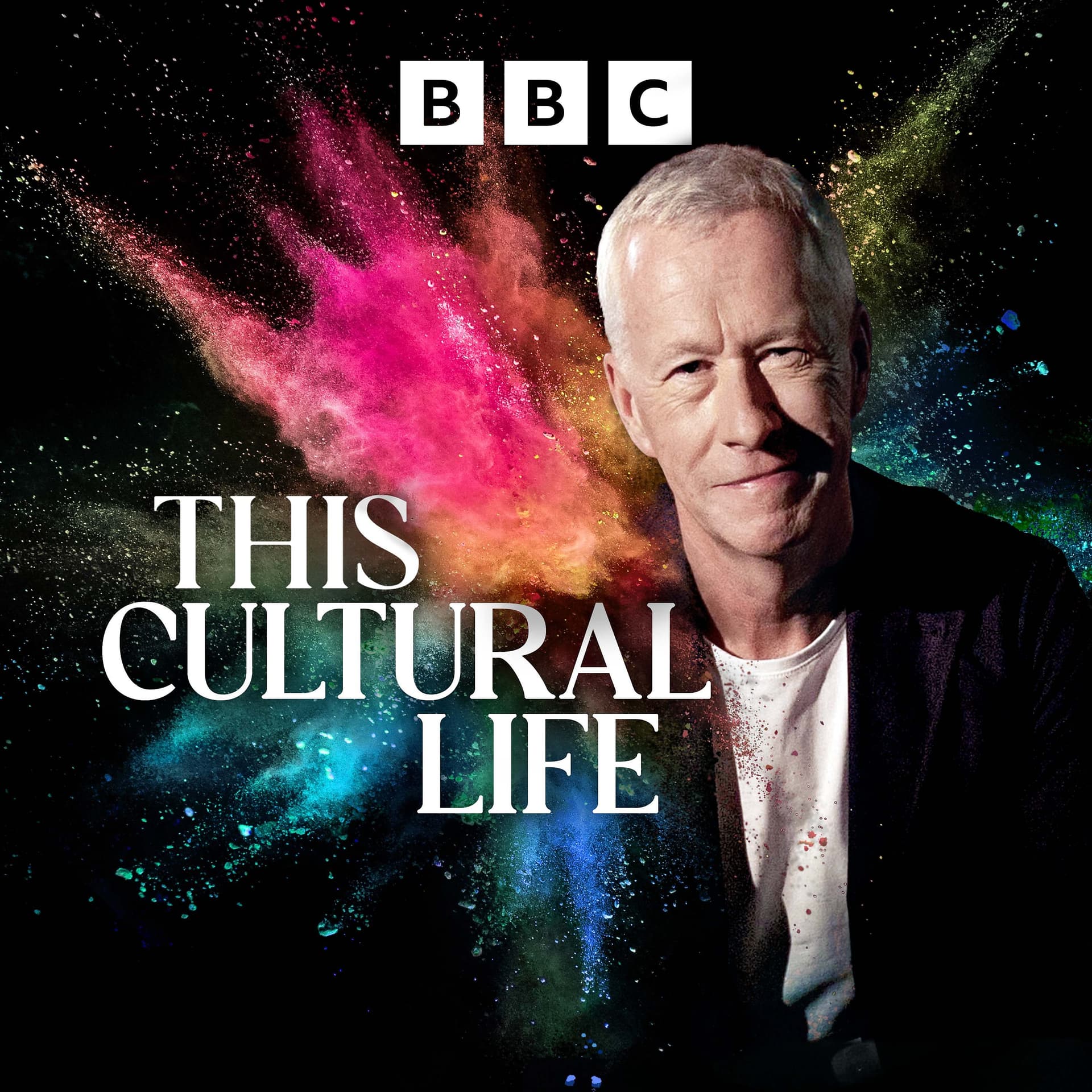
Podcast Overview Title: This Cultural Life Host: John Wilson Description: In-depth conversations with leading artists and creatives across various fields including theatre, visual arts, music, dance, and film.
---
Episode Details Title: George the Poet Description: George Mpanga, a British spoken-word artist and podcast host, discusses his journey from rapper to poet and the influences that shaped his work. The episode explores his debut collection, his award-winning podcast, and his perspectives on social and political issues.
---
Key Themes and Discussions
Early Life and Background
- Upbringing:
- George grew up in Neasden, London, in a family of Ugandan immigrants.
- He highlights a sense of communal responsibility instilled by his parents.
- Family Influence:
- His grandmother, Joyce Mpanga, was a prominent politician in Uganda, influencing George's views on community and politics.
Education Journey
- Grammar School Experience:
- Attended Queen Elizabeth Boys School, which shaped his academic rigor and essay-writing skills.
- Overcame social and cultural disconnects in a predominantly white institution.
- Cambridge University:
- Pursued studies in politics, psychology, and sociology, initially considering a career in politics or research.
Transition to Poetry and Performance
- Shift from Rapping to Poetry:
- George began presenting his rap verses in spoken word style, establishing himself as "George the Poet."
- He emphasized a desire for authenticity and avoided being a "caricature" of his identity in a predominantly white audience.
Influence of Hip-Hop
- Tupac's Impact:
- The song "Changes" by Tupac Shakur was pivotal in igniting George’s interest in hip-hop and social issues.
- He reflects on how hip-hop mirrored the realities and challenges of his community.
- Grime Music:
- Grime's emergence provided a British context to storytelling, using local dialect and experiences.
- George discusses the empowerment that comes with creating music in one's own voice and style.
Podcast Development
- "Have You Heard George’s Podcast":
- Launched in 2019, it uniquely combines personal stories with deeper explorations of social and political themes.
- The podcast has received significant acclaim, including the Peabody Award, marking a milestone for non-American podcasts.
Social Commentary and Activism
- Goals of the Podcast:
- Initially aimed to bridge the gap between community experiences and broader political discussions.
- Currently focuses on reintroducing Black history and challenging inadequate narratives in mainstream education.
Future Aspirations
- Potential Political Aspirations:
- George expresses a nuanced view of entering politics, suggesting a desire for a more impactful role outside traditional systems.
- PhD and Teaching:
- He aims to further explore how creativity can influence community development and historical understanding.
---
Key Takeaways
- George the Poet's journey reflects the transformative power of education, art, and community.
- His work illustrates the complexities of identity, music, and social responsibility within the context of contemporary British culture.
- The episode emphasizes the importance of nuanced discussions around race, politics, and history, aiming for deeper understanding and engagement.
---
Conclusion This episode of *This Cultural Life* provides a rich insight into George the Poet's artistic journey, his community roots, and the ongoing importance of social consciousness in his work. The conversation highlights the intersection of art and activism, illustrating how personal narratives can shape broader societal discourse.
Written by AI. May contain mistakes. Listen to the episode to check what was said.
Transcript
Automatic transcript. May contain errors.0:00BBC Sounds. Music, radio, podcasts.
0:12Welcome to This Cultural Life, the series in which leading creative people reveal the formative influences and experiences that inspired their own work. I'm John Wilson, and my guest in this episode is George the Poet, born Georgian Panga, the son of Ugandan immigrants. He grew up on a London council estate and won a place at Cambridge University. Having started out as a rapper, he made his name as a spoken word performer and poet with the publication of his debut collection Search Party in 2015. That same year, he was nominated for the Brits Critics Choice Award and the BBC Sound of 2015 poll.
0:48He was also offered an MBE but declined the honour. He launched a genre-defying podcast in 2019, which won a host of prizes, including the Peabody Award, a prestigious American prize for broadcasting, becoming the first podcast from outside the states to win it. Have you heard George's podcast, as it's called, interweave stories of his own upbringing with detailed explorations of contemporary social and political issues? George the Poet, welcome to This Cultural Life. Thank you very much, John. You were born George Mpanga. When did you become the poet? I was 19 years old. I was in university and I just got the idea of presenting my formerly rap verses in poetic form in a more spoken word style i don't want any pretense or pretentiousness to my thing so i was like george the poet take it or leave it my final offer we'll discover how you made that journey and arrived in the poetic form throughout the course of this program but let's go back to your upbringing um grew up in neasden in northwest london what was family life like beautiful uh we were all responsible for each other so when my younger brothers came along my younger sisters came along it was expected to help out and was expected to want to set an example for them that was something that was nurtured and i said you know it wasn't like imposed on us so i really credit my parents for that and your parents both from uganda originally yeah both from uganda when did they come to britain in the late 80s my mom came over i think first and started working and my dad came over, tried to find work, etc, etc.
2:26But going further back, from what I've read, your grandmother was Joyce Mpanga, who's a politician in Uganda, minister for women? Women's Affairs, yeah. What do you know of her life and her career in Uganda? She's someone who navigated very choppy political waters and has so much to show for it in a country that was so unstable at one point. She just doesn't carry any animosity in her heart for some of the harsh things that she had to deal with. Did she make you want to go into politics? Maybe in what she's always been prepared to discuss with me and the way she's always been prepared to work and develop with people that you really don't see eye to eye with.
3:09Maybe that has influenced me. That did influence me. Just lead us through a little journey through your estate at this time. In your early teens, you walk out your front door. What do you see? What's the environment like? There were kids everywhere. when, you know, a while ago. Now, kids are not outside as much anymore. But back in the day, it was always laughter or shouting, someone chasing someone and squirting a water gun or whatever. Like, I could hear that from my room. What was the environment like? What did it look like? It was actually very, it was a mixture of mid-rise housing and a bit of terraced housing.
3:43St. Raphael's estate is quite enclosed, but across the road or across a big road, across the North Circular, there's another neighbourhood called Stonebridge and a lot of green a field hills and trees so we just have our little island to run around but then as the community vibe started to recede there wasn't as much laughter and playing around there was more Isn't that just growing up, growing out of being a kid and forming new identities I think that's definitely a crucial part of it but in a low income community in which parents are often busy working and there's not much employment in the neighbourhood, not much employment opportunity, if not for the big supermarket or whatever around the corner, sometimes that energy can become stagnant and unhelpful.
4:34On your podcast, you've talked about those social pressures and that combination of unemployment and the frustrations and possibly parental neglect and that fermenting and leading to some of your friends joining gangs or kind of pursuing criminal activities? Was that something that you worried about growing up or that you witnessed at first hand? Yeah, it's a reality that's very difficult for me to, even at this stage, 32 years old, speak to you about on the BBC, on my podcast. It's difficult to speak about because life happens 24 hours at a time. And in this short hour that we have together, I'm trying to explain many 24-hour cycles in just one person's recollection.
5:20But I do remember being concerned about getting caught up in the wrong things because of what many of my peers were going through. And anybody that has heard your podcast will know your story of winning a place at a prestigious grammar school and then winning a place at Cambridge University. And that experience of formal education setting you apart, I presume, from a lot of those friends that you grew up with. I mean, was that something that was difficult to deal with at the time? Difficult in this sense is a challenge and also difficult in that it was a lonely journey. Having a big brother in a local school turned out to be the perfect social tool.
6:02His story showed me what my friends were going through in their local schools, which helped me know the rules. Helped me understand opportunity wasn't equal. I understood why they were shutting and robbing people. It wasn't because they're evil or because they wanted a quick demise. They just didn't want to be victimised.
6:23Badness was a defence mechanism. Most of the oldies in the ends went to prison. And when they came home, they were famous. On road, they had status and all the kids would know what their name was. I loved the hood, but I didn't like that. I hated that my people were living like that. You must have been aware that you were heading in a totally different direction to some of those friends. What was pushing you? Was that just knowing that you had more to offer and more to explore from a young age? Did you always know you were smart? It was always communicated to me that my reading is further than what is expected at this stage.
6:58And at one point I was moved ahead a year. All credit to my parents. They never compromised. It helps when your parents don't compromise on what they expect of you educationally. What does that mean? They pushed me. My mum pushed me to apply for a highly competitive school and while I wasn't up to par in, she rolled up her sleeves and taught me herself because she didn't feel like the education system was taking her kids seriously at some point. She was your tutor? She was my tutor, yeah. So that's what I mean about not compromising, not allowing me to mess around and get distracted. And that school that you went to, Queen Elizabeth Boys School, totally different academic environment.
7:46When you arrived and you started doing those lessons, did you think, yeah, I get this, I'm at home now, I can really flex my brain properly? I don't really feel like that. Any real challenge will make you want to quit, and that's how I felt at the start. Not just academically. Academically, yeah, but I don't think I was averse to academic rigor. That excited me. I think socially it was just hard Were there many other black kids there? No, no they weren't I think there are a lot more now The reality is that much of our lives In London are organised along racial lines My estate growing up was predominantly black And a lot of the kids I was at school with now Were South Asian But they were from areas that were also South Asian So coming from a slightly different social milieu That can leave you feeling a little bit stranded at that young age.
8:37And I presume environmentally it's very different going to Leafy Barnet every day and seeing a different... I love that though. That part of Barnet was beautiful, you know, very affluent. Gorgeous to look at. You're driving past houses that clearly cost, in some cases, in the tens of millions. I had never seen stuff like that before. So that was interesting and it did feel like a bit of a metaphor for what I was attempting to do with my life. Go from there to there. From the first term I refused to settle my skin I did everything I could to get kicked out I messed about, rejected their whole ideology Two middle fingers up, that was my philosophy Cos obviously I'm coming from the ends Freddie smacked Bilal and I just wanted to go back to it now I'm acting out Back home kids got expelled all the time So I thought sooner or later they're going to draw the line But they never actually did They could turn your life into a living hell but they never turned their back on a kid.
9:38Did you then imagine the next step would be Cambridge University, King's College Cambridge? I didn't assume, I didn't assume, no. Was it a hope of your mother's? So my mum made it clear very early on in my life that she wanted me to go to Oxbridge. I think she had that confidence in my intellectual ability and my mum came here as an immigrant whose qualifications weren't taken seriously. I remember studying economics, languages, the house being full of books about politics and world events and history. So she wanted you to have the opportunities that possibly she missed out on. I think so, yeah.
10:17Looking back on it, I think so. You studied politics, psychology and sociology at Cambridge. What was the aim? What were you going to do with that degree? At first I thought I might become an MP. I thought I might enter politics. and then I thought maybe think tanks. I wanted to be in research for a while but that was short-lived and I was just like, I think I just want to be able to engage with things of a political nature without institutional stricture. So what did you do with that knowledge that you accrued at Cambridge with politics and psychology and sociology? Do you think that tangibly you can see the effect a lot of what you learned in the work that you're doing now?
10:54I think Cambridge gave me a respect for political science and an awareness that this is a thing that is worth analyzing with all your energy it made me commit to the journey of political science and socially at the time were you committed to um university life i jumped in with both feet and i was um really excited to to be there at first but like i said you just can't outrun the loneliness i was lonely you know My whole community is not here. For me, it was quite a big thing. Not everyone feels like that about their community, but for me, it was a big thing. So that loneliness, that was a sense of just being dislocated from your community and missing friends.
11:37Was it also that you felt there was any kind of resistance to you being there from your peers? I can't put it on other people. No one made me... I mean, every now and then you get someone that has weird energy, but I felt just a little disconnected culturally. Now, what did that do for the words which I presume you were already writing? You'd become, as you said at the top of the programme, the poet at university because you wanted to start expressing yourself in verse. Was it all on paper at the time? Were you writing in notebooks? I was a rapper first. You develop your skills face to face, person to person.
12:11When you start recording, you learn to listen to yourself and you learn your voice.
12:26I said it to my ex, back when I never had credit for a text While I was rapping, you know, we used to write our lyrics down. I used to be quite formulaic about the patterns, the rhythmic patterns and the rhyme patterns. I felt like there was room to evolve that in a poetic form. When you rap, you tend to rap to a regimented beat, but without a beat, like, what could you do? Could you not put more inflection in it? Could you not play with your intonation? Could you not run over a particular meter and just free form your whole delivery? Technically, I'm from an elegant city, but I'm not the kind to whine and dine.
13:05I grew up around lots of crime, the violent kind. You might have heard about the rocks, the grime, the hype and shine. It's not just cockney rhyming slang. We got block beef, violent gangs. Awkward interactions which most don't force. Children navigating through post-cold wars in the States with the least funding. Look at the state of East London. That's a paradox. That's what I was interested in. But if you'd already started rapping, did you continue that at Cambridge? Yeah, there was a period of slight overlap, but poetry quickly took over. Is that because also you were trying to sidestep the expectations of, you know, as you say, you're away from your community.
13:39And if you were stepping up in this student union, doing some raps. Yeah, I didn't want to feel like a caricature. Now, this is what I mean about community and how lonely I felt. If I did those exact same raps in my community, I wouldn't be a caricature. But here, I would have felt like I'm doing an impression of a black person for a white audience, which made me uncomfortable. I'm not necessarily saying I'm the hero of the story. I might look back on that one day and be like, I shouldn't have adjusted my style. But I felt like I sounded better as a poet. And many people in my life have co-signed that observation.
14:21Let's talk about hip-hop now. For This Cultural Life, you've chosen the Tupac Shakur song, Changes, which was released in 1998 as a formative influence.
14:41I presume you would have been about seven years old when this was released. Did you hear it at that time? Yeah, it was everywhere. I remember it being all over the radio. People were drawn to him because of his passion. Just describe him for those who... Tupac... He died, of course, he was shot famously, but before then... He died at 25 years old. He became famous around 20 years old. So we're talking about a very short window, five years. But in that time, he became the most commercially successful rapper in the world. yet he was a voice of protest he was raised in one of the most radical black panther families but i didn't understand any of that nuance that wasn't communicated to us in the 90s he was put across as a gangster rapper with a heart right that was put to us as the best of the best that hip-hop could offer even though in my adult life i understand he was so much more Often photographed, bare-chested, tattooed, incredibly beautiful looking man as well.
15:48So the charisma must have been... Very charismatic. Must have been very powerful. Sex symbol in that time, yeah. I didn't really buy into his aesthetic as much. I became aware of his passion for community organising. He really believed that gangs should become diplomatic bodies, should become organisational vehicles in their communities. and he worked very hard to bring about peace between warring gangs, both on the street and in the prison system, with a view to resurrecting much of what the Black Panthers were instituting, which was a community-focused political formation.
16:43And some of those themes are there in that song that you've chosen, Changes. So potent stuff to be hearing when you're seven years old. But in that song, I mean, he's talking about social problems, gang violence and drugs as well in Los Angeles. But how did that resonate in Neasden? So I didn't grow up in a criminal family or a criminal environment. but crime became a bigger feature of our social lives because a lot of my friends got caught up in you know trying to make money and having an adversarial relationship with the with the criminal justice system so as those dynamics started to set in and people go in and out of prison and they come back with different philosophies because that's the other thing like Like people come home and bring things from prison into the community.
17:36Some good, some not great. I started seeing that from the time I was about 13. That's when I really became aware of this churn of people going from the streets to the system back onto the street. As I became aware of all of this, I would always return to Tupac's work and realize that there was nothing like it ever. And there has been nothing like it since. And this is something that you have explored intensively in your podcast. You return to hip-hop time and again. It becomes part of the soundtrack to the show also. The way that it relates to the communities, but it's telling stories about the communities as those stories are happening.
18:12Right. I mean, it was Chuck D, wasn't it, that once said hip-hop was the black CNN? That's right, that's right. And having become a rapper myself about the age of 15, I was part of a generation of UK rappers that built something that eventually became quite prominent in this country and is now a hot export of this country. So I really believed in some kind of potential, some kind of transformative energy within the music. Round here there's rocks in abundance But there's not enough keys for the locks in the dungeons Shots in the hundreds Lots of them youngers are clocking them numbers Blocking their jumpers, shocking their mumblers In between the pot smelling hugs They're not even pretending they're not selling drugs How does this happen?
18:59How important was grime music when it arrived? Grime being a very specifically British genre of urban music, telling stories about life literally much closer to home. Yeah, yeah. Thank you for the question. Grime was hugely important. Grime occurred in our accent with our slang and with our, you know, it was primed for our linguistic practice.
19:29Now I don't give a monkey From tree to tree Just like monkeys Who influenced me To be funky Who influenced me To make esky beat I made esky girls And esky boys Move their feet to the sound You can hear I hear you Whereas hip hop You always had to adjust yourself American hip hop anyway You had to adjust yourself To even just be able To recite lyrics You're putting on Different accents And this is something That we're better at Than anyone else You can't just come And do grime And sound better than What you know A British person doing it so I think that ownership was very empowering for us you know a lot of people have been able to create careers out of Graham despite not being superstars well Stormzy emerged from that yeah Stormzy emerged from that obviously Stormzy is a superstar and that's what concerned me that's what concerned a lot of us when we were younger we always felt like there was only going to be one superstar per generation where there's so much more talent than the country seems to have interest in.
20:30Who were the artists that you most admired? My first obsessions, I would say, were Wiley, Kano, Dizzy Rascal, Getz and Skeptor. These are all men who are hugely successful now, but it wasn't clear at the time that they would be. You know, when they were younger, the experiences they used to articulate were so poignant for us, even though it sounds like a bunch of bravado. It's actually very emotional. It's very intimate, you know, for us as young people in those environments that at the time didn't have a lot of public attention coming our way.
21:25They were underground figures, weren't they? I mean, counter-cultural figures in a way. Yeah. And what was it, 10, 12 years later, Skepta won the Mercury Music Prize. Yeah, that's right. And something like Kano is starring in Top Boy on screen. So did you see them as role models at the time, these people? Because you said you started out rapping. Is that what you wanted to do? Is that what you foresaw? You can say that, actually. I wouldn't have expressed it like that at the time because these guys, Kano was about 15 years old when many of us heard him for the first time. But I wanted to be like them.
22:00I wanted to be able to tell my experience in a lyrical way that drew people together in the way that they did. But at the same time, I struggled with the politics of grime throughout. I've struggled with the politics of hip hop throughout and I continue to do so. There are whole years when I don't listen to any of it because in its commercial form, it can be a form of self-harm for much of our community and those that practice it. But that's not what it's intended to be. It is just constantly fighting a very racialized a negatively racialized commercial environment which is why the superstar model concerns me because for some reason the most lucrative acts the ones that are so heavily invested in by the music industry they tend to be ones that you know promote all the bad stuff or dabble enough in that negativity there are so many rappers that don't dabble in negative imagery negative messaging at all.
23:04There are so many rappers that are politically aware and socially responsible in their lyrics. None of them get the commercial looks. But you're suggesting almost that the glorification of the violence, the drugs and the bad boy image has been perpetuated by the corporations, by the music industry. But lyrically, that was all there at the time as well, wasn't it? So grime emerged out of the influence of now 12 years of gangster music, which hip hop became after big corporations bought in Heavy. You are now about to witness the strength of street knowledge. Following the success, I would say, of NWA, the rap group from Compton in the late 80s.
23:51but when NWA emerged hip hop was a lot more diverse in its representation of masculinity and femininity you know it was a lot more nuanced there was a shift You had a chance to change things in a way didn't you because you were signed to Island Records I wasn't signed as a rapper I was actually signed as a poet Oh really? Yeah But it was to make an album but was the expectation not that you would be rapping? It was all experimental so they signed me with a view to me you know figuring it out and doing something that would work for them commercially they were musical poetry tracks blending spoken word with some of the musical traditions I grew up on So now none of you answer the phone Your conversations happen after the tone But your heart to the bone Not the first that grafted alone In and amongst the system Forgetful of women and youngsters The outcome's worse In a place where loud guns burst But the child comes first That's a non-negotiable.
24:51So when I was fortunate to be nominated for the BBC Sound Poll and MTV Brand New and the BET Award, that was a perfect validation that my experiment was kind of working. And when you made this shift and after Cambridge and thought, actually, I am now George the Poet rather than George the Rapper, how important was it that you had gone to Queen Elizabeth Boyce and I presume had English classes where you were formal study of poetry? How much were you reaching back? I think one of the things that I think the teachers taught me well was the art of essay writing and the art of argument. And I feel like that has been crucial.
25:34So that is on a content level. My work was always intended to be analytical and to present experiences and scenarios in a way that would allow me to advocate. but in terms of respect for the English language and understanding and awareness of different literary devices and linguistic technique, I also think studying English at QE helped me with that.
26:03Your next choice for this programme, George, is Beat FM, which is formerly known as Bang FM, a community station, a radio station. Is this where you got your first broadcasting experience? Yeah, it is, yeah. So tell me something about the setup. You were on air? Yeah, before I was on air, I had put together a small mixtape of my tracks and I was shopping it around the community. And a friend of mine, Rashid, recommended that I take my mixtape to Bang FM at the time. Now Bang was a community organisation based in Halsden. and Bang's work was very much really bringing young people into a space of broadcasting giving them an outlet for their music so Rashid said to me take your mixtape to those guys they support local talent I remember him saying that and true to his word they did they didn't know me I didn't have the biggest profile but they said we like what you do you know you've got something about you this was in my rap days and they played a couple of my tunes man and I really appreciated it and from there I made connections and one thing led to another but again I have to just bring it back to the importance of the community in that space.
27:18How important was that in forging your own identity? How important was it to hear yourself? It was really powerful because like I said I struggled with the politics of hip hop and of grime and a lot of my friends who were admittedly better rappers than me, they were a lot more willing to compromise with some of these politics. They said things and did things in their music that I often didn't agree with. You mean specifically they're rapping about gang life and violence and glorification of that? Yeah, it would be along the lines of gratuitous representations of violence. A materialism that I've always been suspicious of and sexism.
27:59You know, lazy... I would always regard it as lazy stuff because a lot of these guys don't really mean it. They're just, again, going with what has been presented to us as normal, presented to us as desirable, presented to us as profitable. It's the expectation. That's what you deliver if you are that kind of artist. Did you have arguments with your friends about this? Did you challenge them? All the time. All the time. Back when I was a lot less diplomatic than I am now. Anyway, Bang FM is a level of validation because not everyone got on the radio. So this is your first experience of broadcasting.
28:34You still go by the name of George the Poet, of course, but you could these days be known as George the Podcaster. Right. Have you heard George's podcast? He's so successful. And you make it with Ben Brick, whose real name is Paul Carter. Right. Composer, a producer, and he's interweaving these sound effects and archive and music with your words, which are often rhymed, very often rhyming couplets. This verse you guys hear was first than I did. Before it could ever exist on your computer, it was nothing more than a vision of the future. And now, there's this recording that I've recorded, which ain't more than a live performance I thought to provide the audience.
Read the full transcript
29:14I afforded the time to order my mind and make sure all the rhymes were organised. Now, these recorded lines are immortalised. So that same verse... It's genre-defying in many ways, because the subjects that you tackle with a great depth of knowledge of history, but also bringing your own personal experiences to it as well. There's some current affairs, some social commentary. How did the idea for that podcast develop then? It was in the early days, I think, of Theresa May's premiership. I don't know if you remember how chaotic that period was. Obviously, a lot of British politics has become a bit chaotic, but I had just started re-watching the thick of it and the original House of Cards, the BBC House of Cards, I was like, it would be great to be able to tell any story about world events, you know, with my spin.
30:09I've seen the Malcolm Tucker version. I've seen the Francis Urquhart, the Francis Underwood version. I would love my little monologue about what's going on in the world. And I also knew that I wanted it to have a film score. And I told Ben Brick that, and he had been working on cinematic music. so it was just a marriage of convenience at that point and then it became more than a marriage of convenience when we started releasing our experiments on the internet and people took to it and we just agreed to keep trying our best to release this listen to what he's saying
30:50this guy just said he sold drugs in jail using phones and drones I'm not saying this to expose the bro. Obviously, he's put this out there, which I don't condone. But you have to ask yourself, why would he discuss this recklessly? Let's ask the Justice Secretary. What are you talking about? Spice and other drugs ordered with a Deliveroo-style responsiveness on tiny mobile phones from prison cells... What do you want people to take away from it? What difference do you want the podcast to make? The answer to that question has changed over time. At first, I just wanted to present my read on the relationship between community, music and crime and employment or unemployment.
31:35At other times, I wanted to demonstrate the potential of artistic work to carry educational value. I wanted to teach complex ideas through the podcast. And right now, I want to reintroduce black history. I want to talk about black history from an analysis of the independence of Africa, the decolonization of Africa, and some of the things that have happened since. That's a space that I'm trying to open up. You don't think those areas are covered in Black History Month or what's taught at school? It's impossible. It's impossible to definitely cover them in Black History Month. It's already a challenge to compress decades into a module.
32:21so what's Black History Month going to do for a continent plus a diaspora, you know, that much history? You can't do that in a month and you can't do it in a way that is, that has any continuity, you know, you can't create a long term recurring conversation Are you saying that Black History Month is not fulfilling its potential in what it could achieve or it's a pointless exercise what are you saying? Yeah, so those are two extremes of the argument, either it's not achieving anything it's a pointless exercise in the first place um and i'm not saying i'm not saying anything extreme i am saying try and teach white history in a month and let me know how that goes that's the best way i can put it with that in mind we need to take stock of how inadequate our concept of africa's history the caribbean history the diaspora history is it's inadequate most of us live our lives not having any idea what political projects went on in Africa.
33:19We don't have any idea what the difference between Nkrumahism and whatever Nyerere was trying to institute in Tanzania. Or, you know, the federal projects of Eric Williams and people like that. Or the New International Order from Michael Manley. We don't know any of these projects and we don't know why they failed. We don't know, you know, what happened with them. so our read of our current political reality is always inadequate whenever black people tend to talk about black politics there is an element of bitterness at towards ourselves towards our predecessors how could they allow this to happen some of my early poetry was like that and no one ever challenged me for it even though i didn't know what i was talking about and the people assessing my words didn't know what i was talking about either so there's a need for a return to ground zero.
34:12What exactly happened? What might that indicate about how to move forward? Nkrumah wasn't trying to chase away Western business. If anything, he was looking to open the door. But he wanted to upgrade Ghana's economy. He didn't want to be told what he's supposed to export. Now, what would it take to modernise Ghana when every other worker was a colonised farmer?
34:44These were the questions facing a nation in need of direction and decent investment. See, after his success in recent elections, Kwame had the benefit of people's affection.
35:00We are now working! We shall no more go back to school! Do you increasingly see yourself as an activist? And I mean somebody who is affecting social change in some way through their influence, through their work. Is that increasingly the end goal of the work, whether that is the poetry and the podcasting, that you can see some tangible change at the end of it? Yeah, that's the end goal. Going back to lessons that I learned from my grandma, I've learned to become more open-minded about what that change might look like. I have learned to engage with the realpolitik, you know, what's actually happening on the ground and where we're actually at.
35:35Part of the motivation behind the podcast was tweeting one day, years ago. I tweeted something that I really, really felt and I reflected on the process. Okay, you've now released this. You've probably done a disservice to whatever sentiment you're trying to make because it's just going to get lost on the internet and you haven't really dug into this thing. It was only 140 characters, or was at the time. Right, it was only 140. So like I challenged myself to store for every tweet. Don't tweet, do some research and present something more intentional. The podcast became that. But it is very time consuming, very hard to do.
36:18It's really complex stuff. You talk about the cinematic score, for instance, but that is those are Ben Brick's own compositions played by the BBC Concert Orchestra. Yes. Shouts out to the BBC Concert Orchestra. they elevate it they elevate it to a hair-raising experience but you're right it is multi-layered some of the hardest work that we've ever done usually on this program i'm talking to people about specific art forms whether that's you know dancing or filmmaking or novel writing or whatever established forms of expression arguably you have reinvented the form of the podcast and turned it into a kind of art form.
36:55What does a podcast episode do for you? What does it allow you to say that you couldn't say in a poem or in a hip hop track? I feel like much of our public conversation is stymied by the aversion to nuance and details. But, you know, I formed the poetry that I do. I formed that approach while I was in uni doing real research. and my dream was always to normalise the kind of research that I was doing, democratise it so that it's not locked away in ivory towers. So the podcast allows me to do that. It allows me to explain. Some of my podcast episodes are 5 ,000 words long. So it is about the same as a detailed essay.
37:40They're rhyming essays. Rhyming essays was the first brief that I sent myself. Really? Back in Cambridge, yeah. I used to have to write four essays a week and I was starting to get into this poetry thing and I was like, it would be great if one day I could write a rhyming essay. Each one of them is like a lecture, almost. Yeah, a lecture, yeah. Does it make it, I mean, it must make it more complex to then tell that story. It's infinitely difficult. And you do like the rhyming couplet, don't you? Yeah, it's the hardest thing in the world. I tell my wife all the time, this is so hard and it's so boring at first when I'm on my own thinking of how to rhyme a political concept.
38:16in 20 seconds. It's not fun, but it's, you know, worth it. How do you work that out then? I mean, just give us a sense of, you know, you're looking back at the post-colonial history of Ghana and independence and political machinations going on. How does that work when you have all of that research and then you're having to turn it into a poem of sorts? Okay, well, all credit to Queen Elizabeth Boyes. I start with the essay writing techniques first. organise your ideas what is the sequence of events that you want to reference throughout your analysis why do you want to start there okay if you want to start with Ghanaian independence how do you tell that story okay you probably got to start with what happened in the 20s then look at what happened in the 40s lead up to 1957 map that out onto this episode considering that you want to make your point you want your point to be clear by around the 17 minute mark and you want room to inflate the story by, let's say, about 10%.
39:21So it starts off quite mechanical. And then once you've kind of organised the points, which takes a while in itself, then you've got to take it chunk by chunk and be poetic about each segment. So then you've got to be a little romantic. Then you've got to see the beauty in this character, the magic of that moment. Think about the music that will really make this point. And again, once you've done that, then you've got to really get intricate with the language. That's the process that I'm on now. When I started this podcast it wasn't like that. I would be led, you know, one foot after the other.
39:53Whatever line comes next we go like that. But because I want to be more intentional about the messaging this time around and because I'm doing a PhD in which I've done a lot of research and I've got a pressure to organise this research, this is the way I'm going about it. So it's going deeper, really, in a way, academically. Yeah. But paradoxically, what you seem to have done is made it more conversational as well. Yeah. So the performance has become more naturalistic. I love to hear that, because that was the big worry. You know, my wife talked to me about it. She said, I know you get very passionate about your stuff, but you know how it gets when you get, you know, like a dog with a bone with some of this stuff.
40:32It can get a bit dense to someone who's a layperson. You've got to think about how to make it, you know, a listening experience, make it conversational. I said, yes, babe, I know, I know, I know, I know. The whole time I'm thinking, I don't know how I'm going to do this. But it was also, in those early episodes, you could hear the rhyme being laid out. It was a bit more sort of mechanistic, whereas now it's almost invisible. And you sort of forget that you are rhyming and there's a kind of poetic form to it. You know, I really believe that you take to this podcast. That's a very astute, that's a very complex observation that I I know exactly what you're talking about and I know the processes that led me to that and it just, again, that's real validation that you feel like that.
41:13Thank you. You swept the board at the 2019 British Podcast Awards and more recently won a Peabody Award, which is an American Broadcasting Award and you became the first non-American winner, I think, of a Peabody Award. Do you now carry on indefinitely with the podcast or do you want to move on to something, some new form of expression. What about George the novelist, George the playwright, George the film director? Yeah, I mean, we pray, we really pray that we get the opportunity to look into all of that. And thank you for your optimism. Thanks for seeing that in me. I would love to do it all.
41:50I would, but I'm not only motivated by my personal curiosity or my personal ambitions. There is a responsibility with all of this. Like if my gripe was the politics of grime and politics of hip hop growing up, how am I going to create an alternative space for young people looking to the cultural space for a political outlet? Well, you said that one of the ambitions as a young man was to be an MP. It's not too late for that, is it? You would still be one of the youngest members of the House if you stood for parliament and won. So, yeah, and that might be a nice little ego boost for me, but I do not see parliamentary politics as a place that yields truly democratic outcomes.
42:34So if that changes, I will definitely reconsider. What are you going to do with this PhD? There's various things. I would love to teach what I do. How can you transform communities' options through the creativity of its young people and through the shared experience, the historical heritage of that community. There's the future. It's George the Professor, isn't it? Possibly. George Mpanga, George the Poet, thank you for sharing your cultural life with us. Thank you so much, John.
43:13Well, I do hope you enjoyed my conversation with George the Poet, and as I suggested to him there, he could be exploring many other art forms in the future. And it's what we do here on This Cultural Life. We've talked to musicians from Paul McCartney to Nicola Benedetti, actors including Florence Pugh and Nicole Kidman, artists from Tracey Emin and Shirin Neshat, Gilbert and George. We've also heard from novelists including Booker Prize winners Ian McEwan, Bernadine Evaristo, Douglas Stewart and Margaret Atwood. All these and many more guests can be found in our archives. Search for This Cultural Life on BBC Sounds and all other podcast platforms.
43:50From series producer Edwina Pittman and me, John Wilson, thanks very much for listening.
43:58What do you see when you look at the numbers on a graph? Imagine if they could help you reveal the guilt of a serial killer. It's the most chilling graph I've ever seen. Or prove that global climate change is not a hoax. It was such a visceral indicator of the profound impact that we were having on the planet. I'm Hannah Fry, and in this series for BBC Radio 4, Uncharted will reveal how the humble graph has changed your life. I will be your guide through a collection of extraordinary discoveries, which shifted the world with a single line on a page. From BBC Radio 4, this is Uncharted. Subscribe on BBC Sounds.
From the publisher
Born George Mpanga, George the Poet is a British spoken-word artist and podcast host. Having started out as a rapper, he made his name as a spoken-word performance poet after leaving Cambridge University. His debut collection Search Party was published in 2015. The same year he was nominated for the Brits Critics Choice Award and the BBC Sound Of 2015 poll. He was also offered an MBE but declined the honour.
He launched a genre-defying podcast in 2019, which won a host of prizes including the Peabody Award, a prestigious American prize for broadcasting, becoming the first podcast from outside the States to win it. Have You Heard George’s podcast, as it’s called, interweaves stories of his own upbringing with detailed explorations of contemporary social and political issues.
George talks to John Wilson about some of his most formative cultural influences including the grammar school that taught him the essay-writing skills he still puts to use when making his podcast. He reveals how Tupac Shakur’s 1998 song Changes ignited his interest in hip hop, and discusses the impact of rap and grime on his own verse. He also remembers how his local community radio station gave him his first break and encouraged the development as a performer.
Producer: Edwina Pitman